


Abstract
This study empirically investigates a central tension in quantitative finance: the divergence between theoretically optimal and robust portfolio construction under real-world estimation uncertainty. Using a dynamic, time-varying optimization framework, we compare the performance of three distinct strategies: the Maximum Sharpe ratio (P1), Minimum Variance (P2), and Maximum Entropy (P3) portfolios, with and without commodity proxy inclusion (gold and oil) in a multi-asset universe featuring prominent African equity indices. Our key finding challenges classical theory: the robust Maximum Entropy portfolio (P3) achieved superior realized risk-adjusted returns (Sharpe ratio: 1.164) compared to the theoretically optimal Maximum Sharpe portfolio (P1, Sharpe: 0.788). This result validates the “estimation-error maximization” critique, as P1’s performance was undermined by its sensitivity to noisy inputs. Conversely, the Minimum Variance portfolio (P2) successfully fulfilled its objective, achieving the lowest volatility (~5%) at the cost of modest returns (3.01–3.64%), illustrating the classic risk–return trade-off. Euler decomposition revealed that even this low-volatility portfolio exhibited significant concentration risk, with over 40% of its risk attributable to just three assets. The role of commodities is proven to be strategy contingent. They significantly enhanced returns and the Sharpe ratio for the aggressive P1 but were marginally detrimental to the robust P3. African market indices played specialized roles: Egypt and Nigeria acted as return drivers in P1, Morocco became a major risk contributor within the concentrated P2 strategy, and South Africa provided key diversification in the well-balanced P3. Ultimately, the study demonstrates that portfolio risk is determined more by asset concentration and diversification quality than by geographic labels, and that robust diversification methodologies outperform fragile theoretical optima in practice. We conclude that portfolio construction must prioritize robustness to estimation error and explicit risk-balancing to ensure stable, real-world performance.
Keywords:
portfolio optimization; robustness; estimation error; commodities; African financial market indices; risk decomposition; Maximum Entropy; Sharpe ratio JEL Classification:
C32; C61; C63; C87; G11; G40
1. Introduction
The pursuit of optimal diversification drives investors to continuously assess the role of non-traditional asset classes within global portfolios. A fundamental strategy is international diversification across geographies and asset classes, which mitigates localized economic shocks while capturing growth, particularly in emerging markets (EMs) (Berger et al., 2011; Bekaert et al., 2023). However, the success of any optimization approach depends critically on the assets chosen and the robustness of the methodology used. Among these assets, the strategic role of commodities remains contentious. Touted as inflation hedges and diversifiers, they can also introduce significant volatility and complex linkages, especially within portfolios containing commodity-sensitive emerging markets. This “double-edged sword” effect is particularly acute for African equity markets, where economies are often tied to resource cycles (Abaidoo & Agyapong, 2022; Mupunga & Ngundu, 2020), creating a unique challenge for dynamic portfolio optimization that seeks to balance growth and stability.
Tailoring portfolios to specific investor profiles, based on risk tolerance, investment horizon, and return objectives, is crucial for ensuring strategy adherence and mitigating behavioral biases (Manjula et al., 2022; Karki & Kafle, 2020; Mittal, 2022). This consideration is especially relevant when incorporating diverse asset classes like African equities and commodity proxies. African emerging market indices, such as Egypt, Nigeria, Morocco, and South Africa, offer attractive opportunities for diversification and returns (Abidi et al., 2019; Prates et al., 2023) but are characterized by compelling growth narratives alongside unique challenges like liquidity constraints and political risk (Agyei & Bossman, 2023). Notably, their performance is often sensitive to commodity prices, with exchanges like the Johannesburg Stock Exchange (JSE) closely linked to resource cycles (Bonga-Bonga, 2018). This interplay raises a critical question for dynamic asset allocation: how do African markets function, as high-return engines, diversifiers, or stabilizers, within global portfolios that also consider commodities?
A review of existing literature reveals three specific limitations. First, many studies evaluate commodity inclusion using static, single-period optimization or a single portfolio objective, overlooking how optimal allocations shift over time and across different investor mandates (Younas & Khan, 2024). Second, there is a tendency to homogenize diverse African markets with other EMs, neglecting their specialized roles within dynamically optimized global portfolios (Bekaert et al., 2023). Third, there is a notable lack of empirical research that directly tests the performance of robust, alternative portfolio construction methods against classical theoretical optima in this dynamic, multi-asset context. Consequently, it remains unclear whether theoretically “optimal” strategies (like the Maximum Sharpe Ratio portfolio) or robust alternatives (like the Maximum Entropy portfolio) are more effective in practice when managing the complex role of commodities and African equities. We investigate the role of African equities within a standard, representative global asset universe, not within a contrived, equally weighted continental basket.
Moreover, there is a lack of research that employs advanced, time-varying analytical techniques, such as network analysis and wavelet coherence, to dissect the evolving interrelationships and risk transmission channels between commodity proxies (gold and oil) and equities in this context. Consequently, the time-varying contributions of individual African assets and commodities to overall portfolio performance and risk structure, as well as the dynamic architecture of their interdependencies, remain poorly understood.
This study addresses these gaps by implementing a dynamic, time-varying optimization framework to answer a central question: Does robust portfolio construction outperform theoretical optimality when managing the complex role of commodity proxy in global portfolios? We empirically test three distinct strategies representing different philosophies: the theoretically optimal Maximum Sharpe Ratio portfolio (P1), a Minimum Variance portfolio (P2), and the robust Maximum Entropy portfolio (P3). Each strategy is constructed with and without commodity proxies in a universe featuring key African equity indices (Egypt, Nigeria, South Africa, Morocco). Performance is evaluated using standard metrics (e.g., Sharpe ratio) and a dynamic Value-at-Risk (VaR) approach (De Luca et al., 2020), while the Euler risk decomposition isolates the specific contributions of each asset.
Critically, to move beyond static correlation analysis and understand the dynamic interrelationships that shape these portfolios, we employ two advanced techniques. First, we utilize Granger causality networks to identify the directional influences and shock transmission pathways among assets, revealing how commodity proxies can shift from being mere diversifiers to significant predictors of market movements (C.-F. Chen & Chiang, 2022; Zhang et al., 2025). Second, we apply wavelet coherence analysis to capture the time–frequency-dependent co-movements between asset classes, providing a nuanced view of how the strength and lead–lag relationships between commodity proxies and equities evolve across different investment horizons and market conditions (Matar et al., 2021; Basdekis et al., 2022). This multi-method approach allows us to quantify not just what the optimal allocations are, but why and when they work.
Our analysis yields three primary contributions. First, we demonstrate that the impact of commodity proxies is profoundly strategy-contingent: they significantly enhance the risk-adjusted returns of the aggressive Maximum Sharpe portfolio (P1) but are systematically excluded from the optimal allocation of the robust Maximum Entropy portfolio (P3).
Second, and more fundamentally, our results reveal a striking divergence between theory and practice: the robust Maximum Entropy portfolio (P3) achieved superior realized risk-adjusted returns compared to the theoretically optimal Maximum Sharpe portfolio (P1). This emergent finding highlights the practical limitations of classical optimization under estimation error and establishes that, in dynamic settings, robust diversification can be more effective than theoretical optimality. We further diagnose the success of the “Minimum Variance” portfolio (P2), which generated the lowest volatility. These insights offer actionable guidance for prioritizing robustness over fragile optimality in portfolio design.
Third, by applying Granger causality and wavelet coherence, we provide novel insights into the dynamic network structure and time-varying dependency patterns that underlie these performance outcomes, showing how the role of commodities and African markets is not static but context-dependent.
The specific objectives of this study are as follows:
- (1)
- To assess and compare the performance of three portfolio optimization philosophies (Maximum Sharpe, Minimum Variance, Maximum Entropy), explicitly quantifying the impact of commodity proxy inclusion/exclusion;
- (2)
- To measure the time-varying contributions of individual African assets and commodities to portfolio risk and return;
- (3)
- To identify the conditions under which robust construction methods outperform theoretical optima;
- (4)
- To explore how dynamic interrelationship analysis informs the understanding of the commodity–equity nexus within optimized portfolios.
This leads to the following research questions:
- How do major portfolio optimization strategies perform, and what is the impact of including or excluding commodity proxies (gold and oil) on these performance metrics?
- What are the time-varying contributions of individual African assets and commodity proxies to key portfolio characteristics such as return, risk, and diversification over different market conditions?
- Under what conditions do robust portfolio construction methods (Maximum Entropy) outperform theoretically optimal ones (Maximum Sharpe)?
- How does dynamic interrelationship analysis inform our understanding of the relationship between commodity proxies and African equity indices in optimized portfolios?
2. Literature Review
2.1. Theoretical Literature Review
Modern Portfolio Theory (MPT), introduced by Markowitz (1952), revolutionized investment management by providing a quantitative framework for optimal asset allocation. The core insight of MPT is that portfolio risk depends not only on individual asset volatilities but critically on the correlations between them. This establishes diversification, spreading investments across imperfectly correlated assets, as the fundamental mechanism for mitigating unsystematic risk (Markowitz, 1952; Khaki et al., 2022).
MPT formalizes the risk–return trade-off through mean-variance optimization, which identifies the “efficient frontier”: the set of portfolios offering the highest expected return for a given level of risk. The theoretically optimal portfolio for any investor lies on this frontier, with the Maximum Sharpe Ratio (Tangency) portfolio representing the single best risk-adjusted option when a risk-free asset is available (Martinez-Nieto et al., 2021; Gossé & Jehle, 2024).
However, MPT’s practical application faces well-documented limitations. Its static nature assumes constant expected returns, volatilities, and correlations, assumptions frequently violated in dynamic financial markets. Furthermore, its optimization is notoriously prone to estimation error, as small changes in input parameters can lead to extreme, unstable portfolio weights (Michaud, 1989). This “estimation-error maximization” problem is exacerbated during periods of market stress when correlations break down and volatility clusters.
The limitations of static MPT have driven the development of dynamic portfolio optimization frameworks. These recognize that optimal allocations must evolve with changing market regimes, requiring periodic rebalancing based on updated estimates (Younas & Khan, 2024). This study employs a rolling-window optimization approach to capture these time-varying dynamics.
To effectively analyze the complex interdependencies in dynamic multi-asset portfolios, advanced econometric techniques are essential:
- Granger causality networks map directional shock transmission, revealing which assets act as net transmitters or receivers of risk at any given time. This network approach moves beyond static correlation to understand the architecture of financial contagion (Durcheva & Tsankov, 2021; Wang et al., 2022; C.-F. Chen & Chiang, 2022).
- Wavelet coherence analysis captures how relationships between assets evolve across different time horizons and frequencies. Unlike traditional correlation, it identifies time-varying lead–lag structures and shows whether co-movements are transient or persistent (Matar et al., 2021; Basdekis et al., 2022; Armah et al., 2022; Muneer et al., 2025).
- Euler risk decomposition, rooted in Euler’s homogeneity theorem, provides a theoretically sound method for attributing portfolio risk to individual assets. By calculating the marginal contribution to total risk (e.g., volatility) for each component, it identifies true risk drivers versus diversifiers within a specific strategy (Tasche, 2007; Brugière, 2020; Godin et al., 2023). Crucially, its application to dynamically optimized global portfolios, particularly to quantify the time-varying risk contribution of commodities, remains a significant gap in the literature.
The theoretical case for commodity inclusion in diversified portfolios is strong. Grounded in MPT, commodities are posited to offer low or negative correlation with traditional equities and bonds, potentially expanding the efficient frontier and improving risk-adjusted returns (Gorton & Rouwenhorst, 2006). They are further theorized to provide an inflation hedge and returns driven by distinct global supply-demand dynamics (Liu et al., 2023; Nguyen et al., 2020).
Empirical evidence, however, reveals a nuanced and contradictory picture. While some studies confirm diversification benefits (Gorton & Rouwenhorst, 2006; Wen & Wang, 2021; Wang et al., 2022; Gaete & Herrera, 2023; S. Chen et al., 2023), others highlight critical limitations. Commodity–equity correlations can spike dramatically during financial crises, precisely when diversification is most needed (Amar et al., 2021). Furthermore, commodities exhibit inherently high volatility driven by geopolitical and supply shocks, which can amplify overall portfolio risk (Kim et al., 2025). Recent research even questions whether commodities enhance risk-adjusted returns after accounting for costs and implementation challenges (Lean et al., 2023).
This empirical ambiguity suggests that the role of commodities is not universal but highly contingent on market conditions and portfolio objectives. Yet, a critical gap persists: few studies systematically test how commodity inclusion affects fundamentally different portfolio strategies (e.g., maximum risk-adjusted return vs. Minimum Variance) within a unified, dynamic framework.
African emerging markets present a compelling yet complex case for global diversification. Markets such as Egypt (EGX30), Nigeria (NSE), Morocco, and South Africa (JSE) are not monolithic; they exhibit distinct economic structures, regulatory environments, and risk–return profiles (Bekaert et al., 2023; Abidi et al., 2019; Prates et al., 2023). A defining characteristic is their sensitivity to commodity cycles, given the resource-driven nature of many African economies (Abaidoo & Agyapong, 2022; Bonga-Bonga, 2018).
This intrinsic link creates a critical puzzle: are African equity indices and commodities complementary diversifiers or risk substitutes? The literature remains divided, with a tendency to homogenize these diverse markets with other emerging regions, overlooking their specialized potential roles as growth engines, diversifiers, or stabilizers within global portfolios.
This study examines three portfolio strategies representing distinct optimization philosophies and investor objectives:
- Maximum Sharpe Ratio portfolio (P1): The classical MPT solution for maximizing risk-adjusted return, attractive to theoretically optimal investors (Markowitz, 1952).
- Minimum Variance portfolio (P2): Targets the minimization of portfolio variance, appealing to highly risk-averse investors seeking capital preservation.
- Maximum Entropy portfolio (P3): Represents a robust alternative to classical optimization. By maximizing the dispersion of portfolio weights (entropy), it seeks maximum diversification and stability without requiring unstable estimates of expected returns (Bera & Park, 2008; Novais et al., 2022). This approach explicitly addresses the estimation-error problem of MPT.
The literature provides limited comparative analysis of how commodities and African equity indices perform across these fundamentally different strategic contexts. An asset that enhances returns in P1 may introduce unacceptable risk in P2, while the diversification logic of P3 may systematically exclude certain asset classes.
The literature reveals three interconnected gaps that this study directly addresses:
- Methodological Gap: The lack of application of Euler decomposition to quantify the time-varying risk contribution of a two-commodity proxy within dynamically optimized, multi-asset global portfolios.
- Contextual Gap: The tendency to evaluate commodity-proxy inclusion using static frameworks or a single portfolio objective, failing to capture how their impact varies across different strategies (Maximum Sharpe vs. Minimum Variance vs. Maximum Entropy).
- Geographic Gap: The homogenization of African market indices and insufficient analysis of their specialized, strategy-dependent roles alongside commodities.
This study bridges these gaps by implementing a dynamic, multi-strategy framework that employs Euler decomposition, Granger causality networks, and wavelet coherence to provide precise, time-varying insights. It moves beyond asking whether commodities and African equity indices are beneficial to answer the more nuanced questions: for which portfolio strategy, in what way, and at what time?
2.2. Empirical Literature Review
The empirical literature on diversification, particularly with commodities and emerging markets, has evolved from static analyses toward increasingly dynamic frameworks. However, critical limitations remain when considering the integrated, strategy-specific portfolio construction that defines our study.
Early and foundational empirical work often relied on static mean-variance optimization (MVO) to evaluate the benefits of commodities. Studies such as Bansal et al. (2014) and Pandey (2023) for Indian markets found that adding commodities, especially agricultural ones, could enhance portfolio efficiency, measured by Sharpe or Omega ratios.
Similarly, Ruano and Barros (2022) observed benefits for loss-averse investors, although they acknowledged these benefits have decreased over time, partly due to financialization. A common finding across this research is the heterogeneity of commodity benefits, which differ by sector (energy vs. agriculture) and market regime (crisis vs. calm).
This body of work, while valuable, is constrained by its static or single-strategy perspective. It answers whether commodities help “a portfolio” on average, but not whether their utility changes fundamentally if the portfolio’s objective shifts from maximizing risk-adjusted return to minimizing risk or maximizing diversification. It treats the portfolio as a generic entity rather than a strategy-specific construct.
A more recent wave of literature employs dynamic econometric techniques to model time-varying relationships. Studies on African markets, such as Alagidede et al. (2021), reveal conditional correlations with global factors that intensify during crises, suggesting limited safe-haven properties for major markets like Egypt and South Africa. Research by Agyei and Bossman (2023) and Opoku et al. (2023) employs advanced spillover frameworks (TVP-VAR, BK18) to map dynamic connectedness, confirming that while average linkages may be low, shock transmission spikes during periods of stress, making these markets susceptible to global commodity and financial shocks.
This literature excels at describing the dynamic behavior of markets but largely stops at the level of market relationships. It does not translate these intricate dynamics of connectedness and volatility spillovers into explicit, actionable insights for portfolio construction and risk attribution. Knowing that correlations spike during a crisis is useful, but it does not tell an investor how much an asset’s contribution to portfolio risk changes in that regime or which portfolio strategy is most resilient to such shifts.
Much of the existing empirical work analyzes assets in isolation or in pairwise relationships. For example, Yournis et al. (2023) analyze risk co-movement between energy, gold, and BRICS equities, and Alshammari and Obeid (2023) focus on hedging commodity futures against stock indices. Daskalaki (2021) compares commodity futures to commodity stocks. This siloed approach is methodologically sound but creates a synthesis gap.
There is a stark absence of studies that integrate commodities and African equity indices into a single, dynamic global portfolio framework and then subject that framework to multiple, distinct optimization objectives. The literature treats “commodities and emerging markets” as a topic, but rarely models them as interacting components within the same optimized portfolio whose goal explicitly changes. Consequently, we lack answers to strategic questions: Does the optimal weight for a Nigerian stock differ in a Maximum Sharpe portfolio versus a Minimum Variance portfolio? Does a commodity proxy’s role shift from a diversifier to a risk driver when the objective changes?
Perhaps the most significant gap for portfolio management practice is the lack of strategy-specific risk decomposition. While Euler decomposition is an established risk tool in finance (Tasche, 2007; du Plessis & Van Rensburg, 2017; Brugière, 2020; Dillschneider et al., 2020; Godin et al., 2023), its application in the empirical literature on commodity and emerging market diversification is virtually nonexistent. Previous studies may calculate a portfolio’s overall Sharpe ratio or volatility, but they do not dissect and attribute that risk to individual assets within and across different portfolio strategies over time.
This means the literature cannot answer: Is the low volatility of a Minimum Variance portfolio driven by commodity proxies, by a specific African market, or by the interaction between them? When a commodity proxy improves a portfolio’s return, what is its exact cost in terms of marginal risk contribution? Without the application of Euler decomposition in a dynamic, multi-strategy context, these questions remain speculative.
In summary, the empirical literature has progressed by:
- Establishing the conditional benefits of commodities.
- Mapping the dynamic connectedness of African markets.
- Highlighting the regime-dependent nature of these relationships.
However, it has consistently stopped short of integrating these insights into a comprehensive portfolio construction and evaluation framework. It fails to:
- Contest different optimization philosophies (classical MPT vs. robust diversification) in this specific asset universe.
- Measure the strategy-dependent and time-varying risk contributions using tools like Euler decomposition.
- Translate network and wavelet-based insights on connectedness directly into portfolio risk–return diagnostics.
This study directly addresses these synthesized gaps. We do not merely replicate dynamic correlation analysis; we build portfolios upon it. We employ the rolling-window, Granger causality, and wavelet coherence not as ends in themselves, but as the foundation for constructing and comparing our three core strategies (P1, P2, P3). We then use Euler decomposition to perform the critical diagnostic work that previous literature has omitted: precisely quantifying how much each asset, including commodity proxies and specific African equity indices, contributes to the success or failure of each strategy at every point in time. In doing so, we move the literature from describing market relationships to prescribing portfolio construction based on those dynamics.
3. Methodology
3.1. Data
The study data consists of daily prices of global indices. The closing prices are from the equity indices of the following countries: South Africa (JSE), Nigeria (NSE), Morocco, Egypt (EXG30), China, India (BSE), Japan (Nikkei 225), Hong Kong (Hang Seng), Russia (RTSI), France (CAC 40), Germany (DAX), the United Kingdom (FTSE 100), Brazil (Bovespa), Canada (SP.TSX), and the United States (Nasdaq and S&P 500). We judgmentally selected these 16 major national equity market indices in the INVESTING.COM database based on regional representation, data availability (Bekaert et al., 2009), and Strategic Research Focus.
The selected universe reflects a plausible, investable opportunity set for a global portfolio manager, where African market indices are a meaningful but minority component.
Following the work of Mensi et al. (2021), we consider a two-commodity proxy: gold and crude oil to ensure comprehensive data coverage. Besides regional differences, the chosen equity market indices belong either to developed or emerging markets. We investigate the role of African equity indices within a standard, representative global asset universe, not within a contrived, equally weighted continental basket. All market indices were obtained from Investing.com, covering the period from 9 February 2012 to 5 May 2025. Since the trading days differ across markets, we synchronized the time frames of these indices before conducting any analysis. To calculate the returns of these indices, we use logarithmic returns as follows:
where is the logarithmic return of the asset at time t; and are the daily closing prices of the stock index at time t and t − 1, respectively. All returns are nominal (not inflation-adjusted).
We utilize a comprehensive dataset of financial asset returns sourced from my_data.csv. The data preparation first involves data cleaning, which consists of converting all returns to a numeric format, handling missing values through zero-imputation, and dividing by 100 to convert percentage returns to decimal format. Second, the commodity index construction, which consists of creating a composite index as the equally weighted average of GOLD and Crude Oil returns.
Our analysis employs daily return data for equity indices and commodity ETFs. While daily frequency balances data availability with microstructure noise concerns, recent work by Jurdi (2020) demonstrates that liquidity variables can predict intraday jumps in ETFs even after controlling for macroeconomic announcements. This suggests that higher-frequency dynamics may contain additional information relevant for portfolio construction, a dimension our daily analysis necessarily abstracts from, but which offers a promising avenue for future research.
3.2. Portfolio Optimization Framework
We implement a rolling-window portfolio optimization framework with the following components:
- Optimization Strategies:
- P1: Maximum Sharpe ratio portfolio as a portfolio for assets with the highest Sharpe Ratio, and whose objective is to maximize risk-adjusted returns.
- P2: Minimum Variance portfolio as a portfolio for assets with the lowest risk, and whose objective is to minimize portfolio variance.
- P3: Maximum Entropy portfolio as a portfolio for assets with the highest entropy of returns, and whose objective is to maximize diversification.
- Mathematical Formulation of Time-Varying Portfolios
The core of our approach is the rolling-window application of standard portfolio optimization problems. The term “time-varying optimization” describes the process of periodically recalculating optimal portfolio weights using the latest market data, allowing the portfolio to adapt on the fly. The process for a given strategy (P1, P2, or P3) at each time t is as follows:
- i.
- Input Estimation: Using the asset returns from the lookback window (e.g., days t − L to t − 1), we compute the sample estimates for the expected return vector and the covariance matrix , as defined in Equations (8) and (9).
- ii.
- Static Optimization Problem: We solve one of the following classic optimization problems using the inputs from step 1. The key point is that the form of these problems is fixed, but their inputs change over time.
- P1: Maximum Sharpe portfolio: This portfolio maximizes the risk-adjusted return. The objective is:
- P2: Minimum Variance portfolio: This portfolio minimizes the portfolio variance. The objective is:Subject to:
- P3: Maximum Entropy portfolio: This portfolio maximizes diversification by maximizing the entropy of portfolio weights. The entropy function is defined as:with 0 × ln(0) = 0Subject to:The optimization problem is:All three strategies are subject to the full investment and no short-selling constraints.
- iii.
- Weight Application: The solution to the chosen optimization problem yields a new vector of optimal weights, wt. These weights are held constant until the next rebalancing date.
This sequence (estimation, optimization, application) is repeated at each rebalancing point (e.g., every 5 days) throughout the entire sample period. This iterative process ensures that the portfolio weights , , are functions of time, thereby constituting a time-varying portfolio strategy.
Given that:
Portfolio P1, P2, and P3 respectively at time t = 1, t = 2, …, t = T. The dynamic weights for each portfolio among P1, P2, and P3 are structured as followed:
where .
The mathematical formulation that maximizes the portfolio with time-varying can be expressed as:
The covariance matrix is given as follows:
The diagonal entries of the covariance matrix represent the variances of the assets. Parameters and are estimated using a rolling window of historical returns.
3.3. Granger Causality Network
Granger causality networks provide a sophisticated lens for understanding the dynamic and directional relationships between financial assets. For portfolio management, this translates into a deeper understanding of risk transmission and the ability to build more genuinely diversified portfolios based on independent risk factors.
Granger causality networks shift the focus from static correlation to dynamic, predictive relationships. Traditional portfolio management heavily relies on correlation to measure how assets move together. However, correlation is symmetric and does not indicate direction or precedence. A Granger causality network is constructed by applying this logic systematically: Each asset (variable in the multivariate time series dataset) becomes a node in the network. A directed edge from node A to node B is drawn if the null hypothesis that A does not Granger-cause B is rejected at a specific significance level. Moreover, a Granger causality network is built within a multivariate Vector Autoregressive (VAR) framework. This is crucial because it controls for the effects of other variables in the system, preventing spurious causality results. A VAR(p) for a set of k variables is written as:
where (i = 1, 2,…, p) are matrices of coefficients. The test for whether the variable Granger-causes is a test that the coefficients linking the lags of to the current value of are jointly zero across all the matrices. Once testing for Granger causality between every possible ordered pair of variables in the system of K variables is complete, then the network can be constructed.
3.4. Commodity Inclusion Protocol
We evaluate each strategy in two configurations:
- With Commodity: Includes the composite commodity index as an investable asset.
- Without Commodity: Excludes commodity proxies from the asset universe.
3.5. Performance Metrics and Parameters
We utilize four portfolio performance metrics, such as total return, annualized return, annualized volatility, and the Sharpe ratio. The mathematical expressions of these metrics are represented as follows:
The Sharpe ratio serves as our primary diagnostic tool for evaluating the success of each portfolio strategy and testing the central tension between theoretical optimality and practical robustness. Additionally, we use three parameters: a 50-day lookback window for parameter estimation, a rebalancing frequency of every 5 trading days, and an initial capital of $100.
3.6. Time-Varying Value-at-Risk (VaR)
Value-at-Risk is defined as the maximum loss not exceeded over a given time horizon (h), at a given confidence level (). The h-period VaR at confidence level for a portfolio with value P − t at time t is defined as the quantile of the conditional h-period forward return distribution:
where is the information set (filtration) available at time t; is the significance level (e.g., 5% or 1%).
A more common representation for returns is:
3.7. Euler Decomposition
Euler decomposition, also known as Euler’s theorem, is a fundamental mathematical technique in portfolio analysis for risk and return attribution. According to Euler’s homogeneous function theorem, if is homogeneous of degree k, then:
Then the function satisfies:
The application of Euler composition to portfolio metrics lies on the fact that many key portfolio metrics (risk measures like volatility, VaR, CVaR; return measures) are homogeneous of degree 1 (k = 1) in the portfolio weights wi (Rosen & Saunders, 2010). Euler decomposition shines in attribution and marginal analysis, guiding portfolio decisions. The mathematical expression of risk decomposition is expressed as follows:
with ( = .
3.8. Wavelet Coherence
Wavelet coherence analysis is used to examine return co-movements and lead–lag relationships between commodities and other stock markets. This method is well-suited to the time–frequency domain, enabling the identification of periods when commodities may serve as hedges or safe havens during market instability. Wavelet analysis allows dynamic assessment across different time scales, providing a detailed understanding of co-movements during various economic shocks or periods. To analyze the co-movement between the returns of these variables, this study employs the Continuous Wavelet Transform (CWT), which offers greater flexibility by allowing the incorporation of additional data and adjustment of wavelet scales as needed. This technique helps reveal both short- and long-term dependencies in the time-varying frequency domain, leading to a more accurate and meaningful understanding of how commodities interact with stock assets under different market conditions.
Since , which is a squared function functioning as a mother wavelet and is integrable, satisfies the admissibility criteria in nearly the same way, it is expressed as:
This ensures that a crucial consequence of this condition is that the wavelet must have zero average for it to be localized in both time and frequency.
This study obtained the (CWT) represented in , from an original wavelet into the examined time series noted by x(t) which translates to:
where is the wavelet coefficient at scale s and time ; is the original time series signal (e.g., the return of a commodity or stock); denotes the complex conjugate of the mother wavelet.
The calculation of the wavelet coherence (WTC) is analogous to the squared correlation coefficient (R2) in the time–frequency domain. It is defined as:
Values of close to 1 indicate strong co-movement at that specific time and frequency (scale).
4. Empirical Results
4.1. Data Description
This paper examines the daily prices of 16 major national equity indices and 2 commodities from 2012 to 2025. All the data was collected from INVESTING.COM. Stock returns are calculated as the logarithmic difference between two consecutive daily prices, yielding 3332 daily return data points for each stock market index. Table 1 below presents the descriptive statistics and preliminary test statistics for each series.
Table 1.
(a) Descriptive statistics of stock index returns. (b) Descriptive statistics of stock index returns.
Figure 1, over the sample period spanning 9 February 2012 to 5 May 2025, illustrates the time-varying weights for market indices, including major indices like the SP500, NASDAQ, FTSE 100, and Nikkei, with a two-commodity proxy (gold and crude oil) and without commodity proxies. The weights are optimized using a rolling 50-day window and rebalanced every 5 trading days, reflecting dynamic adjustments to changing market conditions. The fluctuations in weights reflect active portfolio management in response to changing market conditions.
Figure 1.
Dynamic portfolio weights over time.
Certain assets, particularly crude oil and gold, demonstrate more pronounced weight changes, indicating higher volatility and sensitivity to market factors. This volatility may reflect shifting investor sentiment or broader macroeconomic influences. Additionally, some assets reveal consistent upward or downward trends in their weights, hinting at a possible shift in investment strategy or a response to long-term market trends.
The figure also suggests that there are periods when certain assets move in tandem, reflecting correlations between market indices, while at other times, significant divergence occurs. Overall, this visual representation provides valuable insights into the evolution of asset allocation over time, highlighting the complexities of portfolio management and the impact of market dynamics and strategic decisions. In addition, the visualization reveals distinct behavioral patterns that directly explain the performance differences documented in Table 2, Table 3 and Table 4.
The graphs in Figure 2 visually show the interconnectedness of various time series through Granger causality relationships. By analyzing the direction and strength of these relationships, investors can gain insight into how different assets influence one another, which is useful for understanding market dynamics and making informed investment decisions.
Figure 2.
(Left): Granger causality network without commodity proxies and (Right): Granger causality network with commodity proxies.
Granger causality, in essence, asks a simple question: whether the past value of one asset helps predict the future value of another. In our network diagrams, arrows point from the predictor to the predicted, revealing a directional flow of informational influence across global equity markets.
According to the direction of the arrows, JSE, EGX 30, and Hang Seng are the most shock receivers, while DAX is a shock transmitter, followed by CAC 40 when commodity proxies are excluded. However, with commodity inclusion, EGX 30 remains the top shock receiver, followed by JSE, China, SP.TSX, and Hang Seng. In contrast, DAX remains the most shock transmitter in the network, followed by CAC 40 and crude oil.
The varying roles of assets as shock transmitters or receivers highlight the importance of diversification in portfolio management. A well-diversified portfolio should include a mix of both types of assets to effectively balance risk and return. For instance, the S&P 500 primarily serves as a shock absorber rather than a shock transmitter, regardless of whether commodity proxies are included. In contrast, the Nigerian NSE functions more as a shock transmitter, indicating its significant influence on other market movements. Notably, the inclusion of commodities emphasizes the dynamics of the network, elevating the EGX30 to a top position as a shock receiver, followed by China, Canada, and South Africa. This shift suggests that commodities can enhance the predictive power of certain assets, making them more influential in the market.
4.2. Backtesting Results of Dynamic Portfolio Strategies
This section presents the overall performance metrics resulting from the implementation of three dynamic portfolio strategies (P1: Highest Sharpe, P2: Min Risk, P3: Max Entropy), both with and without the inclusion of a commodity in the investment universe. As outlined in the methodology, these strategies are dynamic; their weights are re-optimized and rebalanced every 5 trading days based on a rolling 50-day lookback window. The following tables (Table 2, Table 3 and Table 4) summarize the overall performance of these continuously evolving portfolios across the entire sample period. These summary metrics offer a clear, consolidated view of each strategy’s effectiveness. Key metrics reported for each portfolio include the annualized return, annualized volatility, Sharpe ratio as a risk-adjusted return measure, and total return, which is the cumulative return over the full period. Table 2 presents the performance results for the Maximum Sharpe Ratio portfolio (P1).
Table 2.
Performance of the Dynamic Maximum Sharpe Ratio portfolio (P1).
In the Dynamic Maximum Sharpe Ratio Strategy (P1), the portfolio that included commodities significantly outperformed the one that did not. The annual return is 17.27% with commodities compared to 12.24% without, indicating that commodities significantly contribute to returns. The volatility is slightly higher at 21.90% with commodities versus 21.11% without, suggesting a riskier profile. The Sharpe ratio stands at 0.788 for the portfolio with commodity proxies, compared to 0.580 without, highlighting better risk-adjusted returns in the former. Additionally, the total return is 611.98% with commodity proxies and 274.70% without, demonstrating that commodities boosted returns by 123%. These results suggest that for a mean-variance efficient portfolio seeking optimal risk-adjusted returns, commodities served as a valuable diversifier and return enhancer over this period.
Table 3 reports the performance outcomes for the Minimum Variance portfolio (P2).
Table 3.
Performance of the Dynamic Minimum Variance portfolio (P2).
The Dynamic Minimum Variance Strategy (P2) exhibits the lowest realized volatility (5%) among all strategies, three times lower than P1. Within this context of low risk-taking, commodity proxies provide no clear benefit. The portfolio without commodity proxies achieves slightly higher returns 3.64% vs. 3.01%) and a marginally better Sharpe ratio (0.714 vs. 0.592). The volatility is low, recorded at 5.09% with commodity proxies and 5.10% without, with the former being marginally higher in volatility. The tiny total returns 46.43–59.08%) must be interpreted as compensation for assuming minimal risk, as evidence of a successful low-risk strategy. Table 4 displays the performance metrics for the Maximum Entropy portfolio (P3).
Table 4.
Performance of the Dynamic Maximum Entropy portfolio (P3).
The Maximum Entropy portfolio (P3) performs as expected for a robust diversification strategy, achieving the low volatility (6.35–6.40%) and the highest Sharpe ratios (1.066–1.164) of all portfolios. This confirms its effectiveness as a genuinely defensive, well-diversified allocation. Interestingly, the portfolio without commodities achieves an annual return of 7.45% and a Sharpe ratio of 1.164, vastly exceeding the 6.77% return and 0.1.066 Sharpe ratio of the portfolio with commodities. This demonstrates that for a strategy prioritizing maximum diversification and robustness, the dynamic optimization process consistently found better opportunities in non-commodity assets.
The backtesting results clearly show that the value of commodity inclusion is strategy dependent. For the aggressive, return-oriented strategy (P1), commodities significantly enhance both absolute and risk-adjusted returns. Conversely, for the defensive minimum-risk strategies (P2 and P3), commodities slightly diluted performance over the sample period. The portfolio without commodity proxies achieves marginally higher returns and better Sharpe ratios in both cases, suggesting that when the primary objective is risk minimization or robust diversification, the dynamic optimization process consistently finds superior opportunities in non-commodity assets. This divergence in outcomes is a direct result of the distinct optimization objectives guiding each strategy, which produced fundamentally different time-varying weight allocations.
Overall, three key conclusions emerge from the comparative analysis. Firstly, strategy risk profiles align with their design objectives. P3 is the high-diversification portfolio with the best risk-adjusted returns. P2 is empirically the lowest-risk strategy. P1 delivers moderate risk with enhanced returns when commodities are included.
Secondly, commodity impact depends on the strategy: for the return-seeking optimization strategy (P1), commodities significantly improve both absolute and risk-adjusted returns. For P2 (which is theoretically low risk), commodity proxies do not show clear benefits within their high-risk outcome. For P3 (focused on robust diversification), excluding commodity proxies resulted in slightly better performance across all metrics.
Lastly, risk-adjusted performance is hierarchical. P3 (Max Entropy) achieves the best Sharpe ratios (>1), followed by P1 with commodity proxies (0.788), then P2 (~0.714). This highlights that the theoretically optimal P1 underperforms the robust P3 on a risk-adjusted basis, while P2 delivers the poorest risk-adjusted returns despite its high absolute returns.
The significant differences in total returns further highlight the impact of commodities on overall performance, particularly in higher-return strategies. Overall, the inclusion of commodities tends to enhance returns and risk-adjusted performance in high-return strategies, such as P1, while avoiding commodity proxies can lead to better returns in low-risk and maximum diversification strategies, like P2 and P3, as shown in Figure 3.
Figure 3.
Cumulative portfolio returns over 3332 days.
Figure 4 presents the daily 5% Value-at-Risk (VaR) for each strategy over the sample period. In all panels, the red line denotes the portfolio that includes the commodity index, while the blue line represents the portfolio that excludes it. The Minimum Variance portfolio (P2) consistently exhibits the lowest VaR, confirming its defensive design. Notably, commodities increase VaR for the Maximum Sharpe portfolio (P1), but they have minimal impact on P2 and P3.
Figure 4.
Time series data of daily 5% Value-at-Risk (VaR) over 3332 days.
The figure also illustrates variations in risk levels over time, indicated by fluctuations in the daily VaR values. Each plot showcases noticeable peaks and troughs, with Graph 1 and Graph 3 displaying nearly similar patterns. The peaks are more pronounced in the “with commodity” line, reinforcing the idea that commodities contribute to higher risk levels. Furthermore, Graph 2 reveals that the red line dips and then spikes at certain points, indicating that commodities might introduce additional risk during specific periods rather than mitigating it. This comprehensive analysis highlights the nuanced impact of commodities on portfolio risk dynamics.
4.3. Euler Decomposition Results
The Euler decomposition can capture the time-varying contribution of key assets to the overall portfolio volatility. Therefore, the Euler allocation constitutes the primary rigorous method for quantifying contributions to volatility.
Table 5 shows the average Euler contribution, which measures the percentage of total portfolio volatility attributed to each asset. This is a more insightful metric than portfolio weight, as it reveals which assets are the true drivers of risk within each strategy.
Table 5.
Risk contribution summary (of portfolio volatility).
The Euler decomposition reveals fundamentally different risk profiles across the three strategies. In the Maximum Sharpe portfolio (P1), risk is primarily concentrated in emerging markets: Egypt (EGX30) contributes 17.72% of total volatility, Nigeria (NSE) contributes 15.32%, and the commodity index adds another 10.52%. These three assets alone account for over 43% of P1’s risk, while developed markets such as the S&P 500 (0.5%) and FTSE 100 (0.2%) are negligible risk contributors. This explains why P1 achieves high returns but also higher volatility; a handful of high-return, high-volatility emerging markets drives its risk. The Minimum Variance portfolio (P2) shows a markedly different risk structure. Morocco emerges as the primary risk contributor, accounting for 19.2% of total volatility despite its low standalone volatility, because the optimizer allocates nearly 20% weight to this stabilizing asset. Canada’s SP.TSX (11.1%) and India’s BSE (8.3%) are the next largest contributors, together with Morocco making up nearly 40% of P2’s risk. Importantly, Egypt and Nigeria, dominant in P1, play minor risk roles in P2 (3.8% and 12.2%, respectively), confirming that the Minimum Variance goal effectively shifts focus away from volatile assets towards genuine stabilizers. The Maximum Entropy portfolio (P3) achieves the most balanced risk distribution, with no single asset exceeding 10.7% of total volatility. Russia (RTSI) contributes 10.61%, France (CAC40) 9.63%, Germany (DAX) 9.67%, and the UK (FTSE100) 7.15%, while the commodity index contributes a balanced 9.04%. This even spread validates P3’s goal of maximizing diversification and explains its superior risk-adjusted performance.
Based on strategic implications and consistency with performance, these risk architectures align precisely with each strategy’s observed performance metrics. P1’s concentrated risk in EGX30 and NSE directly corresponds to its high return (17.27%) but elevated volatility (21.90%)—the portfolio’s fate is tied to a few emerging markets. The commodity’s 10.5% risk contribution explains why including it boosts both returns and volatility. P2’s risk concentration in Morocco, Canada, and India—all historically low-volatility markets—explains why this strategy achieves the lowest overall volatility (~5%) despite having concentrated risk. Morocco’s 19% risk contribution, paired with its near-zero contribution in other strategies, identifies it as a dedicated stabilizer uniquely valuable for Minimum Variance construction. P3’s balanced risk profile underpins its superior Sharpe ratio (1.066–1.164): by spreading risk evenly across 17 assets, it captures diversification benefits without overexposing to any single market. The contrasting roles of African assets are particularly striking: Egypt and Nigeria drive risk in return-seeking P1, Morocco anchors risk in defensive P2, and all three contribute moderately within P3’s diversified structure. This demonstrates that an asset’s risk contribution is not intrinsic but strategy-dependent, a critical insight for portfolio construction.
Overall, the analysis supports the idea that emerging and African stock markets are more volatile, while developed markets offer greater stability, making them more suitable for risk-averse investors.
Table 6 reveals three distinct allocation philosophies aligned with each portfolio’s objective. The Maximum Sharpe portfolio (P1) concentrates capital in high-return emerging markets, Egypt (17.6%), Nigeria (15.6%), and commodities (10.1%), while virtually excluding developed markets (S&P 500 at 0.6%, FTSE 100 at 0.2%).
Table 6.
Average asset weights in portfolio strategies.
The time-varying relationships between pairs of variables can be studied using the wavelet coherence. Unlike traditional correlation or Granger causality, which provide a single value for the relationship between two series, wavelet coherence allows for the examination of how the relationship changes over both time and frequency.
Examining individual assets reveals strategy-dependent functional roles. Egypt drives returns in P1 but is marginalized in P2, confirming its high-risk, high-return profile. Nigeria follows a similar pattern but retains a moderate presence in P2, suggesting diversification value beyond pure returns. Morocco plays the most distinctive role: dominant in P2 (19.6%), nearly absent in P1 (1.42%), and balanced in P3 (5.9%)—establishing it as a dedicated “safe haven” uniquely valuable for Minimum Variance construction. Developed markets (S&P 500, FTSE 100, DAX, CAC40) appear meaningfully only in P2 as stabilizers (∼5% each), confirming they lack the extreme return potential for aggressive strategies but offer sufficient stability for diversified portfolios. These patterns demonstrate that asset roles are not intrinsic but emerge from the interaction between asset characteristics and portfolio objectives, a central insight for understanding how different construction methodologies treat the same investment universe.
The graphs in Figure 5 showing the weights for portfolios P1, P2, and P3, both with and without the commodity, illustrate the dynamic asset allocation strategies used over time. P1 exhibits significant volatility, indicating frequent adjustments based on market conditions, while the absence of the commodity often results in a more concentrated investment approach. P2, which aims to minimize variance, demonstrates smoother transitions and greater diversification when the commodity proxy is included, though this may come at the expense of lower returns. Conversely, excluding the commodity can increase volatility and reflect a higher risk tolerance, potentially leading to better performance in certain market conditions. P3, focused on maximizing entropy, features aggressive allocations that fluctuate substantially, revealing performance trends. Overall, the analysis highlights the complex role of commodities in portfolio performance, stressing the importance of balancing risk management with potential returns in asset allocation strategies.
Figure 5.
Time-varying asset weights in portfolio strategies.
According to Figure 6, the direction of the arrows indicates whether commodities lead or lag behind the selected stock markets. This suggests that changes in commodity prices have an impact on stock markets and vice versa, with a certain time delay.
Figure 6.
Wavelet coherence for the relationship between variables. SP.TSX (Canada) vs. commodity index: Strong, sustained coherence throughout 2014–2022 at intermediate frequencies (32–128 days), with commodities leading. Canada’s commodity-exporting economy (oil, minerals) creates predictable, stable commodity sensitivity. This explains SP.TSX’s substantial weight in P2 (11.1%), the Minimum Variance optimizer uses it as a controlled, predictable diversification tool. JSE (South Africa) vs. commodity index: Strong coherence at multiple frequencies but with notable gaps (2013–2014, 2018–2019), commodities leading. South Africa’s mining-dominated economy links equities to commodity prices, but domestic factors create episodic coherence. This fluctuating pattern positions JSE as a balanced diversifier across all three portfolios—offering commodity exposure with less predictability than Canada or Nigeria. RTSI (Russia) vs. commodity index: Intense, near-perfect coherence across all frequencies and time periods, with commodities consistently leading. Russia’s heavy oil and gas dependence makes its equity market essentially a leveraged play on energy prices. This explains RTSI’s prominence across all strategies: return enhancer in P1, risk contributor in P2 despite low weight, and balanced diversifier in P3. (Note: 2022 geopolitical events outside our sample would likely disrupt this relationship).
EGX30 (Egypt) vs. commodity index: Strong coherence during 2015–2017 and 2020–2022 at 32–128-day frequencies, with commodities leading. This explains why commodity inclusion amplifies Egypt’s role as a return driver in P1; the Sharpe-optimal strategy captures this predictive relationship.
NSE (Nigeria) vs. commodity index: Persistent high coherence across most of the sample at lower frequencies (64–256 days), with bidirectional arrows. As Africa’s largest oil exporter, Nigeria’s equity market is intrinsically linked to oil prices, though domestic factors occasionally decouple the relationship (2018–2019). This persistent linkage explains why NSE remains a significant risk contributor across all strategies, shifting from a return driver in P1 to a moderate risk contributor in P2 and P3.
Morocco vs. commodity index: Weak, sporadic coherence confined to brief episodes (2014, 2020) at high frequencies, with no stable phase relationship. Morocco’s diversified economy and limited natural resources insulate it from commodity fluctuations. This near-zero coherence is the fundamental reason Morocco dominates P2 as a “safe haven”; its insulation makes it an ideal stabilizer despite minimal commodity sensitivity.
4.4. Discussions and Implications of the Study
This subsection highlights the key findings from our research, explores their implications on portfolio theory and practice, and addresses the inherent complexities of asset management in the context of modern markets.
- a.
- The Divergence Between Theoretical Optimality and Real-World Performance
Our most important finding challenges a key principle of Modern Portfolio Theory (MPT). While the Maximum Sharpe Ratio portfolio (P1) is theoretically optimal assuming perfect knowledge of asset parameters, it is consistently outperformed in risk-adjusted measures by the Maximum Entropy portfolio (P3). This empirical result clearly illustrates the ‘estimation-error maximization’ problem inherent in traditional mean-variance optimization (Michaud, 1989).
P1, which relies on precise estimates of expected returns, volatilities, and correlations from a short (50-day) lookback window, is highly sensitive to this noisy input data. This leads to unstable, concentrated allocations that perform poorly out of sample. In contrast, P3’s explicit objective of maximizing entropy (i.e., minimizing concentration and maximizing diversification) makes it robust to estimation uncertainty. Consequently, over the full sample period from February 2012 to May 2025, P3 achieved superior realized risk-adjusted returns (Sharpe ratio > 0.95) by forgoing fragile theoretical optimality in favor of practical robustness, a finding aligned with DeMiguel et al. (2009).
- b.
- Strategy-Specific Role of Commodities and African Markets
The utility of commodities is entirely contingent on the portfolio construction methodology. In the aggressive P1 strategy, commodity proxy inclusion provides a powerful return boost, increasing annual returns by 41% and the Sharpe ratio by 36% (from 0.580 to 0.788). This aligns with literature positioning commodities as return accelerators (Gorton & Rouwenhorst, 2006). Concurrently, commodities accounted for ~10.5% of portfolio volatility in the Euler decomposition, confirming their dual role as both return enhancers and standalone risk contributors that require active management.
In the defensive P3 strategy, commodity exclusion led to marginally better performance (Sharpe: 1.164 vs. 1.066), supporting findings that commodities do not universally enhance diversified portfolios (Lean et al., 2023). Their omission did not impede P3’s core strength: achieving balanced risk contributions across assets, resulting in lower volatility (~6.4%) and best risk-adjusted returns.
African markets played distinct, strategic roles: Egypt (EGX30) and Nigeria (NSE) are core performance drivers in P1, comprising over 34% of the portfolio weight without a commodity proxy. Their high allocations signal strong risk-adjusted performance during the backtest period. South Africa (JSE) serves as a key diversifier, important in the Minimum Variance portfolio (P2) and emerges as a significant risk contributor in P3, resembling more mature emerging markets. Morocco acts as a major risk contributor in the concentrated Minimum Variance portfolio (P2) despite the portfolio’s overall low volatility, illustrating how stabilizing assets can dominate risk when allocations are concentrated. Morocco is largely excluded from return-seeking strategies (P1 and P3).
- c.
- Confirmation of the “Minimum Variance” portfolio (P2)
A striking result is the extreme success of the “Minimum Variance” portfolio (P2) in achieving its objective. P2 achieves the lowest volatility (~5%) among all strategies, as intended. This low-risk profile comes with modest annual returns (3.01–3.64%) and Sharpe ratio (0.592–0.714), reflecting the classic risk–return trade-off inherent to defensive strategies. However, Euler decomposition reveals an important nuance: despite the portfolio’s overall low volatility, its risk remains concentrated, with over 40% of its risk concentrated in just three assets (Morocco, Nigeria, and Canada). This concentration illustrates how even a properly formulated Minimum Variance optimization can produce allocations that are heavily dependent on the stability of historical covariance estimates.
- d.
- Concentration, Not Geography, Determines Portfolio Risk
Our findings reinforce that labels like “emerging market” do not inherently denote higher portfolio risk. The Minimum Variance portfolio (P2), while achieving the lowest overall volatility, derives over 40% of its risk from just three assets, demonstrating that concentration risk can exist even in a low-volatility strategy. Conversely, the Maximum Entropy (P3) maintains greater stability with a genuinely diversified mix that includes emerging African markets. This underscores a central principle: portfolio risk is primarily a function of asset concentration and diversification quality, not merely geographic origin.
- e.
- Practical Implications for Investors and Policymakers
For investors and portfolio managers, the primary implication is to prioritize robust diversification methodologies that explicitly manage concentration risk. The Maximum Entropy approach (P3) proved most effective. Commodities should be viewed as tactical tools: beneficial for growth-oriented strategies willing to manage their inherent volatility, but non-essential for well-diversified, defensive allocations.
For policymakers in emerging markets, our analysis indicates that enhancing market liquidity and streamlining foreign investment regulations, particularly in Egypt and Nigeria, could make these markets more attractive as core holdings in global portfolios. For commodity-exporting economies, creating linked financial instruments and stabilization funds could help mitigate market volatility associated with commodity revenues.
- f.
- Limitations and Future Research
This study, while offering several important insights, is subject to certain limitations that simultaneously open avenues for future inquiry.
First, regarding methodological choices, our analysis employs a specific 50-day estimation window and 5-day rebalancing frequency. While these parameters are grounded in prior literature, they are inherently arbitrary. Future research should systematically apply the sensitivity of our findings to different lookback periods and rebalancing frequencies, potentially developing adaptive rules that respond to changing market volatility.
Second, concerning asset allocation, our commodity exposure is limited to a two-asset proxy comprising gold and Brent oil. This choice reflects the most liquid and widely traded commodity instruments available to global investors through ETFs. However, the results may differ when using a broad commodity index that includes agricultural, industrial metal, and soft commodities. Extending our analysis to compare the diversification properties of sector-specific commodity indices or constructing an investable broad commodity index represents a natural extension.
Third, related to economic context, the role of commodities under varying macroeconomic regimes, such as high inflation versus recession, warrants targeted examination. This connects directly to a suggestion of regime-switching models, which could explicitly test whether the conditional role of commodities documented here holds consistently across different inflation and growth environments. Incorporating inflation-adjusted returns or explicitly modeling inflation regimes, as suggested by Valadkhani (2025), represents a valuable extension for future research.
Fourth, on implementation frictions, our current framework abstracts from transaction costs, tax considerations, and other real-world constraints. Future work could incorporate these elements to develop fully implementable versions of the strategies, enhancing their practical relevance for institutional investors.
Finally, regarding statistical validation, while our comparative performance analysis reveals striking differences across strategies, we do not formally test whether these portfolios are mean-variance efficient. Future research could apply the trigonometric GRS test developed by Agrrawal (2023) to assess whether an efficient benchmark can replicate the realized returns of each strategy or whether their alphas are jointly zero relative to a multi-factor model. Such analysis would provide a rigorous statistical foundation for claims about the relative efficiency of robust versus optimal portfolio construction methods.
Addressing these limitations in future work would not only validate the robustness of our findings but also extend their applicability to broader investment contexts and more sophisticated implementation frameworks.
5. Conclusions
This study provides a dynamic, multi-strategy empirical analysis of global portfolio optimization, investigating the contingent roles of commodity proxies and African equity indices. Through a rolling-window optimization framework complemented by advanced diagnostics, Granger causality networks, wavelet coherence, and Euler risk decomposition, we evaluated three distinct portfolio philosophies: the theoretically optimal Maximum Sharpe Ratio (P1), the Minimum Variance (P2), and the robust Maximum Entropy (P3).
Our analysis yields clear answers to the four core research questions that guided this investigation.
First, regarding the performance of major portfolio strategies and the impact of commodity proxies, we demonstrate that both are profoundly strategy dependent. The Maximum Sharpe portfolio (P1) benefits significantly from commodity proxy inclusion, with its Sharpe ratio increasing by over 36%. In stark contrast, the robust Maximum Entropy portfolio (P3) systematically excludes commodity proxies yet achieves the highest risk-adjusted return (Sharpe: 1.164). The Minimum Variance portfolio (P2) successfully achieves its objective of minimizing volatility (~5%) but does so at the cost of modest returns (3.01–3.64%) and exhibits significant concentration risk (over 40% of risk concentrated in Morocco, Nigeria, and Canada).
Second, concerning the time-varying contributions of African assets and commodity proxies, Euler decomposition reveals specialized, non-homogeneous roles. Egyptian (EGX30) and Nigerian (NSE) equities emerge as high-concentration return drivers in growth-seeking strategies. Moroccan equity acts as a major risk contributor within the concentrated P2 strategy. South Africa (JSE) provides important diversification in the well-balanced P3. Critically, we establish that portfolio risk is driven more by asset concentration and diversification quality than by geographic origin; a concentrated portfolio (P2) carries significant idiosyncratic risk, whereas a well-diversified portfolio containing emerging markets (P3) achieves greater stability.
Third, on the conditions under which robust construction outperforms theoretical optimality, we identify estimation uncertainty as the key condition. The Maximum Entropy portfolio (P3) consistently outperformed the Maximum Sharpe portfolio (P1) in realized risk-adjusted returns, providing concrete empirical validation of the “estimation-error maximization” critique. This finding underscores that in the real world, where inputs are noisy and models imperfect, robustness can supersede theoretical optimality.
Fourth, regarding how dynamic interrelationship analysis informs the Commodity–equity nexus, Granger causality networks reveal that commodity proxy inclusion dynamically alters financial shock transmission, elevating markets like Egypt’s EGX30 from an ordinary receiver to a significant shock absorber. Wavelet coherence further shows that the lead–lag relationships and co-movements between commodities and equities are not static but vary significantly across time horizons and market conditions, explaining why their diversification benefits are regime-dependent.
In summary, this research challenges classical portfolio theory by demonstrating the practical superiority of robust diversification over fragile theoretical optima. It highlights that even properly formulated defensive strategies (like Minimum Variance) can harbor concentration risks and establishes the context-dependent utility of both commodity proxies and African equity indices. For investors, the key implication is to prioritize robust, transparent methodologies and understand that asset classes are tools whose effectiveness depends entirely on the portfolio’s construction logic. For policymakers in African markets, enhancing liquidity and developing financial instruments can help secure more strategic and stable global allocations. Future research should build on these insights by employing regime-switching models to refine further our understanding of when and why different portfolio philosophies succeed.
Author Contributions
Conceptualization, J.W.M.M., J.C.M. and A.K.K.; methodology, J.W.M.M. and A.K.K.; software, J.W.M.M. and A.K.K.; validation, J.W.M.M.; formal analysis, J.W.M.M., J.C.M. and A.K.K.; investigation, J.W.M.M., J.C.M. and A.K.K.; resources, A.K.K.; data curation J.C.M.; writing—original draft preparation, A.K.K.; writing—review and editing, J.W.M.M. and J.C.M.; visualization, A.K.K.; supervision, J.W.M.M. and J.C.M.; project administration, J.C.M. and A.K.K.; funding acquisition, Not Applicable. All authors have read and agreed to the published version of the manuscript.
Funding
This research received no external funding.
Institutional Review Board Statement
Not applicable.
Informed Consent Statement
Not applicable.
Data Availability Statement
The study data consists of daily prices of global indices. The closing prices are from the market indices of the following countries: South Africa (JSE), Nigeria (NSE), Morocco, Egypt (EXG30), China, India (BSE), Japan (Nikkei 225), Hong Kong (Hang Seng), Russia (RTSI), France (CAC 40), Germany (DAX), the United Kingdom (FTSE 100), Brazil (Bovespa), Canada (SP.TSX), and the United States (Nasdaq and S&P 500). We judgmentally selected these sixteen major national equity market indices in the INVESTING.COM database based on regional representation, data availability, and Strategic Research Focus. We consider a two-commodity proxy: gold and crude oil to ensure comprehensive data coverage.
Conflicts of Interest
The authors declare no conflicts of interest. The authors certify that they have no affiliations with or involvement in any organization or entity with any financial or non-financial interest in the subject matter or materials discussed in this manuscript.
References
- Abaidoo, R., & Agyapong, E. A. (2022). Commodity price fluctuations and development perspective from emerging economies. Journal of Financial Economic Policy, 14(3), 333–355. [Google Scholar] [CrossRef] [Scilit]
- Abidi, N., Hacibeded, B., & Nkusu, M. (2019). Frontier and emerging markets: A perspective from portfolio flows and financial integration. Journal of Banking and Financial Economics, 1(11), 19–45. [Google Scholar] [CrossRef] [Scilit]
- Agrrawal, P. (2023). The gibbons, ross, and Shanken test for portfolio efficiency: A note based on its trigonometric properties. Mathematics, 11(9), 2198. [Google Scholar] [CrossRef] [Scilit]
- Agyei, S. K., & Bossman, A. (2023). Exploring the dynamic connectedness between commodities and African equities. Cogent Economics & Finance, 11(1), 2186035. [Google Scholar] [CrossRef] [Scilit]
- Alagidede, I. P., Boako, G., & Sjo, B. (2021). African equity markets’ exposure to oil and other commodities-implications for global portfolio diversification. Journal of Economics and Finance, 45(2), 288–315. [Google Scholar] [CrossRef] [Scilit]
- Alshammari, S., & Obeid, H. (2023). Analyzing commodity futures and stock market indices: Hedging strategies using asymmetric dynamic conditional correlation models. Finance Research Letters, 56, 104081. [Google Scholar] [CrossRef] [Scilit]
- Amar, A. B., Belaid, F., Youssef, A. B., Chiao, B., & Guesmi, K. (2021). The unprecedented reaction of equity and commodity markets to COVID-19. Finance Research Letters, 38, 101853. [Google Scholar] [CrossRef] [Scilit] [PubMed]
- Armah, M., Amewu, G., & Bossman, A. (2022). Time-frequency analysis of financial stress and global commodities prices: Insights from wavelet-based approaches. Cogent Economics & Finance, 10(1), 2114161. [Google Scholar]
- Bansal, Y., Kumar, S., & Verma, P. (2014). Commodity futures in portfolio diversification: Impact on investor’s utility. Global Business and Management Research, 6(2), 112. [Google Scholar]
- Basdekis, C., Christopoulos, A., Katsampoxakis, I., & Nastas, V. (2022). The impact of the Ukrainian war on stock and energy markets: A wavelet coherence analysis. Energies, 15(21), 8174. [Google Scholar] [CrossRef] [Scilit]
- Bekaert, G., Harvey, C. R., & Mondino, T. (2023). Emerging equity markets in a globalized world. Emerging Markets Review, 56, 101034. [Google Scholar] [CrossRef] [Scilit]
- Bekaert, G., Hodrick, R. J., & Zhang, X. (2009). International stock return comovements. The Journal of Finance, 64(6), 2591–2626. [Google Scholar] [CrossRef] [Scilit]
- Bera, A. K., & Park, S. Y. (2008). Optimal portfolio diversification using the maximum entropy principle. Econometric Reviews, 27(4–6), 484–512. [Google Scholar] [CrossRef] [Scilit]
- Berger, D., Pukthuanthong, K., & Yang, J. J. (2011). International diversification with frontier markets. Journal of Financial Economics, 101(1), 227–242. [Google Scholar] [CrossRef] [Scilit]
- Bonga-Bonga, L. (2018). Uncovering equity market contagion among BRICS countries: An application of the multivariate GARCH model. The Quarterly Review of Economics and Finance, 67, 36–44. [Google Scholar] [CrossRef] [Scilit]
- Brugière, P. (2020). Quantitative portfolio management. In Springer texts in business and economics. Springer. [Google Scholar]
- Chen, C.-F., & Chiang, S.-H. (2022). Portfolio diversification possibilities between the stock and housing markets in G7 countries: Evidence from the time-varying Granger causality. Finance Research Letters, 49, 103124. [Google Scholar] [CrossRef] [Scilit]
- Chen, S., Li, Q., Wang, Q., & Zhang, Y. Y. (2023). Multivariate models of commodity futures markets: A dynamic copula approach. In Advances in applied econometrics: Celebrating Peter Schmidt’s legacy (pp. 581–601). Springer. [Google Scholar]
- Daskalaki, C. (2021). New evidence on commodity stocks. Journal of Futures Markets, 41(6), 811–874. [Google Scholar] [CrossRef] [Scilit]
- De Luca, G., Giorgia, R., & Corsaro, S. (2020). Value-at-risk dynamics: A copula-VAR approach. The European Journal of Finance, 26(2–3), 223–237. [Google Scholar] [CrossRef] [Scilit]
- DeMiguel, V., Garlappi, L., & Uppal, R. (2009). Optimal versus naive diversification: How inefficient is the 1/N portfolio strategy? The Review of Financial Studies, 22(5), 1915–1953. [Google Scholar] [CrossRef] [Scilit]
- Dillschneider, Y., Maurer, R., & Schober, P. (2020). Generalized Euler equation errors for discrete time dynamic portfolio choice models. Available online: https://ssrn.com/abstract=3448482 (accessed on 10 November 2025).
- du Plessis, H., & Van Rensburg, P. (2017). Divesification and the realised volatility of equity portfolios. Investment Analysts Journal, 46(3), 213–234. [Google Scholar] [CrossRef] [Scilit]
- Durcheva, M., & Tsankov, P. (2021). Granger causality networks of S&P 500 stocks. In AIP conference proceedings (Vol. 2333, p. 110014). AIP Publishing LLC. [Google Scholar]
- Gaete, M., & Herrera, R. (2023). Diversification benefits of commodities in portfolio allocation: A dynamic factor copula approach. Journal of Commodity Markets, 32, 100363. [Google Scholar] [CrossRef] [Scilit]
- Godin, F., Hamel, E., Gaillardetz, P., & Ng, E. H.-M. (2023). Risk allocation throughshaply decompositions, with applications to variable annuities. ASTIN Bulletin: The Journal of the IAA, 53(2), 311–331. [Google Scholar] [CrossRef] [Scilit]
- Gorton, G., & Rouwenhorst, K. G. (2006). Facts and fantasies about commodity futures. Financial Analysts Journal, 62(2), 47–68. [Google Scholar] [CrossRef] [Scilit]
- Gossé, J.-B., & Jehle, C. (2024). Benefits of diversification in EU capital markets: Evidence from stock portfolios. Economic Modelling, 135, 106725. [Google Scholar] [CrossRef] [Scilit]
- Jurdi, D. J. (2020). Intraday jumps, liquidity, and US macroeconomic news: Evidence from exchange traded funds. Journal of Risk and Financial Management, 13(6), 118. [Google Scholar] [CrossRef] [Scilit]
- Karki, D., & Kafle, T. (2020). Investigation of factors influencing risk tolerance among investors using ordinal logistic regression: A case from Nepal. Cogent Economics & Finance, 8(1), 1849970. [Google Scholar] [CrossRef] [Scilit]
- Khaki, A. R., AI-Mohamad, S., Jreisat, A., AI-Hajj, F., & Rabbani, M. R. (2022). Portfolio diversification of MENA markets with cryptocurrencies: Mean-variance vs higher-order moments approach. Scientific African, 17, e01303. [Google Scholar] [CrossRef] [Scilit]
- Kim, Y.-S., Kim, D.-H., Kim, D.-J., & Choi, S.-Y. (2025). Time-varying market efficiency: A focus on crude oil and commodity dynamics. Fractal and Fractional, 9(3), 162. [Google Scholar] [CrossRef] [Scilit]
- Lean, H. H., Nguyen, D. K., Sensoy, A., & Uddin, G. S. (2023). On the role of commodity futures in portfolio diversification. International Transactions in Operational Research, 30(5), 2374–2394. [Google Scholar] [CrossRef] [Scilit]
- Liu, C., Zhang, X., & Zhou, Z. (2023). Are commoditiy futures a hedge against inflation? A Marrkov-switching approach. International Review of Financial Analysis, 86, 102492. [Google Scholar] [CrossRef] [Scilit]
- Manjula, H. K., Nadagouda, S., & Shashidhara, H. S. (2022). Investor risk tolerance and portfolio management: A literature review. International Journal of Transformation in Business Management IJTBM, 12(4), 57–69. [Google Scholar] [CrossRef] [Scilit]
- Markowitz, H. (1952). The utility of wealth. Journal of political Economy, 60(2), 151–158. [Google Scholar] [CrossRef] [Scilit]
- Martinez-Nieto, L., Fermández-Navarro, F., Carbonero-Ruz, M., & Montero-Romero, T. (2021). An experimental study on diversification in portfolio optimization. Expert Systems with Applications, 181, 115203. [Google Scholar] [CrossRef] [Scilit]
- Matar, A., AI-Rdaydeh, M., Ghazalat, A., & Eneizan, B. (2021). Co-movement between GCC stock markets and the US stock markets: A wavelet coherence analysis. Cogent Business & Management, 8(1), 1948658. [Google Scholar] [CrossRef] [Scilit]
- Mensi, W., Shafiullah, M., Vo, X. V., & Kang, S. H. (2021). Volatility spillovers between strategic commodity futures and stock markets and portfolio implications: Evidence from developed and emerging economies. Resources Policy, 71, 102002. [Google Scholar] [CrossRef] [Scilit]
- Michaud, R. O. (1989). The Markowitz optimization enigma: Is ‘optimized’ optimal? Financial Analysts Journal, 45(1), 31–42. [Google Scholar] [CrossRef] [Scilit]
- Mittal, S. K. (2022). Behavior biases and investment decision: Theoretical and research framework. Qualitative Research in Financial Markets, 14(2), 213–228. [Google Scholar] [CrossRef] [Scilit]
- Muneer, S., Waris, M., Kanwal, S., & Tripathi, A. (2025). Dynamic co-movements of stock markets and implications for portfolio managers: Evidence from wavelet approach. International Journal of Emerging Markets, 21, 488–512. [Google Scholar] [CrossRef] [Scilit]
- Mupunga, N., & Ngundu, T. (2020). Commodity price shocks and financial sector stability in commodity dependent countries in Southern Africa. Studies in Economics and Econometrics, 44(3), 109–137. [Google Scholar] [CrossRef] [Scilit]
- Nguyen, D. K., Sensoy, A., Sousa, R. M., & Uddin, G. S. (2020). US equity and commodity futures markets: Hedging or financialization. Energy Economics, 86, 104660. [Google Scholar] [CrossRef] [Scilit]
- Novais, R. G., Wanke, P., Antunes, J., & Tan, Y. (2022). Portfolio optimization with a mean-entropy-mutual information model. Entropy, 24(3), 369. [Google Scholar] [CrossRef] [Scilit]
- Opoku, R. T., Adam, A. M., Isshaq, Z. M., & Owusu, J. P. (2023). Time-varying connectedness and contagion between commodity prices and exchange rate in Sub-Saharan Africa. Cogent Economics & Finance, 11(2), 2237714. [Google Scholar]
- Pandey, V. (2023). Does commodity exposure benefit traditional portfolios? Evidence from India. Investment Management & Financial Innovations, 20(4), 36. [Google Scholar]
- Prates, D., Fritz, B., & de Paula, L. F. (2023). Frontier-market economies as a new group of the financial periphery: Patterns and transmission channels of global shocks. European Journal of Economics and Economic Policies, 20(2), 282–298. [Google Scholar] [CrossRef] [Scilit]
- Rosen, D., & Saunders, D. (2010). Risk factor contributions in portfolio credit risk models. Journal of Banking & Finance, 34(2), 336–349. [Google Scholar] [CrossRef] [Scilit]
- Ruano, F., & Barros, V. (2022). Commodities and portfolio divesification: Myth or fact? The Quarterly Review of Economics and Finance, 86, 281–295. [Google Scholar] [CrossRef] [Scilit]
- Tasche, D. (2007). Capital allocation to business units and sub-portfolios: The Euler principle. arXiv, arXiv:0708.2542. [Google Scholar]
- Valadkhani, A. (2025). Inflation-driven instability in US sectoral betas. Journal of Asset Management, 26(5), 506–513. [Google Scholar] [CrossRef] [Scilit]
- Wang, H., Du, Z., & Moore, J. M. (2022). Causal networks reveal the response of Chinese stocks to modern crises. Information Sciences, 609, 1670–1693. [Google Scholar] [CrossRef] [Scilit]
- Wen, D., & Wang, Y. (2021). Volatility linkages between stock and commodity markets revisited: Industry perspective and portfolio implications. Resources Policy, 74, 102374. [Google Scholar] [CrossRef] [Scilit]
- Younas, I., & Khan, I. U. (2024). Dynamic links between commodity markets & Pakistani sectoral indices: Implications for portfolio diversification. Journal of Social Sciences Development, 3(3), 128–141. [Google Scholar] [CrossRef] [Scilit]
- Yournis, I., Shah, W. U., Hkiri, B., Qureshi, F., & Longsheng, C. (2023). Risk co-movements and portfolio strategies between energy, gold and BRICS markets. Resources Policy, 82, 103487. [Google Scholar] [CrossRef] [Scilit]
- Zhang, J., Zhao, J., & Lee, C.-C. (2025). Asymmetric dynamics between cryptocurrency uncertainty and the oil and gold markets: Evidence from Granger causality in quantiles. Applied Economics, 57(7), 709–722. [Google Scholar] [CrossRef] [Scilit]
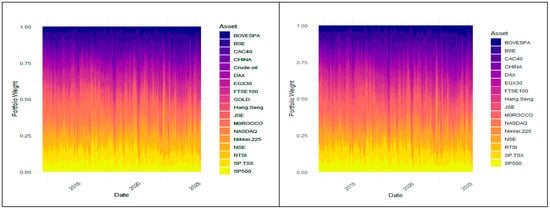
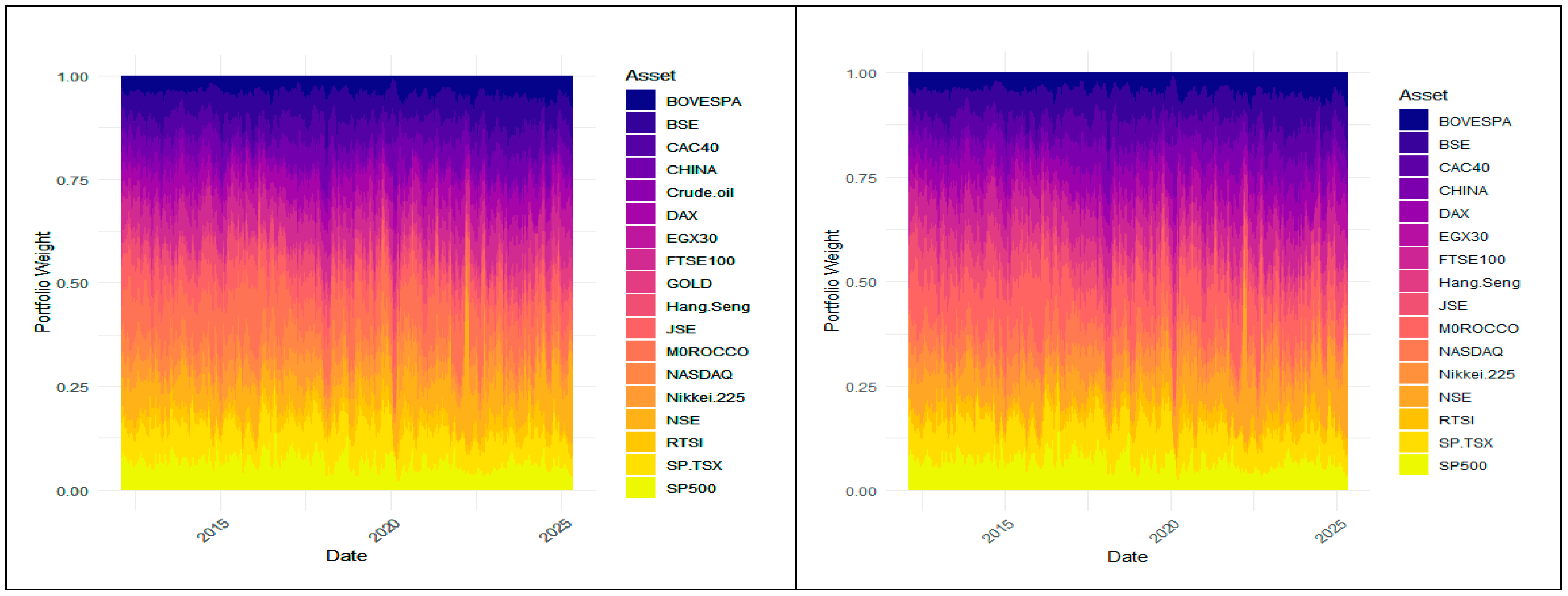
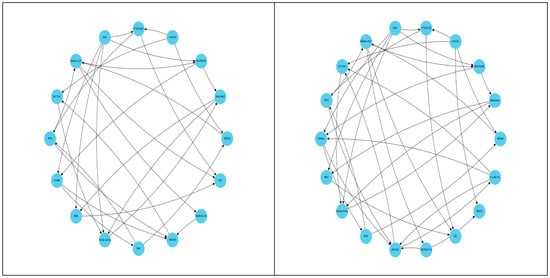
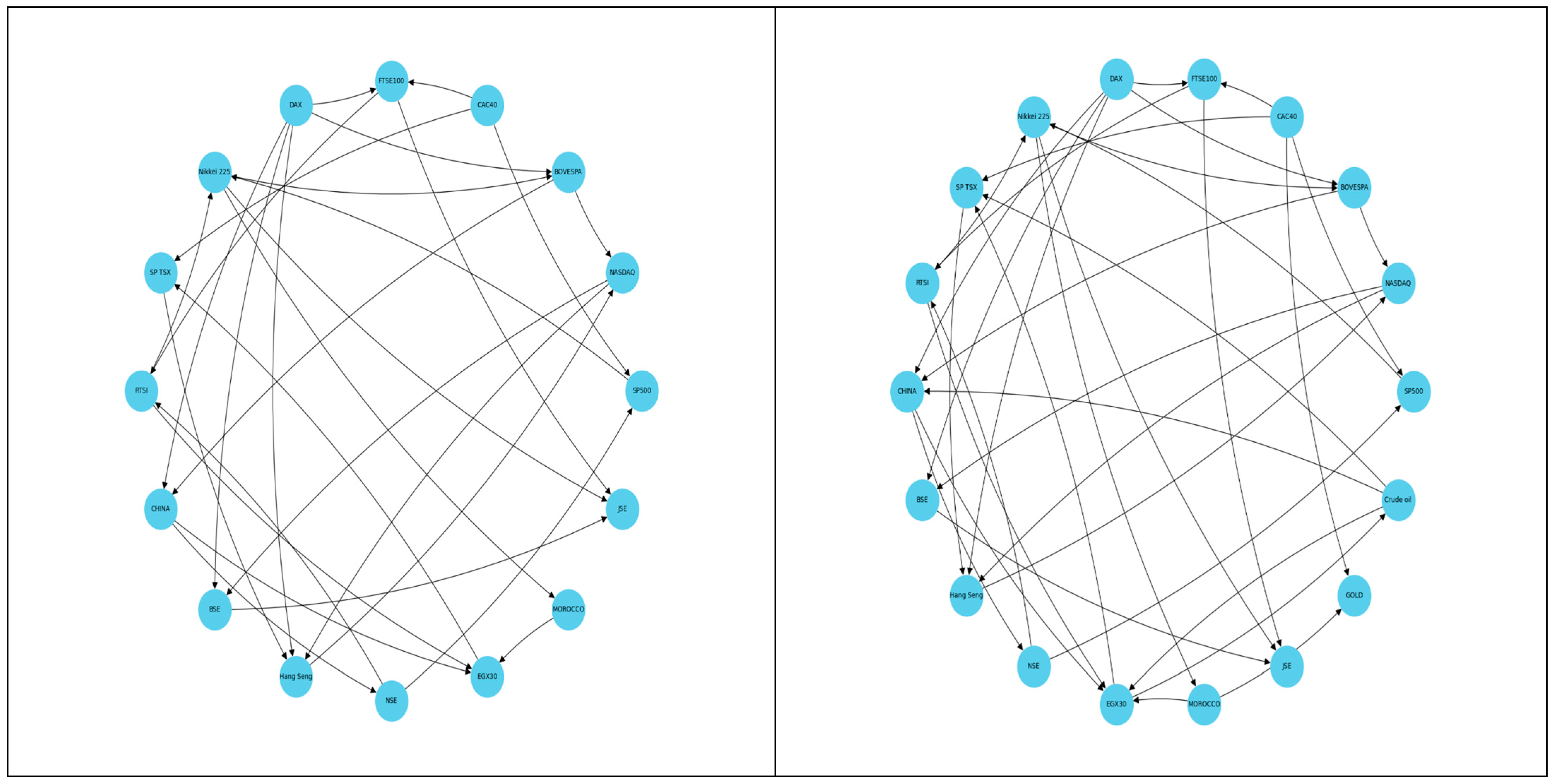
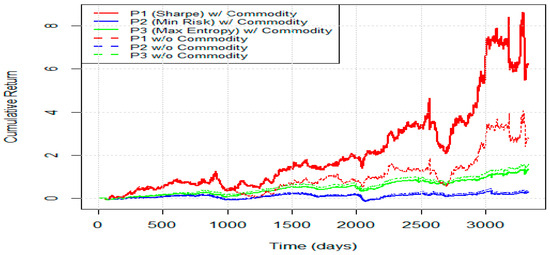
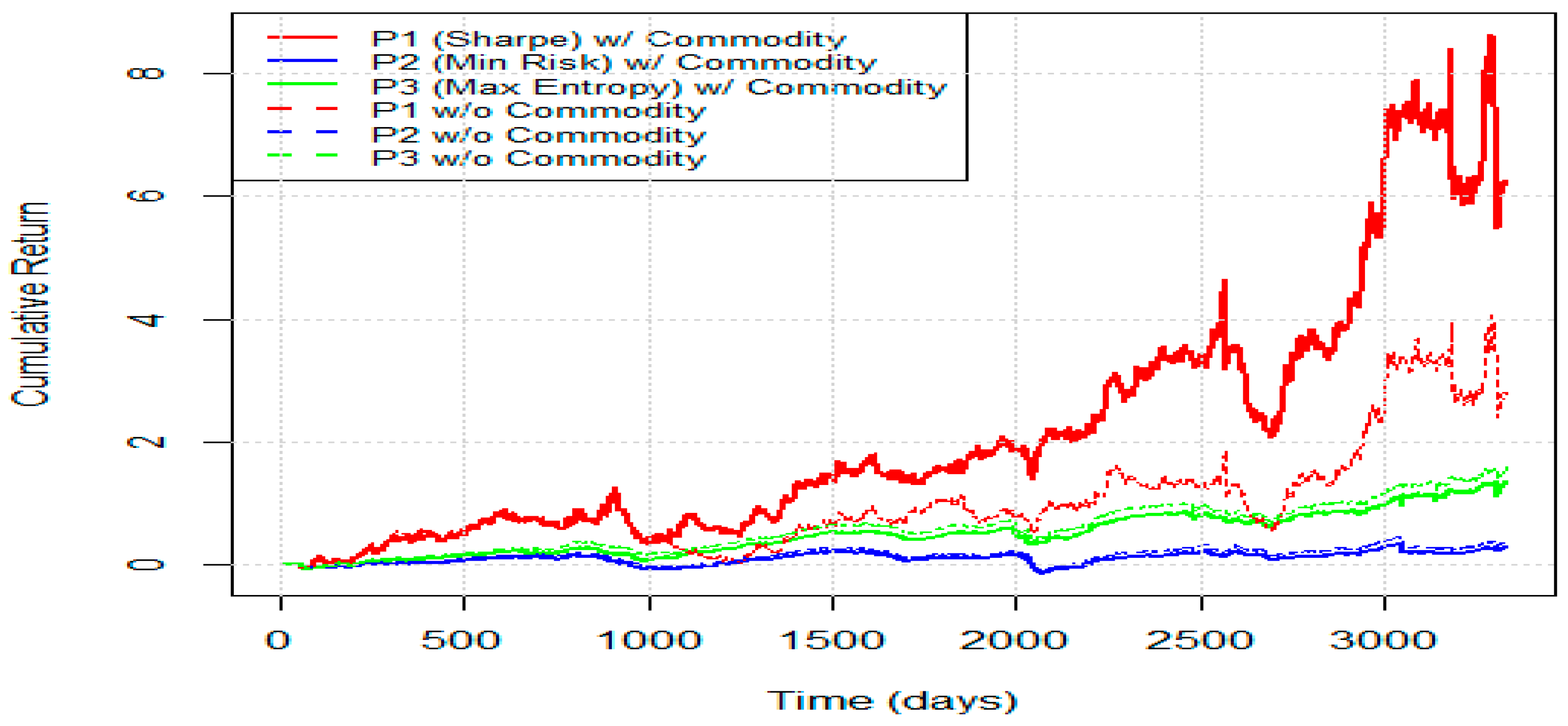
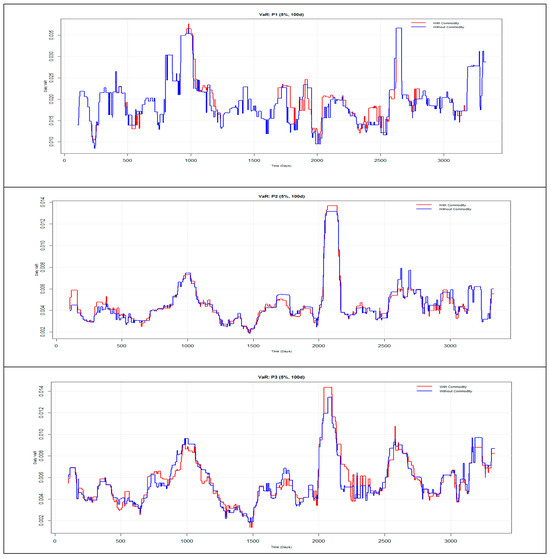
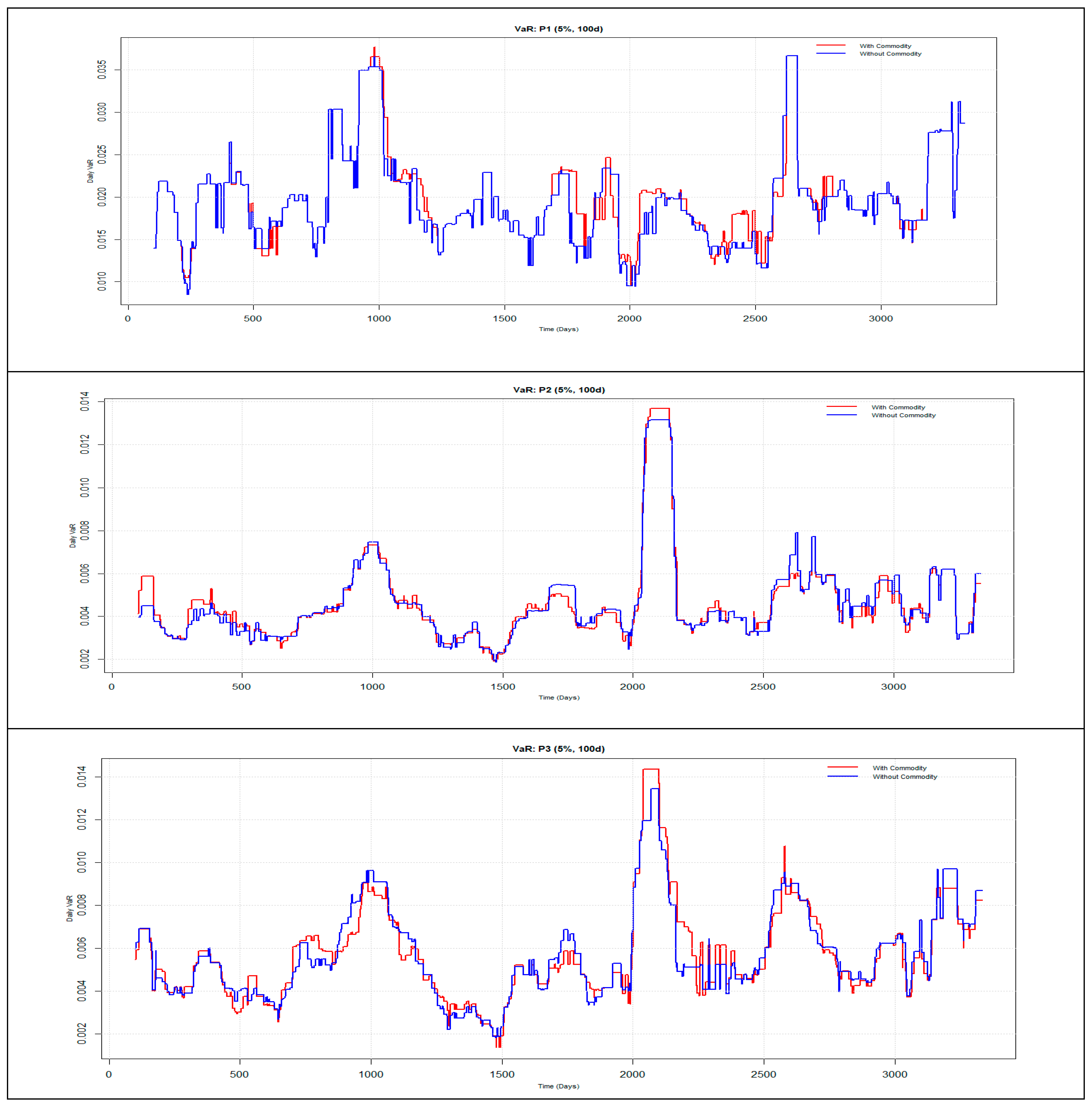
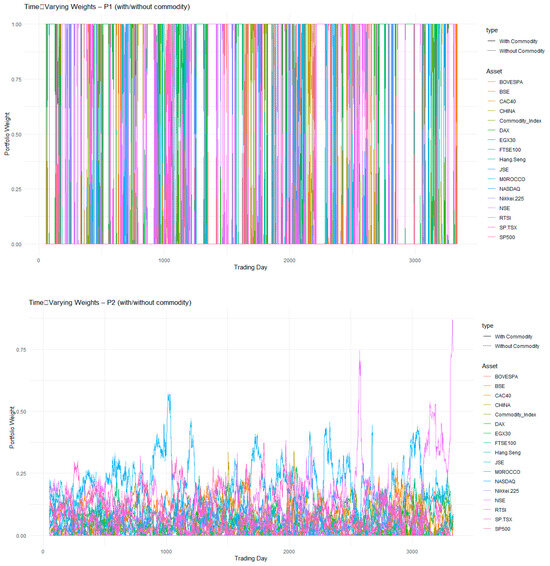
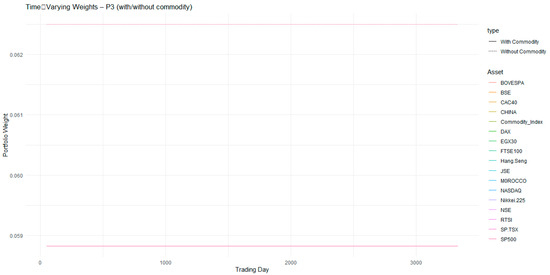
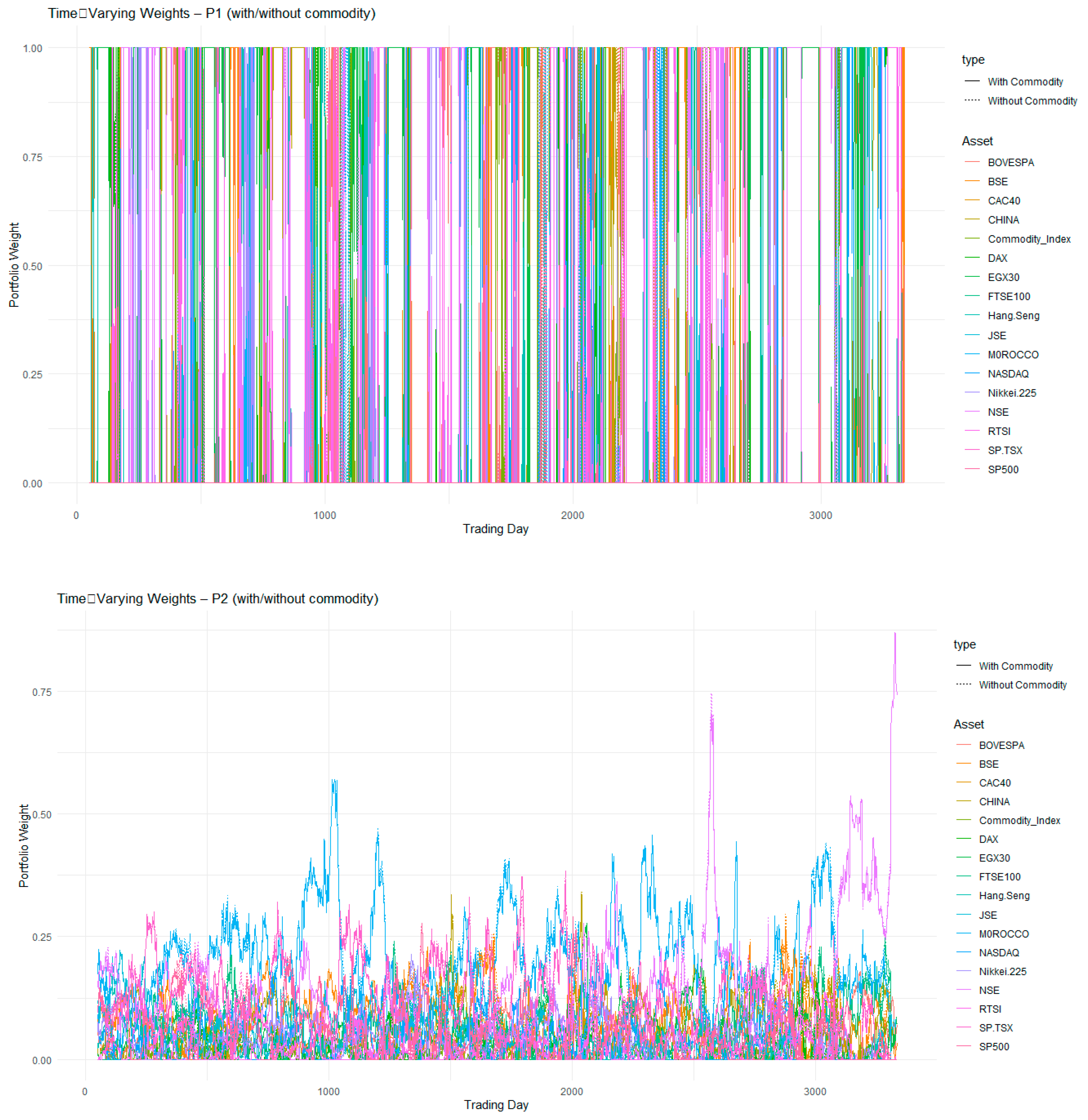
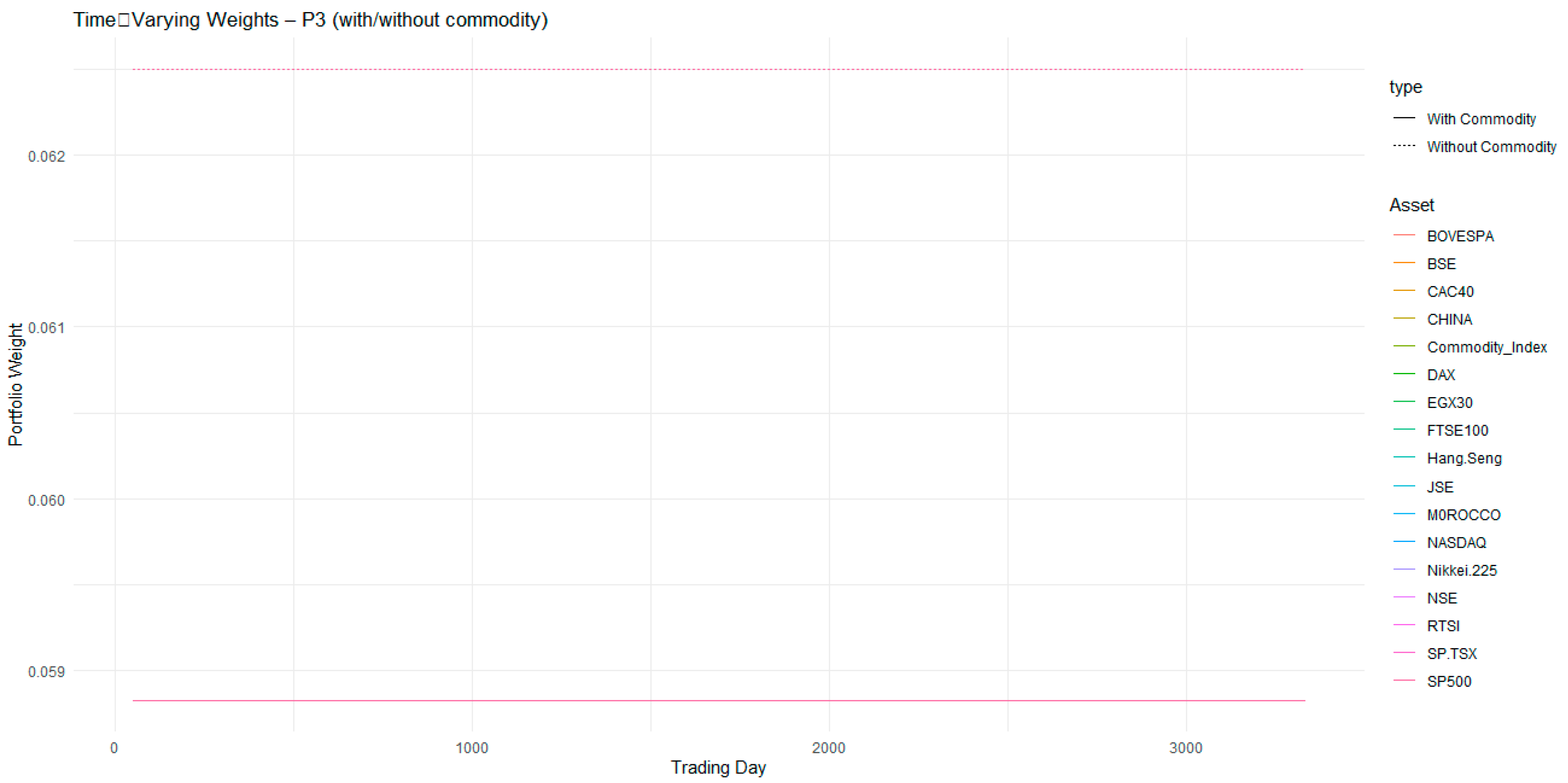
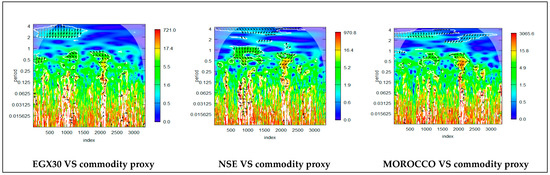
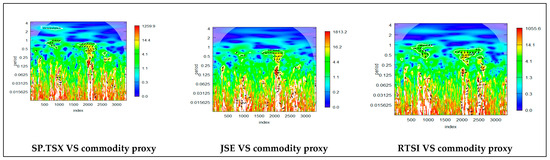
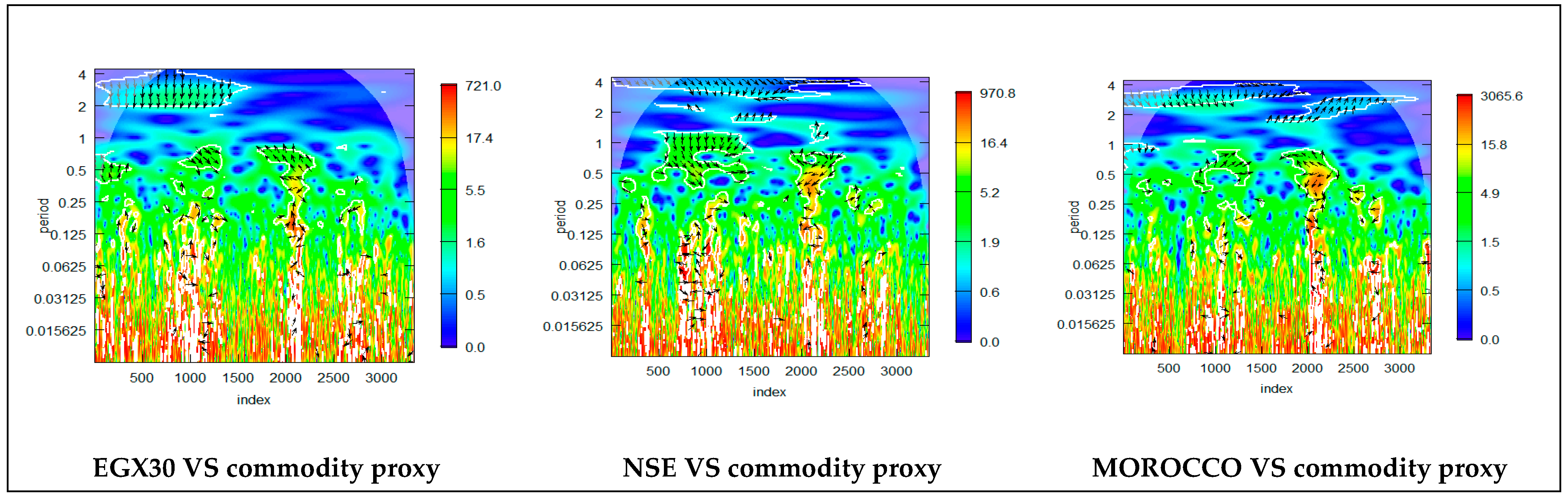
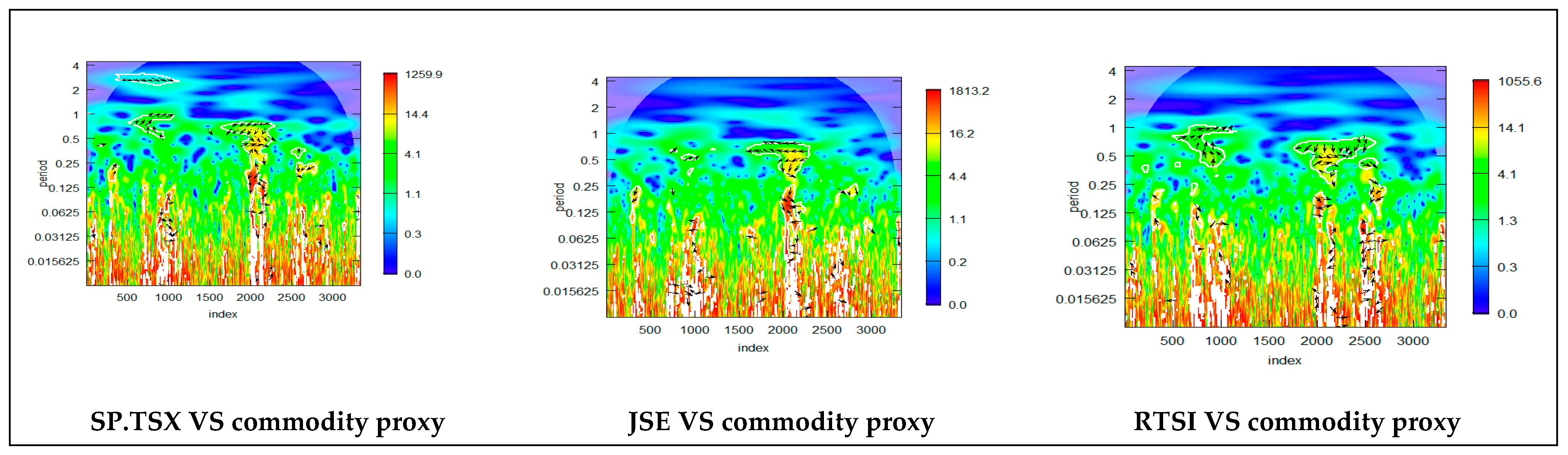

Disclaimer/Publisher’s Note: The statements, opinions and data contained in all publications are solely those of the individual author(s) and contributor(s) and not of MDPI and/or the editor(s). MDPI and/or the editor(s) disclaim responsibility for any injury to people or property resulting from any ideas, methods, instructions or products referred to in the content. |
© 2026 by the authors. Licensee MDPI, Basel, Switzerland. This article is an open access article distributed under the terms and conditions of the Creative Commons Attribution (CC BY) license.