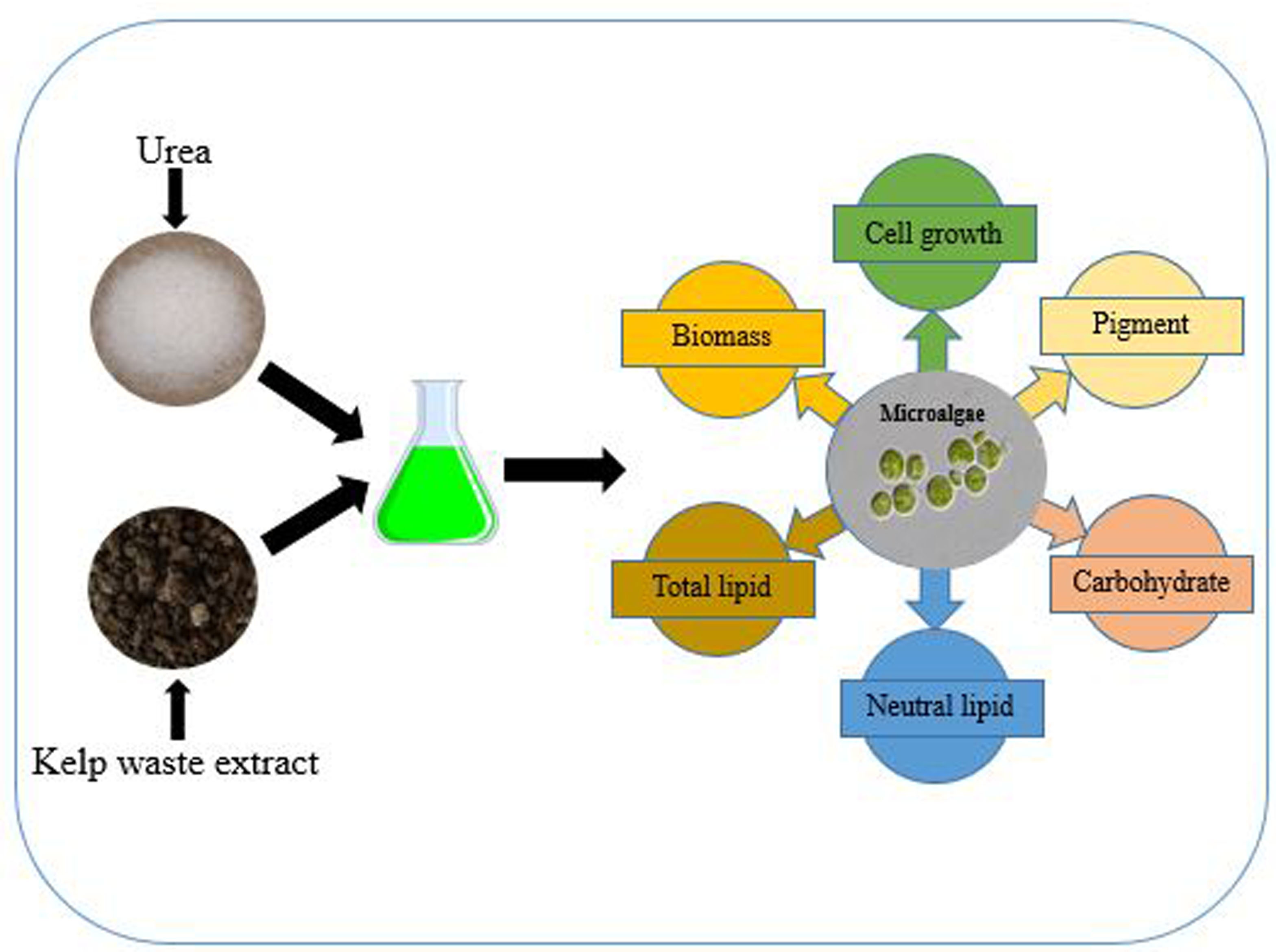
The Use of Urea and Kelp Waste Extract is A Promising Strategy for Maximizing the Biomass Productivity and Lipid Content in Chlorella sorokiniana

 , ,
, , Abstract
Share and Cite
Kumbhar, A.N.; He, M.; Rajper, A.R.; Memon, K.A.; Rizwan, M.; Nagi, M.; Woldemicael, A.G.; Li, D.; Wang, C.; Wang, C. The Use of Urea and Kelp Waste Extract is A Promising Strategy for Maximizing the Biomass Productivity and Lipid Content in Chlorella sorokiniana. Plants 2020, 9, 463. https://doi.org/10.3390/plants9040463
Kumbhar AN, He M, Rajper AR, Memon KA, Rizwan M, Nagi M, Woldemicael AG, Li D, Wang C, Wang C. The Use of Urea and Kelp Waste Extract is A Promising Strategy for Maximizing the Biomass Productivity and Lipid Content in Chlorella sorokiniana. Plants. 2020; 9(4):463. https://doi.org/10.3390/plants9040463
Chicago/Turabian StyleKumbhar, Ali Nawaz, Meilin He, Abdul Razzaque Rajper, Khalil Ahmed Memon, Muhammad Rizwan, Mostafa Nagi, Abeselom Ghirmai Woldemicael, Dan Li, Chun Wang, and Changhai Wang. 2020. "The Use of Urea and Kelp Waste Extract is A Promising Strategy for Maximizing the Biomass Productivity and Lipid Content in Chlorella sorokiniana" Plants 9, no. 4: 463. https://doi.org/10.3390/plants9040463
APA StyleKumbhar, A. N., He, M., Rajper, A. R., Memon, K. A., Rizwan, M., Nagi, M., Woldemicael, A. G., Li, D., Wang, C., & Wang, C. (2020). The Use of Urea and Kelp Waste Extract is A Promising Strategy for Maximizing the Biomass Productivity and Lipid Content in Chlorella sorokiniana. Plants, 9(4), 463. https://doi.org/10.3390/plants9040463