Article

LHCSR3-Type NPQ Prevents Photoinhibition and Slowed Growth under Fluctuating Light in Chlamydomonas reinhardtii


Department of Botany and Centre for Molecular Biosciences Innsbruck, University of Innsbruck, Sternwartestraße 15, 6020 Innsbruck, Austria
Plants 2020, 9(11), 1604; https://doi.org/10.3390/plants9111604
Submission received: 16 October 2020 / Revised: 5 November 2020 / Accepted: 16 November 2020 / Published: 18 November 2020
(This article belongs to the Special Issue High Light Stresses in Photosynthetic Organisms)

Abstract

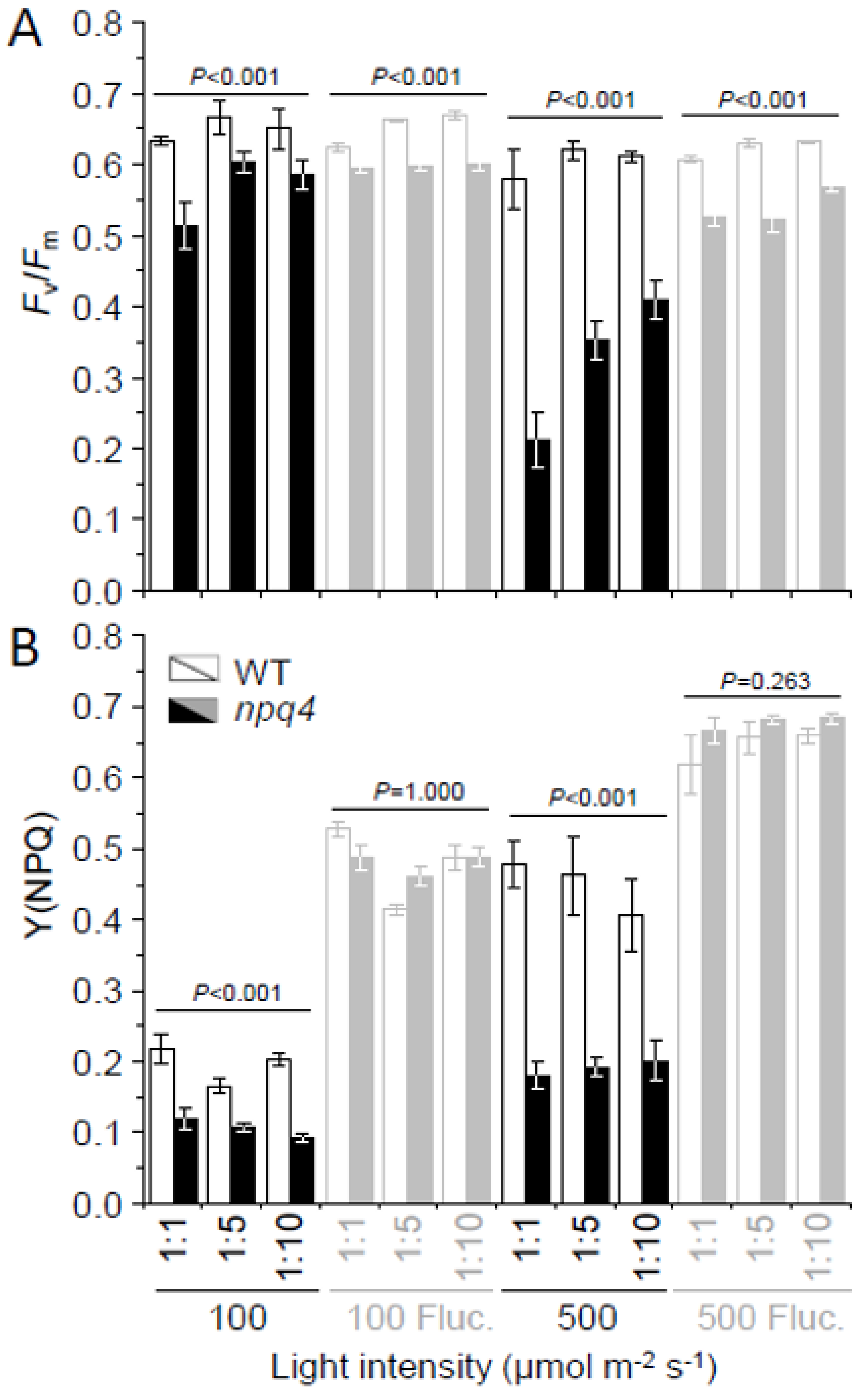
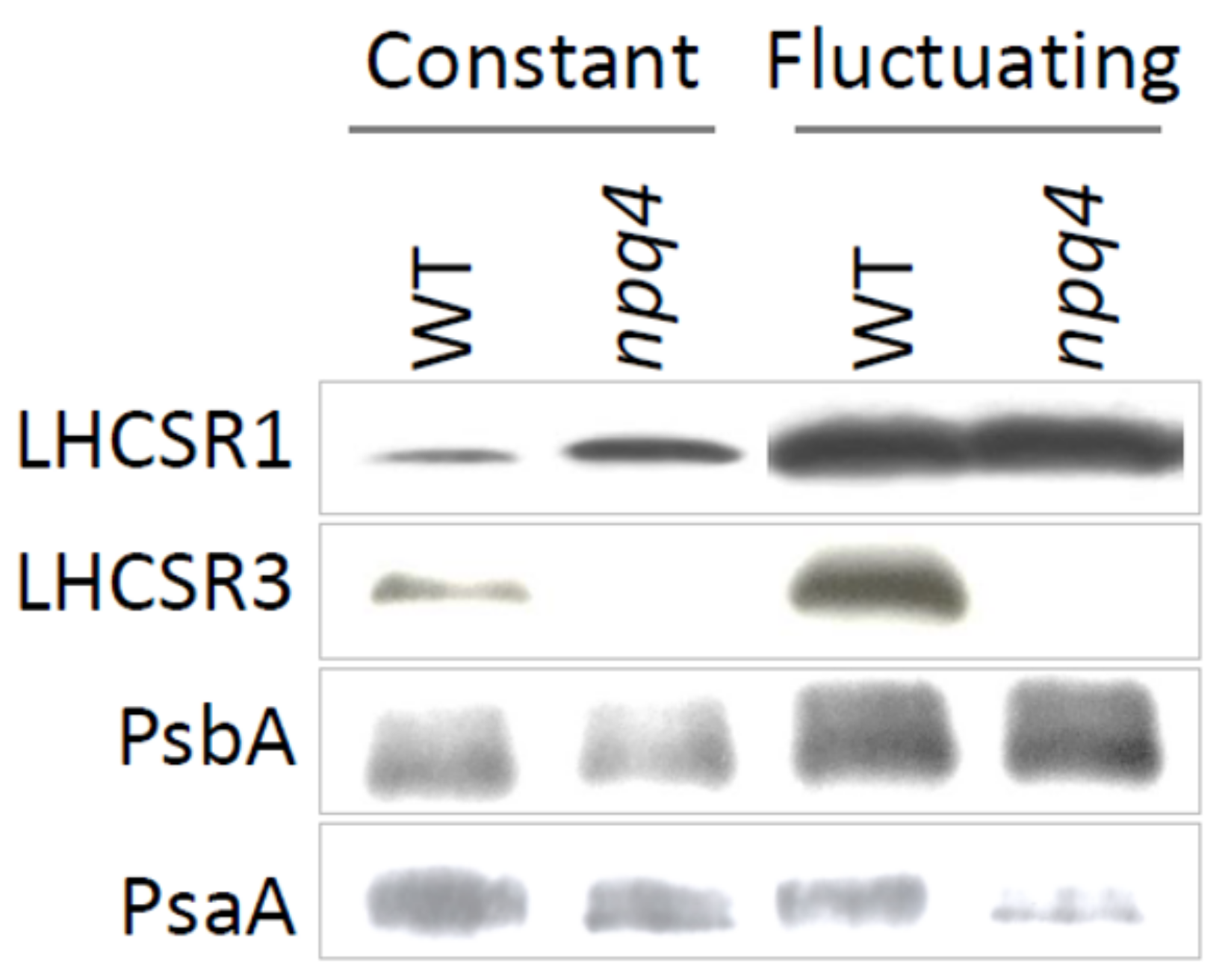
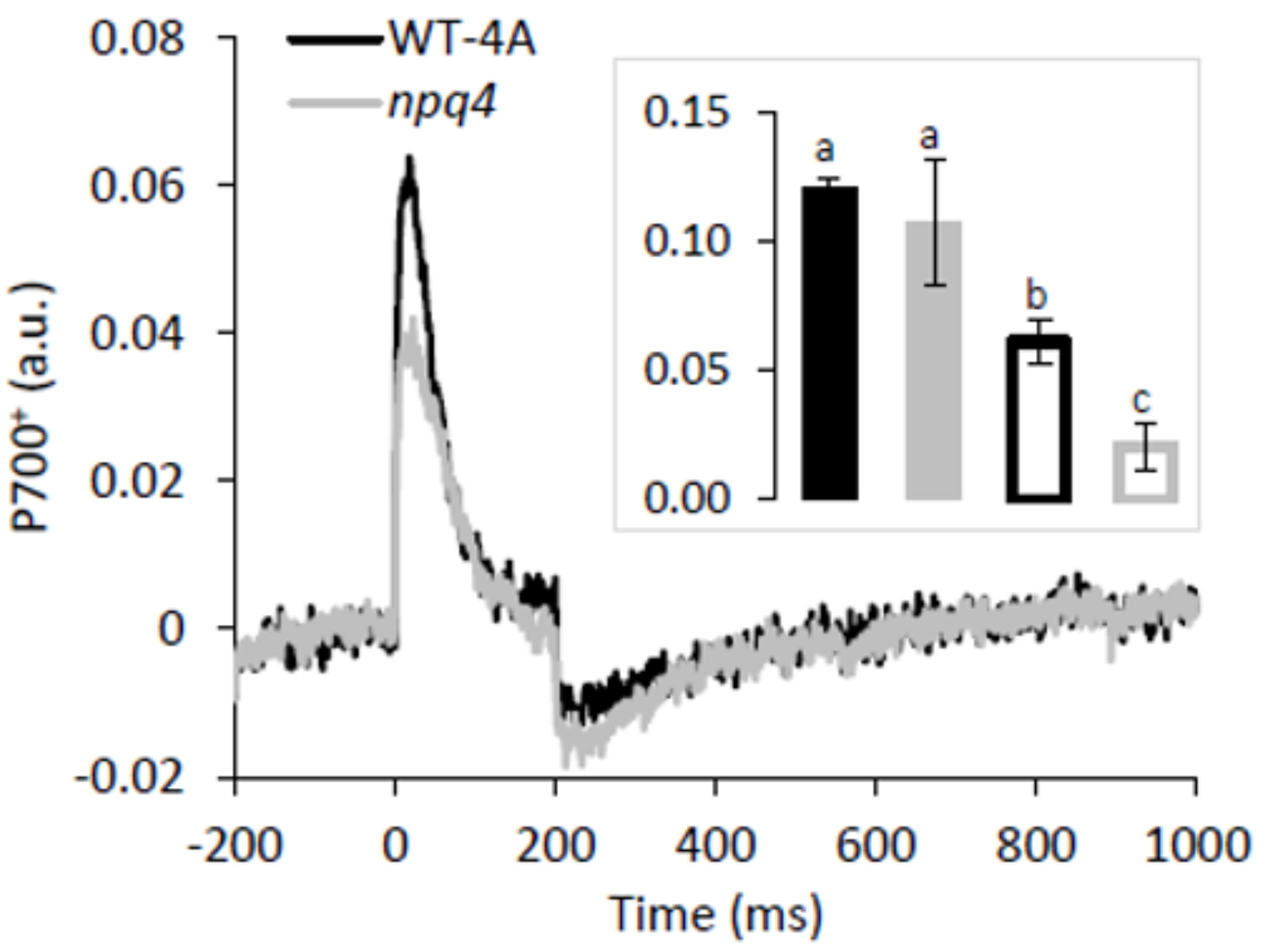
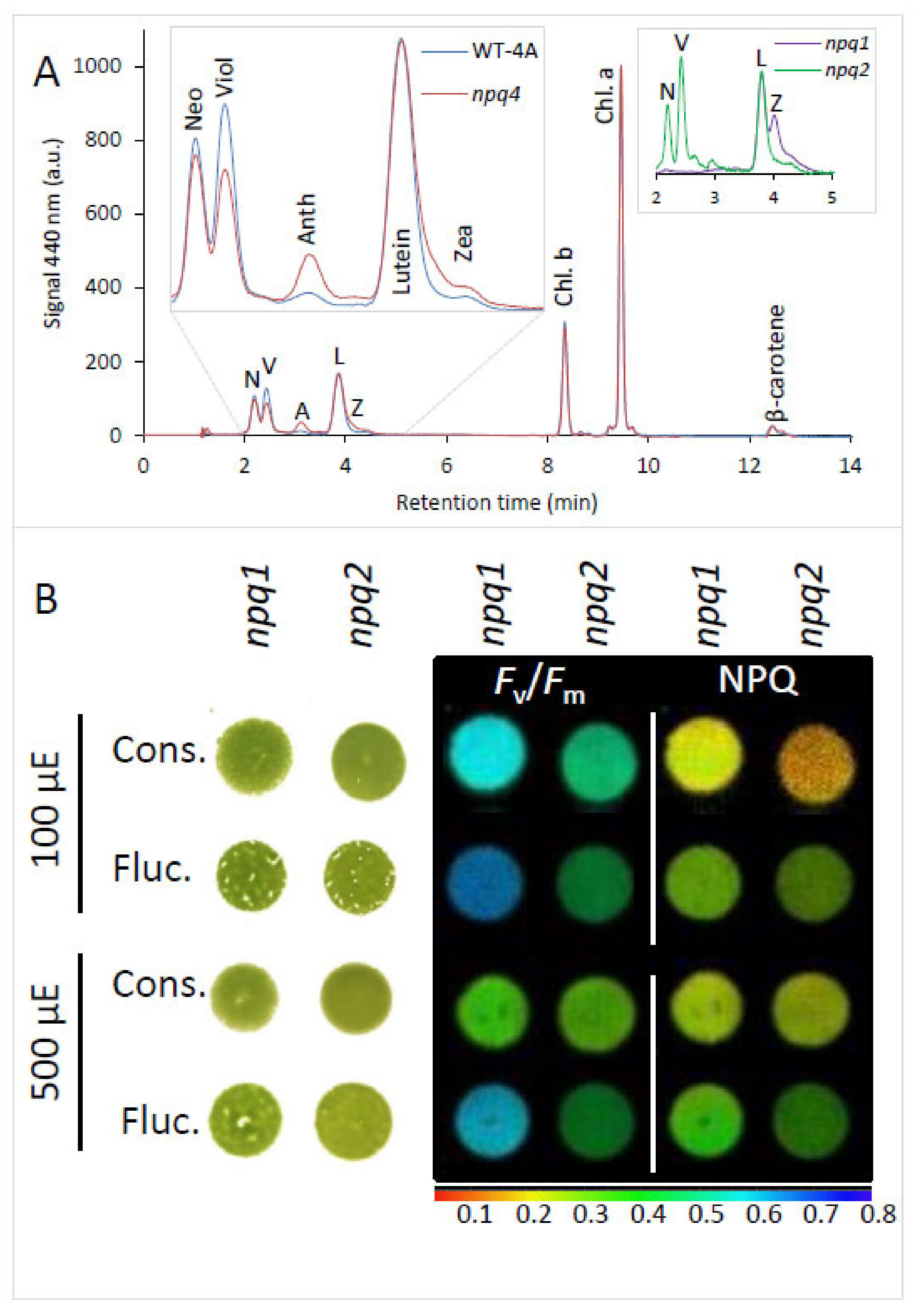
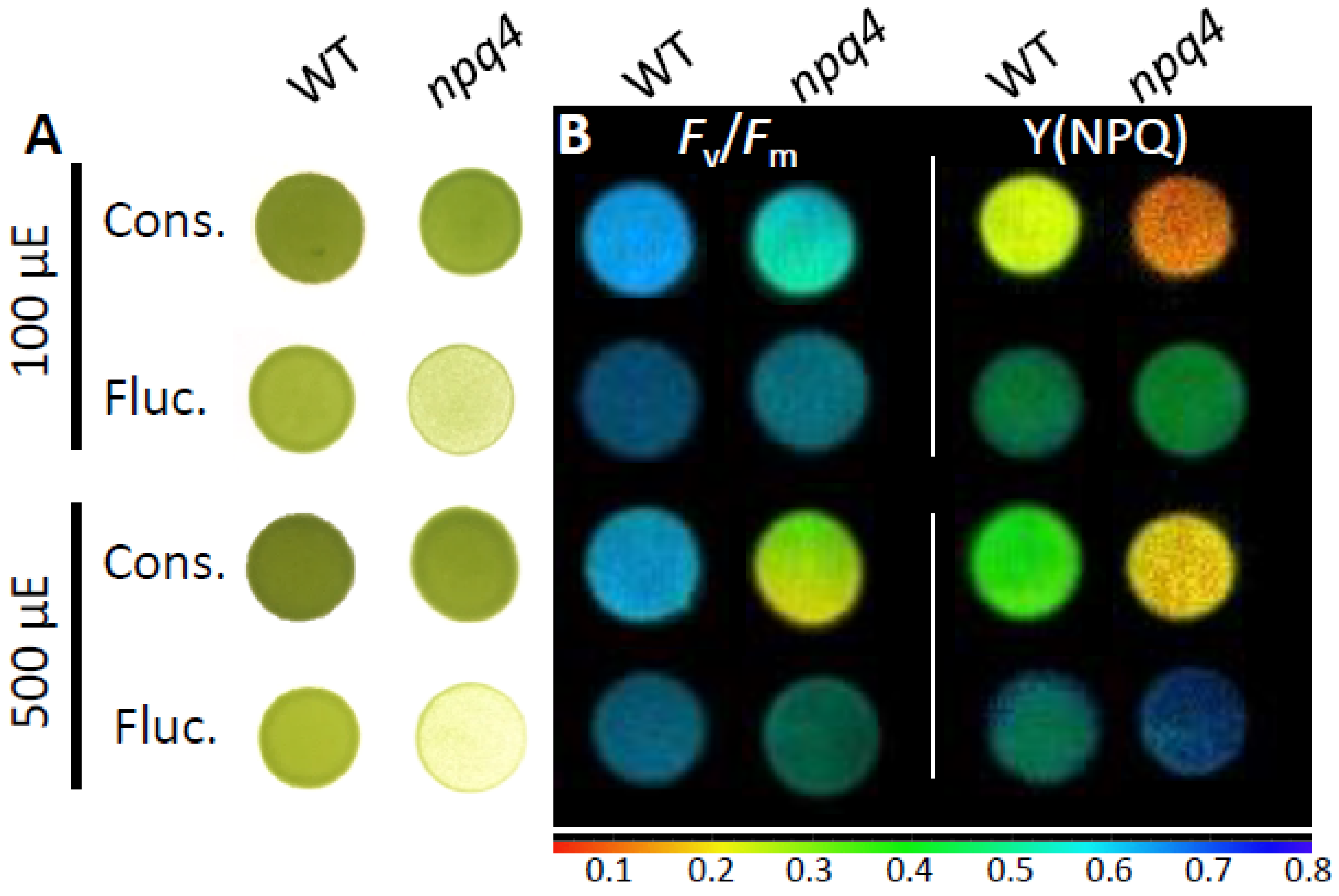
Natural light intensities can rise several orders of magnitude over subsecond time spans, posing a major challenge for photosynthesis. Fluctuating light tolerance in the green alga Chlamydomonas reinhardtii requires alternative electron pathways, but the role of nonphotochemical quenching (NPQ) is not known. Here, fluctuating light (10 min actinic light followed by 10 min darkness) led to significant increase in NPQ/qE-related proteins, LHCSR1 and LHCSR3, relative to constant light of the same subsaturating or saturating intensity. Elevated levels of LHCSR1/3 increased the ability of cells to safely dissipate excess light energy to heat (i.e., qE-type NPQ) during dark to light transition, as measured with chlorophyll fluorescence. The low qE phenotype of the npq4 mutant, which is unable to produce LHCSR3, was abolished under fluctuating light, showing that LHCSR1 alone enables very high levels of qE. Photosystem (PS) levels were also affected by light treatments; constant light led to lower PsbA levels and Fv/Fm values, while fluctuating light led to lower PsaA and maximum P700+ levels, indicating that constant and fluctuating light induced PSII and PSI photoinhibition, respectively. Under fluctuating light, npq4 suffered more PSI photoinhibition and significantly slower growth rates than parental wild type, whereas npq1 and npq2 mutants affected in xanthophyll carotenoid compositions had identical growth under fluctuating and constant light. Overall, LHCSR3 rather than total qE capacity or zeaxanthin is shown to be important in C. reinhardtii in tolerating fluctuating light, potentially via preventing PSI photoinhibition.
Keywords: fluctuating light; photoinhibition; LHCSR; NPQ; Chlamydomonas reinhardtii; stress; state transitions fluctuating light; photoinhibition; LHCSR; NPQ; Chlamydomonas reinhardtii; stress; state transitions