Article

Osmotic Stress Leads to Significant Changes in Rice Root Metabolic Profiles between Tolerant and Sensitive Genotypes


1
Faculty of Agriculture, Iwate University, 3-18-8 Ueda, Morioka 020-8550, Japan
2
Department of Biological Production, Akita Prefectural University, Akita 010-0195, Japan
3
Japan Science and Technology Agency, Core Research for Evolutionary Science and Technology Project, Tokyo 102-0076, Japan
*
Author to whom correspondence should be addressed.
Plants 2020, 9(11), 1503; https://doi.org/10.3390/plants9111503
Submission received: 18 September 2020 / Revised: 24 October 2020 / Accepted: 5 November 2020 / Published: 6 November 2020
(This article belongs to the Special Issue Regulation of Root Growth and Elongation)

Abstract

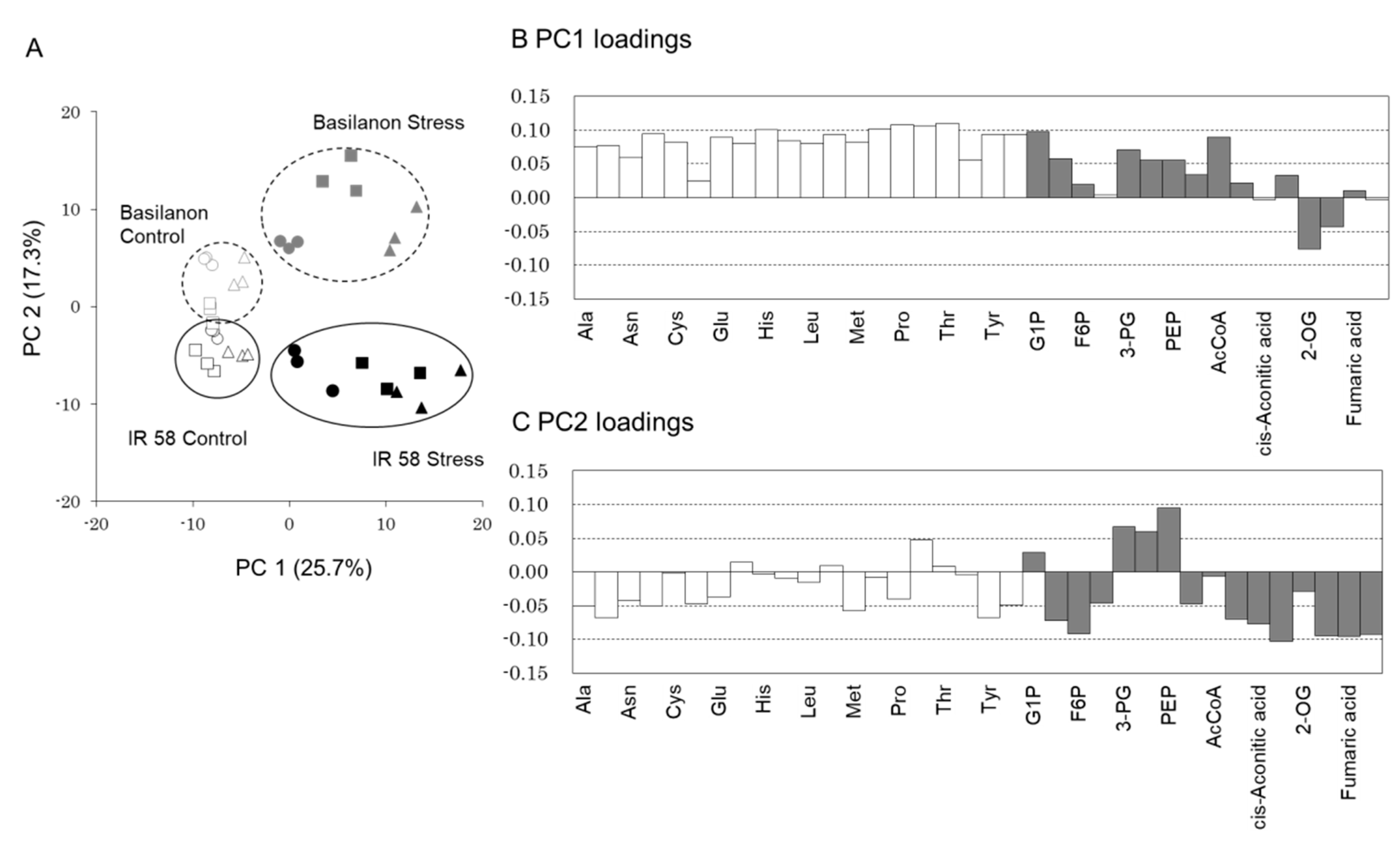
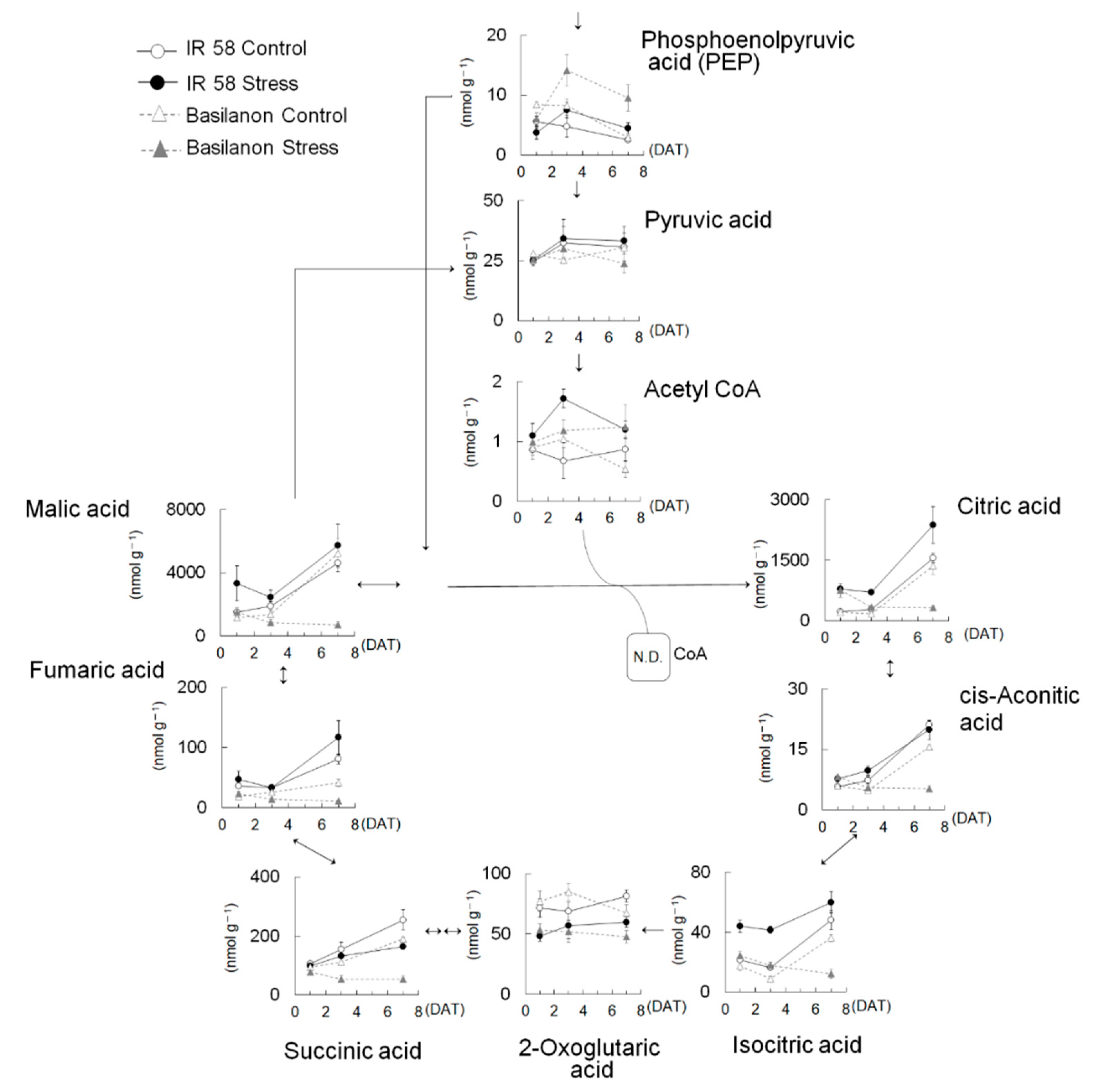
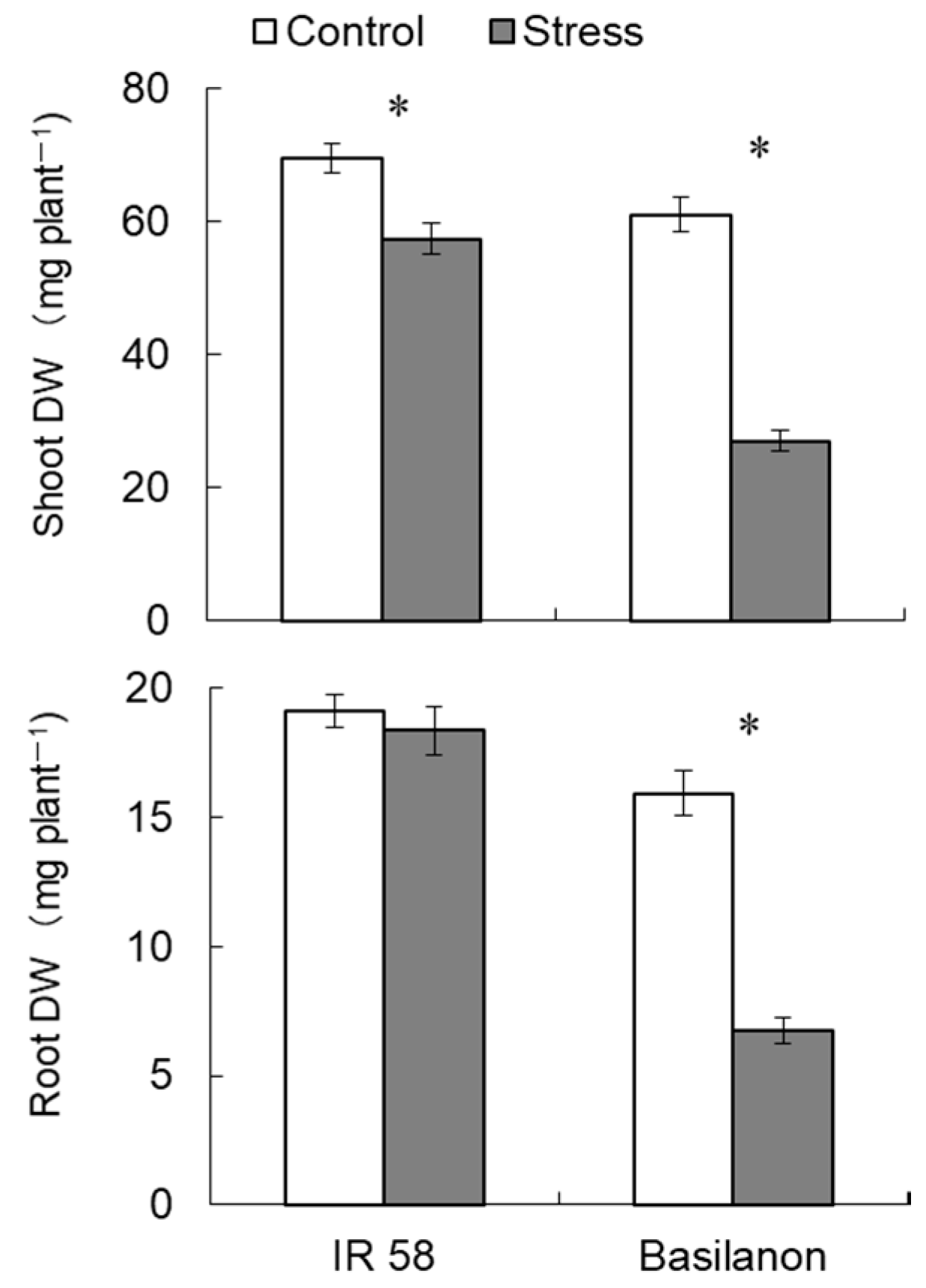
To breed osmotic stress-tolerant rice, the mechanisms involved in maintaining root growth under osmotic stress is important to elucidate. In this study, two rice (Oryza sativa L.) cultivars, IR 58 (stress-tolerant cultivar) and Basilanon (stress-sensitive cultivar), were used. After 1, 3, and 7 days of −0.42 MPa osmotic stress treatment induced by polyethylene glycol (PEG) 6000, root metabolomes were analyzed, yielding 276 detected compounds. Among 276 metabolites, 102 metabolites increased with the duration of the stress treatment in IR 58 roots, and only nine metabolites decreased. In contrast, 51 metabolites increased, and 45 metabolites decreased in Basilanon roots. Principal component analysis (PCA) scores clearly indicated differences between the cultivars and the treatments. Pathway analysis showed that the metabolites exhibiting stress-induced increases in IR 58 were those involved in sugar metabolism (such as sucrose 6’-phosphate, glucose 1-phosphate), polyamine and phenylpropanoid metabolisms (such as spermine, spermidine, gamma-aminobutyric acid (GABA)), and glutathione metabolism (such as glutathione, cysteine, cadaverine). IR 58 roots showed an increase in the most proteinogenic amino acids such as proline, serine, glutamine and asparagine. It was also maintained or increased the tricarboxylic acid (TCA) cycle intermediates (citric acid, cis-Aconitic acid, isocitric acid, fumaric acid, malic acid) under osmotic stress compared with that under control. Therefore, IR 58 actively synthesized various metabolites, and the increase in these metabolites contributed to the maintenance of important biological functions such as energy production and antioxidant defense to promote root development under osmotic stress.
Keywords: metabolomics; osmotic stress; Oryza sativa L.; rice; root metabolomics; osmotic stress; Oryza sativa L.; rice; root