Induction of Defense Responses and Partial Control of Powdery Mildew and Gray Mold in Vitis vinifera cv. Chardonnay by Pseudomonas protegens-Based Formulations

 ,
,  , and
, and
Abstract
1. Introduction
2. Results
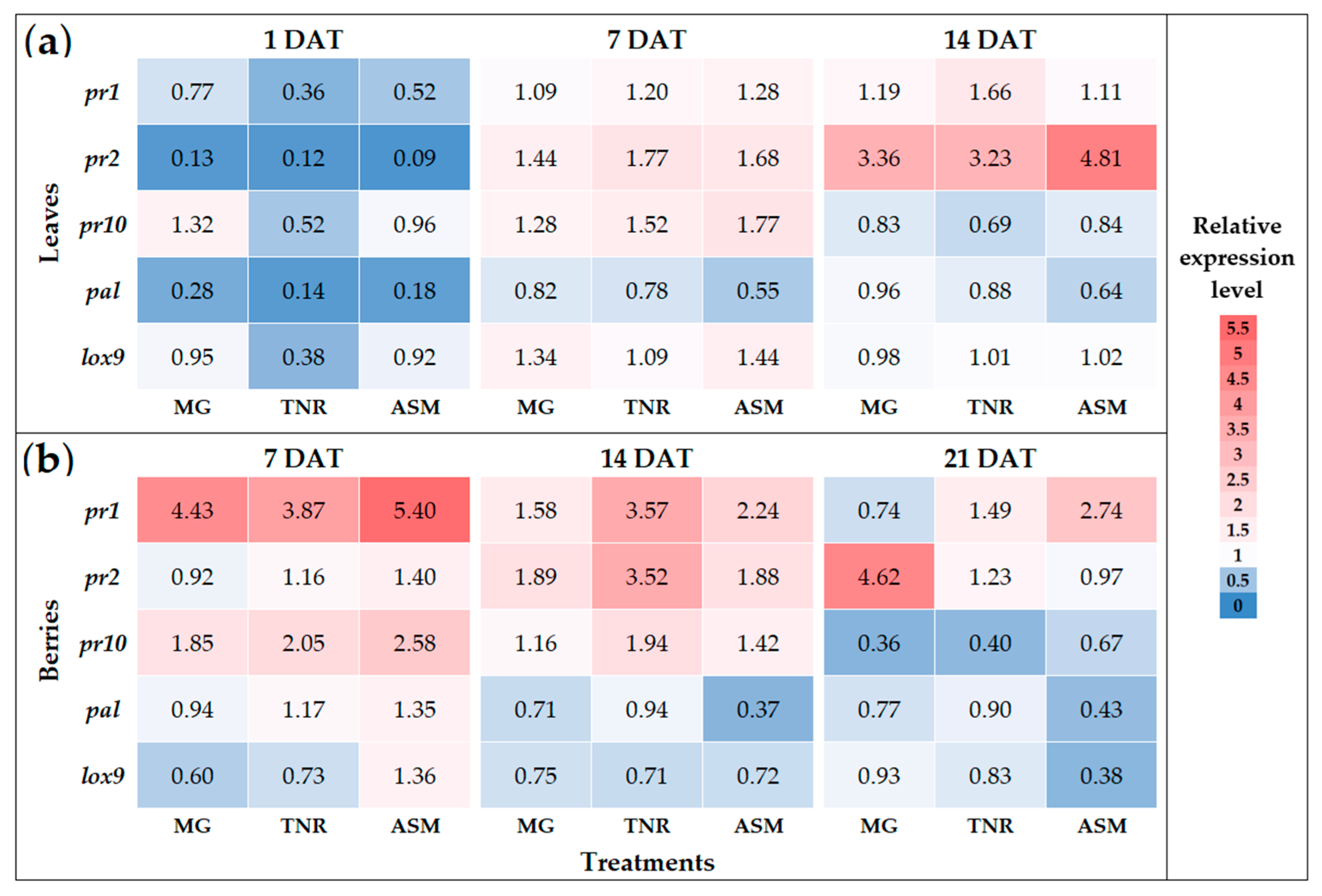
2.1. Results of Relative Expression Assays to Determine Defense Gene Induction
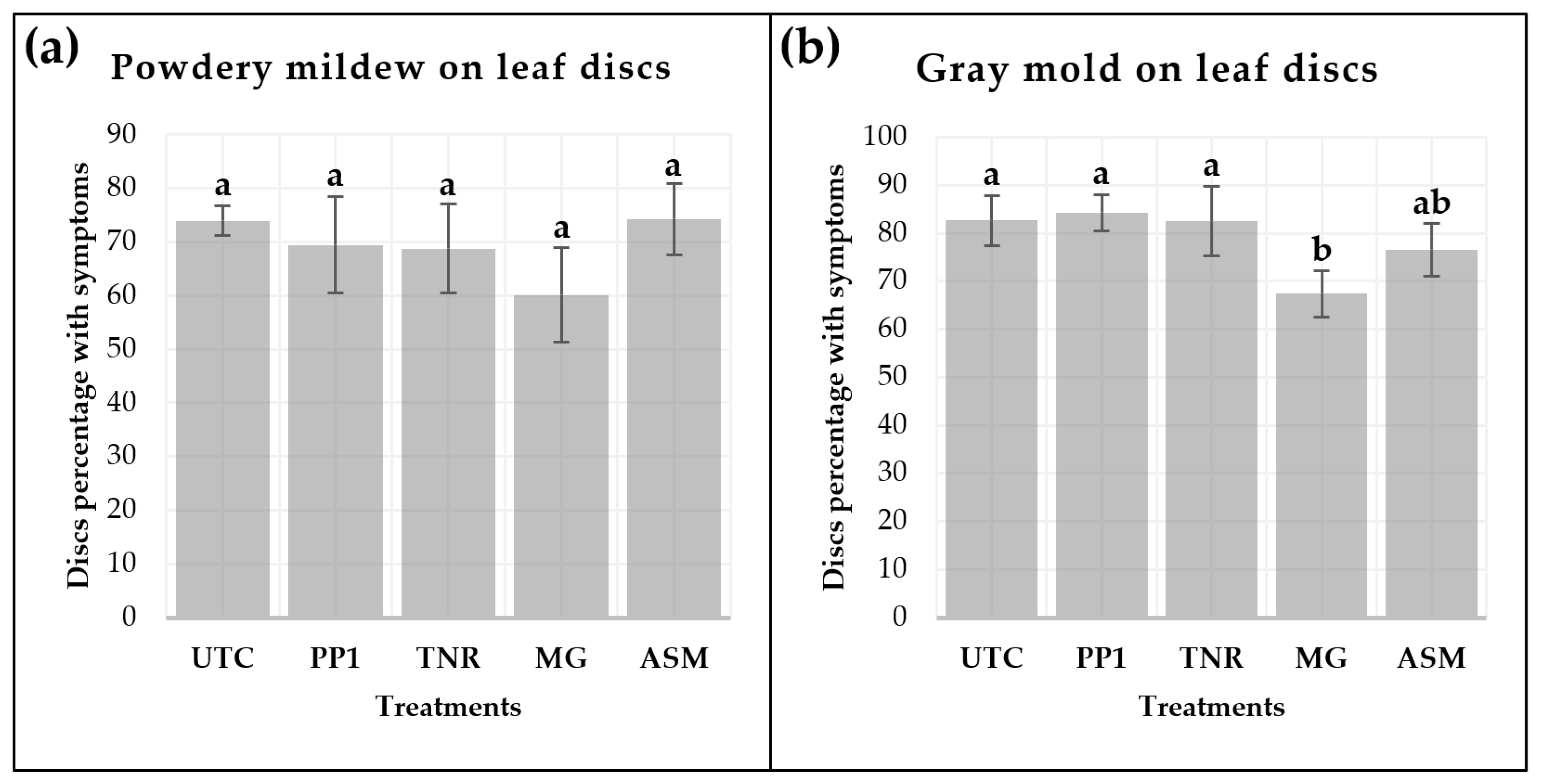
2.2. Results of Leaf Disc Assays Evaluating Pseudomonas protegens-Induced Control of Botrytis cinerea and Erysiphe necator in Grapevine
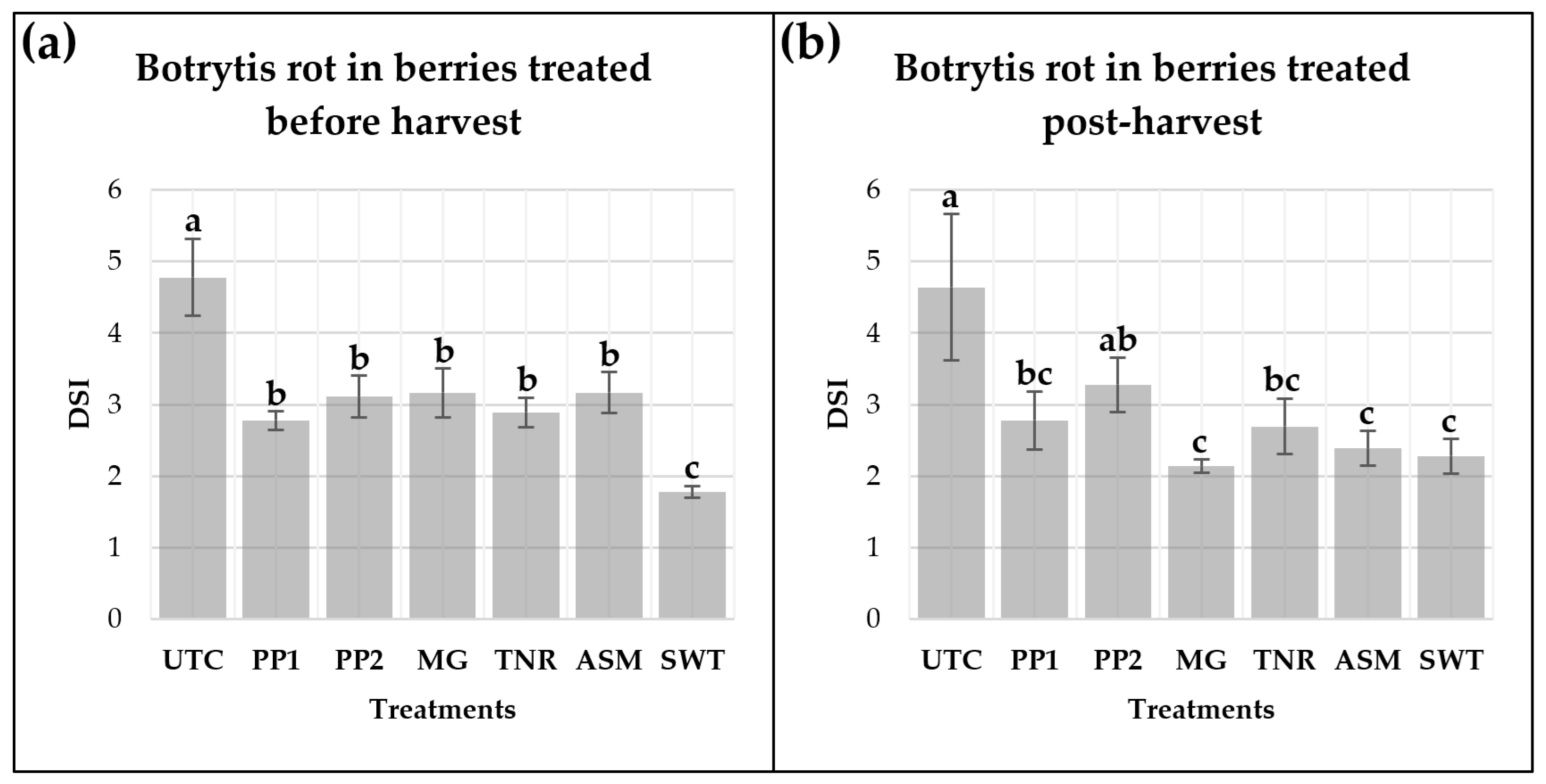
2.3. In Vivo Assessment of the Efficacy of Microbial and Chemical Resistance Inducers on Grapevine Berries Inoculated with Botrytis cinerea
2.4. Field Evaluation of Biocontrol Efficacy of Pseudomonas protegens Against Powdery Mildew and Botrytis Bunch Rot
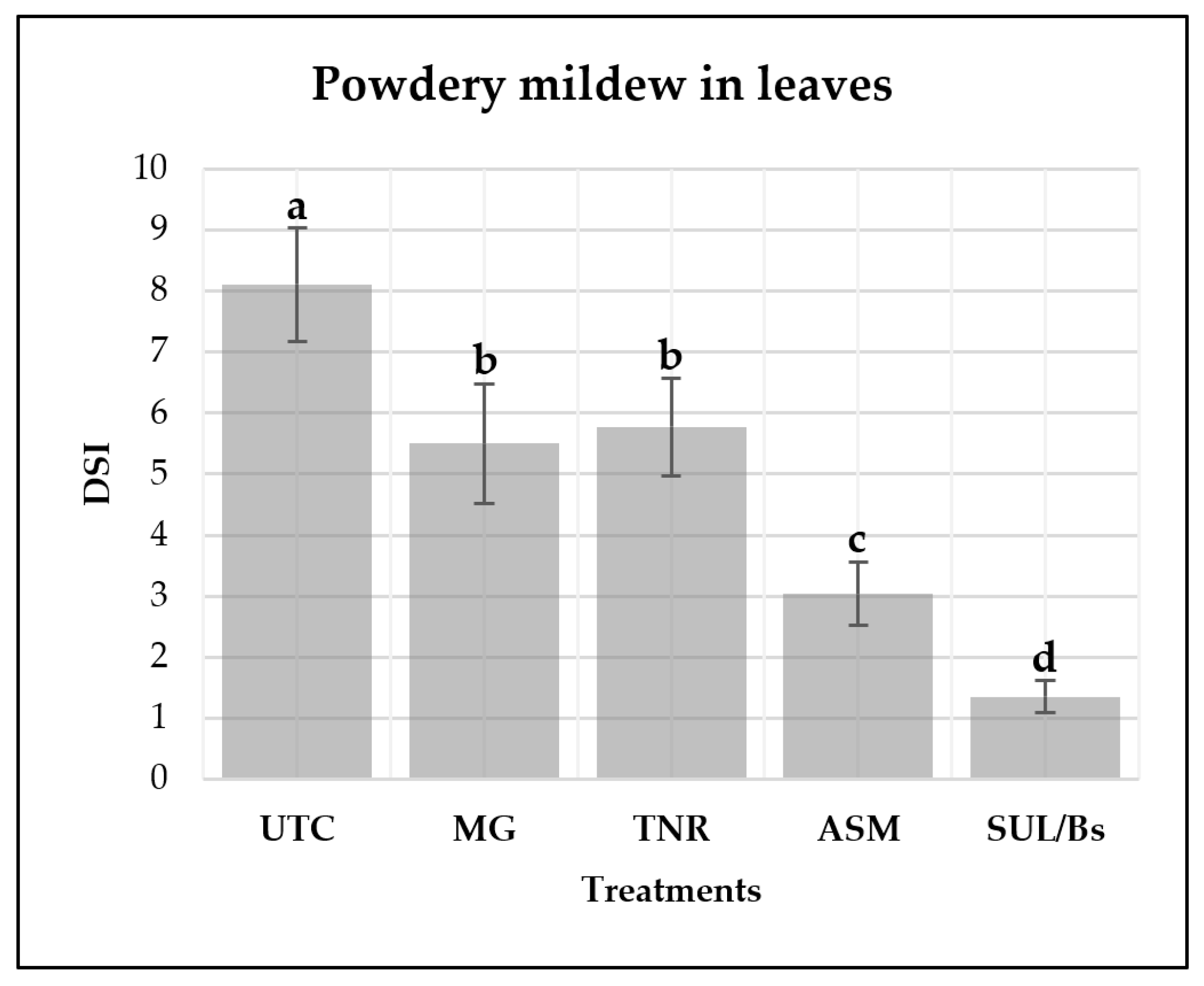
2.4.1. Control of Powdery Mildew on Leaves Under Field Conditions by Pseudomonas protegens-Based Formulations
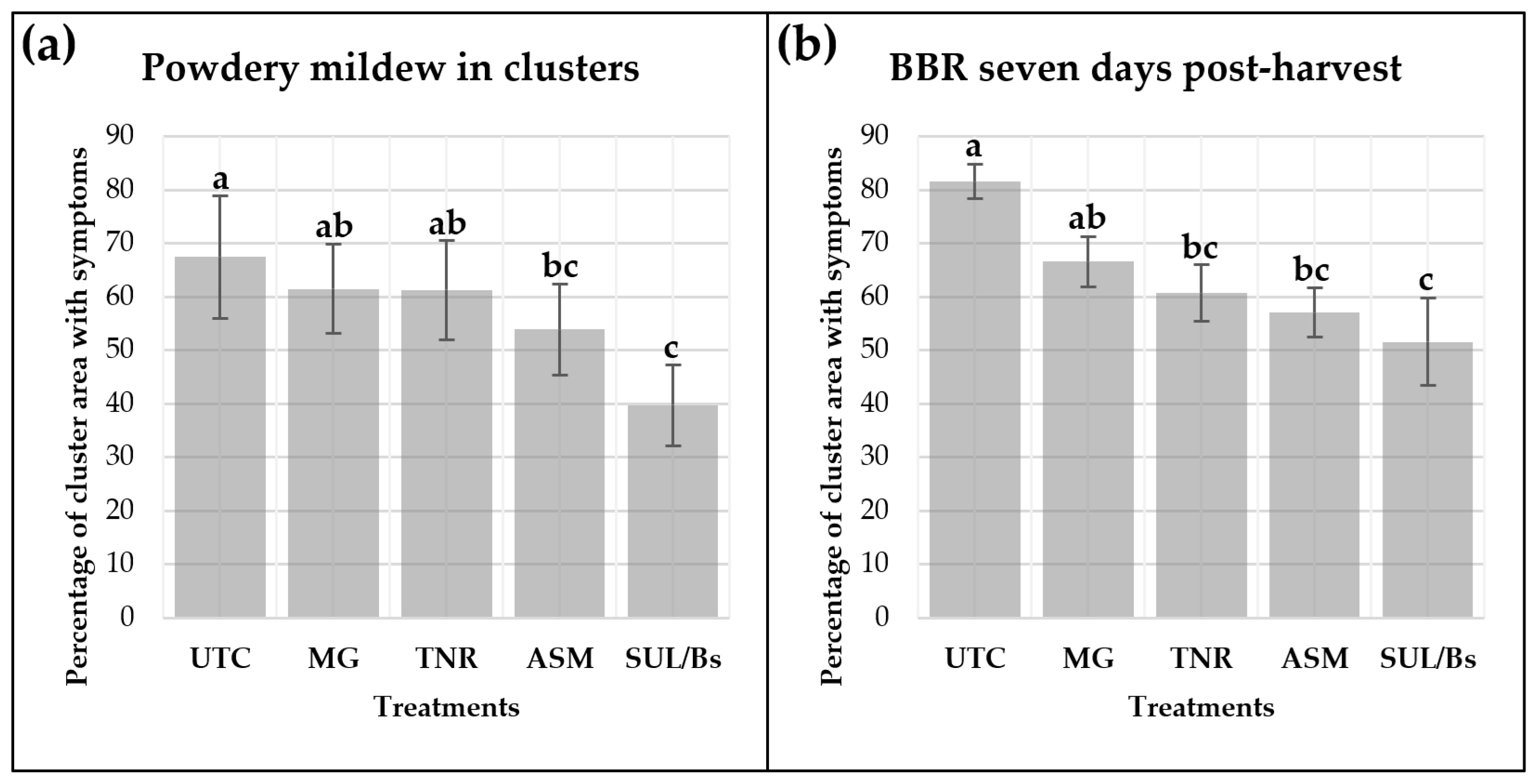
2.4.2. Efficacy Assay of Pseudomonas protegens to Control Powdery Mildew and Botrytis Bunch Rot in Chardonnay Grapevines Bunches Under Field Conditions
3. Discussion
4. Materials and Methods
4.1. Plant Material
4.2. Microbiological Material
4.3. Relative Expression Assays to Determine Defense Gene Induction
4.3.1. RNA Extraction and cDNA Synthesis
4.3.2. Studied Genes, Primer Validation, and qPCR Quantification
4.4. Leaf Disc Control Assays to Assess the Suppression of Botrytis cinerea and Erysiphe necator in Grapevine Induced by Pseudomonas protegens
4.5. In Vivo Assessment of the Efficacy of Microbial and Chemical Resistance Inducers on Grape Berries Inoculated by Botrytis cinerea
4.6. Efficacy Assay of Pseudomonas protegens to Control Gray Mold and Powdery Mildew in Chardonnay Grapevines Under Field Conditions
4.6.1. Assessment of Powdery Mildew Under Field Conditions
4.6.2. Assessment Botrytis Bunch Rot Control Under Field Conditions
5. Conclusions
Supplementary Materials
Author Contributions
Funding
Data Availability Statement
Acknowledgments
Conflicts of Interest
Abbreviations
| PM | powdery mildew |
| BBR | botrytis bunch rot |
| ASM | acibenzolar-S-methyl |
| SA | salicylic acid |
| JA | jasmonic acid |
| IR | induced resistance |
| SAR | systemic acquired resistance |
| WP | wettable powder |
| UTC | untreated control |
| SDW | sterile distilled water |
| qPCR | quantitative real-time PCR |
| Ct | cycle threshold |
| cDNA | complementary DNA |
| bp | base pairs |
| CFU | colony-forming units |
| WG | water-dispersible granules |
| DEGs | differentially expressed genes |
| IPGRI | International Plant Genetic Resources Institute |
| BBCH | Biologische Bundesanstalt, Bundessortenamt und Chemische Industrie |
| EL | Eichhorn & Lorenz |
| DSI | disease severity index |
| DAT | days after treatment |
| DPI | days post-inoculation |
Appendix A

| Treatment × Time | pr1 (Mean ± SD) | pr2 (Mean ± SD) | pr10 (Mean ± SD) | pal (Mean ± SD) | Lox9 (Mean ± SD) |
|---|---|---|---|---|---|
| MG-1 DAT | 0.77 ± 0.45 a | 0.13 ± 0.11 a | 1.32 ± 1.20 b | 0.28 ± 0.19 a | 0.95 ± 0.92 a |
| MG-7 DAT | 1.09 ± 0.13 ab | 1.44 ± 0.75 bc | 1.28 ± 0.80 bc | 0.82 ± 0.19 b | 1.34 ± 0.50 b |
| MG-14 DAT | 1.19 ± 0.47 b | 3.36 ± 1.37 d | 0.83 ± 0.22 a | 0.96 ± 0.56 b | 0.98 ± 0.29 a |
| TNR-1 DAT | 0.36 ± 0.11 a | 0.12 ± 0.05 a | 0.52 ± 0.05 a | 0.14 ± 0.02 a | 0.38 ± 0.04 a |
| TNR-7 DAT | 1.20 ± 0.43 ab | 1.77 ± 0.66 c | 1.52 ± 0.42 bc | 0.78 ± 0.10 b | 1.09 ± 0.26 ab |
| TNR-14 DAT | 1.66 ± 0.61 b | 3.23 ± 0.01 d | 0.69 ± 0.80 a | 0.88 ± 1.21 ab | 1.01 ± 1.60 ab |
| ASM-1 DAT | 0.52 ± 1.77 c | 0.09 ± 0.28 a | 0.96 ± 1.91 b | 0.18 ± 0.14 a | 0.92 ± 0.65 ab |
| ASM-7 DAT | 1.28 ± 0.59 ab | 1.68 ± 1.07 c | 1.77 ± 0.66 ab | 0.55 ± 0.29 a | 1.44 ± 0.46 b |
| ASM-14 DAT | 1.11 ± 0.32 ab | 4.81 ± 1.86 e | 0.84 ± 0.21 a | 0.64 ± 0.19 a | 1.02 ± 0.11 ab |
| Treatment × Time | pr1 (Mean ± SD) | pr2 (Mean ± SD) | pr10 (Mean ± SD) | pal (Mean ± SD) | Lox9 (Mean ± SD) |
|---|---|---|---|---|---|
| MG-1 DAT | 4.43 ± 3.38 ab | 0.92 ± 0.45 c | 1.85 ± 1.28 bc | 0.94 ± 0.46 bc | 0.60 ± 0.12 c |
| MG-7 DAT | 1.58 ± 1.40 b | 1.89 ± 2.37 bc | 1.16 ± 0.63 c | 0.71 ± 1.05 c | 0.75 ± 0.35 bc |
| MG-14 DAT | 0.74 ± 0.89 b | 4.62 ± 8.67 ab | 0.36 ± 0.23 d | 0.77 ± 0.42 c | 0.93 ± 1.32 bc |
| TNR-1 DAT | 3.87 ± 3.91 ab | 1.16 ± 0.77 bc | 2.05 ± 1.69 ab | 1.17 ± 0.70 b | 0.73 ± 0.24 bc |
| TNR-7 DAT | 3.57 ± 2.90 ab | 3.52 ± 3.70 ab | 1.94 ± 1.55 bc | 0.94 ± 1.12 bc | 0.71 ± 0.19 bc |
| TNR-14 DAT | 1.49 ± 1.74 b | 1.23 ± 2.25 bc | 0.40 ± 0.28 d | 0.90 ± 0.68 bc | 0.83 ± 1.33 bc |
| ASM-1 DAT | 5.40 ± 1.94 a | 1.40 ± 0.82 bc | 2.58 ± 0.79 a | 1.35 ± 0.71 a | 1.36 ± 0.37 a |
| ASM-7 DAT | 2.24 ± 2.89 ab | 1.88 ± 1.41 bc | 1.42 ± 0.76 bc | 0.37 ± 0.30 d | 0.72 ± 0.43 bc |
| ASM-14 DAT | 2.74 ± 3.00 ab | 0.97 ± 1.46 c | 0.67 ± 0.56 cd | 0.43 ± 0.27 d | 0.38 ± 0.32 c |
| Zone | Scientific Name | Max Score | Total Score | Query Cover | E Value | Per. Ident (%) | Acc. Len | Accession |
|---|---|---|---|---|---|---|---|---|
| ITS | Botrytis cinerea | 628 | 628 | 1 | 1 × 10−175 | 100.0 | 426 | MT293592.1 |
| RPB2 | Botrytis cinerea | 1439 | 1439 | 1 | 0.0 | 99.9 | 4394 | XM_024697031.1 |
References
- OIV (International Organisation of Vine and Wine). World Wine Production Outlook. OIV First Estimates 29 November 2024. 2024. Available online: https://www.oiv.int/ (accessed on 4 September 2025).
- ODEPA (Oficina de Estudios y Políticas Agrarias). Boletín del Vino y Pisco—Febrero 2025. 2025. Available online: https://www.odepa.gob.cl/publicaciones/boletines/boletin-del-vino-y-pisco-febrero-2025 (accessed on 22 October 2025).
- Gutiérrez-Gamboa, G.; Mucalo, A. Adaptive viticulture strategies to enhance resilience and grape quality in cold climate regions in response to climate warming. Horticulturae 2025, 11, 394. [Google Scholar] [CrossRef]
- Latorre, B.A. Compendio de las Enfermedades de las Plantas, 1st ed.; Ediciones UC: Santiago, Chile, 2018; ISBN 9789561422841. [Google Scholar]
- Pirrello, C.; Mizzotti, C.; Tomazetti, T.C.; Colombo, M.; Bettinelli, P.; Prodorutti, D.; Peressotti, E.; Zulini, L.; Stefanini, M.; Angeli, G.; et al. Emergent ascomycetes in viticulture: An interdisciplinary overview. Front. Plant Sci. 2019, 10, 1394. [Google Scholar] [CrossRef] [PubMed]
- Ul Haq, I.; Sarwar, M.K.; Faraz, A.; Latif, M.Z. Synthetic chemicals: Major component of plant disease management. In Plant Disease Management Strategies for Sustainable Agriculture Through Traditional and Modern Approaches, 1st ed.; Ul Haq, I., Ijaz, S., Eds.; Springer International Publishing: Cham, Switzerland, 2020; pp. 53–81. [Google Scholar] [CrossRef]
- Gan, C.M.; Tang, T.; Zhang, Z.Y.; Li, M.; Zhao, X.Q.; Li, S.Y.; Yan, Y.W.; Chen, M.X.; Zhou, X. Unraveling the intricacies of powdery mildew: Insights into colonization, plant defense mechanisms, and future strategies. Int. J. Mol. Sci. 2025, 26, 3513. [Google Scholar] [CrossRef] [PubMed]
- Váczy Kálmán, Z.; Otto, M.; Gomba-Tóth, A.; Geiger, A.; Golen, R.; Hegyi-Kaló, J.; Cels, T.; Geml, J.; Zsófi, Z.; Hegyi, Á.I. Botrytis cinerea causes different plant responses in grape (Vitis vinifera) berries during noble and grey rot: Diverse metabolism versus simple defence. Front. Plant Sci. 2024, 15, 1433161. [Google Scholar] [CrossRef]
- Lastochkina, O.; Seifikalhor, M.; Aliniaeifard, S.; Baymiev, A.; Pusenkova, L.; Garipova, S.; Kulabuhova, D.; Maksimov, I. Bacillus spp.: Efficient biotic strategy to control postharvest diseases of fruits and vegetables. Plants 2019, 8, 97. [Google Scholar] [CrossRef] [PubMed]
- Beckerman, J.; Palmer, C.; Tedford, E.; Ypema, H. Fifty years of fungicide development, deployment, and future use. Phytopathology 2023, 113, 694–706. [Google Scholar] [CrossRef]
- Islam, T.; Danishuddin, T.; Matin, M.N.; Barai, H.R.; Haque, M.A. Resistance mechanisms of plant pathogenic fungi to fungicide, environmental impacts of fungicides, and sustainable solutions. Plants 2024, 13, 2737. [Google Scholar] [CrossRef]
- Taibi, O.; Fedele, G.; Rossi, V. Pre-infection efficacy of resistance inducers against grapevine powdery mildew. Plant Pathol. 2024, 73, 1238–1246. [Google Scholar] [CrossRef]
- Enebe, M.C.; Babalola, O.O. The impact of microbes in the orchestration of plants’ resistance to biotic stress: A disease management approach. Appl. Microbiol. Biotechnol. 2019, 103, 9–25. [Google Scholar] [CrossRef]
- Liu, H.; Brettell, L.E.; Qiu, Z.; Singh, B.K. Microbiome-mediated stress resistance in plants. Trends Plant Sci. 2020, 25, 733–743. [Google Scholar] [CrossRef]
- Massa, N.; Bona, E.; Novello, G.; Todeschini, V.; Boatti, L.; Mignone, F.; Gamalero, E.; Lingua, G.; Berta, G.; Cesaro, P. AMF communities associated to Vitis vinifera in an Italian vineyard subjected to integrated pest management at two different phenological stages. Sci. Rep. 2020, 10, 9197. [Google Scholar] [CrossRef]
- Reis, P.; Mondello, V.; Diniz, I.; Alves, A.; Rego, C.; Fontaine, F. Effect of the combined treatments with LC2017 and Trichoderma atroviride strain I-1237 on disease development and defense responses in vines infected by Lasiodiplodia theobromae. Agronomy 2022, 12, 996. [Google Scholar] [CrossRef]
- Silva-Valderrama, I.; Toapanta, D.; Miccono, M.A.; Lolas, M.; Díaz, G.A.; Cantu, D.; Castro, A. Biocontrol potential of grapevine endophytic and rhizospheric fungi against trunk pathogens. Front. Microbiol. 2021, 11, 614620. [Google Scholar] [CrossRef] [PubMed]
- Alattas, H.; Glick, B.R.; Murphy, D.V.; Scott, C. Harnessing Pseudomonas spp. for sustainable plant crop protection. Front. Microbiol. 2024, 15, 1485197. [Google Scholar] [CrossRef] [PubMed]
- Andreolli, M.; Zapparoli, G.; Angelini, E.; Lucchetta, G.; Lampis, S.; Vallini, G. Pseudomonas protegens MP12: A plant growth-promoting endophytic bacterium with broad-spectrum antifungal activity against grapevine phytopathogens. Microbiol. Res. 2019, 219, 123–131. [Google Scholar] [CrossRef]
- Lakkis, S.; Trotel-Aziz, P.; Rabenoelina, F.; Schwarzenberg, A.; Nguema-Ona, E.; Clément, C.; Aziz, A. Strengthening grapevine resistance by Pseudomonas fluorescens PTA-CT2 relies on distinct defense pathways in susceptible and partially resistant genotypes to downy mildew and gray mold diseases. Front. Plant Sci. 2019, 10, 1112. [Google Scholar] [CrossRef]
- Baukova, A.; Bogun, A.; Sushkova, S.; Minkina, T.; Mandzhieva, S.; Alliluev, I.; Jatav, H.S.; Kalinitchenko, V.; Rajput, V.D.; Delegan, Y. New Insights into Pseudomonas spp.-Produced Antibiotics: Genetic Regulation of Biosynthesis and Implementation in Biotechnology. Antibiotics 2024, 13, 597. [Google Scholar] [CrossRef]
- Zhao, Q.; Wang, R.; Song, Y.; Lu, J.; Zhou, B.; Song, F.; Zhang, L.; Huang, Q.; Gong, J.; Lei, J.; et al. Pyoluteorin-deficient Pseudomonas protegens improves cooperation with Bacillus velezensis, biofilm formation, co-colonizing, and reshapes rhizosphere microbiome. npj Biofilms Microbiomes 2024, 10, 145. [Google Scholar] [CrossRef]
- Dai, J.; Xu, Z.; Yang, N.; Tuerxunjiang, H.; Shan, X.; Diao, Y.; Zhao, J.; Ma, M.; Li, X.; Xiao, M.; et al. Investigation of the biocontrol mechanism of a novel Pseudomonas species against phytopathogenic Fusarium graminearum revealed by multi-omics integration analysis. Appl. Environ. Microbiol. 2024, 90, e00455-24. [Google Scholar] [CrossRef]
- Vick, S.H.W.; Fabian, B.K.; Dawson, C.J.; Foster, C.; Asher, A.; Hassan, K.A.; Midgley, D.J.; Paulsen, I.T.; Tetu, S.G. Delving into defence: Identifying the Pseudomonas protegens Pf-5 gene suite involved in defence against secreted products of fungal, oomycete and bacterial rhizosphere competitors. Microb. Genom. 2021, 7, 000671. [Google Scholar] [CrossRef] [PubMed]
- Ajijah, N.; Fiodor, A.; Dziurzynski, M.; Stasiuk, R.; Pawlowska, J.; Dziewit, Ł.; Kumar, P. Biocontrol potential of Pseudomonas protegens ML15 against Botrytis cinerea causing gray mold on postharvest tomato (Solanum lycopersicum var. cerasiforme). Front. Plant Sci. 2023, 14, 1288408. [Google Scholar] [CrossRef]
- Kudjordjie, E.N.; Hooshmand, K.; Sapkota, R.; Darbani, B.; Fomsgaard, I.S.; Nicolaisen, M. Fusarium oxysporum disrupts microbiome–metabolome networks in Arabidopsis thaliana roots. Microbiol. Spectr. 2022, 10, e01226-22. [Google Scholar] [CrossRef]
- Zhang, P.; Jackson, E.; Li, X.; Zhang, Y. Salicylic acid and jasmonic acid in plant immunity. Hortic. Res. 2025, 12, uhaf082. [Google Scholar] [CrossRef]
- Huang, Y.; Liu, J.; Li, J.; Shan, X.; Duan, Y. Endophytic bacterium Pseudomonas protegens suppresses mycelial growth of Botryosphaeria dothidea and decreases its pathogenicity to postharvest fruits. Front. Microbiol. 2022, 13, 1069517. [Google Scholar] [CrossRef] [PubMed]
- Huang, Y.; Shan, X.; Zhang, C.; Duan, Y. Pseudomonas protegens volatile organic compounds inhibited brown rot of postharvest peach fruit by repressing the pathogenesis-related genes in Monilinia fructicola. Food Microbiol. 2024, 122, 104551. [Google Scholar] [CrossRef]
- Shan, X.; Zhang, C.; Li, J.; Duan, Y.; Huang, Y. Pseudomonas protegens controlled brown rot (Monilinia fructicola) on peach fruit in postharvest by suppressing fungal development and inducing plant defense-related genes. Postharvest Biol. Technol. 2024, 213, 112971. [Google Scholar] [CrossRef]
- Pieterse, C.M.; Zamioudis, C.; Berendsen, R.L.; Weller, D.M.; Van Wees, S.C.; Bakker, P.A. Induced systemic resistance by beneficial microbes. Annu. Rev. Phytopathol. 2014, 52, 347–375. [Google Scholar] [CrossRef] [PubMed]
- Weller, D.M.; Mavrodi, D.V.; van Pelt, J.A.; Pieterse, C.M.J.; van Loon, L.C.; Bakker, P.A.H.M. Induced systemic resistance in Arabidopsis thaliana against Pseudomonas syringae pv. tomato by 2,4-diacetylphloroglucinol-producing Pseudomonas fluorescens. Phytopathology 2012, 102, 403–412. [Google Scholar] [CrossRef]
- Naz, M.; Zhang, D.; Liao, K.; Chen, X.; Ahmed, N.; Wang, D.; Zhou, J.; Chen, Z. The Past, Present, and Future of Plant Activators Targeting the Salicylic Acid Signaling Pathway. Genes 2024, 15, 1237. [Google Scholar] [CrossRef]
- Boutrot, F.; Zipfel, C. Function, discovery, and exploitation of plant pattern recognition receptors for broad-spectrum disease resistance. Annu. Rev. Phytopathol. 2017, 55, 257–286. [Google Scholar] [CrossRef]
- Héloir, M.C.; Adrian, M.; Brulé, D.; Claverie, J.; Cordelier, S.; Daire, X.; Dorey, S.; Gauthier, A.; Lemaître-Guillier, C.; Negrel, J.; et al. Recognition of elicitors in grapevine: From MAMP and DAMP perception to induced resistance. Front. Plant Sci. 2019, 10, 1117. [Google Scholar] [CrossRef]
- Jones, J.D.G.; Staskawicz, B.J.; Dangl, J.L. The plant immune system: From discovery to deployment. Cell 2024, 187, 2095–2116. [Google Scholar] [CrossRef]
- Bahmani, R.; Rathor, P.; More, P.; Prithiviraj, B. Synergistic activation of grapevine defense mechanisms against downy mildew by Ascophyllum nodosum extract and Pseudomonas fluorescens CHA0. Front. Plant Sci. 2025, 16, 1568426. [Google Scholar] [CrossRef]
- Raveau, R.; Ilbert, C.; Héloir, M.C.; Palavioux, K.; Pébarthé-Courrouilh, A.; Marzari, T.; Durand, S.; Valls-Fonayet, J.; Cluzet, S.; Adrian, M.; et al. Broad-spectrum efficacy and modes of action of two Bacillus strains against grapevine black rot and downy mildew. J. Fungi 2024, 10, 471. [Google Scholar] [CrossRef] [PubMed]
- Castro Tapia, M.P.; Madariaga Burrows, R.P.; Ruiz Sepúlveda, B.; Vargas Concha, M.; Vera Palma, C.; Moya-Elizondo, E.A. Antagonistic activity of Chilean strains of Pseudomonas protegens against fungi causing crown and root rot of wheat (Triticum aestivum L.). Front. Plant Sci. 2020, 11, 951. [Google Scholar] [CrossRef]
- Doussoulin, H.A.; Arismendi, N.L.; Moya-Elizondo, E.A. Pseudomonas spp. producing antimicrobial compounds regulate fungal communities inhabiting wheat crown in southern Chile. Agronomy 2022, 12, 710. [Google Scholar] [CrossRef]
- González-Castillo, J.A.; Quezada-D’Angelo, T.P.; Silva-Aguayo, G.I.; Moya-Elizondo, E.A. Effect of saponins of Quillaja saponaria extracts in combination with Pseudomonas protegens to control Gaeumannomyces graminis var. tritici in wheat. Chil. J. Agric. Res. 2018, 78, 378–390. [Google Scholar] [CrossRef]
- Vera Palma, C.A.; Madariaga Burrows, R.P.; Gerding González, M.; Ruiz Sepúlveda, B.; Moya-Elizondo, E.A. Integration between Pseudomonas protegens strains and fluquinconazole for the control of take-all in wheat. Crop Prot. 2019, 121, 163–172. [Google Scholar] [CrossRef]
- Quezada-D’Angelo, T.; San Martín, J.; Ruiz, B.; Oyarzúa, P.; Vargas, M.; Fischer, S.; Cortés, P.; Astete, P.; Moya-Elizondo, E. Use of Pseudomonas protegens to control root rot disease caused by Boeremia exigua var. exigua in industrial chicory (Cichorium intybus var. sativum Bisch.). Plants 2024, 13, 263. [Google Scholar] [CrossRef] [PubMed]
- Retamal, V.; San Martín, J.; Ruíz, B.; Bastías, R.M.; Sanfuentes, E.; Lisperguer, M.J.; De Gregorio, T.; Maspero, M.; Moya-Elizondo, E. Assessment of chemical and biological fungicides for the control of Diplodia mutila causing wood necrosis in hazelnut. Plants 2024, 13, 2753. [Google Scholar] [CrossRef]
- Moya-Elizondo, E. Impact of phytopathogenic bacteria in Chilean fruit crop productions and advances in management and control. In The Plant Health, a View From the Plant Bacteriology, 1st ed.; Moya-Elizondo, E., Ed.; Ediciones Universidad de Concepción: Concepción, Chile, 2020; pp. 37–51. [Google Scholar]
- Moya-Elizondo, E.; Cattan, N.; Ruiz, B. Assessment disease resistance genes expressions associated with bacteria with antimicrobial activity in kiwi (Actinidia deliciosa). J. Plant Pathol. 2019, 101, 849–883. [Google Scholar] [CrossRef]
- Lukšić, K.; Zdunić, G.; Hančević, K.; Mihaljević, M.Ž.; Mucalo, A.; Maul, E.; Riaz, S.; Pejić, I. Identification of powdery mildew resistance in wild grapevine (Vitis vinifera subsp. sylvestris Gmel Hegi) from Croatia and Bosnia and Herzegovina. Sci. Rep. 2022, 12, 2128. [Google Scholar] [CrossRef] [PubMed]
- Herrera-Défaz, M.; Fuentealba, D.; Dibona-Villanueva, L.; Schwantes, D.; Jiménez, B.; Ipinza, B.; Latorre, B.; Valdés-Gómez, H.; Fermaud, M. Biocontrol of Botrytis cinerea on grape berries in Chile: Use of registered biofungicides and a new chitosan-based fungicide. Horticulturae 2023, 9, 746. [Google Scholar] [CrossRef]
- Boso, S.; Gago, P.; Santiago, J.L.; Muñoz-Organero, G.; Cabello, F.; Puertas, B.; Puig, A.; Domingo, C.; Valdés, M.E.; Moreno, D.; et al. Variation in susceptibility to downy mildew infection in Spanish minority vine varieties. Plants 2023, 12, 2638. [Google Scholar] [CrossRef]
- Barba, P.; Cadle-Davidson, L.; Galarneau, E.; Reisch, B. Vitis rupestris B38 confers isolate-specific quantitative resistance to penetration by Erysiphe necator. Phytopathology 2015, 105, 1097–1103. [Google Scholar] [CrossRef]
- Leal, C.; Heck, L.; Saber, I.; Aggad, D.; Richet, N.; Gramaje, D.; Armengol, J.; Fontaine, F.; Trotel-Aziz, P. RNA-Seq reveals differential responses in Vitis vinifera cultivars protected by distinct biocontrol agents against Neofusicoccum parvum Bt67. Phytopathology 2025, 115, 6. [Google Scholar] [CrossRef]
- Monteiro, E.; Gonçalves, B.; Cortez, I.; Castro, I. The role of biostimulants as alleviators of biotic and abiotic stresses in grapevine: A review. Plants 2022, 11, 396. [Google Scholar] [CrossRef] [PubMed]
- Shen, Y.; Tian, Y.; Zhang, Y.; Bao, M.; Cui, S.; Zheng, J.; Sun, B.; Liu, Y.; Li, Z.; Zhao, Y.; et al. Organ-specific genetic and metabolic mechanisms underlying grapevine resistance to Botrytis cinerea. Hortic. Plant J. 2025; in press. [CrossRef]
- Yan, C.; Liu, J.; Wang, X.; Wang, Y.; Wang, Y.; Liang, J.; Yang, Q. VqMAPK3–VqERF1B–VqPRs module confers resistance against Erysiphe necator in grapevine. J. Integr. Agric. 2026, 25, 682–693. [Google Scholar] [CrossRef]
- Calonnec, A.; Jolivet, J.; Ramaroson, M.L.; Dufour, M.C.; Corio-Costet, M.F. Defence responses of grapevine cultivars to powdery mildew: Ontogenic resistance versus genetic resistance. Plant Pathol. 2021, 70, 1583–1600. [Google Scholar] [CrossRef]
- Jacquens, L.; Trouvelot, S.; Lemaitre-Guillier, C.; Krzyzaniak, Y.; Clément, G.; Citerne, S.; Mouille, G.; Moreau, E.; Héloir, M.C.; Adrian, M. Biostimulation can prime elicitor induced resistance of grapevine leaves to downy mildew. Front. Plant Sci. 2022, 13, 998273. [Google Scholar] [CrossRef]
- Llorens, E.; Agustí-Brisach, C. Biocontrol of plant diseases by means of antagonist microorganisms, biostimulants and induced resistance as alternatives to chemicals. Plants 2022, 11, 3521. [Google Scholar] [CrossRef]
- Mercanti, N.; Macaluso, M.; Pieracci, Y.; Bertonelli, L.; Flamini, G.; Zinnai, A. Influence of microbial treatments on vine growth and must quality: Preliminary results. Plants 2024, 13, 3168. [Google Scholar] [CrossRef] [PubMed]
- Campbell, P.A.; Latorre, B.A. Suppression of grapevine powdery mildew (Uncinula necator) by acibenzolar-S-methyl. Vitis 2004, 43, 209–210. [Google Scholar] [CrossRef]
- Youssef, K.; Roberto, S.; Colombo, R.; Canteri, M.; Elsalam, K. Acibenzolar-S-methyl against Botrytis mold on table grapes in vitro and in vivo. Agron. Sci. Biotechnol. 2019, 5, 52. [Google Scholar] [CrossRef]
- Pellicciaro, M.; Lione, G.; Giordano, L.; Gonthier, P. Biocontrol potential of Pseudomonas protegens against Heterobasidion species attacking conifers in Europe. Biol. Control 2021, 157, 104583. [Google Scholar] [CrossRef]
- Raaijmakers, J.M.; Weller, D.M. Natural plant protection by 2,4-diacetylphloroglucinol-producing Pseudomonas spp. in take-all decline soils. Mol. Plant-Microbe Interact. 1998, 11, 144–152. [Google Scholar] [CrossRef]
- Mesguida, O.; Haidar, R.; Yacoub, A.; Dreux-Zigha, A.; Berthon, J.Y.; Guyoneaud, R.; Attard, E.; Rey, P. Microbial biological control of fungi associated with grapevine trunk diseases: A review of strain diversity, modes of action, and advantages and limits of current strategies. J. Fungi 2023, 9, 638. [Google Scholar] [CrossRef]
- Calzarano, F.; Pagnani, G.; Seghetti, L.; D’Agostino, V.; Di Marco, S. First results of management of Powdery Mildew in grapevine using sulphur, silicate and equisetum arvense formulations. Agronomy 2024, 14, 2930. [Google Scholar] [CrossRef]
- Möth, S.; Redl, M.; Winter, S.; Hüttner, F.; Steinkellner, S. Efficiency of inorganic fungicides against the formation of Erysiphe necator chasmothecia in vineyards. Pest. Manag Sci. 2023, 79, 3080–3089. [Google Scholar] [CrossRef]
- Salotti, I.; Bove, F.; Rossi, V. Field evaluation of grapevines resistant to downy and powdery mildews. BIO Web Conf. 2022, 50, 02003. [Google Scholar] [CrossRef]
- Niem, J.M.; Billones-Baaijens, R.; Stodart, B.J.; Reveglia, P.; Savocchia, S. Biocontrol potential of an endophytic Pseudomonas poae strain against the grapevine trunk disease pathogen Neofusicoccum luteum and its mechanism of action. Plants 2023, 12, 2132. [Google Scholar] [CrossRef]
- Goyal, N.; Bhatia, G.; Garewal, N.; Upadhyay, A.; Singh, K. Identification of defense-related gene families and their response against powdery and downy mildew infections in Vitis vinifera. BMC Genom. 2021, 22, 776. [Google Scholar] [CrossRef]
- Patanita, M.; Félix, M.d.R.; Ribeiro, J.A.; Varanda, C.M.R.; Albuquerque, A.; Materatski, P.; Garrido, N.; Campos, M.D. Insights into grapevine defence response against fungal and oomycete diseases towards a sustainable plant breeding. In Plant Pathogen Interaction, 1st ed.; Verma, P.K., Mishra, S., Srivastava, V., Mehrotra, S., Eds.; Springer Nature: Singapore, 2023; pp. 119–160. [Google Scholar] [CrossRef]
- Zinati, Z.; Farahbakhsh, F.; Nazari, L.; Graña, V.M.R. Revealing grapevine (Vitis vinifera L.) defense mechanisms against biotic stress: Insights from transcriptomic analysis and systems biology. Genet. Resour. Crop Evol. 2024, 71, 3851–3879. [Google Scholar] [CrossRef]
- Stolpe, N.B. Descripciones de los Principales Suelos de la VIII Región de Chile, 1st ed.; Departamento de Suelos y Recursos Naturales, Universidad de Concepción: Chillán, Chile, 2006. [Google Scholar]
- Moya-Elizondo, E.A. Fusarium crown rot disease: Biology, interactions, management and function as a possible sensor of global climate change. Cienc. Investig. Agrar. 2013, 40, 235–252. [Google Scholar] [CrossRef]
- Suarez, M.B.; Walsh, K.; Boonham, N.; O’Neill, T.; Pearson, S.; Barker, I. Development of real-time PCR (TaqMan®) assays for the detection and quantification of Botrytis cinerea in planta. Plant Physiol. Biochem. 2005, 43, 890–899. [Google Scholar] [CrossRef]
- Lorenz, D.H.; Eichhorn, K.W.; Bleiholder, H.; Klose, R.; Meier, U.; Weber, E. Growth stages of the grapevine: Phenological growth stages of the grapevine (Vitis vinifera L. ssp. vinifera)—Codes and descriptions according to the extended BBCH scale. Aust. J. Grape Wine Res. 1995, 1, 100–103. [Google Scholar] [CrossRef]
- Toth, Z.; Patocchi, A.; Baggiolini, M.; Keller, M.; Gessler, C. Expression of a grapevine NAC transcription factor gene is induced in response to powdery mildew colonization in a salicylic acid-independent manner. Sci. Rep. 2016, 6, 30825. [Google Scholar] [CrossRef] [PubMed]
- Borges, A.F.; Fonseca, C.; Ferreira, R.B.; Lourenço, A.M.; Monteiro, S. Reference gene validation for quantitative RT-PCR during biotic and abiotic stresses in Vitis vinifera. PLoS ONE 2014, 9, e111399. [Google Scholar] [CrossRef]
- Livak, K.J.; Schmittgen, T.D. Analysis of relative gene expression data using real-time quantitative PCR and the 2−ΔΔCT method. Methods 2001, 25, 402–408. [Google Scholar] [CrossRef]
- Sree, M.; Singh, S.K.; Prakash, J.; Kumar, C.; Mishra, G.P.; Kumar, A.; Sevanthi, A.M.; Megha, R. A multi-season analysis for G×E interactions and identification of resistant grape genotypes for powdery mildew (Erysiphe necator (Schw.) Burrill.) using AMMI, GGE and MTSI analysis. Physiol. Mol. Plant Pathol. 2025, 139, 102781. [Google Scholar] [CrossRef]


| Treatment Code | Description/Commercial Name | P. protegens Strain (s) | Formulation | Applied Dose | Experimental Context of Use |
|---|---|---|---|---|---|
| PP1 | P. protegens Ca2 and ChC7 (laboratory strain) | Ca2 + ChC7 | Liquid bacterial suspension | 106 cfu·L−1 | Leaf disc assays; berry assays |
| PP2 | P. protegens Ca6 (laboratory strain) | Ca6 | Liquid bacterial suspension | 106 cfu·L−1 | Berry assays |
| TNR | TANIRI® WP (Bio Insumos Nativa®, Maule, Chile) | Ca2 + ChC7 | Wettable powder (WP) | 1 g·L−1 (5 × 10³ cfu g−1) | Gene expression assays; leaf disc assays; berry assays; field PM-BBR assays |
| MG | MaxGrowth (Bioprotegens Innovations SpA., Chillán, Chile) | Ca6 | Liquid concentrated suspension | 1 mL·L−1 (108 cfu·L−1) | Gene expression assays; leaf disc assays; berry assays; field PM-BBR assays |
| Code | Treatment | Active Agent | Concentration |
|---|---|---|---|
| UTC | Water | - | - |
| MG | MaxGrowth (Bioprotegens Innovations SpA.) | P. protegens Ca6 strain | 1 mL·L−1 |
| TNR | TANIRI® WP (Bio Insumos Nativa®) | P. protegens Ca2 and ChC7 strains | 1 g·L−1 |
| ASM | BION® 50 WG (Syngenta®) | Acibenzolar-S-methyl | 0.2 g·L−1 |
| Gene | Forward Primer (5′-3′) | Reverse Primer (5′-3′) | Amplicon Length (bp) | Reference |
|---|---|---|---|---|
| Actin (act) | CCCCACCTCAACACATCTCC | TCCATTGTCCACAGGAAGTGC | 138 | Toth et al. [75] |
| Ubiquitin (ubc) | CACCCGAATATAAACAGCAATGG | ACAGCAACACCTTGGAGATAG | 161 | Borges et al. [76] |
| Pathogenesis-related protein 1 (pr1) | TGGCTACCTACGCCCAGAAC | CGGTGCCTGTCAATGAAG | 117 | Toth et al. [75] |
| Β-1,3-glucanase (pr2) | TCAATGGCTGCAATGGTGC | CGGTCGATGTTGCGAGATTTA | 155 | Lakkis et al. [20] |
| Phenylalanine ammonia-lyase (pal) | TCCTCCCGGAAAACAGCTG | TCCTCCAAATGCCTCAAATCA | 101 | Lakkis et al. [20] |
| Lipoxygenase 9 (lox9) | CCCTTCTTGGCATCTCCCTTA | TGTTGTGTCCAGGGTCCATTC | 101 | Lakkis et al. [20] |
| Pathogenesis-related protein 10 (pr10) | GTTTTGACTGACGGCGTTGA | TGGTGTGGTACTTGCTGGTGTT | 99 | Monteiro et al. [52] |
| Code | Treatments | Concentration |
|---|---|---|
| UTC | Untreated control (Water) | - |
| PP1 | Pseudomonas protegens Ca2 and ChC7 | 106 cfu·L−1 |
| TNR | TANIRI® WP (Bio Insumos Nativa®) | 1 g·L−1 |
| MG | MaxGrowth (Bioprotegens Innovations SpA.) | 1 mL·L−1 |
| ASM | BION® 50 WG (Syngenta®) | 0.2 g·L−1 |
| Code | Treatments | Concentration |
|---|---|---|
| UTC | Untreated control (SDW) | - |
| PP1 | P. protegens Ca2 and ChC7 strains | 106 cfu·L−1 |
| PP2 | P. protegens Ca6 strain | 106 cfu·L−1 |
| MG | MaxGrowth (Bioprotegens Innovations SpA.) | 1 mL·L−1 |
| TNR | TANIRI® WP (Bio Insumos Nativa®) | 1 g·L−1 |
| ASM | BION® 50 WG (Syngenta®) | 0.2 g·L−1 |
| SWT 1 | Switch® 62.5 WG (Syngenta®) | 1 g·L−1 |
| Code | Treatment | Active Agent | Dose |
|---|---|---|---|
| UTC | Sterile distilled water (SDW) | - | - |
| MG | MaxGrowth (Bioprotegens Innovations SpA.) | Ca6 Strain | 1 mL·L−1 |
| TNR | TANIRI® WP (Bio Insumos Nativa®) | Ca2 and ChC7 Strains | 1 g·L−1 |
| ASM | BION® 50 WG (Syngenta®) | Acibenzolar-S-methyl (ASM) | 0.2 g·L−1 |
| SUL/Bs | Acoidal® Flo/Serenade® ASO | Sulfur 72%/B. subtilis QST-713 1.4% | 2 mL·L−1/6 mL·L−1 |
Disclaimer/Publisher’s Note: The statements, opinions and data contained in all publications are solely those of the individual author(s) and contributor(s) and not of MDPI and/or the editor(s). MDPI and/or the editor(s) disclaim responsibility for any injury to people or property resulting from any ideas, methods, instructions or products referred to in the content. |
© 2026 by the authors. Licensee MDPI, Basel, Switzerland. This article is an open access article distributed under the terms and conditions of the Creative Commons Attribution (CC BY) license.
Share and Cite
Ruiz, B.; Sanz, M.; Lovera, Y.; San Martín, J.; Gaínza-Cortés, F.; Moya-Elizondo, E. Induction of Defense Responses and Partial Control of Powdery Mildew and Gray Mold in Vitis vinifera cv. Chardonnay by Pseudomonas protegens-Based Formulations. Plants 2026, 15, 1371. https://doi.org/10.3390/plants15091371
Ruiz B, Sanz M, Lovera Y, San Martín J, Gaínza-Cortés F, Moya-Elizondo E. Induction of Defense Responses and Partial Control of Powdery Mildew and Gray Mold in Vitis vinifera cv. Chardonnay by Pseudomonas protegens-Based Formulations. Plants. 2026; 15(9):1371. https://doi.org/10.3390/plants15091371
Chicago/Turabian StyleRuiz, Braulio, Mauricio Sanz, Yerko Lovera, Juan San Martín, Felipe Gaínza-Cortés, and Ernesto Moya-Elizondo. 2026. "Induction of Defense Responses and Partial Control of Powdery Mildew and Gray Mold in Vitis vinifera cv. Chardonnay by Pseudomonas protegens-Based Formulations" Plants 15, no. 9: 1371. https://doi.org/10.3390/plants15091371
APA StyleRuiz, B., Sanz, M., Lovera, Y., San Martín, J., Gaínza-Cortés, F., & Moya-Elizondo, E. (2026). Induction of Defense Responses and Partial Control of Powdery Mildew and Gray Mold in Vitis vinifera cv. Chardonnay by Pseudomonas protegens-Based Formulations. Plants, 15(9), 1371. https://doi.org/10.3390/plants15091371