Foliar Application of Biostimulants Alleviates Salinity Stress in Spinach


Abstract
1. Introduction
2. Results
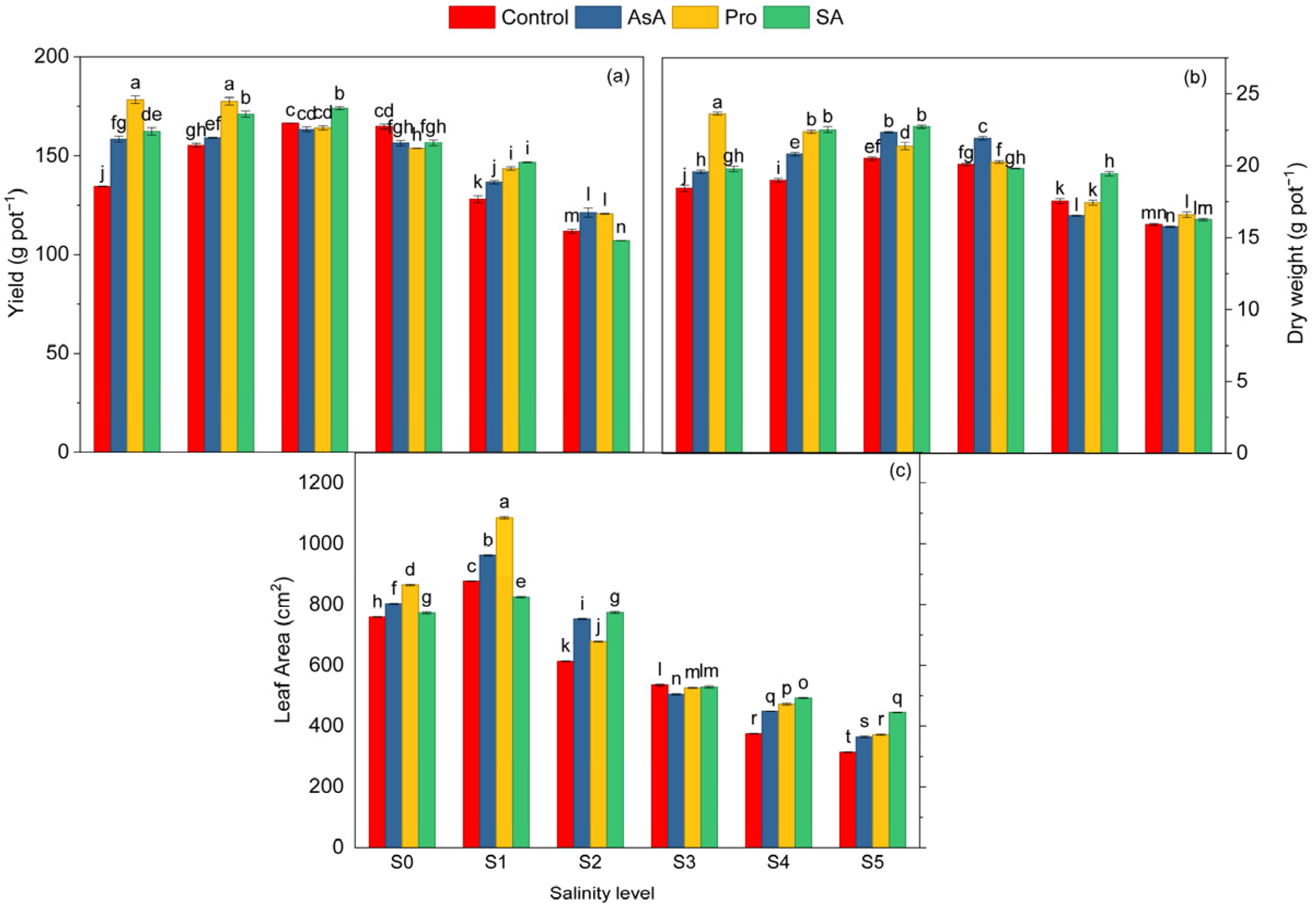
2.1. Yield, Dry Weight, and Leaf Area
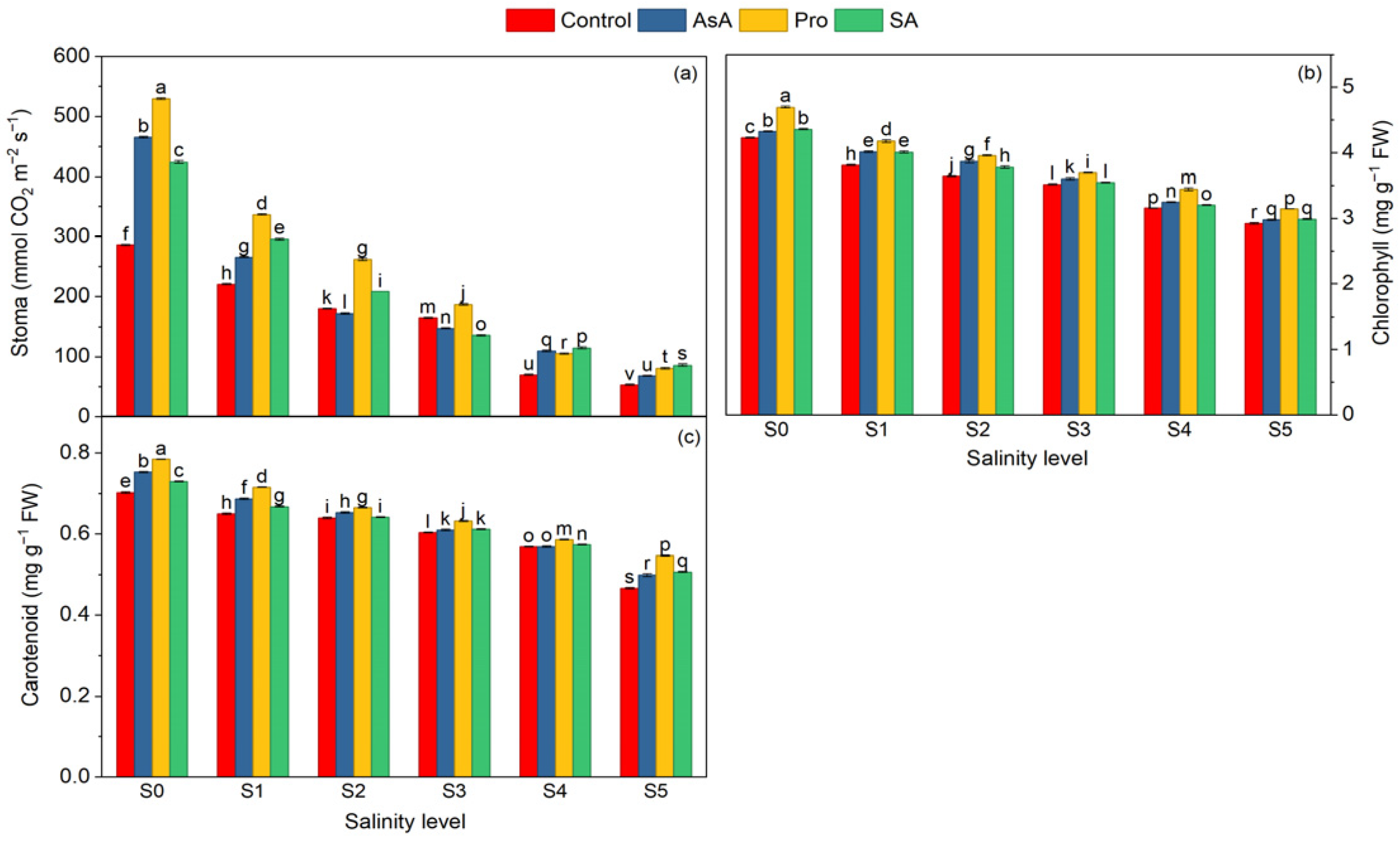
2.2. Total Chlorophyll, Carotenoid, and Stomatal Conductance
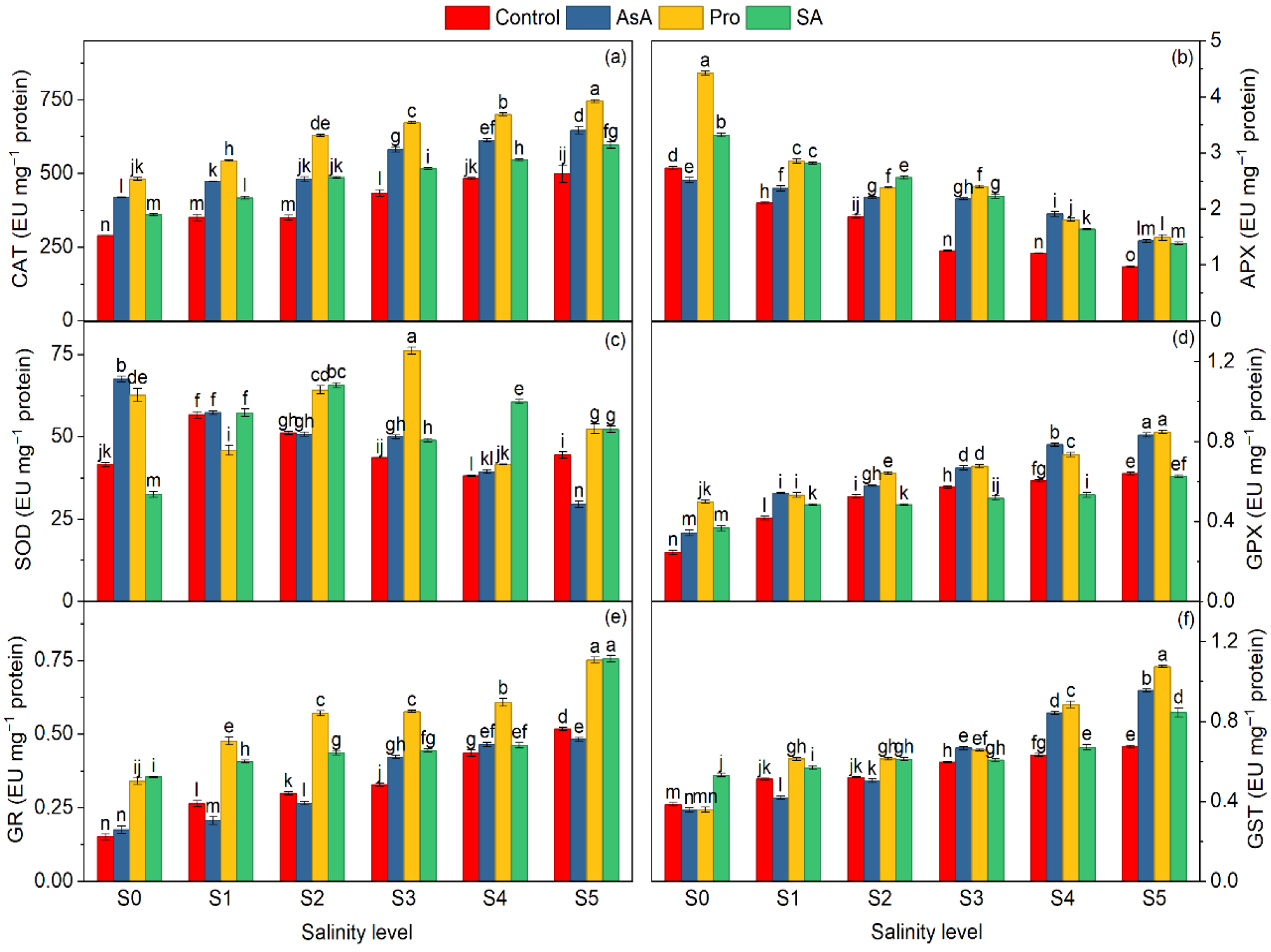
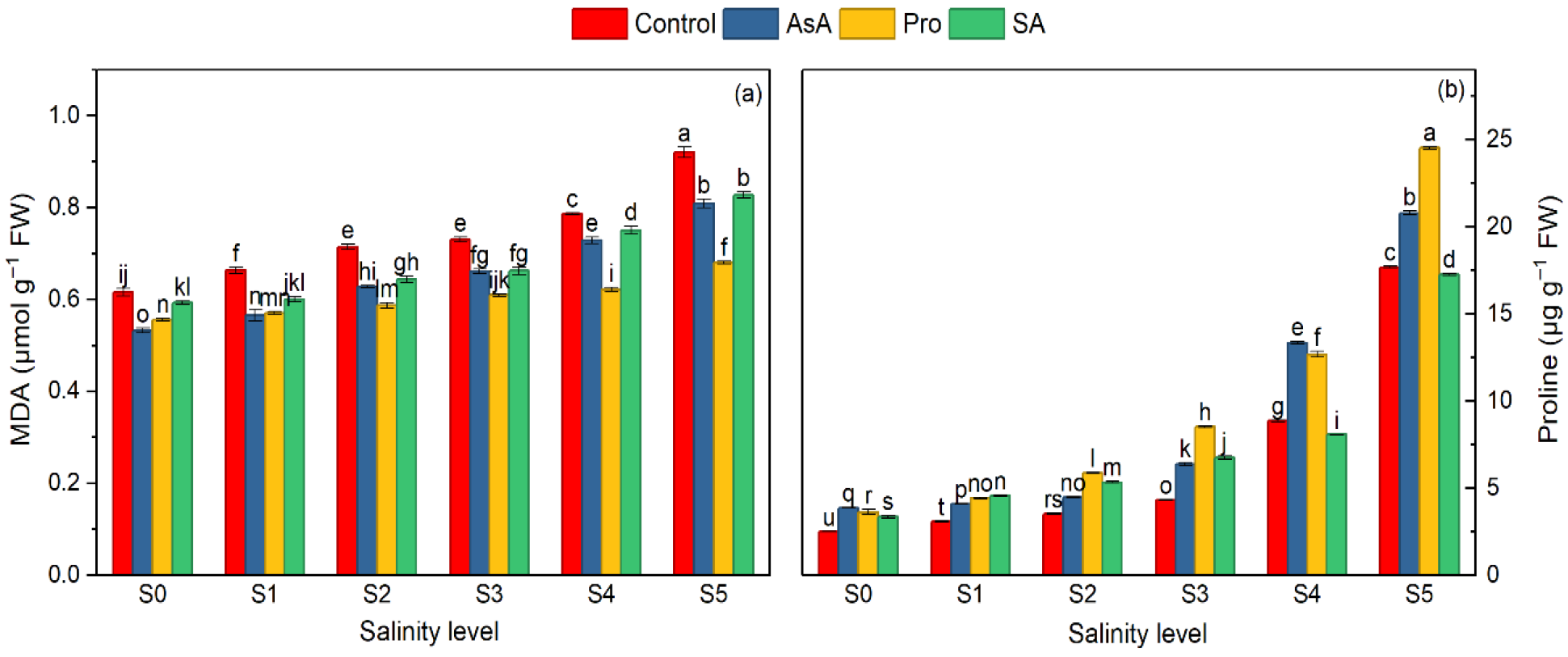
2.3. Antioxidant Enzymes, MDA, and Endogenous Proline
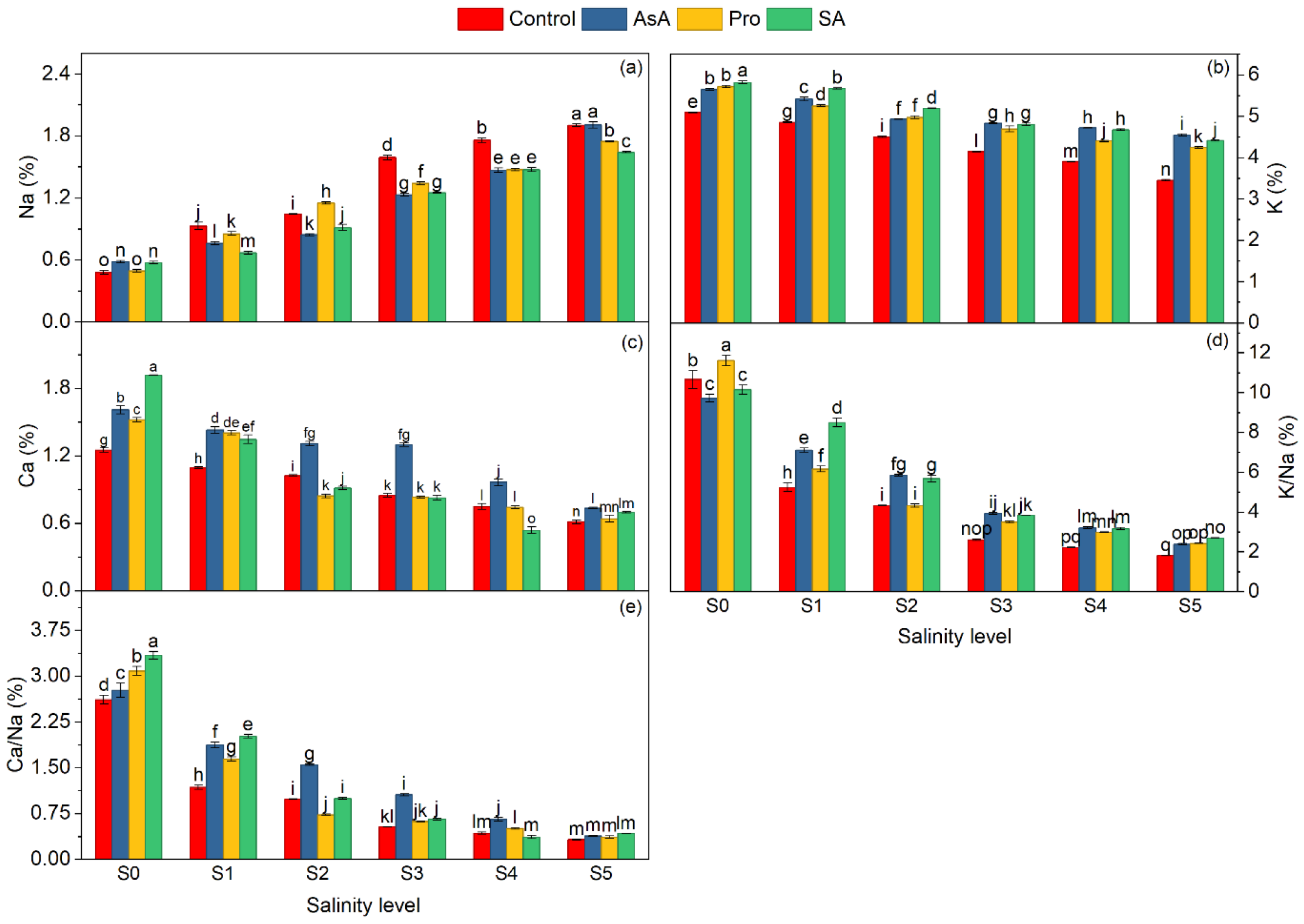
2.4. Leaf İonic Homeostasis
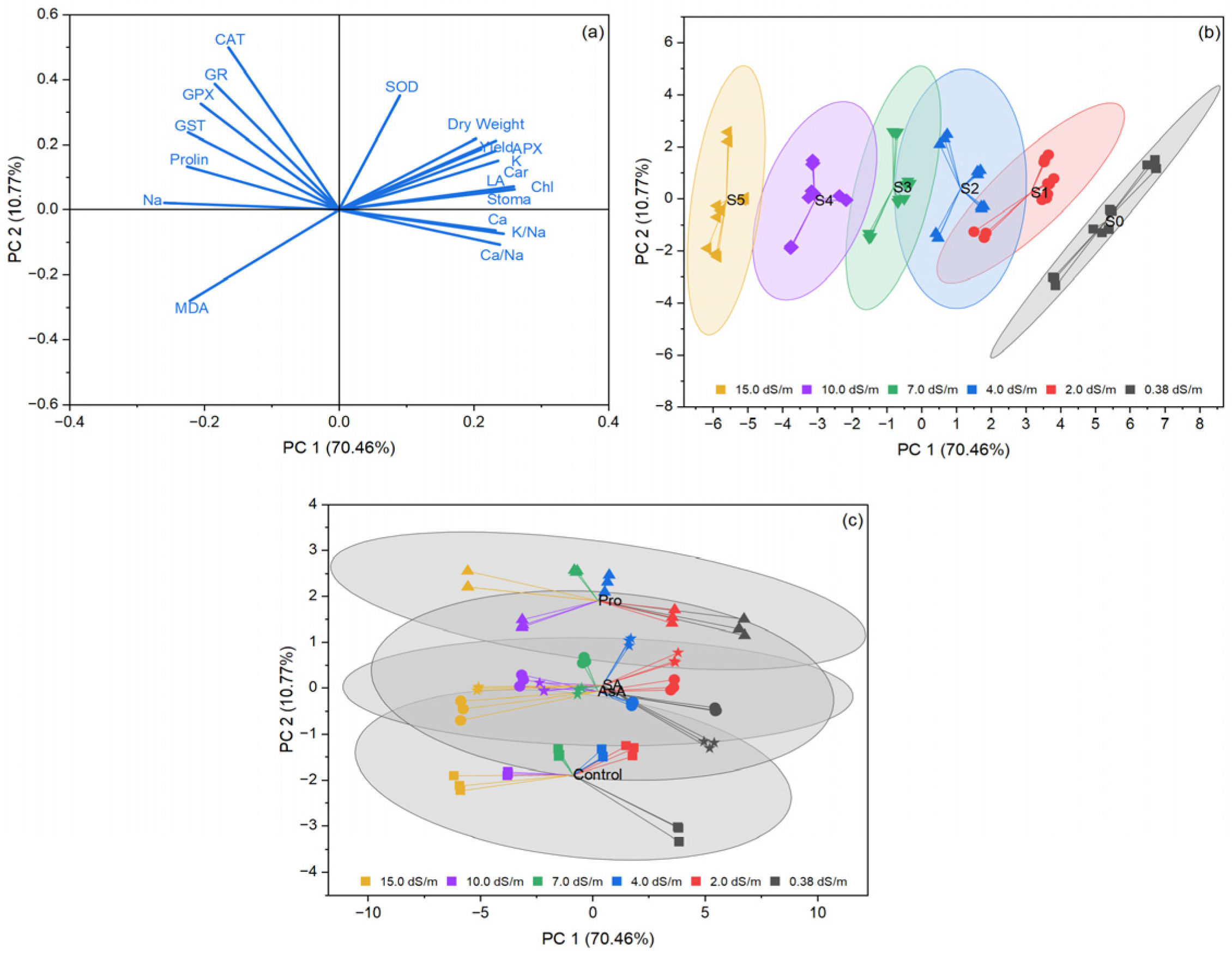
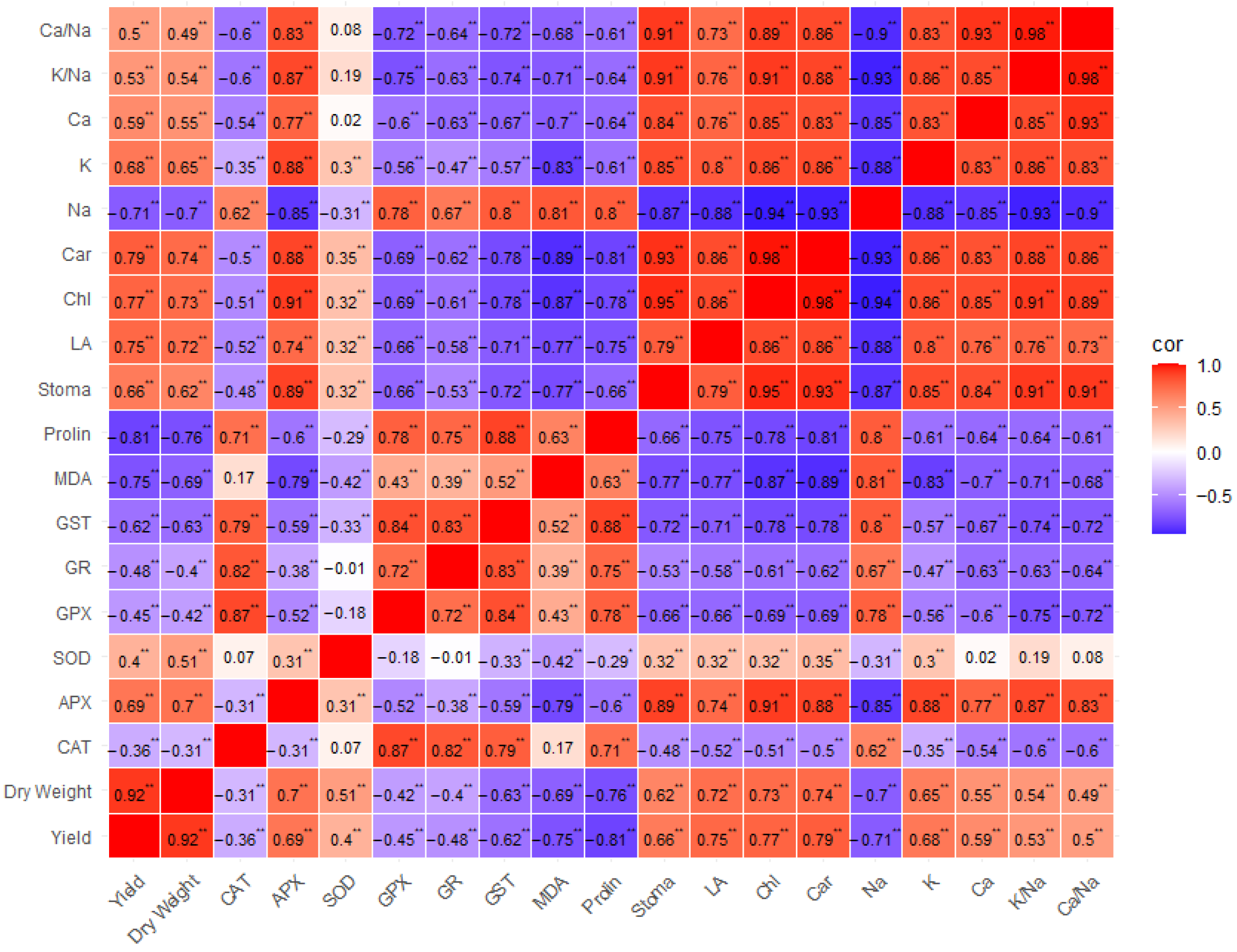
2.5. Principal Component Analysis (PCA) and Correlation
3. Discussion
4. Materials and Methods
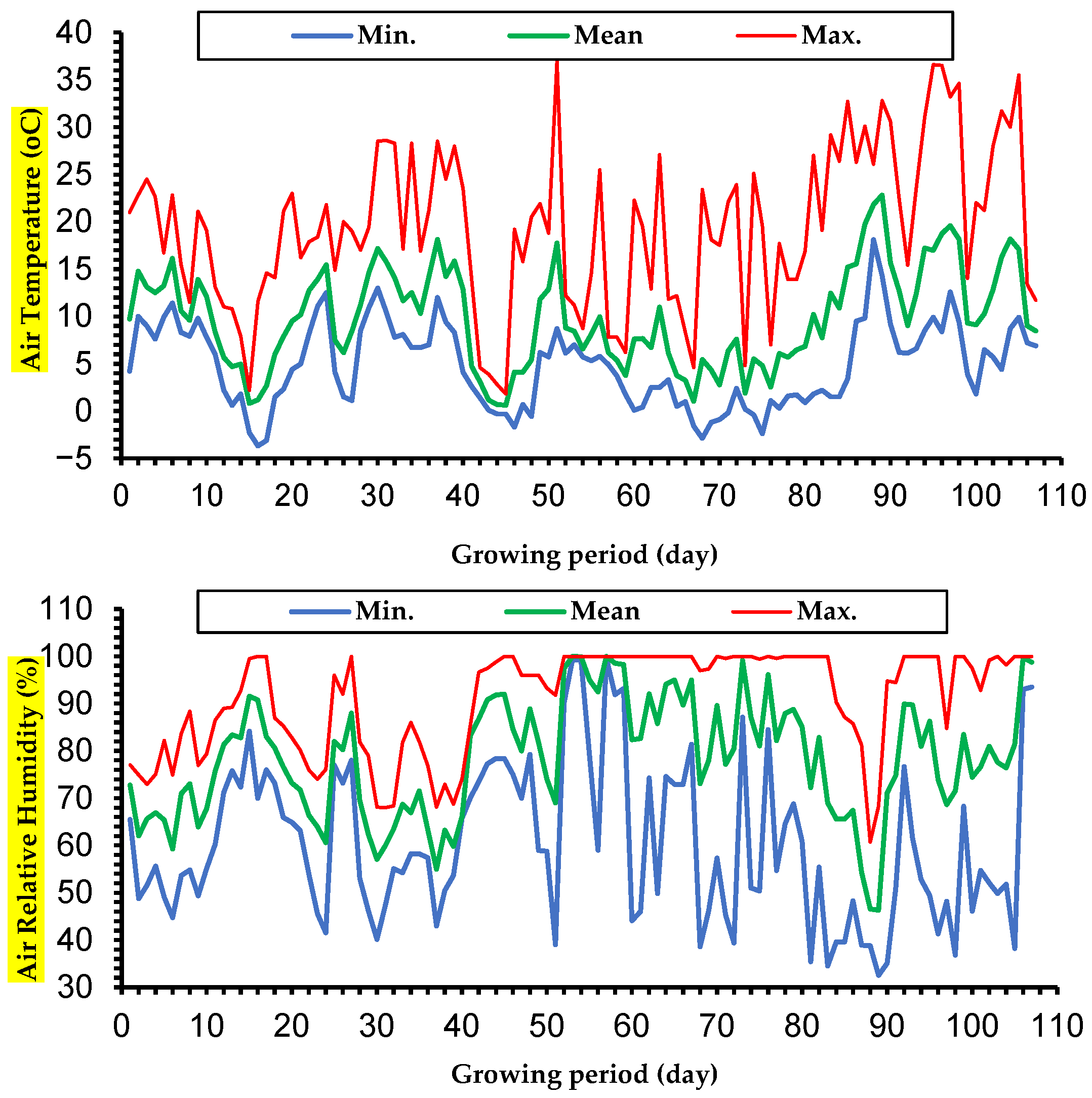
4.1. Experimental Site, Growth Conditions, and Plant Source
4.2. Preparation of the Soil
4.3. Experimental Design, Irrigation Water Salinity, and Foliar Treatments
4.4. Yield and Dry Weight Analysis
4.5. Leaf Area Analysis
4.6. Leaf Chlorophyll Content, Carotenoid, and Stomatal Conductance
4.7. Plant Minerals Analysis
4.8. Activity of Antioxidant Enzymes Analysis
4.9. MDA and Proline Contents Analysis
4.10. Statistical Analysis
5. Conclusions
Author Contributions
Funding
Data Availability Statement
Acknowledgments
Conflicts of Interest
References
- Arteaga, S.; Yabor, L.; Díez, M.J.; Prohens, J.; Boscaiu, M.; Vicente, O. The use of proline in screening for tolerance to drought and salinity in common bean (Phaseolus vulgaris L.) genotypes. Agronomy 2020, 10, 817. [Google Scholar] [CrossRef]
- Çevık, B.; Arslan, H.; Ekinci, D. Effects of Heavy Metal Stress on Seedling Growth and Antioxidant System in Sorghum (Sorghum bicolor (L.) Moench). Protein J. 2025, 44, 308–316. [Google Scholar] [CrossRef]
- Osakabe, Y.; Osakabe, K.; Shinozaki, K.; Tran, L.S.P. Response of plants to water stress. Front. Plant Sci. 2014, 5, 86. [Google Scholar] [CrossRef]
- Gupta, B.; Huang, B. Mechanism of salinity tolerance in plants: Physiological, biochemical, and molecular characterization. Int. J. Genom. 2014, 2014, 701596. [Google Scholar] [CrossRef]
- Singh, A. Soil salinity: A global threat to sustainable development. Soil Use Manag. 2022, 38, 39–67. [Google Scholar] [CrossRef]
- Djanaguiraman, M.; Prasad, P.V. Effects of salinity on ion transport, water relations and oxidative damage. In Ecophysiology and Responses of Plants Under Salt Stress; Springer: New York, NY, USA, 2012; pp. 89–114. [Google Scholar]
- Mao, H.; Jiang, C.; Tang, C.; Nie, X.; Du, L.; Liu, Y.; Cheng, P.; Wu, Y.; Liu, H.; Kang, Z.; et al. Wheat adaptation to environmental stresses under climate change: Molecular basis and genetic improvement. Mol. Plant 2023, 16, 1564–1589. [Google Scholar] [CrossRef] [PubMed]
- Al Murad, M.; Muneer, S. Silicon supplementation modulates physiochemical characteristics to balance and ameliorate salinity stress in mung bean. Front. Plant Sci. 2022, 13, 810991. [Google Scholar] [CrossRef] [PubMed]
- Sharma, P.; Jha, A.B.; Dubey, R.S.; Pessarakli, M. Reactive oxygen species, oxidative damage, and antioxidative defense mechanism in plants under stressful conditions. J. Bot. 2012, 2012, 217037. [Google Scholar] [CrossRef]
- Nimse, S.; Pal, D. Free radicals, natural antioxidants, and their reaction mechanisms. RSC Adv. 2015, 5, 27986–28006. [Google Scholar] [CrossRef]
- Ashraf, M. Biotechnological approach of improving plant salt tolerance using antioxidants as markers. Biotechnol. Adv. 2009, 27, 84–93. [Google Scholar] [CrossRef] [PubMed]
- Ma, L.; Liu, X.; Lv, W.; Yang, Y. Molecular mechanisms of plant responses to salt stress. Front. Plant Sci. 2022, 13, 934877. [Google Scholar] [CrossRef]
- Awais, M.; Rafiq, M.; Shabbir, R.; Aslam, M. Salinity stress effects on nutrient uptake in plants and its influence on plant growth efficiency. Trends Anim. Plant Sci. 2023, 1, 64–72. [Google Scholar] [CrossRef]
- Arif, Y.; Sami, F.; Siddiqui, H.; Bajguz, A.; Hayat, S. Salicylic acid in relation to other phytohormones in plant: A study towards physiology and signal transduction under challenging environment. Environ. Exp. Bot. 2020, 175, 104040. [Google Scholar] [CrossRef]
- Farhadi, N.; Ghassemi-Golezani, K. Physiological changes of Mentha pulegium in response to exogenous salicylic acid under salinity. Sci. Hortic. 2020, 267, 109325. [Google Scholar] [CrossRef]
- Youssef, N.M.; Hashish, K.I.; Taha, L.S. Salinity tolerance improvement of in vitro propagated Paulownia tomentosa using proline. Bull. Natl. Res. Cent. 2020, 44, 90. [Google Scholar] [CrossRef]
- Naz, S.; Mushtaq, A.; Ali, S.; Muhammad, H.M.D.; Saddiq, B.; Ahmad, R.; Zulfiqar, F.; Hayat, F.; Tiwari, R.K.; Lal, M.M.; et al. Foliar application of ascorbic acid enhances growth and yield of lettuce (Lactuca sativa) under saline conditions by improving antioxidant defence mechanism. Funct. Plant Biol. 2022, 51. [Google Scholar] [CrossRef]
- Borland, A.; Elliott, S.; Patterson, S.; Taybi, T.; Cushman, J.; Pater, B.; Barnes, J. Are the metabolic components of crassulacean acid metabolism up-regulated in response to an increase in oxidative burden? J. Exp. Bot. 2006, 57, 319–328. [Google Scholar] [CrossRef] [PubMed]
- Muller-Moule, P.; Golan, T.; Niyogi, K.K. Ascorbate-deficient mutants of Arabidopsis grow in high light despite chronic photooxidative stress. Plant Physiol. 2004, 134, 1163–1172. [Google Scholar] [CrossRef] [PubMed]
- Abdelhamid, M.T.; Rady, M.M.; Osman, A.S.; Abdalla, M.A. Exogenous application of proline alleviates salt-induced oxidative stress in Phaseolus vulgaris L. plants. J. Hortic. Sci. Biotechnol. 2013, 88, 439–446. [Google Scholar] [CrossRef]
- Yang, S.L.; Lan, S.S.; Gong, M. Hydrogen peroxide-induced proline and metabolic pathway of its accumulation in maize seedlings. Plant Physiol. 2009, 166, 1694–1699. [Google Scholar] [CrossRef]
- Gao, Y.; Zhang, J.; Wang, C.; Han, K.; Hu, L.; Niu, T.; Yang, Y.; Chang, Y.; Xie, J. Exogenous proline enhances systemic defense against salt stress in celery by regulating photosystem, phenolic compounds, and antioxidant system. Plants 2023, 12, 928. [Google Scholar] [CrossRef]
- Pirasteh-Anosheh, H.; Emam, Y.; Rousta, M.J.; Ashraf, M. Salicylic acid induced salinity tolerance through manipulation of ion distribution rather than ion accumulation. J. Plant Growth Regul. 2017, 36, 227–239. [Google Scholar] [CrossRef]
- Khan, W.; Prithiviraj, B.; Smith, D.L. Photosynthetic responses of corn and soybean to foliar application of salicylates. J. Plant Physiol. 2003, 160, 485–492. [Google Scholar] [CrossRef]
- Miura, K.; Tada, Y. Regulation of water, salinity, and cold stress responses by salicylic acid. Front. Plant Sci. 2014, 5, 4. [Google Scholar] [CrossRef] [PubMed]
- El-Hawary, M.M.; Hashem, O.S.; Hasanuzzaman, M. Seed priming and foliar application with ascorbic acid and salicylic acid mitigate salt stress in wheat. Agronomy 2023, 13, 493. [Google Scholar] [CrossRef]
- Salehi, B.; Tumer, T.B.; Ozleyen, A.; Peron, G.; Dall’Acqua, S.; Rajkovic, J.; Naz, R.; Nosheen, A.; Mudau, F.N.; Labanca, F.; et al. Plants of the genus Spinacia: From bioactive molecules to food and phytopharmacological applications. Trends Food Sci. Technol. 2019, 88, 260–273. [Google Scholar] [CrossRef]
- Koh, E.; Charoenprasert, S.; Mitchell, A.E. Effect of organic and conventional cropping systems on ascorbic acid, vitamin C, flavonoids, nitrate, and oxalate in 27 varieties of spinach (Spinacia oleracea L.). J. Agric. Food Chem. 2012, 60, 3144–3150. [Google Scholar] [CrossRef] [PubMed]
- Zafar-ul-Hye, M.; Tahzeeb-ul-Hassan, M.M.; Fahad, S.; Brtnicky, M.; Dokulilova, T.; Datta, R.; Danish, S. Potential role of compost mixed biochar with rhizobacteria in mitigating lead toxicity in spinach. Sci. Rep. 2020, 10, 2159. [Google Scholar] [CrossRef]
- FAO. FAOSTAT: Crops and Livestock Products—Spinach Production. Food and Agriculture Organization of the United Nations. 2024. Available online: https://www.fao.org/faostat/ (accessed on 1 March 2026).
- Muchate, N.S.; Rajurkar, N.S.; Suprasanna, P.; Nikam, T.D. NaCl induced salt adaptive changes and enhanced accumulation of 20-hydroxyecdysone in the in vitro shoot cultures of Spinacia oleracea (L.). Sci. Rep. 2019, 9, 12522. [Google Scholar] [CrossRef]
- Ors, S.; Suarez, D.L. Salt tolerance of spinach as related to seasonal climate. Hort. Sci. 2016, 43, 33–41. [Google Scholar] [CrossRef]
- Bakirova, A.; Kiremit, M.S.; Arslan, H. Early seedling features and mineral content of maize seeds grown under salinity stress. Eurasian J. Soil Sci. 2024, 13, 20–25. [Google Scholar] [CrossRef]
- Acosta-Motos, J.R.; Ortuño, M.F.; Bernal-Vicente, A.; Diaz-Vivancos, P.; Sanchez-Blanco, M.J.; Hernandez, J.A. Plant responses to salt stress: Adaptive mechanisms. Agronomy 2017, 7, 18. [Google Scholar] [CrossRef]
- Balasubramaniam, T.; Shen, G.; Esmaeili, N.; Zhang, H. Plants’ response mechanisms to salinity stress. Plants 2023, 12, 2253. [Google Scholar] [CrossRef]
- Sofy, M.; Mohamed, H.; Dawood, M.; Abu-Elsaoud, A.; Soliman, M. Integrated usage of Trichoderma harzianum and biochar to ameliorate salt stress on spinach plants. Arch. Agron. Soil Sci. 2022, 68, 2005–2026. [Google Scholar] [CrossRef]
- Yavuz, D.; Kılıç, E.; Seymen, M.; Dal, Y.; Kayak, N.; Kal, Ü.; Yavuz, N. The effect of irrigation water salinity on the morph-physiological and biochemical properties of spinach under deficit irrigation conditions. Sci. Hortic. 2022, 304, 111272. [Google Scholar] [CrossRef]
- Sezer, İ.; Kiremit, M.S.; Öztürk, E.; Subrata, B.A.G.; Osman, H.M.; Akay, H.; Arslan, H. Role of melatonin in improving leaf mineral content and growth of sweet corn seedlings under different soil salinity levels. Sci. Hortic. 2021, 288, 110376. [Google Scholar] [CrossRef]
- Noreen, S.; Fatima, Z.; Ahmad, S.; Athar, H.U.R.; Ashraf, M. Foliar application of micronutrients in mitigating abiotic stress in crop plants. In Plant Nutrients and Abiotic Stress Tolerance; Hasanuzzaman, M., Ed.; Springer: Singapore, 2018; pp. 95–117. [Google Scholar]
- Noreen, S.; Faiz, S.; Akhter, M.S.; Shah, K.H. Influence of foliar application of osmoprotectants to ameliorate salt stress in sunflower (Helianthus annuus L.). Sarhad J. Agric. 2019, 35, 1316–1325. [Google Scholar] [CrossRef]
- Abdelaal, K.A.; Hafez, Y.M.; El-Afry, M.M.; Tantawy, D.S.; Alshaal, T. Effect of some osmoregulators on photosynthesis, lipid peroxidation, antioxidative capacity, and productivity of barley (Hordeum vulgare L.) under water deficit stress. Environ. Sci. Pollut. Res. 2018, 25, 30199–30211. [Google Scholar] [CrossRef]
- Kim, B.M.; Lee, H.J.; Song, Y.H.; Kim, H.J. Effect of salt stress on the growth, mineral contents, and metabolite profiles of spinach. J. Sci. Food Agric. 2021, 101, 3787–3794. [Google Scholar] [CrossRef] [PubMed]
- Hao, S.; Wang, Y.; Yan, Y.; Liu, Y.; Wang, J.; Chen, S. A review on plant responses to salt stress and their mechanisms of salt resistance. Horticulturae 2021, 7, 132. [Google Scholar] [CrossRef]
- Kiremit, M.S.; Arslan, H.; Bakirova, A.; Abdulrasaq, S.A. Synergistic effects of humic and salicylic acids on water productivity, physiology, and antioxidant defense in salt-stressed lettuce. J. Soil Sci. Plant Nutr. 2026, 26, 2562–2583. [Google Scholar] [CrossRef]
- Kiremit, M.S.; Öztürk, E.; Arslan, H.; Subrata, B.A.G.; Akay, H.; Bakirova, A. Effects of melatonin, proline, and salicylic acid on seedling growth, photosynthetic activity, and leaf nutrients of sorghum under salt stress. Plant Direct 2024, 8, e574. [Google Scholar] [CrossRef]
- Bakirova, A.; Kiremit, M.S.; Arslan, H. Augmentative Role of Salicylic Acid and Proline in Overcoming Waterlogging Stress in Sweet Corn (Zea Mays Var. saccharate). J. Soil Sci. Plant Nutr. 2025, 25, 8375–8395. [Google Scholar] [CrossRef]
- El Moukhtari, A.; Cabassa-Hourton, C.; Farissi, M.; Savouré, A. How does proline treatment promote salt stress tolerance during crop plant development? Front. Plant Sci. 2020, 11, 1127. [Google Scholar] [CrossRef]
- de Freitas, P.A.F.; de Souza Miranda, R.; Marques, E.C.; Prisco, J.T.; Gomes-Filho, E. Salt tolerance induced by exogenous proline in maize is related to low oxidative damage and favorable ionic homeostasis. J. Plant Growth Regul. 2018, 37, 911–924. [Google Scholar] [CrossRef]
- Qirat, M.; Shahbaz, M.; Perveen, S. Beneficial role of foliar-applied proline on carrot (Daucus carota L.) under saline conditions. Pak. J. Bot. 2018, 50, 1735–1744. [Google Scholar]
- Munns, R. Comparative physiology of salt and water stress. Plant Cell environ. 2002, 25, 239–250. [Google Scholar] [CrossRef]
- Amirinejad, A.A.; Sayyari, M.; Ghanbari, F.; Kordi, S. Salicylic acid improves salinity-alkalinity tolerance in pepper (Capsicum annuum L.). Adv. Hortic. Sci. 2017, 31, 157–164. [Google Scholar] [CrossRef]
- Wang, Y.; Ma, W.; Fu, H.; Li, L.; Ruan, X.; Zhang, X. Effects of salinity stress on growth and physiological parameters and related gene expression in different ecotypes of Sesuvium portulacastrum on Hainan Island. Genes 2023, 14, 1336. [Google Scholar] [CrossRef] [PubMed]
- Ghosh, U.K.; Islam, M.N.; Siddiqui, M.N.; Cao, X.; Khan, M.A.R. Proline, a multifaceted signalling molecule in plant responses to abiotic stress: Understanding the physiological mechanisms. Plant Biol. 2022, 24, 227–239. [Google Scholar] [CrossRef] [PubMed]
- Surendran, U.; Chandran, C.; Joseph, E.J. Hydroponic cultivation of Mentha spicata and comparison of biochemical and antioxidant activities with soil-grown plants. Acta Physiol. Plant 2017, 39, 26. [Google Scholar] [CrossRef]
- Yavuz, D.; Rashid, B.A.R.; Seymen, M. The influence of NaCl salinity on evapotranspiration, yield traits, antioxidant status, and mineral composition of lettuce grown under deficit irrigation. Sci. Hortic. 2023, 310, 111776. [Google Scholar] [CrossRef]
- Aazami, M.A.; Rasouli, F.; Panahi Tajaragh, R. Influence of salinity stress on morphological, nutritional and physiological attributes in different cultivars of Prunus amygdalus L. J. Plant Nutr. 2021, 44, 1758–1769. [Google Scholar] [CrossRef]
- Nakhaie, A.; Habibi, G.; Vaziri, A. Exogenous proline enhances salt tolerance in acclimated Aloe vera by modulating photosystem II efficiency and antioxidant defense. S. Afr. J. Bot. 2022, 147, 1171–1180. [Google Scholar] [CrossRef]
- Mittal, S.; Kumari, N.; Sharma, V. Differential response of salt stress on Brassica juncea: Photosynthetic performance, pigment, proline, D1 and antioxidant enzymes. Plant Physiol. Biochem. 2012, 54, 17–26. [Google Scholar] [CrossRef] [PubMed]
- Hameed, A.; Ahmed, M.Z.; Hussain, T.; Aziz, I.; Ahmad, N.; Gul, B.; Nielsen, B.L. Effects of salinity stress on chloroplast structure and function. Cells 2021, 10, 2023. [Google Scholar] [CrossRef]
- Jin, S.H.; Huang, J.Q.; Li, X.Q.; Zheng, B.S.; Wu, J.S.; Wang, Z.J.; Liu, G.H.; Chen, M. Effects of potassium supply on limitations of photosynthesis by mesophyll diffusion conductance in Carya cathayensis. Tree Physiol. 2011, 31, 1142–1151. [Google Scholar] [CrossRef]
- Hasanuzzaman, M.; Bhuyan, M.B.; Nahar, K.; Hossain, M.S.; Mahmud, J.A.; Hossen, M.S.; Masud, A.A.C.; Moumita; Fujita, M. Potassium: A vital regulator of plant responses and tolerance to abiotic stresses. Agronomy 2018, 8, 31. [Google Scholar] [CrossRef]
- Imtiaz, H.; Mir, A.R.; Corpas, F.J.; Hayat, S. Impact of potassium starvation on the uptake, transportation, photosynthesis, and abiotic stress tolerance. Plant Growth Regul. 2023, 99, 429–448. [Google Scholar] [CrossRef]
- Ilyas, M.; Maqsood, M.F.; Shahbaz, M.; Zulfiqar, U.; Ahmad, K.; Naz, N.; Ali, M.F.; Ahmad, M.; Ali, Q.; Yong, J.W.H.; et al. Alleviating salinity stress in canola (Brassica napus L.) through exogenous application of salicylic acid. BMC Plant Biol. 2024, 24, 611. [Google Scholar] [CrossRef]
- Hosseinifard, M.; Stefaniak, S.; Ghorbani Javid, M.; Soltani, E.; Wojtyla, Ł.; Garnczarska, M. Contribution of exogenous proline to abiotic stresses tolerance in plants: A review. Int. J. Mol. Sci. 2022, 23, 5186. [Google Scholar] [CrossRef]
- Khan, I.; Iqbal, M.; Mahmood, A.; Maqbool, R.; Alı, M.; Aslam, M.T.; Hanıf, M.S.; Kohlı, S.A.; Negm, S.; Moustafa, M.; et al. Foliar applied proline and acetic acid improves growth and yield of wheat under salinity stress by improving photosynthetic pigments, physiological traits, antioxidant activities and nutrient uptake. Not. Bot. Horti Agrobot. Cluj-Na. 2022, 50, 12820. [Google Scholar] [CrossRef]
- Rangani, J.; Parida, A.K.; Panda, A.; Kumari, A. Coordinated changes in antioxidative enzymes protect the photosynthetic machinery from salinity induced oxidative damage and confer salt tolerance in an extreme halophyte Salvadora persica L. Front. Plant Sci. 2016, 7, 50. [Google Scholar] [CrossRef] [PubMed]
- Choudhury, R.; Singh, A.; Choudhary, K.K. Amelioration of Salinity Stress in Chickpea (Cicer arietinum L.) Cultivars Through Foliar Spray of Proline and Glycine Betaine. J. Agron. Crop Sci. 2025, 211, 70116. [Google Scholar] [CrossRef]
- Koc, Y.E.; Aycan, M.; Mitsui, T. Exogenous proline suppresses endogenous proline and proline-production genes but improves the salinity tolerance capacity of salt-sensitive rice by stimulating antioxidant mechanisms and photosynthesis. Plant Physiol. Biochem. 2024, 214, 108914. [Google Scholar] [CrossRef]
- Kim, S.Y.; Lim, J.H.; Park, M.R.; Kim, Y.J.; Park, T.I.; Seo, Y.W.; Choi, K.G.; Yun, S.J. Enhanced antioxidant enzymes are associated with reduced hydrogen peroxide in barley roots under saline stress. BMB Rep. 2005, 38, 218–224. [Google Scholar] [CrossRef] [PubMed]
- AbdElgawad, H.; Zinta, G.; Hegab, M.M.; Pandey, R.; Asard, H.; Abuelsoud, W. High salinity induces different oxidative stress and antioxidant responses in maize seedlings organs. Front. Plant Sci. 2016, 7, 276. [Google Scholar] [CrossRef]
- Arora, A.; Sairam, R.K.; Srivastava, G.C. Oxidative stress and antioxidative system in plants. Curr. Sci. 2002, 82, 1227–1238. [Google Scholar]
- Kawano, T. Roles of the reactive oxygen species-generating peroxidase reactions in plant defense and growth induction. Plant Cell Rep. 2003, 21, 829–837. [Google Scholar] [CrossRef]
- Azeem, M.; Sultana, R.; Mahmood, A.; Qasim, M.; Siddiqui, Z.S.; Mumtaz, S.; Javed, T.; Umar, M.; Adnan, M.S.; Siddiqui, M.H. Ascorbic and salicylic acids vitalized growth, biochemical responses, antioxidant enzymes, photosynthetic efficiency, and ionic regulation to alleviate salinity stress in Sorghum bicolor. J. Plant Growth. Regul. 2023, 42, 5266–5279. [Google Scholar] [CrossRef]
- Dawood, M.F.; Sofy, M.R.; Mohamed, H.I.; Sofy, A.R.; Abdel-Kader, H.A. Hydrogen sulfide modulates salinity stress in common bean plants by maintaining osmolytes and regulating nitric oxide levels and antioxidant enzyme expression. J. Plant Nutr. Soil Sci. 2022, 22, 3708–3726. [Google Scholar] [CrossRef]
- Patade, V.Y.; Lokhande, V.H.; Suprasanna, P. Exogenous application of proline alleviates salt induced oxidative stress more efficiently than glycine betaine in sugarcane cultured cells. Sugar Tech. 2014, 16, 22–29. [Google Scholar] [CrossRef]
- Tabssum, F.; uz Zaman, Q.; Chen, Y.; Riaz, U.; Ashraf, W.; Aslam, A.; Ehsan, N.; Nawaz, R.; Aziz, H.; ul Sibtain Shah, S. Exogenous application of proline improved salt tolerance in rice through modulation of antioxidant activities. Pak. J. Agri. Res. 2019, 32, 140. [Google Scholar] [CrossRef]
- Fiza, A.; Chugh, V.; Mishra, A.C.; Mishra, V.; Purwar, S.; Dwivedi, S.V.; Mishra, A.; Nagar, S.; Kharor, N.; Kumar, V. Physiological and biochemical adaptations for salt stress tolerance in eggplant (Solanum melongena). Plant Physiol. Rep. 2025, 30, 352–368. [Google Scholar] [CrossRef]
- Asada, K. Ascorbate peroxidase—A hydrogen peroxide-scavenging enzyme in plants. Physiol. Plant 1992, 85, 235–241. [Google Scholar] [CrossRef]
- Queirós, F.; Rodrigues, J.A.; Almeida, J.M.; Almeida, D.P.; Fidalgo, F. Differential responses of the antioxidant defence system and ultrastructure in a salt-adapted potato cell line. Plant Physiol. Biochem. 2011, 49, 1410–1419. [Google Scholar] [CrossRef] [PubMed]
- Nigam, B.; Dubey, R.S.; Rathore, D. Protective role of exogenously supplied salicylic acid and PGPB (Stenotrophomonas sp.) on spinach and soybean cultivars grown under salt stress. Sci. Hortic. 2022, 293, 110654. [Google Scholar] [CrossRef]
- Hasanuzzaman, M.; Raihan, M.R.H.; Masud, A.A.C.; Rahman, K.; Nowroz, F.; Rahman, M.; Nahar, K.; Fujita, M. Regulation of reactive oxygen species and antioxidant defense in plants under salinity. Int. J. Mol. Sci. 2021, 22, 9326. [Google Scholar] [CrossRef]
- Hasanuzzaman, M.; Bhuyan, M.B.; Zulfiqar, F.; Raza, A.; Mohsin, S.M.; Mahmud, J.A.; Fujita, M.; Fotopoulos, V. Reactive oxygen species and antioxidant defense in plants under abiotic stress: Revisiting the crucial role of a universal defense regulator. Antioxidants 2020, 9, 681. [Google Scholar] [CrossRef]
- Skłodowska, M.; Gapińska, M.; Gajewska, E.; Gabara, B. Tocopherol content and enzymatic antioxidant activities in chloroplasts from NaCl-stressed tomato plants. Acta Physiol. Plant 2009, 31, 393–400. [Google Scholar] [CrossRef]
- Li, G.; Peng, X.; Wei, L.; Kang, G. Salicylic acid increases the contents of glutathione and ascorbate and temporally regulates the related gene expression in salt-stressed wheat seedlings. Gene 2013, 529, 321–325. [Google Scholar] [CrossRef]
- Yan, L.; Lu, M.; Riaz, M.; Tong, K.; Yu, H.; Gao, G.; Niu, Y. Exogenous proline enhances salt acclimation in soybean seedlings: Modifying physicochemical properties and controlling proline metabolism through the ornithine-glutamate dual pathway. Ecotoxicol Environ. Saf. 2025, 294, 118012. [Google Scholar] [CrossRef]
- Inayat, H.; Mehmood, H.; Danish, S.; Alharbi, S.A.; Ansari, M.J.; Datta, R. Impact of cobalt and proline foliar application for alleviation of salinity stress in radish. BMC Plant Biol. 2024, 24, 287. [Google Scholar] [CrossRef]
- Liang, W.; Ma, X.; Wan, P.; Liu, L. Plant salt-tolerance mechanism: A review. Biochem. Biophys. Res. Commun. 2018, 495, 286–291. [Google Scholar] [CrossRef]
- Kaya, C.; Akram, N.A.; Ashraf, M.; Sonmez, O. Exogenous application of humic acid mitigates salinity stress in maize (Zea mays L.) plants by improving some key physico-biochemical attributes. Cereal Res. Commun. 2018, 46, 67–78. [Google Scholar] [CrossRef]
- Taïbi, K.; Taïbi, F.; Ait Abderrahim, L.; Ennajah, A.; Belkhodja, M.; Mulet, J.M. Effect of salt stress on growth, chlorophyll content, lipid peroxidation and antioxidant defence systems in Phaseolus vulgaris L. S. Afr. J. Bot. 2016, 105, 306–312. [Google Scholar] [CrossRef]
- Zulfiqar, F.; Ashraf, M. Proline alleviates abiotic stress induced oxidative stress in plants. J. Plant Growth Regul. 2023, 42, 4629–4651. [Google Scholar] [CrossRef]
- Hasanuzzaman, M.; Raihan, M.R.H.; Alharby, H.F.; Al-Zahrani, H.S.; Alsamadany, H.; Alghamdi, K.M.; Ahmed, G.; Nahar, K. Foliar application of ascorbic acid and tocopherol in conferring salt tolerance in rapeseed by enhancing K+/Na+ homeostasis, osmoregulation, antioxidant defense, and glyoxalase system. Agronomy 2023, 13, 361. [Google Scholar] [CrossRef]
- Patel, M.K.; Kumar, M.; Li, W.; Luo, Y.; Burritt, D.J.; Alkan, N.; Tran, L.S.P. Enhancing salt tolerance of plants: From metabolic reprogramming to exogenous chemical treatments and molecular approaches. Cells 2020, 9, 2492. [Google Scholar] [CrossRef] [PubMed]
- Kaur, G.; Asthir, B.J. Proline: A key player in plant abiotic stress tolerance. Biol. Plant 2015, 59, 609–619. [Google Scholar] [CrossRef]
- El-Beltagi, H.S.; Al-Otaibi, H.H.; Parmar, A.; Ramadan, K.M.; Lobato, A.K.D.S.; El-Mogy, M.M. Application of potassium humate and salicylic acid to mitigate salinity stress of common bean. Life 2023, 13, 448. [Google Scholar] [CrossRef] [PubMed]
- Chaudhary, I.J.; Rathore, D. Dust pollution: Its removal and effect on foliage physiology of urban trees. Sustain. Cities Soc. 2019, 51, 101696. [Google Scholar] [CrossRef]
- Ashraf, M.; Shahbaz, M.; Ali, Q. Drought-induced modulation in growth and mineral nutrients in canola (Brassica napus L.). Pak. J. Bot. 2013, 45, 93–98. [Google Scholar]
- El Moukhtari, A.; Cabassa, C.; Durand, N.; Farissi, M.; Savouré, A. Exogenous Proline Supply Improves Growth, Antioxidant Defense System, and Nutrient Homeostasis in Salt-Stressed Alfalfa (Medicago sativa L.). J. Plant Nutr. Soil Sci. 2025, 25, 3603–3614. [Google Scholar] [CrossRef]
- Nounjan, N.; Nghia, P.T.; Theerakulpisut, P. Exogenous proline and trehalose promote recovery of rice seedlings from salt-stress and differentially modulate antioxidant enzymes and expression of related genes. J. Plant Physiol. 2012, 169, 596–604. [Google Scholar] [CrossRef]
- Munns, R.; Day, D.A.; Fricke, W.; Watt, M.; Arsova, B.; Barkla, B.J.; Tyerman, S.D. Energy costs of salt tolerance in crop plants. New Phytol. 2020, 225, 1072–1090. [Google Scholar] [CrossRef]
- Zhu, Y.; Gong, H. Beneficial effects of silicon on salt and drought tolerance in plants. Agron. Sustain Dev. 2014, 34, 455–472. [Google Scholar] [CrossRef]
- Wakeel, A. Potassium–sodium interactions in soil and plant under saline-sodic conditions. J. Plant Nutr. Soil Sci. 2013, 176, 344–354. [Google Scholar] [CrossRef]
- Seleiman, M.F.; Semida, W.M.; Rady, M.M.; Mohamed, G.F.; Hemida, K.A.; Alhammad, B.A.; Hassan, M.M.; Shami, A. Sequential application of antioxidants rectifies ion imbalance and strengthens antioxidant systems in salt-stressed cucumber. Plants 2020, 9, 1783. [Google Scholar] [CrossRef]
- Gao, Y.; Zhang, J.; Wang, C.; Li, N.; Pu, K.; Wang, T.; Zhang, M.; Zhang, L.; Li, J.; Xie, J. Comprehensively assessing the effects of exogenous proline on nutritional and flavour quality of celery (Apium graveolens L.) under salt stress. Sci. Hortic. 2025, 339, 113847. [Google Scholar] [CrossRef]
- Semida, W.M.; Abd El-Mageed, T.A.; Abdalla, R.M.; Hemida, K.A.; Howladar, S.M.; Leilah, A.A.; Rady, M.O. Sequential antioxidants foliar application can alleviate negative consequences of salinity stress in Vicia faba L. Plants 2021, 10, 914. [Google Scholar] [CrossRef]
- Khalil, H.A.; El-Ansary, D.O.; Ahmed, Z.F. Mitigation of salinity stress on pomegranate (Punica granatum L. cv. Wonderful) plant using salicylic acid foliar spray. Horticulturae 2022, 8, 375. [Google Scholar] [CrossRef]
- Arnon, D.I. Copper enzymes in isolated chloroplasts. Polyphenoloxidase in Beta vulgaris. Plant Physiol. 1949, 24, 1–15. [Google Scholar] [CrossRef] [PubMed]
- Witham, F.H.; Blaydes, D.F.; Devlin, R.M. Experiments in Plant Physiology; Van Nostrend Reinhold Company: New York, NY, USA, 1971; Volume 58. [Google Scholar]
- Kacar, B.; İnal, A. Plant Analysis; Nobel Publishing: Istanbul, Turkey, 2010. (In Turkish) [Google Scholar]
- Demirkaya, S.; Gülser, C. Biochar innovations for sustainable agriculture: Acidification and zinc enrichment strategies to improve calcareous soil fertility and wheat yield. Soil Water Res. 2025, 20, 105–118. [Google Scholar] [CrossRef]
- Bradford, M.M. A rapid and sensitive method for the quantitation of microgram quantities of protein utilizing the principle of protein-dye binding. Anal. Biochem. 1976, 72, 248–254. [Google Scholar] [CrossRef]
- Aebi, H. Catalase in vitro. In Methods in Enzymology; Academic Press: Cambridge, MA, USA, 1984; Volume 105, pp. 121–126. [Google Scholar] [CrossRef]
- Uarrota, V.G.; Moresco, R.; Schmidt, E.C.; Bouzon, Z.L.; da Costa Nunes, E.; de Oliveira Neubert, E.; Peruch, L.A.M.; Rocha, M.; Maraschin, M. The role of ascorbate peroxidase, guaiacol peroxidase, and polysaccharides in cassava (Manihot esculenta Crantz) roots under postharvest physiological deterioration. Food Chem. 2016, 197, 737–746. [Google Scholar] [CrossRef]
- Giannopolitis, C.N.; Ries, S.K. Superoxide dismutases: I. Occurrence in higher plants. Plant Physiol. 1977, 59, 309–314. [Google Scholar] [CrossRef]
- Carlberg, I.; Mannervik, B. Purification and characterization of the flavoenzyme glutathione reductase from rat liver. J. Biol. Chem. 1975, 250, 5475–5480. [Google Scholar] [CrossRef] [PubMed]
- Habig, W.H.; Pabst, M.J.; Jakoby, W.B. Glutathione S-transferases: The first enzymatic step in mercapturic acid formation. J. Biol. Chem. 1974, 249, 7130–7139. [Google Scholar] [CrossRef]
- Şişecioğlu, M.; Gülçin, İ.; Cankaya, M.; Atasever, A.; Şehitoğlu, M.H.; Kaya, H.B.; Özdemir, H. Purification and characterization of peroxidase from Turkish black radish (Raphanus sativus L.). J. Med. Plants Res. 2010, 4, 1187–1196. [Google Scholar] [CrossRef]
- Heath, R.L.; Packer, L. Photoperoxidation in isolated chloroplasts: I. Kinetics and stoichiometry of fatty acid peroxidation. Arch. Biochem. Biophys. 1968, 125, 189–198. [Google Scholar] [CrossRef] [PubMed]
- Bates, L.S.; Waldren, R.P.A.; Teare, I.D. Rapid determination of free proline for water-stress studies. Plant Soil 1973, 39, 205–207. [Google Scholar] [CrossRef]



| EA | Yield (g pot−1) | Dry Weight (g pot−1) | Leaf Area (cm2) |
|---|---|---|---|
| C | 143.4 ± 4.90 d | 18.5 ± 0.37 d | 579.3 ± 48.07 c |
| AsA | 149.1 ± 3.70 c | 19.4 ± 0.61 c | 639.1 ± 51.80 b |
| Pro | 156.3 ± 4.90 a | 20.2 ± 0.61 a | 666.7 ± 9.36 a |
| SA | 152.9 ± 5.44 b | 20.0 ± 0.52 b | 639.7 ± 37.34 b |
| IWS | |||
| S0 | 158.3 ± 4.78 b | 20.3 ± 0.59 c | 799.7 ± 12.24 b |
| S1 | 165.7 ± 3.03 a | 21.1 ± 0.42 b | 937.7 ± 26.55 a |
| S2 | 167.0 ± 6.06 a | 21.7 ± 0.82 a | 704.7 ± 52.96 c |
| S3 | 157.8 ± 1.33 b | 20.5 ± 0.24 c | 523.8 ± 3.63 d |
| S4 | 138.7 ± 2.21 c | 17.7 ± 0.32 d | 447.3 ± 13.35 e |
| S5 | 115.2 ± 1.88 d | 16.1 ± 0.10 e | 374.0 ± 13.98 f |
| EA Treatment | ** | ** | ** |
| IWS Treatment | ** | ** | ** |
| EA × IWS interaction | ** | ** | ** |
| EA | Stomatal Conductance (mmol m−2 s−1) | Total Chlorophyll (mg g−1 FW) | Carotenoid (mg g−1 FW) |
|---|---|---|---|
| C | 162.50 ± 19.65 d | 3.55 ± 0.10 d | 0.60 ± 0.01 d |
| AsA | 204.72 ± 31.88 c | 3.67 ± 0.11 b | 0.63 ± 0.01 b |
| Pro | 250.22 ± 36.94 a | 3.85 ± 0.12 a | 0.65 ± 0.01 a |
| SA | 210.61 ± 28.52 b | 3.65 ± 0.11 c | 0.62 ± 0.01 c |
| IWS | |||
| S0 | 426.08 ± 26.90 a | 4.40 ± 0.05 a | 0.74 ± 0.00 a |
| S1 | 279.58 ± 14.66 b | 4.00 ± 0.14 b | 0.68 ± 0.00 b |
| S2 | 205.66 ± 24.27 c | 3.81 ± 0.11 c | 0.65 ± 0.02 c |
| S3 | 158.83 ± 5.89 d | 3.59 ± 0.02 d | 0.61 ± 0.00 d |
| S4 | 99.75 ± 5.31 e | 3.26 ± 0.03 e | 0.57 ± 0.00 e |
| S5 | 72.16 ± 3.84 f | 3.01 ± 0.02 f | 0.50 ± 0.00 f |
| EA Treatment | ** | ** | ** |
| IWS Treatment | ** | ** | ** |
| EA × IWS interaction | ** | ** | ** |
| EA | CAT (EU mg −1 Protein) | APX | SOD | GPX | GR | GST |
|---|---|---|---|---|---|---|
| C | 400.75 ± 19.11 d | 1.69 ± 0.14 d | 45.95 ± 1.51 d | 0.50 ± 0.03 c | 0.33 ± 0.02 c | 0.55 ± 0.02 d |
| AsA | 535.53 ± 20.21 b | 2.10 ± 0.08 c | 49.05 ± 2.96 c | 0.62 ± 0.03 b | 0.34 ± 0.03 c | 0.62 ± 0.05 c |
| Pro | 628.73 ± 22.09 a | 2.56 ± 0.22 a | 57.14 ± 2.89 a | 0.66 ± 0.02 a | 0.55 ± 0.03 a | 0.70 ± 0.05 a |
| SA | 487.01 ± 19.25 c | 2.32 ± 0.16 b | 52.88 ± 2.58 b | 0.50 ± 0.01 c | 0.48 ± 0.03 b | 0.64 ± 0.02 b |
| IWS | ||||||
| S0 | 387.20 ± 21.47 f | 3.25 ± 0.22 a | 51.07 ± 4.39 c | 0.36 ± 0.02 f | 0.25 ± 0.02 f | 0.41 ± 0.02 f |
| S1 | 446.11 ± 24.61e | 2.54 ± 0.09 b | 54.26 ± 1.68 b | 0.49 ± 0.01 e | 0.34 ± 0.03 e | 0.53 ± 0.02 e |
| S2 | 486.49 ± 33.40 d | 2.25 ± 0.15 c | 57.94 ± 3.19 a | 0.56 ± 0.04 d | 0.39 ± 0.02 d | 0.56 ± 0.05 d |
| S3 | 550.90 ± 26.62 c | 2.01 ± 0.13 d | 54.69 ± 3.80 b | 0.61 ± 0.02 c | 0.44 ± 0.02 c | 0.63 ± 0.00 c |
| S4 | 585.55 ± 24.31 b | 1.64 ± 0.08 e | 44.92 ± 2.76 d | 0.66 ± 0.03 b | 0.49 ± 0.02 b | 0.76 ± 0.03 b |
| S5 | 621.77 ± 27.87 a | 1.31 ± 0.06 f | 44.65 ± 2.85 d | 0.74 ± 0.03 a | 0.63 ± 0.03 a | 0.89 ± 0.04 a |
| EA Treatment | ** | ** | ** | ** | ** | ** |
| IWS Treatment | ** | ** | ** | ** | ** | ** |
| EA × IWS interaction | ** | ** | ** | ** | ** | ** |
| EA | MDA (µmol g−1 FW) | Proline (µg g−1 FW) |
|---|---|---|
| C | 0.74 ± 0.02 a | 6.66 ± 1.29 d |
| AsA | 0.65 ± 0.02 c | 8.82 ± 1.51 b |
| Pro | 0.60 ± 0.00 d | 9.94 ± 1.74 a |
| SA | 0.68 ± 0.02 b | 7.55 ± 1.13 c |
| IWS | ||
| S0 | 0.57 ± 0.01 f | 3.33 ± 0.15 f |
| S1 | 0.60 ± 0.01 e | 4.03 ± 0.17 e |
| S2 | 0.64 ± 0.02 d | 4.79 ± 2.17 d |
| S3 | 0.66 ± 0.01 c | 6.48 ± 0.45 c |
| S4 | 0.72 ± 0.01 b | 10.73 ± 0.69 b |
| S5 | 0.80 ± 0.02 a | 20.05 ± 0.87 a |
| EA Treatment | ** | ** |
| IWS Treatment | ** | ** |
| EA × IWS interaction | ** | ** |
| EA | Na+ (%) | K+ (%) | Ca2+ (%) | K/Na (%) | Ca/Na (%) |
|---|---|---|---|---|---|
| C | 1.28 ± 0.12 a | 4.32 ± 0.13 d | 0.93 ± 0.05 d | 4.48 ± 0.73 d | 1.01 ± 0.18 d |
| AsA | 1.13 ± 0.11 c | 5.01 ± 0.09 b | 1.22 ± 0.07 a | 5.37 ± 0.60 b | 1.38 ± 0.19 a |
| Pro | 1.18 ± 0.09 b | 4.88 ± 0.12 c | 1.00 ± 0.08 c | 5.17 ± 0.75 c | 1.16 ± 0.23 c |
| SA | 1.09 ± 0.09 d | 5.09 ± 0.12 a | 1.04 ± 0.11 b | 5.67 ± 0.67 a | 1.30 ± 0.25 b |
| IWS | |||||
| S0 | 0.53 ± 0.15 f | 5.57 ± 0.08 a | 1.57 ± 0.07 a | 10.53 ± 0.24 a | 2.95 ± 0.09 a |
| S1 | 0.80 ± 0.02 e | 5.30 ± 0.07 b | 1.32 ± 0.04 b | 6.75 ± 0.24 b | 1.68 ± 0.09 b |
| S2 | 0.99 ± 0.14 d | 4.90 ± 0.14 c | 1.02 ± 0.07 c | 5.05 ± 0.67 c | 1.07 ± 0.18 c |
| S3 | 1.35 ± 0.04 c | 4.62 ± 0.08 d | 0.95 ± 0.06 d | 3.47 ± 0.15 d | 0.72 ± 0.06 d |
| S4 | 1.54 ± 0.03 b | 4.42 ± 0.09 e | 0.75 ± 0.04 e | 2.90 ± 0.12 e | 0.49 ± 0.03 e |
| S5 | 1.80 ± 0.03 a | 4.16 ± 0.12 f | 0.67 ± 0.01 f | 2.33 ± 0.09 f | 0.37 ± 0.01 f |
| EA Treatment | ** | ** | ** | ** | ** |
| IWS Treatment | ** | ** | ** | ** | ** |
| EA × IWS interaction | ** | ** | ** | ** | ** |
Disclaimer/Publisher’s Note: The statements, opinions and data contained in all publications are solely those of the individual author(s) and contributor(s) and not of MDPI and/or the editor(s). MDPI and/or the editor(s) disclaim responsibility for any injury to people or property resulting from any ideas, methods, instructions or products referred to in the content. |
© 2026 by the authors. Licensee MDPI, Basel, Switzerland. This article is an open access article distributed under the terms and conditions of the Creative Commons Attribution (CC BY) license.
Share and Cite
Taş, Ö.; Cengiz, M.A.; Arslan, H.; Ekinci, D. Foliar Application of Biostimulants Alleviates Salinity Stress in Spinach. Plants 2026, 15, 1204. https://doi.org/10.3390/plants15081204
Taş Ö, Cengiz MA, Arslan H, Ekinci D. Foliar Application of Biostimulants Alleviates Salinity Stress in Spinach. Plants. 2026; 15(8):1204. https://doi.org/10.3390/plants15081204
Chicago/Turabian StyleTaş, Ömer, Mehmet Ali Cengiz, Hakan Arslan, and Deniz Ekinci. 2026. "Foliar Application of Biostimulants Alleviates Salinity Stress in Spinach" Plants 15, no. 8: 1204. https://doi.org/10.3390/plants15081204
APA StyleTaş, Ö., Cengiz, M. A., Arslan, H., & Ekinci, D. (2026). Foliar Application of Biostimulants Alleviates Salinity Stress in Spinach. Plants, 15(8), 1204. https://doi.org/10.3390/plants15081204