Mechanism-Driven Green Extraction of Plant Polyphenols: From Molecular Interactions to Process Integration and Intelligent Optimization



Abstract
1. Introduction
2. Molecular Basis of Plant Polyphenol Extractability
2.1. Structural Heterogeneity and Solvation Thermodynamics
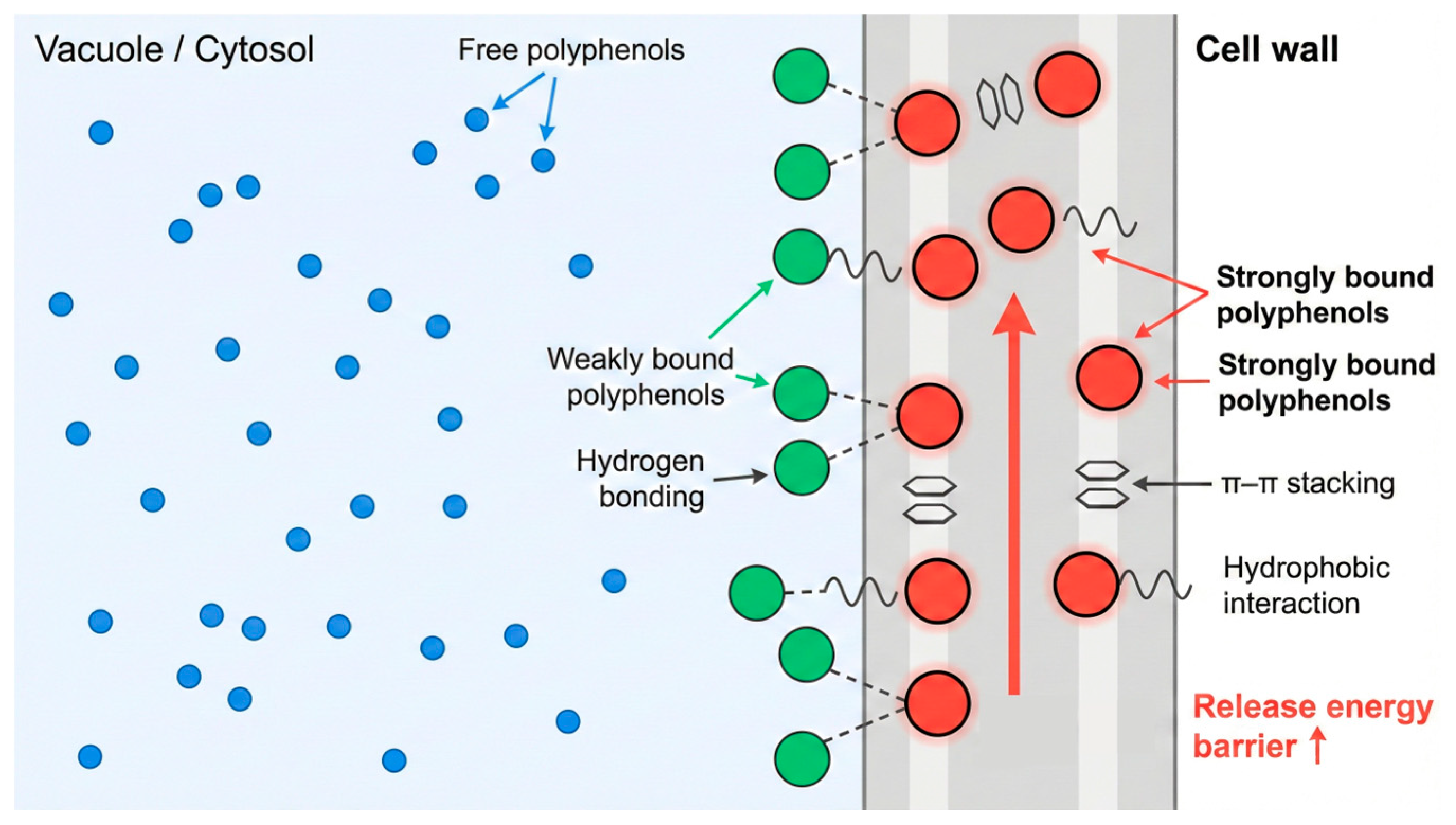
2.2. Matrix Resistance: From Free to Bound States
2.3. Critical Rate-Limiting Steps in Extraction
3. Solvents: Tools for Desorption and Dissolution
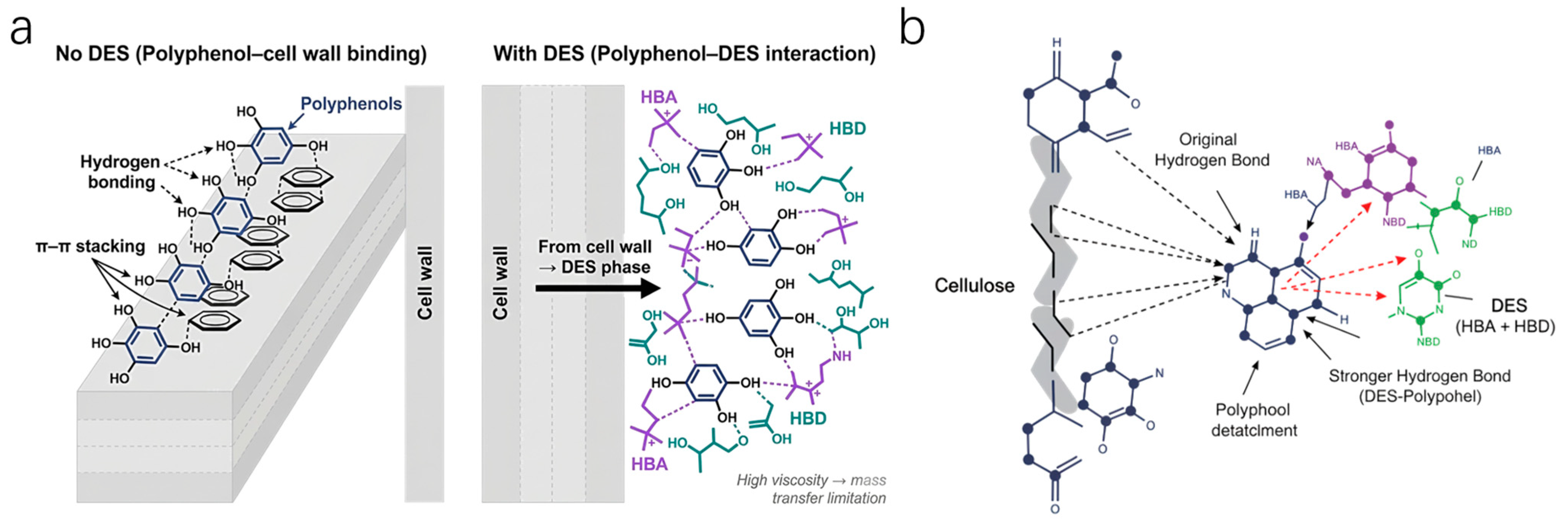
3.1. Deep Eutectic Solvents (DESs)
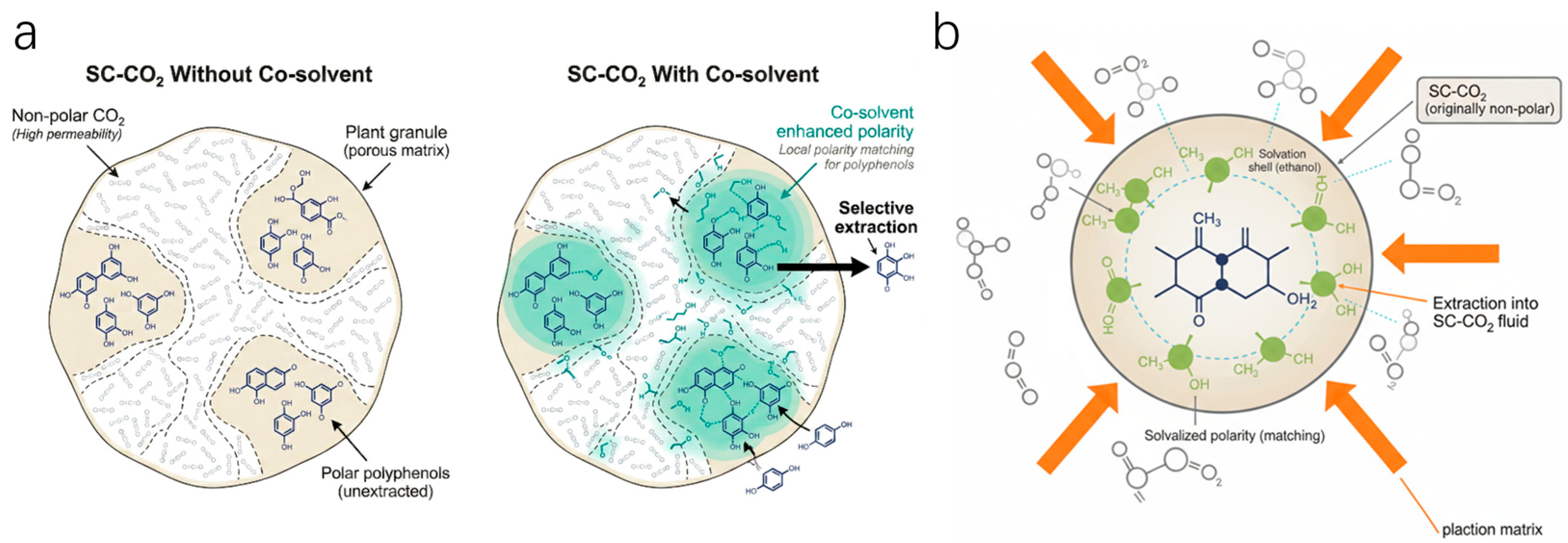
3.2. Supercritical CO2 Extraction (SFE)
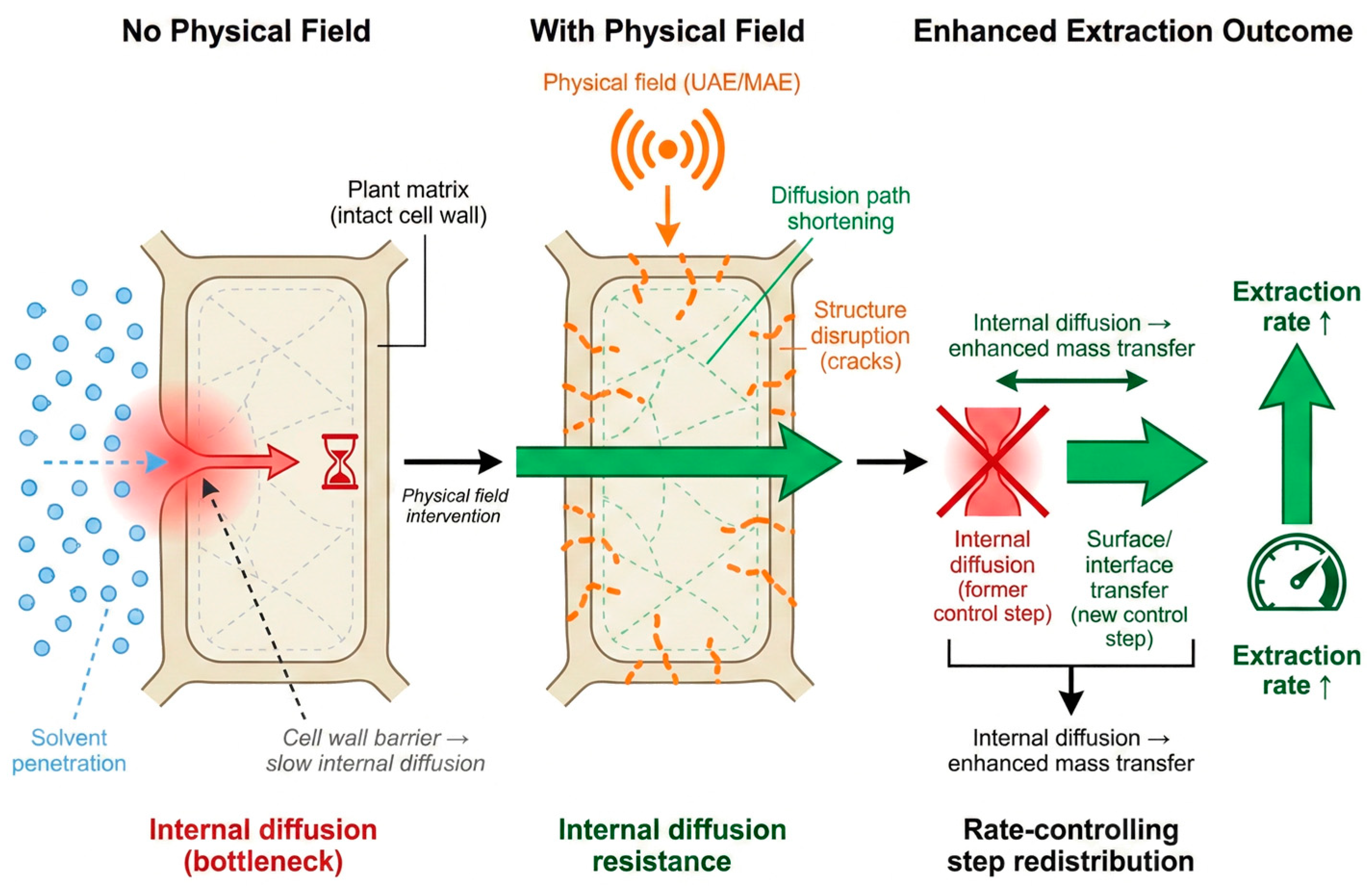
4. Physical Fields and Enzymes: Tools for Structural Modification and Mass Transfer
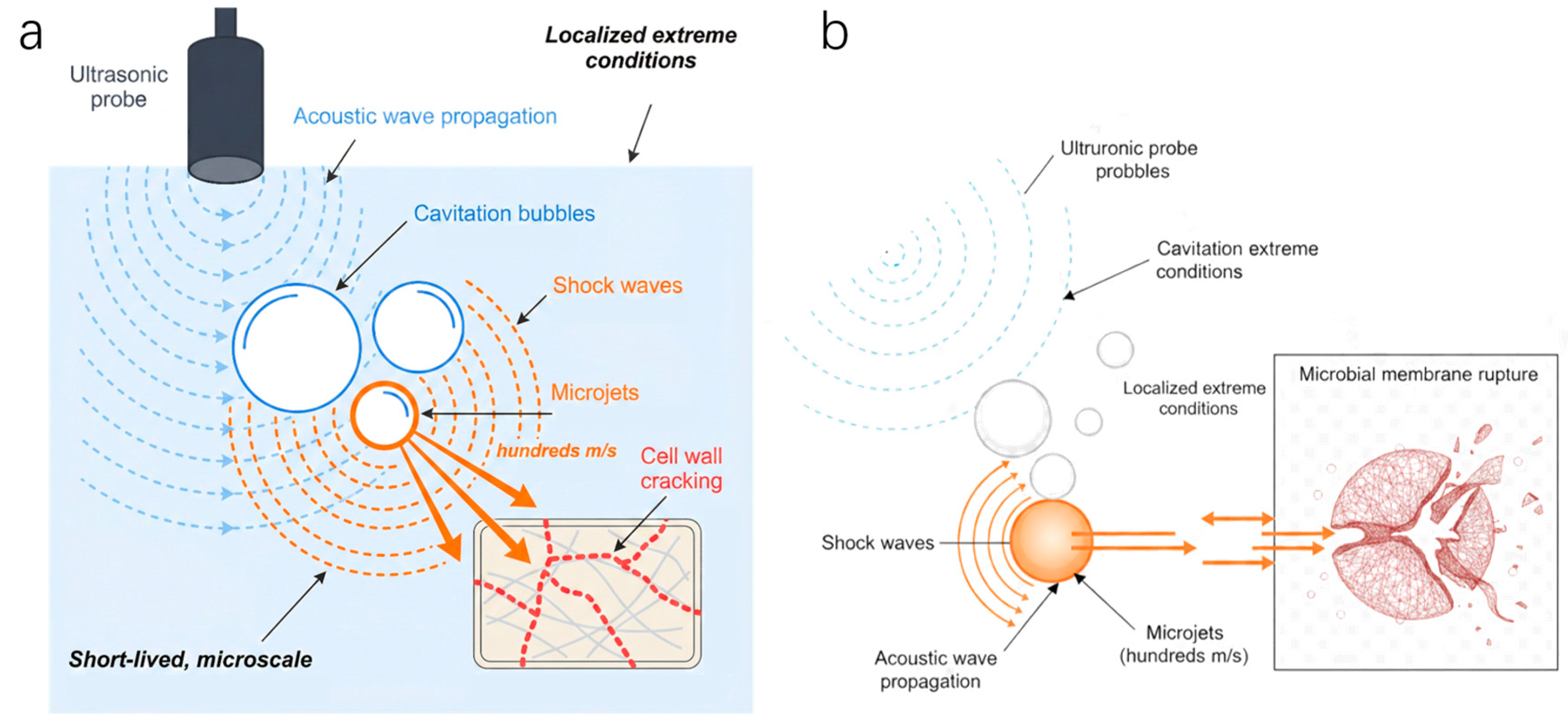
4.1. Ultrasound-Assisted Extraction (UAE)
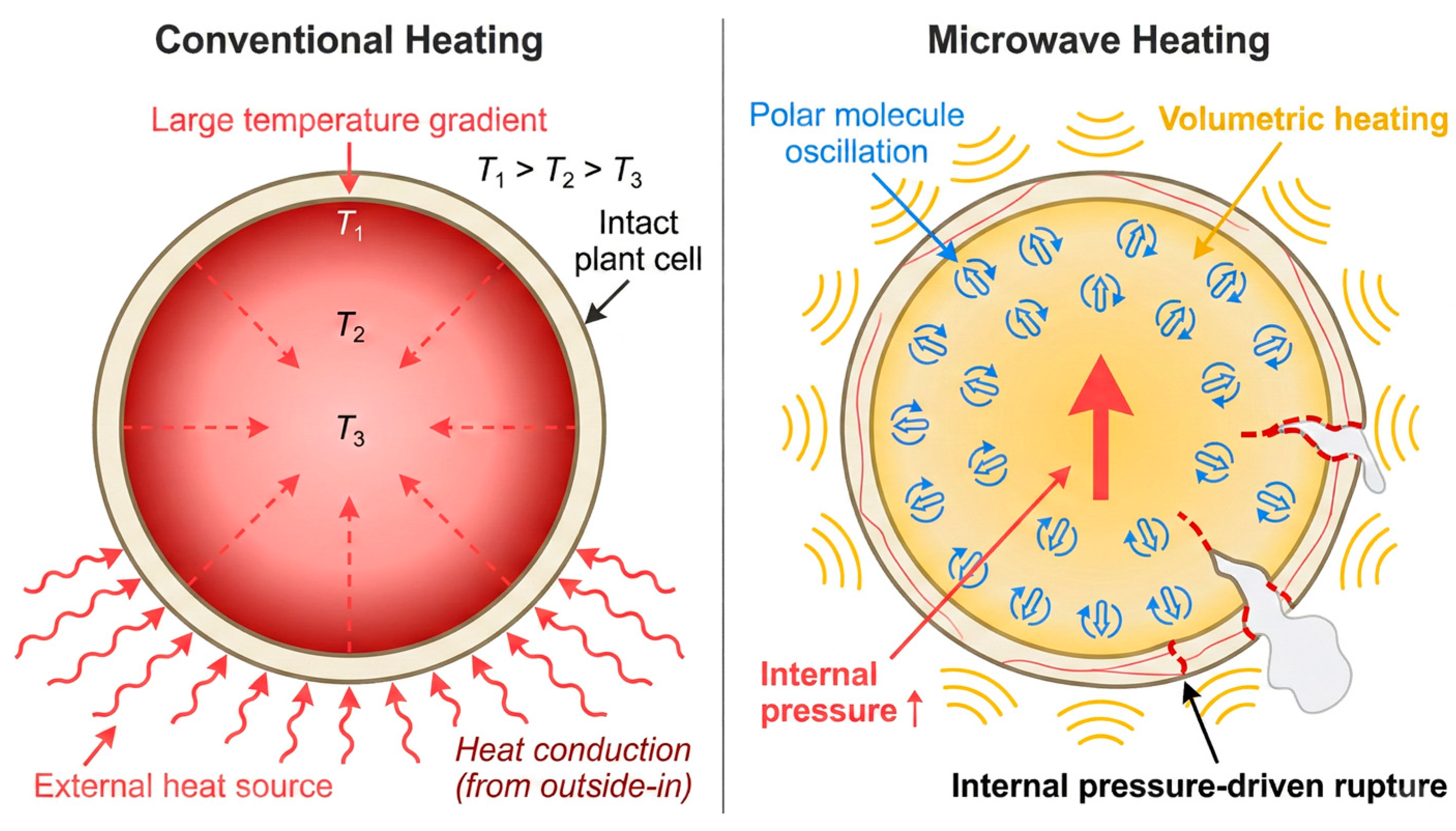
4.2. Microwave-Assisted Extraction (MAE)
4.3. High Hydrostatic Pressure Extraction (HHPE)
4.4. Enzyme-Assisted Extraction (EAE)
4.5. Pulsed Electric Fields (PEF) and High Voltage Electrical Discharge (HVED)
5. Synergistic Integration of Extraction Technologies via Mechanistic Complementarity
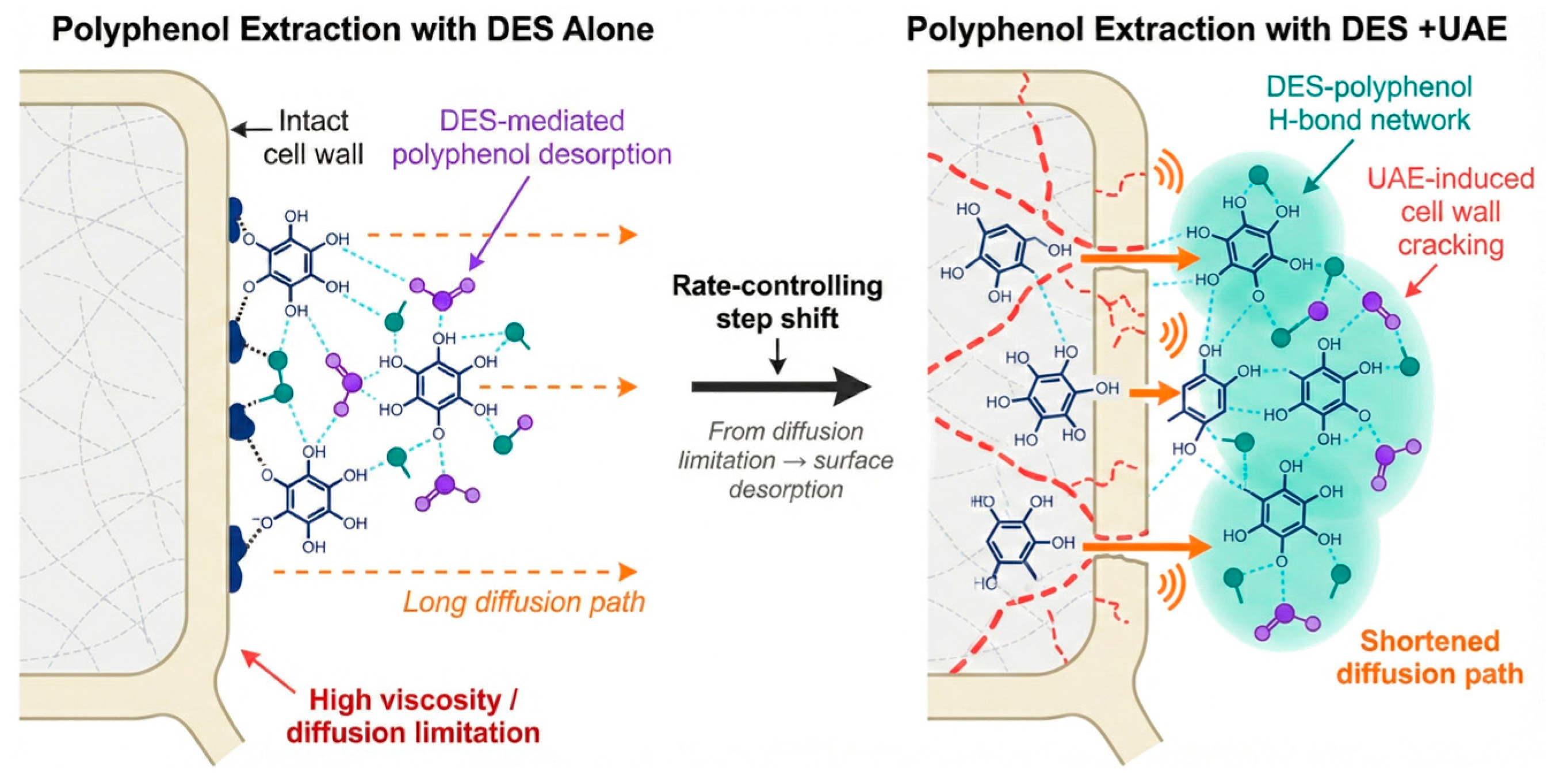
5.1. Deep Eutectic Solvents Coupled with Ultrasound (DES-UAE)
5.2. Supercritical CO2 Coupled with Ultrasound (SFE-UAE)
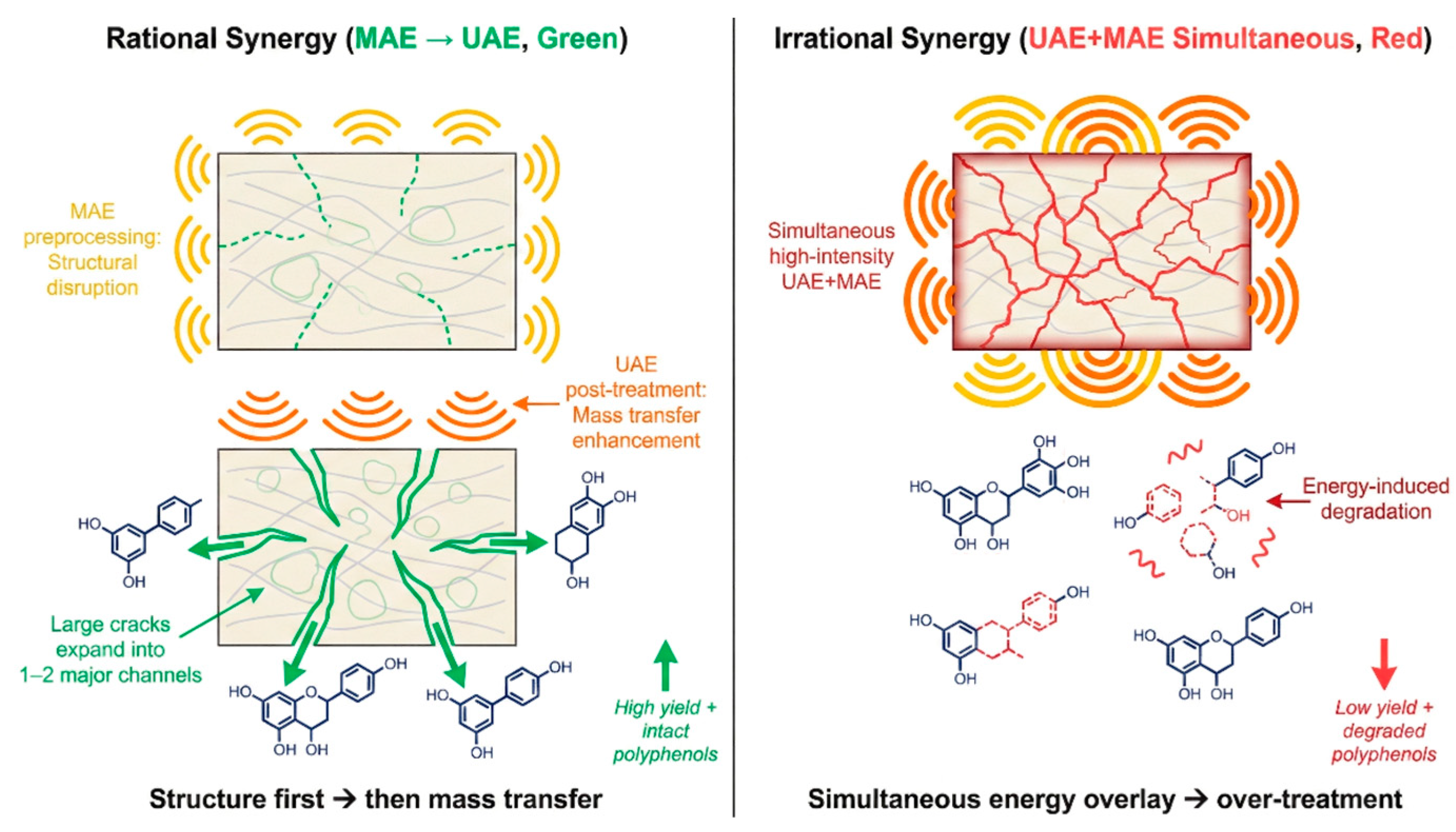
5.3. Microwave Coupled with Ultrasound (MAE-UAE)
5.4. Enzyme Coupled with Ultrasound (EAE-UAE)
5.5. High Hydrostatic Pressure Coupled with Ultrasound (HHPE-UAE)

| Extraction Technique | Phenolics Suitable for Extraction | Key Structural Features & Limitations | Primary Extraction Barrier (Rate-Limiting Step) | Synergistic Mechanism (Mechanism Complementarity) | Ref. |
|---|---|---|---|---|---|
| DES-UAE | Flavonoids (e.g., Rutin, Quercetin) | Medium-high polarity; low solubility in single solvents. | Dissolution & Diffusion: Interaction between polyphenols and matrix. | DES provides a designable H-bond network to promote desorption; UAE cavitation reduces DES viscosity to enhance mass transfer. | [76] |
| HHPE-UAE | Phenolic acids, flavonoids, coumarins. | High water solubility; extreme pH and heat sensitivity. | Stability Retention: Degradation under high-energy or thermal conditions. | HHPE achieves high-efficiency “cold extraction” at <30 °C; subsequent UAE focuses on rupturing pre-strained cell structures. | [77] |
| EAE-UAE | Flavanols | Small molecules; often ester-bonded to cell wall polysaccharides. | Dissociation & Release: Chemical covalent bonds and matrix entrapment. | Enzymes (e.g., cellulase) specifically cleave covalent bonds; UAE enhances enzyme–substrate contact and speeds up leaching. | [78] |
| MAE-UAE | Tannins (Condensed & Hydrolyzable) | High MW; complex multi-point H-bonding; increases extract viscosity. | Macromolecule Desorption: Large molecular size and tortuous diffusion pathways. | MAE generates volumetric heating and internal pressure to rupture dense tissues; UAE improves the diffusion of large molecules into the bulk phase. | [79] |
| SFE-UAE | Low-polarity Phenolics (e.g., Stilbenes) | Low solubility in polar solvents; requires high purity. | Solvent Selectivity: Difficulty in balancing yield and fractionation purity. | SC-CO2 offers high permeability and selective dissolution; UAE perturbs the fluid boundary layer to reduce mass transfer resistance. | [71] |
6. Process Optimization and Intelligent Modeling
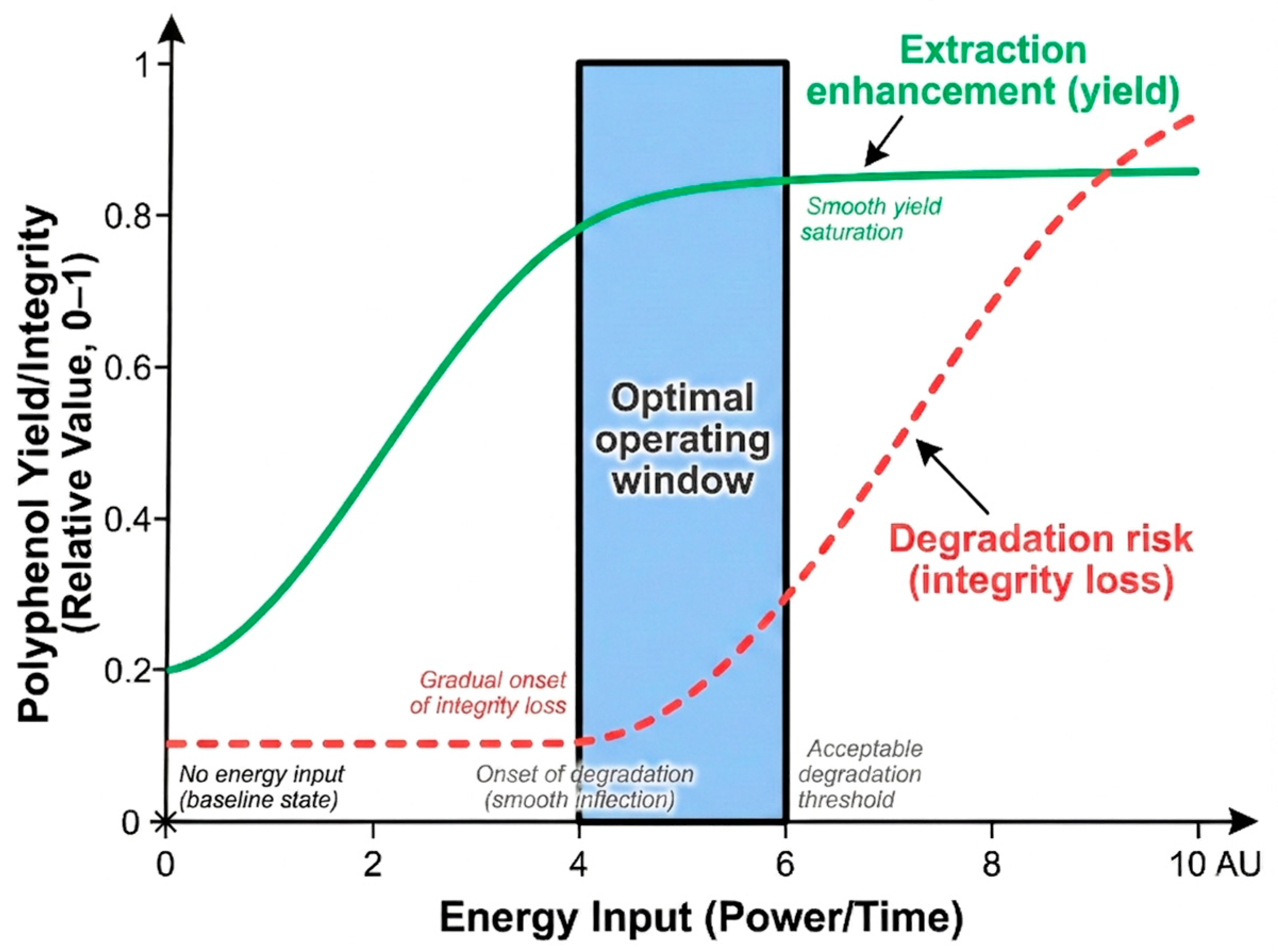
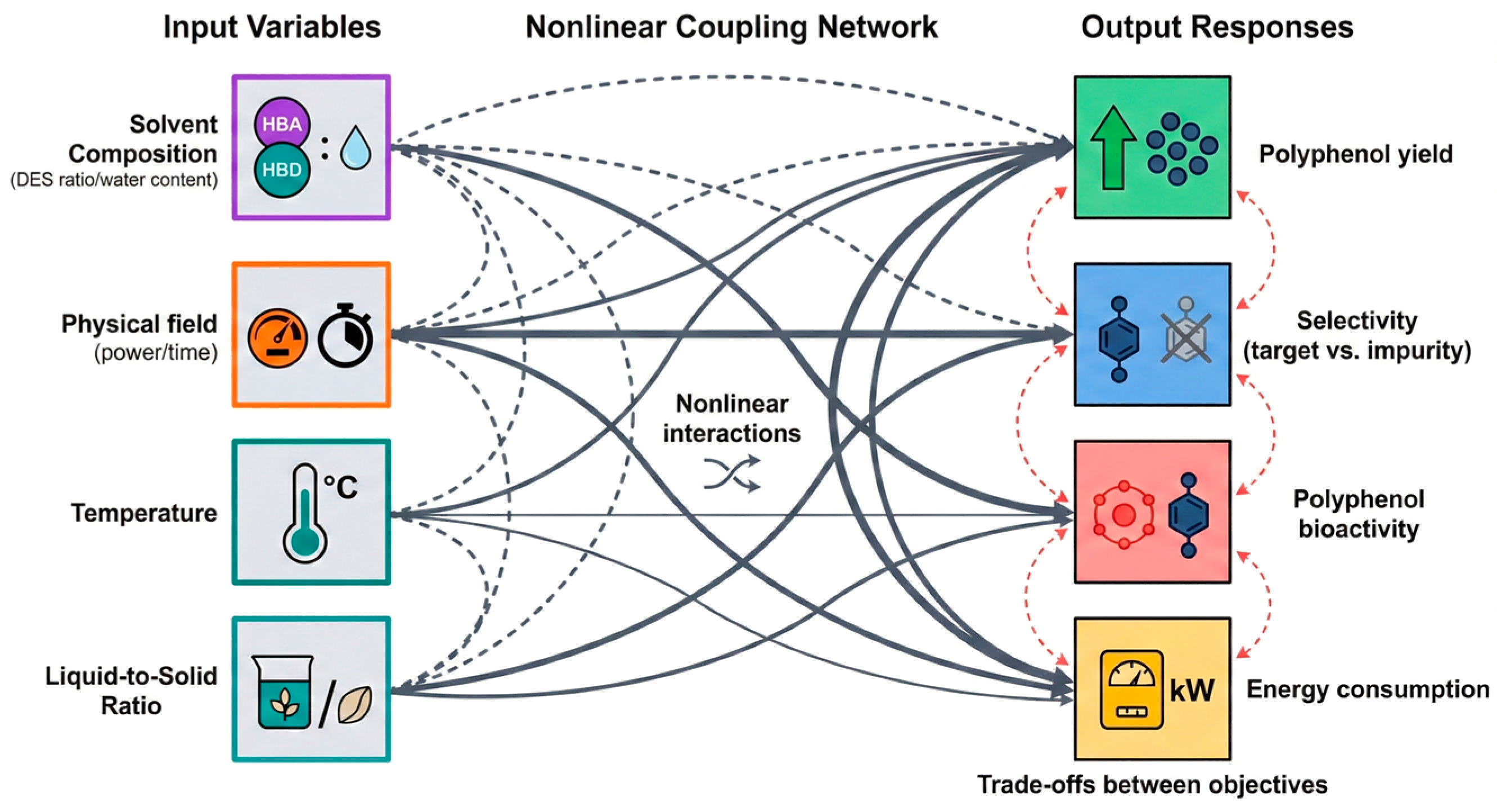
6.1. Optimization Needs in Multi-Variable Coupling Contexts: From Single-Point to Operating Windows
6.2. Response Surface Methodology (RSM): A Tool for Statistical Optimization Under Mechanistic Constraints
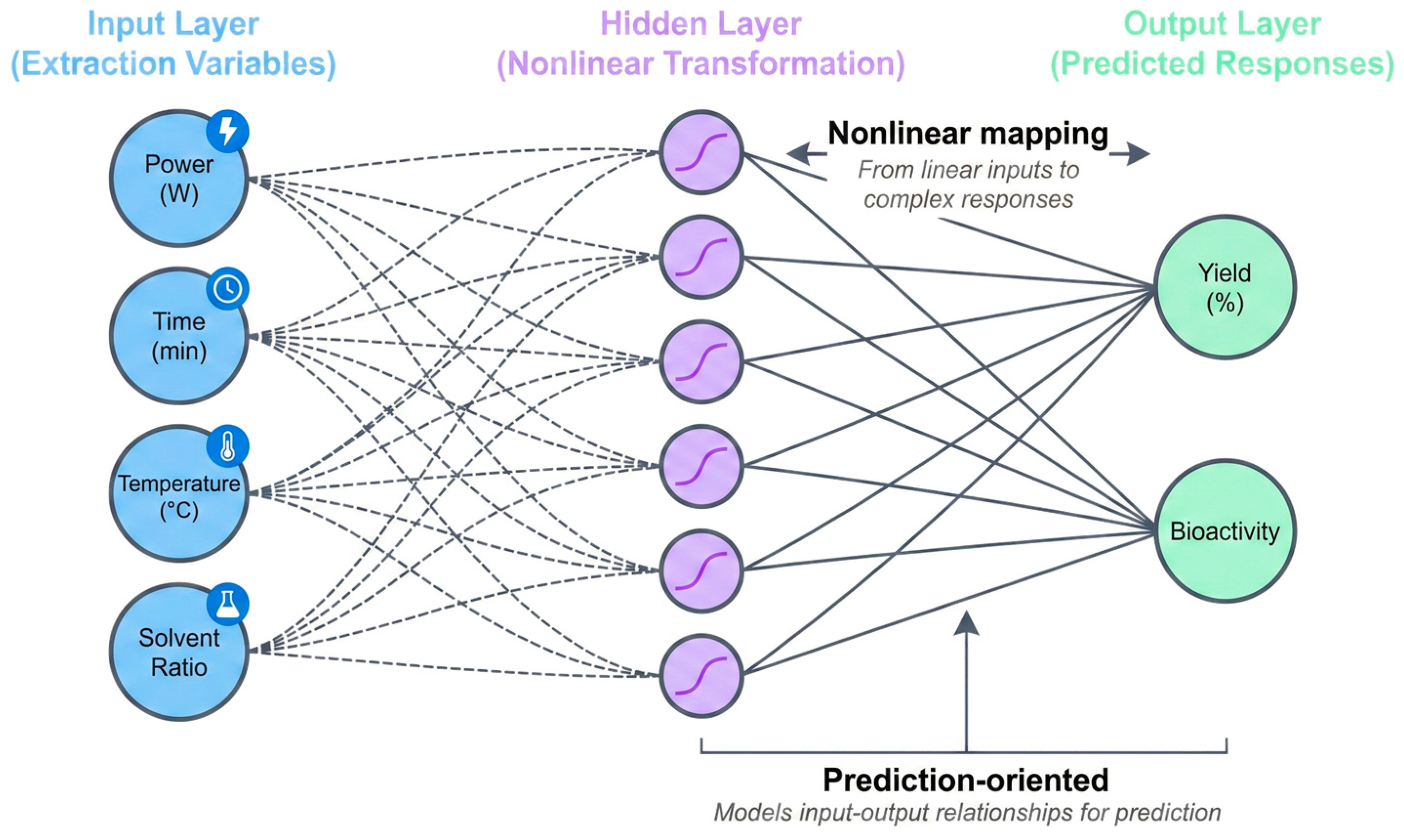
6.3. Artificial Neural Networks (ANN): A Predictive Tool for Non-Linear and Complex Coupling
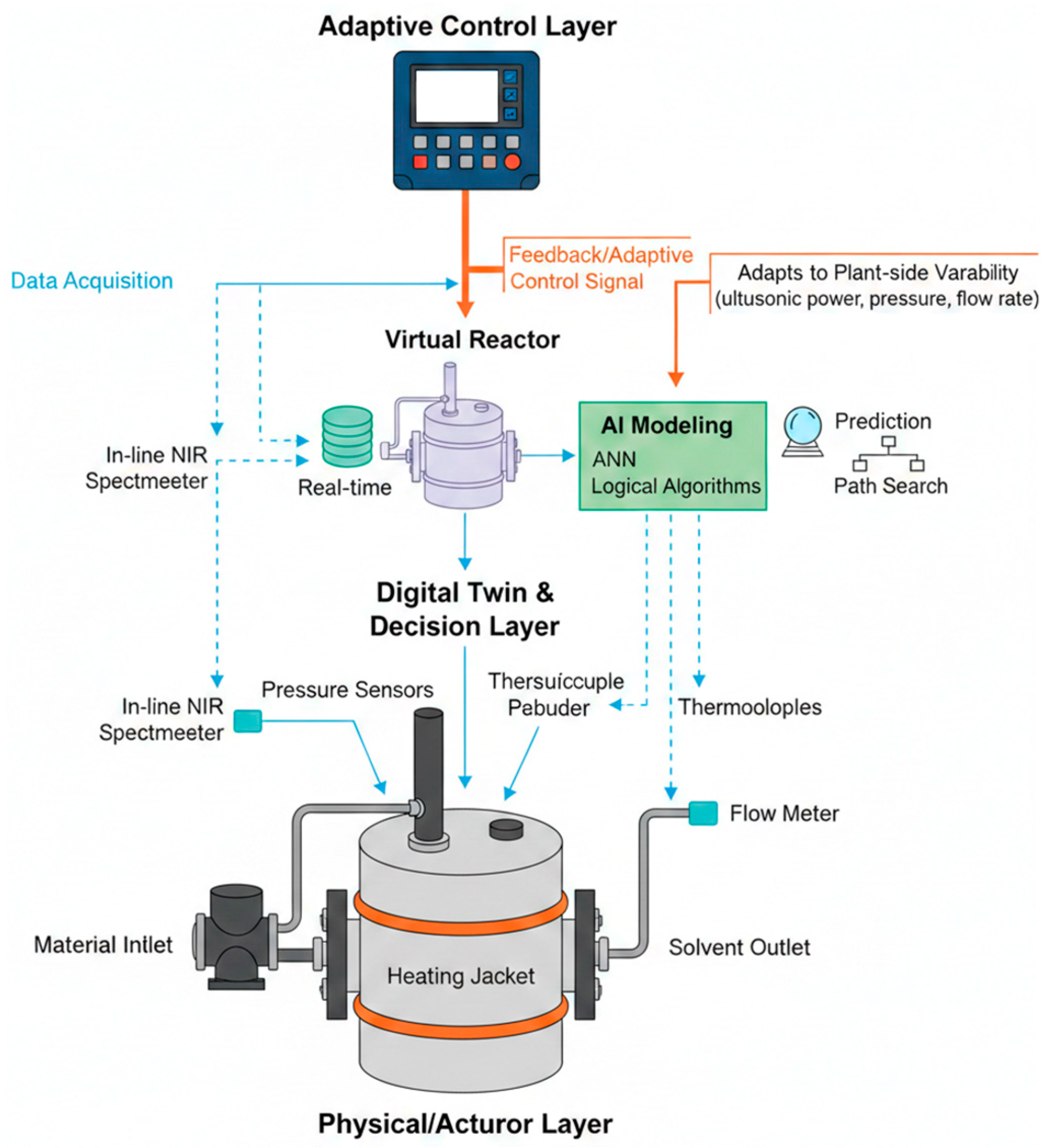
6.4. Multi-Objective Optimization Cases in Collaborative Systems
7. Conclusions and Future Perspectives
- (1)
- Unlocking “Plant-Side Determinants” for Targeted Extraction: Research should move beyond generic parameters and quantify raw-material variability. Critical questions remain regarding how different species, genotypes, and tissue types (e.g., peel vs. seed) dictate the spatial distribution of polyphenols within subcellular compartments (vacuoles vs. cell walls). Key needs include resolving the binding-energy barriers between bound phenolics and the polysaccharide–lignin network. This knowledge will support “targeted extraction”—the rational design of green solvent and energy field combinations that specifically match the tissue structure and target subclass to balance yield, selectivity, and stability.
- (2)
- From Passive Optimization to Intelligent Decision-Making: As extraction systems increase in complexity, process optimization is shifting from being a supporting step to a decision-enabling module. While Response Surface Methodology (RSM) remains valid for identifying robust operating windows under mechanistic constraints, data-driven models like Artificial Neural Networks (ANN) are indispensable for handling non-linear coupling and multi-objective predictions. Integrating mechanistic features with RSM/ANN can support scale-up and stable operation.
- (3)
- Bridging the Gap to Industrialization: Industrial translation must adhere to the principles of “reproducibility, recyclability, and regulatability.” Priority should be given to continuous, modular, and integrated flows that narrow the lab-to-industry gap. Furthermore, incorporating Life Cycle Assessment (LCA), safety evaluations, and regulatory compliance into the early design phase—combined with digital twins and intelligent control—will drive polyphenol extraction from being merely “lab-optimal” to being “scalable, compliant, and sustainable”.
Author Contributions
Funding
Data Availability Statement
Acknowledgments
Conflicts of Interest
References
- Liu, J.; Yong, H.; Liu, Y.; Qin, Y.; Kan, J.; Liu, J. Preparation and characterization of active and intelligent films based on fish gelatin and haskap berries (Lonicera caerulea L.) extract. Food Packag. Shelf Life 2019, 22, 100417. [Google Scholar] [CrossRef]
- Wang, X.; Huang, X.; Zhang, F.; Hou, F.; Yi, F.; Sun, X.; Yang, Q.; Han, X.; Liu, Z. Characterization of chitosan/zein composite film combined with tea polyphenol and its application on postharvest quality improvement of mushroom (Lyophyllum decastes Sing.). Food Packag. Shelf Life 2022, 33, 100869. [Google Scholar] [CrossRef]
- Zhu, F. Polysaccharide based films and coatings for food packaging: Effect of added polyphenols. Food Chem. 2021, 359, 129871. [Google Scholar] [CrossRef] [PubMed]
- Li, F.; Yan, H.; Jiang, L.; Zhao, J.; Lei, X.; Ming, J. Cherry polyphenol extract ameliorated dextran sodium sulfate-induced ulcerative colitis in mice by suppressing Wnt/β-Catenin signaling pathway. Foods 2021, 11, 49. [Google Scholar] [CrossRef]
- Zuercher, A.W.; Holvoet, S.; Weiss, M.; Mercenier, A. Polyphenol-enriched apple extract attenuates food allergy in mice. Clin. Exp. Allergy 2010, 40, 942–950. [Google Scholar] [CrossRef]
- Liu, S.; He, Y.; He, W.; Song, X.; Peng, Y.; Hu, X.; Bian, S.; Li, Y.; Nie, S.; Yin, J.; et al. Exploring the biogenic transformation mechanism of polyphenols by Lactobacillus plantarum NCU137 fermentation and its enhancement of antioxidant properties in wolfberry juice. J. Agric. Food Chem. 2024, 72, 12752–12761. [Google Scholar] [CrossRef]
- Sun, X.; Sarteshnizi, R.A.; Udenigwe, C.C. Recent advances in protein–polyphenol interactions focusing on structural properties related to antioxidant activities. Curr. Opin. Food Sci. 2022, 45, 100840. [Google Scholar] [CrossRef]
- Arigò, A.; Česla, P.; Šilarová, P.; Calabrò, M.L.; Česlová, L. Development of extraction method for characterization of free and bonded polyphenols in barley (Hordeum vulgare L.) grown in Czech Republic using liquid chromatography-tandem mass spectrometry. Food Chem. 2018, 245, 829–837. [Google Scholar] [CrossRef]
- Boateng, I.D.; Clark, K. Trends in extracting Agro-byproducts’ phenolics using non-thermal technologies and their combinative effect: Mechanisms, potentials, drawbacks, and safety evaluation. Food Chem. 2024, 437, 137841. [Google Scholar] [CrossRef]
- Shi, L.; Zhao, W.; Yang, Z.; Subbiah, V.; Suleria, H.A.R. Extraction and characterization of phenolic compounds and their potential antioxidant activities. Environ. Sci. Pollut. Res. 2022, 29, 81112–81129. [Google Scholar] [CrossRef]
- Zhou, C.; Adeyanju, A.A.; Nwonuma, C.O.; Inyinbor, A.A.; Alejolowo, O.O.; Al-Hamayda, A.; Akinsemolu, A.; Onyeaka, H.; Olaniran, A.F. Physical field-assisted deep eutectic solvent processing: A green and water-saving extraction and separation technology. J. Food Sci. 2024, 89, 8248–8275. [Google Scholar] [CrossRef]
- Domínguez-Rodríguez, G.; Amador-Luna, V.M.; Benešová, K.; Pernica, M.; Parada-Alfonso, F.; Ibáñez, E. Biorefinery approach with green solvents for the valorization of Citrus reticulata leaves to obtain antioxidant and anticholinergic extracts. Food Chem. 2024, 456, 140034. [Google Scholar] [CrossRef]
- Guo, Z.; Zhao, B.; Li, H.; Miao, S.; Zheng, B. Optimization of ultrasound-microwave synergistic extraction of prebiotic oligosaccharides from sweet potatoes (Ipomoea batatas L.). Innov. Food Sci. Emerg. Technol. 2019, 54, 51–63. [Google Scholar] [CrossRef]
- Bastos, K.V.L.d.S.; de Souza, A.B.; Tomé, A.C.; Souza, F.d.M. New strategies for the extraction of antioxidants from fruits and their by-products: A systematic review. Plants 2025, 14, 755. [Google Scholar] [CrossRef]
- Kagueyam, S.S.; dos Santos Filho, J.R.; Contato, A.G.; de Souza, C.G.M.; Castoldi, R.; Corrêa, R.C.G.; Conte, C.A., Jr.; Yamaguchi, N.U.; Bracht, A.; Peralta, R.M. Green Extraction of Bioactive Compounds from Plant-Based Agri-Food Residues: Advances Toward Sustainable Valorization. Plants 2025, 14, 3597. [Google Scholar] [CrossRef] [PubMed]
- Panche, A.N.; Diwan, A.D.; Chandra, S.R. Flavonoids: An overview. J. Nutr. Sci. 2016, 5, e47. [Google Scholar] [CrossRef]
- Le Bourvellec, C.; Renard, C. Interactions between polyphenols and macromolecules: Quantification methods and mechanisms. Crit. Rev. Food Sci. Nutr. 2012, 52, 213–248. [Google Scholar] [CrossRef] [PubMed]
- Buchner, N.; Krumbein, A.; Rohn, S.; Kroh, L.W. Effect of thermal processing on the flavonols rutin and quercetin. Rapid Commun. Mass Spectrom. 2006, 20, 3229–3235. [Google Scholar] [CrossRef]
- Kroon, P.A.; Garcia-Conesa, M.T.; Fillingham, I.; Hazlewood, G.; Williamson, G. Release of ferulic acid dehydrodimers from plant cell walls by feruloyl esterases. J. Sci. Food Agric. 1999, 79, 428–434. [Google Scholar] [CrossRef]
- Appel, H.M. Phenolics in ecological interactions: The importance of oxidation. J. Chem. Ecol. 1993, 19, 1521–1552. [Google Scholar] [CrossRef]
- Giusti, M.M.; Wrolstad, R.E. Acylated anthocyanins from edible sources and their applications in food systems. Biochem. Eng. J. 2003, 14, 217–225. [Google Scholar] [CrossRef]
- Cacace, J.; Mazza, G. Optimization of extraction of anthocyanins from black currants with aqueous ethanol. J. Food Sci. 2003, 68, 240–248. [Google Scholar] [CrossRef]
- Patras, A.; Brunton, N.P.; O’DOnnell, C.; Tiwari, B. Effect of thermal processing on anthocyanin stability in foods; mechanisms and kinetics of degradation. Trends Food Sci. Technol. 2010, 21, 3–11. [Google Scholar] [CrossRef]
- Haslam, E.; Cai, Y. Plant polyphenols (vegetable tannins): Gallic acid metabolism. Nat. Prod. Rep. 1994, 11, 41–66. [Google Scholar] [CrossRef]
- Barbehenn, R.V.; Constabel, C.P. Tannins in plant–herbivore interactions. Phytochemistry 2011, 72, 1551–1565. [Google Scholar] [CrossRef] [PubMed]
- Manach, C.; Scalbert, A.; Morand, C.; Rémésy, C.; Jiménez, L. Polyphenols: Food sources and bioavailability. Am. J. Clin. Nutr. 2004, 79, 727–747. [Google Scholar] [CrossRef]
- Liu, X.; Le Bourvellec, C.; Renard, C.M.G.C. Interactions between cell wall polysaccharides and polyphenols: Effect of molecular internal structure. Compr. Rev. Food Sci. Food Saf. 2020, 19, 3574–3617. [Google Scholar] [CrossRef]
- Holland, C.; Ryden, P.; Edwards, C.H.; Grundy, M.M.-L. Plant cell walls: Impact on nutrient bioaccessibility and digestibility. Foods 2020, 9, 201. [Google Scholar] [CrossRef]
- Zhang, H.; Zhao, W.; Bai, T.; Fu, L.; Chen, Z.; Jing, X.; Wang, X. Sustainable extraction of polyphenols from millet using switchable deep eutectic solvents. LWT 2022, 170, 114082. [Google Scholar] [CrossRef]
- Kalompatsios, D.; Palaiogiannis, D.; Makris, D.P. Optimized Production of a Hesperidin-Enriched Extract with Enhanced Antioxidant Activity from Waste Orange Peels Using a Glycerol/Sodium Butyrate Deep Eutectic Solvent. Horticulturae 2024, 10, 208. [Google Scholar] [CrossRef]
- Chakroun, D.; Grigorakis, S.; Loupassaki, S.; Makris, D.P. Enhanced-performance extraction of olive (Olea europaea) leaf polyphenols using L-lactic acid/ammonium acetate deep eutectic solvent combined with β-cyclodextrin: Screening, optimisation, temperature effects and stability. Biomass Convers. Biorefin. 2021, 11, 1125–1136. [Google Scholar] [CrossRef]
- Vázquez-González, M.; Fernández-Prior, Á.; Oria, A.B.; Rodríguez-Juan, E.M.; Pérez-Rubio, A.G.; Fernández-Bolaños, J.; Rodríguez-Gutiérrez, G. Utilization of strawberry and raspberry waste for the extraction of bioactive compounds by deep eutectic solvents. LWT 2020, 130, 109645. [Google Scholar] [CrossRef]
- Molnar, M.; Kovač, M.J.; Jakobek, L.; Mihajlović, L.; Pavić, V. Green Extraction of Phenolic Compounds from Aronia melanocarpa Using Deep Eutectic Solvents and Antioxidant Activity Investigation. Antioxidants 2024, 14, 31. [Google Scholar] [CrossRef]
- Ghedira, W.; Souissi, M.; Boudokhane, C.; Dhaouadi, H. Eco-Friendly Extraction and Antioxidant Profiling of Rosmarinus officinalis L.: Advances in Supercritical Fluid Extraction, DFT, and ADMET Analyses. Results Eng. 2025, 28, 107422. [Google Scholar] [CrossRef]
- Kupnik, K.; Leitgeb, M.; Primožič, M.; Postružnik, V.; Kotnik, P.; Kučuk, N.; Knez, Ž.; Marevci, M.K. Supercritical fluid and conventional extractions of high value-added compounds from pomegranate peels waste: Production, quantification and antimicrobial activity of bioactive constituents. Plants 2022, 11, 928. [Google Scholar] [CrossRef]
- Ferrentino, G.; Morozova, K.; Mosibo, O.K.; Ramezani, M.; Scampicchio, M. Biorecovery of antioxidants from apple pomace by supercritical fluid extraction. J. Clean. Prod. 2018, 186, 253–261. [Google Scholar] [CrossRef]
- Arce, L.; Lista, A.G.; Ríos, A.; Valcárcel, M. Screening of polyphenols in grape marc by on-line supercritical fluid extraction–flow through sensor. Anal. Lett. 2001, 34, 1461–1476. [Google Scholar] [CrossRef]
- Jakobek, L.; Boc, M.; Barron, A.R. Optimization of ultrasonic-assisted extraction of phenolic compounds from apples. Food Anal. Methods 2015, 8, 2612–2625. [Google Scholar] [CrossRef]
- Wen, Y.; Zeng, X.; Mai, X. Optimization of ultrasonic-assisted extraction and biological activities of total polyphenols from Toona sinensis using response surface methodology. Biomass Convers. Biorefin. 2022, 14, 14225–14238. [Google Scholar] [CrossRef]
- Teh, S.-S.; Birch, E.J. Effect of ultrasonic treatment on the polyphenol content and antioxidant capacity of extract from defatted hemp, flax and canola seed cakes. Ultrason. Sonochem. 2014, 21, 346–353. [Google Scholar] [CrossRef]
- Sun, Y.; Lu, J.; Li, J.; Li, P.; Zhao, M.; Xia, G. Optimization of ultrasonic-assisted extraction of polyphenol from Areca nut (Areca catechu L.) seeds using response surface methodology and its effects on osteogenic activity. Ultrason. Sonochem. 2023, 98, 106511. [Google Scholar] [CrossRef]
- Naima, R.; Oumam, M.; Hannache, H.; Sesbou, A.; Charrier, B.; Pizzi, A.; Charrier–El Bouhtoury, F. Comparison of the impact of different extraction methods on polyphenols yields and tannins extracted from Moroccan Acacia mollissima barks. Ind. Crop. Prod. 2015, 70, 245–252. [Google Scholar] [CrossRef]
- Álvarez, A.; Poejo, J.; Matias, A.A.; Duarte, C.M.; Cocero, M.J.; Mato, R.B. Microwave pretreatment to improve extraction efficiency and polyphenol extract richness from grape pomace. Effect on antioxidant bioactivity. Food Bioprod. Process. 2017, 106, 162–170. [Google Scholar] [CrossRef]
- Teng, H.; Lee, W.Y. Optimization of microwave-assisted extraction of polyphenols from mulberry fruits (Morus alba L.) using response surface methodology. J. Korean Soc. Appl. Biol. Chem. 2013, 56, 317–324. [Google Scholar] [CrossRef]
- Vallejo-Castillo, V.; Muñoz-Mera, J.; Pérez-Bustos, M.F.; Rodriguez-Stouvenel, A. Recovery of antioxidants from papaya (Carica papaya L.) peel and pulp by microwave-assisted extraction. Rev. Mex. Ing. Quím. 2020, 19, 85–98. [Google Scholar] [CrossRef]
- Zhou, Z.; Shao, H.; Han, X.; Wang, K.; Gong, C.; Yang, X. The extraction efficiency enhancement of polyphenols from Ulmus pumila L. barks by trienzyme-assisted extraction. Ind. Crop. Prod. 2017, 97, 401–408. [Google Scholar] [CrossRef]
- Domínguez-Rodríguez, G.; Marina, M.L.; Plaza, M. Enzyme-assisted extraction of bioactive non-extractable polyphenols from sweet cherry (Prunus avium L.) pomace. Food Chem. 2021, 339, 128086. [Google Scholar] [CrossRef]
- Grassino, A.N.; Pedisić, S.; Dragović-Uzelac, V.; Karlović, S.; Ježek, D.; Bosiljkov, T. Insight into high-hydrostatic pressure extraction of polyphenols from tomato peel waste. Plant Foods Hum. Nutr. 2020, 75, 427–433. [Google Scholar] [CrossRef]
- Xi, J.; Shen, D.; Zhao, S.; Lu, B.; Li, Y.; Zhang, R. Characterization of polyphenols from green tea leaves using a high hydrostatic pressure extraction. Int. J. Pharm. 2009, 382, 139–143. [Google Scholar] [CrossRef]
- Boussetta, N.; Soichi, E.; Lanoisellé, J.-L.; Vorobiev, E. Valorization of oilseed residues: Extraction of polyphenols from flaxseed hulls by pulsed electric fields. Ind. Crop. Prod. 2014, 52, 347–353. [Google Scholar] [CrossRef]
- Boussetta, N.; Lebovka, N.; Vorobiev, E.; Adenier, H.; Bedel-Cloutour, C.; Lanoisellé, J.-L. Electrically assisted extraction of soluble matter from chardonnay grape skins for polyphenol recovery. J. Agric. Food Chem. 2009, 57, 1491–1497. [Google Scholar] [CrossRef]
- Hu, Y.; Zheng, Z.; Zhai, D.; Lai, J.; Liang, P.; Wang, Z.; Jiang, C.; Guo, Y.; Chen, H.; Shen, C.; et al. Exploring the molecular mechanism of targeted extraction of novel flavonoid components in licorice using natural deep eutectic solvent. J. Mol. Liq. 2024, 402, 124797. [Google Scholar] [CrossRef]
- Yusoff, M.H.M.; Shafie, M.H. Pioneering polysaccharide extraction with deep eutectic solvents: A review on impacts to extraction yield, physicochemical properties and bioactivities. Int. J. Biol. Macromol. 2025, 306, 141469. [Google Scholar] [CrossRef] [PubMed]
- Zhou, M.; Fakayode, O.A.; Li, H. Green extraction of polyphenols via deep eutectic solvents and assisted technologies from agri-food by-products. Molecules 2023, 28, 6852. [Google Scholar] [CrossRef] [PubMed]
- Liang, F.; Li, X.; Zhang, Y.; Wu, Y.; Bai, K.; Agusti, R.; Soleimani, A.; Wang, W.; Yi, S. Recent progress on green new phase extraction and preparation of polyphenols in edible oil. Molecules 2023, 28, 8150. [Google Scholar] [CrossRef]
- Vicente-Zurdo, D.; Gómez-Mejía, E.; Morante-Zarcero, S.; Rosales-Conrado, N.; Sierra, I. Analytical Strategies for Green Extraction, Characterization, and Bioactive Evaluation of Polyphenols, Tocopherols, Carotenoids, and Fatty Acids in Agri-Food Bio-Residues. Molecules 2025, 30, 1326. [Google Scholar] [CrossRef]
- Oliveira, M.R.d.; Cantorani, J.R.H.; Pilatti, L.A. Sustainable Extraction of Bioactive Compounds from Food Processing By-Products: Strategies and Circular Economy Insights. Processes 2025, 13, 3611. [Google Scholar] [CrossRef]
- Da Porto, C.; Natolino, A. Supercritical fluid extraction of polyphenols from grape seed (Vitis vinifera): Study on process variables and kinetics. J. Supercrit. Fluids 2017, 130, 239–245. [Google Scholar] [CrossRef]
- Huynh, H.D.; Nargotra, P.; Wang, H.-M.D.; Tsai, Y.-H.; Chiu, C.-C.; Shieh, C.-J.; Liu, Y.-C.; Kuo, C.-H. Unveiling the mechanism of ultrasound-assisted phenolic extraction from Psidium cattleianum leaves: Kinetic, mass transfer, and thermodynamic insights. Ultrason. Sonochem. 2025, 123, 107675. [Google Scholar] [CrossRef]
- Withouck, H.; Paelinck, A.; Foubert, I.; Fraeye, I. Ultrasound-assisted extraction of applewood polyphenols at lab and pilot scales. Foods 2023, 12, 3142. [Google Scholar] [CrossRef]
- Teng, H.; Lee, W.Y.; Choi, Y.H. Optimization of ultrasonic-assisted extraction of polyphenols, anthocyanins, and antioxidants from raspberry (Rubus coreanus Miq.) using response surface methodology. Food Anal. Methods 2014, 7, 1536–1545. [Google Scholar] [CrossRef]
- Zahari, N.A.A.R.; Chong, G.H.; Abdullah, L.C.; Chua, B.L. Ultrasonic-assisted extraction (UAE) process on thymol concentration from Plectranthus amboinicus leaves: Kinetic modeling and optimization. Processes 2020, 8, 322. [Google Scholar] [CrossRef]
- Hu, T.; Wang, F.; Zhao, Z.; Hu, K.; Zhou, C. Optimization, purification and antioxidant potential of polyphenol ultrasonic-assisted extraction from pecan ‘Shaoxing’ green husk. Food Prod. Process. Nutr. 2025, 7, 20. [Google Scholar] [CrossRef]
- Huajun, F.; Guangxin, L.; Xiaohua, X.; Gongke, L. Kinetic mechanisms for the extraction of active constituents in Lycoris Radiata and Rhizma Polygoni Cuspidati by microwave-assisted extraction. Chin. J. Anal. Chem. 2006, 34, 1260–1264. [Google Scholar]
- Kim, J.-H. Comparison of conventional solvent extraction, microwave-assisted extraction, and ultrasound-assisted extraction methods for paclitaxel recovery from biomass. Korean Chem. Eng. Res. 2020, 58, 273–279. [Google Scholar] [CrossRef]
- Briones-Labarca, V.; Giovagnoli-Vicuña, C.; Chacana-Ojeda, M. High pressure extraction increases the antioxidant potential and in vitro bio-accessibility of bioactive compounds from discarded blueberries. CyTA-J. Food 2019, 17, 622–631. [Google Scholar] [CrossRef]
- Rowan, N.; MacGregor, S.J.; Anderson, J.; Fouracre, R.; Farish, O. Pulsed electric field inactivation of diarrhoeagenic Bacillus cereus through irreversible electroporation. Lett. Appl. Microbiol. 2000, 31, 110–114. [Google Scholar] [CrossRef]
- Abbaspour, L.; Ghareaghajlou, N.; Mogaddam, M.R.A.; Ghasempour, Z. An innovative technique for the extraction and stability of polyphenols using high voltage electrical discharge: HVED-Assisted Extraction of Polyphenols. Curr. Res. Food Sci. 2024, 9, 100928. [Google Scholar] [CrossRef] [PubMed]
- Fang, Y.; Zhang, P.; Wang, S.; Li, L.; Sheng, Z. Ultrasonic-Assisted extraction of luteolin from peanut shells using supramolecular solvents and its molecular mechanism. Ultrason. Sonochem. 2025, 123, 107678. [Google Scholar] [CrossRef]
- Dassoff, E.S.; Li, Y.O. Mechanisms and effects of ultrasound-assisted supercritical CO2 extraction. Trends Food Sci. Technol. 2019, 86, 492–501. [Google Scholar] [CrossRef]
- Moon, S.; Lee, C.; Cha, E.; Hwang, K.; Park, S.-K.; Baik, O.-D.; Yu, D. Enhancement of antioxidant properties of Eisenia bicyclis extracts through combination of green extractions: Parameter optimization and comparison. LWT 2024, 213, 117005. [Google Scholar] [CrossRef]
- Liu, X.-Y.; Li, Y.-L.; Zuo, J.; Zhu, B.; Peng, W.-Y.; Ou, H. Synergistic ultrasound-supercritical CO2 technology for flavonoids extraction from Toxicodendron vernicifluum (Stokes) F. A. Barkley. Ind. Crop. Prod. 2025, 236, 121920. [Google Scholar] [CrossRef]
- Chen, Y.; Zhang, D.; Gao, R.; Gao, L. Experimental and modeling analysis of flavones extraction from Vaccinium bracteatum Thunb. leaves by ultrasound and microwave assisted simultaneously. Chem. Pap. 2019, 73, 783–790. [Google Scholar] [CrossRef]
- Vo, T.P.; Nguyen, T.H.T.; Nguyen, H.B.T.; Nguyen, H.N.; Le, N.V.N.; Ha, M.H.; Pham, G.B.; Nguyen, D.Q. Enhancing phenolic and flavonoid recovery from Vietnamese balm using green solvent-based ultrasonic-enzymatic-assisted extraction. Ultrason. Sonochem. 2025, 121, 107546. [Google Scholar] [CrossRef]
- Lee, H.S.; Lee, H.J.; Yu, H.J.; Ju, D.W.; Kim, Y.; Kim, C.-T.; Kim, C.-J.; Cho, Y.-J.; Kim, N.; Choi, S.-Y.; et al. A comparison between high hydrostatic pressure extraction and heat extraction of ginsenosides from ginseng (Panax ginseng CA Meyer). J. Sci. Food Agric. 2011, 91, 1466–1473. [Google Scholar] [CrossRef]
- Liu, Y.; Zhe, W.; Zhang, R.; Peng, Z.; Wang, Y.; Gao, H.; Guo, Z.; Xiao, J. Ultrasonic-assisted extraction of polyphenolic compounds from Paederia scandens (Lour.) Merr. Using deep eutectic solvent: Optimization, identification, and comparison with traditional methods. Ultrason. Sonochem. 2022, 86, 106005. [Google Scholar] [CrossRef]
- Nguyen, T.M.C.; Gavahian, M.; Tsai, P.-J. Effects of ultrasound-assisted extraction (UAE), high voltage electric field (HVEF), high pressure processing (HPP), and combined methods (HVEF+UAE and HPP+UAE) on Gac leaves extraction. LWT 2021, 143, 111131. [Google Scholar] [CrossRef]
- Van Thanh, H.; Phi, N.T.L.; Khoi, N.T.; Hoan, N.X.; Van Hung, P. Green extraction and biological activity of phenolic extracts from cashew nut testa using a combination of enzyme and ultrasound-assisted treatments. J. Sci. Food Agric. 2023, 103, 5626–5633. [Google Scholar] [CrossRef]
- García-Ortíz, J.; Ascacio-Valdés, J.; Nery-Flores, S.; Sáenz-Galindo, A.; Flores-Gallegos, A.; Rodríguez-Herrera, R. Microwave-ultrasound hybrid technology assisted extraction of pigments with antioxidant potential from red corn. Appl. Food Res. 2023, 3, 100350. [Google Scholar] [CrossRef]
- Stefou, I.; Grigorakis, S.; Loupassaki, S.; Makris, D.P. Development of sodium propionate-based deep eutectic solvents for polyphenol extraction from onion solid wastes. Clean Technol. Environ. Policy 2019, 21, 1563–1574. [Google Scholar] [CrossRef]
- Grigorakis, S.; Halahlah, A.; Makris, D.P. Batch stirred-tank green extraction of Salvia fruticosa Mill. polyphenols using newly designed citrate-based deep eutectic solvents and ultrasonication pretreatment. Appl. Sci. 2020, 10, 4774. [Google Scholar] [CrossRef]
- Milutinović, M.; Radovanović, N.; Rajilić-Stojanović, M.; Šiler-Marinković, S.; Dimitrijević, S.; Dimitrijević-Branković, S. Microwave-assisted extraction for the recovery of antioxidants from waste Equisetum arvense. Ind. Crop. Prod. 2014, 61, 388–397. [Google Scholar] [CrossRef]
- Švarc-Gajić, J.; Stojanović, Z.; Carretero, A.S.; Román, D.A.; Borrás, I.; Vasiljević, I. Development of a microwave-assisted extraction for the analysis of phenolic compounds from Rosmarinus officinalis. J. Food Eng. 2013, 119, 525–532. [Google Scholar] [CrossRef]
- Asofiei, I.; Calinescu, I.; Trifan, A.; David, I.G.; Gavrila, A.I. Microwave-assisted batch extraction of polyphenols from sea buckthorn leaves. Chem. Eng. Commun. 2016, 203, 1547–1553. [Google Scholar] [CrossRef]
- Birsan, R.I.; Wilde, P.; Waldron, K.W.; Rai, D.K. Recovery of polyphenols from brewer’s spent grains. Antioxidants 2019, 8, 380. [Google Scholar] [CrossRef] [PubMed]
- Lin, X.; Lu, X.-K.; Zhu, K.-H.; Jiang, X.-Y.; Chen, J.-C.; Yan, P.-Z.; Zhao, D.-S. Synchronous extraction, antioxidant activity evaluation, and composition analysis of carbohydrates and polyphenols present in artichoke bud. Molecules 2022, 27, 8962. [Google Scholar] [CrossRef] [PubMed]
- Nayak, B.; Dahmoune, F.; Moussi, K.; Remini, H.; Dairi, S.; Aoun, O.; Khodir, M. Comparison of microwave, ultrasound and accelerated-assisted solvent extraction for recovery of polyphenols from Citrus sinensis peels. Food Chem. 2015, 187, 507–516. [Google Scholar] [CrossRef]
- Leksawasdi, N.; Taesuwan, S.; Prommajak, T.; Techapun, C.; Khonchaisri, R.; Sittilop, N.; Halee, A.; Jantanasakulwong, K.; Phongthai, S.; Nunta, R.; et al. Ultrasonic extraction of bioactive compounds from green soybean pods and application in green soybean milk antioxidants fortification. Foods 2022, 11, 588. [Google Scholar] [CrossRef]
- Yu, Y.; Wang, L.; Fu, X.; Wang, L.; Fu, X.; Yang, M.; Han, Z.; Mou, H.; Jeon, Y.-J. Anti-oxidant and anti-inflammatory activities of ultrasonic-assistant extracted polyphenol-rich compounds from Sargassum muticum. J. Oceanol. Limnol. 2019, 37, 836–847. [Google Scholar] [CrossRef]
- Setyani, W.; Murwanti, R.; Sulaiman, T.N.S.; Hertiani, T. Application of Response Surface Methodology (RSM) for the optimization of ultrasound-assisted extraction (UAE) of Moringa oleifera: Extraction yield, content of bioactive compounds, and biological effects in vitro. Plants 2023, 12, 2455. [Google Scholar] [CrossRef]
- Van Hung, P.; Yen Nhi, N.H.; Ting, L.Y.; Phi, N.T.L. Chemical composition and biological activities of extracts from pomelo peel by-products under enzyme and ultrasound-assisted extractions. J. Chem. 2020, 2020, 1043251. [Google Scholar] [CrossRef]
- Liu, X.-m.; Liu, Y.; Shan, C.-h.; Yang, X.-q.; Zhang, Q.; Xu, N.; Xu, L.-y.; Song, W. Effects of five extraction methods on total content, composition, and stability of flavonoids in jujube. Food Chem. X 2022, 14, 100287. [Google Scholar] [CrossRef]
- Loganathan, V.; Vijayan, L.; Rengaraju, B. Optimisation of Microwave-Assisted Extraction of Phenolic Compounds from Pithecellobium dulce Fruit Peels: Comparative Process Modelling Using RSM and ANN with Bioactivity Evaluation. Processes 2025, 13, 3554. [Google Scholar] [CrossRef]
- Mittal, D.; Srivatsava, A.; Govindasamy, S.; Chandrasekaran, M. Optimization of Critical Medium Components for Protein Production by Nostoc ellipsosporum Using Response Surface Methodology. Arab. J. Sci. Eng. 2015, 40, 1875–1880. [Google Scholar] [CrossRef]
- Wang, Y.-L.; Aghdam, S.A.; Brown, A.M.V.; Deonarine, A. Global Survey of Mercury Methylation and Demethylation Microbial Communities in Wastewater and Activated Sludge. Environ. Sci. Technol. 2025, 59, 24796–24805. [Google Scholar] [CrossRef]
- Wang, Y.-L.; Ikuma, K.; Brown, A.M.; Deonarine, A. Global survey of hgcA-carrying genomes in marine and freshwater sediments: Insights into mercury methylation processes. Environ. Pollut. 2024, 352, 124117. [Google Scholar] [CrossRef]
- Ramírez-Brewer, D.; Quintana, S.E.; García-Zapateiro, L.A. Modeling and optimization of microwave-assisted extraction of total phenolics content from mango (Mangifera indica) peel using response surface methodology (RSM) and artificial neural networks (ANN). Food Chem. X 2024, 22, 101420. [Google Scholar] [CrossRef] [PubMed]
- Aung, T.; Kim, S.-J.; Eun, J.-B. A hybrid RSM-ANN-GA approach on optimisation of extraction conditions for bioactive component-rich laver (Porphyra dentata) extract. Food Chem. 2022, 366, 130689. [Google Scholar] [CrossRef]
- Liu, C.; Lei, J.; Liu, X.; Huang, Z.; Zhao, Y. Novel ternary deep eutectic solvent coupled with in-situ-ultrasound synergistic extraction of flavonoids from Epimedium wushanense: Machine learning, mechanistic investigation, and antioxidant activity. Ultrason. Sonochem. 2025, 121, 107547. [Google Scholar] [CrossRef] [PubMed]
- Chy, M.W.R.; Ahmed, T.; Sarkar, R.; Islam, M.Z.; Rana, M.R. Artificial Neural Network and Response Surface Methodology Modeling-based Optimization Approach for the Ultrasonication-assisted Extraction of Phenolics from Mustard (BARI Sharisa-18) Seed Meal. Appl. Food Res. 2025, 5, 101016. [Google Scholar] [CrossRef]
- Saeed, H.A.; Rosa, A.H.; Ismail, B.B.; Wang, W.; Liu, D. A multiscale approach to ultrasound-assisted extraction of tea polyphenols: Machine learning process optimization, kinetic modeling, and molecular dynamics simulation. J. Food Eng. 2025, 411, 112958. [Google Scholar] [CrossRef]
- Chen, C.; Liu, B.; Song, F.; Jiang, J.; Li, Z.; Song, C.; Li, J.; Jin, G.; Wu, J. An adaptive fuzzy logic control of green tea fixation process based on image processing technology. Biosyst. Eng. 2022, 215, 1–20. [Google Scholar] [CrossRef]




| Polyphenol Class | Representative Chemical Forms | MW Range (Da) & Polarity Trend | Dominant Matrix Interaction & Energy Barrier | Primary Rate-Limiting Step & pKa Influence | Critical Stability Issues & Literature Evidence | Ref. |
|---|---|---|---|---|---|---|
| Flavonoids (e.g., Quercetin, Rutin) | Aglycones (lipophilic); O/C-glycosides (hydrophilic) | 250–600+: MW increases with sugar moieties. Aglycones: low polarity; Glycosides: high polarity | Hydrogen bonding: Glycosides interact with cell wall hemicellulose; Aglycones often compartmentalized in cuticular waxes | Dissolution/Diffusion: pKa\approx 6.5–9.5. Solubility increases in alkaline media but risks ring-opening | Glycosidic bonds prone to hydrolysis (<pH 2 or >pH 10); thermo-oxidative degradation during extended reflux | [16,17,18] |
| Phenolic Acids (e.g., Ferulic, Caffeic) | Free forms; Soluble esters; Insoluble bound forms | 150–400: Generally low MW. Polarity is high due to terminal carboxyl (-COOH) groups | Covalent bonding: Ester/ether links to lignin and arabinoxylans | Chemical Dissociation: Release depends on bond cleavage (pH or enzymatic) rather than simple diffusion | Carboxyl groups sensitive to decarboxylation; esters easily hydrolyzed in alkaline conditions | [19,20] |
| Anthocyanins | Monomeric glycosides; Acylated anthocyanins | 400–1000: MW highly variable depending on acylation (e.g., caffeic/p-coumaric acid) | Ionic/H-bonding: Interaction with negatively charged pectins; highly soluble in vacuoles | Equilibrium-limited leaching: Limited by the flavylium cation stability (pH < 3.0) | Extreme pH sensitivity: Structural transformation to colorless chalcones at neutral pH; rapid thermal browning | [21,22,23] |
| Tannins (Condensed/Hydrolyzable) | Oligomers; High-degree polymers (DP > 10) | 500–3000+: Extremely high MW and density of phenolic hydroxyls | Hydrophobic π–π stacking: Strong multi-point binding to proteins and cell wall lignin | Desorption/Macromolecular Transfer: Slow diffusion due to large hydrodynamic radius and matrix entrapment | Easily form insoluble precipitates with salivary proteins; prone to irreversible oxidative condensation | [24,25,26] |
| Technology | Fundamental Mechanism | Target Chemical Speciation | Matrix-Specific Advantages | Primary Constraints | Ref. |
|---|---|---|---|---|---|
| DESs | Disrupts cell wall-polyphenol interactions by competing for hydrogen bonds. | Strongly hydrogen-bonded polyphenols (e.g., flavonoids, tannins) | It readily penetrates complex plant matrices (e.g., lignocellulosic structures) to effectively extract cell wall-embedded polyphenols. | High viscosity restricts mass transfer and complicates subsequent separation and purification steps. | [29,30,31,32,33] |
| SFE | Supercritical CO2 as a tunable-polarity solvent | Low-MW Aglycones; Lipophilic phenolics (e.g., specific flavonoids) | Excellent for thermolabile compounds; Oxygen-free environment prevents oxidation. | Limited for high-polarity glycosides without excessive co-solvent. | [34,35,36,37] |
| UAE | Acoustic cavitation and mechanical shear | Vacuolar polyphenols; Intracellular glycosides and free acids | Efficiently disrupts soft plant tissues; Enhances mass transfer of large molecules. | Potential degradation of sensitive anthocyanin glycosides via hot spots. | [38,39,40,41] |
| MAE | Dipolar rotation and ionic conduction | Monomeric & Oligomeric phenolics; Thermostable glycosides | Rapid penetration of moist matrices; Effective for deep-seated metabolites. | High risk of glycoside hydrolysis and degradation of p-coumaric derivatives. | [42,43,44,45] |
| EAE | Enzymatic hydrolysis of cell-wall polymers | Cell-wall-bound forms; Ester-linked phenolic acids | Targets covalent bonds (ester/ether) that physical methods cannot break. | Long incubation times; Specificity limited by enzyme–substrate fit. | [46,47] |
| HHPE | Causes irreversible physical damage to plant cell structures, | Completely extract and preserve various polyphenolic compounds (e.g., flavonoids, phenolic acids) | Hard, dense, or thicker-walled plant materials | For polyphenols that are covalently bound or located within specific organelles, the extraction efficiency is lower. | [48,49] |
| PLE/PHWE | Subcritical water/solvent under pressure | Broad-spectrum; Particularly high-MW tannins & glycosides | High pressure forces solvent into dense lignocellulosic structures. | Risk of Maillard reactions and structural rearrangement at high T. | [50,51] |
| Parameter | Synergy Mechanism | Response of Different Chemical Speciation | Optimal Window Logic | Critical Risks (Side Reactions) | Ref. |
|---|---|---|---|---|---|
| Solvent Polarity | Polarity matching with target solutes | Aglycones: Requires low Δ (SFE/Hexane); Glycosides: High Δ(Ethanol/Water). | Matching the Hansen solubility parameters of specific sugar moieties. | Phase separation or excessive co-extraction of sugars/pigments. | [80,81] |
| Temperature | Enhances kinetic energy and solubility | Esterified forms: T promotes bond cleavage; Anthocyanins: Highly T-sensitive. | Balancing the activation energy of diffusion vs. the degradation kinetics. | Hydrolysis of glycosidic bonds and Maillard browning. | [82,83,84] |
| Ultrasonic Power | Cavitation-induced structural disruption | Bound phenolics: High P breaks cell-wall entrapment; Tannins: Enhances desorption. | Maintaining P above the cavitation threshold but below the radical-generation level. | Radical-induced oxidation and chain scission of high-MW polymers. | [63,85,86] |
| Enzyme Activity | Catalytic cleavage of matrix linkages | Insoluble bound acids: Highly dependent on cellulase/pectinase activity. | Optimizing the enzyme-to-substrate ratio for specific cell-wall architectures. | Non-specific hydrolysis affecting the structural integrity of glycosides. | [46] |
| Solid–Liquid Ratio | Driving force for concentration gradient | All forms: High S/L increases the concentration gradient but raises cost. | Ensuring the saturation limit is not reached for low-solubility aglycones. | Mass transfer stagnation due to high viscosity (especially in DESs systems). | [87,88,89] |
| Source/Matrix | Target Speciation & Molecular Feature | Technology | Model | Key Interactions & Non-Linearity Captured | Optimization Outcome | Ref. |
|---|---|---|---|---|---|---|
| Pomelo peel | Hydrolyzable tannins (High MW, H-bond rich) | UAE-EAE | RSM/ANN | Interaction between enzyme loading and ultrasonic intensity; captured the threshold for tannin-protein complex dissociation. | 25% increase in ellagic acid yield vs. single EAE. | [91] |
| Citrus peel | Flavanone glycosides (e.g., Hesperidin; Thermosensitive) | MAE | RSM | Non-linear effect of microwave power on glycosidic bond stability; modeled the “micro-explosion” window for cell-wall rupture. | Optimized yield at 450 W with minimal oxidative degradation. | [87] |
| Jujube | Flavonoids (primarily rutin, with a total of 15 compounds identified) | DES-UAE | RSM | The stability of flavonoids is strongly influenced by both extraction conditions (heat/light exposure) and storage parameters (temperature, light, duration). | An enhanced DES-UAE protocol results in flavonoids with optimal stability. | [92] |
| Madras thorn peel | Bound phenolic acids (Covalently linked) | MAE | RSM/ANN-GA | The ANN-GA model accurately predicts the non-linear effects of microwave parameters on phenolics and bioactivities (higher R2). | The ANN-GA model demonstrates excellent predictive accuracy (R2 0.9805–0.9813) alongside low statistical error. | [93] |
| System/Algorithm | Targeted Functional Feature | Application Scenario | Intelligent Breakthrough & Decision Logic | Implementation Challenges Identified | Ref. |
|---|---|---|---|---|---|
| ANN-GA Hybrid | Multi-objective Pareto optimization | UAE of complex matrices | Balances extraction yield against energy consumption; captured the “sweet spot” of ultrasonic intensity. | High computational cost for real-time recalibration. | [100] |
| Deep Learning (CNN) | Image-based matrix characterization | Dynamic monitoring of cell disruption | Visualizes structural deconstruction in real-time; correlates surface morphology with mass transfer rates. | Requires massive labeled datasets of plant micro-structures. | [101] |
| Adaptive Control (PID-AI) | Real-time parameter adjustment | Continuous flow extraction systems | Automatically adjusts flow rates based on in-line NIR monitoring of polyphenol concentration. | Sensor durability in high-pressure or cavitation environments. | [102] |
Disclaimer/Publisher’s Note: The statements, opinions and data contained in all publications are solely those of the individual author(s) and contributor(s) and not of MDPI and/or the editor(s). MDPI and/or the editor(s) disclaim responsibility for any injury to people or property resulting from any ideas, methods, instructions or products referred to in the content. |
© 2026 by the authors. Licensee MDPI, Basel, Switzerland. This article is an open access article distributed under the terms and conditions of the Creative Commons Attribution (CC BY) license.
Share and Cite
Yuan, S.; Zhao, W.; Wang, Y.; Dong, H.; Song, K.; Shi, D. Mechanism-Driven Green Extraction of Plant Polyphenols: From Molecular Interactions to Process Integration and Intelligent Optimization. Plants 2026, 15, 596. https://doi.org/10.3390/plants15040596
Yuan S, Zhao W, Wang Y, Dong H, Song K, Shi D. Mechanism-Driven Green Extraction of Plant Polyphenols: From Molecular Interactions to Process Integration and Intelligent Optimization. Plants. 2026; 15(4):596. https://doi.org/10.3390/plants15040596
Chicago/Turabian StyleYuan, Shiwei, Wanru Zhao, Yongli Wang, He Dong, Kai Song, and Dongfang Shi. 2026. "Mechanism-Driven Green Extraction of Plant Polyphenols: From Molecular Interactions to Process Integration and Intelligent Optimization" Plants 15, no. 4: 596. https://doi.org/10.3390/plants15040596
APA StyleYuan, S., Zhao, W., Wang, Y., Dong, H., Song, K., & Shi, D. (2026). Mechanism-Driven Green Extraction of Plant Polyphenols: From Molecular Interactions to Process Integration and Intelligent Optimization. Plants, 15(4), 596. https://doi.org/10.3390/plants15040596