Essay

Plant Invasions in Mountain Areas: Global and Mediterranean Perspectives

by
Neus Nualart
1,
Javier Martínez-Fuentes
1,
Eduard López-Guillén
1 and
Jordi López-Pujol
1,2,*
1
Institut Botànic de Barcelona (IBB), CSIC-CMCNB, 08038 Barcelona, Spain
2
Escuela de Ciencias Ambientales, Universidad Espíritu Santo (UEES), Samborondón 091650, Ecuador
*
Author to whom correspondence should be addressed.
Plants 2026, 15(4), 588; https://doi.org/10.3390/plants15040588
Submission received: 1 January 2026 / Revised: 4 February 2026 / Accepted: 9 February 2026 / Published: 13 February 2026

Abstract

Biological invasions are among the most pervasive threats to biodiversity, ecosystem functioning, and human well-being. Despite international policy efforts, the number of introductions continues to rise worldwide. Mountains, once considered resistant to biological invasions due to harsh climates and isolation, are becoming increasingly vulnerable. Human activities—tourism, infrastructure development, and land-use change—combined with climate warming, are creating new pathways and suitable conditions for non-native plants to spread upslope. Global evidence shows a rapid increase in alien species richness in mountain ecosystems, with some taxa shifting elevation by hundreds of meters. The problem of biological invasions becomes critical when considering that mountains harbor nearly a quarter of the planet’s total biodiversity. This issue is even more concerning in biodiversity hotspots such as the Mediterranean Basin, where mountains present an exceptionally high rate of endemism and have served as glacial refugia. The Pyrenees exemplify this dynamic: historically shaped by millennia of human activity, they now face growing pressures from tourism and climate change. Recent cataloging efforts reveal 771 alien taxa, surpassing figures for larger ranges like the Alps. These findings challenge long-held assumptions about mountain resilience and underscore the urgent need for coordinated monitoring, early detection, and management strategies—including citizen science initiatives—to mitigate ecological impacts and protect mountain biodiversity under accelerating global change.

1. The Increasing Problem of Plant Invasions

Biological invasions are increasingly recognized as one of the most pervasive threats to natural systems, with significant consequences for biodiversity, human well-being, and economic stability. Evidence accumulated over the past decades shows that invasive alien species (IAS) are responsible, solely or along with other drivers, for a significant proportion of global extinctions—around 60%, according to recent assessments [1]. Beyond causing species extinctions, IAS can exert a wide range of impacts on native ecosystems, including losses of genetic diversity, reductions in population size and fitness, range shifts, and alterations at the community level (e.g., changes in species diversity and abundance) [2]. These impacts may result from one or multiple mechanisms, such as competition, allelopathy, hybridization, or modifications of the abiotic environment, including changes in soil pH, nutrient availability, light conditions, and disturbance regimes [3].
In addition to their direct impacts on native biodiversity, biological invasions impose substantial economic costs worldwide (collectively, the reported costs of invasions reached a minimum of USD 1.3 trillion over the period 1970–2017 [4]), with alien plant species contributing significantly through their impacts on agriculture, forestry, and ecosystem services. In agricultural systems, invasive plants reduce crop yields and increase management and control costs, resulting in considerable economic losses [5,6]. In forest ecosystems, alien plants can hinder forest regeneration, increase fire risk, and reduce timber productivity, thereby affecting both commercial forestry and associated livelihoods [7,8]. Beyond these impacts, alien plants also generate substantial indirect costs through the degradation of ecosystem services, including water regulation, soil stabilization, carbon sequestration, pollination, and recreational and cultural values [9,10]. Invasive alien plants can also have substantial impacts on human health, as many species are toxic or poisonous to humans, including allergenic plants, species that cause contact dermatitis, and plants armed with thorns, spines, or prickles [11]. For example, Ambrosia-induced allergies in Europe have been estimated to generate annual costs of approximately EUR 7.4 billion, when accounting for both medical treatment expenses and productivity losses due to lost working time [12].
Unfortunately, the arrival of new alien species shows no signs of slowing; on the contrary, introductions continue to rise worldwide [13], and projections suggest that more than 200 additional species may be added annually if current trends persist [1]. Specifically for plants, it has been predicted that the number of non-native plant species will increase by 6% to 41% from 2005 to 2050 depending on the continent (excluding the Pacific Islands) [14]. In angiosperms, the doubling time of the number of new records is estimated at just 17 years [15].
Human activities—whether deliberate, as in agriculture, forestry, or horticulture, or accidental, through contamination pathways—have facilitated the movement of plant species far beyond their native ranges [16,17]. Once established, these species interact with landscapes already undergoing rapid transformation. Habitat degradation, fragmentation, and land-use change are reshaping ecosystems across biomes, reducing their resistance to invasion and increasing their vulnerability [18,19]. Consequently, IAS have become prominent components of many floras, contributing to the reorganization of ecological communities and the erosion of native biodiversity. In some regions, their dominance is particularly striking; in New Zealand, for instance, the non-native naturalized species constitute nearly 44% of the country’s plant diversity [20].
The growing recognition of these impacts has prompted international policy responses. The Kunming–Montréal Global Biodiversity Framework (KMGBF) of the Convention on Biological Diversity (CBD) places IAS at the center of one of its main targets. Target 6 calls to “eliminate, minimize, reduce and/or mitigate the impacts of invasive alien species on biodiversity and ecosystem services by identifying and managing pathways of the introduction of alien species, preventing the introduction and establishment of priority invasive alien species […]” [21]. Achieving this target requires coordinated global action, robust biosecurity measures, and effective restoration strategies, alongside public awareness and stakeholder engagement. Comprehensive and up-to-date catalogues of IAS are essential tools for understanding the scope of invasions within a territory, guiding management priorities, and informing policy decisions. Systematic inventories of alien species provide the baseline information necessary for Early Detection and Rapid Response (EDRR) frameworks [22] by allowing newly introduced or expanding species to be identified at an early stage. Early detection significantly increases the likelihood that management actions will be effective and cost-efficient, as eradication or containment is more feasible before invasive populations become widespread. For example, EDRR have shown notable success in the control of Opuntia aurantiaca invasion foci in Spain, whose early detection—in some cases, by means of citizen science tools [23]—have prevented its establishment in its potential areas [24].

2. Mountains: Plant Heavens Threatened by Biological Invasions

Until recently, mountains were widely considered to be relatively immune to biological invasions. Harsh climatic conditions, such as low temperatures, short growing seasons, and strong environmental filtering along steep elevational gradients, were thought to limit the establishment and spread of alien species. In addition, the geographical isolation of many mountain areas and lower levels of human disturbance compared to lowlands (i.e., a much-decreased human-mediated propagule dispersal) reinforced the idea that high-elevation ecosystems were naturally protected from invasions [25,26,27]. This assumption was probably magnified by the overwhelming number of studies carried out in lowland areas compared to mountain ones [26], a situation that is slowly changing thanks to the launch of the Mountain Invasion Research Network (MIREN [28]) in 2005. This is a global effort to apply the principles of plant invasion ecology to mountainous environments and focuses primarily on monitoring alien plant invasions globally [29].
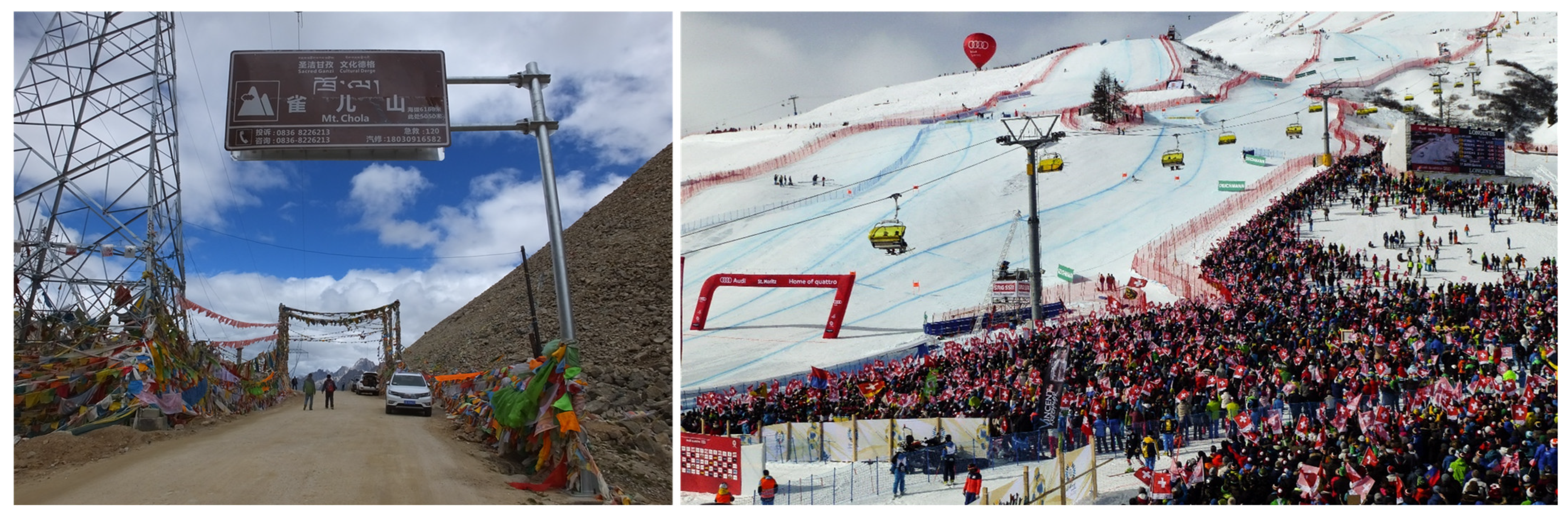
However, the perception of mountains as environments “free of invaders” has changed markedly in recent years. The intensification of human activities in mountain regions—including tourism, transportation, and land-use change (e.g., overexploitation of natural resources; Figure 1)—has facilitated the introduction and spread of alien species (e.g., [30,31,32,33,34,35]). Mountain tourism is estimated to account for between 195 and 375 million international arrivals, based on 2019 figures [36]. Roads, railways, and trails fragment habitats and enhance resource availability by disturbing vegetation through construction, trampling, and grazing [37,38], thereby lowering biotic resistance and facilitating the establishment of non-native species. While there is increased propagule pressure near communication infrastructure and tourism/recreational areas [39,40,41,42,43,44], seeds can additionally be transported upslope by cars, hikers, livestock or wild animals [45,46].
At the same time, climate warming will reduce thermal constraints at high elevations, allowing alien species to survive, reproduce, and spread upslope. While most invaders are spreading rapidly to higher altitudes simply because they are filling their climatic niche, warming temperatures will allow alien plants to spread to even higher elevations in the future as their ecological niche is also shifting upwards [35]. This concern is amplified by growing evidence that rates of climate change (measured as changes in temperature, precipitation, and snowfall) are higher in mountain regions than in lowland areas [47]. Consistent with this pattern, species distribution models (SDMs) under climate warming scenarios indicate that rising temperatures could enable IAS to expand in altitude anywhere (e.g., [48,49,50,51]).
Figure 1. Anthropogenic development of mountain areas is increasing the risk of biological invasions. (Left), Chola mountain pass (W Sichuan, China), at 5050 m a.s.l., one of the highest in the region (photograph: J. López-Pujol). China planned to build or upgrade 100,000 km of rural roads (of which a large part is in mountainous areas) just during the year 2025 [52]. (Right), a ski resort in St. Moritz, Switzerland (photograph: Wikipedia [53]). Globally, there are over 5700 ski resorts [36].
Plants 15 00588 g001
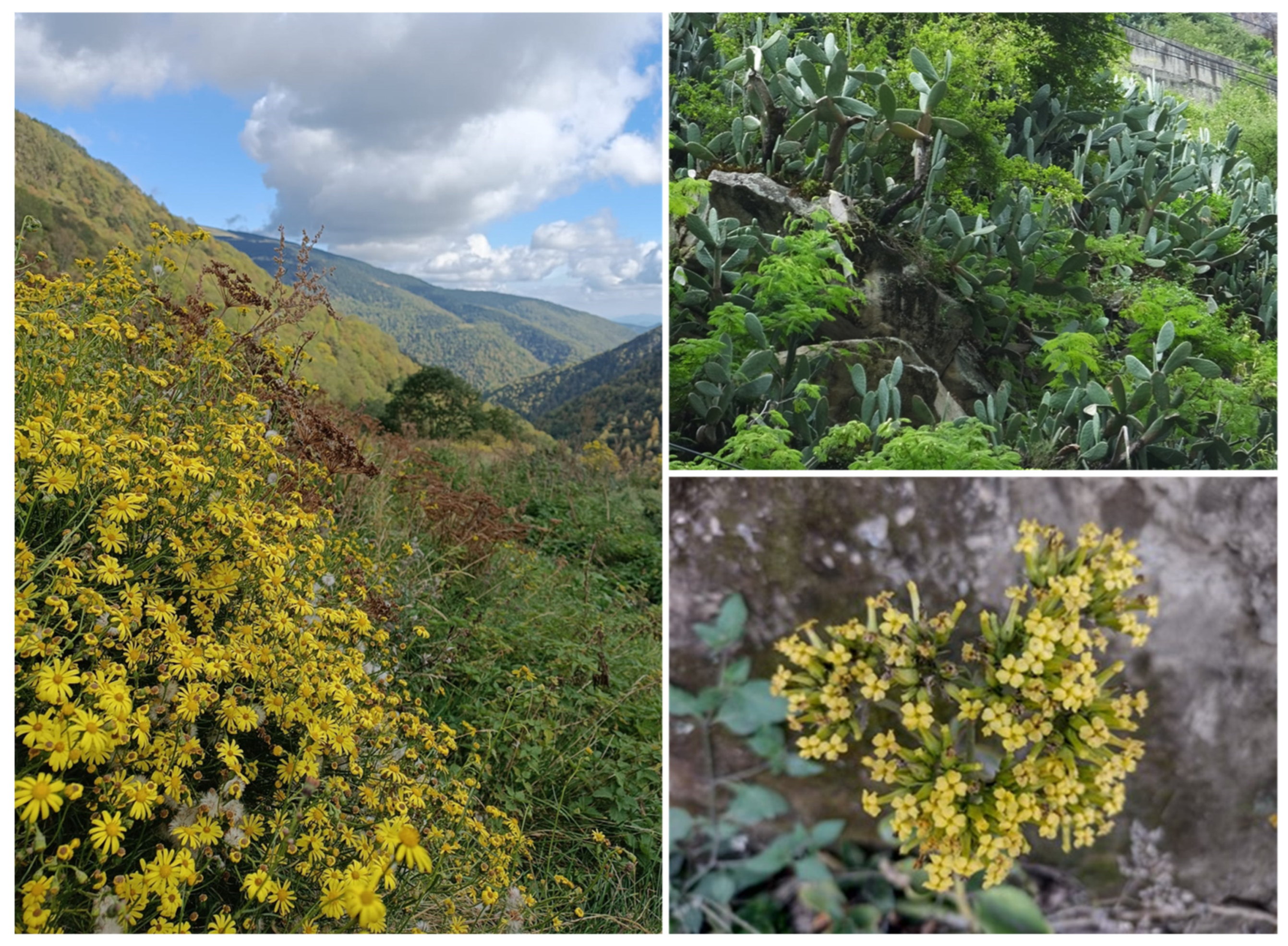
As a result of the abovementioned factors, biological invasions in mountain ecosystems have been increasingly documented (Figure 2), particularly over the last 15–20 years. This trend challenges the long-held assumption that mountains are resistant to invasion and underscores the need for greater attention to invasion dynamics at high elevations. The seminal work of Pauchard et al. (2009) [26] was the first to explicitly question the notion that mountain ecosystems are not at risk from invasive plants, reporting the alarming finding that more than one thousand non-native plant species were already naturalized in high-elevation ecosystems worldwide at that time, based on unpublished data from MIREN. Since then, there has been an explosion of studies of plant invasions into mountain areas, with some trying to detect global-scale patterns as well as more local processes. For example, Seipel et al. (2012) [54], also based on MIREN data, showed that alien species richness is generally higher in New World regions and consistently declines with increasing distance from roadsides across regions. Similarly, McDougall et al. (2011) [55] identified clear patterns in the composition of non-native mountain floras, which are typically dominated by herbaceous species with an approximately equal representation of annuals and perennials. They also demonstrated that most alien plants in mountain regions originate from lowland environments and exhibit broad climatic tolerances, rather than being mountain (stress-tolerant) specialists in their native ranges. McDougall et al. (2018) [56] demonstrated that alien plants that spread along roadside dispersal corridors differ in species traits from those spreading into adjacent natural vegetation (being the first long-lived, non-ruderal species without seed dispersal traits, whereas the second are shade and moisture-tolerant). Even more striking are the findings of Iseli et al. (2023) [35], who reported a global average increase of 16% in the number of alien plant species across mountain regions over the past decade.
Local-scale studies have also provided noticeable results that corroborate the global trend of mountains increasingly exposed to biological invasions. In China, for example, the average maximum elevation of invasive Asteraceae (17 species in total) increased from 2150 m to 2420 m between 2016 and 2020 [57]. Such upward shifts will continue in the future as SDM-based studies reveal, although these elevation changes are regionally dependent; for instance, Petitpierre et al. (2016) [48] found a less pronounced shift in New South Wales (Australia) compared to Switzerland when predicted for two time periods (2030 and 2070). Local surveys of alien flora can also be highly effective for detecting ongoing invasions when conducted repeatedly over time. For instance, a recent study on Tungurahua Volcano in the Ecuadorian Andes recorded up to 38 alien taxa, whereas no alien species had been observed at the site 30 years earlier [58].
The substantial influx of IAS into mountain areas is even more concerning when considering the enormous biodiversity value of mountain ecosystems. Mountains occupy roughly 22–25% of the Earth’s land surface, yet they are recognized for their remarkably high levels of species richness and endemism [59,60]. They contribute disproportionately to global terrestrial biodiversity, hosting over 85% of the world’s amphibian, bird, and mammal species—a phenomenon referred to by some authors as “Humboldt’s enigma” [60]. Furthermore, the majority of the world’s 36 biodiversity hotspots [61] are located wholly or partly within mountainous regions. The extraordinary biodiversity found in mountain ecosystems results from the interplay between topography and climate. Sharp environmental gradients generate diverse microclimates that promote species turnover and specialization, while complex and rugged terrain enhances isolation and drives speciation [62,63,64].
This interplay between topography and climate has also allowed mountains to play a crucial role as refugia for biota during periods of global cooling throughout the Neogene and Quaternary [65,66,67]. Mountains served as important refuges for plant species primarily for two reasons: (i) they would have experienced relatively stable eco-climatic conditions during Quaternary climatic oscillations, largely due to sustained moisture availability and heterogeneous topography that provided sheltered environments [65,68,69]; and (ii) they would have enabled plants to respond to climatic shifts by moving along elevation gradients during warm interglacial and cold glacial periods, rather than undertaking extensive latitudinal migrations [70,71,72]. In recent years, there has been some empirical evidence of these mechanisms acting in several mountainous areas [73,74,75,76]. Because of this role as refugia, populations of native plants within mountains often show high levels of genetic diversity and significant amounts of unique haplotypes/alleles (e.g., [66,77]).
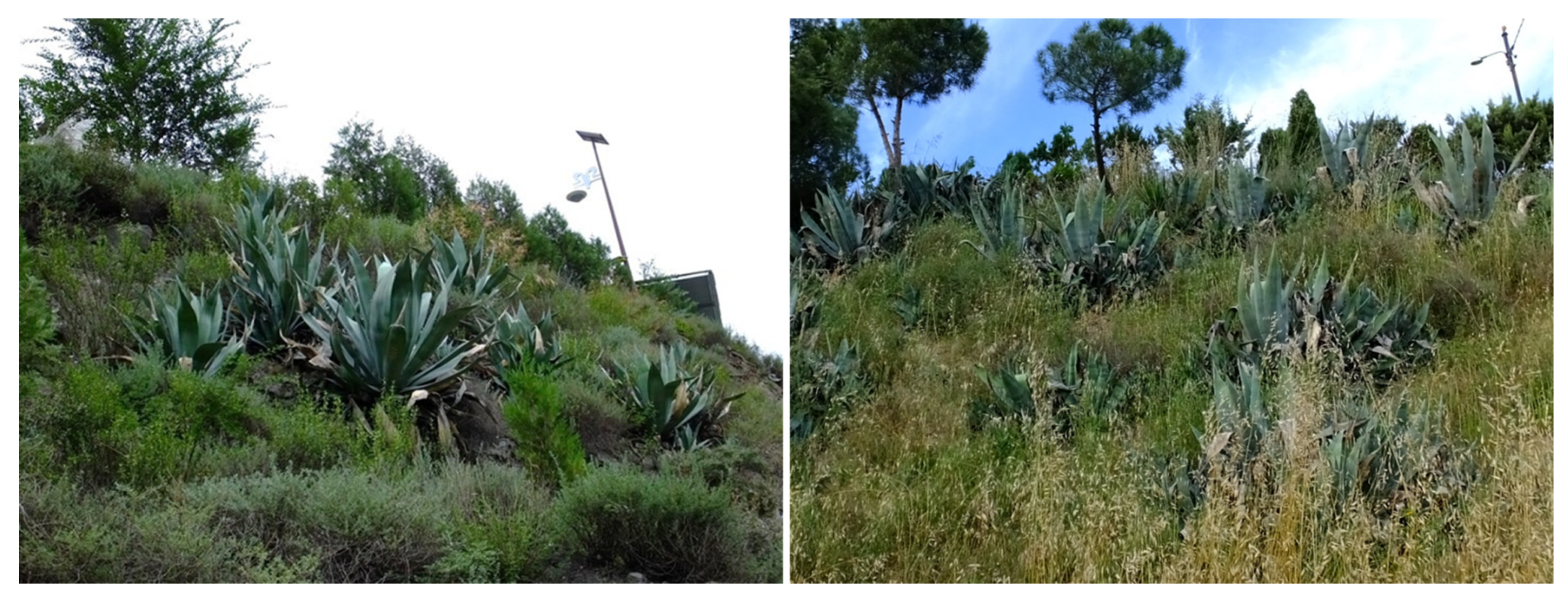
In addition to their ecological value, mountain ecosystems provide key services for human well-being, including water supply and carbon sequestration [78,79,80], but also aesthetic, spiritual, and cultural ones [81,82,83]. Among the latter, landscape homogenization (Figure 3)—driven by biological invasions, which lead to the global homogenization of biological diversity [84]—could result in a form of “biocultural homogenization” [85].

3. Plant Invasions in Mediterranean Mountains: The Pyrenees as a Case Study

The Mediterranean Basin is widely recognized as a biodiversity hotspot, characterized by exceptionally high plant diversity and a considerable number of endemic species [86,87]. Within this region, mountain systems not only occupy a significant proportion of the territory in several Mediterranean countries but also harbor much of their biodiversity [88]. Notably, all of the local plant diversity hotspots within the Mediterranean basin (which were identified by F. Médail and P. Quézel almost 30 years ago) are essentially mountainous, with exceptional rates of endemism of up to 50% in some areas [89]. Furthermore, the majority of the 52 glacial refugia identified for the entire basin (based on genetic and phylogeographic data) by F. Médail and K. Diadema (2009) are located in mountainous regions [66].
However, unlike other regions where mountain ecosystems have remained relatively intact until recent times, Mediterranean mountains have been profoundly shaped by human activities over millennia [83,90]; see [91] for visualizing the anthropogenic ecological transformations over time of the varied mountainous areas in the world. These long-standing anthropogenic impacts—now intensifying—combined with climate change, which is expected to severely affect the Mediterranean Basin and its mountain environments [92], pose serious challenges for the conservation of these ecosystems. In turn, this makes the Mediterranean Basin particularly vulnerable to biological invasions [93]. The combination of high connectivity, intense human activity, and climatic conditions favorable to many alien species has already facilitated their introduction and spread into high-altitude Mediterranean environments. Invasive plants such as Ailanthus altissima, Robinia pseudoacacia and Senecio inaequidens (see a picture of the latter in Figure 2) are already altering native plant communities in several Mediterranean mountain systems [94,95]. For example, in Vesuvius Volcano National Park (southern Italy), R. pseudoacacia has spread widely after disturbances such as wildfires, colonizing Castanea sativa stands and potentially displacing native vegetation through vigorous sprouting and root suckering [96]. Although Mediterranean mountains are currently less affected by invasive species than lowlands, which host most invasion hotspots, this situation will change significantly in the near future. Multispecies SDMs indicate that invasions will become a serious issue in mountainous areas in the northern part of the Mediterranean Basin [97].
Situated at the interface between the Mediterranean and Eurosiberian regions, the Pyrenees host an exceptional floristic richness, with at least 3654 native taxa according to the Atlas of the Flora of the Pyrenees [98]. This mountain range represents a paradigmatic example of the current dynamics of plant invasions in Mediterranean mountains. As in other mountain systems of the Mediterranean Basin, the Pyrenees have been subject to anthropogenic impacts since ancient times (with human presence in valleys and lands of slightly over 1000 m a.s.l. at the end of the last glacial period and in alpine and subalpine areas after the Younger Dryas [99]). Traditionally, human activities in this area were linked to agriculture and livestock farming; however, in recent decades, the region has undergone a marked process of depopulation while its economy has shifted towards tourism. Consequently, Pyrenean ecosystems now face new pressures, including the expansion of road networks, overtourism and urban sprawl, as there is an accelerated construction of holiday chalets, especially in the eastern Pyrenees [100]. Like many other mountain systems in the region, the Pyrenees are expected to be strongly affected by climate change, with projected impacts such as rising mean temperatures [101], increasing aridity and desertification [102], and altitudinal shifts in vegetation [103]. These environmental changes, combined with ongoing human disturbances, are creating conditions that facilitate the introduction and establishment of non-native plant species.
Although the flora of the Pyrenees has been studied for centuries [104], an integrated catalogue of the entire mountain range was only recently completed, thanks to several projects funded by the European Regional Development Fund (ERDF) through the INTERREG POCTEFA program [105]. Initially, the Atlas of the Flora of the Pyrenees [98] reported 462 alien taxa, but subsequent revisions increased this number to 601 taxa [106]. As part of the current POCTEFA project FLORAPYR 3D (2024–2026), now at its midpoint, the list has been further updated through the incorporation of recent records from the French side and the correction of erroneous data. As of today, the catalogue of alien flora in the Pyrenees includes 771 taxa, a remarkable figure compared to other mountain ranges (e.g., the Alps, which host far fewer taxa despite their larger area [107]). This exceptional diversity can be attributed—at least in part—to the high variability of climatic, topographic, geological, and ecological conditions that characterize the region. Notably, a significant portion of the Pyrenees includes habitats with a pronounced coastal influence—indeed, some areas literally descend to the sea, as in Empordà at the eastern extremity—which allows floristic elements from mild or even relatively warm climates (e.g., Crassulaceae and Cactaceae) to thrive in many low-mountain areas. The human factor, however, plays a major role in the high number of alien species recorded in the Pyrenees. Certain parts of the Pyrenees, particularly in the east, coincide with areas of intense tourist activity (northern Costa Brava/Cap de Creus and surrounding regions), while others are located very close (<50 km) to one of southern Europe’s largest metropolitan regions, Barcelona, with over 5.5 million inhabitants (see [106] for more details).
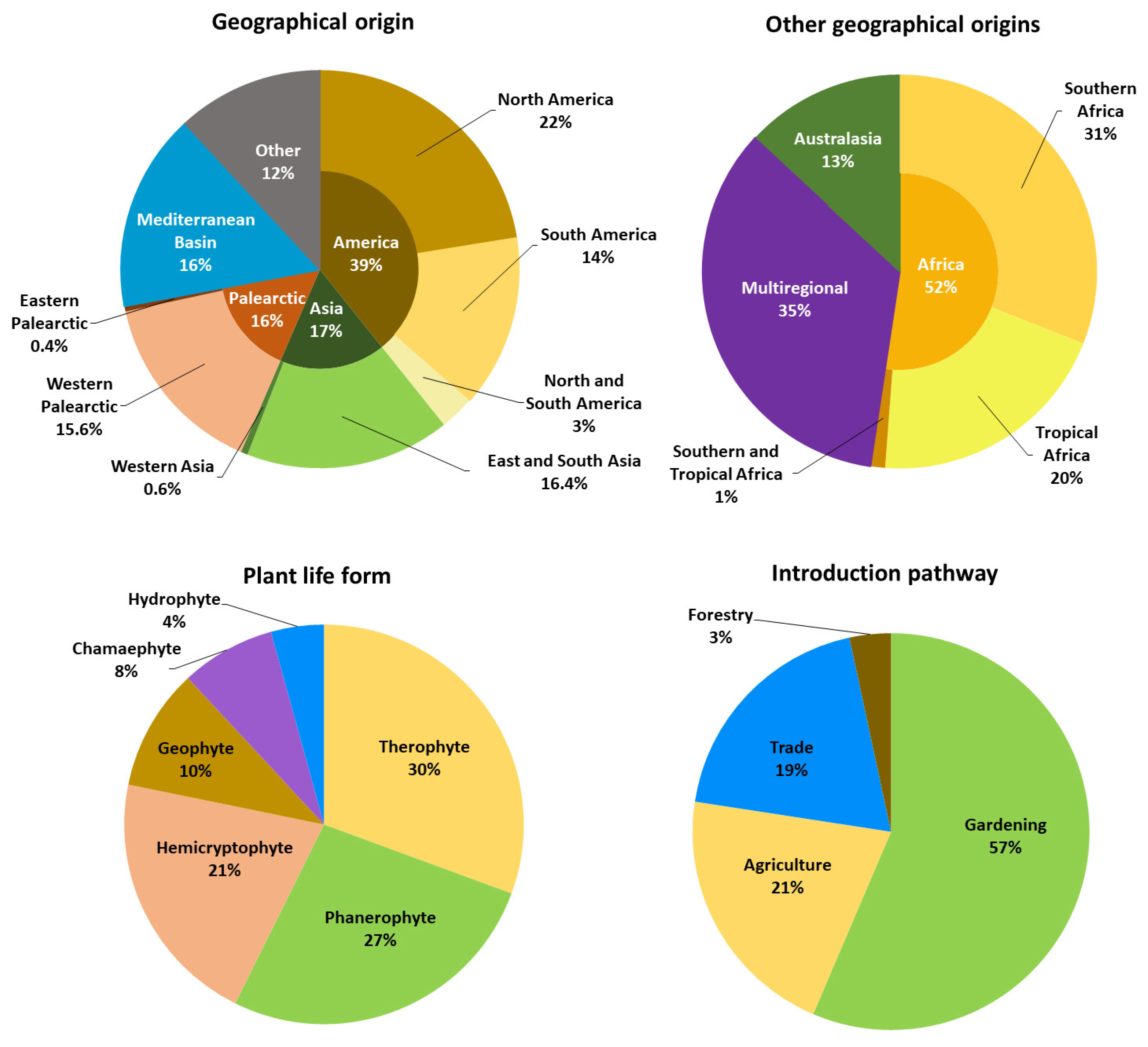
Although some species will still be incorporated into the final catalogue (see below), a preliminary analysis of the available data allows us to tentatively conclude that the alien flora of the Pyrenees is characterized by three features. First, there is a predominance of species of American origin, which account for more than one-third of the total, with North America contributing more taxa than South America, followed by East and South Asia, the Mediterranean Basin, and Western Palearctic (Figure 4). That the Americas constitute the main region of origin of the alien flora of the Pyrenees is not surprising, as this region is also the principal donor of alien plant species to both Spain [108] and Catalonia [109], territories that encompass large portions of the Pyrenean range. However, in contrast to these areas, the alien flora of the Pyrenees includes a higher number of North American than South American species, likely because many North American plants are pre-adapted to the colder climatic conditions of the Pyrenees.
Second, there is a dominance of therophytes as the main plant life form (ca. 30%), followed by phanerophytes (ca. 27%) and hemicryptophytes (ca. 21%) (Figure 4). The clear dominance of herbaceous species is a common pattern in mountain alien floras worldwide, with a mean proportion exceeding 90% [55]. The relatively high proportion of woody species in the Pyrenean alien flora (over one quarter) warrants further investigation, but it may be partly explained by the strong Mediterranean influence affecting large portions of these mountains, particularly its eastern sector. Mediterranean-type climate can impose strong environmental filters (summer drought, high climatic variability) for which woody plants often possess traits such as longevity, resprouting ability, and stress tolerance that increase their chances of establishment under these conditions. Consistently, phanerophytes are well represented among alien species in Mediterranean Europe (almost one quarter [110]), and have also been reported at high proportions in the alien floras of several Mediterranean mountain areas, such as Calabria (ca. 30% [111]).
Third and last, there is a prominence of gardening as the principal pathway for the introduction of alien plants into the Pyrenees (ca. 56%), followed by agriculture (21%), trade (19%), and, to a much lesser extent, forestry (ca. 3%) (Figure 4). The clear dominance of ornamental uses among plant introduction pathways is consistent with global patterns observed in mountainous regions, where 57% of species with documented uses are ornamentals [55], as well as with global invasion patterns more broadly [112].
For the second part of the FLORAPYR 3D project, the incorporation of all citizen science data being collected through the specially created iNaturalist project [113]—enhanced by several activities organized by our team to date, including several bioblitzes—is still pending. Although the overall increase in the total number of species, thanks to citizen-contributed data, may not be very large, we do expect a considerable increase in the number of records for individual taxa. As an example, a simple comparison between the Atlas records and those from iNaturalist for a well-known species such as Senecio inaequidens indicates that data collected through the citizen science portal could increase the number of UTM (Universal Transverse Mercator) grid cells with the presence of this South African invasive species by nearly one-fifth.
The categorization of all recorded taxa according to their invasion stage (that is, determining whether a given taxon has become naturalized and, if so, whether it exhibits invasive behavior) is also still pending. This process will facilitate the identification of dispersal and establishment patterns for each taxon, which in turn will contribute to a better understanding of the ecological risks associated with their presence. Such classification will also be key for prioritizing management actions, thereby improving the design of detection, control, and eradication strategies. In sum, this catalogue provides the first detailed and comprehensive overview of biological invasions in the Pyrenees and, even though it is not yet complete, it already challenges the long-standing assumption that mountain habitats are relatively resistant to biological invasions.

4. Recommendations

Despite recent progress in the study of mountain alien flora, many gaps remain at both regional and impact scales. While research on mountain ecosystems worldwide is justified by the global increase in the establishment of alien taxa in mountainous areas [35], several geographic regions still lack studies or have clearly insufficient data, such as much of Africa, Central Asia, and Central and South America. Although the Andes represent the world’s longest mountain chain (>7000 km) and harbor the highest number of plant species (approximately 30,000 [114]), they have received relatively little attention. Evidence of this is provided by a recent compilation of the alien flora of the Andes based on published literature up to mid-2023, which reported only 219 plant species [115]—a surprisingly low figure. Furthermore, the recent publication of the catalogue of alien flora of continental Ecuador reported 451 plant species just for the Ecuadorian Andes [116], highlighting that the Andean non-native flora remains clearly understudied.
Regarding the ecological impacts of invasive plant species, there are large biases for certain types of habitats. According to Vilà et al. (2024) [117], the least represented habitats in impact studies are deserts and xeric shrublands, high mountains, and subtropical forests. In the context of climate change, it is imperative to focus more on the impacts of invasive plants in mountain regions, as warming is expected to enhance their dispersal and establishment at higher altitudes, making this an area of critical concern [118]. Emerging frameworks for assessing the negative impacts of alien species on native biodiversity, such as EICAT, may help to address this gap. EICAT, which stands for Environmental Impact Classification for Alien Taxa, is a global standard recently proposed by the IUCN. Conceptually and structurally modeled on the IUCN Red List of Threatened Species, it aims to categorize alien species according to the magnitude of their impacts—from minimal to massive—based on documented evidence of environmental harm [3].
While EICAT can facilitate communication between research teams and also with stakeholders and decision-makers, cooperation tools are needed when targeted mountain systems are split into different territories, as often occurs. As varied regions usually face similar problems regarding IAS, raising awareness and cooperating on an international scale has become crucial to manage and prevent biological invasions, especially those with a massive impact on high-elevation ecosystems. In this sense, MIREN has been an absolute success in implementing a shared methodology designed to monitor plant invasions and climate change impacts in mountains globally; at present, over 20 mountain regions from all continents (except Antarctica) have been surveyed and cover the major climatic zones and include island and continental systems. The INTERREG POCTEFA program, within the framework of which the catalog of alien flora of the Pyrenees is being developed, is an example of good performance for a single mountain range shared between different political entities (Andorra, France, and Spain).
Early detection and a deeper understanding of the distribution could also be helpful to control the expansion of invasive alien taxa across and between mountain systems. To do so, iNaturalist is one of the most used tools, presenting a cost-effective way to further enhance alien plant records and outreach campaigns that highlight mountain areas [119]. Opportunistic iNaturalist observations have the potential to complement and expand professional invasive plant monitoring, which was often affected by inverse sampling biases. Invasive species represent a high proportion of iNaturalist plant observations and are recorded in environments that sometimes were not captured by professional surveys [120], therefore expanding the knowledge of biological invasions in mountain areas.

Author Contributions

Conceptualization, J.L.-P.; investigation, J.L.-P.; writing—original draft preparation, E.L.-G., J.L.-P., J.M.-F. and N.N.; writing—review and editing, E.L.-G., J.L.-P., J.M.-F. and N.N.; funding acquisition, J.L.-P. and N.N. All authors have read and agreed to the published version of the manuscript.

Funding

This research was funded by the projects FLORAPYR AVANCE (EFA322/19) and FLORAPYR 3D (EFA064/01)—European Cross-Border Territorial Cooperation Program “Interreg V-A” SPAIN-FRANCE-ANDORRA and 2021-SGR00315 (“Support for Consolidated Research Groups”) from the Government of Catalonia.

Data Availability Statement

The original contributions presented in this study are included in the article. Further inquiries can be directed to the corresponding author.

Conflicts of Interest

The authors declare no conflicts of interest. The funders had no role in the design of the study; in the collection, analyses or interpretation of data; in the writing of the manuscript; or in the decision to publish the results.

References

  1. Roy, H.E.; Pauchard, A.; Stoett, P.; Renard Truong, T.; Bacher, S.; Galil, B.S.; Hulme, P.E.; Ikeda, T.; Sankaran, K.V.; McGeoch, M.A.; et al. Summary for policymakers of the thematic assessment report on invasive alien species and their control. In Thematic Assessment Report on Invasive Alien Species and Their Control; Roy, H.E., Pauchard, A., Stoett, P., Renard Truong, T., Eds.; IPBES Secretariat: Bonn, Germany, 2023; pp. 1–48. [Google Scholar] [CrossRef]
  2. Carneiro, L.; Leroy, B.; Capinha, C.; Bradshaw, C.J.A.; Bertolino, S.; Catford, J.A.; Camacho-Cervantes, M.; Bojko, J.; Klippel, G.; Kumschick, S.; et al. Typology of the ecological impacts of biological invasions. Trends Ecol. Evol. 2025, 40, 563–574. [Google Scholar] [CrossRef] [PubMed]
  3. IUCN. IUCN EICAT Categories and Criteria. In The Environmental Impact Classification for Alien Taxa, 1st ed.; IUCN: Gland, Switzerland; Cambridge, UK, 2020. [Google Scholar]
  4. Diagne, C.; Leroy, B.; Vaissière, A.-C.; Gozlan, R.E.; Roiz, D.; Jarić, I.; Salles, J.-M.; Bradshaw, C.J.A.; Courchamp, F. High and rising economic costs of biological invasions worldwide. Nature 2021, 592, 571–576. [Google Scholar] [CrossRef]
  5. Arun, M.N.; Kumar, R.M.; Sreedevi, B.; Padmavathi, G.; Revathi, P.; Pathak, N.; Srinivas, D.; Venkatanna, B. The rising threat of invasive alien plant species in agriculture. In Resource Management in Agroecosystems; Ondrasek, G., Zhang, L., Eds.; IntechOpen: London, UK, 2022. [Google Scholar] [CrossRef]
  6. Fernandez, R.D.; Haubrock, P.J.; Cuthbert, R.N.; Heringer, G.; Kourantidou, M.; Hudgins, E.J.; Angulo, E.; Diagne, C.A.; Courchamp, F.; Nuñez, M.A. Underexplored and growing economic costs of invasive alien trees. Sci. Rep. 2023, 13, 8945. [Google Scholar] [CrossRef]
  7. Jones, V.L.; Grenz, J. A review of the impacts and management of invasive plants in forestry. CABI Rev. 2023, 18, 34. [Google Scholar] [CrossRef]
  8. Tang, C.Q.; Du, M.-R.; Wang, H.-C.; Shi, Y.-C.; Zeng, J.-L.; Xiao, S.-L.; Han, P.-B.; Wen, J.-R.; Yao, S.-Q.; Peng, M.-C.; et al. An unprotected vulnerable relict subtropical conifer—Keteleeria evelyniana: Its forests, populations, growth and endangerment by invasive alien plant species in China. Plant Divers. 2024, 46, 648–660. [Google Scholar] [CrossRef]
  9. Pejchar, L.; Mooney, H.A. Invasive species, ecosystem services and human well-being. Trends Ecol. Evol. 2009, 24, 497–504. [Google Scholar] [CrossRef]
  10. Gallardo, B.; Bacher, S.; Bradley, B.; Comín, F.A.; Gallien, L.; Jeschke, J.M.; Sorte, C.J.B.; Vilà, M. InvasiBES: Understanding and managing the impacts of Invasive alien species on Biodiversity and Ecosystem Services. NeoBiota 2019, 50, 109–122. [Google Scholar] [CrossRef]
  11. Lazzaro, L.; Essl, F.; Lugliè, A.; Padedda, B.M.; Pyšek, P.; Brundu, G. Invasive alien plant impacts on human health and well-being. In Invasive Species and Human Health; Mazza, G., Tricarico, E., Eds.; CAB International: Wallingford, UK, 2018; pp. 16–33. [Google Scholar]
  12. Schaffner, U.; Steinbach, S.; Sun, Y.; Skjøth, C.A.; de Weger, L.A.; Lommen, S.T.; Augustinus, B.A.; Bonini, M.; Karrer, G.; Šikoparija, B.; et al. Biological weed control to relieve millions from Ambrosia allergies in Europe. Nat. Commun. 2020, 11, 1745. [Google Scholar] [CrossRef] [PubMed]
  13. Seebens, H.; Blackburn, T.M.; Dyer, E.E.; Genovesi, P.; Hulme, P.E.; Jeschke, J.M.; Pagad, S.; Pyšek, P.; Winter, M.; Arianoutsou, M.; et al. No saturation in the accumulation of alien species worldwide. Nat. Commun. 2017, 8, 14435. [Google Scholar] [CrossRef]
  14. Seebens, H.; Bacher, S.; Blackburn, T.M.; Capinha, C.; Dawson, W.; Dullinger, S.; Genovesi, P.; Hulme, P.E.; van Kleunen, M.; Kühn, I.; et al. Projecting the continental accumulation of alien species through to 2050. Glob. Change Biol. 2021, 27, 970–982. [Google Scholar] [CrossRef]
  15. Mormul, R.P.; Vieira, D.S.; Bailly, D.; Fidanza, K.; da Silva, V.F.B.; da Graça, W.J.; Pontara, V.; Bueno, M.L.; Thomaz, S.M.; Mendes, R.S. Invasive alien species records are exponentially rising across the Earth. Biol. Invasions 2022, 24, 3249–3261. [Google Scholar] [CrossRef]
  16. Blackburn, T.M.; Pyšek, P.; Bacher, S.; Carlton, J.T.; Duncan, R.P.; Jarošík, V.; Wilson, J.R.U.; Richardson, D.M. A proposed unified framework for biological invasions. Trends Ecol. Evol. 2011, 26, 333–339. [Google Scholar] [CrossRef]
  17. van Kleunen, M.; Pyšek, P.; Dawson, W.; Essl, F.; Kreft, H.; Pergl, J.; Weigelt, P.; Stein, A.; Dullinger, S.; König, C.; et al. The global naturalized alien Flora (GloNAF) database. Ecology 2019, 100, e02542. [Google Scholar] [CrossRef]
  18. Ackerman, J.D.; Tremblay, R.L.; Rojas-Sandoval, J.; Hernández-Figueroa, E. Biotic resistance in the tropics: Patterns of seed plant invasions within an island. Biol. Invasions 2017, 19, 315–328. [Google Scholar] [CrossRef]
  19. Rojas-Sandoval, J.; Ackerman, J.D.; Marcano-Vega, H.; Willig, M.R. Alien species affect the abundance and richness of native species in tropical forests: The role of adaptive strategies. Ecosphere 2022, 13, e4291. [Google Scholar] [CrossRef]
  20. Brandt, A.J.; Bellingham, P.J.; Duncan, R.P.; Etherington, T.R.; Fridley, J.D.; Howell, C.J.; Hulme, P.E.; Kühn, I.; McGlone, M.S.; Peltzer, D.A. Naturalised plants transform the composition and function of the New Zealand flora. Biol. Invasions 2021, 23, 351–366. [Google Scholar] [CrossRef]
  21. CBD (Convention on Biological Diversity). Decision Adopted by the Conference of the Parties to the Convention on Biological Diversity 15/4. Kunming-Montreal Global Biodiversity Framework. In Proceedings of the Parties to the CBD, Montreal, QC, Canada, 7–19 December 2022; Available online: https://www.cbd.int/doc/decisions/cop-15/cop-15-dec-04-en.pdf (accessed on 26 December 2025).
  22. Reaser, J.K.; Burgiel, S.W.; Kirkey, J.; Brantley, K.A.; Veatch, S.D.; Burgos-Rodríguez, J. The early detection of and rapid response (EDRR) to invasive species: A conceptual framework and federal capacities assessment. Biol. Invasions 2020, 22, 1–19. [Google Scholar] [CrossRef]
  23. Santana, C.; Bosch-Guiu, A.; Gómez-Bellver, C.; López-Pujol, J.; Nualart, N. A simplified method to detect and monitor alien plant species with invasive potential through citizen science: An application from the European Union–funded LIFE medCLIFFS project volunteers’ data. Invasive Plant Sci. Manag. 2025, 18, e4. [Google Scholar] [CrossRef]
  24. Gómez-Bellver, C.; Laguna, E.; Agut, A.; Ballester, G.; Cardero, S.; Deltoro, V.; Fàbregas, E.; Fos, S.; Francisco, S.; Guillot, D.; et al. The recent neophyte Opuntia aurantiaca (Cactaceae): Distribution and potential invasion in the Iberian Peninsula. Flora Mediterr. 2020, 30, 377–390. [Google Scholar] [CrossRef]
  25. Becker, T.; Dietz, H.; Billeter, R.; Buschmann, H.; Edwards, P.J. Altitudinal distribution of alien plant species in the Swiss Alps. Perspect. Plant Ecol. Evol. Syst. 2005, 7, 173–183. [Google Scholar] [CrossRef]
  26. Pauchard, A.; Kueffer, C.; Dietz, H.; Daehler, C.C.; Alexander, J.; Edwards, P.J.; Arévalo, J.R.; Cavieres, L.A.; Guisan, A.; Haider, S.; et al. Ain’t no mountain high enough: Plant invasions reaching new elevations. Front. Ecol. Environ. 2009, 7, 479–486. [Google Scholar] [CrossRef]
  27. Alexander, J.M.; Lembrechts, J.J.; Cavieres, L.A.; Daehler, C.; Haider, S.; Kueffer, C.; Liu, G.; McDougall, K.; Milbau, A.; Pauchard, A.; et al. Plant invasions into mountains and alpine ecosystems: Current status and future challenges. Alp. Bot. 2016, 126, 89–103. [Google Scholar] [CrossRef]
  28. Mountain Invasion Research Network (MIREN). Available online: https://www.mountaininvasions.org/ (accessed on 30 December 2025).
  29. Kueffer, C.; Daehler, C.; Dietz, H.; McDougall, K.; Parks, C.; Pauchard, A.; Rew, L. The Mountain Invasion Research Network (MIREN). Linking local and global scales for addressing an ecological consequence of global change. GAIA 2014, 23, 263–265. [Google Scholar] [CrossRef]
  30. Pickering, C.; Barros, A. Mountain environments and tourism. In The Routledge Handbook of Tourism and the Environment, 1st ed.; Holden, A., Fennell, D., Eds.; Routledge: London, UK, 2012; pp. 183–191. [Google Scholar]
  31. Haider, S.; Kueffer, C.; Bruelheide, H.; Seipel, T.; Alexander, J.M.; Rew, L.J.; Pauchard, A. Mountain roads and non-native species modify elevational patterns of plant diversity. Glob. Ecol. Biogeogr. 2018, 27, 667–678. [Google Scholar] [CrossRef]
  32. Fuentes-Lillo, E.; Pauchard, A. Invasiones en montañas: ¿Cuánto hemos avanzado en los últimos 10 años y cuáles son los desafíos para los ecosistemas de los Andes? Gayana Bot. 2019, 76, 141–155. [Google Scholar] [CrossRef][Green Version]
  33. Alvarez, M.A.; Barros, A.A.; Vazquez, D.P.; Bonjour, L.D.J.; Lembrechts, J.J.; Wedegärtner, R.E.; Aschero, V. Hiking and livestock favor non-native plants in the high Andes. Biol. Invasions 2022, 24, 3475–3488. [Google Scholar] [CrossRef]
  34. Barros, A.; Haider, S.; Müllerová, J.; Alexander, J.M.; Alvarez, M.A.; Aschero, V.; Lembrechts, J.J. The role of roads and trails for facilitating mountain plant invasions. In Tourism, Recreation and Biological Invasions; Holden, A., Fennell, D., Eds.; CABI: Wallingford, UK, 2022; pp. 14–26. [Google Scholar] [CrossRef]
  35. Iseli, E.; Chisholm, C.; Lenoir, J.; Haider, S.; Seipel, T.; Barros, A.; Hargreaves, A.L.; Kardol, P.; Lembrechts, J.J.; McDougall, K.; et al. Rapid upwards spread of non-native plants in mountains across continents. Nat. Ecol. Evol. 2023, 7, 405–413. [Google Scholar] [CrossRef]
  36. Food and Agriculture Organization of the United Nations; World Tourism Organization. Understanding and Quantifying Mountain Tourism; FAO: Rome, Italy; UNWTO: Madrid, Spain, 2023. [Google Scholar] [CrossRef]
  37. Barros, A.; Gonnet, J.; Pickering, C. Impacts of informal trails on vegetation and soils in the highest protected area in the Southern Hemisphere. J. Environ. Manag. 2013, 127, 50–60. [Google Scholar] [CrossRef]
  38. Barros, A.; Pickering, C.M. How networks of informal trails cause landscape level damage to vegetation. Environ. Manag. 2017, 60, 50–60. [Google Scholar] [CrossRef]
  39. Paiaro, V.; Cabido, M.; Pucheta, E. Altitudinal distribution of native and alien plant species in roadside communities from central Argentina. Austral Ecol. 2011, 36, 176–184. [Google Scholar] [CrossRef]
  40. Corcos, D.; Nascimbene, J.; Campesan, M.; Donadello, D.; Segat, V.; Marini, L. Establishment dynamics of native and exotic plants after disturbance along roadsides. Appl. Veg. Sci. 2020, 23, 277–284. [Google Scholar] [CrossRef]
  41. Lembrechts, J.J.; Milbau, A.; Nijs, I. Alien roadside species more easily invade alpine than lowland plant communities in a subarctic mountain ecosystem. PLoS ONE 2014, 9, e89664. [Google Scholar] [CrossRef] [PubMed]
  42. Kühn, P.; Ratier Backes, A.; Römermann, C.; Bruelheide, H.; Haider, S. Contrasting patterns of intraspecific trait variability in native and non-native plant species along an elevational gradient on Tenerife, Canary Islands. Ann. Bot. 2021, 127, 565–576. [Google Scholar] [CrossRef]
  43. Alvarez, M.A.; Bonjour, L.J.; Barros, A.; Vázquez, D.P.; Aschero, V. Distribución de plantas nativas y exóticas a lo largo de gradientes de elevación en senderos de montaña en los Andes de Mendoza, Argentina. Bol. Soc. Argent. Bot. 2023, 58, 91–100. [Google Scholar] [CrossRef]
  44. Barros, A.; Fuentes Lillo, E.; Aschero, V.; Pauchard, A.; Alvarez, M.A.; Wedegärtner, R.E.; Bruelheide, H.; Haider, S.; Müllerová, J.; Alexander, J.M.; et al. Beyond the trail—Understanding non-native plant invasions in mountain ecosystems. Glob. Ecol. Biogeogr. 2025, 34, e70060. [Google Scholar] [CrossRef]
  45. Quinn, L.D.; Quinn, A.; Kolipinski, M.; Davis, B.; Berto, C.; Orcholski, M.; Ghosh, S. Role of horses as potential vectors of non-native plant invasion: An overview. Nat. Areas J. 2010, 30, 408–416. [Google Scholar] [CrossRef]
  46. Ansong, M.; Pickering, C. Are weeds hitchhiking a ride on your car? A systematic review of seed dispersal on cars. PLoS ONE 2013, 8, e80275. [Google Scholar] [CrossRef]
  47. Pepin, N.; Apple, M.; Knowles, J.; Terzago, S.; Arnone, E.; Hänchen, L.; Palazzi, E.; Marty, C.; Morán-Tejeda, E.; Shahgedanova, M.; et al. Elevation-dependent climate change in mountain environments. Nat. Rev. Earth Environ. 2025, 6, 772–788. [Google Scholar] [CrossRef]
  48. Petitpierre, B.; McDougall, K.; Seipel, T.; Broennimann, O.; Guisan, A.; Kueffer, C. Will climate change increase the risk of plant invasions into mountains? Ecol. Appl. 2016, 26, 530–544. [Google Scholar] [CrossRef]
  49. Gallardo, B.; Capdevila-Argüelles, L. Climate change and non-native species in the Spanish Network of National Parks. Biol. Invasions 2024, 26, 4345–4361. [Google Scholar] [CrossRef]
  50. Gonzalez-Trujillo, J.D.; Escobar-Alba, M.R.; Lara, D.E.; Carvajal, C.J.E. Mapping the threat: Projecting invasive plant distribution in the tropical Andes under climate change. Perspect. Ecol. Conserv. 2024, 22, 348–357. [Google Scholar] [CrossRef]
  51. Xiao, Y.; Wu, X.; Duan, H.; Ren, Z.; Jiang, Z.; Dong, T.; Li, Y.; Hu, J.; Geng, Y. Environmental drivers and future distribution of invasive alien plant species in the Gaoligong Mountains, southwestern China. Plant Divers. 2025, 47, 814–823. [Google Scholar] [CrossRef]
  52. Zhuang, Q. Nation to Build, Upgrade 100,000-km Rural Roads. Available online: https://global.chinadaily.com.cn/a/202507/01/WS6863386fa31000e9a57396fa.html (accessed on 30 December 2025).
  53. Zielhang der Ski WM 2017 in St. Moritz. Available online: https://es.wikipedia.org/wiki/Archivo:SkiWM_Moritz_2017.jpg (accessed on 31 December 2025).
  54. Seipel, T.; Kueffer, C.; Rew, L.J.; Daehler, C.C.; Pauchard, A.; Naylor, B.J.; Alexander, J.M.; Arévalo, J.R.; Cavieres, L.A.; Dietz, H.; et al. Processes at multiple scales affect richness and similarity of non-native plant species in mountains around the world. Glob. Ecol. Biogeogr. 2012, 21, 236–246. [Google Scholar] [CrossRef]
  55. McDougall, K.L.; Alexander, J.M.; Haider, S.; Pauchard, A.; Walsh, N.G.; Kueffer, C. Alien flora of mountains: Global comparisons for the development of local preventive measures against plant invasions. Divers. Distrib. 2011, 17, 103–111. [Google Scholar] [CrossRef]
  56. McDougall, K.L.; Lembrechts, J.; Rew, L.J.; Haider, S.; Cavieres, L.A.; Kueffer, C.; Alexander, J.M. Running off the road: Roadside non-native plants invading mountain vegetation. Biol. Invasions 2018, 20, 3461–3473. [Google Scholar] [CrossRef]
  57. Zhang, K.; Gu, R.; Yang, Y.; Yan, J.; Ma, Y.; Shen, Y. Recent distribution changes of invasive Asteraceae species in China: A five-year analysis (2016–2020). J. Environ. Manag. 2025, 376, 124445. [Google Scholar] [CrossRef] [PubMed]
  58. Vieira, I.; Vargas, A.; Herrera, I.; Dillon, I.; Freire, E.; López-Pujol, J. Flora nativa y no nativa en un gradiente altitudinal del volcán Tungurahua (Baños, Ecuador). Rev. Jard. Bot. Nac. Univ. Habana 2025, 46, 37. [Google Scholar]
  59. Romeo, R.; Vita, A.; Testolin, R.; Hofer, T. Mapping the Vulnerability of Mountain Peoples to Food Insecurity; FAO: Rome, Italy, 2015. [Google Scholar]
  60. Rahbek, C.; Borregaard, M.K.; Colwell, R.K.; Dalsgaard, B.O.; Holt, B.G.; Morueta-Holme, N.; Nogues-Bravo, D.; Whittaker, R.J.; Fjeldså, J. Humboldt’s enigma: What causes global patterns of mountain biodiversity? Science 2019, 365, 1108–1113. [Google Scholar] [CrossRef]
  61. Biodiversity Hotspots. Available online: https://www.conservation.org/learning/biodiversity-hotspots (accessed on 31 December 2025).
  62. Spehn, E.M.; Rudmann-Maurer, K.; Körner, C. Mountain biodiversity. Plant Ecol. Divers. 2011, 4, 301–302. [Google Scholar] [CrossRef]
  63. Fjeldså, J.; Bowie, R.C.K.; Rahbek, C. The role of mountain ranges in the diversification of birds. Annu. Rev. Ecol. Evol. Syst. 2012, 43, 249–265. [Google Scholar] [CrossRef]
  64. Perrigo, A.; Hoorn, C.; Antonelli, A. Why mountains matter for biodiversity. J. Biogeogr. 2020, 47, 315–325. [Google Scholar] [CrossRef]
  65. Fjeldså, J.; Lovett, J.C. Geographical patterns of old and young species in African forest biota: The significance of specific montane areas as evolutionary centres. Biodivers. Conserv. 1997, 6, 325–346. [Google Scholar] [CrossRef]
  66. Médail, F.; Diadema, K. Glacial refugia influence plant diversity patterns in the Mediterranean Basin. J. Biogeogr. 2009, 36, 1333–1345. [Google Scholar] [CrossRef]
  67. López-Pujol, J.; Zhang, F.-M.; Sun, H.-Q.; Ying, T.-S.; Ge, S. Centres of plant endemism in China: Places for survival or for speciation? J. Biogeogr. 2011, 38, 1267–1280. [Google Scholar] [CrossRef]
  68. Tzedakis, P.C.; Lawson, I.T.; Frogley, M.R.; Hewitt, G.M.; Preece, R.C. Buffered tree population changes in a Quaternary refugium: Evolutionary implications. Science 2002, 297, 2044–2047. [Google Scholar] [CrossRef] [PubMed]
  69. Harrison, S.; Noss, R. Endemism hotspots are linked to stable climatic refugia. Ann. Bot. 2017, 119, 207–214. [Google Scholar] [CrossRef]
  70. Hewitt, G.M. The genetic legacy of the Quaternary ice ages. Nature 2000, 405, 907–913. [Google Scholar] [CrossRef] [PubMed]
  71. Bennett, K.D.; Provan, J. What do we mean by ‘refugia’? Quat. Sci. Rev. 2008, 27, 2449–2455. [Google Scholar] [CrossRef]
  72. Nieto Feliner, G. Southern European glacial refugia: A tale of tales. Taxon 2011, 60, 365–372. [Google Scholar] [CrossRef]
  73. Liang, Q.; Xu, X.; Mao, K.; Wang, M.; Wang, K.; Xi, Z.; Liu, J. Shifts in plant distributions in response to climate warming in a biodiversity hotspot, the Hengduan Mountains. J. Biogeogr. 2018, 45, 1334–1344. [Google Scholar] [CrossRef]
  74. Tang, C.Q.; Matsui, T.; Ohashi, H.; Dong, Y.-F.; Momohara, A.; Herrando-Moraira, S.; Qian, S.; Yang, Y.; Ohsawa, M.; Luu, H.T.; et al. Identifying long-term stable refugia for relict plant species in East Asia. Nat. Commun. 2018, 9, 4488. [Google Scholar] [CrossRef] [PubMed]
  75. Doxa, A.; Kamarianakis, Y.; Mazaris, A.D. Spatial heterogeneity and temporal stability characterize future climatic refugia in Mediterranean Europe. Glob. Change Biol. 2022, 28, 2413–2424. [Google Scholar] [CrossRef] [PubMed]
  76. García, M.B.; Miranda, H.; Pizarro, M.; Font, X.; Roquet, C.; González-Sampériz, P. Habitats hold an evolutionary signal of past climatic refugia. Biodivers. Conserv. 2022, 31, 1665–1688. [Google Scholar] [CrossRef]
  77. Chung, M.Y.; López-Pujol, J.; Chung, M.G. The role of the Baekdudaegan (Korean Peninsula) as a major glacial refugium for plant species: A priority for conservation. Biol. Conserv. 2017, 206, 236–248. [Google Scholar] [CrossRef]
  78. Egan, P.A.; Price, M.F. Mountain Ecosystem Services and Climate Change: A Global Overview of Potential Threats and Strategies for Adaptation; UNESCO: Paris, France, 2017. [Google Scholar]
  79. Glushkova, M.; Zhiyanski, M.; Nedkov, S.; Yaneva, R.; Stoeva, L. Ecosystem services from mountain forest ecosystems: Conceptual framework, approach and challenges. Silva Balc. 2020, 21, 47–68. [Google Scholar] [CrossRef]
  80. Uzel, G.; Gürlük, S. Research of the Uludağ National Park in terms of resource economy. ÇOMÜ Ziraat Fak. Derg. 2023, 11, 417–427. [Google Scholar] [CrossRef]
  81. Bernbaum, E. Sacred mountains: Themes and teachings. Mt. Res. Dev. 2006, 26, 304–309. [Google Scholar] [CrossRef]
  82. Hazeu, G.W.; Roupioz, L.F.S.; Perez-Soba, M. Europe’s Ecological Backbone: Recognising the True Value of our Mountains. In European Environmental Agency Report 6/2010; European Environmental Agency: Copenhagen, Denmark, 2010. [Google Scholar]
  83. Schirpke, U.; Timmermann, F.; Tappeiner, U.; Tasser, E. Cultural ecosystem services of mountain regions: Modelling the aesthetic value. Ecol. Indic. 2016, 69, 78–90. [Google Scholar] [CrossRef] [PubMed]
  84. Petsch, D.K.; Bertoncin, A.P.D.S.; Ortega, J.C.G.; Thomaz, S.M. Non-native species drive biotic homogenization, but it depends on the realm, beta diversity facet and study design: A meta-analytic systematic review. Oikos 2022, 2022, e08768. [Google Scholar] [CrossRef]
  85. Jarić, I.; Fernández-Llamazares, Á.; Molnár, Z.; Arbieu, U.; Canavan, S.; Correia, R.A.; Jeschke, J.M. Cultural integration of invasive species. NPJ Biodivers. 2025, 4, 25. [Google Scholar] [CrossRef]
  86. Cowling, R.M.; Rundel, P.W.; Lamont, B.B.; Arroyo, M.K.; Arianoutsou, M. Plant diversity in mediterranean-climate regions. Trends Ecol. Evol. 1996, 11, 362–366. [Google Scholar] [CrossRef] [PubMed]
  87. Myers, N.; Mittermeier, R.A.; Mittermeier, C.G.; da Fonseca, G.A.B.; Kent, J. Biodiversity hotspots for conservation priorities. Nature 2000, 403, 853–858. [Google Scholar] [CrossRef]
  88. Blondel, J.; Aronson, J.; Bodiou, J.-Y.; Boeuf, G. The Mediterranean Region: Biological Diversity in Space and Time; Oxford University Press: Oxford, UK, 2010. [Google Scholar]
  89. Médail, F.; Quézel, P. Hot-spots analysis for conservation of plant biodiversity in the Mediterranean Basin. Ann. Mo. Bot. Gard. 1997, 84, 112–127. [Google Scholar] [CrossRef]
  90. Alba-Sánchez, F.; Abel-Schaad, D.; López-Sáez, J.A.; Sabariego-Ruiz, S.; Pérez-Díaz, S.; Luelmo-Lautenschlaeger, R.; Garrido-García, J.A. Early anthropogenic change in western Mediterranean mountains (Sierra Nevada, SE Spain). Anthropocene 2021, 33, 100278. [Google Scholar] [CrossRef]
  91. Ellis, E.C.; Gauthier, N.; Klein Goldewijk, K.; Bliege Bird, R.; Boivin, N.; Díaz, S.; Watson, J.E. People have shaped most of terrestrial nature for at least 12,000 years. Proc. Natl. Acad. Sci. USA 2021, 118, e2023483118. [Google Scholar] [CrossRef] [PubMed]
  92. Herrando-Moraira, S.; Nualart, N.; Galbany-Casals, M.; Garcia-Jacas, N.; Ohashi, H.; Matsui, T.; Susanna, A.; Tang, C.Q.; López-Pujol, J. Climate Stability Index maps, a global high resolution cartography of climate stability from Pliocene to 2100. Sci. Data 2022, 9, 48. [Google Scholar] [CrossRef] [PubMed]
  93. Gritti, E.S.; Smith, B.; Sykes, M.T. Vulnerability of Mediterranean Basin ecosystems to climate change and invasion by exotic plant species. J. Biogeogr. 2006, 33, 145–157. [Google Scholar] [CrossRef]
  94. Bazzato, E.; Calvia, G.; Marignani, M.; Ruggero, A.; Lozano, V. Senecio inaequidens DC. will thrive in future climate: A case study in a Mediterranean biodiversity hotspot. Ecol. Inform. 2024, 82, 102783. [Google Scholar] [CrossRef]
  95. Santoianni, L.A.; Innangi, M.; Varricchione, M.; Carboni, M.; La Bella, G.; Haider, S.; Stanisci, A. Ecological features facilitating spread of alien plants along Mediterranean mountain roads. Biol. Invasions 2024, 26, 3879–3899. [Google Scholar] [CrossRef]
  96. Saulino, L.; Rita, A.; Stinca, A.; Liuzzi, G.; Silvestro, R.; Rossi, S.; Saracino, A. Wildfire promotes the invasion of Robinia pseudoacacia in the unmanaged Mediterranean Castanea sativa coppice forests. Front. For. Glob. Change 2023, 6, 1177551. [Google Scholar] [CrossRef]
  97. Cao Pinna, L.; Gallien, L.; Pollock, L.J.; Axmanová, I.; Chytrý, M.; Malavasi, M.; Attorre, F.; Berg, C.; Bergamini, A.; Bonari, G.; et al. Plant invasion in Mediterranean Europe: Current hotspots and future scenarios. Ecography 2024, 2024, e07085. [Google Scholar] [CrossRef]
  98. Atlas of the Flora of the Pyrenees. Available online: https://atlasflorapyrenaea.eu/ (accessed on 31 December 2025).
  99. Gassiot Ballbè, E.; Mazzucco, N.; Clemente Conte, I.; Rodríguez Antón, D.; Obea Gómez, L.; Quesada Carrasco, M.; Díaz Bonilla, S. The beginning of high mountain occupations in the Pyrenees: Human settlements and mobility from 18,000 cal BC to 2000 cal BC. In High Mountain Conservation in a Changing World; Springer International Publishing: Cham, Switzerland, 2017; pp. 75–105. [Google Scholar]
  100. Clarimont, S.; Vlès, V. Pyrenean tourism confronted with sustainable development: Partial and hesitant integration. Rev. Géogr. Alp. 2009, 97, 3. [Google Scholar] [CrossRef]
  101. Cuadrat, J.M.; Serrano-Notivoli, R.; Prohom, M.; Cunillera, J.; Tejedor, E.; Saz, M.Á.; de Luis, M. Climate of the Pyrenees: Extremes indices and long-term trends. Sci. Total Environ. 2024, 933, 173052. [Google Scholar] [CrossRef]
  102. Carvalho, D.; Pereira, S.C.; Silva, R.; Rocha, A. Aridity and desertification in the Mediterranean under EURO-CORDEX future climate change scenarios. Clim. Change 2022, 174, 28. [Google Scholar] [CrossRef]
  103. Pérez-García, N.; Font, X.; Ferré, A.; Carreras, J. Drastic reduction in the potential habitats for alpine and subalpine vegetation in the Pyrenees due to twenty-first-century climate change. Reg. Environ. Change 2013, 13, 1157–1169. [Google Scholar] [CrossRef]
  104. Vigo, J. L’Alta Muntanya Catalana. Flora i Vegetació; Montblanc-Martín: Barcelona, Spain, 1976. [Google Scholar]
  105. Interreg POCTEFA Program. Available online: https://www.poctefa.eu/ (accessed on 30 December 2025).
  106. Martínez-Fuentes, J.; López-Guillén, E.; Nualart, N.; López-Pujol, J. Hacia la catalogación de las plantas alóctonas de los Pirineos: Estudio preliminar de los patrones de distribución geográfica y temporal. Monde Plantes 2025, 524–526, 66–73. [Google Scholar] [CrossRef]
  107. Aeschimann, D.; Lauber, K.; Moser, D.M.; Theurillat, J.-P. Flora Alpina; Haupt: Berna, Switzerland, 2004; Volume 1–3. [Google Scholar]
  108. Sanz, M.; Dana, E.; Sobrino, E. Atlas de las Plantas Alóctonas Invasoras en España; Dirección General para la Biodiversidad (Ministerio de Medio Ambiente): Madrid, Spain, 2004.
  109. Aymerich, P.; Sáez, L. Checklist of the vascular alien flora of Catalonia (northeastern Iberian Peninsula, Spain). Mediterr. Bot. 2019, 40, 215–242. [Google Scholar] [CrossRef]
  110. Cao Pinna, L.; Axmanová, I.; Chytrý, M.; Malavasi, M.; Acosta, A.T.R.; Giulio, S.; Attorre, F.; Bergmeier, E.; Biurrun, I.; Campos, J.A.; et al. The biogeography of alien plant invasions in the Mediterranean Basin. J. Veget. Sci. 2021, 32, e12980. [Google Scholar] [CrossRef]
  111. Spampinato, G.; Laface, V.L.A.; Posillipo, G.; Cano Ortiz, A.; Canas, R.Q.; Musarella, C.M. Alien flora in Calabria (Southern Italy): An updated checklist. Biol. Invasions 2022, 24, 2323–2334. [Google Scholar] [CrossRef]
  112. van Kleunen, M.; Essl, F.; Pergl, J.; Brundu, G.; Carboni, M.; Dullinger, S.; Early, R.; González-Moreno, P.; Groom, Q.J.; Hulme, P.E.; et al. The changing role of ornamental horticulture in alien plant invasions. Biol. Rev. 2018, 93, 1421–1437. [Google Scholar] [CrossRef]
  113. FLORAPYR (Plantas Exóticas/Plantes Exotiques) iNaturalist Project. Available online: https://www.inaturalist.org/projects/florapyr-3d-exoticas-exotiques (accessed on 31 December 2025).
  114. Pérez-Escobar, O.A.; Zizka, A.; Bermúdez, M.A.; Meseguer, A.S.; Condamine, F.L.; Hoorn, C.; Hooghiemstra, H.; Pu, Y.; Bogarín, D.; Boschman, L.M.; et al. The Andes through time: Evolution and distribution of Andean floras. Trends Plant Sci. 2022, 27, 364–378. [Google Scholar] [CrossRef] [PubMed]
  115. Fernandez, R.D.; Jimenez, Y.G.; Gonzalez, M.V.; Grau, H.R. Non-native plants in the Andes Ecoregions: Current patterns and future perspectives. In Conservation of Andean Forests; Clerici, N., Ed.; Springer Nature: Cham, Switzerland, 2025; pp. 209–225. [Google Scholar] [CrossRef]
  116. Herrera, I.; Vargas, A.; Rizzo, K.; Aguirre, Z.; Dillon, I.; Espinoza-Amén, B.; Espinoza De Janon, F.; Espinoza-Maticurena, A.; Ferrer-Paris, J.R.; Freire, E.; et al. Compiling and analyzing the non-native flora of a megadiverse Neotropical country: A new catalogue for continental Ecuador. NeoBiota 2025, 100, 155–189. [Google Scholar] [CrossRef]
  117. Vilà, M.; Trillo, A.; Castro-Díez, P.; Gallardo, B.; Bacher, S. Field studies of the ecological impacts of invasive plants in Europe. NeoBiota 2024, 90, 139–159. [Google Scholar] [CrossRef]
  118. Carboni, M.; Guéguen, M.; Barros, C.; Georges, D.; Boulangeat, I.; Douzet, R.; Dullinger, S.; Klonner, G.; van Kleunen, M.; Essl, F.; et al. Simulating plant invasion dynamics in mountain ecosystems under global change scenarios. Glob. Change Biol. 2018, 24, e289–e302. [Google Scholar] [CrossRef]
  119. Canavan, K.; Canavan, S.; Clark, V.R.; Gwate, O.; Richardson, D.M.; Sutton, G.F.; Martin, G.D. The Alien Plants That Threaten South Africa’s Mountain Ecosystems. Land 2021, 10, 1393. [Google Scholar] [CrossRef]
  120. Dimson, M.; Berio Fortini, L.; Tingley, M.W.; Gillespie, T.W. Citizen science can complement professional invasive plant surveys and improve estimates of suitable habitat. Divers. Distrib. 2023, 29, 1141–1156. [Google Scholar] [CrossRef]
Figure 2. Some examples of alien species invading mountainous areas far from their native ranges. (Left), Senecio inaequidens (native area: S Africa), near Vilallonga de Ter (Girona, Spain), in the Pyrenees (1540 m a.s.l.) (photograph: E. López-Guillén). (Upper right), Opuntia ficus-indica (native area: N America), near Kangding City (Sichuan, China), Hengduan Mountains (1700 m a.s.l.) (photograph: J. López-Pujol). (Lower right), Kalanchoe densiflora (native area: C and E Africa), near Chimborazo, Ecuadorian Andes (3300 m a.s.l.) (photograph: J. López-Pujol).
Plants 15 00588 g002
Figure 3. An example of landscape homogenization caused by invasive alien species. The presence of the magnificent Agave americana makes two landscapes superficially resemble each other when they should be very different. (Left), Guchengcun, Li County (Sichuan, China), Hengduan Mountains, 1500 m a.s.l. (photograph: J. López-Pujol). (Right), Biosca, Segarra County (Catalonia, Spain), Pyrenees, 450 m a.s.l. (photograph: J. López-Pujol). The Chinese site corresponds to cold-adapted mixed forests with conifers and broad-leaved trees, whereas the Spanish site represents much warmer sub-Mediterranean oak and pine forests.
Plants 15 00588 g003
Figure 4. Graphics representing geographical origin, introduction pathway and plant life forms of alien plant taxa of the Pyrenees. In relation to geographical origin, taxa with no clear geographical origin (hybrid and cultivated taxa, 53 in total) were excluded. The classification of geographic origins and introduction pathways is based on Aymerich and Sáez (2019) [109].
Plants 15 00588 g004
Disclaimer/Publisher’s Note: The statements, opinions and data contained in all publications are solely those of the individual author(s) and contributor(s) and not of MDPI and/or the editor(s). MDPI and/or the editor(s) disclaim responsibility for any injury to people or property resulting from any ideas, methods, instructions or products referred to in the content.