Integration of Biochar into Soil Unravels Protective Mechanisms Against Plastic-Induced Stress in Lens culinaris by Modulating Physiological Traits, Antioxidant Defense, and Methylglyoxal Detoxification Systems


Abstract
1. Introduction
2. Results
2.1. Proximate Analysis
2.2. Morphological Traits
2.3. Pigment Content
2.4. Osmolyte and Phenolic Acid Contents
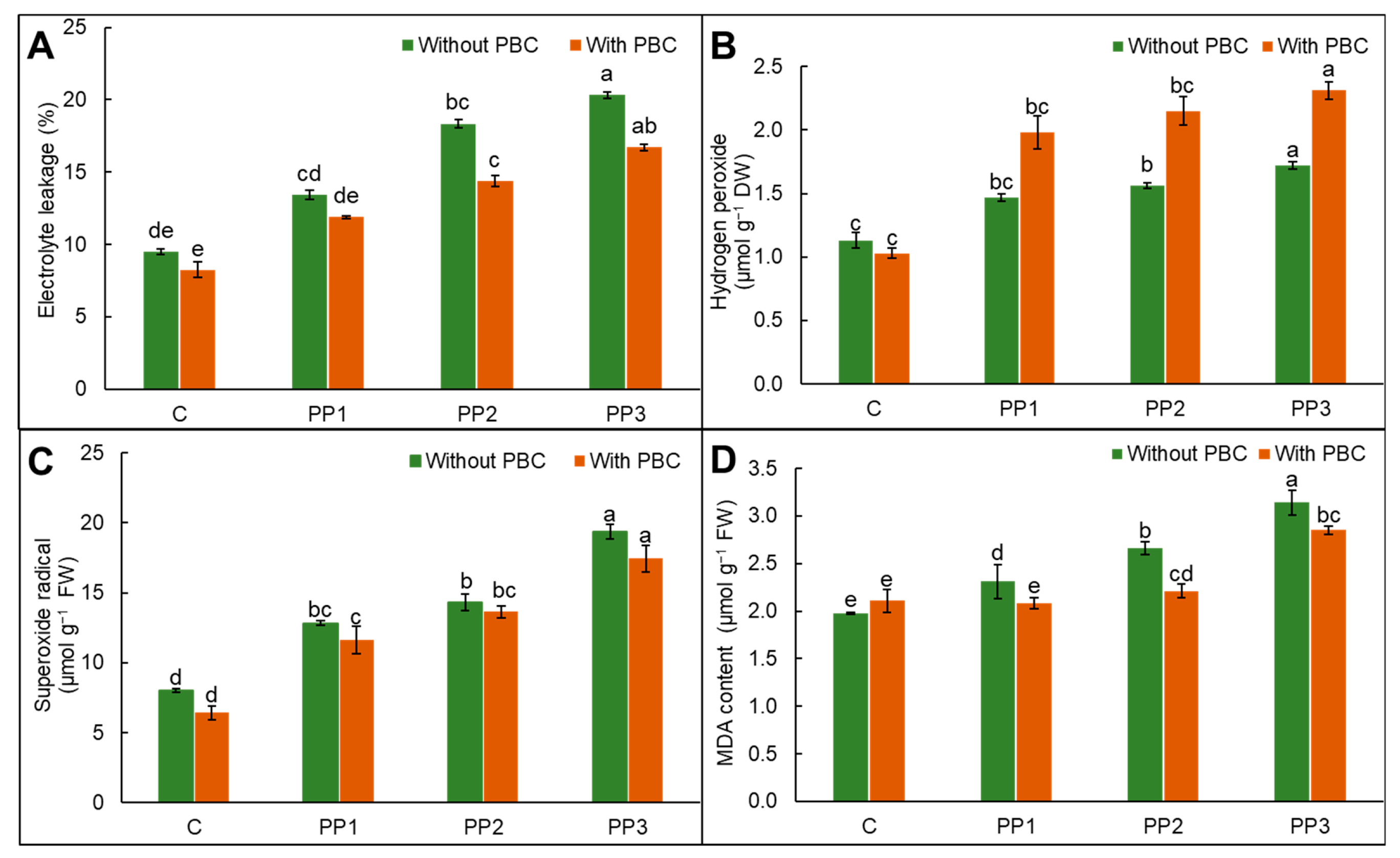
2.5. Oxidative Stress Indicators
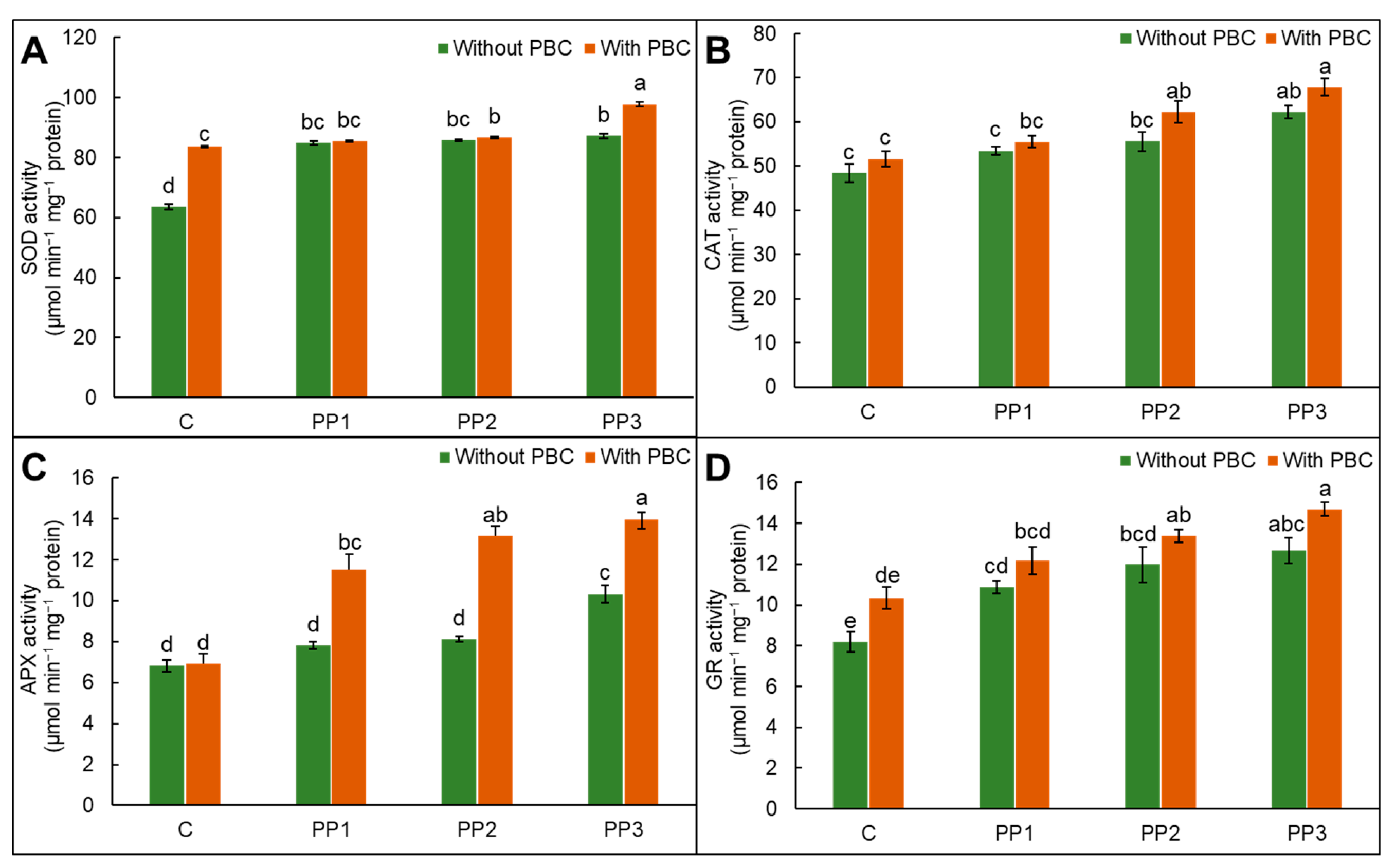
2.6. Activities of Antioxidant Enzymes
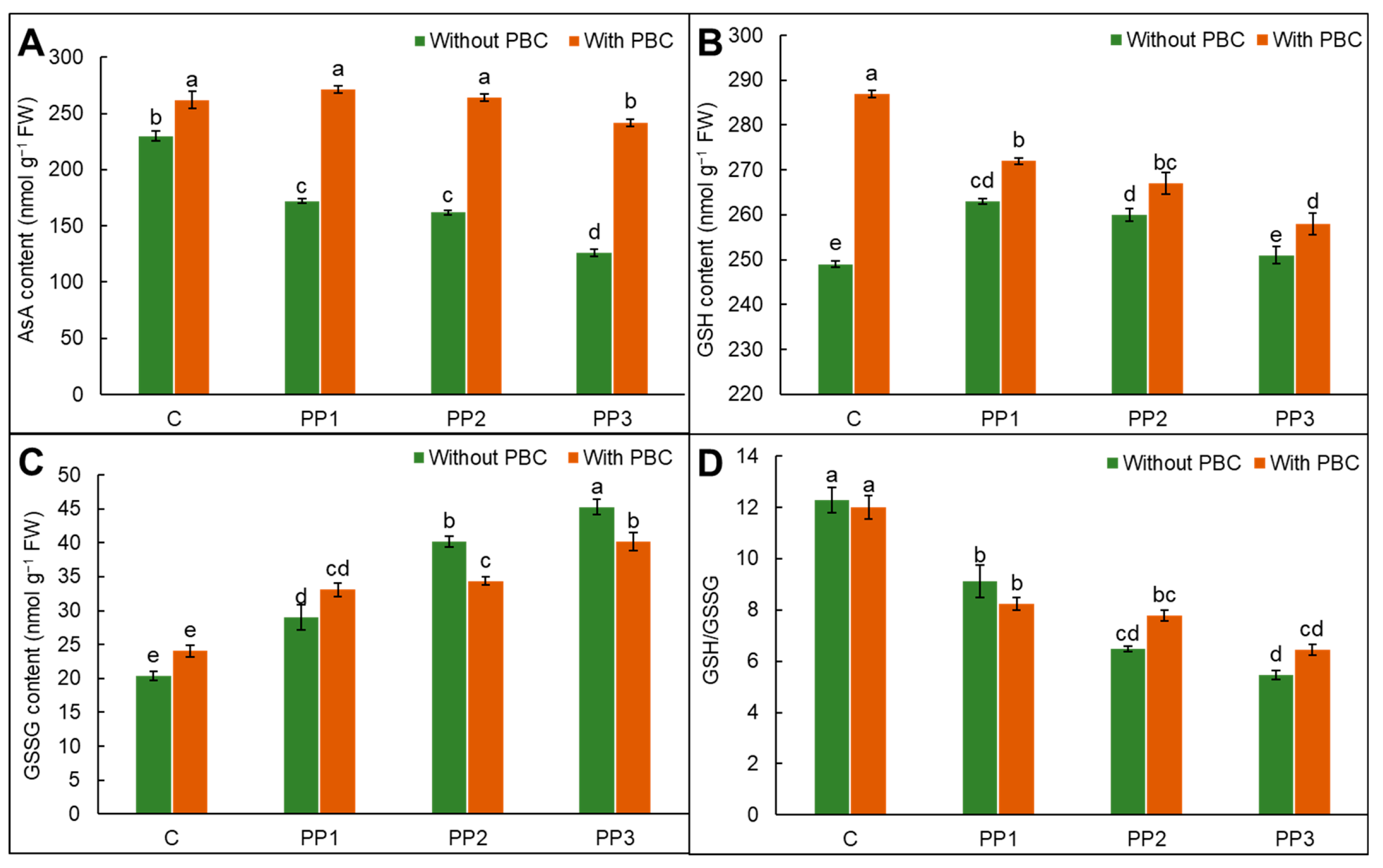
2.7. Ascorbate–Glutathione Pool
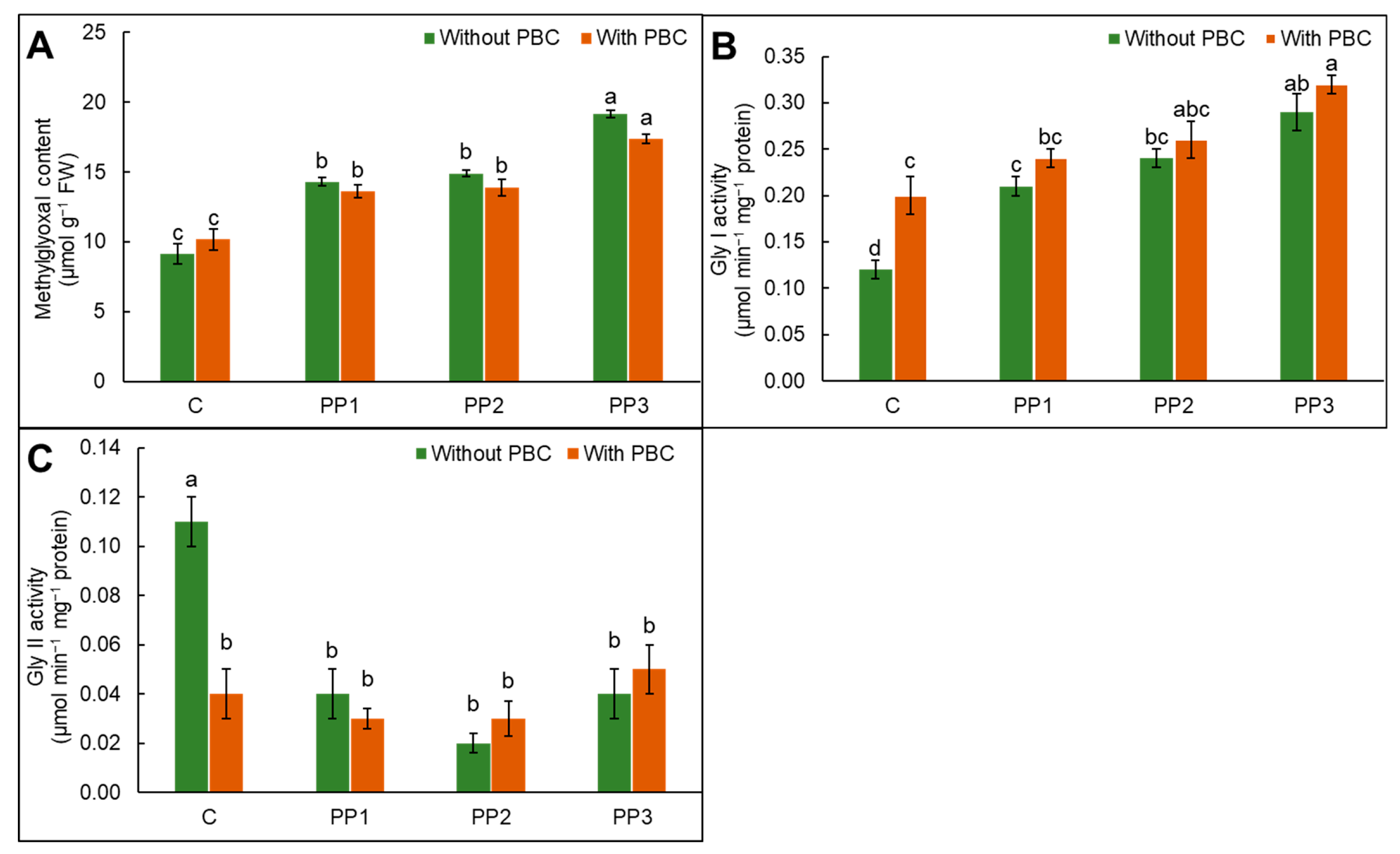
2.8. Glyoxalase Enzyme Activities and Methylglyoxal Content
3. Discussion
4. Materials and Method
4.1. Procurement of Chemicals and Seeds
4.2. Preparation of Pineapple Fruit Peel Biochar
4.3. Experimental Design
4.4. Measurement of Morphological Traits and Relative Water Content
4.5. Measurement of Pigment Content
4.6. Assessment of Biochemical Parameters
4.6.1. Sugar Content
4.6.2. Proline
4.6.3. Glycine Betaine
4.6.4. Protein
4.6.5. Phenolic Acid Content
4.7. Estimation of Oxidative Stress Indicators
4.7.1. Electrolyte Leakage
4.7.2. Lipid Peroxidation
4.7.3. Hydrogen Peroxide
4.7.4. Superoxide
4.8. Assay of the Activities of Antioxidative Enzymes
4.8.1. Superoxide Dismutase
4.8.2. Catalase
4.8.3. Ascorbate Peroxidase
4.8.4. Glutathione Reductase
4.9. Determination of Ascorbate and Glutathione Pool
4.10. Measurement of Methylglyoxal Content
4.11. Assay of Glyoxalase Enzyme Activities
4.12. Statistical Analysis
5. Conclusions
Author Contributions
Funding
Data Availability Statement
Acknowledgments
Conflicts of Interest
Abbreviations
| APX | Ascorbate peroxidase |
| CAT | Catalase |
| MDA | Malondialdehyde |
| GR | Glutathione reductase |
| GSH | Reduced glutathione |
| GSSG | Oxidized glutathione |
| PBC | Pineapple fruit peel biochar |
| PP | Polypropylene |
| ROS | Reactive oxygen species |
| RWC | Relative water content |
| SOD | Superoxide dismutase |
References
- Macheca, A.D.; Mutuma, B.; Adalima, J.L.; Midheme, E.; Lúcas, L.H.M.; Ochanda, V.K.; Mhlanga, S.D. Perspectives on plastic waste management: Challenges and possible solutions to ensure its sustainable use. Recycling 2024, 9, 77. [Google Scholar] [CrossRef] [Scilit]
- Liu, Z.; Chang, S.H.; Mailhot, G. Emerging biochemical conversion for plastic waste management: A review. Molecules 2025, 30, 1255. [Google Scholar] [CrossRef] [Scilit] [PubMed]
- Akanyange, S.N.; Zhang, Y.; Zhao, X.; Adom-Asamoah, G.; Abubakari Ature, A.R.; Anning, C.; Tianpeng, C.; Zhao, H.; Lyu, X.; Crittenden, J.C. A holistic assessment of microplastic ubiquitousness: Pathway for source identification in the environment. Sustain. Prod. Consum. 2022, 33, 113–145. [Google Scholar] [CrossRef] [Scilit]
- Weis, J.S.; Alava, J.J. (Micro)plastics are toxic pollutants. Toxics 2023, 11, 935. [Google Scholar] [CrossRef] [Scilit]
- Kapoor, R.T.; Rafatullah, M. Leveraging biotechnological approaches for the degradation of plastics: A sustainable tool for plastic waste management and environment protection. J. Water Process Eng. 2025, 69, 106736. [Google Scholar] [CrossRef] [Scilit]
- Khalid, N.; Aqeel, M.; Noman, A.; Fatima Rizvi, Z. Impact of plastic mulching as a major source of microplastics in agroecosystems. J. Hazard. Mater. 2023, 445, 130455. [Google Scholar] [CrossRef] [Scilit]
- Xu, H.; Chen, C.; Pang, Z.; Zhang, G.; Zhang, W.; Kan, H. Effects of microplastics concentration on plant root traits and biomass: Experiment and meta-analysis. Ecotoxicol. Environ. Saf. 2024, 285, 117038. [Google Scholar] [CrossRef] [Scilit]
- Pan, Z.; Liu, Q.; Xu, J.; Li, W.; Lin, H. Microplastic contamination in seafood from Dongshan Bay in southeastern China and its health risk implication for human consumption. Environ. Pollut. 2022, 303, 119163. [Google Scholar] [CrossRef] [Scilit]
- Harley-Nyang, D.; Memon, F.A.; Jones, N.; Galloway, T. Investigation and analysis of microplastics in sewage sludge and biosolids: A case study from one wastewater treatmentworks in the UK. Sci. Total Environ. 2022, 823, 153735. [Google Scholar] [CrossRef] [Scilit]
- Wang, F.; Feng, X.; Liu, Y.; Adams, C.A.; Sun, Y.; Zhang, S. Micro(nano)plastics and terrestrial plants: Up-to-date knowledge on uptake, translocation, and phytotoxicity. Resour. Conserv. Recycl. 2022, 185, 106503. [Google Scholar] [CrossRef] [Scilit]
- Yang, M.; Huang, D.Y.; Tian, Y.B.; Zhu, Q.H.; Zhang, Q.; Zhu, H.H.; Xu, C. Influences of different source microplastics with different particle sizes and application rates on soil properties and growth of Chinese cabbage (Brassica chinensis L.). Ecotoxicol. Environ. Saf. 2021, 222, 112480. [Google Scholar] [CrossRef] [Scilit]
- Huang, D.; Tao, J.; Cheng, M.; Deng, R.; Chen, S.; Yin, L.; Li, R. Microplastics and nanoplastics in the environment: Macroscopic transport and effects on creatures. J. Hazard. Mater. 2021, 407, 124399. [Google Scholar] [CrossRef] [Scilit]
- Lakhiar, I.A.; Yan, H.; Zhang, J.; Wang, G.; Deng, S.; Bao, R.; Zhang, C.T.N.; Wang, B.; Zhou, R.; Wang, X. Plastic pollution in agriculture as a threat to food security, the ecosystem, and the environment: An overview. Agronomy 2024, 14, 548. [Google Scholar] [CrossRef] [Scilit]
- Meng, F.; Yang, X.; Riksen, M.; Xu, M.; Geissen, V. Response of common bean (Phaseolus vulgaris L.) growth to soil contaminated with microplastics. Sci. Total Environ. 2021, 755, 142516. [Google Scholar] [CrossRef] [Scilit]
- Lasota, J.; Błońska, E.; Kempf, M.; Kempf, P.; Tabor, S. Impact of various microplastics on the morphological characteristics and nutrition of the young generation of beech (Fagus sylvatica L.). Sci. Rep. 2024, 14, 19284. [Google Scholar] [CrossRef] [Scilit] [PubMed]
- Zhang, Y.; Yang, X.; Luo, Z.; Lai, J.; Li, C.; Luo, X. Effects of polystyrene nanoplastics (PSNPs) on the physiology and molecular metabolism of corn (Zea mays L.) seedlings. Sci. Total Environ. 2022, 806, 150895. [Google Scholar] [CrossRef] [Scilit]
- Jiang, X.; Chen, H.; Liao, Y.; Ye, Z.; Li, M.; Klobučar, G. Ecotoxicity and genotoxicity of polystyrene microplastics on higher plant Vicia faba. Environ. Pollut. 2019, 250, 831–838. [Google Scholar] [CrossRef] [Scilit] [PubMed]
- de Souza Machado, A.A.; Lau, C.W.; Kloas, W.; Bergmann, J.; Bachelier, J.B.; Faltin, E.; Becker, R.; Görlich, A.S.; Rillig, M.C. Microplastics can change soil properties and affect plant performance. Environ. Sci. Technol. 2019, 53, 6044–6052. [Google Scholar] [CrossRef] [Scilit] [PubMed]
- Mushtak, F.; Prakash, J.; Katoch, S.S. Microplastics in complex soil matrix: Recovery, identification and removal using micro nano techniques. Micro and Nano Eng. 2024, 22, 100237. [Google Scholar] [CrossRef] [Scilit]
- Li, J.; Sun, W.; Lichtfouse, E.; Maurer, C.; Liu, H. Life cycle assessment of biochar for sustainable agricultural application: A review. Sci. Total Environ. 2024, 951, 175448. [Google Scholar] [CrossRef] [Scilit]
- Wang, Z.; Sedighi, M.; Lea-Langton, A. Filtration of microplastic spheres by biochar: Removal efficiency and immobilisation mechanisms. Water Res. 2020, 184, 116165. [Google Scholar] [CrossRef] [Scilit]
- Elbasiouny, H.; Mostafa, A.A.; Zedan, A.; Elbltagy, H.M.; Dawoud, S.F.M.; Elbanna, B.A.; El-Shazly, S.A.; El-Sadawy, A.A.; Sharaf-Eldin, A.M.; Darweesh, M.; et al. Potential effect of biochar on soil properties, microbial activity and Vicia faba properties affected by microplastics contamination. Agronomy 2023, 13, 149. [Google Scholar] [CrossRef] [Scilit]
- Leng, L.; Xiong, Q.; Yang, L.; Li, H.; Zhou, Y.; Zhang, W.; Jiang, S.; Li, H.; Huang, H. An overview on engineering the surface area and porosity of biochar. Sci. Total Environ. 2021, 763, 144204. [Google Scholar] [CrossRef] [Scilit]
- Dissanayake, P.D.; Palansooriya, K.N.; Sang, M.K.; Oh, D.X.; Park, J.; Hwang, S.Y.; Igalavithana, A.D.; Gu, C.; Ok, Y.S. Combined effect of biochar and soil moisture on soil chemical properties and microbial community composition in microplastic-contaminated agricultural soil. Soil Use Manag. 2022, 38, 1446–1458. [Google Scholar] [CrossRef] [Scilit]
- Szufa, S.; Unyay, H.; Piersa, P.; Kędzierska-Sar, A.; Romanowska-Duda, Z.; Likozar, B. Reduction of spruce phytotoxicity by superheated steam torrefaction and its use in stimulating the growth of ecological bio-products: Lemna minor L. Biomass Conv. Bioref. 2025, 15, 17739–17760. [Google Scholar] [CrossRef] [Scilit]
- Aghababaei, F.; McClements, D.J.; Pignitter, M.; Hadidi, M. A comprehensive review of processing, functionality, and potential applications of lentil proteins in the food industry. Adv. Colloid Interface Sci. 2024, 333, 103280. [Google Scholar] [CrossRef] [Scilit]
- Montejano-Ramírez, V.; Valencia-Cantero, E. The Importance of lentils: An overview. Agriculture 2024, 14, 103. [Google Scholar] [CrossRef] [Scilit]
- Rubin, A.E.; Zucker, I. Interactions of microplastics and organic compounds in aquatic environments: A case study of augmented joint toxicity. Chemosphere 2022, 289, 133212. [Google Scholar] [CrossRef] [Scilit] [PubMed]
- Santini, G.; Castiglia, D.; Perrotta, M.M.; Landi, S.; Maisto, G.; Esposito, S. Plastic in the environment: A modern type of abiotic stress for plant physiology. Plants 2023, 12, 3717. [Google Scholar] [CrossRef] [Scilit]
- Rozman, U.; Turk, T.; Skalar, T.; Zupančič, M.; Čelan Korošin, N.; Marinšek, M.; Olivero-Verbel, J.; Kalčíková, G. An extensive characterization of various environmentally relevant microplastics—Material properties, leaching and ecotoxicity testing. Sci. Total Environ. 2021, 773, 145576. [Google Scholar] [CrossRef] [Scilit]
- Wang, L.; Tanveer, M. Editorial to the special issue eco-physiological and molecular basis of stress tolerance in plants. Biology 2023, 12, 485. [Google Scholar] [CrossRef] [Scilit]
- Ren, T.; Feng, H.; Xu, C.; Xu, Q.; Fu, B.; Azwar, E.; Wei, Y.; Lam, S.S.; Liu, G. Exogenous application and interaction of biochar with environmental factors for improving functional diversity of rhizosphere’s microbial community and health. Chemosphere 2022, 294, 133710. [Google Scholar] [CrossRef] [Scilit] [PubMed]
- Yang, L.; Shen, P.; Liang, H.; Wu, Q. Biochar relieves the toxic effects of microplastics on the root-rhizosphere soil system by altering root expression profiles and microbial diversity and functions. Ecotoxicol. Environmen. Saf. 2024, 271, 115935. [Google Scholar] [CrossRef] [Scilit] [PubMed]
- Ge, J.; Li, H.; Liu, P.; Zhang, Z.; Ouyang, Z.; Guo, X. Review of the toxic effect of microplastics on terrestrial and aquatic plants. Sci. Total Environ. 2021, 791, 148333. [Google Scholar] [CrossRef] [Scilit] [PubMed]
- Giorgetti, L.; Spanò, C.; Muccifora, S.; Bottega, S.; Barbieri, F.; Bellani, L.; Ruffini Castiglione, M. Exploring the interaction between polystyrene nanoplastics and Allium cepa during germination: Internalization in root cells, induction of toxicity and oxidative stress. Plant Physiol. Biochem. 2020, 149, 170–177. [Google Scholar] [CrossRef] [Scilit]
- Kaur, M.; Xu, M.; Wang, L. Cyto–genotoxic effect causing potential of polystyrene micro-plastics in terrestrial plants. Nanomaterials 2022, 12, 2024. [Google Scholar] [CrossRef] [Scilit]
- Gao, M.; Liu, Y.; Dong, Y.; Song, Z. Effect of polyethylene particles on dibutyl phthalate toxicity in lettuce (Lactuca sativa L.). J. Hazard. Mater. 2021, 401, 123422. [Google Scholar] [CrossRef] [Scilit]
- Liu, X.; Li, Y.; Yu, Y.; Yao, H. Effect of nonbiodegradable microplastics on soil respiration and enzyme activity: A meta-analysis. Appl. Soil Ecol. 2023, 184, 104770. [Google Scholar] [CrossRef] [Scilit]
- Li, Z.; Li, R.; Li, Q.; Zhou, J.; Wang, G. Physiological response of cucumber (Cucumis sativus L.) leaves to polystyrene nanoplastics pollution. Chemosphere 2020, 255, 127041. [Google Scholar] [CrossRef] [Scilit]
- Xu, Z.; Zhang, Y.; Lin, L.; Wang, L.; Sun, W.; Liu, C.; Yu, G.; Yu, J.; Lv, Y.; Chen, J.; et al. Toxic effects of microplastics in plants depend more by their surface functional groups than just accumulation contents. Sci. Total Environ. 2022, 833, 155097. [Google Scholar] [CrossRef] [Scilit]
- Song, Z.; Zhao, X.; Dong, Y.; Bai, L.; Wang, S.; Gao, M. Effects of polystyrene nanoplastics with different functional groups on the accumulation and toxicity of Pb on dandelion. Chemosphere 2023, 310, 136874. [Google Scholar] [CrossRef] [Scilit]
- Feng, C.; Ma, Y.; Jin, X.; Wang, Z.; Ma, Y.; Fu, S. Soil enzyme activities increase following restoration of degraded subtropical forests. Geoderma 2019, 351, 180–187. [Google Scholar] [CrossRef] [Scilit]
- Guo, M.; Zhao, F.; Tian, L.; Ni, K.; Lu, Y.; Borah, P. Effects of polystyrene microplastics on the seed germination of herbaceous ornamental plants. Sci. Total Environ. 2022, 809, 151100. [Google Scholar] [CrossRef] [Scilit]
- Guo, J.J.; Huang, X.P.; Xiang, L.; Wang, Y.Z.; Li, Y.W.; Li, H.; Cai, Q.Y.; Mo, C.H.; Wong, M.H. Source, migration and toxicology of microplastics in soil. Environ. Int. 2020, 137, 105263. [Google Scholar] [CrossRef] [Scilit] [PubMed]
- Li, Z.; Yang, Y.; Chen, X.; He, Y.; Bolan, N.; Rinklebe, J.; Lam, S.S.; Peng, W.; Sonne, C. A discussion of microplastics in soil and risks for ecosystems and food chains. Chemosphere 2023, 313, 137637. [Google Scholar] [CrossRef] [Scilit] [PubMed]
- Gao, M.; Liu, Y.; Song, Z. Effects of polyethylene microplastic on the phytotoxicity of di-n-butyl phthalate in lettuce (Lactuca sativa L. var. ramosa Hort). Chemosphere 2019, 237, 124482. [Google Scholar] [CrossRef] [Scilit]
- Mondal, N.K.; Kundu, S.; Debnath, P.; Mondal, A.; Sen, K. Effects of polyethylene terephthalate microplastic on germination, biochemistry and phytotoxicity of Cicer arietinum L. and cytotoxicity study on Allium cepa L. Environ. Toxicol. Pharmacol. 2022, 94, 103908. [Google Scholar] [CrossRef] [Scilit]
- Ulhassan, Z.; Yang, S.; He, D.; Khan, A.R.; Salam, A.; Azhar, W.; Muhammad, S.; Ali, S.; Hamid, Y.; Khan, I.; et al. Seed priming with nano-silica effectively ameliorates chromium toxicity in Brassica napus. J. Hazard. Mater. 2023, 458, 131906. [Google Scholar] [CrossRef] [Scilit]
- Hasan, M.M.; Jho, E.H. Effect of different types and shapes of microplastics on the growth of lettuce. Chemosphere 2023, 339, 139660. [Google Scholar] [CrossRef] [Scilit]
- Chai, M.; Li, R.; Li, B.; Wu, H.; Yu, L. Responses of mangrove (Kandelia obovata) growth, photosynthesis, and rhizosphere soil properties to microplastic pollution. Mar. Pollut. Bull. 2023, 189, 114827. [Google Scholar] [CrossRef] [Scilit]
- Tang, M.; Huang, Y.; Zhang, W.; Fu, T.; Zeng, T.; Huang, Y.; Yang, X. Effects of microplastics on the mineral elements absorption and accumulation in hydroponic rice seedlings (Oryza sativa L.). Bull. Environ. Contam. Toxicol. 2022, 108, 949–955. [Google Scholar] [CrossRef] [Scilit]
- Mansoor, S.; Kour, N.; Manhas, S.; Zahid, S.; Wani, O.A.; Sharma, V.; Wijaya, L.; Alyemeni, M.N.; Alsahli, A.A.; El-Serehy, H.A.; et al. Biochar as a tool for effective management of drought and heavy metal toxicity. Chemosphere 2021, 271, 129458. [Google Scholar] [CrossRef] [Scilit]
- Pignattelli, S.; Broccoli, A.; Piccardo, M.; Terlizzi, A.; Renzi, M. Effects of polyethylene terephthalate (PET) microplastics and acid rain on physiology and growth of Lepidium sativum. Environ. Pollut. 2021, 282, 116997. [Google Scholar] [CrossRef] [Scilit]
- Haghpanah, M.; Hashemipetroudi, S.; Arzani, A.; Araniti, F. Drought tolerance in plants: Physiological and molecular responses. Plants 2024, 13, 2962. [Google Scholar] [CrossRef] [Scilit] [PubMed]
- Ran, T.; Li, J.; Liao, H.; Zhao, Y.; Yang, G.; Long, J. Effects of biochar amendment on bacterial communities and their function predictions in a microplastic-contaminated Capsicum annuum L. soil. Environ. Technol. Innov. 2023, 31, 103174. [Google Scholar] [CrossRef] [Scilit]
- Renzetti, M.; Funck, D.; Trovato, M. Proline and ROS: A unified mechanism in plant development and stress response? Plants 2025, 14, 2. [Google Scholar] [CrossRef] [Scilit] [PubMed]
- Hu, J.; He, D.; Zhang, X.; Li, X.; Chen, Y.; Wei, G.; Zhang, Y.; Ok, Y.S.; Luo, Y. National-scale distribution of micro(meso)plastics in farmland soils across China: Implications for environmental impacts. J. Hazard. Mater. 2022, 424, 127283. [Google Scholar] [CrossRef] [Scilit]
- Naikoo, M.I.; Dar, M.I.; Raghib, F.; Jaleel, H.; Ahmad, B.; Raina, A.; Khan, F.A.; Naushin, F. Chapter 9—Role and regulation of plants phenolics in abiotic stress tolerance: An overview. In Plant Signaling Molecules; Khan, M.I.R., Reddy, P.S., Ferrante, A., Khan, N.A., Eds.; Woodhead Publishing: Cambridge, UK, 2019; pp. 157–168. [Google Scholar] [CrossRef] [Scilit]
- Kapoor, R.T.; Hasanuzzaman, M. Unraveling the mechanisms of biochar and steel slag in alleviating lithium stress in tomato (Solanum lycopersicum L.) plants via modulation of antioxidant defense and methylglyoxal detoxification pathways. Plant Physiol. Biochem. 2024, 215, 109062. [Google Scholar] [CrossRef] [Scilit] [PubMed]
- Ma, J.; Aqeel, M.; Khalid, N.; Nazir, A.; Alzuaibr, F.M.; Al-Mushhin, A.A.M.; Hakami, O.; Iqbal, M.F.; Chen, F.; Alamri, S.; et al. Effects of microplastics on growth and metabolism of rice (Oryza sativa L.). Chemosphere 2022, 307, 135749. [Google Scholar] [CrossRef] [Scilit]
- Zulfiqar, F.; Ashraf, M. Antioxidants as modulators of arsenic-induced oxidative stress tolerance in plants: An overview. J. Hazard. Mater. 2022, 427, 127891. [Google Scholar] [CrossRef] [Scilit]
- Hasanuzzaman, M.; Nahar, K.; Anee, T.I.; Fujita, M. Glutathione in plants: Biosynthesis and physiological role in environmental stress tolerance. Physiol. Mol. Biol. Plants 2017, 23, 249–268. [Google Scholar] [CrossRef] [Scilit] [PubMed]
- Sankaranarayanan, S.; Jamshed, M.; Kumar, A.; Skori, L.; Scandola, S.; Wang, T.; Spiegel, D.; Samuel, M. Glyoxalase goes green: The expanding roles of glyoxalase in plants. Int. J. Mol. Sci. 2017, 18, 898. [Google Scholar] [CrossRef] [Scilit]
- Kumar, B.; Kaur, C.; Pareek, A.; Sopory, S.K.; Singla-Pareek, S.L. Tracing the evolution of plant glyoxalase III enzymes for structural and functional divergence. Antioxidants 2021, 10, 648. [Google Scholar] [CrossRef] [Scilit]
- Lichtenthaler, H.K.; Buschmann, C. Chlorophylls and carotenoids: Measurement and characterization by UV-VIS spectroscopy. In Current Protocols in Food Analytical Chemistry; Wrolstad, R.E., Acree, T.E., An, H., Decker, E.A., Penner, M.H., Reid, D.S., Schwartz, S.J., Shoemaker, C.F., Sporns, P., Eds.; John Wiley and Sons: New York, NY, USA, 2001; pp. F4.3.1–F4.3.8. [Google Scholar]
- Hedge, J.E.; Hofreiter, B.T. Estimation of carbohydrate. In Methods in Carbohydrate Chemistry; Whistler, R.L., Be Miller, J.N., Eds.; Academic Press: New York, NY, USA, 1962; pp. 17–22. [Google Scholar]
- Bates, L.S.; Waldren, R.P.; Teare, I.D. Rapid determination of free proline for water-stress studies. Plant Soil 1973, 39, 205–207. [Google Scholar] [CrossRef] [Scilit]
- Lowry, O.H.; Rosebrough, N.J.; Fan, A.L.; Randall, R.I. Protein measurement with the folin phenol reagent. J. Biol. Chem. 1951, 193, 265–275. [Google Scholar] [CrossRef] [Scilit] [PubMed]
- Malick, C.P.; Singh, M.B. Plant Enzymology and Histo-Enzymology; Kalyani Publishers: New Delhi, India, 1980; p. 286. [Google Scholar]
- Dionisio-Sese, M.L.; Tobita, S. Antioxidant responses of rice seedlings to salinity stress. Plant Sci. 1998, 135, 1–9. [Google Scholar] [CrossRef] [Scilit]
- Zhou, W.; Leul, M. Uniconazole-induced alleviation of freezing injury in relation to changes in hormonal balance, enzyme activities and lipid peroxidation in winter rape. Plant Growth Regul. 1998, 26, 41–47. [Google Scholar] [CrossRef] [Scilit]
- Velikova, V.; Yordanov, I.; Edreva, A. Oxidative stress and some antioxidant systems in acid rain-treated bean plants: Protective role of exogenous polyamines. Plant Sci. 2000, 151, 59–66. [Google Scholar] [CrossRef] [Scilit]
- Yang, L.; Tian, D.; Todd, C.D.; Luo, Y.; Hu, X. Comparative proteome analyses reveal that nitric oxide is an important signal molecule in the response of rice to aluminum toxicity. J. Proteome Res. 2013, 12, 1316–1330. [Google Scholar] [CrossRef] [Scilit]
- Beyer, W.F., Jr.; Fridovich, I. Assaying for superoxide dismutase activity: Some large consequences of minor changes in conditions. Anal. Biochem. 1987, 161, 559–566. [Google Scholar] [CrossRef] [Scilit]
- Aebi, H. Catalase in vitro. Methods Enzymol. 1984, 105, 121–126. [Google Scholar] [CrossRef] [Scilit]
- Nakano, Y.; Asada, K. Hydrogen peroxide is scavenged by ascorbate specific peroxidase in spinach chloroplasts. Plant Cell Physiol. 1981, 22, 867–880. [Google Scholar] [CrossRef] [Scilit]
- Foster, J.G.; Hess, J.L. Responses of superoxide dismutase and glutathione reductase activities in cotton leaf tissue exposed to an atmosphere enriched in oxygen. Plant Physiol. 1980, 66, 482–487. [Google Scholar] [CrossRef] [Scilit]
- Mukherjee, S.P.; Choudhuri, M.A. Implications of water stress induced changes in the levels of endogenous ascorbic acid and hydrogen peroxide in Vigna seedlings. Physiol. Plant. 1983, 58, 166–170. [Google Scholar] [CrossRef] [Scilit]
- Ellman, G.L. Tissue sulfhydryl groups. Arch. Biochem. Biophys. 1959, 82, 70–77. [Google Scholar] [CrossRef] [Scilit] [PubMed]
- Hasanuzzaman, M.; Hossain, M.A.; Fujita, M. Nitric oxide modulates antioxidant defense and the methylglyoxal detoxification system and reduces salinity-induced damage of wheat seedlings. Plant Biotechnol. Rep. 2011, 5, 353–365. [Google Scholar] [CrossRef] [Scilit]
- Wild, R.; Ooi, L.; Srikanth, V.; Münch, G. A quick, convenient and economical method for the reliable determination of methylglyoxal in millimolar concentrations: The N-acetyl-l-cysteine assay. Anal. Bioanal. Chem. 2012, 403, 2577–2581. [Google Scholar] [CrossRef] [Scilit] [PubMed]
- Principato, G.B.; Rosi, G.; Talesa, V.; Giovannini, E.; Uotila, L. Purification and characterization of two forms of glyoxalase II from the liver and brain of wistar rats. Biochim. Biophys. Acta-Protein Struct. Mol. Enzymol. 1987, 911, 349–355. [Google Scholar] [CrossRef] [Scilit]




| Treatment | Root Length (cm) | Shoot Length (cm) | Fresh Weight (g) | Dry Weight (g) | Relative Water Content (%) |
|---|---|---|---|---|---|
| C | 11.86 ± 0.17 b | 21.38 ± 0.94 b | 9.39 ± 0.09 bc | 2.77 ± 0.16 a | 91.94 ± 0.18 b |
| PBC | 14.92 ± 0.04 a | 25.69 ± 0.3 a | 10.89 ± 0.39 a | 3.1 ± 0.14 a | 95.08 ± 0.46 a |
| PP1 | 9.29 ± 0.28 c | 16.92 ± 0.34 c | 9.37 ± 0.29 bc | 2.43 ± 0.11 ab | 87. 96 ± 0.29 c |
| PP2 | 6.17 ± 0.57 de | 11.36 ± 0.39 e | 7.63 ± 0.32 d | 1.4 ± 0.25 c | 83.18 ± 0.13 d |
| PP3 | 3.72 ± 0.39 f | 8.04 ± 0.17 f | 3.13 ± 0.18 e | 0.45 ± 0.16 d | 62.35 ± 0.33 e |
| PBC + PP1 | 9.95 ± 0.53 c | 18.34 ± 0.41 c | 10.03 ± 0.49 ab | 2.67 ± 0.18 a | 90.53 ± 0.44 b |
| PBC + PP2 | 7.12 ± 0.14 d | 13.98 ± 0.36 d | 8.2 ± 0.19 cd | 1.74 ± 0.27 bc | 87.77 ± 0.38 c |
| PBC + PP3 | 5.02 ± 0.38 ef | 9.86 ± 0.19 e | 3.81 ± 0.26 e | 1.07 ± 0.05 cd | 83.17 ± 0.16 d |
| Treatment | Chlorophyll a (mg g−1 FW) | Chlorophyll b (mg g−1 FW) | Chlorophyll (a + b) (mg g−1 FW) | Chlorophyll a/b | Carotenoids (mg g−1 FW) |
|---|---|---|---|---|---|
| C | 1.54 ± 0.02 b | 0.78 ± 0.02 a | 2.32 ± 0.01 b | 1.97 ± 0.01 | 0.48 ± 0.02 abc |
| PBC | 1.72 ± 0.01 a | 0.82 ± 0.01 a | 2.54 ± 0.01 a | 2.08 ± 0.07 | 0.57 ± 0.03 a |
| PP1 | 1.48 ± 0.02 b | 0.45 ± 0.07 bc | 1.93 ± 0.04 cd | 3.29 ± 0.21 | 0.46 ± 0.01 bc |
| PP2 | 1.28 ± 0.01 c | 0.33 ± 0.03 cd | 1.61 ± 0.05 ef | 3.88 ± 0.27 | 0.41 ± 0.01 cd |
| PP3 | 1.04 ± 0.03 e | 0.19 ± 0.02 d | 1.23 ± 0.04 g | 5.47 ± 0.56 | 0.34 ± 0.01 d |
| PBC + PP1 | 1.55 ± 0.03 b | 0.58 ± 0.02 b | 2.13 ± 0.03 bc | 2.67 ± 0.37 | 0.52 ± 0.02 ab |
| PBC + PP2 | 1.34 ± 0.04 c | 0.46 ± 0.09 bc | 1.81 ± 0.11 de | 2.91 ± 0.07 | 0.48 ± 0.03 abc |
| PBC + PP3 | 1.16 ± 0.03 d | 0.25 ± 0.01 d | 1.42 ± 0.03 fg | 4.64 ± 0.34 | 0.44 ± 0.02 bc |
| Treatment | Sugar (mg g−1 DW) | Proline (µM g−1 DW) | Glycine Betaine (µg g−1 DW) | Protein (mg g−1 FW) | Phenolic Acid Content (mg g−1 FW) |
|---|---|---|---|---|---|
| C | 4.97 ± 0.09 ab | 14.25 ± 0.20 e | 2.50 ± 0.07 f | 18.05 ± 0.08 b | 7.17 ± 0.22 bc |
| PBC | 5.49 ± 0.19 a | 22.63 ± 1.01 d | 3.60 ± 0.21 e | 19.59 ± 0.27 a | 8.6 ± 0.19 a |
| PP1 | 4.18 ± 0.16 c | 23.54 ± 0.61 d | 4.29 ± 0.13 d | 14.94 ± 0.51 cd | 6.23 ± 0.11 d |
| PP2 | 3.61 ± 0.24 cd | 24.64 ± 0.94 cd | 4.9 ± 0.11 d | 11.86 ± 0.45 e | 5.23 ± 0.10 e |
| PP3 | 2.55 ± 0.17 e | 26.45 ± 0.75 c | 5.69 ± 0.06 c | 8.25 ± 0.22 f | 4.06 ± 0.16 f |
| PBC + PP1 | 4.86 ± 0.15 b | 40.6 ± 0.73 b | 6.86 ± 0.33 b | 16.16 ± 0.11 c | 6.53 ± 0.23 cd |
| PBC + PP2 | 4.16 ± 0.04 c | 44.52 ± 0.60 a | 7.75 ± 0.17 a | 13.72 ± 0.39 d | 7.00 ± 0.19 c |
| PBC + PP3 | 3.39 ± 0.09 d | 46.35 ± 0.34 a | 8.35 ± 0.09 a | 10.49 ± 0.49 e | 7.81 ± 0.21 b |
Disclaimer/Publisher’s Note: The statements, opinions and data contained in all publications are solely those of the individual author(s) and contributor(s) and not of MDPI and/or the editor(s). MDPI and/or the editor(s) disclaim responsibility for any injury to people or property resulting from any ideas, methods, instructions or products referred to in the content. |
© 2026 by the authors. Licensee MDPI, Basel, Switzerland. This article is an open access article distributed under the terms and conditions of the Creative Commons Attribution (CC BY) license.
Share and Cite
Kapoor, R.T.; Hasanuzzaman, M. Integration of Biochar into Soil Unravels Protective Mechanisms Against Plastic-Induced Stress in Lens culinaris by Modulating Physiological Traits, Antioxidant Defense, and Methylglyoxal Detoxification Systems. Plants 2026, 15, 470. https://doi.org/10.3390/plants15030470
Kapoor RT, Hasanuzzaman M. Integration of Biochar into Soil Unravels Protective Mechanisms Against Plastic-Induced Stress in Lens culinaris by Modulating Physiological Traits, Antioxidant Defense, and Methylglyoxal Detoxification Systems. Plants. 2026; 15(3):470. https://doi.org/10.3390/plants15030470
Chicago/Turabian StyleKapoor, Riti Thapar, and Mirza Hasanuzzaman. 2026. "Integration of Biochar into Soil Unravels Protective Mechanisms Against Plastic-Induced Stress in Lens culinaris by Modulating Physiological Traits, Antioxidant Defense, and Methylglyoxal Detoxification Systems" Plants 15, no. 3: 470. https://doi.org/10.3390/plants15030470
APA StyleKapoor, R. T., & Hasanuzzaman, M. (2026). Integration of Biochar into Soil Unravels Protective Mechanisms Against Plastic-Induced Stress in Lens culinaris by Modulating Physiological Traits, Antioxidant Defense, and Methylglyoxal Detoxification Systems. Plants, 15(3), 470. https://doi.org/10.3390/plants15030470