
Phytochemical Diversity and Antimicrobial Potential of Fabaceae Species Occurring in Tamaulipas, Mexico: A Systematic Review

 , , , and
Abstract
1. Introduction
2. Materials and Methods
2.1. Floristic Dataset and Taxonomic Validation
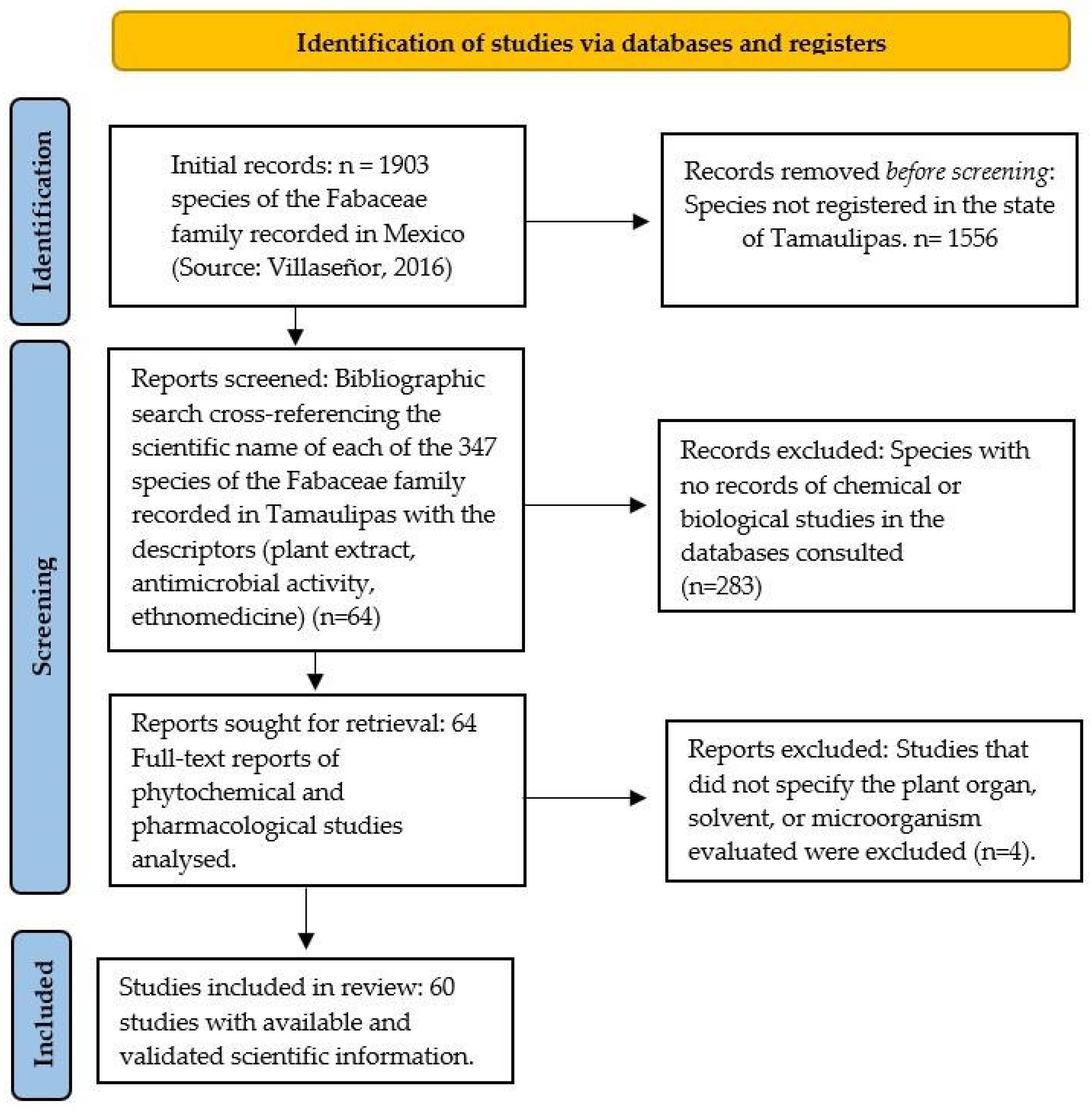
2.2. Systematic Review Design (PRISMA Declaration)
2.3. Inclusion and Exclusion Criteria
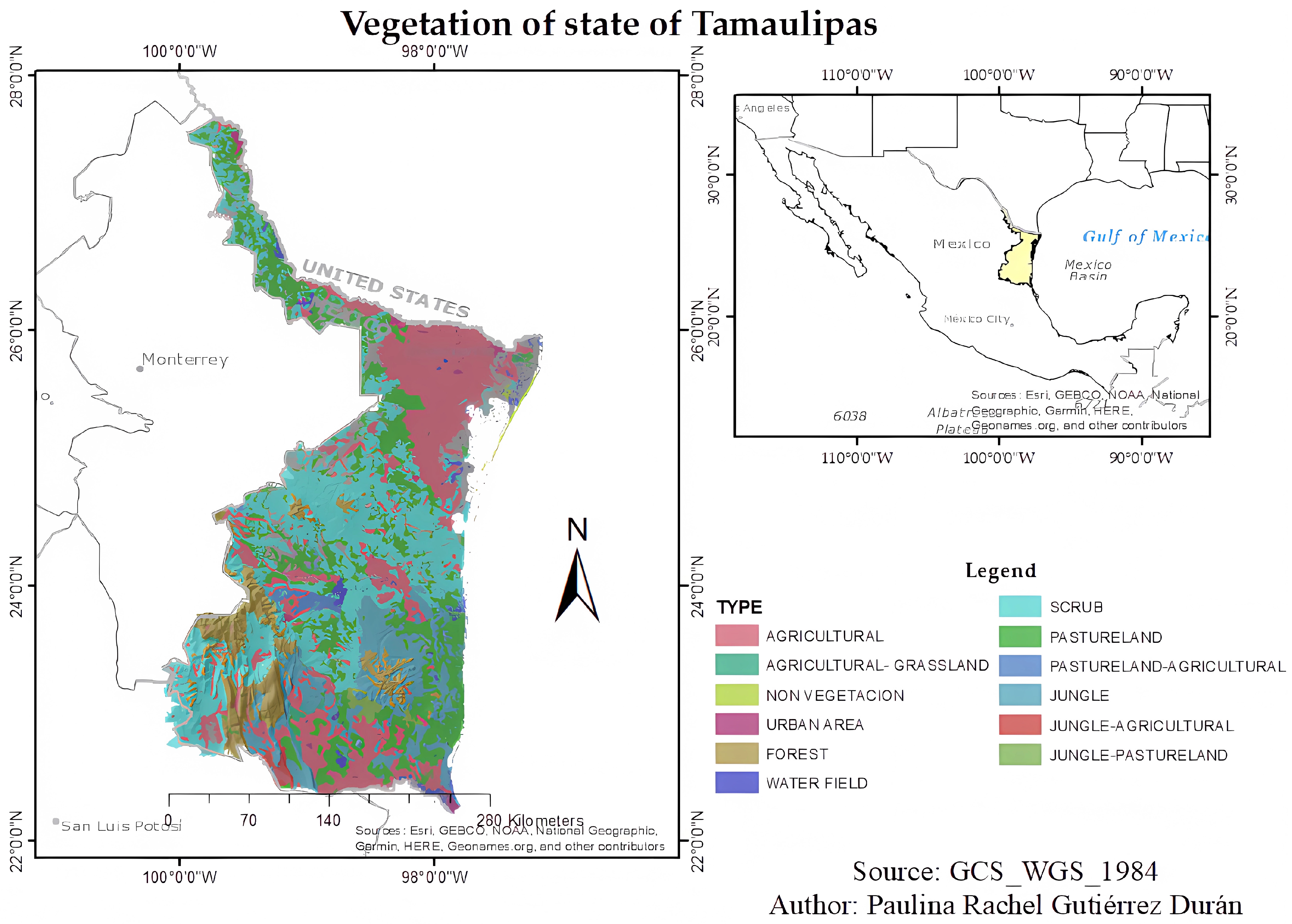
2.4. Summary of Data and Regional Context
3. Results and Discussion
3.1. Applications in Traditional Medicine

| Botanical Name | Synonyms | Common Name in México | Traditional Use | References (Study Location) |
|---|---|---|---|---|
| Acaciella angustissima (Mill.) Britton & Rose | - | Guajillo | No data recorded | [44] (Queretaro, Mexico) |
| Aeschynomene indica L. | - | Not reported | Urticaria, furuncle, nyctalopia, hepatitis, enteritis, and diarrhea. | [20] (Quzhou, China) |
| Calliandra tergemina (L.) Benth. | - | Not reported | No data recorded | [61] (Klang, Malaysia) |
| Canavalia rosea (Sw.) DC. | - | Frijol de playa | No data recorded | [41] (Crato, Brazil) |
| Canavalia villosa Benth. | - | Gallinitas | No data recorded | [62] (Brazil) |
| Chamaecrista nictitans (L.) Moench | - | Guajito | Fever and antiviral | [42] (Morelos, Mexico) |
| Dalea aurea Nutt. ex Pursh | - | Not reported | Diarrhea, stomach pain, and cramps | [21] (Oklahoma, USA) |
| Dalea bicolor Humb. & Bonpl. ex Willd. | - | Escobilla | Gastrointestinal problems, vomiting, and diarrhea | [16] (Hidalgo, Mexico) |
| Dalea foliolosa (Aiton) Barneby | - | Almaraduz | Anti-inflammatory and hypoglycemic | [17] (Oaxaca, Mexico) |
| Dalea nana Torr. ex A.Gray | - | Trébol enano de pradera | No data recorded | [29] (Arizona, USA) |
| Dalea versicolor Zucc. | - | Not reported | No data recorded | [58] (Arizona, USA) |
| Desmodium incanum (Sw.) DC. | - | Amor seco | Back pain, colds, and kidney Problems | [30] (Manchester, Jamaica) |
| Desmodium scorpiurus (Sw.) Poir. | - | Not reported | Constipation, cough, convulsions, venereal infections, tinea | [63] (Kaduna, Niger) |
| Desmodium tortuosum (Sw.) DC. | - | Cadillo | Cardiovascular events | [64] (Ucayali, Peru) |
| Ebenopsis ebano (Berland.) Barneby & J.W.Grimes | - | Ébano | No data recorded | [65] (Nuevo Leon, Mexico) |
| Enterolobium cyclocarpum (Jacq.) Griseb. | - | Guanacaste | No data recorded | [66] (Oyo, Niger) |
| Erythrina herbacea L. | - | Hierba de colorín | No data recorded | [67] (Texas, USA) |
| Eysenhardtia platycarpa Pennell & Saff. | - | Not reported | Kidney and gallbladder diseases | [68] (Nuevo Leon, Mexico) |
| Gleditsia aquatica Marshall | - | Not reported | No data recorded | [31] (Giza, Egypt) |
| Gleditsia triacanthos L. | - | Acacia de tres espinas | Pain, whooping cough, measles, smallpox, skin diseases, asthma | [34] (South Africa) |
| Gliricidia sepium (Jacq.) Kunth | - | Cacahuananche | Wounds, diarrhea, repelling mosquitoes, fumigating | [43] (Kerala, India) |
| Grona adscendens (Sw.) H.Ohashi & K.Ohashi | Desmodium adscendens (Sw.) DC. | Amor seco | Oral-dental and urogenital problems, and opportunistic infections | [22] (Ibadan, Niger) |
| Grona triflora (L.) H.Ohashi & K.Ohashi | Desmodium triflorum (L.) DC. | Hierba cuartillo | Diarrhea, convulsions, tonic, diuretic, and biliary conditions. | [46] (Lucknow, India) |
| Haematoxylum brasiletto H.Karst. | - | Madera de Brasil | Oral and kidney infections, hypertension, gastrointestinal disorders, and diabetes. | [69] (Sonora, Mexico) |
| Indigofera suffruticosa Mill. | - | Anileira | Healing | [70] (Pernambuco, Brazil) |
| Inga vera Willd. | - | Not reported | Treatment of diseases | [23] (Santo Domingo, Dominican Republic) |
| Leucaena leucocephala (Lam.) de Wit | - | Not reported | Gastrointestinal | [71] (Ibadan, Niger) |
| Lonchocarpus punctatus Kunth | - | Balché | Parasitic | [32] (Yucatan, Mexico) |
| Lysiloma acapulcense (Kunth) Benth. | - | Not reported | Respiratory, gastrointestinal, urinary, and skin infections | [72] (Baja California, Mexico) |
| Macroptilium lathyroides (L.) Urb. | - | Not reported | No data recorded | [73] (Chennai, India) |
| Mimosa malacophylla A.Gray | - | Not reported | Diuretic and kidney stones | [74] (Nuevo Leon, Mexico) |
| Mucuna pruriens (L.) DC. | - | Mucuna | Purgative and diuretic | [24] (Osun, Niger) |
| Neltuma glandulosa (Torr.) Britton & Rose | Prosopis glandulosa Torr. | Mesquite dulce | Gastrointestinal, rashes, eye infections, hernias, skin conditions, sore throat | [33] (Nevada, USA) |
| Neltuma juliflora (Sw.) Raf. | Prosopis juliflora (Sw.) DC. | Mesquite | Colds, diarrhea, flu, hoarseness, inflammation, measles, sore throat, liver and eye problems | [25] (Bushehr, Iran) |
| Neltuma laevigata (Humb. & Bonpl. ex Willd.) Britton & Rose | Prosopis laevigata (Humb. & Bonpl. ex Willd.) M.C.Johnst. | Mesquite | Skin, gastrointestinal, and respiratory diseases | [60] (Zapotitlan Salinas, Mexico) |
| Neptunia oleracea Lour. | - | Mimosa de agua | Diabetes mellitus, inflammation, and fever | [35] (Selangor, Malaysia) |
| Pachyrhizus erosus (L.) Urb. | - | Jícama | Skin rashes | [14] (Morelos, Mexico) |
| Parkinsonia aculeata L. | - | Escoba | Skin and urinary tract infections | [75] (Maharashtra, India) |
| Parkinsonia florida (Benth. ex A.Gray) S.Watson | - | Palito azul verdoso | No data recorded | [18] (Sonora, Mexico) |
| Parkinsonia praecox (Ruiz & Pav.) Hawkins | - | Palo brea | Gastrointestinal, antitussive, wound healing, headaches, earaches, and scorpion stings | [19] (Oaxaca, Mexico) |
| Phaseolus coccineus L. | - | Ayocote | No data recorded | [76] (Dali, China) |
| Phaseolus lunatus L. | - | Habas | Food | [77] (Machala, Ecuador) |
| Phaseolus vulgaris L. | - | Frijoles | Food | [36] (Giza, Egypt) |
| Pithecellobium dulce (Roxb.) Benth. | - | Jungli Jalebi | Earache, leprosy, peptic ulcer, and toothache | [37] (Haryana, India) |
| Rhynchosia minima (L.) DC. | - | Frijolillo | Skin conditions and to relieve boils. | [78] (Harare, Zimbabwe) |
| Senegalia berlandieri (Benth.) Britton & Rose | - | Espino | No data recorded | [79] (Texas, USA) |
| Senegalia greggii (A.Gray) Britton & Rose | - | Tesota | No data recorded | [79] (Texas, USA) |
| Senna crotalarioides (Kunth) H.S.Irwin & Barneby | - | Not reported | Inflammation | [80] (San Luis Potosi, Mexico) |
| Senna hirsuta (L.) H.S.Irwin & Barneby | - | Cuajillo | Hypertension, dropsy, diabetes, fevers, bile, rheumatism, tinea, and eczema | [48] (Uyo, Niger) |
| Senna obtusifolia (L.) H.S.Irwin & Barneby | - | Tasba | Eye infection and laxative | [47] (Yola, Niger) |
| Senna occidentalis (L.) Link | - | Candelilla pequeña | Malaria and trypanosomiasis | [40] (Minna, Niger) |
| Senna septemtrionalis (Viv.) H.S.Irwin & Barneby | - | Cafecillo | Diuretic, anti-inflammatory, laxative, expectorant, and fungicide, fever, burns, cholera, hemorrhoids, pain, gastroenteritis. | [38] (Guanajuato, Mexico) |
| Senna wislizeni (A.Gray) H.S.Irwin & Barneby | - | Carrozo | Laxative properties, skin and parasitic diseases | [15] (Morelos, Mexico) |
| Sophora tomentosa L. | - | Not reported | Cholera, diarrhea, gastrointestinal antidote | [27] (Giza, Egypt) |
| Tephrosia cinerea (L.) Pers. | - | Bardana medicinal | Diarrhea, diuretic, bronchitis, asthma, inflammation | [59] (Chamrajanagar, India) |
| Vachellia farnesiana (L.) Wight & Arn. | - | Huizache | No data recorded | [79] (Texas, USA) |
| Vachellia rigidula (Benth.) Seigler & Ebinger | - | Chaparro prieto | No data recorded | [79] (Texas, USA) |
| Vigna luteola (Jacq.) Benth. | - | Porotillo | No data recorded | [81] (Nantou, Taiwan) |
| Vigna vexillata (L.) A.Rich. | - | Bejuco pato | No data recorded | [39] (Nantou, Taiwan) |
| Zapoteca portoricensis (Jacq.) H.M.Hern. | - | Palo blanco | Convulsions, constipation, skin infections | [28] (Abakaliki, Niger) |
| Zornia diphylla (L.) Pers. | - | Raíz de víbora | Diarrhea and venereal diseases | [45] (Kerala, India) |
3.2. Phytochemical Extraction Methods and Target Compounds
3.2.1. Solvents
3.2.2. Plant Organs and Biological Forms
3.3. Isolated Compounds
Biological Properties and Mechanisms of Action of the Main Isolated Compounds
3.4. Microorganisms Evaluated and Antimicrobial Assessment
4. Conclusions
Author Contributions
Funding
Data Availability Statement
Acknowledgments
Conflicts of Interest
References
- Sakkas, H.; Papadopoulou, C. Antimicrobial Activity of Basil, Oregano, and Thyme Essential Oils. J. Microbiol. Biotechnol. 2017, 27, 429–438. [Google Scholar] [CrossRef]
- Rodríguez-Flores, O.R.; Centeno, E.A.; Betanco, R.A. Plantas Utilizadas Para el Tratamiento de Enfermedades en los Animales Domésticos; Reserva Natural El Tisey: Estelí, Nicaragua, 2005. [Google Scholar]
- Organización Mundial de la Salud. Cuidados Innovadores Para las Condiciones Crónicas; Organización Mundial de la Salud: Washington, DC, USA, 2025. [Google Scholar]
- Organización Mundial de Sanidad Animal. Riesgos Sanitarios Mundiales y Desafíos del Mañana; Organización Mundial de Sanidad Animal: Paris, France, 2025. [Google Scholar]
- Rodríguez-Garza, N.E.; Quintanilla-Licea, R.; Romo-Sáenz, C.I.; Elizondo-Luevano, J.H.; Tamez-Guerra, P.; Rodríguez-Padilla, C.; Gomez-Flores, R. In Vitro Biological Activity and Lymphoma Cell Growth Inhibition by Selected Mexican Medicinal Plants. Life 2023, 13, 958. [Google Scholar] [CrossRef]
- Salehi, B.; Martorell, M.; Arbiser, J.L.; Sureda, A.; Martins, N.; Kumar-Maurya, P.; Charifi-Rad, M.; Kumar, P.; Charifi-Rad, J. Antioxidants: Positive or negative actors? Biomolecules 2018, 8, 124. [Google Scholar] [CrossRef]
- El-Saber Batiha, G.; Magdy Beshbishy, A.; Wasef, L.G.; Elewa, Y.H.; Al-Sagan, A.A.; El-Hack, A.; Taha, M.E.; Abd-Elhakim, Y.M.; Prasad Devkota, H. Chemical Constituents and Pharmacological Activities of Garlic (Allium sativum L.): A Review. Nutrients 2020, 12, 872. [Google Scholar] [CrossRef]
- Camacho-Escobar, M.A.; Ramos-Ramos, D.A.; Ávila-Serrano, N.Y.; Sánchez-Bernal, E.I.; López-Garrido, S.J. Las defensas físico-químicas de las plantas y su efecto en la alimentación de los rumiantes. Terra Latinoam. 2020, 8, 443–453. [Google Scholar] [CrossRef]
- Rubio-Pequeño, L.G.; Mora-Olivo, A.; Estrada-Castillón, E.; Torres-Castillo, J.A. Riqueza y distribución de leguminosas en un gradiente ambiental dentro del Área Natural Protegida Altas Cumbres, Tamaulipas, México. Bot. Sci. 2024, 102, 1284–1299. [Google Scholar] [CrossRef]
- Sabir, A.; Safdar, N.; Akhtar, W.; Fatima, I. article Therapeutic Potential of Fabaceae Species: A Phytochemical and Bioactivity Investigation. Pharmaceuticals 2025, 66, 301–313. [Google Scholar]
- Molares, S.; Ladio, A. The usefulness of edible and medicinal Fabaceae in Argentine and Chilean Patagonia: Environmental availability and other sources of supply. Evid.-Based Complement. Altern. Med. 2012, 2012, 901918. [Google Scholar] [CrossRef]
- Comisión Nacional para el Conocimiento y Uso de la Biodiversidad, C.; Comisión de Parques y Biodiversidad de Tamaulipas, C. La biodiversidad en Tamaulipas; Estudio de Estado: Conabio, México, 2024. [Google Scholar]
- Villaseñor, J.L. Checklist of the native vascular plants of Mexico. Rev. Mex. Biodivers. 2016, 87, 559–902. [Google Scholar] [CrossRef]
- Necha, L.L.B.; Baños, S.B.; Luna, L.B.; Suárez, F.J.L.G.; Solano, D.A.; Chilpa, R.R. Antifungal activity of seed powders, extracts, and secondary metabolites of Pachyrhizus erosus (L.) urban (Fabaceae) against three postharvest fungi. Rev. Mex. Fitopatol. 2004, 22, 356–361. [Google Scholar]
- Arrieta-Baez, D.; Zepeda-Vallejo, L.G.; Jimenez-Estrada, M. Phytochemical studies on Senna skinneri and Senna wislizeni. Nat. Prod. Lett. 1999, 13, 223–228. [Google Scholar] [CrossRef]
- Morales-Ubaldo, Y.A.; Rivero-Perez, N.; Morales-Ubaldo, A.L.; Valladares-Carranza, B.; López-Rodríguez, G.M.; Zaragoza-Bastida, A. Dalea bicolor: An alternative for the treatment of bacteria of public health importance. Rev. Inv. Vet. Perú 2022, 33, e22863. [Google Scholar] [CrossRef]
- Villa-Ruano, N.; Pacheco-Hernández, Y.; Rubio-Rosas, E.; Zarate-Reyes, J.A.; Lozoya-Gloria, E.; Cruz-Duran, R. Chemical profile, nutraceutical and anti-phytobacterial properties of the essential oil from Dalea foliolosa (Fabaceae). Emir. J. Food Agric. 2017, 29, 724–728. [Google Scholar] [CrossRef]
- López-Millán, A.; Del Toro-Sánchez, C.L.; Ramos-Enríquez, J.R.; Carrillo-Torres, R.C.; Zavala-Rivera, P.; Esquivel, R.; Álvarez-Ramos, E.; Moreno-Corral, R.; Guzmán-Zamudio, R.; Lucero-Acuña, A. Biosynthesis of gold and silver nanoparticles using Parkinsonia florida leaf extract and antimicrobial activity of silver nanoparticles. Mater. Res. Express 2019, 6, 095025. [Google Scholar] [CrossRef]
- Ordaz-Hernández, A.; Hernández-Carlos, B.; González, H.M.A.; Hernández-Ramiro, L.; Ramírez, M.C.; Herrera-Martínez, M. Parkinsonia praecox bark as a new source of antibacterial and anticancer compounds. Eur. J. Integr. Med. 2024, 71, 102401. [Google Scholar] [CrossRef]
- Feng, L.; Xu, F.; Qiu, S.; Sun, C.; Lai, P. Chemical Composition and Antibacterial, Antioxidant, and Cytotoxic Activities of Essential Oils from Leaves and Stems of Aeschynomene indica L. Molecules 2024, 29, 3552. [Google Scholar] [CrossRef]
- Belofsky, G.; Carreno, R.; Goswick, S.M.; John, D.T. Activity of isoflavans of Dalea aurea (Fabaceae) against the opportunistic ameba Naegleria fowleri. Planta Medica 2006, 72, 383–386. [Google Scholar] [CrossRef]
- Adeniyi, B.A.; Izuka, K.C.; Odumosu, B.; Aiyelaagbe, O.O. Antibacterial and antifungal activities of methanol extracts of Desmodium adscendens root and Bombax buonopozense leaves. Int. J. Biol. Chem. Sci. 2013, 7, 185–194. [Google Scholar] [CrossRef]
- Lozano, C.M.; Vasquez-Tineo, M.A.; Ramirez, M.; Jimenez, F. In vitro antimicrobial activity screening of tropical medicinal plants used in Santo Domingo, Dominican Republic. Part I. Pharmacogn. Commun. 2013, 3, 64. [Google Scholar] [CrossRef]
- Salau, A.O.; Odeleye, O.M. Antimicrobial activity of Mucuna pruriens on selected bacteria. Afr. J. Biotechnol. 2007, 6, 18. [Google Scholar] [CrossRef]
- Tajbakhsh, S.; Barmak, A.; Vakhshiteh, F.; Gharibi, M. Invitro antibacterial activity of the Prosopis juliflora seed pods on some common pathogens. J. Clin. 2015, 9, DC13. [Google Scholar] [CrossRef]
- Monteiro, J.A.; Ferreira Júnior, J.M.; Oliveira, I.R.; Batista, F.L.A.; Pinto, C.C.C.; Silva, A.A.S.; Morais, S.M.; Silva, M.G.V. Bioactivity and toxicity of Senna cana and Senna pendula extracts. Biochem. Res. Int. 2018, 2018, 8074306. [Google Scholar] [CrossRef]
- Hussiny, S.; Elissawy, A.; Eldahshan, O.; Elshanawany, M.; Singab, A.N. Phytochemical investigation using GC/MS analysis and evaluation of antimicrobial and cytotoxic activities of the lipoidal matter of leaves of Sophora secundiflora and Sophora tomentosa. Arch. Pharm. Sci. Ain Shams Univ. 2020, 4, 207–214. [Google Scholar] [CrossRef]
- Agbafor, K.N.; Akubugwo, E.I.; Ogbashi, M.E.; Ajah, P.M.; Ukwandu, C.C. Chemical and antimicrobial properties of leaf extracts of Zapoteca portoricensis. Med. Plant 2011, 5, 605–612. [Google Scholar]
- Belofsky, G.; Cruz, C.; Schultz, T.; Zapata, M.; Wilcox, D.; Wasmund, B.; Salomon, C.E.; Clint-Spiegel, P. Antimicrobial isoflavans and other metabolites of Dalea nana. Phytochemistry 2024, 226, 114224. [Google Scholar] [CrossRef]
- Pitkin, F.; Black, J.; Stedford, K.; Valentine, O.; Knott, J.; Laverdure, E. A comparative study of the antimicrobial effects of the Desmodium incanum and the Moringa oleifera extracts on select microbes. Int. J. Public Health Health Syst. 2019, 4, 27–35. [Google Scholar]
- Ragab, E.A.; Hosny, M.; Kadry, H.A.; Ammar, H.A. Acylated triterpenoidal saponins and cytokinins from Gleditsia aquatica. Pharmacog Phytother 2010, 2, 24–33. [Google Scholar]
- Borges-Argáez, R.; Cáceres-Farfán, M.; De Pedro, N.; Cautain, B.; Pérez- del Palacio, J.; Vicente, F.; Genilloud, O.; Melguizo, A.; Díaz, C.; Reyes, F.; et al. Estudios citotóxicos y efectos in vitro de trans-3, 4, 4’, 5-tetrametoxiestilbeno, compuesto bioactivo aislado de Lonchocarpus punctatus Kunth. Polibotánica 2017, 43, 165–175. [Google Scholar]
- Rahman, A.A.; Samoylenko, V.; Jacob, M.R.; Sahu, R.; Jain, S.K.; Khan SITekwani, B.L.; Muhammad, I. Antiparasitic and antimicrobial indolizidines from the leaves of Prosopis glandulosa var. glandulosa. Planta Medica 2011, 77, 1639–1643. [Google Scholar] [PubMed]
- Matela, K.S.; Mekbib, S.B.; Pillai, M.K. Antimicrobial activities of extracts from Gleditsia triacanthos L. and Schinus molle L. Pharmacol. Online 2018, 2, 85–92. [Google Scholar]
- Zainuddin, I.D.; Zulkifli, M.F.; Ismail, R.; Kamal, N.; Mahadi, M. Metabolites Profiling and Antimicrobial Activities in Roots and Leaves of Neptunia Oleracea. Int. J. Pharm. Res. 2020, 12, 9. [Google Scholar] [CrossRef]
- Hamed, E.-S.; Ibrahim, E.A.M.M.; Mounir, S.M. Antimicrobial activities of lectins extracted from some cultivars of phaseolus vulgaris seeds. J. Microb. Biochem. Technol. 2017, 9, 109–116. [Google Scholar] [CrossRef]
- Kumar, M.; Nehra, K.; Duhan, J.S. Phytochemical analysis and antimicrobial efficacy of leaf extracts of Pithecellobium dulce. Asian J. Pharm. Clin. Res. 2013, 6, 70–76. [Google Scholar]
- Alonso-Castro, A.J.; Alba-Betancourt, C.; Yáñez-Barrientos, E.; Luna-Rocha, C.; Páramo-Castillo, A.S.; Aragón-Martínez OHZapata-Morales, J.R.; Cruz-Jiménez, G.; Gasca-Martínez, D.; González-Ibarra, A.A. Diuretic activity and neuropharmacological effects of an ethanol extract from Senna septemtrionalis (Viv.) HS Irwin & Barneby (Fabaceae). J. Ethnopharmacol. 2019, 239, 111923. [Google Scholar] [CrossRef] [PubMed]
- Leu, Y.; Hwang, T.; Kuo, P.; Liou, K.; Huang, B.; Chen, G. Constituents from Vigna vexillata and their anti-inflammatory activity. Int. J. Mol. Sci. 2012, 13, 9754–9768. [Google Scholar] [CrossRef]
- Tsado, N.A.; Lawal, B.; Kontagora, G.N.; Muhammad, B.M.; Yahaya, M.A.; Gboke, J.A.; Muhammad, U.A.; Hassan, M.K. Antioxidants and antimicrobial-activities of methanol leaf extract of senna occidentalis. J. Adv. Med. Pharm. Sci. 2016, 8, 1–7. [Google Scholar] [CrossRef] [PubMed]
- Alencar-Fonseca, V.J.; Lays-Braga, A.; Silva- de Almeida, R.; Gusmão-da Silva, T.; Pereira-da Silva, J.C.; Ferreira-de Lima, L.; Cruz-Dos Santos, M.H.; dos Santos-Silva, R.R.; Souza-Teixeira, C.; Melo-Coutinho, H.D.; et al. Lectins ConA and ConM extracted from Canavalia ensiformis (L.) DC and Canavalia rosea (Sw.) DC inhibit planktonic Candida albicans and Candida tropicalis. Arch. Microbiol. 2022, 204, 346. [Google Scholar] [CrossRef]
- Cortes-Morales, J.A.; Salinas-Sánchez, D.O.; de Jesús Perea-Flores, M.; González-Cortazar, M.; Tapia-Maruri, D.; López-Arellano, M.E.; Rivas-González, J.M.; Zamilpa, A.; Olmedo-Juárez, A. In vitro anthelmintic activity and colocalization analysis of hydroxycinnamic acids obtained from Chamaecrista nictitans against two Haemonchus contortus isolates. Vet. Parasitol. 2024, 331, 10282. [Google Scholar] [CrossRef]
- Kumar, N.S.; Simon, N. In vitro antibacterial activity and phytochemical analysis of Gliricidia sepium (L.) leaf extracts. J. Pharmacogn. Phytochem. 2016, 5, 131–133. [Google Scholar]
- Vargas-Hernández, M.; Munguía-Fragozo, P.V.; Cruz-Hernández, A.; Guerrero, B.Z.; Gonzalez-Chavira, M.M.; Feregrino-Pérez, A.A.; Mendoza-Díaz, S.O.; Laorca-Pina, G.; Torres-Pacheco, I.; Hernandez-Salazar, M.; et al. Bioactivity and gene expression studies of an arbustive Mexican specie Acaciella angustissima (Timbe). Ind. Crops Prod. 2014, 52, 649–655. [Google Scholar] [CrossRef]
- Arunkumar, R.; Nair, S.A.; Rameshkumar, K.B.; Subramoniam, A. The essential oil constituents of Zornia diphylla (L.) Pers, and anti-inflammatory and antimicrobial activities of the oil. J. Rec. Nat. Prod. 2014, 8, 385. [Google Scholar]
- Sharma, R.; Parashar, B.; Kabra, A. Efficacy of aqueous and methanolic extracts of plant Desmodium triflorum for potential antibacterial activity. Int. J. Pharm. Sci. Res. 2013, 4, 1975. [Google Scholar]
- Doughari, J.; El-Mahmood, A.M.; Tyoyina, I.J. Antimicrobial activity of leaf extracts of Senna obtusifolia (L). Afr. J. Pharm. Pharmacol. 2008, 2, 7–13. [Google Scholar]
- Essien, E.E.; Thomas, P.S.; Ascrizzi, R.; Setzer, W.N.; Flamini, G. Senna occidentalis (L.) Link and Senna hirsuta (L.) HS Irwin & Barneby: Constituents of fruit essential oils and antimicrobial activity. Nat. Prod. Res. 2019, 33, 1637–1640. [Google Scholar] [PubMed]
- Medellín-Morales, S.G.; Barrientos-Lozano, L.; Mora-Olivo, A.; Almaguer-Sierra, P.; Mora-Ravelo, S.G. Traditional knowledge and valuation of useful plants in el cielo biosphere reserve, tamaulipas, Mexico. Agric. Soc. Desarro. 2018, 15, 354–377. [Google Scholar]
- Bánki, O.; Roskov, Y.; Döring, M.; Ower, G.; Hernández Robles, D.R.; Plata Corredor, C.A. Catalogue of Life Checklist. 2024. Available online: https://www.checklistbank.org/dataset/9910/about (accessed on 28 June 2023).
- Page, M.J.; McKenzie, J.E.; Bossuyt, P.M.; Boutron, I.; Hoffmann, T.C.; Mulrow, C.D.; Shamseer, L.; Tetzlaff, J.M.; Akl, E.A.; Brennan, S.E.; et al. The PRISMA 2020 statement: An updated guideline for reporting systematic reviews. BMJ 2021, 372, n71. [Google Scholar]
- José Luis, V.; Ortiz, E.; Delgadillo-Moya, C.; Juárez, D. The breadth of the Mexican Transition Zone as defined by its flowering plant generic flora. PLoS ONE 2020, 15, e0235267. [Google Scholar] [CrossRef]
- Villacrés-Vallejo, J. Conservación de la familia Fabácea en el Jardín Botánico del Instituto de Medicina Tradicional-EsSalud. Rev. Peru. Med. Integr. 2021, 6, 48–52. [Google Scholar] [CrossRef]
- Estrada-Castillón, E.; Villarreal-Quintanilla, J.A.; Cuéllar-Rodríguez, G.; Encina-Domínguez, J.A.; Martínez-Ávalos, J.G.; Mora-Olivo, A.; Sánchez-Salas, J. The Fabaceae in Northeastern Mexico (Subfamily Caesalpinioideae, Mimosoideae Clade, Tribes Mimoseae, Acacieae, and Ingeae). Plants 2024, 13, 403. [Google Scholar] [CrossRef]
- Hernández-Sandoval, L.; González-Romo, C.; González-Medrano, F. Plantas útiles de Tamaulipas. An. Inst. Biol. Ser. Bot. 1991, 62, 1–38. [Google Scholar]
- Jasso-Gandara, S.N. Etnobotánica de Plantas Medicinales del Municipio de Güémez, Tamaulipas, México; Universidad Autónoma de Nuevo León: San Nicolas de los Garza, Mexico, 2015. [Google Scholar]
- Castañeda, R.; Gutiérrez, H.; Carrillo, É.; Sotelo, A. Leguminosas (Fabaceae) silvestres de uso medicinal del distrito de Lircay, provincia de Angaraes (Huancavelica, Perú). Bol. Latinoam. Caribe Plantas Med. Aromát. 2017, 16, 136–149. [Google Scholar]
- Belofsky, G.; Percivill, D.; Lewis, K.; Tegos, G.P.; Ekart, J. Phenolic metabolites of dalea versicolor that enhance antibiotic activity against model pathogenic bacteria. J. Nat. Prod. 2004, 67, 481–484. [Google Scholar] [CrossRef]
- Panduranga Murthy, G.; Mokshith, M.C.; Ravishankar, H.G. Isolation, partial purification of protein and detection of Antibacterial acivity in leaf extracts of Tephrosia cinerea (L.) Pers.-An Ethno-medicinal plant practiced by Tribal activity at Biligirirangana Hills of Karnataka, India. Int. J. Pharma Biosci. 2011, 2, 513–519. [Google Scholar]
- Nava-Solis, U.; Rodriguez-Canales, M.; Hernandez-Hernandez, A.B.; Velasco-Melgoza, D.A.; Moreno-Guzman, B.P.; Rodriguez-Monroy, M.A.; Canales-Martinez, M.M. Antimicrobial activity of the methanolic leaf extract of Prosopis laevigata. Sci. Rep. 2022, 12, 20807. [Google Scholar] [CrossRef]
- Ling-Chan, E.W.; Gray, A.I.; Igoli, J.O.; Lee, S.M.; Goh, J.K. Galloylated flavonol rhamnosides from the leaves of Calliandra tergemina with antibacterial activity against methicillin-resistant Staphylococcus aureus (MRSA). Phytochemistry 2014, 107, 148–154. [Google Scholar] [CrossRef] [PubMed]
- Lossio, C.F.; Moreira, C.G.; Amorim, R.M.F.; Nobre, C.S.; Silva, M.T.L.; Neto, C.C.; Pinto-Junior, V.R.; Silva, I.B.; Campos, J.; Assreuy, A.M.S. Lectin from Canavalia villosa seeds: A glucose/mannose-specific protein and a new tool for inflammation studies. Int. J. Biol. Macromol. 2017, 105, 272–280. [Google Scholar] [CrossRef] [PubMed]
- Ndukwe, I.G.; Habila, J.D.; Bello, I.A.; Okoh, J.I. Phytochemical and antimicrobial studies on the leaves and stem ofDesmodium scorpiurus Der (sw). Afr. J. Biotechnol. 2006, 5, 19. [Google Scholar]
- Rodríguez, J.L.; Berrios, P.; Clavo, Z.M.; Marin-Bravo, M.; Inostroza-Ruiz, L.; Ramos-Gonzalez, M.; Quispe-Solano, M.; Fernández-Alfonso, M.S.; Palomino, O.; Goya, L. Chemical Characterization, Antioxidant Capacity and Anti-Oxidative Stress Potential of South American Fabaceae Desmodium tortuosum. Nutrients 2023, 15, 746. [Google Scholar] [CrossRef]
- Bernabé-Antonio, A.; Sánchez-Sánchez, A.; Romero-Estrada, A.; Meza-Contreras, J.C.; Silva-Guzmán, J.C.; Fuentes-Talavera, F.J.; Hurtado-Díaz IAlvarez, L.; Cruz-Sosa, F. Establishment of a cell suspension culture of Eysenhardtia platycarpa: Phytochemical screening of extracts and evaluation of antifungal activity. Plants 2021, 10, 414. [Google Scholar] [CrossRef]
- Cagri-Mehmetoglu, A.; Sowemimo, A.; van de Venter, M. Evaluation of antibacterial activity and phenolic contents of four nigerian medicinal plants. Int. J. Food Process. Technol. 2017, 4, 13. [Google Scholar] [CrossRef]
- Tanaka, H.; Sudo, M.; Kawamura, T.; Sato, M.; Yamaguchi, R.; Fukai, T.; Sakai, E.; Tanaka, N. Antibacterial constituents from the roots of Erythrina herbacea against methicillin-resistant Staphylococcus aureus. Planta Medica 2010, 76, 916–919. [Google Scholar]
- Gomez-Flores, R.; Gracia-Vásquez, Y.; Alanís-Guzmán, M.G.; Tamez-Guerra, P.; Tamez-Guerra, R.; García-Díaz, C.; Monreal-Cuevas, E.; Rodríguez-Padilla, C. In vitro antimicrobial activity and polyphenolics content of tender and mature Ebenopsis ebano seeds. Med. Plants Int. J. Phytomed. Relat. Ind. 2009, 1, 11–19. [Google Scholar] [CrossRef]
- Rivero-Cruz, J.F. Antimicrobial compounds isolated from Haematoxylon brasiletto. J. Ethnopharmacol. 2008, 119, 99–103. [Google Scholar] [CrossRef]
- Bezerra-dos Santos, A.T.; da Silva- Araújo, T.F.; Nascimento-da Silva, L.C.; Bezerra-da Silva, C.; Morais-de Oliveira AFAraújo, J.M.; dos Santos-Correia, M.T.; de Menezes-Lima, V.L. Organic extracts from Indigofera suffruticosa leaves have antimicrobial and synergic actions with erythromycin against Staphylococcus aureus. Front. Microbiol. 2015, 6, 13. [Google Scholar] [CrossRef]
- Aderibigbe, S.A.; Adetunji, O.A.; Odeniyi, M.A. Antimicrobial and Pharmaceutical Properties of The Seed Oil of Leucaena leucocephala (Lam.) De Wit (Leguminosae). Afr. J. Biomed. Res. 2011, 14, 63–68. [Google Scholar]
- Garibo, D.; Borbón-Nuñez, H.A.; Díaz-de León, J.N.; García-Mendoza, E.; Estrada IToledano-Magaña, Y.; Tiznado, H.; Ovalle-Marroquin, M.; Soto-Ramos, A.G.; Blanco, A. Green synthesis of silver nanoparticles using Lysiloma acapulcensis exhibit high-antimicrobial activity. Sci. Rep. 2020, 10, 12805. [Google Scholar] [CrossRef] [PubMed]
- Prabu, P.; Losetty, V. Green synthesis of copper oxide nanoparticles using Macroptilium Lathyroides (L) leaf extract and their spectroscopic characterization, biological activity and photocatalytic dye degradation study. J. Mol. Struct. 2024, 1301, 137404. [Google Scholar] [CrossRef]
- Bernabé-Antonio, A.; Sánchez-Sánchez, A.; Romero-Estrada, A.; Meza-Contreras, J.C.; Silva-Guzmán, J.A.; Fuentes-Talavera, F.J.; Hurtado-Diaz, I.; Alvarez, L.; Cruz-Sosa, F. Actividad antimicrobiana y antioxidante de extractos etanólicos de hoja de Arbutus xalapensis Kunt, Mimosa malacophylla Gray y Teucrium cubense Jacquin. Rev. Tend. Docencia Investig. Quím. 2019, 5, 739–747. [Google Scholar]
- Parveen-Qureshi, S. Antibacterial activity and phytochemical screening of crude leaves extract of Parkinsonia aculeata Linn. Int. J. Res. Biosci. Agric. Technol. 2017, 2, 667–670. [Google Scholar]
- Chen, J.; Liu, B.; Ji, N.; Zhou, J.; Bian, H.J.; Li, C.L.; Chen, F.; Bao, J. A novel sialic acid-specific lectin from Phaseolus coccineus seeds with potent antineoplastic and antifungal activities. Phytomedicine 2009, 16, 352–360. [Google Scholar] [CrossRef]
- Tamayo, J.; Poveda, T.; Paredes, M.; Vásquez, G.; Calero-Caceres, W. Antimicrobial, Antioxidant and Anti-Inflammatory Activities of Proteins of Phaseoulus lunatus (Fabaceae) Baby Lima Beans Produced in Ecuador. bioRxiv 2018, 401323. [Google Scholar] [CrossRef]
- Gweru, N.; Gundidza, M.; Magwa, M.L.; Ramalivhana, N.J.; Humphrey, G.; Samie, A.; Mmbengwa, V. Phytochemical composition and biological activities of essential oil of Rhynchosia minima (L)(DC)(Fabaceae). Afr. J. Biotechnol. 2009, 8, 5. [Google Scholar]
- Lozano, H.B. Investigation of the Antimicrobial Activity and Secondary Metabolites of Leaf Extracts from Vachellia Rigidula, Vachellia Farnesiana, Senegalia Berlandiery, and Senegalia Gregii; Texas A&M International University: Laredo, TX, USA, 2021. [Google Scholar]
- Serrano-Vega, R.; Pérez-Gutiérrez, S.; Alarcón-Aguilar, F.; Almanza-Pérez, J.; Pérez-González, C.; González-Chávez, M.M. Phytochemical composition, anti-inflammatory and cytotoxic activities of chloroform extract of Senna crotalarioides Kunth. Am. J. Plant Sci. 2021, 12, 887–900. [Google Scholar] [CrossRef]
- Lam, S.; Li, Y.; Kuo, P.; Hwang, T.; Yang, M.; Wang, C.; Tzen, J.T.C. Chemical constituents of Vigna luteola and their anti-inflammatory bioactivity. Molecules 2019, 24, 1371. [Google Scholar] [CrossRef] [PubMed]
- Azmir, J.; Zaidul, I.S.M.; Rahman, M.M.; Sharif, K.M.; Mohamed, A.; Sahena, F.; Jahurul, M.H.A.; Ghafoor, K.; Norulaini, N.A.N.; Omar, A.K.M. Techniques for extraction of bioactive compounds from plant materials: A review. J. Food Eng. 2013, 117, 426–436. [Google Scholar] [CrossRef]
- Azwanida, N.N. A review on the extraction methods use in medicinal plants, principle, strength and limitation. Med. Aromat. Plants 2015, 4, 2167-0412. [Google Scholar]
- Dehghanian, Z.; Habibi, K.; Dehghanian, M.; Aliyar, S.; Lajayer, B.A.; Astatkie, T.; Minkina, T.; Keswani, C. Reinforcing the bulwark: Unravelling the efficient applications of plant phenolics and tannins against environmental stresses. Heliyon 2022, 8, e09094. [Google Scholar] [CrossRef]
- Altemimi, A.L.; NBaharlouei AWatson, D.G.; Lightfoot, D.A. Phytochemicals: Extraction, Isolation, and Identification of Bioactive Compounds from Plant Extracts. Plants 2017, 6, 42. [Google Scholar] [CrossRef]
- Abubakar, A.R.; Haque, M. Preparation of Medicinal Plants: Basic Extraction and Fractionation Procedures for Experimental Purposes. J. Pharm. Bioallied Sci. 2020, 12, 1–10. [Google Scholar] [CrossRef]
- Sauerschnig, C.; Doppler, M.; Bueschl, C.; Schuhmacher, R. Methanol Generates Numerous Artifacts during Sample Extraction and Storage of Extracts in Metabolomics Research. Metabolites 2017, 8, 1. [Google Scholar] [CrossRef]
- Maticorena-Quevedo, J.; Patiño-Valderrama, L.; Vences, M.A.; Mendoza, W. Neuropatía óptica y necrosis putaminal bilateral: Reporte de un caso de intoxicación por metanol. Neurol. Argent. 2022, 14, 61–66. [Google Scholar] [CrossRef]
- Zapata-Boada, S.; Gonzalez-Miquel, M.; Jobson, M.; Cuellar-Franca, R.M. Life cycle environmental evaluation of alternative solvents used in lipid Extraction─ the case of algae biodiesel. ACS Sustain. Chem. Eng. 2023, 11, 11934–11946. [Google Scholar] [CrossRef]
- Armas-Bardales, J.J.; Vigo-Teco, R.M. Estudio Etnobotánico de Plantas Medicinales en las Comunidades El Chino y Buena Vista, Tahuayo-Perú. Biologist Thesis, Universidad Nacional De La Amazonía Peruana, Loreto, Peru, 2011. [Google Scholar]
- Tungmunnithum, D.; Thongboonyou, A.; Pholboon, A.; Yangsabai, A. Flavonoids and other phenolic compounds from medicinal plants for pharmaceutical and medical aspects: An overview. Medicines 2018, 5, 93. [Google Scholar] [CrossRef] [PubMed]
- Cao, H.; Ji, Y.; Li, S.; Lu, L.; Tian, M.; Yang, W.; Li, H. Extensive metabolic profiles of leaves and stems from the medicinal plant Dendrobium officinale Kimura et Migo. Metabolites 2019, 9, 215. [Google Scholar] [CrossRef]
- Sławińska, N.; Olas, B. Selected seeds as sources of bioactive compounds with diverse biological activities. Nutrients 2022, 15, 187. [Google Scholar] [CrossRef] [PubMed]
- Martínez-López, G.; Palacios-Rangel MIGuízar-Nolazco, E.; Villanueva-Morales, A. Local uses and tradition: Ethnobotanical study of usefel plants in San Pablo Cuatro Venados (Valles Centrales, Oaxaca). Polibotánica 2021, 52, 193–212. [Google Scholar]
- Boy-Mendo, F.R. Compuestos Bioactivos en Extractos de Plantas Aromáticas y Medicinales de la Dehesa Extremeña; Universidad de Extremadura: Badajoz, Spain, 2023. [Google Scholar]
- Shamsudin, N.F.; Ahmed, Q.U.; Mahmood, S.; Shah, S.A.A.; Sarian, M.N.; Khattak, M.M.A.K.; Khatib, A.S.; Awis, S.M.; Yusoff, Y.M.; Latip, J. Flavonoids as antidiabetic and anti-inflammatory agents: A review on structural activity relationship-based studies and meta-analysis. Int. J. Mol. Sci. 2022, 23, 12605. [Google Scholar] [CrossRef] [PubMed]
- 97; Rezvani, L. Detailed Study about Tannins in Plant Chemistry. J. Plant Biochem. Physiol. 2023, 11, 289. [Google Scholar]
- Rodríguez Pérez, B.; Canales Martínez, M.M.; Penieres Carrillo, J.G.; Cruz Sánchez, T.A. Composición química, propiedades antioxidantes y actividad antimicrobiana de propóleos mexicanos. Acta Univ. 2020, 30, 1–30. [Google Scholar] [CrossRef]
- Soto Vásquez, M.R. Actividad antinociceptiva y antibacteriana de los alcaloides totales de dos especies de la familia Solanaceae. Rev. Cuba. Plantas Med. 2014, 19, 361–373. [Google Scholar]
- Santa Cruz-López, C.Y.; Chapoñan-Vidaurre, M.; Limo-Arrasco, J.A.; Mantilla, M.C.M. Susceptibilidad in vitro de bacterias patógenas a los extractos de Rosmarinus officinalis y Caesalpinia spinosa. Rev. Cuba. Med. Mil. 2023, 52, e02302933. [Google Scholar]
- Cáceres-Huambo, A. Determination of the Primary Structure of a Lectin V-2 from pea (Pisum sativum L.) Seeds and His Antibacterial Effect on Staphylococcus aureus and Escherichia coli; CABI: Oxfordshire, UK, 2017. [Google Scholar]
- Bermúdez-Vásquez, M.J.; Granados-Chinchilla, F.; Molina, A. Composición química y actividad antimicrobiana del aceite esencial de Psidium guajava y Cymbopogon citratus. Agron. Mesoam 2019, 30, 147–163. [Google Scholar] [CrossRef]
- Domingo, D.; López-Brea, M. Plantas con acción antimicrobiana. Rev. Esp. Quimioter. 2003, 16, 385–393. [Google Scholar]
- Gallegos Flores, P.I.; Bañuelos-Valenzuela, R.; Delgadillo-Ruiz, L.; Meza-López, C.; Echavarría-Cháirez, F. Antibacterial activity of five terpenoid compounds: Carvacrol, limonene, linalool, α-terpinene and thymol. Trop. Subtrop. Agroecosystems 2019, 22, 241–248. [Google Scholar] [CrossRef]
- Villanueva, X.; Zhen, L.; Ares, J.N.; Vackier, T.; Lange, H.; Crestini, C.; Steenackers, H.P. Effect of chemical modifications of tannins on their antimicrobial and antibiofilm effect against Gram-negative and Gram-positive bacteria. Front. Microbiol. 2023, 13, 987164. [Google Scholar] [CrossRef] [PubMed]
- Kaczmarek, B. Tannic acid with antiviral and antibacterial activity as a promising component of biomaterials—A minireview. Materials 2020, 13, 3224. [Google Scholar] [CrossRef] [PubMed]
- Balouiri, M.; Sadiki, M.; Ibnsouda, S.K. Methods for in vitro evaluating antimicrobial activity: A review. J. Pharm. Anal. 2016, 6, 71–79. [Google Scholar] [CrossRef]


| Botanical Name | Biological Form | Organ Used | Extraction Technique | Solvent | References |
|---|---|---|---|---|---|
| Acaciella angustissima (Mill.) Britton & Rose | Shrubby | Seeds | Maceration and Soxhlet method | Methanol | [44] |
| Aeschynomene indica L. | Shrubby | Leaves and stems | Hydro-distillation method | Distilled water | [20] |
| Calliandra tergemina (L.) Benth. | Shrubby | Leaves | Maceration method | Hexane, dichloromethane, ethyl acetate, methanol, and distilled water | [61] |
| Canavalia rosea (Sw.) DC. | Herbaceous | Seeds | Purification | Distilled water | [41] |
| Chamaecrista nictitans (L.) Moench | Herbaceous | Aerial parts | Maceration method | Ethyl acetate | [42] |
| Dalea aurea Nutt. ex Pursh | Herbaceous | Whole plant | Maceration method | Methanol | [21] |
| Dalea bicolor Humb. & Bonpl. ex Willd. | Shrubby | Whole plant | Maceration method | Distilled water and methanol | [16] |
| Dalea foliolosa (Aiton) Barneby | Herbaceous | Leaves | Hydro-distillation method | Distilled water | [17] |
| Dalea nana Torr. ex A.Gray | Herbaceous | Roots and aerial parts | Maceration method | Methanol | [29] |
| Dalea versicolor Zucc. | Herbaceous | Whole plant | Maceration method | Ethanol and methanol | [29] |
| Desmodium incanum (Sw.) DC. | Herbaceous | Leaves and flowers | Maceration method | Methane and distilled water | [30] |
| Desmodium scorpiurus (Sw.) Poir. | Herbaceous | Aerial parts | Soxhlet method | Petroleum alcohol (60–80 °C), chloroform, and methanol. | [63] |
| Desmodium tortuosum (Sw.) DC. | Shrubby | Stems and leaves | Reflux method | Distilled water | [64] |
| Ebenopsis ebano (Berland.) Barneby & J.W.Grimes | Arboreal | Seeds | Maceration method | Distilled water and methanol | [65] |
| Enterolobium cyclocarpum (Jacq.) Griseb. | Arboreal | Leaves | Reflux method | Ethanol | [66] |
| Erythrina herbacea L. | Shrubby | Roots | Maceration method | Ethyl acetate, n-hexane, acetone | [67] |
| Eysenhardtia platycarpa Pennell & Saff. | Arboreal | Branches and leaves | Maceration method | Distilled water, ethanol, and methanol | [68] |
| Gleditsia aquatica Marshall | Arboreal | Fruit | Maceration method | Ethanol | [31] |
| Gleditsia triacanthos L. | Arboreal | Leaf, seeds, and stems | Maceration method | Methanol | [34] |
| Gliricidia sepium (Jacq.) Kunth | Arboreal | Leaf | Maceration method | Ethanol | [43] |
| Grona adscendens (Sw.) H.Ohashi & K.Ohashi | Herbaceous | Root | Maceration method | Methanol | [22] |
| Grona triflora (L.) H.Ohashi & K.Ohashi | Herbaceous | Whole plant | Maceration method | Distilled water and methanol | [46] |
| Haematoxylum brasiletto H.Karst. | Arboreal | Stems | Maceration method | Methanol | [69] |
| Indigofera suffruticosa Mill. | Arboreal | Leaf | Maceration method | Acetone, ether, and chloroform | [70] |
| Inga vera Willd. | Arboreal | Bark | Maceration method | Ethanol | [23] |
| Leucaena leucocephala (Lam.) de Wit | Arboreal | Seeds | Maceration method | Hexane | [71] |
| Lonchocarpus punctatus Kunth | Arboreal | Inflorescence | Maceration method | Ethanol | [32] |
| Lysiloma acapulcense (Kunth) Benth. | Arboreal | Stems and root | Maceration method | Distilled water | [72] |
| Macroptilium lathyroides (L.) Urb. | Herbaceous | Leaf | Maceration method | Distilled water | [73] |
| Mimosa malacophylla A.Gray | Shrubby | Leaf | Maceration method | Ethanol | [74] |
| Mucuna pruriens (L.) DC. | Climbing | Leaf | Maceration method | Methanol | [24] |
| Neltuma glandulosa (Torr.) Britton & Rose | Arboreal | Leaf | Percolation method | Ethanol | [33] |
| Neltuma juliflora (Sw.) Raf. | Arboreal | Seeds | Maceration method | Distilled water, methanol, and ethyl acetate | [25] |
| Neltuma laevigata (Humb. & Bonpl. ex Willd.) Britton & Rose | Arboreal | Leaf | Maceration method | Methanol | [60] |
| Neptunia oleracea Lour. | Herbaceous | Leaf and stem | Soxhlet method | Methanol | [35] |
| Pachyrhizus erosus (L.) Urb. | Herbaceous | Seeds | Maceration method | Hexane, dichloromethane, and acetone | [14] |
| Parkinsonia aculeata L. | Shrubby | Leaf | Soxhlet method | Ethanol, methanol | [75] |
| Parkinsonia florida (Benth. ex A.Gray) S.Watson | Arboreal | Leaf | Reflux method | Distilled water | [18] |
| Parkinsonia praecox (Ruiz & Pav.) Hawkins | Arboreal | Bark | Maceration method | Methanol | [19] |
| Phaseolus coccineus L. | Herbaceous | Seeds | Purification | Distilled water | [76] |
| Phaseolus lunatus L. | Herbaceous | Seeds | Purification | Distilled water | [77] |
| Phaseolus vulgaris L. | Herbaceous | Seeds | Purification | Ammonium sulfate | [36] |
| Pithecellobium dulce (Roxb.) Benth. | Arboreal | Leaf | Maceration method | Benzene, chloroform, acetone, methanol, and distilled water | [37] |
| Rhynchosia minima (L.) DC. | Climbing | Leaf | Hydro-distillation method | Distilled water | [78] |
| Senegalia berlandieri (Benth.) Britton & Rose | Shrubby | Leaf | Soxhlet method | Ethanol, chloroform, ethyl acetate | [79] |
| Senegalia greggii (A.Gray) Britton & Rose | Shrubby | Leaf | Soxhlet method | Ethanol, chloroform, ethyl acetate | [79] |
| Senna crotalarioides (Kunth) H.S.Irwin & Barneby | Shrubby | No data recorded | Reflux method | Chloroform | [80] |
| Senna hirsuta (L.) H.S.Irwin & Barneby | Shrubby | Fruit | Hydro-distillation method | Distilled water | [48] |
| Senna obtusifolia (L.) H.S.Irwin & Barneby | Herbaceous | Leaf | Reflux method | Acetone, hexane, dichloromethane, methanol | [47] |
| Senna occidentalis (L.) Link | Herbaceous | Leaf | Maceration method | Methanol | [40] |
| Senna septemtrionalis (Viv.) H.S.Irwin & Barneby | Shrubby | Aerial parts | Maceration method | Ethanol | [38] |
| Senna wislizeni (A.Gray) H.S.Irwin & Barneby | Shrubby | Whole plant | Maceration method | Methanol and hexane | [15] |
| Sophora tomentosa L. | Shrubby | Leaf | Maceration method | Petroleum ether | [27] |
| Tephrosia cinerea (L.) Pers. | Herbaceous | Leaf | Maceration method | Ethyl acetate, acetone, petroleum ether | [59] |
| Vachellia farnesiana (L.) Wight & Arn. | Arboreal | Leaf | Soxhlet method | Ethanol, chloroform, ethyl acetate | [79] |
| Vachellia rigidula (Benth.) Seigler & Ebinger | Shrubby | Leaf | Soxhlet method | Ethanol, chloroform, ethyl acetate | [79] |
| Vigna luteola (Jacq.) Benth. | Herbaceous | Whole plant | Maceration method | Methanol | [81] |
| Vigna vexillata (L.) A.Rich. | Herbaceous | Whole plant | Maceration method | Methanol, chloroform, and distilled water | [39] |
| Zapoteca portoricensis (Jacq.) H.M.Hern. | Shrubby | Leaf | Maceration method | Water, methanol, ethyl acetate, diethyl ether | [28] |
| Zornia diphylla (L.) Pers. | Herbaceous | Whole plant | Hydro-distillation method | Distilled water | [45] |
| Botanical Name | Isolated Compounds | Bioactive Properties | Effect on Microorganisms | Study/Dose Used | References |
|---|---|---|---|---|---|
| Acaciella angustissima (Mill.) Britton & Rose | Phenols and flavonoids | Antioxidants, antimutagenic, antidiabetic, anticancer, and anti-inflammatory. | Rhizoctonia solani, Fusarium oxysporum and Phytophtora capsici | Dextrose potato agar culture (200 mg/mL) | [44] |
| Aeschynomene indica L. | Essential oils | Antibacterial, antioxidant, and cytotoxic | Staphylococcus aureus and Bacillus subtilis | Broth dilution (0.312–0.625 mg/mL) | [20] |
| Calliandra tergemina (L.) Benth. | Flavonol | Antioxidant | Staphylococcus aureus | Disc diffusion (1.00 mg/100 µL) | [61] |
| Canavalia rosea (Sw.) DC. | Lectins | Not reported | Candida albicans | Microdilution (512 to 0.5 µg/mL) | [41] |
| Chamaecrista nictitans (L.) Moench | Flavonoids, ellagic acid, and proanthocyanidin oligomers | Anthelmintic, antioxidant, and prebiotic | Haemonchus contortus | Ovicidal activity (2134 and 601 µg/mL) | [42] |
| Dalea aurea Nutt. ex Pursh | Isoflavones | Anti-amebic | Naegleria fowleri | In vitro assay (10 µg/mL) | [21] |
| Dalea bicolor Humb. & Bonpl. ex Willd. | Crude extracts | Not reported | Salmonella choleraesuis, Escherichia coli, Staphylococcus aureus Bacillus subtilis Pseudomonas aeruginosa Salmonella typhi | Broth dilution (50 and 100 mg/mL) | [16] |
| Dalea foliolosa (Aiton) Barneby | Monoterpenes, sesquiterpenes, and aliphatic hydrocarbons | Antioxidant, anti-a-glucosidase | Pseudomonas syringae | Microdilution (35–155 μg mL−1) | [17] |
| Dalea nana Torr. ex A.Gray | Flavonoids | Antimicrobial | Cryptococcus neoformans, Staphylococcus aureus, Candida albicans. | Microdilution (6.7–37.0 μM) | [29] |
| Dalea versicolor Zucc. | Flavonoids | Antimicrobial | Staphylococcus aureus and Bacillus cereus | Microdilution (10–30 µg/mL) | [29] |
| Desmodium incanum (Sw.) DC. | Flavonoids, alkaloids, and tannins | Antimicrobial | Staphylococcus aureus, Streptococcus and Klebsiella Pneumoniae | Well diffusion (5–100 mg/dL) | [30] |
| Desmodium scorpiurus (Sw.) Poir. | Alkaloids, saponins, glycosides, steroids, and flavonoids | Antibacterial | Pseudomonas aeruginosa, Escherichia coli and Streptococcus pyrogenes | Broth dilution (200 mg/mL) | [63] |
| Desmodium tortuosum (Sw.) DC. | Phenols, flavonoids, carotenoids | Antioxidant | Cell model | Microdilution (200 µg/mL) | [64] |
| Ebenopsis ebano (Berland.) Barneby & J.W.Grimes | Phenols | Antimicrobial | Escherichia coli, Salmonella enterica and Candida albicans | Colorimetric assay (125–500 mg/mL) | [68] |
| Enterolobium cyclocarpum (Jacq.) Griseb. | Phenols | Antimicrobial | Serratia liquefaciens and Staphylococcus warneri | Disc diffusion (10 μL) | [66] |
| Erythrina herbacea L. | Alkaloids | Not reported | Staphylococcus aureus | Microdilution (6.25–50 μg/mL) | [67] |
| Eysenhardtia platycarpa Pennell & Saff. | Flavonoids, phenols, and coumarins | Anti-inflammatory, antifungal | Cell model | No data recorded | [68] |
| Gleditsia aquatica Marshall | Saponins | Cytotoxic | Cell model | No data recorded | [31] |
| Gleditsia triacanthos L. | Phenols, flavonoids, tannins, saponins, alkaloids, terpenoids, steroids, cardiac glycosides | Analgesic, anti-inflammatory, hepatoprotective, and antimicrobial activity | Proteus spp., Streptococcus spp., Escherichia coli and Enterobacter spp. C. albicans. | Well diffusion (1000, 500, 250, 125, 62.5 and 31. 25 μg/mL) | [34] |
| Gliricidia sepium (Jacq.) Kunth | Glycosides, phytosterols, alkaloids, oils, saponins, phenols, and flavonoids | Antibacterial, antifungal, antiviral, and antioxidant | Escherichia coli and Pseudomonas aeroginosa | Disc diffusion (0.1 g/1 mL) | [43] |
| Grona adscendens (Sw.) H.Ohashi & K.Ohashi | Tannins, saponins, alkaloids, and flavonoids | Antimicrobial | Staphylococcus aureus, Candida albicans | No data recorded (0.25–0.50 mg/mL) | [22] |
| Grona triflora (L.) H.Ohashi & K.Ohashi | Alkaloids, steroids, tannins, saponins, and flavonoids | Antispasmodic, sympathomimetic, central nervous system stimulant, and diuretic | Staphylococcus aureus, Micrococcus luteus, Bacillus pumilus, Pseudomonas aeruginosa, Pseudomonas fluorescens, Escherichia coli | Disc diffusion (50 and 100 μg/mL) | [46] |
| Haematoxylum brasiletto H.Karst. | Flavonoids | Antimicrobial | Candida albicans | Disc diffusion (8.7 to 128 μg/mL) | [69] |
| Indigofera suffruticosa Mill. | Alkaloids, flavonoids, phenylpropanoids, triterpenoids, volatile oils | Anti-inflammatory and anticonvulsant | Staphylococcus aureus | Disc diffusion (0.78–6.25 mg/mL) | [70] |
| Inga vera Willd. | Phenols, flavonoids, tannins, saponins, anthraquinones, alkaloids, terpenes | Antimicrobial | Escherichia coli, Klebsiella pneumoniae, Staphylococcus aureus, Pseudomona aeruginosa, and Candida albicans | Disc diffusion (35 μg/mL) | [23] |
| Leucaena leucocephala (Lam.) de Wit | Essential oils | Central nervous system depressant, anthelmintic, and antidiabetic | Staphylococcus aureus, Esherichia coli, Bacillus subtilis and Pseudomonas aeruginosa, Aspergillus niger, Rhizopus stolon, Penicillium notatum and Candida albicans | Microdilution (100 μg/mL, 50 μg/mL, 25 μg/mL, 12.5 μg/mL) | [71] |
| Lonchocarpus punctatus Kunth | Alkaloids, camptothecins, epipodophyllotoxins, and taxanes | Anticancer | Cell model | Colorimetric assay | [32] |
| Lysiloma acapulcense (Kunth) Benth. | Tannins | Antimicrobial | E. coli, P. aeruginosa, S. aureus and C. albicans | Well diffusion (2.5 µg/mL to 5.0 µg/mL) | [72] |
| Macroptilium lathyroides (L.) Urb. | Flavonoids, polyphenols, terpenoids, saponins, and alkaloids | Antioxidant, antibacterial, cytotoxic, anticancer, and antifungal. | Staphylococcus aureus and Escherichia coli | Disc diffusion (1000 µg/mL, 750 µg/mL, and 500 µg/mL) | [73] |
| Mimosa malacophylla A.Gray | Phenols, tannins, flavonoids | Not reported | Stenotrophomonas maltophilia | Well diffusion (2.9 ± 0.5 mg/mL−1) | [74] |
| Mucuna pruriens (L.) DC. | Phenols, tannins | Astringent, laxative, anthelmintic, alexipharmic, and tonic | Staphylococcus aureus, Escherichia coli, Bacillus subtilis, Pseudomonas aeruginosa | Well diffusion (240 mg/mL) | [24] |
| Neltuma glandulosa (Torr.) Britton & Rose | Alkaloids | Antibacterial, antifungal, anti-infective, and antiparasitic activity | Leishmania donovani, Plasmodium falciparum, Cryptococcus neoformans, Mycobacterium intracellulare | Microdilution (0.66–20 μg/mL) | [33] |
| Neltuma juliflora (Sw.) Raf. | Alkaloids | Antibacterial | Staphylococcus aureus, Staphylococcus epidermidis, Escherichia coli and Pseudomonas aeruginosa | Broth dilution (2.5 mg/mL) | [25] |
| Neltuma laevigata (Humb. & Bonpl. ex Willd.) Britton & Rose | Phenols and alkaloids | Antimicrobial and antioxidant | Staphylococcus aureus, Escherichia coli, Candida tropicalis and Fusarium moniliforme | Broth dilution (0.08–4.62 mg/mL) | [60] |
| Neptunia oleracea Lour. | Alkaloids, glycosides, flavonoids, proteins, terpenoids, phytosterols, and tannins | Antioxidants and anti-inflammatory | Staphylococcus aureus, Escherichia coli, Pseudomonas aeruginosa and Candida albicans | Disc diffusion (10–100 mg/mL) | [35] |
| Pachyrhizus erosus (L.) Urb. | Isoflavones | Antifungal | Colletotrichum gloeosporioides, Fusarium oxysporum, and Rhizopus stolonifer | Disc diffusion (0.5–250 µg/mL) | [14] |
| Parkinsonia aculeata L. | Alkaloids, glycosides, flavonoids, terpenoids, and tannins | Antibacterial | Staphylococcus aureus, Escherichia coli, and Pseudomonas aeruginosa | Disc diffusion (12.5–50 mg/mL) | [75] |
| Parkinsonia florida (Benth. ex A.Gray) S.Watson | Alkaloids, carbohydrates, saponins, phenols, flavonoids, proteins, cardiac glycosides | Antibacterial | Staphylococcus aureus and Escherichia coli. | Disc diffusion (125–2000 µg/mL) | [18] |
| Parkinsonia praecox (Ruiz & Pav.) Hawkins | Triterpenes | Anticancer, antibacterial | Listeria monocytogenes | Microdilution (2000 µg/mL) | [19] |
| Phaseolus coccineus L. | Lectins | Antinoplastic and antifungal. | Candida albicans, Penicillium italicum, Helminthosporium maydis, Sclerotinia sclerotiorum, Gibberalla sanbinetti and Rhizoctonia solani | Disc diffusion (31.3–250 mg/mL) | [76] |
| Phaseolus lunatus L. | Isolated and hydrolyzed proteins | Antibacterial, antioxidant, anti-inflammatory | Staphylococcus aureus, Escherichia coli, Bacillus cereus, Listeria monocytogenes and Pseudomonas aeruginosa | Well diffusion (500, 375, 250, 200, and 150 mg/mL) | [77] |
| Phaseolus vulgaris L. | Lectins | Antibacterial and antifungal | Staphylococcus aureus, and Streptococcus mutants, Pseudomonas aeruginosa and Klebsiella pneumonia | Microdilution (0.24–1000 μg/mL) | [36] |
| Pithecellobium dulce (Roxb.) Benth. | Alkaloids, anthraquinones, flavonoids, cardiac glycosides, proteins, tannins, sugars, and terpenoids. | Anti-inflammatory, antivenom, protease inhibitor, spermicide, antimicrobial, and antituberculosis activity | Bacillus subtilis, Enterococcus faecalis, Micrococcus luteus, Staphylococcus aureus and Staphylococcus epidermidis), Aeromonas hydrophila, Alcaligenes faecalis, Enterobacter aerogenes, Escherichia coli, Klebsiella pneumoniae, Pseudomonas aeruginosa and Salmonella typhimurium | Microdilution (200–1000 µg/mL) | [37] |
| Rhynchosia minima (L.) DC. | Essential oils | Antimicrobianas and antioxidantes | Acenotobacter calcoacetilus, Bacillus subtilis, Citrobacter freundii, Escherichia coli, Proteus vulgaris, Pseudomonas aeruginosa, Salmonella typhii, Staphylococcus aureus and Yersinia enterocolitica. | Well diffusion (100 µg/mL) | [78] |
| Senegalia berlandieri (Benth.) Britton & Rose | Phenols, tannins, diterpenes, sterols, triterpenes, and saponins | Antibacterial | Cell model | Disc diffusion (100 mg/mL) | [79] |
| Senegalia greggii (A.Gray) Britton & Rose | Phenols, tannins, diterpenes, sterols, triterpenes, and saponins | Antibacterial | Cell model | Disc diffusion (100 mg/mL) | [79] |
| Senna crotalarioides (Kunth) H.S.Irwin & Barneby | Triterpenes, alcohols, and phytosterols | Anti-inflammatory | Cell model | No data recorded | [80] |
| Senna hirsuta (L.) H.S.Irwin & Barneby | Essential oils | Antimicrobial | Escherichia coli, Staphylococcus aureus, Bacillus subtilis and Aspergillus niger | Microdilution (78–625 μg/mL) | [48] |
| Senna obtusifolia (L.) H.S.Irwin & Barneby | Saponins, tannins, alkaloids, and flavonoids. | Antimicrobial | Neisseria gonorrheae, Salmonella sp., Pseudomonas aeruginosa, Proteus vulgari, Staphylococcus aureus and Streptococcus aerugenosa | Disc diffusion (200–1000 μg/mL) | [47] |
| Senna occidentalis (L.) Link | Tannins, alkaloids, glycosides, flavonoids, steroids, saponins, anthraquinones, and flobanoids | Antimalarial, antitrypanosomal, immunosuppressive, anti-inflammatory, larvicidal, antidiabetic, anticancer, antiulcer, and hepatoprotective. | Escherichia coli, Klebsiella pneumoniae, Candida albicans, Staphylococcus aureus, Pseudimonas aeruginosa and Salmonella typhi | Well diffusion (80 and 120 mg/mL) | [40] |
| Senna septemtrionalis (Viv.) H.S.Irwin & Barneby | Raw extracts | Diuretic activity and neuropharmacological effects | Neuropharmacological effects | No data recorded | [38] |
| Senna wislizeni (A.Gray) H.S.Irwin & Barneby | Flavonols | Laxative, antimicrobial, antiviral, antifungal, anti-inflammatory, antitumor, antioxidant | Escherichia coli and Salmonella thyphimurium | Agar overlay bioautography | [15] |
| Sophora tomentosa L. | Hydrocarbons, sterols, terpenes | Antioxidants, antimicrobials, anti-inflammatories, and anticancer agents | Bacillus subtilis, S. aureus and E. coli | Well diffusion (50 mg/mL) | [27] |
| Tephrosia cinerea (L.) Pers. | Phenols | Antimicrobial | Pseudomonas aeruginosa, E. coli | Broth dilution (10–90 mg/mL) | [59] |
| Vachellia farnesiana (L.) Wight & Arn. | Phenols, tannins, diterpenes, sterols, triterpenes, and saponins | Antibacterial | Providencia alcalifaciens, Micrococcus roseus | Disc diffusion (100 mg/mL) | [79] |
| Vachellia rigidula (Benth.) Seigler & Ebinger | Phenols, tannins, diterpenes, sterols, triterpenes, and saponins | Antibacterial | Providencia alcalifaciens, Micrococcus roseus | Disc diffusion (100 mg/mL) | [79] |
| Vigna luteola (Jacq.) Benth. | Flavonoids and isoflavonoids | Antioxidant, antifungal, antitumor, antiparasitic, hypoglycemic, hepatoprotective, renal protection, antibacterial, hypotensive, and hypolipidemic | Cell model | No data recorded | [81] |
| Vigna vexillata (L.) A.Rich. | Sterols and isoflavones | Hypoglycemia, antihypertensive, cholesterol-lowering, antioxidant, antibacterial, anticancer | Cell model | No data recorded | [39] |
| Zapoteca portoricensis (Jacq.) H.M.Hern. | Alkaloids, saponins, tannins, terpenoids, flavonoids | Antimicrobial, antiviral, antioxidant | S. aureus, Streptococcus pyogenes, E. coli, K. pneumoniae, P. aeruginosa, C. albicans, Microsporum audouinii | Disc diffusion (5.0, 10.0, 20.0 mg/mL) | [28] |
| Zornia diphylla (L.) Pers. | Essential oils | Antifungal, antimicrobial | Salmonella typh | Microdilution (50 µg/mL) | [45] |
Disclaimer/Publisher’s Note: The statements, opinions and data contained in all publications are solely those of the individual author(s) and contributor(s) and not of MDPI and/or the editor(s). MDPI and/or the editor(s) disclaim responsibility for any injury to people or property resulting from any ideas, methods, instructions or products referred to in the content. |
© 2026 by the authors. Licensee MDPI, Basel, Switzerland. This article is an open access article distributed under the terms and conditions of the Creative Commons Attribution (CC BY) license.
Share and Cite
Gutiérrez-Durán, P.R.; Horta-Vega, J.V.; Olazarán-Santibáñez, F.E.; Flores-Gracia, J.; Barrios-García, H.B. Phytochemical Diversity and Antimicrobial Potential of Fabaceae Species Occurring in Tamaulipas, Mexico: A Systematic Review. Plants 2026, 15, 278. https://doi.org/10.3390/plants15020278
Gutiérrez-Durán PR, Horta-Vega JV, Olazarán-Santibáñez FE, Flores-Gracia J, Barrios-García HB. Phytochemical Diversity and Antimicrobial Potential of Fabaceae Species Occurring in Tamaulipas, Mexico: A Systematic Review. Plants. 2026; 15(2):278. https://doi.org/10.3390/plants15020278
Chicago/Turabian StyleGutiérrez-Durán, Paulina Rachel, Jorge Víctor Horta-Vega, Fabián Eliseo Olazarán-Santibáñez, Juan Flores-Gracia, and Hugo Brígido Barrios-García. 2026. "Phytochemical Diversity and Antimicrobial Potential of Fabaceae Species Occurring in Tamaulipas, Mexico: A Systematic Review" Plants 15, no. 2: 278. https://doi.org/10.3390/plants15020278
APA StyleGutiérrez-Durán, P. R., Horta-Vega, J. V., Olazarán-Santibáñez, F. E., Flores-Gracia, J., & Barrios-García, H. B. (2026). Phytochemical Diversity and Antimicrobial Potential of Fabaceae Species Occurring in Tamaulipas, Mexico: A Systematic Review. Plants, 15(2), 278. https://doi.org/10.3390/plants15020278