


Abstract
Increasingly frequent and severe drought events restrict global agricultural productivity. As sessile organisms, cereal crops have evolved phenotypic plasticity, drawing on drought escape (DE) and drought avoidance (DA) strategies to balance survival and reproduction. While the mechanisms governing photoperiodic flowering and drought responses are well characterized individually, their molecular intersection remains poorly understood. This review summarizes recent advances in the crosstalk between these two pathways. We highlight the divergent roles of core genetic hubs, such as florigen regulation, GIGANTEA (GI), DELLA proteins, and dual-function transcription factors (e.g., ZmCCT, Ghd7, Ppd-H1), and the breeding-selected alleles, including Green Revolution variants, that can partly uncouple stress tolerance from developmental penalties, though trade-offs often remain. Furthermore, we examine the internal networks driving this crosstalk, including circadian clock phase shifts, sugar and energy signaling through the trehalose-6-phosphate (T6P)-SNF1-related protein kinase 1 (SnRK1) module, and the antagonistic balance within phytohormone networks centered on abscisic acid (ABA). Finally, we propose that integrating epigenetic stress memory, systemic root-to-shoot signaling, and targeted CRISPR/Cas promoter engineering provides a useful conceptual framework for breeding climate-resilient, yield-stable crops.
1. Introduction
Increasingly frequent and severe droughts driven by climate change limit global agricultural productivity, particularly for major cereal crops [1,2]. As sessile organisms, plants depend on phenotypic plasticity and gene regulatory networks to survive adverse environments [3,4]. The timing of the floral transition is a major determinant of reproductive success and crop yield [5]. In cereal crops, this transition is regulated by the photoperiodic pathway, which monitors day length to align reproductive development with the season [6,7]. Drought not only causes cellular dehydration and stomatal closure but also directly interferes with these developmental programs [8]; it can disrupt circadian rhythms and photoperiodic perception, shifting flowering time [9].
Plants cope with drought mainly through two strategies: drought escape (DE) and drought avoidance (DA) [10,11]. DE is typically triggered by severe, continuous terminal drought, under which plants accelerate development to complete their life cycle before soil moisture is depleted [12,13]. Conversely, under mild-to-moderate or intermittent drought during early-to-mid stages, plants tend to adopt DA through physiological water conservation, which delays reproductive development to avoid the most moisture-sensitive periods and maintain survival [8,14]. Which strategy prevails depends on the timing, duration, and severity of the water deficit and on genotype-by-environment interactions, so the same regulatory hub can promote escape under one scenario and delay under another. Although adaptive in nature, these strategies often incur developmental penalties in agriculture, such as silking delays and an expanded anthesis-silking interval (ASI) in maize (Zea mays) [15].
The independent mechanisms governing plant responses to photoperiod and to drought have each been extensively studied. However, the intersection between these two pathways remains largely elusive [16,17]. Clarifying the crosstalk between photoperiodic flowering and drought adaptation is important for understanding how plants respond to complex environments [18], and it provides a basis for breeding yield-stable, climate-resilient crops [19,20]. This review first outlines the phenotypic plasticity and trade-offs of cereal crops under water deficit, then dissects the core molecular hubs that mediate the crosstalk between flowering and stress tolerance. We further describe the regulatory networks of circadian rhythms, sugar signaling, and phytohormone pathways through which environmental stress reshapes crop reproduction. Finally, we discuss genetic strategies to decouple stress tolerance from yield penalties via targeted genome editing.
2. Developmental Plasticity Under Drought Stress
Crop responses to water deficit are not fixed. They vary with genotype, with the intensity and duration of the stress, with the stage at which it strikes, and even between tissues of the same plant [3,14,21]. Plants classically resist drought in three ways that act at different levels of organization [10,11]. Drought escape (DE) is a developmental response: the plant accelerates flowering and grain set to finish its most sensitive stages before water runs short [10,13]. Drought avoidance (DA) is a whole-plant, water-conserving response—through stomatal closure, reduced leaf area, or deeper rooting—that protects tissue hydration but usually delays development [11]. Drought tolerance (DT) operates at the cellular level, sustaining metabolism at low water potential through osmotic adjustment and protective proteins; it can accompany either escape or avoidance rather than substitute for them [11]. Because the timing of flowering is set by developmental rather than cellular events, the crosstalk examined here runs mainly through DE and DA, with DT entering chiefly where it shares hormonal and sugar signals with the flowering pathway. The agronomic goal these strategies serve is reproductive resilience—the maintenance of fertility and grain yield during and after stress [3], which the balance struck between escape and avoidance ultimately determines.
2.1. Genotype and Stress Intensity-Dependent Responses
In major cereals, mild or intermittent drought during vegetative or early reproductive stages tends to trigger DA responses such as stomatal closure [8,22]. The accompanying drop in carbon assimilation delays the reproductive transition, protecting vulnerable floral organs from dehydration [11]. Severe terminal drought instead forces a DE strategy, accelerating development to ensure seed set before the soil is fully depleted [10,13].
This plasticity varies across different crop ecotypes. In rice (Oryza sativa), moderate water limitation during the booting stage frequently causes heading delay. However, terminal drought can specifically trigger a rapid escape response in upland or early-maturing varieties [17,23]. In wheat (Triticum aestivum), early drought delays development, whereas terminal stress accelerates grain filling and senescence [16]. In maize, the temporal desynchronization of male and female floral development is a typical stress-induced developmental arrest that extends anthesis-silking interval [24,25,26]. Because water deficit severely limits carbohydrate supply to the developing ear, the degree of ASI expansion varies among inbred lines, indicating that natural allelic variation strongly influences drought resilience. Beyond such differences between genotypes, a single genotype is itself flexible: the same plant can delay under one stress regime and accelerate under another, and its organs need not respond alike. These genotype- and context-dependent outcomes, which vary with both the severity and the timing of the water deficit, are summarized in Figure 1.
Figure 1.
Drought escape and avoidance as a continuum set by the timing and severity of water deficit. Rather than a fixed dichotomy, the two strategies occupy regions of a landscape defined by the developmental stage at which deficit strikes (horizontal, vegetative or early to terminal or grain filling) and by stress severity and persistence (vertical, mild to severe). Mild or earlier deficit favors avoidance (lower left), where the plant delays the reproductive transition and stays vegetative; severe, terminal deficit favors escape (upper right), where it accelerates flowering and grain set to finish before water runs out, maturing and senescing early. The regions grade into each other through a broad, genotype-dependent overlap, and the dashed arrow shows that one genotype can move from avoidance toward escape as stress worsens. All marker positions and the schematic plants, including the boxed well-watered reference, are illustrative rather than quantitative. Among documented cases, a moderate deficit at booting delays heading in rice (avoidance), stress around flowering extends the maize anthesis-silking interval to a genotype-dependent degree (overlap), and terminal stress accelerates grain filling and senescence in wheat (escape).
2.2. Evolutionary Trade-Offs and Yield Penalties
Drought-related developmental plasticity reflects an evolutionary trade-off between ecological adaptation and agricultural productivity [5,10]. Under either DE or DA, stressed plants prioritize survival and reproduction over maximizing biomass [27].
Although the DE strategy ensures reproductive success under terminal stress, the shortened vegetative phase limits canopy establishment [13]. This reduces biomass and the photosynthate allocated to sink organs, and thus yield [8,28]. The DA strategy also limits growth: prolonged stomatal closure curbs water loss but strongly inhibits photosynthetic carbon assimilation [29,30]. In farming, these protective mechanisms conflict with maximizing grain yield, underscoring the need to breed varieties that maintain yield under drought without developmental costs [19,20].
3. Core Molecular Hubs Integrating Flowering and Stress Responses
Drought-adaptive phenotypes in crops, such as shifts in flowering time, depend on molecular crosstalk among complex signaling pathways. This integration is controlled by genetic hubs that function in both environmental perception and developmental regulation. Florigen acts as the terminal signal for floral transition, and its transcriptional regulation under water deficit is a primary target of this crosstalk [31]. Although certain fundamental mechanisms are conserved, classic dicot models, specifically GIGANTEA (GI) and DELLA signaling, exhibit evolutionary divergence or genetic decoupling in cereal crops. In these crops, various dual-function transcription factors act to coordinate the trade-offs between stress tolerance and plant development.
3.1. Transcriptional Regulation of Florigens
As core molecular signals for the reproductive transition, florigens undergo complex transcriptional regulation under water deficit. Unlike the dicot model Arabidopsis thaliana, which mainly uses an abscisic acid (ABA)-dependent pathway to upregulate FLOWERING LOCUS T (FT) expression for drought escape [9,32], major cereal crops have evolved divergent regulatory networks to balance stress survival and reproductive development [13].
In rice, drought signals are integrated mainly by repressing the florigen pathway. During floral transition, water deficit downregulates the core florigen genes Heading date 3a (Hd3a) and RICE FLOWERING LOCUS T1 (RFT1), as well as their upstream activator Early heading date 1 (Ehd1) [33]. This transcriptional repression delays the floral transition and protects young panicles from irreversible dehydration damage, forming a central component of the DA strategy in rice, prioritizing maternal survival under extreme water deficit.
In maize, florigen signaling is similarly subjected to tight transcriptional control. Genome-wide association studies indicate that flowering time variation in temperate maize is cooperatively driven by the major florigen gene ZEA CENTRORADIALIS 8 (ZCN8) and its paralog ZCN12 [34]. Under drought conditions, the transcript levels of ZCN8 in leaves decrease substantially, restricting the reproductive signals transported to the shoot apical and lateral meristems [35]. At the flowering stage, water deficit independently limits photosynthate flux to the developing ear, triggering ovary abortion and delayed silk growth that widen the anthesis-silking interval (ASI) [36].
Conversely, in temperate long-day crops like wheat that frequently encounter terminal drought, the DE mechanism predominates. In wheat, the PRR37-family photoperiod hub Ppd-1 activates the florigen TaFT1 under long days to promote heading [16]. Under drought, TaFT1 is co-expressed with the stress-associated transcriptional repressor TaDr1, both showing increased expression in high-yielding cultivars [37]. This co-expression has been proposed to favour earlier flowering—consistent with a DE strategy that completes seed set before terminal drought—although the link currently rests on expression correlation rather than functional validation.
3.2. GIGANTEA in Cereals: Evolutionary Divergence and Knowledge Gaps
In Arabidopsis, the circadian clock component GIGANTEA (GI) acts as a central hub integrating photoperiodic signals with drought stress responses. Genetic studies demonstrate that GI is strictly required for the ABA-dependent DE response; gi mutants fail to accelerate flowering under water deficit [9]. At the molecular level, this integration relies on multiple intersecting pathways. GI positively regulates ABA biosynthesis by physically interacting with the ENHANCED EM LEVEL (EEL) transcription factor to promote NCED3 expression [38]. Under drought stress, GI also facilitates the recruitment of CONSTANS (CO) to the FT promoter to activate transcription [32]. Additionally, the abundance of the GI protein is dynamically regulated by diurnal cycles and stress-induced targeted degradation, allowing for the continuous recalibration of photoperiodic sensitivity [39,40].
Major cereal crops exhibit evolutionary divergence in this integration pathway. Functional evidence for this divergence has been demonstrated in rice. While the rice ortholog OsGI is essential for maintaining normal photoperiodic flowering [41], physiological and transcriptomic analyses confirm that it is functionally uncoupled from the drought-induced reproductive delay, even though its own transcript levels shift under water deficit [33]. Specifically, drought-induced heading delay, the primary DA strategy in rice, remains fully functional in loss-of-function osgi mutants [33,42]; instead, the drought signal represses Ehd1 and the downstream florigens Hd3a and RFT1 independently of OsGI.
In the temperate cereals wheat and maize, the role of GI in the drought–flowering crosstalk remains unclear, largely because the available evidence is correlative rather than functional. Transcriptomic studies identify GI orthologs such as wheat TaGI as drought-responsive genes, though the direction of this response can vary with genotype and timing [43]. On its own, however, a shift in expression cannot show whether a gene transmits the drought signal or merely responds to it, and no loss- or gain-of-function study has yet tested this in wheat or maize. The pleiotropy of clock genes and the redundancy of polyploid genomes further complicate any single-gene interpretation; in hexaploid wheat, for instance, GI exists as three homoeologous copies. On present evidence, cereal GI orthologs are better regarded as downstream responders; establishing whether any of them act as genuine drought sensors will require knockout and overexpression lines assessed for flowering time under controlled drought, together with epistasis tests against the florigen and its upstream regulators. Addressing this gap is essential to avoid oversimplifying the translation of dicot models to complex cereal genomes.
3.3. Genetic Decoupling of DELLA and GA Signaling
In Arabidopsis, the balance between gibberellin (GA) and DELLA proteins links environmental stress to developmental transitions. Under optimal conditions, bioactive GA promotes the rapid degradation of DELLA repressors via the SCF-SLY1 proteasome pathway [44]. Drought stress disrupts this balance by transcriptionally downregulating GA biosynthesis [45]. The resulting GA deficiency stabilizes DELLA proteins and promotes their nuclear accumulation. Because they lack direct DNA-binding capability, DELLAs function through protein–protein interactions; they sequester and inhibit floral integrators such as CO and Phytochrome Interacting Factors (PIFs) to delay the floral transition [46,47]. DELLAs also enhance stress-responsive signaling pathways, reallocating metabolic resources toward survival [48]. In this dicot model, vegetative growth arrest is strictly coupled with reproductive delay.
In major cereal crops, DELLA signaling functions within a distinct agronomic context driven by “Green Revolution” alleles. Modern high-yielding wheat and rice varieties predominantly carry mutated alleles (e.g., wheat Rht and rice sd1) that lead to the constitutive stabilization of DELLA proteins or deficiency in GA synthesis. These mutations confer a semi-dwarf trait that improves lodging resistance and harvest index [49,50]. Despite the constitutive accumulation of these repressors, the severe floral delay observed in dicots does not occur in these cereals. Genetic profiling confirms that while DELLA stabilization restricts plant stature and activates stress-protective gene expression, it exerts minimal pleiotropic effects on flowering time, which remains independently governed by photoperiod and vernalization [51,52]. Thus, the growth-repressing and floral-repressing functions of DELLA are genetically uncoupled in cereals, allowing modern crops to maintain a lodging-resistant, high-yielding architecture without compromising reproductive phenology.
3.4. Dual-Function Transcription Factors
Plants have evolved specific molecular networks to integrate water deficit signals with the floral transition. Although stress- and development-related gene families are vast, transcription factors that simultaneously function as drought sensors and floral meristem determinants represent a highly specialized subset (Table 1). These regulators act across multiple pathways, conferring distinct adaptive strategies shaped by species and environment.
Under severe drought, certain crops activate dual-function repressors to execute a DA strategy, delaying flowering to prioritize vegetative survival. Within the ABA signaling network, the rice bZIP transcription factor gene OsABF1 is highly induced by drought and indirectly represses the transcription of the floral activator Ehd1, thereby delaying reproductive development [23,53]. Similarly, OsbZIP23 directly binds and represses the floral organ identity gene OsMADS14, delaying flowering while enhancing dehydration tolerance [54]. Transcription factors also mediate hormonal crosstalk; for instance, rice OsNAC2 strongly responds to ABA and upregulates repressors in the GA pathway, causing late flowering and dwarfism [55,56,57]. Unlike the dual-function repressors above, however, OsNAC2 overexpression lowers drought and salt tolerance and reduces yield under drought, whereas its knockdown improves them, so here a flowering delay is decoupled from, rather than supportive of, stress survival. In maize, the CCT-family member ZmCCT is a well-characterized dual-function repressor. Molecular evidence confirms that ZmCCT acts as a transcriptional repressor, delaying flowering by directly repressing the clock and photoperiod genes ZmPRR5 and ZmCOL9, while enhancing drought tolerance through direct targeting of stress-related genes such as ZmHY5 and ZmMPK3 [58]. Genetic analyses further indicate that natural variations at the ZmCCT locus enhance overall drought tolerance while delaying flowering [59]. However, this water-conserving strategy often incurs developmental penalties, such as the reduced biomass and severe reproductive arrest observed in wheat overexpressing TaHDZipI-5 [60]. Such trade-offs are further exemplified by the rice CCT-family member Ghd2, which strongly delays heading but confers extreme drought sensitivity, highlighting the survival costs of prolonged vegetative development [61,62]. To balance this penalty, rice OsWRKY11 exhibits dose-dependent regulation: low expression under mild drought promotes heading, whereas high expression under severe drought delays heading, allowing dynamic developmental adjustments based on stress severity [63].
Conversely, crops can also accelerate reproductive development under water restriction to execute a DE strategy. In rice, multiple pathways integrate drought signals to advance heading. The WOX family member OsWOX13 acts as an upstream node, simultaneously upregulating drought-responsive factors (OsDREB) and floral pathway genes (Hd3a and OsMADS14), which enhances drought resistance while advancing the heading date [64]. Within the ABA-dependent pathway, the CCT-family member Ghd7 exhibits functional plasticity: high expression under well-watered conditions enhances water retention, whereas negative feedback regulation by endogenous ABA under mild drought promotes earlier heading [65,66]. In an ABA-independent parallel pathway, the major quantitative trait locus (QTL) Ghd7.1 (OsPRR37) responds to drought, accompanied by the differential expression of the MADS-box factor OsMADS50 to accelerate the reproductive transition under water deficit [65].
Decoupling drought tolerance from late-flowering yield penalties is a primary objective of molecular breeding [67]. Certain transcriptional hubs demonstrate the potential to uncouple stress responses from developmental arrest. For example, in maize, overexpression of the Nuclear Factor Y (NF-Y) subunit ZmNF-YB2 increases field water-use efficiency while stabilizing flowering time and final grain yield under severe dehydration [68]. The efficacy of these targets depends not only on single-gene functions but also on allelic variation and genotype-by-environment (G×E) interactions. For instance, in barley (Hordeum vulgare) the photoperiod hub Ppd-H1, an ortholog of rice OsPRR37, induces the florigen HvFT1 under long days [69]. Its sensitive allele drives drought escape under severe terminal drought, yielding better than insensitive alleles in specific environments [70]. Characterizing these dual-role regulators provides a basis for decoupling abiotic stress tolerance from developmental penalties in crop improvement. The divergent photoperiod–drought integration and the resulting DA/DE outcomes across the four cereals are summarized in Figure 2.
Figure 2.
Florigen regulation under drought diverges across cereal crops. In each cereal, photoperiod and drought converge on the FT-type florigen, but water deficit drives it in opposite directions. In rice, drought-induced OsABF1 indirectly represses the activator Ehd1, lowering Hd3a/RFT1 and delaying heading (drought avoidance, DA); the response is dose-dependent, as mild deficit can instead promote heading. In maize, ZmCCT represses ZCN8/ZCN12 and widens the anthesis–silking interval (ASI) to a genotype-dependent degree (DA–DE overlap). In wheat and barley, terminal drought instead raises florigen: long-day Ppd-1 and water deficit both induce TaFT1 in wheat, while in barley the sensitive Ppd-H1 allele promotes early HvFT1 expression and flowering, allowing escape and outyielding the insensitive allele under terminal drought (drought escape, DE). Pointed arrows, activation; bar-headed connectors, repression; node fill shows state (green, high or florigen-promoting; coral, active repressor; grey, low or repressed); ↑/↓, florigen up-/downregulation; outcome-bar color, strategy (teal, DA; amber, DE; lavender, overlap). Interactions shown are documented in the respective cereal.
Table 1.
Dual-function transcription factors regulating both drought stress responses and flowering time in cereal crops.
4. Endogenous Signaling Networks
The reproductive transition of crops under drought stress requires the integration of multiple internal pathways. The circadian clock and photoperiodic networks establish the temporal rhythm of the stress response, defining the timing for developmental shifts. Furthermore, photosynthetic limitations under drought trigger internal carbon scarcity. Sugar signaling molecules monitor energy reserves to regulate reproductive progression and arrest development when energy is severely deficient. These temporal and metabolic cues are subsequently transduced through hormone networks centered on ABA. Interactions among different phytohormones then trigger specific phenotypes such as shifts in flowering time or organ abortion. Together, temporal rhythms, carbon metabolism, and hormonal signaling dictate the phenotypic transition between DA and DE strategies (Figure 3).
Figure 3.
Regulatory networks coordinating drought response and reproductive transitions in cereal crops. Drought stress signals are integrated via three primary modules: temporal rhythms, phytohormones, and sugar signaling. ABA acts as a central mediator, activating the SnRK2 signaling module while simultaneously repressing photoperiodic hubs and inducing stomatal closure. This closure restricts carbon assimilation, leading to carbon scarcity, which triggers decreased T6P levels and subsequent SnRK1 activation. These upstream pathways converge to dictate the expression of core florigen genes (e.g., Hd3a, TaFT1, ZmZCN8). The robust repression of florigen signals (dashed arrow) arrests floral development, driving the drought avoidance (DA) strategy. Conversely, the activation of florigen (solid arrow) accelerates the reproductive transition, facilitating the drought escape (DE) strategy. Throughout, pointed arrows denote activation or sequential progression and red bar-headed connectors denote repression. The colored panels group the three modules.
4.1. Temporal Control via the Circadian Clock
The plant circadian clock synchronizes internal physiological rhythms with external environmental fluctuations via transcription-translation feedback loops comprising components such as CIRCADIAN CLOCK ASSOCIATED 1 (CCA1) and pseudo-response regulators (PRRs) [77,78,79]. Under water deficit, the circadian system acts as a hub linking environmental information to developmental decisions. By adjusting its rhythms through phase resetting and sensitizing stress responses via circadian gating, the clock regulates the switch between DA and DE strategies [80,81]. This temporal fine-tuning enables crops to balance defense responses and reproductive development.
Drought-induced osmotic signals first act on the clock’s input pathways, triggering phase shifts by perturbing core clock components. In barley, the photoperiodic hub gene Ppd-H1, which encodes the core clock component HvPRR37, integrates this signal. Under water deficit, the florigen HvFT1 is down-regulated and floral development slows, with the extent of this penalty depending heavily on the Ppd-H1 allele. Lines carrying a functional, photoperiod-sensitive allele buffer development strongly and resume growth quickly once water returns, whereas lines with a non-responsive allele suffer a marked delay [69]. Similarly, in rice, drought alters the rhythmic expression of core elements like OsTOC1 [65]. These clock shifts propagate to the downstream photoperiodic network to drive divergent developmental choices between DA and DE.
Under the DA strategy, the transcriptional repressor OsPRR73 accumulates under osmotic stress, reinforcing its inhibition of the florigen activator gene Ehd1 to delay heading [82,83]. OsCCA1 also activates ABA signaling components like OsbZIP46 to maintain stomatal regulation and water homeostasis, supporting the developmental pause [71]. Similarly, the maize ortholog ZmCCA1 integrates drought signals via alternative splicing; its floral-repressor activity has been shown in transgenic Arabidopsis, whereas in maize the evidence is expression-based [72,73]. In contrast, under the DE strategy, the photoperiodic network relieves developmental constraints. Rice utilizes two parallel drought escape pathways that are either dependent on or independent of ABA [65]. In the ABA-dependent pathway, drought-induced ABA accumulation represses the expression of the core negative regulator Ghd7, relieving its inhibition of downstream florigen genes (Hd3a and RFT1) to advance heading. Meanwhile, in the ABA-independent network, drought downregulates the transcription of OsPRR37, accompanied by the differential expression of regulatory genes such as OsMADS50 to promote an earlier reproductive transition [65].
Despite belonging to the same PRR family, OsPRR37 and OsPRR73 exhibit opposing expression patterns and functions in drought response: OsPRR37 represses Ehd1 under normal conditions but is transcriptionally downregulated under drought to relieve this inhibition and promote early flowering; whereas OsPRR73 is stress-induced to reinforce Ehd1 inhibition and delay flowering [65,82]. Beyond transcriptional remodeling, the photoperiodic network also establishes rapid response mechanisms through protein–protein interactions [84]. For instance, in maize, the photoreceptor protein ZmFKF1b physically binds and sequesters the drought stress protein ZmDi19-5, buffering excessive repression of the flowering program [75]. Additionally, the dual-function transcription factor ZmNF-YB2, functionally associated with the clock network, maintains photosynthetic homeostasis while modulating flowering time under drought [68].
4.2. Energy Metabolism and Sugar Signaling
While the circadian network sets the timing of the drought response, the state of energy metabolism strongly influences whether reproductive development can be sustained. Stomatal closure under water deficit restricts photosynthetic carbon assimilation and drives intracellular carbon starvation [85]. Beyond serving as metabolic substrates, sugars act as signals in their own right. Sucrose reports carbon status systemically through the phloem and glucose is sensed locally by hexokinase, while trehalose-6-phosphate (T6P) tracks cellular sucrose and sets the activity of the energy sensor SNF1-related protein kinase 1 (SnRK1) [86,87]. When sucrose, and therefore T6P, is abundant, SnRK1 is held inactive and biosynthesis proceeds; when carbon assimilation falls, T6P declines and SnRK1 is released [88,89,90], repressing the growth-promoting target of rapamycin (TOR) kinase and arresting anabolic development [91]. Because T6P reports sucrose status through this single kinase relay, its developmental consequences depend on where the signal is read and which targets are locally available. A developing sink can therefore be arrested under severe deficit, while under milder deficit the floral program is left free to proceed.
This context dependence is clearest in the contrast between source and sink tissues. In a mature leaf, the principal source organ, T6P reflects the sucrose available for export and feeds the photoperiodic pathway upstream of florigen; in the dicot model it is required for the floral transition and for FT expression in the leaf, coupling photosynthetic carbon status to the systemic floral signal [88]. What the leaf reads out is close to a binary commitment, whether to license a reproductive program. A developing grain or floret behaves differently. As a sink, its T6P reflects imported sucrose and sets sink strength, the capacity to draw and use carbon, through local control of sucrose unloading and utilization [90,92]. Here the output is graded, a continuous adjustment of how forcefully the sink competes for assimilates. The sensing step is shared, with SnRK1 responding to the local T6P level, but the targets available in a photosynthesizing leaf and an importing grain differ, so the same signal becomes a flowering decision in one tissue and a partitioning decision in the other (Figure 4). The sink arm of this logic has been shown directly in maize. Expressing the rice trehalose-6-phosphate phosphatase gene OsTPP1 under a floral promoter in the developing ear and its female florets lowered T6P in the ear spikelets, raised their sucrose content, and increased kernel set and yield under both well-watered and drought conditions. The same enzyme expressed in ovules was instead detrimental to yield, indicating that only particular cells use T6P as a control point on sink strength [93].
Figure 4.
The T6P–SnRK1–TOR module gates reproductive output under contrasting drought intensity. The module sets two outputs, florigen in the source leaf and sink strength in the developing grain. Under mild to moderate drought (left), carbon is adequate, T6P keeps SnRK1 inhibited and TOR active, florigen supports the floral transition, TOR sustains grain sink strength, and the reproductive program is sustained. Under severe or sustained drought (right), carbon falls, T6P drops, and SnRK1 is released and further activated by rising ABA, repressing TOR; florigen and grain sink strength both decline, the floral transition is arrested, florets and kernels abort, and the reproductive program is suspended. Node color marks state (green, active or promoting; coral, active under stress or inhibiting; grey, low or off; white, pathway nodes not assigned a state). Pointed arrows denote activation or progression and bar-headed connectors denote repression; their color marks whether each link is operative in that regime (colored, operative; grey, inactive).The florigen genes Hd3a, TaFT1 and ZCN8 (rice, wheat and maize) stand in for Arabidopsis FT. The grain branch is consistent with cereal evidence of floret abortion in wheat and invertase-linked kernel abortion in maize, whereas the florigen branch and the activation of SnRK1 by ABA are extrapolated from Arabidopsis.
Under severe drought the depletion of photoassimilates drives T6P low enough to activate SnRK1 in source tissues, which shifts assimilate partitioning away from reproductive organs. Developing inflorescences, anthers, and ovules are the dominant carbon sinks in cereals and are acutely sensitive to this withdrawal of supply [36,94]. Activated SnRK1 represses TOR and reprograms organ development [91]; in wheat the result is arrested spike growth and floret abortion [95]. In maize, drought suppresses cell wall and vacuolar invertase activity in the ear, so sucrose is not hydrolyzed and the hexose-to-sucrose ratio that supports cell division collapses, weakening kernel sink strength, intensifying competition among kernels, and causing apical kernel abortion [96]. This carbon-sensing failure is the metabolic core of the DA strategy, in which the ongoing reproductive program is suspended to preserve vegetative survival.
Under mild drought the same module produces the opposite developmental outcome. Carbon assimilation falls, but T6P does not drop far enough to fully release SnRK1, so sugar signaling is maintained and the DE program proceeds [88]. In barley, the two mature strands of a single miR172b precursor move in opposite directions under drought, yet both favor drought escape. When miR172b-5p drops, the trehalose-6-phosphate synthase (TPS) transcript it normally cleaves is spared, raising trehalose and sustaining T6P signaling, while the rising miR172b-3p cleaves the mRNAs of AP2-like floral repressors to bring flowering forward [97]. Because the precursor itself is not induced by drought, these opposite responses must be post-transcriptional, most likely arising from strand selection that favors one arm over the other.
The activation state of SnRK1 is a central determinant of reproductive fate under drought, and beyond carbon status it is also linked to ABA signaling. In Arabidopsis, the protein phosphatase 2C (PP2C)-SNF1-related protein kinase 2 (SnRK2) module that constitutes the core of ABA signaling has also been proposed to keep SnRK1 inactive. When ABA is low, SnRK1 is held within PP2C-SnRK2 complexes, an association that requires the PP2C. ABA then triggers the disassembly of these complexes, releasing and activating SnRK1 [98]. This core module is conserved in land plants, but whether it also regulates SnRK1 in cereals, for example through their SAPK kinases, remains untested. Should it do so, ABA would restrain reproductive growth not only by closing stomata and limiting carbon supply but also by activating SnRK1, reinforcing the shift from DE toward DA.
Source and sink responses of this kind are averages over anatomically complex organs, and single-cell and spatial transcriptomic methods now resolve them to the level of individual cell types. Within a water-stressed leaf the response is far from uniform. Single-cell analysis shows mesophyll cells, the main site of assimilation, halting energy-intensive metabolism while the epidermis activates defense genes, and spatial profiling resolves two mesophyll populations under mild drought, one near the leaf margins and the vasculature enriched for ABA-dependent stress transcripts and a more distal population running an iron-starvation program [99]. The floral transition is itself a meristem-level decision, and the same approaches are beginning to resolve the distinct cell states of meristematic and vascular tissue [99]. Locating where T6P falls, where SnRK1 becomes active, and where the floral signal is produced within this cellular geography is the resolution at which source and sink behavior will ultimately be understood.
4.3. Phytohormone Networks
In Arabidopsis, the hormonal network translates environmental stress into developmental decisions through precise signal transduction [100]. As the primary stress phytohormone, ABA modulates flowering time through the SnRK2-ABA-responsive element-binding factor (AREB)/ABF signaling module, which directly targets floral integrators such as SUPPRESSOR OF OVEREXPRESSION OF CO 1 (SOC1) and FT [32,101]. Its core components act in both directions. The ABA INSENSITIVE 2 (ABI2) phosphatase dephosphorylates ABA INSENSITIVE 5 (ABI5) and lowers its stability, weakening ABI5-driven activation of the floral repressor FLOWERING LOCUS C (FLC) and thereby promoting flowering [102], whereas the SnRK2-ABI5-FLC module conveys the repressive effect of ABA on flowering [103,104]. This circuitry is, however, a dicot paradigm. Cereals do not regulate flowering through an FLC-type repressor; the closest FLC relatives in rice act as floral activators rather than repressors, and in the temperate cereals the vernalization response runs through the distinct VERNALIZATION (VRN) loci [52].
In cereal crops, the phenotypic output of ABA-regulated flowering depends strongly on the severity and duration of the water deficit. Intracellular ABA signals are primarily transduced by the SnRK2 family kinases (designated as stress/ABA-activated protein kinases, SAPKs, in rice) [105], which function as molecular switches to relay stress severity to distinct developmental targets. Under mild or short-term drought triggering a DE strategy, lower levels of ABA accumulation can act through the activation of specific floral promotion pathways. In rice, for instance, the ABA-activated SAPK10 kinase can promote the formation of the florigen activation complex (FAC) by phosphorylating the OsFD1 protein, demonstrating the potential to accelerate heading [106]. However, under severe or prolonged drought inducing a DA strategy, high ABA accumulation exerts an inhibitory effect. Once activated, the SAPK8 kinase phosphorylates OsABF1 to enhance its transcriptional activity. This phosphorylated OsABF1 directly represses the core floral activators Ehd1 and Ehd2, and recruits the Polycomb Repressive Complex 2 (PRC2) complex to maintain long-term epigenetic silencing at these loci [107].
Furthermore, hormonal responses in maize and wheat more often involve desynchronized floral development. In maize, drought-induced ABA accumulation exerts an asymmetric inhibitory effect on male and female inflorescences, specifically arresting ear development and silk elongation. This effect results in a widened anthesis-silking interval, a hallmark of the DA strategy [108]. In wheat, ABA catabolism and homeostasis are closely linked to reproductive tolerance. Disruption of ABA homeostasis under drought suppresses early spike differentiation. This developmental delay is often accompanied by the abortion of spikelets or florets, leading to a mismatch between spike development and the vegetative growth cycle [109].
The reproductive outcome ultimately turns on the balance between ABA and the growth-promoting hormones, and the severity of the stress is what sets that balance. Under mild deficit, ABA stays low enough that GA and cytokinin signaling continue to support growth and the floral transition, sustaining the DE strategy; as the deficit deepens, rising ABA suppresses both pathways and tips the balance toward the DA strategy and developmental arrest. Within the GA module, breeding has partly uncoupled the DELLA repressors from flowering, yet severe drought overrides this. Under drought, ABA-activated OsSAPK9 degrades OsNAC120, a hub that activates GA biosynthesis and represses ABA biosynthesis, and SLR1 further inhibits it, so GA falls and ABA rises, braking growth in favour of survival [110]. Cytokinin sits at the other node of the balance, sustaining the sink strength of reproductive organs by maintaining invertase activity. Under severe drought, rising ABA weakens cytokinin signaling, leaving the developing florets at a disadvantage in the competition for assimilate [111].
Auxin ties this hormonal network to the wider stress response. It acts as an integrator that couples growth and development to environmental cues, working through stress-responsive gene expression, crosstalk with ABA, and the remodeling of root architecture under water deficit [112]. In cereals this integration reaches flowering-time control directly. In maize, the flowering-time regulator ZmCCT drives endogenous auxin signaling and interacts with ZmAux/IAA8 and the E3 ubiquitin ligase ZmWIPF2, a complex that activates downstream drought-defense genes and improves root growth and water status under deficit [113]. Across these pathways, ABA-centered signaling interweaves with GA, cytokinin, and auxin to set the reproductive fate of a cereal crop under drought, acting at once on floral gene expression, on the pace of development, and on the source-sink relationships that supply the grain.
5. Conclusions and Future Perspectives
In conclusion, cereal crops have evolved sophisticated regulatory networks to coordinate drought responses with photoperiod-induced flowering programs. One major axis of this crosstalk is the tight coupling between SnRK2 kinase-mediated stress sensing and florigen-centered developmental regulation, which operates alongside the circadian, sugar-signaling, hormonal, and source–sink modules discussed above. Through the flexible modulation of key hubs such as ZmCCT, Ghd7, and Ppd-H1, crops adopt either DE or DA strategies to balance survival and reproduction under water deficit. Although the molecular framework is increasingly clear, understanding how crops adapt to complex natural environments requires research in several directions.
Elucidating long-distance signaling from root sensors to the shoot apical meristem (SAM) is essential for understanding whole-plant coordinated responses. Although osmotic stress at the barley root is known to alter the expression of shoot circadian clock genes [81], the specific molecular carriers that relay this information remain largely unknown in cereals. Studies in dicot models provide a starting point. The Arabidopsis root-derived peptide CLE25 moves systemically to activate leaf BAM receptors and promote ABA accumulation [114]; hydraulic signals driven by xylem tension provide rapid physical feedback of water status [115]; and phloem-mobile small RNAs (e.g., miR156/172) participate in systemic developmental regulation [116]. Which of these candidates carries drought information to the cereal SAM, and whether the same carrier operates across rice, wheat, barley, and maize or the four have diverged, remains unknown. Resolving it will require tracing the signal from its source to its destination. Reciprocal grafting between stressed and unstressed genotypes can establish whether a drought cue is root-derived and graft-transmissible; sap profiling of the xylem and phloem would identify the peptides, small RNAs, and metabolites moving under water deficit; labeled peptides can be traced as they travel between organs; and meristem-specific reporter lines would reveal where the signal is received and which cells at the SAM respond. Applied side by side across the four cereals, these approaches would separate a conserved root-to-shoot module from species-specific wiring and connect root stress perception to the floral transition.
Integrating stress memory into the drought-flowering crosstalk remains a priority for future research. Dehydration during early vegetative growth often has a lasting influence on later flowering decisions through epigenetic modifications. This transcriptional memory depends on the persistent enrichment of H3K4me3 and the stalling of RNA polymerase II at specific genomic loci [117,118]. This memory operates against a backdrop of fast, reversible signaling that resets each time water returns, so the chromatin marks bias the eventual flowering decision rather than determine it. The marks are also short-lived, decaying within days to weeks and largely erased at each generation, which keeps their influence on the cereal floral transition limited and, for now, hard to quantify [118]. Future studies will need to move beyond single-gene validation to resolve how global epigenetic remodeling alters the chromatin landscape of key regulatory hubs and how these imprints are transmitted to the SAM during cell division. Uncovering this epigenetic crosstalk, which turns early physiological stress into late developmental change, will clarify the stability of crop adaptive strategies.
The key challenge in translating these mechanisms into yield is precisely decoupling stress tolerance from developmental penalties. In both natural evolution and domestication, drought resistance is often tightly linked with alterations in flowering timing, a genetic trade-off that hinders high-yield breeding. Transgenic studies have demonstrated the feasibility of breaking this linkage; for instance, overexpressing the nuclear factor ZmNF-YB2 in maize enhances water retention under drought while maintaining normal silking dates and ear development, resulting in significant yield gains without penalties under well-watered conditions [68]. Future molecular design breeding should utilize CRISPR/Cas technologies to precisely engineer cis-regulatory elements within the promoters of key hubs (e.g., Ghd7 or ZmCCT), specifically targeting motifs that respond to water deficit (such as ABA-responsive elements, ABREs) without disrupting the original photoperiodic sensing network [119,120]. Several constraints temper this prospect. Hubs of this kind are pleiotropic, so an edit that retunes the drought response can also shift grain number and plant height, and its effect is strongly genotype-by-environment dependent, helpful under one photoperiod or water regime and neutral or costly under another. The difficulty compounds in hexaploid wheat, where three homeologs of each hub must be edited together against a large and redundant genome, a harder proposition than in diploid rice or maize. A realistic validation path would move stepwise, editing a single candidate motif such as an ABRE in the Ghd7 or ZmCCT promoter, confirming at the transcript level that drought-responsive promoter activity is reduced, retuned, or made more specific while normal photoperiodic expression is preserved, then phenotyping the lines across water regimes and field environments with heading date, the anthesis-silking interval, and grain yield as readouts, and verifying homeolog coverage explicitly in wheat. Such fine-tuned promoter engineering offers a promising strategy for developing climate-resilient cultivars that achieve high yields without sacrificing developmental stability.
Author Contributions
Conceptualization, G.W. and N.L.; investigation, S.S., X.F. and N.Z.; writing—original draft preparation, S.S., X.F. and N.Z.; writing—review and editing, N.L. and G.W.; supervision, G.W. and N.L.; funding acquisition, N.L. and X.F. All authors have read and agreed to the published version of the manuscript.
Funding
This research was funded by the National Natural Science Foundation of China (32501990), and the Natural Science Foundation of Henan Province (242300421572 and 242300421571).
Data Availability Statement
Data are contained within the article.
Conflicts of Interest
The authors declare no conflicts of interest.
Abbreviations
The following abbreviations are used in this manuscript:
| ABA | Abscisic acid |
| ABF | ABRE-binding factor |
| ABI2 | ABA INSENSITIVE 2 |
| ABI5 | ABA INSENSITIVE 5 |
| ABRE | ABA-responsive element |
| AREB | ABA-responsive element-binding factor |
| ASI | Anthesis-silking interval |
| BiFC | Bimolecular fluorescence complementation |
| CCA1 | CIRCADIAN CLOCK ASSOCIATED 1 |
| ChIP-seq | Chromatin immunoprecipitation sequencing |
| CO | CONSTANS |
| CRISPR | Clustered regularly interspaced short palindromic repeats |
| DA | Drought avoidance |
| DAP-seq | DNA affinity purification sequencing |
| DE | Drought escape |
| DT | Drought tolerance |
| Ehd1 | Early heading date 1 |
| EMSA | Electrophoretic mobility shift assay |
| FAC | Florigen activation complex |
| FLC | FLOWERING LOCUS C |
| FT | FLOWERING LOCUS T |
| GA | Gibberellin |
| GI | GIGANTEA |
| GWAS | Genome-wide association study |
| G×E | Genotype-by-environment |
| Hd3a | Heading date 3a |
| KD | Knockdown |
| KO | Knockout |
| NF-Y | Nuclear Factor Y |
| NIL | Near-isogenic line |
| OE | Overexpression |
| PP2C | Protein phosphatase 2C |
| PRC2 | Polycomb Repressive Complex 2 |
| PRR | Pseudo-response regulator |
| QTL | Quantitative trait locus |
| RFT1 | RICE FLOWERING LOCUS T1 |
| SAM | Shoot apical meristem |
| SAPK | Stress/ABA-activated protein kinase |
| SnRK1 | SNF1-related protein kinase 1 |
| SnRK2 | SNF1-related protein kinase 2 |
| SOC1 | SUPPRESSOR OF OVEREXPRESSION OF CO 1 |
| T6P | Trehalose-6-phosphate |
| TOR | Target of rapamycin |
| TPS | Trehalose-6-phosphate synthase |
| Y1H | Yeast one-hybrid |
| Y2H | Yeast two-hybrid |
References
- Lesk, C.; Rowhani, P.; Ramankutty, N. Influence of extreme weather disasters on global crop production. Nature 2016, 529, 84–87. [Google Scholar] [CrossRef] [Scilit] [PubMed]
- Du, S.; Xiong, W. Weather Extremes Shock Maize Production: Current Approaches and Future Research Directions in Africa. Plants 2024, 13, 1585. [Google Scholar] [CrossRef] [Scilit] [PubMed]
- Mickelbart, M.V.; Hasegawa, P.M.; Bailey-Serres, J. Genetic mechanisms of abiotic stress tolerance that translate to crop yield stability. Nat. Rev. Genet. 2015, 16, 237–251. [Google Scholar] [CrossRef] [Scilit] [PubMed]
- Zhang, H.; Zhu, J.; Gong, Z.; Zhu, J.K. Abiotic stress responses in plants. Nat. Rev. Genet. 2022, 23, 104–119. [Google Scholar] [CrossRef] [Scilit] [PubMed]
- Wingler, A.; Soualiou, S. Overcoming physiological trade-offs between flowering time and crop yield: Strategies for a changing climate. J. Exp. Bot. 2025, 76, 2646–2658. [Google Scholar] [CrossRef] [Scilit] [PubMed]
- Song, Y.H.; Shim, J.S.; Kinmonth-Schultz, H.A.; Imaizumi, T. Photoperiodic flowering: Time measurement mechanisms in leaves. Annu. Rev. Plant Biol. 2015, 66, 441–464. [Google Scholar] [CrossRef] [Scilit] [PubMed]
- Niu, F.; Rehmani, M.S.; Yan, J. Multilayered regulation and implication of flowering time in plants. Plant Physiol. Biochem. 2024, 213, 108842. [Google Scholar] [CrossRef] [Scilit] [PubMed]
- Kazan, K.; Lyons, R. The link between flowering time and stress tolerance. J. Exp. Bot. 2016, 67, 47–60. [Google Scholar] [CrossRef] [Scilit] [PubMed]
- Riboni, M.; Robustelli Test, A.; Galbiati, M.; Tonelli, C.; Conti, L. ABA-dependent control of GIGANTEA signalling enables drought escape via up-regulation of FLOWERING LOCUS T in Arabidopsis thaliana. J. Exp. Bot. 2016, 67, 6309–6322. [Google Scholar] [CrossRef] [Scilit] [PubMed]
- Kooyers, N.J. The evolution of drought escape and avoidance in natural herbaceous populations. Plant Sci. 2015, 234, 155–162. [Google Scholar] [CrossRef] [Scilit] [PubMed]
- Gupta, A.; Rico-Medina, A.; Cano-Delgado, A.I. The physiology of plant responses to drought. Science 2020, 368, 266–269. [Google Scholar] [CrossRef] [Scilit] [PubMed]
- Franks, S.J. Plasticity and evolution in drought avoidance and escape in the annual plant Brassica rapa. New Phytol. 2011, 190, 249–257. [Google Scholar] [CrossRef] [Scilit] [PubMed]
- Shavrukov, Y.; Kurishbayev, A.; Jatayev, S.; Shvidchenko, V.; Zotova, L.; Koekemoer, F.; de Groot, S.; Soole, K.; Langridge, P. Early Flowering as a Drought Escape Mechanism in Plants: How Can It Aid Wheat Production? Front. Plant Sci. 2017, 8, 1950. [Google Scholar] [CrossRef] [Scilit] [PubMed]
- Tardieu, F.; Simonneau, T.; Muller, B. The physiological basis of drought tolerance in crop plants: A scenario-dependent probabilistic approach. Annu. Rev. Plant Biol. 2018, 69, 733–759. [Google Scholar] [CrossRef] [Scilit] [PubMed]
- Bruce, W.B.; Edmeades, G.O.; Barker, T.C. Molecular and physiological approaches to maize improvement for drought tolerance. J. Exp. Bot. 2002, 53, 13–25. [Google Scholar] [CrossRef] [Scilit] [PubMed]
- Gol, L.; Tomé, F.; von Korff, M. Floral transitions in wheat and barley: Interactions between photoperiod, abiotic stresses, and nutrient status. J. Exp. Bot. 2017, 68, 1399–1410. [Google Scholar] [CrossRef] [Scilit] [PubMed]
- Vicentini, G.; Biancucci, M.; Mineri, L.; Chirivì, D.; Giaume, F.; Miao, Y.; Kyozuka, J.; Brambilla, V.; Betti, C.; Fornara, F. Environmental control of rice flowering time. Plant Commun. 2023, 4, 100610. [Google Scholar] [CrossRef] [Scilit] [PubMed]
- Cho, L.H.; Yoon, J.; An, G. The control of flowering time by environmental factors. Plant J. 2017, 90, 708–719. [Google Scholar] [CrossRef] [Scilit] [PubMed]
- Bailey-Serres, J.; Parker, J.E.; Ainsworth, E.A.; Oldroyd, G.E.D.; Schroeder, J.I. Genetic strategies for improving crop yields. Nature 2019, 575, 109–118. [Google Scholar] [CrossRef] [Scilit] [PubMed]
- Gao, C. Genome engineering for crop improvement and future agriculture. Cell 2021, 184, 1621–1635. [Google Scholar] [CrossRef] [Scilit] [PubMed]
- Eckardt, N.A.; Ainsworth, E.A.; Bahuguna, R.N.; Broadley, M.R.; Busch, W.; Carpita, N.C.; Castrillo, G.; Chory, J.; DeHaan, L.R.; Duarte, C.M.; et al. Climate change challenges, plant science solutions. Plant Cell 2023, 35, 24–66. [Google Scholar] [CrossRef] [Scilit] [PubMed]
- Gleason, S.M.; Barnard, D.M.; Green, T.R.; Mackay, S.; Wang, D.R.; Ainsworth, E.A.; Altenhofen, J.; Brodribb, T.J.; Cochard, H.; Comas, L.H.; et al. Physiological trait networks enhance understanding of crop growth and water use in contrasting environments. Plant Cell Environ. 2022, 45, 2554–2572. [Google Scholar] [CrossRef] [Scilit] [PubMed]
- Zhang, C.; Liu, J.; Zhao, T.; Gomez, A.; Li, C.; Yu, C.; Li, H.; Lin, J.; Yang, Y.; Liu, B.; et al. A Drought-Inducible Transcription Factor Delays Reproductive Timing in Rice. Plant Physiol. 2016, 171, 334–343. [Google Scholar] [CrossRef] [Scilit] [PubMed]
- Danilevskaya, O.N.; Yu, G.; Meng, X.; Xu, J.; Stephenson, E.; Estrada, S.; Chilakamarri, S.; Zastrow-Hayes, G.; Thatcher, S. Developmental and transcriptional responses of maize to drought stress under field conditions. Plant Direct 2019, 3, e00129. [Google Scholar] [CrossRef] [Scilit] [PubMed]
- Ribaut, J.M.; Hoisington, D.A.; Deutsch, J.A.; Jiang, C.; Gonzalez-de-Leon, D. Identification of quantitative trait loci under drought conditions in tropical maize. 1. Flowering parameters and the anthesis-silking interval. Theor. Appl. Genet. 1996, 92, 905–914. [Google Scholar] [CrossRef] [PubMed]
- Welcker, C.; Boussuge, B.; Bencivenni, C.; Ribaut, J.M.; Tardieu, F. Are source and sink strengths genetically linked in maize plants subjected to water deficit? A QTL study of the responses of leaf growth and of Anthesis-Silking Interval to water deficit. J. Exp. Bot. 2007, 58, 339–349. [Google Scholar] [CrossRef] [Scilit] [PubMed]
- Claeys, H.; Inzé, D. The agony of choice: How plants balance growth and survival under water-limiting conditions. Plant Physiol. 2013, 162, 1768–1779. [Google Scholar] [CrossRef] [Scilit] [PubMed]
- Passioura, J. The drought environment: Physical, biological and agricultural perspectives. J. Exp. Bot. 2007, 58, 113–117. [Google Scholar] [CrossRef] [Scilit] [PubMed]
- Chaves, M.M.; Flexas, J.; Pinheiro, C. Photosynthesis under drought and salt stress: Regulation mechanisms from whole plant to cell. Ann. Bot. 2009, 103, 551–560. [Google Scholar] [CrossRef] [Scilit] [PubMed]
- Pinheiro, C.; Chaves, M.M. Photosynthesis and drought: Can we make metabolic connections from available data? J. Exp. Bot. 2011, 62, 869–882. [Google Scholar] [CrossRef] [Scilit] [PubMed]
- Yaish, M.W.; Colasanti, J.; Rothstein, S.J. The role of epigenetic processes in controlling flowering time in plants exposed to stress. J. Exp. Bot. 2011, 62, 3727–3735. [Google Scholar] [CrossRef] [Scilit] [PubMed]
- Robustelli Test, A.; Perrella, G.; Landoni, B.; Colanero, S.; Sutti, A.; Korwin Krukowski, P.; Xu, T.; Vellutini, E.; Castorina, G.; Galbiati, M.; et al. Abscisic acid and GIGANTEA signalling converge to regulate the recruitment of CONSTANS to the FT promoter and activate floral transition. J. Exp. Bot. 2025, 76, 4085–4100. [Google Scholar] [CrossRef] [Scilit] [PubMed]
- Galbiati, F.; Chiozzotto, R.; Locatelli, F.; Spada, A.; Genga, A.; Fornara, F. Hd3a, RFT1 and Ehd1 integrate photoperiodic and drought stress signals to delay the floral transition in rice. Plant Cell Environ. 2016, 39, 1982–1993. [Google Scholar] [CrossRef] [Scilit] [PubMed]
- Castelletti, S.; Coupel-Ledru, A.; Granato, I.; Palaffre, C.; Cabrera-Bosquet, L.; Tonelli, C.; Nicolas, S.D.; Tardieu, F.; Welcker, C.; Conti, L. Maize adaptation across temperate climates was obtained via expression of two florigen genes. PLoS Genet. 2020, 16, e1008882. [Google Scholar] [CrossRef] [Scilit] [PubMed]
- Kim, K.-H.; Song, K.; Park, J.-M.; Kim, J.-Y.; Lee, B.-M. RNA-Seq Analysis of Gene Expression Changes Related to Delay of Flowering Time under Drought Stress in Tropical Maize. Appl. Sci. 2021, 11, 4273. [Google Scholar] [CrossRef] [Scilit]
- Boyer, J.S.; Westgate, M.E. Grain yields with limited water. J. Exp. Bot. 2004, 55, 2385–2394. [Google Scholar] [CrossRef] [Scilit] [PubMed]
- Zotova, L.; Kurishbayev, A.; Jatayev, S.; Goncharov, N.P.; Shamambayeva, N.; Kashapov, A.; Nuralov, A.; Otemissova, A.; Sereda, S.; Shvidchenko, V.; et al. The General Transcription Repressor TaDr1 Is Co-expressed With TaVrn1 and TaFT1 in Bread Wheat Under Drought. Front. Genet. 2019, 10, 63. [Google Scholar] [CrossRef] [Scilit] [PubMed]
- Bader, Z.E.; Bae, M.J.; Ali, A.; Park, J.; Baek, D.; Yun, D.J. GIGANTEA-ENHANCED EM LEVEL complex initiates drought escape response via dual function of ABA synthesis and flowering promotion. Plant Signal. Behav. 2023, 18, 2180056. [Google Scholar] [CrossRef] [Scilit] [PubMed]
- Liu, L.; Xie, Y.; Yahaya, B.S.; Wu, F. GIGANTEA Unveiled: Exploring Its Diverse Roles and Mechanisms. Genes 2024, 15, 94. [Google Scholar] [CrossRef] [Scilit] [PubMed]
- Patnaik, A.; Mishra, P.; Dash, A.; Panigrahy, M.; Panigrahi, K.C.S. Evolution of light-dependent functions of GIGANTEA. J. Exp. Bot. 2025, 76, 819–835. [Google Scholar] [CrossRef] [Scilit] [PubMed]
- Hayama, R.; Yokoi, S.; Tamaki, S.; Yano, M.; Shimamoto, K. Adaptation of photoperiodic control pathways produces short-day flowering in rice. Nature 2003, 422, 719–722. [Google Scholar] [CrossRef] [Scilit] [PubMed]
- Dixit, S.; Singh, A.; Kumar, A. Rice Breeding for High Grain Yield under Drought: A Strategic Solution to a Complex Problem. Int. J. Agron. 2014, 2014, 863683. [Google Scholar] [CrossRef] [Scilit]
- Cevher-Keskin, B.; Yıldızhan, Y.; Sekmen, A.H.; Fayetorbay, R.; Sezerman, O.U.; Özer, B.; Onarıcı, S.; Türkan, İ.; Tör, M. Deciphering drought-response in wheat (Triticum aestivum): Physiological, biochemical, and transcriptomic insights into tolerant and sensitive cultivars under dehydration shock. Front. Plant Sci. 2025, 16, 1649378. [Google Scholar] [CrossRef] [Scilit] [PubMed]
- Dill, A.; Thomas, S.G.; Hu, J.; Steber, C.M.; Sun, T.P. The Arabidopsis F-box protein SLEEPY1 targets gibberellin signaling repressors for gibberellin-induced degradation. Plant Cell 2004, 16, 1392–1405. [Google Scholar] [CrossRef] [Scilit] [PubMed]
- Colebrook, E.H.; Thomas, S.G.; Phillips, A.L.; Hedden, P. The role of gibberellin signalling in plant responses to abiotic stress. J. Exp. Biol. 2014, 217, 67–75. [Google Scholar] [CrossRef] [Scilit] [PubMed]
- de Lucas, M.; Davière, J.M.; Rodríguez-Falcón, M.; Pontin, M.; Iglesias-Pedraz, J.M.; Lorrain, S.; Fankhauser, C.; Blázquez, M.A.; Titarenko, E.; Prat, S. A molecular framework for light and gibberellin control of cell elongation. Nature 2008, 451, 480–484. [Google Scholar] [CrossRef] [Scilit] [PubMed]
- Wang, H.; Pan, J.; Li, Y.; Lou, D.; Hu, Y.; Yu, D. The DELLA-CONSTANS Transcription Factor Cascade Integrates Gibberellic Acid and Photoperiod Signaling to Regulate Flowering. Plant Physiol. 2016, 172, 479–488. [Google Scholar] [CrossRef] [Scilit] [PubMed]
- Achard, P.; Cheng, H.; De Grauwe, L.; Decat, J.; Schoutteten, H.; Moritz, T.; Van Der Straeten, D.; Peng, J.; Harberd, N.P. Integration of plant responses to environmentally activated phytohormonal signals. Science 2006, 311, 91–94. [Google Scholar] [CrossRef] [Scilit] [PubMed]
- Peng, J.; Richards, D.E.; Hartley, N.M.; Murphy, G.P.; Devos, K.M.; Flintham, J.E.; Beales, J.; Fish, L.J.; Worland, A.J.; Pelica, F.; et al. ‘Green revolution’ genes encode mutant gibberellin response modulators. Nature 1999, 400, 256–261. [Google Scholar] [CrossRef] [Scilit] [PubMed]
- Sasaki, A.; Ashikari, M.; Ueguchi-Tanaka, M.; Itoh, H.; Nishimura, A.; Swapan, D.; Ishiyama, K.; Saito, T.; Kobayashi, M.; Khush, G.S.; et al. Green revolution: A mutant gibberellin-synthesis gene in rice. Nature 2002, 416, 701–702. [Google Scholar] [CrossRef] [Scilit] [PubMed]
- Pearce, S.; Saville, R.; Vaughan, S.P.; Chandler, P.M.; Wilhelm, E.P.; Sparks, C.A.; Al-Kaff, N.; Korolev, A.; Boulton, M.I.; Phillips, A.L.; et al. Molecular characterization of Rht-1 dwarfing genes in hexaploid wheat. Plant Physiol. 2011, 157, 1820–1831. [Google Scholar] [CrossRef] [Scilit] [PubMed]
- Shrestha, R.; Gómez-Ariza, J.; Brambilla, V.; Fornara, F. Molecular control of seasonal flowering in rice, arabidopsis and temperate cereals. Ann. Bot. 2014, 114, 1445–1458. [Google Scholar] [CrossRef] [Scilit] [PubMed]
- Zhang, C.; Li, C.; Liu, J.; Lv, Y.; Yu, C.; Li, H.; Zhao, T.; Liu, B. The OsABF1 transcription factor improves drought tolerance by activating the transcription of COR413-TM1 in rice. J. Exp. Bot. 2017, 68, 4695–4707. [Google Scholar] [CrossRef] [Scilit] [PubMed]
- Zhang, K.; Chen, C.; Miao, J.; Zou, B.; Xu, R.; Li, X.; Li, X.; Tan, W.; Gong, Z.; Yi, C.; et al. OsbZIP23 delays flowering by repressing OsMADS14 expression in rice. Plant Physiol. Biochem. 2025, 219, 109389. [Google Scholar] [CrossRef] [Scilit] [PubMed]
- Chen, X.; Lu, S.; Wang, Y.; Zhang, X.; Lv, B.; Luo, L.; Xi, D.; Shen, J.; Ma, H.; Ming, F. OsNAC2 encoding a NAC transcription factor that affects plant height through mediating the gibberellic acid pathway in rice. Plant J. 2015, 82, 302–314. [Google Scholar] [CrossRef] [Scilit] [PubMed]
- Shen, J.; Lv, B.; Luo, L.; He, J.; Mao, C.; Xi, D.; Ming, F. The NAC-type transcription factor OsNAC2 regulates ABA-dependent genes and abiotic stress tolerance in rice. Sci. Rep. 2017, 7, 40641. [Google Scholar] [CrossRef] [Scilit] [PubMed]
- Fang, Y.; Xie, K.; Xiong, L. Conserved miR164-targeted NAC genes negatively regulate drought resistance in rice. J. Exp. Bot. 2014, 65, 2119–2135. [Google Scholar] [CrossRef] [Scilit] [PubMed]
- Su, H.; Liang, J.; Abou-Elwafa, S.F.; Cheng, H.; Dou, D.; Ren, Z.; Xie, J.; Chen, Z.; Gao, F.; Ku, L.; et al. ZmCCT regulates photoperiod-dependent flowering and response to stresses in maize. BMC Plant Biol. 2021, 21, 453. [Google Scholar] [CrossRef] [Scilit] [PubMed]
- Ku, L.; Tian, L.; Su, H.; Wang, C.; Wang, X.; Wu, L.; Shi, Y.; Li, G.; Wang, Z.; Wang, H.; et al. Dual functions of the ZmCCT-associated quantitative trait locus in flowering and stress responses under long-day conditions. BMC Plant Biol. 2016, 16, 239. [Google Scholar] [CrossRef] [Scilit] [PubMed]
- Yang, Y.; Luang, S.; Harris, J.; Riboni, M.; Li, Y.; Bazanova, N.; Hrmova, M.; Haefele, S.; Kovalchuk, N.; Lopato, S. Overexpression of the class I homeodomain transcription factor TaHDZipI-5 increases drought and frost tolerance in transgenic wheat. Plant Biotechnol. J. 2018, 16, 1227–1240. [Google Scholar] [CrossRef] [Scilit] [PubMed]
- Fan, X.; Wang, P.; Qi, F.; Hu, Y.; Li, S.; Zhang, J.; Liang, L.; Zhang, Z.; Liu, J.; Xiong, L.; et al. The CCT transcriptional activator Ghd2 constantly delays the heading date by upregulating CO3 in rice. J. Genet. Genom. 2023, 50, 755–764. [Google Scholar] [CrossRef] [Scilit] [PubMed]
- Liu, J.; Shen, J.; Xu, Y.; Li, X.; Xiao, J.; Xiong, L. Ghd2, a CONSTANS-like gene, confers drought sensitivity through regulation of senescence in rice. J. Exp. Bot. 2016, 67, 5785–5798. [Google Scholar] [CrossRef] [Scilit] [PubMed]
- Zhao, L.; Liu, Y.; Zhu, Y.; Chen, S.; Du, Y.; Deng, L.; Liu, L.; Li, X.; Chen, W.; Xu, Z.; et al. Transcription factor OsWRKY11 induces rice heading at low concentrations but inhibits rice heading at high concentrations. J. Integr. Plant Biol. 2024, 66, 1385–1407. [Google Scholar] [CrossRef] [Scilit] [PubMed]
- Minh-Thu, P.T.; Kim, J.S.; Chae, S.; Jun, K.M.; Lee, G.S.; Kim, D.E.; Cheong, J.J.; Song, S.I.; Nahm, B.H.; Kim, Y.K. A WUSCHEL Homeobox Transcription Factor, OsWOX13, Enhances Drought Tolerance and Triggers Early Flowering in Rice. Mol. Cells 2018, 41, 781–798. [Google Scholar] [CrossRef] [Scilit] [PubMed]
- Du, H.; Huang, F.; Wu, N.; Li, X.; Hu, H.; Xiong, L. Integrative Regulation of Drought Escape through ABA-Dependent and -Independent Pathways in Rice. Mol. Plant 2018, 11, 584–597. [Google Scholar] [CrossRef] [Scilit] [PubMed]
- Weng, X.; Wang, L.; Wang, J.; Hu, Y.; Du, H.; Xu, C.; Xing, Y.; Li, X.; Xiao, J.; Zhang, Q. Grain number, plant height, and heading date7 is a central regulator of growth, development, and stress response. Plant Physiol. 2014, 164, 735–747. [Google Scholar] [CrossRef] [Scilit] [PubMed]
- Xiong, W.; Reynolds, M.; Xu, Y. Climate change challenges plant breeding. Curr. Opin. Plant Biol. 2022, 70, 102308. [Google Scholar] [CrossRef] [Scilit] [PubMed]
- Nelson, D.E.; Repetti, P.P.; Adams, T.R.; Creelman, R.A.; Wu, J.; Warner, D.C.; Anstrom, D.C.; Bensen, R.J.; Castiglioni, P.P.; Donnarummo, M.G.; et al. Plant nuclear factor Y (NF-Y) B subunits confer drought tolerance and lead to improved corn yields on water-limited acres. Proc. Natl. Acad. Sci. USA 2007, 104, 16450–16455. [Google Scholar] [CrossRef] [Scilit] [PubMed]
- Gol, L.; Haraldsson, E.B.; von Korff, M. Ppd-H1 integrates drought stress signals to control spike development and flowering time in barley. J. Exp. Bot. 2021, 72, 122–136. [Google Scholar] [CrossRef] [Scilit] [PubMed]
- Wiegmann, M.; Maurer, A.; Pham, A.; March, T.J.; Al-Abdallat, A.; Thomas, W.T.B.; Bull, H.J.; Shahid, M.; Eglinton, J.; Baum, M.; et al. Barley yield formation under abiotic stress depends on the interplay between flowering time genes and environmental cues. Sci. Rep. 2019, 9, 6397. [Google Scholar] [CrossRef] [Scilit] [PubMed]
- Wei, H.; Xu, H.; Su, C.; Wang, X.; Wang, L. Rice CIRCADIAN CLOCK ASSOCIATED 1 transcriptionally regulates ABA signaling to confer multiple abiotic stress tolerance. Plant Physiol. 2022, 190, 1057–1073. [Google Scholar] [CrossRef] [Scilit] [PubMed]
- Shi, Y.; Zhao, X.; Guo, S.; Dong, S.; Wen, Y.; Han, Z.; Jin, W.; Chen, Y. ZmCCA1a on Chromosome 10 of Maize Delays Flowering of Arabidopsis thaliana. Front. Plant Sci. 2020, 11, 78. [Google Scholar] [CrossRef] [Scilit] [PubMed]
- Tian, L.; Zhao, X.; Liu, H.; Ku, L.; Wang, S.; Han, Z.; Wu, L.; Shi, Y.; Song, X.; Chen, Y. Alternative splicing of ZmCCA1 mediates drought response in tropical maize. PLoS ONE 2019, 14, e0211623. [Google Scholar] [CrossRef] [Scilit] [PubMed]
- Su, H.; Cao, Y.; Ku, L.; Yao, W.; Cao, Y.; Ren, Z.; Dou, D.; Wang, H.; Ren, Z.; Liu, H.; et al. Dual functions of ZmNF-YA3 in photoperiod-dependent flowering and abiotic stress responses in maize. J. Exp. Bot. 2018, 69, 5177–5189. [Google Scholar] [CrossRef] [Scilit] [PubMed]
- Zeng, H.; Dou, D.; Yang, Y.; Yan, Y.; Sun, Y.; Yang, S.; Yao, W.; Zhao, S.; Wang, M.; Liu, Z.; et al. The ZmFKF1b-ZmDi19-5 Regulatory Module Coordinates Drought Tolerance and Flowering Time in Maize. Plant Biotechnol. J. 2026, 24, 1044–1060. [Google Scholar] [CrossRef] [Scilit] [PubMed]
- Mao, H.; Li, S.; Wang, Z.; Cheng, X.; Li, F.; Mei, F.; Chen, N.; Kang, Z. Regulatory changes in TaSNAC8-6A are associated with drought tolerance in wheat seedlings. Plant Biotechnol. J. 2020, 18, 1078–1092. [Google Scholar] [CrossRef] [Scilit] [PubMed]
- Alabadí, D.; Oyama, T.; Yanovsky, M.J.; Harmon, F.G.; Más, P.; Kay, S.A. Reciprocal regulation between TOC1 and LHY/CCA1 within the Arabidopsis circadian clock. Science 2001, 293, 880–883. [Google Scholar] [CrossRef] [Scilit] [PubMed]
- Hsu, P.Y.; Harmer, S.L. Wheels within wheels: The plant circadian system. Trends Plant Sci. 2014, 19, 240–249. [Google Scholar] [CrossRef] [Scilit] [PubMed]
- Nakamichi, N.; Kiba, T.; Henriques, R.; Mizuno, T.; Chua, N.H.; Sakakibara, H. PSEUDO-RESPONSE REGULATORS 9, 7, and 5 are transcriptional repressors in the Arabidopsis circadian clock. Plant Cell 2010, 22, 594–605. [Google Scholar] [CrossRef] [Scilit] [PubMed]
- Grundy, J.; Stoker, C.; Carré, I.A. Circadian regulation of abiotic stress tolerance in plants. Front. Plant Sci. 2015, 6, 648. [Google Scholar] [CrossRef] [Scilit] [PubMed]
- Habte, E.; Müller, L.M.; Shtaya, M.; Davis, S.J.; von Korff, M. Osmotic stress at the barley root affects expression of circadian clock genes in the shoot. Plant Cell Environ. 2014, 37, 1321–1327. [Google Scholar] [CrossRef] [Scilit] [PubMed]
- Liang, L.; Zhang, Z.; Cheng, N.; Liu, H.; Song, S.; Hu, Y.; Zhou, X.; Zhang, J.; Xing, Y. The transcriptional repressor OsPRR73 links circadian clock and photoperiod pathway to control heading date in rice. Plant Cell Environ. 2021, 44, 842–855. [Google Scholar] [CrossRef] [Scilit] [PubMed]
- Wei, H.; Wang, X.; He, Y.; Xu, H.; Wang, L. Clock component OsPRR73 positively regulates rice salt tolerance by modulating OsHKT2;1-mediated sodium homeostasis. EMBO J. 2021, 40, e105086. [Google Scholar] [CrossRef] [Scilit] [PubMed]
- Xiong, E.; Cao, D.; Qu, C.; Zhao, P.; Wu, Z.; Yin, D.; Zhao, Q.; Gong, F. Multilocation proteins in organelle communication: Based on protein-protein interactions. Plant Direct 2022, 6, e386. [Google Scholar] [CrossRef] [Scilit] [PubMed]
- Sanagi, M.; Rolland, F.; Sato, T. New insights into nutrient- and drought-responsive flowering. J. Exp. Bot. 2026, 77, 1362–1374. [Google Scholar] [CrossRef] [Scilit] [PubMed]
- Li, L.; Sheen, J. Dynamic and diverse sugar signaling. Curr. Opin. Plant Biol. 2016, 33, 116–125. [Google Scholar] [CrossRef] [Scilit] [PubMed]
- Ruan, Y.L. Sucrose metabolism: Gateway to diverse carbon use and sugar signaling. Annu. Rev. Plant Biol. 2014, 65, 33–67. [Google Scholar] [CrossRef] [Scilit] [PubMed]
- Fichtner, F.; Lunn, J.E. The Role of Trehalose 6-Phosphate (Tre6P) in Plant Metabolism and Development. Annu. Rev. Plant Biol. 2021, 72, 737–760. [Google Scholar] [CrossRef] [Scilit] [PubMed]
- Tsai, A.Y.; Gazzarrini, S. Trehalose-6-phosphate and SnRK1 kinases in plant development and signaling: The emerging picture. Front. Plant Sci. 2014, 5, 119. [Google Scholar] [CrossRef] [Scilit] [PubMed]
- Yadav, U.P.; Ivakov, A.; Feil, R.; Duan, G.Y.; Walther, D.; Giavalisco, P.; Piques, M.; Carillo, P.; Hubberten, H.M.; Stitt, M.; et al. The sucrose-trehalose 6-phosphate (Tre6P) nexus: Specificity and mechanisms of sucrose signalling by Tre6P. J. Exp. Bot. 2014, 65, 1051–1068. [Google Scholar] [CrossRef] [Scilit] [PubMed]
- Baena-González, E.; Hanson, J. Shaping plant development through the SnRK1-TOR metabolic regulators. Curr. Opin. Plant Biol. 2017, 35, 152–157. [Google Scholar] [CrossRef] [Scilit] [PubMed]
- Paul, M.J. What are the regulatory targets for intervention in assimilate partitioning to improve crop yield and resilience? J. Plant Physiol. 2021, 266, 153537. [Google Scholar] [CrossRef] [Scilit] [PubMed]
- Nuccio, M.L.; Wu, J.; Mowers, R.; Zhou, H.P.; Meghji, M.; Primavesi, L.F.; Paul, M.J.; Chen, X.; Gao, Y.; Haque, E.; et al. Expression of trehalose-6-phosphate phosphatase in maize ears improves yield in well-watered and drought conditions. Nat. Biotechnol. 2015, 33, 862–869. [Google Scholar] [CrossRef] [Scilit] [PubMed]
- Dolferus, R.; Ji, X.; Richards, R.A. Abiotic stress and control of grain number in cereals. Plant Sci. 2011, 181, 331–341. [Google Scholar] [CrossRef] [Scilit] [PubMed]
- Flavell, R.B. A framework for improving wheat spike development and yield based on the master regulatory TOR and SnRK gene systems. J. Exp. Bot. 2023, 74, 755–768. [Google Scholar] [CrossRef] [Scilit] [PubMed]
- Shen, S.; Liang, X.G.; Zhang, L.; Zhao, X.; Liu, Y.P.; Lin, S.; Gao, Z.; Wang, P.; Wang, Z.M.; Zhou, S.L. Intervening in sibling competition for assimilates by controlled pollination prevents seed abortion under postpollination drought in maize. Plant Cell Environ. 2020, 43, 903–919. [Google Scholar] [CrossRef] [Scilit] [PubMed]
- Swida-Barteczka, A.; Pacak, A.; Kruszka, K.; Nuc, P.; Karlowski, W.M.; Jarmolowski, A.; Szweykowska-Kulinska, Z. MicroRNA172b-5p/trehalose-6-phosphate synthase module stimulates trehalose synthesis and microRNA172b-3p/AP2-like module accelerates flowering in barley upon drought stress. Front. Plant Sci. 2023, 14, 1124785. [Google Scholar] [CrossRef] [Scilit] [PubMed]
- Belda-Palazón, B.; Adamo, M.; Valerio, C.; Ferreira, L.J.; Confraria, A.; Reis-Barata, D.; Rodrigues, A.; Meyer, C.; Rodriguez, P.L.; Baena-González, E. A dual function of SnRK2 kinases in the regulation of SnRK1 and plant growth. Nat. Plants 2020, 6, 1345–1353. [Google Scholar] [CrossRef] [Scilit] [PubMed]
- Ali, M.; Wang, Z.; Guo, Q.; Wang, Y.; Cai, Y.; Du, J.; Pi, E.; Ding, P.; Shen, J. Mapping plant cell-type-specific responses to environmental stresses. Trends Plant Sci. 2026. [Google Scholar] [CrossRef] [Scilit] [PubMed]
- Chakraborty, R.; Rehman, R.U.; Siddiqui, M.W.; Liu, H.; Seth, C.S. Phytohormones: Heart of plants’ signaling network under biotic, abiotic, and climate change stresses. Plant Physiol. Biochem. 2025, 223, 109839. [Google Scholar] [CrossRef] [Scilit] [PubMed]
- Hwang, K.; Susila, H.; Nasim, Z.; Jung, J.Y.; Ahn, J.H. Arabidopsis ABF3 and ABF4 Transcription Factors Act with the NF-YC Complex to Regulate SOC1 Expression and Mediate Drought-Accelerated Flowering. Mol. Plant 2019, 12, 489–505. [Google Scholar] [CrossRef] [Scilit] [PubMed]
- Ali, A.; Zareen, S.; Park, J.; Khan, H.A.; Lim, C.J.; Bader, Z.E.; Hussain, S.; Chung, W.S.; Gechev, T.; Pardo, J.M.; et al. ABA INSENSITIVE 2 promotes flowering by inhibiting OST1/ABI5-dependent FLOWERING LOCUS C transcription in Arabidopsis. J. Exp. Bot. 2024, 75, 2481–2493. [Google Scholar] [CrossRef] [Scilit] [PubMed]
- Shu, K.; Luo, X.; Meng, Y.; Yang, W. Toward a Molecular Understanding of Abscisic Acid Actions in Floral Transition. Plant Cell Physiol. 2018, 59, 215–221. [Google Scholar] [CrossRef] [Scilit] [PubMed]
- Wang, Y.; Li, L.; Ye, T.; Lu, Y.; Chen, X.; Wu, Y. The inhibitory effect of ABA on floral transition is mediated by ABI5 in Arabidopsis. J. Exp. Bot. 2013, 64, 675–684. [Google Scholar] [CrossRef] [Scilit] [PubMed]
- Zhu, J.K. Abiotic Stress Signaling and Responses in Plants. Cell 2016, 167, 313–324. [Google Scholar] [CrossRef] [Scilit] [PubMed]
- Liu, X.; Li, Z.; Hou, Y.; Wang, Y.; Wang, H.; Tong, X.; Ao, H.; Zhang, J. Protein Interactomic Analysis of SAPKs and ABA-Inducible bZIPs Revealed Key Roles of SAPK10 in Rice Flowering. Int. J. Mol. Sci. 2019, 20, 1427. [Google Scholar] [CrossRef] [Scilit] [PubMed]
- Tang, L.; Li, G.; Wang, H.; Zhao, J.; Li, Z.; Liu, X.; Shu, Y.; Liu, W.; Wang, S.; Huang, J.; et al. Exogenous abscisic acid represses rice flowering via SAPK8-ABF1-Ehd1/Ehd2 pathway. J. Adv. Res. 2024, 59, 35–47. [Google Scholar] [CrossRef] [Scilit] [PubMed]
- Setter, T.L.; Yan, J.; Warburton, M.; Ribaut, J.M.; Xu, Y.; Sawkins, M.; Buckler, E.S.; Zhang, Z.; Gore, M.A. Genetic association mapping identifies single nucleotide polymorphisms in genes that affect abscisic acid levels in maize floral tissues during drought. J. Exp. Bot. 2011, 62, 701–716. [Google Scholar] [CrossRef] [Scilit] [PubMed]
- Ji, X.; Dong, B.; Shiran, B.; Talbot, M.J.; Edlington, J.E.; Hughes, T.; White, R.G.; Gubler, F.; Dolferus, R. Control of abscisic acid catabolism and abscisic acid homeostasis is important for reproductive stage stress tolerance in cereals. Plant Physiol. 2011, 156, 647–662. [Google Scholar] [CrossRef] [Scilit] [PubMed]
- Xie, Z.; Jin, L.; Sun, Y.; Zhan, C.; Tang, S.; Qin, T.; Liu, N.; Huang, J. OsNAC120 balances plant growth and drought tolerance by integrating GA and ABA signaling in rice. Plant Commun. 2024, 5, 100782. [Google Scholar] [CrossRef] [Scilit] [PubMed]
- Peleg, Z.; Reguera, M.; Tumimbang, E.; Walia, H.; Blumwald, E. Cytokinin-mediated source/sink modifications improve drought tolerance and increase grain yield in rice under water-stress. Plant Biotechnol. J. 2011, 9, 747–758. [Google Scholar] [CrossRef] [Scilit] [PubMed]
- Ali, M.; Shi, L.; Khan, M.A.; Ali, A.; Hu, S.; Shen, J. Auxin biodynamics and its integral role in enhancing plant resilience to environmental cues. Physiol. Plant 2025, 177, e70165. [Google Scholar] [CrossRef] [Scilit] [PubMed]
- Zhang, Z.; Qu, J.; Lu, M.; Zhao, X.; Xu, Y.; Wang, L.; Liu, Z.; Shi, Y.; Liu, C.; Li, Y.; et al. The maize transcription factor CCT regulates drought tolerance by interacting with Fra a 1, E3 ligase WIPF2, and auxin response factor Aux/IAA8. J. Exp. Bot. 2024, 75, 103–122. [Google Scholar] [CrossRef] [Scilit] [PubMed]
- Takahashi, F.; Suzuki, T.; Osakabe, Y.; Betsuyaku, S.; Kondo, Y.; Dohmae, N.; Fukuda, H.; Yamaguchi-Shinozaki, K.; Shinozaki, K. A small peptide modulates stomatal control via abscisic acid in long-distance signalling. Nature 2018, 556, 235–238. [Google Scholar] [CrossRef] [Scilit] [PubMed]
- Christmann, A.; Grill, E.; Huang, J. Hydraulic signals in long-distance signaling. Curr. Opin. Plant Biol. 2013, 16, 293–300. [Google Scholar] [CrossRef] [Scilit] [PubMed]
- Yan, Y.; Ham, B.K. The Mobile Small RNAs: Important Messengers for Long-Distance Communication in Plants. Front. Plant Sci. 2022, 13, 928729. [Google Scholar] [CrossRef] [Scilit] [PubMed]
- Ding, Y.; Fromm, M.; Avramova, Z. Multiple exposures to drought ‘train’ transcriptional responses in Arabidopsis. Nat. Commun. 2012, 3, 740. [Google Scholar] [CrossRef] [Scilit] [PubMed]
- Lämke, J.; Bäurle, I. Epigenetic and chromatin-based mechanisms in environmental stress adaptation and stress memory in plants. Genome Biol. 2017, 18, 124. [Google Scholar] [CrossRef] [Scilit] [PubMed]
- Shi, J.; Gao, H.; Wang, H.; Lafitte, H.R.; Archibald, R.L.; Yang, M.; Hakimi, S.M.; Mo, H.; Habben, J.E. ARGOS8 variants generated by CRISPR-Cas9 improve maize grain yield under field drought stress conditions. Plant Biotechnol. J. 2017, 15, 207–216. [Google Scholar] [CrossRef] [Scilit] [PubMed]
- Zhang, D.; Zhang, Z.; Unver, T.; Zhang, B. CRISPR/Cas: A powerful tool for gene function study and crop improvement. J. Adv. Res. 2021, 29, 207–221. [Google Scholar] [CrossRef] [Scilit]
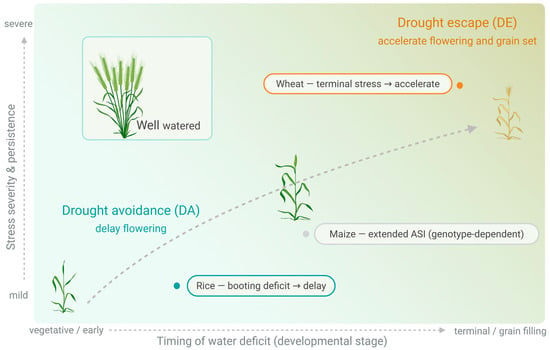
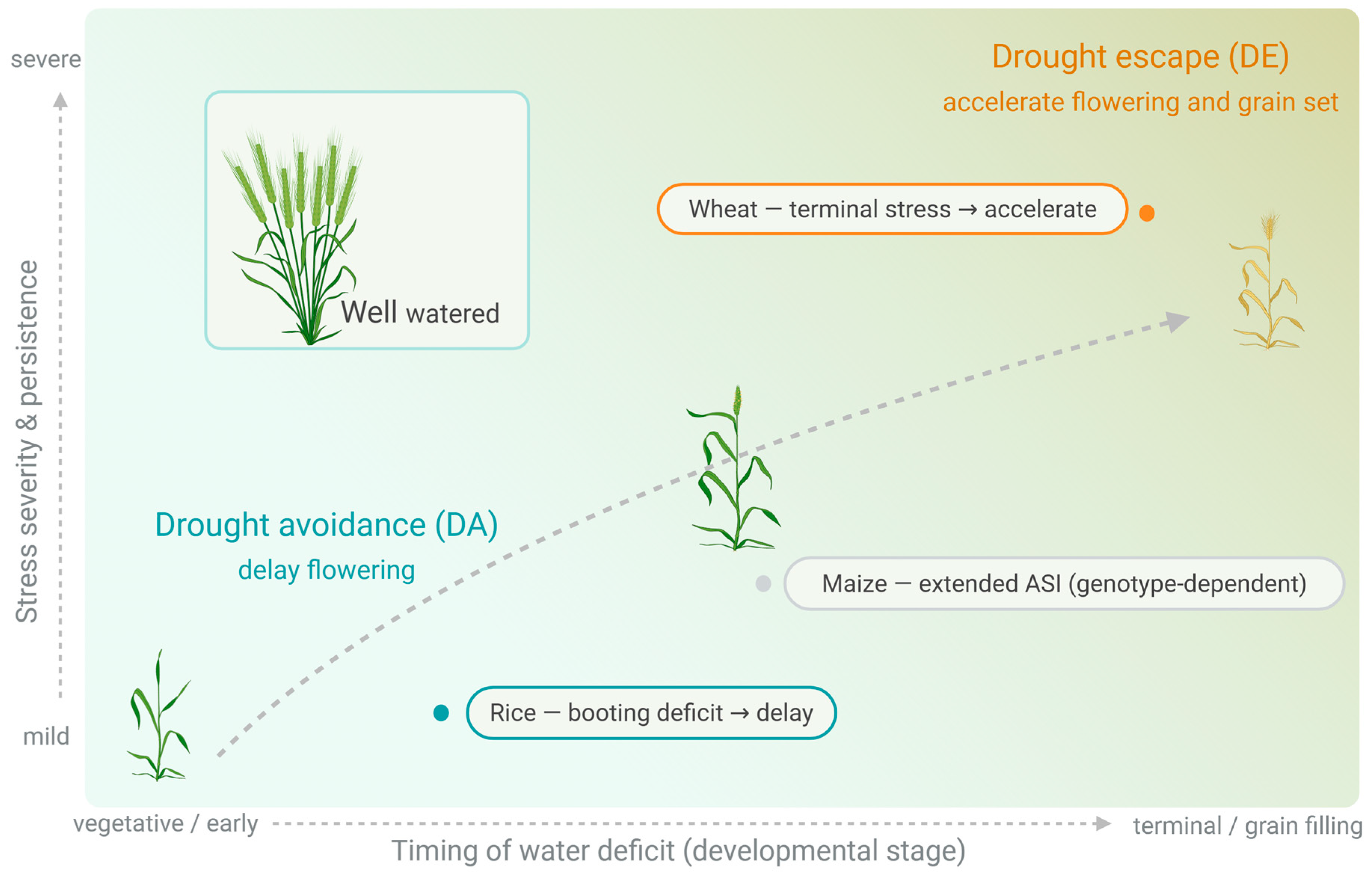
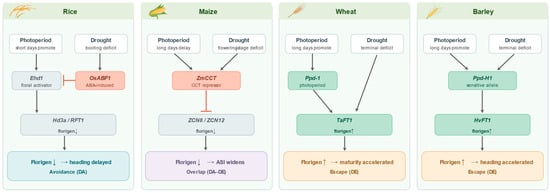
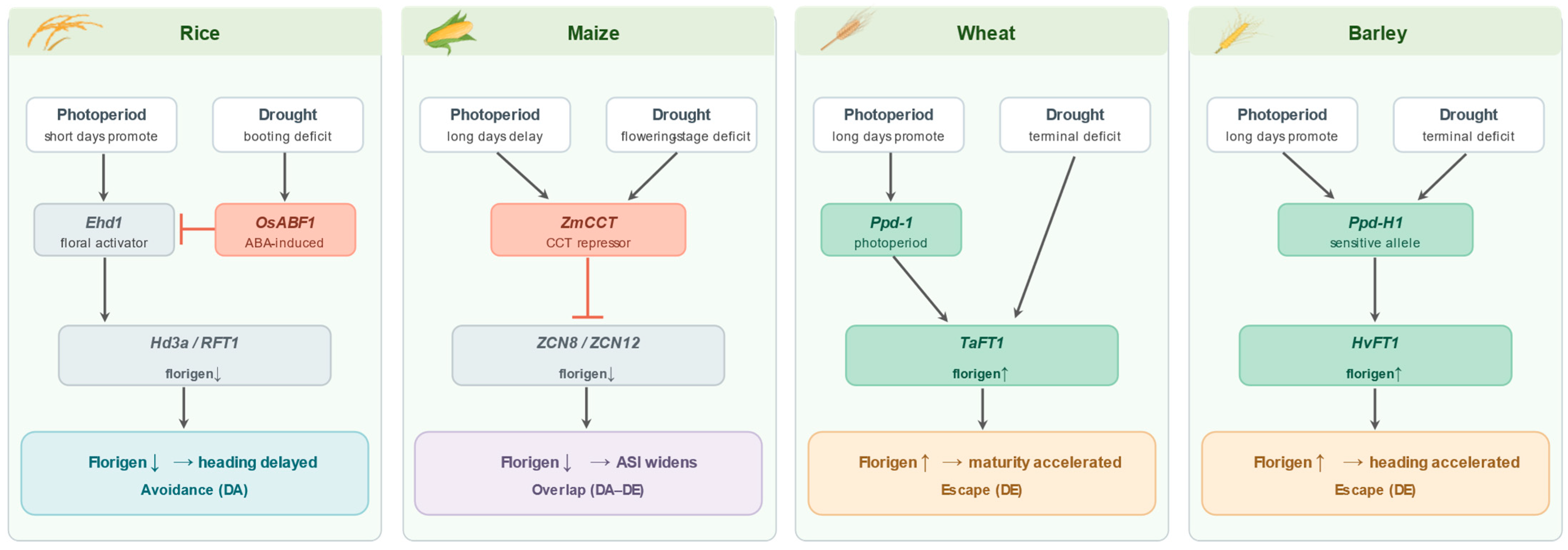
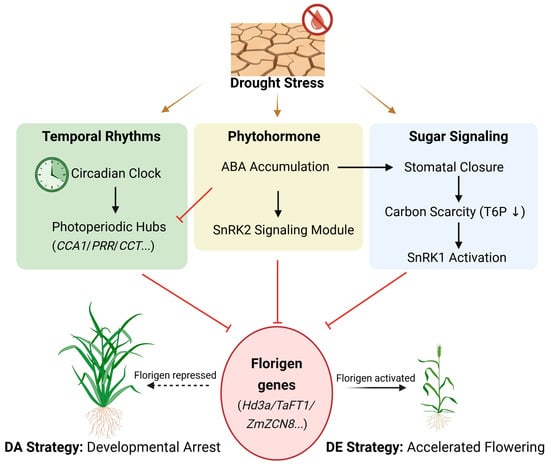
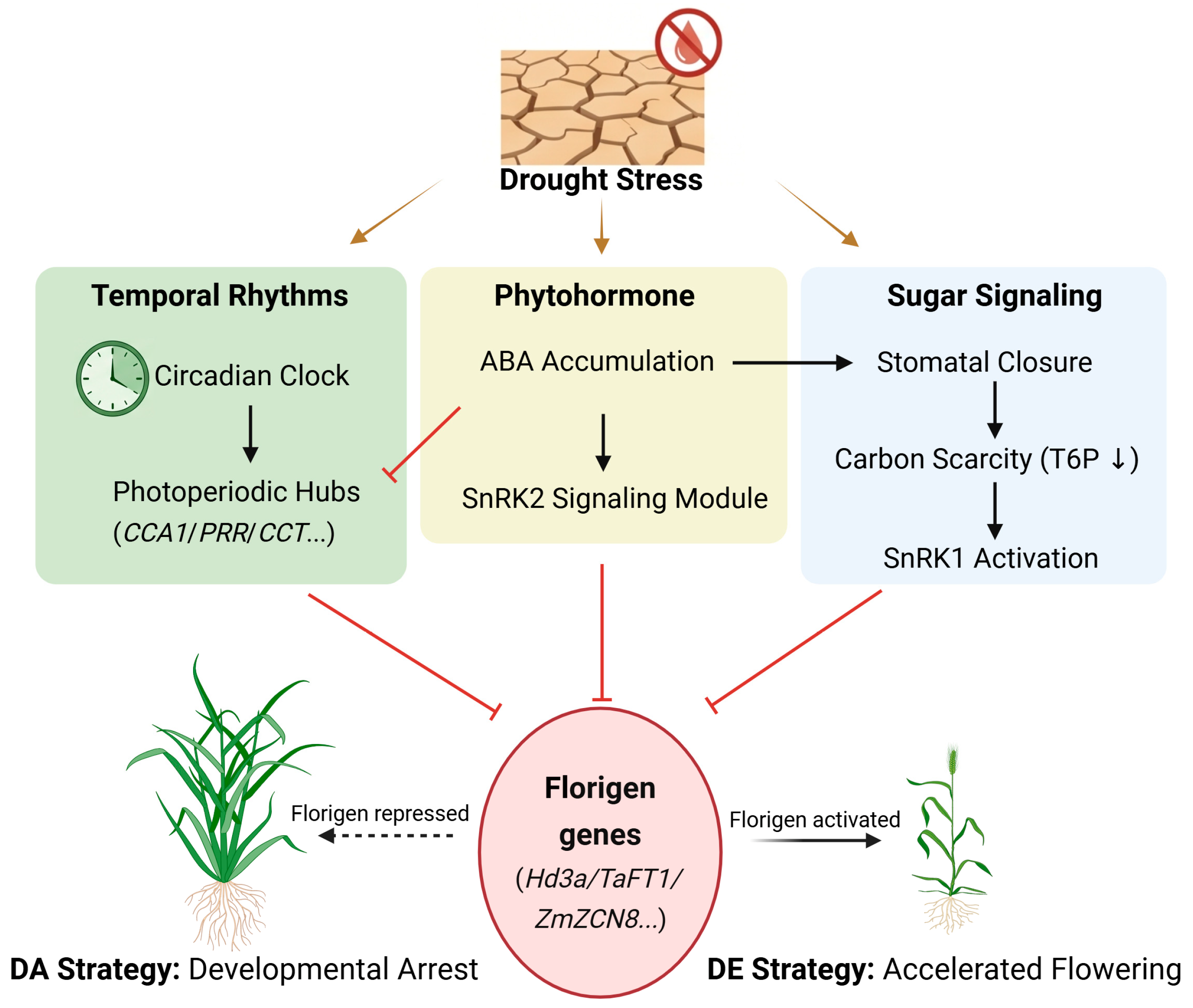
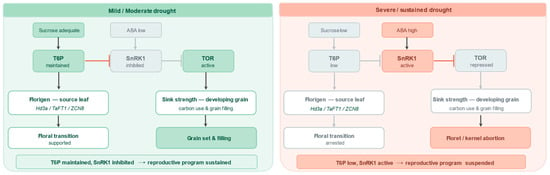
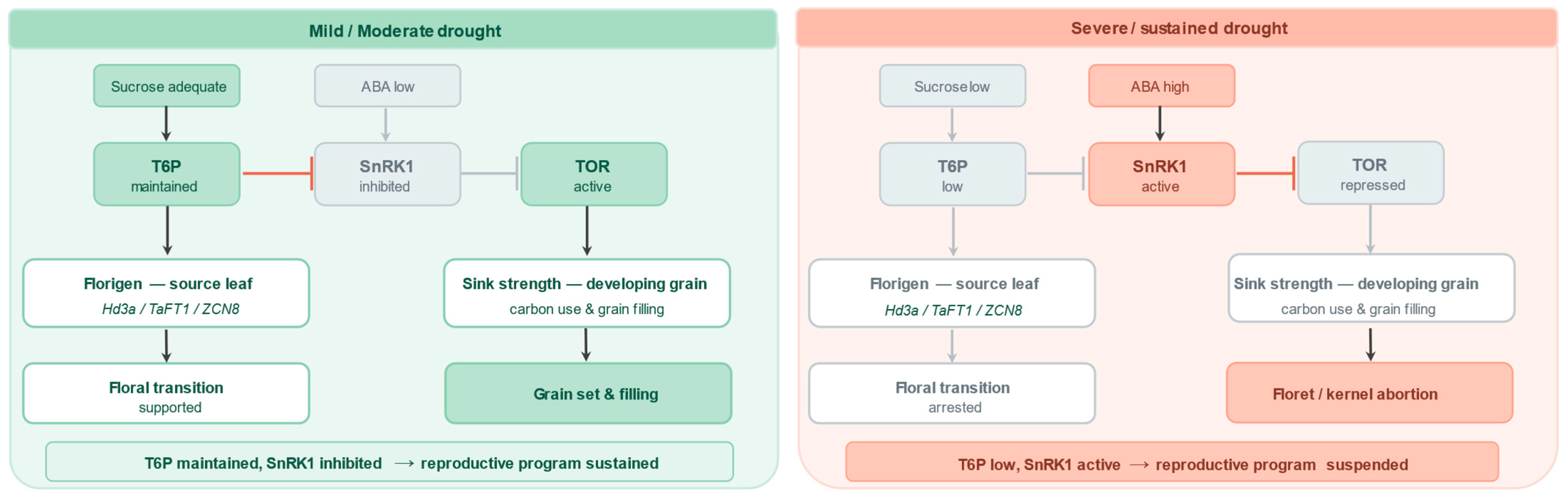
Disclaimer/Publisher’s Note: The statements, opinions and data contained in all publications are solely those of the individual author(s) and contributor(s) and not of MDPI and/or the editor(s). MDPI and/or the editor(s) disclaim responsibility for any injury to people or property resulting from any ideas, methods, instructions or products referred to in the content. |
© 2026 by the authors. Licensee MDPI, Basel, Switzerland. This article is an open access article distributed under the terms and conditions of the Creative Commons Attribution (CC BY) license.