Activation of Multidimensional Defenses in Camptotheca acuminata Seedlings Against Spodoptera frugiperda Larvae
 ,
,
Abstract
1. Introduction
2. Results
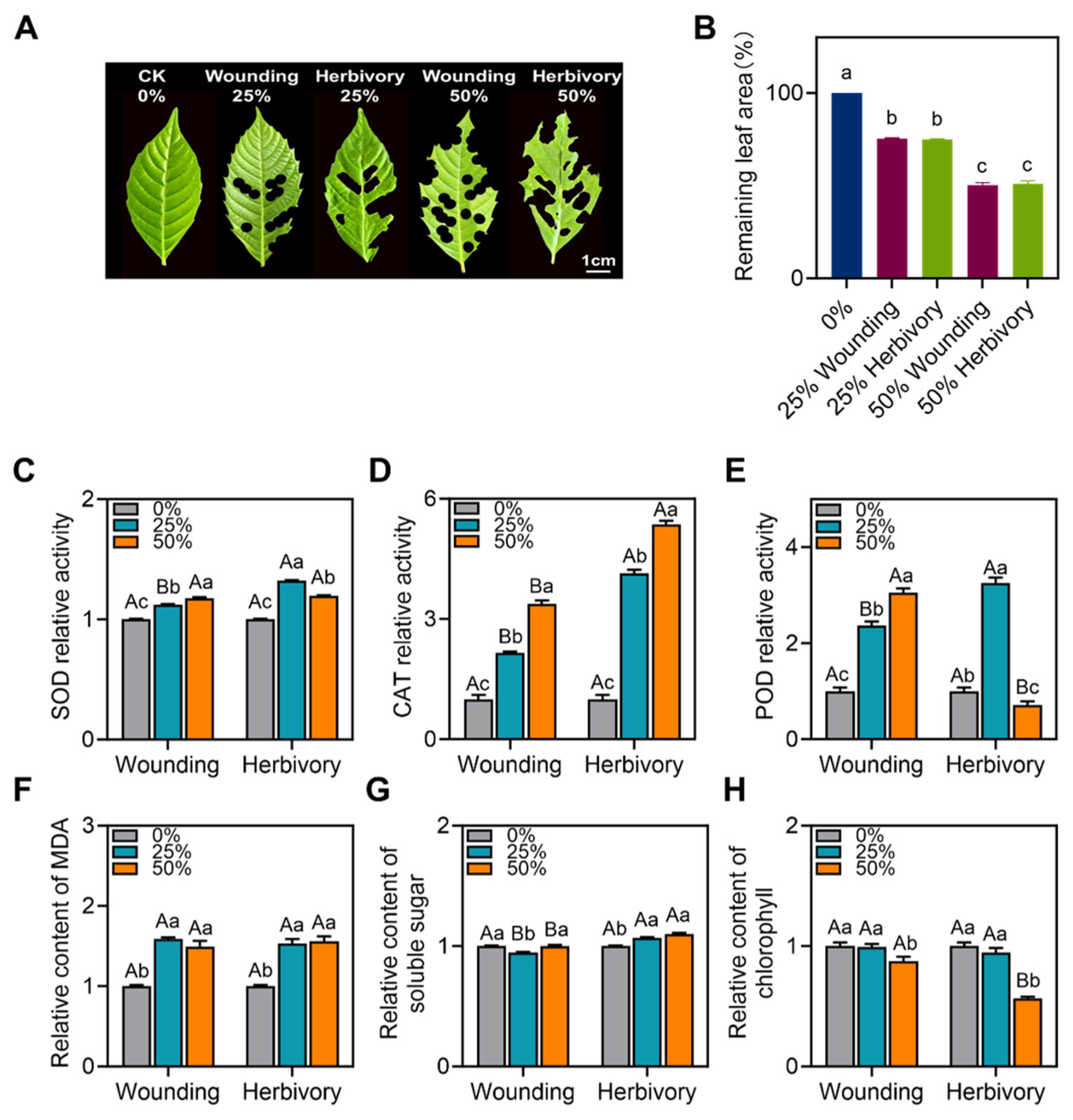
2.1. Physiological and Defensive Responses to S. frugiperda Herbivory
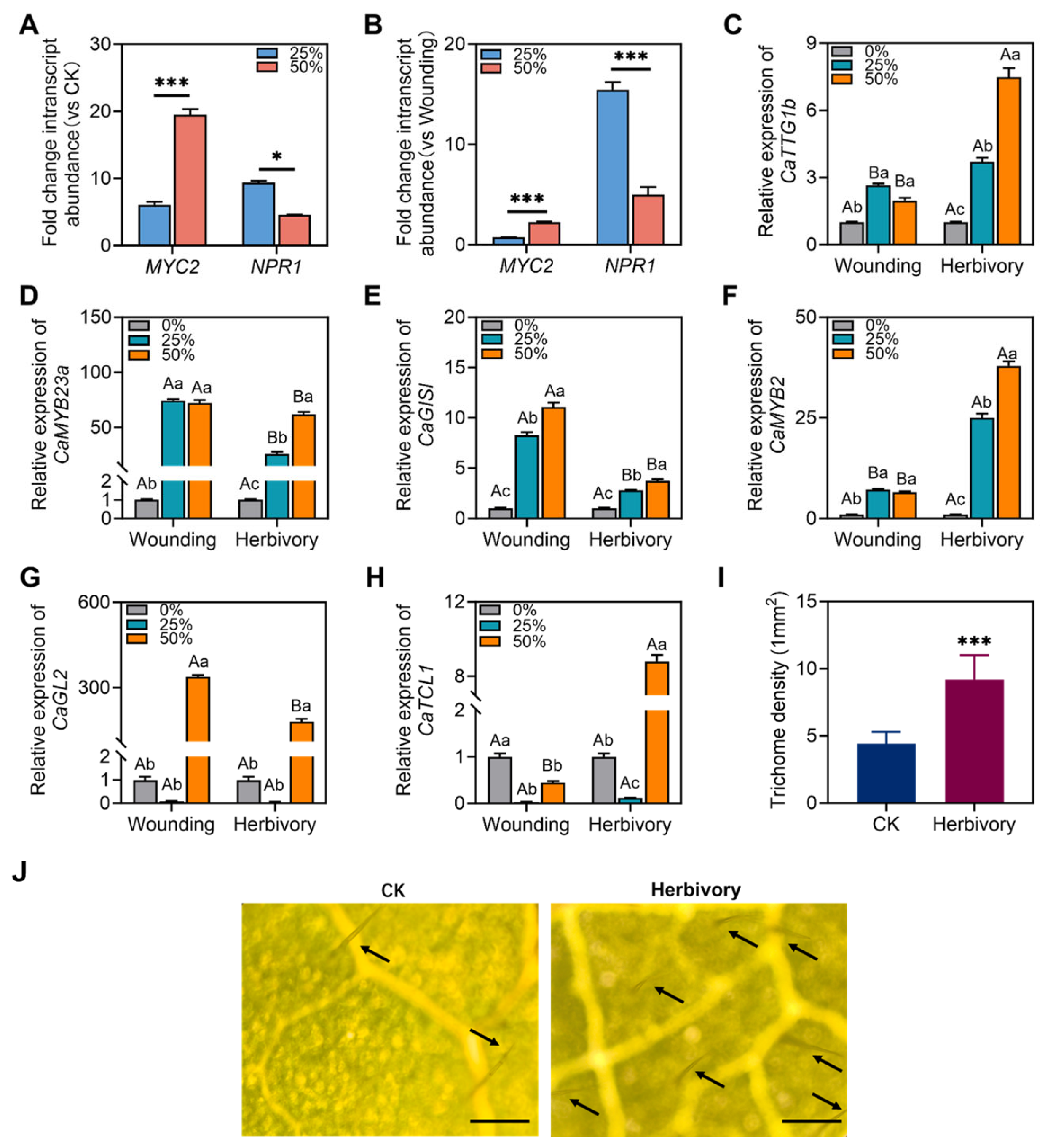
2.2. Activation of Hormonal Signaling and Trichome-Mediated Physical Defense
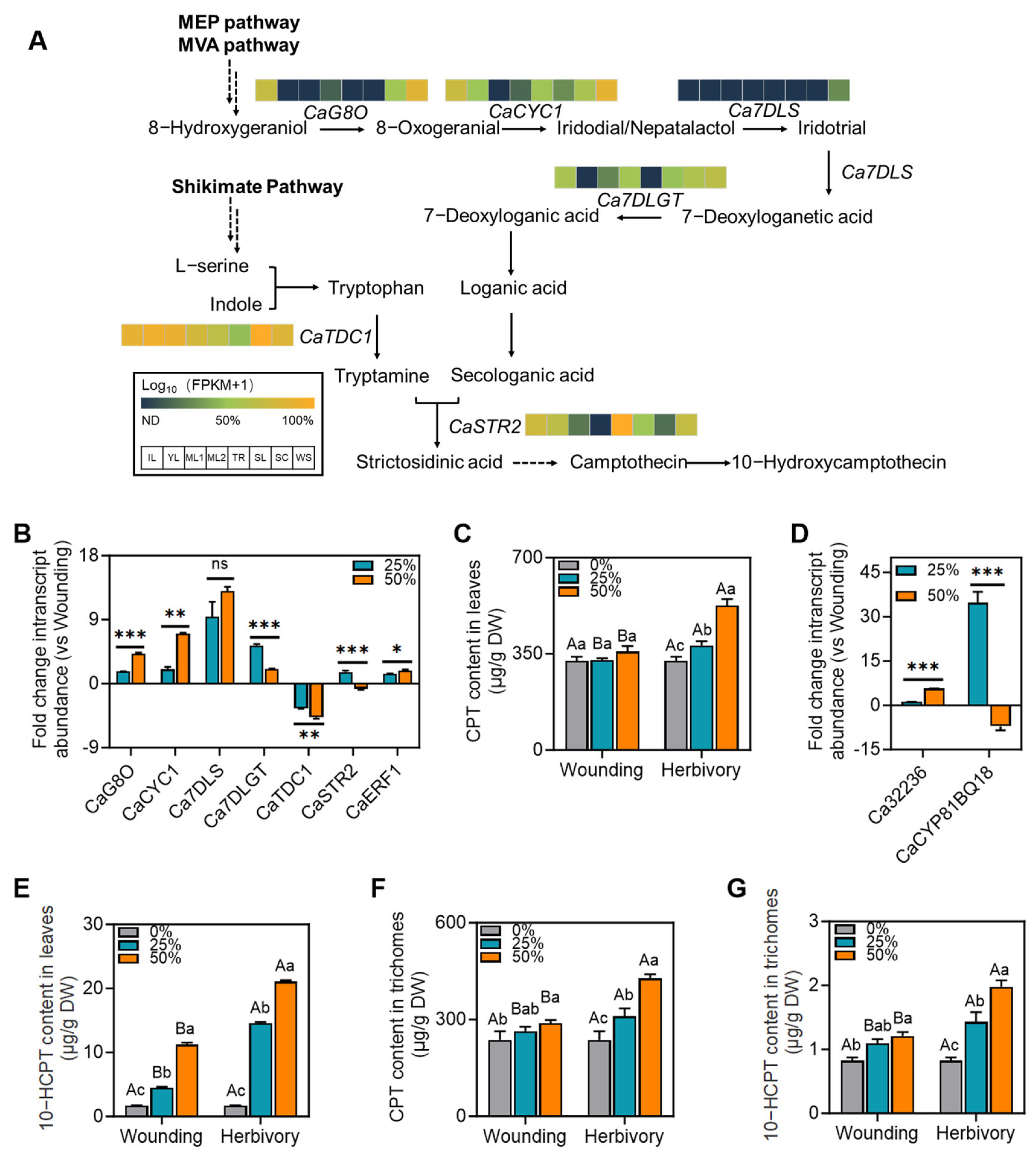
2.3. Induction of CPT and 10 HCPT Biosynthesis and the Synthesis Transport Storage Model
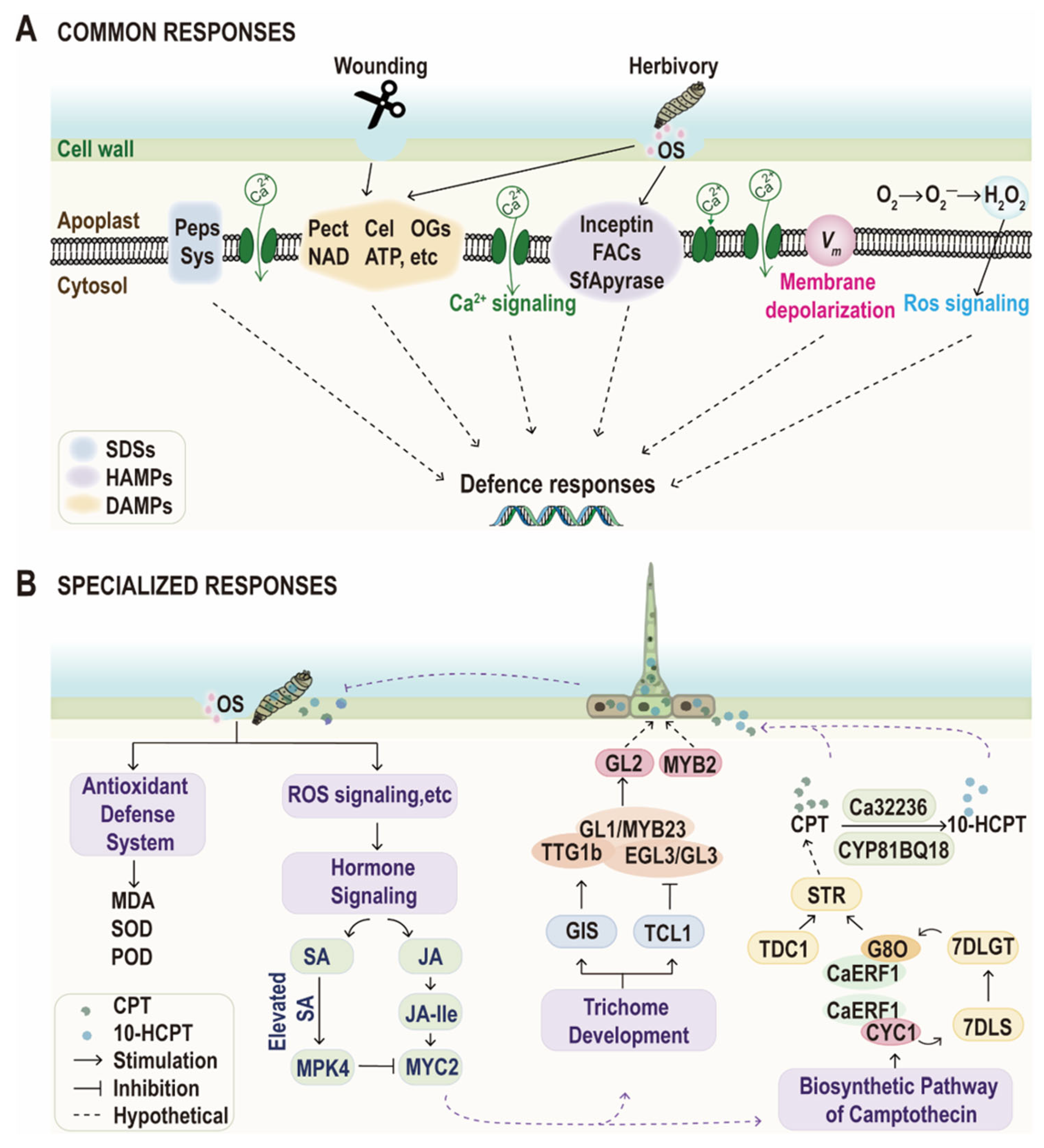
3. Discussion
4. Materials and Methods
4.1. Plant Materials and Growth Conditions
4.2. Insect Rearing, Plant Treatments, and Sample Collection
4.3. RNA Isolation and Real-Time qPCR
4.4. Determination of Chlorophyll Contents, Antioxidant Enzyme Activities, and Malondialdehyde (MDA) Contents
4.5. Sample Preparation and HPLC Quantification of CPT and 10-HCPT in Leaves and Trichomes
4.6. Statistical Analysis
5. Conclusions
Supplementary Materials
Author Contributions
Funding
Data Availability Statement
Acknowledgments
Conflicts of Interest
References
- Zhu, L.; Yang, H.; Li, P.; Dong, L.; Zhao, S.; Lv, H.; Crickmore, N.; Zhou, X.; Zhang, Y.; Guo, Z. Plant strategies against herbivorous insects. J. Integr. Plant Biol. 2026, 1–23. [Google Scholar] [CrossRef]
- Fernandes, L.B.; Ghag, S.B. Molecular insights into the jasmonate signaling and associated defense responses against wilt caused by Fusarium oxysporum. Plant Physiol. Biochem. 2022, 174, 22–34. [Google Scholar] [CrossRef]
- Chen, S.; Jing, S.; Ye, M.; Feng, Y.; Xu, Y.; Lin, N.; Kuai, P.; Turlings, T.C.J.; Lou, Y. A phytocytokine and its derived peptides in the frass of an insect elicit rice defenses. J. Integr. Plant Biol. 2025, 67, 2118–2134. [Google Scholar] [CrossRef]
- Erb, M.; Reymond, P. Molecular interactions between plants and insect herbivores. Annu. Rev. Plant Biol. 2019, 70, 527–557. [Google Scholar] [CrossRef]
- Gandhi, A.; Kariyat, R.; Harikishore, A.; Ayati, M.; Bhunia, A.; Sahoo, N. Deciphering the role of ion channels in early defense signaling against herbivorous insects. Cells 2021, 10, 2219. [Google Scholar] [CrossRef]
- Zhou, H.; Hua, J.; Zhang, J.; Luo, S. Negative interactions balance growth and defense in plants confronted with herbivores or pathogens. J. Agric. Food Chem. 2022, 70, 12723–12732. [Google Scholar] [CrossRef] [PubMed]
- Ali, M.; Kaderbek, T.; Khan, M.A.; Skalicky, M.; Brestic, M.; Elsabagh, M.; El Sabagh, A. Biosynthesis and multifaceted roles of reactive species in plant defense mechanisms during environmental cues. Plant Stress 2025, 18, 101102. [Google Scholar] [CrossRef]
- Garcia, A.; Santamaria, M.E.; Diaz, I.; Martinez, M. Disentangling transcriptional responses in plant defense against arthropod herbivores. Sci. Rep. 2021, 11, 12996. [Google Scholar] [CrossRef] [PubMed]
- Shu, B.; Yang, X.; Dai, J.; Yu, H.; Yu, J.; Li, X.; Zhang, J.; Lin, J. Effects of camptothecin on histological structures and gene expression profiles of fat bodies in Spodoptera frugiperda. Ecotoxicol. Environ. Saf. 2021, 228, 112968. [Google Scholar] [CrossRef]
- Zhang, H.; Xian, X.; Yang, N.; Zhang, Y.; Li, H.; Wan, F.; Liu, W. Insights from the biogeographic approach for biocontrol of invasive alien pests: Estimating the ecological niche overlap of three egg parasitoids against Spodoptera frugiperda in China. Sci. Total Environ. 2023, 862, 160785. [Google Scholar]
- Chu, B.; Ge, S.; He, W.; Sun, X.; Ma, J.; Yang, X.; Lv, C.; Xu, P.; Zhao, X.; Wu, K. Gut symbiotic bacteria enhance reproduction in Spodoptera frugiperda (JE Smith) by regulating juvenile hormone III and 20-hydroxyecdysone pathways. Microbiome 2025, 13, 132. [Google Scholar] [CrossRef] [PubMed]
- Peng, H.; Zhang, Z.; Kang, X.; Zhang, Y.; Zhang, H.; Wang, Y.; Yang, H.; Ju, F. Unveiling gut microbiota and metabolic functions contributed to polyvinyl chloride degradation in Spodoptera frugiperda larvae. J. Hazard. Mater. 2025, 492, 138209. [Google Scholar] [CrossRef]
- Salamat, R.; Saddiq, B.; Afzal, M.B.S.; Banazeer, A.; Serrão, J.E.; Akram, M.I.; Shad, S.A.; Sial, A.A. Resistance of Spodoptera frugiperda (Lepidoptera: Noctuidae) to the diamides chlorantraniliprole and flubendiamide: Resistance development, heritability, inheritance and implications for management. J. Econ. Entomol. 2025, 118, 3157–3172. [Google Scholar] [CrossRef] [PubMed]
- Stirle, J.L.; Matias, J.E.F.; Mendes, G.R.; Moscardini, V.F.; Maia, J.B.; Michaud, J.P.; Gontijo, P.C. Differential susceptibility of Spodoptera frugiperda (Lepidoptera: Noctuidae) to single versus pyramided Bt traits in Brazilian soybean: What doesn’t kill you makes you stronger? Pest Manag. Sci. 2024, 80, 6535–6544. [Google Scholar] [CrossRef]
- Li, B.; Luo, M.; Liu, X.; Shi, W.; Qi, J.; Zhou, S.; Wang, G. The Spodoptera frugiperda L-aminoacylase degrades fatty acid-amino acid conjugates and promotes larvae growth on Zea mays. Commun. Biol. 2025, 8, 641. [Google Scholar] [CrossRef] [PubMed]
- Yao, Y.; Lin, H.T.; Chen, Y.H.; Chen, L.L.; Zhang, H.L.; Fu, H.Y.; Zhan, H.X.; Wang, J.D. Salivary protein Sfapyrase of Spodoptera frugiperda stimulates plant defence response. Plant Cell Environ. 2025, 48, 406–420. [Google Scholar] [CrossRef]
- Cai, X.Y.; Tang, H.T.; Wang, Y.Z.; Haq, I.U.; Wang, J.D.; Hou, Y.M. Salivary effector SfPDI modulates plant defense responses to enhance foraging efficiency of Spodoptera frugiperda. Int. J. Biol. Macromol. 2025, 308, 142548. [Google Scholar] [CrossRef]
- Lorence, A.; Nessler, C.L. Camptothecin, over four decades of surprising findings. Phytochemistry 2004, 65, 2735–2749. [Google Scholar] [CrossRef]
- Kang, M.; Fu, R.; Zhang, P.; Lou, S.; Yang, X.; Chen, Y.; Ma, T.; Liu, J. A chromosome-level Camptotheca acuminata genome assembly provides insights into the evolutionary origin of camptothecin biosynthesis. Nat. Commun. 2021, 12, 3531. [Google Scholar] [CrossRef]
- Pu, X.; Zhang, C.R.; Zhu, L.; Li, Q.L.; Huang, Q.M.; Zhang, L.; Luo, Y.G. Possible clues for camptothecin biosynthesis from the metabolites in camptothecin-producing plants. Fitoterapia 2019, 134, 113–128. [Google Scholar] [CrossRef]
- Nacheva, L.; Dimitrova, N.; Ivanova, V.; Cao, F.; Zhu, Z. Micropropagation of Camptotheca acuminata Decne (Nyssaceae)—Endangered Ornamental and Medicinal Tree. Acta Univ. Agric. Silvic. Mendel. Brun. 2020, 68, 679–686. [Google Scholar] [CrossRef]
- Fan, X.; Lin, X.; Ruan, Q.; Wang, J.; Yang, Y.; Sheng, M.; Zhou, W.; Hao, X. Research progress on the biosynthesis and metabolic engineering of the anti-cancer drug camptothecin in Camptotheca acuminata. Ind. Crops Prod. 2022, 186, 115270. [Google Scholar] [CrossRef]
- Zhou, Y.; Zhang, H.W.; Wu, Q.L.; Wu, K.M. Spread of invasive migratory pest Spodoptera frugiperda and management practices throughout China. J. Integr. Agric. 2021, 20, 637–645. [Google Scholar] [CrossRef]
- Sadre, R.; Magallanes-Lundback, M.; Pradhan, S.; Salim, V.; Mesberg, A.; Jones, A.D.; DellaPenna, D. Metabolite diversity in alkaloid biosynthesis: A multilane (diastereomer) highway for camptothecin synthesis in Camptotheca acuminata. Plant Cell 2016, 28, 1926–1944. [Google Scholar] [CrossRef] [PubMed]
- Pu, X.; Lin, X.Y.; He, J.W.; Ai, Z.H.; He, X.X.; Tong, S.Y.; Liu, L.F.; Huang, Q.M. Multiomics-guided mining and characterization of epoxide hydrolase involved in camptothecin biosynthesis from Camptotheca acuminata. Bioorg. Chem. 2024, 153, 107980. [Google Scholar] [CrossRef] [PubMed]
- Pu, X.; Lei, M.; Zhang, J.H.; He, J.W.; Ai, Z.H.; He, X.X.; Tong, S.Y.; Wu, W. Hydroxylase-oriented mining and functional characterization of camptothecin 10-hydroxylase from Camptotheca acuminata Decne. Ind. Crops Prod. 2024, 222, 119469. [Google Scholar] [CrossRef]
- Vincent, R.M.; Lopez-Meyer, M.; McKnight, T.D.; Nessler, C.L. Sustained harvest of camptothecin from the leaves of Camptotheca acuminata. J. Nat. Prod. 1997, 60, 618–619. [Google Scholar] [CrossRef]
- Tripathi, D.; Zhang, T.; Koo, A.J.; Stacey, G.; Tanaka, K. Extracellular ATP acts on jasmonate signaling to reinforce plant defense. Plant Physiol. 2018, 176, 511–523. [Google Scholar] [CrossRef]
- Liu, W.Z. Secretory structures and their relationship to accumulation of camptothecin in Camptotheca acuminata (Nyssaceae). Acta Bot. Sin. 2004, 46, 1242–1248. [Google Scholar]
- Pasqua, G.; Monacelli, B.; Valletta, A. Cellular localisation of the anti-cancer drug camptothecin in Camptotheca acuminata Decne (Nyssaceae). Eur. J. Histochem. 2004, 48, 321–328. [Google Scholar]
- Qi, T.; Huang, H.; Wu, D.; Yan, J.; Qi, Y.; Song, S.; Xie, D. Arabidopsis DELLA and JAZ proteins bind the WD-repeat/bHLH/MYB complex to modulate gibberellin and jasmonate signaling synergy. Plant Cell 2014, 26, 1118–1133. [Google Scholar] [PubMed]
- Yoshida, Y.; Sano, R.; Wada, T.; Takabayashi, J.; Okada, K. Jasmonic acid control of GLABRA3 links inducible defense and trichome patterning in Arabidopsis. Development 2009, 136, 1039–1048. [Google Scholar] [CrossRef]
- Wang, Y.; Wang, Y.; Pan, A.; Miao, Q.; Han, Y.; Liu, Z.; Yu, F. CaERF1-mediated ABA signal positively regulates camptothecin biosynthesis by activating the iridoid pathway in Camptotheca acuminata. Int. J. Biol. Macromol. 2024, 261, 129560. [Google Scholar] [CrossRef]
- Sun, Y.; Luo, H.; Li, Y.; Sun, C.; Song, J.; Niu, Y.; Zhu, Y.; Dong, L.; Lv, A.; Tramontano, E.; et al. Pyrosequencing of the Camptotheca acuminata transcriptome reveals putative genes involved in camptothecin biosynthesis and transport. BMC Genom. 2011, 12, 533. [Google Scholar] [CrossRef] [PubMed]
- Li, S.; Yi, Y.; Wang, Y.; Zhang, Z.; Beasley, R.S. Camptothecin accumulation and variations in Camptotheca. Planta Med. 2002, 68, 1010–1016. [Google Scholar] [PubMed]
- Acevedo, F.E.; Peiffer, M.; Tan, C.W.; Stanley, B.A.; Stanley, A.; Wang, J.; Luthe, D.S.; Felton, G.W. Fall armyworm-associated gut bacteria modulate plant defense responses. Mol. Plant-Microbe Interact. 2017, 30, 127–137. [Google Scholar]
- Stahl, E.; Hilfiker, O.; Reymond, P. Plant–arthropod interactions: Who is the winner? Plant J. 2018, 93, 703–728. [Google Scholar]
- Acevedo, F.E.; Rivera-Vega, L.J.; Chung, S.H.; Ray, S.; Felton, G.W. Cues from chewing insects—The intersection of DAMPs, HAMPs, MAMPs and effectors. Curr. Opin. Plant Biol. 2015, 26, 80–86. [Google Scholar] [CrossRef]
- Gramegna, G.; Modesti, V.; Savatin, D.V.; Sicilia, F.; Cervone, F.; De Lorenzo, G. GRP-3 and KAPP, encoding interactors of WAK1, negatively affect defense responses induced by oligogalacturonides and local response to wounding. J. Exp. Bot. 2016, 67, 1715–1729. [Google Scholar]
- Ferrari, S.; Savatin, D.V.; Sicilia, F.; Gramegna, G.; Cervone, F.; De Lorenzo, G. Oligogalacturonides: Plant damage-associated molecular patterns and regulators of growth and development. Front. Plant Sci. 2013, 4, 49. [Google Scholar] [CrossRef]
- Choi, J.; Tanaka, K.; Cao, Y.; Qi, Y.; Qiu, J.; Liang, Y.; Lee, S.Y.; Stacey, G. Identification of a plant receptor for extracellular ATP. Science 2014, 343, 290–294. [Google Scholar] [CrossRef]
- Tsuda, K.; Sato, M.; Stoddard, T.; Glazebrook, J.; Katagiri, F. Network properties of robust immunity in plants. PLoS Genet. 2009, 5, e1000772. [Google Scholar]
- Pieterse, C.M.J.; Van der Does, D.; Zamioudis, C.; Leon-Reyes, A.; Van Wees, S.C.M. Hormonal modulation of plant immunity. Annu. Rev. Cell Dev. Biol. 2012, 28, 489–521. [Google Scholar] [CrossRef]
- Popowski, J.; Warma, L.; Abarca Cifuentes, A.; Bleeker, P.; Jalaal, M. Glandular trichome rupture in tomato plants is an ultra-fast and sensitive defense mechanism against insects. J. Exp. Bot. 2025, 76, 6508–6519. [Google Scholar] [CrossRef] [PubMed]
- Sun, C.; Wei, J.; Gu, X.; Wu, M.; Li, M.; Liu, Y.; Yang, Y.; Wu, S. Different multicellular trichome types coordinate herbivore mechanosensing and defense in tomato. Plant Cell 2024, 36, 4952–4969. [Google Scholar] [CrossRef]
- Ramsay, N.A.; Glover, B.J. MYB–bHLH–WD40 protein complex and the evolution of cellular diversity. Trends Plant Sci. 2005, 10, 63–70. [Google Scholar] [PubMed]
- Chen, S.; Wang, S. GLABRA2, a common regulator for epidermal cell fate determination and anthocyanin biosynthesis in Arabidopsis. Int. J. Mol. Sci. 2019, 20, 4997. [Google Scholar] [CrossRef] [PubMed]
- Schellmann, S.; Schnittger, A.; Kirik, V.; Wada, T.; Okada, K.; Beermann, A.; Thumfahrt, J.; Hülskamp, M. TRIPTYCHON and CAPRICE mediate lateral inhibition during trichome and root hair patterning in Arabidopsis. EMBO J. 2002, 21, 5036–5046. [Google Scholar] [CrossRef]
- Wasternack, C.; Strnad, M. Jasmonates are signals in the biosynthesis of secondary metabolites—Pathways, transcription factors and applied aspects—A brief review. New Biotechnol. 2019, 48, 1–11. [Google Scholar] [CrossRef]
- Zhou, M.; Memelink, J. Jasmonate-responsive transcription factors regulating plant secondary metabolism. Biotechnol. Adv. 2016, 34, 441–449. [Google Scholar] [CrossRef]
- Zador, E.; Jones, D. The biosynthesis of a novel nicotine alkaloid in the trichomes of Nicotiana stocktonii. Plant Physiol. 1986, 82, 479–484. [Google Scholar] [CrossRef]
- St-Pierre, B.; Vazquez-Flota, F.A.; De Luca, V. Multicellular compartmentation of Catharanthus roseus alkaloid biosynthesis predicts intercellular translocation of a pathway intermediate. Plant Cell 1999, 11, 887–900. [Google Scholar] [CrossRef]
- Beauchamp, C.; Fridovich, I. Superoxide dismutase: Improved assays and an assay applicable to acrylamide gels. Anal. Biochem. 1971, 44, 276–287. [Google Scholar] [CrossRef]
- Kar, M.; Mishra, D. Catalase, peroxidase, and polyphenoloxidase activities during rice leaf senescence. Plant Physiol. 1976, 57, 315–319. [Google Scholar] [CrossRef]
- Suda, I.; Furuta, S.; Nishiba, Y. Fluorometric determination of a 1,3-diethyl-2-thiobarbituric acid–malondialdehyde adduct as an index of lipid peroxidation in plant materials. Biosci. Biotechnol. Biochem. 1994, 58, 14–17. [Google Scholar] [CrossRef]
- Hong, Y.; Yuan, S.; Sun, L.; Wang, X.; Hong, Y. Cytidinediphosphate-diacylglycerol synthase 5 is required for phospholipid homeostasis and is negatively involved in hyperosmotic stress tolerance. Plant J. 2018, 94, 1038–1050. [Google Scholar] [CrossRef]
- Arnon, D.I. Copper enzymes in isolated chloroplasts: Polyphenoloxidase in Beta vulgaris. Plant Physiol. 1949, 24, 1–15. [Google Scholar] [CrossRef]


Disclaimer/Publisher’s Note: The statements, opinions and data contained in all publications are solely those of the individual author(s) and contributor(s) and not of MDPI and/or the editor(s). MDPI and/or the editor(s) disclaim responsibility for any injury to people or property resulting from any ideas, methods, instructions or products referred to in the content. |
© 2026 by the authors. Licensee MDPI, Basel, Switzerland. This article is an open access article distributed under the terms and conditions of the Creative Commons Attribution (CC BY) license.
Share and Cite
Ma, W.; Chang, C.; Cheng, J.; Wang, Y.; Gao, X.; Yu, F. Activation of Multidimensional Defenses in Camptotheca acuminata Seedlings Against Spodoptera frugiperda Larvae. Plants 2026, 15, 1796. https://doi.org/10.3390/plants15121796
Ma W, Chang C, Cheng J, Wang Y, Gao X, Yu F. Activation of Multidimensional Defenses in Camptotheca acuminata Seedlings Against Spodoptera frugiperda Larvae. Plants. 2026; 15(12):1796. https://doi.org/10.3390/plants15121796
Chicago/Turabian StyleMa, Wenhui, Chunhao Chang, Jianing Cheng, Yanyan Wang, Xiaoxiao Gao, and Fang Yu. 2026. "Activation of Multidimensional Defenses in Camptotheca acuminata Seedlings Against Spodoptera frugiperda Larvae" Plants 15, no. 12: 1796. https://doi.org/10.3390/plants15121796
APA StyleMa, W., Chang, C., Cheng, J., Wang, Y., Gao, X., & Yu, F. (2026). Activation of Multidimensional Defenses in Camptotheca acuminata Seedlings Against Spodoptera frugiperda Larvae. Plants, 15(12), 1796. https://doi.org/10.3390/plants15121796