Botrytis elliptica Infection Induces LhSorPALs Expression in Lilium: Overexpression of LhSorPAL1 and LhSorPAL2 Enhances Disease Resistance via Phenylpropane Metabolite Accumulation


Abstract
1. Introduction
2. Results
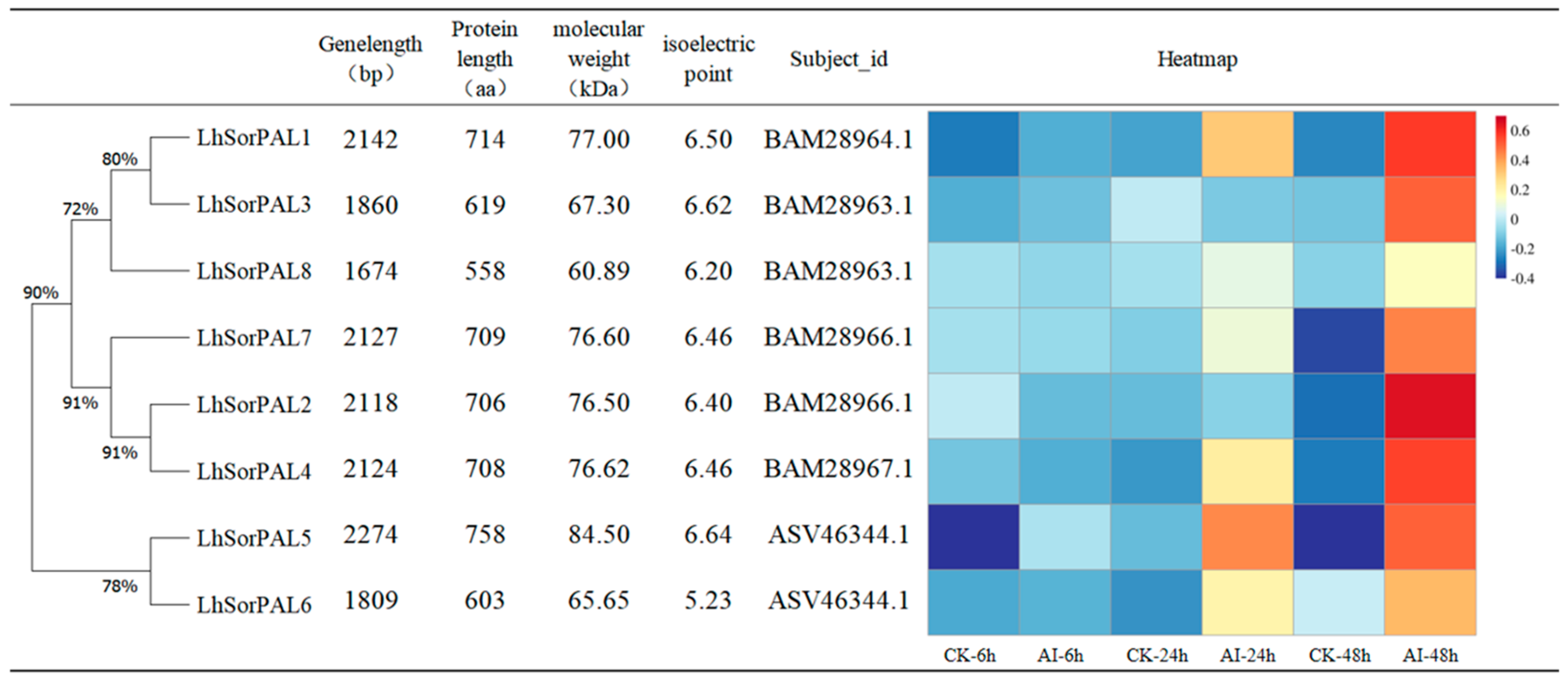
2.1. Identification and Phylogenetic Analysis of the PAL Gene Family in Lily
2.2. Expression Profiles of LhSorPAL Genes in Different Tissues and in Response to B. elliptica Infection
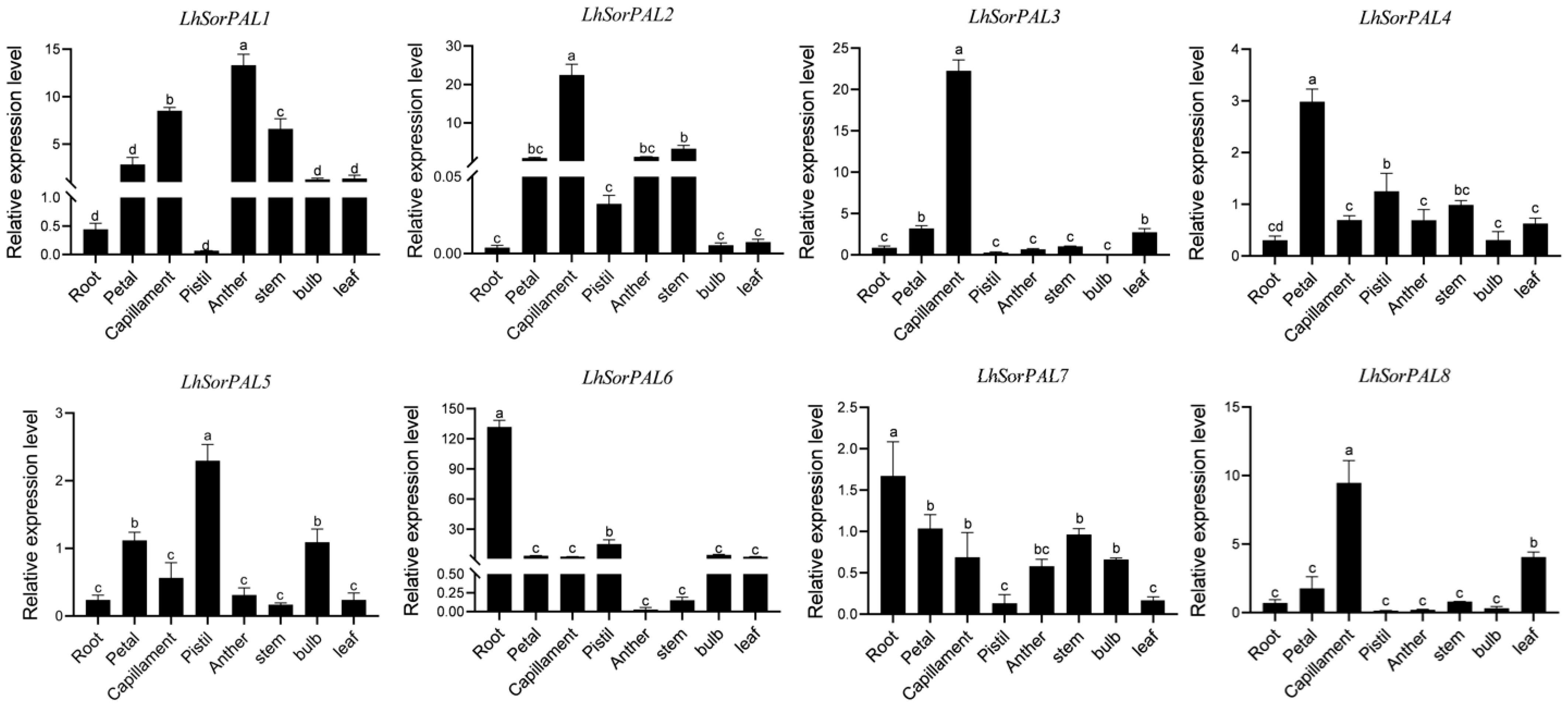
2.2.1. Tissue-Specific Expression of LhSorPAL Genes
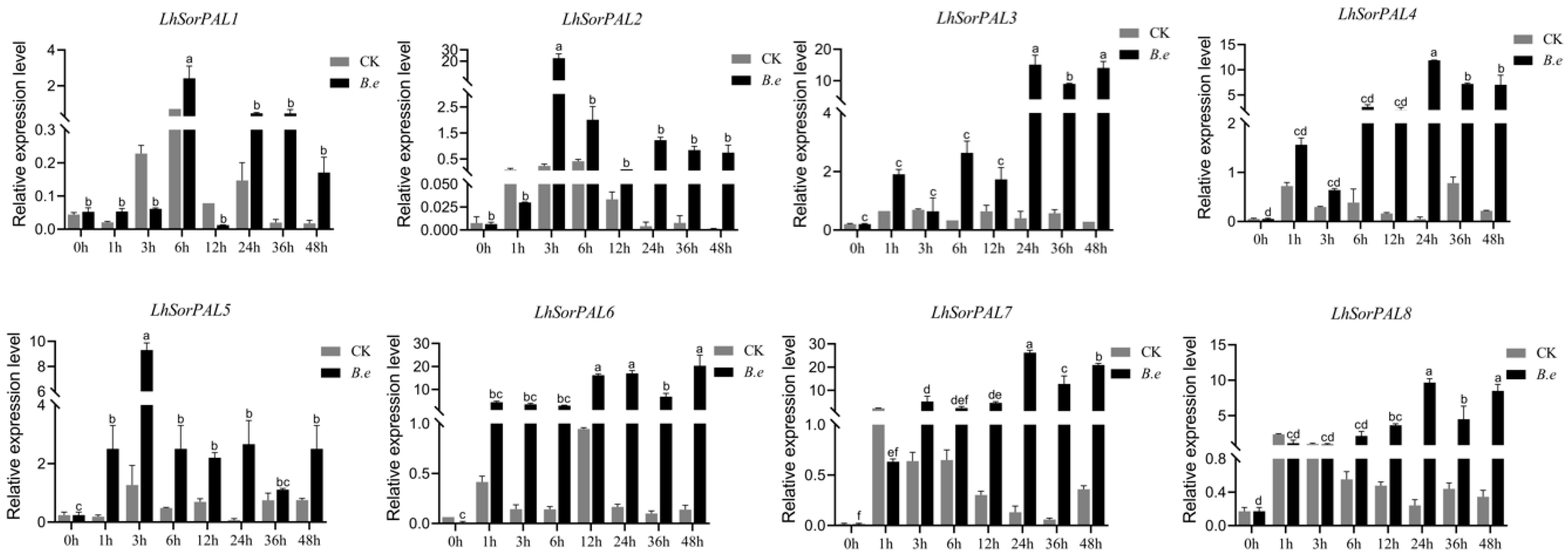
2.2.2. Expression of LhSorPAL Genes in Response to B. elliptica Infection
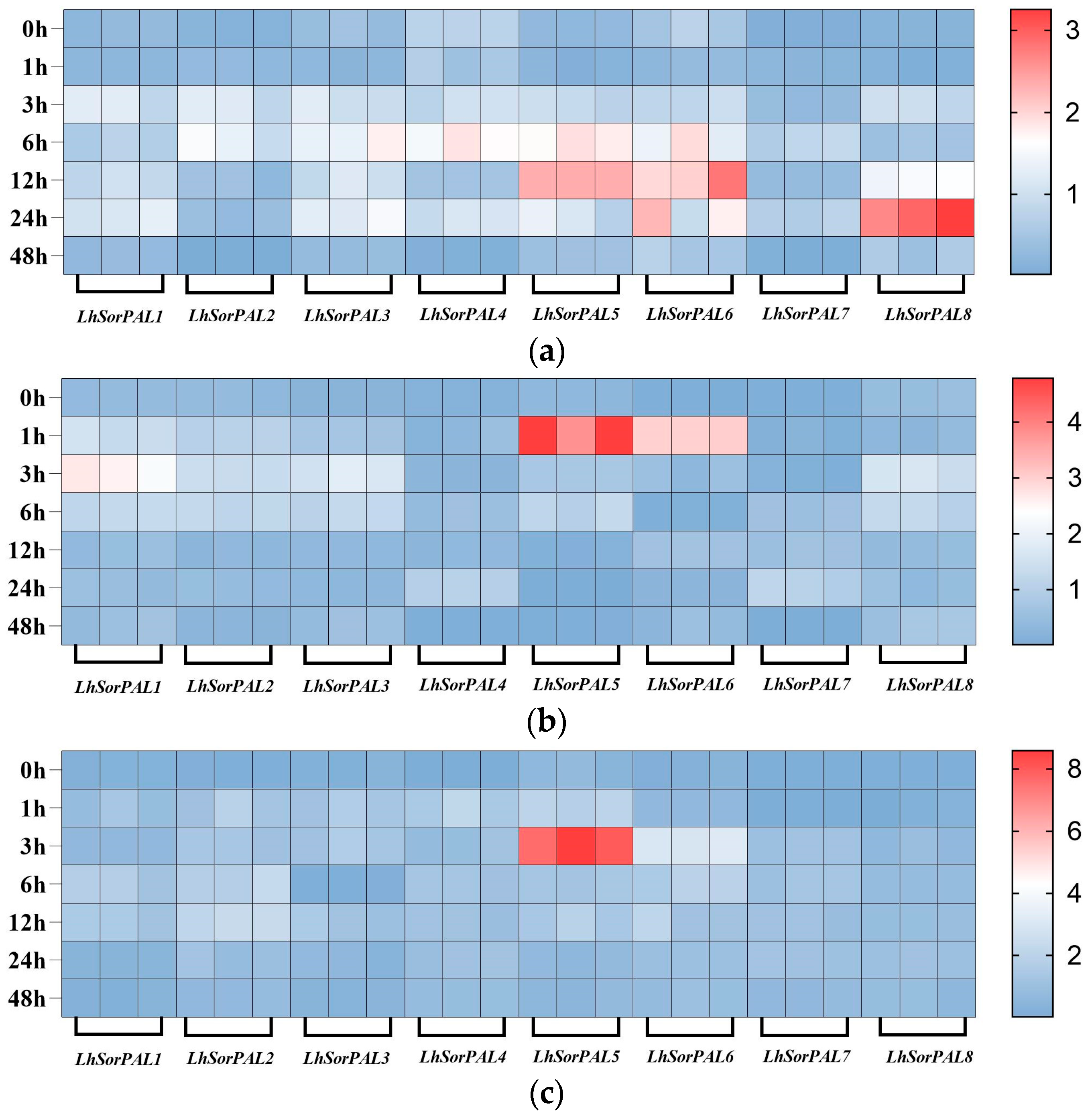
2.3. Hormone Response Patterns of LhSorPAL Genes
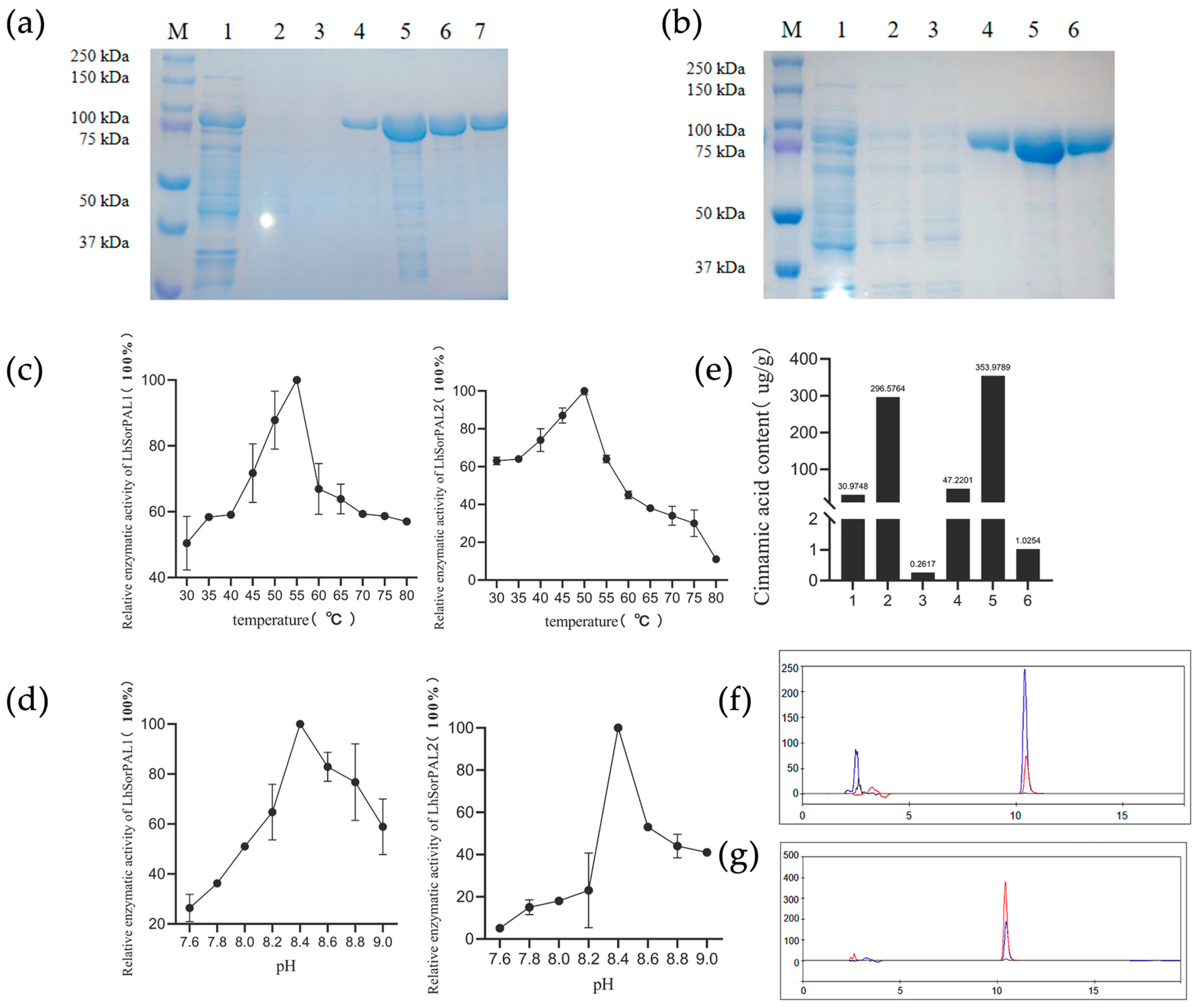
2.4. Recombinant Expression and Enzymatic Characterization of LhSorPAL1 and LhSorPAL2
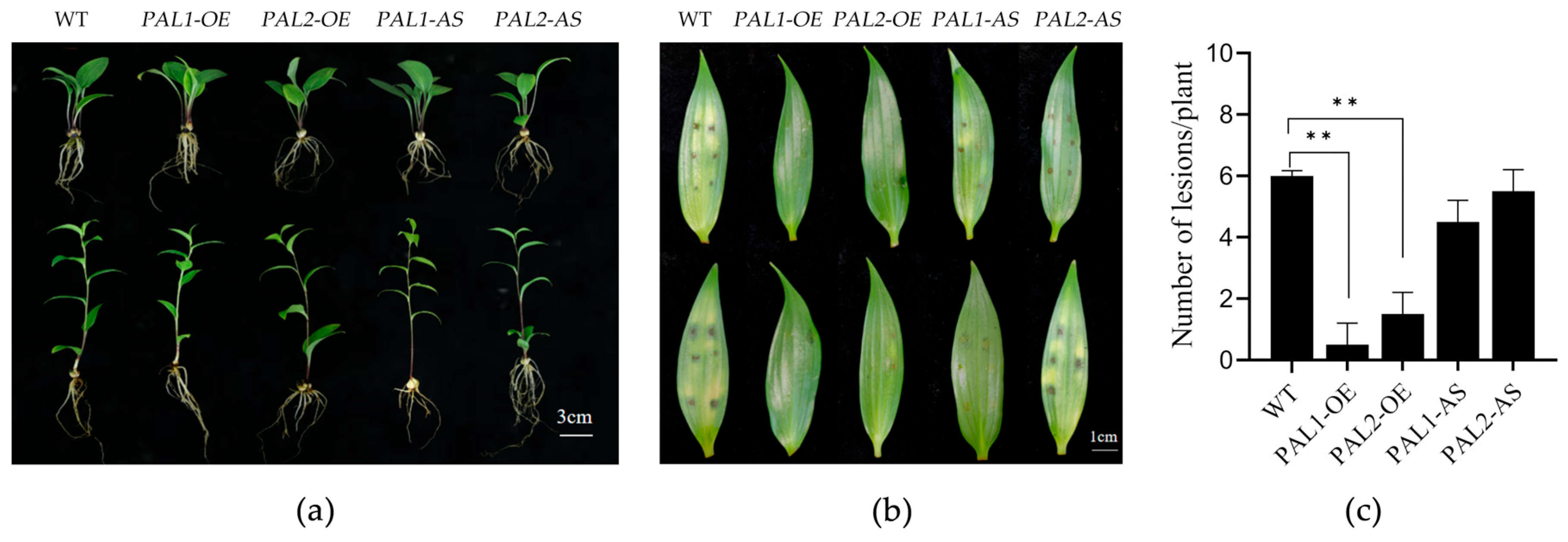
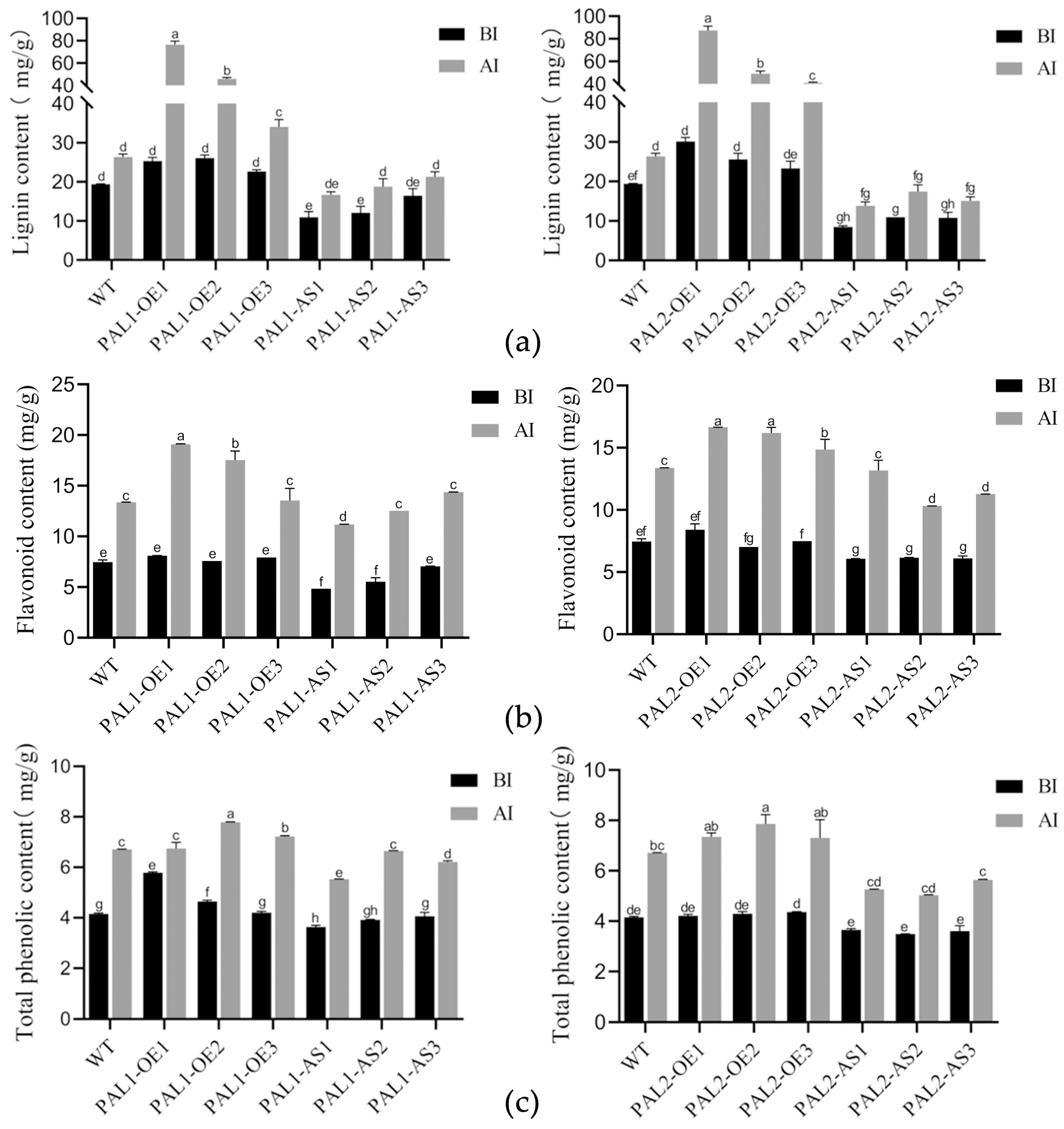
2.5. Overexpression of LhSorPAL1 and LhSorPAL2 in Lily Enhances Resistance to B. elliptica
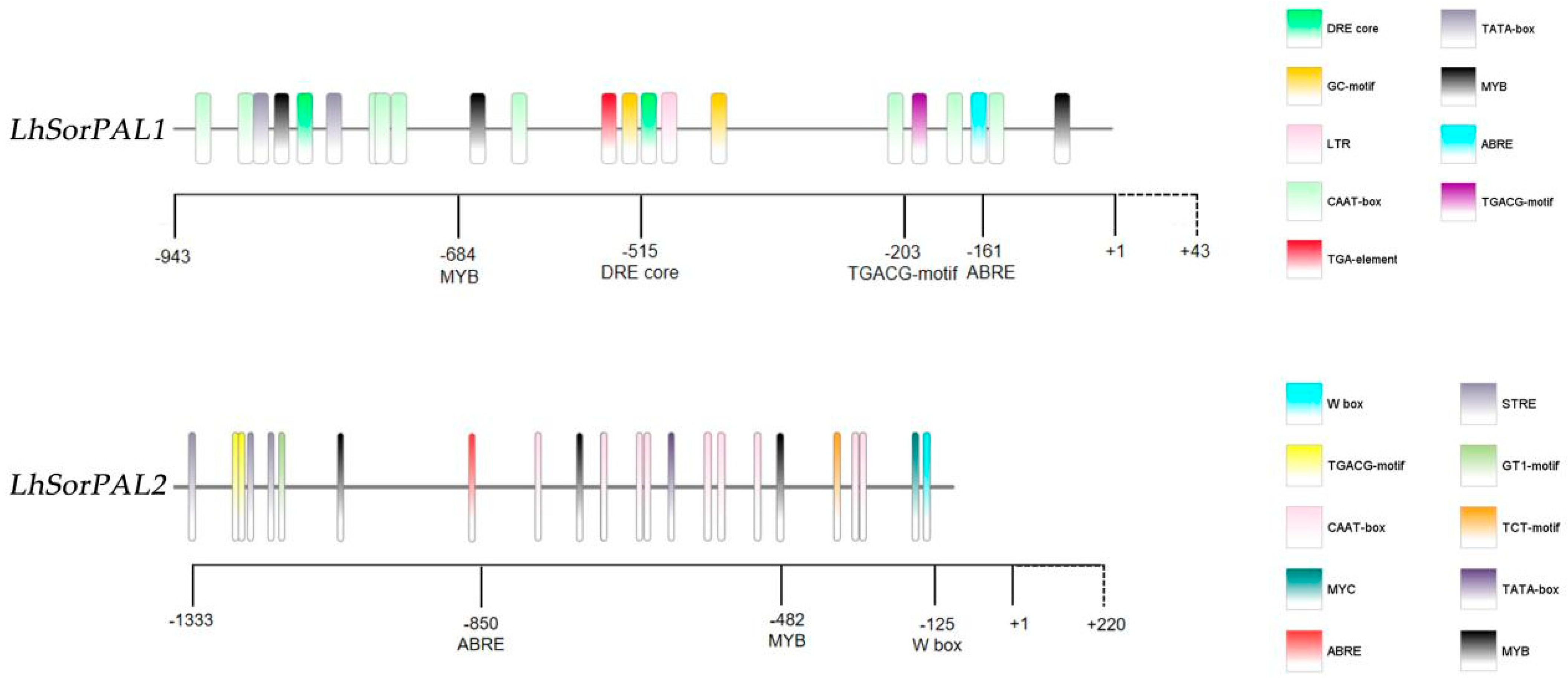
2.6. Promoter Analysis of LhSorPAL1 and LhSorPAL2
3. Discussion
4. Materials and Methods
4.1. Plant Materials
4.2. Strains and Vectors
4.3. Identification and Bioinformatics Analysis of the LhSorPAL Gene Family
4.4. Characterisation of Induced Expression and Analysis of Tissue Expressivity of LhSorPALs Gene in Lily
4.5. Cloning of LhSorPAL1 and LhSorPAL2 Genes
4.6. Prokaryotic Expression and Recombinant Protein Analysis of LhSorPAL1 and LhSorPAL2
4.7. Determination of Recombinant PAL Enzyme Activity
4.8. Construction of Plant Overexpression and Antisense Expression Vectors for LhSorPAL1 and LhSorPAL2
4.9. Genetic Transformation and Identification of Transgenic Lily Lines
4.10. Disease Resistance Assay of Transgenic Lily Lines Against B. elliptica
4.11. Promoter Element Analysis of the LhSorPAL1 and LhSorPAL2 Genes
4.12. Statistical Analysis
5. Conclusions
Supplementary Materials
Author Contributions
Funding
Data Availability Statement
Conflicts of Interest
Abbreviations
| Agrobacterium | Agrobacterium tumefaciens |
| ABA | Abscisic acid |
| AI | After B. elliptica inoculation treatment |
| AS | Antisense expression strain |
| B. cinerea | Botrytis cinerea |
| B. elliptica | Botrytis elliptica |
| Basta | Glufosinate-ammonium |
| BI | Before B. elliptica inoculation treatment |
| Cb | Carbenicillin |
| Cef | Cefotaxime |
| CK | Mock-treated control |
| E.coli | Escherichia coli |
| FPKM | Fragments per kilobase of transcript per million mapped reads |
| HPLC | High-performance liquid chromatography |
| hpi | Hours post-inoculation |
| IPTG | Isopropyl-β-D-thiogalactopyranoside |
| MeJA | Methyl jasmonate |
| MES | 2-(N-morpholino)ethanesulfonic acid |
| MS | Murashige and Skoog basal medium |
| MW | molecular weight |
| NAA | 1-Naphthaleneacetic acid |
| OE | Overexpression strain |
| ORF | Open reading frame |
| PAL | Phenylalanine ammonia-lyase |
| PDA | Potato dextrose agar |
| PI | Isoelectric point |
| PIC | Picloram |
| SA | Salicylic acid |
| TDZ | Thidiazuron |
| WT | Wild type |
| 6-BA | 6-Benzylaminopurine |
References
- Chen, Y.; Lu, X.; Gao, T.; Zhou, Y. The Scent of Lily Flowers: Advances in the Identification, Biosynthesis, and Regulation of Fragrance Components. Int. J. Mol. Sci. 2025, 26, 468. [Google Scholar] [CrossRef] [PubMed]
- Xue, L.; Dai, J.; Fu, R.; Wu, N.; Yu, J.; Dong, J.; Yang, T.; Fan, J. Functional Studies on the LiAG1 Gene of Lilium ‘Ice Pink Queen’ in Flower Development. Plants 2025, 14, 323. [Google Scholar] [CrossRef]
- Li, B.; Wan, J.; Sha, J.; Tian, M.; Wang, M.; Zhang, X.; Sun, W.; Mao, Y.; Min, J.; Qin, Y.; et al. Genomics assisted functional characterization of Bacillus velezensis E as a biocontrol and growth promoting bacterium for lily. Front. Microbiol. 2022, 13, 976918. [Google Scholar] [CrossRef]
- Kumar, P.; Kumar, D.; Pal, S.; Singh, S. Plant secondary metabolites in defense against phytopathogens: Mechanisms, biosynthesis, and applications. Physiol. Mol. Plant Pathol. 2025, 138, 102639. [Google Scholar] [CrossRef]
- Tenenboim, H.; Brotman, Y. Omic Relief for the Biotically Stressed: Metabolomics of Plant Biotic Interactions. Trends Plant Sci. 2016, 21, 781–791. [Google Scholar] [CrossRef]
- Jamwal, K.; Bhattacharya, S.; Puri, S. Plant growth regulator mediated consequences of secondary metabolites in medicinal plants. J. Appl. Res. Med. Aroma 2018, 9, 26–38. [Google Scholar] [CrossRef]
- Dong, N.; Lin, H. Contribution of phenylpropanoid metabolism to plant development and plant—Environment interactions. J. Integr. Plant Biol. 2021, 63, 180–209. [Google Scholar] [CrossRef]
- Yang, J.; Zhang, Y.; Jia, J.; Wang, C.; Fu, Y. Flavonoid-Lignin Crosstalk: Engineering Metabolic Flux for Optimised Plant Growth and Stress Resilience. Plant Cell Environ. 2025, 48, 8141–8160. [Google Scholar] [CrossRef]
- Hyun, M.W.; Yun, Y.H.; Kim, J.Y.; Kim, S.H. Fungal and Plant Phenylalanine Ammonia-lyase. Mycobiology 2011, 39, 257–265. [Google Scholar] [CrossRef] [PubMed]
- Barros, J.; Dixon, R.A. Plant Phenylalanine/Tyrosine Ammonia-lyases. Trends Plant Sci. 2020, 25, 66–79. [Google Scholar] [CrossRef] [PubMed]
- Zhang, X.; Liu, C. Multifaceted Regulations of Gateway Enzyme Phenylalanine Ammonia-Lyase in the Biosynthesis of Phenylpropanoids. Mol. Plant 2015, 8, 17–27. [Google Scholar] [CrossRef]
- Huang, J.; Gu, M.; Lai, Z.; Fan, B.; Shi, K.; Zhou, Y.-H.; Yu, J.-Q.; Chen, Z. Functional Analysis of the Arabidopsis PAL Gene Family in Plant Growth, Development, and Response to Environmental Stress. Plant Physiol. 2010, 153, 1526–1538. [Google Scholar] [CrossRef]
- Jin, S.; Ye, N.; Chen, X.; Wang, P.; Gu, M.; Hou, B.; Zhang, C.; Zheng, Y.; Sun, Y. Identification of PAL genes related to anthocyanin synthesis in tea plants and its correlation with anthocyanin content. Hortic. Plant J. 2022, 8, 381–394. [Google Scholar] [CrossRef]
- Gu, J.; Sohail, H.; Qiu, L.; Chen, C.; Yue, H.; Li, Z.; Yang, X.; Zhang, L. Genome-Wide Characterization and Expression Analysis of CsPALs in Cucumber (Cucumis sativus L.) Reveal Their Potential Roles in Abiotic Stress and Aphid Stress Tolerance. Plants 2024, 13, 2537. [Google Scholar] [CrossRef] [PubMed]
- Olsen, K.M.; Lea, U.S.; Slimestad, R.; Verheul, M.; Lillo, C. Differential expression of four Arabidopsis PAL genes; PAL1 and PAL2 have functional specialization in abiotic environmental-triggered flavonoid synthesis. J. Plant Physiol. 2008, 165, 1491–1499. [Google Scholar] [CrossRef]
- Fan, L.; Shi, G.; Yang, J.; Liu, G.; Niu, Z.; Ye, W.; Wu, S.; Wang, L.; Guan, Q. A Protective Role of Phenylalanine Ammonia-Lyase from Astragalus membranaceus against Saline-Alkali Stress. Int. J. Mol. Sci. 2022, 23, 15686. [Google Scholar] [CrossRef]
- Mo, F.; Li, L.; Zhang, C.; Yang, C.; Chen, G.; Niu, Y.; Si, J.; Liu, T.; Sun, X.; Wang, S.; et al. Genome-Wide Analysis and Expression Profiling of the Phenylalanine Ammonia-Lyase Gene Family in Solanum tuberosum. Int. J. Mol. Sci. 2022, 23, 6833. [Google Scholar] [CrossRef]
- Zhang, F.; Wang, J.; Li, X.; Zhang, J.; Liu, Y.; Chen, Y.; Yu, Q.; Li, N. Genome-wide identification and expression analyses of phenylalanine ammonia-lyase gene family members from tomato (Solanum lycopersicum) reveal their role in root-knot nematode infection. Front. Plant Sci. 2023, 14, 1204990. [Google Scholar] [CrossRef] [PubMed]
- He, J.; Liu, Y.; Yuan, D.; Duan, M.; Liu, Y.; Shen, Z.; Yang, C.; Qiu, Z.; Liu, D.; Wen, P.; et al. An R2R3 MYB transcription factor confers brown planthopper resistance by regulating the phenylalanine ammonia-lyase pathway in rice. Proc. Natl. Acad. Sci. USA 2020, 117, 271–277. [Google Scholar] [CrossRef]
- Rivera-Toro, D.M.; de Folter, S.; Alvarez-Venegas, R. CRISPR/dCas12a-mediated activation of SlPAL2 enhances tomato resistance against bacterial canker disease. PLoS ONE 2025, 20, e0320436. [Google Scholar] [CrossRef] [PubMed]
- Silva, B.N.; Picanco, B.M.; Hawerroth, C.; Silva, L.C.; Rodrigues, F.Á. Physiological and biochemical insights into induced resistance on tomato against septoria leaf spot by a phosphite combined with free amino acids. Physiol. Mol. Plant Pathol. 2022, 120, 101854. [Google Scholar] [CrossRef]
- Zhang, H.; Huang, Q.; Yi, L.; Song, X.; Li, L.; Deng, G.; Liang, J.; Chen, F.; Yu, M.; Long, H. PAL—Mediated SA biosynthesis pathway contributes to nematode resistance in wheat. Plant J. 2021, 107, 698–712. [Google Scholar] [CrossRef] [PubMed]
- Way, H.M.; Kazan, K.; Mitter, N.; Goulter, K.C.; Birch, R.G.; Manners, J.M. Constitutive expression of a phenylalanine ammonia-lyase gene from Stylosanthes humilis in transgenic tobacco leads to enhanced disease resistance but impaired plant growth. Physiol. Mol. Plant Pathol. 2002, 60, 275–282. [Google Scholar] [CrossRef]
- Liu, G.; Su, X.; Guan, L.; Hu, F. Comparison of Defensive Enzyme Activities in the Leaves of Seven Oriental Lily Hybrids after Inoculation with Botrytis elliptica. J. Am. Soc. Hortic. Sci. 2019, 144, 55–62. [Google Scholar] [CrossRef]
- Zhang, Y.; Xie, Z.; Kutcher, H.R.; Wang, Y.; Wang, R.; Guo, Z. Photosynthetic Pigment Content, Phenol and Flavonoid Concentration, and Defense Enzyme Activity of Oriental Lily (Lilium auratum L. cv. Sorbonne) Infected with Lily Mottle Virus. Philipp. Agric. Sci. 2014, 97, 60–66. [Google Scholar]
- Zhou, L.; Wang, E.; Yang, Y.; Yang, P.; Xu, L.; Ming, J. Antioxidant Enzyme, Transcriptomic, and Metabolomic Changes in Lily (Lilium spp.) Leaves Induced by Aphis gossypii Glover. Genes 2024, 15, 1124. [Google Scholar] [CrossRef]
- Chai, N.; Xu, J.; Zuo, R.; Sun, Z.; Cheng, Y.; Sui, S.; Li, M.; Liu, D. Metabolic and Transcriptomic Profiling of Lilium Leaves Infected With Botrytis elliptica Reveals Different Stages of Plant Defense Mechanisms. Front. Plant Sci. 2021, 12, 730620. [Google Scholar] [CrossRef]
- Du, W.; Chai, N.; Sun, Z.; Wang, H.; Liu, S.; Sui, S.; Luo, L.; Liu, D. Full-Length Transcriptome Characterization and Functional Analysis of Pathogenesis-Related Proteins in Lilium Oriental Hybrid ‘Sorbonne’ Infected with Botrytis elliptica. Int. J. Mol. Sci. 2023, 24, 425. [Google Scholar] [CrossRef]
- Mao, Y.; Meng, X.; Zhang, Z.; Zhang, L.; Feng, Y.; Wang, T.; Zhang, J.; Cai, Y.; Wang, J.; Sheng, G.; et al. Genetic variation of drug target CYP51 conferring resistance to ergosterol biosynthesis inhibitors in Botrytis cinerea, causing lily gray mould. Ind. Crop Prod. 2024, 208, 117797. [Google Scholar] [CrossRef]
- Gao, X.; Hu, Y.; Xu, Z.; Peng, D.; Guo, Q. Expression profiling of the phenylalanine ammonia-lyase (PAL) gene family in ginkgo biloba L. Plant Signal Behav. 2023, 18, 2271807. [Google Scholar] [CrossRef]
- Feng, Y.; Huang, Q.; Zhang, R.; Li, J.; Luo, K.; Chen, Y. Molecular characterisation of PAL gene family reveals their role in abiotic stress response in lucerne (Medicago sativa). Crop Pasture Sci. 2022, 73, 300–311. [Google Scholar] [CrossRef]
- Gao, H.; Zhang, R.; Xu, X.; Qi, X.; Xu, Q.; Chen, X. Cloning and expression analysis of cucumber phenylalanine ammonia-lyase gene CsPAL in response to powdery mildew infection. Mol. Plant Breed. 2019, 17, 1757–1762. [Google Scholar] [CrossRef]
- Li, G.; Wang, H.; Cheng, X.; Su, X.; Zhao, Y.; Jiang, T.; Jin, Q.; Lin, Y.; Cai, Y. Comparative genomic analysis of the PAL genes in five Rosaceae species and functional identification of Chinese white pear. PeerJ 2019, 7, e8064. [Google Scholar] [CrossRef]
- Jin, Q.; Yao, Y.; Cai, Y.; Lin, Y. Molecular Cloning and Sequence Analysis of a Phenylalanine Ammonia-Lyase Gene from Dendrobium. PLoS ONE 2013, 8, e62352. [Google Scholar] [CrossRef]
- Xu, F.; Deng, G.; Cheng, S.; Zhang, W.; Huang, X.; Li, L.; Cheng, H.; Rong, X.; Li, J. Molecular Cloning, Characterization and Expression of the Phenylalanine Ammonia-Lyase Gene from Juglans regia. Molecules 2012, 17, 7810–7823. [Google Scholar] [CrossRef] [PubMed]
- Hamidi, S.M.; Gogoi, R.; Kumar, A.; Singh, A.; Yadav, R.; Dorjee, L. Tackling banded leaf and sheath blight disease of maize through activation of host defense. Front. Agron. 2023, 5, 1229717. [Google Scholar] [CrossRef]
- Yuan, M.; Huang, Y.; Ge, W.; Jia, Z.; Song, S.; Zhang, L.; Huang, Y. Involvement of jasmonic acid, ethylene and salicylic acid signaling pathways behind the systemic resistance induced by Trichoderma longibrachiatum H9 in cucumber. BMC Genom. 2019, 20, 144. [Google Scholar] [CrossRef]
- Jogaiah, S.; Abdelrahman, M.; Tran, L.P.; Ito, S. Different mechanisms of Trichoderma virens-mediated resistance in tomato against Fusarium wilt involve the jasmonic and salicylic acid pathways. Mol. Plant Pathol. 2018, 19, 870–882. [Google Scholar] [CrossRef]
- Zou, Z.; Liu, F.; Huang, S.; Fernando, W.G.D. BnTX1—BnNCED3 interaction contributes to the ABA biosynthesis response in the Brassica napus—Leptosphaeria maculans pathosystem. Plant Pathol. 2024, 73, 1859–1873. [Google Scholar] [CrossRef]
- Wei, L.; Wang, W.; Li, T.; Chen, O.; Yao, S.; Deng, L.; Zeng, K. Genome-wide identification of the CsPAL gene family and functional analysis for strengthening green mold resistance in citrus fruit. Postharvest Biol. Technol. 2023, 196, 112178. [Google Scholar] [CrossRef]
- Kim, D.S.; Hwang, B.K. An important role of the pepper phenylalanine ammonia-lyase gene (PAL1) in salicylic acid-dependent signalling of the defence response to microbial pathogens. J. Exp. Bot. 2014, 65, 2295–2306. [Google Scholar] [CrossRef] [PubMed]
- Xiang, F.; Li, W.; Liu, H.Y.; Shang, R.; Wang, Y.; Jing, P. Comparative Study on Determination Methods of Chlorophyll Content in Tea Leaves. Tea Commun. 2016, 43, 37–40. [Google Scholar]
- Wang, J.Q.; Cao, D.Y.; Zhang, Y. Acetyl Bromide Test Method for Determining Amount of Lignin in Cottonseed Coat. Text. Res. 2013, 34, 12–16. [Google Scholar] [CrossRef]
- Chang, C.C.; Yang, M.H.; Wen, H.M.; Chern, J.-C. Estimation of total flavonoid content in propolis by two complementary colorimetric methods. J. Food Drug Anal. 2002, 10, 178–182. [Google Scholar]
- Singleton, V.L.; Orthofer, R.; Lamuela-Raventós, R.M. Analysis of total phenols and other oxidation substrates and antioxidants by means of Folin-Ciocalteu reagent. In Methods in Enzymology; Academic Press: Cambridge, MA, USA, 1999; Volume 299, pp. 152–178. [Google Scholar]





| Gene | Sequence of Forward Primer 5′-3′ | The Sequence of Reverse Primer 5′-3′ |
|---|---|---|
| qLhSorPAL1 | GCCACTGAAGCATTCCGTCTAGC | GCAAGGACAGCGAGGATGTTAGC |
| qLhSorPAL2 | CCTGTCACCAACCACGTTCAGAG | CACTGCCTCCGCTGTCTTCCTA |
| qLhSorPAL3 | TCGGGAAGCTCATGTTTGCT | CTGCCCCCTTGAAGCCATAA |
| qLhSorPAL4 | CAAGGGAGCTGAGATTGCCA | CTCGACGAGATCAACCCGAG |
| qLhSorPAL5 | TGACTCAAACATCCTCGCCC | TGGCCAGGGTGATGCTTAAG |
| qLhSorPAL6 | GTGTATGAGGAGGCGATGGG | ACCCCCTACCACTAGTCGAC |
| qLhSorPAL7 | CAAGGGAGCTGAGATTGCCA | GGTTTGAACTTGGACTCGGTT |
| qLhSorPAL8 | CTCGCCGGAAGCTCATACAT | CGACGAGATCAACCCGAGAG |
| qLhSorEF (reference gene) | GTTGTGGCTGTGGAGGAAGAAGAG | GACGCAGAACCAAAGAGAGTATCCC |
| Name | Sequence (5′-3′) |
|---|---|
| LhSorPAL1-F | ATGGCATCAAAGGACAGCTCC |
| LhSorRAL1-R | GTCTCTGGATTCTTGTATGCTG |
| LhSorPAL2-F | CCTCCTACTCCTCTCCTTCAAC |
| LhSorRAL2-R | CAGCTTAATATAATCACGGTGGG |
| LhSorPAL1-BamHI-F | aaggccatggctgatatcGGATCCatggcacacattgtctgc |
| LhSorPAL1-HindIII-R | gtgctcgagtgcggccgcAAGCTTtcaacaaatcgggagcggc |
| LhSorPAL2-BamHI-F | aaggccatggctgatatcGGATCCatgggacatgtcaacggt |
| LhSorPAL2-HindIII-R | gtgctcgagtgcggccgcAAGCTTttagctgatgggaagggga |
| Name | Sequence (5′-3′) |
|---|---|
| OE-LhSorPAL1-BamHI-F | tgtttggtgttacttGGATCCatggcacacattgtctgc |
| OE-LhSorPAL1-BamHI-R | caccatgagctcgatGGATCCacaaatcgggagcggc |
| OE-LhSorPAL2-BamHI-F | tgtttggtgttacttggatccGGATCCatgggacatgtcaacggt |
| OE-LhSorPAL2-BamHI-R | caccatgagctcgatGGATCCgctgatgggaagggga |
| AS-LhSorPAL1-SacI-F | tgctcaccatgagctcAATGGGAGTCAATGGGGAGCTG |
| AS-LhSorPAL1-BamHI-R | gtttggtgttacttggatccTCAACAAATCGGGAGCGGCGCG |
| AS-LhSorPAL2-SacI-F | tgctcaccatgagctcGTTGCGAACACGGTAAAGCAGG |
| AS-LhSorPAL2-BamHI-R | gtttggtgttacttggatccTTAGCTGATGGGAAGGGGAGCA |
| Culture Medium Name | Culture Medium Formulation |
|---|---|
| Infection Suspension | MS + 1.0 mg/L PIC + 10 mmol/L MES + 100 μmol/L AS |
| Co-culture medium | MS + 1.0 mg/L PIC + 30 g/L sucrose + 10 mmol/L MES + 100 μmol/L AS |
| screening medium I | MS + 1.0 mg/L PIC + 500 mg/L Cb + 30 g/L sucrose + 9 g/L agar |
| screening medium II | MS + 1.0 mg/L PIC + 500 mg/L Cb + 2.5 mg/L Basta + 30 g/L sucrose + 9 g/L agar |
| screening medium III | MS + 2.0 mg/L 6-BA + 0.2 mg/L NAA + 2.5 mg/L Basta + 30 g/L sucrose + 9 g/L agar |
| rooting medium | MS + 0.01 mg/L TDZ + 0.2 mg/L NAA + 30 g/L sucrose + 9 g/L agar |
| Name | Sequence (5′-3′) |
|---|---|
| LhSorPAL1-SP1 | CTCCTCCGACAGCTCGACCTTCACC |
| LhSorPAL1-SP2 | GGTGGTGCGATTAGAGGGTGCAAGTCTT |
| LhSorPAL1-SP3 | CCATCTGTCTAACTTCATCAAGATGGCTTCC |
| LhSorPAL1-SP4 | CGTGGGTGAACCGTTTAGGTGAGA |
| LhSorPAL1-SP5 | GCGGTGGTGGCTCCACTACATT |
| LhSorPAL1-F | GATGAAGTTAGACAGATGGCAGCAGAA |
| LhSorPAL1-B | AAGCTCAGAACATTTAAAAACA |
| LhSorPAL2-SP1 | TGCTTGGTCCTCCGGTGAGAAGTG |
| LhSorPAL2-SP2 | CGGTCCCCATGCTCATGCTGTTAATC |
| LhSorPAL2-SP3 | AATCACCCACTCACTGCTCGCCTTCAC |
| LhSorPAL2-SP4 | AGGTTCTTGTTCGTAATCCTGCTTGA |
| LhSorPAL2-SP5 | CGCGGTCAGGACGAGCATAGC |
| LhSorPAL2-B | TGGAACCGATTTGAAGAA |
Disclaimer/Publisher’s Note: The statements, opinions and data contained in all publications are solely those of the individual author(s) and contributor(s) and not of MDPI and/or the editor(s). MDPI and/or the editor(s) disclaim responsibility for any injury to people or property resulting from any ideas, methods, instructions or products referred to in the content. |
© 2026 by the authors. Licensee MDPI, Basel, Switzerland. This article is an open access article distributed under the terms and conditions of the Creative Commons Attribution (CC BY) license.
Share and Cite
Zou, Y.; Tan, L.; Zhao, X.; Zhang, Z.; Duan, Q.; Sui, S.; Li, J.; Liu, D. Botrytis elliptica Infection Induces LhSorPALs Expression in Lilium: Overexpression of LhSorPAL1 and LhSorPAL2 Enhances Disease Resistance via Phenylpropane Metabolite Accumulation. Plants 2026, 15, 1797. https://doi.org/10.3390/plants15121797
Zou Y, Tan L, Zhao X, Zhang Z, Duan Q, Sui S, Li J, Liu D. Botrytis elliptica Infection Induces LhSorPALs Expression in Lilium: Overexpression of LhSorPAL1 and LhSorPAL2 Enhances Disease Resistance via Phenylpropane Metabolite Accumulation. Plants. 2026; 15(12):1797. https://doi.org/10.3390/plants15121797
Chicago/Turabian StyleZou, Yu, Lijun Tan, Xiaoliang Zhao, Zhenhao Zhang, Qing Duan, Shunzhao Sui, Jing Li, and Daofeng Liu. 2026. "Botrytis elliptica Infection Induces LhSorPALs Expression in Lilium: Overexpression of LhSorPAL1 and LhSorPAL2 Enhances Disease Resistance via Phenylpropane Metabolite Accumulation" Plants 15, no. 12: 1797. https://doi.org/10.3390/plants15121797
APA StyleZou, Y., Tan, L., Zhao, X., Zhang, Z., Duan, Q., Sui, S., Li, J., & Liu, D. (2026). Botrytis elliptica Infection Induces LhSorPALs Expression in Lilium: Overexpression of LhSorPAL1 and LhSorPAL2 Enhances Disease Resistance via Phenylpropane Metabolite Accumulation. Plants, 15(12), 1797. https://doi.org/10.3390/plants15121797