Review

Physiological Responses, Molecular Basis, and Integrated Regulation of Heat Tolerance in Soybean

1
The Key Laboratory for Quality Improvement of Agricultural Products of Zhejiang Province, College of Advanced Agricultural Sciences, Zhejiang A&F University, Hangzhou 311300, China
2
Nanchong Academy of Agricultural Sciences, Nanchong 637000, China
*
Authors to whom correspondence should be addressed.
These authors contributed equally to this work.
Plants 2026, 15(11), 1758; https://doi.org/10.3390/plants15111758
Submission received: 27 March 2026 / Revised: 27 May 2026 / Accepted: 2 June 2026 / Published: 5 June 2026
(This article belongs to the Special Issue Plant Organ Development and Stress Response)

Abstract

Global warming has led to frequent occurrences of extreme heat, posing a huge threat to soybean (Glycine max L.) yield. As a major source of plant protein and oil, soybean is particularly sensitive to heat stress during its growth and development, especially in critical stages such as flowering and seed filling. Heat tolerance in crops is a complex trait governed by polygenic networks and environmental interactions; although existing studies have identified several heat-tolerance-related genes, the molecular regulatory networks regulating crop responses to heat stress remain elusive. This review synthesizes recent advances in soybean heat tolerance research, with a particular emphasis on physiological responses and molecular regulatory mechanisms under heat stress. We further evaluate the potential of modern technologies, including gene editing, marker-assisted selection, and pan-genomics, for the precise improvement of heat tolerance in soybean. Additionally, we outline sustainable agronomic practices and field management strategies to mitigate heat stress. The development of heat-tolerant soybean varieties depends not only on the identification of superior alleles but also requires a shift from gene-centric genetic improvement toward a system-wide solution that integrates “Genotype × Environment × Management”.

1. Introduction

Extreme heat caused by global warming has escalated threats to agricultural production and food security [1]. As a major abiotic stress factor, heat stress severely disrupts the physiological activities of crops such as soybean and rice by inhibiting photosynthesis and damaging cell structures, resulting in stunted growth and reduced yields [2]. Soybean is a globally important food and feed crop, yet most current cultivars exhibit weak heat tolerance, and the overlap between their main production areas and high-temperature-prone areas further amplifies the risk of yield loss [3]. Studies have shown that when heat stress occurs during critical reproductive stages such as flowering, fertilization, and seed filling, it can cause irreversible damage to pollen viability and reproductive processes, leading to severe yield losses in heat-sensitive varieties [4,5,6]. Climate models further predict that the probability of heat stress occurring during the seed filling period of soybean under future climate conditions will substantially increase, thereby exacerbating yield losses [7]. Moreover, heat stress diminishes the nutritional value and market competitiveness of seeds by reducing oil content and altering protein composition [8,9]. However, even under extreme heat stress, heat-tolerant soybean germplasm can maintain high germination rates and organ integrity, offering a promising avenue for genetic improvement [10,11,12]. Although some heat-tolerance-related genes have been identified (Table 1), the broader molecular regulatory networks enabling soybean to cope with heat stress remain unclear. This paper systematically reviews the physiological mechanisms of heat tolerance mediated by plant hormones, antioxidant defense, membrane stability, and heat shock protein networks. We further examine how emerging technologies, including pan-genomics, genome editing, and transgenesis, can harness these mechanisms to confer competitive advantages in cultivar development. Furthermore, by integrating agronomic practices such as sowing date adjustment, water and nutrient management, and straw mulching to optimize the field microenvironment, we propose constructing a “plant-microbiome holobiont” as a systems-level solution for enhancing soybean heat tolerance. This review aims to bridge the gap between basic research and field breeding, ultimately achieving comprehensive improvement of heat-tolerance traits in soybean.

2. Effects of Heat Stress on Soybean Growth, Development, and Yield

The sensitivity of soybean to heat stress is highly dependent on the intensity, duration, and timing of the stress. The optimal temperature range for soybean germination and maturation is 15–22 °C, while flowering proceeds most favorably at 20–25 °C. When ambient temperature exceeds 28 °C, normal developmental processes begin to be compromised and growth slows [6,29,30]. At 33–40 °C, growth is severely retarded, developmental abnormalities emerge, and both pollen viability and grain yield decline markedly [6]. Under a moderate heat stress regime of 36/24 °C (day/night) imposed from flowering to maturity, reductions in seed germination rate and radicle length are observed [8]. More severe stress at 38/28 °C (day/night) elevates ethylene production, exacerbates membrane damage, and leads to decreased photosynthetic rate, pollen viability, germination rate, and pod set, accompanied by pollen deformity, exine thickening, and tapetal vacuolation [18,29,31]. Extreme heat stress at 42/26 °C (day/night) causes severe reductions in both seed germination rate and radicle length [8]. Under field conditions, prolonged exposure to daytime temperatures above 35 °C and nighttime temperatures above 25 °C for more than 50 days results in seed shriveling and a decline in germination and yield [18]. Based on previous studies, aboveground biomass and grain yield of soybean decrease with increasing temperature [32,33]. At the global scale, each 1 °C increase in mean temperature is estimated to reduce soybean yield by approximately 3.1% [2,15]. These results indicate that both the vegetative and reproductive growth of soybeans are highly sensitive to warming.
To systematically elucidate the diversity of heat tolerance in soybean germplasm resources, a heat tolerance classification table was developed based on a comprehensive evaluation of multiple phenotypic traits [34]. The heat tolerance coefficients of 13 agronomic traits, including 100-seed weight and seed weight per plant, were integrated into a comprehensive evaluation value D using principal component analysis, membership function analysis and weighted summation. Based on the D-value, a systematic cluster analysis was conducted to classify soybean genotypes into six categories: highly heat-tolerant, heat-tolerant, moderately heat-tolerant, moderately heat-sensitive, heat-sensitive and extremely heat-sensitive (Table 2). This classification table integrates the D-value thresholds of each category, providing a quantitative framework for systematically elucidating the genetic variation in heat tolerance among different soybean germplasm resources.

3. Physiological and Molecular Mechanisms of Soybean Response to Heat Stress

3.1. Hormone Signal Synergy

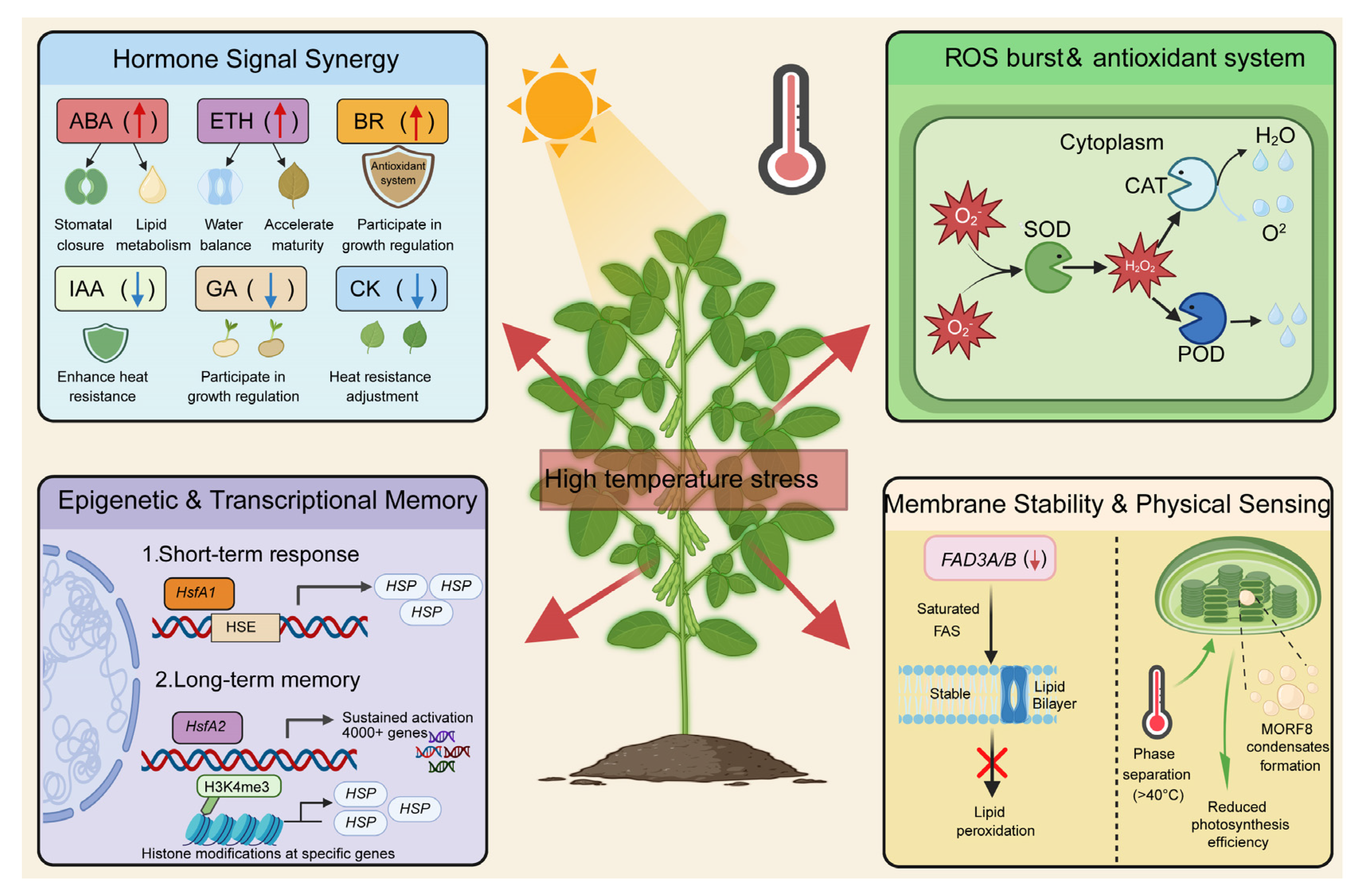
Plant hormones such as auxin (IAA), gibberellin (GA), cytokinin (CK), abscisic acid (ABA), ethylene (ETH) and brassinosteroids (BR) constitute the core signaling network of soybean in response to heat stress (Figure 1). These hormones mitigate the adverse effects of heat stress by coordinating antioxidant defense, water balance, and growth dynamics. Under heat stress, levels of ABA, ETH, and BR typically increase. Studies have shown that in the roots of soybean heat-resistant varieties, ABA content is markedly increased, the activity of SOD and POD is enhanced, and the antioxidant capacity is strengthened [35]. In contrast, in flowers and pods, the degradation of ABA promotes stomatal opening and transpirational cooling, thereby lowering local tissue temperature and mitigating heat damage to reproductive structures [36]. This tissue-specific difference highlights the pivotal role of ABA in balancing physiological metabolism. Furthermore, heat stress and exogenous application of ABA and JA can alter the expression level of GmABI3, a transcription factor in the ABA signaling pathway, in both seeds and leaves [13]. This suggests that GmABI3 may be a key integration point in the cross-regulation network of heat stress and hormones. BR and ETH also play important roles in the response to heat stress in soybean. Exogenous application of 24-epibrassinolide significantly increases antioxidant enzyme activities and metabolite levels, sustaining soybean growth under heat stress conditions [37]. Recent studies have revealed that GmBSK1 in the brassinosteroid signaling pathway enhances the transcription level of GmBES1.5, enabling it to directly bind to the E-box element in the promoters of abiotic stress-related genes and activate downstream defense responses. Conversely, loss of GmBSK1 impairs ROS scavenging capacity, increasing soybean sensitivity to heat stress. Furthermore, GmGSK1 can inhibit the activity of GmBES1.5, but GmBSK1 can interact with GmGSK1 and recruit it to the cell membrane, relieving this inhibition and forming a complete GmBSK1-GmGSK1-GmBES1.5 positive regulatory module [15]. Additionally, both exogenous application of 1-aminocyclopropane-1-carboxylic acid (ACC, the precursor of ethylene) and heat stress enhance the promoter activity of the aquaporin gene GmTIP2;6, pointing to a potential role for soybean aquaporins in mediating responses to heat stress and hormonal signals [14]. Meanwhile, spraying with the ethylene inhibitor 1-methylcyclopropene (1-MCP) blocks the ethylene signaling pathway, effectively reducing reactive oxygen species (ROS) levels, enhancing antioxidant enzyme activity, and ultimately increasing the pod setting rate in soybean [38].
As growth regulators, IAA, GA, and CK primarily function to promote the growth of plant organs. Plants exhibit growth retardation in response to various environmental stresses. Accordingly, IAA, GA and CK usually show a downward trend under heat stress conditions [39,40], reflecting an adaptive adjustment of plant growth strategies under adversity. Therefore, given that IAA plays a key role in the formation of normal pollen grains, exogenous application of IAA to plants may be an effective means to increase crop yield and maintain stability [39]. Similarly, a decline in GA levels leads to the accumulation of DELLA proteins, enhancing stress tolerance through growth inhibition [40]. However, under the combined stress of heat stress and low light, the contents of GA and IAA and the expression of their biosynthetic genes increase significantly and promote soybean hypocotyl elongation [41]. In summary, the down-regulation of growth-promoting hormones (IAA, GA, CK) and the up-regulation of stress-responsive hormones (ABA, ETH, BR) orchestrate a heat stress adaptation network, with the activation of antioxidant defenses, regulation of water balance, and optimization of growth dynamics at its center.

3.2. Reactive Oxygen Species Metabolism and Antioxidation

Under heat stress, the dynamic balance of reactive oxygen species (ROS) metabolism is the key to determining the adaptation of soybean cells to heat stress (Figure 1). When ambient temperatures exceed optimal ranges, the normal developmental processes of soybean begin to be compromised [29,30]. Heat stress triggers a burst of ROS, leading to lipid peroxidation, decreased photosynthesis, and cell death. In addition, the oxidative damage caused by heat stress varies considerably with the timing and tissue type. Studies indicate that the leaf damage caused by short-term heat stress is repairable to some extent. However, during reproductive growth, soybean is extremely sensitive to temperature. Heat stress can lead to abnormal pollen morphology, vacuolization, and autolysis of tapetum cells. These effects, in turn, reduce pollen viability and germination rates, ultimately leading to lower pod set and a sharp decline in yield per plant [6,31].
In response to ROS burst, soybean first activates the antioxidant enzymatic defense system. This system mainly comprises superoxide dismutase (SOD), peroxidase (POD), catalase (CAT) and ascorbate peroxidase (APX), which synergistically scavenge superoxide anion (O2) and hydrogen peroxide (H2O2) [42]. Concurrently, heat-tolerant soybean genotypes specifically accumulate antioxidant metabolites such as tocopherols, flavonoids and phenylpropanoids under heat stress conditions [8], and employ proline and soluble sugars to maintain cellular water content, which supports antioxidant defense [43]. Studies have shown that in the heat-tolerant variety JD21, heat shock proteins (such as HSP17, HSP18) and antioxidant-related genes (such as glutathione S-transferase) are strongly induced, while transcription factors such as WRKY and MYB are activated, forming a regulatory network that works synergistically to maintain leaf structure and water retention capacity. Notably, the sequence and expression of GmCYP78A6 in heat-tolerant and heat-sensitive varieties differ substantially, indicating that it may be a potential candidate gene for heat tolerance in soybean [17]. Additionally, GmANN, a stress-responsive protein, interacts with GmGST to synergistically enhance antioxidant metabolism, protecting seed vigor and cellular homeostasis under high-temperature and high-humidity conditions [16].
Environmental factors and exogenous chemical agents can also modulate the antioxidant defense system in soybean. For instance, the combined stress of heat stress and drought significantly reduces the photosynthetic rate, disrupts membrane integrity, induces premature leaf senescence, and shortens the grain-filling period. Under well-watered conditions, however, heat stress alone does not alter photosynthetic rate or the progression of leaf senescence [9]. Furthermore, treatment with L-3,4-dihydroxyphenylalanine (L-DOPA) reduces the accumulation of ROS and malondialdehyde (MDA) by increasing the activities of SOD and POD while inhibiting CAT activity, suggesting that L-DOPA may function as an antioxidant [44]. Additionally, elevated CO2 concentrations can alleviate the damage caused by heat stress to soybean photosynthesis, whereas ozone (O3) exacerbates such damage and reduces photosynthetic electron transport efficiency [45].

3.3. Membrane Stability and Lipid Metabolism

The cell membrane serves as a barrier that prevents extracellular substances from freely entering the cell, maintaining a stable metabolic environment within the cell and controlling the entry and exit of substances [46]. Extreme heat disrupts cell membrane stability, leading to increased membrane permeability, leakage of intracellular electrolytes, and an increase in the relative conductivity of tissue exudate [47]. Membrane lipid peroxidation damage is one of the important reasons for the increase in cell membrane permeability and electrolyte leakage. The level of its product, malondialdehyde (MDA), is often used as a major proxy to measure the degree of membrane damage [42]. Higher MDA levels indicate stronger membrane lipid peroxidation and, consequently, more severe damage to the cell membrane.
To cope with membrane damage caused by heat stress, plants have evolved defense mechanisms centered on lipid metabolism. These mechanisms regulate the saturation degree of fatty acids and the types of lipids to maintain the stability of cell membrane structure and function. These involve multi-level responses ranging from physiological regulation to molecular pathways. Field experiments show that when the temperature during the soybean seed filling period exceeds 33 °C, for each 1 °C rise, the seed oil content decreases by approximately 0.33%. This suggests that the plant may sacrifice some lipid quality to maintain the stability of the cell membrane [48]. Similarly, compared to heat-sensitive varieties, heat-tolerant soybeans can better maintain the structure and membrane integrity of protein storage vacuoles under heat stress [11]. At the molecular level, heat stress suppresses the expression of fatty acid desaturase (FAD) genes such as FAD3A and FAD3B, reducing the proportion of unsaturated linolenic acid and enabling soybeans to better adapt to heat stress (Figure 1) [18]. Consequently, reduced lipid unsaturation has emerged as a critical physiological marker of heat tolerance in soybean, and the expression patterns of FAD genes have the potential to serve as a molecular marker for breeding heat-tolerant varieties [49]. Recent studies have further uncovered synergistic crosstalk between antioxidant and hormone signaling. For instance, GmABI3 functions as a positive regulator of seed triacylglycerol accumulation and fatty acid composition, and its expression is responsive to heat stress [13]. Therefore, the synergy of hormone signaling, antioxidant system, and lipid metabolism can effectively alleviate lipid peroxidation, emerging as a key mechanism for maintaining cell membrane integrity under heat stress.

3.4. Heat Shock Protein Network

Heat shock proteins (HSPs) constitute a core molecular defense system for plants in response to heat stress (Figure 1). As molecular chaperones, HSPs assist in the folding, assembly, and disassembly of substrate proteins, preventing protein aggregation and degradation. This chaperone activity is crucial for maintaining protein homeostasis in soybean cells [50]. Studies indicate that class I sHSPs may play an important role in conferring heat tolerance and ethanol tolerance during the soybean seedling stage [51]. The GmBiP member of the HSP70 family, when overexpressed in soybean, maintains cellular homeostasis under water stress conditions, alleviating osmotic stress [19]. Similarly, the co-chaperone GmDNJ1 (HSP40) captures misfolded proteins and delivers them to HSP70. Loss of function of this gene leads to severe browning under heat stress, accompanied by a decrease in chlorophyll content and an increase in ROS levels [20]. Furthermore, transgenic soybean plants overexpressing GmHSP90A2 exhibit enhanced tolerance to heat stress by increasing chlorophyll content and reducing MDA accumulation. Further studies revealed that GmHSP90A2 and GmHSP90A1 enhance plant heat tolerance by forming functional complexes in the cytoplasm and nucleus [21]. Heat stress can interfere with pectin metabolism, auxin and sugar signaling pathways, leading to the failure of anther dehiscence and decreased pollen viability in the F1 generation of heat-sensitive soybean hybrids. The transcription factor GmHSFA2 activates the expression of protective genes such as HSP20 by binding to the heat shock response element (HSE) motif in the promoter, thereby enhancing heat tolerance and male fertility in soybean hybrid combinations during the flowering period [22]. Similarly, GmHSP18.5a is specifically induced by heat stress and enhances antioxidant enzyme activities and the expression of ROS metabolism-related genes, improving the ROS scavenging capacity and enhancing male fertility in soybean [23]. Proteomics further reveals that there are significant protein expression differences between heat-tolerant and heat-sensitive varieties in anthers under heat stress conditions, and these differentially expressed proteins mainly involve processes such as protein synthesis and degradation, as well as ROS scavenging. In the protein interaction network, members of the HSP family act as central hubs, coordinating with pectin esterase and peroxidase to jointly maintain the physiological homeostasis of anther cells under heat stress [52]. Additionally, in anthers, the number of differentially expressed miRNAs in heat-sensitive varieties is markedly higher than that in heat-tolerant varieties, and the overall miRNA expression showed a downward trend. Further validation reveals that gma-miR159e-5p is upregulated under heat stress, and negatively regulates the heat tolerance of anthers by inhibiting the expression of heat shock transcription factor HSFA1 and its downstream HSPs, thereby directly affecting pollen viability and seed set [28]. In seeds, the accumulation of HSP70 and HSP17.6 proteins induced by heat stress contributes significantly to the acquisition of heat tolerance in heat-tolerant soybean varieties. The increase in the expression of these two proteins may be closely related to soybeans’ better maintenance of cell structural integrity and functional protein stability under heat stress [11].
At the transcriptional level, heat shock transcription factors (HSFs) constitute the pivotal hub of heat stress responses in soybean (Figure 1). HSFs rapidly recognize and bind to the conserved HSEs in the promoter regions, thereby swiftly initiating the expression of HSPs [53]. Genomic analysis has revealed that all 38 members of the HSF family in soybean possess conserved domains and localize to the nucleus. Among these, overexpression of GmHSF-34 enhances the plant’s adaptability to drought and heat stress [24]. Additionally, overexpression of GmHSFA1 activates the heat shock protein GmHSP70 and markedly enhances heat tolerance in soybean [25]. To adapt to recurring or prolonged heat stress, plants have evolved a “heat stress memory” mechanism. Studies have shown that the transcription factor HSFA2 is a central regulator of this memory, serving to maintain expression levels of genes such as Hsa32 and sHSPs to consolidate heat tolerance [54]. At the molecular level, heat stress memory is maintained by the continuous accumulation of histone H3K4me2 and H3K4me3 at the memory loci, whereas HSFA2 transiently binds in a “hit-and-run” manner to drive the establishment of such chromatin marks [55]. Further studies have revealed that a heteromeric complex formed by HSFA3 and HSFA2 promotes transcriptional memory through positive regulation of histone H3K4 hypermethylation, constituting a dynamic molecular process that governs the heat stress memory of somatic cells [56]. Together, these findings uncover a multi-level regulatory network spanning from transcriptional activation to epigenetic modifications.
However, although multiple studies have functionally validated soybean heat tolerance-related genes, most of this work has been confined to the independent characterization of individual genes, lacking systematic comparison, integration, and delineation of the applicability boundaries of findings across different experimental systems. Functional validation of soybean heat stress-related genes has largely relied on Arabidopsis heterologous expression systems or greenhouse experiments. The functional stability of these genes in the native soybean genetic background and under field heat-stress conditions remains to be verified, and the consistency of conclusions across experimental systems has not been comprehensively evaluated. Moreover, the translation of gene functional studies into field-level improvements in heat tolerance remains inefficient. Future efforts should rigorously evaluate the yield contribution and phenotypic robustness of key heat-tolerance genes under natural field stress conditions, thereby bridging the gap between molecular regulatory networks and breeding applications. These insights offer important molecular targets and a theoretical foundation for cultivating new soybean varieties with sustained heat tolerance.

4. Integrated Molecular Breeding Approaches for Enhancing Heat Tolerance in Soybean

4.1. QTL and Molecular Marker-Assisted Selection

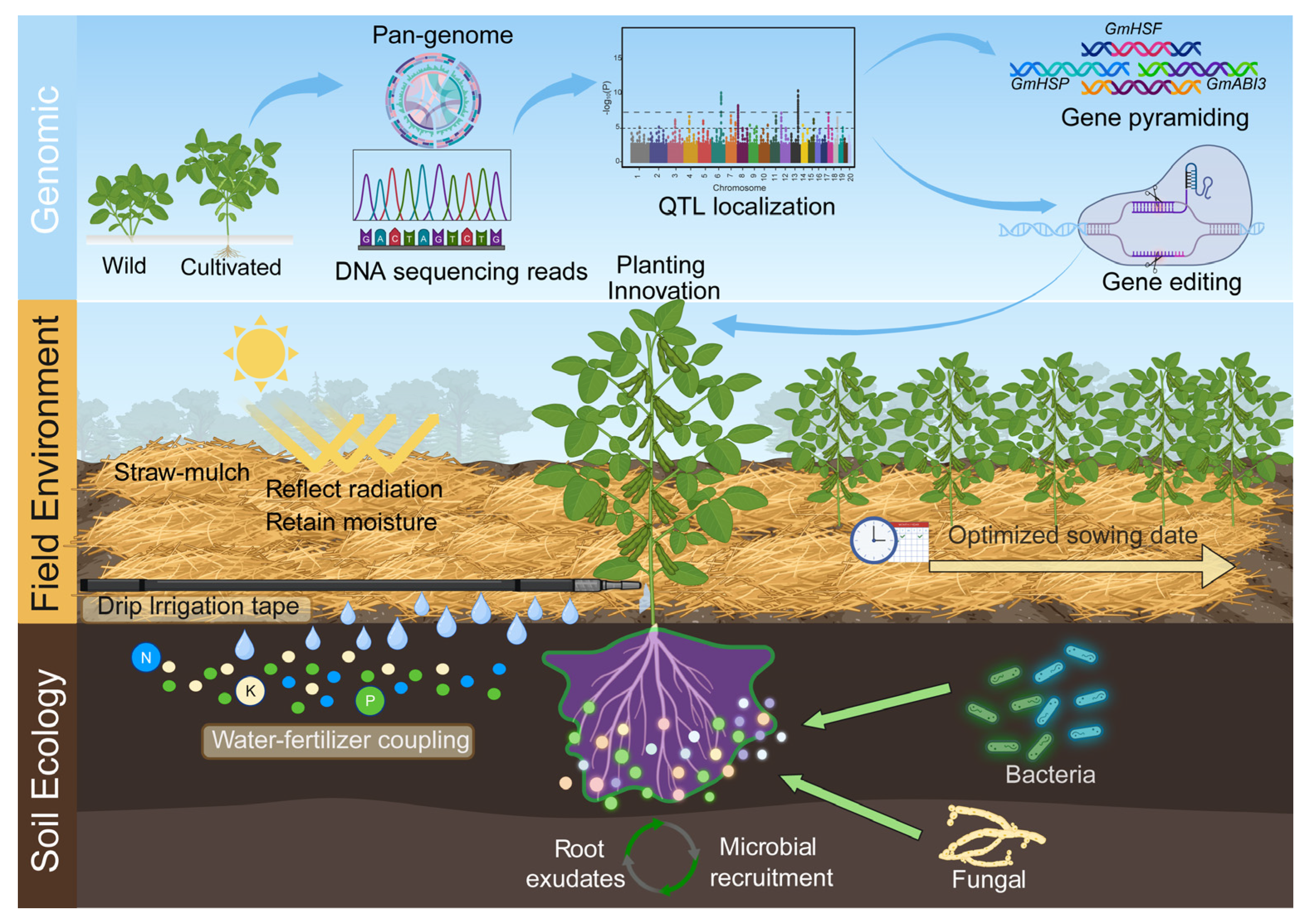
The extreme heat driven by global warming has highlighted the urgency of adopting precise genetic interventions to sustain crop production. Leveraging reference genomes, the comprehensive application of technologies such as quantitative trait locus (QTL) mapping, marker-assisted selection (MAS), and CRISPR-Cas9 has proven effective in identifying and utilizing genes associated with heat tolerance in soybean [57]. The combination of MAS and QTL mapping offers an effective approach for improving heat tolerance in crops [58]. By identifying the genomic regions and genetic determinants related to drought and heat tolerance through QTL mapping and subsequently developing tightly linked molecular markers, MAS can be used to track these superior alleles in the breeding population, enabling the precise selection of heat-tolerant individuals. This integrated strategy can accelerate the development of new varieties adapted to climate change. Previous studies have constructed a comprehensive evaluation system for soybean heat tolerance at the seedling stage. Through principal component analysis (PCA) and standardized membership functions, researchers integrated 11 phenotypic indicators into a prediction model and successfully identified pivotal quantitative traits such as hypocotyl length, main root length, hypocotyl dry weight, and root fresh weight [59]. Using genome-wide association analysis, researchers identified 37 SNP markers significantly associated with chlorophyll content, stomatal conductance, and biomass traits under heat stress from 450 soybean accessions, of which 16 markers were detected exclusively under heat stress conditions [3]. Additionally, researchers have also identified 16 SNP markers associated with soybean grain yield under heat stress [60]. Concurrently, a major QTL was identified in the heat-tolerant soybean line PI 587982A, which was shown to positively affect seed germination and emergence [12]. To integrate findings across studies, we compiled the reported major QTL and molecular markers for heat tolerance in soybean (Table 3). Beyond directly targeting heat-tolerance genes, an alternative strategy involves genetic remodeling of flowering phenology to avoid heat stress. In-depth characterization of early flowering loci, such as qDF10.1 and qDF11.1, has enabled the adjustment of soybean flowering time to circumvent the hottest periods during critical reproductive stages [61]. However, most QTL mapping and GWAS analyses conducted to date have relied on a single reference genome, which inherently limits their capacity to capture the full extent of genetic diversity present within the soybean gene pool. Consequently, rare or domestication-lost superior alleles that harbor strong potential for heat tolerance may be overlooked [62].

4.2. Pan-Genomic Applications

Soybean domestication reduced the proportion of dispensable genes from 10.17% to 9.06%, and subsequent breeding efforts further lowered this figure to 8.69% [63]. Since a single reference genome cannot capture the full diversity within a species, the concept of pan-genome has emerged. A pan-genome represents the complete genomic repertoire of a species, encompassing core genes present in all individuals and variable genes absent in some individuals. In soybean, the first graph-based pan-genome was constructed using de novo assemblies of 29 representative genomes, which contained approximately 124,000 non-redundant structural variations (SVs) [64]. Additionally, 47,058 SVs were identified based on 30 genomes encompassing cultivated varieties, landraces, and wild accessions [65]. These large-scale SV datasets provide a foundation for comprehensively mining the hidden genetic diversity within soybean germplasm. As pan-genomics technologies continue to mature, the ability to associate SVs with heat tolerance traits is expected to improve. However, despite the abundance of pan-genomic resources available in soybean, studies utilizing these resources to conduct genome-wide association analysis of heat tolerance-related SVs remain lacking. Most of the identified SVs have not yet been systematically associated with stress adaptation traits such as heat tolerance, indicating that a substantial number of potential heat tolerance-related genetic loci remain to be discovered. Variable genes often show conserved functional annotation patterns across different plant species, with those involved in biotic and abiotic stresses frequently enriched in the variable genome [66]. Therefore, conducting heat tolerance association analysis using the soybean pan-genome holds promise for identifying novel heat-tolerant gene clusters. Using marker-assisted selection or gene editing technologies, these previously underrepresented genetic elements can then be reintroduced into modern cultivars, thereby enhancing the climate resilience of soybean varieties at the genomic level.

4.3. Genetic Modification and Gene Editing

The conventional breeding process for new crop varieties involves selecting superior parents with the desired traits. Through hybridization, multiple generations of backcrossing, and trait screening, new varieties are eventually cultivated, often taking 8–10 years or even longer. Transgenic approaches (especially transcription factor engineering) achieve a rapid transformation from gene discovery to targeted improvement by introducing exogenous superior alleles, and gene editing technology (such as CRISPR-Cas9) enables precise modification of endogenous genes. Together, these technologies substantially shorten the breeding cycle. Studies have demonstrated that overexpression of HSF transcription factors enhances heat tolerance in soybean [24,25]; GmDREB1 protein activates heat-responsive genes, improving heat tolerance [26]; MBF1c from Arabidopsis, acting as an atypical transcriptional co-activator, regulates the expression of a series of genes—including DREB2A and heat shock transcription factors—under heat stress, with its overexpression in soybean boosting yield [27]. The discovery of these transcriptional regulatory factors provides important molecular targets for the genetic improvement of heat tolerance in soybean. Concurrently, previous studies have identified the core conserved sequence of HSE by comparing the promoters of Arabidopsis, soybean, rice, and maize, and have optimized the design of heat-inducible promoters. These promoters can rapidly activate the expression of reporter genes under heat stress conditions, enabling the controlled expression of exogenous transgenes under heat induction, while minimizing interference with normal plant development. When combined with tissue-specific regulatory elements, they can also achieve precise expression regulation in targeted tissues such as seedlings and roots [67]. Recent studies have uncovered that heat stress causes solid-like condensation of the chloroplast protein MORF8. This phase separation recruits RNA editing factors and suppresses their activity, reducing the editing efficiency of NDH complex-related genes, impairing photosynthesis and plant growth (Figure 1) [68]. Conversely, miR165/166, induced by heat stress, down-regulates PHABULOSA (PHB) at both transcriptional and post-transcriptional levels, relieving the suppression of the master regulator HSFA1 and thereby activating the transcriptional reprogramming centered on HSFA2, which enhances plant heat tolerance [69]. Building on these insights, gene editing can be used to precisely insert heat-responsive elements into the promoter regions of critical signaling hub genes, constructing efficient antioxidant defense modules [67]. Modifying key structural features of thermosensitive proteins such as MORF8 could optimize their temperature-sensing thresholds to balance photosynthetic efficiency with cellular protection mechanisms [68]. Meanwhile, short tandem target mimic (STTM) technology enables targeted intervention of pivotal small RNAs within regulatory networks [69].
Although multiple QTL and molecular markers associated with soybean heat tolerance have been identified, most remain at the preliminary mapping stage and lack validation across diverse genetic backgrounds and multiple environments. Moreover, as a complex quantitative trait, many reported QTL confer relatively small effects and are susceptible to genotype × environment interactions, limiting the efficiency of selection based on single markers alone. Currently, the translational efficiency from QTL discovery to practical marker-assisted breeding remains low, and further studies are needed to validate the stability of these loci across diverse germplasm resources. Against this backdrop, in response to the challenges of extreme heat driven by global warming, the genetic improvement of soybean heat tolerance should shift from traditional single-technology approaches toward a precise breeding framework that integrates multi-omics and coordinates multiple biotechnological approaches (Figure 2).

5. Roles of Agronomic Management in Enhancing Soybean Heat Tolerance

Crop growth and production depend not only on variety characteristics but also on complementary agronomic measures, which play a significant role in enhancing soybean heat tolerance. Relying solely on genetic improvement is insufficient to fully achieve heat tolerance goals under complex and variable field conditions. The enhancement of heat tolerance obtained through molecular breeding can only be fully realized when complemented by appropriate cultivation practices tailored to the crop’s physiological status and developmental stage. This indicates that genetic improvement and agronomic management function synergistically. Accordingly, the following sections focus on optimizing sowing date, irrigation, mulching practices, and nutrient management to improve the field microclimate and plant carbon and nitrogen nutritional status, thereby providing favorable environmental and physiological conditions for enhancing soybean resilience under heat stress.

5.1. Early Sowing and Late Sowing

Adjusting sowing date is an effective agronomic strategy to mitigate heat stress. The underlying principle is to avoid heat stress conditions by adjusting the timing of temperature-sensitive growth periods, optimizing the use of thermal resources, water, and other environmental factors to increase and stabilize yield. Specifically, the main purpose of early sowing is to make full use of the light and heat conditions in the early growing season, and to increase biomass accumulation and yield potential by extending the growing period and prolonging the critical window from flowering to pod formation. In the north-central United States, early sowing has been shown to increase soybean yield by an average of 13–39 kg ha−1 d−1 [70]. Furthermore, long-term observation data indicate that soybean yield increases by about 796 kg ha−1 for every 1 °C rise in spring temperature, which further confirms the potential of early sowing in making full use of thermal resources and increasing yield [71]. However, early sowing has stricter environmental requirements. In temperate continental climate zones, seedlings are susceptible to freezing damage and weed competition if sown too early during drier years [72]. Future climate warming, coupled with reduced precipitation, will further exacerbate water deficits in early-sown fields [73]. Therefore, early sowing must be equipped with corresponding irrigation facilities to mitigate these climate-related risks.
Conversely, the principle of late sowing is to adjust the phenological period of crops by delaying sowing to circumvent extreme heat during critical stages such as flowering and seed filling. This is particularly important for soybean varieties with low heat tolerance. The results show that although late sowing can shorten the whole growth period of soybean, it can effectively avoid high-temperature damage to pollen viability and the seed filling process, resulting in yield and oil content increases of 19.72% and 11.54%, respectively, compared with early sowing [48]. In addition, late sowing promotes the development of a more compact plant architecture, reduces lodging risk, lowers the probability of high-temperature exposure during seed filling [74,75], and can also mitigate high-temperature-induced green stem syndrome [76]. Although late sowing may limit theoretical yield potential, its advantages in stabilizing yield and ensuring quality are evident. Therefore, the two practices are not mutually exclusive, but complement each other, and their efficacy is highly dependent on local climatic conditions and varietal characteristics such as heat tolerance. In summary, establishing a climate-resilient soybean production system requires precise analysis of local meteorological data and the flexible formulation of tailored sowing date strategies to achieve the dual objectives of maximizing yield potential while minimizing climate-related risks.

5.2. Irrigation and Water Management

Irrigation, as a climate adaptation practice, reduces the canopy temperature of soybean through evaporative cooling, mitigating the impacts of combined high-temperature and drought stress on crops. Research has demonstrated that the damage of combined stress to soybean physiological processes and biomass accumulation is far greater than that of single stress, and that irrigation effectively alleviates these complex interactions by modifying the field microclimate [77]. In major soybean-producing regions of Brazil and the United States, the cooling effect of irrigation not only offsets the negative effects of climate change but also contributes to yield gains [7,78]. Furthermore, irrigation can maintain sufficient water supply in arid areas, thereby retaining the yield-increasing potential of the CO2 fertilization effect and preventing its diminution due to water deficit [79]. However, while irrigation helps crops cope with heat stress and drought, prolonged or excessive irrigation may render crops more susceptible to waterlogging [80].
In the intensive production of soybean, water management has evolved into a systematic control measure for multiple stresses, the core of which is to precisely determine irrigation timing based on phenological stage. The podding stage is the most sensitive period to water. Drought during this stage can lead to significant yield losses [81]. Similarly, water deficit during the grain-filling stage can also cause substantial yield losses [82]. Concurrently, the inherent physiological compensatory mechanism of crops offers potential for achieving water savings while maintaining high yield. Regulated-deficit irrigation during vegetative growth stages can reduce water use while maintaining yield potential, as moderate water stress during early growth phases may be partially compensated by improved water use efficiency during reproductive stages [83,84]. This physiological compensatory effect has certain limitations. Although chlorophyll content and photosynthesis may recover after rehydration, the phenomenon of continuous high leaf temperature suggests that there is persistent damage to thermoregulatory function [85]. Moreover, the effects of drought-rewatering cycles are affected by soil moisture conditions and stress intensity, and water deficit during the reproductive period may also induce structural damage in soybean, including pod abortion and shattering [85,86]. Therefore, optimizing irrigation timing can not only alleviate the damage caused by drought, water shortage, and other stresses, but also stimulate the compensatory growth ability of crops themselves. This offers a fundamental framework for developing more scientifically sound and efficient water management strategies.
The prerequisite of achieving efficient irrigation is the close alignment of technological approaches with local environmental conditions. There are significant regional and climatic differences in the effects of different irrigation methods on soybean yield. Under normal climatic conditions, traditional flood irrigation can achieve high yield by maintaining a high number of pods per plant at the flowering stage [87]. However, under prolonged drought stress, the modern wetland water storage underground irrigation system shows stronger stability and adaptability, which can significantly increase the yield ratio of soybean and maize [88]. Furthermore, soil physical properties also constrain the irrigation effect. In clay soils, optimizing drainage pipe spacing to regulate soil moisture is a key factor in increasing soybean yield [89]. Therefore, developing an efficient water management system depends not only on science-based selection of irrigation timing and methods but also on the construction of an integrated control system that deeply integrates soil characteristics, ecological environment and climate change.

5.3. Mulching and Soil Temperature Management

As a pivotal field management measure, straw mulching can effectively mitigate heat stress and improve the rhizosphere microenvironment of crops through the dual mechanisms of physical insulation and hydrothermal coupling. First, the mulch layer itself is a physical barrier, which effectively reflects solar radiation and reduces the heat exchange between the soil and atmosphere. Field experiments have demonstrated the cooling effect of straw mulching across different regions. For example, in Northeast China, straw mulching reduces soil temperature in the 0–30 cm layer by approximately 8.2% [89]; In the Huang-Huai-Hai Plain, straw mulching reduces the surface soil temperature by an average of 1.11 °C, mitigates abnormal warming and enhances soil temperature stability [90]. Furthermore, in the key growth period of soybean, the cooling effect of straw mulching can still mitigate the adverse effects caused by heat stress. Experimental results have shown that straw mulching before the blooming period can control the surface soil temperature at about 26 °C, significantly lower than the 28 °C observed in the uncovered control field, creating a more favorable microenvironment for the root system to sustain normal physiological functions [91].
In addition to physical insulation, straw mulching also plays an indirect modulating role by enhancing soil water retention capacity. Increased soil moisture not only directly improves water availability for soybean but also increases soil heat capacity, effectively buffering diurnal and seasonal temperature fluctuations. Studies have shown that no-tillage combined with straw mulching increases soil water content by approximately 9.2%, while straw mulching alone achieves a water storage increase of about 11.53% [90]. A beneficial hydrothermal synergy was established between increased moisture and reduced temperature, which collectively delays progression of soil drought exacerbated by heat stress. However, the efficacy of this measure is substantially influenced by environmental conditions, particularly in soils with high clay content, and its cooling and moisture-regulating effects are markedly weakened due to the constraints of soil types [89]. Therefore, straw mulching constructs a relatively stable hydrothermal buffer layer in the field by integrating direct reflection heat insulation and indirect hydrothermal regulation, which has become one of the important measures for soybean cultivation under heat stress conditions.

5.4. Fertilization and Nutrient Management

Precise regulation of nutrient flow in the soil–plant–microorganism system is essential for constructing the physiological basis of soybean heat tolerance and for mitigating heat stress along with other stresses. This process extends beyond simply supplementing individual elements, requiring instead the synergistic optimization and functional integration of nitrogen (N), phosphorus (P), and potassium (K).
The central goal of nitrogen management is to balance exogenous fertilization with biological nitrogen fixation, improving nitrogen use efficiency. Studies have shown that deep placement of nitrogen fertilizer can not only achieve sustained yield increases in soybean and increase nitrogen recovery rate, but also does so without inhibiting biological nitrogen fixation activity [92,93,94]. Furthermore, the application period of nitrogen fertilizer is also critical. Although the application of nitrogen fertilizer at the early stage of soybean growth contributes to seed filling [95], premature or split applications can disrupt the nitrogen fixation balance, leading to reduced utilization of atmospheric nitrogen by soybean [96]. Therefore, optimal nitrogen management practices can not only prolong the functional duration of leaves through judicious nitrogen application, but also maximize the maintenance of nodule nitrogen fixation activity. Adequate phosphorus is essential for maintaining the physiological homeostasis of soybean. Research has demonstrated that sufficient phosphorus after soybean flowering can prolong seed filling by preserving the integrity of photosynthetic organs and effectively alleviating the negative impact of heat stress on yield. Increasing phosphorus supply can also alleviate the adverse effects of water stress on soybean growth, morphology, physiology, and seed yield traits [97,98]. Furthermore, synergistic interactions between microorganisms and crops can enhance phosphorus uptake efficiency, thereby maintaining crop physiological metabolism. The combination of rhizobia and phosphate fertilizer has shown strong potential to increase yield, boosting soybean grain yield by approximately 50% compared to rhizobia inoculation alone [99]. Similarly, arbuscular mycorrhizal fungi combined with a low rate of phosphorus fertilizer can also achieve effects comparable to high phosphorus application [100]. However, the efficacy of microbial interventions is modulated by soil pH. The stimulatory effect of Bacillus on phosphorus uptake is more significant under strongly acidic conditions, but the enhancement is constrained after the application of lime, revealing the restriction of environmental factors on the biological interaction effect [101]. Potassium significantly enhances the resistance of soybean to abiotic and biotic stresses by regulating the composition of root exudates and pathogen suppression mechanisms. Foliar application of potassium humate under water-deficit conditions markedly increases proline content and increases soybean grain yield and oil content by maintaining the stability of chlorophyll and protein [102]. The application of nano-potassium fertilizers can improve water use efficiency and maintain yield under deficit irrigation [103].
Although the agronomic practices described above have demonstrated significant efficacy in alleviating heat stress when applied individually, most studies to date have focused on evaluating single measures in isolation, and little is known about the interactive effects when multiple practices are combined. This gap is not simply a lack of knowledge, but a critical bottleneck impeding the transition from individual technology validation to integrated solution optimization. By the same logic, effective nutrient management should not be limited to sole use of individual fertilizers. Rather, it should construct an integrated system that synchronizes nitrogen application with biological nitrogen fixation, leverages the regulatory role of potassium under stress conditions, and utilizes phosphorus to provide precise metabolic support.

6. Rhizosphere Microbiome-Mediated Synergistic Regulation of Heat Tolerance in Soybean

In the context of climate change, soybean is no longer an independent individual, but a holobiont comprising the host plant and its associated microbial communities. Heat stress not only destroys the physiological integrity of the plant itself but also breaks the symbiotic balance between the host and its associated microorganisms. In the face of heat stress threats, soybean activates the “cry for help” mechanism, whereby it alters the composition of root exudates and actively recruits beneficial microorganisms with both thermotolerant and growth-promoting functions [104]. The recruitment mechanism is essentially a mutual relationship mediated by root exudates, and crop species exhibit significant variation in their stress responses. Following drought and subsequent rewatering, sunflower mainly shows a significant increase in carbon exudation rate and relatively stable exudate composition. In contrast, soybean maintains its original exudation rate while its metabolite profile changes [105]. Integrated multi-omics analyses have revealed that heat stress specifically induces the enrichment of isobutyrylglycine, 2-hydroxyoctanoate, and specific amino acids in soybean roots. These metabolites not only function as stress-adaptive substances to assist roots in withstanding stress but also act as critical chemotactic signals to establish a two-way relationship with beneficial bacteria such as Bradyrhizobium, thus substantially enhancing the thermotolerance of the plant [106].
Similarly, the microorganisms recruited by roots constitute the plant’s second genome, collectively enhancing soybean heat tolerance through multiple mechanisms. Numerous studies have directly verified the heat tolerance-enhancing effects of various microorganisms in soybean. Penicillium glabrum alleviates heat stress in crops. At 40 °C, this fungus improves the heat tolerance of soybean by improving the growth index of soybean, inhibiting oxidative damage, and enhancing the antioxidant system [107]. Bacillus cereus SA1 produces various bioactive compounds that markedly improve soybean growth and heat resistance under heat stress conditions by modulating hormone levels, enhancing the antioxidant system, and increasing the expression of heat stress-related genes [108]. Rhizopus oryzae secretes plant growth-promoting bioactive compounds. Under heat stress conditions, this fungus significantly enhances the antioxidant capacity, nutrient content, and growth performance in soybean, thereby reducing damage [109]. Priestia megaterium SH-19 effectively alleviates heat stress-induced oxidative damage by modulating endogenous hormone homeostasis and enhancing the antioxidant defense system [110]. Bacillus aryabhattai SRB02 synergistically promotes root and shoot elongation and mediates stomatal regulation under heat stress by secreting plant hormones such as ABA and CK, enhancing soybean heat tolerance [111]. The bacteriocin Thuricin 17, secreted by Bacillus thuringiensis NEB17, enhances soybean tolerance to water deficit stress by modulating hormones, activating the antioxidant system, and promoting root development [112]. These findings not only broaden our understanding of microbial functions but also provide valuable genetic resources and targets for the construction of synthetic microbial consortia to specifically enhance soybean heat tolerance in the future.

7. Conclusions and Future Directions

Plant response to heat stress is a complex biological process. With advances in soybean omics technologies and the shortening of the cycle and reduction of costs for soybean genetic transformation, research on soybean heat tolerance has increasingly focused on exploring complex regulatory networks within the plant. Here, we synthesize recent research on soybean heat tolerance and outline the fundamental framework of the plant’s response to heat stress. Evidence suggests that hormone signaling, reactive oxygen species metabolism and antioxidant defense systems, membrane stability and lipid metabolism regulation, and transcriptional regulatory networks and molecular chaperone systems play critical roles in soybean’s response to heat stress. In addition, plants can potentially direct the recruitment of beneficial microorganisms through root exudates, which may facilitate the establishment of a beneficial rhizosphere microbiome, extending the defense line to the soil and enhancing resilience to environmental stress. However, although the aforementioned studies have elucidated the physiological and molecular mechanisms underlying soybean heat tolerance from multiple perspectives and have preliminarily explored application strategies for molecular breeding and agronomic management, several issues remain. For instance, the transition from elucidating the function of individual genes to understanding the synergistic regulation of polygenic networks has not yet been fully realized. Most research remains confined to the validation of single-gene functions; the conversion efficiency of identified heat-tolerance QTLs and molecular markers in breeding practice remains low, and large-scale validation across diverse genetic backgrounds and multiple environments is still lacking. Although individual agronomic measures have demonstrated significant effects in alleviating heat stress, current research largely focuses on evaluating these measures independently, and little is known about the interactive effects when different measures are applied in combination. Given the prospect of more severe climatic conditions, research on soybean heat tolerance needs to break through existing barriers, integrate multi-disciplinary forces, and develop the next generation of climate-smart soybean varieties. To achieve this, efforts are needed to further refine the soybean heat stress response network, identify heat-tolerant genes and elucidate their functional mechanisms, and build a data-driven precision breeding system and cultivation management system. Concurrently, deep integration of artificial intelligence with pan-genome structural variation and high-throughput phenotyping may guide precise CRISPR editing and multi-gene pyramiding. These measures would enable a transition from empirical to intelligent design breeding, establishing a closed-loop predictive system that integrates genotype, phenotype, and environment. Furthermore, it will be important to develop advanced germplasm capable of recruiting beneficial synthetic microbial communities, thereby actively shaping a co-evolved microenvironment in the field and ultimately constructing a climate-resilient soybean–microbe system.

Author Contributions

Conceptualization, T.P. and Z.Z. (Zhaoqiong Zeng); data curation, Y.X., H.J., and Z.Z. (Zhifu Zheng); writing—original draft preparation, H.G.; writing—review and editing, T.P. and Z.Z. (Zhaoqiong Zeng); funding acquisition, T.P. and Z.Z. (Zhaoqiong Zeng). All authors have read and agreed to the published version of the manuscript.

Funding

This research was supported by the National Natural Science Foundation of China (32501830), the Zhejiang Provincial Natural Science Foundation of China (grant number LQ24C130001), the China Agriculture Research System—Soybean (CARS-04-CES33), and the Program for Research and Development of Zhejiang A&F University (grant number 2022LFR109).

Data Availability Statement

No new data were created or analyzed in this study.

Conflicts of Interest

The authors declare no conflicts of interest.

References

  1. Wang, M.; Lu, S.Y.; Xin, H.; Fan, Y.; Zhang, H.; Saunik, S.; Shaw, R. A Review of Heat Wave Impacts on the Food–Energy–Water Nexus and Policy Response. Climate 2026, 14, 27. [Google Scholar]
  2. Zhao, C.; Liu, B.; Piao, S.; Wang, X.; Lobell, D.B.; Huang, Y.; Huang, M.; Yao, Y.; Bassu, S.; Ciais, P.; et al. Temperature Increase Reduces Global Yields of Major Crops in Four Independent Estimates. Proc. Natl. Acad. Sci. USA 2017, 114, 9326–9331. [Google Scholar] [CrossRef]
  3. Laan, L.V.D.; Peixoto, L.D.A.; Singh, A.K. Genetic Dissection of Heat Stress Tolerance in Soybean through Genome-Wide Association Studies and Use of Genomic Prediction to Enhance Breeding Applications. npj Sci. Plants 2025, 1, 9. [Google Scholar] [CrossRef]
  4. Hane, S.; Homma, K.; Shiraiwa, T. Yield Responses of Late Maturing Soybean Cultivars to High-Temperature Treatment. Jpn. J. Crop Sci. 2024, 93, 179–186. [Google Scholar]
  5. Siebers, M.H.; Yendrek, C.R.; Drag, D.; Locke, A.M.; Rios Acosta, L.; Leakey, A.D.B.; Ainsworth, E.A.; Bernacchi, C.J.; Ort, D.R. Heat Waves Imposed during Early Pod Development in Soybean (Glycine max) Cause Significant Yield Loss despite a Rapid Recovery from Oxidative Stress. Glob. Change Biol. 2015, 21, 3114–3125. [Google Scholar] [CrossRef]
  6. Li, J.-J.; Zheng, S.; Sun, G.; Zhang, W.; Wang, X.-B.; Qiu, L. Advances and Perspectives in Research of Physiological and Molecular Mechanism of Soybean Response to High Temperature Stress. Sci. Agric. Sin. 2017, 50, 2670–2682. [Google Scholar]
  7. Fernandes, R.D.M.; de Melo, D.M.; Elli, E.F.; Battisti, R. Climate Change Impacts on Rainfed and Irrigated Soybean Yield in Brazil’s New Agricultural Frontier. Theor. Appl. Climatol. 2022, 147, 803–816. [Google Scholar]
  8. Chebrolu, K.; Fritschi, F.B.; Ye, S.; Krishnan, H.B.; Smith, J.R.; Gillman, J.D. Impact of Heat Stress during Seed Development on Soybean Seed Metabolome. Metabolomics 2016, 12, 28. [Google Scholar] [CrossRef]
  9. Ergo, V.V.; Veas, R.E.A.; Vega, C.R.C.; Lascano, R.H.; Carrera, C.S. Leaf Photosynthesis and Senescence in Heated and Droughted Field-Grown Soybean with Contrasting Seed Protein Concentration. Plant Physiol. Biochem. 2021, 166, 437–447. [Google Scholar] [CrossRef]
  10. Sapra, V.T.; Anaele, A.O. Screening Soybean Genotypes for Drought and Heat Tolerance. J. Agron. Crop Sci. 1991, 167, 96–102. [Google Scholar] [CrossRef]
  11. Krishnan, H.B.; Kim, W.-S.; Oehrle, N.W.; Smith, J.R.; Gillman, J.D. Effect of Heat Stress on Seed Protein Composition and Ultrastructure of Protein Storage Vacuoles in the Cotyledonary Parenchyma Cells of Soybean Genotypes That Are Either Tolerant or Sensitive to Elevated Temperatures. Int. J. Mol. Sci. 2020, 21, 4775. [Google Scholar] [CrossRef]
  12. Gillman, J.D.; Chebrolu, K.; Smith, J.R. Quantitative Trait Locus Mapping for Resistance to Heat-Induced Seed Degradation and Low Seed Phytic Acid in Soybean. Crop Sci. 2021, 61, 2023–2035. [Google Scholar] [CrossRef]
  13. Manan, S.; Zhao, J. Role of Glycine max ABSCISIC ACID INSENSITIVE 3 (GmABI3) in Lipid Biosynthesis and Stress Tolerance in Soybean. Funct. Plant Biol. 2021, 48, 171–179. [Google Scholar] [CrossRef]
  14. Feng, Z.-J.; Liu, N.; Zhang, G.-W.; Niu, F.-G.; Xu, S.-C.; Gong, Y.-M. Investigation of the AQP Family in Soybean and the Promoter Activity of TIP2;6 in Heat Stress and Hormone Responses. Int. J. Mol. Sci. 2019, 20, 262. [Google Scholar] [CrossRef] [PubMed]
  15. Hou, Z.-H.; Gao, Y.; Zheng, J.-C.; Zhao, M.-J.; Liu, Y.; Cui, X.-Y.; Li, Z.-Y.; Wei, J.-T.; Yu, T.-F.; Zheng, L.; et al. GmBSK1-GmGSK1-GmBES1.5 Regulatory Module Controls Heat Tolerance in Soybean. J. Adv. Res. 2025, 73, 187–198. [Google Scholar] [CrossRef] [PubMed]
  16. Wei, J.; Shen, Y.; Zhao, H.; Liu, X.; Jia, Y.; Yu, X.; Ma, H. GmANN, a Glutathione S-Transferase-Interacting Annexin, Is Involved in High Temperature and Humidity Tolerance and Seed Vigor Formation in Transgenic Arabidopsis. Plant Cell Tiss. Organ Cult. 2019, 138, 583–595. [Google Scholar] [CrossRef]
  17. Li, J.; Zhi, X.; Chen, H.; Chen, L.; Lu, Y.; Liao, W.; Tian, Z.; Wu, M.; Shan, Y.; Wang, H. Physiological and Molecular Mechanisms of Leaf Response to High-Temperature Stress in High-Temperature-Resistant Soybean Varieties. BMC Genom. 2024, 25, 1145. [Google Scholar]
  18. Narayanan, S.; Zoong-Lwe, Z.S.; Gandhi, N.; Welti, R.; Fallen, B.; Smith, J.R.; Rustgi, S. Comparative Lipidomic Analysis Reveals Heat Stress Responses of Two Soybean Genotypes Differing in Temperature Sensitivity. Plants 2020, 9, 457. [Google Scholar] [CrossRef]
  19. Carvalho, H.H.; Brustolini, O.J.B.; Pimenta, M.R.; Mendes, G.C.; Gouveia, B.C.; da Silva, P.A.; Silva, J.C.F.; Mota, C.S.; Soares-Ramos, J.R.L.; Fontes, E.P.B. The Molecular Chaperone Binding Protein BiP Prevents Leaf Dehydration-Induced Cellular Homeostasis Disruption. PLoS ONE 2014, 9, e86661. [Google Scholar] [CrossRef]
  20. Li, K.-P.; Wong, C.-H.; Cheng, C.-C.; Cheng, S.-S.; Li, M.-W.; Mansveld, S.; Bergsma, A.; Huang, T.; van Eijk, M.J.T.; Lam, H.-M. GmDNJ1, a Type-I Heat Shock Protein 40 (HSP40), Is Responsible for Both Growth and Heat Tolerance in Soybean. Plant Direct 2021, 5, e00298. [Google Scholar] [CrossRef]
  21. Huang, Y.; Xuan, H.; Yang, C.; Guo, N.; Wang, H.; Zhao, J.; Xing, H. GmHsp90A2 Is Involved in Soybean Heat Stress as a Positive Regulator. Plant Sci. 2019, 285, 26–33. [Google Scholar] [CrossRef]
  22. Ding, X.; Guo, Q.; Li, Q.; Gai, J.; Yang, S. Comparative Transcriptomics Analysis and Functional Study Reveal Important Role of High-Temperature Stress Response Gene GmHSFA2 During Flower Bud Development of CMS-Based F1 in Soybean. Front. Plant Sci. 2020, 11, 600217. [Google Scholar] [CrossRef] [PubMed]
  23. Ding, X.; Lv, M.; Liu, Y.; Guo, Q.; Gai, J.; Yang, S. A Small Heat Shock Protein GmHSP18.5a Improves the Male Fertility Restorability of Cytoplasmic Male Sterility-Based Restorer Line under High Temperature Stress in Soybean. Plant Sci. 2023, 337, 111867. [Google Scholar] [CrossRef]
  24. Li, P.-S.; Yu, T.-F.; He, G.-H.; Chen, M.; Zhou, Y.-B.; Chai, S.-C.; Xu, Z.-S.; Ma, Y.-Z. Genome-Wide Analysis of the Hsf Family in Soybean and Functional Identification of GmHsf-34 Involvement in Drought and Heat Stresses. BMC Genom. 2014, 15, 1009. [Google Scholar] [CrossRef] [PubMed]
  25. Zhu, B.; Ye, C.; Lü, H.; Chen, X.; Chai, G.; Chen, J.; Wang, C. Identification and Characterization of a Novel Heat Shock Transcription Factor Gene, GmHsfA1, in Soybeans (Glycine max). J. Plant Res. 2006, 119, 247–256. [Google Scholar] [CrossRef]
  26. Kidokoro, S.; Watanabe, K.; Ohori, T.; Moriwaki, T.; Maruyama, K.; Mizoi, J.; Myint Phyu Sin Htwe, N.; Fujita, Y.; Sekita, S.; Shinozaki, K.; et al. Soybean DREB1/CBF-Type Transcription Factors Function in Heat and Drought as Well as Cold Stress-Responsive Gene Expression. Plant J. 2015, 81, 505–518. [Google Scholar] [CrossRef]
  27. Suzuki, N.; Sejima, H.; Tam, R.; Schlauch, K.; Mittler, R. Identification of the MBF1 Heat-Response Regulon of Arabidopsis thaliana. Plant J. 2011, 66, 844–851. [Google Scholar] [CrossRef]
  28. Zhi, X.; Yao, J.; Yao, S.; Deng, W.; Yan, L.; Zhai, H.; Huang, C.; Guo, K.; Gao, Y.; Wang, C.; et al. The Role Mechanism of miRNA Regulating Anther Dehiscence in Soybean under High Temperature Stress. Plant Stress 2025, 19, 101156. [Google Scholar] [CrossRef]
  29. Djanaguiraman, M.; Prasad, P.V.V. Ethylene Production under High Temperature Stress Causes Premature Leaf Senescence in Soybean. Funct. Plant Biol. 2010, 37, 1071–1084. [Google Scholar] [CrossRef]
  30. Liu, X.; Jin, J.; Wang, G.; Herbert, S.J. Soybean yield physiology and development of high-yielding practices in Northeast China. Field Crops Res. 2008, 105, 157–171. [Google Scholar] [CrossRef]
  31. Djanaguiraman, M.; Prasad, P.V.V.; Boyle, D.L.; Schapaugh, W.T. Soybean Pollen Anatomy, Viability and Pod Set under High Temperature Stress. J. Agron. Crop Sci. 2013, 199, 171–177. [Google Scholar] [CrossRef]
  32. Jumrani, K.; Bhatia, V.S. Impact of Combined Stress of High Temperature and Water Deficit on Growth and Seed Yield of Soybean. Physiol. Mol. Biol. Plants 2018, 24, 37–50. [Google Scholar] [CrossRef] [PubMed]
  33. Jumrani, K.; Bhatia, V.S.; Kataria, S.; Landi, M. Screening Soybean Genotypes for High-Temperature Tolerance by Maximin-Minimax Method Based on Yield Potential and Loss. Agronomy 2022, 12, 2854. [Google Scholar] [CrossRef]
  34. Lu-Zhen, J.; Yang, W.; Wei, Z.; Hong-Mei, Q.; Jian, C.; Yun-Long, H.; Xiao-Ping, M.A.; Yue-Qiang, W.; Fu-Ti, X. Grading Evaluation on Heat-Tolerance in Soybean and Identification of Heat-Tolerant Cultivars. Chin. J. Oil Crop Sci. 2016, 38, 077–087. [Google Scholar]
  35. Li, J.; Wu, M.; Chen, H.; Liao, W.; Yao, S.; Wei, Y.; Wang, H.; Long, Q.; Hu, X.; Wang, W.; et al. An Integrated Physiological Indicator and Transcriptomic Analysis Reveals the Response of Soybean Buds to High-Temperature Stress. BMC Plant Biol. 2024, 24, 1102. [Google Scholar] [CrossRef]
  36. Sinha, R.; Shostak, B.; Induri, S.P.; Sen, S.; Zandalinas, S.I.; Joshi, T.; Fritschi, F.B.; Mittler, R. Differential Transpiration between Pods and Leaves during Stress Combination in Soybean. Plant Physiol. 2023, 192, 753–766. [Google Scholar] [CrossRef]
  37. Wang, W.; Xie, Y.; Liu, C.; Jiang, H. The Exogenous Application of Brassinosteroids Confers Tolerance to Heat Stress by Increasing Antioxidant Capacity in Soybeans. Agriculture 2022, 12, 1095. [Google Scholar] [CrossRef]
  38. Djanaguiraman, M.; Prasad, P.V.V.; Al-Khatib, K. Ethylene Perception Inhibitor 1-MCP Decreases Oxidative Damage of Leaves through Enhanced Antioxidant Defense Mechanisms in Soybean Plants Grown under High Temperature Stress. Environ. Exp. Bot. 2011, 71, 215–223. [Google Scholar] [CrossRef]
  39. Ozga, J.A.; Kaur, H.; Savada, R.P.; Reinecke, D.M. Hormonal Regulation of Reproductive Growth under Normal and Heat-Stress Conditions in Legume and Other Model Crop Species. J. Exp. Bot. 2017, 68, 1885–1894. [Google Scholar] [CrossRef]
  40. Hedden, P.; Thomas, S.G. Gibberellin Biosynthesis and Its Regulation. Biochem. J. 2012, 444, 11–25. [Google Scholar] [CrossRef]
  41. Bawa, G.; Feng, L.; Chen, G.; Chen, H.; Hu, Y.; Pu, T.; Cheng, Y.; Shi, J.; Xiao, T.; Zhou, W.; et al. Gibberellins and Auxin Regulate Soybean Hypocotyl Elongation under Low Light and High-Temperature Interaction. Physiol. Plant. 2020, 170, 345–356. [Google Scholar] [CrossRef]
  42. Gill, S.S.; Tuteja, N. Reactive Oxygen Species and Antioxidant Machinery in Abiotic Stress Tolerance in Crop Plants. Plant Physiol. Biochem. 2010, 48, 909–930. [Google Scholar] [CrossRef]
  43. Cannea, F.B.; Padiglia, A. Antioxidant Defense Systems in Plants: Mechanisms, Regulation, and Biotechnological Strategies for Enhanced Oxidative Stress Tolerance. Life 2025, 15, 1293. [Google Scholar] [CrossRef]
  44. Soares, A.R.; de Ferrarese, M.L.L.; de Siqueira-Soares, R.C.; Marchiosi, R.; Finger-Teixeira, A.; Ferrarese-Filho, O. The Allelochemical L-DOPA Increases Melanin Production and Reduces Reactive Oxygen Species in Soybean Roots. J. Chem. Ecol. 2011, 37, 891–898. [Google Scholar] [CrossRef]
  45. Mishra, S.; Heckathorn, S.A.; Barua, D.; Wang, D.; Joshi, P.; Hamilton, E.W.; Frantz, J. Interactive Effects of Elevated CO2 and Ozone on Leaf Thermotolerance in Field-Grown Glycine max. J. Integr. Plant Biol. 2008, 50, 1396–1405. [Google Scholar] [CrossRef] [PubMed]
  46. Zhu, J.-K. Abiotic Stress Signaling and Responses in Plants. Cell 2016, 167, 313–324. [Google Scholar] [CrossRef] [PubMed]
  47. Wahid, A.; Gelani, S.; Ashraf, M.; Foolad, M.R. Heat Tolerance in Plants: An Overview. Environ. Exp. Bot. 2007, 61, 199–223. [Google Scholar] [CrossRef]
  48. Ahmadi, S.A.; Daneshian, J. Enhancing Soybean (Glycine max L. Merr) Heat Stress Tolerance: Effects of Sowing Date on Seed Yield, Oil Content, and Fatty Acid Composition in Hot Climate Conditions. Food Sci. Nutr. 2025, 13, e4690. [Google Scholar] [CrossRef]
  49. Rustgi, S.; Kakati, J.P.; Jones, Z.T.; Zoong-Lwe, Z.S.; Narayanan, S. Heat Tolerance as a Function of Membrane Lipid Remodeling in the Major US Oilseed Crops (Soybean and Peanut). J. Plant Biochem. Biotechnol. 2021, 30, 652–667. [Google Scholar] [CrossRef]
  50. Bourgine, B.; Guihur, A. Heat Shock Signaling in Land Plants: From Plasma Membrane Sensing to the Transcription of Small Heat Shock Proteins. Front. Plant Sci. 2021, 12, 710801. [Google Scholar] [CrossRef] [PubMed]
  51. Kuo, H.-F.; Tsai, Y.-F.; Young, L.-S.; Lin, C.-Y. Ethanol Treatment Triggers a Heat Shock-like Response but No Thermotolerance in Soybean (Glycine max cv. Kaohsiung No.8) Seedlings. Plant Cell Environ. 2000, 23, 1099–1108. [Google Scholar] [CrossRef]
  52. Li, J.-J.; Nadeem, M.; Chen, L.; Wang, M.; Wan, M.; Qiu, L.; Wang, X.-B. Differential Proteomic Analysis of Soybean Anthers by iTRAQ under High-Temperature Stress. J. Proteom. 2020, 229, 103968. [Google Scholar] [CrossRef] [PubMed]
  53. Cortijo, S.; Charoensawan, V.; Brestovitsky, A.; Buning, R.; Ravarani, C.; Rhodes, D.; Van Noort, J.; Jaeger, K.E.; Wigge, P.A. Transcriptional Regulation of the Ambient Temperature Response by H2A.Z Nucleosomes and HSF1 Transcription Factors in Arabidopsis. Mol. Plant 2017, 10, 1258–1273. [Google Scholar] [CrossRef] [PubMed]
  54. Charng, Y.-Y.; Liu, H.-C.; Liu, N.-Y.; Chi, W.-T.; Wang, C.-N.; Chang, S.-H.; Wang, T.-T. A Heat-Inducible Transcription Factor, HsfA2, Is Required for Extension of Acquired Thermotolerance in Arabidopsis. Plant Physiol. 2007, 143, 251–262. [Google Scholar] [CrossRef] [PubMed]
  55. Lamke, J.; Brzezinka, K.; Altmann, S.; Baurle, I. A Hit-and-Run Heat Shock Factor Governs Sustained Histone Methylation and Transcriptional Stress Memory. EMBO J. 2016, 35, 162–175. [Google Scholar] [CrossRef]
  56. Friedrich, T.; Oberkofler, V.; Trindade, I.; Altmann, S.; Brzezinka, K.; Lämke, J.; Gorka, M.; Kappel, C.; Sokolowska, E.; Skirycz, A.; et al. Heteromeric HSFA2/HSFA3 Complexes Drive Transcriptional Memory after Heat Stress in Arabidopsis. Nat. Commun. 2021, 12, 3426. [Google Scholar] [CrossRef]
  57. Guan, J.; Gai, Y.; Guan, Y.; Rasheed, A.; Zhao, Q.; Xie, Z.; Mahmood, A.; Zhang, S.; Zhang, Z.; Zhao, Z.; et al. Improvement of Heat Stress Tolerance in Soybean (Glycine max L.), by Using Conventional and Molecular Tools. Front. Plant Sci. 2022, 13, 993189. [Google Scholar] [CrossRef]
  58. Ashry, N.A.; Poltronieri, P. Chapter 11-Plant biodiversity and biotechnology. In Biotechnology: From Plant Genomics to Plants; Burbulis, N., Fogher, C., Eds.; Woodhead Publishing: Cambridge, UK, 2013; pp. 205–222. [Google Scholar]
  59. Li, J.-J.; Long, Q.; Zhu, S.-S.; Shan, Y.-J.; Wu, M.-Y.; Lu, Y.; Zhi, X.-G.; Liao, W.; Chen, H.-R.; Zhao, Z.-B.; et al. Construction of Evaluation Method for Tolerance to High-Temperature and Screening of Heat-Tolerant Germplasm Resources of Bud Stage in Soybean. Acta Agron. Sin. 2023, 49, 2863–2875. [Google Scholar] [CrossRef]
  60. de Sousa, C.C.; Assunção, U.S.; Ferreira, M.C.; Lopes, Â.C.D.A.; Dos Santos, R.L.F.; Pinheiro, J.B. Associative mapping for Exotic Soybean Germplasm Grain Yield in High Temperatures. Rev. Caatinga 2022, 35, 567–573. [Google Scholar] [CrossRef]
  61. Rathod, N.K.K.; Taku, M.; Yadav, R.R.; Mujjassim, N.E.; Saini, M.; Kumar, R.; Reshma, O.; Yadav, M.; Mallikarjuna, B.P.; Rajendran, R.A.; et al. Deciphering Genetics and Mapping of Early Flowering and Maturity in Indian Soybean [Glycine max (L.) Merr.]. Indian J. Genet. Plant Breed. 2025, 85, 106–117. [Google Scholar]
  62. Raza, G.; Ahmad, N.; Hussain, M.; Zafar, Y.; Rahman, M. Chapter 9-Role of Genetics and Genomics in Mitigating Abiotic Stresses in Soybeans. In Environmental Stresses in Soybean Production; Miransari, M., Ed.; Academic Press: San Diego, CA, USA, 2016; pp. 205–228. [Google Scholar]
  63. Petereit, J.; Bayer, P.E.; Thomas, W.J.W.; Tay Fernandez, C.G.; Amas, J.; Zhang, Y.; Batley, J.; Edwards, D. Pangenomics and Crop Genome Adaptation in a Changing Climate. Plants 2022, 11, 1949. [Google Scholar] [CrossRef]
  64. Liu, Y.; Du, H.; Li, P.; Shen, Y.; Tian, Z. Pan-Genome of Wild and Cultivated Soybeans. Cell 2020, 182, 162–176. [Google Scholar] [CrossRef] [PubMed]
  65. Zhang, C.; Shao, Z.; Kong, Y.; Du, H.; Li, W.; Yang, Z.; Li, X.; Ke, H.; Sun, Z.; Shao, J.; et al. High-Quality Genome of a Modern Soybean Cultivar and Resequencing of 547 Accessions Provide Insights into the Role of Structural Variation. Nat. Genet. 2024, 56, 2247–2258. [Google Scholar] [CrossRef] [PubMed]
  66. Bayer, P.E.; Golicz, A.A.; Scheben, A.; Batley, J.; Edwards, D. Plant Pan-Genomes Are the New Reference. Nat. Plants 2020, 6, 914–920. [Google Scholar] [CrossRef] [PubMed]
  67. Maruyama, K.; Ogata, T.; Kanamori, N.; Yoshiwara, K.; Goto, S.; Yamamoto, Y.Y.; Tokoro, Y.; Noda, C.; Takaki, Y.; Urawa, H.; et al. Design of an Optimal Promoter Involved in the Heat-Induced Transcriptional Pathway in Arabidopsis, Soybean, Rice and Maize. Plant J. 2017, 89, 671–680. [Google Scholar] [CrossRef]
  68. Wu, J.; Wang, Y.; Chen, H.; Xu, T.; Yang, W.; Fang, X. Solid-like Condensation of MORF8 Inhibits RNA Editing under Heat Stress in Arabidopsis. Nat. Commun. 2025, 16, 2789. [Google Scholar] [CrossRef]
  69. Li, J.; Cao, Y.; Zhang, J.; Zhu, C.; Tang, G.; Yan, J. The miR165/166–PHABULOSA Module Promotes Thermotolerance by Transcriptionally and Posttranslationally Regulating HSFA1. Plant Cell 2023, 35, 2952–2971. [Google Scholar] [CrossRef]
  70. Rattalino Edreira, J.I.; Mourtzinis, S.; Azzari, G.; Andrade, J.F.; Conley, S.; Specht, J.E.; Grassini, P. Combining Field-Level Data and Remote Sensing to Understand Impact of Management Practices on Producer Yields. Field Crops Res. 2020, 257, 107932. [Google Scholar] [CrossRef]
  71. Ordoñez, R.A.; Casteel, S.N.; Stevens, R.H.; Archontoulis, S.V.; Vyn, T.J. Climate, Rotation, and Tillage Impacts on Soybean Yield Gains in a 50-Year Experiment. Glob. Change Biol. 2025, 31, e70469. [Google Scholar] [CrossRef]
  72. Petcu, V.; Bărbieru, A.; Popa, M.; Lazar, C.; Ciornei, L.; Străteanu, A.G.; Todirică, I.C. Early Sowing on Some Soybean Genotypes under Organic Farming Conditions. Plants 2023, 12, 2295. [Google Scholar] [CrossRef]
  73. Qian, B.; Smith, W.; Jing, Q.; Kim, Y.M.; Jégo, G.; Grant, B.; Duguid, S.; Hester, K.; Nelson, A. Climate Conditions in the Near-Term, Mid-Term and Distant Future for Growing Soybeans in Canada. Can. J. Plant Sci. 2022, 103, 161–174. [Google Scholar]
  74. Chae, S.; Shin, P.; Youn, J.; Sung, J.; Jeon, S. The Effect of Sowing Date on Soybean Growth and Yield Under Changing Climate in the Southern Coastal Region of Korea. Agriculture 2025, 15, 1174. [Google Scholar] [CrossRef]
  75. Zheng, H.; Zhang, L.; Sun, H.; Zheng, A.; Harrison, M.T.; Li, W.; Zou, J.; Zhang, D.; Chen, F.; Yin, X. Optimal Sowing Time to Adapt Soybean Production to Global Warming with Different Cultivars in the Huanghuaihai Farming Region of China. Field Crops Res. 2024, 312, 109386. [Google Scholar]
  76. Yamazaki, R.; Kawasaki, Y. Effect of High Temperature during the Late Seed Filling Period on Green Stem Disorder in Soybean. Field Crops Res. 2023, 302, 109092. [Google Scholar]
  77. Hamed, R.; van Loon, A.F.; Aerts, J.; Coumou, D. Impacts of Compound Hot-Dry Extremes on US Soybean Yields. Earth Syst. Dyn. 2021, 12, 1371–1391. [Google Scholar] [CrossRef]
  78. He, Y.; Connolly, M.H.; Xu, R.; Huang, X.; Wang, Z.; Arreguin, M.F.; Rhodes, C. Impacts of Irrigation-Climate Interactions on Irrigated Soybean Yields in the US Arkansas Delta from 2003 to 2017. Prog. Phys. Geogr. 2023, 47, 774–791. [Google Scholar] [CrossRef]
  79. Sun, W.; Fleisher, D.; Timlin, D.; Ray, C.; Wang, Z.; Sahila, B.; Reddy, V. Does Drought Stress Eliminate the Benefit of Elevated CO2 on Soybean Yield? Using an Improved Model to Link Crop and Soil Water Relations. Agric. For. Meteorol. 2023, 343, 109747. [Google Scholar] [CrossRef]
  80. Liu, W.; Zhou, J.; Luo, Y.; Chen, S.; Ma, Y. Reduced Crop Yield Stability Is More Likely to Be Associated With Heat Than With Moisture Extremes in the US Midwest. Earth’s Future 2025, 13, e005172. [Google Scholar] [CrossRef]
  81. Amjid, M.; Ustun, R. Selection of Soybean Genotypes Exhibiting Drought Resistance by Assessing Morphological and Yield Traits. Euphytica 2025, 221, 44. [Google Scholar] [CrossRef]
  82. Wang, C.; Sun, A.; Jie Zhu, L.; Liu, M.; Zhang, Q.; Wang, L.; Gao, X. Drought and Rewatering Effects on Soybean Photosynthesis, Physiology and Yield. PeerJ 2025, 13, e19658. [Google Scholar] [CrossRef]
  83. Cui, Y.; Ning, S.; Jin, J.; Jiang, S.; Zhou, Y.; Wu, C. Quantitative Lasting Effects of Drought Stress at a Growth Stage on Soybean Evapotranspiration and Aboveground Biomass. Water 2021, 13, 18. [Google Scholar] [CrossRef]
  84. El Amine, B.E.; Mosseddaq, F.; Houssa, A.A.; Bouaziz, A.; Moughli, L.; Oukarroum, A. Physiological and Agronomic Effects of Regulated-Deficit Irrigation on Soybean Grown under Arid Climatic Conditions. Crop J. 2025, 13, 281–291. [Google Scholar] [CrossRef]
  85. Elsalahy, H.H.; Reckling, M. Soybean Resilience to Drought Is Supported by Partial Recovery of Photosynthetic Traits. Front. Plant Sci. 2022, 13, 971893. [Google Scholar] [CrossRef] [PubMed]
  86. de Oliveira Moura, L.D.O.; da Silva, M.F.; Cunha, F.F.; Picoli, E.A.D.T.; Silva, F.C.D.S.; da Silva, F.L. Water Deficit as a Trigger to Immature Soybean Pod Opening. J. Agron. Crop Sci. 2023, 209, 390–401. [Google Scholar] [CrossRef]
  87. Aminah, A.; Djufry, F.; Rauf, A.W.; Palad, M.S.; Salim, N. Effectiveness of Irrigation Methods and Time of Providing Water in Maintaining Soil Classification for Increasing Soybean Production. Agrivita 2021, 43, 627–634. [Google Scholar] [CrossRef]
  88. Allred, B.J.; Gamble, D.L.; Clevenger, W.B.; LaBarge, G.A.; Prill, G.L.; Czartoski, B.J.; Fausey, N.R.; Brown, L.C. Crop Yield Summary for Three Wetland Reservoir Subirrigation Systems in Northwest Ohio. Appl. Eng. Agric. 2014, 30, 889–903. [Google Scholar] [CrossRef]
  89. Gong, X.-Y.; Zhao, J.; Yang, X. Hydrothermal Effects of the Conservation Tillage in Soybean Farmland in Northeast China: A Meta-Analysis. Chin. J. Agrometeorol. 2022, 43, 867–880. [Google Scholar]
  90. Wu, Z.; Xu, C.; Li, R.; Xu, Y.; Hua, J.; Sun, S.; Han, H.; Song, W.; Wu, C. Full-Field Straw Mulching and Fertilizer Application Improved the Soybean Seed Yield through Optimization of the Root and Canopy Structure: A Study Case in Huang-Huai-Hai Region. Eur. J. Agron. 2024, 159, 127280. [Google Scholar] [CrossRef]
  91. Wu, Z.; Zhu, Y.; Li, Q.; Li, R.; Willcock, S.; Vona, V.; Dunn, R.; Vér, A.; Xu, Y.; Hua, J.; et al. Straw Mulching Optimized the Root and Canopy Structure of Soybean by Reducing the Topsoil Temperature before Blooming Period. Field Crops Res. 2025, 333, 110067. [Google Scholar] [CrossRef]
  92. Takahashi, Y.; Chinushi, T.; Nagumo, Y.; Nakano, T.; Ohyama, T. Effect of Deep Placement of Controlled Release Nitrogen Fertilizer (Coated Urea) on Growth, Yield, and Nitrogen Fixation of Soybean Plants. Soil Sci. Plant Nutr. 1991, 37, 223–231. [Google Scholar] [CrossRef]
  93. Takahashi, Y.; Ohyama, T. Technique for Deep Placement of Coated Urea Fertilizer in Soybean Cultivation. JARQ 1999, 33, 235–242. [Google Scholar]
  94. Tewari, K.; Suganuma, T.; Fujikake, H.; Ohtake, N.; Sueyoshi, K.; Takahashi, Y.; Ohyama, T. Effect of Deep Placement of N Fertilizers and Different Inoculation Methods of Bradyrhizobia on Growth, N2 Fixation Activity and N Absorption Rate of Field-Grown Soybean Plants. J. Agron. Crop Sci. 2004, 190, 46–58. [Google Scholar] [CrossRef]
  95. Salvagiotti, F.; Specht, J.E.; Cassman, K.G.; Walters, D.T.; Weiss, A.; Dobermann, A. Growth and Nitrogen Fixation in High-Yielding Soybean: Impact of Nitrogen Fertilization. Agron. J. 2009, 101, 958–970. [Google Scholar] [CrossRef]
  96. Singh, M.; Kundu, S.; Biswas, A.K.; Saha, J.K. Quantification of N2 Fixation and Annual N Benefit from N2 Fixation in Soybean Accrued to the Soil under Soybean-Wheat Continuous Rotation. J. Plant Nutr. Soil Sci. 2004, 167, 577–583. [Google Scholar] [CrossRef]
  97. Laira, M.D.; de Andrade, S.A.L.; Silveira, N.M.; Machado, E.C.; Ribeiro, R.V.; Zambrosi, F.C.B. High Post-Flowering Phosphorus Status Promotes the Tolerance of Soybean to Terminal Heat Stress. Environ. Exp. Bot. 2023, 215, 105501. [Google Scholar] [CrossRef]
  98. Salim, M.; Chen, Y.; Solaiman, Z.M.; Siddique, K.H.M. Phosphorus Fertilisation Differentially Affects Morpho-Physiological Traits and Yield in Soybean Exposed to Water Stress. Plant Soil 2024, 504, 779–797. [Google Scholar] [CrossRef]
  99. Adjei-Nsiah, S.; Martei, D.; Yakubu, A.; Ulzen, J. Soybean (Glycine max L. Merrill) Responds to Phosphorus Application and Rhizobium Inoculation on Acrisols of the Semi-Deciduous Forest Agro-Ecological Zone of Ghana. PeerJ 2022, 10, e12671. [Google Scholar] [CrossRef]
  100. Thioub, M.; Ewusi-Mensah, N.; Sarkodie-Addo, J.; Adjei-Gyapong, T. Arbuscular Mycorrhizal Fungi Inoculation Enhances Phosphorus Use Efficiency and Soybean Productivity on a Haplic Acrisol. Soil Tillage Res. 2019, 192, 174–186. [Google Scholar] [CrossRef]
  101. Li, C.; Rippner, D.A.; Manavalan, L.P.; Parikh, S.J. Evaluation of Bacillus Seed Coatings on Soybean Phosphorus Uptake in an Oxisol Fertilized with 32P-Labeled Hydroxyapatite. Plant Soil 2021, 464, 273–287. [Google Scholar] [CrossRef]
  102. El-Nwehy, S.S.; Sary, D.H.; Afify, R.R.M. Effect of Potassium Humate Foliar Application on Yield and Quality of Soybean (Glycine max L.) Grown on Calcareous Soil under Irrigation Water Regime. Plant Arch. 2020, 20, 1495–1502. [Google Scholar]
  103. Rostami Ajirloo, A.A.; Amiri, E. Effects of Nano-Potassium Fertilizer on Yield and Water Use Efficiency of Soybean Under Water Deficit Conditions (Case Study: Moghan Plain, Iran). Commun. Soil Sci. Plant Anal. 2022, 53, 1542–1551. [Google Scholar] [CrossRef]
  104. Wang, Z.; Song, Y. Toward Understanding the Genetic Bases Underlying Plant-Mediated “Cry for Help” to the Microbiota. iMeta 2022, 1, 12. [Google Scholar] [CrossRef]
  105. Canarini, A.; Merchant, A.; Dijkstra, F.A. Drought Effects on Helianthus annuus and Glycine max Metabolites: From Phloem to Root Exudates. Rhizosphere 2016, 2, 85–97. [Google Scholar] [CrossRef]
  106. Elango, D.; Van der Laan, L.; Gholizadeh, S.; Premarathne, M.D.G.P.; Dutter, C.R.; DePew, C.; McDaniel, M.; Singh, A.K. Heat Stress and Soil Microbial Disturbance Influence Soybean Root Metabolite, Microbiome Profiles, and Nodulation. bioRxiv 2025. [Google Scholar] [CrossRef]
  107. Hamayun, M.; Hussain, A.; Iqbal, A.; Khan, S.A.; Gul, S.; Khan, H.; Ur-Rehman, K.U.; Bibi, H.; Lee, I.-J. Penicillium glabrum Acted as a Heat Stress Relieving Endophyte in Soybean and Sunflower. Pol. J. Environ. Stud. 2021, 30, 3099–3110. [Google Scholar] [CrossRef]
  108. Khan, M.; Asaf, S.; Khan, A.L.; Jan, R.; Kang, S.-M.; Kim, K.-M.; Lee, I.-J. Thermotolerance Effect of Plant Growth-Promoting Bacillus cereus SA1 on Soybean during Heat Stress. BMC Microbiol. 2020, 20, 175. [Google Scholar] [CrossRef]
  109. Hussain, A.; Mehmood, A.; Qadir, M.; Husna, N.; Iqbal, A.; Hamayun, M.; Khan, N. Thermal Stress Alleviating Potential of Endophytic Fungus Rhizopus oryzae Inoculated to Sunflower (Helianthus annuus L.) and Soybean (Glycine max L.). Pak. J. Bot. 2020, 52, 1857–1865. [Google Scholar] [CrossRef]
  110. Shaffique, S.; Shah, A.A.; Peter, O.; Injamum-Ul-Hoque, M.; Elansary, H.O.; Kang, S.-M.; Al Azzawi, T.N.I.; Yun, B.-W.; Lee, I.-J. The Rhizobacterial Priestia megaterium Strain SH-19 Mitigates the Hazardous Effects of Heat Stress via an Endogenous Secondary Metabolite Elucidation Network and Molecular Regulation Signalling. BMC Plant Biol. 2024, 24, 827. [Google Scholar] [CrossRef]
  111. Park, Y.-G.; Mun, B.-G.; Kang, S.-M.; Hussain, A.; Shahzad, R.; Seo, C.-W.; Kim, A.-Y.; Lee, S.-U.; Oh, K.Y.; Lee, D.Y.; et al. Bacillus aryabhattai SRB02 Tolerates Oxidative and Nitrosative Stress and Promotes the Growth of Soybean by Modulating the Production of Phytohormones. PLoS ONE 2017, 12, e0173203. [Google Scholar] [CrossRef]
  112. Nazari, M.; Smith, D.L. A PGPR-Produced Bacteriocin for Sustainable Agriculture: A Review of Thuricin 17 Characteristics and Applications. Front. Plant Sci. 2020, 11, 916. [Google Scholar] [CrossRef]
Figure 1. Schematic representation of molecular mechanisms underlying soybean responses to heat stress. Hormonal signaling synergy—elevated ABA, ETH, and BR promote stomatal closure, water balance, lipid metabolism, and antioxidant defense, whereas reduced IAA, GA, and CK mediate growth restraint and heat resistance adjustment. ROS Homeostasis: ROS scavenging by SOD, CAT, POD, and other enzymes prevents oxidative damage under heat stress. Epigenetic and transcriptional regulation: short-term heat stress activates HSFA1 binding to HSEs for rapid induction of HSPs. Long-term thermomemory involves HSFA2-mediated sustained activation of over 4000 genes and histone H3K4me3 modifications for transgenerational inheritance. Membrane stability and physical sensing: downregulation of FAD genes, such as FAD3A and FAD3B, increases saturated fatty acid content to stabilize lipid bilayers and attenuate lipid peroxidation. In addition, heat stress triggers biomolecular phase separation and MORF8 condensate formation, resulting in chloroplast dysfunction and reduced photosynthetic efficiency.
Plants 15 01758 g001
Figure 2. Integrated strategies for improving heat tolerance in soybean. Genomic level: precision breeding is achieved through pan-genome analysis, QTL mapping, gene pyramiding, and targeted editing of heat-responsive genes. Field management level: microenvironment optimization includes straw mulching for radiation reflection and moisture retention, drip irrigation for water-use efficiency, water-fertilizer coupling for synchronized nutrient delivery, and optimized sowing dates to avoid critical heat-sensitive growth stages. Soil ecology level—root exudates mediate the selective recruitment of beneficial bacteria and fungi to the rhizosphere, constructing a heat-tolerant microbial community that enhances plant stress resilience.
Plants 15 01758 g002
Table 1. Key genes involved in heat tolerance mechanisms in soybean.
Gene NameFunctional
Verification
Functional CategoryKey FeaturesGrowth StageMethods of
Identification
GmABI3ArabidopsisABAPromotes seed oil accumulation; expression induced by heat stress [13]Pod development stageGene overexpression and mutant analysis
GmTIP2;6ArabidopsisAquaporinGmTIP2;6 is a heat- and ACC-inducible aquaporin gene [14]Vegetative stageWhole-genome bioinformatics
GmBSK1Soybean BRCore regulator of the module; enhances GmBES1.5 transcription and activates downstream defense responses [15]Vegetative stageTranscriptome, gene overexpression
GmGSK1SoybeanBRInhibits GmBES1.5 activity; regulated by GmBSK1 [15]Vegetative stageProtein–protein interaction screening
GmBES1.5SoybeanBRBinds to E-box in stress-related gene promoters; positively regulated by GmBSK1 [15]Vegetative stageGene overexpression, homologous genes
GmANNArabidopsisROS &
Antioxidant
Interacts with GmGST to enhance antioxidant metabolism; protects seed vigor and HTH stress tolerance [16]R7 stageComparative proteomics
GmCYP78A6Not verifiedROS &
Antioxidant
Sequence and expression differ between tolerant and sensitive varieties; potential heat-tolerance gene [17]Flowering stageTranscriptome and sequence polymorphism analysis
FAD3A/FAD3BNot verifiedMembrane &Lipid
Metabolism
Heat stress suppresses expression and reduces the proportion of α-linolenic acid [18]Vegetative stageCandidate genes, gene expression
GmBiPSoybeanHSP70Maintains cellular homeostasis under water stress; alleviates osmotic stress [19]Vegetative stageGene overexpression, transcriptome
GmDNJ1SoybeanHSP40Captures misfolded proteins and delivers them to HSP70 for refolding [20]Vegetative stageBioinformatics
GmHSP90A1/A2SoybeanHSP90Forms a heat-tolerance complex, elevating chlorophyll and lowering MDA content [21]Vegetative stageGene family analysis
GmHSFA2ArabidopsisHSFBinds HSE to activate HSP20, enhancing heat tolerance and pollen fertility during flowering [22]Reproductive stageTranscriptomics
GmHSP18.5aArabidopsis, SoybeansHSPEnhances antioxidant enzyme activity and ROS scavenging; improves male fertility [23]Reproductive stageTranscriptomics
GmHSF-34ArabidopsisHSFOverexpression enhances tolerance to drought and heat stress [24]Vegetative stageWhole-genome family identification
GmHSFA1SoybeanHSFActivates GmHsp70 expression; significantly enhances overall heat tolerance [25]Vegetative stageSequence homology-based cloning, gene overexpression
GmDREB1Arabidopsis, SoybeanTranscriptional
Regulation
Activating heat-responsive genes to enhance soybean heat tolerance [26]Vegetative stageWhole-genome family identification
MBF1cArabidopsis,
Soybean
Transcriptional
Regulation
Regulates DREB2A and HSF expression; overexpression in soybean boosts yield [27]Vegetative stageTranscriptome, mutant analysis andectopic expression
gma-miR159e-5pArabidopsisPost-transcriptional
Regulation
Suppresses HSFA1s-HSPs pathway, reducing anther heat tolerance [28]Reproductive stageTranscriptomics, small RNA sequencing
Table 2. Classification of heat tolerance in soybean germplasm based on the comprehensive evaluation value (D) at the flowering stage.
GradeCategoryEvaluation CriteriaRepresentative Cultivar(s)
IHighly heat-tolerantD ≥ 1.346Jiyu 3, L65-1058, etc.
IIHeat-tolerant1.163 ≤ D ≤ 1.298LS201, L61-1069, etc.
IIIModerately heat-tolerant0.958 ≤ D ≤ 1.145SS2015, Jiyu 66, etc.
IVModerately heat-sensitive0.801 ≤ D ≤ 0.947L59-73, L69-4318, etc.
VHeat-sensitive0.561 ≤ D ≤ 0.792L67-237, L63-1097, etc.
VIExtremely heat-sensitiveD ≤ 0.477Jinyuan1, AiKal166, etc.
Note: This evaluation criterion integrates multi-trait information via multivariate statistical methods to quantify variety heat tolerance using the D value, where larger values indicate stronger heat tolerance.
Table 3. Summary of reported QTL and molecular markers associated with heat tolerance in soybean.
Marker/QTL NamePhysical/Genetic PositionAssociated TraitEnvironmentReference
ss715580772Chr01: 6,708,220 bpDry Root BiomassHeat[3]
ss715580790Chr01: 7,320,074 bpFresh shoot biomassHeat[3]
ss715579731Chr01: 48,593,077 bpFresh shoot biomassHeat[3]
ss715583256Chr02: 45,904,811 bpSPADHeat[3]
ss715588916Chr04: 51,099,840 bpFresh shoot biomass, Dry Root BiomassHeat[3]
ss715591790Chr05: 40,974,254 bpDry shoot biomassHeat[3]
ss715601977Chr08: 42,381,368 bpQuantum efficiencyHeat[3]
ss715607988Chr10: 49,420,201 bpFresh Shoot BiomassHeat[3]
ss715610072Chr11: 29,249,534 bpDry shoot biomassHeat[3]
ss715612319Chr12: 33,616,569 bpDry shoot biomassHeat[3]
ss715612326Chr12: 33,745,390 bpFresh Shoot BiomassHeat[3]
ss715613794Chr13: 20,597,010 bpQuantum efficiencyHeat[3]
ss715615430Chr13: 33,543,422 bpDry root biomassHeat[3]
ss715625497Chr16: 756,848 bpCanopy temperatureHeat[3]
ss715627447Chr17: 38,333,431 bpFresh shoot biomassHeat[3]
ss715635407Chr19: 45,015,436 bpStomatal ConductanceHeat[3]
AX-90509631Chr06: 44,119,659 bpMature plant heightHeat[60]
AX-90342778Chr07: 11,537,628 bpMature plant heightHeat[60]
AX-90469593Chr14: 3,420,844 bpMature plant heightHeat[60]
AX-90327626Chr19: 46,979,367 bpMature plant heightHeat[60]
AX-90402142Chr07: 3,354,461 bpAgronomic valueHeat[60]
AX-90342778Chr07: 11,537,628 bpAgronomic valueHeat[60]
AX-90521700Chr11: 34,930,663 bpAgronomic valueHeat[60]
AX-90525031Chr16: 13,424,473 bpAgronomic valueHeat[60]
AX-90389614Chr04: 44,128,585 bp100-seed weightHeat[60]
AX-90354566Chr06: 50,427,599 bp100-seed weightHeat[60]
AX-90444326Chr13: 35,063,263 bp100-seed weightHeat[60]
AX-90409840Chr13: 38,706,066 bp100-seed weightHeat[60]
AX-90521700Chr11: 34,930,663 bpGrain yieldHeat[60]
AX-90333592Chr16: 2,712,250 bpGrain yieldHeat[60]
AX-90523249Chr17: 12,874,430 bpGrain yieldHeat[60]
AX-90327053Chr17: 35,263,624 bpGrain yieldHeat[60]
Novel heat-tolerant QTLChr05: 37,112,494 bpGermination rate, Emergence rateHeat[12]
lpa1aChr03: 39,793,984 bpGermination rate, Emergence rateHeat[12]
lpa2aChr19: 42,948,884 bpGermination rate, Emergence rateHeat[12]
Note: The chromosome and position are based on the Wm82.a2 reference genome construction.
Disclaimer/Publisher’s Note: The statements, opinions and data contained in all publications are solely those of the individual author(s) and contributor(s) and not of MDPI and/or the editor(s). MDPI and/or the editor(s) disclaim responsibility for any injury to people or property resulting from any ideas, methods, instructions or products referred to in the content.