Article

Enhanced Toxicity, Physiological Disruption, and Population Growth Suppression Induced by Nanoemulsified Satureja hortensis Essential Oil on Spodoptera frugiperda

by
Zahra Afrazeh
1,
Marziyeh Oftadeh
1,
Azim Nemati
1,
Jalal Jalali Sendi
1,
Asgar Ebadollahi
2,* and
William N. Setzer
3,4,*
1
Department of Plant Protection, Faculty of Agricultural Sciences, University of Guilan, Rasht 4199613776, Iran
2
Department of Plant Sciences, Moghan College of Agriculture and Natural Resources, University of Mohaghegh Ardabili, Ardabil 5697194781, Iran
3
Department of Chemistry, University of Alabama in Huntsville, Huntsville, AL 35899, USA
4
Aromatic Plant Research Center, 230 N 1200 E, Suite 100, Lehi, UT 84043, USA
*
Authors to whom correspondence should be addressed.
Plants 2026, 15(11), 1598; https://doi.org/10.3390/plants15111598
Submission received: 11 April 2026 / Revised: 14 May 2026 / Accepted: 19 May 2026 / Published: 22 May 2026
(This article belongs to the Special Issue Plant Natural Products for Sustainable Disease and Pest Management)

Abstract

Although the effectiveness of plant-derived essential oils (EOs) against several insect pests is well-documented, their high volatility presents a challenge. In this study, the potential to enhance the insecticidal activity of Satureja hortensis L. EO, an accessible natural agent, through nanoemulsification was assessed against the cosmopolitan pest Spodoptera frugiperda (J. E. Smith, 1797). The nanoemulsion of the EO (NEEO) was prepared using Tween 80 as the emulsifying agent and high-intensity ultrasonication. Oral bioassays indicated that the NEEO was more toxic (LC50 = 0.922%) than the pure EO (LC50 = 1.186%). Sublethal exposure to LC30 of the NEEO caused evident reductions in preadult survival, developmental time, fecundity, and oviposition period, as well as the population growth parameter net reproductive rate (R0). The exposure to the NEEO increased catalase (CAT), glutathione S-transferase (GST), and superoxide dismutase (SOD) actions and inhibited α-esterase (α-NE), β-esterase (β-NE), and cytochrome P450 (CYP450) actions. Both the NEEO and EO inhibited acetylcholinesterase (AChE) and Na+/K+-ATPase, with higher inhibition in the NEEO group. Generally, S. hortensis NEEO enhanced toxicity, intensified physiological perturbations, and caused greater negative impacts on population growth parameters. Consequently, nanoemulsification of S. hortensis EO can be considered an effective method to strengthen the insecticidal potential of this natural agent.

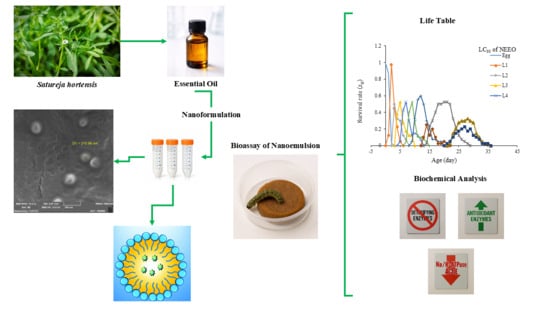
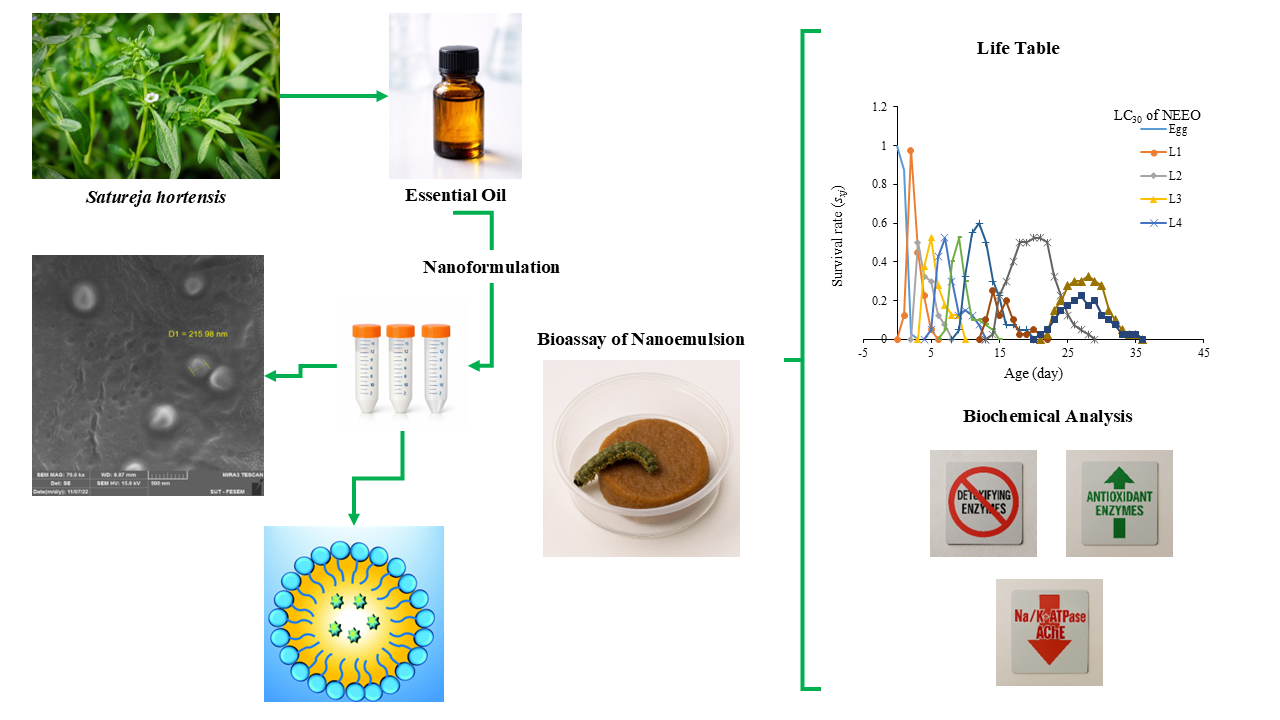
Graphical Abstract

1. Introduction

The fall armyworm, Spodoptera frugiperda (J. E. Smith, 1797), is a polyphagous moth species that causes significant economic losses by feeding on more than 350 plant species [1]. Affected crops include essential foods like maize, sorghum, rice, and soybeans, as well as industrial crops such as cotton [2]. The pest comes from tropical and subtropical regions of the Americas, and outside its native range, was first reported in West Africa in early 2016 [3]. It quickly spread throughout sub-Saharan Africa, reaching more than 109 countries by 2022, and later expanded into India, China, and other nearby regions [3,4]. In October 2023, S. frugiperda was found for the first time in Iran, specifically in the Orzuiyeh region of Kerman Province [5]. During 2016, 17 S. frugiperda outbreaks occurred, and many governments provided farmers with free pesticides and equipment, but these efforts were not enough [6,7]. The rapid reproduction, migratory habits, and adaptability of the pest, as well as the quick onset of insecticide resistance among exposed populations, have challenged control strategies [8]. For instance, in Brazil, Carvalho et al. found that S. frugiperda showed 18 to 28 times more resistance to organophosphates and pyrethroids compared to non-resistant populations, allowing for significant population growth [9].
Botanical insecticides are considered a promising option for pest management, particularly due to their potential to control pest populations [10,11,12]. In line with the principles of integrated pest management (IPM), the development of eco-friendly pest control tools based on plant-derived compounds represents an important step toward reducing dependence on conventional synthetic insecticides and promoting more sustainable agricultural practices [13]. Unlike synthetic pesticides, botanical insecticides such as EOs are generally considered safer since they decompose quickly, leave little residue, and are less likely to harm humans and non-target organisms [14]. Their multiple modes of action against target pests can also decrease the resistance issue [15,16]. However, EOs come with limitations, including low water solubility, rapid degradation, and high volatility, which make their direct application in the field difficult. So, developing stable and efficient delivery systems is crucial to improve their effectiveness. In this context, NEEOs have become an important strategy, as they create spherical nanodroplets by mixing immiscible liquids, like EOs and water, with an appropriate emulsifying agent to lower interfacial tension. This method allows for more efficient application of EOs, making them safe alternatives to conventional synthetic pesticides [17].
Summer savory, Satureja hortensis L., is one of the most popular species from the Lamiaceae family, which is cultivated in many countries worldwide [18]. Its leaves and stems are commonly used fresh or dried as seasoning and in traditional medicine, particularly for digestive and respiratory purposes [18,19]. Previous studies confirm that S. hortensis EO, enriched by terpenenic compounds like carvacrol, γ-terpinene, and thymol, exhibits potent insecticidal and acaricidal activity against agricultural pests [20,21,22,23].
It was revealed that EOs have multiple modes of action against insect pests [14]. EOs can induce neurotoxic effects in insects, leading to behavioral symptoms similar to those caused by organophosphate insecticides [24]. Detoxifying enzymes play a substantial role in helping insects neutralize plant-derived chemicals, called xenobiotics, by removing harmful substances through different detoxification pathways [25,26,27]. The activation of carboxylesterases (CarEs), mixed function oxidases (MFOs), and glutathione S-transferases (GSTs) is a crucial defense mechanism. These enzymes are necessary for breaking down plant extracts and EOs by improving their water solubility, causing their swift removal from the insect’s body [28,29]. This enzymatic response enables insects to survive exposure to potentially harmful plant chemicals. In addition, physiological adjustments in insect pests may result in longer developmental periods, shorter adult lifespans, and reduced reproductive capacity across generations [30,31].
Therefore, this study aims to assess not only direct mortality but also the sublethal effects of S. hortensis and its nanoformulations, providing useful insights into their potential as biopesticides for integrated pest management (IPM) strategies targeting S. frugiperda. These effects are best evaluated through demographic toxicology approaches, using life tables and population projection models to measure long-term impacts on pest populations. Key metrics include developmental delays, reproductive suppression, and population growth inhibition, all crucial for predicting the real-world effectiveness of sustainable pest control systems.

2. Results

2.1. Chemical Profile of the EO

The S. hortensis EO was analyzed by GC-MS, which allowed for identification of 38 components (96.1% of the total composition (Table 1)). The main compounds in the EO were carvacrol (24.0%), γ-terpinene (21.3%), p-cymene (19.2%), and α-pinene (6.0%).

2.2. Morphological Characterization of S. hortensis NEEO

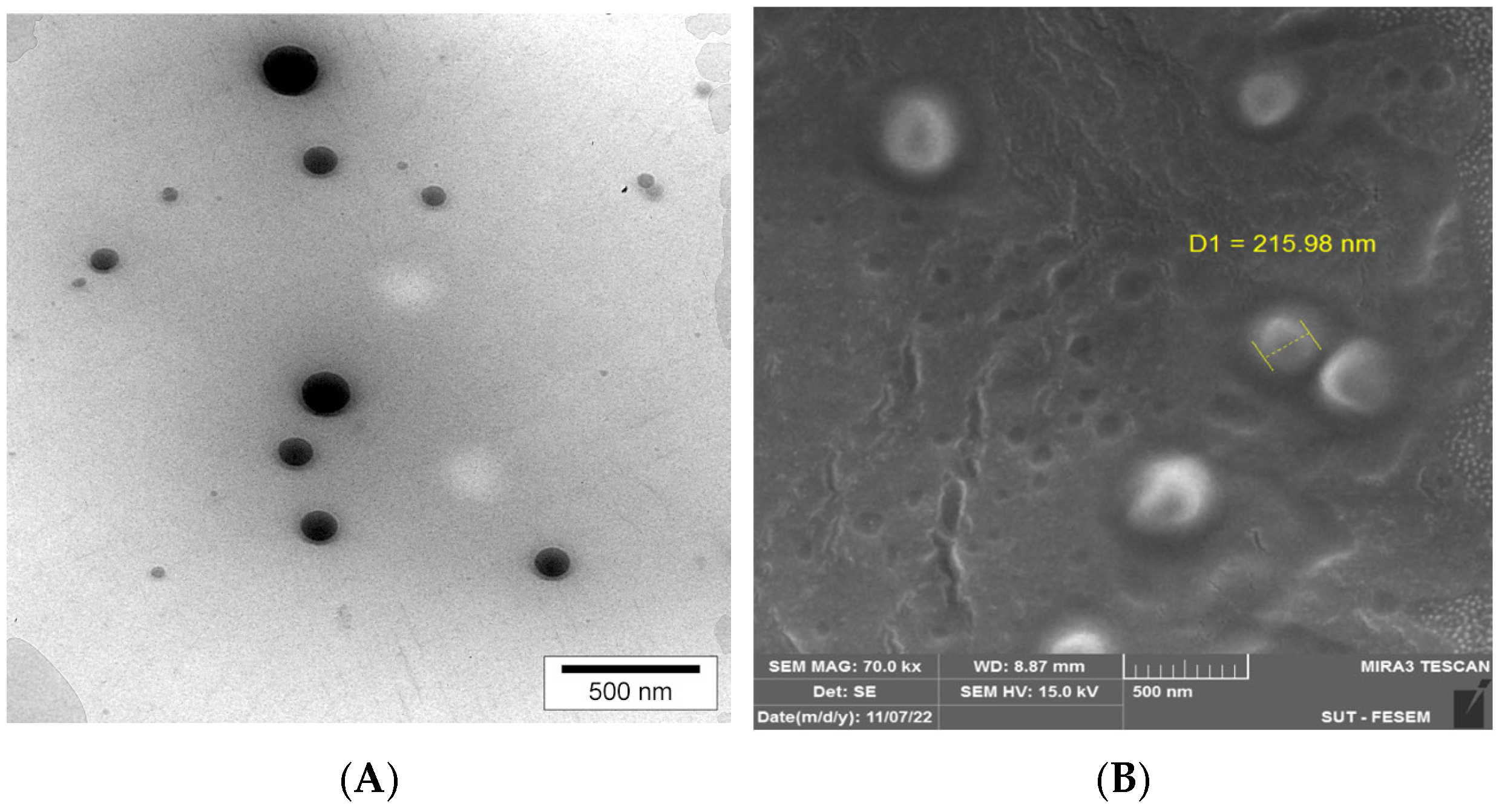
The morphological structure of the S. hortensis NEEO was clearly evident in microscopic analyses. According to the TEM image (Figure 1A), the synthesized nanoparticles were well-dispersed, spherical, and exhibited smooth, uniform surfaces, predominantly within a size range <250 nm. SEM analysis of the particle surfaces (Figure 1B) further confirmed this spherical morphology, indicating the absence of aggregation and demonstrating the stability of the droplets throughout the NEEO preparation process.

2.3. Toxicity

Results revealed a clear concentration-dependent mortality of the second-instar larvae of S. frugiperda exposed to S. hortensis EO and its NEEO. Both treatments induced dose-dependent larval mortality, although the NEEO exhibited significantly higher toxicity compared to the unformulated EO. The calculated LC30 and LC50 values for S. hortensis EO were 0.743% and 1.186% (w/v), respectively, while these values for the NEEO were lower: 0.577% and 0.922% (w/v), indicating an increase in insecticidal potency (Table 2).

2.4. Life Table Study

Developmental durations of S. frugiperda varied significantly among treatments: see the LC30 values of the EO, NEEO, and control groups (Table 3). Egg incubation period was shorter in the NEEO treatment (1.87 ± 0.05) compared with the EO (2.18 ± 0.06) and control (2.26 ± 0.07). In both treatments, the development was accelerated in the first–third and fifth–sixth instar larvae, in which the LC30 of the NEEO had the strongest effect. No significant difference occurred in the fourth instar or prepupal stage. Pupal duration was significantly shorter in the EO (7.48 ± 0.09) and NEEO treatments (7.52 ± 0.10) than in the control (9.03 ± 0.11).
Total preadult duration was reduced from 29.74 ± 0.26 (control) to 24.26 ± 0.41 (NEEO), with EO yielding intermediate results. The preadult survival rate decreased from 0.85 ± 0.05 for the control to 0.72 ± 0.07 and 0.57 ± 0.07 for the EO and NEEO, respectively (Table 3).
Adult longevity decreased significantly in both sexes under sublethal exposure. Females lived for 9.56 ± 0.12 in the control group and 8.07 ± 0.16 and 7.69 ± 0.13 in the EO and NEEO treatments, respectively; males showed the same trend (shortest in LC30 nano: 6.70 ± 0.21). Thus, total lifespan was reduced significantly in treated cohorts (Table 3).
The adult pre-oviposition period (APOP) was prolonged slightly, while the total pre-oviposition period (TPOP) was reduced under both treatments. Fecundity decreased drastically in the EO and NEEO groups. The oviposition period was also shortened from 6.61 ± 0.12 to 4.64 ± 0.19 and 4.38 ± 0.18 for the control group and EO and NEEO treatments, respectively (Table 3).
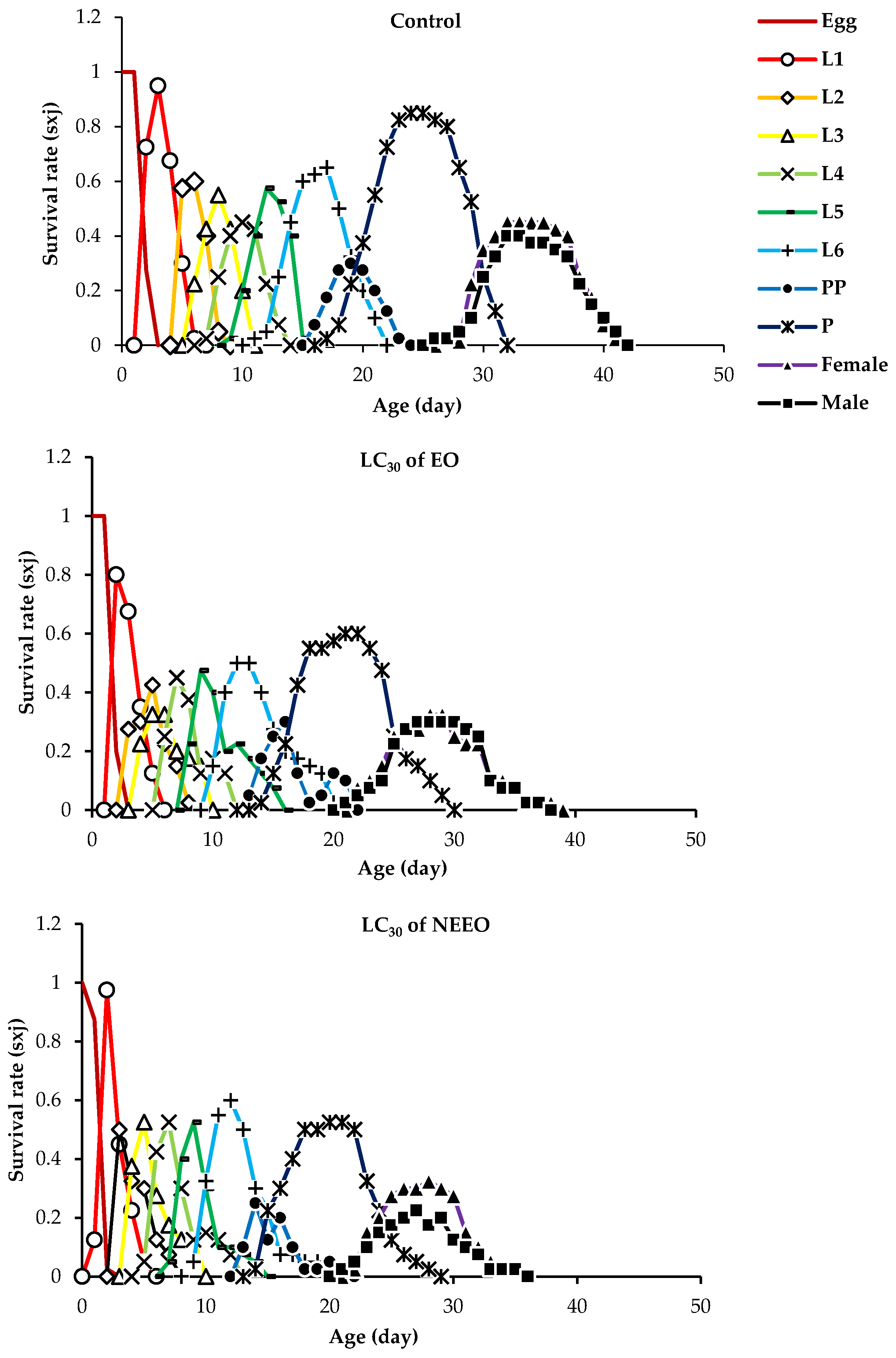
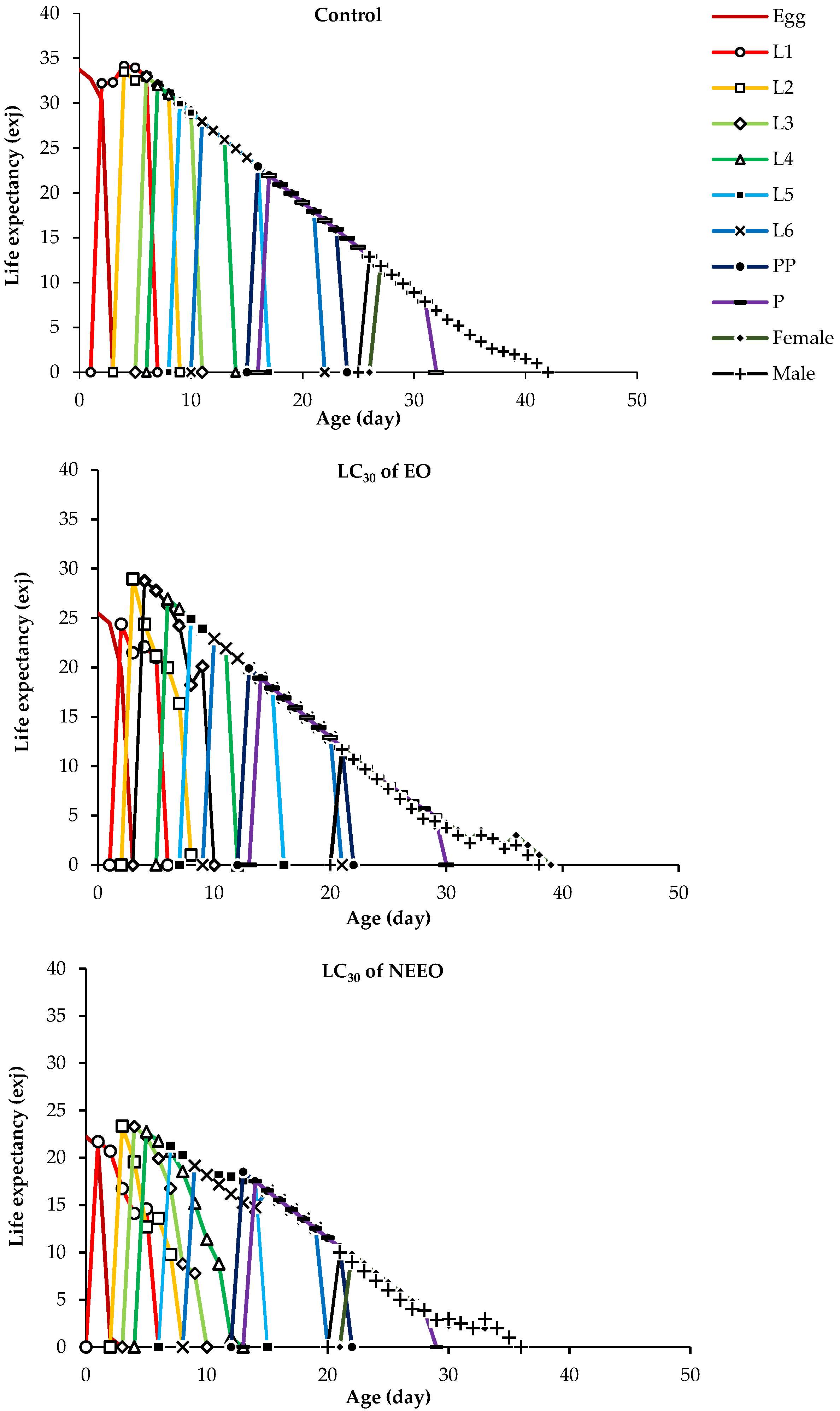
Age-stage-specific survival rate (sxj) and life expectancy (exj) of the insect pests are shown in Figure 2 and Figure 3. The survival rate and life expectancy were highest in early instars and decreased progressively.
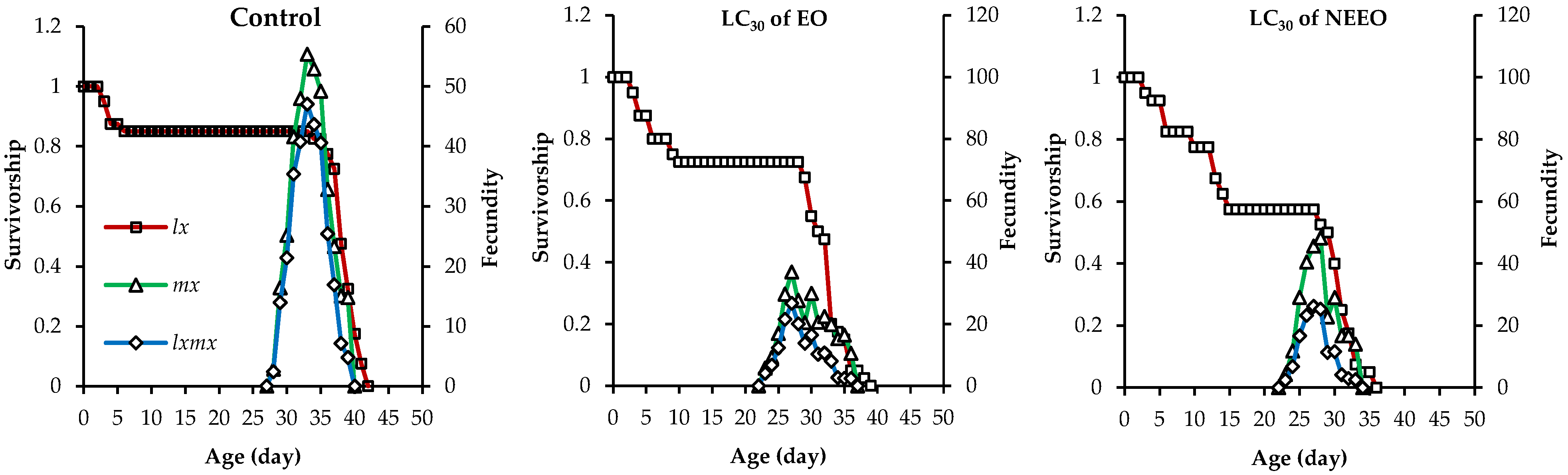
Age-specific survivorship (lx), fecundity (mx), and maternity (lxmx) confirmed that peak reproductive contribution occurred shortly after adult emergence (Figure 4).
Population parameters were differentially affected. Gross reproductive rate (GRR) did not exhibit any significant differences, though numerically higher in nanoformulation treatment. The net reproductive rate (R0) significantly decreased from 299.51 ± 52.59 offspring/individuals in the control group to 158.25 ± 34.58 and 133.45 ± 30.72 offspring/individuals in EO and NEEO treatments. Intrinsic rate of increase (r) and finite rate of increase (λ) remained statistically unchanged, ranging from 0.168 to 0.176 d−1 and 1.18–1.19 d−1, respectively. Mean generation time (T) was significantly reduced from 33.83 ± 0.35 (control) to 28.69 ± 0.65 (LC30) and 27.95 ± 0.43 (LC30 nano) (Table 4).

2.5. Antioxidant Enzyme Activity

Treatments had a significant impact on antioxidant enzyme activities in second instar S. frugiperda larvae (Table 5). CAT and SOD activities increased with both concentration and formulation type. CAT activity was highest in the LC50 NEEO group (0.669 ± 0.009), followed by the LC30 NEEO (0.615 ± 0.002), LC50 EO (0.578 ± 0.003), and LC30 EO (0.553 ± 0.003), all significantly above the control (0.503 ± 0.005) (F = 127.66; df = 4,14; p < 0.0001). Similarly, SOD activity peaked in the LC50 NEEO (0.402 ± 0.009), followed by the LC30 NEEO (0.371 ± 0.002), LC50 EO (0.342 ± 0.003), and LC30 EO (0.300 ± 0.003), exceeding the control (0.282 ± 0.005) (F = 79.11; df = 4,14; p < 0.0001).

2.6. Detoxifying Enzymes Activity

The activities of detoxifying enzymes, α-NE, β-NE, GST, and CYP450, varied significantly among treatments in the second instar larvae of S. frugiperda (Table 6). The α-NE and β-NE activities showed a dose- and formulation-dependent decrease, with the highest value in the control (0.209 ± 0.008 and 0.350 ± 0.008, respectively) and the lowest in the LC50 NEEO (0.124 ± 0.003 and 0.181 ± 0.015). In contrast, GST activity increased significantly with treatment intensity. The highest GST activity with DCNB as substrate was observed in the LC50 NEEO (0.304 ± 0.001), and the lowest in the control (0.142 ± 0.016) (F = 40.59, df = 4,14; p < 0.0001), whereas the highest GST activity with CDNB was recorded in the LC50 NEEO (0.433 ± 0.010) and the lowest in the control (0.177 ± 0.012) (F = 29.93, df = 4,14; p < 0.0001). CYP450 activity followed a pattern similar to that of the esterases, with the highest value observed in the control group (0.101 ± 0.008) and the lowest in larvae exposed to the LC50 NEEO (0.041 ± 0.003) (F = 22.04, df = 4,14; p < 0.0001).

2.7. Acetylcholinesterase Activity

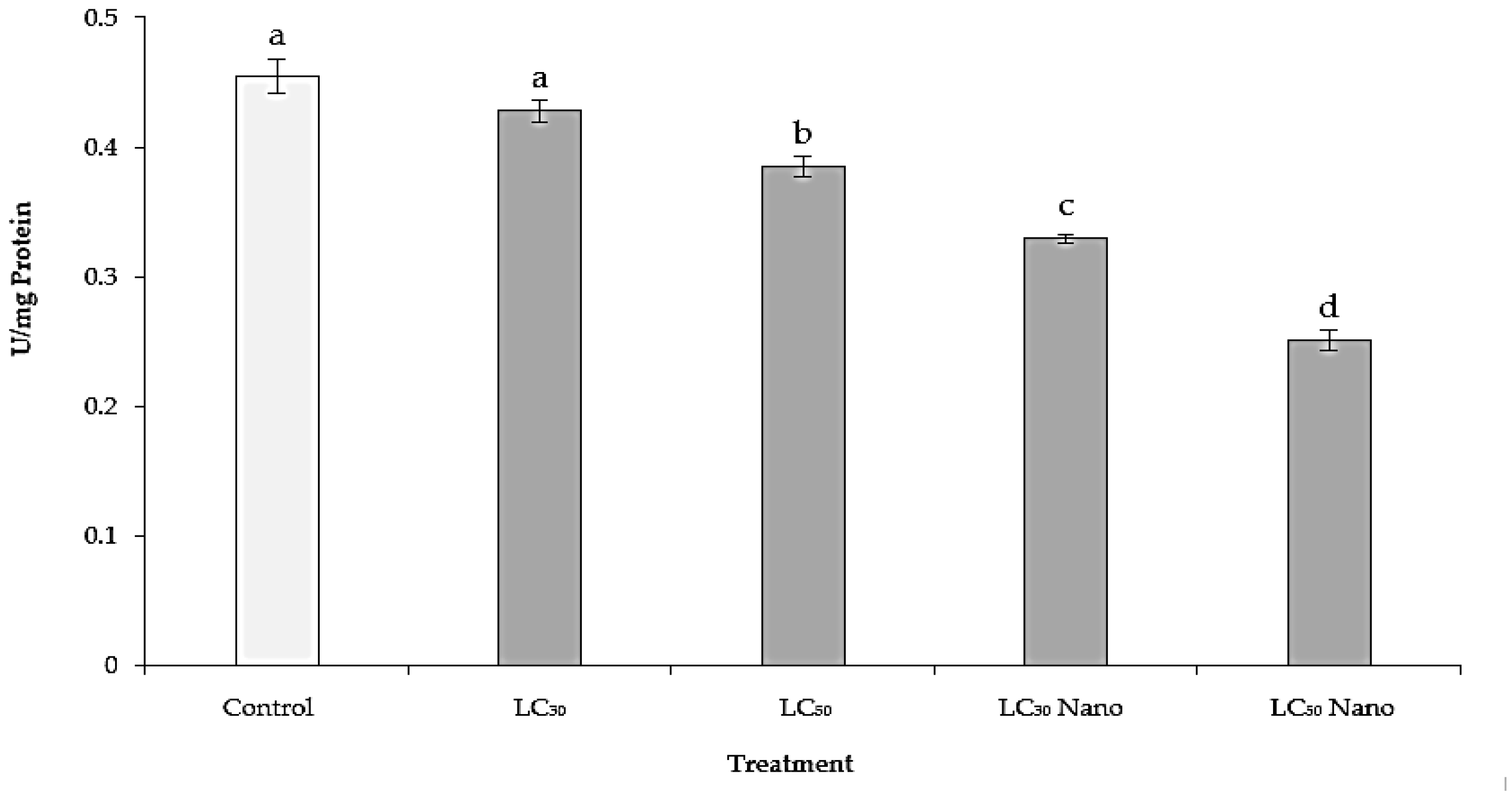
AChE activity in S. frugiperda larvae was significantly inhibited by both EOs and NEEOs in comparison with the control (Figure 5). The highest AChE activity was found in the control group (0.454 ± 0.013), followed by larvae exposed to the LC30 (0.428 ± 0.009) and LC50 (0.385 ± 0.007) of the EO. The NEEO induced a more pronounced inhibition, with AChE activity declining to 0.329 ± 0.003 at the LC30 and further to 0.251 ± 0.008 at the LC50 values (F = 87.1; df = 4,14; p < 0.0001).

2.8. Na+/K+-ATPase Activity

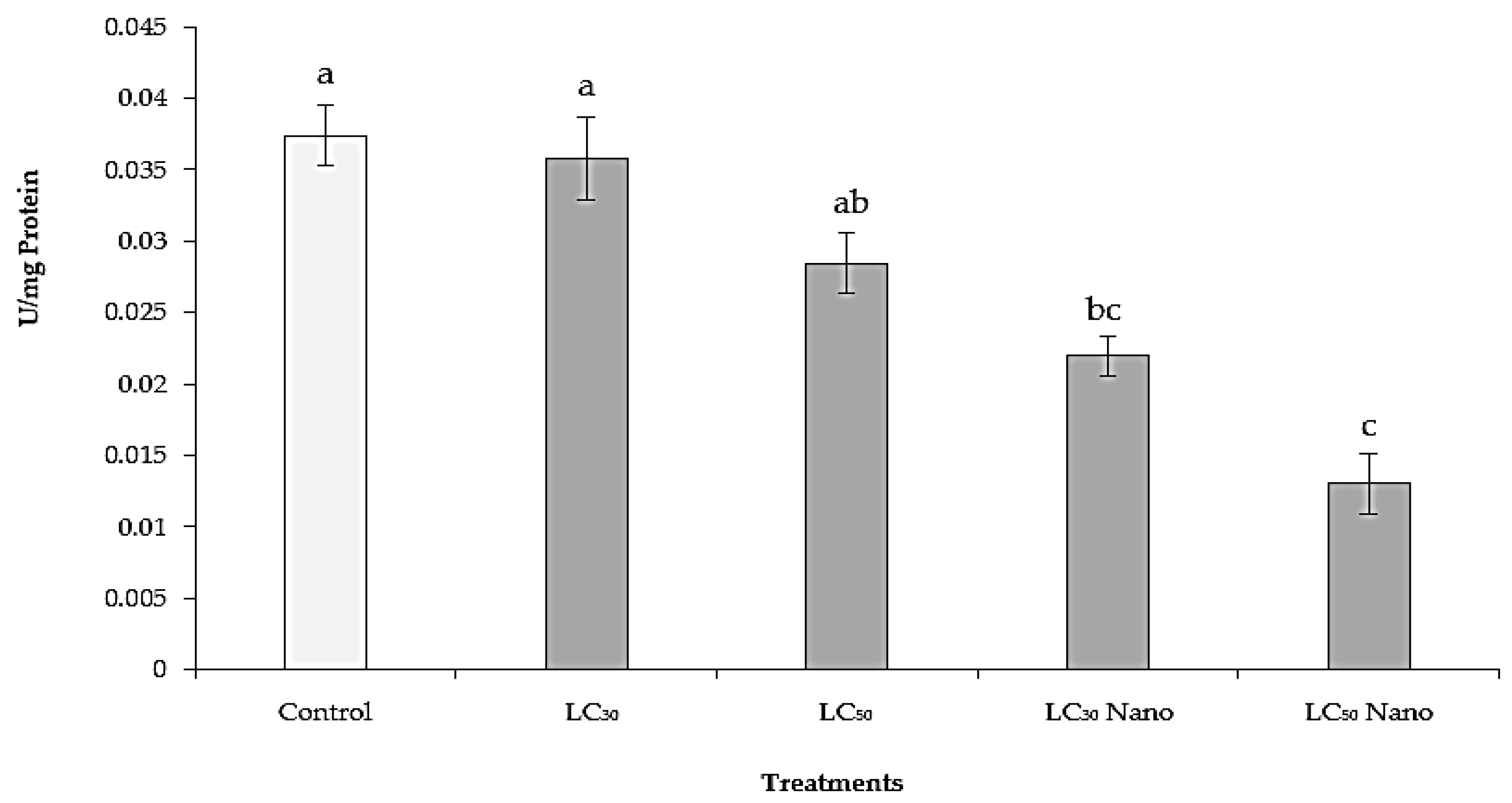
Exposure to both EOs and NEEOs significantly inhibited the activity of Na+/K+-ATPase in S. frugiperda larvae (Figure 6). The control exhibited the highest activity (0.0374 ± 0.0022), which was statistically comparable to that observed at LC30 of the EO (0.0358 ± 0.0029). A moderate decrease occurred at LC50 of the EO (0.0285 ± 0.0022), whereas the NEEO produced substantially greater inhibition, reducing activity to 0.0220 ± 0.0014 (LC30) and 0.0130 ± 0.0022 (LC50). Treatment groups differed significantly (p < 0.05), with LC50 of the NEEO causing the highest suppression (F = 20.85; df = 4,14; p < 0.0001).

3. Discussion

EOs are among the most promising plant-derived alternatives for sustainable insect pest management. In recent years, growing scientific interest has focused on evaluating their insecticidal potential, as EOs are environmentally friendly, biodegradable, and exhibit low toxicity to mammals [32,33]. Studies on insect pest control using EOs have revealed multiple mechanisms against target species [34]. However, practical challenges such as high volatility and instability have limited their large-scale application. Nanotechnology provides effective solutions to these issues, improving the efficiency and field applicability of eco-friendly insecticides. Advanced formulations, including NEEOs and encapsulation, enhance stability, enable controlled release, and increase efficacy while reducing required doses and environmental impact [16].
The leaves of S. hortensis are rich in diverse secondary metabolites with insecticidal activity, which can affect or alter insect physiology, highlighting their potential as a natural source for pest management [35]. In the present study, the chemical composition of S. hortensis EO was predominantly characterized by carvacrol (24.0%), γ-terpinene (21.3%), and p-cymene (19.2%). Similar compositional profiles have been reported in previous studies on S. hortensis EO, where these monoterpenoid compounds were identified as the major constituents [36,37]. For instance, Ilić et al. [38] reported that the EO of S. hortensis was mainly composed of carvacrol (48.7–53.25%), γ-terpinene (32.7–36.8%), p-cymene (3.2–3.4%), α-terpinene (2.9–3.5%), and limonene (1.3–1.9%). Similarly, Sefidkon et al. [39] found that S. hortensis EO predominantly contained carvacrol (56.1%) and p-cymene (14%). Other studies have also identified carvacrol, p-cymene, and γ-terpinene as the predominant constituents of S. hortensis EO [40,41]. Furthermore, analysis of 30 S. hortensis EO samples collected from different regions of Iran revealed two major chemical profiles: one characterized by carvacrol (42.0–58.2%), γ-terpinene (18.3–28.5%), and p-cymene (4.3–14.9%), and another strongly dominated by carvacrol (76.0–83.3%) [42].
These compounds are known to exhibit considerable biological activity against insect pests. Their insecticidal properties have been associated with the disruption of membrane permeability, interference with respiratory activity, and alterations in neurophysiological processes in insects [43,44]. Such physiological disturbances may contribute to both the lethal and sublethal effects observed following exposure to EO [45,46]. Variations in the relative abundance of EO constituents among different studies have frequently been reported and may be attributed to several factors, including geographical origin, environmental conditions (such as temperature, soil characteristics, and ecological stress), plant developmental stage, cultivation practices, and extraction procedures [47,48]. These variations can influence the biological efficacy of EOs against insect pests. Nevertheless, the predominance of bioactive monoterpenes in S. hortensis EO highlights its potential as a natural source of insecticidal compounds and supports its possible application in environmentally sustainable pest management programs [49].
Nanotechnology is an effective approach developed for protecting EOs from environmental impacts while improving their stability and bioavailability. This technique is beneficial in the preparation of NEEOs, where small oil droplets in the internal phase (approximately 20–1000 nm) enable effective dispersion of water-insoluble compounds, such as EOs [50]. Low-energy methods produce smaller droplets with better homogeneity than conventional approaches, allowing uniform spraying onto target surfaces and enhancing bioavailability and efficacy [51]. Recent studies have demonstrated that NEEO formulations of EOs can effectively enhance their stability and bioactivity [52,53,54]. The technique employed in this study is regarded as a “green technology” due to their high efficiency in ultrasonic homogenization and minimal equipment requirements. This approach uses less energy and surfactant while producing more uniform droplets that are smaller than those achieved with traditional mechanical methods [55,56]. In the present study, a NEEO of S. hortensis EO was successfully prepared using an oil-in-water emulsification method and characterized by SEM and TEM analyses. The obtained droplets were uniformly spherical, amorphous in structure, and smooth-surfaced, with an average diameter of approximately 215 nm. This droplet size falls within the typical nanometric range reported for EO NEEOs. For instance, NEEOs of Jasminum azoricum L. and Mentha arvensis L. have been reported to produce spherical particles with average diameters of approximately 199 nm and 333 nm, respectively [57]. Similarly, Tween 80-stabilized NEEOs of Eucalyptus globulus Labill. EO formed uniform spherical droplets with a mean diameter of 182.21 ± 35.68 nm, which contributed to improved physical stability and enhanced penetration through the insect cuticle [58]. Comparable morphological features have also been reported for plant EO NEEOs produced by ultrasonication methods, where reduced droplet size and homogeneous dispersion were associated with improved stability, increased surface area, and enhanced biological performance of the encapsulated compounds [59,60]. Moreover, previous studies have demonstrated that reducing droplet size to the nanometric scale facilitates the penetration and bioavailability of hydrophobic EO constituents in insect tissues, thereby increasing their insecticidal activity [61]. Therefore, the enhanced biological performance observed for the NEEO in the present study may be attributed, at least in part, to its favorable physicochemical characteristics, particularly its small droplet size and uniform morphology. Overall, these findings are consistent with previous reports and further confirm that nanoemulsification is an effective approach for overcoming the inherent limitations of EOs and improving their applicability in pest management strategies [62].
Previous studies have demonstrated the insecticidal activity of S. hortensis EO against various insect pests [22,63]. The results clearly indicate that the NEEO formulation enhanced the insecticidal activity of S. hortensis EO against second-instar S. frugiperda larvae. Specifically, the LC50 value of the NEEO (0.922%) was lower than that of the crude oil (1.186%), corresponding to a 1.28-fold increase in toxicity. Moreover, mortality in both treatments followed a concentration-dependent trend, while the NEEO consistently produced greater larvicidal activity than the non-formulated oil. The insecticidal activity of the EO may be associated with the presence of several bioactive constituents, particularly carvacrol, which has been reported as the predominant compound exhibiting strong toxicity against a wide range of insect pests [64,65]. In the NEEO, the insecticidal performance of carvacrol may be further enhanced through synergistic interactions with other phytochemical constituents in combination with the reduced droplet size of the formulation [66,67,68]. Moreover, the increased toxicity of the NEEO may be related to its improved dispersion and physicochemical stability, as well as the enhanced penetration and delivery of active compounds through the insect cuticle and digestive tract. Similar findings have been reported in previous studies, where nano-formulated EOs showed significantly higher toxicity against insect pests compared with bulk EOs [69,70]. For example, nanoencapsulation of botanical insecticides has been shown to increase the persistence and bioavailability of volatile terpenoid compounds, resulting in enhanced larvicidal activity and reduced effective concentrations [71]. In addition, the NEEO of lemon peel EO was also more active than the pure EO against Agrotis ipsilon (Hüfnagel), achieving 90% larval mortality at a concentration of 75 mg/mL [72]. Likewise, a NEEO of Allium sativum L. EO showed improved larvicidal activity against S. littoralis (Boisduval) with a LC50 of 12.5 µL/mL, effectively reducing larval feeding [73]. Furthermore, nanoencapsulation of Piper aduncum L. EO significantly enhanced its insecticidal activity against S. frugiperda compared to the unformulated EO, while reducing phytotoxicity and increasing stability [74]. Overall, the present findings demonstrate that NEEOs significantly enhance the insecticidal performance of plant EOs. The enhanced insecticidal activity observed for the NEEO formulation can be attributed to several physicochemical properties of NEEOs. The substantially reduced droplet size leads to a larger interfacial surface area and improved dispersion stability, which can facilitate closer interaction between the active compounds and the insect cuticle. These characteristics may enhance the penetration and bioavailability of hydrophobic EO constituents within insect tissues. Furthermore, NEEOs can improve the transport and distribution of bioactive molecules across biological barriers, thereby increasing their toxicological impact on target organisms. Such improved delivery and penetration of active compounds has been widely reported as one of the main factors responsible for the enhanced bioactivity of nanoformulated botanical insecticides [70,75].
Although the NEEO exhibited high bioactivity and satisfactory dispersion properties during the experimental period, the long-term storage stability of the formulation was not evaluated in the present study. Storage stability is an important factor influencing the practical applicability and shelf life of nanoformulated pesticides. Therefore, further studies are required to investigate the physicochemical stability of the NEEO under different storage conditions and over extended periods to ensure its suitability for large-scale application [60].
Reproductive traits such as r, R0, λ, and GRR are essential for explaining how nutrition affects the fitness and reproductive capacity of insect pests [76]. Studies have shown that the type and quality of nutrition impact insect reproductive performance; consequently, inadequate nutrition may lead to stunted development, reduced fecundity, and diminished reproductive potential in insect populations [77,78]. Although high mortality in pest populations is often a primary goal in pest management, it should not be regarded as the sole objective of botanical insecticide applications [14], since achieving such effects typically requires higher doses and substantial biomass. Therefore, sublethal effects on the pest’s life cycle including oviposition, reproduction, and demographic parameters are also highly relevant and desirable within integrated pest management (IPM) strategies [79]. In the present study, both the LC30 of the S. hortensis EO and its NEEO significantly suppressed the development, preadult survival, adult longevity, and reproductive performance of S. frugiperda, with the NEEO exhibiting stronger effects. Specifically, larval and preadult durations, fecundity, and oviposition period were more reduced following nano treatment. These findings are consistent with previous studies indicating that plant EOs, owing to the presence of compounds such as α-pinene, limonene, and terpinen-4-ol, are capable of inhibiting the developmental stages of insect pests and reducing their lifespan [79,80,81,82]. For instance, the EOs of Eugenia uniflora and Melaleuca armillaris significantly reduced the mean generation time of S. frugiperda [83]. Nanoencapsulation of Cymbopogon citratus (DC.) Stapf was shown to exert more pronounced adverse effects on the developmental duration, preadult survival, and reproductive parameters of S. frugiperda compared to the pure EO [84]. Overall, the present findings indicate that S. hortensis EO, particularly its NEEOs, has strong potential to suppress S. frugiperda life-history parameters by targeting multiple biological traits.
Detoxification enzymes such as CarEs, GSTs, and CYPs break down and eliminate external compounds, including pesticides and plant allelochemicals. Antioxidant enzymes like SOD and CAT reduce reactive oxygen species (ROS), which can arise during metabolic or environmental stress. Through their complementary roles, these two enzymes protect the cell by preserving homeostasis in the presence of chemical stress [85,86]. Previous studies have revealed that EOs can significantly disrupt insect physiology by inducing or suppressing the activities of detoxifying and antioxidant enzymes [87]. Based on findings of the current study, the NEEO of S. hortensis EO was found to increase GST, CAT, and SOD activities, along with reducing general esterase and P450 activities in S. frugiperda in a concentration-dependent manner compared with the pure EO. In line with our results, the EOs of Rosmarinus officinalis L., Thymus vulgaris L., and Cymbopogon citratus Stapf. inhibited the activity of detoxification enzymes, including cytochrome P450s, esterases, and glutathione S-transferases, in Trichoplusia ni Hübner larvae [88]. The NEEO of Cymbopogon winterianus Jowitt ex Bor enhanced CAT and GST activities in Tribolium castaneum Herbst more effectively than the pure EO [89]. Exposure to Origanum majorana L. and Matricaria chamomilla L. EOs and their NEEOs significantly increased GST and MFO activities in Aphis craccivora Koch [90]. The major terpenes present in Satureja species’ EOs, such as carvacrol and γ-terpinene, appear to reduce general esterase activity and inhibit cytochrome P450 monooxygenase function, thereby contributing significantly to their insecticidal effects [91,92,93]. Meanwhile, the observed increase in CAT activity is likely a regulatory response to elevated SOD activity and H2O2 levels, protecting insects against ROS-induced damage [94,95].
EOs and their components can inhibit AChE, impair neural transmission, and lead to paralysis and mortality. Additionally, these compounds may reduce Na+/K+-ATPase activity, disturbing ionic balance and cellular stability [96]. The disruption of both neural and ionic pathways generates potent toxicity and lowers the likelihood of developing resistance [97]. Our findings confirm that the EO of S. hortensis and its NEEO significantly inhibited AChE and Na+/K+-ATPase activities in S. frugiperda larvae. Notably, the inhibition of AChE and Na+/K+-ATPase enzymes by the NEEO was more effective, which corresponded with higher larval mortality. The observed inhibition of these key enzymes could be attributed to the presence of terpenic compounds recognized in the EO of S. hortensis, including thymol and p-cymene [98,99]. Moreover, the inhibition of Na+/K+-ATPase activities could make it a potential enzymatic target for its inhibition, increasing intracellular ion concentrations, promoting neuronal hyperexcitation, and ultimately leading to knockdown and mortality [100]. The bioactive components of Artemisia lavandulaefolia DC. EO, including β-pinene and terpinen-4-ol, significantly suppressed AChE and Na+/K+-ATPase activities in P. xylostella [101]. Thymol has been reported to exert significant inhibitory effects on AChE and Na+/K+-ATPase activities in Helicoverpa armigera (Hübner) [102]. Consistent with present findings, O. majorana and Rosmarinus officinalis L. EOs significantly inhibited AChE and Na+/K+-ATPase activities in A. ipsilon larvae [103]. These findings suggest that changes in the activity of such enzymes are a key mechanism underlying insecticidal effects, and it may also contribute significantly to the enhanced bioefficacy of the NEEO against target pests. Although the present study demonstrated promising insecticidal activity of the NEEO formulation under laboratory conditions, it did not include a commercial insecticide as a benchmark control. Future studies should therefore compare its efficacy with commercially available products to better assess its practical competitiveness within IPM programs.

4. Materials and Methods

4.1. Insects

Spodoptera frugiperda larvae and pupae were collected from maize fields around Ahvaz, Iran (31°20′–31°45′ N, 48°02′–48°40′ E), in early autumn. Larvae were reared on an artificial diet prepared according to Parra [104]. The diet included agar, ascorbic acid, brewer’s yeast, carioca beans, formaldehyde, methyl 4-hydroxybenzoate, sorbic acid, wheat germ, and a mix of phosphoric acid, propanoic acid, and water to keep microbes at bay. Diet preparation process started by boiling the beans in water, then the combined equal parts of that bean broth and distilled water to dissolve the agar for the final mixture. Adults were given a 10% honey solution. The rearing was carried out in a chamber kept at 25 ± 2 °C, with a relative humidity of 70 ± 10% and a 12:12 h photoperiod [105].

4.2. EO Extraction

Aerial parts of S. hortensis were gathered from farms in Varamin, Iran (35.35028° N, 51.63639° E). The plant material was dried in the shade and manually ground into a fine powder. Plant powder (50 g) was mixed with distilled water (750 mL), allowed to soak for 24 h, and subjected to hydrodistillation for 2 h using a Clevenger-type apparatus (J3230, Sina glass, Tehran, Iran) [43,106], following British Pharmacopoeia guidelines [British Pharmacopoeia Commission]. This process was repeated several times to obtain an adequate amount of EO. The obtained EO was dehydrated using Na2SO4 and kept at 4 °C.

4.3. Analysis of the EO

The S. hortensis EO was analyzed by gas chromatography-mass spectrometry (GC-MS). The instrument used was an Agilent 7890B gas chromatograph coupled to an Agilent 5977A mass spectrometric detector (Santa Clara, CA, USA). The GC column was an HP-5 ms capillary column 30 m in length, 0.25 mm in diameter, and with a thickness 0.25 µm. Helium was used as the carrier gas with a flow rate of 1.0 mL/min and a column head pressure set to 100 kPa. Retention indices were calculated using a series of n-alkanes (C8–C20) and the formula of van den Dool and Kratz [107]. The compounds were identified by comparison of the RI values and their mass spectral fragmentations with those found in the databases [108,109]. The percentages of the chemical components were determined based on peak integration without standardization.

4.4. Nanoformulation

S. hortensis NEEOs were formulated using Tween 80 (nonionic surfactant) and distilled water at the following proportions: 16.66% (v/v) EO, 16.66% (v/v) Tween 80, and 66.68% (v/v) distilled water. The resulting coarse emulsion was first homogenized by magnetic stirring and subsequently subjected to ultrasonication (200 W, 20 kHz, 10 min, 250 rpm) using a 13 mm diameter titanium probe (TT 13, Bandelin, Berlin, Germany). To prevent thermal degradation of the EO, the emulsion vessel was maintained below 10 °C using an ice bath (the emulsion ingredients were placed in a 100 mL container, which was submerged in a larger 200 mL ice bath during ultrasonication). Following ultrasonication, the formulations were centrifuged (5000 rpm, 10 min, 25 °C) to assess phase stability [110].

4.5. Characteristics of Nanoparticles

The physicochemical characterization of the synthesized NEEOs was conducted using transmission electron microscopy (TEM; Philips CM120, tungsten source, Eindhoven, The Netherlands) at an accelerating voltage of 80 kV. For TEM sample preparation, several droplets of the nanoparticle-containing emulsion were placed onto a carbon-coated copper grid to form a thin film and were subsequently stored in a dedicated grid box. Droplet morphology and emulsion stability were evaluated to confirm nanoscale dispersion according to the method reported by Sugumar [110]. For field-emission scanning electron microscopy (FE-SEM; Mira3, TESCAN, Brno, Czech Republic), the particle suspension was diluted 50-fold with double-ionized water and dried under vacuum at room temperature. Prior to analysis, the specimens were sputter-coated with a thin gold layer, and imaging was performed at an accelerating voltage of 10 kV [110].

4.6. Bioassays

The methodology described by de Menezes et al. [111], with slight modifications, was followed for larval bioassay. The S. hortensis EO was emulsified in an aqueous solution of 0.01 g/mL Tween® 80 solution (0.01 mL) and diluted in distilled water (20 mL). The solution was added to the artificial diet when it was in semi-liquid phase at a temperature of 35 ± 2 °C, conditions that minimize the volatilization of EO. Final concentrations of the EO and its nanoformulation in the diet were adjusted to 0.5, 0.8, 1.5, 2.5, and 4 mg/mL, based on the mortality rates estimated between 10 and 90% in preliminary bioassays [112]. Control treatments included 20 mL of distilled water and 0.01 mL of the Tween® 80 solution added to 200 mL of the artificial diet. After formulation, the diet with supplementation was allowed to solidify at room temperature. Aliquots (9 g portions) were prepared for each repetition. Newly molted second instar larvae were used in a completely randomized design, with 30 replicates per treatment. Individual larvae were confined in glass tubes (8 × 2.5 cm) containing portions of the diet (1 cm diameter × 1.5 cm height), and sealed with a cotton plug to prevent escape of the larvae.

4.7. Assessment of Life Table Parameters

To measure the life table parameters in S. frugiperda, newly emerged adults were paired and transferred to mesh cages to induce oviposition. Following a 24 h oviposition period, the adults were removed, and all deposited eggs were collected for further experimentation. Each egg was put individually into a plastic container with a treated artificial diet prepared according to standard rearing protocol [113,114]. The eggs were checked daily until hatching. Development and survival in larvae and pupae were monitored at 24 h intervals throughout the immature stages. After adult emergence, males and females were put together in oviposition chambers to evaluate their reproductive performance. Data related to pre-oviposition and oviposition periods, daily and total fecundity, total life span, and adult longevity were collected until the last individual in the cohort had died.

4.8. Preparation of Samples for Biochemical Tests

Second-instar larvae from each treatment and the control were used for enzyme activity assays. Each treatment was replicated three times, and each replicate consisted of 10 s instar larvae. The larvae were homogenized in phosphate buffer (pH 7.0) using a manual glass homogenizer. The homogenates were centrifuged at 13,000× g for 20 min at 4 °C, and the resulting supernatants were transferred to new microtubes. These supernatants were used as the enzyme source for subsequent biochemical analyses, which were performed using a microplate reader (BioTek EPOCH 2, Winooski, VT, USA).

4.9. Protein Quantification

The protein content was assayed using the Lowry et al. [115] method with a ready-to-use commercial kit (Ziest Chem Co., Ltd., Tehran, Iran). The enzyme extract (20 µL) was mixed with 100 µL of the reagent. After 30 min incubation at 25 °C, the absorbance was measured at 545 nm.

4.10. SOD

The SOD activity was evaluated using the xanthine oxidase–cytochrome c reduction method [116]. The reaction mixture contained 100 µL of xanthine oxidase, 500 µL of SOD solution in phosphate buffer (0.1 M, pH 7.0), and 10 mg of bovine serum albumin in 2 mL of buffer. After adding 60 µL of the supernatant, the incubation was carried out in the dark at 28 °C for 20 min. Enzymatic activity was quantified by measuring absorbance at 560 nm.

4.11. CAT

Enzymatic activity was measured following a modified protocol based on Wang et al. [117]. In brief, 50 µL of the supernatant from each treatment or control group was mixed with 500 µL of 1% (w/v) H2O2 in 50 mM phosphate buffer (pH 7.4). It was incubated at 28 ± 1 °C for 10 min, after which the reaction was stopped, and the degradation of H2O2 was determined by monitoring the absorbance at 240 nm.

4.12. General Esterase

General esterase activity was estimated according to van Asperen [118]. Homogenates from either treated or untreated larvae were placed into microtubes containing 1000 µL of phosphate buffer (0.1 M, pH 7.0) and 0.01% Triton X-100 and centrifuged (4 °C, 10 min). For the assay, 20 µL of each substrate (α- or β-naphthyl acetate, 10 mM) was mixed with 10 µL of Fast Blue RR salt (1 mM), 50 µL of phosphate buffer (20 mM, pH 7.0), and 10 µL of the enzyme extract. The mixtures were then incubated for 5 min at 25 °C before being read in a spectrophotometer with a wavelength of 450 nm.

4.13. GST

GST was measured by a modified spectrophotometric based on the method of Oppenorth et al. [119]. Each reaction mixture consisted of 40 µL of the enzyme-containing supernatant, 140 µL of phosphate buffer (0.1 M, pH 7.0), 100 µL of reduced glutathione (GSH), and 50 µL of CDNB (1-chloro-2,4-dinitrobenzene, 25 mM) and DCNB (3,4-dichloronitrobenzene, 20 mM) as substrates. The mixtures were incubated for 5 min at 25 °C. Enzyme activity was monitored by recording the absorbance at 340 nm.

4.14. CYP450

The activity of cytochrome P450 was assessed using the TMB oxidation method [120]. The assay was conducted in a 300 µL reaction mixture, comprising 55 µL of phosphate buffer (100 mM, pH 7.2), 55 µL of the enzyme extract, and 160 µL of TMB solution (0.5 mg/mL in methanol/acetate buffer). The reaction was started by adding 30 µL of 3% H2O2, incubating for 30 min at 25 °C, and the ensuing activity was measured spectrophotometrically at 630 nm.

4.15. AChE

The AChE activity was measured according to the method of Ellman et al. [121]. The 200 µL assay mixture consisted of 100 µL of sodium phosphate buffer (100 mM, pH 7.0), 50 µL of chromogenic reagent DTNB (100 mM), and 50 µL of substrate acetylthiocholine iodide (10 mM). After a preincubation period of 5 min, the reaction was initiated with the addition of 20 µL of the enzyme extract, and incubation was carried out at 25 °C for 30 min. The quantity of product generated was determined spectrophotometrically by absorbance at 405 nm.

4.16. Na+/K+-ATPase Assessment

Forty larvae were collected 48 h post-treatment, and each larva was weighed, cleaned, and homogenized in ice-cold Tris–HCl buffer (10 mM, pH 7.0) containing 0.32 M sucrose and 1 mM EDTA. Homogenate was centrifuged at 2500× g for 10 min at 4 °C. The pellet was then centrifuged at 22,000× g for 30 min and finally resuspended in Tris–HCl buffer (pH 7.4) containing 1 mM EDTA. It was stored at −20 °C until further analysis.
The activity of Na+/K+-ATPase was determined in three different reaction mixtures that consisted of the enzyme extract, 50 mM Tris–HCl (pH 7.0), and 5 mM MgCl2. The first mixture contained 150 mM NaCl and 20 mM KCl, the second contained 1 mM ouabain for determining ouabain-sensitive activity, and the third was used as a control. Each 1 mL reaction was performed in triplicate, preincubated for 5 min at 37 °C, and started with 1.5 mM ATP, followed by incubation for 15 min. Reactions were stopped with 15% ice-cold TCA. The inorganic phosphate was measured by reaction with 1% freshly prepared ascorbic acid and 1% ammonium molybdate in 0.5 N H2SO4. The absorbance was read at 625 nm after 30 min at 25 °C [122].

4.17. Data Analysis

Probit analysis, using the PoloPlus software (Version 2.0), was carried out to estimate lethal concentrations, LC10, LC30, and LC50, as well as their 95% CIs. The population parameters of intrinsic rate of increase (r), net reproductive rate (R0), finite rate of increase (λ), and mean generation time (T) were estimated using an age-stage, two-sex life table theory through the TWOSEX-MSChart program [113,114]. Standard errors for biological traits, such as fecundity, reproductive period, and developmental duration, and for population parameters were calculated using a bootstrap technique with 100,000 resamples to ensure stable and reliable results. Mean comparisons between treatments were performed using paired bootstrap tests. All bootstrap and paired bootstrap procedures were performed within the TWOSEX-MSChart software (Version 25/06/2023). Enzymatic activity data were arcsine square root transformed whenever necessary and then subjected to one-way analysis of variance (ANOVA). The means of treatment were separated using Tukey’s test (p < 0.05).

5. Conclusions

This study demonstrates that S. hortensis EO and its NEEO form exert strong lethal and sublethal effects on S. frugiperda. The NEEO increased the lethality of insect pests, reduced developmental periods, survival, fecundity, and population growth, and imposed stronger biochemical alterations, including elevated antioxidant activity and inhibition of detoxification enzymes, AChE, and Na+/K+-ATPase. It was found that the nanoemulsification enhanced the insecticidal potential of S. hortensis EO as a botanical tool for managing S. frugiperda. The limitations of the present study, including it being conducted under controlled laboratory conditions, its focus on larval stages, and its lack of non-target effects assessments, should be considered. Accordingly, future studies should validate these results under field-scale crop systems, non-target organism safety, and explore improved formulations or combinations with other biological and botanical control agents to strengthen their role in integrated pest management programs.

Author Contributions

Conceptualization, J.J.S. and A.E.; methodology, Z.A., M.O. and A.N.; formal analysis, Z.A., M.O. and W.N.S.; investigation, Z.A., M.O. and A.N.; data curation, Z.A., M.O. and A.N.; writing—original draft preparation, Z.A., M.O. and A.N.; writing—review and editing, J.J.S., A.E. and W.N.S.; supervision, J.J.S. and A.E. All authors have read and agreed to the published version of the manuscript.

Funding

This work was supported by the University of Guilan under Grant No G1404.

Data Availability Statement

The data presented are available on request from the corresponding authors.

Acknowledgments

This research was supported by the University of Guilan, which is greatly appreciated.

Conflicts of Interest

The authors declare no conflicts of interest.

References

  1. Mlambo, S.; Mubayiwa, M.; Tarusikirwa, V.L.; Machekano, H.; Mvumi, B.M.; Nyamukondiwa, C. The fall armyworm and larger grain borer pest invasions in Africa: Drivers, impacts and implications for food systems. Biology 2024, 13, 160. [Google Scholar] [CrossRef]
  2. Kenis, M.; Benelli, G.; Biondi, A.; Calatayud, P.A.; Day, R.; Desneux, N.; Wu, K. Invasiveness, biology, ecology, and management of the fall armyworm, Spodoptera frugiperda. Entomol. Gen. 2022, 17, 187–241. [Google Scholar] [CrossRef]
  3. Nagoshi, R.; Htain, N.; Boughton, D.; Zhang, L.; Xiao, Y.; Nagoshi, B.; Mota-Sanchez, D. Southeastern Asia fall armyworms are closely related to populations in Africa and India, consistent with common origin and recent migration. Sci. Rep. 2020, 10, 1421. [Google Scholar] [CrossRef] [PubMed]
  4. Abbas, A.; Ullah, F.; Hafeez, M.; Han, X.; Dara, M.Z.N.; Gul, H.; Zhao, C.R. Biological control of fall armyworm, Spodoptera frugiperda. Agronomy 2022, 12, 2704. [Google Scholar] [CrossRef]
  5. Naseri, M.; Bemani, M.; Alipanah, H.; Noorbakhsh, S.; Zohdi, H. First report of the fall armyworm, Spodoptera frugiperda (Lepidoptera: Noctuidae: Noctuinae) from Iran. J. Entomol. Soc. Iran 2024, 44, 111–116. [Google Scholar] [CrossRef]
  6. Salato, Z. Fall armyworm status in Ethiopia. In Proceedings of the Fall Armyworm Monitoring and Early Warning Midterm Evaluation Meeting, Kigali, Rwanda, 6 December 2018; Ministry of Agriculture: Kigali, Rwanda, 2018. [Google Scholar]
  7. Hruska, A.J. Fall armyworm (Spodoptera frugiperda) management by smallholders. CABI Rev. 2019, 14, 103753. [Google Scholar] [CrossRef]
  8. Paredes-Sánchez, F.A.; Rivera, G.; Bocanegra-García, V.; Martínez-Padrón, H.Y.; Berrones-Morales, M.; Niño-García, N.; Herrera-Mayorga, V. Advances in control strategies against Spodoptera frugiperda: A review. Molecules 2021, 26, 5587. [Google Scholar] [CrossRef]
  9. Carvalho, R.A.; Omoto, C.; Field, L.M.; Williamson, M.S.; Bass, C. Investigating the molecular mechanisms of organophosphate and pyrethroid resistance in the fall armyworm Spodoptera frugiperda. PLoS ONE 2013, 8, e62268. [Google Scholar] [CrossRef]
  10. Ebadollahi, A.; Ziaee, M.; Palla, F. Essential oils extracted from different species of the Lamiaceae plant family as prospective bioagents against several detrimental pests. Molecules 2020, 25, 1556. [Google Scholar] [CrossRef]
  11. Lengai, G.M.; Muthomi, J.W.; Mbega, E.R. Phytochemical activity and role of botanical pesticides in pest management for sustainable agricultural crop production. Sci. Afr. 2020, 7, e00239. [Google Scholar] [CrossRef]
  12. Divekar, P. Botanical pesticides: An eco-friendly approach for management of insect pests. Acta Sci. Agric. 2023, 7, 58–81. [Google Scholar] [CrossRef]
  13. Dubey, N.K.; Ravindra Shukla, R.S.; Ashok Kumar, A.K.; Priyanka Singh, P.S.; Bhanu Prakash, B.P. Global scenario on the application of natural products in integrated pest management programmes. In Natural Products in Plant Pest Management; CABI: Wallingford, UK, 2011; pp. 1–20. [Google Scholar] [CrossRef]
  14. Isman, M.B. Botanical insecticides in the twenty-first century—Fulfilling their promise? Annu. Rev. Entomol. 2020, 65, 233–249. [Google Scholar] [CrossRef]
  15. Ngegba, P.M.; Cui, G.; Khalid, M.Z.; Zhong, G. Use of botanical pesticides in agriculture as an alternative to synthetic pesticides. Agriculture 2022, 12, 600. [Google Scholar] [CrossRef]
  16. Sarmah, K.; Anbalagan, T.; Marimuthu, M.; Mariappan, P.; Angappan, S.; Vaithiyanathan, S. Innovative formulation strategies for botanical- and essential oil-based insecticides. J. Pest. Sci. 2025, 98, 1–30. [Google Scholar] [CrossRef]
  17. Subramanya, S.; Sumanth, K.; Gupta, P.K.; Chayapathy, V.; Keshamma, E.; Murugan, K. Formulation of green nanoemulsions for controlling agriculture insects. In Bio-Based Nanoemulsions for Agri-Food Applications; Elsevier: Amsterdam, The Netherlands, 2022; pp. 165–176. [Google Scholar] [CrossRef]
  18. Ejaz, A.; Waliat, S.; Arshad, M.S.; Khalid, W.; Khalid, M.Z.; Rasul Suleria, H.A.; Mironeasa, S. A comprehensive review of summer savory (Satureja hortensis L.): Promising ingredient for production of functional foods. Front. Pharmacol. 2023, 14, 1198970. [Google Scholar] [CrossRef] [PubMed]
  19. Sefidkon, F.; Emami Bistgani, Z. Integrative review on ethnobotany, essential oil, phytochemical, agronomy, molecular and pharmacological properties of Satureja species. J. Essent. Oil Res. 2021, 33, 114–132. [Google Scholar] [CrossRef]
  20. Ahmadi, Z.; Saber, M.; Akbari, A.; Mahdavinia, G.R. Encapsulation of Satureja hortensis L. (Lamiaceae) in chitosan/TPP nanoparticles with enhanced acaricide activity against Tetranychus urticae Koch (Acari: Tetranychidae). Ecotoxicol. Environ. Saf. 2018, 161, 111–119. [Google Scholar] [CrossRef]
  21. Magierowicz, K.; Górska-Drabik, E.; Sempruch, C. The insecticidal activity of Satureja hortensis essential oil and its active ingredient carvacrol against Acrobasis advenella (Zinck.) (Lepidoptera: Pyralidae). Pestic. Biochem. Physiol. 2019, 153, 122–128. [Google Scholar] [CrossRef]
  22. Abbad, I.; Soulaimani, B.; Abbad, A. Chemical composition, insecticidal and allelopathic properties of essential oils obtained from wild and cultivated Moroccan Satureja calamintha (L.). J. Nat. Pestic. Res. 2023, r3, 100021. [Google Scholar] [CrossRef]
  23. Maedeh, M.; Hamzeh, I.; Hossein, D.; Majid, A.; Reza, R.K. Bioactivity of essential oil from Satureja hortensis(Laminaceae) against three stored-product insect species. Afr. J. Biotechnol. 2011, r10, 6620–6627. [Google Scholar]
  24. Jankowska, M.; Rogalska, J.; Wyszkowska, J.; Stankiewicz, M. Molecular targets for components of essential oils in the insect nervous system—A review. Molecules 2018, 23, 34. [Google Scholar] [CrossRef] [PubMed]
  25. Afraze, Z.; Sendi, J.J.; Karimi-Malati, A.; Zibaee, A. Methanolic extract of winter cherry causes morpho-histological and immunological ailments in mulberry pyralid Glyphodes pyloalis. Front. Physiol. 2020, 11, 908. [Google Scholar] [CrossRef]
  26. Gong, P.; Chen, D.; Wang, C.; Li, M.; Li, X.; Zhu, X. Susceptibility of four species of aphids in wheat to seven insecticides and its relationship to detoxifying enzymes. Front. Physiol. 2021, 11, 623612. [Google Scholar] [CrossRef]
  27. Oftadeh, M.; Sendi, J.J.; Mutunga, J.; Ebadollahi, A. Comparative bioefficacy of Bacillus thuringiensis var. kurstaki and neem on American white moth, Hyphantria cunea Drury. J. Plant Prot. Res. 2026, 66, 158072. [Google Scholar] [CrossRef]
  28. Hilliou, F.; Chertemps, T.; Maïbèche, M.; Le Goff, G. Resistance in the genus Spodoptera: Key insect detoxification genes. Insects 2021, 12, 544. [Google Scholar] [CrossRef]
  29. Kshatriya, K.; Gershenzon, J. Disarming the defenses: Insect detoxification of plant defense-related specialized metabolites. Curr. Opin. Plant Biol. 2024, 81, 102577. [Google Scholar] [CrossRef]
  30. Lazarević, J.; Jevremović, S.; Kostić, I.; Kostić, M.; Vuleta, A.; Manitašević Jovanović, S.; Šešlija Jovanović, D. Toxic, oviposition deterrent and oxidative stress effects of Thymus vulgaris essential oil against Acanthoscelides obtectus. Insects 2020, 11, 563. [Google Scholar] [CrossRef]
  31. Nemati, A.; Sendi, J.J.; Fathipour, Y. Combined effects of gibberellin and vermiwash on the life history and antioxidant system of Phthorimaea absoluta (Meyrick) in tomato plants. Sci. Rep. 2025, 15, 4435. [Google Scholar] [CrossRef] [PubMed]
  32. Souto, A.L.; Sylvestre, M.; Tölke, E.D.; Tavares, J.F.; Barbosa-Filho, J.M.; Cebrián-Torrejón, G. Plant-derived pesticides as an alternative to pest management and sustainable agricultural production: Prospects, applications and challenges. Molecules 2021, 26, 4835. [Google Scholar] [CrossRef] [PubMed]
  33. Awad, M.; Hassan, N.N.; Alfuhaid, N.A.; Amer, A.; Salem, M.Z.M.; Fónagy, A.; Moustafa, M.A.M. Insecticidal and biochemical impacts with molecular docking analysis of three essential oils against Spodoptera littoralis (Lepidoptera: Noctuidae). Crop Prot. 2024, 180, 106659. [Google Scholar] [CrossRef]
  34. Gupta, I.; Singh, R.; Muthusamy, S.; Sharma, M.; Grewal, K.; Singh, H.P.; Batish, D.R. Plant essential oils as biopesticides: Applications, mechanisms, innovations, and constraints. Plants 2023, 12, 2916. [Google Scholar] [CrossRef]
  35. Kartal, M.; Yildiz, A.N.; İnal, E.; Kınoglu, B.K.; Dirmenci, T.; Gören, A.C. Review on the biological activities and phytochemistry of the genus Satureja. Rec. Nat. Prod. 2025, 19, 400–427. [Google Scholar] [CrossRef]
  36. Mihajilov-Krstev, T.; Radnović, D.; Kitić, D.; Zlatković, B.; Ristić, M.; Branković, S. Chemical composition and antimicrobial activity of Satureja hortensis L. essential oil. Cent. Eur. J. Biol. 2009, 4, 411–416. [Google Scholar] [CrossRef]
  37. Hajhashemi, V.; Ghannadi, A.; Pezeshkian, S.K. Antinociceptive and anti-inflammatory effects of Satureja hortensis L. extracts and essential oil. J. Ethnopharmacol. 2002, 82, 83–87. [Google Scholar] [CrossRef]
  38. Ilić, Z.S.; Milenković, L.; Stanojević, L.; Danilović, B.; Šunić, L.; Milenković, A.; Cvetković, D. Phytochemical composition and antimicrobial activities of the essential oils from summer savory (Satureja hortensis L.) growing in shading condition. J. Essent. Oil-Bear. Plants 2023, 26, 1397–1409. [Google Scholar] [CrossRef]
  39. Sefidkon, F.; Abbasi, K.; Jamzad, Z.; Ahmadi, S. Effect of distillation methods and stage of plant growth on the essential oil content and composition of Satureja hortensis L. Food Chem. 2007, 100, 1054–1058. [Google Scholar] [CrossRef]
  40. Farmanpour-Kalalagh, K.; Mohebodini, M.; Sabaghnia, N. Comparison and correlation of the compositions in volatile constituents from different parts of summer savory (Satureja hortensis L.). Int. J. Hortic. Sci. Technol. 2020, 7, 295–304. [Google Scholar] [CrossRef]
  41. Coban, F.; Lan, Y.; Yetisgin, G.; Yuca, H.; Aydın, B.; Angın, H.; Demirci, B.; Karakaya, S. Phytochemical composition and bioactivities of Satureja montana L. and Satureja hortensis L.: Culinary herbs with antidiabetic, anticholinesterase, and antioxidant potential. PLoS ONE 2025, 20, e0332178. [Google Scholar] [CrossRef]
  42. Hadian, J.; Ebrahimi, S.N.; Salehi, P. Variability of morphological and phytochemical characteristics among Satureja hortensis L. accessions of Iran. Ind. Crops Prod. 2010, 32, 62–69. [Google Scholar] [CrossRef]
  43. Bakkali, F.; Averbeck, S.; Averbeck, D.; Idaomar, M. Biological effects of essential oils—A review. Food Chem. Toxicol. 2008, 46, 446–475. [Google Scholar] [CrossRef] [PubMed]
  44. Isman, M.B. Plant essential oils for pest and disease management. Crop Prot. 2000, 19, 603–608. [Google Scholar] [CrossRef]
  45. Regnault-Roger, C.; Vincent, C.; Arnason, J.T. Essential Oils in Insect Control: Low-Risk Products in a High-Stakes World. Annu. Rev. Entomol. 2012, 57, 405–424. [Google Scholar] [CrossRef]
  46. Borzoui, E.; Naseri, B.; Abedi, Z.; Karimi-Pormehr, M.S. Lethal and sublethal effects of essential oils from Artemisia khorassanica and Vitex pseudo-negundo against Plodia interpunctella (Lepidoptera: Pyralidae). Environ. Entomol. 2016, 45, 1220–1226. [Google Scholar] [CrossRef]
  47. Figueiredo, A.C.; Barroso, J.G.; Pedro, L.G.; Scheffer, J.J.C. Factors affecting secondary metabolite production in plants: Volatile components and essential oils. Flavour Fragr. J. 2008, 23, 213–226. [Google Scholar] [CrossRef]
  48. Etri, K.; Pluhár, Z. Exploring chemical variability in the essential oils of the Thymus genus. Plants 2024, 13, 1375. [Google Scholar] [CrossRef]
  49. Pavela, R.; Benelli, G. Essential oils as ecofriendly biopesticides? Challenges and constraints. Trends Plant Sci. 2016, 21, 1000–1007. [Google Scholar] [CrossRef] [PubMed]
  50. Wilson, R.J.; Li, Y.; Yang, G.; Zhao, C.X. Nanoemulsions for drug delivery. Particuology 2022, 64, 85–97. [Google Scholar] [CrossRef]
  51. Bidyarani, N.; Jaiswal, J.; Kumar, U. Botanicals-based nanoformulations for the management of insect-pests. In Nanophytopathology; CRC Press: Boca Raton, FL, USA, 2023; pp. 173–184. [Google Scholar]
  52. Machado, F.P.; Folly, D.; Enriquez, J.J.S.; Mello, C.B.; Esteves, R.; Araujo, R.S.; Rocha, L. Nanoemulsion of Ocotea indecora (Shott) Mez essential oil: Larvicidal effects against Aedes aegypti. Ind. Crops Prod. 2023, 192, 116031. [Google Scholar] [CrossRef]
  53. Aisyah, M.D.N.; Rizal, M.; Noveriza, R.; Mardiningsih, T.L. Evaluation of citronella oil nanoemulsion formulation against the insect-stored pest Callosobruchus maculatus (Fab.) (Coleoptera: Bruchidae). J. Plant Prot. Res. 2024, 64, 288–297. [Google Scholar] [CrossRef]
  54. Iqbal, L.Z.; Ikhtiar, F.; Farooq, M.U.; Faraz, M.F.; Riaz, T.; Haider, A.; Ullah, R.H. Formulation and evaluation of Syzygium aromaticum essential oil nanoemulsion: Effects on Tribolium castaneum, wheat growth, and molecular docking for pest control. Braz. J. Sci. 2025, 4, 1–24. [Google Scholar] [CrossRef]
  55. Abbas, S.; Bashari, M.; Akhtar, W.; Li, W.W.; Zhang, X. Process optimization of ultrasound-assisted curcumin nanoemulsions stabilized by OSA-modified starch. Ultrason. Sonochemistry 2014, 21, 1265–1274. [Google Scholar] [CrossRef]
  56. Delmas, T.; Piraux, H.; Couffin, A.C.; Texier, I.; Vinet, F.; Poulin, P.; Cates, M.E.; Bibette, J. How to prepare and stabilize very small nanoemulsions. Langmuir 2011, 27, 1683–1692. [Google Scholar] [CrossRef]
  57. Radwan, I.T.; Khater, H.F.; Mohammed, S.H.; Khalil, A.; Farghali, M.A.; Mahmoud, M.G.; Selim, A.; Manaa, E.A.; Bagato, N.; Baz, M.M. Synthesis of eco-friendly layered double hydroxide and nanoemulsion for jasmine and peppermint oils and their larvicidal activities against Culex pipiens Linnaeus. Sci. Rep. 2024, 14, 6884. [Google Scholar] [CrossRef]
  58. Ankur, N.; Singh, N.; Mullick, S.; Gupta, A. Eucalyptus globulus essential oil-based nano-emulsions: Comprehensive development, in vitro and in silico assessment against Spodoptera litura (Fab.) (Lepidoptera: Noctuidae). BioNanoScience 2025, 15, 311. [Google Scholar] [CrossRef]
  59. Tadros, T.; Izquierdo, P.; Esquena, J.; Solans, C. Formation and stability of nano-emulsions. Adv. Colloid Interface Sci. 2004, 108, 303–318. [Google Scholar] [CrossRef]
  60. McClements, D.J. Nanoemulsions versus microemulsions: Terminology, differences, and similarities. Soft Matter 2012, 8, 1719–1729. [Google Scholar] [CrossRef]
  61. Pant, M.; Dubey, S.; Patanjali, P.K.; Naik, S.N.; Sharma, S. Insecticidal activity of eucalyptus oil nanoemulsion with karanja and jatropha aqueous filtrates. Int. Biodeterior. Biodegrad. 2014, 91, 119–127. [Google Scholar] [CrossRef]
  62. Ibrahim, S.S. Essential Oil Nanoformulations as a Novel Method for Insect Pest Control in Horticulture. In Horticultural Crops; IntechOpen: London, UK, 2020. [Google Scholar] [CrossRef]
  63. Kazempour, S.; Shayeghi, M.; Abai, M.R.; Vatandoost, H.; Pirmohammadi, M. Larvicidal activities of essential oils of indigenous medicinal plants, Mentha pulegium L., Satureja hortensis L., and Thymus vulgaris L. against malaria vector Anopheles stephensi. S. Afr. J. Bot. 2021, 139, 38–41. [Google Scholar] [CrossRef]
  64. Evergetis, E.; Bellini, R.; Balatsos, G.; Michaelakis, A.; Carrieri, M.; Veronesi, R.; Haroutounian, S.A. From bioprospecting to field assessment: The case of carvacrol-rich essential oil as a potent mosquito larvicidal and repellent agent. Front. Ecol. Evol. 2018, 6, 204. [Google Scholar] [CrossRef]
  65. Giatropoulos, A.; Karamaouna, F.; Ampatzi, A.; Papachristos, D.; Michaelakis, A. Sublethal effects of oregano essential oil and its major compound carvacrol on biological parameters of Aedes albopictus (Diptera: Culicidae). Exp. Parasitol. 2022, 242, 108392. [Google Scholar] [CrossRef]
  66. Pengsook, A.; Tharamak, S.; Keosaeng, K.; Koul, O.; Bullangpoti, V.; Kumrungsee, N.; Pluempanupat, W. Insecticidal and growth inhibitory effects of some thymol derivatives on the beet armyworm, Spodoptera exigua (Lepidoptera: Noctuidae) and their impact on detoxification enzymes. Pest Manag. Sci. 2022, 78, 684–691. [Google Scholar] [CrossRef]
  67. Peng, L.; Lu, D.; Chen, J.; Hu, X.; Fang, Z.; Zhao, Y. The insecticidal toxicity of thymol and carvacrol to brown planthopper and the novel control strategy based on their disruption of the cuticular hydrophobicity. Pestic. Biochem. Physiol. 2025, 210, 106395. [Google Scholar] [CrossRef]
  68. Jasman, A.K.; Slomy, A.K.; Khaleel, A.I. Nanoemulsion-enhanced insecticidal activity of Cymbopogon citratus and Mentha longifolia essential oils against the red flour beetle (Tribolium castaneum). J. Stored Prod. Res. 2025, 114, 102759. [Google Scholar] [CrossRef]
  69. De Oliveira, J.L.; Campos, E.V.R.; Bakshi, M.; Abhilash, P.; Fraceto, L.F. Application of nanotechnology for the encapsulation of botanical insecticides for sustainable agriculture: Prospects and promises. Biotechnol. Adv. 2014, 32, 1550–1561. [Google Scholar] [CrossRef]
  70. Pavoni, L.; Perinelli, D.R.; Bonacucina, G.; Cespi, M.; Palmieri, G.F. An overview of micro- and nanoemulsions as vehicles for essential oils: Formulation, preparation and stability. Nanomaterials 2020, 10, 135. [Google Scholar] [CrossRef]
  71. Lade, B.D.; Gogle, D.P.; Lade, D.B.; Moon, G.M.; Nandeshwar, S.B.; Kumbhare, S.D. Nanobiopesticide formulations: Application strategies today and future perspectives. In Nano-Biopesticides Today and Future Perspectives; Academic Press: Cambridge, MA, USA, 2019; pp. 179–206. [Google Scholar]
  72. Ahmed, H.A.; Nassrallah, A.A.; Abdel-Raheem, M.A.; Elbehery, H.H. Lemon peel essential oil and its nano-formulation to control Agrotis ipsilon (Lepidoptera: Noctuidae). Sci. Rep. 2023, 13, 17922. [Google Scholar] [CrossRef]
  73. Giuliano, G.; Campolo, O.; Forte, G.; Urbaneja, A.; Pérez-Hedo, M.; Latella, I.; Palmeri, V.; Giunti, G. Insecticidal activity of Allium sativum essential oil-based nanoemulsion against Spodoptera littoralis. Insects 2024, 15, 476. [Google Scholar] [CrossRef]
  74. Assalin, M.R.; de Castro, S.C.; Mioti, M.V.; dos Santos, V.T.; Fazolin, M.; Forim, M.R.; do Nascimento Queiroz, S.C.; Marinho-Prado, J.S.; Tasic, L. Nanoencapsulation of essential oil of Piper aduncum: Evaluation of insecticidal activity and phytotoxicity of a botanical pesticide. Plant Nano Biol. 2025, 11, 100137. [Google Scholar] [CrossRef]
  75. Pascual-Villalobos, M.J.; Guirao, P.; Díaz-Baños, F.G.; Cantó-Tejero, M.; Villora, G. Oil in water nanoemulsion formulations of botanical active substances. In Nano-Biopesticides Today and Future Perspectives; Academic Press: Cambridge, MA, USA, 2019; pp. 223–247. [Google Scholar] [CrossRef]
  76. Henderson, P.A. Southwood’s Ecological Methods; Oxford University Press: Oxford, UK, 2021. [Google Scholar]
  77. Rosas-García, N.M.; Torres-Ortega, J.A.; Villegas-Mendoza, J.M. Lethal and sublethal effects of commercial essential oils on the life cycle of Spodoptera exigua (Hübner). Southwest. Entomol. 2021, 46, 613–624. [Google Scholar] [CrossRef]
  78. Chen, C.; Tang, Y.; Zhao, Y.; Zhang, X.; Zhang, K. Life table study of sublethal concentrations of emamectin benzoate against Spodoptera frugiperda (Lepidoptera: Noctuidae). J. Insect Sci. 2025, 25, 17. [Google Scholar] [CrossRef]
  79. Aghazadeh, A.; Negahban, M.; Fathipour, Y. Sublethal impacts of a commercial botanical pesticide (Salpipest®) containing nanoencapsulated essential oil of wild pistachio on demographic parameters of the predatory mite Amblyseius swirskii fed on greenhouse whitefly. Neotrop. Entomol. 2025, 54, 27. [Google Scholar] [CrossRef]
  80. Karabörklü, S.; Ayvaz, A. A comprehensive review of effective essential oil components in stored-product pest management. J. Plant Dis. Prot. 2023, 130, 449–481. [Google Scholar] [CrossRef]
  81. Ibrahim, S.S.; Salem, N.Y.; Abd ElNaby, S.S.; Adel, M.M. Characterization of nanoparticles loaded with garlic essential oil and their insecticidal activity against Phthorimaea operculella (Zeller) (PTM) (Lepidoptera: Gelechiidae). Int. J. Nanosci. Nanotechnol. 2021, 17, 147–160. [Google Scholar]
  82. Braga, B.C.; Alves, D.S.; Lima, A.F.; Oliveira, J.A.; Figueiredo, K.G.; Carvalho, V.C.; Carvalho, G.A. Lethal effect and two-sex life table of Tuta absoluta (Meyrick) treated with Melaleuca alternifolia and Eucalyptus staigeriana essential oils. Horticulturae 2025, 11, 951. [Google Scholar] [CrossRef]
  83. Oliveira, J.A.; Fernandes, L.A.; Figueiredo, K.G.; Corrêa, E.J.; Lima, L.H.; Alves, D.S.; Carvalho, G.A. Effects of essential oils on biological characteristics and potential molecular targets in Spodoptera frugiperda. Plants 2024, 13, 1801. [Google Scholar] [CrossRef]
  84. Ibrahim, S.S.; El-Kholy, M.Y.; Shalaby, S.E.S.M. Insecticidal effects of nano-encapsulated lemongrass essential oil on the population parameters of Spodoptera frugiperda using two-sex life table. Sci. Rep. 2025, 15, 11138. [Google Scholar] [CrossRef]
  85. Li, W.; Zou, J.; Yang, X.; Yang, M.; Jiang, P.; Wang, X.; Huang, C.; He, Y. Identification of metabolizing enzyme genes associated with xenobiotics and odorants in the predatory stink bug Arma custos based on transcriptome analysis. Heliyon 2023, 9, e18675. [Google Scholar] [CrossRef]
  86. Nemati, A.; Sendi, J.J.; Fathipour, Y. Biochemical features of tomato under the influence of gibberellin and its impact on life table and physiology of Tuta absoluta (Merick) (Gelechiidae: Lepidoptera) reared on tomato. J. Asia-Pac. Entomol. 2024, 27, 102263. [Google Scholar] [CrossRef]
  87. Oftadeh, M.; Sendi, J.J.; Ebadollahi, A. Toxicity and deleterious effects of Artemisia annua essential oil extracts on mulberry pyralid (Glyphodes pyloalis). Pestic. Biochem. Physiol. 2020, 170, 104702. [Google Scholar] [CrossRef]
  88. Tak, J.H.; Jovel, E.; Isman, M.B. Effects of rosemary, thyme and lemongrass oils and their major constituents on detoxifying enzyme activity and insecticidal activity in Trichoplusia ni. Pestic. Biochem. Physiol. 2017, 140, 9–16. [Google Scholar] [CrossRef]
  89. Riaz, T.; Abid, S.; Afzal, M.; Shakoori, F.R. Comparative efficacy of Cymbopogon winterianus essential oil and nanoemulsion as a sustainable biopesticide to control Tribolium castaneum: Effect on biomolecules of insect and seed germination. J. Stored Prod. Res. 2025, 111, 102579. [Google Scholar] [CrossRef]
  90. Abdelaal, K.; Essawy, M.; Quraytam, A.; Abdallah, F.; Mostafa, H.; Shoueir, K.; Hafez, Y. Toxicity of essential oils nanoemulsion against Aphis craccivora and their inhibitory activity on insect enzymes. Processes 2021, 9, 624. [Google Scholar] [CrossRef]
  91. Chen, Y.Z.; Zhang, B.W.; Yang, J.; Zou, C.S.; Li, T.; Zhang, G.C.; Chen, G.S. Detoxification, antioxidant, and digestive enzyme activities and gene expression analysis of Lymantria dispar larvae under carvacrol. J. Asia-Pac. Entomol. 2021, 24, 208–216. [Google Scholar] [CrossRef]
  92. Diksha; Singh, S.; Mahajan, E.; Sohal, S.K. Growth inhibitory, immunosuppressive, cytotoxic, and genotoxic effects of γ-terpinene on Zeugodacus cucurbitae (Coquillett) (Diptera: Tephritidae). Sci. Rep. 2023, 13, 16472. [Google Scholar] [CrossRef]
  93. Chamani, M.; Dadpour, M.; Dehghanian, Z.; Panahirad, S.; Chenari Bouket, A.; Oszako, T.; Kumar, S. From digestion to detoxification: Exploring plant metabolite impacts on insect enzyme systems for enhanced pest control. Insects 2025, 16, 392. [Google Scholar] [CrossRef]
  94. Agliassa, C.; Maffei, M.E. Origanum vulgare terpenoids induce oxidative stress and reduce the feeding activity of Spodoptera littoralis. Int. J. Mol. Sci. 2018, 19, 2805. [Google Scholar] [CrossRef]
  95. Tine, S.; Tine-Djebbar, F.; Debab, A.; Mesloub, A.; Soltani, N. Insecticidal efficacy and physiological effects of Eucalyptus globulus essential oil and its constituent, 1,8-cineole against Tribolium confusum (Jacquelin du Val, 1868) (Coleoptera: Tenebrionidae). J. Plant Dis. Prot. 2023, 130, 769–780. [Google Scholar] [CrossRef]
  96. Saad, M.M.; Abou-Taleb, H.K.; Abdelgaleil, S.A. Insecticidal activities of monoterpenes and phenylpropenes against Sitophilus oryzae and their inhibitory effects on acetylcholinesterase and adenosine triphosphatases. Appl. Entomol. Zool. 2018, 53, 173–181. [Google Scholar] [CrossRef]
  97. Fowsiya, J.; Madhumitha, G. A review of bioinsecticidal activity and mode of action of plant-derived alkaloids. Res. J. Pharm. Technol. 2020, 13, 963–973. [Google Scholar] [CrossRef]
  98. Goharrostami, M.; Sendi, J.J.; Hosseini, R.; Mahmoodi, N.O.A. Effect of thyme essential oil and its two components on toxicity and some physiological parameters in mulberry pyralid Glyphodes pyloalis Walker. Pestic. Biochem. Physiol. 2022, 188, 105220. [Google Scholar] [CrossRef]
  99. Xie, Q.H.; Li, B.Y.; Yu, J.N.; Zheng, Y.; Du, S.S.; Borjigidai, A. Bioactivities of thymol and p-cymene from the essential oil of Adenosma buchneroides against three stored-product insects. Environ. Sci. Pollut. Res. 2023, 30, 110841–110850. [Google Scholar] [CrossRef] [PubMed]
  100. Rajashekar, Y.; Shivanandappa, T. Mode of action of the natural insecticide, decaleside involves sodium pump inhibition. PLoS ONE 2017, 12, e0170836. [Google Scholar] [CrossRef]
  101. Huang, X.; Du, L.; Liu, T.; Ma, R.; Liu, X.; Yuan, H.; Liu, S. Insecticidal activity of a component, (−)-4-terpineol, isolated from the essential oil of Artemisia lavandulaefolia DC. against Plutella xylostella (L.). Insects 2022, 13, 1126. [Google Scholar] [CrossRef]
  102. Afrazeh, Z.; Sendi, J.J. Eco-friendly control of Helicoverpa armigera using synergistic mixtures of thymol and eucalyptol. Sci. Rep. 2025, 15, 26974. [Google Scholar] [CrossRef]
  103. Ahmed, F.S.; Helmy, W.S.; Alfuhaid, N.A.; Moustafa, M.A. Target enzymes of Origanum majorana and Rosmarinus officinalis essential oils in black cutworm (Agrotis ipsilon): In vitro and in silico studies. Insects 2024, 15, 483. [Google Scholar] [CrossRef] [PubMed]
  104. Parra, J.R.P. Técnicas de Criação de Insetos para Programas de Controle Biológico; ESALQ/USP: Piracicaba, Brazil, 1999. [Google Scholar]
  105. Oliveira, E.R.D.; Alves, D.S.; Carvalho, G.A.; Oliveira, B.M.R.G.D.; Aazza, S.; Bertolucci, S.K.V. Toxicity of Cymbopogon flexuosus essential oil and citral for Spodoptera frugiperda. Ciênc. Agrotec. 2018, 42, 408–419. [Google Scholar] [CrossRef]
  106. Adams, R.P. Identification of Essential Oil Components by Gas Chromatography/Mass Spectrometry, 4th ed.; Allured Publishing: Carol Stream, IL, USA, 2007. [Google Scholar]
  107. Van Den Dool, H.; Kratz, P.D. A generalization of the retention index system including linear temperature programmed gas–liquid partition chromatography. J. Chromatogr. A 1963, 11, 463–471. [Google Scholar] [CrossRef]
  108. Mondello, L. FFNSC 3; Shimadzu Scientific Instruments: Columbia, MD, USA, 2016. [Google Scholar]
  109. NIST. NIST20; National Institute of Standards and Technology: Gaithersburg, MD, USA, 2020. [Google Scholar]
  110. Sugumar, S.; Clarke, S.K.; Nirmala, M.J.; Tyagi, B.K.; Mukherjee, A.; Chandrasekaran, N. Nanoemulsion of eucalyptus oil and its larvicidal activity against Culex quinquefasciatus. Bull. Entomol. Res. 2014, 104, 393–402. [Google Scholar] [CrossRef]
  111. De Menezes, C.W.G.; Carvalho, G.A.; Alves, D.S.; De Carvalho, A.A.; Aazza, S.; de Oliveira Ramos, V.; Bertolucci, S.K.V. Biocontrol potential of methyl chavicol for managing Spodoptera frugiperda (Lepidoptera: Noctuidae), an important corn pest. Environ. Sci. Pollut. Res. 2020, 27, 5030–5041. [Google Scholar] [CrossRef]
  112. Robertson, E.L.; Liber, K. Bioassays with caged Hyalella azteca to determine in situ toxicity downstream of two Saskatchewan, Canada, uranium operations. Environ. Toxicol. Chem. 2007, 26, 2345–2355. [Google Scholar] [CrossRef]
  113. Chi, H.; Liu, H. Two new methods for the study of insect population ecology. Bull. Inst. Zool. Acad. Sin. 1985, 24, 225–240. [Google Scholar]
  114. Chi, H. Computer Program for the Age-Stage, Two-Sex Life Table Analysis; National Chung Hsing University: Taichung, Taiwan, 2002. [Google Scholar]
  115. Lowry, O.H.; Rosebrough, N.J.; Farr, A.L.; Randall, R.J. Protein measurement with the Folin phenol reagent. J. Biol. Chem. 1951, 193, 265–275. [Google Scholar] [CrossRef] [PubMed]
  116. McCord, J.M.; Fridovich, I. Superoxide dismutase: An enzymic function for erythrocuprein (hemocuprein). J. Biol. Chem. 1969, 244, 6049–6055. [Google Scholar] [CrossRef]
  117. Wang, Y.; Oberley, L.W.; Murhammer, D.W. Evidence of oxidative stress following the viral infection of two lepidopteran insect cell lines. Free Radic. Biol. Med. 2001, 31, 1448–1455. [Google Scholar] [CrossRef] [PubMed]
  118. Van Asperen, K. A study of housefly esterases by means of a sensitive colorimetric method. J. Insect Physiol. 1962, 8, 401–416. [Google Scholar] [CrossRef]
  119. Oppenorth, F.J. Glutathione S-transferase and hydrolytic activity in a tetrachlorvinphos-resistant strain of housefly and their influence on resistance. Pestic. Biochem. Physiol. 1979, 11, 176–178. [Google Scholar] [CrossRef]
  120. Martin, T.; Chandre, F.; Ochou, O.G.; Vaissayre, M.; Fournier, D. Pyrethroid resistance mechanisms in the cotton bollworm Helicoverpa armigera (Lepidoptera: Noctuidae) from West Africa. Pestic. Biochem. Physiol. 2002, 74, 17–26. [Google Scholar] [CrossRef]
  121. Ellman, G.L.; Courtney, K.D.; Andres, V., Jr.; Featherstone, R.M. A new and rapid colorimetric determination of acetylcholinesterase activity. Biochem. Pharmacol. 1961, 7, 88–95. [Google Scholar] [CrossRef]
  122. Abdel-Rahman, A.A.; Kesba, H.H.; Mohamed, H.G.; Kamel, D.F.; Ahmed, F.S. Sublethal concentrations of conventional nematicides alter the physiological activities of Meloidogyne incognita and suppress parasitism. Sci. Rep. 2023, 13, 229. [Google Scholar] [CrossRef]
Figure 1. Transmission electron micrographs (TEMs) (A) and scanning electron microscopy (SEM) image (B) of the nanoemulsion of Satureja hortensis essential oil.
Plants 15 01598 g001
Figure 2. Age-stage-specific survival rate (sxj) of Spodoptera frugiperda treated with Satureja hortensis essential oil (EO) and its nanoemulsion (NEEO), along with a control group.
Plants 15 01598 g002
Figure 3. Age-stage-specific life expectancy (exj) of Spodoptera frugiperda treated with Satureja hortensis essential oil (EO) and its nanoemulsion (NEEO), along with a control group.
Plants 15 01598 g003
Figure 4. Age-specific survivorship (lx), age-specific fecundity (mx), and age-specific maternity (lxmx) of Spodoptera frugiperda treated with Satureja hortensis essential oil (EO) and its nanoemulsion (NEEO), along with a control group.
Plants 15 01598 g004
Figure 5. The activity of Acetylcholinesterase in second instar larvae of Spodoptera frugiperda was assessed 24 h post-treatment with LC30 and LC50 of Satureja hortensis essential oil and LC30 and LC50 of prepared nanoemulsion, along with a control group. Similar letters indicate no statistically significant differences (mean ± SE) (Tukey test, p ≤ 0.05).
Plants 15 01598 g005
Figure 6. The activity of Na+/K+-ATPases in second instar larvae of Spodopetra frugiperda was assessed 24 h post-treatment with LC30 and LC50 of Satureja hortensis essential oil and LC30 and LC50 of prepared nanoemulsion, along with a control group. Similar letters indicate no statistically significant differences (mean ± SE) (Tukey test, p ≤ 0.05).
Plants 15 01598 g006
Table 1. Chemical composition (percentages) of Satureja hortensis essential oil.
RIcalcRIdbCompounds%
919924α-Thujene 2.2
930932α-Pinene 6.0
952946Camphene0.1
973974β-Pinene1.4
987988Myrcene2.3
9991002α-Phellandrene0.3
10111014α-Terpinene 1.5
10261025p-Cymene19.2
10301028Limonene0.2
10611054γ-Terpinene 21.3
10661065cis-Sabinene hydrate 0.1
10851086Terpinolene0.2
10861089p-Cymenene0.2
10951098trans-Sabinene hydrate 0.3
11251128allo-Ocimene0.1
11631162(E,E)-2,6-Dimethyl-3,5,7-octatrien-2-ol0.5
11751174Terpinen-4-ol0.4
11881186α-Terpineol 0.1
12421195Methyl chavicol (=Estragole)0.3
12421241Carvacryl methyl ether1.0
12801282(E)-Anethole2.1
12891289Thymol3.3
13051298Carvacrol24.0
131413222-Methyl-5-(propan-2-ylidene)cyclohexane-1,4-diol0.7
13671370Carvacryl acetate0.8
13751379Geranyl acetate0.1
14181417(E)-β-Caryophyllene0.7
14371439Aromadendrene0.3
14731469β-Acoradiene0.3
14931496Viridiflorene0.1
15041505β-Bisabolene1.7
15371541(E)-α-Bisabolene 0.2
15581561(E)-Nerolidol0.1
15791577Spathulenol0.5
15861582Caryophyllene oxide1.0
1673166814-Hydroxy-9-epi-(E)-caryophyllene 0.2
18421841Phytone0.2
2007201513-epi-Manoyl oxide0.1
Monoterpene hydrocarbons55.1
Oxygenated monoterpenoids31.3
Sesquiterpene hydrocarbons3.3
Oxygenated sesquiterpenoids1.8
Diterpenoids0.1
Phenylpropanoids2.4
Others2.1
Total unidentified96.1
RIcalc = retention index calculated with respect to a homologous series of n-alkanes using an HP-5 ms column. RIdb = reference retention index from the databases.
Table 2. Susceptibility of Spodoptera frugiperda second-instar larvae to Satureja hortensis essential oil (EO) and its nanoemulsion (NEEO) 48 h after treatment.
Treatment.LC30LC50LC90χ2 (df = 3)pRMP
EO0.743 (0.531–0.932)1.186 (0.948–1.457)3.721 (2.757–6.141)1.9740.658-
NEEO0.577 (0.386–0.742)0.922 (0.711–1.135)2.898 (2.182–4.668)2.2810.7601.286
LC: lethal concentration; χ2: Chi-square value; df: degrees of freedom; RMP: relative median potency = the highest LC50 value/another LC50 value.
Table 3. Biological parameters of Spodoptera frugiperda exposed to Satureja hortensis essential oil (EO) and its nanoemulsion (NEEO) compared to the control group.
ParameterControlLC30 of EOLC30 of NEEO
NMean ± SENMean ± SENMean ± SE
Egg (d)402.26 ± 0.07 a402.18 ± 0.06 a401.87 ± 0.05 b
1st instar larvae (d)392.86 ± 0.11 a392.03 ± 0.16 b391.89 ± 0.14 b
2nd instar larvae (d)352.12 ± 0.12 a351.58 ± 0.011 b371.48 ± 0.09 b
3rd instar larvae (d)342.15 ± 0.10 a311.79 ± 0.10 b331.87 ± 0.07 b
4th instar larvae (d)342.18 ± 0.07 a292.07 ± 0.06 a312.07 ± 0.07 a
5th instar larvae (d)342.97 ± 0.12 a292.62 ± 0.12 b282.29 ± 0.08 c
6th instar larvae (d)344.44 ± 0.11 a294.00 ± 0.12 b233.96 ± 0.14 b
Prepupation (d)341.71 ± 0.08 a291.66 ± 0.09 a231.57 ± 0.10 a
Pupation (d)349.03 ± 0.11 a297.48 ± 0.09 b237.52 ± 0.10 b
Preadult (d)3429.74 ± 0.26 a2925.21 ± 0.45 a2324.26 ± 0.41 b
Preadult survival rate340.85 ± 0.05 a290.72 ± 0.07 b230.57 ± 0.07 c
Female longevity (d)189.56 ± 0.12 a148.07 ± 0.16 b137.69 ± 0.13 b
Male longevity (d)168.81 ± 0.19 a157.40 ± 0.13 b106.70 ± 0.21 c
Total lifespan (d)3438.94 ± 0.31 a2932.93 ± 0.48 b2331.52 ± 0.44 b
APOP (d)181.18 ± 0.07 b141.42 ± 0.13 a131.38 ± 0.14 a
TPOP (d)1830.44 ± 0.35 a1426.35 ± 0.65 b1325.54 ± 0.47 b
Fecundity (eggs/female)18665.56 ± 11.52 a14452.13 ± 18.49 b13410.62 ± 13.14 b
Od (d)186.61 ± 0.12 a144.64 ± 0.19 b134.38 ± 0.18 b
APOP: adult pre-oviposition period; TPOP: total pre-oviposition period. Results are shown as means (±SE) followed by different letters in each row, which signify significant differences among the treatment and control using the paired bootstrap test (B = 100,000) at 5% significance level.
Table 4. Population growth parameters (mean ± SE) of Spodoptera frugiperda exposed to Satureja hortensis essential oil (EO) and its nanoemulsion (NEEO), compared to the control group.
ParameterControlLC30 of EOLC30 of NEEO
GRR (eggs/individuals)377.45 ± 61.93 a338.83 ± 94.82 a2298.71 ± 67.15 a
R0 (eggs/individuals)299.51 ± 52.59 a158.25 ± 34.58 b133.45 ± 30.72 b
r (d−1)0.168 ± 0.005 a0.176 ± 0.008 a0.175 ± 0.009 a
λ (d−1)1.18 ± 0.006 a1.19 ± 0.010 a1.19 ± 0.10 a
T (d)33.83 ± 0.35 a28.69 ± 0.65 b27.95 ± 0.43 b
GRR: gross reproductive rate; R0: net reproductive rate; r: intrinsic rate of increase; λ: finite rate of increase; T: mean generation time. Results are shown as means (±SE) followed by different letters in each row, which signify significant differences among the treatment and control using the paired bootstrap test (B = 100,000) at 5% significance level.
Table 5. Antioxidant enzyme functions observed in the second developmental stage of Spodoptera frugiperda larvae treated by Satureja hortensis essential oil (EO) and its nanoemulsion (NEEO), compared to the control group.
TreatmentsAntioxidant Enzymes
CATSOD
Control0.503 ± 0.005 d0.282 ± 0.005 d
LC30 of EO0.553 ± 0.003 c0.300 ± 0.003 d
LC50 of EO0.578 ± 0.003 c0.342 ± 0.003 c
LC30 of NEEO0.615 ± 0.002 b0.371 ± 0.002 b
LC50 of NEEO0.669 ± 0.009 a0.402 ± 0.009 a
F127.6679.11
p0.00010.0001
df4, 144, 14
CAT: catalase; SOD: superoxide dismutase; Unit: (U/mg protein). Results are shown as means (±SE), with identical letters in columns indicating no statistically significant difference (p < 0.05) based on the Tukey test. Each treatment consisted of three replicates, and each replicate contained 10 s-instar larvae.
Table 6. Detoxifying enzyme functions observed in the second developmental stage of Spodoptera frugiperda larvae treated with Satureja hortensis essential oil (EO) and its nanoemulsion (NEEO), compared to the control group.
TreatmentsDetoxifying Enzymes
α-NEβ-NEGST (DCNB)GST (CDNB)CYP450
Control0.209 ± 0.008 a0.350 ± 0.008 a0.142 ± 0.016 c0.177 ± 0.012 d0.101 ± 0.008 a
LC30 of EO0.198 ± 0.007 ab0.346 ± 0.004 a0.166 ± 0.008 bc0.239 ± 0.016 cd0.095 ± 0.003 ab
LC50 of EO0.175 ± 0.003 bc0.224 ± 0.009 bc0.207 ± 0.008 b0.312 ± 0.005 bc0.070 ± 0.005 bc
LC30 of NEEO0.149 ± 0.004 cd0.262 ± 0.011 b0.257 ± 0.010 a0.393 ± 0.009 ab0.053 ± 0.004 cd
LC50 of NEEO0.124 ± 0.003 d0.181 ± 0.015 c0.304 ± 0.001 a0.433 ± 0.010 a0.041 ± 0.003 d
F37.8750.4840.5929.9322.04
p0.00010.00010.00010.00010.0001
df4, 144, 144, 144, 144, 14
α-NE: α-naphtyl esterase; β-NE: β-naphtyl esterase; GST: glutathione S-transferase; CYP450: cytochrome P450; Unit: (ΔOD/min/mg protein). Results are shown as means (±SE), with identical letters in columns indicating no statistically significant difference (p < 0.05) based on the Tukey test. Each treatment consisted of three replicates, and each replicate contained 10 s-instar larvae.
Disclaimer/Publisher’s Note: The statements, opinions and data contained in all publications are solely those of the individual author(s) and contributor(s) and not of MDPI and/or the editor(s). MDPI and/or the editor(s) disclaim responsibility for any injury to people or property resulting from any ideas, methods, instructions or products referred to in the content.