Article

Evaluation of Lycium chinense Germplasms in China Based on Fruit Quality Traits
1
National Key Laboratory for Development and Utilization of Forest Food Resources, Co-Innovation Center for Sustainable Forestry in Southern China, Nanjing Forestry University, Nanjing 210037, China
2
College of Forestry, Henan Agricultural University, Zhengzhou 450046, China
3
Jiangsu Key Laboratory for Conservation and Utilization of Plant Resources, Institute of Botany, Jiangsu Province and Chinese Academy of Sciences (Nanjing Botanical Garden Mem. Sun Yat-Sen), Nanjing 210014, China
*
Authors to whom correspondence should be addressed.
Plants 2026, 15(10), 1506; https://doi.org/10.3390/plants15101506
Submission received: 16 April 2026 / Revised: 7 May 2026 / Accepted: 11 May 2026 / Published: 15 May 2026

Abstract

The fruits of Lycium chinense are important medicinal and edible resources with multiple bioactive functions, including hepatoprotective, antioxidant, and immunomodulatory effects. Although this species is widely distributed in China and exhibits abundant germplasm resources, systematic evaluations of fruit quality variation among wild germplasm remain limited, restricting the selection and breeding of superior resources. In this study, eight wild germplasm resources of L. chinense were collected from the eastern coastal regions of China, including Liaocheng (LC), Rugao (RG), Dafeng (DF), Suzhou (SZ), Qidong (QD), Dongtai (DT), Jingjiang (JJ), and Sheyang (SY). A total of 29 fruit quality-related traits, including fruit size, flavonoids, soluble sugars, vitamin C, and amino acids, were analyzed. Significant differences were observed among germplasm resources in both fruit size and internal quality. Comprehensive evaluation based on principal component analysis and entropy weight–grey relational analysis indicated that SY and LC ranked highest. SY exhibited smaller fruits but superior nutritional quality, with higher levels of soluble protein, vitamins, and amino acids. In contrast, LC showed larger fruits and higher contents of polysaccharides and total phenolics, along with stronger antioxidant capacity. Overall, SY and LC represent promising germplasm resources for breeding and utilization of L. chinense.

1. Introduction

Wolfberry, commonly referred to as L. barbarum or L. chinense, belongs to the Solanaceae family and is widely used as traditional Chinese medicinal materials and functional foods [1,2]. Wolfberry fruits are rich in phytochemicals, including polysaccharides, phenolic compounds, carotenoids and vitamins [3]. These bioactive compounds are associated with various health-promoting effects, such as antioxidant, anti-inflammatory, hypoglycemic, and hepatoprotective activities [3]. Owing to these nutritional and pharmacological properties, wolfberry has attracted increasing attention from the food, pharmaceutical, and nutraceutical industries. To date, L. barbarum is widely cultivated in northwestern China, particularly in Ningxia, and is valued for its favorable fruit quality, high polysaccharide content, and strong antioxidant activity [4]. In addition, L. barbarum fruits are extensively exported to numerous countries and regions, including North America, Europe, and Australia [5]. As a functional food, it fulfills a growing global market demand driven by the increasing recognition of its health-promoting properties [6]. Consequently, the annual production value of the L. barbarum industry has reached approximately 21 billion RMB, highlighting its significant economic importance [7].
In contrast to L. barbarum, L. chinense belongs to the Solanaceae family and is native to or cultivated in East Asia, including China, Korea, and Japan [8]. It is less commercially cultivated, but is widely distributed in eastern, central, and southern China, where abundant natural germplasm resources are present [9]. EST-SSR studies have revealed that natural germplasm resources of L. chinense have genetic variation shaped by geography and hybridization, which may underlie phenotypic differences [10]. Additionally, L. chinense fruit extracts showed hepatoprotective effects in vitro [11] and in vivo by alleviating chemical-induced liver injury through antioxidant and anti-inflammatory mechanisms [12]. In addition, L. chinense fruits have been reported to exhibit antioxidant, immunomodulatory, and anti-aging activities, and may contribute to the prevention of Alzheimer’s disease and related neurodegenerative disorders [2,13]. This broad geographic distribution, rich genetic diversity and notable pharmacological efficacy underscore its potential value for further development.
Further development of L. chinense requires genetic improvement, which is essential for the medicinal and edible plant industry and depends on the evaluation and utilization of germplasm resources. Systematic germplasm evaluation provides a foundation for identifying elite accessions with desirable agronomic traits, nutritional quality, and bioactive compound profiles, thereby supporting targeted breeding programs. For instance, evaluations of morphological traits, yield and key bioactive components have been conducted in various medicinal and edible plants, including Salvia miltiorrhiza and Panax ginseng, leading to the selection and release of improved cultivars [14,15,16]. Similar studies have also been conducted in L. barbarum [17,18]. Polysaccharide yield, structural features and monosaccharide composition, as well as flavonoids composition differed markedly among L. barbarum fruits from Ningxia, Qinghai, and Gansu [17,19]. Based on these germplasm evaluation studies, several elite cultivars, such as Ningqi series, have been successfully developed [20]. Although possessing broad geographic distribution and abundant genetic diversity, L. chinense remains largely unexplored in terms of systematic germplasm evaluation.
The eastern coastal regions of China harbor extensive wild L. chinense germplasm resources. The region’s relatively high temperatures, abundant sunlight, and sufficient rainfall are conducive to plant growth and fruit development, likely contributing to higher yield and superior fruit quality [21]. In addition, these fruits have long been harvested and consumed by local residents, further indicating their potential value as edible germplasm. Therefore, eight L. chinense germplasms collected from this region were selected for systematic evaluation. Fruit quality was assessed using multiple indicators, including morphological traits, nutritional composition and antioxidant-related metabolites. Principal component analysis (PCA) and entropy weight–grey relational analysis (EW-GRA) were used to comprehensively evaluate and rank the accessions. This study aimed to systematically evaluate the fruit quality of L. chinense germplasms and to explore potential differences in their nutritional and functional components. In particular, this study sought to determine whether significant variations exist among different germplasms in terms of fruit quality and bioactive compounds. These findings provide a scientific basis for germplasm utilization and the breeding of high-quality cultivars.

2. Results

2.1. Morphological Traits

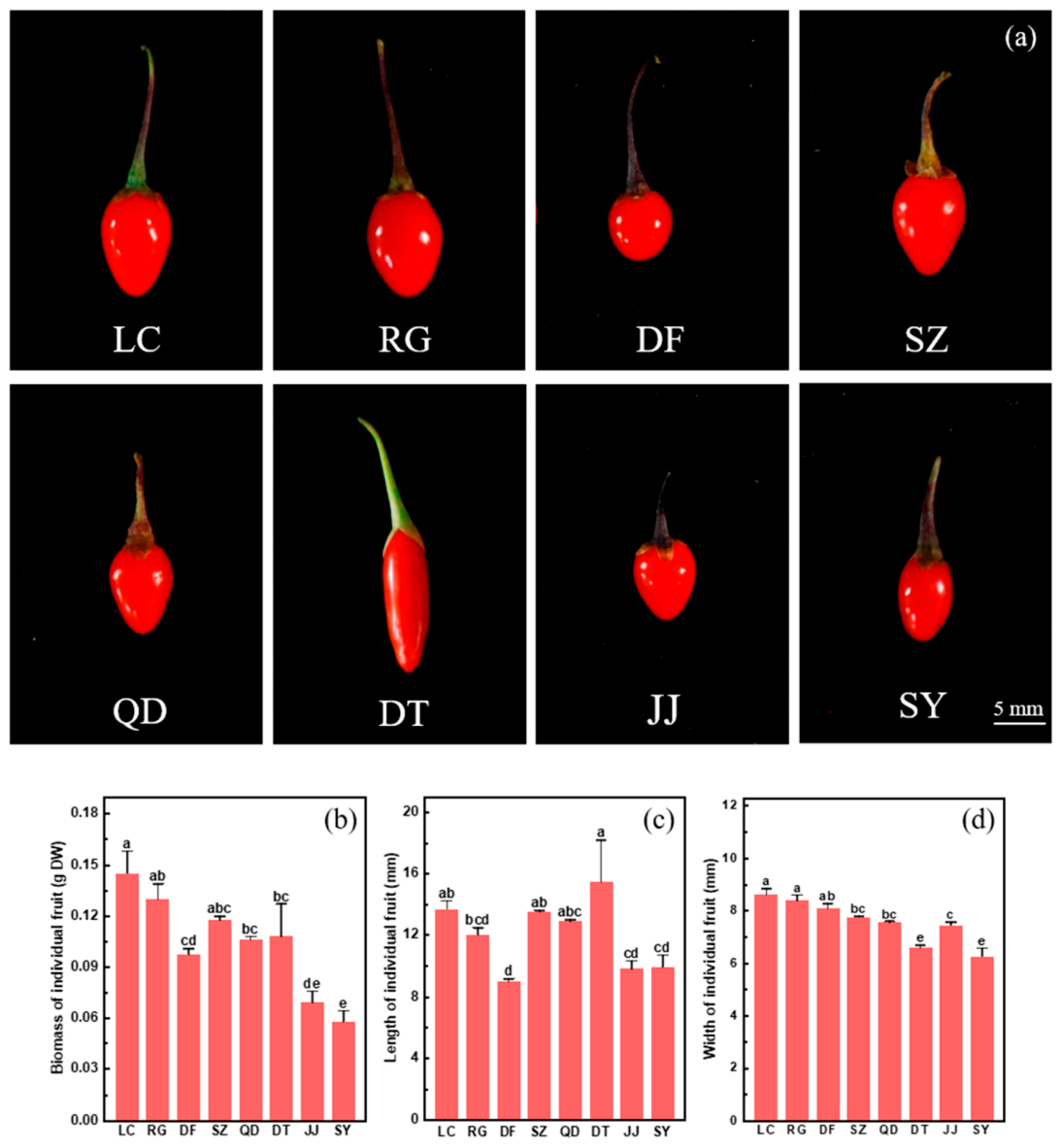
The shape, biomass, length and width of fruit varied greatly among the eight germplasms of L. chinense (Figure 1). It was obvious that the fruit shapes of these germplasms are classified into four types: elliptic (RG and SY), spherical (DF), elongated elliptic (DT) and ovoid (LC, SZ, QD and JJ) (Figure 1a). Notably, the fruit shape of DT was similar to that of L. barbarum (Figure 1a). Among the germplasm resources, fruit biomass varied from 0.06 to 0.14 g, fruit length from 9.02 to 15.46 mm, and fruit width from 6.24 to 8.61 mm (Figure 1b–d). Generally, LC and RG ranked among the highest in fruit biomass, length, and width, whereas JJ and SY ranked among the lowest for these traits (Figure 1b–d). SZ and QT showed intermediate values for most measurements (Figure 1b–d).

2.2. Phenolics, Flavonoids, Polysaccharidss and Antioxidant Capacity

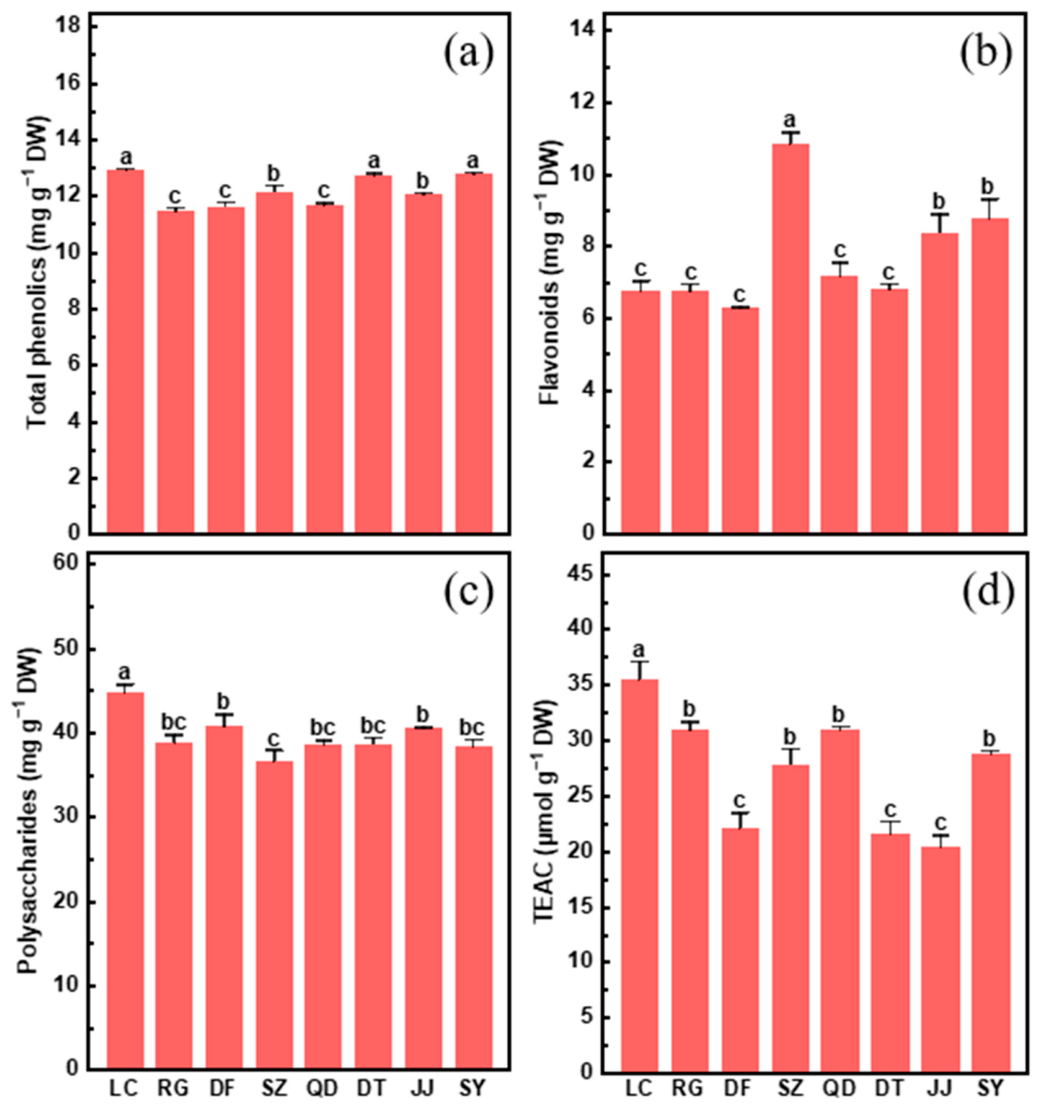
Phenolic compounds, flavonoids, and polysaccharides are important bioactive compounds that contribute to antioxidant capacity and human health [22,23]. The concentrations of phenolics, flavonoids and polysaccharides varied among the eight germplasms of L. chinense (Figure 2a–c). Specifically, polysaccharides and flavonoids varied more markedly, while total phenolics remained relatively stable across germplasms (Figure 2a–c). Total phenolics ranged from 11.47 to 12.91 mg g−1, with LC, DT and SY exhibiting the highest level and RG, DF and QD the lowest (Figure 2a). Flavonoids content varied from 6.30 to 10.85 mg g−1, with SZ showing the greatest level and DF, RG, LC, QD and DT the lowest (Figure 2b). Polysaccharides level ranged from 36.64 to 44.75 mg g−1, with LC exhibiting the highest level and SZ the lowest (Figure 2c). Trolox equivalent antioxidant capacity (TEAC) value, representing antioxidant capacity, varied from 22.07 to 27.87 mg g−1, with LC showing the highest level and DF, DT and JJ the lowest (Figure 2d).

2.3. Nutritional Composition

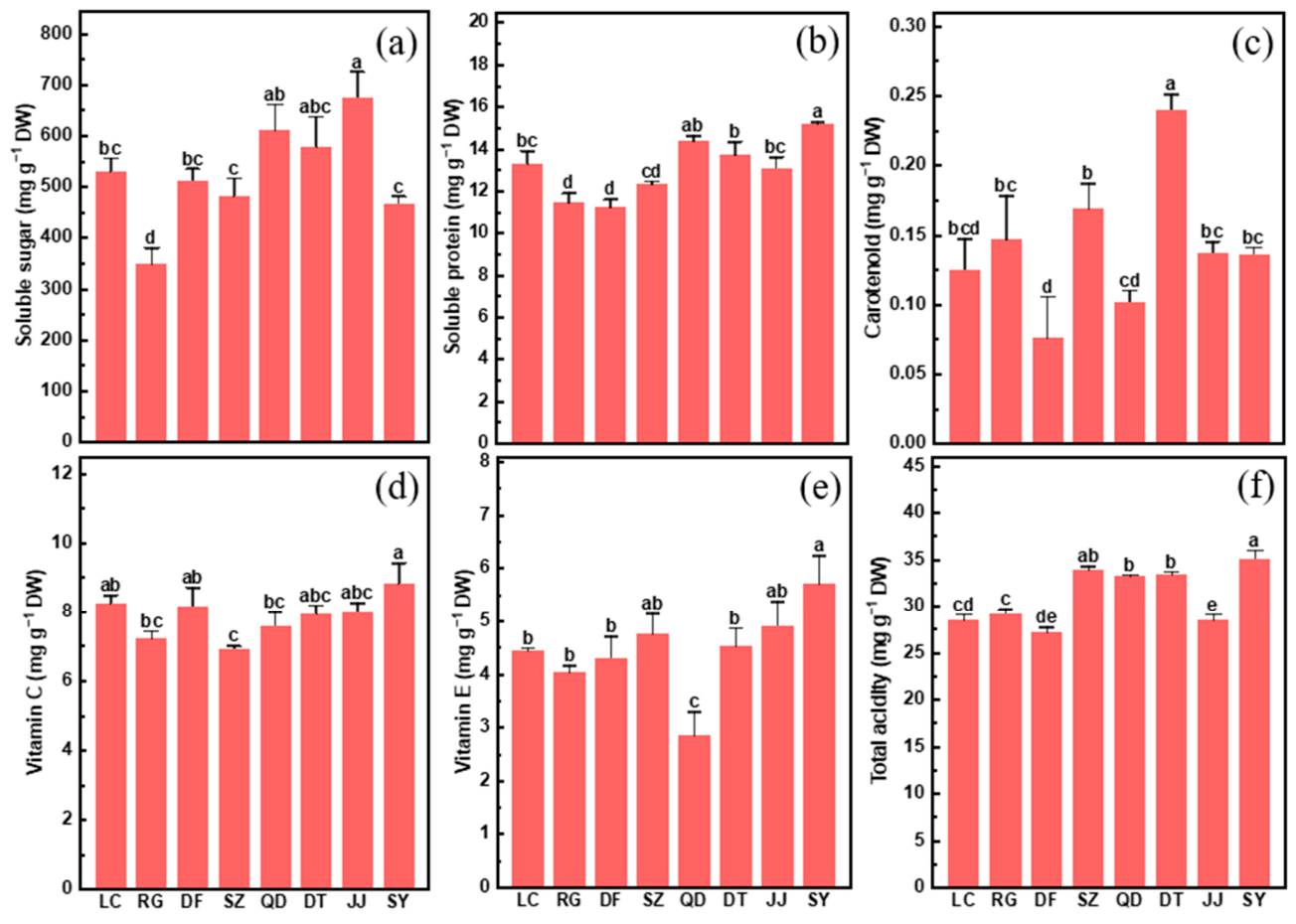
In fruit quality evaluation, sensory attributes and nutritional composition are considered important indicators of utilization potential [24,25]. Nutritional composition varied among the eight wild L. chinense germplasm resources (Figure 3). Specifically, soluble sugar and carotenoid contents showed greater variation, while total acidity and soluble protein remained relatively stable across germplasms (Figure 3). Soluble sugar content varied from 296.93 to 756.12 mg g−1, with JJ showing the highest level and RG the lowest (Figure 3a). Carotenoid content ranged from 0.037 to 0.261 mg g−1, with DT showing the highest level and DF the lowest (Figure 3c). Among the concentrations of soluble protein (10.53–15.36 mg g−1), vitamin C (6.84–9.71 mg g−1), and vitamin E (2.38–6.59 mg g−1), along with total acidity (4.82–6.68 mg g−1), SY revealed the highest level, while the lowest values were observed in DF and RG (protein), SZ (vitamin C), QD (vitamin E), and JJ (acidity), respectively (Figure 3b,d–f).
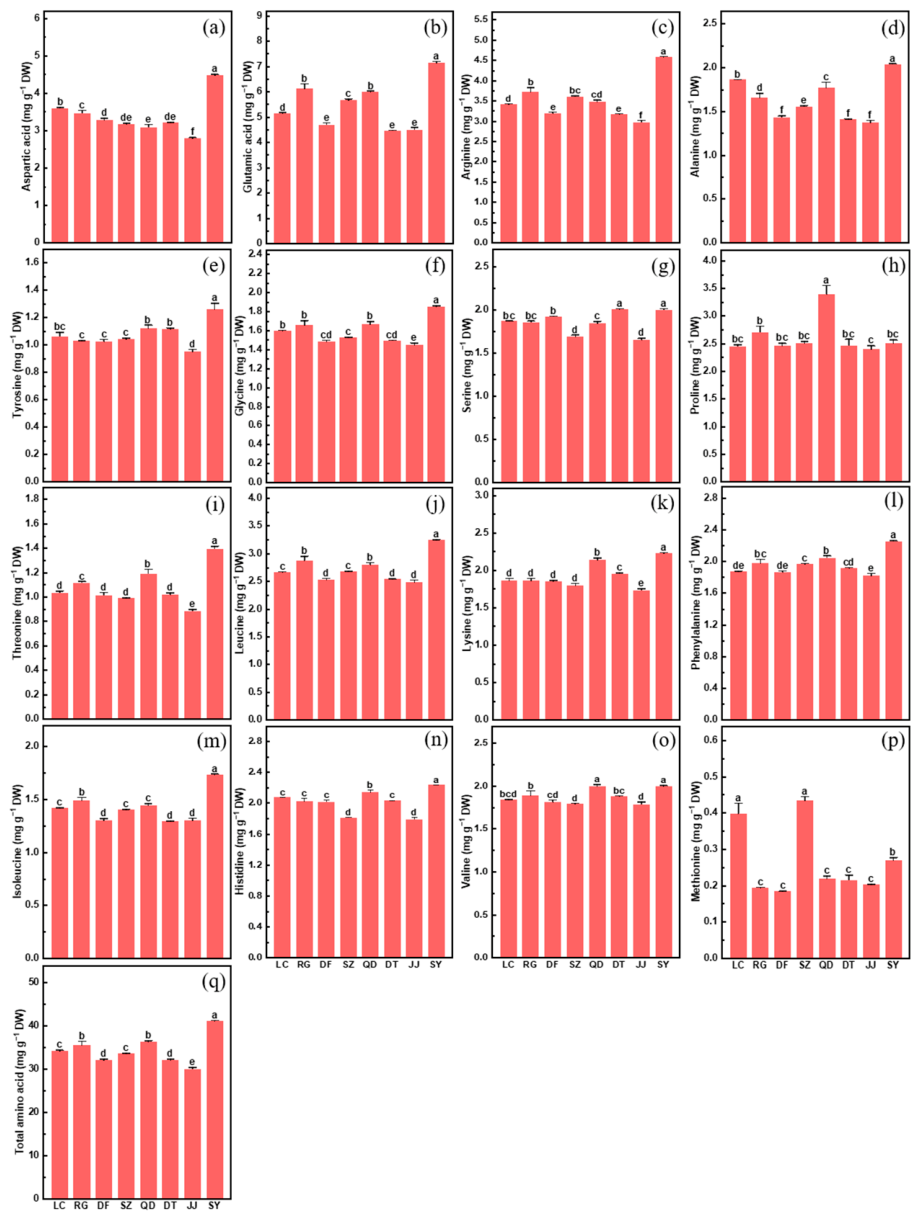
Amino acids, as fundamental components of proteins, play important roles in plant growth, and fruit nutritional quality [26]. The concentrations of amino acids varied markedly among the L. chinense germplasms (Figure 4). Most amino acids exhibited similar variation patterns, with highest levels in SY and lowest levels in JJ. Among non-essential amino acids, aspartic acid, glutamic acid, and arginine were the most abundant, ranging from 2.79 to 4.47 mg g−1, 4.47 to 7.15 mg g−1, and 2.98 to 4.57 mg g−1, respectively (Figure 4a–c). Other non-essential amino acids, including alanine, tyrosine, glycine, and serine, exhibited comparatively narrower variation (Figure 4d–g). Proline showed a distinct variation pattern, ranging from 2.39 to 3.39 mg g−1, with QD exhibiting the highest level and JJ the lowest (Figure 4h). For essential amino acids, threonine, leucine, lysine, phenylalanine, isoleucine, histidine, and valine showed similar variation trends, with highest levels in SY and lowest levels in JJ (Figure 4i–o). Methionine had the highest level in SZ, followed by LC, and the lowest in DF (Figure 4p). Total amino acid content ranged from 30.08 to 41.19 mg g−1 (Figure 4q), with SY showing the highest level and JJ the lowest.

2.4. Correlation Analysis

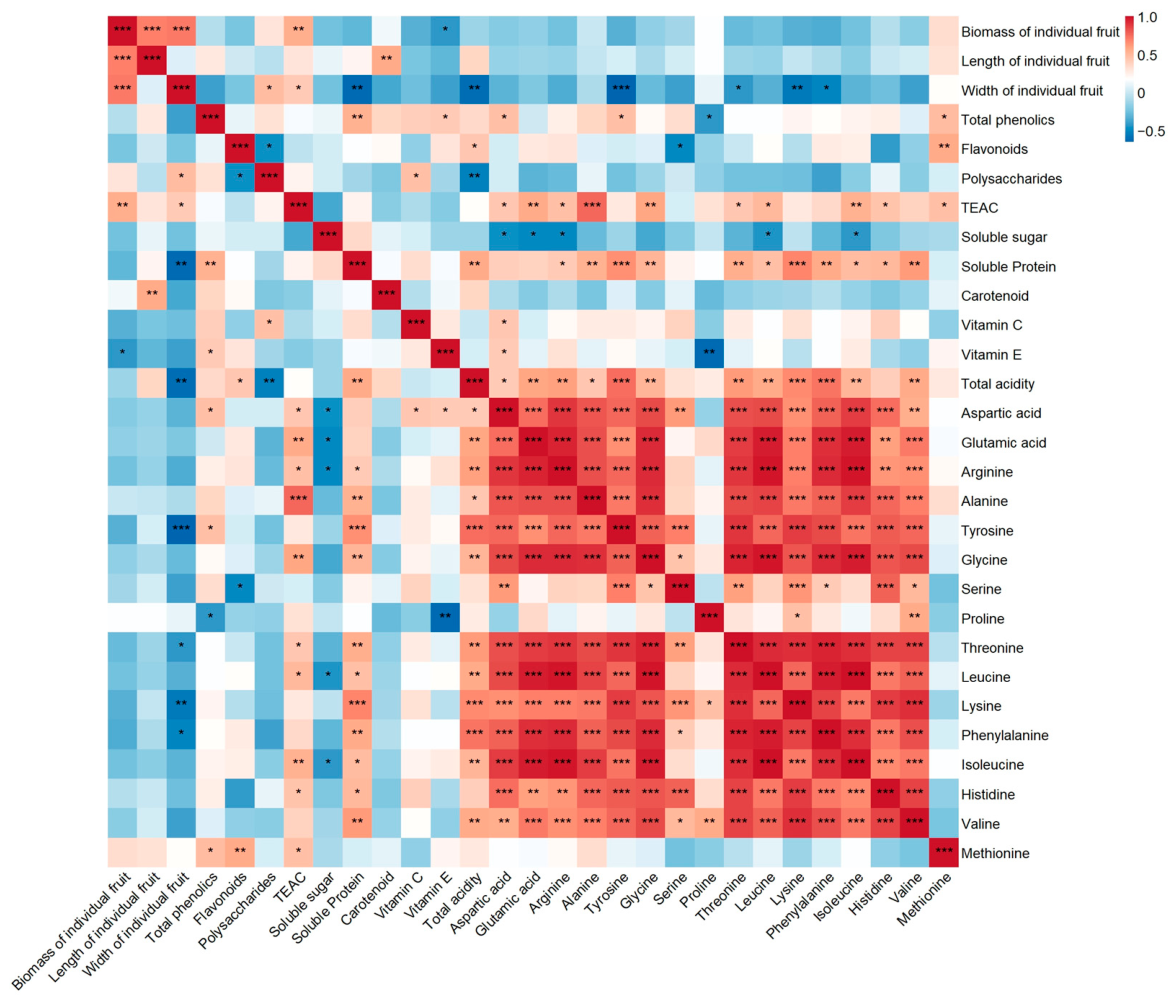
Pearson correlation analysis of 29 phenotypic and physiological indicators in L. chinense identified 406 pairs of variables, among which 284 pairs showed highly significant correlations (p < 0.01) and 347 pairs revealed significant correlations (p < 0.05) (Figure 5), indicating extensive interactions among fruit quality traits. Fruit morphological traits were significantly associated with metabolic indicators, with fruit biomass, length, and width showing significant correlations with several amino acids and functional components (Figure 5), suggesting a linkage between fruit size and the accumulation of nutrients and bioactive compounds.
For functional components, TEAC exhibited significant positive correlations with several amino acids, including alanine, glutamic acid, leucine, and glycine (Figure 5), indicating a potential association between antioxidant capacity and amino acid composition. Regarding nutritional traits, soluble sugar showed a negative correlation with total acidity (Figure 5), reflecting a balance between sweetness and acidity. In addition, soluble sugar was negatively correlated with several amino acids (Figure 5), suggesting a potential trade-off between carbon- and nitrogen-related traits. Most amino acids were positively correlated with each other (Figure 5), indicating coordinated variation among amino acid components. Overall, these results demonstrate coordinated relationships among fruit morphological traits, nutritional traits and functional components, which may collectively contribute to variation in fruit quality in L. chinense.

2.5. Principal Component Analysis

Principal component analysis was conducted based on fruit morphological traits, antioxidant-related indices and nutritional components (Table 1). The first principal component explained 44.32% of the total variance, followed by the second, third, fourth and fifth principal component accounting for 12.57%, 10.56%, 9.43%, and 9.17% of the variance, respectively (Table 1). These five principal components accounted for 86.049% of the total variance (Table 1), indicating that they sufficiently described the major variation in fruit quality among different accessions.
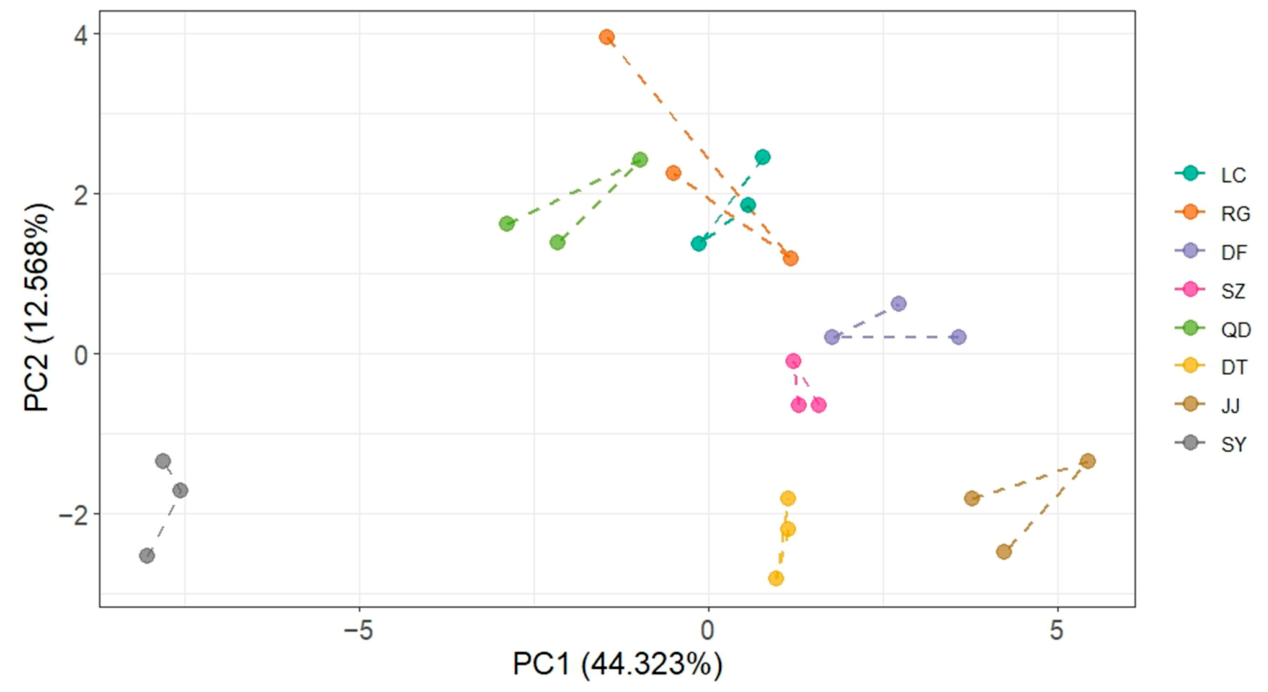
The PCA score plot revealed a clear separation among L. chinense accessions (Figure 6). PC1 accounted for the largest proportion of variance and served as the primary axis separating the germplasm resources, with SY and JJ showing the greatest separation along this component (Figure 6). PC1 primarily reflected variation in nutritional traits, with several amino acids, including glycine, threonine, leucine, and phenylalanine, identified as major contributors (Table 1). PC2 was mainly associated with fruit morphological traits and antioxidant capacity, with fruit width, biomass, and TEAC contributing substantially to this component (Table 1). These results indicate that amino acid composition, fruit morphology, and antioxidant properties represent the major dimensions underlying fruit quality variation in L. chinense.
The 29 nutritional indicators were included in the factor analysis. All indicators were standardized prior to analysis. Factor scores for each common factor were calculated by multiplying the standardized indicator values by the corresponding factor score coefficients and summing the products [27]. Since the first five principal components were retained for comprehensive evaluation, their variance contribution rates were normalized and used as weighting factors.
The accessions were ranked in the following order: SY > LC > RG > QD > DT > SZ > DF > JJ (Table 2).

2.6. Entropy Weight–Grey Relational Analysis

To further validate and comprehensively assess the germplasm resources, an EW-GRA was conducted (Table 3 and Table 4). Based on the normalized data, the entropy weight method was used to determine the objective weights of each quality indicator. The results showed that among the 29 evaluated indicators, length of individual fruit, flavonoid content, glutamic acid, proline, isoleucine, and methionine were assigned relatively higher weights of 0.047, 0.071, 0.047, 0.052, 0.048, and 0.082, respectively (Table 3).
Based on the objective weights determined above, grey relational analysis was subsequently performed to comprehensively rank the germplasm resources [28,29]. After dimensionless data processing, grey relational coefficients were calculated and integrated with entropy weights to obtain EW–GRA scores. In line with the PCA results, SY achieved the highest weighted grey relational degree of 0.712, indicating superior overall performance, whereas JJ exhibited the lowest value of 0.408 (Table 4).

3. Discussion

Fruit quality is an important determinant of the economic and functional values of Lycium germplasm resources. Previous studies have mainly focused on commercially important species, such as L. barbarum, whose antioxidant capacity, polysaccharide bioactivity, and phenolic composition have been widely investigated [1,30]. Among various quality traits, fruit size and appearance are important agronomic characteristics closely related to yield and market value. For consumers and the food industry, comprehensive quality assessment also considers internal nutritional composition and functional properties, including antioxidant capacity and bioactive compound content. These factors jointly determine the overall market acceptance and health value of the fruit. Therefore, multi-trait evaluation frameworks integrating morphological and biochemical characteristics have been widely applied in fruit quality assessment. For example, in blueberry, fruit quality has been evaluated based on changes in phenolic composition and antioxidant activity during fruit maturation and ripening [31]. In apple and grape, variation in fruit size, color, and other traits has been analyzed in relation to physicochemical characteristics [32,33]. These studies indicate that fruit quality is a complex trait involving multiple morphological and biochemical factors. Building on this framework, this study comprehensively evaluated L. chinense germplasm resources, revealing variation in both morphological and biochemical traits. Specifically, fruit size traits such as fruit biomass, length, and width tended to show positive associations with certain functional attributes including antioxidant capacity, suggesting that larger fruits may exhibit relatively higher antioxidative potential. In contrast, fruit size showed negative correlations with certain nutritional components, particularly soluble proteins and some individual amino acids, suggesting that smaller fruits may tend to accumulate higher concentrations of these metabolites. In this study, a large sample size and a multi-trait evaluation system were adopted, covering morphological traits (e.g., fruit length and width), functional traits (e.g., total phenolics, flavonoids), and nutritional traits (e.g., soluble proteins, amino acids, vitamins). The analysis revealed considerable variation in multiple quality traits among different germplasms, with internal nutritional quality (e.g., amino acids, vitamins) showing higher variation than morphological traits, indicating that these nutritional components vary considerably among different germplasms. Meanwhile, a complementary relationship was observed between fruit size and nutritional components: larger-fruited accessions tended to accumulate more soluble sugars, total phenolics, and flavonoids, while smaller-fruited accessions accumulated higher levels of soluble proteins and amino acids.
Based on PCA and EW-GRA analyses, this study systematically evaluated the fruit quality of L. chinense germplasm resources. The two methods showed high consistency, jointly identifying SY and LC as superior germplasm resources. Notably, SY ranked the highest overall, and its superior performance is closely associated with higher levels of soluble proteins, amino acids, and vitamins, particularly vitamin C and vitamin E, indicating strong nutritional quality and functional potential. These bioactive components are closely linked to the health-promoting effects of L. chinense fruits, which have been reported to exhibit antioxidant, anti-aging, immunomodulatory, and neuroprotective activities [1,2]. Soluble proteins contribute to basic nutritional supply and metabolic maintenance, and vitamins C and E function as key non-enzymatic antioxidants involved in cellular redox homeostasis and protection against oxidative damage [34,35]. Amino acids are important contributors to nutritional quality, flavor formation, and metabolic regulation, and also participate in protein synthesis, nitrogen metabolism, immune regulation, and antioxidant defense [36,37,38]. Notably, under the same cultivation environment, the quality traits of all germplasms exhibited certain correlation patterns. A wide range of amino acids, represented by glutamate, leucine, and isoleucine, were highly positively correlated with each other, and soluble proteins also showed consistent positive correlations with these amino acids. This strong positive correlation may be because these amino acids share common metabolic precursors and are simultaneously required for protein synthesis [39,40]. In contrast, soluble proteins and amino acids tended to be negatively correlated with soluble sugars and polysaccharides. This negative correlation may be because soluble proteins and amino acids compete with soluble sugars and polysaccharides for photosynthetic assimilates [41]. The uniform growing conditions largely excluded environmental heterogeneity. Therefore, the higher levels of nitrogenous primary metabolites and vitamins C/E in SY may reflect the role of genetic factors. Overall, SY shows potential for functional food development and would serve as a valuable resource for improving comprehensive fruit quality in breeding programs.
LC ranked second in both PCA and EW-GRA evaluations. It showed higher levels of total phenolics, polysaccharides, and antioxidant activity. These traits indicate an advantage in antioxidant-related functional components. Antioxidant capacity is an important functional indicator of fruit quality [42,43]. Phenolic compounds, especially flavonoids, are widely recognized as major contributors to antioxidant activity due to their strong redox properties and free radical scavenging ability [44,45]. In addition to their antioxidant roles, flavonoids and polysaccharides have also been reported to exert multiple health-promoting effects in humans [46]. Flavonoids are associated with potential benefits such as anti-inflammatory, neuroprotective, and metabolic regulatory activities, which are largely attributed to their ability to modulate oxidative stress and cellular signaling pathways [47]. Similarly, polysaccharides are recognized as major bioactive components in Lycium fruits and are involved in immune regulation, anti-inflammatory responses, and the regulation of metabolic-related processes [46]. Under the same cultivation environment, LC exhibited higher total phenolics, polysaccharides, and antioxidant activity. Correlation analysis showed that these indicators were positively associated with fruit size and tended to be negatively correlated with soluble proteins and amino acids. Larger-fruited accessions (including LC) tended to accumulate more carbohydrates and antioxidant activity. Therefore, the higher levels of total phenolics, polysaccharides, and antioxidant activity in LC may be associated with genetic factors. Thus, LC shows potential for the development of functional germplasm resources, particularly in relation to antioxidant-related traits, and may serve as a valuable material for improving fruit functional quality in breeding programs.

4. Materials and Methods

4.1. Plant Materials and Fruits Collection

The plants from eight natural germplasm resources of L. chinense were obtained from its main natural range in the eastern coastal region of China, including Liaocheng city (LC), Rugao city (RG), Dafeng district (DF), Suzhou city (SZ), Qidong city (QD), Dongtai city (DT), Jingjiang city (JJ), and Sheyang county (SY). These plants were transplanted at Yancheng Forest Farm (33.58° N, 120.47° E, Yancheng City) (Figure S1). All plants were wild adult individuals, excavated from their original habitats and directly transplanted to the Yancheng Forestry Station. In the first year after transplantation, the plants grew well, produced abundant fruits, and were fully acclimatized to the local environment. Fruit quality evaluation was then carried out in the second year. According to the description of fruit ripening of L. chinense [48], the fruits reach the fully ripe stage (Figure 1). At this fully ripe stage, only red ripe fruits that were uniform in size, bright in color, free from insect damage, and in good growth condition were randomly hand harvested on a single day. For each group, 150 mature fruits were harvested from six plants. For each biological replicate, two plants were used, resulting in three biological replicates in total. For each replicate, the 50 fruits collected from the two plants were pooled and mixed evenly to form a pooled sample. For each replicate, ten fruits were used for immediate measurements of morphological traits. Fruit length and width were measured using a digital vernier caliper (DL3944ABC, Deli, Ningbo, China), and fruit fresh weight was determined using an analytical balance (MA104E, Mettler Toledo, Greifensee, Switzerland). All morphological measurements were expressed as mean values of the three biological replicates. The remaining fruits from each biological replicate were wrapped in aluminum foil and immediately frozen in liquid nitrogen, then subsequently transferred to −80 °C for storage. The frozen samples were ground into fine powder in liquid nitrogen using a ball mill (GT300, Beijing Grinder Instrument Co., Ltd., Beijing, China) and stored at −80 °C for subsequent analyses. Approximately 100 mg of frozen powder from each sample was weighed and dried to determine the fresh-to-dry mass ratio. The remaining frozen powder was used for the determination of other indicators, including amino acids, vitamin C, vitamin E, total phenolics, flavonoids, polysaccharides, and antioxidant activity.

4.2. Analysis of Total Phenolics

Total phenolics were determined according to the method described previously with minor modifications and expressed as mg gallic acid equivalents per gram of dry weight (mg GAE g−1 DW) [49]. Briefly, fresh samples were extracted with 70% ethanol (Xilong Scientific, Guangzhou, China), and ultrasonicated for 90 min using an ultrasonic cleaner (Kun Shan Ultrasonic Instruments, Kunshan, China). After using a centrifuge (Eppendorf AG, Hamburg, Germany) at 9000 rpm 4 °C for 5 min, an aliquot (0.1 mL) of the supernatant was diluted ten-fold and mixed with 6.0 mL of deionized water and 1.0 mL of Folin–Ciocalteu reagent 1.0 mol L−1 (Feijing Biological, Fuzhou, China). 6 min later, 4.0 mL of 10.6% sodium carbonate (Sinopharm Chemical Reagent, Shanghai, China) solution was added. The mixture was incubated in the dark at room temperature for 60 min. The absorbance at 760 nm was determined using a UV-1800 spectrophotometer (Shanghai Mapada Instruments, Shanghai, China).

4.3. Analysis of Flavonoids, Polysaccharides and Antioxidant Activity

Flavonoids were determined using a commercial assay kit (Suzhou Comin Biotechnology Co., Ltd., Suzhou, China) according to the manufacturer’s instructions and expressed as mg rutin equivalents per gram of dry weight (mg RE g−1 DW). Polysaccharide content and in vitro antioxidant activity were measured using commercial assay kits (Nanjing Kemosen Biotechnology Co., Nanjing, China) according to the manufacturers’ instructions and expressed as mg g−1 dry weight (mg g−1 DW).

4.4. Analysis of Soluble Sugar, Soluble Protein and Carotenoid

Soluble sugar content was determined using a previously reported anthrone colorimetric method with minor modifications [50,51]. Fresh fruit powders were extracted with 80% ethanol and centrifuged (6000× g, 10 min). The supernatant was mixed with 0.1% anthrone reagent (Sinopharm Chemical Reagent, Shanghai, China). The mixture was heated in a boiling water bath for 7 min and then cooled to room temperature. Absorbance was measured at 620 nm.
Soluble protein content was determined using a commercial assay kit (Nanjing Kemosen Biotechnology Co.) according to the manufacturer’s instructions.
Carotenoid content was measured using a commercial carotenoid assay kit (Nanjing Kemosen Biotechnology Co.) following the manufacturer’s instructions. All results were expressed as mg g−1 dry weight (mg g−1 DW).

4.5. Analysis of Vitamin C and Vitamin E

Vitamin C content was determined using a previously reported molybdenum blue colorimetric method with minor modifications [52]. Frozen samples were homogenized with 0.05 mol L−1 oxalic acid–0.2 mmol L−1 EDTA solution (Sinopharm Chemical Reagent, Shanghai, China). The homogenate was extracted by ultrasonication for 30 min and centrifuged at 4000 rpm for 15 min. An aliquot (1.0 mL) of the supernatant was reacted with a mixture of metaphosphoric acid (Macklin Biochemical, Shanghai, China), acetic acid, sulfuric acid, and ammonium molybdate (Sinopharm Chemical Reagent, Shanghai, China). The reaction mixture was incubated at 30 °C for 15 min, and the absorbance was measured at 760 nm.
Vitamin E content was measured using a commercial vitamin E assay kit (Nanjing Kemosen Biotechnology Co.) according to the manufacturer’s instructions. All results were expressed as mg g−1 dry weight (mg g−1 DW).

4.6. Analysis of Total Acidity

Total acidity was determined using an acid–base titration method with minor modifications [53]. The frozen samples were extracted with CO2-free water and an aliquot was titrated with 0.1 mol L−1 NaOH (Sinopharm Chemical Reagent, Shanghai, China). Total acidity was calculated based on the volume of NaOH consumed and expressed as citric acid equivalents using a conversion factor of 0.070. All results were expressed as mg citric acid equivalents per gram of dry weight (mg CAE g−1 DW).

4.7. Analysis of Amino Acid

The concentrations of amino acids were determined using Waters Alliance e2695 HPLC system (Waters, Milford, MA, USA) according to previously reported methods [54,55]. The frozen samples were hydrolyzed with 6 mol L−1 hydrochloric acid (Sinopharm Chemical Reagent, Shanghai, China) at 110 °C. The hydrolysates were neutralized, filtered, and analyzed by HPLC under standard operating conditions. Amino acid concentrations were quantified using an external standard method. All amino acid concentrations were expressed as mg g−1 dry weight (mg g−1 DW).

4.8. PCA, EW–GRA

PCA was performed to identify key evaluation indicators [56]. Comprehensive scores and sample rankings were calculated based on the variance contribution rates of each principal component using Formula (1), where F i represents the score of the i -th principal component (or factor), and W i denotes the corresponding normalized weight. The PCA results were visualized using the ggplot2 package in R (http://www.r-project.org/ (accessed on 15 February 2026)).
F = i = 1 5 W i F i
For comprehensive evaluation, the EW method was applied to determine the objective weights of each indicator based on the variability of the standardized data. GRAwas used to evaluate different germplasm resources.

4.9. Statistical Analysis

Statistical analysis was performed according to previously reported methods [57]. Data normality was verified prior to analysis. One-way analysis of variance (ANOVA) was conducted using Statgraphics (STN, St. Louis, MO, USA), and differences between means were considered significant at p < 0.05 based on the ANOVA F-test. Correlation analysis among all phenotypic and physiological indicators was performed based on previously reported methods with minor modifications [58], using R (http://www.r-project.org/ (version 4.5.2)) and the pheatmap package to examine relationships between variables.

Supplementary Materials

The following supporting information can be downloaded at: https://www.mdpi.com/article/10.3390/plants15101506/s1, Figure S1: Geographical information of collection sites for eight germplasms of wild L. chinense.

Author Contributions

Conceptualization, Y.L. and W.Y.; methodology, Z.G.; software, Z.G.; validation, Z.G.; formal analysis, Z.G.; investigation, Z.G.; resources, Y.L., W.Y. and C.Y.; data curation, Z.G.; writing—original draft preparation, Z.G.; writing—review and editing, Y.L. and W.Y.; visualization, Z.G.; supervision, C.Y.; project administration, Y.L. and W.Y.; funding acquisition, Y.L. and W.Y. All authors have read and agreed to the published version of the manuscript.

Funding

This work was jointly supported by the Postdoctoral Fellowship Program of CPSF (GZC20251292), the Institute of Botany, Jiangsu Province and Chinese Academy of Sciences, Academician Innovation Highland (JSPKLB2023060) and the China Scholarship Council (202509160014).

Data Availability Statement

The original contributions presented in this study are included in the article/supplementary material. Further inquiries can be directed to the corresponding authors.

Acknowledgments

We sincerely thank Zhidong Zhou of Jiangsu Province and Chinese Academy of Sciences (Nanjing Botanical Garden Mem. Sun Yat-Sen) for his assistance in data analysis.

Conflicts of Interest

The authors declare that they have no competing interests.

References

  1. Jurikova, T.; Tinakova, S.M.; Ziarovska, J.; Szekeres, L.; Mlcek, J.; Fatrcova-Sramkova, K.; Knazicka, Z.; Skrovankova, S. Polyphenolic Spectrum of Goji Berries and Their Health-Promoting Activity. Foods 2025, 14, 1387. [Google Scholar] [CrossRef]
  2. Yao, R.; Heinrich, M.; Weckerle, C.S. The Genus Lycium as Food and Medicine: A Botanical, Ethnobotanical and Historical Review. J. Ethnopharmacol. 2018, 212, 50–66. [Google Scholar] [CrossRef] [PubMed]
  3. Hu, S.; Xu, Y.; Salumu, M.S.; Zhang, J.; Xu, L.; Wang, Y.; Wang, F.; Cao, C.; Xu, X.; Yuan, B. Lycium barbarum (Goji Berry): A Comprehensive Review of Chemical Composition, Bioactive Compounds, Health-Promoting Activities, and Applications in Functional Foods and Beyond. Food Chem. 2025, 496, 146588. [Google Scholar] [CrossRef]
  4. Zhang, T.; Alexa, E.-A.; Liu, G.; Berisha, A.; Walsh, R.; Kelleher, R. Lycium barbarum for Health and Longevity: A Review of Its Biological Significance. Obesities 2025, 5, 35. [Google Scholar] [CrossRef]
  5. Amagase, H.; Farnsworth, N.R. A Review of Botanical Characteristics, Phytochemistry, Clinical Relevance in Efficacy and Safety of Lycium barbarum Fruit (Goji). Food Res. Int. 2011, 44, 1702–1717. [Google Scholar] [CrossRef]
  6. Vidović, B.B.; Milinčić, D.D.; Marčetić, M.D.; Djuriš, J.D.; Ilić, T.D.; Kostić, A.Ž.; Pešić, M.B. Health Benefits and Applications of Goji Berries in Functional Food Products Development: A Review. Antioxidants 2022, 11, 248. [Google Scholar] [CrossRef]
  7. Gong, H.; Rehman, F.; Li, Z.; Liu, J.; Yang, T.; Liu, J.; Li, H.; Hu, Z.; Ma, Q.; Wu, Z.; et al. Discrimination of Geographical Origins of Wolfberry (Lycium barbarum L.) Fruits Using Stable Isotopes, Earth Elements, Free Amino Acids, and Saccharides. J. Agric. Food Chem. 2022, 70, 2984–2997. [Google Scholar] [CrossRef]
  8. Cho, H.; Lee, D.H.; Jeong, D.H.; Jang, J.H.; Son, Y.; Lee, S.-Y.; Kim, H.-J. Study on Betaine and Growth Characteristics of Lycium chinense Mill. in Different Cultivation Environments in South Korea. Plants 2024, 13, 2316. [Google Scholar] [CrossRef]
  9. Liu, Y.; Lu, Z.; Fu, X.; Wang, C.; Feng, C.; Song, Y.; Gu, X.; Chai, T.; Pei, L.; Ma, D. Predicting the Potential Habitats of Two Lycium Species and the Quality Suitability of Lycium chinense Mill. Cortex under Climate Change. BMC Ecol. Evol. 2025, 25, 74–91. [Google Scholar] [CrossRef]
  10. Yang, L.; He, Y.; Wang, S.; Zhang, Y.; Wang, Y.; Liang, Q. Population Genetic Divergence in Lycium chinense Mill. (Solanaceae) Is Driven by Both Hybridization and Geo-Environmental Factors. Genet. Resour. Crop Evol. 2020, 67, 1505–1520. [Google Scholar] [CrossRef]
  11. Ryu, M.-J.; Kim, M.; Ji, M.; Lee, C.; Yang, I.; Hong, S.-B.; Chin, J.; Seo, E.K.; Paik, M.-J.; Lim, K.-M.; et al. Discrimination of Lycium chinense and L. barbarum Based on Metabolite Analysis and Hepatoprotective Activity. Molecules 2020, 25, 5835. [Google Scholar] [CrossRef]
  12. Ha, K.-T.; Yoon, S.-J.; Choi, D.-Y.; Kim, D.-W.; Kim, J.-K.; Kim, C.-H. Protective Effect of Lycium chinense Fruit on Carbon Tetrachloride-Induced Hepatotoxicity. J. Ethnopharmacol. 2005, 96, 529–535. [Google Scholar] [CrossRef]
  13. Ye, M.; Moon, J.; Yang, J.; Hwa Lim, H.; Bin Hong, S.; Shim, I.; Bae, H. The Standardized Lycium chinense Fruit Extract Protects against Alzheimer’s Disease in 3xTg-AD Mice. J. Ethnopharmacol. 2015, 172, 85–90. [Google Scholar] [CrossRef]
  14. Dang, H.; Zhang, T.; Li, Y.; Li, G.; Zhuang, L.; Pu, X. Population Evolution, Genetic Diversity and Structure of the Medicinal Legume, Glycyrrhiza Uralensis and the Effects of Geographical Distribution on Leaves Nutrient Elements and Photosynthesis. Front. Plant Sci. 2022, 12, 708709. [Google Scholar] [CrossRef]
  15. Sarrou, E.; Ganopoulos, I.; Xanthopoulou, A.; Masuero, D.; Martens, S.; Madesis, P.; Mavromatis, A.; Chatzopoulou, P. Genetic Diversity and Metabolic Profile of Salvia Officinalis Populations: Implications for Advanced Breeding Strategies. Planta 2017, 246, 201–215. [Google Scholar] [CrossRef]
  16. Zhang, H.; Abid, S.; Ahn, J.C.; Mathiyalagan, R.; Kim, Y.-J.; Yang, D.-C.; Wang, Y. Characteristics of Panax Ginseng Cultivars in Korea and China. Molecules 2020, 25, 2635. [Google Scholar] [CrossRef] [PubMed]
  17. Wang, Y.; Jin, H.; Dong, X.; Yang, S.; Ma, S.; Ni, J. Quality Evaluation of Lycium barbarum (Wolfberry) from Different Regions in China Based on Polysaccharide Structure, Yield and Bioactivities. Chin. Med. 2019, 14, 49–58. [Google Scholar] [CrossRef] [PubMed]
  18. Zhang, Y.; Wan, R.; Shi, Z.; Yang, L.; Fang, S. Phenotypic and Phytochemical Variations in Wolfberry Varieties and Their Harvest Times. Horticulturae 2025, 11, 1138. [Google Scholar] [CrossRef]
  19. Ma, R.; Sun, X.; Yang, C.; Fan, Y. Integrated Transcriptome and Metabolome Provide Insight into Flavonoid Variation in Goji Berries (Lycium barbarum L.) from Different Areas in China. Plant Physiol. Biochem. 2023, 199, 107722. [Google Scholar] [CrossRef] [PubMed]
  20. Gong, H.; Rehman, F.; Ma, Y.; A, B.; Zeng, S.; Yang, T.; Huang, J.; Li, Z.; Wu, D.; Wang, Y. Germplasm Resources and Strategy for Genetic Breeding of Lycium Species: A Review. Front. Plant Sci. 2022, 13, 802936. [Google Scholar] [CrossRef]
  21. Zheng, G.-Q.; Zheng, Z.-Y.; Xu, X.; Hu, Z.-H. Variation in Fruit Sugar Composition of Lycium barbarum L. and Lycium chinense Mill. of Different Regions and Varieties. Biochem. Syst. Ecol. 2010, 38, 275–284. [Google Scholar] [CrossRef]
  22. Islam, T.; Yu, X.; Badwal, T.S.; Xu, B. Comparative Studies on Phenolic Profiles, Antioxidant Capacities and Carotenoid Contents of Red Goji Berry (Lycium barbarum) and Black Goji Berry (Lycium ruthenicum). Chem. Cent. J. 2017, 11, 59–66. [Google Scholar] [CrossRef]
  23. Wang, X.; Xue, Y.; Li, Y.; Liu, F.; Yan, Y.; Zhang, H.; Jin, Q. Effects of Isatis Root Polysaccharide in Mice Infected with H3N2 Swine Influenza Virus. Res. Vet. Sci. 2018, 119, 91–98. [Google Scholar] [CrossRef]
  24. Geng, Y.; Xia, K.; Song, X.; Yan, P.; He, X.; Wu, G.; Li, Y.; Li, Y.; Wang, F.; Li, W.; et al. Prohexadione Calcium and KH2PO4 Synergy Optimizes Pod Pepper Plant Architecture for Mechanized Harvesting and Boosts Yield and Fruit Quality. BMC Plant Biol. 2025, 25, 967–980. [Google Scholar] [CrossRef]
  25. Yang, Y.; Miao, C.; Yuan, Q.; Zhong, W.; Hu, Z.; Chen, C.; Liu, Z.; Wang, Y.; Geng, X.; Cai, Q.; et al. Changes in the Quality of Idesia Polycarpa Maxim Fruits from Different Ecotypes during the Growth Process. Plants 2025, 14, 2324. [Google Scholar] [CrossRef] [PubMed]
  26. Zhou, J.; Tian, L.; Wang, S.; Li, H.; Zhao, Y.; Zhang, M.; Wang, X.; An, P.; Li, C. Ovary Abortion Induced by Combined Waterlogging and Shading Stress at the Flowering Stage Involves Amino Acids and Flavonoid Metabolism in Maize. Front. Plant Sci. 2021, 12, 778717. [Google Scholar] [CrossRef]
  27. Yuan, Y.; Yao, W.; Wu, Y.; Wang, R.; Yu, Z.; Huo, J.; Li, X.; Tang, K. Composition of Flavonoids and Nutritional Evaluation in Leaves of Different Sea-Buckthorn Germplasm Resources. Food Sci. Nutr. 2025, 13, e70013. [Google Scholar] [CrossRef]
  28. Cao, Z.; Zhang, T.; Tong, X. Quality Evaluation of Chicken Soup Based on Entropy Weight Method and Grey Correlation Degree Method. Sci. Rep. 2024, 14, 13038. [Google Scholar] [CrossRef] [PubMed]
  29. Tian, J.; Wen, H.; Liu, B.; Tian, X.; Wu, Y.; Yang, J.; Zhang, B.; Li, H. Fruit Quality Evaluation of Different Mulberry Varieties. Front. Plant Sci. 2025, 15, 1500253. [Google Scholar] [CrossRef]
  30. Lee, H.S.; Choi, C.-I. Black Goji Berry (Lycium ruthenicum Murray): A Review of Its Pharmacological Activity. Nutrients 2023, 15, 4181. [Google Scholar] [CrossRef] [PubMed]
  31. Castrejón, A.D.R.; Eichholz, I.; Rohn, S.; Kroh, L.W.; Huyskens-Keil, S. Phenolic Profile and Antioxidant Activity of Highbush Blueberry (Vaccinium corymbosum L.) during Fruit Maturation and Ripening. Food Chem. 2008, 109, 564–572. [Google Scholar] [CrossRef]
  32. Kumar, A.; Sharma, D.P.; Dogra, R.K.; Singh, G.; Sharma, R.; Kumar, P. Identification and Characterization of Apple (Malus × domestica Borkh.) Bud Sports Mutations in the Apple Growing Northwestern Himalayan Region. Sci. Hortic. 2022, 304, 111308. [Google Scholar] [CrossRef]
  33. Rolle, L.; Torchio, F.; Giacosa, S.; Río Segade, S. Berry Density and Size as Factors Related to the Physicochemical Characteristics of Muscat Hamburg Table Grapes (Vitis vinifera L.). Food Chem. 2015, 173, 105–113. [Google Scholar] [CrossRef]
  34. Brigelius-Flohé, R.; Traber, M.G. Vitamin E: Function and Metabolism. FASEB J. 1999, 13, 1145–1155. [Google Scholar] [CrossRef] [PubMed]
  35. Carr, A.; Maggini, S. Vitamin C and Immune Function. Nutrients 2017, 9, 1211. [Google Scholar] [CrossRef]
  36. Liang, Y.; Ma, N.; Coleman, D.N.; Liu, F.; Li, Y.; Ding, H.; Cardoso, F.F.; Parys, C.; Cardoso, F.C.; Loor, J.J. Methionine and Arginine Supply Alters Abundance of Amino Acid, Insulin Signaling, and Glutathione Metabolism-Related Proteins in Bovine Subcutaneous Adipose Explants Challenged with N-Acetyl-d-Sphingosine. Animals 2021, 11, 2114. [Google Scholar] [CrossRef]
  37. Trovato, M.; Funck, D.; Forlani, G.; Okumoto, S.; Amir, R. Editorial: Amino Acids in Plants: Regulation and Functions in Development and Stress Defense. Front. Plant Sci. 2021, 12, 772810. [Google Scholar] [CrossRef] [PubMed]
  38. Wu, G. Amino Acids: Metabolism, Functions, and Nutrition. Amino Acids 2009, 37, 1–17. [Google Scholar] [CrossRef]
  39. Torres, N.; Tobón-Cornejo, S.; Velazquez-Villegas, L.A.; Noriega, L.G.; Alemán-Escondrillas, G.; Tovar, A.R. Amino Acid Catabolism: An Overlooked Area of Metabolism. Nutrients 2023, 15, 3378. [Google Scholar] [CrossRef]
  40. Manoli, I.; Venditti, C.P. Disorders of Branched Chain Amino Acid Metabolism. Transl. Sci. Rare Dis. 2016, 1, 91–110. [Google Scholar] [CrossRef]
  41. Huang, W.-T.; Zheng, Z.-C.; Hua, D.; Chen, X.-F.; Zhang, J.; Chen, H.-H.; Ye, X.; Guo, J.-X.; Yang, L.-T.; Chen, L.-S. Adaptive Responses of Carbon and Nitrogen Metabolisms to Nitrogen-Deficiency in Citrus Sinensis Seedlings. BMC Plant Biol. 2022, 22, 370. [Google Scholar] [CrossRef]
  42. Manganaris, G.A.; Goulas, V.; Mellidou, I.; Drogoudi, P. Antioxidant Phytochemicals in Fresh Produce: Exploitation of Genotype Variation and Advancements in Analytical Protocols. Front. Chem. 2018, 5, 95–106. [Google Scholar] [CrossRef]
  43. Shi, J.; Tong, R.; Yao, J.; Wang, S.; Wang, S.; Li, J.; Song, C.; Zhang, K.; Jiao, J.; Wang, M.; et al. Controlled Atmosphere Storage with High CO2 Concentration Extends Storage Life of Fresh Pomegranate Fruit by Regulating Antioxidant Capacity and Respiration Metabolism. BMC Plant Biol. 2025, 25, 684–694. [Google Scholar] [CrossRef] [PubMed]
  44. Fernandes, P.A.R.; Coimbra, M.A. The Antioxidant Activity of Polysaccharides: A Structure-Function Relationship Overview. Carbohydr. Polym. 2023, 314, 120965. [Google Scholar] [CrossRef] [PubMed]
  45. Panche, A.N.; Diwan, A.D.; Chandra, S.R. Flavonoids: An Overview. J. Nutr. Sci. 2016, 5, e47. [Google Scholar] [CrossRef] [PubMed]
  46. Shi, X.; Wang, X.; Zheng, Y.; Fu, L. Advances in the Study of Bioactive Compounds and Nutraceutical Properties of Goji Berry (Lycium barbarum L.). Appl. Sci. 2024, 15, 262. [Google Scholar] [CrossRef]
  47. Hasnat, H.; Shompa, S.A.; Islam, M.M.; Alam, S.; Richi, F.T.; Emon, N.U.; Ashrafi, S.; Ahmed, N.U.; Chowdhury, M.N.R.; Fatema, N.; et al. Flavonoids: A Treasure House of Prospective Pharmacological Potentials. Heliyon 2024, 10, e27533. [Google Scholar] [CrossRef]
  48. Qiao, F.; Zhang, K.; Zhou, L.; Qiu, Q.-S.; Chen, Z.; Lu, Y.; Wang, L.; Geng, G.; Xie, H. Analysis of Flavonoid Metabolism during Fruit Development of Lycium chinense. J. Plant Physiol. 2022, 279, 153856. [Google Scholar] [CrossRef]
  49. Liu, B.; Xu, Q.; Sun, Y. Black Goji Berry (Lycium ruthenicum) Tea Has Higher Phytochemical Contents and in Vitro Antioxidant Properties than Red Goji Berry (Lycium barbarum) Tea. Food Qual. Saf. 2020, 4, 193–201. [Google Scholar] [CrossRef]
  50. Fan, X.; Gao, F.; Liu, Y.; Huang, W.; Yang, Y.; Luo, Z.; Zhang, J.; Qi, F.; Lv, J.; Su, X.; et al. The Transcription Factor CCT30 Promotes Rice Preharvest Sprouting by Regulating Sugar Signalling to Inhibit the ABA-Mediated Pathway. Plant Biotechnol. J. 2025, 23, 579–591. [Google Scholar] [CrossRef]
  51. Wang, H.; Zhang, W.; Zheng, D.; Li, X.; Hu, X.; Khan, A.; Wang, X.; Li, M.; Du, Q.; Li, J.; et al. Transcription Factor ClTCP4 Maintains Watermelon Resilience to Drought by Stabilizing Antioxidant and Photosynthetic Systems. Plant Cell Rep. 2025, 44, 168–186. [Google Scholar] [CrossRef] [PubMed]
  52. Zhang, T.; Shi, Y.; Piao, F.; Sun, Z. Effects of Different LED Sources on the Growth and Nitrogen Metabolism of Lettuce. Plant Cell Tissue Organ Cult. PCTOC 2018, 134, 231–240. [Google Scholar] [CrossRef]
  53. Wang, L.; Fu, H.; Tan, Q.; Wu, S.; Wang, Y.; Peng, X. Preservation Effects of Chitosan/Polyvinyl Alcohol/Clove Essential Oil Antifungal Film on Yellow Peaches: Physicochemical Properties and Fruit Quality Assessment. Food Control 2024, 164, 110582. [Google Scholar] [CrossRef]
  54. Feng, Y.; Zhao, Y.; Ma, Y.; Chen, X.; Shi, H. Integrative Physiological and Transcriptome Analysis Unravels the Mechanism of Low Nitrogen Use Efficiency in Burley Tobacco. Plant Direct 2024, 8, e70004. [Google Scholar] [CrossRef]
  55. Guo, W.; Zhang, F.; Bao, A.; You, Q.; Li, Z.; Chen, J.; Cheng, Y.; Zhao, W.; Shen, X.; Zhou, X.; et al. The Soybean Rhg1 Amino Acid Transporter Gene Alters Glutamate Homeostasis and Jasmonic Acid-Induced Resistance to Soybean Cyst Nematode. Mol. Plant Pathol. 2019, 20, 270–286. [Google Scholar] [CrossRef]
  56. Feng, Y.; Chen, Z.; Chen, L.; Han, M.; Liu, J.; Liu, Y.; Chai, R.; Wang, J.; Sun, S.; Fan, J.; et al. Comprehensive Evaluation of Physio-morphological Traits of Alfalfa (Medicago sativa L.) Varieties under Salt Stress. Physiol. Plant. 2025, 177, e70044. [Google Scholar] [CrossRef]
  57. Yu, W.; Liu, H.; Luo, J.; Zhang, S.; Xiang, P.; Wang, W.; Cai, J.; Lu, Z.; Zhou, Z.; Hu, J.; et al. Partial Root-Zone Simulated Drought Induces Greater Flavonoid Accumulation than Full Root-Zone Simulated Water Deficiency in the Leaves of Ginkgo Biloba. Environ. Exp. Bot. 2022, 201, 104998. [Google Scholar] [CrossRef]
  58. Song, F.; Li, Y.; Huang, J.; Lu, W.; Guo, Z.; Deng, W. Integrated Transcriptomic and Proteomic Analyses Reveal the Impact of Drought and Heat Stress Combination on Morus Alba. Environ. Exp. Bot. 2024, 228, 105988. [Google Scholar] [CrossRef]
Figure 1. Fruit phenotypes (a), and biomass (b), length (c) and width of individual fruit (d) in eight germplasms (LC, RG, DF, SZ, QD, DT, JJ and SY) of L. chinense. Data indicate means ± SE (n = 3). Different letters on the bars indicate significant differences between the germplasms.
Plants 15 01506 g001
Figure 2. Concentrations of total phenolics (a), flavonoids (b), polysaccharides (c) and TEAC (d) in the fruits of eight L. chinense germplasms (LC, RG, DF, SZ, QD, DT, JJ and SY). Data indicate means ± SE (n = 3). Different letters on the bars indicate significant differences between the germplasms.
Plants 15 01506 g002
Figure 3. Concentrations of soluble sugar (a), soluble protein (b), carotenoid (c), vitamin C (d), vitamin E (e) and total acidity (f) in the fruits of eight L. chinense germplasms (LC, RG, DF, SZ, QD, DT, JJ, and SY). Data indicate means ± SE (n = 3). Different letters on the bars indicate significant differences between the germplasms.
Plants 15 01506 g003
Figure 4. Concentrations of aspartic acid (a), glutamic acid (b), arginine (c), alanine (d), tyrosine (e), glycine (f), serine (g), proline (h), threonine (i), leucine (j), lysine (k), phenylalanine (l), isoleucine (m), histidine (n), valine (o), methionine (p) and Total amino acid (q) in the fruits of eight L. chinense germplasms (LC, RG, DF, SZ, QD, DT, JJ and SY). Data indicate means ± SE (n = 3). Different letters on the bars indicate significant differences between the germplasms.
Plants 15 01506 g004
Figure 5. Pearson correlation analysis of 29 fruit quality traits in eight L. chinense germplasms. Red and blue colors represent positive and negative correlations, respectively, and color intensity reflects the strength of the correlation. Asterisks indicate statistically significant correlations (* p < 0.05, ** p < 0.01, *** p < 0.001).
Plants 15 01506 g005
Figure 6. PCA plot of fruit quality traits in eight L. chinense germplasms.
Plants 15 01506 g006
Table 1. Composition matrix in the fruit of eight L. chinense germplasms.
Principal Component
Trait12345
Biomass of individual fruit−0.2610.7020.3910.1090.428
Length of individual fruit−0.0510.1570.475−0.1700.782
Width of individual fruit−0.4640.8100.1340.230−0.132
Total phenolics0.318−0.4200.3020.5590.466
Flavonoids0.107−0.3660.712−0.262−0.331
Polysaccharides−0.2120.330−0.2150.7490.223
TEAC0.4730.6900.3730.1910.146
Soluble sugar−0.310−0.395−0.202−0.1900.387
Soluble protein0.618−0.3340.017−0.0760.414
Carotenoid−0.086−0.4430.388−0.0870.481
Vitamin C0.290−0.266−0.3830.5590.101
Vitamin E0.169−0.6070.2250.438−0.356
Total acidity0.673−0.2600.356−0.3850.283
Aspartic acid0.868−0.0400.0470.425−0.118
Glutamic acid0.8870.2200.183−0.144−0.301
Arginine0.9260.0060.2060.061−0.270
Alanine0.8760.2910.1390.2360.018
Tyrosine0.899−0.229−0.0450.0000.217
Glycine0.9630.183−0.0010.028−0.101
Serine0.549−0.100−0.4200.2450.357
Proline0.2490.524−0.211−0.6260.166
Threonine0.9770.052−0.136−0.058−0.043
Leucine0.9520.0950.082−0.023−0.223
Lysine0.895−0.050−0.272−0.2110.211
Phenylalanine0.960−0.0640.056−0.188−0.118
Isoleucine0.9350.0680.1350.078−0.257
Histidine0.8300.215−0.3820.1440.273
Valine0.8460.159−0.283−0.2680.189
Methionine0.0860.0640.8380.2530.056
The eigenvalue12.8543.6453.0642.7352.658
Rate of contribution (%)44.32312.56810.5649.4309.165
The cumulative contribution rate (%)44.32356.89167.45576.88586.049
Table 2. Principal component score and comprehensive score in the fruits of eight L. chinense germplasms.
GermplasmPrincipal Component
1 Score
Principal Component
2 Score
Principal Component
3 Score
Principal Component
4 Score
Principal Component
5 Score
Comprehensive
Scores
Ranking
SY0.5060.0510.0540.0090.0270.6471
LC0.1820.1660.0500.0160.0320.4452
RG0.2450.081−0.0010.0200.0270.3713
QD0.2840.073−0.0500.0120.0280.3464
DT0.1080.0410.0310.0450.0870.3125
SZ0.1710.0820.027−0.0630.0540.2716
DF0.0880.0550.0230.0450.0040.2157
JJ0.0070.0460.030−0.0140.0010.0718
Table 3. Entropy weight method to determine the weight of 29 evaluation indicators.
TraitEntropy ValueCoefficient of VarianceWeights
Biomass of individual fruit0.9450.0550.024
Length of individual fruit0.8920.1080.047
Width of individual fruit0.9640.0360.015
Total phenolics0.9260.0740.032
Flavonoids0.8360.1640.071
Polysaccharides0.9500.0500.022
TEAC0.9320.0680.030
Soluble sugar0.9600.0400.017
Soluble Protein0.9440.0560.024
Carotenoid0.9550.0450.020
Vitamin C0.9110.0890.039
Vitamin E0.9590.0410.018
Total acidity0.9420.0580.025
Aspartic acid0.9180.0820.035
Glutamic acid0.8860.1140.050
Arginine0.9130.0870.038
Alanine0.9090.0910.039
Tyrosine0.9440.0560.024
Glycine0.9210.0790.034
Serine0.9410.0590.025
Proline0.8800.1200.052
Threonine0.9290.0710.031
Leucine0.9160.0840.036
Lysine0.9210.0790.034
Phenylalanine0.9330.0670.029
Isoleucine0.8900.1100.048
Histidine0.9380.0620.027
Valine0.9290.0710.031
Methionine0.8120.1880.082
Table 4. Weighted correlation of fruit quality and ranking of eight L. chinense germplasms.
GermplasmsWeighted RelevanceRanking
SY0.7121
LC0.5322
QD0.5113
SZ0.4974
RG0.4655
DT0.4566
DF0.4147
JJ0.4088
Disclaimer/Publisher’s Note: The statements, opinions and data contained in all publications are solely those of the individual author(s) and contributor(s) and not of MDPI and/or the editor(s). MDPI and/or the editor(s) disclaim responsibility for any injury to people or property resulting from any ideas, methods, instructions or products referred to in the content.