Article

Genome-Wide Identification of NF-YA Transcription Factors in Strawberry and Their Responses to Salt Stress

School of Agriculture, Liaodong University, Dandong 118003, China
*
Author to whom correspondence should be addressed.
Plants 2026, 15(10), 1475; https://doi.org/10.3390/plants15101475
Submission received: 10 April 2026 / Revised: 1 May 2026 / Accepted: 6 May 2026 / Published: 12 May 2026

Abstract

Nuclear Factor Y (NF-Y) transcription factor family plays essential roles in plant growth, development, and abiotic stress responses. However, the NF-YA subfamily in cultivated strawberry (Fragaria × ananassa) has not been systematically characterized from a genome-wide range. In this study, 27 FaNF-YA genes were identified from the octoploid strawberry genome and classified into four phylogenetic groups. With bioinformatic methods, it was found that all FaNF-YA proteins contain a highly conserved CCAAT-binding domain, while their exon–intron structures and motif compositions vary among groups. Promoter cis-acting element analysis revealed various stress- and hormone-responsive motifs, including ABRE, MYB, MYC, and MeJA-responsive elements. With molecular biology methods, organ-specific expression profiling was generated and showed that FaNF-YA genes exhibit distinct spatial expression patterns, with extremely low transcript abundance in fruit. Under salt stress, several FaNF-YA groups (e.g., FaNF-YA14/16/18/22) were dramatically induced, which indicated their potential involvement in salt tolerance. Heterologous expression of FaNF-YA7 and FaNF-YA9 in yeast enhanced salt tolerance, and these two proteins did not exhibit transcription-activating activity in the yeast GAL4 system. This study provides a reference for understanding the roles of NF-YA genes in responses to abiotic stresses and potential targets for molecular breeding of stress-tolerant strawberry cultivars.

1. Introduction

Global agricultural productivity is increasingly constrained by adverse environmental conditions, including drought, soil salinization, and extreme temperature fluctuations. These abiotic stresses impose significant limitations on plant growth, development, and reproductive success, which collectively threaten food security in an era of climate change. Sessile to environmental stresses, plants have evolved comprehensive molecular mechanisms to perceive stress signals and initiate adaptive responses through dynamic reprogramming of gene expression. Elucidating the transcriptional regulatory networks underlying stress adaptation is therefore essential for enhancing the stress tolerance of plants through molecular breeding or genetic engineering approaches.
Transcription factors have been proven to play key roles in the molecular responses of plants upon abiotic stresses [1,2]. The Nuclear Factor Y (NF-Y) transcription factor, also named Heme Activator Protein (HAP) or CCAAT-binding factor (CBF), functions in the form of a heterotrimeric complex, which exists widely across eukaryotic lineages [3,4]. The NF-Y complex is assembled by three distinct subunits, NF-YA, NF-YB, and NF-YC, in a strictly ordered manner [5]. The NF-YB and NF-YC subunits initially form a dimer in the cytoplasm prior to nuclear translocation, whereupon the NF-YA subunit is recruited to constitute the competent heterotrimer [6]. This functional complex exhibits sequence-specific recognition of the CCAAT box [3,7,8]. The NF-YA subunit is functionally indispensable, harboring both the DNA-binding and interaction domains necessary for binding to the NF-YB/YC heterodimer [9]. Between plants and other organisms exists an evolutionary divergence: compared to single copies of each subunit in other organisms, there are expanded family members of NF-YA, NF-YB, and NF-YC, which suggests extensive combinatorial assembly potential and functional diversification [8].
NF-Y transcription factors have been proven by numerous studies to be widely involved in various biological processes of plant growth and development, including embryogenesis, gamete development, seed germination, root morphogenesis, flowering, fruiting, hypocotyl elongation, photosynthesis, starch biosynthesis, and abscisic acid (ABA) signaling [8,10,11,12,13,14,15,16,17,18,19,20,21]. Functional characterization of NF-YA genes across multiple plant species has revealed their wide aspects of involvement in both developmental processes and stress responses. In Arabidopsis thaliana, multiple NF-YA genes were detected to respond to drought, salinity, and nutrient limitation, with expression fine-tuned through both transcriptional control and post-transcriptional regulation mediated by the microRNA169 (miR169) family [22]. The overexpression of NF-YA2, NF-YA7, or NF-YA10 conferred enhanced tolerance to multiple abiotic stressors. In rice (Oryza sativa), overexpression of OsNF-YA7 enhanced drought tolerance by mediating an abscisic acid-independent pathway [23]. It demonstrated functional conservation of stress regulatory mechanisms across monocot and dicot species. In soybean (Glycine max), GmNFYA5 exhibited the highest upregulation in expression level upon drought stress among all the twenty-one NF-YA family members [24]. Overexpression of GmNFYA5 in both transgenic Arabidopsis and soybean improved drought tolerance by reducing stomatal aperture and thereby water loss. In sorghum (Sorghum bicolor), eight of the nine identified SbNF-YA genes showed differential expression under drought stress [25]. The overexpression of SbNF-YA6 in Arabidopsis enhanced the drought tolerance of the transgenic plants, with transgenic lines exhibiting increased germination rates, longer roots, higher fresh weight, elevated activities of antioxidant enzymes, and increased accumulation of osmoprotectants. In wheat (Triticum aestivum), expression profiling of TaNF-YA genes revealed differential regulation under drought, waterlogging, and nitrogen limitation conditions, as well as in response to ABA and 1-aminocyclopropane-1-carboxylic acid treatments [26]. In grape (Vitis amurensis), VaNF-YA6 was proven to play positive roles in salt and drought tolerance [27]. Its overexpression in grapevine leaves and Arabidopsis significantly enhanced tolerance to both stresses by improving the expression levels of VvSOS2, VvSOS3, VvABF3, and VvCPK6, as well as increasing enzyme activities and protective substances. Collectively, these multi-species investigations have established NF-YA transcription factors as conserved yet functionally diversified regulators that integrate developmental programs with abiotic stress responses.
The extensive genome-wide characterizations of NF-YA gene family members across diverse angiosperms reveal substantial variation in family size. A total of eight NF-YA genes were identified in jujube [28], as well as 20 in cabbage [29], 12 in pecan [30], 11 in potato [31], 23 in tobacco [32], 12 in durum wheat [33], seven in finger millet [34], 12 in melon [35], 13 in poplar [36], nine in sugarcane [37], and 17 in switchgrass [38], whereas a comprehensive inventory and systematic analysis of NF-YA genes in cultivated strawberry (Fragaria × ananassa) remain conspicuously lacking. This knowledge gap is particularly significant given the global economic importance of strawberry as a high-value fruit crop and its recognized susceptibility to multiple abiotic stresses, including drought, salinity, and extreme temperatures, which severely constrain yield and fruit quality under field conditions [39,40,41,42,43]. The octoploid nature of cultivated strawberry, coupled with its complex domestication history and the availability of high-quality reference genomes, provides a reliable resource to investigate the evolutionary dynamics and functional diversification of the NF-YA family following polyploidization. Furthermore, the documented roles of NF-YA transcription factors in regulating stress-responsive gene expression, developmental transitions, and phytohormone signaling pathways across multiple plant species provide compelling evidence that strawberry NF-YA homologs may similarly participate in these critical processes.

2. Results

2.1. Identification and Characteristics of NF-YAs in Strawberry

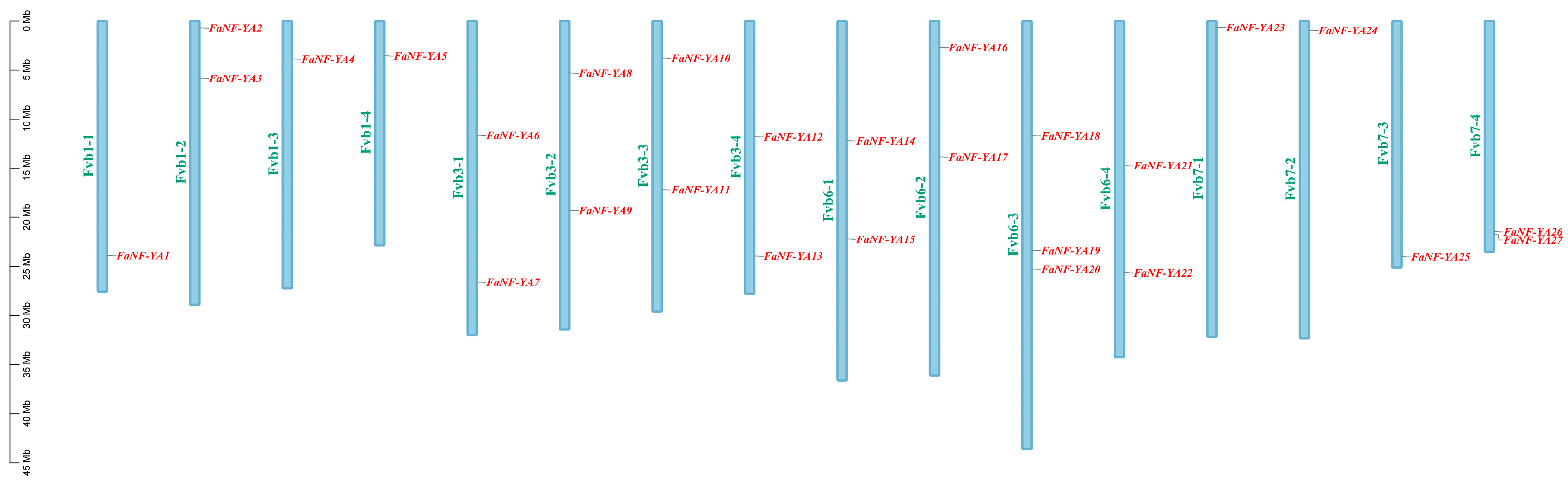
To comprehensively identify NF-YA family members in the cultivated strawberry (Fragaria × ananassa) genome, a systematic BLASTP search was performed using the Hidden Markov Model (HMM) profile of the NF-YA conserved domain retrieved from the Pfam database, using Arabidopsis thaliana NF-YA protein sequences as query sequences. After removal of redundant and incomplete sequences, a total of 27 FaNF-YA genes were identified. These genes were designated as FaNF-YA1 to FaNF-YA27 based on their distributed location on strawberry chromosomes (Figure 1).
By using the ExPASy ProtParam tool, the physiochemical properties of the 27 FaNF-YA proteins were investigated, including molecular weights (MWs), theoretical isoelectric points (pIs), amino acid lengths, instability indices, aliphatic indices, and grand average of hydropathicity (GRAVY) values (Table 1). These proteins exhibited substantial variation in length, ranging from 145 amino acids (FaNF-YA27) to 424 amino acids (FaNF-YA5). Correspondingly, the molecular weights of these proteins varied from 15.87 kDa (FaNF-YA27) to 46.99 kDa (FaNF-YA5). The theoretical isoelectric points (pIs) ranged from 6.79 (FaNF-YA7, FaNF-YA8, FaNF-YA13) to 10.13 (FaNF-YA6), which indicated that the majority of FaNF-YA proteins were basic in nature. Instability index analysis revealed that 25 out of 27 FaNF-YA proteins exhibited instability indices exceeding 40, which classified them as unstable proteins, with FaNF-YA27 (instability index = 26.82) and FaNF-YA25 (37.08) being the only exceptions. The aliphatic index, which serves as an indicator of thermostability, ranged from 49.97 (FaNF-YA9, FaNF-YA11) to 72.85 (FaNF-YA5), which suggested variable thermostability among family members. Furthermore, all 27 FaNF-YA proteins displayed negative GRAVY values, ranging from −1.084 (FaNF-YA6) to −0.411 (FaNF-YA5), which indicated their hydrophilic nature.

2.2. Conserved Domains and Phylogenetic Relationships of FaNF-YAs

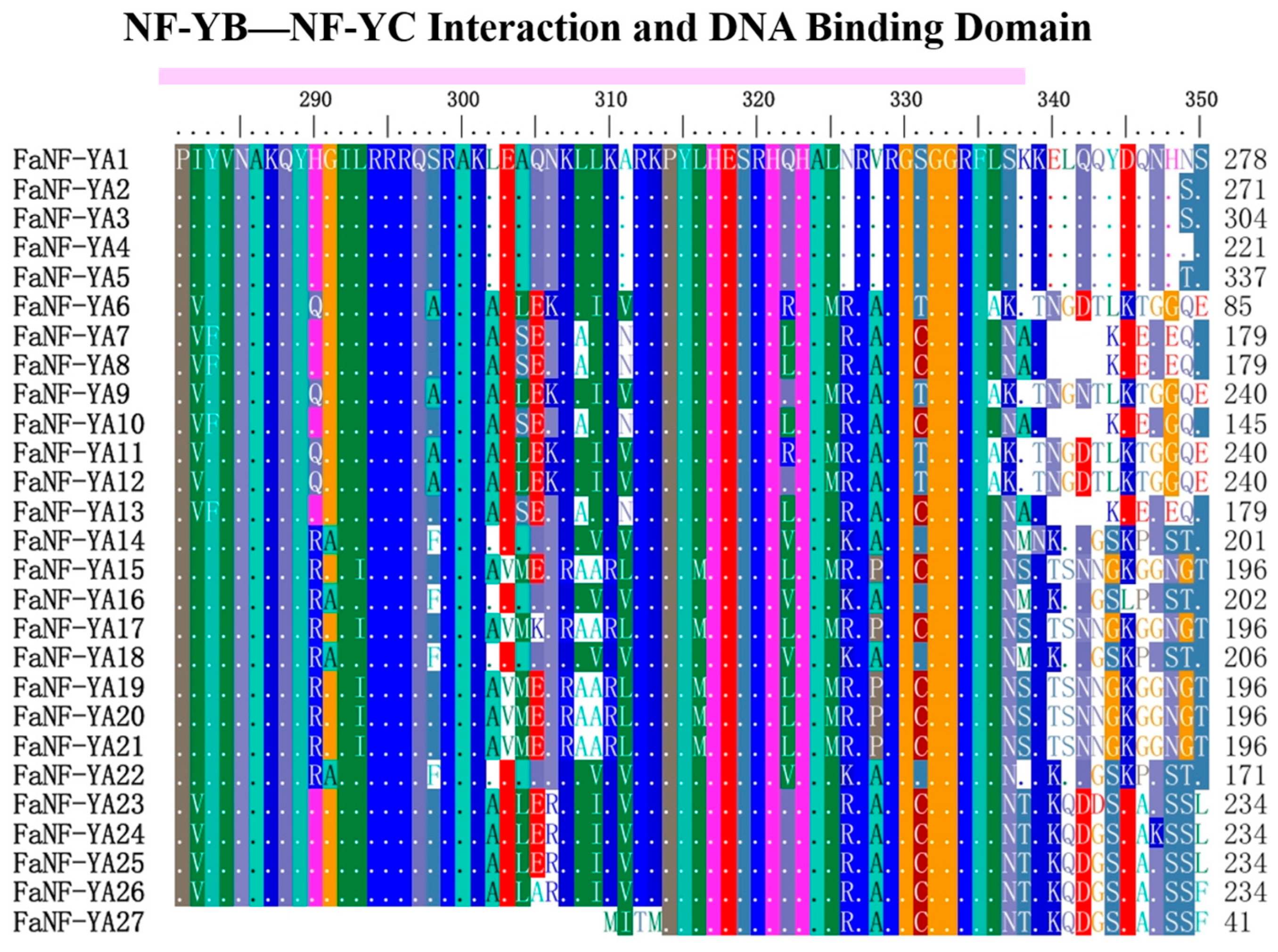
To characterize the structural conservation of the 27 FaNF-YA proteins, multiple sequence alignment was performed using TBtools (v2.441). As shown in Figure 2, each FaNF-YA protein contained one NF-YA–NF-YC interaction domain and one DNA binding domain, which was a hallmark of plant NF-YA transcription factors. Outside the core conserved region, the N-terminal and C-terminal sequences exhibit considerable length and amino acid variability.
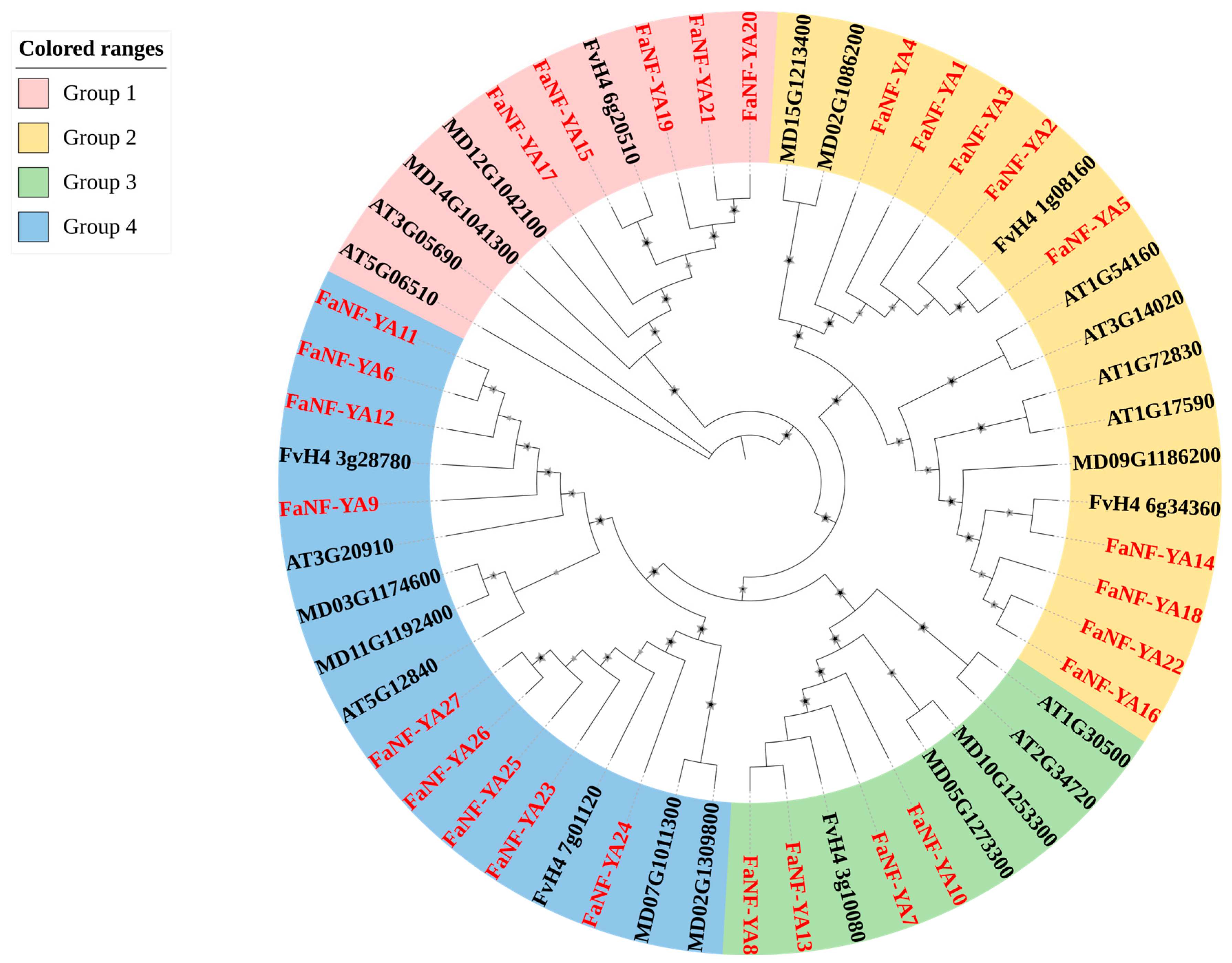
To elucidate the evolutionary relationships among the 27 FaNF-YA proteins identified in cultivated strawberry (Fragaria × ananassa), a phylogenetic tree was constructed with the neighbor-joining (NJ) method based on the full-length amino acid sequences of NF-YA proteins from Arabidopsis (Arabidopsis thaliana), apple (Malus domestica), woodland strawberry (Fragaria vesca), and cultivated strawberry (Fragaria × ananassa). As shown in Figure 3, all NF-YA proteins were clearly divided into four major groups (Groups 1–4). There were five FaNF-YA members (FaNF-YA15, -17, -19, -20 and -21) in Group 1, nine (FaNF-YA1, -2, -3, -4, -5, -14, -16, -18 and -22) in Group 2, four (FaNF-YA7, -8, 10 and -13) in Group 3, and nine (FaNF-YA6, -9, -11, -12, -23, -24, -25, -26, -27) in Group 4. FaNF-YA members were predominantly clustered together with their orthologs from woodland strawberry.

2.3. Gene Structures and Conserved Motifs of FaNF-YAs

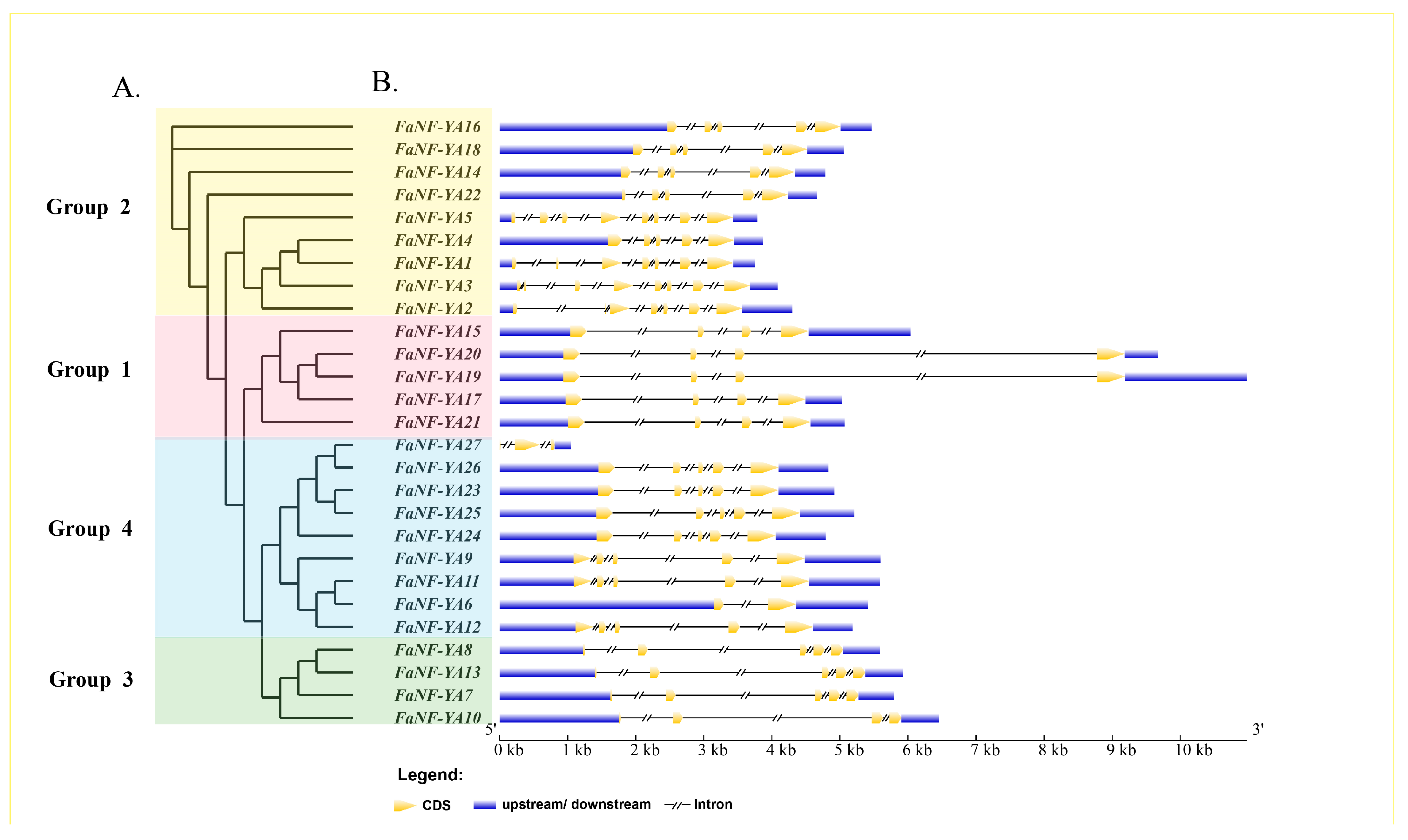
To investigate the gene structures (exon–intron organizations) of the FaNF-YA genes, the coding sequences (CDSs) and their corresponding genomic sequences were submitted to the GSDS (Gene Structure Display Server) for comparative analysis. As illustrated in Figure 4, the gene structures of FaNF-YA members varied considerably in terms of intron number. However, when grouped according to the phylogenetic tree (Groups 1–4), clear structural conservation was observed within each group. In Group 1, all of the FaNF-YAs had three introns. In Group 2, 5/9 of the FaNF-YAs had four introns, while the other four members had six or seven introns. In Group 3, all of the FaNF-YAs had three or four introns. In Group 4, most (7/9) of the FaNF-YAs had four introns, while the other two members had only one or two introns.
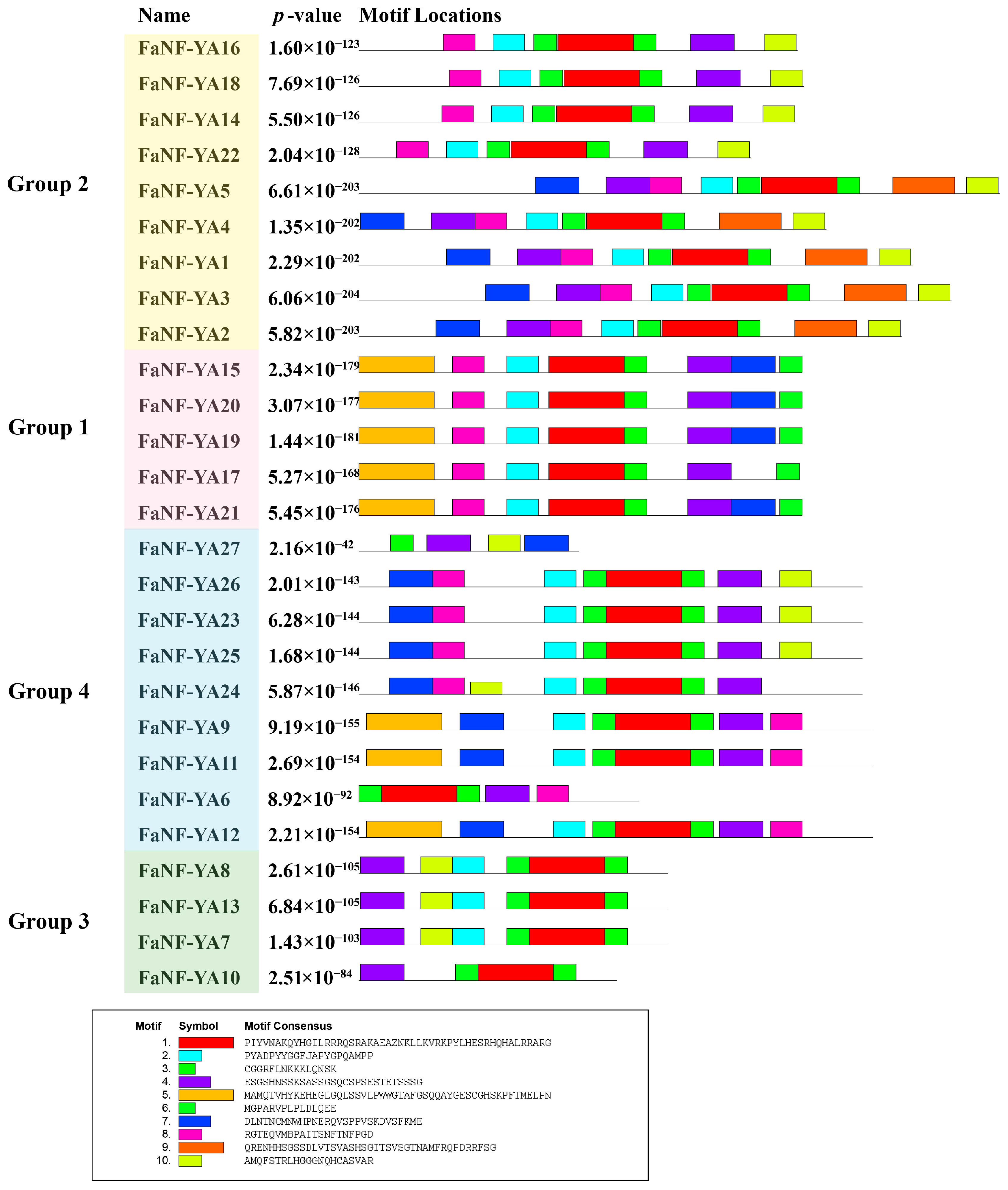
To identify conserved amino acid sequence patterns among the 27 FaNF-YA proteins, the MEME suite was employed. A total of ten distinct motifs were identified, and the distribution of these motifs across the FaNF-YA members is presented in Figure 5. Overall, the motif distribution pattern was largely consistent with the phylogenetic groupings. Notably, Motif 3 and Motif 4 were found in all the FaNF-YAs. Motif 1 and Motif 6 were consistently located in close proximity to each other.

2.4. Intraspecies Collinearity of FaNF-YAs

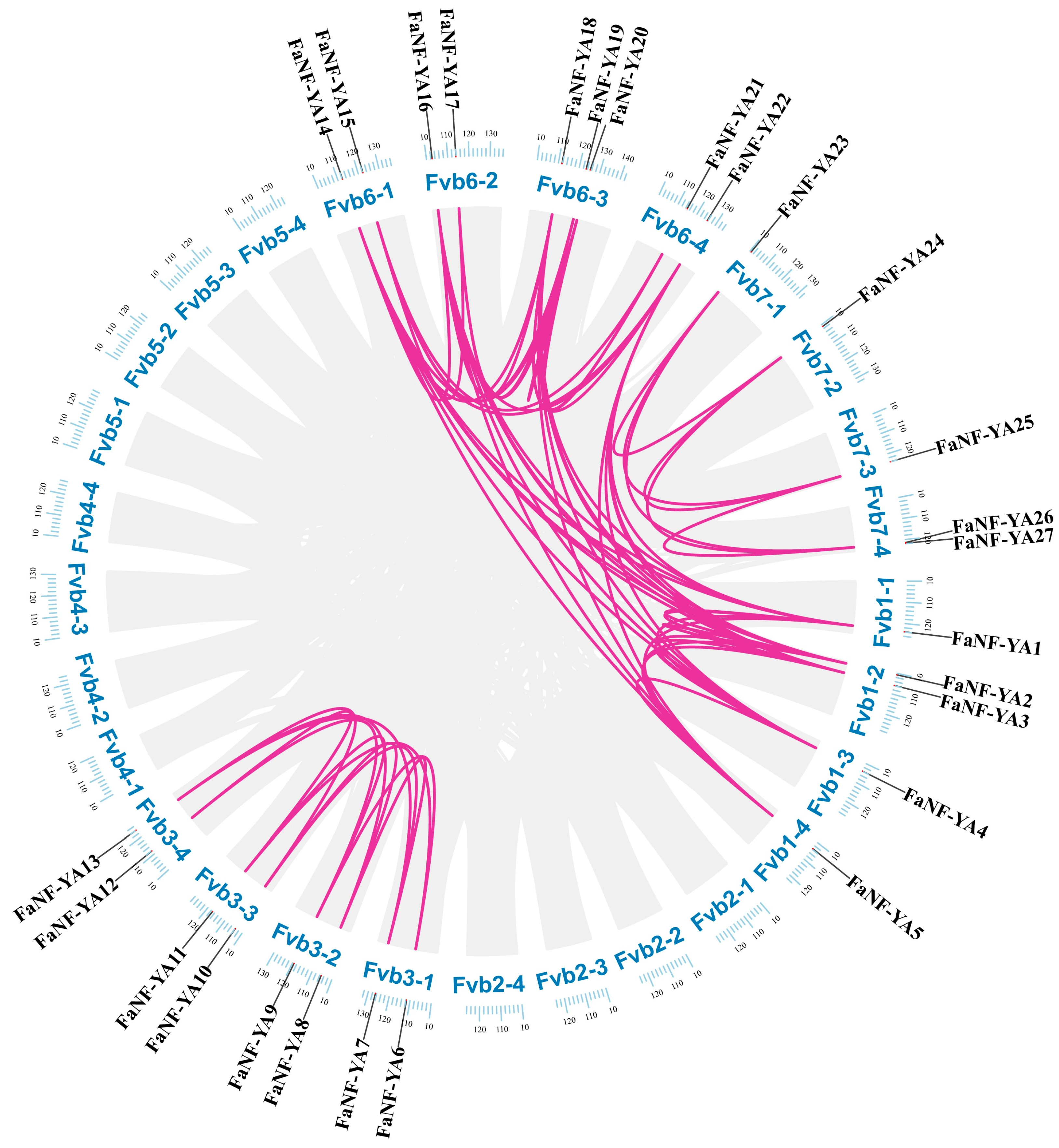
To investigate the expansion mechanisms and evolutionary constraints acting on the FaNF-YA gene family, intraspecies collinearity analysis was performed between FaNF-YA genes. As shown in Figure 6, a total of 62 collinear gene pairs were identified between FaNF-YAs.
Ka/Ks (non-synonymous substitution/synonymous substitution) ratios were calculated for each duplicated pair to infer the type of selection pressure (Table 2). The selective pressure acting on duplicated gene pairs was inferred from Ka/Ks ratios: purifying selection when <1, neutral evolution when =1, and positive selection when >1. As summarized in Table 2, the majority of duplicated FaNF-YA pairs exhibited Ka/Ks values below 1, ranging from 0.0896 (FaNF-YA7/FaNF-YA13) to 0.9916 (FaNF-YA23/FaNF-YA24).

2.5. Interspecies Collinearity of FaNF-YAs

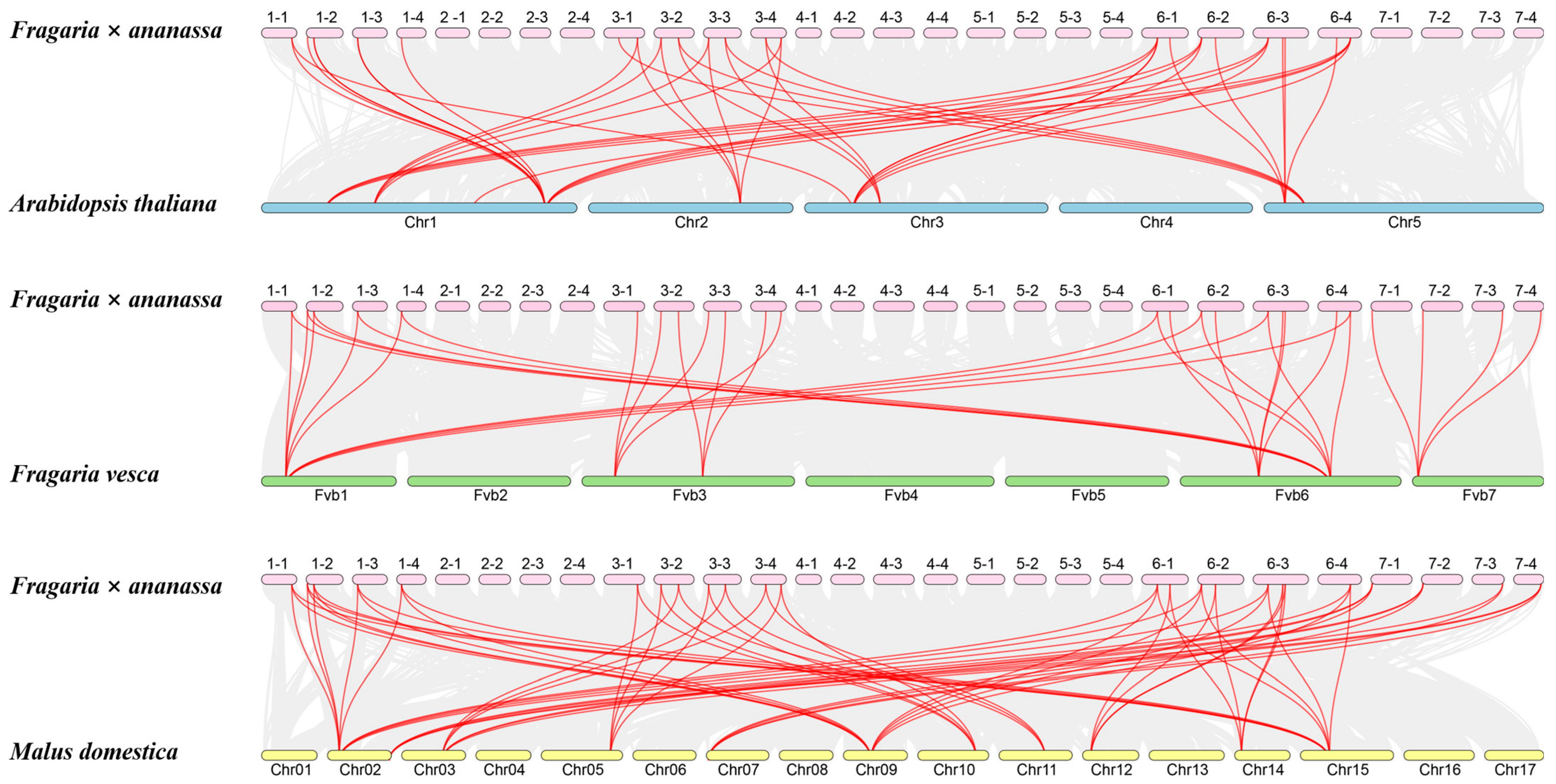
To investigate the evolutionary conservation of NF-YA genes across different plant species, comparative collinearity analyses were performed between FaNF-YAs and AtNF-Yas; FaNF-YAs and FvNF-Yas; and FaNF-YAs and MdNF-YAs. Collinear relationships were identified using MCScanX and visualized as syntenic maps (Figure 7). The detailed orthologous gene pairs are listed in Supplementary Tables S1–S3. A total of 39, 34 and 60 collinear gene pairs were identified between FaNF-YAs and AtNF-Yas; FaNF-YAs and FvNF-Yas; and FaNF-YAs and MdNF-YAs, respectively. Several FaNF-YA genes were collinear to more than one ortholog in certain species. For instance, FaNF-YA1, -2, -3, -4, -5, -14, -16, -18, -22 were collinear with two distinct FvNF-YA genes. FaNF-YA1, -2, -3, -4, -5 were collinear with three distinct MdNF-YA genes. Additionally, there was a circumstance where many FaNF-YA genes were simultaneously collinear with certain orthologs from other species. For instance, FaNF-YA1, -2, -3, -4, -5, -14, -16, -18, -22 were collinear with AT1G72830.2 AtNF-YA1 (AT1G72830.2) and AtNF-YA3 (AT3G14020.1).

2.6. cis-Acting Elements in the Promoters of FaNF-YAs

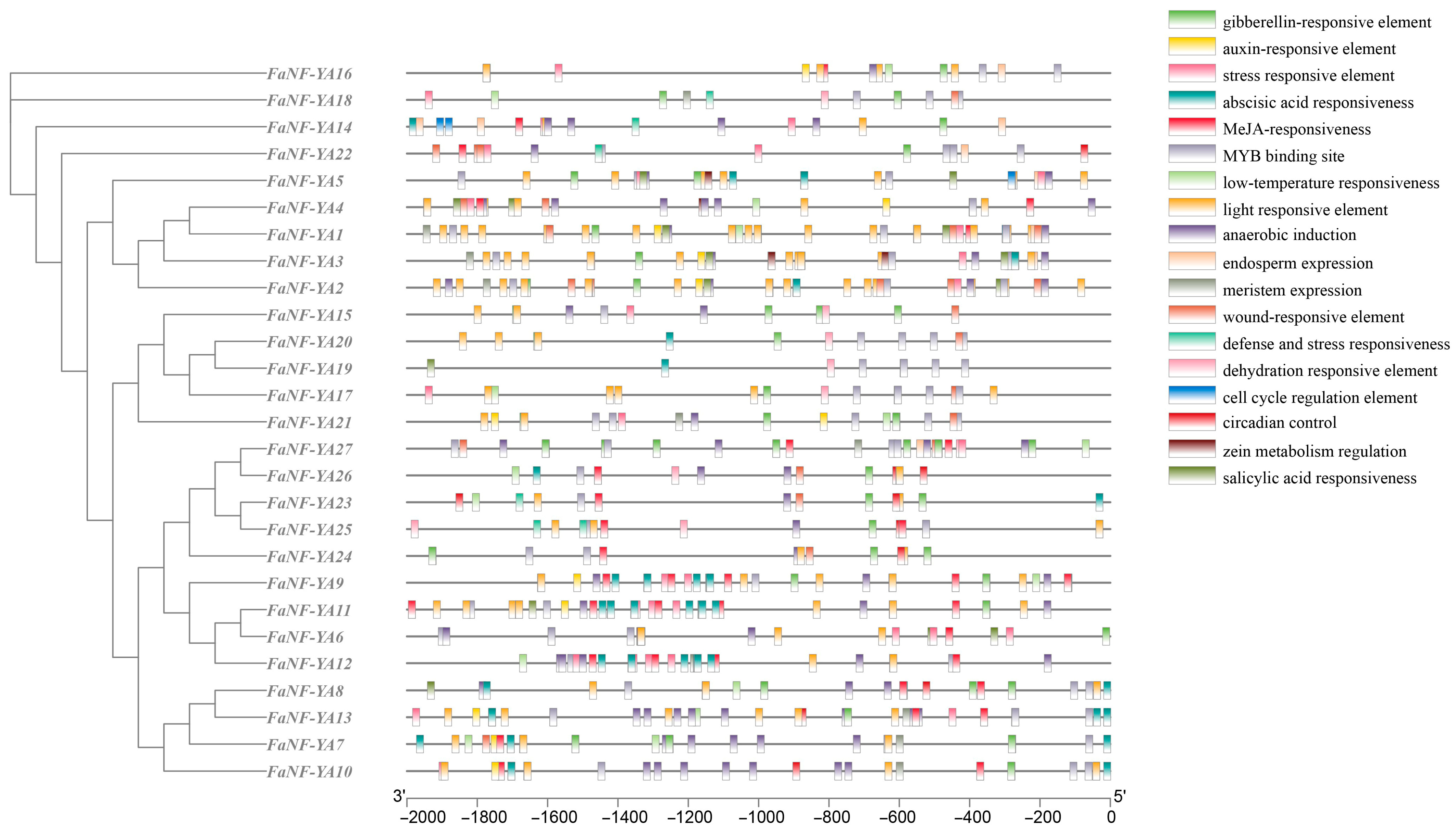
Promoter analysis (2000 bp upstream region) of all 27 FaNF-YA genes using PlantCARE revealed 18 distinct cis-acting regulatory elements. They were classified into four categories: light-responsive, phytohormone-responsive, stress-responsive, and growth/development-related (Figure 8, Supplementary Table S4a,b). Light-responsive elements were the most abundant, with 130 occurrences across all promoters. Stress-related elements were also highly represented. MYB binding sites (91 occurrences) and anaerobic induction elements (72 occurrences) were particularly prevalent. In addition, stress-responsive elements (31 occurrences), wound-responsive elements (24 occurrences), low-temperature responsiveness elements (15 occurrences), dehydration-responsive elements (10 occurrences), and defense and stress-responsiveness elements (six occurrences) were detected.
Notably, the distribution of these cis-acting elements varied among individual FaNF-YA promoters. For instance, FaNF-YA1, FaNF-YA2, FaNF-YA3, and FaNF-YA9 contained the highest numbers of ABA-responsive elements, while FaNF-YA7, FaNF-YA8, and FaNF-YA13 were enriched in MeJA-responsive and MYB binding sites. In contrast, FaNF-YA23 through FaNF-YA27 displayed a higher proportion of light-responsive and circadian control elements.

2.7. Organ-Specific Expression Profiles of FaNF-YAs

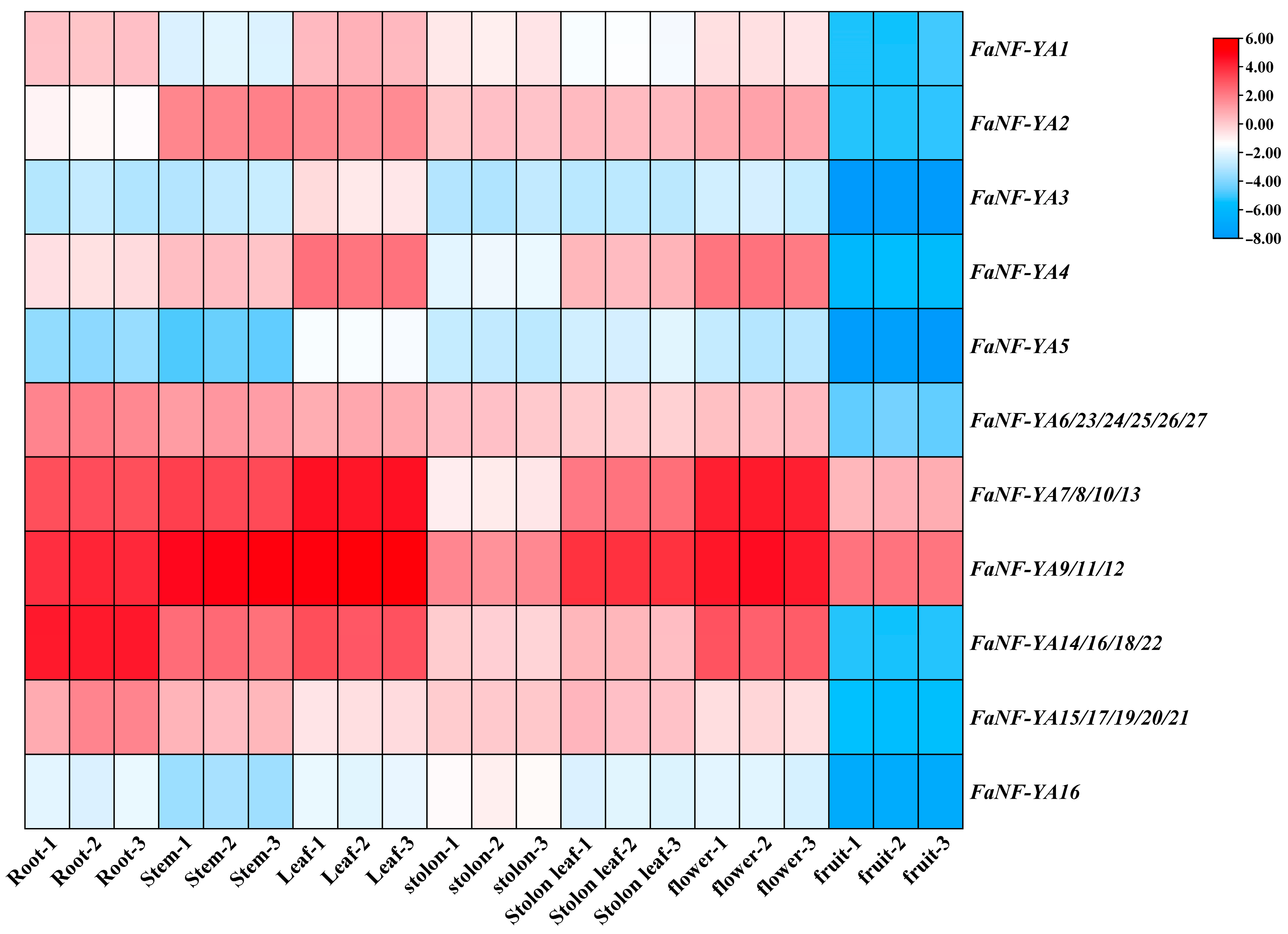
To investigate the spatial expression patterns of FaNF-YA genes, qRT-PCR was performed on seven distinct organs of cultivated strawberry: root, stem, leaf, stolon, stolon leaf, flower, and fruit (Figure 9). Individual FaNF-YA genes showed distinct organ preference patterns. For instance, FaNF-YA1 was expressed at comparable levels in root and leaf, but its transcript abundance in fruit was only about 0.02-fold of that in root. FaNF-YA2 exhibited the highest expression in stem, with levels approximately 8-fold higher than in root, followed by leaf (approximately 7-fold), flower (approximately 4-fold), and stolon leaf (approximately 1.2-fold). FaNF-YA4 was most abundant in leaf (approximately 7-fold of root) and flower (approximately 6-fold of root), whereas its expression in stolon was only about 0.4-fold of root. All examined FaNF-YA genes or groups exhibited extremely low expression in fruit, with fruit/root ratios ranging from 0.01 to 0.04. The specific relative qRT-PCR data are listed in Supplementary Table S5.

2.8. Expression Profiles of FaNF-YAs upon Salt Stress

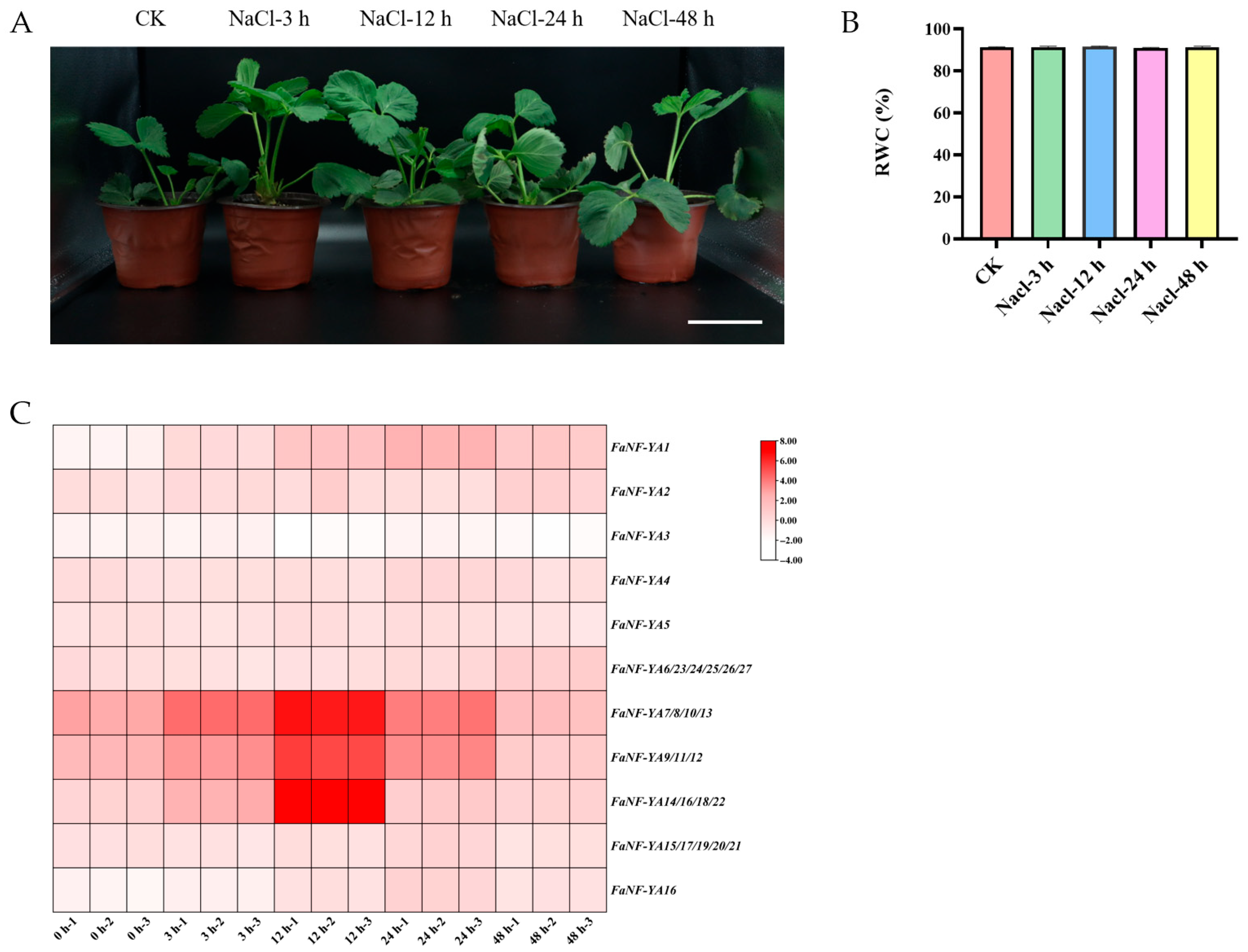
To investigate the potential involvement of FaNF-YA genes in salt (NaCl) stress responses, the transcript levels of individual FaNF-YA genes and pooled gene groups were examined by qRT-PCR in strawberry seedlings treated with NaCl for 0, 3, 12, 24, and 48 h. As shown in Figure 10A,B, the salt treatment for up to 48 h did not cause visible wilting, chlorosis, or necrosis in the strawberry plants, and there was no significant difference in RWC between the salt-treated plants and the control (0 h). Salt stress induced widespread upregulation of FaNF-YA genes, but with markedly different magnitudes and temporal patterns. FaNF-YA1 showed a progressive increase in transcript abundance over time: expression was upregulated approximately 3-fold at 3 h, 7-fold at 12 h, 14-fold at 24 h, and 5-fold at 48 h relative to 0 h, indicating a strong and sustained induction by salt stress. FaNF-YA2 was moderately induced, with peak expression at 3 h (approximately 1.3-fold) and 12 h (approximately 1.7-fold), followed by a gradual decline. FaNF-YA3 showed little change across all time points, with fold changes ranging from 0.6 to 1.1, which suggested that this gene was not responsive to salt stress. FaNF-YA4 was induced approximately 2-fold at 3 h and 12 h, with a slight increase to approximately 3-fold at 24 h, before returning to basal levels at 48 h. FaNF-YA5 displayed a modest but consistent induction (approximately 2-fold) from 3 h to 24 h, with a slight reduction at 48 h. FaNF-YA16 was also induced, with peak expression at 24 h (approximately 3-fold) and sustained upregulation at 12 h (approximately 2-fold) and 48 h (approximately 2-fold).
The group FaNF-YA7/8/10/13 was dramatically induced by salt stress: expression increased from 0 h to approximately 55-fold at 3 h, peaked at 12 h with an extraordinary 230-fold increase, then declined to 40-fold at 24 h and 9-fold at 48 h. The group FaNF-YA9/11/12 also showed strong induction, with fold changes of approximately 25-fold at 3 h, 110-fold at 12 h, 30-fold at 24 h, and 5-fold at 48 h. The group FaNF-YA14/16/18/22 exhibited a similar pattern, with moderate induction at 3 h (approximately 4-fold), a dramatic peak at 12 h (approximately 360-fold), followed by declines to 5-fold at 24 h and 3.5-fold at 48 h. The specific relative qRT-PCR data are listed in Supplementary Table S6.

2.9. Transcription-Activating Activity of FaNF-YA7 and FaNF-YA9

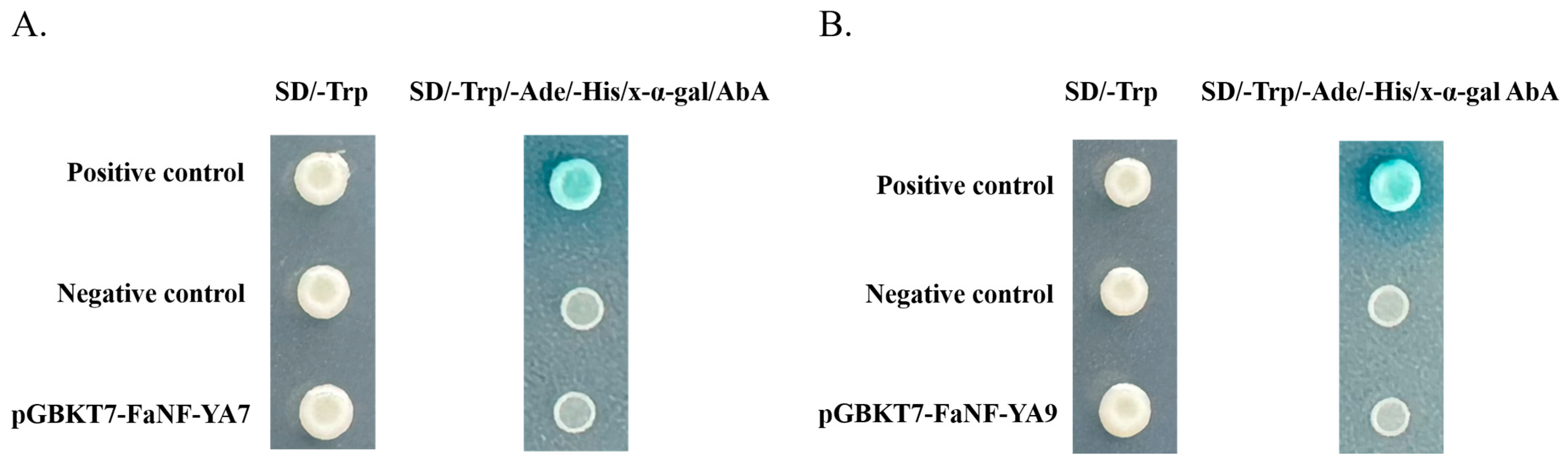
To determine the transcription-activating activity of FaNF-YAs, FaNF-YA7 and FaNF-YA9, which are responsive to salt stress, were subjected to yeast transformation analysis. These two proteins were introduced into yeast cells, respectively, after being integrated into the pGBKT7 vector. As shown in Figure 11A, both pGBKT7-FaNF-YA7 and pGBKT7-FaNF-YA9 transformants, together with the positive control (pGBKT7-53 + pGADT7-T) and the negative control (empty pGBKT7), grew well on SD/-Trp, which indicated successful transformation. In contrast (Figure 11B), pGBKT7-FaNF-YA7 and pGBKT7-FaNF-YA9 transformants, as well as the negative control, failed to grow on SD/-Trp/-Ade/-His/x-α-gal medium, while the positive control grew vigorously and developed blue coloration on this medium. This showed that FaNF-YA7 and FaNF-YA9 lacked transcription-activating activity under the tested yeast system.

2.10. Enhanced Salt Tolerance by FaNF-YA7 and FaNF-YA9 in Yeast

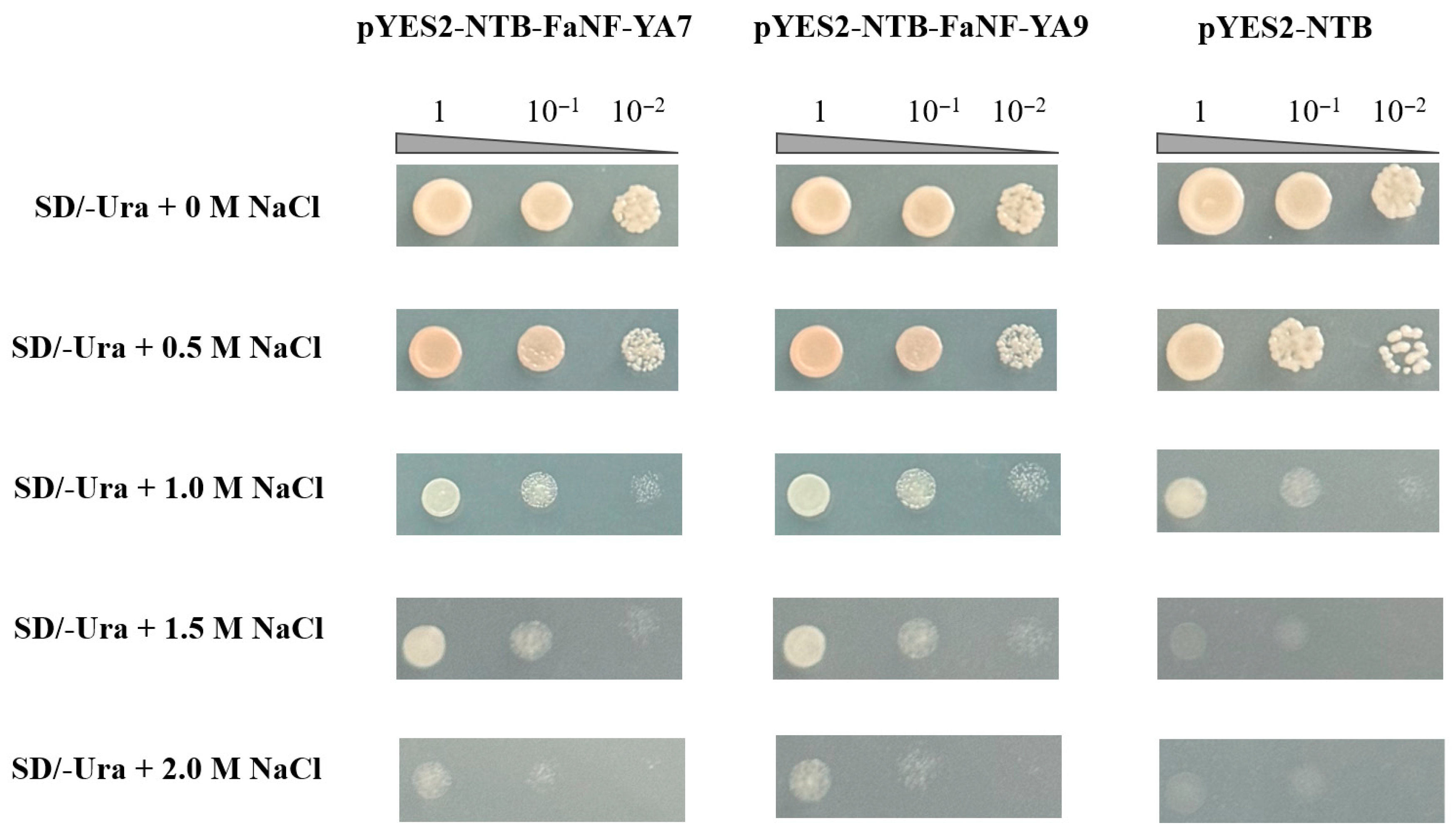
To investigate whether FaNF-YA7 and FaNF-YA9 play functional roles in salt stress response, they were cloned into the pYES2-NTB vector, respectively. The recombinant constructs (pYES2-NTB-FaNF-YA7 and pYES2-NTB-FaNF-YA9) and the empty vector (negative control) were transformed into a salt-sensitive yeast strain. As shown in Figure 12, the negative control formed visible colonies on SD/-Ura medium containing 0, 0.5, and 1.0 M NaCl, but failed to produce any detectable growth at 1.5 M and 2.0 M NaCl. In contrast, yeast cells expressing FaNF-YA7 or FaNF-YA9, although also showing reduced growth at higher salt concentrations, still exhibited discernible growth traces on plates containing 1.5 M and 2.0 M NaCl. This suggested potential biological functions of FaNF-YA7 and FaNF-YA9 in salt stress response.

3. Discussion

Unlike animals and yeast, where each NF-Y subunit is encoded by a single gene, plants have undergone extensive expansion of the NF-Y gene family through gene duplication events [9]. In the present study, we identified 27 FaNF-YA genes in the octoploid cultivated strawberry (Fragaria × ananassa). This number is substantially larger than the six NF-YA members reported in the diploid woodland strawberry (Fragaria vesca), which is consistent with the allo-octoploid genome structure of cultivated strawberry [4]. Phylogenetic analysis revealed that the 27 FaNF-YA proteins were clearly divided into four distinct groups (Groups 1–4), and this grouping was strongly supported by conserved motif composition and gene structure analysis. Notably, the results of gene structure analysis showed that Group 2 members (FaNF-YA6–FaNF-YA13) exhibited relatively simple exon–intron structures, with several genes being intron-less. In contrast, Group 1 members possessed more complex intron–exon patterns. This structural divergence may reflect different evolutionary constraints and functional trajectories among subgroups. The intraspecies collinearity analysis identified numerous duplicated FaNF-YA gene pairs, and the calculated Ka/Ks ratios revealed that the vast majority of these pairs exhibited Ka/Ks values below 1, which indicated that purifying selection had been the dominant evolutionary force acting on this gene family. This is consistent with the notion that the core DNA-binding and subunit interaction functions of NF-YA proteins are under strong functional constraints. Only two gene pairs (FaNF-YA1/FaNF-YA2 and FaNF-YA24/FaNF-YA26) showed Ka/Ks ratios exceeding 1, which suggested positive selection might have driven functional divergence in these specific members. These findings are in line with the observation that the non-conserved N- and C-termini of NF-YA proteins are under pressure for diversifying selection, which may provide clues to functional diversification following gene duplication. To investigate the biological processes that FaNF-YA were probably involved in, we performed cis-acting element analysis of FaNF-YA promoters. The promoters of FaNF-YA genes harbored abundant stress-related and phytohormone-responsive cis-acting elements, including ABRE (ABA-responsive element), MYB and MYC binding sites, MeJA-responsive elements, and DRE (dehydration-responsive element).
A key finding of this study is the pronounced organ-specific and stress-responsive expression divergence among FaNF-YA members. Organ-specific expression profiling revealed that different FaNF-YA genes exhibited preferential expression in distinct organs. For example, FaNF-YA9/11/12 were predominantly expressed in leaves, stems, and flowers, with exceptionally high transcript abundance, while FaNF-YA1 was relatively evenly expressed across most organs. In contrast, FaNF-YA3 and FaNF-YA5 were expressed at very low levels across all examined organs. All FaNF-YA genes or groups showed extremely low expression in fruit, with fruit/root ratios ranging from 0.01 to 0.04. This suggests that FaNF-YA family members may play limited roles during fruit development under normal growth conditions. This observation contrasts with findings in tomato and banana, where certain NF-Y genes have been implicated in fruit ripening regulation [44]. Under salt stress, FaNF-YA members exhibited diverse temporal expression patterns, which reflected distinct regulatory roles. Notably, the groups FaNF-YA14/16/18/22, FaNF-YA7/8/10/13, and FaNF-YA9/11/12 were most strongly and rapidly induced, peaking at 12 h post-treatment, with fold changes reaching as high as 230- to 360-fold. In contrast, FaNF-YA3 showed essentially no response to salt stress. This salt-induced upregulation of specific FaNF-YA members is consistent with previous studies in other plant species. In Arabidopsis, the NF-YA transcription factor family has been shown to play a critical role in response to high salt concentrations and other abiotic stresses [45]. In soybean, GmNFYA5 exhibits the highest transcript induction among all NF-YA family members under drought stress, and its overexpression enhances drought tolerance via both ABA-dependent and ABA-independent pathways [24]. Our findings collectively indicate that specific FaNF-YA members are promising candidate genes for improving salt tolerance in strawberry through molecular breeding approaches.
To functionally validate the involvement of FaNF-YA genes in salt stress responses, we performed heterologous expression assays in yeast. Yeast cells expressing FaNF-YA7 or FaNF-YA9 exhibited enhanced salt tolerance. Although the growth of all transformants decreased with increasing salt concentrations, the FaNF-YA7- and FaNF-YA9-expressing yeast strains consistently showed discernible growth at 1.5 M and 2.0 M NaCl, where the negative control was completely inhibited. This heterologous functional assay provides direct evidence that FaNF-YA7 and FaNF-YA9 possess intrinsic capacity to enhance salt tolerance. Given that yeast lacks the NF-YB and NF-YC subunits that typically form the heterotrimeric complex with NF-YA in plants, the observed salt tolerance effect in yeast may occur through alternative mechanisms. Furthermore, both FaNF-YA7 and FaNF-YA9 proteins failed to activate reporter gene expression in the yeast system, in contrast to the positive control. This suggests that FaNF-YA7 and FaNF-YA9 may not function as autonomous transcriptional activators but instead require interaction with NF-YB and NF-YC subunits to form the functional heterotrimeric complex necessary for transactivation. This is consistent with the established paradigm of NF-Y function, where the NF-YA subunit provides DNA-binding specificity, while transcriptional activation is often mediated through the NF-YC subunit or through recruitment of co-activators.
Despite the comprehensive genome-wide identification and characterization of the FaNF-YA gene family in this study, several important questions remain to be addressed. First, while we observed that specific FaNF-YA members were dramatically induced by salt stress, the downstream target genes they regulate remain unknown. Future studies employing chromatin immunoprecipitation sequencing (ChIP-seq) or transcriptomic analysis of transgenic lines overexpressing or silencing FaNF-YA genes could identify direct targets and elucidate the transcriptional regulatory networks. Second, the functional roles of FaNF-YA genes in other abiotic stresses, such as drought, cold, and heat stress, warrant investigation. Given the presence of multiple stress-related cis-elements (e.g., LTR for cold, DRE for dehydration) in their promoters, it is likely that FaNF-YA genes are involved in responses to a broader range of environmental stresses. NF-Y has been recognized as a key regulator in plant responses to a wide range of adverse stresses, including high salinity, drought, extreme temperatures, nutrient deficiency, hypoxia, and heavy metal toxicity [44]. Third, stable genetic transformation of strawberry to overexpress or knock out specific FaNF-YA genes (particularly the highly salt-responsive members, such as those in the FaNF-YA14/16/18/22 group) is needed to confirm their functional roles in planta and to assess their potential for improving stress tolerance in strawberry cultivation. Advances in strawberry transformation and genome editing technologies make such approaches increasingly feasible.

4. Materials and Methods

4.1. Identification and Physicochemical Characterization of NF-YA Gene Family in Strawberry

Genomic resources for cultivated strawberry (Fragaria × ananassa), including genome assembly, coding sequences (CDS), and protein annotations, were retrieved from the Phytozome Database (https://phytozome-next.jgi.doe.gov/info/Fxananassa_v1_0_a1, accessed on 17 January 2026). Two complementary strategies were employed to identify FaNF-YA genes in the strawberry genome. First, the amino acid sequences of 10 AtNF-YA genes from Arabidopsis thaliana (AT1G17590, AT1G30500, AT1G54160, AT1G72830, AT2G34720, AT3G05690, AT3G14020, AT3G20910, AT5G06510, AT5G12840) were downloaded from the TAIR database (https://phytozome-next.jgi.doe.gov/info/Athaliana_TAIR10, accessed on 18 January 2026). These sequences were used as queries to perform BLASTP [46] searches against the strawberry genome with an E-value cutoff of 1 × 10⁻⁵, a minimum query coverage of 50%, and a minimum sequence identity of 40%. Second, the Hidden Markov Model (HMM) profile corresponding to the NF-YA conserved domain (PF02045) was retrieved from the InterPro database (https://www.ebi.ac.uk/interpro/, accessed on 19 January 2026). The HMMER v3.1 tool was then employed to scan the strawberry protein database using the PF02045 profile, with an E-value threshold of 0.01 to identify additional putative NF-YA family members. All candidate sequences obtained from both methods were manually inspected and validated by confirming the presence of the complete NF-YA conserved domain using the NCBI Conserved Domain Database (CDD, https://www.ncbi.nlm.nih.gov/Structure/cdd/, accessed on 19 January 2026) and the SMART tool (http://smart.embl-heidelberg.de/, accessed on 19 January 2026). Redundant and incomplete sequences were removed.
The physicochemical properties of the identified FaNF-YA proteins, including molecular weight (kDa), theoretical isoelectric point (pI), instability index, aliphatic index, and grand average of hydropathicity (GRAVY), were analyzed using the ExPASy ProtParam tool (https://web.expasy.org/protparam/, accessed on 21 January 2026).

4.2. Multiple Sequence Alignment and Phylogenetic Analysis

Multiple sequence alignment of the full-length FaNF-YA protein sequences was performed using the MUSCLE algorithm implemented in TBtools (v2.441) [47] with default parameters. To examine the evolutionary relationships of FaNF-YA proteins, NF-YA sequences from Arabidopsis thaliana (10 AtNF-YAs), Fragaria vesca (6 FvNF-YAs), and Malus domestica (11 MdNF-YAs) were retrieved from the Phytozome database.
A phylogenetic tree was constructed using the neighbor-joining (NJ) method [48] with 1000 bootstrap replicates in TBtools (v2.441).

4.3. Gene Structure and Conserved Motif Analysis

The exon–intron architectures of FaNF-YA genes were visualized using the Gene Structure Display Server 2.0 (GSDS 2.0, https://gsds.gao-lab.org/, accessed on 25 January 2026) [49] by comparing the coding sequences (CDS) with the corresponding genomic sequences retrieved from the strawberry genome database.
Conserved protein motifs in FaNF-YA sequences were identified using the MEME Suite (http://meme-suite.org/, accessed on 27 January 2026) [50] with default parameters. The distribution of identified motifs among FaNF-YA members was visualized using TBtools (v2.441).

4.4. Intraspecies and Interspecies Collinearity Analysis and Ka/Ks Calculation

The Gff3 (General Feature Format 3) annotation files and genome sequence files for cultivated strawberry (Fragaria × ananassa), diploid strawberry (Fragaria vesca), Arabidopsis (Arabidopsis thaliana) and apple (Malus domestica) were retrieved from the Phytozome database. Intraspecies and interspecies collinearity analyses were performed and visualized using TBtools (v2.441) with the MCScanX algorithm under default parameters.
To estimate the selection pressure acting on duplicated FaNF-YA gene pairs, the non-synonymous (Ka) and synonymous (Ks) substitution rates were calculated using the KaKs_Calculator embedded in TBtools. The Ka/Ks ratio was used to infer the type of selection: Ka/Ks < 1 indicates purifying (stabilizing) selection, Ka/Ks = 1 indicates neutral evolution, and Ka/Ks > 1 indicates positive (Darwinian) selection.

4.5. cis-Acting Element Analysis

The 2000 bp promoter sequences upstream of the translation start codon of each FaNF-YA gene were retrieved from the Phytozome database. These sequences were analyzed for the presence of putative cis-acting regulatory elements using the online tool PlantCARE (https://bioinformatics.psb.ugent.be/webtools/plantcare/html/, accessed on 5 February 2026). The identified cis-elements were categorized based on their predicted functions (e.g., stress responsiveness, phytohormone responsiveness, light responsiveness, and plant growth/development). The distribution of cis-elements across the FaNF-YA promoters was visualized using TBtools (v2.441).

4.6. Plant Materials and Treatments

Strawberry (Fragaria × ananassa) seedlings used in this study were maintained at the School of Agriculture, Liaodong University (Dandong, China). After establishment in the field for 6–8 weeks, healthy strawberry plants at the vegetative growth stage (with approximately 6–8 fully expanded leaves and a well-developed root system) were used for root, stem, and leaf sampling. For stolon and stolon leaf collection, plants were further grown under long-day conditions (16 h light/8 h dark) for an additional 4–6 weeks until stolons emerged. Flowers were collected at the visible bud to full bloom stage (approximately 10–12 weeks after planting). Fruits were harvested at the commercial mature stage (red color development, approximately 30–35 days after anthesis).
Strawberry (Fragaria × ananassa cv. ‘Red Face’) seedlings were cultivated in a controlled-environment greenhouse with the following conditions: day/night temperature of 25 °C ± 2 °C/18 °C ± 2 °C, relative humidity of 60% ± 5%, photosynthetic photon flux density (PPFD) of 150 μmol·m−2·s−1 and a photoperiod of 16 h light/8 h dark. After field planting for 6–8 weeks (to ensure establishment of a well-developed root system), healthy and uniformly sized seedlings were selected based on the following criteria: presence of 6–8 fully expanded true leaves, absence of visible disease or pest damage. For stress treatments, only seedlings meeting all these criteria were used. For organ-specific expression profiling, additional organs (stolon, flower, fruit) were collected at their respective optimal developmental stages. The relative water content (RWC) was measured and calculated as González et al.’s method [51].
To prevent confounding effects from repeated sampling, an independent sampling design was used: for each salt stress time point (3, 12, 24, and 48 h), a distinct set of plants was subjected to 200 mM NaCl treatment and harvested at that specific time point. A separate cohort of control plants (0 h) was similarly maintained under identical conditions without salt treatment. Each treatment–time combination had three independent biological replicates (each replicate consisting of pooled leaf tissue from three individual plants). A single, common control group of untreated plants (0 h) was used for comparison with all stress treatments. For salt stress treatment, strawberry seedlings were subjected to NaCl (200 mM) in hydroponic culture. The 3 h, 12 h, 24 h, and 48 h time points post-treatment were selected to capture the dynamic transcriptional profiles of the stress response. The samples were immediately frozen in liquid nitrogen and stored at −80 °C. Three biological replicates were performed for each treatment and time point.

4.7. qRT-PCR and Expression Analysis

Total RNA was extracted from strawberry leaf samples using an RNA extraction kit (Bioteke, Beijing, China) following the manufacturer’s instructions. RNA integrity was verified by 1% agarose gel electrophoresis. The extracted RNA was reverse-transcribed into single-stranded cDNA using a reverse transcription kit (PrimeScript™ RT Reagent Kit, Takara Bio, Kusatsu, Japan). The obtained cDNA was diluted 10-fold to serve as the template for qRT-PCR analysis.
qRT-PCR primers were designed using Primer 5.0 (Premier Biosoft, Palo Alto, CA, USA) based on the full-length coding sequences of FaNF-YA genes. The FaActin gene was selected as the internal reference control [52]. Three biological replicates and three technical replicates were used for each sample. qRT-PCR was performed using the THUNDERBIRD Next SYBR qPCR Mix (TOYOBO, Osaka, Japan) according to the manufacturer’s protocol. The 20 µL reaction mixture was subjected to the following thermal cycling protocol: initial denaturation at 95 °C for 5 min, followed by 45 cycles of denaturation at 95 °C for 15 s and annealing/extension at 60 °C for 5 min. The reaction was carried out on an Applied Biosystems 7500 Fast Real-Time PCR System (Waltham, MA, USA). All reactions were repeated three times, and the relative gene expression levels were calculated using the 2−ΔΔCt method [53]. Normalized count values were log2-transformed to stabilize variance and better meet the assumptions of normality underlying the statistical models used. Differences in significance were analyzed with Duncan’s multiple range test (p < 0.05).
Due to extremely high sequence similarity among certain FaNF-YA genes, conventional primer design could not achieve gene-specific amplification. Therefore, a single primer pair was designed to co-amplify each combination of FaNF-YA genes with high sequence similarity. The combinations included: FaNF-YA7/8/10/13, FaNF-YA9/11/12, FaNF-YA14/16/18/22, FaNF-YA15/17/19/20/11, and FaNF-YA6/23/24/25/26/27. The heatmaps were constructed using TBtools (v2.441).

4.8. Transcription-Activating Activity Verification

To assess the transcriptional activation activity of FaNF-YA proteins, FaNF-YA7 and FaNF-YA9 were selected as representative members. The full-length coding sequences of FaNF-YA7 and FaNF-YA9 were amplified and cloned into the pGBKT7 yeast expression vector, which contains the GAL4 DNA-binding domain. The recombinant vectors pGBKT7-FaNF-YA7 and pGBKT7-FaNF-YA9, along with pGBKT-53/pGADT7-T (positive control) and empty pGBKT7 (negative control), were transformed into yeast competent cells (Y2H strain, Takara Bio, Kusatsu, Japan), respectively.
Transformants were first selected on SD/-Trp medium (synthetic dropout medium lacking tryptophan) to confirm successful transformation. After verification of normal growth on SD/-Trp, the yeast cultures were spotted onto nutrition-deprived medium SD/-Trp/-Ade/-His (lacking tryptophan, adenine, and histidine) supplemented with X-α-Gal (40 mg/L) and Aureobasidin A (AbA, 500 ng/L). The inclusion of X-α-Gal and AbA provided more detectable and reliable evidence for the activation of the yeast GAL4 system. Plates were incubated at 30 °C for 3–5 days, and colony growth and blue coloration were recorded as indicators of transcriptional activation activity.

4.9. Salt-Resistant Yeast Transformation

To investigate the potential role of FaNF-YA proteins in salt stress response, FaNF-YA7 and FaNF-YA9 were selected as representatives. The full-length coding sequences of FaNF-YA7 and FaNF-YA9 were amplified and cloned into the pYES2-NTB vector, respectively. pYES2-NTB-FaNF-YA7, pYES2-NTB-FaNF-YA9 and negative control (pYES2-NTB blank vector) were transformed into salt-resistant yeast (INVSc1), respectively. The transformed yeast was cultured on nutrition-deprived media (SD/-Ura) containing different concentrations of salt (NaCl). The concentrations of salt were 0, 0.5, 1.0, 1.5 and 2.0 M. The growth state of yeast on the media indicated salt tolerance.

5. Conclusions

This study provides a comprehensive genome-wide analysis of the NF-YA gene family in cultivated strawberry, identifying 27 FaNF-YA members and characterizing their phylogenetic relationships, gene structures, conserved motifs, promoter cis-acting elements, expression patterns under salt stress, and functional roles in yeast. These results reveal that FaNF-YA members have evolved diverse expression patterns and regulatory mechanisms, with specific members being strongly induced by salt stress and conferring enhanced salt tolerance in a heterologous system. These findings establish a solid foundation for future functional studies aimed at elucidating the molecular mechanisms by which FaNF-YA transcription factors regulate stress responses in strawberry and provide candidate genes for molecular breeding of stress-tolerant strawberry cultivars.

Supplementary Materials

The following supporting information can be downloaded at: https://www.mdpi.com/article/10.3390/plants15101475/s1. Table S1: Collinear NF-YA gene pairs in between Fragaria × ananassa and Arabidopsis thaliana. Table S2: Collinear NF-YA gene pairs in between Fragaria × ananassa and Fragaria vesca. Table S3: Collinear NF-YA gene pairs in between Fragaria × ananassa and Malus domestica. Table S4a: Analysis of cis-acting elements in FaNF-YA promoters. Table S4b: Number of cis-acting elements in FaNF-YAs promoters. Table S5: qRT-PCR data of FaNF-YA tissue-specific expression pattern. Table S6: qRT-PCR data of FaNF-YAs expression pattern under salt treatment. Table S7: Primer sequences for the quantification of FaNF-YAs.

Author Contributions

Conceptualization, J.Y., X.Z. and X.L.; methodology, J.Y. and X.Z.; software, J.Y. and X.Z.; validation, J.Y., X.Z., D.W. and Y.G.; formal analysis, J.Y. and S.W.; investigation, X.Z. and S.W.; resources, X.L.; data curation, J.Y., X.Z., S.W., D.W. and Y.G.; writing—original draft preparation, X.Z.; writing—review and editing, J.Y., S.W. and X.L.; supervision, X.L.; project administration, J.Y., X.Z. and X.L.; funding acquisition, J.Y., X.Z. and X.L. All authors have read and agreed to the published version of the manuscript.

Funding

This research was funded by 2024 Liaoning Province Science and Technology Joint Plan Project (grant number 2024JH2/102600140), 2025 Liaoning Province Doctoral Research Start-up Fund (grant number 2025-BS-0855), and 2025 Liaoning Provincial Science and Technology Plan Joint Program Doctoral Research Start-up Project (grant number 2025-BSLH-145).

Data Availability Statement

Data is contained within the article and Supplementary Materials.

Conflicts of Interest

The authors declare no conflicts of interest.

References

  1. Zhu, X.; Liu, S.; Meng, C.; Qin, L.; Kong, L.; Xia, G. WRKY Transcription Factors in Wheat and Their Induction by Biotic and Abiotic Stress. Plant Mol. Biol. Rep. 2013, 31, 1053–1067. [Google Scholar] [CrossRef]
  2. Bhoite, R.; Onyemaobi, O.; Halder, T.; Shankar, M.; Sharma, D. Transcription factors–Insights into abiotic and biotic stress resilience and crop improvement. Curr. Plant Biol. 2025, 41, 100434. [Google Scholar] [CrossRef]
  3. Wu, H.; Hou, X.; Zhang, C. Nuclear factor-Y transcription factors in crops: Biological roles, regulation, and breeding applications. Plant Commun. 2025, 6, 101530. [Google Scholar] [CrossRef]
  4. Zhou, Y.; Gao, F.; Zhao, W.; Liu, T.; Wang, M. Genome-Wide Identification and Analysis of the Nuclear Factor Y Gene Family in the Woodland Strawberry Fragaria vesca. Horticulturae 2024, 10, 755. [Google Scholar] [CrossRef]
  5. Hong, J.; Feng, X.; Cai, Y.; Manzoor, M.A.; Cao, Y. The role of nuclear factor-Y (NF-Y) transcription factor in plant growth and development. Funct. Plant Biol. 2025, 52, FP25010. [Google Scholar] [CrossRef]
  6. Chouaibi, Y.; Ben Romdhane, W.; Wiszniewska, A.; Baazaoui, N.; Gamas, N.; Bouteraa, M.T.; Ben Akacha, B.; Kačániová, M.; Ben Hsouna, A.; Garzoli, S.; et al. NF-Y Transcription Factors: Key Players in Biotic and Abiotic Stress Tolerance in Plants. BioEssays 2025, 47, e70023. [Google Scholar] [CrossRef]
  7. Nardini, M.; Gnesutta, N.; Donati, G.; Gatta, R.; Forni, C.; Fossati, A.; Vonrhein, C.; Moras, D.; Romier, C.; Bolognesi, M.; et al. Sequence-specific transcription factor NF-Y displays histone-like DNA binding and H2B-like ubiquitination. Cell 2013, 152, 132–143. [Google Scholar] [CrossRef] [PubMed]
  8. Petroni, K.; Kumimoto, R.W.; Gnesutta, N.; Calvenzani, V.; Fornari, M.; Tonelli, C.; Holt, B.F., 3rd; Mantovani, R. The promiscuous life of plant NUCLEAR FACTOR Y transcription factors. Plant Cell 2012, 24, 4777–4792. [Google Scholar] [CrossRef] [PubMed]
  9. Siriwardana, C.L. Plant Nuclear Factor Y (NF-Y) Transcription Factors: Evolving Insights into Biological Functions and Gene Expansion. Int. J. Mol. Sci. 2024, 26, 38. [Google Scholar] [CrossRef]
  10. Mantovani, R. The molecular biology of the CCAAT-binding factor NF-Y. Gene 1999, 239, 15–27. [Google Scholar] [CrossRef] [PubMed]
  11. Gusmaroli, G.; Tonelli, C.; Mantovani, R. Regulation of the CCAAT-Binding NF-Y subunits in Arabidopsis thaliana. Gene 2001, 264, 173–185. [Google Scholar] [CrossRef]
  12. Sun, X.; Ling, S.; Lu, Z.; Ouyang, Y.D.; Liu, S.; Yao, J. OsNF-YB1, a rice endosperm-specific gene, is essential for cell proliferation in endosperm development. Gene 2014, 551, 214–221. [Google Scholar] [CrossRef]
  13. Xu, J.J.; Zhang, X.F.; Xue, H.W. Rice aleurone layer specific OsNF-YB1 regulates grain filling and endosperm development by interacting with an ERF transcription factor. J. Exp. Bot. 2016, 67, 6399–6411. [Google Scholar] [CrossRef]
  14. Siriwardana, C.L.; Kumimoto, R.W.; Jones, D.S.; Holt, B.F., 3rd. Gene Family Analysis of the Arabidopsis NF-YA Transcription Factors Reveals Opposing Abscisic Acid Responses During Seed Germination. Plant Mol. Biol. Rep. 2014, 32, 971–986. [Google Scholar] [CrossRef]
  15. Liu, X.; Hu, P.; Huang, M.; Tang, Y.; Li, Y.; Li, L.; Hou, X. The NF-YC-RGL2 module integrates GA and ABA signalling to regulate seed germination in Arabidopsis. Nat. Commun. 2016, 7, 12768. [Google Scholar] [CrossRef] [PubMed]
  16. Sun, X.; Ren, Y.; Zhang, X.; Lian, H.; Zhou, S.; Liu, S. Overexpression of a garlic nuclear factor Y (NF-Y) B gene, AsNF-YB3, affects seed germination and plant growth in transgenic tobacco. Plant Cell Tissue Organ Cult. 2016, 127, 513–523. [Google Scholar] [CrossRef]
  17. Ballif, J.; Endo, S.; Kotani, M.; MacAdam, J.; Wu, Y. Over-expression of HAP3b enhances primary root elongation in Arabidopsis. Plant Physiol. Biochem. 2011, 49, 579–583. [Google Scholar] [CrossRef] [PubMed]
  18. Cao, S.; Kumimoto, R.W.; Gnesutta, N.; Calogero, A.M.; Mantovani, R.; Holt, B.F., 3rd. A distal CCAAT/NUCLEAR FACTOR Y complex promotes chromatin looping at the FLOWERING LOCUS T promoter and regulates the timing of flowering in Arabidopsis. Plant Cell 2014, 26, 1009–1017. [Google Scholar] [CrossRef] [PubMed]
  19. Stephenson, T.J.; McIntyre, C.L.; Collet, C.; Xue, G.P. TaNF-YC11, one of the light-upregulated NF-YC members in Triticum aestivum, is co-regulated with photosynthesis-related genes. Funct. Integr. Genom. 2010, 10, 265–276. [Google Scholar] [CrossRef]
  20. Bai, A.N.; Lu, X.D.; Li, D.Q.; Liu, J.X.; Liu, C.M. NF-YB1-regulated expression of sucrose transporters in aleurone facilitates sugar loading to rice endosperm. Cell Res. 2016, 26, 384–388. [Google Scholar] [CrossRef]
  21. Yu, T.F.; Liu, Y.; Fu, J.D.; Ma, J.; Fang, Z.W.; Chen, J.; Zheng, L.; Lu, Z.W.; Zhou, Y.B.; Chen, M.; et al. The NF-Y-PYR module integrates the abscisic acid signal pathway to regulate plant stress tolerance. Plant Biotechnol. J. 2021, 19, 2589–2605. [Google Scholar] [CrossRef]
  22. Leyva-González, M.A.; Ibarra-Laclette, E.; Cruz-Ramírez, A.; Herrera-Estrella, L. Functional and transcriptome analysis reveals an acclimatization strategy for abiotic stress tolerance mediated by Arabidopsis NF-YA family members. PLoS ONE 2012, 7, e48138. [Google Scholar] [CrossRef]
  23. Lee, D.K.; Kim, H.I.; Jang, G.; Chung, P.J.; Jeong, J.S.; Kim, Y.S.; Bang, S.W.; Jung, H.; Do Choi, Y.; Kim, J.K. The NF-YA transcription factor OsNF-YA7 confers drought stress tolerance of rice in an abscisic acid independent manner. Plant Sci. 2015, 241, 199–210. [Google Scholar] [CrossRef] [PubMed]
  24. Ma, X.J.; Yu, T.F.; Li, X.H.; Cao, X.Y.; Xu, Z.S. Overexpression of GmNFYA5 confers drought tolerance to transgenic Arabidopsis and soybean plants. BMC Plant Biol. 2020, 20, 123. [Google Scholar] [CrossRef]
  25. Wu, G.J.; Wang, Z.G.; Li, Y.; Du, P.T.; Liu, X.Y.; Hou, J.; Zhou, W.; Zhou, Y.X. Identification of nuclear factor YA6 genes in sorghum and characterization of their involvement in drought tolerance. Front. Plant Sci. 2025, 16, 1524066. [Google Scholar] [CrossRef]
  26. Kim, Y.C.; Kim, G.W.; Park, J.H.; Lee, J.H. Expression profiling of TaNF-YA transcription factor genes under abiotic stress conditions in wheat (Triticum aestivum L.) seedlings. Plant Biotechnol. Rep. 2026, 20, 11. [Google Scholar] [CrossRef]
  27. Lu, S.; Zhou, X.; Huang, X.; Zeng, B.; Gou, H.; Ma, W.; Ma, Z.; Mao, J.; Chen, B.J.P.S. Comparative analysis of the NF-Y transcription factor family identifies VaNF-YA6 as a positive regulator of salt and drought tolerance in grapevine. Plant Stress 2024, 14, 100658. [Google Scholar] [CrossRef]
  28. Panzade, K.P.; Kale, S.S.; Manoj, M.L.; Kothawale, S.P.; Damse, D.N. Genome-Wide Analysis and Expression Profile of Nuclear Factor Y (NF-Y) Gene Family in Z. jujuba. Appl. Biochem. Biotechnol. 2022, 194, 1373–1389. [Google Scholar] [CrossRef]
  29. Zhao, X.; Feng, Y.; Wu, Y.; Ren, W.; Yao, X.; Yang, L.; Zhuang, M.; Lv, H.; Wang, Y.; Ji, J.; et al. Genome-Wide Characterization of Nuclear Factor Y (NF-Y) Transcription Factors Gene Family in Cabbage (Brassica oleracea var. capitata L.) Uncovers Their Critical Roles in Salt Stress Tolerance. Int. J. Mol. Sci. 2026, 27, 2256. [Google Scholar] [CrossRef] [PubMed]
  30. Wang, L.; Zou, L.; Yao, Z.; He, J.; Zhang, S.; Xiang, Y. Genome-wide identification of NF-Y family in Carya illinoinensis and CiNF-YC6 role in fatty acid biosynthesis. Plant Cell Rep. 2025, 45, 10. [Google Scholar] [CrossRef]
  31. Xuanyuan, G.; Lian, Q.; Jia, R.; Du, M.; Kang, L.; Pu, Y.; Zhang, Z.; Qi, J.; Zhao, J. Genome-wide screening and identification of nuclear Factor-Y family genes and exploration their function on regulating abiotic and biotic stress in potato (Solanum tuberosum L.). Gene 2022, 812, 146089. [Google Scholar] [CrossRef] [PubMed]
  32. Tian, Z.; Xue, L.; Fu, J.; Song, W.; Wang, B.; Sun, J.; Yue, X.; Cheng, F.; Mao, J.; Chao, J.; et al. Genome-wide identification and analysis of the NF-Y transcription factor family reveal its potential roles in tobacco (Nicotiana tabacum L.). Plant Signal. Behav. 2025, 20, 2451700. [Google Scholar] [CrossRef]
  33. Chouaibi, Y.; Taieb Bouteraa, M.; Ben Romdhane, W.; Baazaoui, N.; Alfaifi, M.Y.; Kačániová, M.; Čmiková, N.; Ben Hsouna, A.; Garzoli, S.; Wiszniewska, A.; et al. Durum wheat nuclear factor Y (NF-Y) a subfamily: Structure, phylogeny, and expression analysis in response to hormones and abiotic stresses. Funct. Integr. Genom. 2025, 25, 102. [Google Scholar] [CrossRef]
  34. Rani, V.; Singh, V.K.; Joshi, D.C.; Singh, R.; Yadav, D. Genome-wide identification of nuclear factor -Y (NF-Y) transcription factor family in finger millet reveals structural and functional diversity. Heliyon 2024, 10, e36370. [Google Scholar] [CrossRef]
  35. Li, M.; Du, Q.; Li, J.; Wang, H.; Xiao, H.; Wang, J. Genome-Wide Identification and Chilling Stress Analysis of the NF-Y Gene Family in Melon. Int. J. Mol. Sci. 2023, 24, 6934. [Google Scholar] [CrossRef]
  36. Zhou, J.; Yang, L.; Chen, X.; Zhou, M.; Shi, W.; Deng, S.; Luo, Z. Genome-Wide Identification and Characterization of the NF-YA Gene Family and Its Expression in Response to Different Nitrogen Forms in Populus × canescens. Int. J. Mol. Sci. 2022, 23, 11217. [Google Scholar] [CrossRef]
  37. Swathik Clarancia, P.; Naveenarani, M.; Ashwin Narayan, J.; Krishna, S.S.; Thirugnanasambandam, P.P.; Valarmathi, R.; Suresha, G.S.; Gomathi, R.; Kumar, R.A.; Manickavasagam, M.; et al. Genome-Wide Identification, Characterization and Expression Analysis of Plant Nuclear Factor (NF-Y) Gene Family Transcription Factors in Saccharum spp. Genes 2023, 14, 1147. [Google Scholar] [CrossRef]
  38. Hussain, H.; Fatima, N.; Sajid, M.; Mehar, I.; Noor, M.; Attia, K.A.; Hafez, Y.M.; Abdelaal, K.; Shah, T.A. Genome-wide analysis and identification of nuclear factor Y gene family in switchgrass (Panicum virgatum L.). BMC Genom. 2024, 25, 1218. [Google Scholar] [CrossRef]
  39. Akhtar, H.; Hameed, A.; Binyamin, R.; Riaz, K.; Aslam, H.M.U.; Ali, F.; Ali, S.; Akash, Z.; Zaheer, M.S.; Ikram, K. Impact of Soil Microbes and Abiotic Stress on Strawberry Root Physiology and Growth: A Review. Phyton 2025, 94, 561–581. [Google Scholar] [CrossRef]
  40. Thokchom, A.; Hazarika, B.N. Morpho-physiological and Biochemical Changes under Drought Stress in Strawberry: A Review. Agric. Rev. 2022, 45, 340–344. [Google Scholar] [CrossRef]
  41. Celiktopuz, E. Determination of drought tolerance of different strawberry genotypes. PeerJ 2023, 11, e14972. [Google Scholar] [CrossRef]
  42. Ullah, I.; Toor, M.D.; Yerlikaya, B.A.; Mohamed, H.I.; Yerlikaya, S.; Basit, A.; Rehman, A.U. High-temperature stress in strawberry: Understanding physiological, biochemical and molecular responses. Planta 2024, 260, 118. [Google Scholar] [CrossRef] [PubMed]
  43. Lv, J.; Zheng, T.; Song, Z.; Pervaiz, T.; Dong, T.; Zhang, Y.; Jia, H.; Fang, J. Strawberry Proteome Responses to Controlled Hot and Cold Stress Partly Mimic Post-harvest Storage Temperature Effects on Fruit Quality. Front. Nutr. 2021, 8, 812666. [Google Scholar] [CrossRef]
  44. Zhang, H.; Liu, S.; Ren, T.; Niu, M.; Liu, X.; Liu, C.; Wang, H.; Yin, W.; Xia, X. Crucial Abiotic Stress Regulatory Network of NF-Y Transcription Factor in Plants. Int. J. Mol. Sci. 2023, 24, 4426. [Google Scholar] [CrossRef]
  45. Calvenzani, V.J.P.; Physiology, C. Functional analysis of NF-Y transcription factors in Arabidopsis. Plant Cell Physiol. 2005, 50, 1232. [Google Scholar]
  46. Goodstein, D.M.; Shu, S.; Howson, R.; Neupane, R.; Hayes, R.D.; Fazo, J.; Mitros, T.; Dirks, W.; Hellsten, U.; Putnam, N.; et al. Phytozome: A comparative platform for green plant genomics. Nucleic Acids Res. 2012, 40, D1178–D1186. [Google Scholar] [CrossRef]
  47. Chen, C.; Chen, H.; Zhang, Y.; Thomas, H.R.; Frank, M.H.; He, Y.; Xia, R. TBtools: An Integrative Toolkit Developed for Interactive Analyses of Big Biological Data. Mol. Plant 2020, 13, 1194–1202. [Google Scholar] [CrossRef]
  48. Saitou, N.; Nei, M. The neighbor-joining method: A new method for reconstructing phylogenetic trees. Mol. Biol. Evol. 1987, 4, 406–425. [Google Scholar] [CrossRef] [PubMed]
  49. Hu, B.; Jin, J.; Guo, A.Y.; Zhang, H.; Luo, J.; Gao, G. GSDS 2.0: An upgraded gene feature visualization server. Bioinformatics 2015, 31, 1296–1297. [Google Scholar] [CrossRef]
  50. Bailey, T.L.; Boden, M.; Buske, F.A.; Frith, M.; Grant, C.E.; Clementi, L.; Ren, J.; Li, W.W.; Noble, W.S. MEME SUITE: Tools for motif discovery and searching. Nucleic Acids Res. 2009, 37, W202–W208. [Google Scholar] [CrossRef]
  51. González, L.; González-Vilar, M. Determination of Relative Water Content. In Handbook of Plant Ecophysiology Techniques; Springer: Dordrecht, The Netherlands, 2003; pp. 207–212. [Google Scholar]
  52. Li, X.; Liu, L.; Luo, C.; Chen, Z.; Shu, B. Genome-wide analysis of leucine-rich repeat-only proteins gene family revealed FaLRRop26 responding Colletotrichum Siamense infection by regulated lignin synthesis in cultivated strawberry (Fragaria × ananassa). BMC Plant. Biol. 2026, 26, 328. [Google Scholar] [CrossRef] [PubMed]
  53. Livak, K.J.; Schmittgen, T.D. Analysis of Relative Gene Expression Data Using Real-Time Quantitative PCR and the 2−ΔΔCT Method. Methods 2001, 25, 402–408. [Google Scholar] [CrossRef]
Figure 1. Chromosome location of FaNF-YAs. Blue square represents strawberry chromosome (chromosome numbers in green font). The scale bar is positioned to the left of the heatmap to measure the length of chromosome.
Plants 15 01475 g001
Figure 2. Multiple sequence alignment of FaNF-YA members. Amplified colored letters above protein sequences indicate a motif. Different-colored letters represent different amino acids. Pink line indicates the range of NF-YB—NF-YC Interaction and DNA Binding Domain.
Plants 15 01475 g002
Figure 3. Phylogenetic relationships of NF-YA members in Arabidopsis (Arabidopsis thaliana), apple (Malus domestica), woodland strawberry (Fragaria vesca), and cultivated strawberry (Fragaria × ananassa). Stars represent bootstraps.
Plants 15 01475 g003
Figure 4. Gene structures of FaNF-YAs. (A) Phylogenetic tree constructed based on the full-length sequences of the FaNF-YAs. (B) Exon–intron structures of the FaNF-YAs.
Plants 15 01475 g004
Figure 5. Motif distribution in FaNF-YAs.
Plants 15 01475 g005
Figure 6. Intraspecies collinear relationships between FaNF-YAs. Pink lines indicate collinear relationships, and grey lines indicate all of the collinear backgrounds in the cultivated strawberry genome.
Plants 15 01475 g006
Figure 7. Interspecies collinear relationships between NF-YA genes from cultivated strawberry and Arabidopsis, cultivated strawberry and diploid strawberry, cultivated strawberry and apple. Red lines denote collinear NF-YA gene pairs, gray lines represent background collinear blocks, and chromosome numbers are indicated adjacent to each chromosome.
Plants 15 01475 g007
Figure 8. cis-acting elements in the promoters of FaNF-YA genes. Different-colored boxes symbolize different cis-acting elements. Scale bar measures the length of promoters.
Plants 15 01475 g008
Figure 9. Organ-specific expression patterns of FaNF-YA genes. qRT-PCR was performed with FaActin as the internal reference gene. Relative expression levels were calculated using the 2−ΔΔCt method, and log2-transformed values (−ΔΔCt) were used to generate the heatmap. The color scale is shown on the right.
Plants 15 01475 g009
Figure 10. Phenotypic and expressional responses of FaNF-YA genes upon salt stress. (A) Phenotype of strawberry seedlings under salt stress. Experimental groups were strawberry plants exposed to 200 mM NaCl for 0 h (control, no treatments), 3 h, 12 h, 24 h, and 48 h. Three biological replicates were used. Scale bar = 10 cm. (B) Relative water content (RWC) of strawberry leaves under salt stress. RWC was measured at each time point of salt stress treatment. Three biological replicates were used. No significant differences in RWC were observed among the different treatment durations (p > 0.05, one-way ANOVA). (C) Relative expression levels of FaNF-YA genes under salt stress. Plant samples were harvested at 0 h (untreated control), 3 h, 12 h, 24 h, and 48 h following 200 mM NaCl exposure. qRT-PCR data (normalized by using FaActin as internal reference gene) were processed via the 2−ΔΔCt method, and log2-transformed fold changes (−ΔΔCt) are presented as a heatmap. The color scale is shown on the right.
Plants 15 01475 g010
Figure 11. Transcription-activating activity of FaNF-YA7 and FaNF-YA9. (A) Detection of the transcription-activating activity of FaNF-YA7. (B) Detection of the transcription-activating activity of FaNF-YA9. Yeast transformants were grown on SD/-Trp (selection for pGBKT7) and SD/-Trp/-Ade/-His supplemented with 500 ng/L AbA (reporter activation selection). The positive control was pGBKT-53 + pGADT7-T; the negative control was empty pGBKT7.
Plants 15 01475 g011
Figure 12. Heterologous expression of FaNF-YA7 and FaNF-YA9 enhances salt tolerance in yeast. pYES2-NTB is the negative control. SD means nutrition-deprived yeast medium; 1, 10−1, 10−2 indicate different dilutions of yeast fluids.
Plants 15 01475 g012
Table 1. Physiochemical characteristics of FaNF-YAs.
Gene NameGene IDMolecular Weight (Da)Isoelectric PointsAmino Acid No.Instability IndexAliphatic
Index
GRAVY
FaNF-YA1maker-Fvb1-1-snap-gene-238.58-mRNA-140,630.649.0736657.0459.67−0.657
FaNF-YA2maker-Fvb1-2-snap-gene-7.45-mRNA-139,806.519.1435954.5958.38−0.702
FaNF-YA3maker-Fvb1-2-snap-gene-58.63-mRNA-143,671.399.239253.2667.63−0.533
FaNF-YA4maker-Fvb1-3-augustus-gene-39.58-mRNA-133,928.889.2430953.1657.73−0.746
FaNF-YA5maker-Fvb1-4-snap-gene-35.77-mRNA-146,996.268.4742450.9172.85−0.411
FaNF-YA6snap_masked-Fvb3-1-processed-gene-116.32-mRNA-120,458.7310.1318558.6150.76−1.084
FaNF-YA7maker-Fvb3-1-augustus-gene-265.34-mRNA-122,455.786.7920471.4654.12−0.959
FaNF-YA8maker-Fvb3-2-augustus-gene-53.31-mRNA-122,519.866.7920469.7853.63−0.929
FaNF-YA9maker-Fvb3-2-augustus-gene-192.30-mRNA-137,194.687.2634053.0249.97−1.011
FaNF-YA10augustus_masked-Fvb3-3-processed-gene-38.9-mRNA-118,611.577.917070.2159.71−0.94
FaNF-YA11maker-Fvb3-3-augustus-gene-171.42-mRNA-137,223.838.3234055.0449.97−0.999
FaNF-YA12maker-Fvb3-4-augustus-gene-118.22-mRNA-137,290.848.3134054.0450.53−1.01
FaNF-YA13augustus_masked-Fvb3-4-processed-gene-239.4-mRNA-122,475.766.7920470.7253.63−0.967
FaNF-YA14maker-Fvb6-1-augustus-gene-122.23-mRNA-131,969.849.5328947.5162.73−0.674
FaNF-YA15maker-Fvb6-1-augustus-gene-222.26-mRNA-132,293.239.7729345.4555.22−0.764
FaNF-YA16maker-Fvb6-2-snap-gene-27.59-mRNA-132,014.979.4629046.8965.55−0.605
FaNF-YA17maker-Fvb6-2-augustus-gene-138.31-mRNA-131,881.829.8729145.3159.62−0.683
FaNF-YA18maker-Fvb6-3-augustus-gene-117.26-mRNA-132,505.579.5129445.1966.63−0.609
FaNF-YA19maker-Fvb6-3-augustus-gene-233.32-mRNA-132,209.099.8229346.8156.55−0.737
FaNF-YA20maker-Fvb6-3-augustus-gene-252.26-mRNA-132,220.119.8729348.5656.21−0.738
FaNF-YA21maker-Fvb6-4-augustus-gene-147.20-mRNA-132,328.219.7929349.5156.55−0.749
FaNF-YA22snap_masked-Fvb6-4-processed-gene-256.15-mRNA-128,725.419.6925940.8966.25−0.601
FaNF-YA23maker-Fvb7-1-augustus-gene-6.20-mRNA-136,395.589.433340.256.85−0.757
FaNF-YA24maker-Fvb7-2-augustus-gene-9.40-mRNA-136,640.849.5233339.8456.82−0.78
FaNF-YA25maker-Fvb7-3-augustus-gene-240.23-mRNA-136,346.419.4833337.0855.68−0.784
FaNF-YA26maker-Fvb7-4-augustus-gene-214.32-mRNA-136,559.649.6133338.8753.93−0.808
FaNF-YA27snap_masked-Fvb7-4-processed-gene-217.11-mRNA-115,868.699.6714526.8253.79−0.669
Table 2. Non-synonymous (Ka) and synonymous (Ks) substitution rates of duplicated FaNF-YA gene pairs in Fragaria × ananassa.
Duplicated Gene PairsKaKsKa/KsEffective Length
FaNF-YA1/FaNF-YA20.0202073660.0182626541.1064857121077
FaNF-YA1/FaNF-YA30.0222662030.0300340430.7413654741098
FaNF-YA1/FaNF-YA40.0127451730.023642620.539076192927
FaNF-YA1/FaNF-YA50.031264010.0625575970.4997636111095
FaNF-YA1/FaNF-YA140.4005449541.3496722830.296772008762
FaNF-YA1/FaNF-YA160.4281117861.3286414740.322217689807
FaNF-YA1/FaNF-YA180.3999762181.5526898370.257602135792
FaNF-YA1/FaNF-YA220.4149599771.5786811110.26285231723
FaNF-YA2/FaNF-YA30.0171104270.0080618852.1223854951077
FaNF-YA3/FaNF-YA40.014184820.0188097630.754120068927
FaNF-YA2/FaNF-YA40.0177733440.0211945030.838582702927
FaNF-YA3/FaNF-YA50.030247940.0662147680.4568156211173
FaNF-YA2/FaNF-YA50.0240365680.0432812380.5553576851074
FaNF-YA2/FaNF-YA140.4094270711.2591909450.325150901765
FaNF-YA3/FaNF-YA140.4010834271.2888177360.311202597768
FaNF-YA2/FaNF-YA160.4363295551.2501589160.349019272810
FaNF-YA3/FaNF-YA160.4310482651.2781854660.337234523813
FaNF-YA2/FaNF-YA180.4118493181.4345529150.287092455795
FaNF-YA3/FaNF-YA180.400497111.4736417220.271773732798
FaNF-YA3/FaNF-YA220.4154544621.5317958780.271220512729
FaNF-YA2/FaNF-YA220.4244097921.4935969340.284152828726
FaNF-YA4/FaNF-YA50.0156738070.0480548640.326164842924
FaNF-YA4/FaNF-YA140.4084052511.2619319260.32363493762
FaNF-YA4/FaNF-YA160.4298652761.2499664020.343901464807
FaNF-YA4/FaNF-YA180.4031063751.465379780.275086623792
FaNF-YA4/FaNF-YA220.4202232241.4964954880.280804872723
FaNF-YA5/FaNF-YA140.3892031271.2543009530.310294851762
FaNF-YA5/FaNF-YA160.4082736651.2185038790.335061441807
FaNF-YA5/FaNF-YA180.3921051151.4950895510.26226196792
FaNF-YA5/FaNF-YA220.405902541.4865380580.273052235723
FaNF-YA7/FaNF-YA80.0086831650.0344097040.2523464612
FaNF-YA6/FaNF-YA90.0071727980.0302880270.236819591555
FaNF-YA6/FaNF-YA110.0047827980.0074166240.644875368555
FaNF-YA7/FaNF-YA100.0051568750.0338562420.152316807510
FaNF-YA7/FaNF-YA130.0043352720.0484038910.089564539612
FaNF-YA8/FaNF-YA100.007735350.0083682880.924364741510
FaNF-YA9/FaNF-YA110.0117368190.024676660.4756242661020
FaNF-YA8/FaNF-YA130.0043290160.0274003070.157991524612
FaNF-YA9/FaNF-YA120.0143560660.0460234990.311929051020
FaNF-YA10/FaNF-YA130.0025740050.0167370960.153790422510
FaNF-YA11/FaNF-YA120.013056580.0288398040.4527277731020
FaNF-YA14/FaNF-YA160.0155627420.034817690.446978027855
FaNF-YA15/FaNF-YA170.0136470790.0345171840.395370564873
FaNF-YA14/FaNF-YA180.0138359040.0192472470.718851035867
FaNF-YA15/FaNF-YA200.0165669390.0344888350.480356576879
FaNF-YA15/FaNF-YA190.0104949240.0447152270.234705815879
FaNF-YA15/FaNF-YA210.0150305630.0396786740.378807096879
FaNF-YA14/FaNF-YA220.0068240450.0161152130.4234536777
FaNF-YA16/FaNF-YA180.0137425910.0392727750.349926658870
FaNF-YA17/FaNF-YA200.010603560.0194658130.544727296873
FaNF-YA17/FaNF-YA190.0045237630.0294395930.153662566873
FaNF-YA16/FaNF-YA220.0139033670.0389878960.356607268765
FaNF-YA19/FaNF-YA200.0059880560.0096619690.6197552879
FaNF-YA20/FaNF-YA210.0074888290.0244321280.306515631879
FaNF-YA19/FaNF-YA210.0044820850.0344888350.129957566879
FaNF-YA18/FaNF-YA220.012842780.0298411880.430370927777
FaNF-YA23/FaNF-YA240.0223089160.0224988750.991556978999
FaNF-YA23/FaNF-YA250.0104383550.0360565110.289499858999
FaNF-YA23/FaNF-YA260.0223137970.0316669730.704639414999
FaNF-YA24/FaNF-YA250.0156868460.0224567670.69853537999
FaNF-YA24/FaNF-YA260.0303004980.0180324241.680334191999
FaNF-YA25/FaNF-YA260.0170127250.0224399690.758143891999
Disclaimer/Publisher’s Note: The statements, opinions and data contained in all publications are solely those of the individual author(s) and contributor(s) and not of MDPI and/or the editor(s). MDPI and/or the editor(s) disclaim responsibility for any injury to people or property resulting from any ideas, methods, instructions or products referred to in the content.