Humic Acid Enhances Soil Fertility and Microbial Diversity Under Optimized Nitrogen Fertilization in Quinoa Rhizosphere
Abstract
1. Introduction
2. Materials and Methods
2.1. Test Site
2.2. Experimental Design
2.3. Field Management
2.4. Measurement Method
2.4.1. Soil Sample Collection, Preparation and Nutrient Content Detection
2.4.2. Sequencing
Extraction of the Genome DNA
Amplicon Generation
PCR Products Quantification and Qualification
PCR Products Mixing and Purification
Library Preparation and Sequencing
2.4.3. Composition and Yield of Quinoa Production
2.5. Data Analysis
3. Results
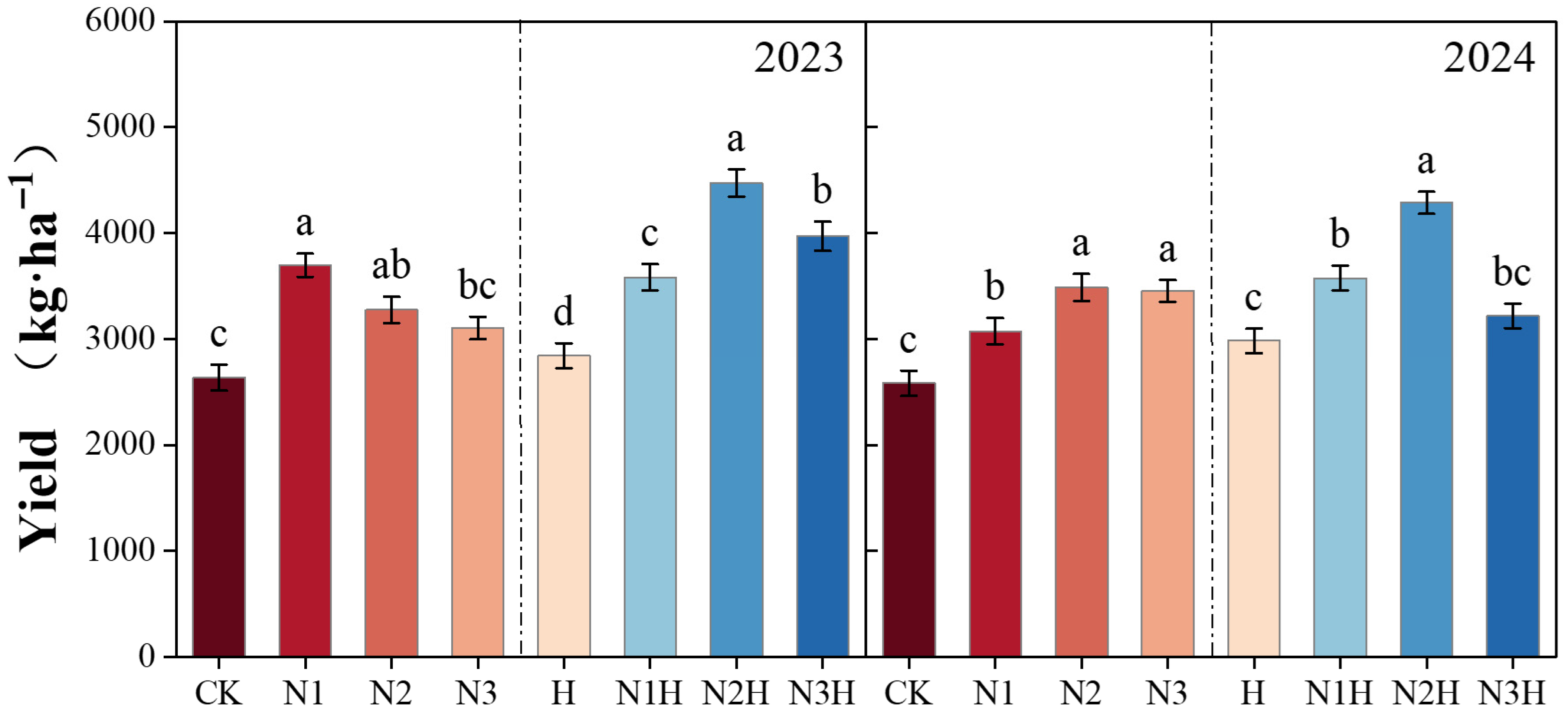
3.1. Production Analysis
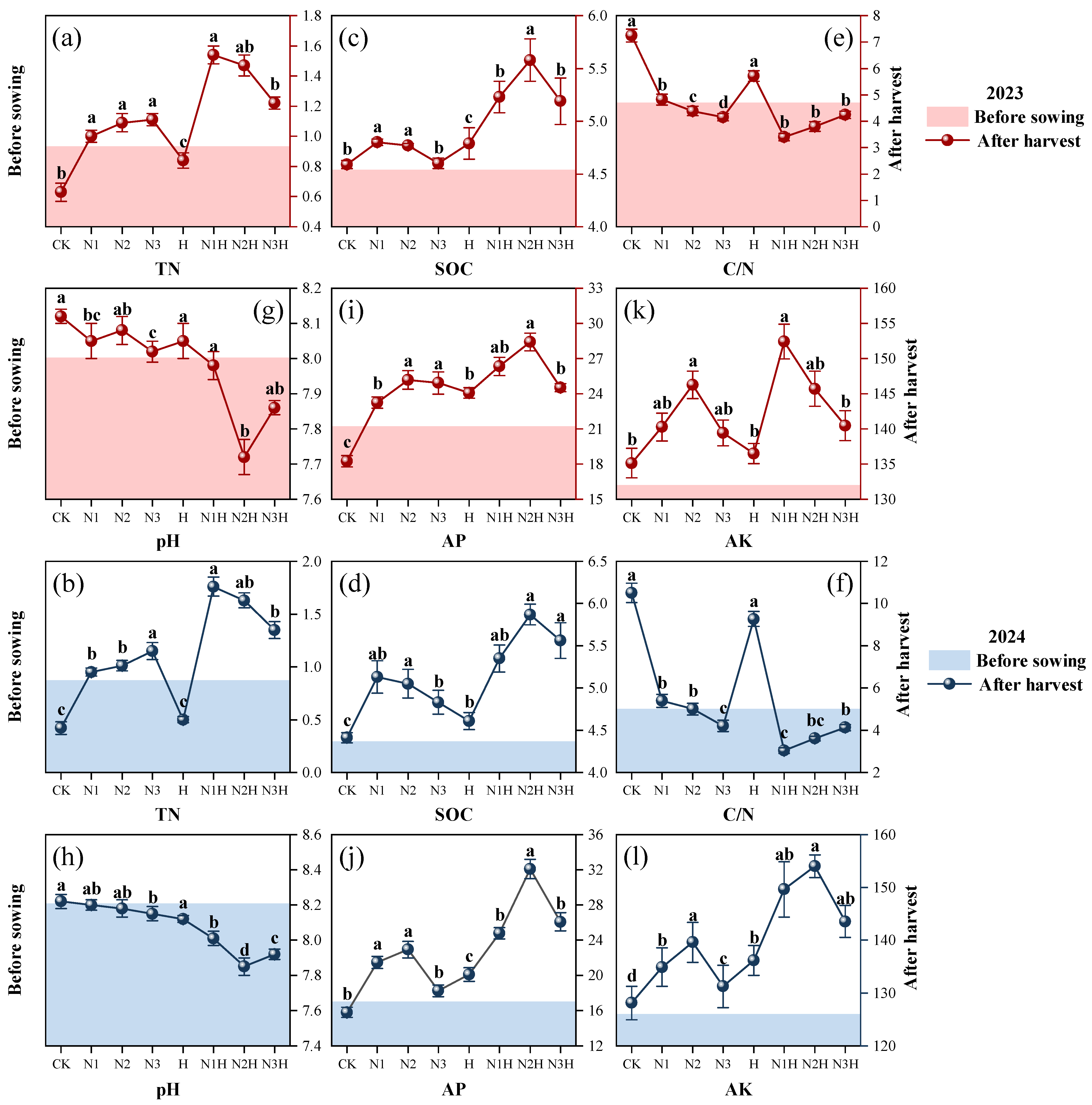
3.2. Effects of Different Nitrogen Fertilizers Combined with Humic Acid on Soil Nutrient Content
3.3. Effects of HA Application on Rhizosphere Soil Microorganisms
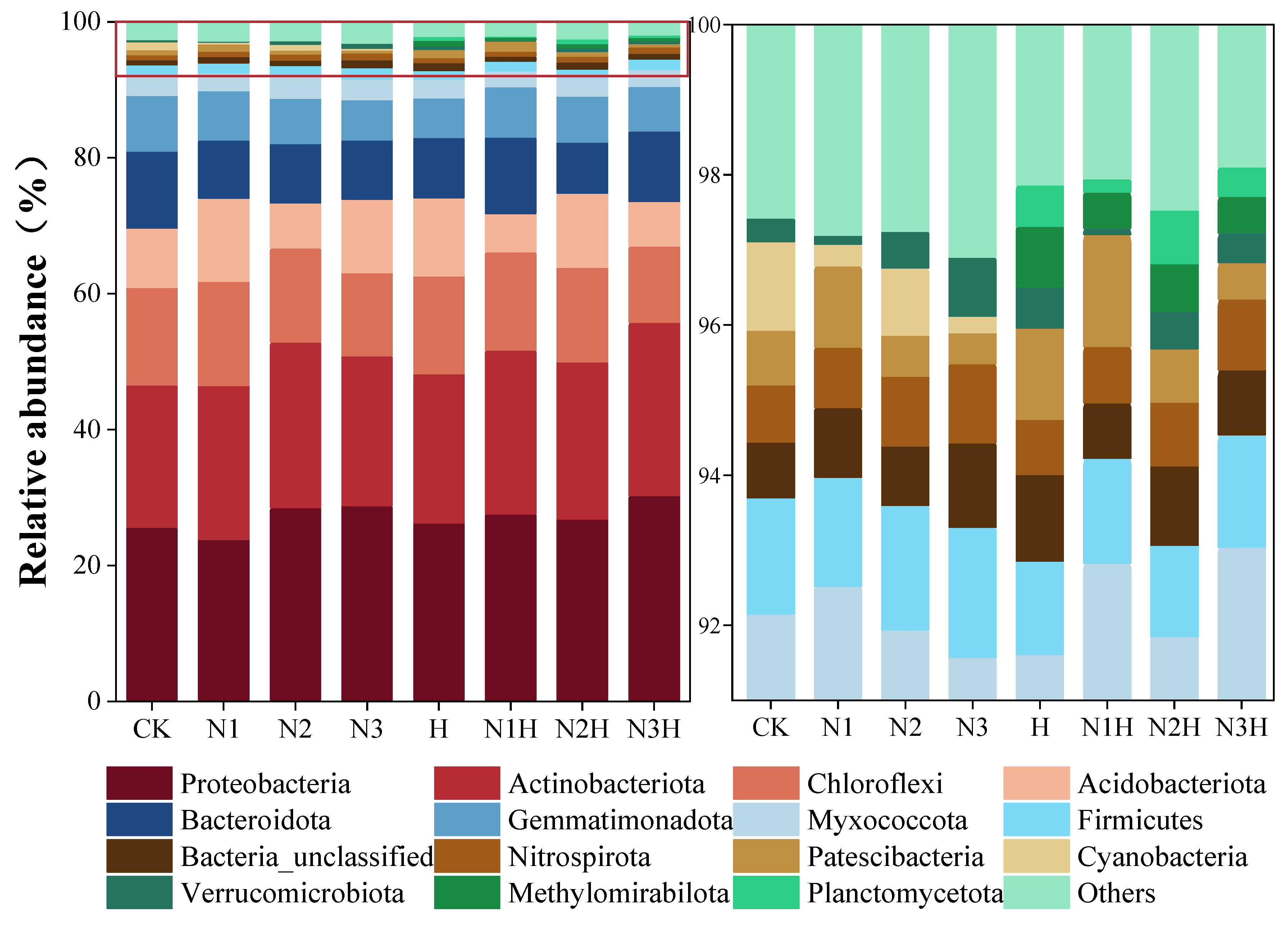
3.3.1. Relative Abundance of Major Bacterial Phyla
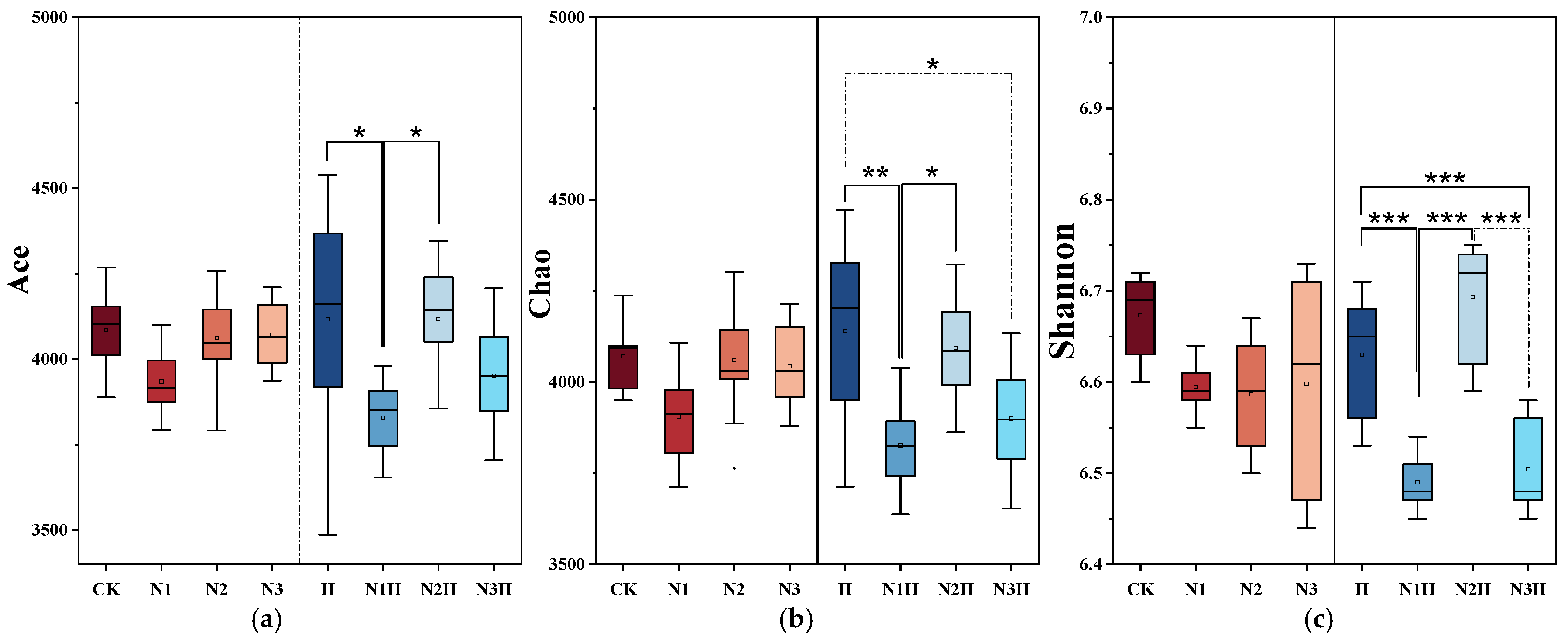
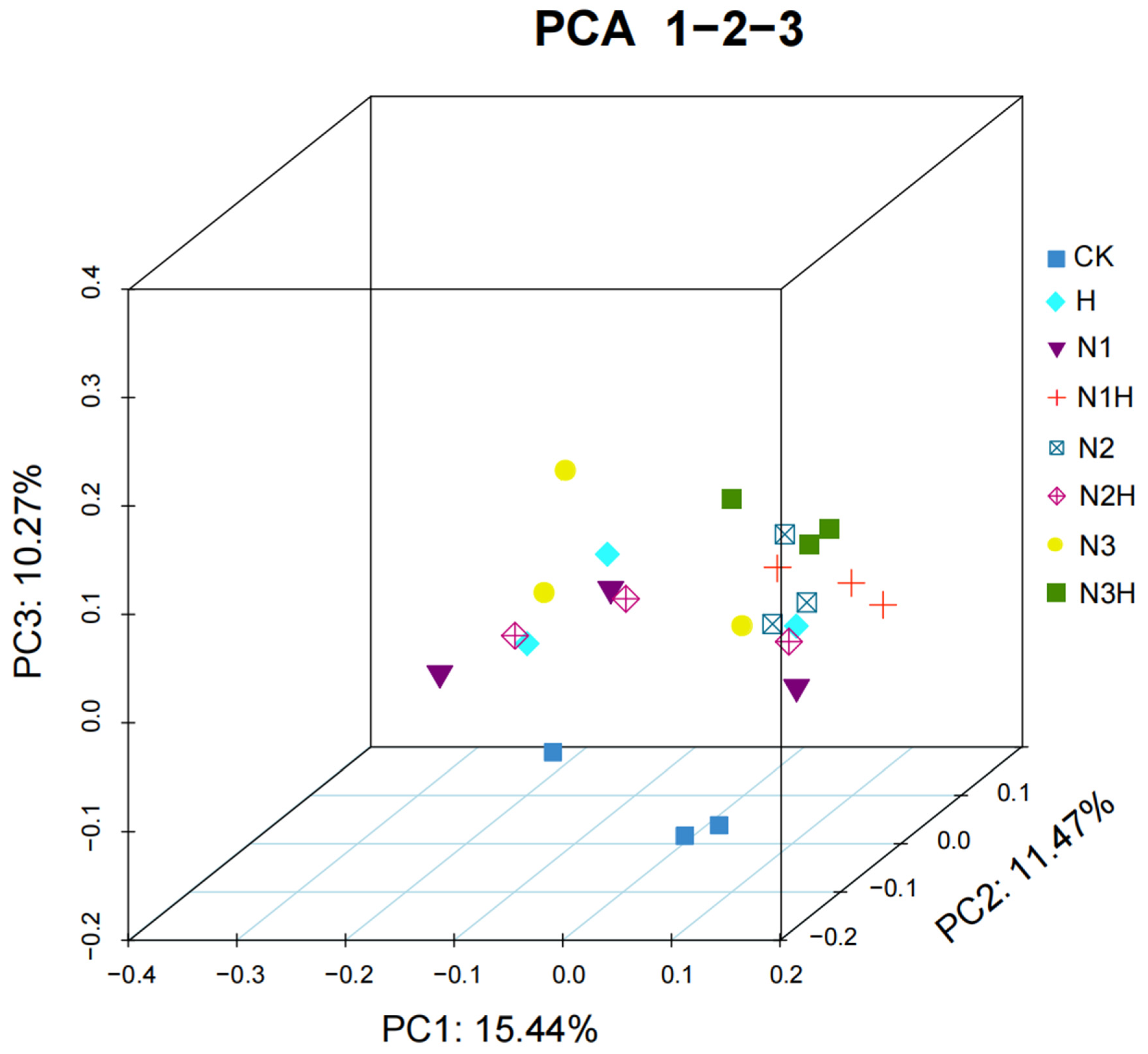
3.3.2. Diversity of Bacterial Communities
3.4. Correlation Analysis
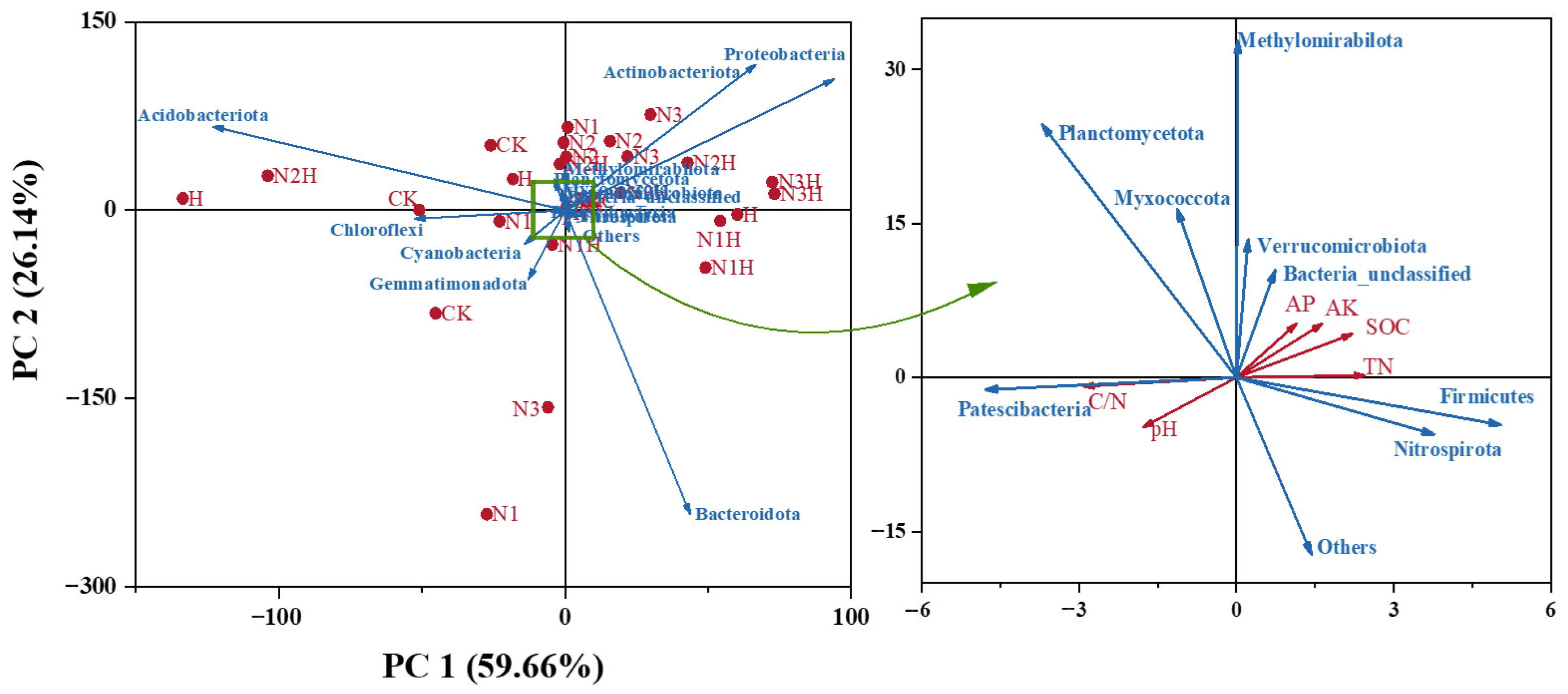
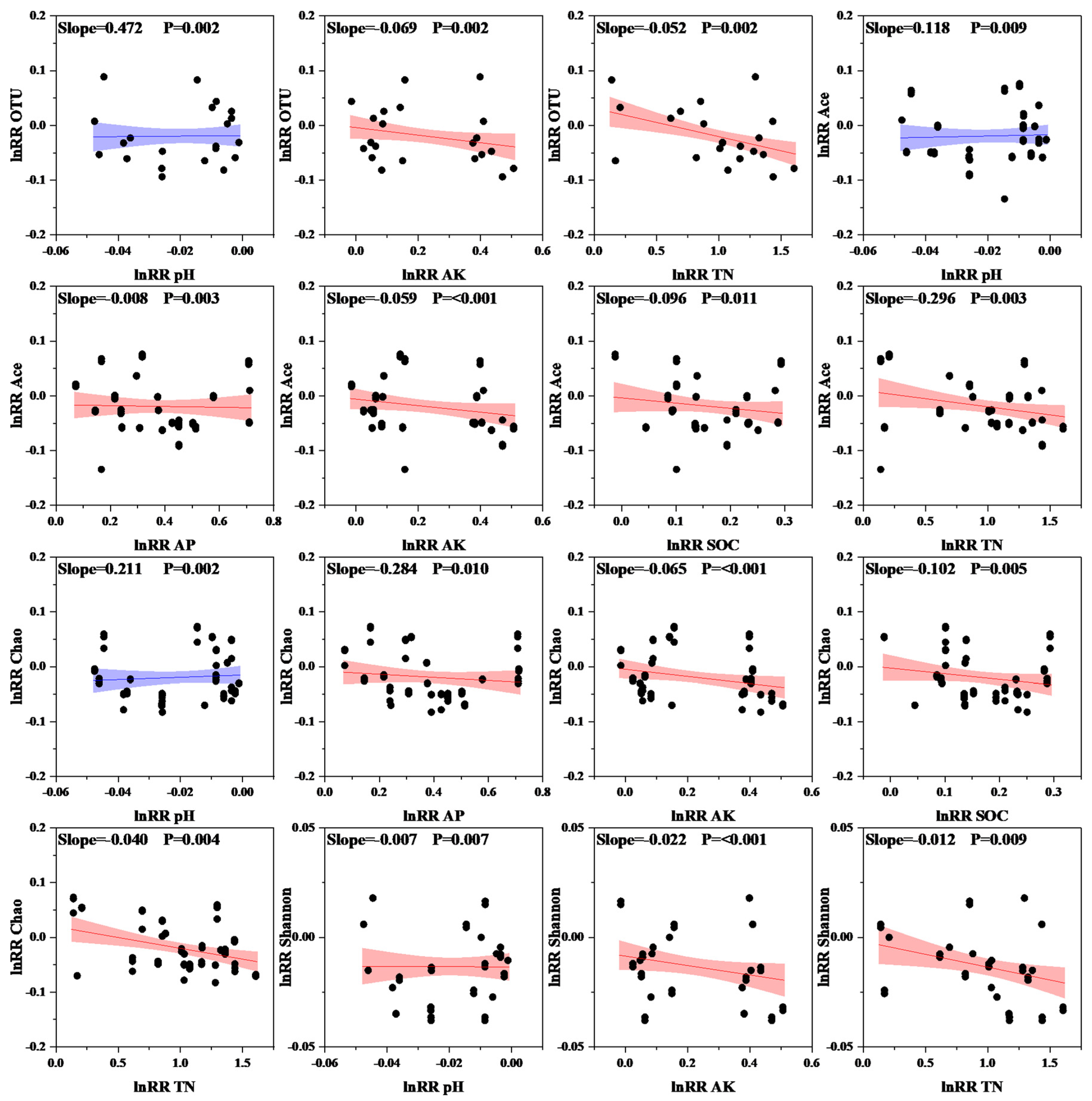
3.4.1. The Relationship Between Soil Nutrient Composition and Microbial Communities
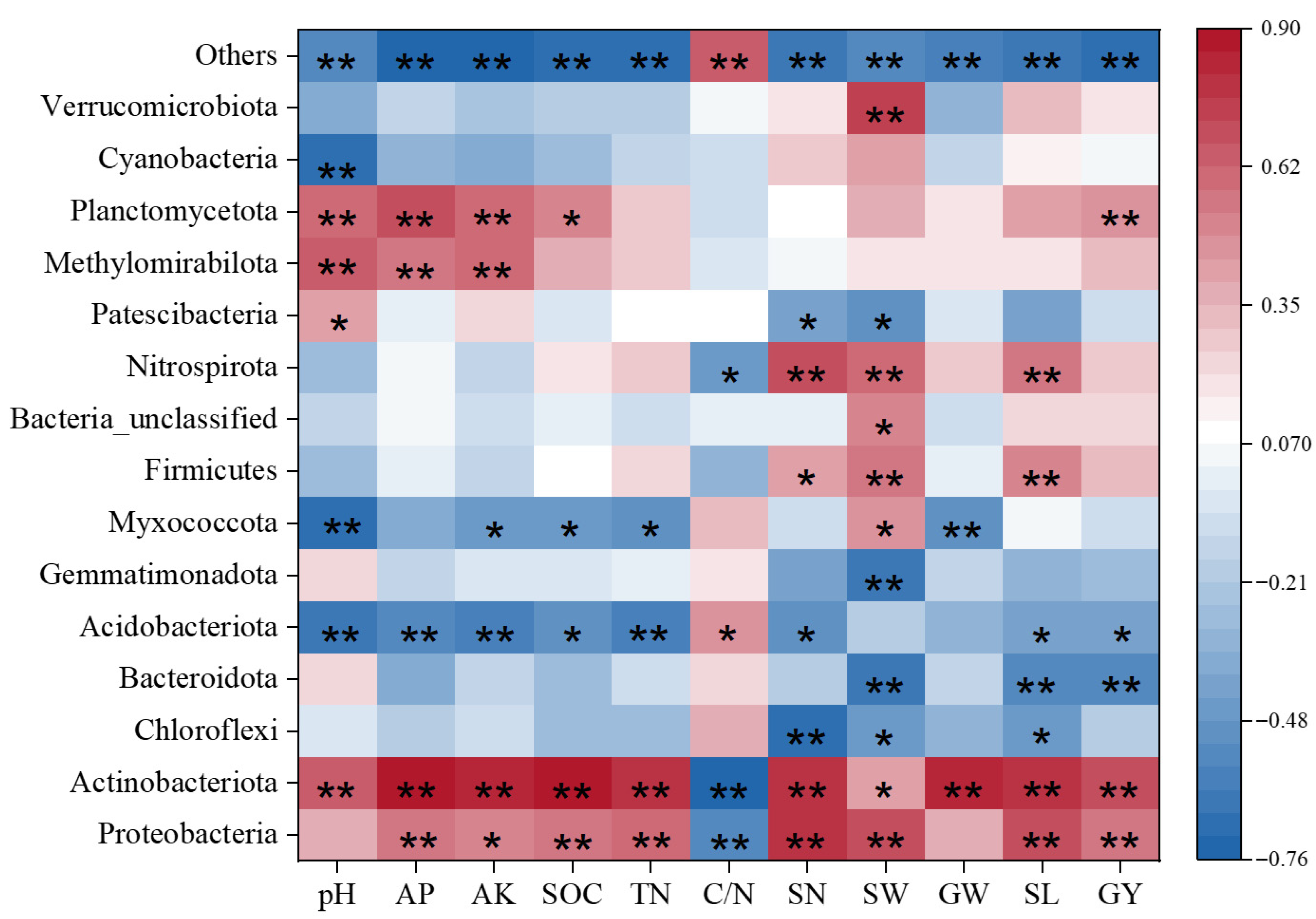
3.4.2. Relationship Between Soil Nutrient Composition, Yield and Microbial Community
4. Discussion
4.1. Effects of Nitrogen Fertilizer Combined with Humic Acid on Soil Properties of Quinoa
4.2. Effects of Nitrogen Fertilizer Combined with Humic Acid on Soil Bacterial Communities
4.3. Production Analysis
5. Conclusions
Supplementary Materials
Author Contributions
Funding
Data Availability Statement
Conflicts of Interest
References
- Tilman, D.; Cassman, K.G.; Matson, P.A.; Naylor, R.; Polasky, S. Agricultural sustainability and intensive production practices. Nature 2002, 418, 671–677. [Google Scholar] [CrossRef] [PubMed]
- Ladha, J.K.; Reddy, C.K.; Padre, A.T.; van Kessel, C. Role of Nitrogen Fertilization in Sustaining Organic Matter in Cultivated Soils. J. Environ. Qual. 2011, 40, 1756–1766. [Google Scholar] [CrossRef]
- Pan, G.; Smith, P.; Pan, W. The role of soil organic matter in maintaining the productivity and yield stability of cereals in China. Agric. Ecosyst. Environ. 2009, 129, 344–348. [Google Scholar] [CrossRef]
- Williams, C.L.; Liebman, M.; Edwards, J.W.; James, D.E.; Singer, J.W.; Arritt, R.; Herzmann, D. Patterns of Regional Yield Stability in Association with Regional Environmental Characteristics. Crop Sci. 2008, 48, 1545–1559. [Google Scholar]
- Liu, J.; You, L.; Amini, M.; Obersteiner, M.; Herrero, M.; Zehnder, A.J.B.; Yang, H. A high-resolution assessment on global nitrogen flows in cropland. Proc. Natl. Acad. Sci. USA 2010, 107, 8035–8040. [Google Scholar] [PubMed]
- Cassman, K.G.; Dobermann, A.; Walters, D.T. Agroecosystems, nitrogen-use efficiency, and nitrogen management. Ambio 2002, 31, 132–140. [Google Scholar] [PubMed]
- Robertson, G.P.; Vitousek, P.M. Nitrogen in Agriculture: Balancing the Cost of an Essential Resource. Annu. Rev. Environ. Resour. 2009, 34, 97–125. [Google Scholar] [CrossRef]
- Lassaletta, L.; Billen, G.; Grizzetti, B.; Anglade, J.; Garnier, J. 50 year trends in nitrogen use efficiency of world cropping systems: The relationship between yield and nitrogen input to cropland. Environ. Res. Lett. 2014, 9, 105011. [Google Scholar] [CrossRef]
- Van Drecht, G.; Bouwman, A.F.; Knoop, J.M.; Beusen, A.H.W.; Meinardi, C.R. Global modeling of the fate of nitrogen from point and nonpoint sources in soils, groundwater, and surface water. Glob. Biogeochem. Cycles 2003, 17, 1115. [Google Scholar] [CrossRef]
- Galloway, J.N.; Townsend, A.R.; Erisman, J.W.; Bekunda, M.; Cai, Z.; Freney, J.R.; Martinelli, L.A.; Seitzinger, S.P.; Sutton, M.A. Transformation of the Nitrogen Cycle: Recent Trends, Questions, and Potential Solutions. Science 2008, 320, 889–892. [Google Scholar] [CrossRef] [PubMed]
- Melero, S.; Vanderlinden, K.; Ruiz, J.C.; Madejon, E. Long-term effect on soil biochemical status of a Vertisol under conservation tillage system in semi-arid Mediterranean conditions. Eur. J. Soil Biol. 2008, 44, 437–442. [Google Scholar] [CrossRef]
- Liu, L.; Yao, S.; Zhang, H.; Muhammed, A.; Xu, J.; Li, R.; Zhang, D.; Zhang, S.; Yang, X. Soil nitrate nitrogen buffer capacity and environmentally safe nitrogen rate for winter wheat-summer maize cropping in Northern China. Agric. Water Manag. 2019, 213, 445–453. [Google Scholar] [CrossRef]
- Dong, N.-Q.; Lin, H.-X. Higher yield with less nitrogen fertilizer. Nat. Plants 2020, 6, 1078–1079. [Google Scholar] [CrossRef]
- Li, T.; Liang, Y.; Wang, Z.; Zhang, W.; Wang, L.; Zhou, Q.; Xu, W. Tissue-engineered scaffold based on carboxymethyl chitin or chitosan for corneal epithelial transplantation. Polym. J. 2018, 50, 511–521. [Google Scholar] [CrossRef]
- Xu, Y.; Li, M.; Ding, H.; Ma, Y.; Yang, Y.; Feng, L. Comparative effects of humic acid biostimulation on soil properties, growth, and fragrance of Rosa rugosa. Ind. Crops Prod. 2025, 225, 120444. [Google Scholar] [CrossRef]
- Gerke, J. Concepts and Misconceptions of Humic Substances as the Stable Part of Soil Organic Matter: A Review. Agronomy 2018, 8, 76. [Google Scholar] [CrossRef]
- Chen, X.; Kou, M.; Tang, Z.; Zhang, A.; Li, H.; Wei, M. Responses of root physiological characteristics and yield of sweet potato to humic acid urea fertilizer. PLoS ONE 2017, 12, e0189715. [Google Scholar]
- Suman, S.; Spehia, R.S.; Sharma, V. Humic acid improved efficiency of fertigation and productivity of tomato. J. Plant Nutr. 2016, 13, 439–446. [Google Scholar] [CrossRef]
- Selladurai, R.; Purakayastha, T.J. Effect of humic acid multinutrient fertilizers on yield and nutrient use efficiency of potato. J. Plant Nutr. 2015, 39, 949–956. [Google Scholar] [CrossRef]
- Khan, R.U.; Khan, M.Z.; Khan, A.; Saba, S.; Hussain, F.; Jan, I.U. Effect of Humic Acid on Growth and Crop Nutrients Status of Wheat on Two Different Soil. J. Plant Nutr. 2017, 28, 453–460. [Google Scholar] [CrossRef]
- Ahmad, T.; Khan, R.; Nawaz Khattak, T. Effect of humic acid and fulvic acid based liquid and foliar fertilizers on the yield of wheat crop. J. Plant Nutr. 2018, 41, 2438–2445. [Google Scholar] [CrossRef]
- Rose, M.T.; Patti, A.F.; Little, K.R.; Brown, A.L.; Jackson, W.R.; Cavagnaro, T.R. Chapter Two—A Meta-Analysis and Review of Plant-Growth Response to Humic Substances: Practical Implications for Agriculture. In Advances in Agronomy; Sparks, D.L., Ed.; Academic Press: Cambridge, MA, USA, 2014; Volume 124, pp. 37–89. [Google Scholar]
- Pukalchik, M.; Kydralieva, K.; Yakimenko, O.; Fedoseeva, E.; Terekhova, V. Outlining the Potential Role of Humic Products in Modifying Biological Properties of the Soil—A Review. Front. Environ. Sci. 2019, 7, 80. [Google Scholar] [CrossRef]
- Hu, Y.W.; Li, Q.K.; Song, C.J.; Jin, X.H. EFFECT OF HUMIC ACID COMBINED WITH FERTILIZER ON THE IMPROVEMENT OF SALINE-ALKALI LAND AND COTTON GROWTH. Appl. Ecol. Environ. Res. 2021, 19, 1279–1294. [Google Scholar] [CrossRef]
- Li, Y. Research Progress of Humic Acid Fertilizer on the Soil. J. Phys. Conf. Ser. 2020, 1549, 022004. [Google Scholar] [CrossRef]
- Amoah-Antwi, C.; Kwiatkowska-Malina, J.; Szara, E.; Fenton, O.; Thornton, S.F.; Malina, G. Assessing Factors Controlling Structural Changes of Humic Acids in Soils Amended with Organic Materials to Improve Soil Functionality. Agronomy 2022, 12, 283. [Google Scholar] [CrossRef]
- Ullah, S.; He, P.; Ai, C.; Zhao, S.; Ding, W.; Song, D.; Zhang, J.; Huang, S.; Abbas, T.; Zhou, W. How Do Soil Bacterial Diversity and Community Composition Respond under Recommended and Conventional Nitrogen Fertilization Regimes? Microorganisms 2020, 8, 1193. [Google Scholar] [CrossRef]
- Wu, M.; Song, M.; Liu, M.; Jiang, C.; Li, Z. Fungicidal activities of soil humic/fulvic acids as related to their chemical structures in greenhouse vegetable fields with cultivation chronosequence. Sci. Rep. 2016, 6, 32858. [Google Scholar] [CrossRef]
- Dawood, M.G.; Abdel-Baky, Y.R.; El-Awadi, M.E.-S.; Bakhoum, G.S. Enhancement quality and quantity of faba bean plants grown under sandy soil conditions by nicotinamide and/or humic acid application. Bull. Natl. Res. Cent. 2019, 43, 28. [Google Scholar] [CrossRef]
- García, A.C.; de Souza, L.G.A.; Pereira, M.G.; Castro, R.N.; García-Mina, J.M.; Zonta, E.; Lisboa, F.J.G.; Berbara, R.L.L. Structure-Property-Function Relationship in Humic Substances to Explain the Biological Activity in Plants. Sci. Rep. 2016, 6, 20798. [Google Scholar] [CrossRef]
- Lumactud, R.A.; Gorim, L.Y.; Thilakarathna, M.S. Impacts of humic-based products on the microbial community structure and functions toward sustainable agriculture. Front. Sustain. Food Syst. 2022, 6, 977121. [Google Scholar] [CrossRef]
- Li, Y.; Fang, F.; Wei, J.; Wu, X.; Cui, R.; Li, G.; Zheng, F.; Tan, D. Humic Acid Fertilizer Improved Soil Properties and Soil Microbial Diversity of Continuous Cropping Peanut: A Three-Year Experiment. Sci. Rep. 2019, 9, 12014. [Google Scholar] [CrossRef]
- Rajkumar, M.; Ae, N.; Prasad, M.N.V.; Freitas, H. Potential of siderophore-producing bacteria for improving heavy metal phytoextraction. Trends Biotechnol. 2010, 28, 142–149. [Google Scholar] [CrossRef]
- Nardi, S.; Pizzeghello, D.; Muscolo, A.; Vianello, A. Physiological effects of humic substances on higher plants. Soil Biol. Biochem. 2002, 34, 1527–1536. [Google Scholar] [CrossRef]
- Hedges, L.V.; Gurevitch, J.; Curtis, P.S. THE META-ANALYSIS OF RESPONSE RATIOS IN EXPERIMENTAL ECOLOGY. Ecology 1999, 80, 1150–1156. [Google Scholar] [CrossRef]
- Pawlowski, J.; Kelly-Quinn, M.; Altermatt, F.; Apothéloz-Perret-Gentil, L.; Beja, P.; Boggero, A.; Borja, A.; Bouchez, A.; Cordier, T.; Domaizon, I.; et al. The future of biotic indices in the ecogenomic era: Integrating (e)DNA metabarcoding in biological assessment of aquatic ecosystems. Sci. Total Environ. 2018, 637–638, 1295–1310. [Google Scholar]
- Hui, D.; Porter, W.; Phillips, J.R.; Aidar, M.P.M.; Lebreux, S.J.; Schadt, C.W.; Mayes, M.A. Phosphorus rather than nitrogen enhances CO2 emissions in tropical forest soils: Evidence from a laboratory incubation study. Eur. J. Soil Sci. 2020, 71, 495–510. [Google Scholar]
- Geisseler, D.; Scow, K.M. Long-term effects of mineral fertilizers on soil microorganisms—A review. Soil Biol. Biochem. 2014, 75, 54–63. [Google Scholar] [CrossRef]
- Liu, L.; Greaver, T.L. A global perspective on belowground carbon dynamics under nitrogen enrichment. Ecol. Lett. 2010, 13, 819–828. [Google Scholar] [CrossRef]
- Guo, Y.; Ma, Z.; Ren, B.; Zhao, B.; Liu, P.; Zhang, J. Effects of Humic Acid Added to Controlled-Release Fertilizer on Summer Maize Yield, Nitrogen Use Efficiency and Greenhouse Gas Emission. Agriculture 2022, 12, 448. [Google Scholar] [CrossRef]
- Ai, C.; Zhang, S.; Zhang, X.; Guo, D.; Zhou, W.; Huang, S. Distinct responses of soil bacterial and fungal communities to changes in fertilization regime and crop rotation. Geoderma 2018, 319, 156–166. [Google Scholar] [CrossRef]
- Yue, Y.; Fan, Y.; Zhuqing, L.; Kui, C. Artificial humic acid improves P availability via regulating P-cycling microbial communities for crop growth. Plant Soil 2024, 512, 639–656. [Google Scholar] [CrossRef]
- Chu, H.; Lin, X.; Fujii, T.; Morimoto, S.; Yagi, K.; Hu, J.; Zhang, J. Soil microbial biomass, dehydrogenase activity, bacterial community structure in response to long-term fertilizer management. Soil Biol. Biochem. 2007, 39, 2971–2976. [Google Scholar] [CrossRef]
- Joergensen, R.G.; Mäder, P.; Fließbach, A. Long-term effects of organic farming on fungal and bacterial residues in relation to microbial energy metabolism. Biol. Fertil. Soils 2010, 46, 303–307. [Google Scholar] [CrossRef]
- Murugan, R.; Kumar, S. Influence of long-term fertilisation and crop rotation on changes in fungal and bacterial residues in a tropical rice-field soil. Biol. Fertil. Soils 2013, 49, 847–856. [Google Scholar] [CrossRef]
- Tao, R.; Liang, Y.; Wakelin, S.A.; Chu, G. Supplementing chemical fertilizer with an organic component increases soil biological function and quality. Appl. Soil Ecol. 2015, 96, 42–51. [Google Scholar] [CrossRef]
- Francioli, D.; Schulz, E.; Lentendu, G.; Wubet, T.; Buscot, F.; Reitz, T. Mineral vs. Organic Amendments: Microbial Community Structure, Activity and Abundance of Agriculturally Relevant Microbes Are Driven by Long-Term Fertilization Strategies. Front. Microbiol. 2016, 7, 1446. [Google Scholar] [CrossRef]
- Wang, J.; Rhodes, G.; Huang, Q.; Shen, Q. Plant growth stages and fertilization regimes drive soil fungal community compositions in a wheat-rice rotation system. Biol. Fertil. Soils 2018, 54, 731–742. [Google Scholar] [CrossRef]
- Sun, Y.-F.; Shen, J.-P.; Zhang, C.-J.; Zhang, L.-M.; Bai, W.-M.; Fang, Y.; He, J.-Z. Responses of soil microbial community to nitrogen fertilizer and precipitation regimes in a semi-arid steppe. J. Soils Sediments 2017, 18, 762–774. [Google Scholar] [CrossRef]
- Huang, X.; Liu, Y.; Li, Y.; Guo, P.; Fang, X.; Yi, Z. Foliage application of nitrogen has less influence on soil microbial biomass and community composition than soil application of nitrogen. J. Soils Sediments 2018, 19, 221–231. [Google Scholar] [CrossRef]
- Tosi, M.; Deen, W.; Drijber, R.; McPherson, M.; Stengel, A.; Dunfield, K. Long-term N inputs shape microbial communities more strongly than current-year inputs in soils under 10-year continuous corn cropping. Soil Biol. Biochem. 2021, 160, 108361. [Google Scholar] [CrossRef]
- Fernández-Calviño, D.; Bååth, E. Growth response of the bacterial community to pH in soils differing in pH. FEMS Microbiol. Ecol. 2010, 73, 149–156. [Google Scholar] [CrossRef] [PubMed]
- Li, F.; Chen, L.; Zhang, J.; Yin, J.; Huang, S. Bacterial Community Structure after Long-term Organic and Inorganic Fertilization Reveals Important Associations between Soil Nutrients and Specific Taxa Involved in Nutrient Transformations. Front. Microbiol. 2017, 8, 00187. [Google Scholar] [CrossRef] [PubMed]
- Zhang, L.; Peng, Y.; Zhou, J.; George, T.S.; Feng, G. Addition of fructose to the maize hyphosphere increases phosphatase activity by changing bacterial community structure. Soil Biol. Biochem. 2020, 142, 107724. [Google Scholar] [CrossRef]
- Wei, X.; Hu, Y.; Razavi, B.S.; Zhou, J.; Shen, J.; Nannipieri, P.; Wu, J.; Ge, T. Rare taxa of alkaline phosphomonoesterase-harboring microorganisms mediate soil phosphorus mineralization. Soil Biol. Biochem. 2019, 131, 62–70. [Google Scholar] [CrossRef]
- Partanen, P.; Hultman, J.; Paulin, L.; Auvinen, P.; Romantschuk, M. Bacterial diversity at different stages of the composting process. BMC Microbiol. 2010, 10, 94. [Google Scholar] [CrossRef]
- Lu, J.; Zhang, Y.; Wu, J.; Wang, J. Nitrogen removal in recirculating aquaculture water with high dissolved oxygen conditions using the simultaneous partial nitrification, anammox and denitrification system. Bioresour. Technol. 2020, 305, 123037. [Google Scholar] [CrossRef] [PubMed]
- Xu, J.J.; Zhu, X.L.; Zhang, Q.Q.; Cheng, Y.F.; Xu, L.Z.J.; Zhu, Y.H.; Ji, Z.Q.; Jin, R.C. Roles of MnO2 on performance, sludge characteristics and microbial community in anammox system. Sci. Total Environ. 2018, 633, 848–856. [Google Scholar] [PubMed]
- Pijuan, M.; Ribera-Guardia, A.; Balcázar, J.L.; Micó, M.M.; de la Torre, T. Effect of COD on mainstream anammox: Evaluation of process performance, granule morphology and nitrous oxide production. Sci. Total Environ. 2020, 712, 136372. [Google Scholar] [CrossRef]
- Malam Issa, O.; Défarge, C.; Trichet, J.; Valentin, C.; Rajot, J.L. Microbiotic soil crusts in the Sahel of Western Niger and their influence on soil porosity and water dynamics. CATENA 2009, 77, 48–55. [Google Scholar] [CrossRef]
- Tiwari, O.N.; Bhunia, B.; Mondal, A.; Gopikrishna, K.; Indrama, T. System metabolic engineering of exopolysaccharide-producing cyanobacteria in soil rehabilitation by inducing the formation of biological soil crusts: A review. J. Clean. Prod. 2018, 211, 70–82. [Google Scholar] [CrossRef]
- Wang, J.L.; Liu, K.L.; Zhao, X.Q.; Gao, G.-F.; Wu, Y.H.; Shen, R.F. Microbial keystone taxa drive crop productivity through shifting aboveground-belowground mineral element flows. Sci. Total Environ. 2021, 811, 52342. [Google Scholar]
- Mosaad, I.S.M.; Serag, A.H.I.; Sheta, M.H. Promote sugar beet cultivation in saline soil by applying humic substances in-soil and mineral nitrogen fertilization. J. Plant Nutr. 2022, 45, 2447–2464. [Google Scholar] [CrossRef]
- Qiao, Y.; Wang, T.; Huang, Q.; Guo, H.; Zhang, H.; Xu, Q.; Shen, Q.; Ling, N. Core species impact plant health by enhancing soil microbial cooperation and network complexity during community coalescence. Soil Biol. Biochem. 2023, 188, 109231. [Google Scholar] [CrossRef]



| Treatment Code | N Fertilizer (kg ha−1) | H Fertilizer (kg ha−1) |
|---|---|---|
| CK | 0 | 0 |
| N1 | 120 | 0 |
| N2 | 150 | 0 |
| N3 | 180 | 0 |
| H | 0 | 1500 |
| N1H | 120 | 1500 |
| N2H | 150 | 1500 |
| N3H | 180 | 1500 |
| Humic Acid Fertilizer | pH | Humic Acid (%) | Fulvic Acid (%) | Organic Matter (%) | Moisture Content (%) |
|---|---|---|---|---|---|
| HA | 9.2 | 40 | 35 | 50 | 10 |
| Process | Number of Spikes per Plant | 1000-Grain Weight (g) | Grain Weight per Plant (g) | Main Spike Length (cm) | Yield (kg ha−1) | |
|---|---|---|---|---|---|---|
| 2 0 2 3 | CK | 17.7 ± 0.67 c | 3.37 ± 0.14 b | 38.21 ± 0.89 c | 19.44 ± 0.86 c | 2636.49 ± 123.01 c |
| N1 | 20.7 ± 0.33 ab | 3.68 ± 0.15 ab | 53.57 ± 1.38 a | 30.21 ± 0.52 a | 3696.33 ± 108.18 a | |
| N2 | 21.3 ± 0.67 a | 4.26 ± 0.13 a | 47.46 ± 1.26 b | 28.56 ± 0.57 ab | 3275.02 ± 123.22 ab | |
| N3 | 19.3 ± 0.67 b | 4.18 ± 0.07 a | 44.98 ± 1.40 b | 25.41 ± 0.91 b | 3103.62 ± 104.53 bc | |
| H | 18.3 ± 0.33 c | 4.12 ± 0.10 b | 41.22 ± 1.41 d | 22.53 ± 0.68 b | 2844.18 ± 117.06 d | |
| N1H | 23.7 ± 0.67 ab | 4.41 ± 0.11 ab | 51.93 ± 1.05 c | 24.11 ± 1.04 b | 3583.10 ± 124.25 c | |
| N2H | 25.3 ± 0.33 a | 4.32 ± 0.10 ab | 64.82 ± 1.57 a | 34.98 ± 1.15 a | 4472.86 ± 130.76 a | |
| N3H | 22.3 ± 0.67 b | 4.64 ± 0.14 a | 57.56 ± 1.31 b | 32.67 ± 0.59 a | 3971.78 ± 138.50 b | |
| N | ** | ** | ** | ** | ** | |
| H | ** | ** | ** | ** | ** | |
| N × H | NS | NS | ** | ** | ** | |
| 2 0 2 4 | CK | 14.5 ± 0.50 c | 3.38 ± 0.13 b | 37.43 ± 0.11 c | 29.67 ± 0.63 c | 2582.41 ± 118.93 c |
| N1 | 18.5 ± 0.50 b | 3.40 ± 0.05 b | 44.54 ± 0.76 b | 39.58 ± 0.65 a | 3073.55 ± 124.46 b | |
| N2 | 22.5 ± 0.50 a | 4.29 ± 0.16 a | 50.52 ± 0.55 a | 36.78 ± 0.79 ab | 3485.83 ± 127.68 a | |
| N3 | 21.7 ± 0.67 a | 4.43 ± 0.22 a | 50.06 ± 0.54 a | 34.06 ± 0.56 b | 3454.22 ± 102.98 a | |
| H | 16.5 ± 0.50 c | 3.88 ± 0.06 b | 43.23 ± 0.38 d | 32.69 ± 0.69 c | 2983.02 ± 115.90 c | |
| N1H | 20.5 ± 0.50 a | 3.63 ± 0.03 c | 51.81 ± 0.67 c | 37.80 ± 0.35 b | 3574.63 ± 115.78 b | |
| N2H | 20.7 ± 0.33 b | 4.58 ± 0.10 a | 62.14 ± 0.89 a | 37.63 ± 0.40 b | 4287.61 ± 104.50 a | |
| N3H | 24.5 ± 0.50 a | 3.86 ± 0.02 b | 46.64 ± 0.61 b | 42.45 ± 0.81 a | 3218.11 ± 114.83 bc | |
| N | ** | ** | ** | ** | ** | |
| H | ** | NS | ** | ** | ** | |
| N × H | ** | ** | ** | ** | * |
| Variables | Soil Nutrients | Linear Equation | p-Value |
|---|---|---|---|
| Bacterial OTUs | pH | Y = 0.4724 × X − 0.01841 | 0.002 |
| Bacterial OTUs | AK | Y = −0.06903 × X − 0.00388 | 0.002 |
| Bacterial OTUs | TN | Y = −0.05174 × X + 0.03143 | 0.002 |
| Bacterial Ace index | pH | Y = −0.11769 × X − 0.01686 | 0.009 |
| Bacterial Ace index | AP | Y = −0.00765 × X − 0.01618 | 0.003 |
| Bacterial Ace index | AK | Y = −0.05912 × X − 0.00594 | <0.001 |
| Bacterial Ace index | SOC | Y = −0.0958 × X − 0.00355 | 0.011 |
| Bacterial Ace index | TN | Y = −0.2963 × X + 0.0099 | 0.003 |
| Bacterial Chao index | pH | Y = 0.21113 × X − 0.01515 | 0.002 |
| Bacterial Chao index | AP | Y = −0.2838 × X − 0.00822 | 0.010 |
| Bacterial Chao index | AK | Y = −0.06512 × X − 0.00472 | <0.001 |
| Bacterial Chao index | SOC | Y = −0.10215 × X − 0.00264 | 0.005 |
| Bacterial Chao index | TN | Y = −0.03963 × X + 0.01959 | 0.004 |
| Bacterial Shannon index | pH | Y = −0.00658 × X − 0.01349 | 0.007 |
| Bacterial Shannon index | AK | Y = −0.02152 × X − 0.00855 | <0.001 |
| Bacterial Shannon index | TN | Y = −0.01173 × X − 0.00186 | 0.009 |
Disclaimer/Publisher’s Note: The statements, opinions and data contained in all publications are solely those of the individual author(s) and contributor(s) and not of MDPI and/or the editor(s). MDPI and/or the editor(s) disclaim responsibility for any injury to people or property resulting from any ideas, methods, instructions or products referred to in the content. |
© 2025 by the authors. Licensee MDPI, Basel, Switzerland. This article is an open access article distributed under the terms and conditions of the Creative Commons Attribution (CC BY) license (https://creativecommons.org/licenses/by/4.0/).
Share and Cite
Guo, Z.; Gao, J.; Lv, T.; Zheng, Y.; Deng, C.; Sun, X.; Sun, Y.; Wang, C.; Deng, Y. Humic Acid Enhances Soil Fertility and Microbial Diversity Under Optimized Nitrogen Fertilization in Quinoa Rhizosphere. Plants 2025, 14, 3850. https://doi.org/10.3390/plants14243850
Guo Z, Gao J, Lv T, Zheng Y, Deng C, Sun X, Sun Y, Wang C, Deng Y. Humic Acid Enhances Soil Fertility and Microbial Diversity Under Optimized Nitrogen Fertilization in Quinoa Rhizosphere. Plants. 2025; 14(24):3850. https://doi.org/10.3390/plants14243850
Chicago/Turabian StyleGuo, Zeyun, Jiaxing Gao, Tiantian Lv, Yan Zheng, Chenglei Deng, Xiaojing Sun, Yadi Sun, Chuangyun Wang, and Yan Deng. 2025. "Humic Acid Enhances Soil Fertility and Microbial Diversity Under Optimized Nitrogen Fertilization in Quinoa Rhizosphere" Plants 14, no. 24: 3850. https://doi.org/10.3390/plants14243850
APA StyleGuo, Z., Gao, J., Lv, T., Zheng, Y., Deng, C., Sun, X., Sun, Y., Wang, C., & Deng, Y. (2025). Humic Acid Enhances Soil Fertility and Microbial Diversity Under Optimized Nitrogen Fertilization in Quinoa Rhizosphere. Plants, 14(24), 3850. https://doi.org/10.3390/plants14243850