
Article

Comparative Study of Fatty Acid Desaturase (FAD) Members Reveals Their Differential Roles in Upland Cotton

1
Zhengzhou Research Base, State Key Laboratory of Cotton Bio-Breeding and Integrated Utilization, School of Agriculture and Biomanufacturing, Zhengzhou University, Zhengzhou 450001, China
2
State Key Laboratory of Cotton Bio-Breeding and Integrated Utilization, Institute of Cotton Research, Chinese Academy of Agricultural Sciences, Anyang 455000, China
3
Zhengzhou Research Base, State Key Laboratory of Cotton Bio-Breeding and Integrated Utilization, School of Pharmaceutical Sciences, Zhengzhou University, Zhengzhou 450001, China
4
Kashi Academy of Advanced Agricultural Sciences, Kashi 844000, China
*
Authors to whom correspondence should be addressed.
These authors contributed equally to this work.
Plants 2025, 14(24), 3767; https://doi.org/10.3390/plants14243767
Submission received: 17 November 2025 / Revised: 2 December 2025 / Accepted: 8 December 2025 / Published: 10 December 2025
(This article belongs to the Section Plant Genetics, Genomics and Biotechnology)

Abstract

Cottonseed oil is rich in unsaturated fatty acids (UFAs), making it suitable for use as edible oil. Fatty acid desaturases (FADs) play a major role in the conversion of monounsaturated fatty acids (MUFAs) to polyunsaturated fatty acids (PUFAs). In total, 39 GhFAD genes were detected in upland cotton and divided into five groups in the present study. Gene structure and domain analysis showed that GhFAD members within each group were highly conserved. Cis-elements associated with environmental stress and hormone responses were identified in GhFAD promoters. The predicted transcription factors and miRNAs targeting these genes suggest extensive roles for GhFADs in diverse stress conditions. Analysis of expression profiles indicated that GhFAD genes participate extensively in developmental processes and stress adaptation in cotton. Among these, the concurrent high expression of GhFAD2-1 and low expression of GhFAD3 are consistent with the typical fatty acid profile of cottonseed oil. GhFAD3-2 and GhFAD3-1 exhibit a complementary expression profiles, suggesting they may operate in a relay manner during fiber development. Additionally, experimental evidence established that GhFAD2-3 is involved in the cold stress response. This research delivers a thorough characterization of the GhFAD genes in upland cotton, thereby establishing a solid groundwork for future functional genomics studies.

1. Introduction

Cotton (Gossypium spp.) is the most important source of natural fiber, along with a vital provider of edible oil for human and protein for livestock. Upland cotton (G. hirsutum) accounts for over 95 percent of cotton cultivation, owing to its prominent fiber yield and environmental adaptability [1]. Cottonseed composition is approximately 16% oil, 45% meal, 25% hull, and 8% fuzz [2]. What is more, cottonseed oil ranks as the fifth most produced edible oil worldwide [3]. It is rich in unsaturated fatty acids, primarily linoleic acid (C18:2, 58%) and oleic acid (C18:1, 15%) [4]. Notably, oils rich in unsaturated fatty acids are considered desirable dietary components, because their consumption is linked to multiple health benefits [5,6].
Desaturation reactions, during which saturated fatty acids (SFAs) are converted into unsaturated fatty acids (UFAs), are catalyzed by enzymes encoded by stearoyl-ACP desaturase (SAD) and fatty acid desaturase (FAD) genes. Specifically, SAD enzymes catalyze the conversion of stearic acid (C18:0) to oleic acid (C18:1), a step that typically occurs before fatty acids are incorporated into glycerolipids [7]. In contrast, FADs encode membrane-bound desaturases that introduce double bonds into fatty acyl chains. Studies on Arabidopsis mutants have revealed the involvement of multiple FAD genes in this process, including FAD2, FAD3, FAD4, FAD5, FAD6, FAD7, and FAD8 [8]. Notably, FAD enzymes exhibit distinct substrate specificities. FAD4 and FAD5 desaturases primarily target 16-carbon SFAs, whereas FAD2 and FAD6 act on 18-carbon monounsaturated fatty acids (MUFAs) to produce C18:2; hence, these are classified as ω-6 FAD genes [9]. Meanwhile, FAD3, FAD7, and FAD8 catalyze the conversion of C18:2 to C18:3 and are thus termed ω-3 FAD genes [10]. Subcellular localization studies indicate that FAD2 and FAD3 reside on the endoplasmic reticulum (ER) membrane and are primarily responsible for UFA synthesis in all membrane lipids except those in plastids. In contrast, FAD4, FAD5, FAD6, FAD7, and FAD8 are plastid membrane-localized and participate in the further desaturation of plastid membrane lipids [11].
The functions of FAD genes have been extensively characterized across multiple plant species. In soybean, two novel FAD2 members, FAD2-2B and FAD2-2C, function as key regulators of C18:2 levels during pod development under colder climates [12]. In rapeseed, knockout of FAD2 genes generated FAD2-1A and FAD2-1B mutants, resulting in an increase in C18:1 content from 20% to 80% and a reduction in C18:2 from 50% to below 4% [13]. Similarly, seed-specific simultaneous suppression of FAD2.2 and FATB in safflower led to ultra-high C18:1 content and enhanced oxidative stability [14]. EMS mutagenesis in rapeseed identified mutants with elevated C18:1 content, where sequence variations were detected in FAD2 and ROD genes [15]. In sea-island cotton (G. barbadense), the GbFAD2-1D mutant was characterized; its transient expression in Arabidopsis leaves significantly reduced C18:2 content [16]. Subsequent studies revealed that while the missing C-terminal amino acid residues in FAD2-1D were not absolutely essential for enzymatic activity, they were critical for proper endoplasmic reticulum membrane localization [17]. In upland cotton, silencing GhFAD2 expression increased C18:1 level from 15% to 77% [18], while simultaneous suppression of GhFATB and GhFAD2-1 substantially elevated C18:1 content while reducing palmitic acid (C16:0) and C18:2 levels [19]. Additionally, gene editing of GhFAD2-1 successfully generated high-oleic cotton [3]. Similarly, high-oleic peanuts were developed by knocking out AhFAD2 homologs [20]. Beyond lipid metabolism, FAD genes also participate in plant development. Single-cell sequencing analysis revealed that FAD2 mutants inhibit leaf growth in peanuts [21]. In carrots, the DcFAD2 hub gene is essential for falcarindiol biosynthesis, and the expansion of the DcFAD2 gene family underlies falcarindiol enrichment [22]. In upland cotton, GhFAD2-3 was reported to be involved in pollen development [23], while GhFAD3-4 promotes fiber elongation and cell wall thickening by enhancing phosphatidylinositol (PI) and inositol trisphosphate (IP3) accumulation [24].
FADs are widely involved in plant environmental adaptation. In upland cotton, the expression of the FAD2 gene is regulated by low temperature and light [25]. High temperatures inhibit ω-6 and ω-3 desaturation in phosphatidylcholine; notably, ω-6 desaturation is primarily regulated by cis-acting sequence variations in the intronic region within the 5′ UTR of the FAD2 gene, which determine its expression levels [26]. In olives, microsomal FAD activity is not only involved in fruit development but also induced by water availability, temperature, light, and mechanical damage [27]. Similarly, low temperature and salt stress affect FAD2 gene expression and alter fatty acid composition in safflower [28]. Furthermore, the degree of polyunsaturation in endoplasmic reticulum (ER) glycolipids influences ER stress sensitivity. FAD2 mutants exhibit heightened sensitivity to tunicamycin, indicating that the C18:1 to C18:2 ratio is crucial role for ER-mediated stress responses [29]. Beyond fatty acid metabolism, FAD genes also participate in biotic stress responses. For instance, silencing SlFAD2-7 expression in tomatoes leads to a significant increase in aphid infestation [30], underscoring the role of FAD enzymes in enhancing plant resistance through the modulation of multiple lipid metabolic pathways [31]. In rice, the viral protein P10 binds to OsFAD7 and promotes its degradation, thereby reducing the synthesis of jasmonic acid (JA) precursor to enhance viral infectivity [32].
The identification of fatty acid desaturase (FAD) genes in plant genomes is crucial for understanding their evolutionary history and functional diversity. A total of 20 members were identified in rice [33], and family-wide analysis in maize revealed their involvement in cold and heat stress responses [34]. Transcriptome-based analysis in walnut uncovered 24 FAD genes, with JrFAD3-1 potentially participating in polyunsaturated fatty acid biosynthesis [35]. Investigation of the FAD family in sage (Salvia) demonstrated its roles in cold stress adaptation and oil formation [36]. Similarly, analysis of membrane-bound FADs in faba bean suggested that FAD2-1 may contribute to oil synthesis, while the low expression of CeFAD3 likely accounts for the reduced linolenic acid content [37]. Furthermore, a total of 43 LuFAD genes were identified in flax, with LuFAD2.1 implicated in cold stress response [38]. In cotton, 19 FAD members were identified in G. raimondii, and 39 membrane-associated FADs were characterized in upland cotton, highlighting their potential roles in cold stress [39,40].
However, the comprehensive characterization and functional validation of FAD genes in upland cotton have not yet been simultaneously conducted. With advancements in the improve of genome quality and the completion of telomere-to-telomere (T2T) genome assemblies, it is essential to perform thorough analyses of FAD gene families in upland cotton. To characterize the fundamental features of FAD genes in cotton, this study conducted a comprehensive comparative analysis of FAD genes in upland cotton based on the T2T genome [41]. Gene structure, the conserve domains and the cis-elements in promoter were investigated. Meanwhile, the expression patterns of GhFADs in various developmental stages and abiotic stresses were analyzed and the regulatory relationships with transcription factors (TFs) and miRNA were explored. Furthermore, the function of GhFAD2-3 was examined in the present study. This study will provide a foundation for the utilization of FAD genes in molecular breeding programs.

2. Results

2.1. Identification of FAD Gene Family in Gossypium

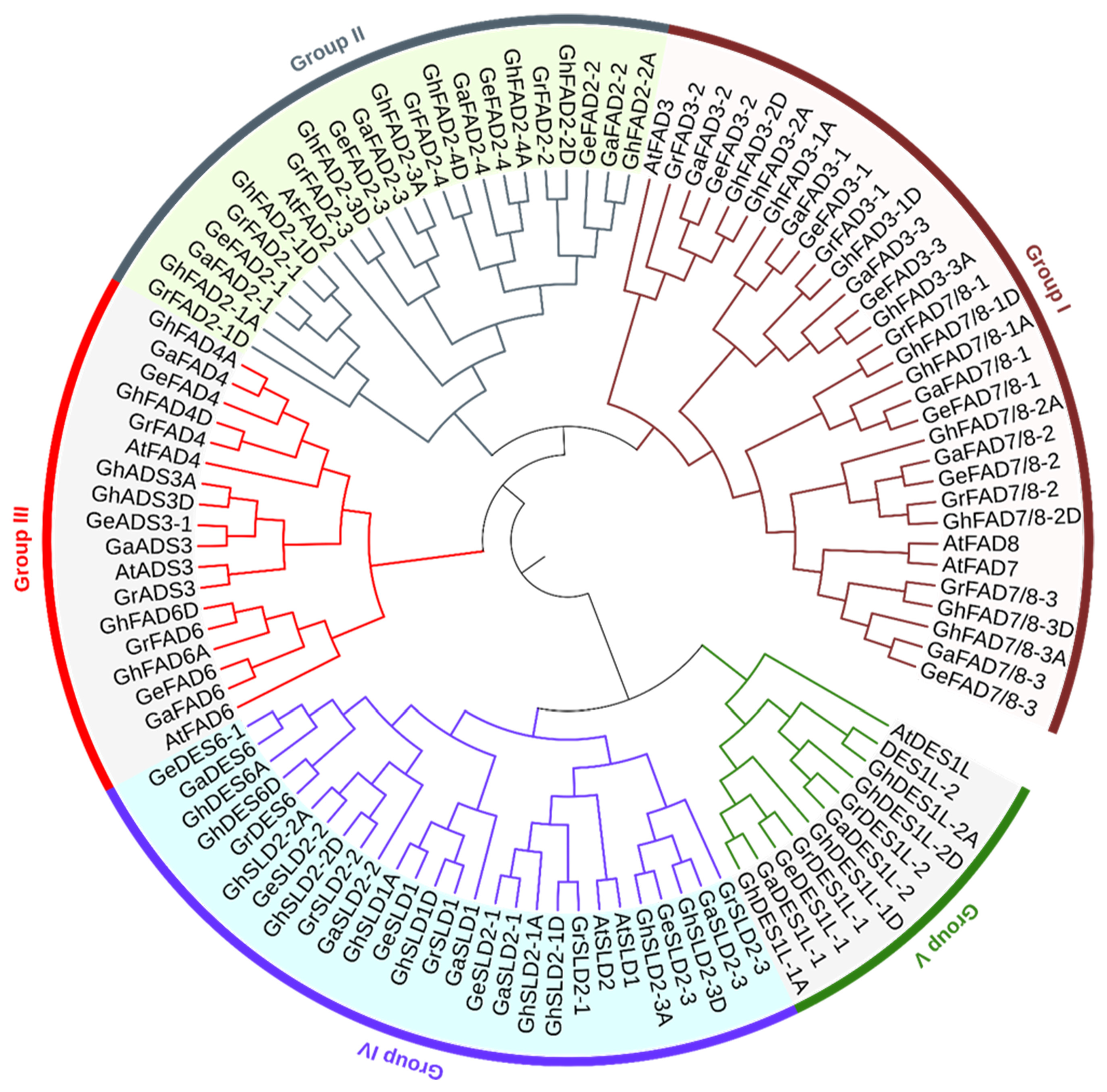
The fatty acid desaturase (FAD) domain (PF00487) was employed as a query to identify FAD genes in cotton genomes using hmmsearch against their protein sequences. This analysis identified 20, 20, 20, and 39 FAD genes in the A1, A2, D5, and AD1 genomes, respectively (Table 1 and Table S2). Phylogenetic analysis revealed that these 99 FAD genes are classified into five distinct groups: Group I comprises FAD3 and FAD7/8; Group II forms a separate cluster containing FAD2 genes; Group III includes FAD4, ADS3, and FAD6; Group IV contains SLD1, SLD2, and DES6; and Group V consists of DES1L genes. Furthermore, orthologous FAD genes from the different cotton genomes consistently clustered together within the same group, demonstrating strong evolutionary conservation (Figure 1). Notably, FAD3-3 was present in the A genomes (A1 and A2) and the At subgenome of AD1, but absent from the D5 genome and the Dt subgenome of AD1. Additionally, while two GrFAD2-1 genes were identified in the D5 genome, only one ortholog (GhFAD2-1D) was detected in the Dt subgenome, suggesting the loss of one GrFAD2-1 gene during interspecific hybridization and genome polyploidization.
In upland cotton (AD1), the 39 FAD genes were classified into FAD2, FAD3, FAD4, FAD6, FAD7/8, ADS3, DES6, SLD1, SLD2, and DES1L subgroups based on sequence homology with A. thaliana FAD genes. The coding sequence (CDS) length ranged from 927 bp (GhFAD3-3A) to 1353 bp (GhFAD7/8-3A and GhFAD7/8-3D). Characterization of the deduced amino acid sequences showed that the molecular weight (MW) ranged from 34.51 kDa (GhFAD4D) to 51.18 kDa (GhFAD7/8-3A), and the theoretical isoelectric point (pI) varied from 6.95 (GhDES1L-1D) to 9.37 (GhADS3D). Subcellular localization predictions using WoLF PSORT indicated that 15 GhFAD proteins are likely localized to the plastid, while four are predicted to reside in the endoplasmic reticulum (ER) (Table 1).

2.2. Conserved Structural Features Analysis of GhFAD Members

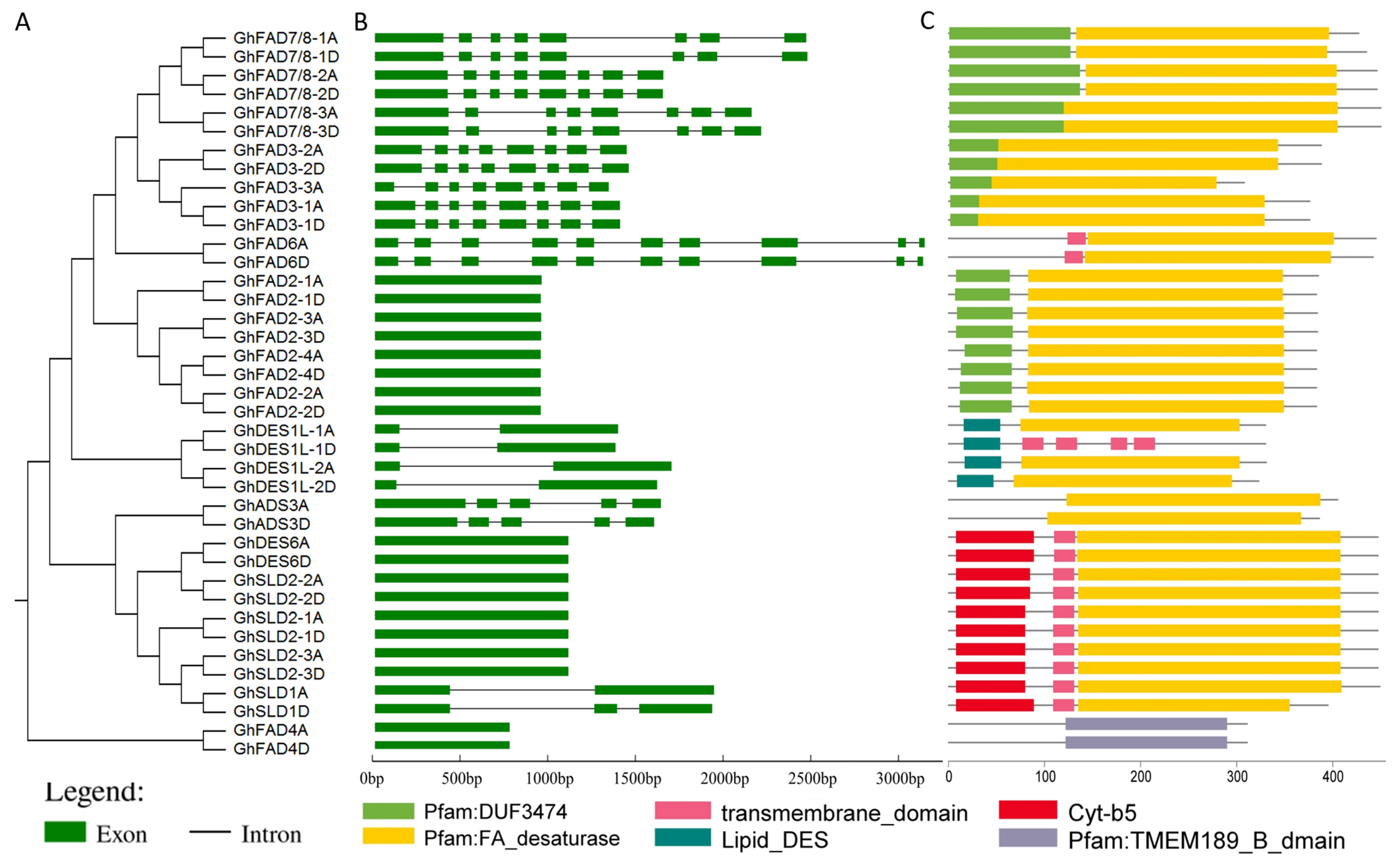
As upland cotton represents the predominant cultivated species in terms of both planting area and fiber production, a detailed analysis of the FAD gene family in upland cotton was undertaken in this research. A total of 39 GhFAD members were analyzed to investigate their phylogenetic relationships and structures. The results indicated that the phylogenetic clustering of GhFAD members was consistent with that observed in other cotton species (Figure 2A). Analysis of gene organization revealed that the number of exons in GhFAD genes varied between 1 and 10. Specifically, GhDES6, GhFAD2, GhFAD4, and GhSLD2 genes were intronless, while GhDES1L and GhSLD genes typically contained two exons, GhADS genes had five exons, GhFAD3 and GhFAD7/8 possessed eight exons, and GhFAD6 contained the highest number of exons (10) (Figure 2B). Furthermore, conserved domain analysis showed that all GhFAD proteins contained a fatty acid desaturase domain, except for GhDES1L-1D, GhFAD4A, and GhFAD4D. Characteristically, GhFAD3, GhFAD7/8, and GhFAD2 proteins contained the DUF3474 domain; GhDES1L proteins possessed a lipid_DES domain; GhDES6, GhSLD1, and GhSLD2 members contained a Cyt-b5 domain; and GhFAD4s featured a TMEM189_B domain. Predictions indicated that transmembrane domain only present in GhFAD6, GhDES6, GhSLD1, GhSLD2, and GhDES1L-1D proteins (Figure 2C). Additionally, the ten most conserved motifs were identified among GhFAD members. GhFAD proteins within the same clade generally contain similar motif compositions. All GhFAD members possess motif 2, with the exception of GhFAD4A and GhFAD4D proteins. In particular, members of the GhFAD2, GhFAD3, and GhFAD7/8 subgroups contain motif 1, motif 4, motif 5, motif 6, and motif 7. GhFAD6 contains motif 1. GhSLD2 and GhDES6 members share motif 3, motif 8, motif 9, and motif 10, whereas GhSLD1 lacks motif 9 (Figure S1). The conservation of motifs suggests that GhFAD members within the same clade may perform similar biological functions.

2.3. Chromosomal Localization and Gene Synteny Analysis of GhFAD Genes

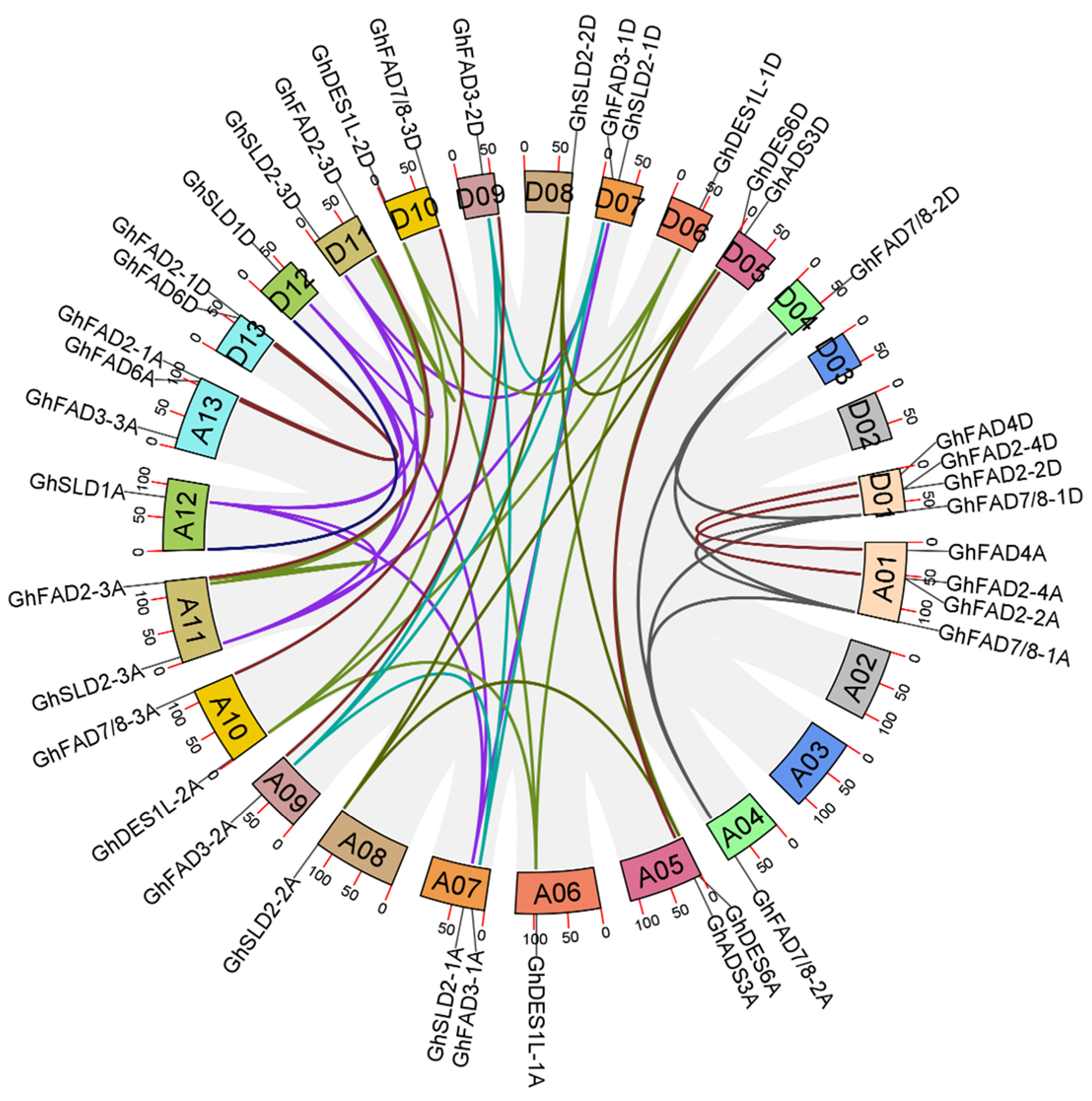
To elucidate the homologous relationships among GhFAD genes, we performed chromosomal localization and gene synteny analysis. Chromosomal localization revealed that most GhFAD loci were highly conserved between the At and Dt subgenomes. The number and distribution of GhFAD genes on chromosomes in the At subgenome were closely mirrored those on their homologous chromosomes in the Dt subgenome. An exception was GhFAD3-3A, which lacked a homologous counterpart in the Dt subgenome (Figure S2). Gene synteny analysis further revealed frequent duplication events among GhFADs during cotton evolution, with 51 pairs of collinear relationships were found among the 39 GhFAD genes. Based on the location of the duplicated genes, it was found that fragmental duplication mainly led to the expansion of GhFAD members in upland cotton (Figure 3).

2.4. Analysis of Cis-Elements in GhFAD Promoter and Regulatory Relationships

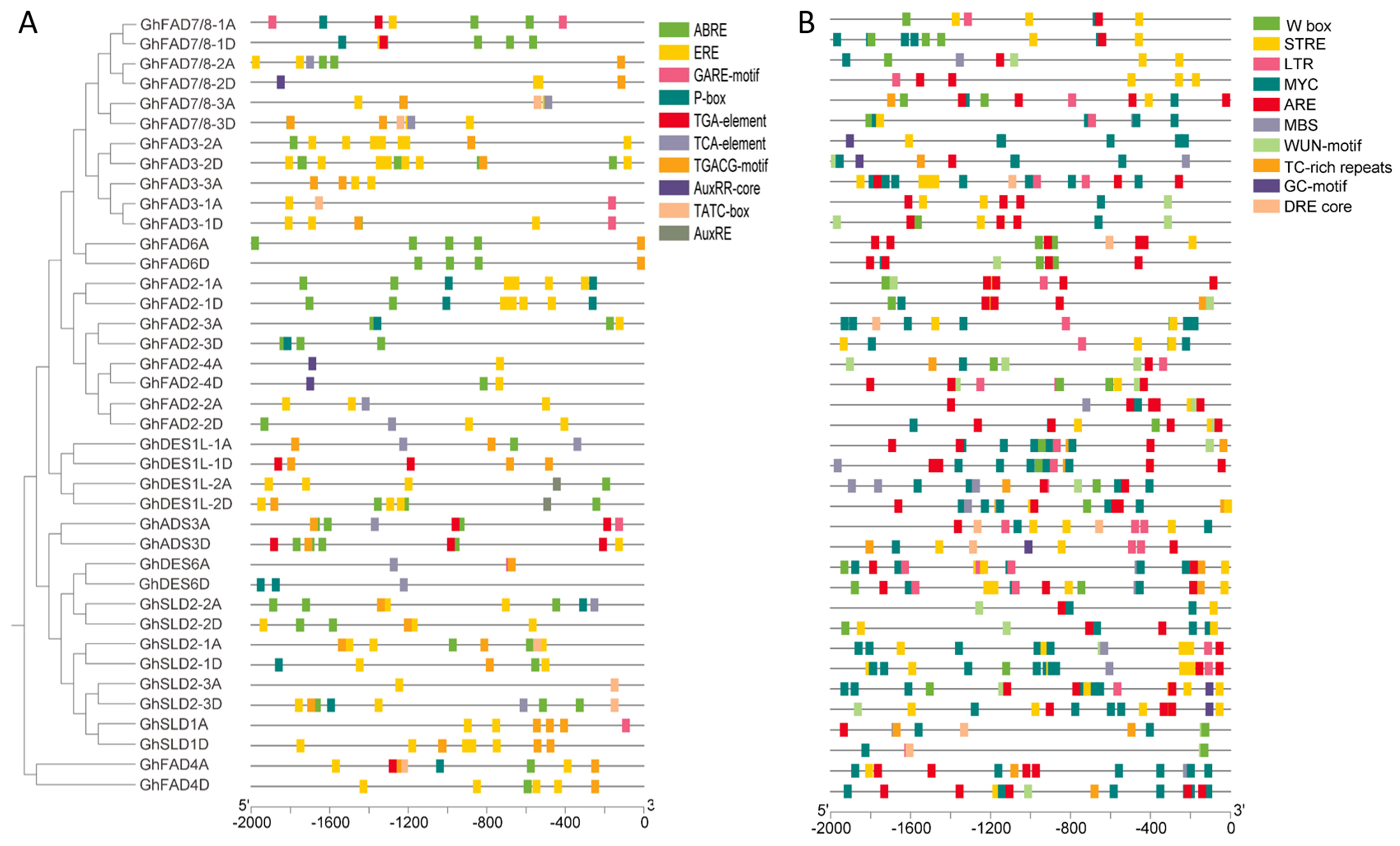
To investigate the cis-acting regulatory elements in GhFAD genes, a 2 kb sequence upstream of the start codon (ATG) of each GhFAD gene was analyzed using the PlantCARE database. A total of 93 kinds of distinct cis-elements were detected in of the 39 GhFAD promoter regions (Table S3). Among these, numerous elements were associated with light responsiveness. Notably, several elements involved in environmental stress and hormone response were prominently identified. Ten environmental stress-related elements were detected, with a predominance of those related to drought stress (MYC) and general stress response (STRE). Among the hormone-responsive elements, ERE, ABRE, and CGTCA-motif cis-elements were more abundant, suggesting that GhFAD genes may be primarily responsive to ethylene, abscisic acid, and methyl jasmonate (MeJA), respectively (Figure 4).
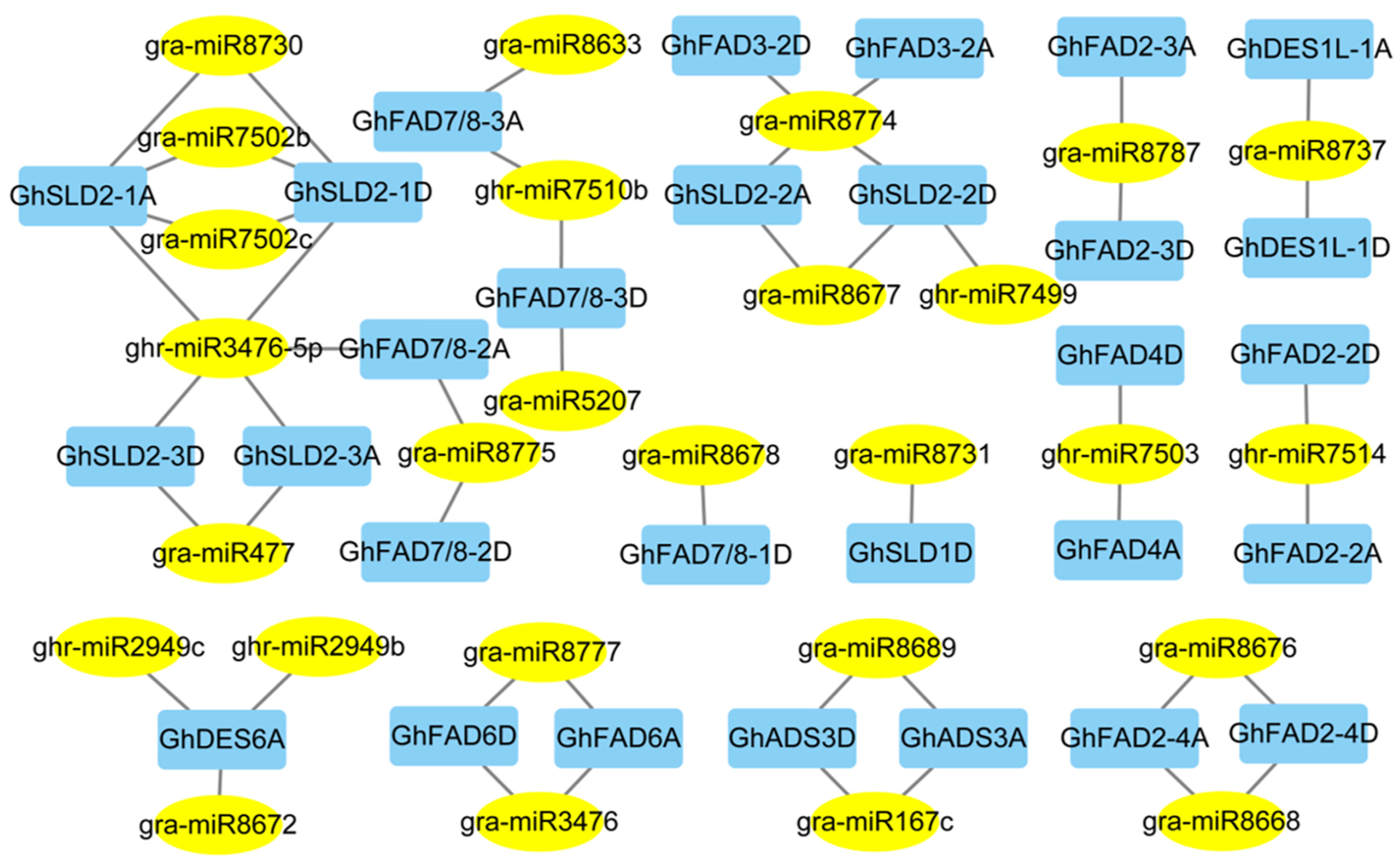
Cis-elements function by binding transcription factors (TFs) to regulate the initiation of gene expression. Hence, the potential TFs targeting the GhFAD genes were predicted. In total, 568 regulatory relationships were detected. The analysis revealed that GhADS3 homologous genes are potentially regulated by a greater number of TFs, including well-known stress-related TFs such as ERF, Dof, and MYB. Furthermore, many GhFAD genes are likely regulated by Dof, ERF, and NAC TFs, suggesting their roles in plant development and stress responses (Figure S3). In addition to transcription factors, miRNAs are also widely recognized as key regulators of gene expression, playing crucial roles in abiotic stress responses. To explore the potential post-transcriptional regulation of GhFAD genes, 29 GhFAD genes were supposed regulated by 27 putative miRNAs, encompassing 37 interaction pairs (Table S4). Notably, GhSLD2-1A and GhSLD2-1D were the most frequently targeted genes, each interacting with four different miRNAs. GhDES6A and GhSLD2-2D were each predicted to be regulated by three miRNAs, while gra-miR8774 was found to target four GhFAD genes (Figure 5). Notably, most homologous GhFAD gene pairs were predicted to be regulated by the same miRNAs, suggesting conserved functional roles between subgenomes. These predictions provide a foundation for future experimental studies on miRNA-mediated regulation of GhFAD genes.

2.5. Expression Profiling of GhFAD Genes in Upland Cotton

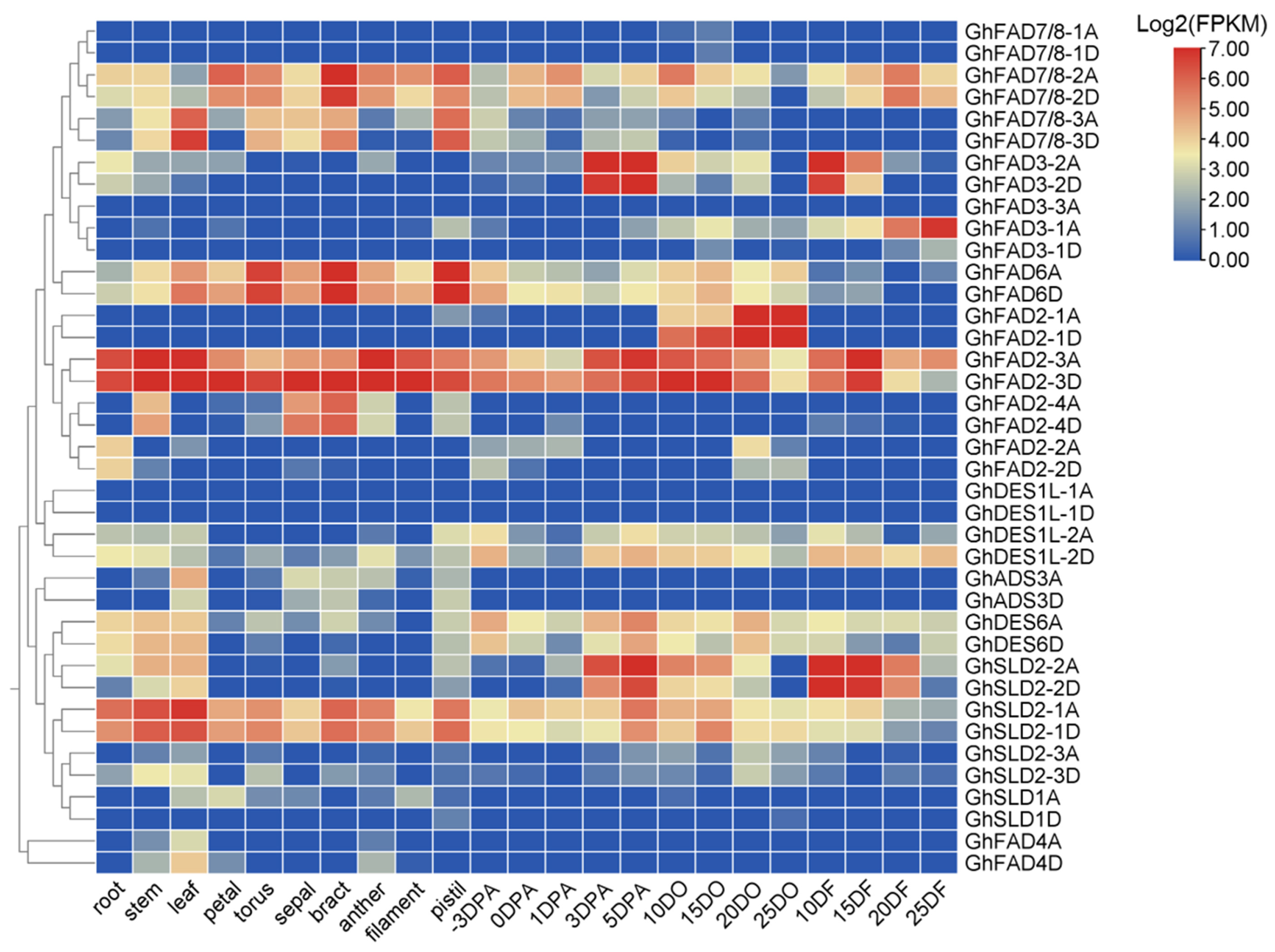
Publicly available expression datasets for upland cotton were analyzed to investigate the expression patterns of GhFAD genes across different tissues and at various stages of ovule and fiber development (Figure 6). The analysis revealed that many GhFAD genes were barely expressed, including homologous pairs of GhFAD7/8-1, GhDES1L-1, GhSLD1, and GhFAD4. In contrast, GhFAD7/8-2, GhFAD2-3, GhFAD6, and GhSLD2-1 homologous genes were abundantly expressed. Notably, GhFAD3-2A/D and GhSLD2-2A/D genes were highly expressed at 3 DO, 5 DO, 10 DF, and 15DF, suggesting a potential role in fiber elongation. Conversely, GhFAD3-1A was preferentially expressed at later stages (20 and 25 DPA), displaying a complementary expression pattern to GhFAD3-2 during fiber development. GhFAD6 genes were abundantly expressed in reproductive organs, including the torus, bract, and pistil. A key finding was the specific and preferential expression of GhFAD2-1 homologous genes during the oil accumulation phase in cottonseeds (10, 15, 20, and 25 DPA), indicating a likely role for GhFAD2-1 in fatty acid synthesis. Furthermore, while FAD2-3A/D was highly expressed across all examined tissues, FAD2-2A/D and FAD2-4A/D showed consistently low expression levels (Figure 6). These divergent expression profiles among gene duplicates suggest that functional specialization has occurred during cotton evolution.

2.6. Response of GhFAD Genes to Abiotic Stresses in Upland Cotton

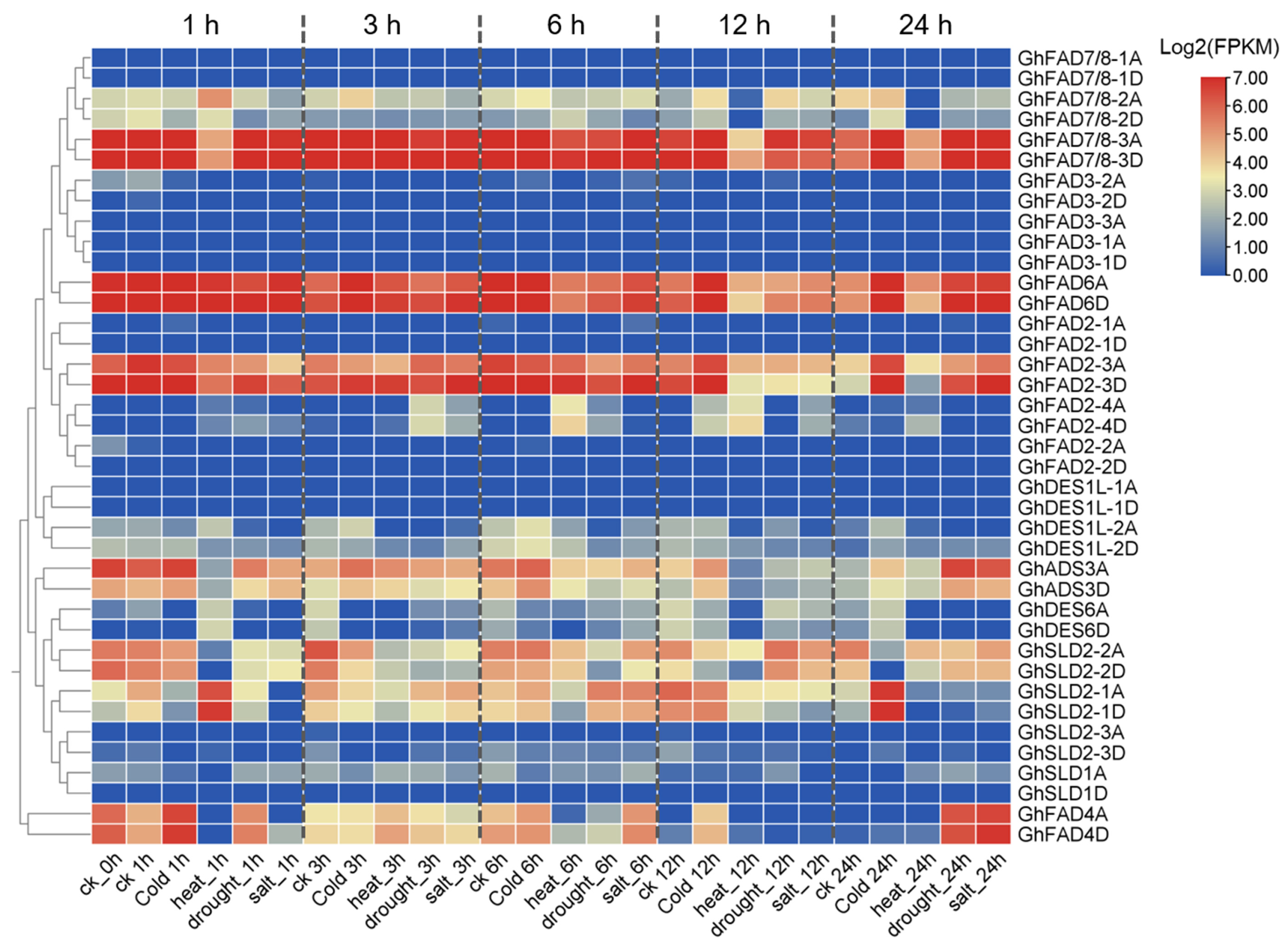
Expression profiles of GhFAD genes under various abiotic stresses—including cold, heat, drought, and salt treatments across multiple time points—were analyzed using publicly available transcriptome data (Figure 7). Genes with low basal expression levels in leaves, such as GhFAD7/8-1, GhFAD3, GhFAD2-1, GhFAD2-2, and GhDES1L, showed no significant response to the applied stresses. By contrast, highly expressed genes including GhFAD7/8-3, GhFAD6, and GhFAD2-3 exhibited distinct expression changes under stress conditions (Figure 7. The expression of GhFAD7/8-3 genes was down-regulated under heat stress at 1, 12, and 24 hours (h). GhFAD6 genes were up-regulated at 12 and 24 h under cold stress. GhFAD2-3 genes were significantly up-regulated at 12 and 24 h under cold stress, but showed high expression only at 24 h under drought and salt conditions (Figure 7). GhSLD2-1 was induced expression at 1 h of heat stress and 24 h of cold stress. Additionally, GhFAD4 genes were dramatically induced under drought and salt stresses at 24 h (Figure 7). These expression patterns are supported by the presence of corresponding stress-related cis-elements, such as LTR, MYB, and MYC motifs, in the promoter regions of the respective GhFAD genes, indicating a transcriptional regulatory basis for their stress-responsive expression.
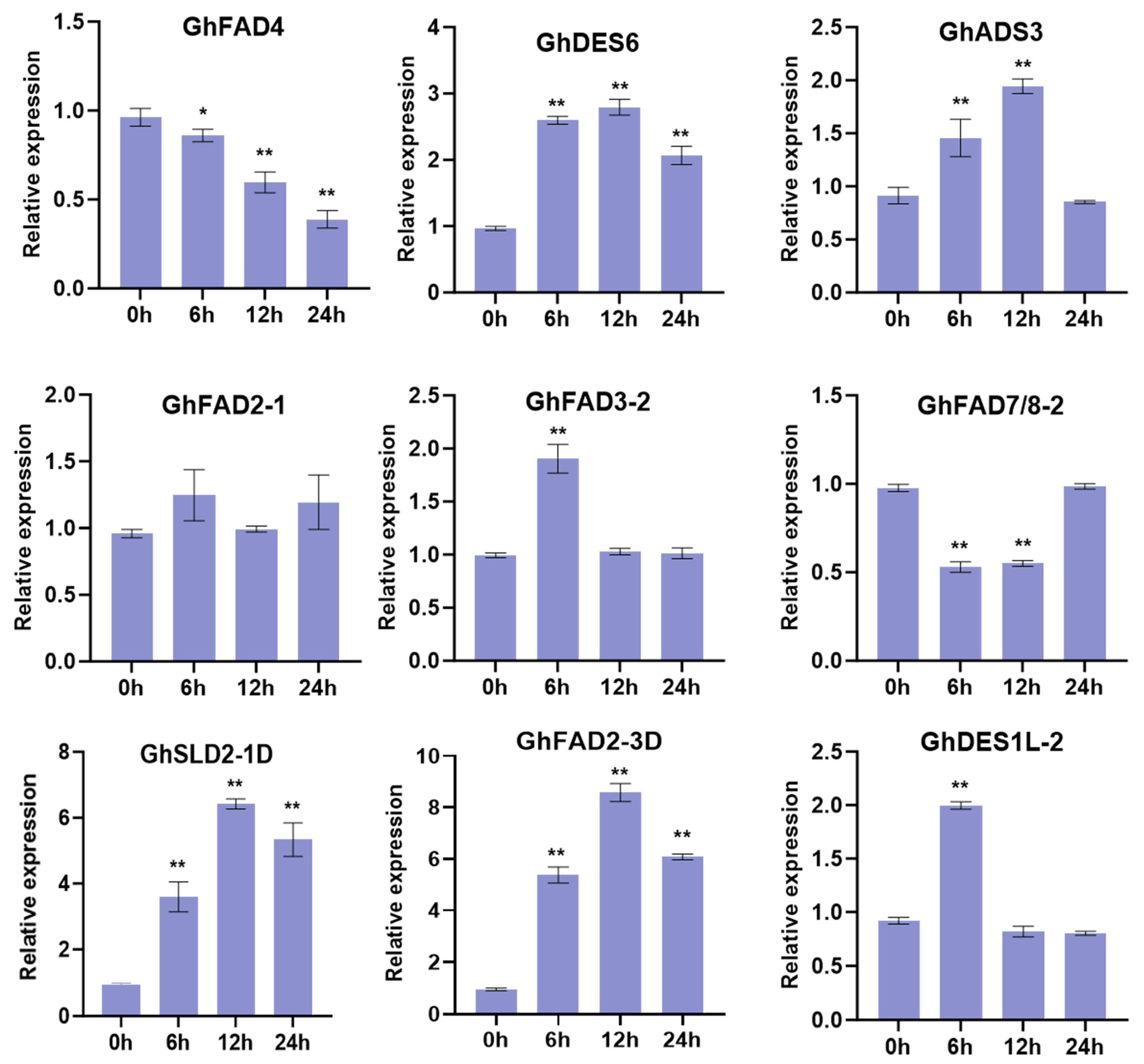
Meanwhile, the expression patterns of nine GhFAD genes respond to cold stress were examined by RT-qPCR. The relative expression level of GhFAD genes in cotton leaves at 0, 6, 12, and 24 h were measured (Figure 8). Under cold stress, eight GhFAD genes were significantly up- or down-regulated, with the exception of GhFAD2-1. The expression level of GhFAD4 decreased continuously, while GhFAD7/8-2 was down-regulated at 6 and 12 h after cold exposure. In contrast, GhFAD3-2 and GhDES1L-2 were up-regulated at 3 h, and GhADS expression was induced at 3 and 6 h. Meanwhile, GhDES6, GhSLD2-1, and GhFAD2-3 showed continuous induction of expression, reaching their peak levels at 12 h. Notably, GhFAD2-3 was markedly induced, with expression levels 5.6-, 9.0-, and 6.4-fold higher at 6, 12, and 24 h, respectively, compared to the 0 h control (Figure 8).

2.7. Overexpression of GhFAD2-3 Enhances Cold Stress Tolerance in Arabidopsis

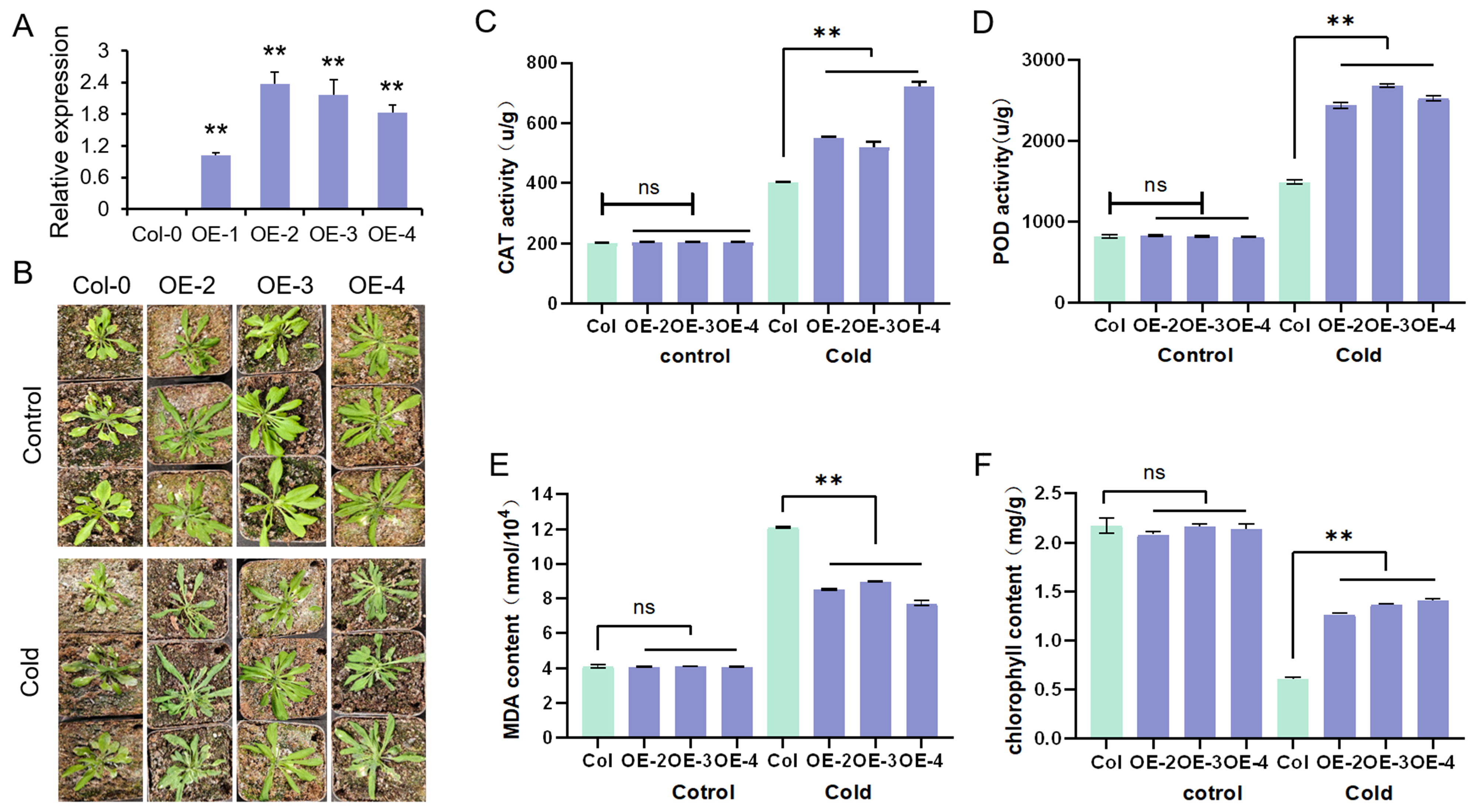
Given the induced expression of GhFAD2-3 under cold stress, its biological function was further investigated through heterologous overexpression in Arabidopsis. RT-qPCR analysis confirmed that GhFAD2-3 was expressed in transgenic Arabidopsis lines (Figure 9A). Homozygous T3-generation lines were selected and subjected to cold stress treatment at 4 °C. After 24 h of cold exposure, leaves of wild-type Arabidopsis plants exhibited obvious wilting, whereas the overexpression lines showed substantially reduced phenotypic damage (Figure 9B). Measurements of physiological parameter further supported the enhanced cold tolerance of transgenic plants. To investigate the role of GhFAD2-3D in reducing reactive oxygen species (ROS accumulation), we evaluated the activities of the antioxidant enzymes catalase (CAT) and peroxidase (POD). Under normal conditions, the activities of CAT and POD did not differ significantly between wild-type (WT) and transgenic plants. Following cold stress, however, the activities of both enzymes were significantly higher in the transgenic lines (Figure 9C,D). Furthermore, under cold stress, the GhFAD2-3D-overexpressing plants displayed enhanced chlorophyll retention and reduced malondialdehyde (MDA) accumulation compared to the WT controls (Figure 9E,F). Collectively, these results demonstrate that overexpression of GhFAD2-3 significantly enhances cold stress tolerance in Arabidopsis.

2.8. Functional Validation of GhFAD2-3 in Cold Stress Response via VIGS in Upland Cotton

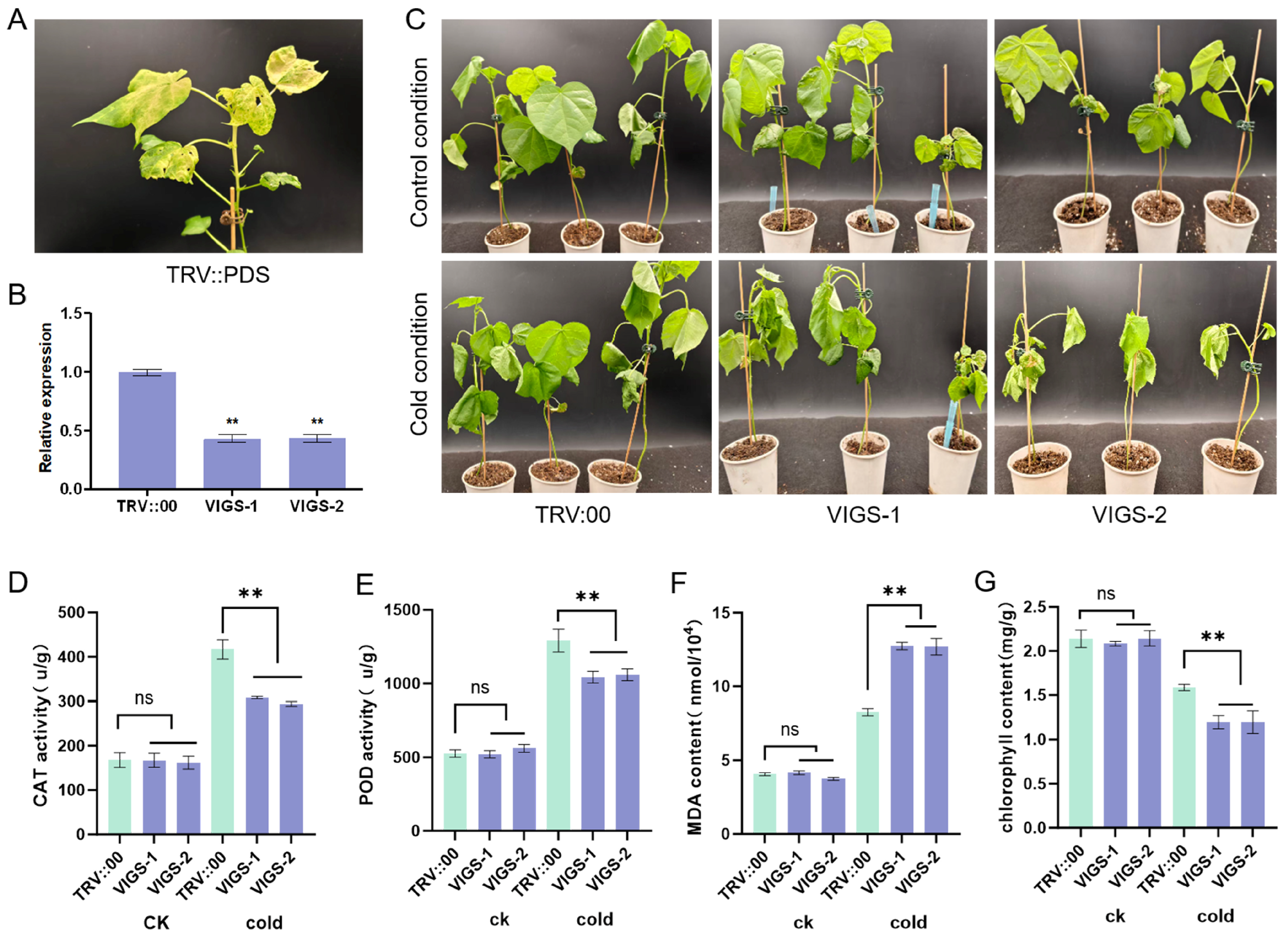
To further elucidate the functional role of GhFAD2-3 in its native context, we employed virus-induced gene silencing (VIGS) to downregulate GhFAD2-3 expression in upland cotton. When the mottled leaf phenotype appeared in the positive control line (TRV::PDS), RT-qPCR analysis confirmed a significant reduction in GhFAD2-3 transcript levels in TRV::GhFAD2-3 plants (VIGS-1 and VIGS-2) compared to the empty vector control (TRV::00) (Figure 10A,B). When subjected to cold stress at 10 °C for 24 h, the TRV::GhFAD2-3 plants exhibited more severe wilting than the control plants (Figure 10C). Physiological assessments further demonstrated that the silencing of GhFAD2-3 significantly impaired CAT and POD activities, promoted chlorophyll degradation, and increased malondialdehyde (MDA) content under cold stress conditions (Figure 10D–F). Taken together, these results demonstrate that knockdown of GhFAD2-3 compromises cold tolerance in cotton and perturbs the expression of core cold-responsive regulators, confirming the essential role of GhFAD2-3 in the low-temperature stress response pathway.

3. Discussion

3.1. Functional Differentiation of FAD2 Genes During Evolution

Extensive studies have revealed significant functional differentiation of FAD2 genes throughout plant evolution. While Arabidopsis contains only a single FAD2 gene participating in both seed oil biosynthesis and membrane lipid formation [8], most other plants possess FAD2 multigene families comprising 3 to 11 members. Soybean contains five FAD2 genes, with FAD2-1A and FAD2-1B primarily regulating oleic acid desaturation in seeds [13]. Olive (Olea europaea) harbors five FAD2 genes, among which OeFAD2-1 functions specifically in seed oil biosynthesis, OeFAD2-2 shows broad expression across tissues, and OeFAD2-2 along with OeFAD2-5 play crucial roles in linoleic acid production in the mesocarp [27]. Safflower (Carthamus tinctorius) possesses a notably expanded FAD2 family of eleven members, with FAD2-1 demonstrating seed-specific expression and FAD2-2 serving as a constitutively expressed housekeeping gene [14]. Similarly, sunflower (Helianthus annuus) exhibits FAD2 family expansion, where CarFAD2-12 shows tissue-specific high expression in seeds while other duplicates are predominantly expressed in ovaries [42].
Our investigation identified eight FAD2 members in cotton that have similarly undergone functional specialization. GhFAD2-1A and GhFAD2-1D, identified as seed-type genes, exhibit seed-specific expression patterns (Figure 6), consistent with their conserved role in converting C18:1 to C18:2. In contrast, GhFAD2-2A/D shows exclusive expression in roots and 20-day-old ovules, GhFAD2-4A/D is preferential expressed in stems, sepals, and bracts, while GhFAD2-3A/D maintains constitutive expression across tissues (Figure 6). This differential expression pattern demonstrates clearly functional divergence among cotton FAD2 paralogs. The expansion and functional differentiation of the FAD2 gene family in cotton represents a classic example of evolutionary adaptation following polyploidization. Derived from common ancestral genes, the eight GhFAD2 members have undergone subfunctionalization and/or neofunctionalization, partitioning their original biological roles. This is evidenced by the conserved function of GhFAD2-1A/D in seed-specific oleic acid desaturation, while paralogs such as GhFAD2-2A/D and GhFAD2-3A/D have acquired novel expression patterns, likely fine-tuning membrane lipid homeostasis in roots or supporting lipid requirements for rapid growth across various tissues. This genetic innovation through gene family expansion provides cotton with enhanced regulatory flexibility to optimize lipid composition for diverse physiological needs, ranging from seed storage to environmental adaptation.

3.2. Fatty Acid Composition Regulated by FAD2 and FAD3

The ratio of oleic acid (C18:1) to linoleic acid (C18:2) is critical determinant of the nutritional quality and oxidative stability of plant-derived edible oils [5]. This ratio is primarily regulated by the synergistic actions of two key enzymes: fatty acid desaturases FAD2 (oleate desaturase) and FAD3 (linoleate desaturase). FAD2 catalyzes the conversion of C18:1 to C18:2, while FAD3 further desaturates C18:2 to α-linolenic acid (C18:3) in extra-plastidial compartments [4]. In Arabidopsis dgat1 mutants, FAD2 is essential to provide polyunsaturated fatty acid (PUFA) substrates for normal seed development [43]. The creation of high-oleic peanut varieties by disrupting AhFAD2A/B genes demonstrates the critical role of FAD2 in determining fatty acid composition without compromising agronomic traits [20]. Meanwhile, FAD3 is more effective enzyme that converts C18:2 to C18:3 in extra-plastid [10]. Meanwhile, FAD3 serves as the more effective enzyme for converting C18:2 to C18:3 in extra-plastidial compartments [37]. Genetic engineering approaches co-expressing AtFAD2sm and BnFAD3 while eliminating FAE1 have successfully achieved ultra-high C18:3 contents in Arabidopsis and camelina [44]. In cotton, silencing GhFAD2 expression elevated oleic acid levels from 15% to 77% [18], while simultaneous suppression of GhFatB and GhFAD2 substantially increased oleic acid content while reducing palmitic and linoleic acid levels [19]. More recently, gene editing of GhFAD2-1 successfully generated high-C18:1 cotton [3], and the identification of LncRNA pseudo-GhFAD2-1 regulating oil composition and seed size further highlights the regulatory complexity of this pathway [45].
In our study, the seed-specific high expression of GhFAD2-1A and GhFAD2-1D confirms their primary role in converting C18:1 to C18:2 during cottonseed development. The coordinated action of FAD2 and FAD3 fundamentally determines the final composition of polyunsaturated fatty acids in plants (Figure 6). Cottonseed oil is characterized by high linoleic acid content (>55%) but minimal linolenic acid (0.3%) [4]. Our expression analysis provides the molecular basis for this characteristic profile: the strong expression of GhFAD2-1 ensures abundant linoleic acid production, while the consistently low expression of GhFAD3 genes throughout seed development creates a metabolic bottleneck, limiting the conversion to linolenic acid. This mechanistic interplay suggests that the balance between FAD2 and FAD3 activities serves as the critical determinant for the C18:2/C18:3 ratio.

3.3. GhFAD3-1 and GhFAD3-2 Sequentially Regulate Fiber Development

Emerging evidence indicates that FAD3 genes play crucial roles in cotton fiber development beyond their canonical function in fatty acid desaturation. Previous studies have established that FAD3 silencing results in shorter cotton fibers [46], while heterologous expression of rapeseed BnFAD3 enhances fiber length [47]. More recently, GhFAD3-4 has been shown to promote both fiber elongation and cell wall thickening through enhanced accumulation of phosphatidylinositol (PI) and inositol trisphosphate (IP3) [24]. In this study, we identified five GhFAD3 genes, with FAD3-3 being exclusively present in the At subgenome (Table 1). Expression profiling revealed substantial functional divergence among these GhFAD3 members. GhFAD3-3 appears to be transcriptionally silent, whereas GhFAD3-2A/D exhibit specific, high expression during early ovule (3 DPA) and fiber development stages (10–15 DPA), consistent with a primary role in fiber elongation (Figure 6). Conversely, GhFAD3-1A is specifically upregulated during later fiber development (20–25 DPA), suggesting its involvement in secondary wall thickening. The expression dominance of GhFAD3-1A over its homeolog GhFAD3-1D aligns with the established evolutionary pattern of At subgenome predominance in fiber development [48].
Based on these distinct temporal expression patterns, we propose a relay regulation model wherein GhFAD3-2 and GhFAD3-1 coordinately regulate cotton fiber development through stage-specific actions. In this model, GhFAD3-2 serves as an early-phase regulator driving fiber elongation, while GhFAD3-1 functions as a late-phase regulator promoting secondary wall deposition. This temporal specialization exemplifies how gene duplication and functional divergence can optimize complex developmental processes.

3.4. GhFAD2-3 Was Involved in Cold Stress Response

Accumulating evidence from diverse plant species underscores the crucial roles of FAD2 genes in cold stress adaptation. In safflower, low temperature significantly influences FAD2 expression and alters fatty acid composition [28]. Family-wide analysis of FAD genes in maize revealed their collective involvement in cold stress responses [34], while similar investigations in sage (Salvia) demonstrated FAD family participation in cold adaptation [36]. Notably, among 43 LuFAD genes identified in flax, overexpression of LuFAD2.1 enhanced cold tolerance in Arabidopsis [38]. In cotton, FAD2 expression is known to be regulated by low temperature [25], and FAD7/8-1 is specifically induced under cold stress [49]. Multiple FAD genes responsive to cold stress have been identified in both G. raimondii and upland cotton [39,40], collectively suggesting conserved functions of FAD genes in cold stress adaptation. In this study, we identified several GhFAD genes responsive to cold stress, such as GhFAD4, GhSLD2-1, GhFAD6, and GhFAD2-3 (Figure 7). RT-qPCR validation confirmed that cold stress induced the expression of multiple genes, among which GhDES6, GhADS3, GhSLD2-1D, and GhFAD2-3D were all significantly up-regulated (Figure 8).
While GhFAD2-3 has been previously reported to participate in pollen development in upland cotton [23], our study reveals its additional role in cold stress response. We observed significant up-regulation of GhFAD2-3A/D genes after 12 and 24 h of cold treatment (Figure 7), consistent with the presence of low-temperature responsive (LTR) cis-elements in their promoter regions (Figure 4). RT-qPCR analysis confirmed the strong induction of GhFAD2-3 expression under cold conditions (Figure 8). Functional validation through heterologous overexpression in Arabidopsis and virus-induced gene silencing in cotton demonstrated that GhFAD2-3 positively regulates cold tolerance. Overexpression lines exhibited enhanced cold resistance, whereas VIGS- silenced cotton plants showed increased sensitivity to cold stress (Figure 9 and Figure 10). Physiological analyses revealed that GhFAD2-3-weakened plants suffered greater cellular damage than controls, as evidenced by a more pronounced increase in MDA content, coupled with reductions in chlorophyll content. This damage is consistent with oxidative stress caused by elevated levels of reactive oxygen species (ROS) [50]. Accordingly, under cold stress, the activities of the antioxidant enzymes CAT and POD were elevated in GhFAD2-3-overexpressing plants but suppressed in GhFAD2-3-downregulated cotton plants (Figure 10). Collectively, our findings establish that GhFAD2-3 contributes to cold stress tolerance in cotton. With the expanding cultivation of upland cotton into northwest inland regions of China where cold stress represents a major constraint, GhFAD2-3 emerges as a promising genetic target for breeding cold-tolerant cotton varieties.

4. Materials and Methods

4.1. Identification of FAD Gene Family Members in Gossypium

The genome sequences of Gossypium hirsutum acc. TM-1 [41], and its putative diploid ancestors—G. herbaceum and G. arboretum [51] and G. raimondii [52]—were obtained from the CottonGen website [53]. To identify candidate FAD genes, a search was conducted against the annotated protein sequences using the FA_desaturase domain (PF00487) from the Pfam database (http://pfam.xfam.org/). This was followed by local BLASTp (v2.17.0) analyses using the amino acid sequences of known Arabidopsis FAD proteins—AtFAD2 (AT3G12120), AtFAD3 (AT2G29980), AtFAD4 (AT4G27030), AtADS3 (AT3G15850), AtFAD6 (AT4G30950), AtFAD7 (AT3G11170), and AtFAD8 (AT5G05580)—as queries. Identified FAD genes were named according to their Arabidopsis orthologs and chromosomal locations. The prefixes ‘A’ and ‘D’ were used to denote homologs originating from the At and Dt subgenomes, respectively. The theoretical molecular weight (MW) and isoelectric point (pI) of the GhFAD proteins were predicted using ExPASy (accessed on 9 October 2025) [54]. Subcellular localization was predicted using the TargetP-2.0 Server (https://services.healthtech.dtu.dk/services/TargetP-2.0/) (accessed on 9 October 2025). Additionally, a 2 kb genomic region upstream of the initiation codon for each GhFAD gene was extracted and submitted to the PlantCARE database (accessed on 15 October 2025) for the identification of cis-regulatory elements in the promoter regions [55].

4.2. Phylogenetic, Structural, and Synteny Analysis of FAD Genes

An unrooted phylogenetic tree was constructed using MEGA12 software with the maximum likelihood (ML) method and validated by 1000 bootstrap replicates [56]. The conserved domains within the FAD proteins were identified using the SMART database [57] and visualized with TBtools-II [58]. Furthermore, the ten most conserved protein motifs were identified using the MEME suite with default parameters [59], and their putative functions were annotated via the InterProScan database. Genomic synteny relationships were analyzed using the One Step MCScanX program implemented in TBtools-II, and the resulting synteny blocks were visualized using the Advanced Circos tool within the same software package [60].

4.3. Prediction of Transcription Factors and miRNAs Targeting GhFAD Genes

Potential transcription factors (TFs) regulating GhFAD genes were predicted using the PlantRegMap database [61], with G. raimondii specified as the reference species. To identify miRNAs potentially targeting these genes, the full-length cDNA sequences of GhFAD homologs were submitted to the psRNATarget platform (2017 release) for screening against the G. hirsutum miRNA database (accessed on 26 October 2025) [62]. The interaction networks among the predicted TFs, miRNAs, and their target GhFAD genes were visualized using Cytoscape (v3.10.4) software [63].

4.4. Expression Profile Analysis

RNA-Seq datasets encompassing different tissues and multiple stress treatments in G. hirsutum var. TM-1 were acquired from the NCBI BioProject under accession number PRJNA490626 [64]. The clean reads from each dataset were aligned to the reference genome using HISAT2, and gene expression levels were then quantified as Fragments Per Kilobase of transcript per Million mapped reads (FPKM) values using StringTie (v2.2.1) software [65].

4.5. RNA Extraction and Quantitative Real-Time PCR (RT-qPCR)

Total RNA was extracted from upland cotton and A. thaliana plants using the RNAprep Pure Plant Kit (TIANGEN, Beijing, China) according to the manufacturer’s instructions. Following genomic DNA removal, approximately 2 µg of total RNA was reverse-transcribed into first-strand cDNA using the PrimeScript™ RT reagent Kit (TaKaRa, Dalian, China). Gene-specific primers for GhFAD genes were designed with Primer5 software based on their coding sequences (Table S1). RT-qPCR was performed as previously described [4], with GhUBQ7 and AtActin genes were serving as an internal control in cotton and A. thaliana, respectively (Table S1). Each sample was analyzed with three replicates.

4.6. Vector Construction and Arabidopsis Transformation

The full-length coding sequences (CDS) of GhFAD2-3D was cloned from 20 days post-anthesis (DPA) embryos of the upland cotton cultivar ZM24. The sequence was subsequently inserted into the pCAMBIA2300 vector using the ClonExpress® MultiS One Step Cloning Kit (Vazyme, Nanjing, China), generating the recombinant construct of 35S::GhFAD2-3. The resulting plasmid was introduced into Agrobacterium tumefaciens strain GV3101 via the heat-shock method. A. thaliana ecotype Columbia (Col-0) plants were grown in a greenhouse under controlled conditions: 22 °C with a 16/8 h light/dark photoperiod. Transformation was carried out using the floral dip method [66]. Putative transgenic plants were initially screened for kanamycin resistance, and positive transformants were further confirmed by RT-qPCR. T1 generation lines exhibiting a 3:1 (positive: negative) segregation ratio (OE-2, OE-3, and OE-4) were selected and considered to harbor a single transgene copy.

4.7. Virus-Induced Gene Silencing (VIGS) in Cotton

To investigate the function of GhFAD2-3 in cotton, a specific 300 bp fragment of GhFAD2-3D was cloned into the pTRV2 vector, and the resulting construct was introduced into A. tumefaciens strain GV3101. The recombinant agrobacteria were then infiltrated into cotton leaves using a previously described method. Once a photobleaching phenotype was observed in the positive control plants (TRV::GhPDS), leaf samples were collected from the TRV::GhFAD2-3 plants to analyze the target gene expression levels. The experiment included three independent biological replicates, with at least 48 plants analyzed per replicate.

4.8. Physiological and Biochemical Indicators Determination

Three-week-old wild-type and GhFAD2-3-overexpressing Arabidopsis plants were subjected to cold stress at 4 °C for 24 h. In parallel, TRV::00 and TRV::GhFAD2-3 cotton plants at three weeks after infection were exposed to 10 °C for 24 h. Leaves from both Arabidopsis and cotton plants were collected before and after cold treatment to assess physiological responses. The parameters measured included malondialdehyde (MDA) and chlorophyll contents, as well as the activities of catalase (CAT) and peroxidase (POD). All biochemical assays were performed using commercial kits (Sinobestbio, Shanghai, China) according to the manufacturer’s instructions. Specifically, MDA content was determined using the MDA Content Assay Kit (A401), chlorophyll content was measured using the Chlorophyll Content Assay Kit (C112), CAT activity was assayed using the Catalase Activity Assay Kit (A501), and POD activity was assayed using the Peroxidase Activity Assay Kit (A502).

5. Conclusions

This study presents a comprehensive analysis of the FAD gene family in upland cotton. We systematically investigated the gene structures, conserved domains, and cis-acting regulatory elements within promoter regions. Expression profiling revealed distinct spatiotemporal patterns of GhFAD genes across various developmental stages and in response to multiple abiotic stresses. Functional characterization further demonstrated the specialized role of GhFAD2-3 in enhancing cold stress adaptation. While these findings advance our understanding, the precise molecular mechanisms by which FAD genes regulate oil biosynthesis and mediate environmental stress responses remain to be fully elucidated. Additionally, the proposed relay model, involving the sequential action of GhFAD3-1 and GhFAD3-2 in fiber development, requires further experimental validation. Nevertheless, this research establishes a solid foundation for the integrated utilization of FAD genes in cotton breeding programs, particularly for developing cultivars with improved oil quality, enhanced fiber properties, and greater abiotic stress tolerance.

Supplementary Materials

The following supporting information can be downloaded at: https://www.mdpi.com/article/10.3390/plants14243767/s1. Table S1. Primers and sequences used in this study. Table S2. Identification and nomenclature of FAD genes in G. herbaceum, G. arboreum, and G. raimondii. Table S3. The source data of cis-elements in GhFAD promoter regions. Table S4. The source data of regulatory networks of miRNAs targeting GhFAD genes. Figure S1. Conserved motifs identified in GhFAD proteins. (A) The ten most conserved motifs detected in GhFAD proteins. (B) The logo and sequences of the ten most conserved motifs. Figure S2. Chromosome localization of GhFAD members. (A) GhFAD members located on the At subgenome. (B) GhFAD members located on the Dt subgenome. Figure S3. The regulatory relationship of TFs targeting GhFAD genes. TFs are depicted as green ovals, and target GhFAD genes as blue rectangles.

Author Contributions

Conceptualization, H.S. and Y.Z.; formal analysis, F.H. and Y.Z.; investigation, F.H., S.H., X.H., J.H. and P.W.; writing—original draft preparation, F.H.; writing—review and editing, L.M., D.C., H.Y., Y.Y., J.G., H.S. and Y.Z. All authors have read and agreed to the published version of the manuscript.

Funding

This work was supported by the Key Research and Development Program of Henan Province of China (241111114200), and the Independent Fund of State Key Laboratory of Cotton Bio-breeding and Integrated Utilization (CBIUZ2025002 and CBIU2025007).

Institutional Review Board Statement

Not applicable.

Data Availability Statement

The original contributions presented in the study are included in the article/Supplementary Materials, further inquiries can be directed to the corresponding authors.

Acknowledgments

We thank the National Supercomputing Center in Zhengzhou for providing data and computational support for this research.

Conflicts of Interest

The authors declare no conflicts of interest.

References

  1. Wen, X.; Chen, Z.; Yang, Z.; Wang, M.; Jin, S.; Wang, G.; Zhang, L.; Wang, L.; Li, J.; Saeed, S.; et al. A comprehensive overview of cotton genomics, biotechnology and molecular biological studies. Sci. China Life Sci. 2023, 66, 2214–2256. [Google Scholar] [CrossRef]
  2. Cheng, H.N.; He, Z.; Ford, C.; Wyckoff, W.; Wu, Q. A review of cottonseed protein chemistry and non-food applications. Sustain. Chem. 2020, 1, 256–274. [Google Scholar] [CrossRef]
  3. Chen, Y.; Fu, M.; Li, H.; Wang, L.; Liu, R.; Liu, Z.; Zhang, X.; Jin, S. High-oleic acid content, nontransgenic allotetraploid cotton (Gossypium hirsutum L.) generated by knockout of GhFAD2 genes with CRISPR/Cas9 system. Plant Biotechnol. J. 2021, 19, 424–426. [Google Scholar] [CrossRef] [PubMed]
  4. Zhao, Y.; Wang, Y.; Huang, Y.; Cui, Y.; Hua, J. Gene network of oil accumulation reveals expression profiles in developing embryos and fatty acid composition in upland cotton. J. Plant Physiol. 2018, 228, 101–112. [Google Scholar] [CrossRef] [PubMed]
  5. Terés, S.; Barceló-Coblijn, G.; Benet, M.; Alvarez, R.; Bressani, R.; Halver, J.E.; Escribá, P.V. Oleic acid content is responsible for the reduction in blood pressure induced by olive oil. Proc. Natl. Acad. Sci. USA 2008, 16, 13811–13816. [Google Scholar] [CrossRef] [PubMed]
  6. Davis, K.E.; Prasad, C.; Imrhan, V. Consumption of a diet rich in cottonseed oil (CSO) lowers total and LDL cholesterol in normo-cholesterolemic subjects. Nutrients 2012, 4, 602–610. [Google Scholar] [CrossRef]
  7. Baud, S.; Lepiniec, L. Physiological and developmental regulation of seed oil production. Prog. Lipid Res. 2010, 49, 235–249. [Google Scholar] [CrossRef]
  8. Li-Beisson, Y.; Shorrosh, B.; Beisson, F.; Andersson, M.X.; Arondel, V.; Bates, P.D.; Baud, S.; Bird, D.; DeBono, A.; Durrett, T.P.; et al. Acyl-lipid metabolism. Arab. Book 2013, 11, e0161. [Google Scholar] [CrossRef]
  9. Dar, A.A.; Choudhury, A.R.; Kancharla, P.K.; Arumugam, N. The FAD2 gene in plants: Occurrence, regulation, and role. Front. Plant Sci. 2017, 8, 1789. [Google Scholar] [CrossRef]
  10. Gishini, M.F.S.; Kachroo, P.; Hildebrand, D. Fatty acid desaturase 3-mediated α-linolenic acid biosynthesis in plants. Plant Physiol. 2025, 197, kiaf012. [Google Scholar] [CrossRef]
  11. Ohlroggeav’, J.; Browseb, J. Lipid biosynthesis. Plant Cell 1995, 7, 957–970. [Google Scholar]
  12. Schlueter, J.A.; Vasylenko-Sanders, I.F.; Deshpande, S.; Yi, J.; Siegfried, M.; Roe, B.A.; Schlueter, S.D.; Scheffler, B.E.; Shoemaker, R.C. The FAD2 gene family of soybean: Insights into the structural and functional divergence of a paleopolyploid genome. Crop Sci. 2007, 47, S17–S26. [Google Scholar] [CrossRef]
  13. Haun, W.; Coffman, A.; Clasen, B.M.; Demorest, Z.L.; Lowy, A.; Ray, E.; Retterath, A.; Stoddard, T.; Juillerat, A.; Cedrone, F.; et al. Improved soybean oil quality by targeted mutagenesis of the fatty acid desaturase 2 gene family. Plant Biotechnol. J. 2014, 12, 934–940. [Google Scholar] [CrossRef] [PubMed]
  14. Wood, C.C.; Okada, S.; Taylor, M.C.; Menon, A.; Mathew, A.; Cullerne, D.; Stephen, S.J.; Allen, R.S.; Zhou, X.R.; Liu, Q.; et al. Seed-specific RNAi in safflower generates a superhigh oleic oil with extended oxidative stability. Plant Biotechnol. J. 2018, 16, 1788–1796. [Google Scholar] [CrossRef]
  15. Tang, S.; Liu, D.X.; Lu, S.; Yu, L.; Li, Y.; Lin, S.; Li, L.; Du, Z.; Liu, X.; Li, X.; et al. Development and screening of EMS mutants with altered seed oil content or fatty acid composition in Brassica napus. Plant J. 2020, 104, 1410–1422. [Google Scholar] [CrossRef]
  16. Shockey, J.; Dowd, M.; Mack, B.; Gilbert, M.; Scheffler, B.; Ballard, L.; Frelichowski, J.; Mason, C. Naturally occurring high oleic acid cottonseed oil: Identification and functional analysis of a mutant allele of Gossypium barbadense fatty acid desaturase-2. Planta 2017, 245, 611–622. [Google Scholar] [CrossRef]
  17. Shockey, J.; Gilbert, M.K.; Thyssen, G.N. A mutant cotton fatty acid desaturase 2-1d allele causes protein mistargeting and altered seed oil composition. BMC Plant Biol. 2023, 23, 147. [Google Scholar] [CrossRef] [PubMed]
  18. Liu, Q.; Singh, S.P.; Green, A.G. High-stearic and high-oleic cottonseed oils produced by hairpin RNA-mediated post-transcriptional gene silencing. Plant Physiol. 2002, 129, 1732–1743. [Google Scholar] [CrossRef]
  19. Liu, F.; Zhao, Y.P.; Zhu, H.G.; Zhu, Q.H.; Sun, J. Simultaneous silencing of GhFAD2-1 and GhFATB enhances the quality of cottonseed oil with high oleic acid. J. Plant Physiol. 2017, 215, 132–139. [Google Scholar] [CrossRef] [PubMed]
  20. Shi, L.; Zhao, H.; Liu, H.; Wang, X.; Li, X.; Qu, P.; Xue, L.; Huang, B.; Qi, F.; Dai, X.; et al. Development of novel transgene-free high-oleic peanuts through CRISPR-Cas9-mediated gene editing of two AhFAD2 homologues. Plant Biotechnol. J. 2025, 23, 4618–4620. [Google Scholar] [CrossRef]
  21. Du, P.; Deng, Q.; Wang, W.; Garg, V.; Lu, Q.; Huang, L.; Wang, R.; Li, H.; Huai, D.; Chen, X.; et al. scRNA-seq reveals the mechanism of fatty acid desaturase 2 mutation to repress leaf growth in peanut (Arachis hypogaea L.). Cells 2023, 12, 2305. [Google Scholar] [CrossRef] [PubMed]
  22. Zhu, J.J.; Ahmad, N.; Zhou, X.; He, W.; Wang, J.; Shan, C.; Chen, Z.; Ji, W.; Liu, Z. Divergent fatty acid desaturase 2 is essential for falcarindiol biosynthesis in carrot. Plant Commun. 2025, 6, 101323. [Google Scholar] [CrossRef] [PubMed]
  23. Liu, F.; Ma, L.; Wang, Y.; Li, Y.; Zhang, X.; Xue, F.; Nie, X.; Zhu, Q.; Sun, J. GhFAD2-3 is required for anther development in Gossypium hirsutum. BMC Plant Biol. 2019, 19, 393. [Google Scholar] [CrossRef]
  24. Wang, H.; Fan, M.; Shen, Y.; Zhao, H.; Weng, S.; Chen, Z.; Xiao, G. GhFAD3-4 promotes fiber cell elongation and cell wall thickness by increasing PI and IP3 accumulation in cotton. Plants 2024, 13, 1510. [Google Scholar] [CrossRef]
  25. Kargiotidou, A.; Deli, D.; Galanopoulou, D.; Tsaftaris, A.; Farmaki, T. Low temperature and light regulate delta 12 fatty acid desaturases (FAD2) at a transcriptional level in cotton (Gossypium hirsutum). J. Exp. Bot. 2008, 59, 2043–2056. [Google Scholar] [CrossRef]
  26. Menard, G.N.; Moreno, J.M.; Bryant, F.M.; Munoz-Azcarate, O.; Kelly, A.A.; Hassani-Pak, K.; Kurup, S.; Eastmond, P.J. Genome wide analysis of fatty acid desaturation and its response to temperature. Plant Physiol. 2017, 173, 1594–1605. [Google Scholar] [CrossRef]
  27. Luisa Hernández, M.; Dolores Sicardo, M.; Arjona, P.M.; Martínez-Rivas, J.M. Specialized functions of olive FAD2 gene family members related to fruit development and the abiotic stress response. Plant Cell Physiol. 2019, 61, 427–441. [Google Scholar] [CrossRef]
  28. Li, D.; Li, K.; Zhou, G.; He, S. Effects of temperature and salt stress on the expression of delta-12 fatty acid desaturase genes and fatty acid compositions in safflower. Int. J. Mol. Sci. 2023, 24, 2765. [Google Scholar] [CrossRef]
  29. Nguyen, V.C.; Nakamura, Y.; Kanehara, K. Membrane lipid polyunsaturation mediated by FATTY ACID DESATURASE 2 (FAD2) is involved in endoplasmic reticulum stress tolerance in Arabidopsis thaliana. Plant J. 2019, 99, 478–493. [Google Scholar] [CrossRef]
  30. Lee, M.W.; Padilla, C.S.; Gupta, C.; Galla, A.; Pereira, A.; Li, J.; Goggin, F.L. The fatty acid desaturase2 family in tomato contributes to primary metabolism and stress responses. Plant Physiol. 2020, 182, 1083–1099. [Google Scholar] [CrossRef] [PubMed]
  31. Xiao, R.; Zou, Y.; Guo, X.; Li, H.; Lu, H. Fatty acid desaturases (FADs) modulate multiple lipid metabolism pathways to improve plant resistance. Mol. Biol. Rep. 2022, 49, 9997–10011. [Google Scholar] [CrossRef]
  32. Liu, J.; Jing, X.; Wang, P.; Wang, G.; Xiang, M.; Li, P.; Zou, H.; Li, H.; Wu, Z.; Wang, C.; et al. A fijivirus capsid protein hijacks autophagy degrading an ω-3 fatty acid desaturase to suppress jasmonate-mediated antiviral defence. Plant Biotechnol. J. 2025, 23, 2891–2907. [Google Scholar] [CrossRef]
  33. E, Z.; Chen, C.; Yang, J.; Tong, H.; Li, T.; Wang, L.; Chen, H. Genome-wide analysis of fatty acid desaturase genes in rice (Oryza sativa L.). Sci. Rep. 2019, 9, 19445. [Google Scholar] [CrossRef]
  34. Zhao, X.; Wei, J.; He, L.; Zhang, Y.; Zhao, Y.; Xu, X.; Wei, Y.; Ge, S.; Ding, D.; Liu, M.; et al. Identification of fatty acid desaturases in Maize and their differential responses to low and high temperature. Genes 2019, 10, 445. [Google Scholar] [CrossRef]
  35. Liu, K.; Zhao, S.; Wang, S.; Wang, H.; Zhang, Z. Identification and analysis of the FAD gene family in walnuts (Juglans regia L.) based on transcriptome data. BMC Genom. 2020, 21, 299. [Google Scholar] [CrossRef]
  36. Xue, Y.; Wu, F.; Chen, R.; Wang, X.; Tseke Inkabanga, A.; Huang, L.; Qin, S.; Zhang, M.; Chai, Y. Genome-wide analysis of fatty acid desaturase genes in chia (Salvia hispanica) reveals their crucial roles in cold response and seed oil formation. Plant Physiol. Biochem. 2023, 199, 107737. [Google Scholar] [CrossRef] [PubMed]
  37. Zou, Z.; Fu, X.; Li, C.; Huang, J.; Zhao, Y. Insights into membrane-bound fatty acid desaturase genes in tigernut (Cyperus esculentus L.), an oil-rich tuber plant in Cyperaceae. BMC Plant Biol. 2025, 25, 382. [Google Scholar] [CrossRef]
  38. Lu, J.; Xiaoyang, C.; Li, J.; Wu, H.; Wang, Y.; Di, P.; Deyholos, M.K.; Zhang, J. Whole-genome identification of the flax fatty acid desaturase gene family and functional analysis of the LuFAD2.1 gene under cold stress conditions. Plant Cell Environ. 2025, 48, 2221–2239. [Google Scholar] [CrossRef]
  39. Feng, J.; Dong, Y.; Liu, W.; He, Q.; Daud, M.K.; Chen, J.; Zhu, S. Genome-wide identification of membrane-bound fatty acid desaturase genes in Gossypium hirsutum and their expressions during abiotic stress. Sci. Rep. 2017, 7, 45711. [Google Scholar] [CrossRef] [PubMed]
  40. Liu, W.; Li, W.; He, Q.; Daud, M.K.; Chen, J.; Zhu, S. Characterization of 19 genes encoding membrane-bound fatty acid desaturases and their expression profiles in Gossypium raimondii under low temperature. PLoS ONE 2015, 10, e0123281. [Google Scholar] [CrossRef] [PubMed]
  41. Hu, Y.; Han, J.; Jin, S.; Han, Z.; Si, Z.; Yan, S.; Xuan, L.; Yu, G.; Guan, X.; Fang, L.; et al. Post-polyploidization centromere evolution in cotton. Nat. Genet. 2025, 57, 1021–1030. [Google Scholar] [CrossRef]
  42. Wu, Z.; Liu, H.; Zhan, W.; Yu, Z.; Qin, E.; Liu, S.; Yang, T.; Xiang, N.; Kudrna, D.; Chen, Y.; et al. The chromosome-scale reference genome of safflower (Carthamus tinctorius) provides insights into linoleic acid and flavonoid biosynthesis. Plant Biotechnol. J. 2021, 19, 1725–1742. [Google Scholar] [CrossRef]
  43. Neumann, N.; Harman, M.; Kuhlman, A.; Durrett, T.P. Arabidopsis diacylglycerol acyltransferase1 mutants require fatty acid desaturation for normal seed development. Plant J. 2024, 119, 916–926. [Google Scholar] [CrossRef] [PubMed]
  44. Li, N.; Liu, X.; Chen, Y.; Wang, H.; Zhao, Y.; Du, C.; Lu, C.; Zhang, M. Creating ultra-high linolenic acid camelina by co-expressing AtFAD2sm with synonymous mutations and BnFAD3 in the fae1 mutant. Plant Biotechnol. J. 2025, 23, 4536–4538. [Google Scholar] [CrossRef] [PubMed]
  45. Chen, H.; Li, Y.; Xiong, X.P.; Liu, X.; Xue, F.; Sun, J.; Zhu, Q.H.; Liu, F. pseudo-GhFAD2-1 is a lncRNA involved in regulating cottonseed oleic and linoleic acid ratios and seed size in Gossypium hirsutum. Plant Biotechnol. J. 2025, 23, 5229–5251. [Google Scholar] [CrossRef]
  46. Liu, G.J.; Xiao, G.H.; Liu, N.J.; Liu, D.; Chen, P.S.; Qin, Y.M.; Zhu, Y.X. Targeted lipidomics studies reveal that linolenic acid promotes cotton fiber elongation by activating phosphatidylinositol and phosphatidylinositol monophosphate biosynthesis. Mol. Plant 2015, 8, 911–921. [Google Scholar] [CrossRef]
  47. Gao, L.; Chen, W.; Xu, X.; Zhang, J.; Singh, T.K.; Liu, S.; Zhang, D.; Tian, L.; White, A.; Shrestha, P.; et al. Engineering trienoic fatty acids into cottonseed oil improves low-temperature seed germination, plant photosynthesis and cotton fiber quality. Plant Cell Physiol. 2021, 61, 1335–1347. [Google Scholar] [CrossRef] [PubMed]
  48. Li, F.; Fan, G.; Lu, C.; Xiao, G.; Zou, C.; Kohel, R.J.; Ma, Z.; Shang, H.; Ma, X.; Wu, J.; et al. Genome sequence of cultivated Upland cotton (Gossypium hirsutum TM-1) provides insights into genome evolution. Nat. Biotechnol. 2015, 33, 524–530. [Google Scholar] [CrossRef]
  49. Yurchenko, O.P.; Park, S.; Ilut, D.C.; Inmon, J.J.; Millhollon, J.C.; Liechty, Z.; Page, J.T.; Jenks, M.A.; Chapman, K.D.; Udall, J.A.; et al. Genome-wide analysis of the omega-3 fatty acid desaturase gene family in Gossypium. BMC Plant Biol. 2014, 14, 312. [Google Scholar] [CrossRef] [PubMed]
  50. Liu, X.; Gao, L.; Yun, Q.; Wang, W.; Liu, X.; Tang, W.; Sun, Y.; Shang, J.X. Protein tyrosine phosphatase IBR5 positively affects salt stress response by modulating CAT2 activity. Plant Sci. 2025, 359, 112615. [Google Scholar] [CrossRef]
  51. Huang, G.; Wu, Z.; Percy, R.G.; Bai, M.Z.; Li, Y.; Frelichowski, J.E.; Hu, J.; Wang, K.; Yu, J.Z.; Zhu, Y.X. Genome sequence of Gossypium herbaceum and genome updates of Gossypium arboreum and Gossypium hirsutum provide insights into cotton A-genome evolution. Nat. Genet. 2020, 52, 516–524. [Google Scholar] [CrossRef] [PubMed]
  52. Paterson, A.H.; Wendel, J.F.; Gundlach, H.; Guo, H.; Jenkins, J.; Jin, D.; Llewellyn, D.; Showmaker, K.C.; Shu, S.; Udall, J.; et al. Repeated polyploidization of Gossypium genomes and the evolution of spinnable cotton fibres. Nature 2012, 492, 423–427. [Google Scholar] [CrossRef] [PubMed]
  53. Yu, J.; Jung, S.; Cheng, C.H.; Lee, T.; Zheng, P.; Buble, K.; Crabb, J.; Humann, J.; Hough, H.; Jones, D.; et al. CottonGen: The community database for cotton genomics, genetics, and breeding research. Plants 2021, 10, 2805. [Google Scholar] [CrossRef]
  54. Gasteiger, E.; Hoogland, C.; Gattiker, A.; Duvaud, S.; Wilkins, M.R.; Appel, R.D.; Bairoch, A. Protein identification and analysis tools on the ExPASy server. In The Proteomics Protocols Handbook; Walker, J.M., Ed.; Humana Press: Totowa, NJ, USA, 2005; pp. 571–607. [Google Scholar]
  55. Lescot, M.; Déhais, P.; Thijs, G.; Marchal, K.; Moreau, Y.; Van De Peer, Y.; Rouzé, P.; Rombauts, S. PlantCARE, a database of plant cis-acting regulatory elements and a portal to tools for in silico analysis of promoter sequences. Nucleic Acids Res. 2002, 30, 325–327. [Google Scholar] [CrossRef]
  56. Kumar, S.; Stecher, G.; Suleski, M.; Sanderford, M.; Sharma, S.; Tamura, K. MEGA12: Molecular evolutionary genetic analysis version 12 for adaptive and green computing. Mol. Biol. Evol. 2024, 41, msae263. [Google Scholar] [CrossRef]
  57. Letunic, I.; Khedkar, S.; Bork, P. SMART: Recent updates, new developments and status in 2020. Nucleic Acids Res. 2021, 49, D458–D460. [Google Scholar] [CrossRef]
  58. Chen, C.; Wu, Y.; Li, J.; Wang, X.; Zeng, Z.; Xu, J.; Liu, Y.; Feng, J.; Chen, H.; He, Y.; et al. TBtools-II: A “one for all, all for one” bioinformatics platform for biological big-data mining. Mol. Plant 2023, 16, 1733–1742. [Google Scholar] [CrossRef]
  59. Bailey, T.L.; Johnson, J.; Grant, C.E.; Noble, W.S. The MEME suite. Nucleic Acids Res. 2015, 43, W39–W49. [Google Scholar] [CrossRef]
  60. Chen, C.; Wu, Y.; Xia, R. A painless way to customize Circos plot: From data preparation to visualization using TBtools. iMeta 2022, 1, e35. [Google Scholar] [CrossRef]
  61. Tian, F.; Yang, D.C.; Meng, Y.Q.; Jin, J.; Gao, G. PlantRegMap: Charting functional regulatory maps in plants. Nucleic Acids Res. 2020, 48, D1104–D1113. [Google Scholar] [CrossRef] [PubMed]
  62. Dai, X.; Zhuang, Z.; Zhao, P.X. PsRNATarget: A plant small RNA target analysis server (2017 release). Nucleic Acids Res. 2018, 46, W49–W54. [Google Scholar] [CrossRef] [PubMed]
  63. Shannon, P.; Markiel, A.; Ozier, O.; Baliga, N.S.; Wang, J.T.; Ramage, D.; Amin, N.; Schwikowski, B.; Ideker, T. Cytoscape: A software environment for integrated models of biomolecular interaction networks. Genome Res. 2003, 13, 2498–2504. [Google Scholar] [CrossRef] [PubMed]
  64. Hu, Y.; Chen, J.; Fang, L.; Zhang, Z.; Ma, W.; Niu, Y.; Ju, L.; Deng, J.; Zhao, T.; Lian, J.; et al. Gossypium barbadense and Gossypium hirsutum genomes provide insights into the origin and evolution of allotetraploid cotton. Nat. Genet. 2019, 51, 739–748. [Google Scholar] [CrossRef] [PubMed]
  65. Pertea, M.; Kim, D.; Pertea, G.M.; Leek, J.T.; Salzberg, S.L. Transcript-level expression analysis of RNA-seq experiments with HISAT, StringTie and Ballgown. Nat. Protoc. 2016, 11, 1650–1667. [Google Scholar] [CrossRef]
  66. Clough, S.J.; Bent, A.F. Floral dip: A simplified method for Agrobacterium-mediated transformation of Arabidopsis thaliana. Plant J. 1998, 16, 735–743. [Google Scholar] [CrossRef]
Figure 1. Phylogenetic analysis of FAD protein family in Gossypium. The phylogenetic tree was constructed using MEGA-12 and visualized with iTOL (v7) software. Protein sequences from G. hirsutum (Gh), G. herbaceum (Gher), G. arboreum (Ga), and G. raimondii (Gr) are included.
Plants 14 03767 g001
Figure 2. Gene structure and conserved domains of GhFAD members. (A) Phylogenetic tree of GhFAD genes. (B) Exon–intron structure of GhFAD genes. (C) Conserved protein domains identified in GhFAD proteins.
Plants 14 03767 g002
Figure 3. Synteny analysis of GhFAD genes in upland cotton. Homologous gene pairs with a one-to-one syntenic relationship between the At and Dt subgenomes are highlighted in brown. Those with many-to-many relationships are shown in different, yet consistent, colors.
Plants 14 03767 g003
Figure 4. Cis-acting regulatory elements in the promoter regions of GhFAD genes. (A) Hormone-related cis-elements. (B) Environmental response-related cis elements.
Plants 14 03767 g004
Figure 5. Regulatory networks of miRNAs targeting GhFAD genes. miRNAs are depicted as yellow ovals, while target GhFAD genes are depicted as blue rectangles.
Plants 14 03767 g005
Figure 6. Expression profiles of GhFAD genes in different tissues of upland cotton. DO, days post-anthesis (DPA) ovule; DF, DPA fiber.
Plants 14 03767 g006
Figure 7. Expression profiles of GhFAD genes under abiotic stress conditions. Cold, 4 °C; heat, 37 °C; drought, 20% PEG6000; salt, 20% NaCl.
Plants 14 03767 g007
Figure 8. Expression levels of GhFAD genes under cold stress. *, p < 0.05; **, p < 0.01.
Plants 14 03767 g008
Figure 9. Overexpression of GhFAD2-3 enhances cold tolerance in Arabidopsis. (A) RT-qPCR analysis of GhFAD2-3 expression in OE lines. (B) Phenotypic responses to cold stress in GhFAD2-3-overexpressing and wild-type Arabidopsis plants. (CF) Statistical analysis of physiological parameters of CAT and POD activities, and MDA and chlorophyll contents. ns, p > 0.05; **, p < 0.01.
Plants 14 03767 g009
Figure 10. Functional validation of GhFAD2-3 in cold stress response in cotton. (A) The mottled leaves phenotype of the positive control line (TRV::PDS). (B) Expression level of GhFAD2-3 in TRV::GhFAD2-3 and TRV::00 cotton plants. (C) Chilling injury phenotype under control and cold stress. (DG) Statistical analysis of physiological indices, including CAT and POD activities, and MDA and chlorophyll contents. ns, p > 0.05; **, p < 0.01.
Plants 14 03767 g010
Table 1. Identification and characterization of GhFAD genes in G. hirsutum. The most probable subcellular localizations are shown for each gene.
NameGene Locus IDCDS ExonsAmino AcidsMw (Da)pISubcellular Location
GhFAD4AGhChrA01G0766.1936131134,623.597.24mitochondrion
GhFAD2-4AGhChrA01G1558.11152138344,369.418.97peroxisome
GhFAD2-2AGhChrA01G1559.11152138344,367.149.06peroxisome
GhFAD7/8-1AGhChrA01G2801.11284842749,534.078.17plastid
GhFAD7/8-2AGhChrA04G1241.11341844650,961.328.47endoplasmic reticulum
GhDES6AGhChrA05G0444.11344144751,161.898.43plastid
GhADS3AGhChrA05G1321.11218540546,282.059.26endoplasmic reticulum
GhDES1L-1AGhChrA06G1765.1993233038,403.387.29chloroplast
GhFAD3-1AGhChrA07G1217.11131837643,504.968.84cytoplasm
GhSLD2-1AGhChrA07G1670.11344144751,183.948.36plastid
GhSLD2-2AGhChrA08G3245.11344144751,201.358.64plastid
GhFAD3-2AGhChrA09G1203.11167838845,033.809.05cytoplasm
GhDES1L-2AGhChrA10G0228.1996233138,623.818.82chloroplast
GhFAD7/8-3AGhChrA10G2968.11353845051,185.898.91mitochondrion
GhSLD2-3AGhChrA11G1028.11344144751,379.358.94plastid
GhFAD2-3AGhChrA11G3993.11155138444,247.998.96peroxisome
GhSLD1AGhChrA12G1489.11350244951,874.667.98plastid
GhFAD3-3AGhChrA13G0736.1927830835,414.618.69cytoplasm
GhFAD6AGhChrA13G2456.113381044551,585.959.09chloroplast
GhFAD2-1AGhChrA13G2779.11158138544,061.989.09peroxisome
GhFAD4DGhChrD01G0748.1936131134,511.517.69chloroplast
GhFAD2-4DGhChrD01G1516.11152138344,283.428.94plastid
GhFAD2-2DGhChrD01G1517.11152138344,184.989.04peroxisome
GhFAD7/8-1DGhChrD01G2692.11308843550,398.017.42plastid
GhFAD7/8-2DGhChrD04G1715.11341844650,716.978.52endoplasmic reticulum
GhDES6DGhChrD05G0455.11344144751,197.008.68plastid e
GhADS3DGhChrD05G1299.11161538644,237.739.37plastid
GhDES1L-1DGhChrD06G1671.1993233038,346.326.95plastid
GhFAD3-1DGhChrD07G1186.11131837643,560.108.83plastid
GhSLD2-1DGhChrD07G1624.11344144751,182.968.55plastid
GhSLD2-2DGhChrD08G3126.11344144751,273.358.61cytoplasm
GhFAD3-2DGhChrD09G1113.11167838845,107.929.05cytoplasm
GhDES1L-2DGhChrD10G0246.1972232337,794.787.30chloroplast
GhFAD7/8-3DGhChrD10G2859.11353845051,146.858.91mitochondrion
GhSLD2-3DGhChrD11G1055.11344144751,370.348.94plastid
GhFAD2-3DGhChrD11G3903.11155138444,271.039.04peroxisome
GhSLD1DGhChrD12G1413.11188339545,134.877.30plastid
GhFAD6DGhChrD13G2333.113291044251,322.699.17chloroplast
GhFAD2-1DGhChrD13G2655.11152138343,892.698.95endoplasmic reticulum
Disclaimer/Publisher’s Note: The statements, opinions and data contained in all publications are solely those of the individual author(s) and contributor(s) and not of MDPI and/or the editor(s). MDPI and/or the editor(s) disclaim responsibility for any injury to people or property resulting from any ideas, methods, instructions or products referred to in the content.