Article

Genome-Wide Identification and Expression Analysis of CAMTA Genes in Cassava Under Abiotic Stresses

School of Tropical Agriculture and Forestry, Hainan University, Haikou 570228, China
*
Authors to whom correspondence should be addressed.
Plants 2025, 14(24), 3743; https://doi.org/10.3390/plants14243743

Submission received: 8 November 2025 / Revised: 30 November 2025 / Accepted: 5 December 2025 / Published: 8 December 2025

Abstract

Cassava (Manihot esculenta Crantz) is a major dual-purpose crop in tropical and subtropical regions, but its growth and yield are significantly constrained by abiotic stresses. Calmodulin-binding transcription activators (CAMTAs) are key regulators involved in plant development and stress responses. In this research, six CAMTA genes (MeCAMTAs) were identified from the first telomere-to-telomere (T2T) genome assembly of cassava, and these genes are distributed on four chromosomes. These genes are divided into three different subfamilies based on phylogenetic relationships. Homology analysis shows that there is one pair of replication gene pairs. Analysis of cis-acting elements reveals that the promoter regions of the MeCAMTA gene family contain cis-acting elements responsive to hormones, abiotic stresses, growth and development, and light. Through analysis of the expression patterns of MeCAMTAs in different tissues, MeCAMTAs are expressed in all tissues, among which MeCAMTA3 and MeCAMTA4.1 are mainly expressed in stems, while MeCAMTA1, MeCAMTA2, MeCAMTA4.2, and MeCAMTA6 are mainly expressed in roots. qRT-PCR analysis shows that MeCAMTAs exhibit dynamic expression patterns under different abiotic stress treatments. Therefore, this study provides a certain reference basis for the research on the abiotic stress response mechanism of cassava and also provides potential genetic resources for the stress-resistant breeding of cassava.

1. Introduction

Cassava is a major tuber crop cultivated extensively in tropical and subtropical regions, serving as a staple food for over 800 million people and ranking as the fourth-largest source of calories worldwide [1,2,3]. Its exceptional adaptability to marginal soils and drought, together with high starch content, underpins its importance not only as a food crop but also as a raw material for pharmaceuticals, biomaterials, animal feed, biofuels, and ethylene production [4,5]. However, abiotic stresses such as drought and salinity severely impair cassava growth, development, and yield, posing significant threats to food security [6]. Enhancing stress resilience is therefore essential for sustainable agricultural productivity, as crops with poor stress tolerance often require excessive water and fertilizer inputs, increasing environmental pressure [7].
Calcium ions (Ca2+) act as ubiquitous secondary messengers in plants, mediating a wide range of signaling pathways in growth, development, and stress responses [8]. Numerous studies have confirmed that Ca2+, as one of the key messengers, plays a crucial role in regulating plant growth and development, as well as responding to abiotic stresses [9]. In plant cells, free Ca2+ responds to various stimuli and transmits signals to be recognized and decoded by Ca2+ sensors. Studies have shown that Ca2+ sensors undergo conformational changes upon binding with Ca2+, thereby regulating their own activity, while also interacting with other proteins and modulating protein functions. Ca2+ sensors primarily include calmodulin (CaM), CaM-like proteins (CML), calcineurin B-like proteins (CBL), and calcium-dependent protein kinase (CDPK) [10,11,12]. Among these, CaM is a highly conserved Ca2+ sensor in eukaryotes [13,14], which interacts with diverse CaM-binding proteins (CBPs) such as transcription factors, phosphatases, ion channels, and metabolic enzymes in a Ca2+-dependent manner [9,13,14,15,16,17]. In plants, several transcription factor families—including calmodulin-binding transcription activators (CAMTAs), WRKY, and CBP60—contain CBPs that play pivotal roles in stress signaling [18].
The CAMTA family represents key Ca2+/CaM-regulated transcription factors involved in plant responses to both abiotic and biotic stresses [19]. CAMTA plays an indispensable role in plant responses to abiotic stresses such as drought, salinity, and cold stress, as well as biotic stresses. CAMTA1, CAMTA2, and CAMTA3 synergistically activate CBF1, CBF2, and CBF3 under low-temperature conditions, thereby improving cold tolerance in Arabidopsis thaliana [20]. AtCAMTA1 modulates plant drought responses by regulating the expression of multiple stress-responsive genes, such as RAB18, COR78, CBF1, and ERD7 [21]. Overexpression of CAMTA genes enhances peroxidase activity, improving salinity tolerance in chickpeas [22]. In atcamta3 mutant lines, salicylic acid (SA) accumulation is elevated, which enhances disease resistance in Arabidopsis thaliana [23]. These studies indicate that CAMTA genes play crucial roles in plants by regulating responses to both biotic and abiotic stresses.
Although cassava is of great economic and agronomic importance, a comprehensive characterization of the CAMTA gene family in this crop is still lacking, and its possible functions in abiotic stress adaptation have yet to be thoroughly investigated. In this study, we identified six CAMTA genes from the recently released telomere-to-telomere (T2T) genome assembly of cassava. We performed comprehensive analyses of their phylogeny, chromosomal distribution, gene structure, conserved motifs, cis-regulatory elements, and predicted protein–protein interaction networks. Furthermore, quantitative real-time PCR (qRT-PCR) was used to assess their tissue-specific expression and transcriptional responses to multiple abiotic stresses. These results provide a foundation for elucidating CAMTA-mediated regulatory mechanisms in cassava and offer valuable genetic resources for breeding stress-tolerant varieties.

2. Results

2.1. Identification and Basic Characteristics of MeCAMTA Genes

A total of six CAMTA genes were identified through a genome-wide search of the cassava T2T genome. Based on sequence homology with Arabidopsis thaliana, they were designated as MeCAMTA1 to MeCAMTA6 (Table 1 and Figure 1). Analysis of their physicochemical properties showed that the encoded proteins ranged from 925 to 1079 amino acids in length, with molecular weights between 104.76 and 120.79 kDa. The predicted isoelectric points (pI) varied from 5.49 to 6.99. All six proteins exhibited negative GRAVY values, indicating hydrophilic characteristics. Among them, only MeCAMTA6 had an instability index below 40, suggesting protein stability, while the remaining five members showed values above 40, implying relative instability. Subcellular localization prediction further revealed that all six MeCAMTAs are localized in the nucleus (Table 1).

2.2. Phylogenetic Construction of the MeCAMTA Gene Family

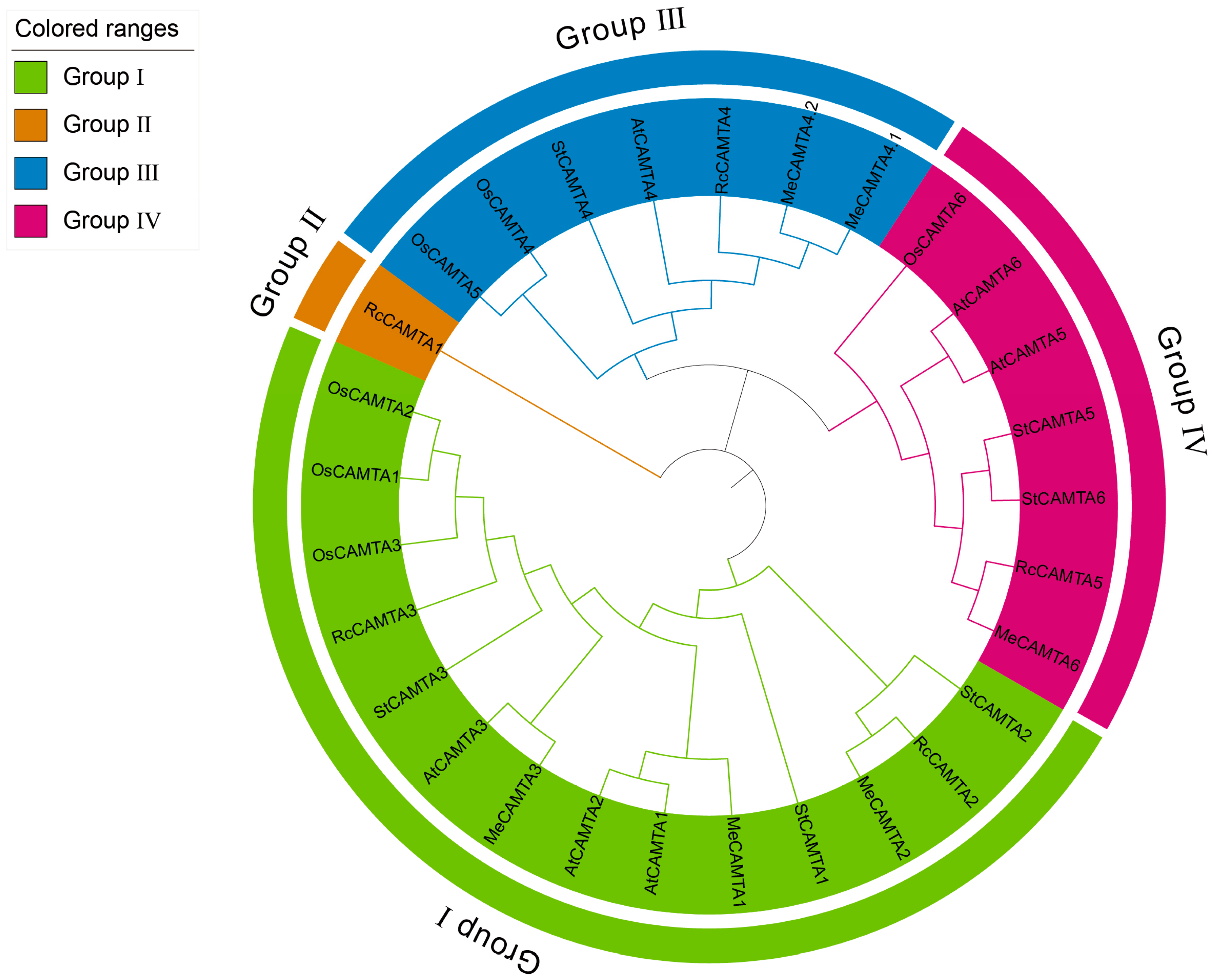
To explore the evolutionary relationships of the CAMTA gene family in cassava, a phylogenetic tree was constructed using homologous protein sequences from Arabidopsis thaliana and Oryza sativa with the Neighbor-Joining (NJ) method (Figure 1). The results revealed that the six MeCAMTA members were classified into three subfamilies. Group I included MeCAMTA1, MeCAMTA2, and MeCAMTA3; Group III comprised MeCAMTA4.1 and MeCAMTA4.2; only MeCAMTA6 belongs to group IV. Notably, CAMTA proteins grouped within the same phylogenetic branch show high sequence homology, supporting the likelihood of conserved biological functions. In addition, the five species possess comparable numbers of CAMTA family members, indicating evolutionary conservation and implying that these genes likely perform essential biological roles.

2.3. Chromosomal Localization and Homology Analysis of MeCAMTAs

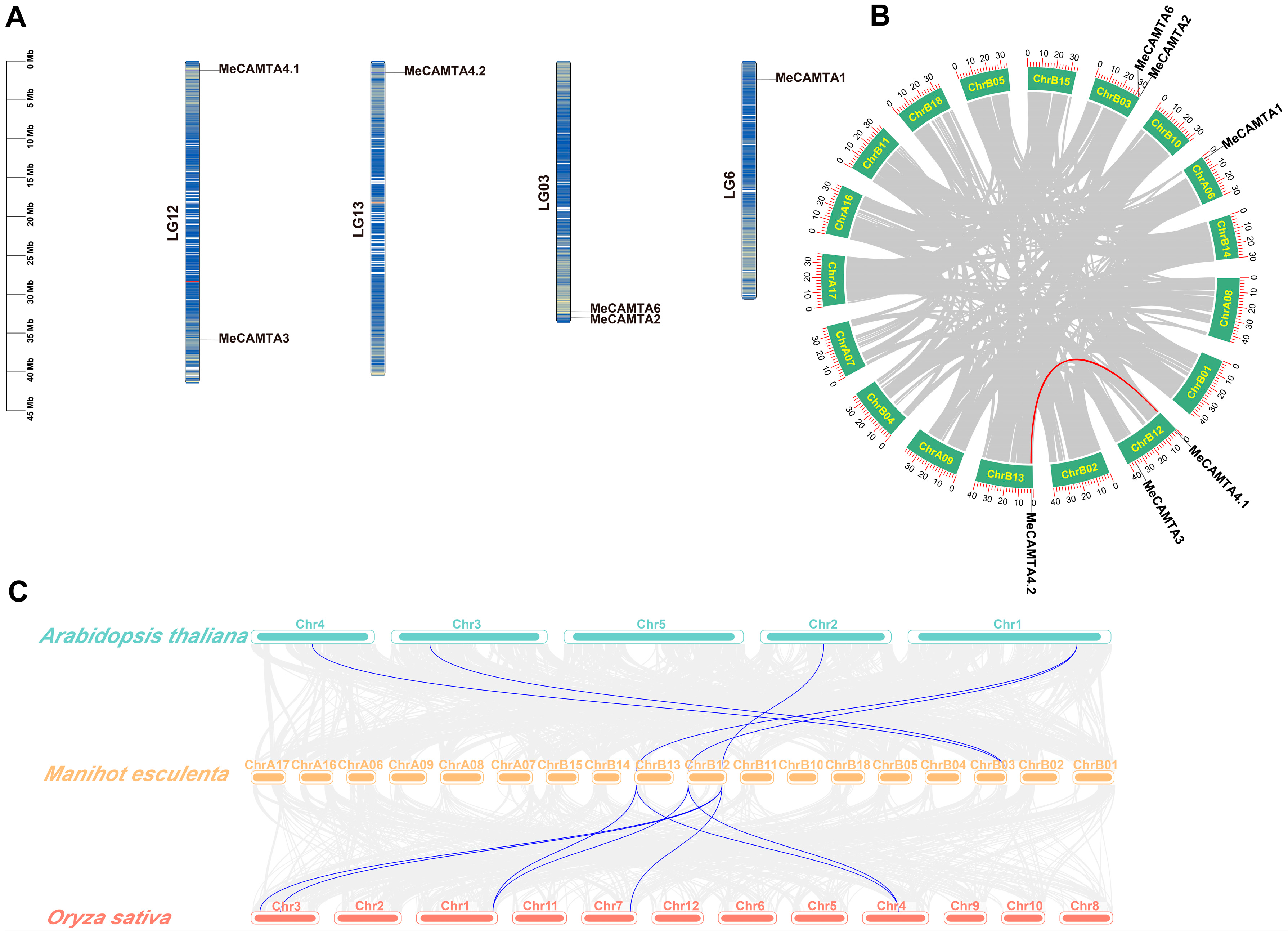
Chromosomal localization analysis revealed that MeCAMTA genes are unevenly distributed across four cassava chromosomes. Two chromosomes each harbor two genes: LG03 contains MeCAMTA2 and MeCAMTA6, while LG12 contains MeCAMTA3 and MeCAMTA4.1. The remaining two chromosomes each contain one gene, with MeCAMTA1 located on LG6 and MeCAMTA4.2 on LG13 (Figure 2A).
Homology analysis of the cassava T2T genome using MCScanX in TBtools v2.114 identified a pair of duplicated genes (MeCAMTA4.1/MeCAMTA4.2), suggesting a gene duplication event in cassava (Figure 2B). We analyzed gene duplication events using the DupGen_finder tool. The results showed that one pair of gene pairs originated from the whole-genome duplication (WGD) event (MeCAMTA4.1/MeCAMTA4.2), and two pairs of gene pairs originated from transposition duplication (TRD) (MeCAMTA1/MeCAMTA3 and MeCAMTA2/MeCAMTA3). Furthermore, to further investigate the evolutionary selection pressure on duplicated genes, we calculated the nonsynonymous (Ka) and synonymous (Ks) substitution rates and determined the Ka/Ks ratio for this duplicated gene pair (Table S2). The Ka/Ks ratio was 0.27, which is below 1.0, indicating that this gene pair has undergone purifying selection during the evolutionary process. These results suggest that this gene pair is highly evolutionarily conserved within MeCAMTA and may possess important functional roles. To further investigate the evolutionary conservation of the MeCAMTA family, collinearity analysis was performed with dicotyledonous (Arabidopsis thaliana), monocotyledonous (Oryza sativa), and Solanum tuberosum species (Figure 2C and Figure S2). The results revealed five orthologous gene pairs between Manihot esculenta and Arabidopsis thaliana, seven between Manihot esculenta and Oryza sativa, and eight between Manihot esculenta and Solanum tuberosum. These findings reveal that the CAMTA genes in Manihot esculenta, Arabidopsis thaliana, Solanum tuberosum, and Oryza sativa exhibit high conservation and evolutionary homology.

2.4. Structural Features of the MeCAMTA Gene Family

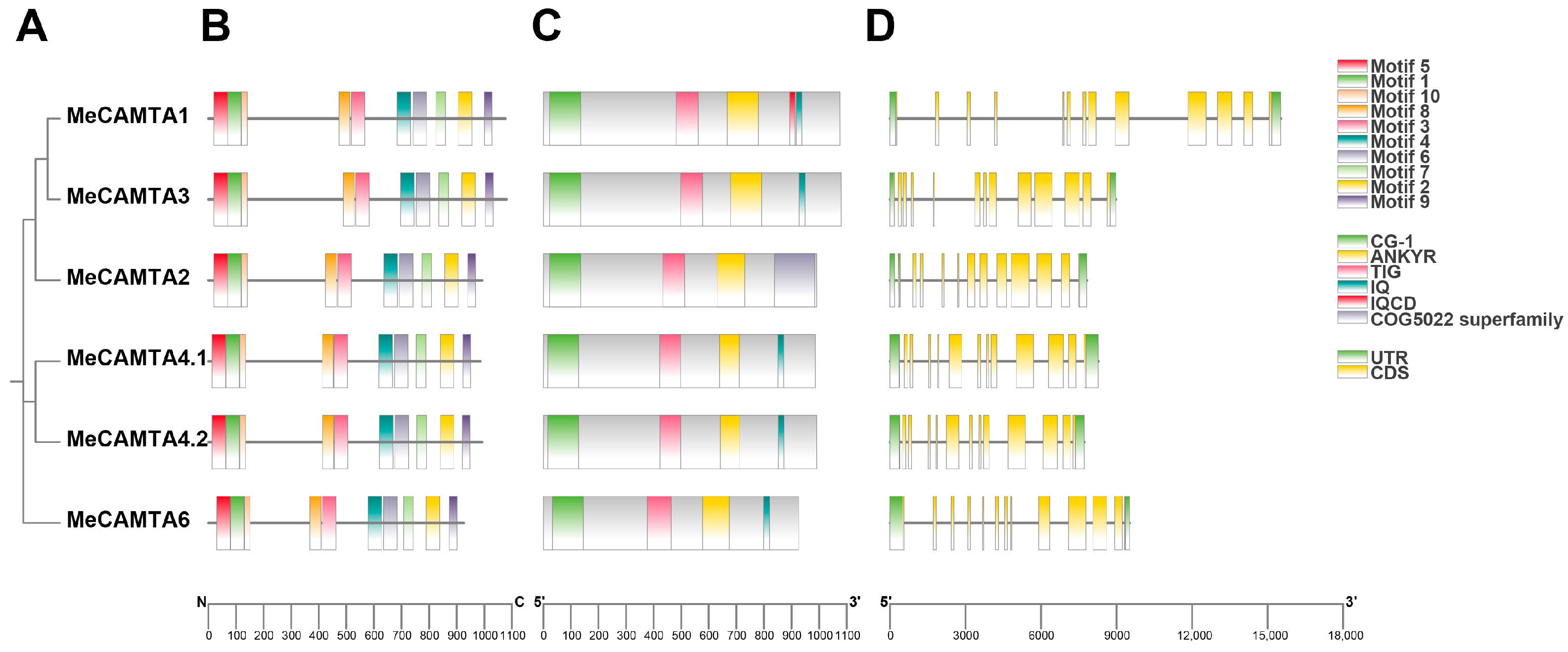
To explore the structural characteristics of MeCAMTA genes, we analyzed their phylogenetic relationships (Figure 3A), conserved motifs, conserved domains, and gene structures using the MEME online tool and TBtools v2.114. The results showed that all MeCAMTA members contained 10 conserved motifs, designated as Motifs 1–10 (Figure 3B). In terms of conserved domains, except for MeCAMTA2, all other members contained four typical domains: CG-1, TIG, ANK (Ankyrin repeat), and IQ. Interestingly, MeCAMTA2 harbored a unique functional domain belonging to the COG5022 superfamily (Figure 3C). Gene structure analysis revealed that the number of exons in MeCAMTA gene family members ranged from 12 to 13, while the number of introns varied between 11 to 12 (Figure 3D). These results indicate that MeCAMTAs are relatively conserved during evolution.

2.5. Analysis of Cis-Acting Elements in MeCAMTAs

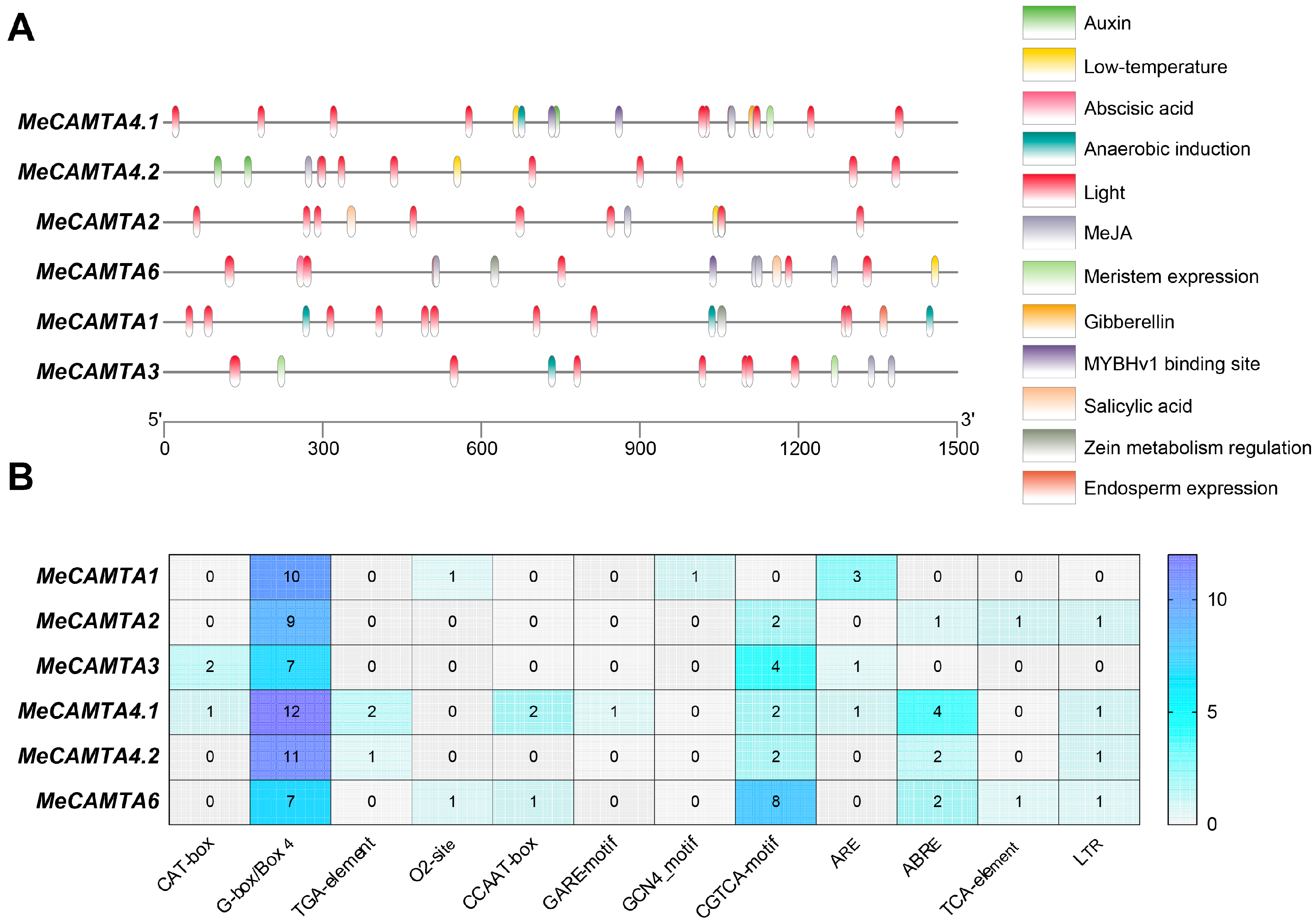
Using the PlantCARE online tool to predict and analyze the promoter region 1500 bp upstream of the transcription start site of the MeCAMTA gene, we identified a total of 107 cis-acting elements in the promoter region of MeCAMTAs (Figure 4A). These mainly include abiotic stress-responsive elements (12), such as low temperature (LTR), anaerobic (ARE), and drought (CCAAT-box); hormone-responsive elements (32), such as SA (TCA-element), abscisic acid (ABA) (ABRE), methyl jasmonate (MeJA) (CGTCA-motif and TGACG-motif), gibberellin (GA) (GARE-motif), and auxin (IAA) (TGA-element); growth and development-responsive elements (6), such as meristem (CAT-box), endosperm (GCN4_motif), and storage (O2-site); and light-responsive elements (56), such as G-box, Box 4, etc. (Figure 4B). The results indicate that MeCAMTAs play important roles in physiological processes involved in plant growth and development, abiotic stress responses, and hormone responses.

2.6. Predicted Protein–Protein Interaction Network of MeCAMTAs

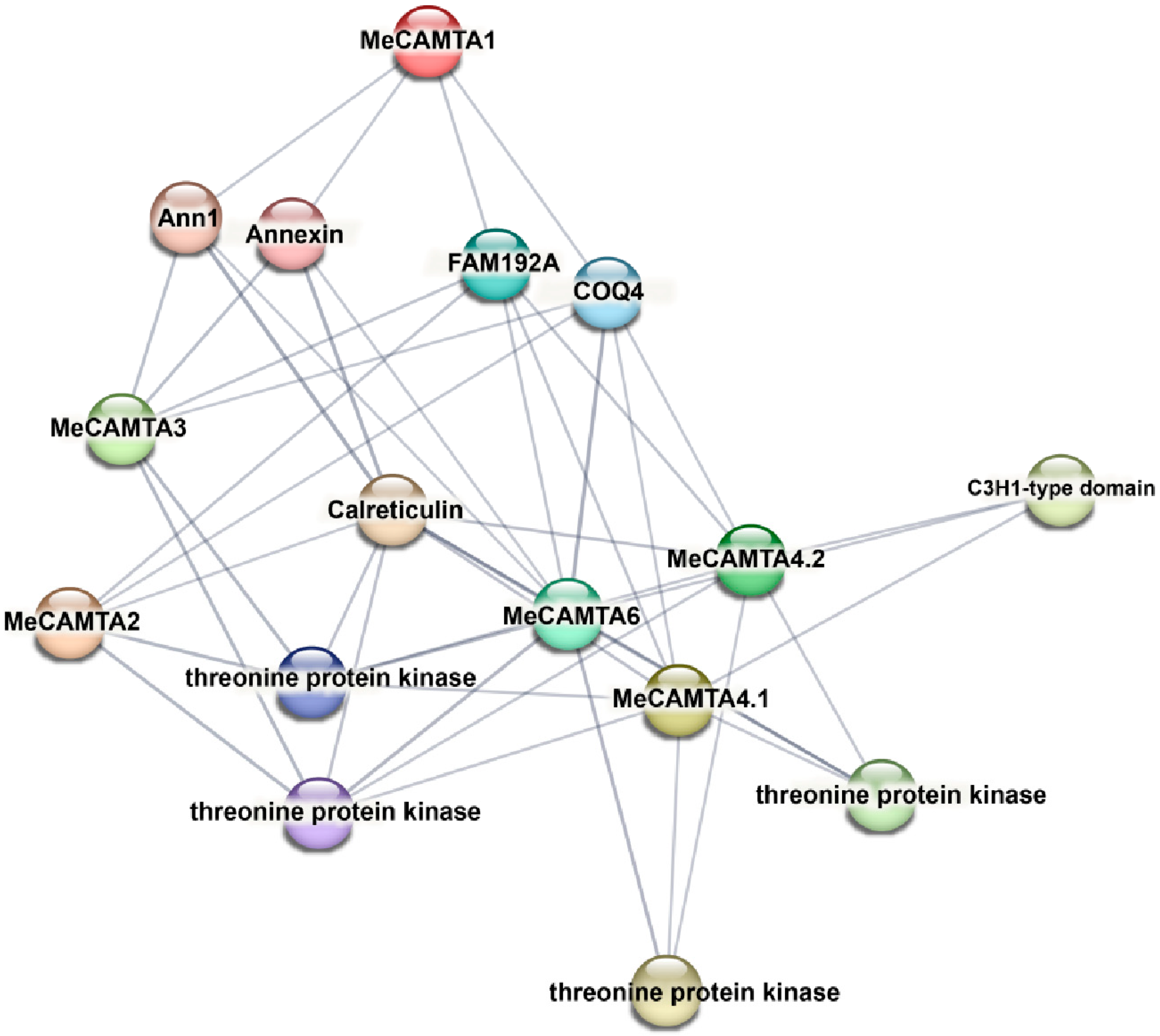
The interaction networks of MeCAMTA proteins were predicted using the STRING database (Figure 5). The results showed that MeCAMTA1 and MeCAMTA3 interacted with ANN1, Annexin, FAM192A, and COQ4; MeCAMTA2 and MeCAMTA6 both interacted with threonine protein kinase, calreticulin, FAM192A, and COQ4, while MeCAMTA4.1 and MeCAMTA4.2 interacted with threonine protein kinase, calreticulin, FAM192A, COQ4, and a C3H1-type domain protein. Overall, most of the interacting proteins are associated with Ca2+ signal transduction, suggesting that this interaction network provides important insights into the potential functions of MeCAMTAs.

2.7. Tissue-Specific Expression Profiles of MeCAMTA Genes

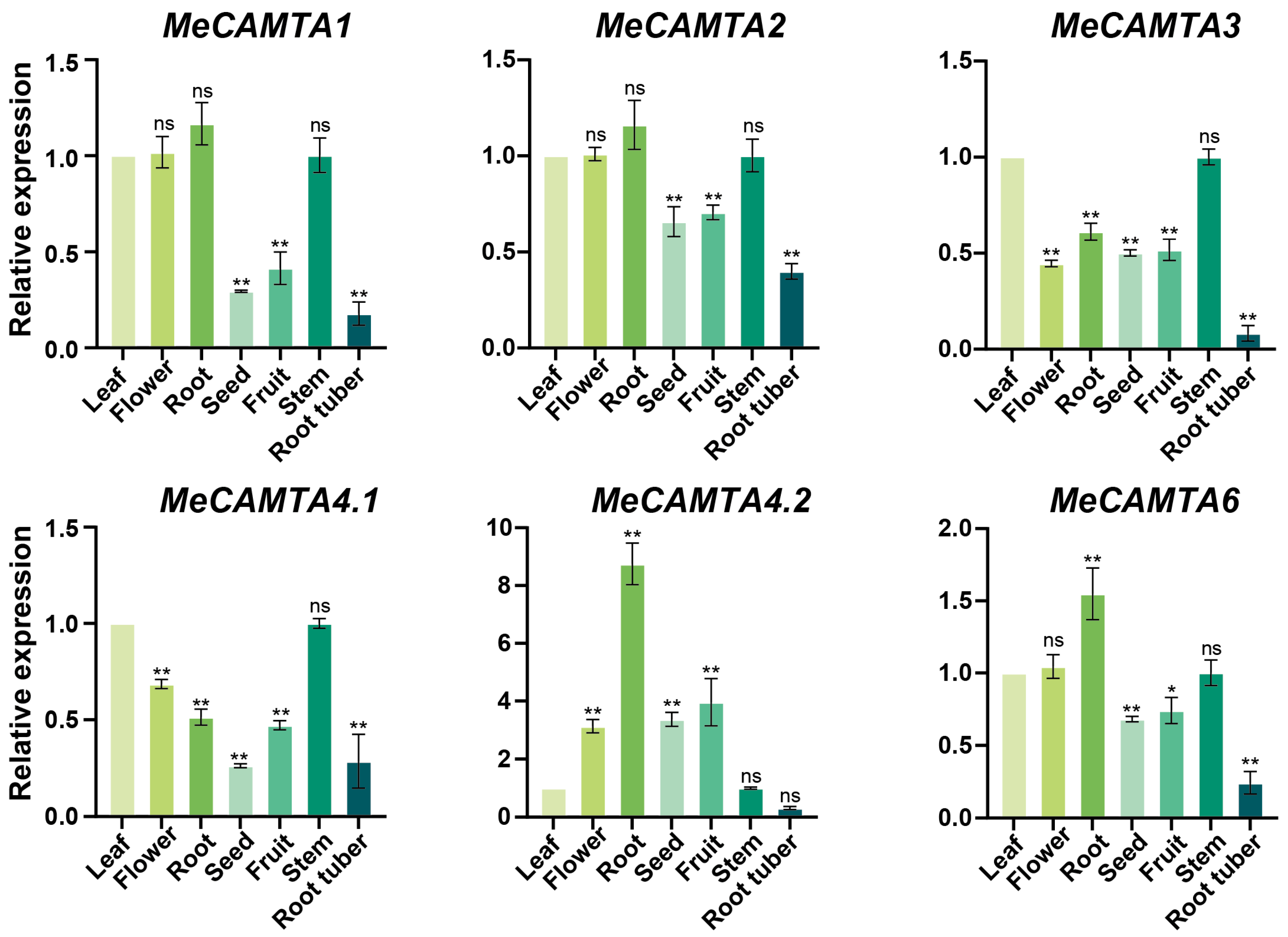
To investigate the tissue-specific expression patterns of MeCAMTAs, we examined their transcript levels in leaves, flowers, roots, seeds, fruits, stems, and root tubers (Figure 6). The results revealed distinct expression profiles among MeCAMTA family members. MeCAMTA1, MeCAMTA2, MeCAMTA4.2, and MeCAMTA6 showed the highest expression in roots but the lowest in root tubers. In contrast, MeCAMTA3 and MeCAMTA4.1 exhibited peak expression in stems. These findings suggest that MeCAMTA3 and MeCAMTA4.1 may play major roles in stem development, while MeCAMTA1, MeCAMTA2, MeCAMTA4.2, and MeCAMTA6 may be primarily involved in root growth and function, highlighting their potential roles in vegetative growth regulation.

2.8. Expression Analysis of MeCAMTAs Under Different Treatments

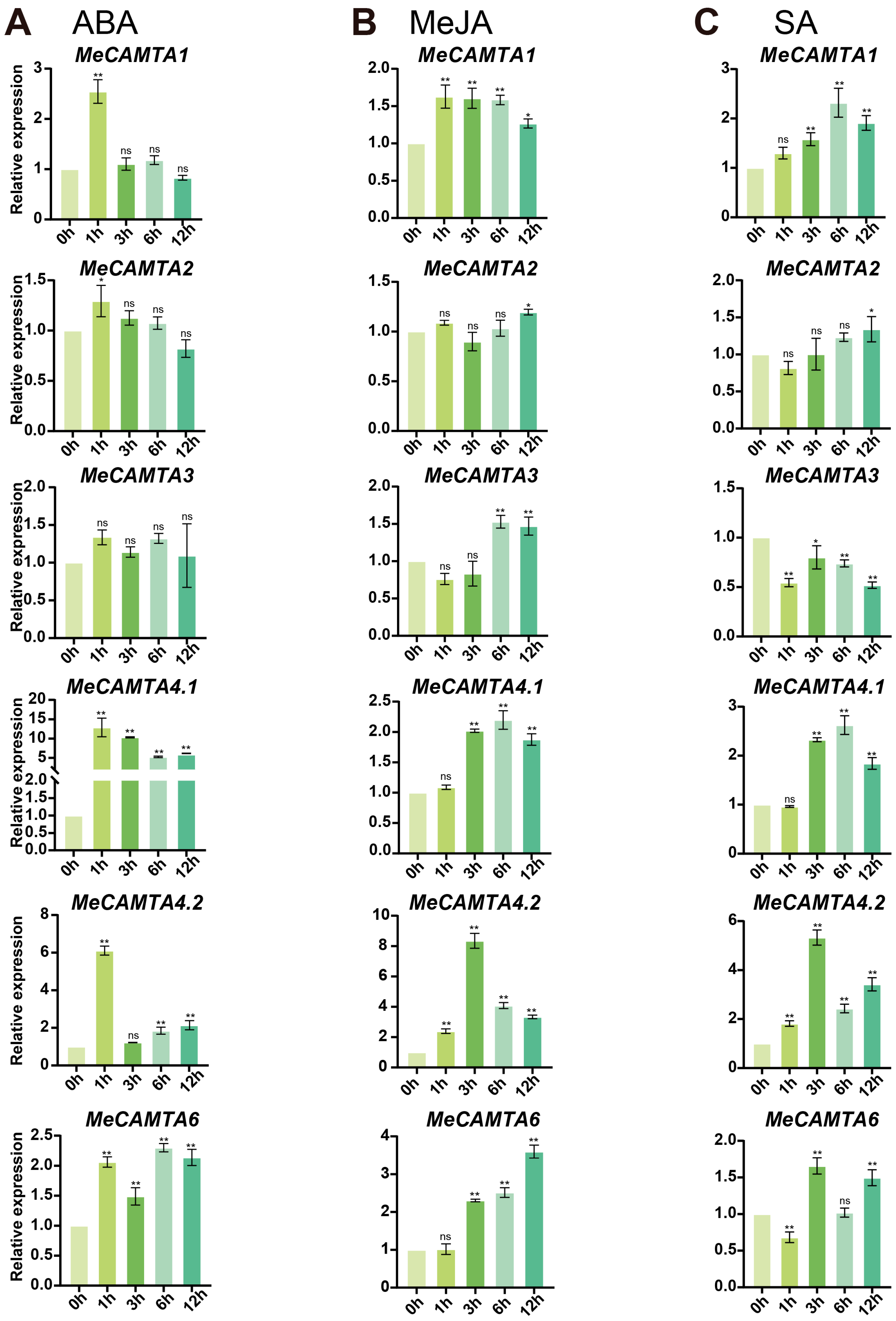
To investigate the expression patterns of MeCAMTAs under different treatments, we performed qRT-PCR analysis. Under ABA treatment, the expression patterns of MeCAMTA1, MeCAMTA2, and MeCAMTA4.1 showed a trend of first increasing and then decreasing, while MeCAMTA4.2 and MeCAMTA6 exhibited an expression pattern of first increasing, then decreasing, and then increasing again. Among them, MeCAMTA4.1 and MeCAMTA6 were significantly induced at different time points, whereas MeCAMTA3 was not induced at any time point (Figure 7A). Under MeJA treatment, the expression trends of MeCAMTA1, MeCAMTA4.1, and MeCAMTA4.2 first increased and then decreased; MeCAMTA2 and MeCAMTA3 first decreased and then increased; and the expression pattern of MeCAMTA6 showed an increasing trend. Among them, MeCAMTA1 and MeCAMTA4.2 responded significantly at different time points of MeJA treatment (Figure 7B). Under SA treatment, the expression patterns of MeCAMTA1, MeCAMTA4.1, and MeCAMTA4.2 showed a trend of first increasing and then decreasing; the expression trends of MeCAMTA3 and MeCAMTA6 first decreased, then increased, and then decreased again; and MeCAMTA2 exhibited an expression trend of first decreasing and then increasing. Among them, MeCAMTA4.2 responded significantly to SA at different treatment time points (Figure 7C). These results indicate that most members of MeCAMTAs are widely involved in the responses to ABA, MeJA, and SA hormone signals, especially MeCAMTA4.1 and MeCAMTA4.2, which may play important roles in the response of cassava to environmental stresses.
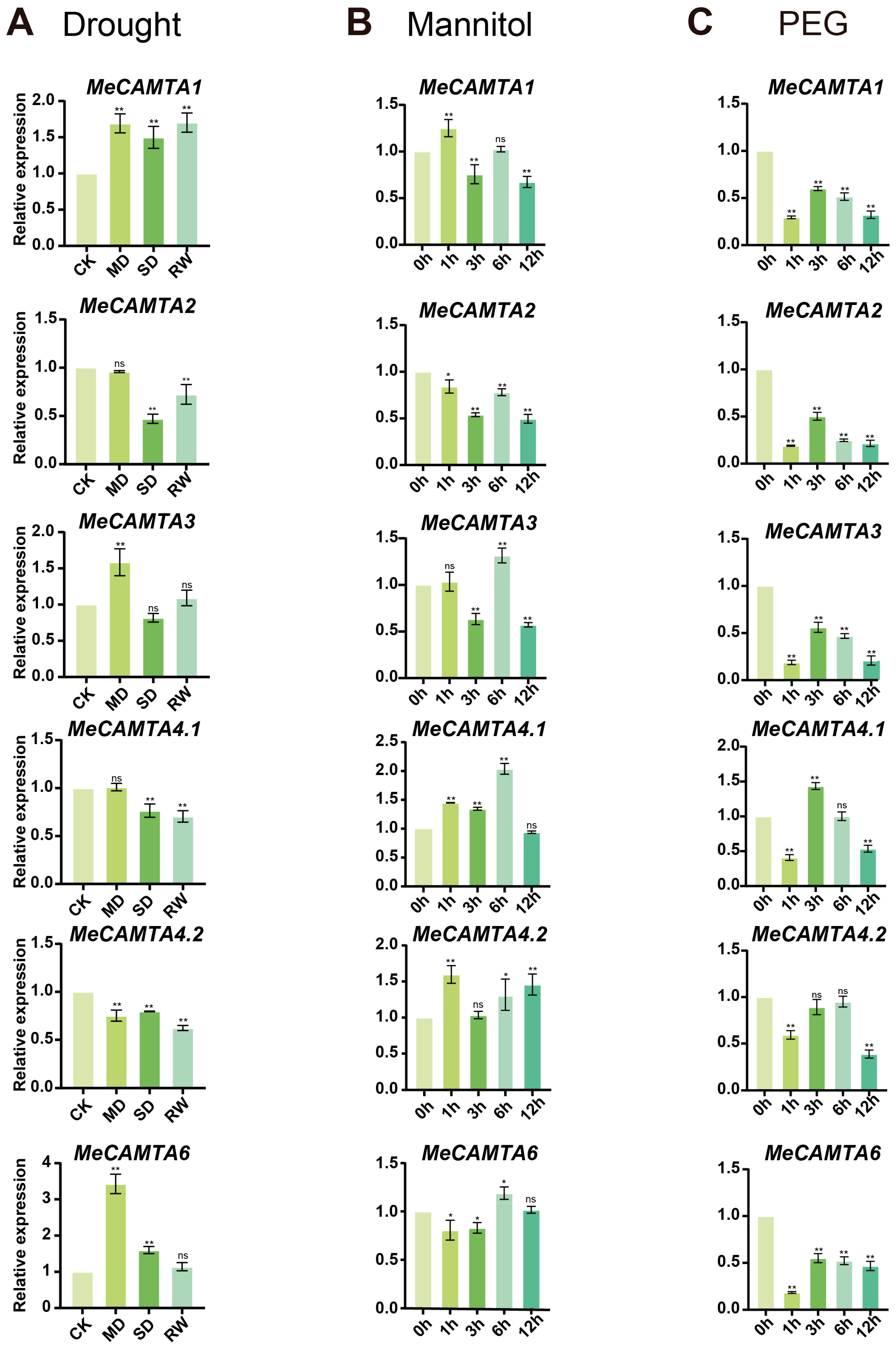
Under drought treatment, the expression trends of MeCAMTA1, MeCAMTA3, and MeCAMTA6 generally showed a trend of first increasing and then decreasing; the expressions of MeCAMTA4.1 and MeCAMTA4.2 showed a downward trend, while the expression pattern of MeCAMTA2 showed a trend of first decreasing and then increasing. It is worth noting that the expression level of MeCAMTA1 was significantly upregulated at different time points under drought treatment, while the expressions of MeCAMTA2, MeCAMTA4.1, and MeCAMTA4.2 were inhibited (Figure 8A). Under Mannitol treatment, the expression trends of MeCAMTA2, MeCAMTA3, and MeCAMTA6 generally showed a trend of first decreasing, then increasing, and then decreasing again; the expressions of MeCAMTA1, MeCAMTA4.1, and MeCAMTA4.2 generally showed an “increasing–decreasing–increasing” trend. Among them, the expressions of MeCAMTA4.1 and MeCAMTA4.2 were significantly upregulated at all three different time points, while the expression of MeCAMTA2 was inhibited (Figure 8B). Under PEG treatment, the expression patterns of all MeCAMTAs showed a trend of first decreasing, then increasing, and then decreasing again. Among them, the expression of MeCAMTA4.1 was significantly upregulated at 3 h, while the expressions of other members were all inhibited (Figure 8C). These results indicate that all members of MeCAMTA respond to drought, mannitol, and PEG. Among them, MeCAMTA1 may be a key gene involved in drought stress, while MeCAMTA4.1 and MeCAMTA4.2 may play important roles in osmotic stress and oxidative stress in cassava. In addition, through the transcriptome analysis of cassava drought treatment, it was found that the qRT-PCR trends of most members were consistent with those of the transcriptome, but the trends of some members, such as MeCAMTA4.1 and MeCAMTA4.2, were opposite, which might be due to different treatment times and different varieties (Figure S3).
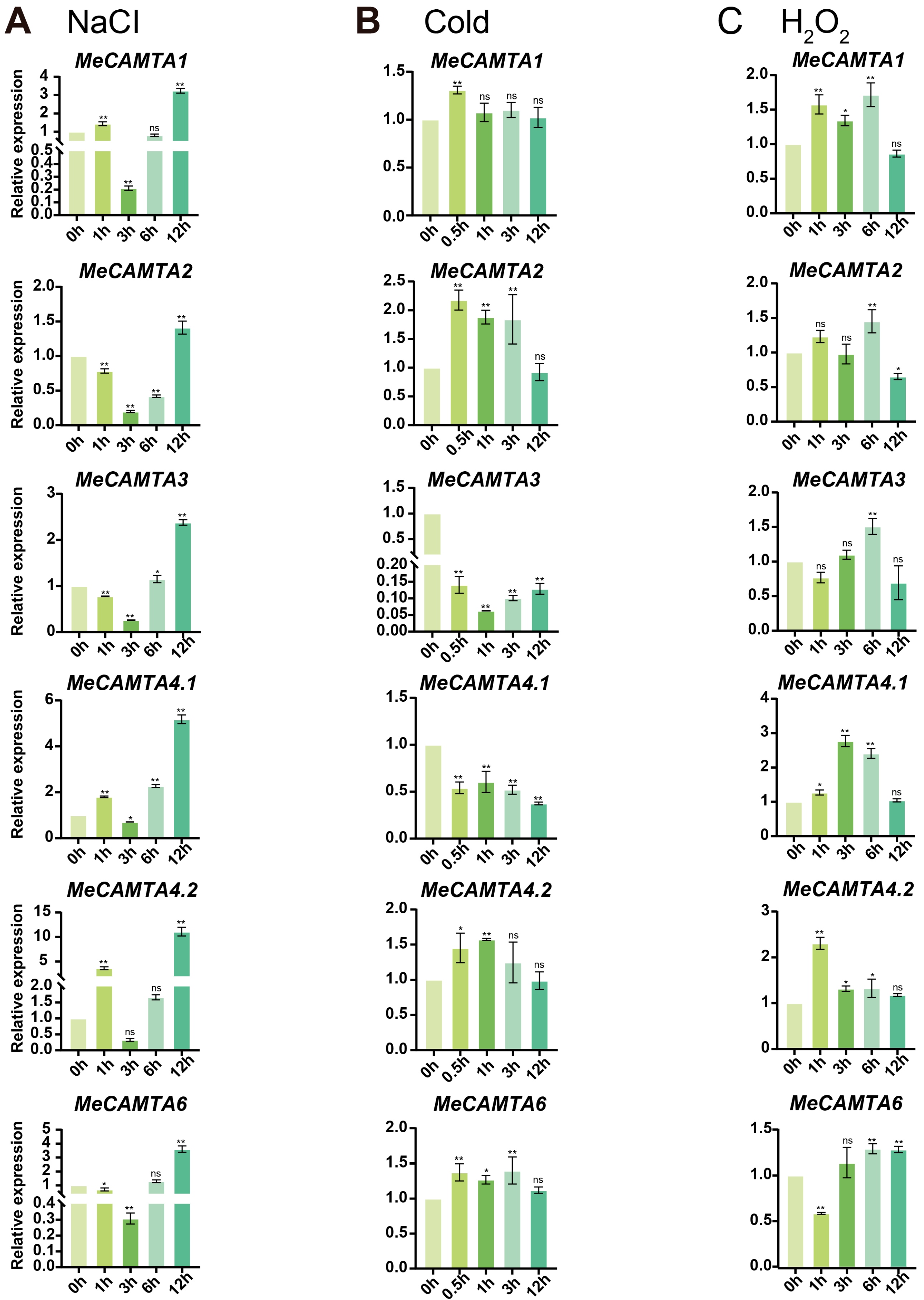
After 12 h of NaCl treatment, the expression levels of all members of the MeCAMTA family significantly increased, with MeCAMTA4.2 showing the highest expression level, which was upregulated by nearly 10-fold (Figure 9A). Within 0–12 h of cold treatment, the expression levels of MeCAMTA3 and MeCAMTA4.1 significantly decreased, while MeCAMTA2 and MeCAMTA6 were significantly upregulated between 0.5 and 3 h of treatment (Figure 9B). During 1–6 h of H2O2 treatment, the expression levels of MeCAMTA1 and MeCAMTA4.1 genes were upregulated, and the expression level of MeCAMTA4.1 gene was increased by approximately 2.5-fold at 3 h (Figure 9C). The above results indicate that all MeCAMTAs members respond to NaCl, low temperatures, and H2O2 treatments. It is worth noting that MeCAMTA1, MeCAMTA4.1, and MeCAMTA4.2 may play important roles in salinity stress and oxidative stress regulation of cassava, while MeCAMTA2 and MeCAMTA6 may be the key genes for cassava to respond to low-temperature stress.

2.9. Phenotype and Expression Patterns of MeCAMTA Genes in Cassava Under Drought Stress

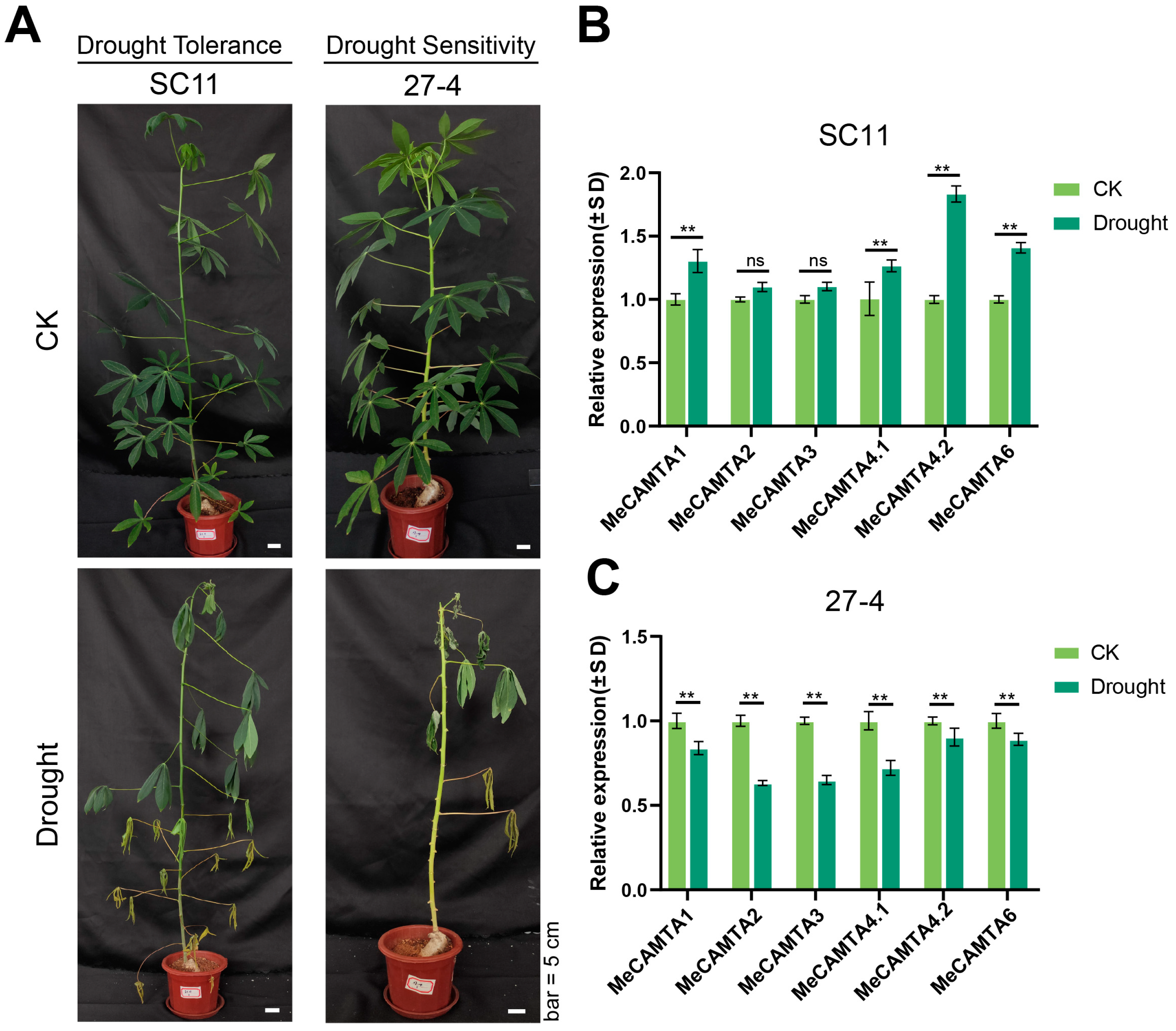
To identify cassava germplasms with contrasting drought responses, we first performed a preliminary drought-tolerance evaluation under controlled drought stress. From this screen, we selected two representative lines showing opposite phenotypes: a drought-tolerant line (SC11) and a drought-sensitive line (27-4). Subsequently, more detailed phenotypic analyses confirmed that, under drought stress, the sensitive line displayed markedly greater leaf wilting than the tolerant line (Figure 10A). To investigate whether CAMTA family members are associated with these contrasting responses, we measured MeCAMTA expression in leaves of the two lines by qRT-PCR. In the drought-tolerant line SC11, four MeCAMTA genes (MeCAMTA1, MeCAMTA4.1, MeCAMTA4.2, and MeCAMTA6) were significantly induced by drought (Figure 10B). In contrast, in the drought-sensitive line 27-4, the expression of all surveyed MeCAMTA genes was significantly repressed under the same conditions (Figure 10C). In conclusion, MeCAMTA1, MeCAMTA4.1, MeCAMTA4.2, and MeCAMTA6 show opposite expression patterns in two different germplasms with drought responses, indicating that MeCAMTA1, MeCAMTA4.1, MeCAMTA4.2, and MeCAMTA6 may have important biological functions in cassava drought stress.

3. Discussion

Currently, CAMTA genes have been widely identified in various plants. CAMTA was first discovered in tobacco [24] and subsequently identified in Arabidopsis thaliana [25], Oryza sativa [26], Solanum lycopersicum [27], Vitis vinifera [28], Zea mays [29], and Avena sativa [6]. Abiotic stress significantly impacts plant growth, development, and yield [6]. Studies have shown that CAMTA genes play important roles in plant biotic and abiotic stress responses [21,22,23,30]. Research on CAMTA in cassava’s stress resistance remains limited, and the identification of MeCAMTAs is of great significance for improving cassava’s stress tolerance.
This study identified six CAMTA members from the first T2T genome of cassava (Table 1), the same number as in Arabidopsis thaliana [25], while the number of CAMTAs in wheat reaches 15 [31]. It is inferred that this may be due to gene loss during evolution or differences arising from Arabidopsis thaliana and cassava being diploids, while wheat is a hexaploid. Subcellular in silico localization analysis indicates that all MeCAMTA members are localized in the nucleus. Meanwhile, studies in other species also support this finding, such as teak TgCAMTAs, which are similarly localized in the nucleus [32]. This aligns with their functional characteristics as CAMTA transcription factors.
Phylogenetic and homologous analyses reveal that the MeCAMTAs family can be divided into three distinct branches (Figure 1). Notably, each branch includes cassava, Oryza sativa, and Arabidopsis thaliana proteins, with cassava CAMTAs showing similar homology to both the dicot Arabidopsis thaliana and the monocot Oryza sativa. The results indicate that CAMTA is relatively conserved during plant evolution (Figure 2B). Analysis of conserved motifs and gene structures revealed that MeCAMTAs members contain 12 to 13 exons and 11 to 12 introns, all harboring 10 conserved motifs, suggesting that MeCAMTAs share similar gene structures and identical conserved motifs (Figure 3B,D). Additionally, except for MeCAMTA2, which lacks one IQ domain, all other members possess CG-1, TIG, ANK (Ankyrin repeat), and IQ domains (Figure 3C). These domain composition features demonstrate that CAMTAs constitute a highly conserved gene family evolutionarily.
Cis-acting elements in the promoter region can reflect the expression regulation of related genes [33], thereby modulating plant growth, development, and environmental adaptability. In this process, transcription factors play a central role, among which CAMTAs regulate gene expression by specifically recognizing and binding to cis-acting elements in the promoter regions of target genes. The promoter regions of the cassava CAMTAs gene family contain various cis-acting elements related to abiotic stress, hormone response, and plant growth and development, such as LTR response elements, ARE response elements, CCAAT-box response elements, TCA-element response elements, ABRE response elements, CGTCA-motif response elements, GARE-motif response elements, TGA-element response elements, CAT-box response elements, GCN4_motif response elements, and O2-site response elements (Figure 4B).
Meanwhile, studies have shown that the AtCAMTA1 mutant exhibits significantly inhibited root growth and development, increased sensitivity, and a markedly reduced survival rate under drought conditions, forming a sharp contrast with wild-type plants. These phenotypic differences suggest that AtCAMTA1 may participate in plant drought stress response by activating the ABA signaling pathway [21]. Additionally, AtCAMTA6 may regulate salinity stress tolerance during seed germination through the ABA signaling pathway [34]. Protein–protein interaction network prediction analysis revealed that MeCAMTA1 and MeCAMTA3 interact with ANN1/Annexin. It has been reported that under high-temperature and drought stress, OsANN1 enhances plant stress tolerance by mediating antioxidant enzymes [35].
Tissue expression pattern analysis showed that MeCAMTAs are expressed in leaf, flower, root, seed, fruit, stem, and root tuber (Figure 6), but primarily in root and stem. This suggests that the MeCAMTA family may play an important role in plant vegetative growth. Studies have also shown that the expression levels of all members of the CmoCAMTAs and CmaCAMTAs in the Cucurbitaceae family are higher in roots than in other tissues [36]. To investigate the expression patterns of MeCAMTAs under abiotic stress, cassava was analyzed under different treatments (MeJA, PEG, H2O2, ABA, SA, cold, NaCl, mannitol, and drought). The results indicated that the expression levels of MeCAMTA1, MeCAMTA3, and MeCAMTA6 were significantly upregulated under drought treatment (Figure 8A). Notably, similar results were observed in wheat, where the expression of TaCAMTA1b-B.1 significantly increased after drought stress [37]. Under SA treatment, the expression levels of the other five members, except MeCAMTA3, were significantly upregulated (Figure 7C). In citrus, eight CAMTA members showed upregulated expression after SA treatment [38]. In addition, under NaCl treatment, the expression levels of all MeCAMTA members were significantly upregulated (Figure 9A). Studies have also shown that under salinity stress, the expression of FaCAMTA3 in strawberries was significantly upregulated [39]. In addition, under drought stress, MeCAMTAs exhibit differential gene expression patterns between drought-tolerant and drought-sensitive germplasms. Among them, most MeCAMTA genes are significantly upregulated in drought-tolerant germplasms, while the expression patterns of all MeCAMTAs show a downregulated expression pattern in drought-sensitive germplasms (Figure 10). These results suggest that MeCAMTAs may play an important role in drought stress.
In summary, the MeCAMTA gene family plays a critical regulatory role in abiotic stress responses and hormone signaling in cassava, but its biological functions and molecular mechanisms still need further investigation.

4. Materials and Methods

4.1. Identification of Cassava CAMTA Gene Family Members and Analysis of Their Physicochemical Properties

The T2T genome and annotation documentation of cassava (2n = 36) cultivar ‘Xinxuan 048’ (XX048) were obtained from the National Genomics Data Center of China (https://ngdc.cncb.ac.cn/gwh/search/advanced/, accessed on 3 March 2025, accession number: PRJCA016162) [40]. The genome files and annotation documentation of Arabidopsis thaliana (TAIR10), Solanum tuberosum, and Oryza sativa (v7.0) were retrieved from the Phytozome v13 [41] database (https://phytozome-next.jgi.doe.gov/, accessed on 3 March 2025). The genome of Ricinus communis was derived from EupDB (http://eupdb.liu-lab.com/keywords_search/, accessed on 20 November 2025) [42]. The CAMTA protein sequences of Arabidopsis thaliana were derived from TAIR (https://www.arabidopsis.org/, accessed on 3 March 2025). Using TBtools v2.114 [43], BLAST search was performed on the cassava T2T protein sequences with all CAMTA protein sequences of Arabidopsis thaliana, setting the E-value threshold at 1 × 10⁻⁵. To enhance the accuracy of the appraisal candidate genes, the Arabidopsis thaliana CAMTA Protein sequences were submitted to the Pfam [44] database (https://pfam.xfam.org/, accessed on 3 March 2025) to obtain CAMTA domains including CG-1 (PF03859), TIG (PF01833), ANK (ankyrin repeat sequence) (PF12796), and IQ (PF00612) [45], and a hidden Markov model (HMM) search was conducted on the cassava T2T protein sequences. By comparing the results of BLAST and HMM, the candidate protein sequences were finally obtained. Subsequently, the obtained candidate protein sequences were submitted to NCBI-CDD [46] (https://www.ncbi.nlm.nih.gov/cdd, accessed on 5 March 2025) for validation, and the cassava CAMTA Protein sequences were ultimately obtained. The physicochemical properties of CAMTA proteins were predicted using the ExPASy [47] online website (https://web.expasy.org/protparam/, accessed on 5 March 2025). Subcellular localization prediction was performed using Cell-PLoc 2.0 [48] (http://www.csbio.sjtu.edu.cn/bioinf/Cell-PLoc-2/, accessed on 5 March 2025).

4.2. Phylogenetic Analysis of MeCAMTAs

Multiple sequence alignment of CAMTA protein sequences from cassava, Arabidopsis thaliana, and rice was performed using the ClustalW tool in MEGA11 [49] software with other parameters set to default. Subsequently, a phylogenetic tree was constructed using the Neighbor-joining (NJ) method in MEGA11 software, with Bootstrap validation parameters set to 1000 replicates and other parameters remaining at default values. The phylogenetic tree was beautified using iTOL v7 [50] (https://itol.embl.de/, accessed on 6 March 2025).

4.3. Chromosome Localization and Homology Analysis

The chromosomal positions of cassava CAMTA genes were visualized using TBtools v2.114. We analyzed the homology of CAMTA gene families among cassava, Arabidopsis thaliana, Solanum tuberosum, and Oryza sativa, as well as within the cassava CAMTA gene family itself, using the MCScanX [51] tool in TBtools v2.114, and visualized the results with TBtools v2.114.

4.4. Conserved Motifs, Functional Domains, and Gene Structure Analysis

The conserved motifs of MeCAMTA were identified using the MEME V 5.5.9 [52] online website (https://meme-suite.org/meme/, accessed on 10 March 2025), with the number of motifs set to 10 and other parameters kept at default settings. The structural domain files of the MeCAMTA gene family were predicted using the NCBI-CDD v3.20 online tool (https://www.ncbi.nlm.nih.gov/cdd, accessed on 10 March 2025). The gene structures were then extracted from the GFF3 files using TBtools v2.114 software, and the GFF3 files of the six genes are listed in the Supplementary Materials. Finally, the conserved motifs, functional domains, and gene structures were visualized using TBtools v2.114 software.

4.5. Promoter Cis-Acting Element Analysis

To analyze the cis-acting elements in the promoter regions, the 1.5 kb sequences upstream of the transcription start sites in the cassava genome were extracted using TBtools v2.114 software. The cis-acting elements of the MeCAMTA gene promoters were then analyzed using the PlantCARE [53] online tool (https://bioinformatics.psb.ugent.be/webtools/plantcare/html/, accessed on 15 March 2025) and the results were visualized using TBtools v2.114 software.

4.6. Protein–Protein Interaction Network Prediction

The String [54] online tool (https://string-db.org/, accessed on 20 March 2025) was used to predict potential protein–protein interactions of MeCAMTA, and the results were imported into Cytoscape v3.10.3 [55] for visualization refinement.

4.7. Plant Materials and Stress Treatments

There are three cassava varieties for experimental materials, including SC124, SC11, and 27-4. Among them, SC11 are drought-tolerant germplasms and 27-4 are drought-sensitive germplasms (all experiments were performed at Hainan University). Stem segments of approximately 3–4 cm in length were planted in plastic pots (16 cm in diameter × 14 cm in height) containing mixed soil (fine sand–vermiculite–nutrient soil = 1:1:1) and cultivated in a constant temperature and humidity greenhouse (growth conditions: light/dark = 16 h/8 h, 30 °C, 70% humidity) for 50 d for subsequent experiments.
The experimental materials were subjected to nine treatments representing hormone stimulation and various abiotic stresses. Hormone treatments included 100 μM MeJA, 100 μM ABA, and 5 mM SA. Abiotic stress treatments included 300 mM PEG and 300 mM mannitol (drought/osmotic stress), 200 mM NaCl (salinity stress), 10 mM H2O2 (oxidative stress), cold stress, and drought treatment. In addition, a 7-day drought stress assay was performed on drought-tolerant and drought-sensitive germplasms. After each treatment, cassava leaves were collected at different time points, rapidly frozen in liquid nitrogen, and stored at −80 °C until use. For plants grown under normal conditions, samples were collected from multiple tissues, including leaves, flowers, roots, seeds, fruits, and tubers, followed by immediate freezing in liquid nitrogen and storage at −80 °C. All treatments were conducted with three biological replicates.

4.8. RNA Extraction, cDNA Synthesis, and qRT-PCR Analysis

Total RNA was extracted from cassava using the Plant Total RNA Extraction Kit (Tiangen Biotech Co., Ltd., Beijing, China). Two micrograms of RNA were reverse-transcribed into cDNA using the Evo M-MLV Reverse Transcription Premix Kit (Accurate Biology Co., Ltd., Changsha, China). qRT-PCR was then performed using the Bio-Rad CFX96 system v2.3 (Bio-Rad, Singapore) and SYBR Green Pro Taq HS Premix qPCR Kit II (Accurate Biology Co., Ltd., Changsha, China). Each sample in the experiment was subjected to 3 biological replicates and 3 technical replicates to ensure the stability of the results. MeACTIN was used as the internal reference gene, and the relative expression level of the MeCAMTA gene was calculated using the 2−ΔΔCT method [56]. GraphPad Prism 9.5 was employed for statistical analysis of significant differences and to generate visual charts. The primers used in qRT-PCR are listed in Table S1. In addition, the RNA-seq data of cassava ‘KU50’ and ‘xx048’ under drought treatment was downloaded through the National Genomics Data Center of China (https://ngdc.cncb.ac.cn/gwh/search/advanced/, accessed on 20 November 2025, accession number: PRJNA385393).

5. Conclusions

This study identified six MeCAMTA family members based on the cassava T2T genome, distributed across four chromosomes. Systematic characterization of this family was accomplished by integrating analyses of gene structure, subcellular localization, conserved motifs, phylogenetic relationships, interaction networks, homology, and cis-acting elements. Tissue expression patterns revealed that MeCAMTAs exhibit significant organ specificity and are prominently expressed in roots and stems. qRT-PCR assays demonstrated that all MeCAMTA members could be significantly induced by at least one stress condition under MeJA, PEG, H2O2, ABA, SA, cold, NaCl, mannitol, and drought stress. In summary, the MeCAMTA family may play a key role in the abiotic stress and hormone responses of cassava. This study lays the foundation for further elucidating the gene function of MeCAMTA in abiotic stress.

Supplementary Materials

The following supporting information can be downloaded at: https://www.mdpi.com/article/10.3390/plants14243743/s1, Figure S1: Cassava of the 10 conserved motifs of MeCAMTA proteins; Figure S2: Collinearity analysis between cassava and solanum tuberosum; Figure S3: Cassava drought transcriptome analysis. Table S1: qPCR Primer List; Table S2: Ka, Ks, and Ka/Ks of MeCAMTA gene family.

Author Contributions

The authors confirm contribution to the paper as follows: study conception and design: X.Y. and X.G.; data collection: F.Y., C.L. and X.X.; analysis and interpretation of results: F.Y., X.Y. and X.G.; draft manuscript preparation: F.Y. All authors have read and agreed to the published version of the manuscript.

Funding

This study was supported by the Hainan Provincial Natural Science Foundation (324MS122), the National Natural Science Foundation of China (32360458), and the Startup Funds for the Double First-Class Disciplines of Crop Science at Hainan University (RZ2100003362), all of which contributed to the successful completion of this research.

Data Availability Statement

The original contributions presented in this study are included in the article/Supplementary Material. Further inquiries can be directed to the corresponding author(s).

Conflicts of Interest

The authors declare no conflicts of interest.

References

  1. Chisenga, S.M.; Workneh, T.S.; Bultosa, G.; Alimi, B.A. Progress in research and applications of cassava flour and starch: A review. J. Food Sci. Technol. 2019, 56, 2799–2813. [Google Scholar] [CrossRef] [PubMed]
  2. Yating, F.; Yijie, Z.; Nanfang, L.; Yinhua, C.; Kai, L. Diversity of entophytic bacteria in different tissues of cassava. J. Trop. Biol. 2024, 15, 141–149. [Google Scholar]
  3. Otun, S.; Escrich, A.; Achilonu, I.; Rauwane, M.; Lerma-Escalera, J.A.; Morones-Ramírez, J.R.; Rios-Solis, L. The future of cassava in the era of biotechnology in Southern Africa. Crit. Rev. Biotechnol. 2023, 43, 594–612. [Google Scholar] [CrossRef] [PubMed]
  4. Abotbina, W.; Sapuan, S.M.; Ilyas, R.A.; Sultan, M.T.H.; Alkbir, M.F.M.; Sulaiman, S.; Harussani, M.M.; Bayraktar, E. Recent Developments in Cassava (Manihot esculenta) Based Biocomposites and Their Potential Industrial Applications: A Comprehensive Review. Materials 2022, 15, 6992. [Google Scholar] [CrossRef]
  5. Mohidin, S.; Moshawih, S.; Hermansyah, A.; Asmuni, M.I.; Shafqat, N.; Ming, L.C. Cassava (Manihot esculenta Crantz): A Systematic Review for the Pharmacological Activities, Traditional Uses, Nutritional Values, and Phytochemistry. J. Evid. Based Integr. Med. 2023, 28, 2515690x231206227. [Google Scholar] [CrossRef]
  6. Yang, Y.; Li, J.; Yao, M.; Chen, S. Genome-Wide Identification of CAMTA Gene Family in Oat (Avena sativa) and Expression Analysis under Various Abiotic Stresses. Agronomy 2024, 14, 2053. [Google Scholar] [CrossRef]
  7. Zhu, J.K. Abiotic Stress Signaling and Responses in Plants. Cell 2016, 167, 313–324. [Google Scholar] [CrossRef]
  8. Lecourieux, D.; Ranjeva, R.; Pugin, A. Calcium in plant defence-signalling pathways. New Phytol. 2006, 171, 249–269. [Google Scholar] [CrossRef]
  9. Reddy, A.S.; Ali, G.S.; Celesnik, H.; Day, I.S. Coping with stresses: Roles of calcium- and calcium/calmodulin-regulated gene expression. Plant Cell 2011, 23, 2010–2032. [Google Scholar] [CrossRef]
  10. Reddy, A.S. Calcium: Silver bullet in signaling. Plant Sci. 2001, 160, 381–404. [Google Scholar] [CrossRef]
  11. Pirayesh, N.; Giridhar, M.; Ben Khedher, A.; Vothknecht, U.C.; Chigri, F. Organellar calcium signaling in plants: An update. Biochim. Biophys. Acta Mol. Cell Res. 2021, 1868, 118948. [Google Scholar] [CrossRef]
  12. Luan, S. The CBL-CIPK network in plant calcium signaling. Trends Plant Sci. 2009, 14, 37–42. [Google Scholar] [CrossRef]
  13. Kim, M.C.; Chung, W.S.; Yun, D.-J.; Cho, M.J. Calcium and Calmodulin-Mediated Regulation of Gene Expression in Plants. Mol. Plant 2009, 2, 13–21. [Google Scholar] [CrossRef]
  14. Du, L.; Yang, T.; Puthanveettil, S.V.; Poovaiah, B. Decoding of calcium signal through calmodulin: Calmodulin-binding proteins in plants. In Coding and Decoding of Calcium Signals in Plants; Springer: Berlin/Heidelberg, Germany, 2011; pp. 177–233. [Google Scholar]
  15. Zeng, H.; Xu, L.; Singh, A.; Wang, H.; Du, L.; Poovaiah, B.W. Involvement of calmodulin and calmodulin-like proteins in plant responses to abiotic stresses. Front. Plant Sci. 2015, 6, 600. [Google Scholar] [CrossRef] [PubMed]
  16. Snedden, W.A.; Fromm, H. Calmodulin as a versatile calcium signal transducer in plants. New Phytol. 2001, 151, 35–66. [Google Scholar] [CrossRef]
  17. Bouché, N.; Yellin, A.; Snedden, W.A.; Fromm, H. Plant-specific calmodulin-binding proteins. Annu. Rev. Plant Biol. 2005, 56, 435–466. [Google Scholar] [CrossRef] [PubMed]
  18. Zeng, H.; Zhu, Q.; Yuan, P.; Yan, Y.; Yi, K.; Du, L. Calmodulin and calmodulin-like protein-mediated plant responses to biotic stresses. Plant Cell Environ. 2023, 46, 3680–3703. [Google Scholar] [CrossRef]
  19. Rahman, H.; Yang, J.; Xu, Y.P.; Munyampundu, J.P.; Cai, X.Z. Phylogeny of Plant CAMTAs and Role of AtCAMTAs in Nonhost Resistance to Xanthomonas oryzae pv. oryzae. Front. Plant Sci. 2016, 7, 177. [Google Scholar] [CrossRef]
  20. Kim, Y.; Park, S.; Gilmour, S.J.; Thomashow, M.F. Roles of CAMTA transcription factors and salicylic acid in configuring the low-temperature transcriptome and freezing tolerance of Arabidopsis. Plant J. 2013, 75, 364–376. [Google Scholar] [CrossRef]
  21. Pandey, N.; Ranjan, A.; Pant, P.; Tripathi, R.K.; Ateek, F.; Pandey, H.P.; Patre, U.V.; Sawant, S.V. CAMTA 1 regulates drought responses in Arabidopsis thaliana. BMC Genom. 2013, 14, 216. [Google Scholar] [CrossRef] [PubMed]
  22. Meenakshi; Kumar, A.; Kumar, V.; Dubey, A.K.; Narayan, S.; Sawant, S.V.; Pande, V.; Shirke, P.A.; Sanyal, I. CAMTA transcription factor enhances salinity and drought tolerance in chickpea (Cicer arietinum L.). Plant Cell Tissue Organ Cult. (PCTOC) 2022, 148, 319–330. [Google Scholar] [CrossRef]
  23. Du, L.; Ali, G.S.; Simons, K.A.; Hou, J.; Yang, T.; Reddy, A.S.; Poovaiah, B.W. Ca2+/calmodulin regulates salicylic-acid-mediated plant immunity. Nature 2009, 457, 1154–1158. [Google Scholar] [CrossRef] [PubMed]
  24. Yang, T.; Poovaiah, B.W. An early ethylene up-regulated gene encoding a calmodulin-binding protein involved in plant senescence and death. J. Biol. Chem. 2000, 275, 38467–38473. [Google Scholar] [CrossRef] [PubMed]
  25. Bouché, N.; Scharlat, A.; Snedden, W.; Bouchez, D.; Fromm, H. A novel family of calmodulin-binding transcription activators in multicellular organisms. J. Biol. Chem. 2002, 277, 21851–21861. [Google Scholar] [CrossRef]
  26. Choi, M.S.; Kim, M.C.; Yoo, J.H.; Moon, B.C.; Koo, S.C.; Park, B.O.; Lee, J.H.; Koo, Y.D.; Han, H.J.; Lee, S.Y.; et al. Isolation of a calmodulin-binding transcription factor from rice (Oryza sativa L.). J. Biol. Chem. 2005, 280, 40820–40831. [Google Scholar] [CrossRef]
  27. Yang, T.; Peng, H.; Whitaker, B.D.; Conway, W.S. Characterization of a calcium/calmodulin-regulated SR/CAMTA gene family during tomato fruit development and ripening. BMC Plant Biol. 2012, 12, 19. [Google Scholar] [CrossRef]
  28. Shangguan, L.; Wang, X.; Leng, X.; Liu, D.; Ren, G.; Tao, R.; Zhang, C.; Fang, J. Identification and bioinformatic analysis of signal responsive/calmodulin-binding transcription activators gene models in Vitis vinifera. Mol. Biol. Rep. 2014, 41, 2937–2949. [Google Scholar] [CrossRef]
  29. Yue, R.; Lu, C.; Sun, T.; Peng, T.; Han, X.; Qi, J.; Yan, S.; Tie, S. Identification and expression profiling analysis of calmodulin-binding transcription activator genes in maize (Zea mays L.) under abiotic and biotic stresses. Front. Plant Sci. 2015, 6, 576. [Google Scholar] [CrossRef]
  30. Finkler, A.; Ashery-Padan, R.; Fromm, H. CAMTAs: Calmodulin-binding transcription activators from plants to human. FEBS Lett. 2007, 581, 3893–3898. [Google Scholar] [CrossRef]
  31. Yang, F.; Dong, F.S.; Hu, F.H.; Liu, Y.W.; Chai, J.F.; Zhao, H.; Lv, M.Y.; Zhou, S. Genome-wide identification and expression analysis of the calmodulin-binding transcription activator (CAMTA) gene family in wheat (Triticum aestivum L.). BMC Genet. 2020, 21, 105. [Google Scholar] [CrossRef]
  32. Zhou, W.; Du, J.; Jiao, R.; Wang, X.; Fang, T.; Huang, G. Genome-wide identification of CAMTA gene family in teak (Tectona grandis) and functional characterization of TgCAMTA1 and TgCAMTA3 in cold tolerance. BMC Plant Biol. 2025, 25, 35. [Google Scholar] [CrossRef]
  33. Schmitz, R.J.; Grotewold, E.; Stam, M. Cis-regulatory sequences in plants: Their importance, discovery, and future challenges. Plant Cell 2022, 34, 718–741. [Google Scholar] [CrossRef] [PubMed]
  34. Shkolnik, D.; Finkler, A.; Pasmanik-Chor, M.; Fromm, H. CALMODULIN-BINDING TRANSCRIPTION ACTIVATOR 6: A Key Regulator of Na(+) Homeostasis during Germination. Plant Physiol. 2019, 180, 1101–1118. [Google Scholar] [CrossRef] [PubMed]
  35. Qiao, B.; Zhang, Q.; Liu, D.; Wang, H.; Yin, J.; Wang, R.; He, M.; Cui, M.; Shang, Z.; Wang, D.; et al. A calcium-binding protein, rice annexin OsANN1, enhances heat stress tolerance by modulating the production of H2O2. J. Exp. Bot. 2015, 66, 5853–5866. [Google Scholar] [CrossRef]
  36. Yuan, J.; Shen, C.; Chen, B.; Shen, A.; Li, X. Genome-Wide Characterization and Expression Analysis of CAMTA Gene Family Under Salt Stress in Cucurbita moschata and Cucurbita maxima. Front. Genet. 2021, 12, 647339. [Google Scholar] [CrossRef] [PubMed]
  37. Wang, D.; Wu, X.; Gao, S.; Zhang, S.; Wang, W.; Fang, Z.; Liu, S.; Wang, X.; Zhao, C.; Tang, Y. Systematic Analysis and Identification of Drought-Responsive Genes of the CAMTA Gene Family in Wheat (Triticum aestivum L.). Int. J. Mol. Sci. 2022, 23, 4542. [Google Scholar] [CrossRef]
  38. Zhang, J.; Pan, X.; Ge, T.; Yi, S.; Lv, Q.; Zheng, Y.; Ma, Y.; Liu, X.; Xie, R. Genome-wide identification of citrus CAMTA genes and their expression analysis under stress and hormone treatments. J. Hortic. Sci. Biotechnol. 2019, 94, 331–340. [Google Scholar] [CrossRef]
  39. Leng, X.; Han, J.; Wang, X.; Zhao, M.; Sun, X.; Wang, C.; Fang, J. Characterization of a Calmodulin-binding Transcription Factor from Strawberry (Fragaria × ananassa). Plant Genome 2015, 8, plantgenome2014.2008.0039. [Google Scholar] [CrossRef]
  40. Xu, X.D.; Zhao, R.P.; Xiao, L.; Lu, L.; Gao, M.; Luo, Y.H.; Zhou, Z.W.; Ye, S.Y.; Qian, Y.Q.; Fan, B.L.; et al. Telomere-to-telomere assembly of cassava genome reveals the evolution of cassava and divergence of allelic expression. Hortic. Res. 2023, 10, uhad200. [Google Scholar] [CrossRef]
  41. Goodstein, D.M.; Shu, S.; Howson, R.; Neupane, R.; Hayes, R.D.; Fazo, J.; Mitros, T.; Dirks, W.; Hellsten, U.; Putnam, N.; et al. Phytozome: A comparative platform for green plant genomics. Nucleic Acids Res. 2012, 40, D1178–D1186. [Google Scholar] [CrossRef]
  42. Jiazhi, L.; Yan, L.; Jing, L.; Wen, C.; Bangzhen, P.; Aizhong, L.; ZengFu, X.; Wei, X.; Changning, L. EupDB: An integrative and comprehensive functional genomics data hub for Euphorbiaceae plants. Plant Commun. 2023, 5, 100683. [Google Scholar] [CrossRef]
  43. Chen, C.; Chen, H.; Zhang, Y.; Thomas, H.R.; Frank, M.H.; He, Y.; Xia, R. TBtools: An Integrative Toolkit Developed for Interactive Analyses of Big Biological Data. Mol. Plant 2020, 13, 1194–1202. [Google Scholar] [CrossRef]
  44. Mistry, J.; Chuguransky, S.; Williams, L.; Qureshi, M.; Salazar, G.A.; Sonnhammer, E.L.L.; Tosatto, S.C.E.; Paladin, L.; Raj, S.; Richardson, L.J.; et al. Pfam: The protein families database in 2021. Nucleic Acids Res. 2021, 49, D412–D419. [Google Scholar] [CrossRef] [PubMed]
  45. Noman, M.; Aysha, J.; Ketehouli, T.; Yang, J.; Du, L.; Wang, F.; Li, H. Calmodulin binding transcription activators: An interplay between calcium signalling and plant stress tolerance. J. Plant Physiol. 2021, 256, 153327. [Google Scholar] [CrossRef]
  46. Jin, B.; Hu, X.; Li, N.; Li, X.; Chen, Z.; Zhao, X.; Wu, X. Genome-Wide Identification and Expression Pattern of the NAC Gene Family in Panax notoginseng. Genes 2025, 16, 320. [Google Scholar] [CrossRef] [PubMed]
  47. Wilkins, M.R.; Gasteiger, E.; Bairoch, A.; Sanchez, J.C.; Williams, K.L.; Appel, R.D.; Hochstrasser, D.F. Protein identification and analysis tools in the ExPASy server. Methods Mol. Biol. 1999, 112, 531–552. [Google Scholar]
  48. Chou, K.C.; Shen, H.B. Cell-PLoc: A package of Web servers for predicting subcellular localization of proteins in various organisms. Nat. Protoc. 2008, 3, 153–162. [Google Scholar] [CrossRef]
  49. Tamura, K.; Stecher, G.; Kumar, S. MEGA11: Molecular Evolutionary Genetics Analysis Version 11. Mol. Biol. Evol. 2021, 38, 3022–3027. [Google Scholar] [CrossRef] [PubMed]
  50. Letunic, I.; Bork, P. Interactive Tree Of Life (iTOL) v5: An online tool for phylogenetic tree display and annotation. Nucleic Acids Res. 2021, 49, W293–W296. [Google Scholar] [CrossRef]
  51. Wang, Y.; Tang, H.; Debarry, J.D.; Tan, X.; Li, J.; Wang, X.; Lee, T.H.; Jin, H.; Marler, B.; Guo, H.; et al. MCScanX: A toolkit for detection and evolutionary analysis of gene synteny and collinearity. Nucleic Acids Res. 2012, 40, e49. [Google Scholar] [CrossRef]
  52. Bailey, T.L.; Boden, M.; Buske, F.A.; Frith, M.; Grant, C.E.; Clementi, L.; Ren, J.; Li, W.W.; Noble, W.S. MEME SUITE: Tools for motif discovery and searching. Nucleic Acids Res. 2009, 37, W202–W208. [Google Scholar] [CrossRef] [PubMed]
  53. Lescot, M.; Déhais, P.; Thijs, G.; Marchal, K.; Moreau, Y.; Van de Peer, Y.; Rouzé, P.; Rombauts, S. PlantCARE, a database of plant cis-acting regulatory elements and a portal to tools for in silico analysis of promoter sequences. Nucleic Acids Res. 2002, 30, 325–327. [Google Scholar] [CrossRef] [PubMed]
  54. Szklarczyk, D.; Gable, A.L.; Lyon, D.; Junge, A.; Wyder, S.; Huerta-Cepas, J.; Simonovic, M.; Doncheva, N.T.; Morris, J.H.; Bork, P.; et al. STRING v11: Protein-protein association networks with increased coverage, supporting functional discovery in genome-wide experimental datasets. Nucleic Acids Res. 2019, 47, D607–D613. [Google Scholar] [CrossRef]
  55. Su, G.; Morris, J.H.; Demchak, B.; Bader, G.D. Biological network exploration with Cytoscape 3. Curr. Protoc. Bioinform. 2014, 47, 8.13.11–8.13.24. [Google Scholar] [CrossRef]
  56. Livak, K.J.; Schmittgen, T.D. Analysis of relative gene expression data using real-time quantitative PCR and the 2(-Delta Delta C(T)) Method. Methods 2001, 25, 402–408. [Google Scholar] [CrossRef] [PubMed]
Figure 1. Phylogenetic tree of CAMTAs in Manihot esculenta, Arabidopsis thaliana, Ricinus communis, Solanum tuberosum, and Oryza sativa. The tree was constructed using the Neighbor-joining (NJ) method with 1000 replicates.
Plants 14 03743 g001
Figure 2. Chromosomal distribution and synteny analysis of MeCAMTAs. (A) Chromosomal localization of MeCAMTAs. The scale bar on the left is in megabases (Mb). Gene density on chromosomes is displayed as a heatmap, with darker regions indicating higher gene density. (B) Intra-species synteny analysis in cassava. Red lines indicate segmentally replicated gene pairs. (C) Synteny analysis among Manihot esculenta, Arabidopsis thaliana, and Oryza sativa. Gray lines represent collinear blocks between the genomes of Manihot esculenta, Arabidopsis thaliana, and Oryza sativa. Blue lines indicate homologous gene pairs among the genomes of Manihot esculenta, Arabidopsis thaliana, and Oryza sativa.
Plants 14 03743 g002
Figure 3. Phylogenetic tree, conserved motifs, conserved domains, and gene structure of MeCAMTAs. (A) Phylogenetic tree of MeCAMTAs. The phylogenetic tree was constructed using the protein sequences of MeCAMTAs by the Neighbor-joining (NJ) method with 1000 replicates. (B) Conserved motifs of MeCAMTAs. Ten conserved motifs are represented by boxes of different colors. (C) Conserved domains of MeCAMTAs. Conserved domains are represented by boxes of different colors. (D) Gene structure of MeCAMTAs. Exon–intron structure: yellow boxes represent exons (CDS), black lines represent introns, and green boxes represent untranslated regions (UTR).
Plants 14 03743 g003
Figure 4. Analysis of cis-acting elements in the promoter region of MeCAMTAs. (A) Cis-acting elements in the promoter region of the MeCAMTAs. The promoter region contains 12 types of cis-acting elements, each represented by a differently colored box. The scale bar below indicates the positions of the cis-acting elements within the promoter region. (B) The number of cis-acting elements in the promoter region of MeCAMTAs. The numbers in the grid represent the number of cis-acting elements.
Plants 14 03743 g004
Figure 5. Prediction analysis of MeCAMTAs protein–protein interaction (PPI) network.
Plants 14 03743 g005
Figure 6. Expression patterns of MeCAMTAs in different tissues. The asterisk (*) indicates upregulated or downregulated gene expression levels compared to the control. (* p < 0.05, ** p < 0.01, and ‘ns’ indicates non-significant differences, one-way ANOVA, t-test).
Plants 14 03743 g006
Figure 7. Expression patterns of MeCAMTAs under (A) ABA, (B) MeJA, and (C) SA treatments. Asterisks (*) denote upregulated or downregulated gene expression levels compared to the control. * p < 0.05, ** p < 0.01, and ‘ns’ indicates non-significant differences, one-way ANOVA, t-test).
Plants 14 03743 g007
Figure 8. Expression patterns of MeCAMTAs under (A) drought, (B) mannitol, and (C) PEG treatments. MD indicates mild drought, SD indicates severe drought, and RW indicates after rewatering. Asterisks (*) indicate upregulated or downregulated gene expression levels compared to the control. (* p < 0.05, ** p < 0.01, and ‘ns’ indicates non-significant differences, one-way ANOVA, t-test).
Plants 14 03743 g008
Figure 9. Expression patterns of MeCAMTAs under (A) NaCl, (B) cold, and (C) H2O2 treatments. The asterisk (*) indicates upregulated or downregulated gene expression levels compared to the control. (* p < 0.05, ** p < 0.01, and ‘ns’ indicates non-significant differences, one-way ANOVA, t-test).
Plants 14 03743 g009
Figure 10. Analysis of cassava phenotypes and expression patterns of MeCAMTAs under drought Treatment. (A) Phenotypic analysis of drought-tolerant germplasms (SC11) and drought-sensitive germplasms (27-4) under drought stress treatment. CK: control group. Drought: Drought treatment group. (B,C) Expression patterns of MeCAMTAs in drought-tolerant germplasms (SC11) and drought-sensitive germplasms (27-4) under drought treatment. The asterisk (*) indicates upregulated or downregulated gene expression levels compared to the control. (** p < 0.01, and ‘ns’ indicates non-significant differences, one-way ANOVA, t-test).
Plants 14 03743 g010
Table 1. Physicochemical properties of CAMTA gene family in Cassava.
Gene NameGene IDLengthMWpIGRAVYInstability IndexSubcellular Localization
MeCAMTA1DescChrA06G00699830.11075120,146.685.51−0.49952.60Nucleus
MeCAMTA2DescChrB03G00619160.1991111,272.256.99−0.53340.13Nucleus
MeCAMTA4.1DescChrB12G00091490.1985110,248.975.49−0.57145.02Nucleus
MeCAMTA3DescChrB12G00106750.11079120,796.475.94−0.54040.94Nucleus
MeCAMTA4.2DescChrB13G00136590.1991111,101.605.62−0.51047.43Nucleus
MeCAMTA6DescChrB03G00618330.1925104,769.736.67−0.42938.65Nucleus
Disclaimer/Publisher’s Note: The statements, opinions and data contained in all publications are solely those of the individual author(s) and contributor(s) and not of MDPI and/or the editor(s). MDPI and/or the editor(s) disclaim responsibility for any injury to people or property resulting from any ideas, methods, instructions or products referred to in the content.