Article

In Vitro Propagation of Endemic Kazakh Tulips: Effects of Temperature and Growth Regulators

1
National Centre for Biotechnology, Korgalzhin hwy 13/5, Nur-Sultan 010000, Kazakhstan
2
Astana Botanical Garden, Orynbor, 14e, Astana 010000, Kazakhstan
*
Authors to whom correspondence should be addressed.
Plants 2025, 14(19), 3014; https://doi.org/10.3390/plants14193014

Submission received: 11 September 2025 / Revised: 22 September 2025 / Accepted: 24 September 2025 / Published: 29 September 2025
(This article belongs to the Section Plant Development and Morphogenesis)

Abstract

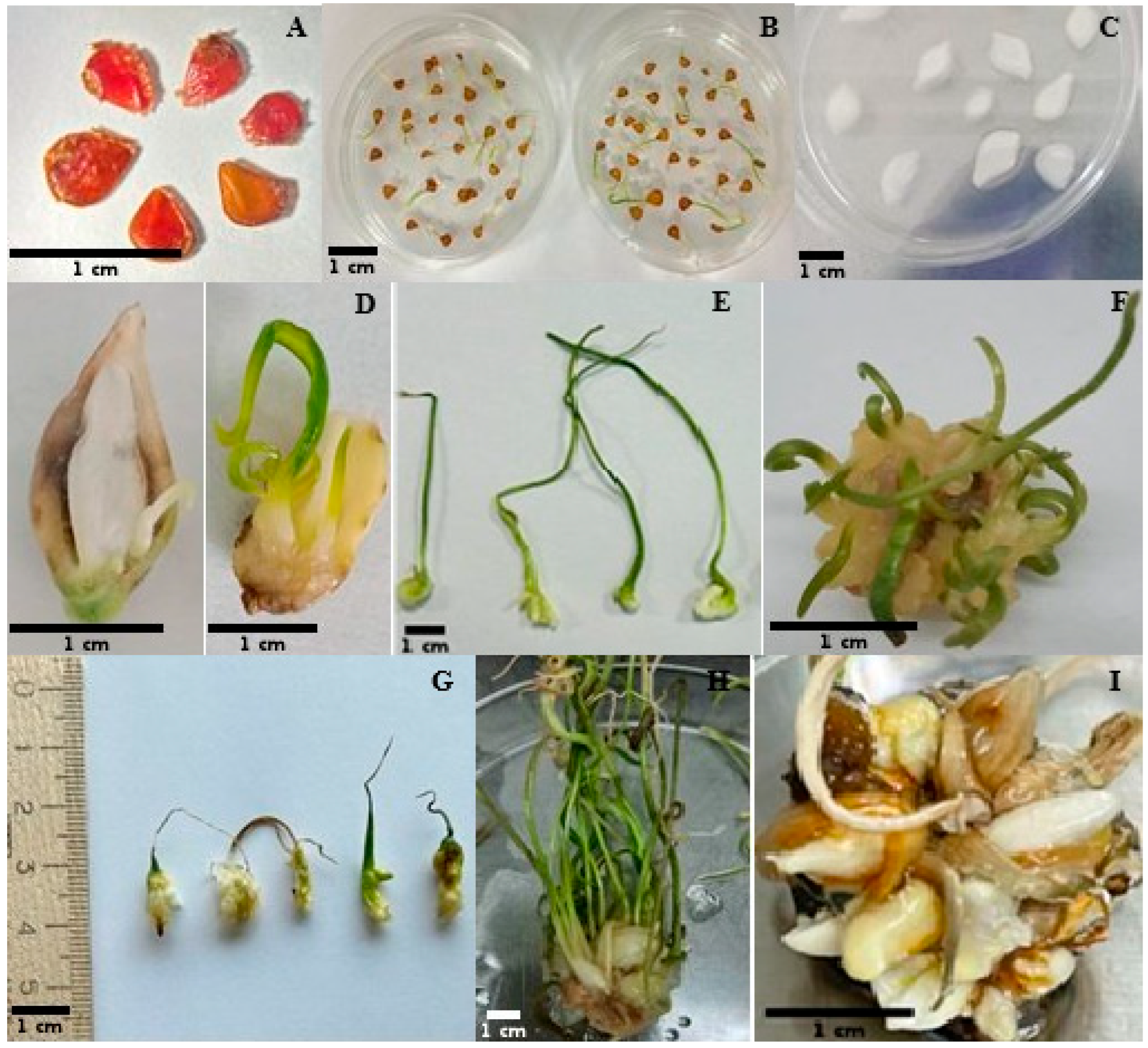
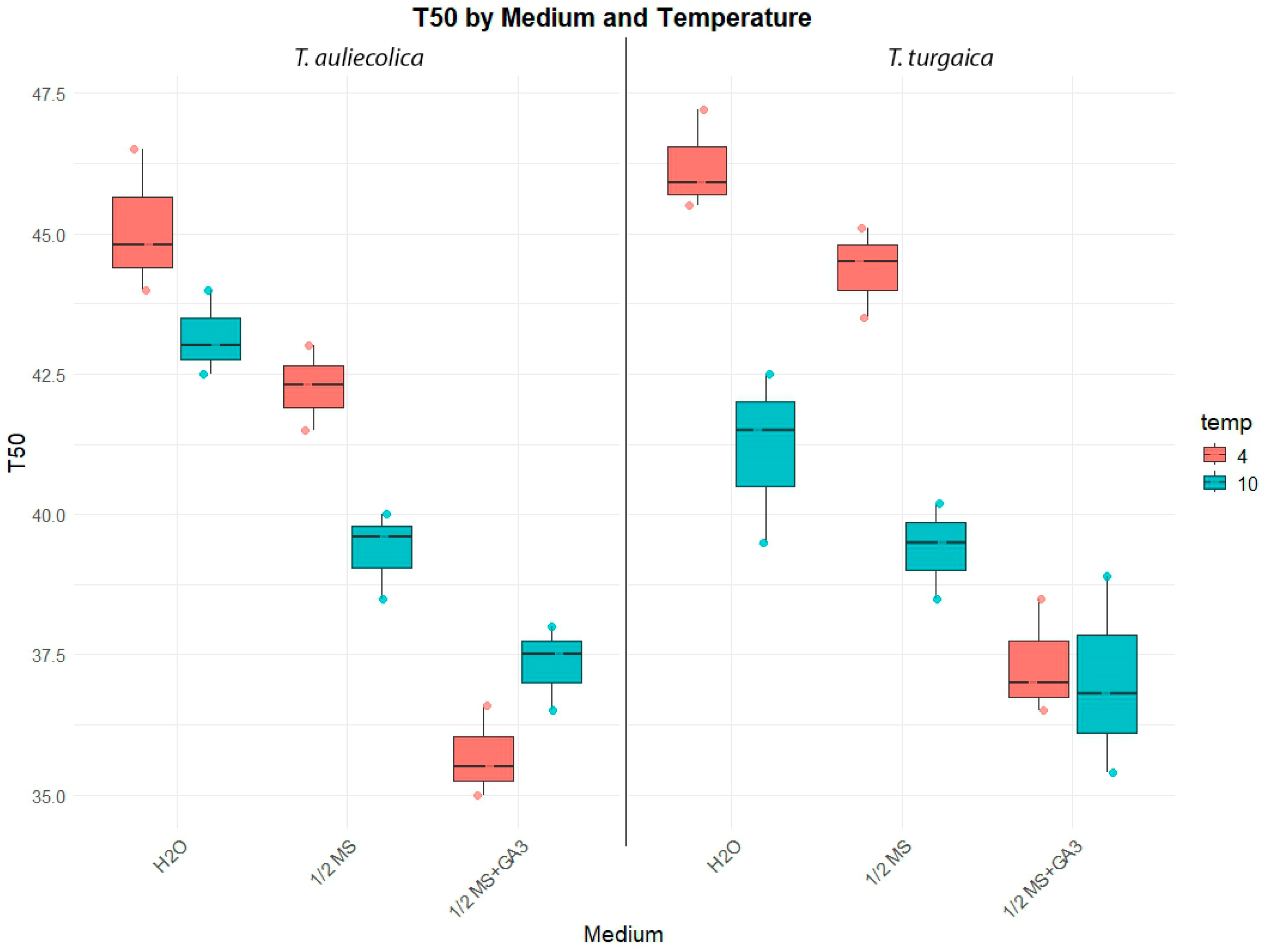
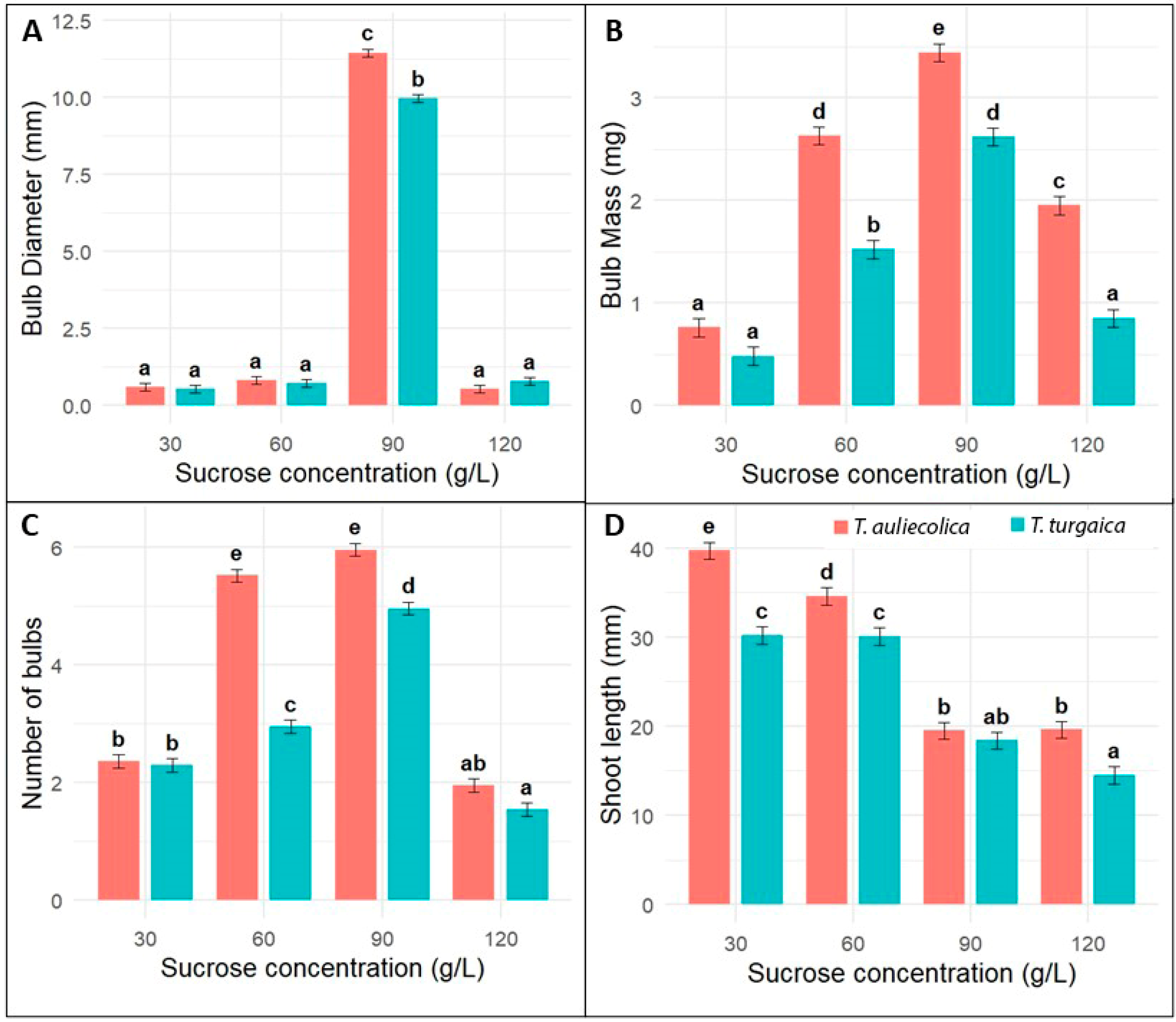
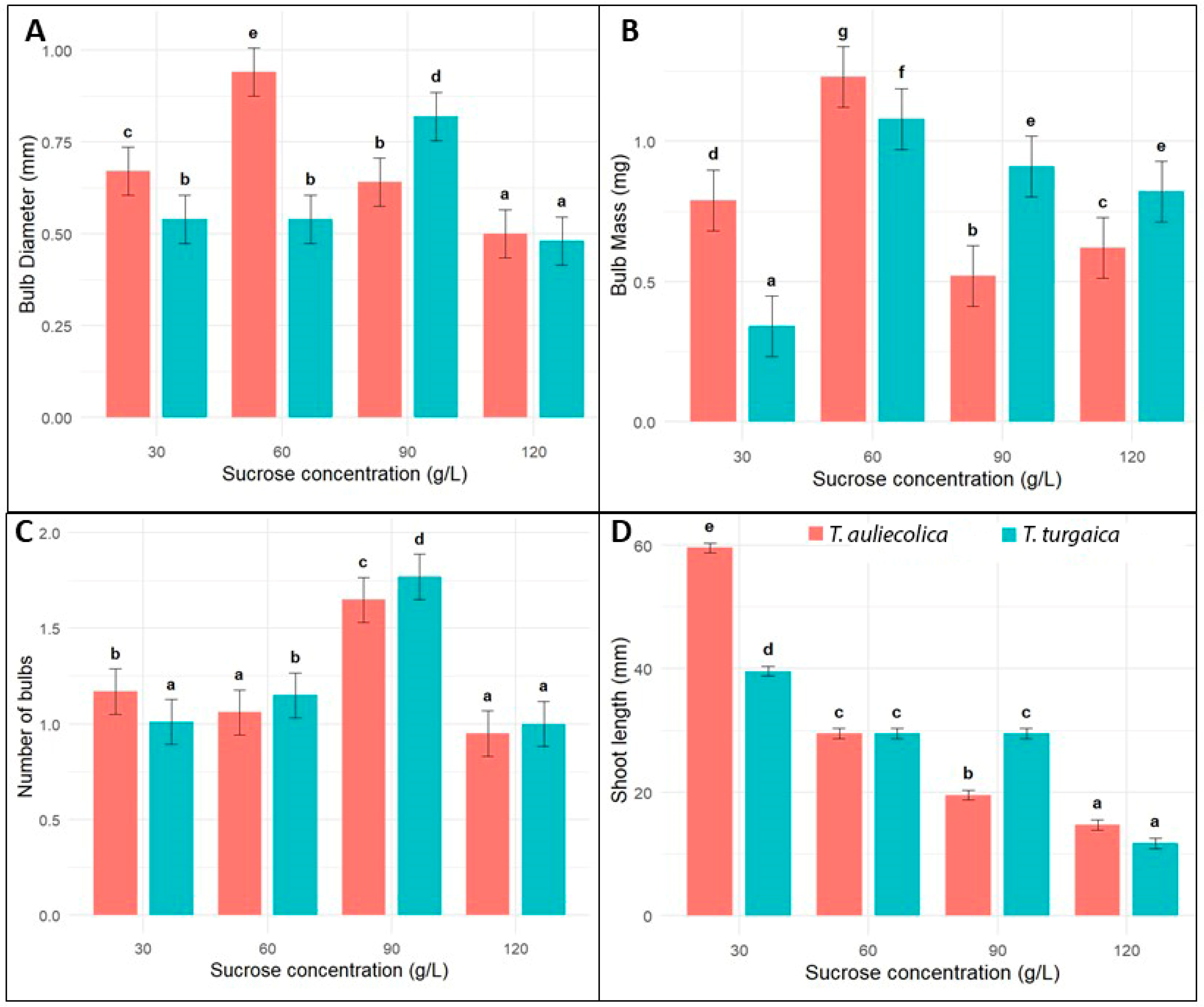
Tulipa auliekolica and Tulipa turgaica have been recently described as endangered species endemic to Kazakhstan, which require urgent conservation amid rising human impact and climate change. Biotechnology offers effective tools for conserving such rare species; however, species-specific in vitro protocols tailored to their biological traits remain largely unreported. This study aimed to develop an in vitro propagation protocol for these rare Tulipa species by investigating the effects of different temperature regimes and phytohormone treatments. We conducted a study on the in vitro propagation of two recently described species, T. auliekolica and T. turgaica. Species-specific temperature regimes for seed stratification were established. Maximum germination of T. auliekolica was achieved at alternating temperatures of 4/10 °C, and of T. turgaica at 10/20 °C. No seed germination from either species occurred at a constant temperature of 20 °C. Bulbs cultured on Murashige & Skoog (MS) medium supplemented with 90 g/L sucrose and the growth regulators mT (meta-topolin) and BAP (6-benzylaminopurine) were effective in stimulating the formation of up to 4–7 microbulbs. Cultivation on a medium supplemented with 0.5 mg L−1 IBA (indole-3-butyric acid) resulted in the formation of mature bulbs covered with scales. These results can be successfully used in biodiversity conservation programs for the endemic Tulipa species. In addition, they provide a valuable basis for future biotechnological research, including microclonal propagation, the establishment of gene banks, and the development of reintroduction methods for Kazakh endemic Tulipa species.
Keywords: biodiversity; endemic species; growth regulators; in vitro culture; micropropagation; Tulipa sp. biodiversity; endemic species; growth regulators; in vitro culture; micropropagation; Tulipa sp.