Article

Integrating Smart Greenhouse Cover, Reduced Nitrogen Dose and Biostimulant Application as a Strategy for Sustainable Cultivation of Cherry Tomato

1
Department of Agricultural Sciences, University of Naples Federico II, 80055 Portici, Italy
2
Research Center for Cereal and Industrial Crops, Council for Agricultural Research and Economics (CREA), 81100 Caserta, Italy
3
Institute of Applied Science and Intelligent System, National Research Council (CNR), 80078 Pozzuoli, Italy
*
Author to whom correspondence should be addressed.
Plants 2024, 13(3), 440; https://doi.org/10.3390/plants13030440

Submission received: 3 January 2024 / Revised: 30 January 2024 / Accepted: 31 January 2024 / Published: 2 February 2024
(This article belongs to the Special Issue Light and Plant Nutrition)

Abstract

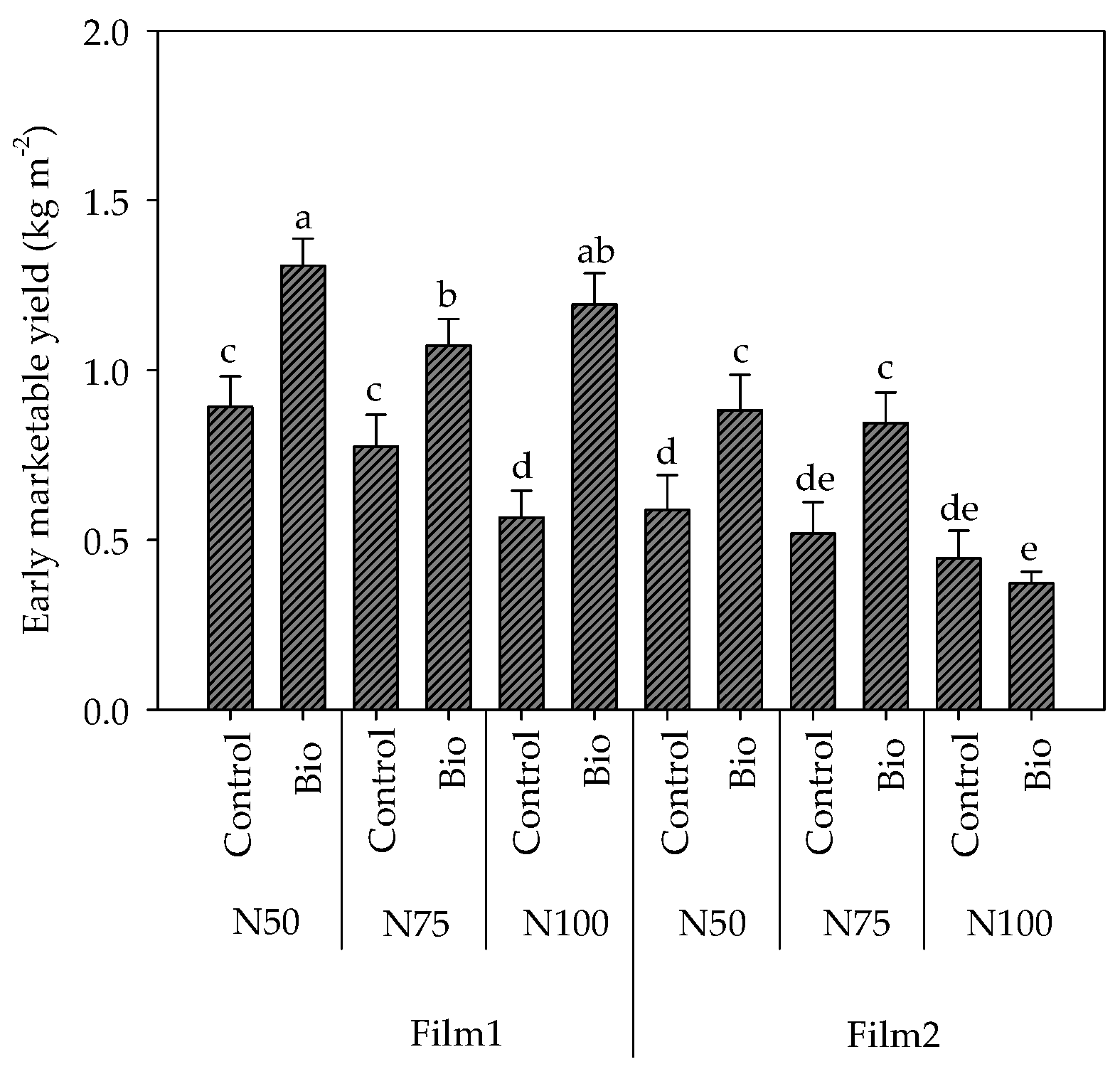
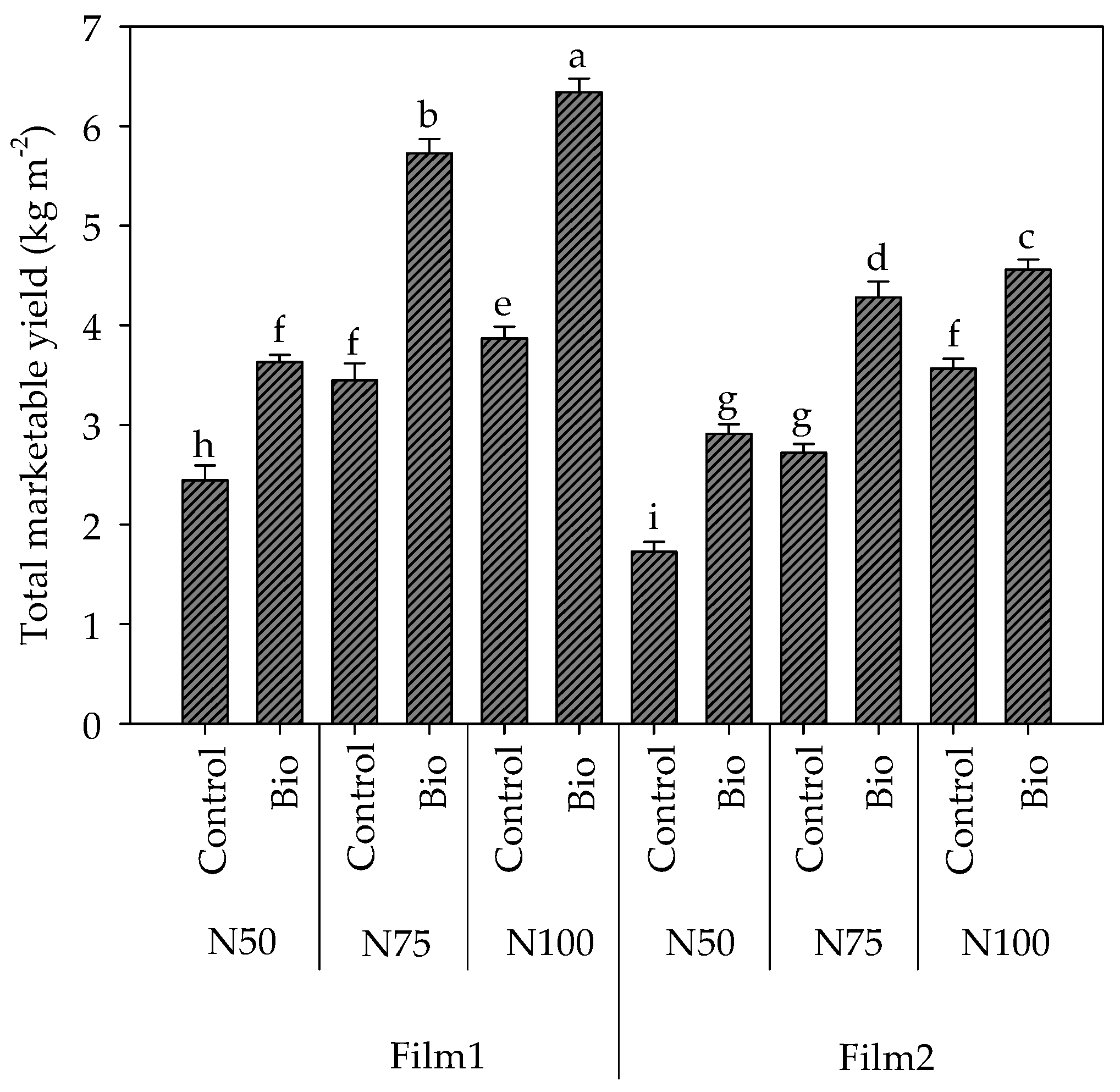
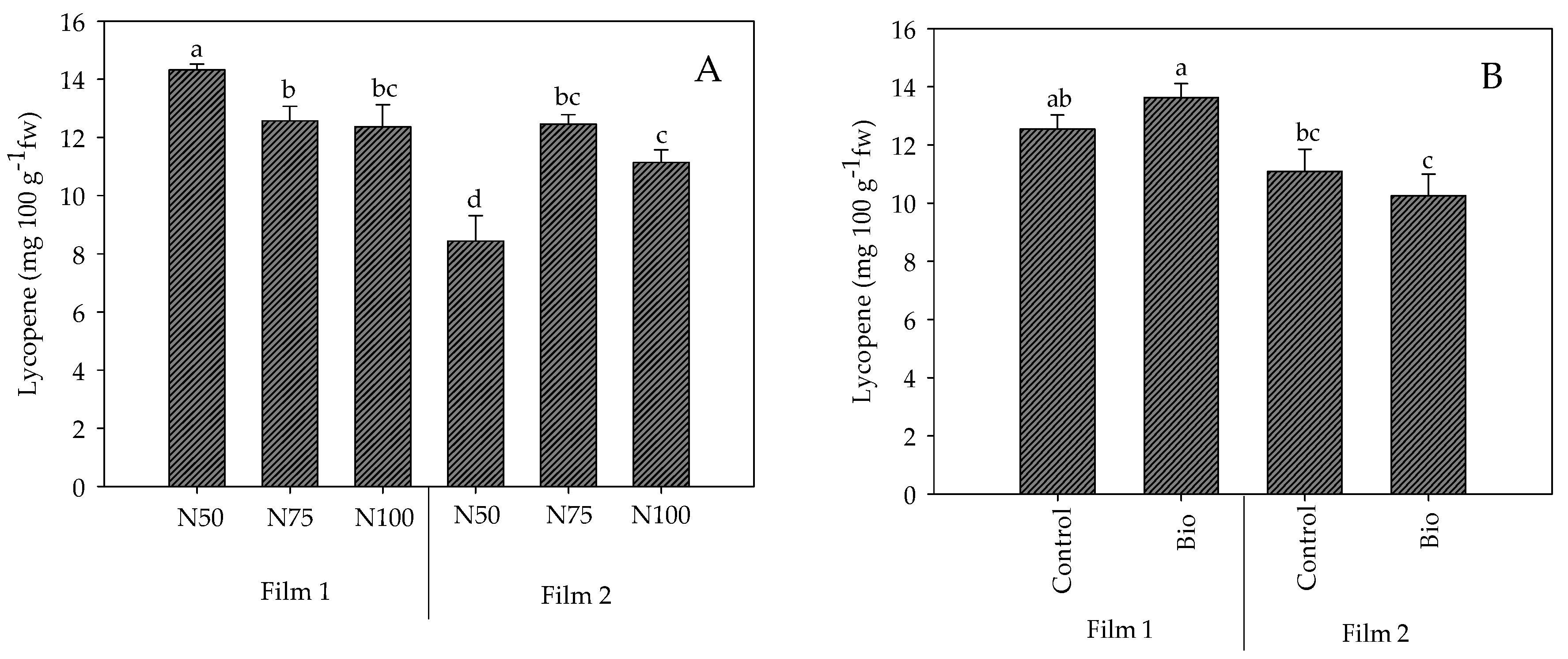
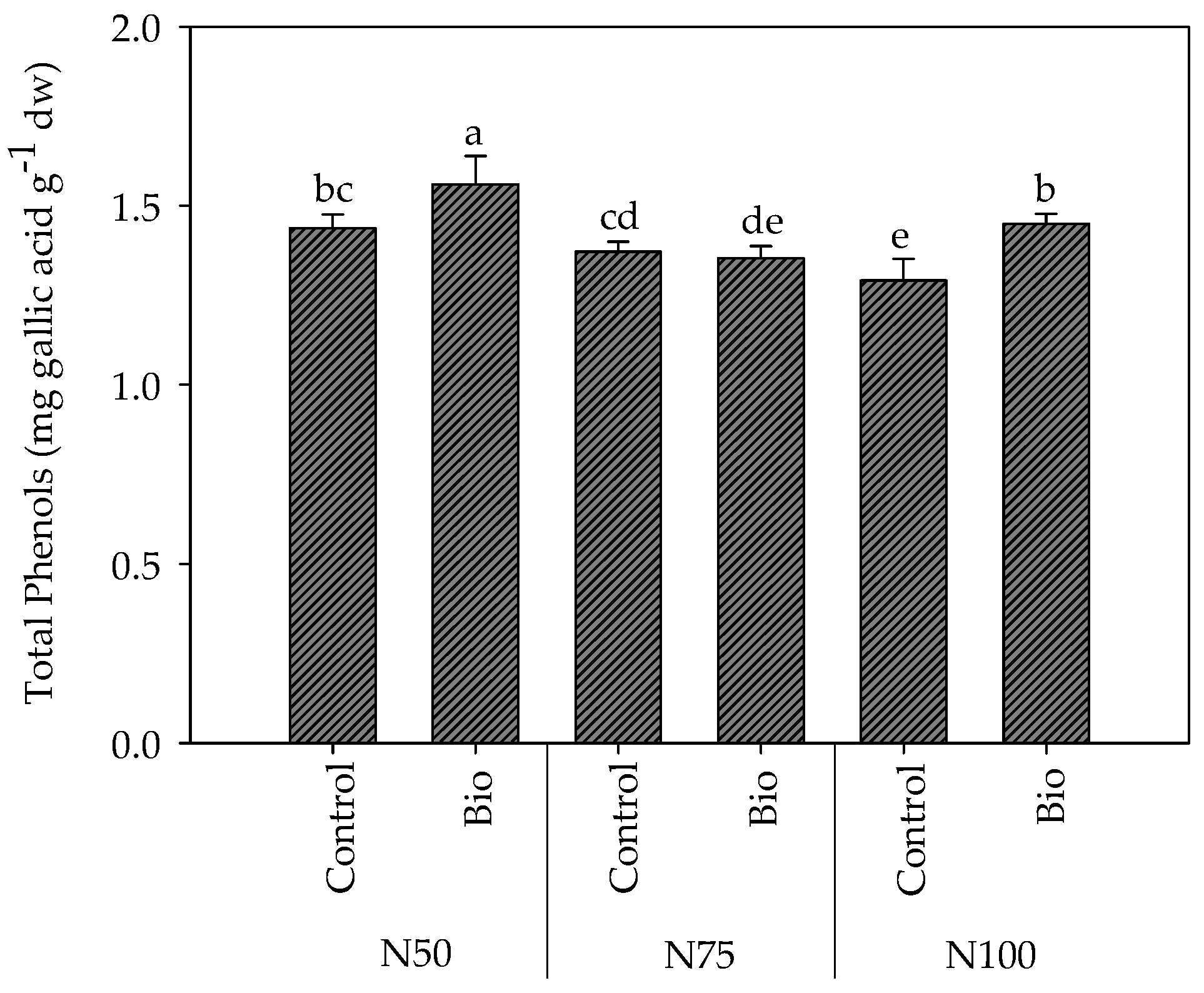
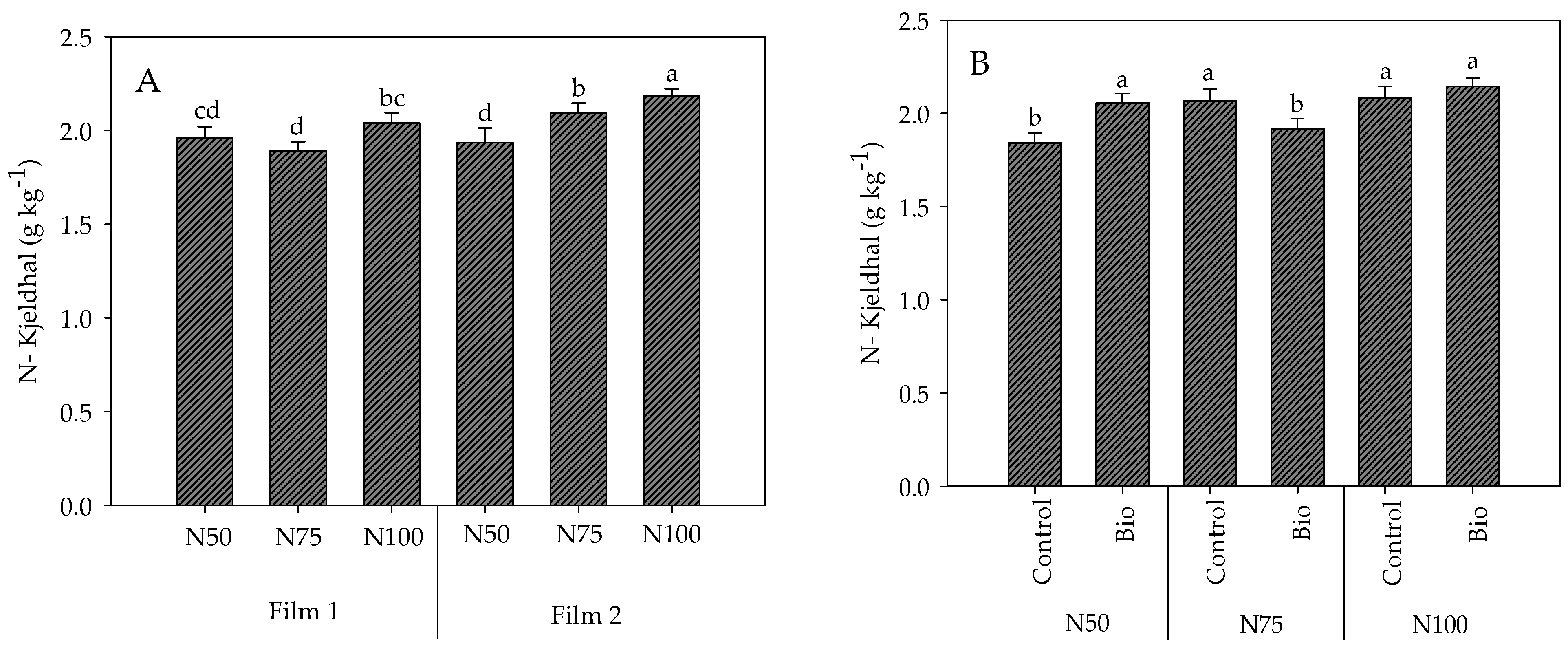
Fruit yield and quality of greenhouse tomatoes are strongly influenced by light conditions and nitrogen (N) availability, however, the interaction between these factors is still unclear. We evaluated the effects on cherry tomatoes of two tunnel plastic covers with different optical properties and three N doses, also in combination with a biostimulant treatment. We compared a diffuse light film (Film1) and a conventional clear film (Film2), and three N levels, corresponding to 50% (N50), 75% (N75) and 100% (N100) of the optimal dose, with and without a microbial plus a protein hydrolysed biostimulant, compared to a non-treated control. The three experimental treatments significantly interacted on several yield and quality parameters. In control plants (untreated with biostimulants), the early yield was higher at reduced N doses compared to N100, with greater increments under the diffusive Film1 compared to the clear Film2 (+57.7% and +37.0% vs. +31.7% and +16.0%, in N50 and N75 respectively). Film1 boosted the total fruit production at all the N rates and with or without biostimulants, compared to Film2, with stronger effects under sub-optimal N (+29.4% in N50, +21.2% in N75, and +7.8% in N100, in plants untreated with biostimulant). Total yield decreased with decreasing N levels, while it always increased with the application of biostimulants, which counterbalanced the detrimental effects of N shortage. Quality traits were mainly affected by the cover film and the biostimulant treatment. The diffusive film increased the content of carotenoids, lycopene and total phenols compared to the clear one, and the biostimulants increased texture, soluble solids, phenols and ascorbic acid compared to the untreated control. It is worth noting that in plants fertilized at 75% of the reference N dose, the biostimulants determined higher yield than the N100 untreated control, under both the covers (+48% in Film1 and +20% in Film2). In conclusion, the diffusive film improved the fruit yield and quality of greenhouse tomatoes in the spring–summer period, presumably avoiding plant stress due to high-intensity direct light. Reduced N rates limited the plant productivity, however, the biostimulant application was effective in compensating for the detrimental effects of sub-optimal supply of N synthetic fertilizers.
Keywords: Lycopersicum esculentum L.; polyethylene; lycopene; soluble solids; texture; antioxidant capacity; ascorbic acid; phenols; carotenoids; pigments Lycopersicum esculentum L.; polyethylene; lycopene; soluble solids; texture; antioxidant capacity; ascorbic acid; phenols; carotenoids; pigments