Article

Construction of Freezing Injury Grade Index for Nanfeng Tangerine Plants Based on Physiological and Biochemical Parameters

by
Chao Xu
1,2,3,
Buchun Liu
3,
Yuting Wang
1,2 and
Zhongdong Hu
1,2,*
1
Jiangxi Key Laboratory of Horticultural Crops (Fruit, Vegetable & Tea) Breeding, Jiangxi Academy of Agricultural Sciences, Nanchang 330200, China
2
Nanchang Key Laboratory of Germplasm Innovation and Utilization of Fruit and Tea, Jiangxi Academy of Agricultural Sciences, Nanchang 330200, China
3
Institute of Environment and Sustainable Development in Agriculture, Chinese Academy of Agricultural Sciences, Beijing 100081, China
*
Author to whom correspondence should be addressed.
Plants 2024, 13(21), 3109; https://doi.org/10.3390/plants13213109

Submission received: 4 September 2024 / Revised: 23 October 2024 / Accepted: 1 November 2024 / Published: 4 November 2024

Abstract

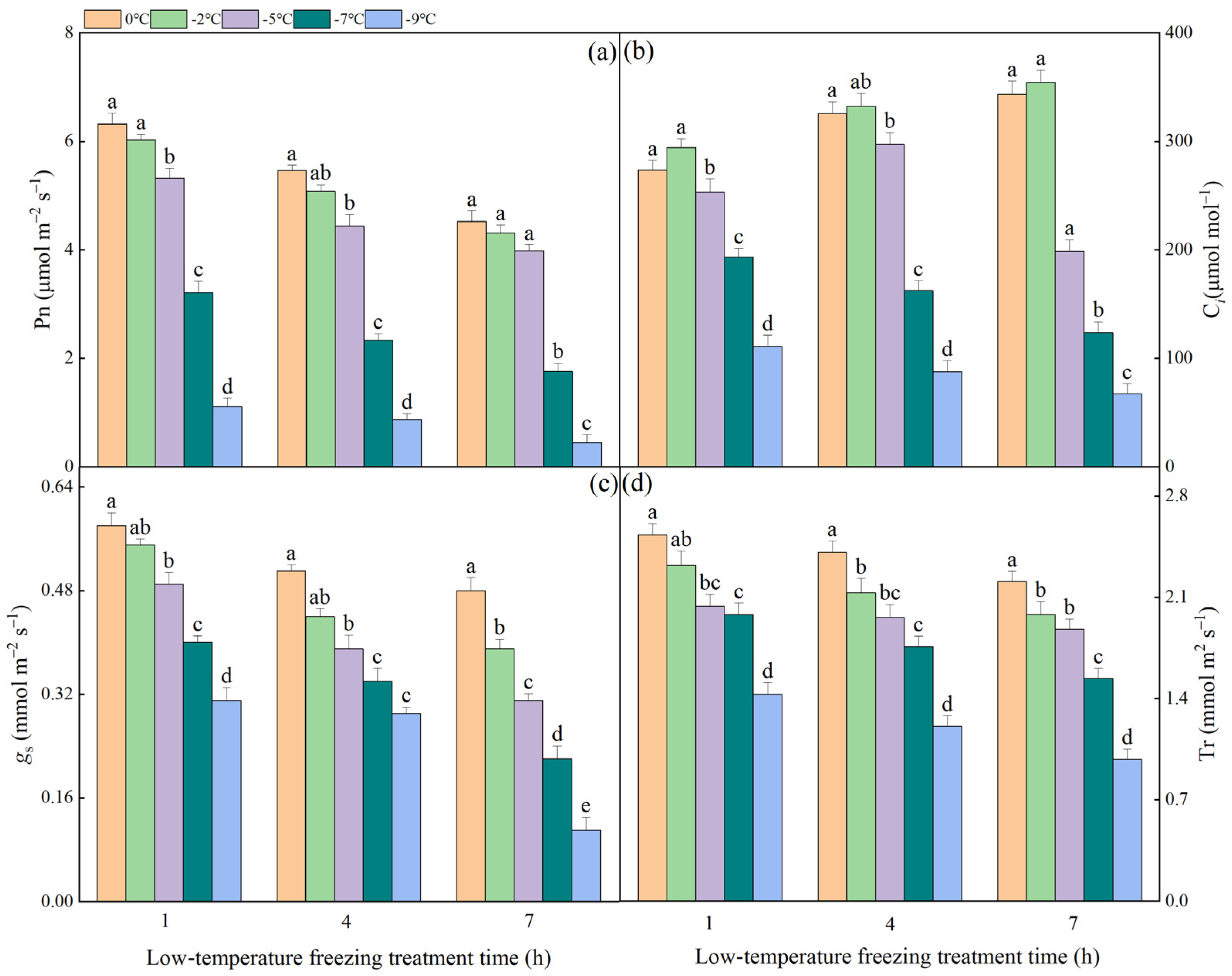
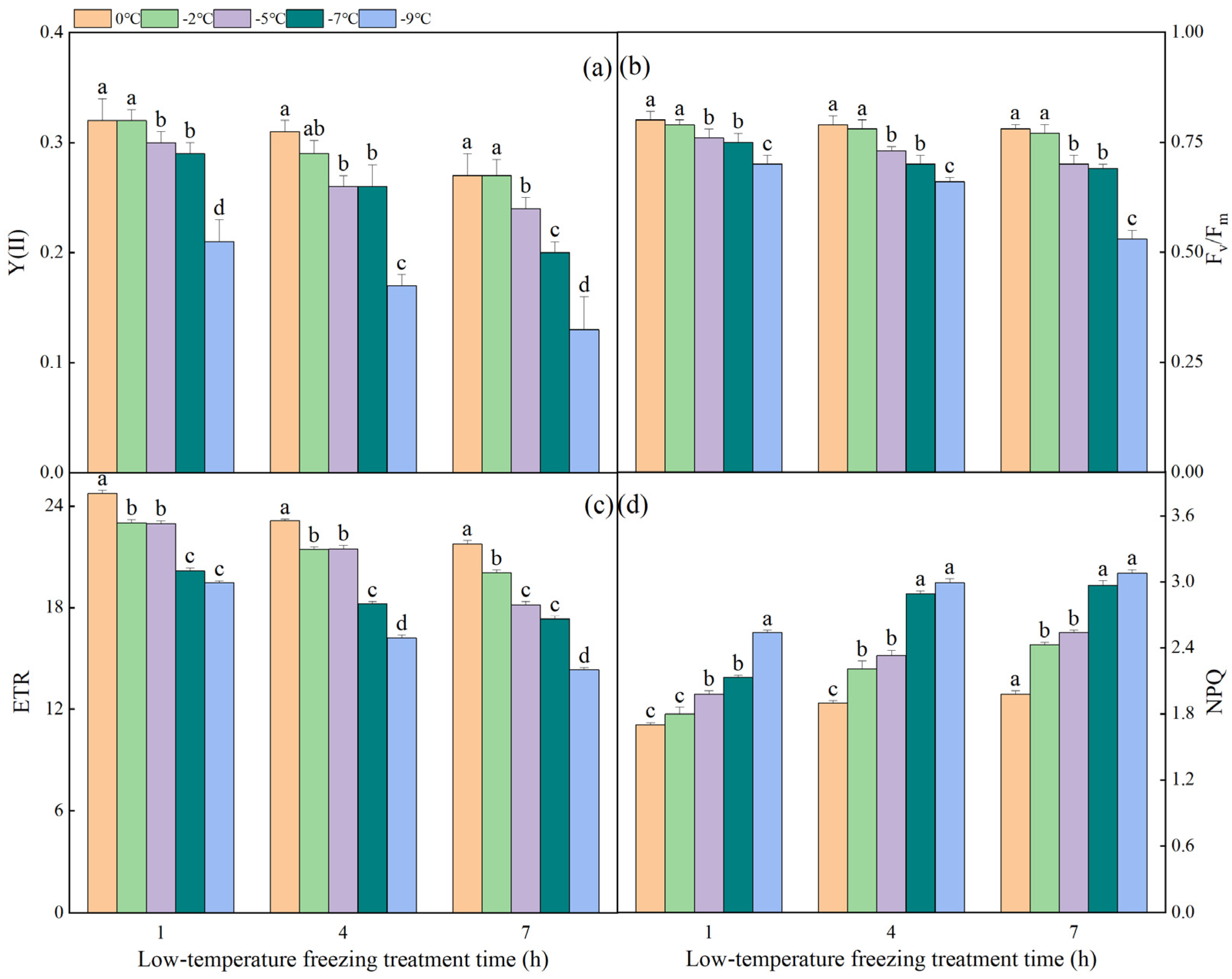
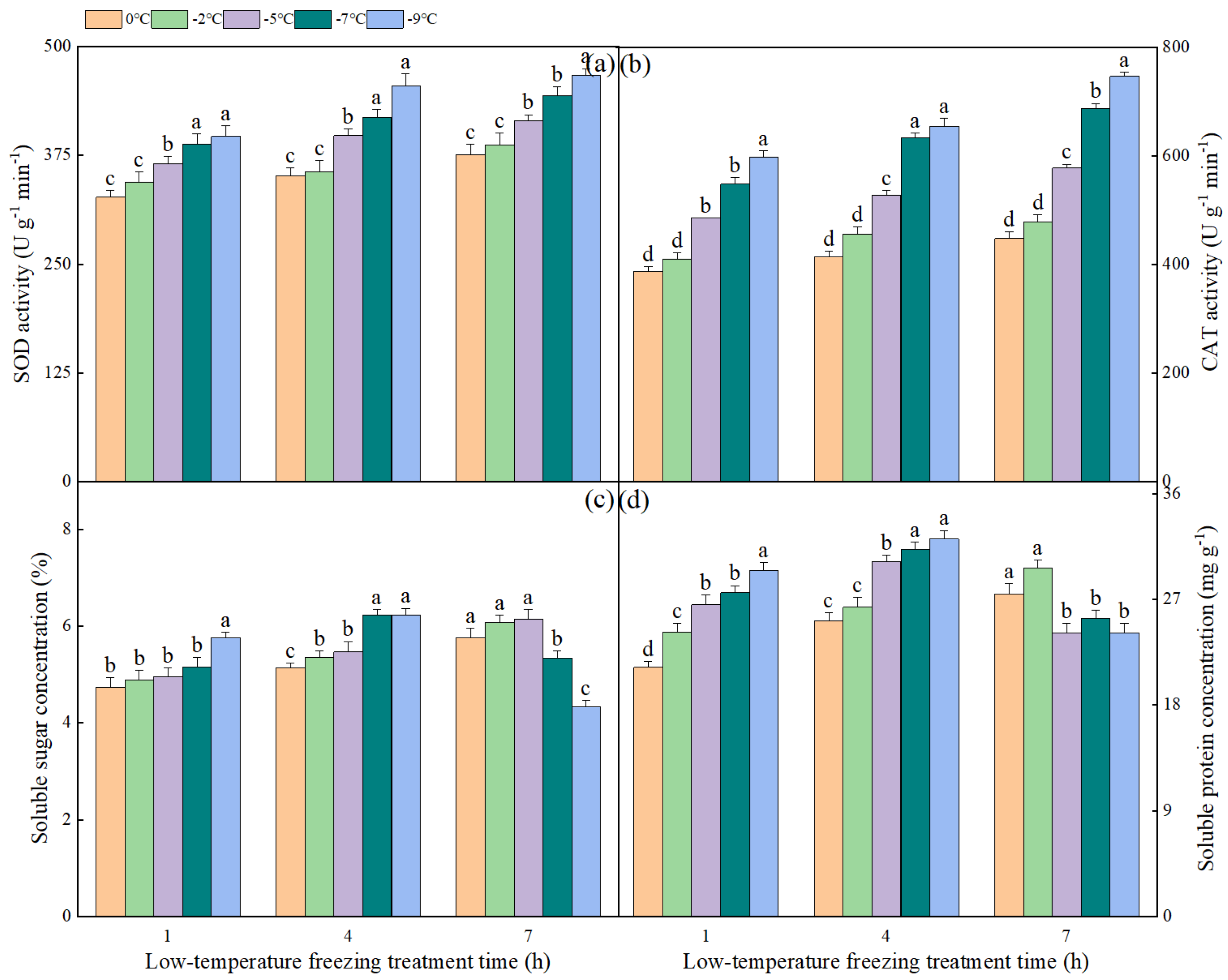
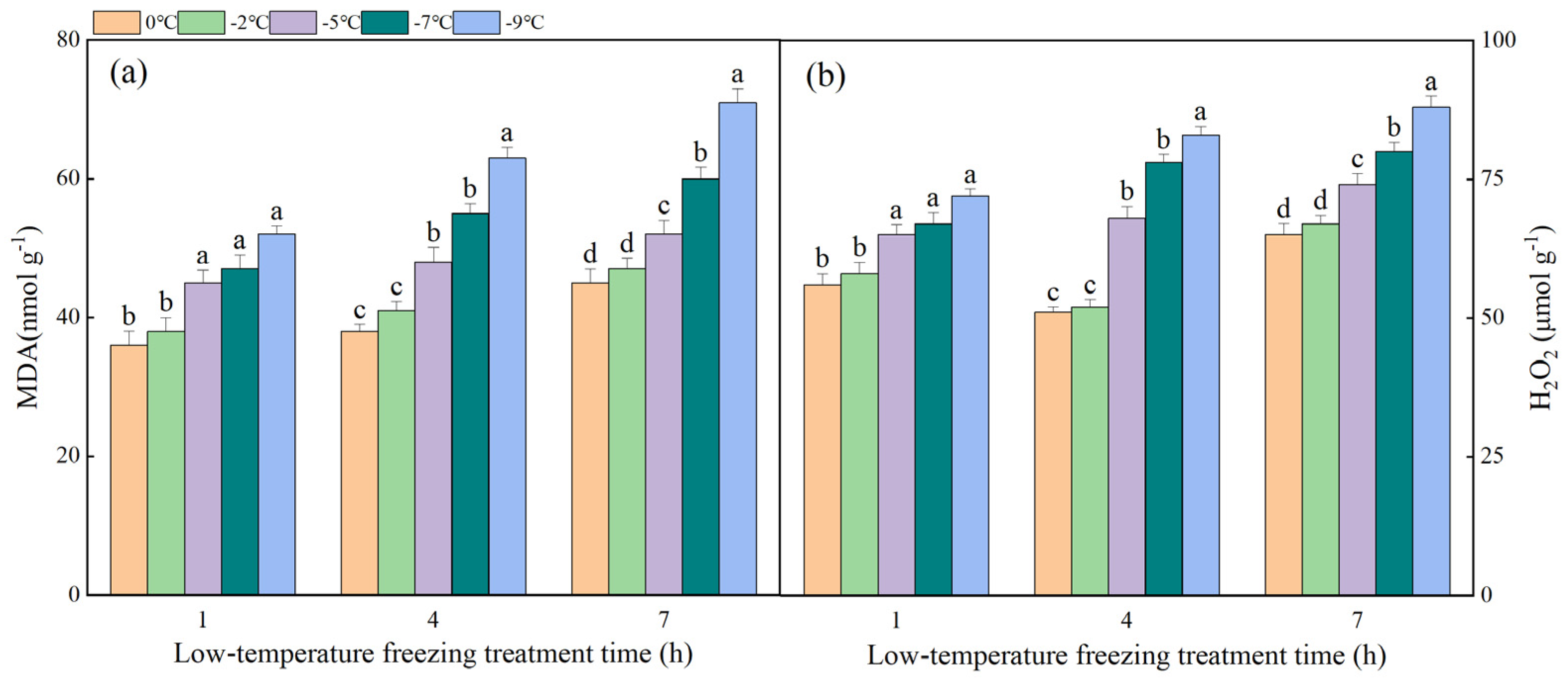
Low-temperature freezing stress constitutes the most significant meteorological disaster during the overwintering period in the Nanfeng Tangerine (NT) production area, severely impacting the normal growth and development of the plants. Currently, the accuracy of meteorological disaster warnings and forecasts for NT orchards remains suboptimal, primarily due to the absence of quantitative meteorological indicators for low-temperature freezing stress. Therefore, this study employed NT plants as experimental subjects and conducted controlled treatment experiments under varying intensities of low-temperature freezing stress (0 °C, −2 °C, −5 °C, −7 °C, and −9 °C) and durations (1 h, 4 h, and 7 h). Subsequently, physiological and biochemical parameters were measured, including photosynthetic parameters, chlorophyll fluorescence parameters, reactive oxygen species, osmoregulatory substances, and antioxidant enzyme activities in NT plants. The results demonstrated that low-temperature freezing stress adversely affected the photosynthetic system of NT plants, disrupted the dynamic equilibrium of the antioxidant system, and compromised cellular stability. The severity of freezing damage increased with decreasing temperature and prolonged exposure. Chlorophyll (a/b) ratio (Chl (a/b)), maximum quantum yield of photosystem II (Fv/Fm), soluble sugar, and malondialdehyde (MDA) were identified as key indicators for assessing physiological and biochemical changes in NT plants. Utilizing these four parameters, a comprehensive score (CS) model of freezing damage was developed to quantitatively evaluate the growth status of NT plants across varying low-temperature freezing damage gradients and durations. Subsequently, the freezing damage grade index for NT plants during the overwintering period was established. Specifically, Level 1 for CS ≤ −0.50, Level 2 for −0.5 < CS ≤ 0, Level 3 for 0 < CS ≤ 0.5, and Level 4 for 0.5 < CS. The research results provide valuable data for agricultural meteorological departments to carry out disaster monitoring, early warning, and prevention and control.
Keywords: freezing stress; photosynthesis; osmotic regulation; oxidative damage; low-temperature freezing stress level freezing stress; photosynthesis; osmotic regulation; oxidative damage; low-temperature freezing stress level