Article

Design of Microbial Consortia Based on Arbuscular Mycorrhizal Fungi, Yeasts, and Bacteria to Improve the Biochemical, Nutritional, and Physiological Status of Strawberry Plants Growing under Water Deficits


by
Urley A. Pérez-Moncada
1,2,
Christian Santander
2,3,
Antonieta Ruiz
2,
Catalina Vidal
2,
Cledir Santos
2,4,* and
Pablo Cornejo
4,5,*
1
Doctorado en Ciencias de Recursos Naturales, Universidad de La Frontera, P.O. Box 54-D, Temuco 4811230, Chile
2
Departamento de Ciencias Químicas y Recursos Naturales, Universidad de La Frontera, P.O. Box 54-D, Temuco 4780000, Chile
3
Grupo de Ingeniería Ambiental y Biotecnología, Facultad de Ciencias Ambientales y Centro EULA-Chile, Universidad de Concepción, Concepción 4070411, Chile
4
Centro Regional de Investigación e Innovación para la Sostenibilidad de la Agricultura y los Territorios Rurales, CERES, La Palma, Quillota 2260000, Chile
5
Escuela de Agronomía, Facultad de Ciencias Agronómicas y de los Alimentos, Pontificia Universidad Católica de Valparaíso, Quillota 2260000, Chile
*
Authors to whom correspondence should be addressed.
Plants 2024, 13(11), 1556; https://doi.org/10.3390/plants13111556

Submission received: 3 May 2024 / Revised: 23 May 2024 / Accepted: 1 June 2024 / Published: 4 June 2024
(This article belongs to the Special Issue Plant Growth-Promoting Bacteria and Arbuscular Mycorrhizal Fungi)

Abstract

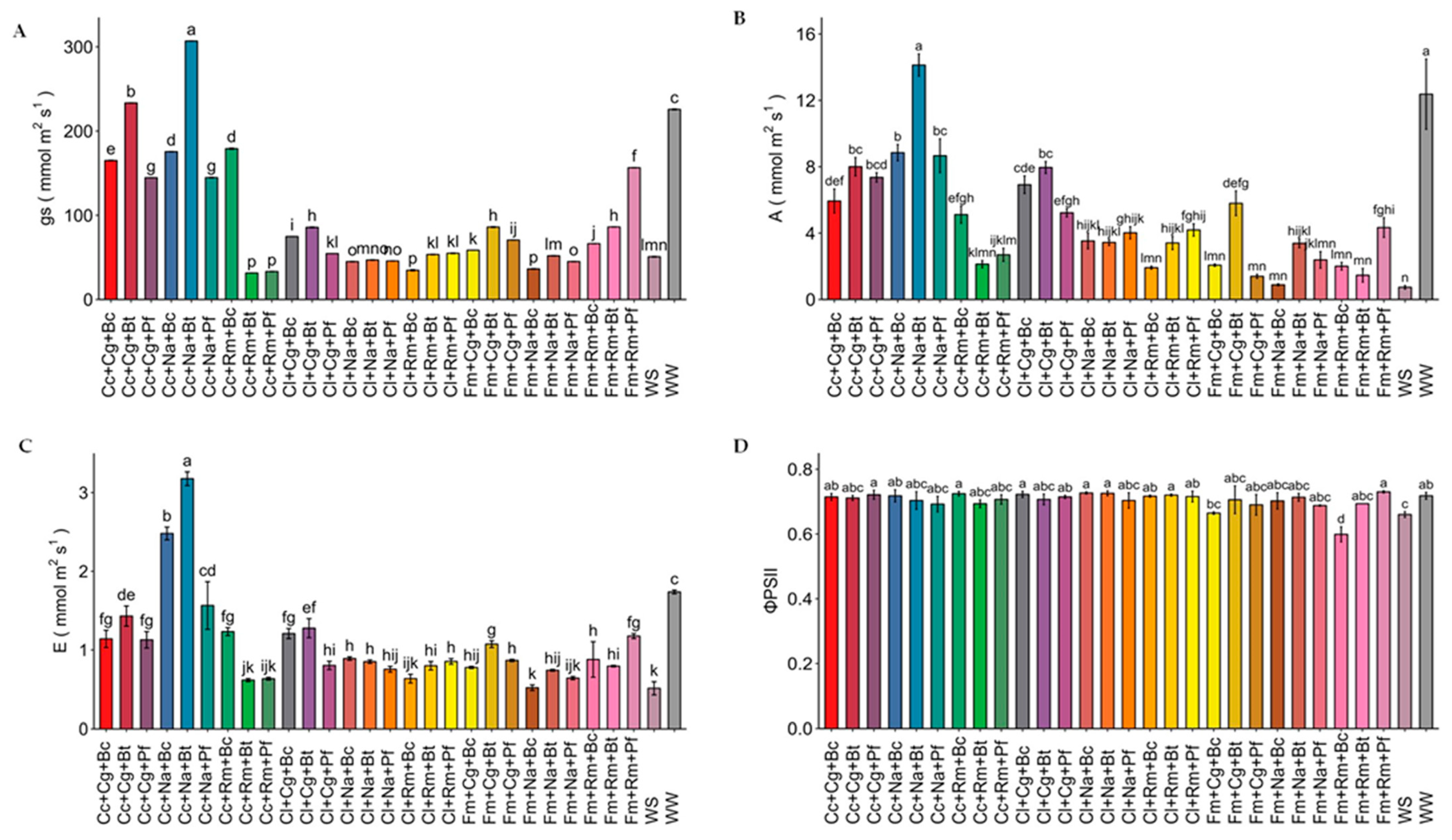
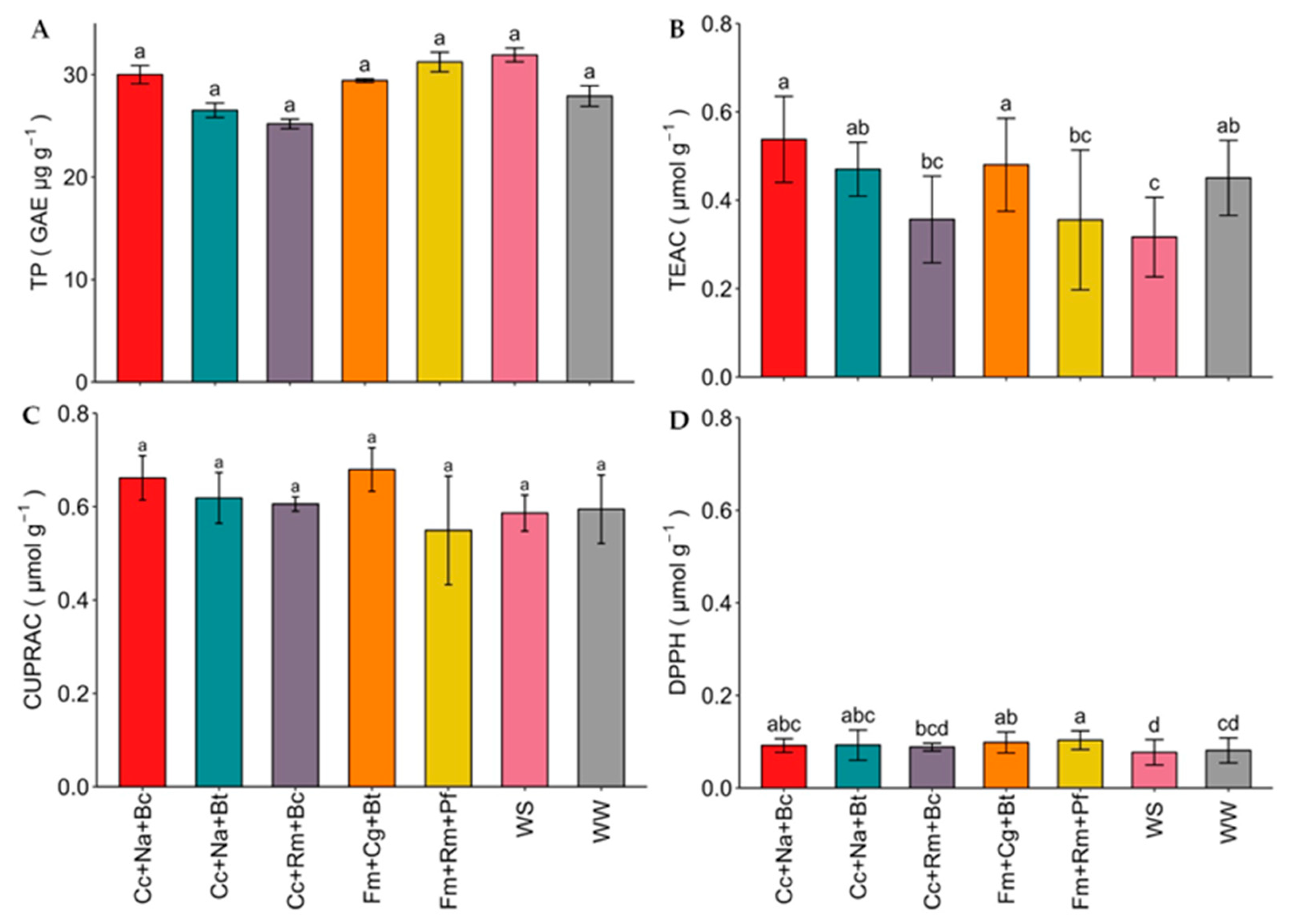
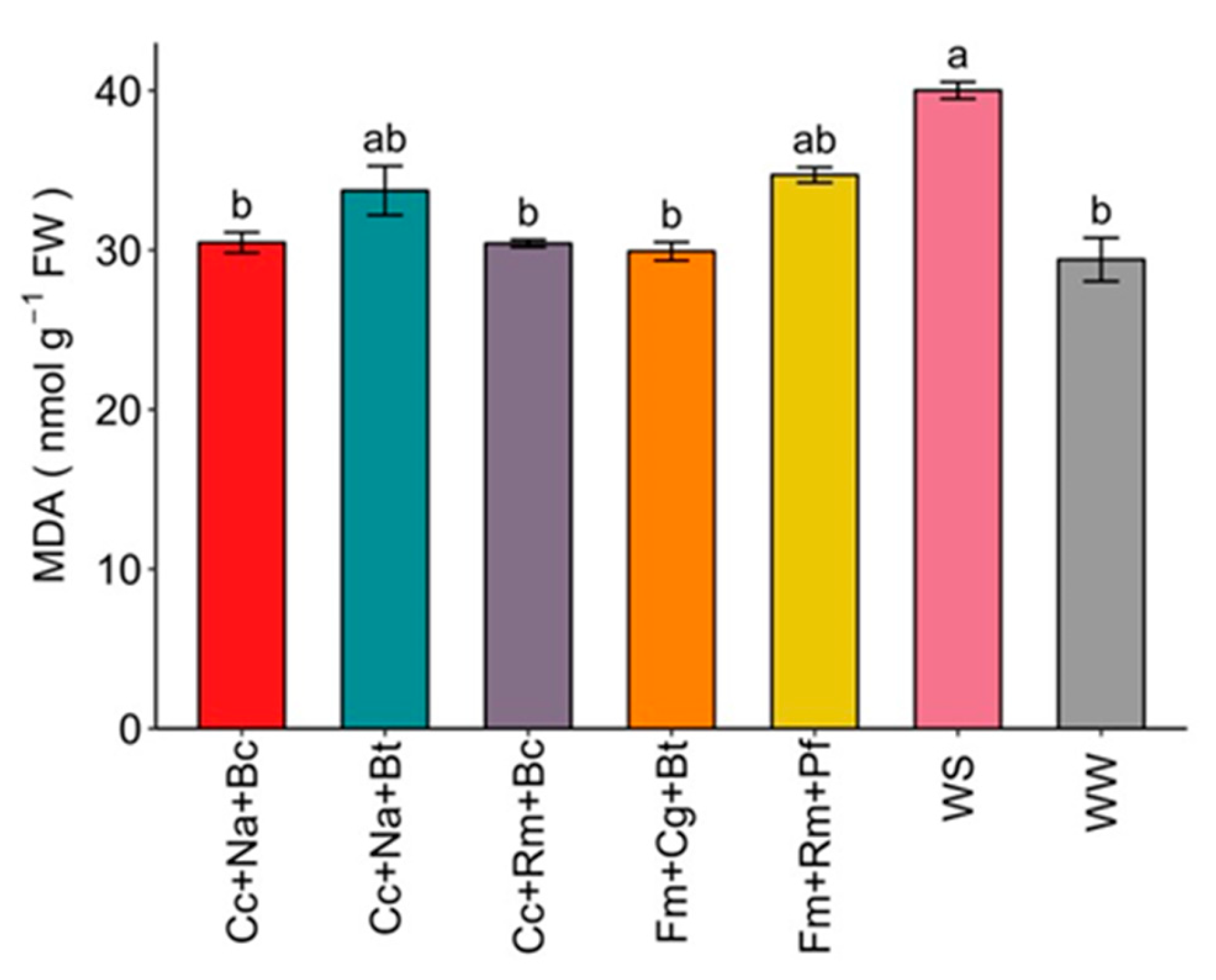
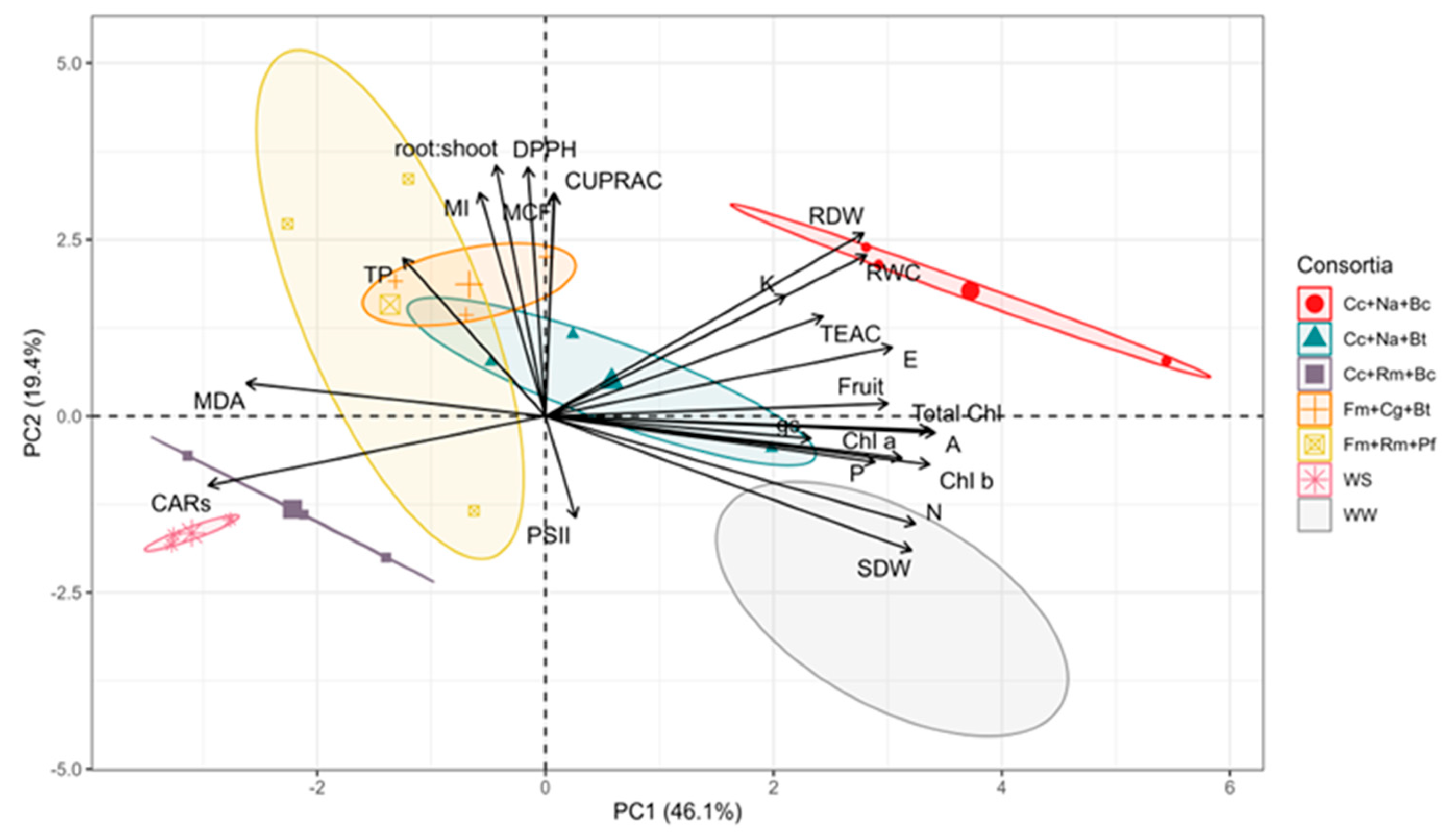
Drought affects several plant physiological characteristics such as photosynthesis, carbon metabolism, and chlorophyll content, causing hormonal and nutritional imbalances and reducing nutrient uptake and transport, which inhibit growth and development. The use of bioinoculants based on plant growth-promoting microorganisms such as plant growth-promoting rhizobacteria (PGPR), yeasts, and arbuscular mycorrhizal fungi (AMF) has been proposed as an alternative to help plants tolerate drought. However, most studies have been based on the use of a single type of microorganism, while consortia studies have been scarcely performed. Therefore, the aim of this study was to evaluate different combinations of three PGPR, three AMF, and three yeasts with plant growth-promoting attributes to improve the biochemical, nutritional, and physiological behavior of strawberry plants growing under severe drought. The results showed that the growth and physiological attributes of the non-inoculated plants were significantly reduced by drought. In contrast, plants inoculated with the association of the fungus Claroideoglomus claroideum, the yeast Naganishia albida, and the rhizobacterium Burkholderia caledonica showed a stronger improvement in tolerance to drought. High biomass, relative water content, fruit number, photosynthetic rate, transpiration, stomatal conductance, quantum yield of photosystem II, N concentration, P concentration, K concentration, antioxidant activities, and chlorophyll contents were significantly improved in inoculated plants by up to 16.6%, 12.4%, 81.2%, 80%, 79.4%, 71.0%, 17.8%, 8.3%, 6.6%, 57.3%, 41%, and 22.5%, respectively, compared to stressed non-inoculated plants. Moreover, decreased malondialdehyde levels by up to 32% were registered. Our results demonstrate the feasibility of maximizing the effects of inoculation with beneficial rhizosphere microorganisms based on the prospect of more efficient combinations among different microbial groups, which is of interest to develop bioinoculants oriented to increase the growth of specific plant species in a global scenario of increasing drought stress.
Keywords: antioxidant activity; arbuscular mycorrhizal fungi; drought stress; microbial consortia; plant growth-promoting microorganisms; strawberry antioxidant activity; arbuscular mycorrhizal fungi; drought stress; microbial consortia; plant growth-promoting microorganisms; strawberry