Perspective

Ocbil Theory as a Potential Unifying Framework for Investigating Narrow Endemism in Mediterranean Climate Regions

by
Stephen D. Hopper
Albany Centre, School of Agriculture and Environment, The University of Western Australia, Albany, WA 6330, Australia
Plants 2023, 12(3), 645; https://doi.org/10.3390/plants12030645

Submission received: 12 January 2023 / Revised: 26 January 2023 / Accepted: 30 January 2023 / Published: 1 February 2023
(This article belongs to the Special Issue Plant Speciation in Mediterranean-Climate Regions)

Abstract

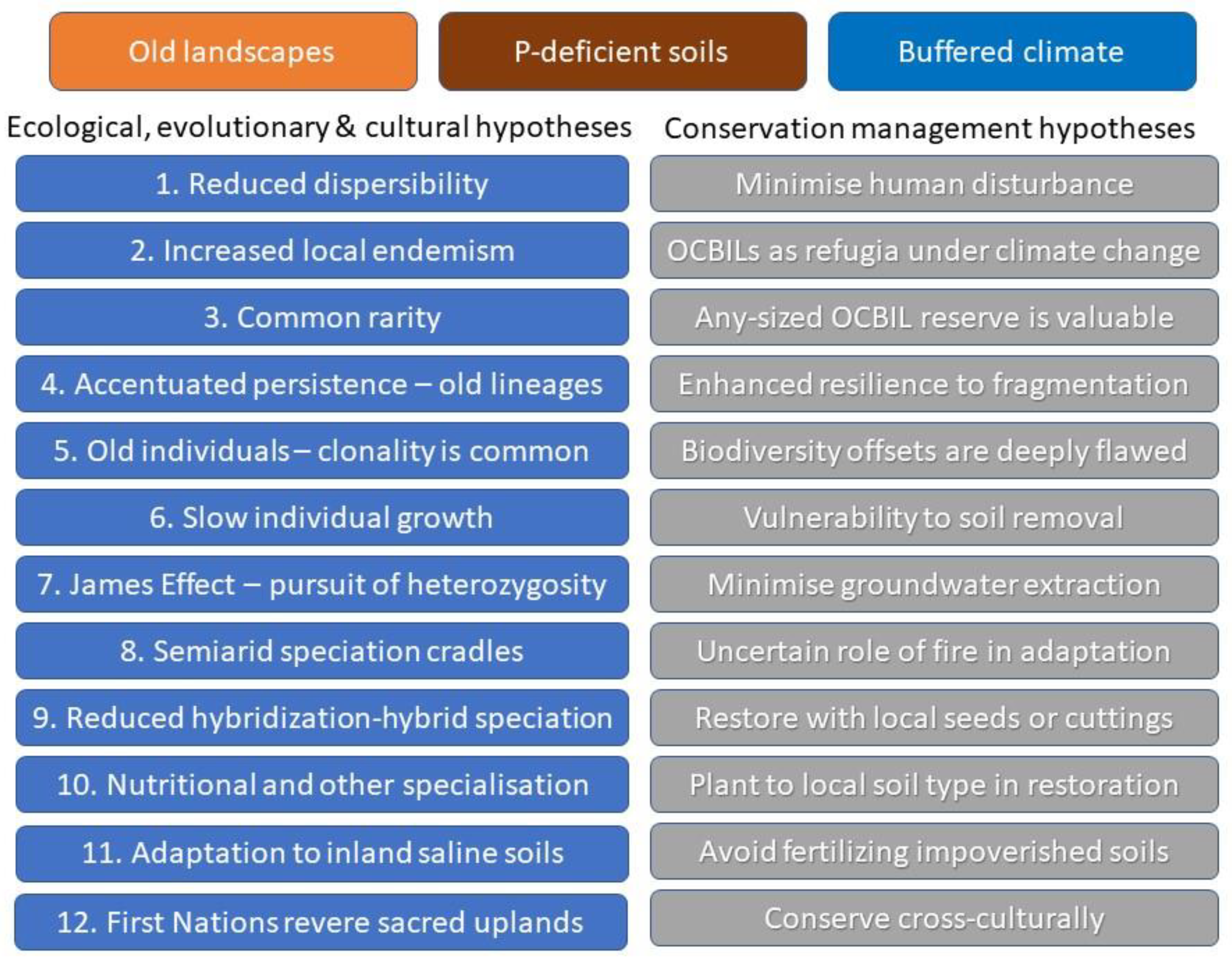
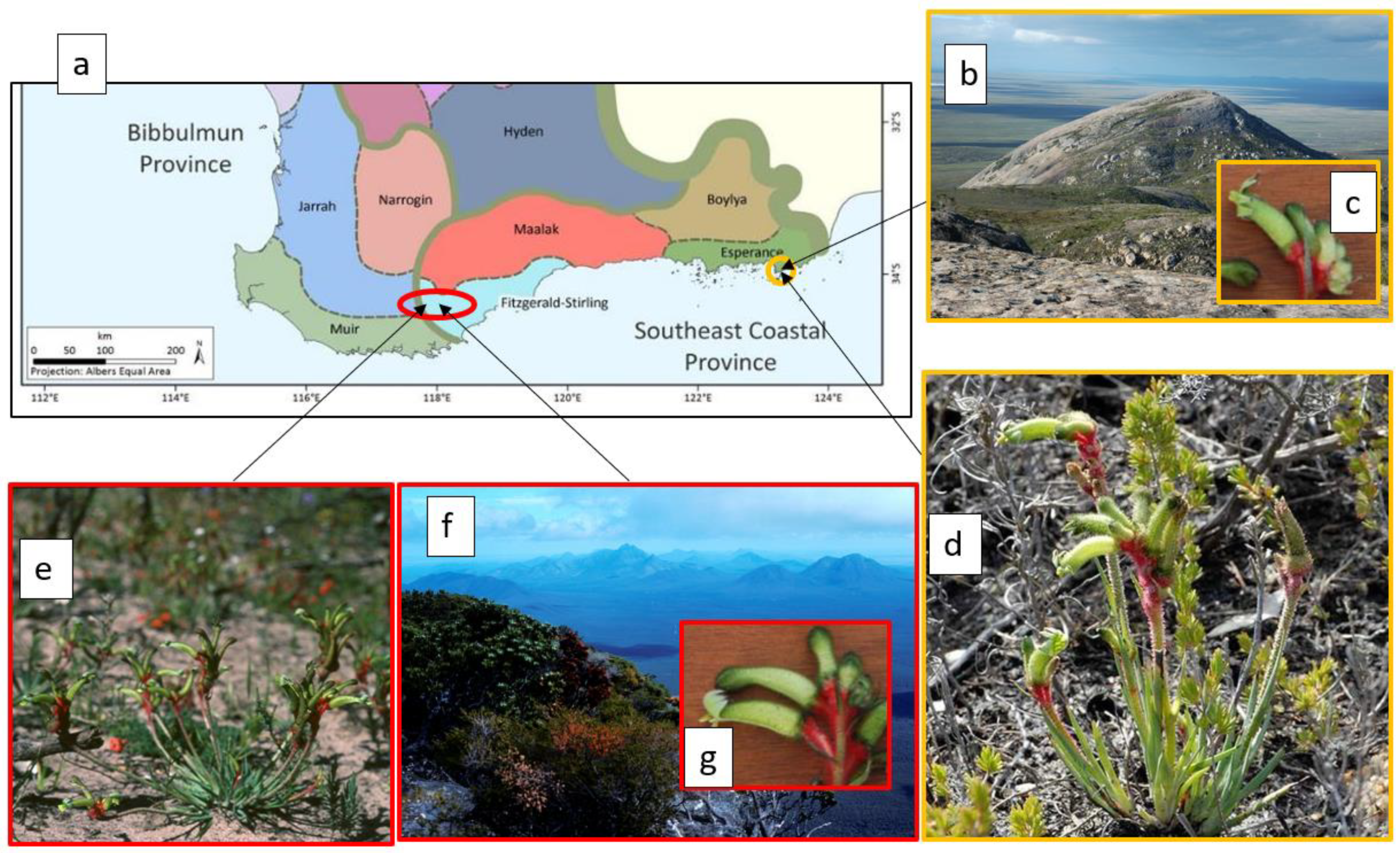
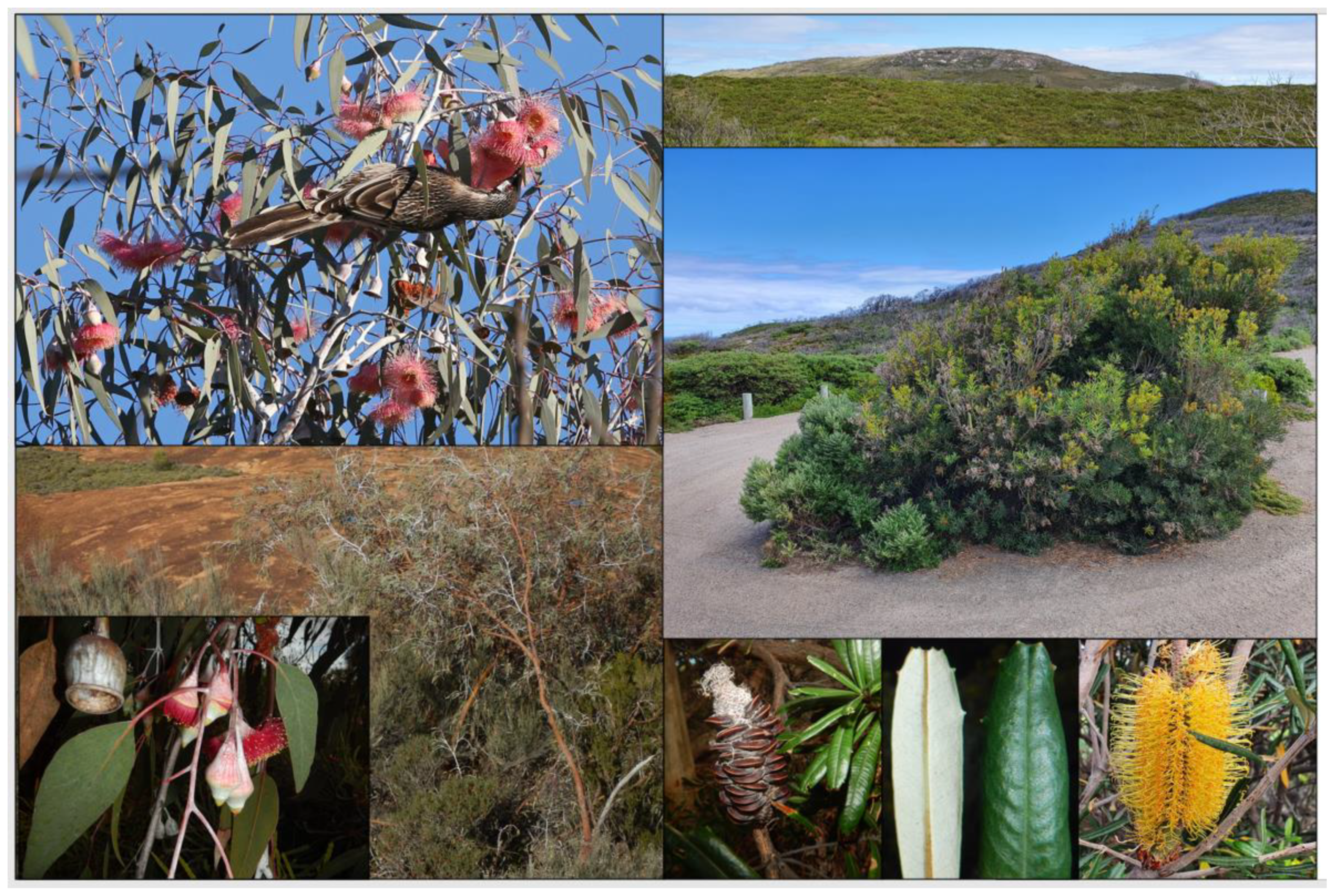
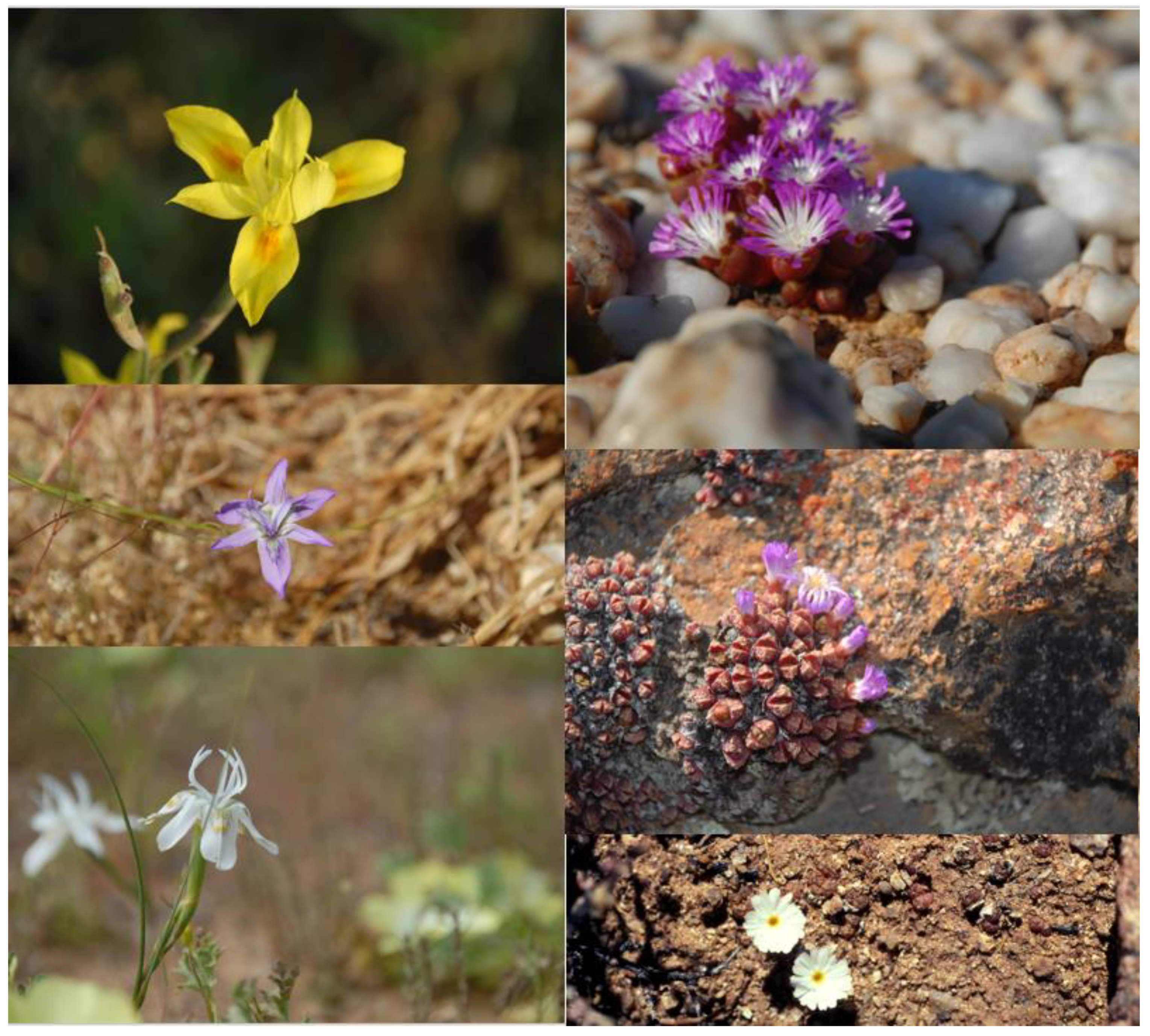
OCBIL theory addresses the ecology, evolution, and conservation of biodiversity and cultural diversity on old climatically buffered infertile landscapes, which are especially prominent in southwest Australia and the Greater Cape Region of South Africa. Here, as a contribution to general theory on endemism, a few case studies are briefly discussed to ascertain the relevance of hypotheses in OCBIL theory to understanding narrow endemism in Mediterranean climate regions. Two new conservation management hypotheses are also introduced—minimising disturbance of OCBILS and conserving cross-culturally to achieve best outcomes. Case studies of endemics in southwest Australia (e.g., Eucalyptus caesia, Anigozanthos, Cephalotaceae, Daspypogonaceae) and South Africa (Moraea, Conophytum) and more limited evidence for the Mediterranean Region conform to OCBIL theory predictions. Narrow endemics, concentrated in OCBILs, have diverse origins that embrace major hypotheses of OCBIL theory such as prolonged persistence and diversification in refugia, limited dispersal, coping with inbreeding in small disjunct population systems (the James Effect), special adaptations to nutrient-deficient soils, and special vulnerabilities (e.g., to soil disturbance and removal). Minimising disturbance to OCBILs is recommended as the primary conservation strategy. OCBIL theory has a potentially significant role to play in advancing understanding of narrow endemism of plants in Mediterranean climate regions and elsewhere.
Keywords: ancient landscapes; climatically buffered; infertile soils; Southwest Australian Florisitc Region; Greater Cape Floristic Region; speciation; extinction ancient landscapes; climatically buffered; infertile soils; Southwest Australian Florisitc Region; Greater Cape Floristic Region; speciation; extinction