The Genome Regions Associated with Abiotic and Biotic Stress Tolerance, as Well as Other Important Breeding Traits in Triticale


Abstract
1. Introduction
2. Genetic Maps
3. QTL and Candidate Gene Analysis
4. Low Temperature Tolerance
5. Fungal Infection Tolerance after Cold-Acclimation
6. Importance of the DH ‘Hewo’ × ‘Mangat’ Mapping Population
7. The Comparative Analysis of the Genomic Results Obtained from the DH ‘Hewo’ × ‘Magnat’ Mapping Population
8. Drought Tolerance
9. Effective Microspore Embryogenesis
10. Conclusions
Author Contributions
Funding
Acknowledgments
Conflicts of Interest
References
- Mergoum, M.; Sapkota, S.; ElDoliefy AE, A.; Naraghi, S.M.; Pirseyedi, S.; Alamri, M.S.; Abu Hammad, W. Triticale (× Triticosecale Wittmack) Breeding. In Advances in Plant Breeding Strategies: Cereals; Springer: Cham, Switzerland, 2019; pp. 405–451. [Google Scholar]
- Klocke, B.; Flath, K.; Miedaner, T. Virulence phenotypes in powdery mildew (Blumeria graminis) populations and resistance genes in triticale (× Triticosecale). Eur. J. Plant Pathol. 2013, 137, 463–476. [Google Scholar] [CrossRef]
- Ayalew, H.; Kumssa, T.T.; Butler, T.J.; Ma, X.F. Triticale improvement for forage and cover crop uses in the southern great plains of the United States. Front. Plant Sci. 2018, 9, 1130. [Google Scholar] [CrossRef] [PubMed]
- Tyrka, M.; Chelkowski, J. Enhancing the resistance of triticale by using genes from wheat and rye. J. Appl. Genet. 2004, 45, 283–296. [Google Scholar] [PubMed]
- Pronyk, C.; Mazza, G. Optimization of processing conditions for the fractionation of triticale straw using pressurized low polarity water. Bioresour. Technol. 2011, 102, 2016–2025. [Google Scholar] [CrossRef]
- Hura, T.; Hura, K.; Dziurka, K.; Ostrowska, A.; Bączek-Kwinta, R.; Grzesiak, M. An increase in the content of cell wall-bound phenolics correlates with the productivity of triticale under soil drought. J. Plant Physiol. 2012, 169, 1728–1736. [Google Scholar] [CrossRef]
- Niedziela, A.; Domżalska, L.; Dynkowska, W.M.; Pernisová, M.; Rybka, K. Aluminum Stress Induces Irreversible Proteomic Changes in the Roots of the Sensitive but Not the Tolerant Genotype of Triticale Seedlings. Plants 2022, 11, 165. [Google Scholar] [CrossRef]
- Rapacz, M.; Macko-Podgórni, A.; Jurczyk, B.; Kuchar, L. Modeling wheat and triticale winter hardiness under current and predicted winter scenarios for Central Europe: A focus on deacclimation. Agric. For. Meteorol. 2022, 313, 108739. [Google Scholar] [CrossRef]
- Arseniuk, E. Triticale abiotic stresses—An overview. In Triticale; Springer: Cham, Switzerland, 2015; pp. 69–81. [Google Scholar]
- Faostat. Food and Agriculture Organization of the United Nations. 2020. Available online: http://www.fao.org/ (accessed on 4 November 2022).
- Losert, D.; Maurer, H.P.; Marulanda, J.J.; Würschum, T. Phenotypic and genotypic analyses of diversity and breeding progress in European triticale (× Triticosecale Wittmack). Plant Breed. 2017, 136, 18–27. [Google Scholar] [CrossRef]
- Kwiatek, M.T.; Nawracała, J. Chromosome manipulations for progress of triticale (×Triticosecale Wittmack) breeding. Plant Breed. 2018, 137, 823–831. [Google Scholar] [CrossRef]
- Tams, S.H.; Bauer, E.; Oettler, G.; Melchinger, A.E. Genetic diversity in European winter triticale determined with SSR markers and coancestry coefficient. Theor. Appl. Genet. 2004, 108, 1385–1391. [Google Scholar] [CrossRef]
- Badea, A.; Eudes, F.; Salmon, D.; Tuvesson, S.; Vrolijk, A.; Larsson, C.T.; Caig, V.; Hutter, E.; Kilian, A.; Laroche, A. Development and assessment of DArT markers in triticale. Theor. Appl. Genet. 2011, 122, 1547–1560. [Google Scholar] [CrossRef]
- Tyrka, M.; Oleszczuk, S.; Rabiza-Swider, J.; Wos, H.; Wedzony, M.; Zimny, J.; Ponitka, A.; Ślusarkiewicz-Jarzina, A.; Metzger, R.J.; Baenziger, P.S.; et al. Populations of doubled haploids for genetic mapping in hexaploid winter triticale. Mol. Breed. 2018, 38, 46. [Google Scholar] [CrossRef]
- Dyda, M.; Tyrka, M.; Gołębiowska, G.; Rapacz, M.; Wędzony, M. Genetic mapping of adult-plant resistance genes to powdery mildew in triticale. J. Appl. Genet. 2022, 63, 73–86. [Google Scholar] [CrossRef]
- Miedaner, T.; Flath, K.; Starck, N.; Weißmann, S.; Maurer, H.P. Quantitative-Genetic Evaluation of Resistances to Five Fungal Diseases in A Large Triticale Diversity Panel (× Triticosecale). Crops 2022, 2, 16. [Google Scholar] [CrossRef]
- González, J.M.; Muñiz, L.M.; Jouve, N. Mapping of QTLs for androgenetic response based on a molecular genetic map of × Triticosecale Wittmack. Genome 2005, 48, 999–1009. [Google Scholar] [CrossRef]
- Alheit, K.V.; Reif, J.C.; Maurer, H.P.; Hahn, V.; Weissmann, E.A.; Miedaner, T.; Würschum, T. Detection of segregation distortion loci in triticale (× Triticosecale Wittmack) based on a high-density DArT marker consensus genetic linkage map. BMC Genom. 2011, 12, 380. [Google Scholar] [CrossRef]
- Tyrka, M.; Bednarek, P.T.; Kilian, A.; Wędzony, M.; Hura, T.; Bauer, E. Genetic map of triticale compiling DArT, SSR, and AFLP markers. Genome 2011, 54, 391–401. [Google Scholar] [CrossRef]
- Tyrka, M.; Tyrka, D.; Wędzony, M. Genetic map of triticale integrating microsatellite, DArT and SNP markers. PLoS ONE 2015, 10, e0145714. [Google Scholar] [CrossRef]
- Karbarz, M.; Tyrka, M.; Woźniak-Strzembicka, A.; Czajowski, G.; Wardyńska, A.; Tyrka, D.; Pojmaj, M.; Wędzony, M. Quantitative trait loci mapping of adult-plant resistance to powdery mildew in triticale. Ann. Appl. Biol. 2020, 177, 223–231. [Google Scholar] [CrossRef]
- Wąsek, I.; Dyda, M.; Gołębiowska, G.; Tyrka, M.; Rapacz, M.; Szechyńska-Hebda, M.; Wędzony, M. Quantitative trait loci and candidate genes associated with freezing tolerance of winter triticale (× Triticosecale Wittmack). J. Appl. Genet. 2022, 63, 15–33. [Google Scholar] [CrossRef]
- Kalih, R.; Maurer, H.P.; Miedaner, T. Genetic architecture of Fusarium head blight resistance in four winter triticale populations. Phytopathology 2015, 105, 334–341. [Google Scholar] [CrossRef] [PubMed]
- Dhariwal, R.; Fedak, G.; Dion, Y.; Pozniak, C.; Laroche, A.; Eudes, F.; Randhawa, H.S. High density single nucleotide polymorphism (SNP) mapping and quantitative trait loci (QTL) analysis in a biparental spring triticale population localized major and minor effect Fusarium head blight resistance and associated traits QTL. Genes 2018, 9, 19. [Google Scholar] [CrossRef] [PubMed]
- Ollier, M.; Talle, V.; Brisset, A.-L.; Le Bihan, Z.; Duerr, S.; Lemmens, M.; Goudemand, E.; Robert, O.; Hilbert, J.-L.; Buerstmayr, H. QTL mapping and successful introgression of the spring wheat-derived QTL Fhb1 for Fusarium head blight resistance in three European triticale populations. Theor. Appl. Genet. 2020, 133, 457–477. [Google Scholar] [CrossRef] [PubMed]
- Müller, M.C.; Kunz, L.; Graf, J.; Schudel, S.; Keller, B. Host adaptation through hybridization: Genome analysis of triticale powdery mildew reveals unique combination of lineage-specific effectors. Mol. Plant-Microbe Interact. 2021, 34, 1350–1357. [Google Scholar] [CrossRef]
- Dyda, M.; Tyrka, M.; Gołębiowska, G.; Rapacz, M.; Wędzony, M. Mapping of QTL and candidate genes associated with powdery mildew resistance in triticale (× Triticosecale Wittm.). Plant Growth Regul. 2022, 98, 103–115. [Google Scholar] [CrossRef]
- Zhao, F.; Li, D.; Tian, X.; Du, W. QTL mapping for the resistance to yellow rust race CYR34 in triticale. Chil. J. Agric. Res. 2020, 80, 405–412. [Google Scholar] [CrossRef]
- Szechyńska-Hebda, M.; Wędzony, M.; Tyrka, M.; Gołębiowska, G.; Chrupek, M.; Czyczyło-Mysza, I.; Dubas, E.; Żur, I.; Golemiec, E. Identifying QTLs for cold-induced resistance to Microdochium nivale in winter triticale. Plant Genet. Resour. 2011, 9, 296–299. [Google Scholar] [CrossRef]
- Dyda, M.; Wąsek, I.; Tyrka, M.; Wędzony, M.; Szechyńska-Hebda, M. Local and systemic regulation of PSII efficiency in triticale infected by the hemibiotrophic pathogen Microdochium nivale. Physiol. Plant. 2019, 165, 711–727. [Google Scholar] [CrossRef]
- Gołębiowska, G.; Dyda, M.; Wajdzik, K. Quantitative trait loci and candidate genes associated with cold-acclimation and Microdochium nivale tolerance/susceptibility in winter triticale (× Triticosecale). Plants 2021, 10, 2678. [Google Scholar] [CrossRef]
- Hura, T.; Hura, K.; Grzesiak, S. Physiological and biochemical parameters for identification of QTLs controlling the winter triticale drought tolerance at the seedling stage. Plant Physiol. Biochem. 2009, 47, 210–214. [Google Scholar] [CrossRef]
- Hura, T.; Tyrka, M.; Hura, K.; Ostrowska, A.; Dziurka, K. QTLs for cell wall-bound phenolics in relation to the photosynthetic apparatus activity and leaf water status under drought stress at different growth stages of triticale. Mol. Genet. Genom. 2017, 292, 415–433. [Google Scholar] [CrossRef]
- Ostrowska, A.; Tyrka, M.; Dziurka, M.; Hura, K.; Hura, T. Participation of wheat and rye genome in drought induced senescence in winter triticale (× Triticosecale Wittm.). Agronomy 2019, 9, 195. [Google Scholar] [CrossRef]
- Alheit, K.V.; Busemeyer, L.; Liu, W.; Maurer, H.P.; Gowda, M.; Hahn, V.; Weissmann, S.; Ruckelshausen, A.; Reif, J.C.; Würschum, T. Multiple-line cross QTL mapping for biomass yield and plant height in triticale (× Triticosecale Wittmack). Theor. Appl. Genet. 2014, 127, 251–260. [Google Scholar] [CrossRef]
- Würschum, T.; Liu, W.; Busemeyer, L.; Tucker, M.; Reif, J.; Weissmann, E.; Hahn, V.; Ruckelshausen, A.; Maurer, H.P. Mapping dynamic QTL for plant height in triticale. BMC Genet. 2014, 15, 59. [Google Scholar] [CrossRef]
- Wajdzik, K.; Gołębiowska, G.; Dyda, M.; Gawrońska, K.; Rapacz, M.; Wędzony, M. The QTL mapping of the important breeding traits in winter triticale (× Triticosecale Wittm.). Cereal Res. Commun. 2019, 47, 395–408. [Google Scholar] [CrossRef]
- Neuweiler, J.E.; Maurer, H.P.; Würschum, T. Long-term trends and genetic architecture of seed characteristics, grain yield and correlated agronomic traits in triticale (×Triticosecale Wittmack). Plant Breed. 2020, 139, 717–729. [Google Scholar] [CrossRef]
- Trini, J.; Maurer, H.P.; Neuweiler, J.E.; Würschum, T. Identification and fine-mapping of quantitative trait loci controlling plant height in central European winter triticale (× Triticosecale Wittmack). Plants 2021, 10, 1592. [Google Scholar] [CrossRef]
- Krzewska, M.; Czyczyło-Mysza, I.; Dubas, E.; Gołębiowska-Pikania, G.; Żur, I. Identification of QTLs associated with albino plant formation and some new facts concerning green versus albino ratio determinants in triticale (× Triticosecale Wittm.) anther culture. Euphytica 2015, 206, 263–278. [Google Scholar] [CrossRef]
- Krzewska, M.; Czyczyło-Mysza, I.; Dubas, E.; Gołębiowska-Pikania, G.; Golemiec, E.; Stojałowski, S.; Chrupek, M.; Żur, I. Quantitative trait loci associated with androgenic responsiveness in triticale (× Triticosecale Wittm.) anther culture. Plant Cell Rep. 2012, 31, 2099–2108. [Google Scholar] [CrossRef]
- Krzewska, M.; Czyczylo-Mysza, I.; Dubas, E.; Golembiowska-Pikania, G.; Janowiak, F.; Stojalowski, S.; Zur, I. Identification of QTLs controling ABA accumulation in triticale (× Triticosecale Wittm.) anthers in response to androgenesis-inducing stress treatment. Acta Biol. Cracoviensia. Ser. Bot. Suppl. 2012, 54, 63. [Google Scholar]
- Żur, I.; Krzewska, M.; Dubas, E.; Gołębiowska-Pikania, G.; Janowiak, F.; Stojałowski, S. Molecular mapping of loci associated with abscisic acid accumulation in triticale (× Triticosecale Wittm.) anthers in response to low temperature stress inducing androgenic development. Plant Growth Regul. 2012, 68, 483–492. [Google Scholar] [CrossRef]
- Deng, C.; Zhang, Z.; Yan, G.; Wang, F.; Zhao, L.; Liu, N.; Abudurezike, A.; Li, Y.; Wang, W.; Shi, S. Salt-responsive transcriptome analysis of triticale reveals candidate genes involved in the key metabolic pathway in response to salt stress. Sci. Rep. 2020, 10, 20669. [Google Scholar] [CrossRef] [PubMed]
- Rapacz, M.; Ergon, Å.; Höglind, M.; Jørgensen, M.; Jurczyk, B.; Østrem, L.; Rognli, O.A.; Tronsmo, A.M. Overwintering of herbaceous plants in a changing climate. Still more questions than answers. Plant Sci. 2014, 225, 34–44. [Google Scholar] [CrossRef]
- Rapacz, M. Chlorophyll a fluorescence transient during freezing and recovery in winter wheat. Photosynthetica 2007, 45, 409–418. [Google Scholar] [CrossRef]
- Rapacz, M.; Woźniczka, A. A selection tool for freezing tolerance in common wheat using the fast chlorophyll a fluorescence transient. Plant Breed. 2009, 128, 227–234. [Google Scholar] [CrossRef]
- Rapacz, M.; Tyrka, M.; Kaczmarek, W.; Gut, M.; Wolanin, B.; Mikulski, W. Photosynthetic acclimation to cold as a potential physiological marker of winter barley freezing tolerance assessed under variable winter environment. J. Agron. Crop Sci. 2008, 194, 61–71. [Google Scholar] [CrossRef]
- Rapacz, M.; Jurczyk, B.; Sasal, M. Deacclimation may be crucial for winter survival of cereals under warming climate. Plant Sci. 2017, 256, 5–15. [Google Scholar] [CrossRef]
- Gołębiowska-Pikania, G.; Dziurka, M.; Wąsek, I.; Wajdzik, K.; Dyda, M.; Wędzony, M. Changes in phenolic acid abundance involved in low temperature and Microdochium nivale (Samuels and Hallett) cross-tolerance in winter triticale (× Triticosecale Wittmack). Acta Physiol. Plant. 2019, 41, 38. [Google Scholar] [CrossRef]
- Gołębiowska, G.; Stawoska, I.; Wesełucha-Birczyńska, A. Cold-modulated leaf compounds in winter triticale DH lines tolerant to freezing and Microdochium nivale infection: LC-MS and Raman study. Funct. Plant Biol. 2022, 49, 725–741. [Google Scholar] [CrossRef]
- Golebiowska, G.J.; Bonar, E.; Emami, K.; Wędzony, M. Cold-modulated small proteins abundance in winter triticale (× Triticosecale, Wittm.) seedlings tolerant to the pink snow mould (Microdochium nivale, Samuels and Hallett) infection. Acta Biochim. Pol. 2019, 66, 343–350. [Google Scholar] [CrossRef]
- Żur, I.; Gołebiowska, G.; Dubas, E.; Golemiec, E.; Matusikova, I.; Libantova, J.; Moravcikova, J. b-1,3-glucanase and chitinase activities in winter triticales during cold hardening and subsequent infection by Microdochium nivale. Biologia 2013, 68, 241248. [Google Scholar] [CrossRef]
- Gawronska, K.; Gołębiowska-Pikania, G. The effects of cold-hardening and Microdochium nivale infection on oxidative stress and antioxidative protection of the two contrasting genotypes of winter triticale. Eur. Food Res. Technol. 2016, 242, 1267–1276. [Google Scholar] [CrossRef]
- Golebiowska, G.; Wedzony, M. Cold-hardening of winter triticale (× Triticosecale Wittm.) results in increased resistance to pink snow mould Microdochium nivale (Fr., Samuels and Hallett) and genotype-dependent chlorophyll fluorescence modulations. Acta Physiol. Plant. 2009, 31, 1219. [Google Scholar] [CrossRef]
- Golebiowska-Pikania, G.; Golemiec, E. Cold-enhanced gene expression of the foliar thiol-specific antioxidant protein in triticale (× Triticosecale Wittm.) seedlings resistant to Microdochium nivale (Samuels and IC Hallett) infection. Zesz. Nauk. Acta Biologica. Uniw. Szczeciński 2015, 22, 97–117. [Google Scholar]
- Szechyńska-Hebda, M.; Hebda, M.; Mirek, M.; Miernik, K. Cold-induced changes in cell wall stability determine the resistance of winter triticale to fungal pathogen Microdochium nivale. J. Therm. Anal. Calorim. 2016, 126, 77–90. [Google Scholar] [CrossRef]
- Szechyńska-Hebda, M.; Hebda, M.; Mierzwiński, D.; Kuczyńska, P.; Mirek, M.; Wędzony, M.; van Lammeren, A.; Karpiński, S. Effect of cold-induced changes in physical and chemical leaf properties on the resistance of winter triticale (× Triticosecale) to the fungal pathogen Microdochium nivale. Plant Pathol. 2013, 62, 867–878. [Google Scholar] [CrossRef]
- Wędzony, M. Protocol for anther culture in hexaploid triticale (× Triticosecale Wittm.). In Doubled Haploid Production in Crop Plants; Springer: Dordrecht, The Netherlands, 2003; pp. 123–128. [Google Scholar]
- Gelang, J.; Pleijel, H.; Sild, E.; Danielsson, H.; Younis, S.; Selldén, G. Rate and duration of grain filling in relation to flag leaf senescence and grain yield in spring wheat (Triticum aestivum) exposed to different concentrations of ozone. Physiol. Plant. 2000, 110, 366–375. [Google Scholar] [CrossRef]
- Kura-Hotta, M.; Satoh, K.; Katoh, S. Relationship between photosynthesis and chlorophyll content during leaf senescence of rice seedlings. Plant Cell Physiol. 1987, 28, 1321–1329. [Google Scholar]
- Wingler, A.; Purdy, S.; MacLean, J.A.; Pourtau, N. The role of sugars in integrating environmental signals during the regulation of leaf senescence. J. Exp. Bot. 2006, 57, 391–399. [Google Scholar] [CrossRef]
- Hura, T.; Hura, K.; Ostrowska, A.; Urban, K. Non-rolling flag leaves use an effective mechanism to reduce water loss and light-induced damage under drought stress. Ann. Bot. 2022, 130, 393–408. [Google Scholar] [CrossRef]
- Krzewska, M.; Dubas, E.; Gołębiowska, G.; Nowicka, A.; Janas, A.; Zieliński, K.; Surówka, E.; Kopeć, P.; Mielczarek, P.; Żur, I. Comparative proteomic analysis provides new insights into regulation of microspore embryogenesis induction in winter triticale (× Triticosecale Wittm.) after 5-azacytidine treatment. Sci. Rep. 2021, 11, 22215. [Google Scholar] [CrossRef] [PubMed]
- Żur, I.; Dubas, E.; Krzewska, M.; Kopeć, P.; Nowicka, A.; Surówka, E.; Gawrońska, K.; Gołębiowska, G.; Juzoń, K.; Malaga, S. Triticale and barley microspore embryogenesis induction requires both reactive oxygen species generation and efficient system of antioxidative defence. Plant Cell Tissue Organ Cult. 2021, 145, 347–366. [Google Scholar] [CrossRef]

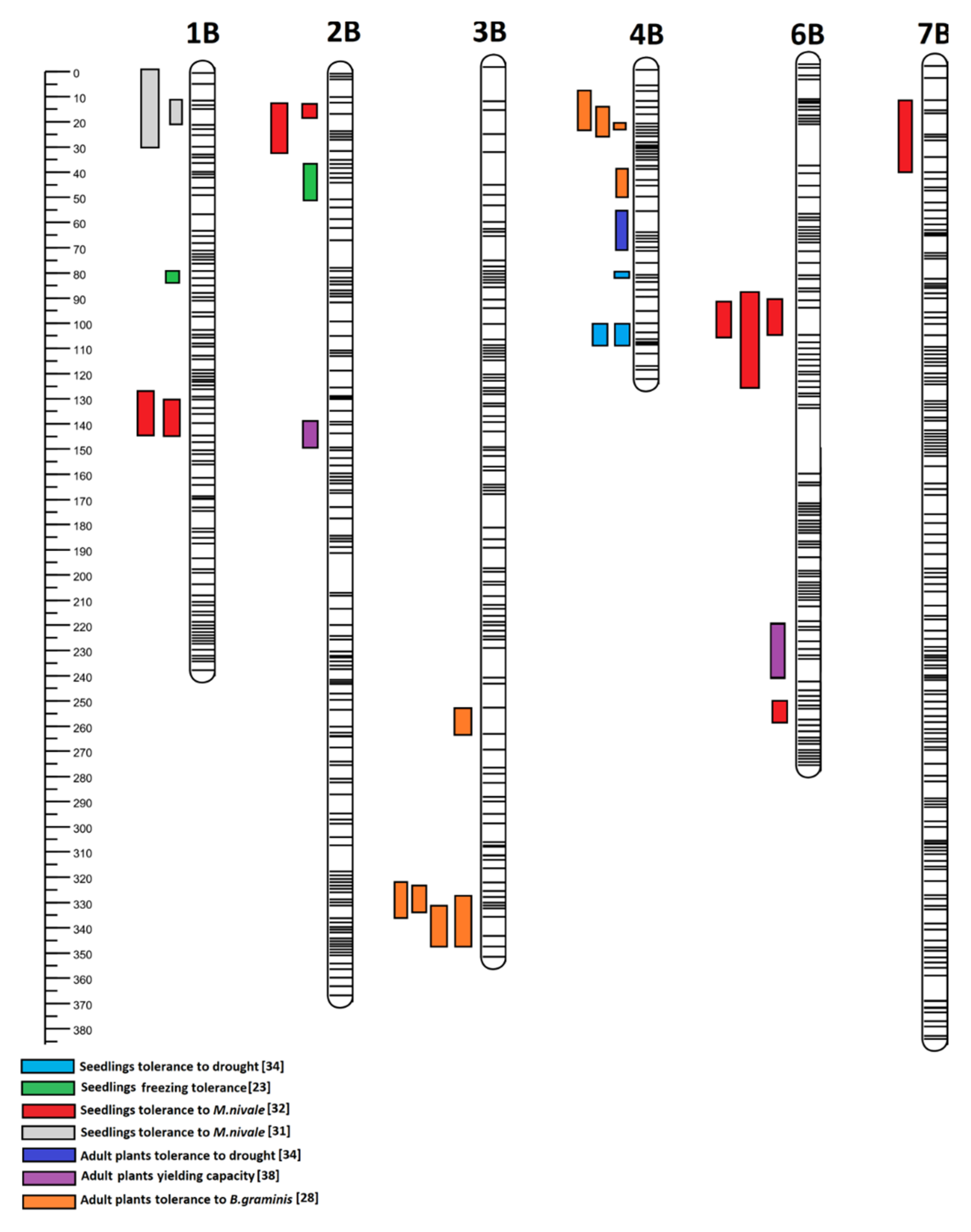
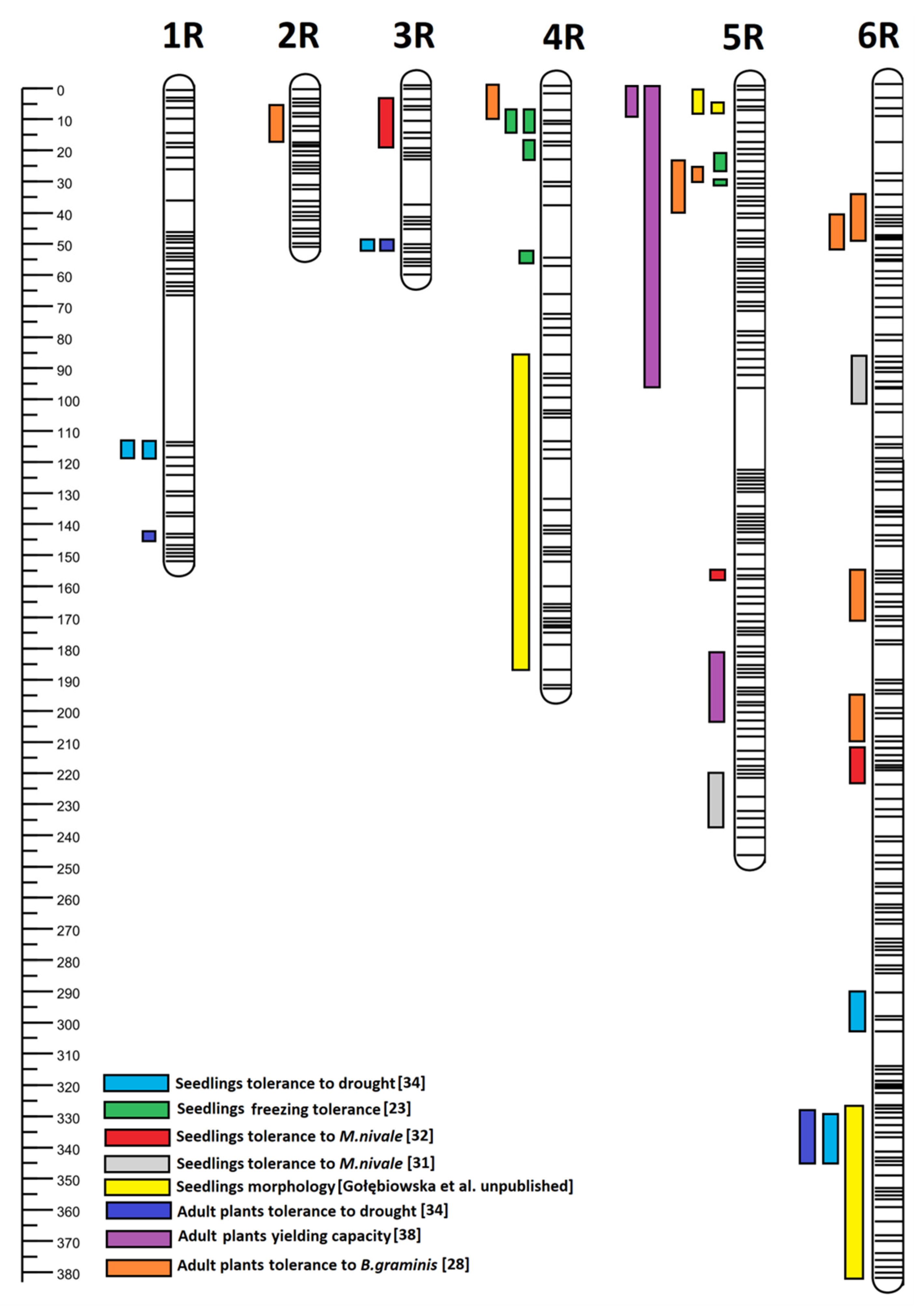
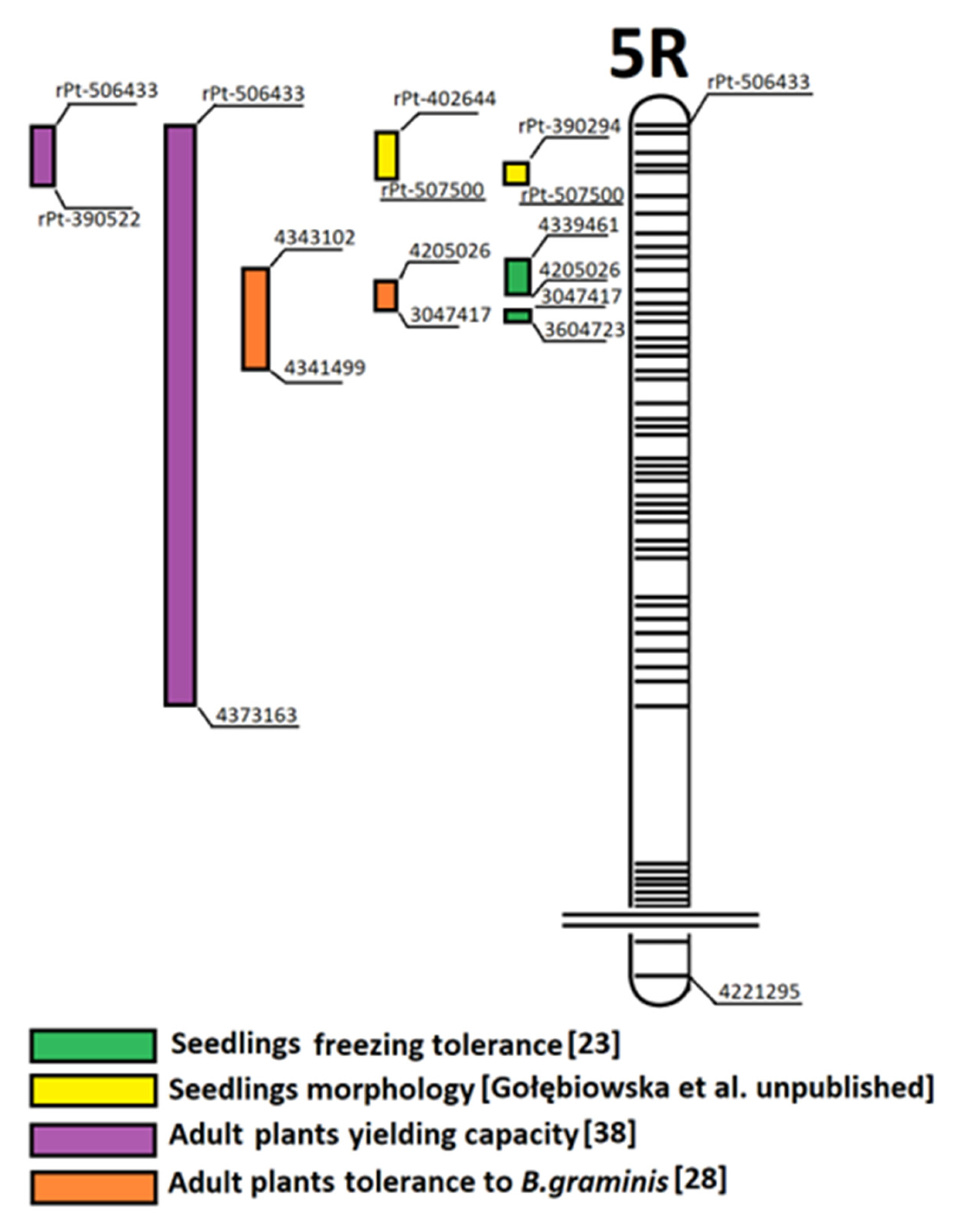

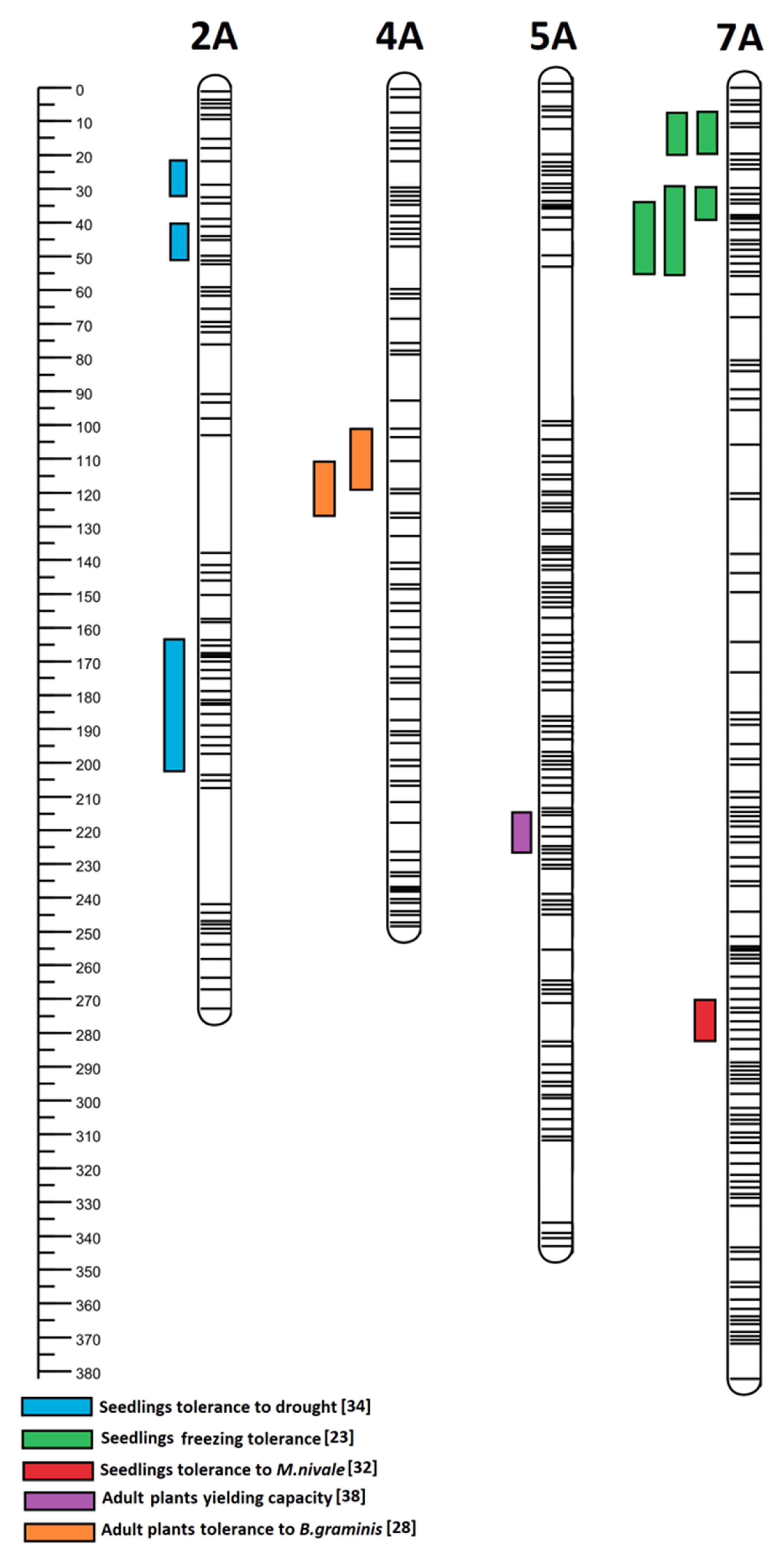
| Trait | Chromosome | QTL Position [cM] | ID of the Candidate Sequence Identified | Predicted Protein Coded by the Candidate Sequence | Predicted Function of the Candidate Protein | Additive Effect * | Reference |
|---|---|---|---|---|---|---|---|
| Seedling morphology after cold-acclimation (controlled conditions) | |||||||
| Second leaf length, second leaf sheath length, second leaf blade length as well as second leaf length to second leaf width ratio | 5R | 5–11 | a. XM_044505887.1 b. XM_044528234.1 c. XM_020293712.3 | a. F-box/FBD/LRR-repeat protein b. Myosin-10-like c. Thylakoid membrane protein TERC | a. Negative regulation of long-day photoperiodism and flowering; regulation of short-day photoperiodism and flowering b. ATP binding myosin complex; cytoskeletal motor actin filament binding c. Integral thylakoid membrane protein that plays a crucial role in thylakoid membrane biogenesis and thylakoid formation in early chloroplast development, essential for de novo synthesis of photosystem II (PSII) core proteins and required for efficient insertion of thylakoid membrane proteins. May assist synthesis of thylakoid membrane proteins at the membrane insertion step | H | Gołębiowska et al., unpublished |
| Second leaf width | 4R | 91–193 | a. XM_044530858.1 b. XM_044507273.1 | a. Pentatricopeptide repeat-containing protein b. Receptor-like cytoplasmic kinase 176 | a. Chloroplast RNA modification b. Protein serine/threonine/tyrosine kinase activity; defense response; transferase activity; innate immune response. Participates in the activation of defense genes during response to PGN and chitin | ||
| 6R | 325–383 | XM_044584412.1 | Signal peptide peptidase-like 5 | Aspartic endopeptidase activity, intramembrane cleaving; lysosomal membrane; integral component of cytoplasmic side of endoplasmic reticulum membrane; Golgi associated vesicle membrane; membrane protein proteolysis | |||
| Second leaf length to second leaf width ratio | 5R | 3–11 | XM_044528388.1 | Xyloglucan endotransglucosylase/ hydrolase | Hydrolase activity, hydrolyzing O-glycosyl compounds; apoplast; cellular glucan metabolic process; xyloglucan: xyloglucosyl transferase activity | ||
| Second leaf length to second leaf width ratio | 4R | XM_044588536.1 | Fertilization independent endosperm 1 protein | Part of ESC/E(Z) complex in nucleus; nucleosome binding; negative regulation of transcription by RNA polymerase II; chromatin silencing complex; protein binding; chromatin organization; response to cold; negative regulation of flower development; vernalization response; regulation of endosperm development; histone methylation; regulation of gene expression by genomic imprinting; DNA-binding transcription factor activity | |||
| Seedling freezing tolerance after cold-acclimation (controlled conditions) | |||||||
| Electrolyte leakage and recovery after freezing during two years | 7A | 27.5–38.3 | M | [23] | |||
| 27.5–57.2 | XM_037576333.1 | PPR protein | Involved in chloroplast RNA processing, modification and splicing | H | |||
| Electrolyte leakage during two years | 8.9–19.9 | XM_037604689.1 | BTR1-like protein | mRNA binding and regulation of gene expression | |||
| Recovery after freezing | 1B | 79.9 | |||||
| Recovery after freezing | 2B | 36.3–46.1 | |||||
| Electrolyte leakage during two years | 4R | 9.8–16.5 | |||||
| Recovery after freezing during two years | 22.6–25.2 | M | |||||
| 57.2 | |||||||
| 5R | 22.2–26.5 | ||||||
| Electrolyte leakage | 32.0–32.9 | XM_037587241.1 | Nucleotide-gated ion channel | Voltage-gated potassium channel activity, cyclic nucleotidegated ion channel, integral component of membrane, transmembrane helical protein | H | ||
| Seedling tolerance to drought after cold-acclimation (controlled conditions) | |||||||
| Soluble phenolics content in in seedling’s leaves under drought stress | 2A | 26.8–32.5 164.1–202.5 | XM_044473408.1 | DNA topoisomerase | Chromatin organization and progression of endoreduplication cycles, reciprocal meiotic recombination | [34] | |
| 1R | 109.0–115.3 | ||||||
| Cell wall-bound phenolics content in seedling’s leaves under drought stress | 4B | 107.0–116.1 | XM_037571660.1 | PLASMODESMATA CALLOSE-BINDING PROTEIN | Able to bind (1->3)-beta-D-glucans (laminarin). Probably involved in cell-to-cell trafficking regulation. | ||
| Seedling’s leaf osmotic potential under drought stress | 2A | 43.7–52.3 | |||||
| 1R | 101.0–116.3 | ||||||
| 6R | 332.8–345.9 | ||||||
| The maximum quantum efficiency of PSII (Fv/Fm) in the seedling’s leaves under drought stress | 4B | 82.4–82.6 | |||||
| 106.8–116.1 | XM_037571660.1 | PLASMODESMATA CALLOSE-BINDING PROTEIN | Able to bind (1->3)-beta-D-glucans (laminarin). Probably involved in cell-to-cell trafficking regulation. | ||||
| 3R | 56.8–60.1 | XM_044496729.1 | General transcription factor IIE subunit | Transcription initiation from RNA polymerase II promoter | |||
| 6R | 293.7–300.4 | XM_044586654.1 | Tryptophan decarboxylase | May play a major role in serotonin biosynthesis during senescence. Accumulation of serotonin attenuates leaf senescence. | |||
| Seedling tolerance to M. nivale infection after cold-acclimation (controlled conditions) | |||||||
| Infection index as well as tolerance level | 1B | 128.6–144.1 | M | [32] | |||
| H | |||||||
| Infection index as well as tolerance level | 2B | 9.3–37.5 | XM_044465446.1 | Sterol 3-betaglucosyltransferase | Lipid glycosylation; UDP-glycosyltransferase activity; carbohydrate metabolic process | M | |
| H | |||||||
| Infection index as well as tolerance level during two years | 6B | 93.9–128.3 248.7–254.8 | M | ||||
| H | |||||||
| M | |||||||
| Tolerance level | 7A | 270.1–284.8 | H | ||||
| Tolerance level | 7B | 17.6–42.2 | |||||
| Tolerance level | 3R | 6.8–22.7 | |||||
| Tolerance level | 5R | 155.1–161.3 | M | ||||
| Tolerance level | 6R | 213.2–225.2 | |||||
| The maximum quantum efficiency of PSII (Fv/Fm) after Microdochium nivale infection | 1B | 10.0–17.0 | a. XM_044523565.1 b. XM_037589351.1 | a. Leucine-rich repeat receptor-like protein kinase b. Disease resistance protein RGA4 | a. Receptor with a serine/threonine-protein kinase activity b. Resistance proteins guard the plant against pathogens that contain an appropriate avirulence protein via a direct or indirect interaction with this avirulence protein. That triggers a defense system which restricts the pathogen growth | [31] | |
| 1.0–34.0 | |||||||
| 6R | 88.0–108.0 | ||||||
| Powdery mildew field tolerance in the adult stage | |||||||
| Field tolerance to powdery mildew in two different locations | 4A | 103.2–125.6 | XM_037572659.1 | Disease resistance protein RGA3 | Resistance proteins guard the plant against pathogens that contain an appropriate avirulence protein via a direct or indirect interaction with this avirulence protein. That triggers a defense system which restricts the pathogen growth | M | [28] |
| Field tolerance to powdery mildew in two different locations, for two locations the same result in two years | 3B | 254.4–264.9 | H | ||||
| 323.9–349.4 | Serine/threonine-protein kinase | Contributes to pathogen-associated molecular pattern (PAMP)-triggered immunity (PTI) signaling including calcium signaling and root growth inhibition, and defense responses downstream of FLS2 | |||||
| Field tolerance to powdery mildew in two different locations during two years | 4B | 15.0–56.2 | XM_037572350.1 | NAC domain-containing protein | Transcriptional activator that mediates auxin signaling to promote lateral root development. Activates the expression of two downstream auxin-responsive genes | ||
| Field tolerance to powdery mildew in one location | 2R | 7.8–17.2 | |||||
| Field tolerance to powdery mildew in one location | 4R | 0.0–11.3 | MG672525.1 | Triticum timopheevii isolate QPm.tut-4A powdery mildew resistance region genomic sequence | Associated with race non-specificity and incomplete resistance | ||
| Field tolerance to powdery mildew in three different locations | 5R | 24.2–37.0 | XM_037583016.1 | Chloroplastic protein FAF-like | Negative regulation of abscisic acid-activated signaling pathway, negative regulation of phosphorylation, positive regulation of phosphatase activity | ||
| 222.3–235.3 | XM_037581542.1 | Triticum dicoccoides xyloglucan endotransglucosylase/ hydrolase | Participates in cell wall construction of growing tissues. Involved in the accumulation of hemicelluloses, xyloglucan metabolic process, cell wall biogenesis, organization and macromolecule catabolic process | ||||
| Field tolerance to powdery mildew in two different locations during two years | 6R | 35.5–60.2 | M | ||||
| 156.3–172.1 | |||||||
| 194.7–209.4 | |||||||
| Drought tolerance in the adult stage (controlled conditions) | |||||||
| Cell wall-bound phenolics content in leaves under drought stress | 4B | 64.2–76.0 | [34] | ||||
| 3R | 55.6–60.1 | XM_044496729.1 | General transcription factor IIE subunit | Transcription initiation from RNA polymerase II promoter | |||
| 6R | 331.2–345.9 | ||||||
| The maximum quantum efficiency of PSII (Fv/Fm) under drought stress | 1R | 147.5–150.9 | U39321.1 | Acetyl-CoA carboxylase | Multifunctional enzyme that catalyzes the carboxylation of acetyl-CoA, forming malonyl-CoA, which is used in the plastid for fatty acid synthesis and in the cytosol in various biosynthetic pathways including fatty acid elongation. Required for very long chain fatty acids elongation. Necessary for embryo and plant development. Plays a central function in embryo morphogenesis, especially in apical meristem development. Involved in cell proliferation and tissue patterning. May act as a repressor of cytokinin response. | ||
| Yielding capacity in the field | |||||||
| Straw height | 5R | 0.0–97.1 | [38] | ||||
| Spike length | 6B | 223.6–245.3 | XM_044554178.1 | Ethylene-responsive transcription factor ERN1 | Transcription factor involved in the symbiotic nodule signaling pathway in response to rhizobial stimulation. Functions as a transcriptional regulator required for root infection by symbiotic rhizobia, infection thread (IT) formation, and nodule development. May coordinate these processes. | ||
| Grains per spike | 5A | 223.1–232.6 | |||||
| 2B | 138.3–152.7 | a. KR082547.1 b. XM_044538656.1 | a. Cultivar Extra Early Blackhull FTSH protease 4-B1 b. Carotenoid 9,10(9',10')-cleavage dioxygenase-like | a. Acts as a processive, ATP-dependent zinc metallopeptidase for both cytoplasmic and membrane proteins. Plays a role in the quality control of integral membrane proteins. b. Involved in strigolactone biosynthesis, hormones that inhibit tillering and shoot branching, contribute to the regulation of shoot architectural response to phosphate-limiting conditions, and function as a rhizosphere signal that stimulates hyphal branching of arbuscular mycorrhizal fungi and trigger seed germination of root parasitic weeds. | |||
| 5R | 180.2–203.9 | ||||||
| Thousand kernel weight | 5R | 0.0–7.9 | |||||
| No. | Gene Name | Predicted Function |
|---|---|---|
| 1 | Chloroplastic protein FAF-like * | Negative regulation of ABA-activated signaling pathway, negative regulation of phosphorylation, positive regulation of phosphatase activity |
| 2 | F-box/FBD/LRR-repeat protein * | Negative regulation of long-day photoperiodism and flowering; regulation of short-day photoperiodism and flowering |
| 3 | Myosin-10-like * | ATP binding myosin complex, cytoskeletal motor actin filament binding |
| 4 | Thylakoid membrane protein TERC * | Integral thylakoid membrane protein that plays a crucial role in thylakoid membrane biogenesis and thylakoid formation in early chloroplast development, essential for synthesis of photosystem II (PSII) core proteins and required for efficient insertion of thylakoid membrane proteins. May assist synthesis of thylakoid membrane proteins at the membrane insertion step |
| 5 | Xyloglucan endotransglucosylase/hydrolase * | Hydrolase activity, hydrolyzing O-glycosyl compounds; apoplast; cellular glucan metabolic process; xyloglucan: xyloglucosyl transferase activity |
| 6 | Nucleotide-gated ion channel * | Voltage-gated potassium channel activity, cyclic nucleotide gated ion channel, integral transmembrane helical component of membrane |
| No. | Gene Name | Predicted Function [GO] |
|---|---|---|
| 1 | 2-oxoglutarate (2OG) Fe(II)-dependent oxygenase (2x) | L-ascorbic acid binding, oxidoreductase activity EC:1.14.11.2, acting on paired donors, with incorporation or reduction of molecular oxygen. |
| 2 | 2-oxoglutarate-dependent dioxygenase | Involved in the oxidation of jasmonate (JA), synthesized in response to attack by pathogens and herbivores, which triggers the activation of defense responses via the JA-mediated signaling pathway. |
| 3 | Basic helix-loop-helix (bHLH) DNA-binding superfamily protein | Negative regulation of innate immune response, regulation of pattern recognition receptor signaling pathway, regulation of transcription, DNA-templated, response to cytokinin, unidimensional cell growth. |
| 4 | Basic-leucine zipper (bZIP) transcription factor family protein | Cellular response to glucose stimulus. |
| 5 | Ankyrin repeat-containing protein | Involved in salt stress tolerance. May act through abscisic acid (ABA) signaling pathways and promote reactive oxygen species (ROS) production. |
| 6 | AP-2 complex subunit alpha-2 | Clathrin-dependent endocytosis, intracellular protein transport, receptor-mediated endocytosis. |
| 7 | ATP-dependent RNA helicase DeaD | Involved in mRNA turnover, and more specifically in mRNA decapping. Involved in response to cold, salt stress and water deprivation. |
| 8 | Beta-amylase | Response to water deprivation and starch catabolic process. |
| 9 | BTB/POZ and MATH domain-containing protein (2x) | Protein ubiquitination and response to abiotic stimulus, a.o. salt stress, osmotic stress and water deprivation. |
| 10 | Carboxyl-terminal peptidase putative DUF239 (2x) | Neprosin, integral component of membrane. |
| 11 | Chaperone DnaK (2x) | ATP-dependent protein folding chaperone. |
| 12 | Cold regulated protein (COR) 27 | Negative regulation of transcription, DNA-templated, regulation of circadian rhythm, regulation of photoperiodism, flowering, response to abscisic acid, response to absence of light, response to blue and red light, response to cold and virus, vegetative to reproductive phase transition of meristem. |
| 13 | Cyclin delta-3 | G1/S transition of mitotic cell cycle, guard mother cell differentiation, regulation of cyclin-dependent protein serine/threonine kinase activity, response to cytokinin, response to sucrose, seed development. |
| 14 | Cysteine protease (4x) | Programmed cell death involved in cell development. |
| 15 | Cysteine proteinase inhibitor | Cellular response to heat, defense response, response to cold, water deprivation and oxidative stress, positive regulation of seed germination. |
| 16 | Cytochrome P450 (10x) | Leaf and root development, oxidoreductase activity, regulation of growth, response to insect, signalling. |
| 17 | Dihydrofolate reductase | Tetrahydrofolate biosynthetic process. |
| 18 | Dipeptidyl peptidase (2x) | Proteolysis. |
| 19 | Dirigent protein DNA (Cytosine-5-)-methyltransferase (3x) | Phenylpropanoid biosynthetic process. |
| 20 | Egg cell-secreted protein 1.1 | Regulation of double fertilization forming a zygote and endosperm. |
| 21 | Embryogenesis transmembrane protein-like (2x) | Brassinosteroid mediated signaling pathway, cell death, cellular response to hypoxia, leaf senescence, negative regulation of cell death, protein phosphorylation, regulation of seedling development. |
| 22 | F-box family protein (5x) | Regulation of cell division, seed development, regulation of stomatal movement, response to abscisic acid, response to water deprivation. |
| 23 | Flavin-containing monooxygenase | Glucosinolate biosynthetic process from homomethionine, defense response to bacterium, defense response to fungus, L-pipecolic acid biosynthetic process, plant-type hypersensitive response, response to other organism, systemic acquired resistance. |
| 24 | Folylpolyglutamate synthase | Folic acid-containing compound biosynthetic process, photorespiration, seedling development. |
| 25 | Glycerol-3-phosphate acyltransferase 3 | Fatty acid biosynthetic process, cutin and suberin biosynthetic process. |
| 26 | Glycolipid transfer protein domain-containing protein (3x) | Lipid transfer activity. |
| 27 | Glycosyltransferase (3x) | Regulation of plant-type cell wall cellulose biosynthetic process. |
| 28 | Heat shock transcription factor (3x) | Cellular heat acclimation. |
| 29 | Histone acetyltransferase of the CBP family 12 (7x) | Histone acetylation, positive regulation of transcription by RNA polymerase II. |
| 30 | Homeobox leucine-zipper protein | Auxin-activated signaling pathway, negative regulation of transcription DNA-templated, shade avoidance, unidimensional cell growth, reproduction, response to abscisic acid and cytokinin, osmotic stress, virus and water deprivation. |
| 31 | Kinase interacting (KIP1-like) family protein | Actin binding. |
| 32 | L-gulonolactone oxidase (2x) | L-gulonolactone oxidase activity, oxidoreductase activity, L-ascorbic acid biosynthetic process. |
| 33 | Lipid transfer protein (9x) | Defense response to fungus, induced systemic resistance, response to abscisic acid, response to cold, response to salt stress. |
| 34 | L-type lectin-domain containing receptor kinase VIII | Defense response to bacterium, defense response to oomycetes. |
| 35 | LURP-one-like protein | Might be related to the phospholipid scramblase and tubby-like superfamily of membrane tethered transcription factors. |
| 36 | Metacaspase-1 | Defense response, positive regulation of programmed cell death, proteolysis. |
| 37 | Mucosal address in cell adhesion molecule 1 | Positive regulation of cell population proliferation. |
| 38 | NAC domain-containing protein | Positive regulation of secondary cell wall biogenesis, regulation of transcription DNA-templated, defence response. |
| 39 | Nascent polypeptide-associated complex subunit beta | Polysomal ribosome, cold acclimation, response to salt. |
| 40 | Nicotianamine synthase (3x) | Synthesizes nicotianamine, a polyamine which serves as a sensor for the physiological iron status within the plant, and/or might be involved in the transport of iron. |
| 41 | O-methyltransferase (3x) | Methylation. |
| 42 | Organic cation transporter protein | Organic cation transport. |
| 43 | P1 (2x) | Aminopeptidase activity, manganese ion binding, N-1-naphthylphthalamic acid binding, zinc ion binding, auxin polar transport. |
| 44 | Peptidoglycan-binding LysM domain protein | Defence response, response to chitin. |
| 45 | Peroxidase (2x) | Hydrogen peroxide catabolic process, response to oxidative stress. |
| 46 | Photosystem I assembly protein Ycf3 | Essential for the assembly of the photosystem I (PSI) complex. May act as a chaperone-like factor to guide the assembly of the PSI subunits. |
| 47 | Photosystem II CP43 reaction center protein | Photosynthetic electron transport in photosystem II. |
| 48 | Polyamine oxidase | Plays an important role in the regulation of polyamine intracellular concentration. Involved in abscisic acid-mediated developmental processes. May contribute to nitric oxide-mediated effects on root growth. |
| 49 | Polyphenol oxidase (3x) | Pigment biosynthetic process. |
| 50 | Polyubiquitin (2x) | Ubiquitin-dependent protein catabolic process, response to salicylic acid and UV. |
| 51 | Protease inhibitor/seed storage/lipid transfer protein | Lipid transfer activity. |
| 52 | Protein FAR1-RELATED SEQUENCE 5 | Regulation of transcription, DNA-templated. Putative transcription activator involved in regulating light control of development. |
| 53 | Retrotransposon protein | Retrotransposon protein. |
| 54 | Ribosomal RNA small subunit methyltransferase J (2x) | Cell division and fate specification. |
| 55 | rRNA N-glycosidase (2x) | Defence response. |
| 56 | Senescence regulator (DUF584) | Senescence regulator (DUF584) |
| 57 | Small nuclear ribonucleoprotein | Post-transcriptional gene silencing by RNA, spliceosomal snRNP assembly. |
| 58 | Terpene synthase | Mono-/diterpenoid biosynthetic, response to herbivore, response to jasmonic acid, response to wounding. |
| 59 | THO complex subunit 1 | mRNA export from nucleus and splicing, ta-siRNA processing, regulation of DNA-templated transcription, elongation. |
| 60 | Transcription elongation factor GreA | Regulation of DNA-templated transcription, elongation. |
| 61 | Transmembrane and coiled-coil domain-containing protein 4 | Endoplasmic reticulum to Golgi vesicle-mediated transport. |
| 62 | Transmembrane protein (4x) | Transmembrane protein. |
| 63 | Transporter-related family protein | Transporter-related family protein. |
| 64 | Trihelix transcription factor GT-2 | DNA-binding transcription factor activity. |
| 65 | Tryptophan decarboxylase | Serotonin biosynthetic process from tryptophan. |
| 66 | Tyrosine decarboxylase | Cellular amino acid metabolic process. |
| 67 | WD repeat-containing protein | Developmental vegetative growth. |
| 68 | Xyloglucan 6-xylosyltransferase (2x) | Xyloglucan biosynthetic process, cell wall biogenesis/degradation. |
Disclaimer/Publisher’s Note: The statements, opinions and data contained in all publications are solely those of the individual author(s) and contributor(s) and not of MDPI and/or the editor(s). MDPI and/or the editor(s) disclaim responsibility for any injury to people or property resulting from any ideas, methods, instructions or products referred to in the content. |
© 2023 by the authors. Licensee MDPI, Basel, Switzerland. This article is an open access article distributed under the terms and conditions of the Creative Commons Attribution (CC BY) license (https://creativecommons.org/licenses/by/4.0/).
Share and Cite
Golebiowska-Paluch, G.; Dyda, M. The Genome Regions Associated with Abiotic and Biotic Stress Tolerance, as Well as Other Important Breeding Traits in Triticale. Plants 2023, 12, 619. https://doi.org/10.3390/plants12030619
Golebiowska-Paluch G, Dyda M. The Genome Regions Associated with Abiotic and Biotic Stress Tolerance, as Well as Other Important Breeding Traits in Triticale. Plants. 2023; 12(3):619. https://doi.org/10.3390/plants12030619
Chicago/Turabian StyleGolebiowska-Paluch, Gabriela, and Mateusz Dyda. 2023. "The Genome Regions Associated with Abiotic and Biotic Stress Tolerance, as Well as Other Important Breeding Traits in Triticale" Plants 12, no. 3: 619. https://doi.org/10.3390/plants12030619
APA StyleGolebiowska-Paluch, G., & Dyda, M. (2023). The Genome Regions Associated with Abiotic and Biotic Stress Tolerance, as Well as Other Important Breeding Traits in Triticale. Plants, 12(3), 619. https://doi.org/10.3390/plants12030619