Article

Effectiveness of Leaf Rust Resistance Genes in the Adult and Juvenile Stages in Southern Russia in 2011–2020
Ministry of Science and Higher Education of the Russian Federation, Federal Scientific Center for Biological Plant Protection, 350039 Krasnodar, Russia
*
Author to whom correspondence should be addressed.
Plants 2022, 11(6), 793; https://doi.org/10.3390/plants11060793

Submission received: 11 February 2022 / Revised: 12 March 2022 / Accepted: 14 March 2022 / Published: 16 March 2022

Abstract

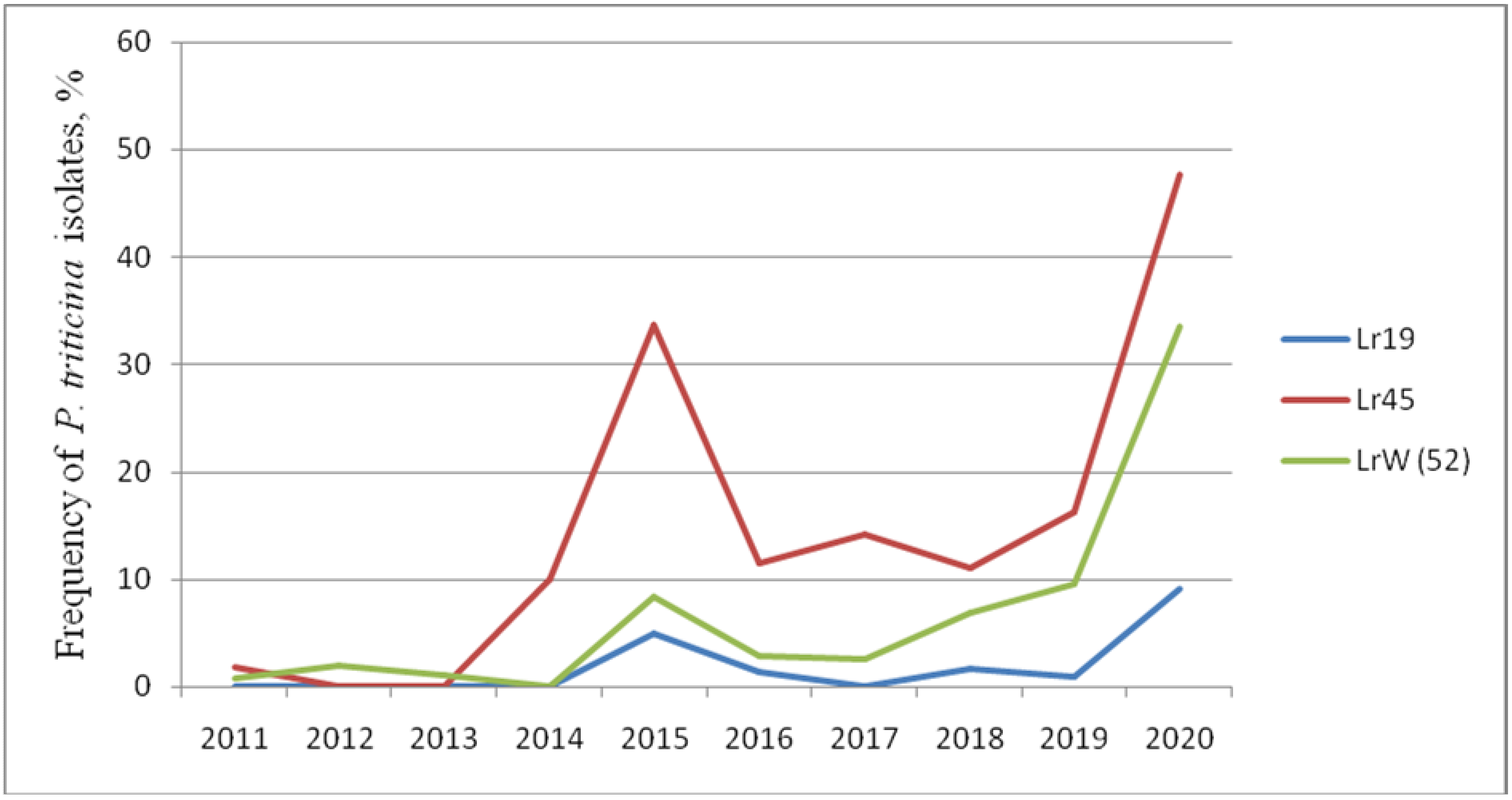
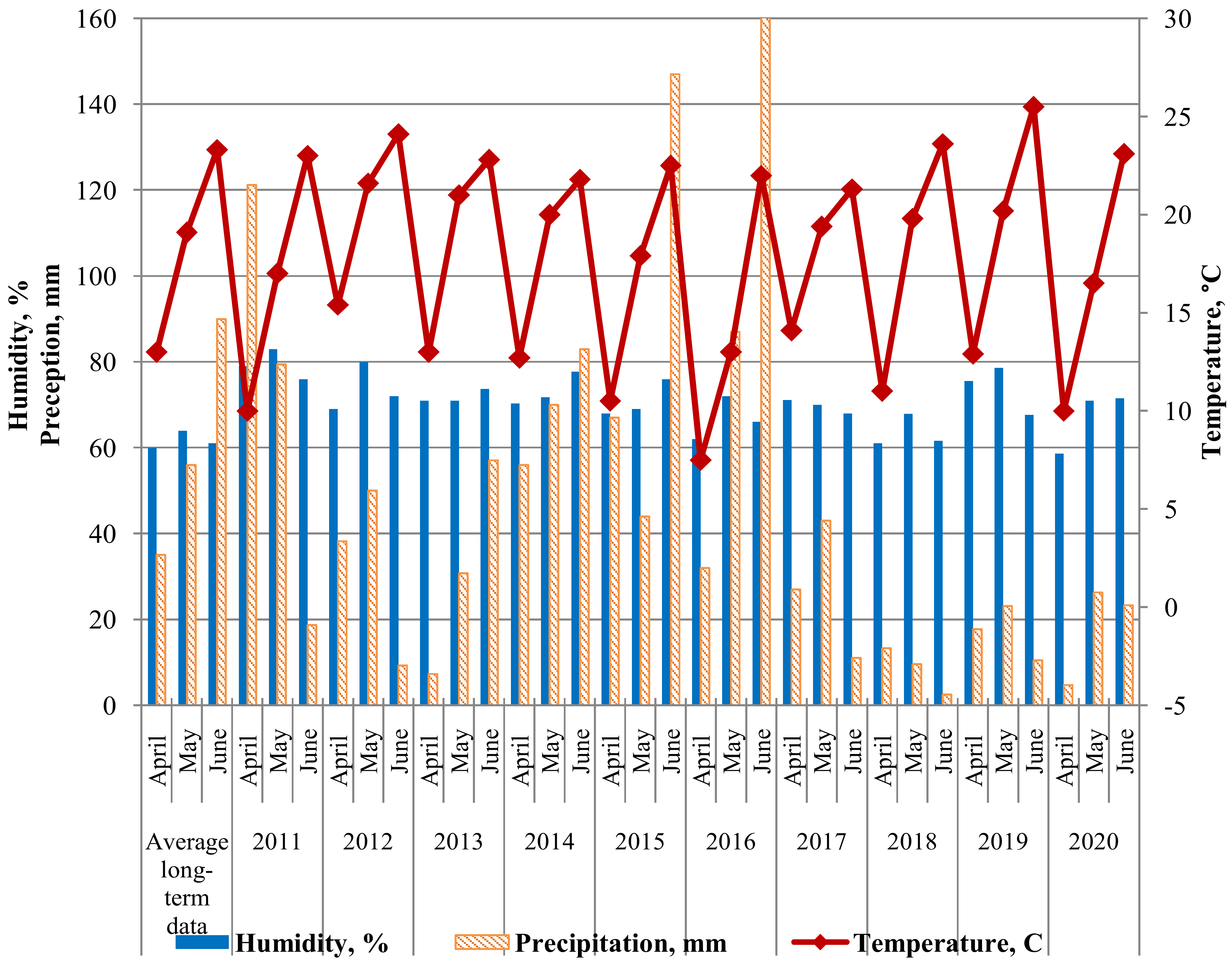
Puccinia triticina Erikss. is a causative agent of wheat leaf rust spread worldwide. Wheat rust is a major disease on wheat in southern regions of Russia, which are leaders in grain production and have favorable conditions for pathogen development. In this paper we studied the effectiveness of 52 NILs of cv. Thatcher with Lr genes in field trials and 41 NILs—in the juvenile phase in a greenhouse during 2011–2020. We conclude that the lines with Lr9, Lr42 and Lr43+24 genes remained immune in the adult phase during ten years of research. Lines with Lr genes: 19, 24, 29, 36, 37, 38, 43, 45, 47, 50 showed efficiency in field tests (1–5 R on the CIMMYT scale). No immune lines to Puccinia triticina were registered in the juvenile phase during 2011–2020. The line with the Lr9 gene remained immune up to 2020; Lr19 and Lr41—up to 2015; Lr42—up to 2018, and Lr50—up to 2019. In 2020, there was an increase of P. triticina isolates with virulence to Thatcher lines with Lr: 9, 14a, 16, 19, 21, 28, 30, 33, 40, 45, W, 50. Additionally, we registered a change in infection types towards more susceptible in isogenic Lr gene lines: 1, 2a, 12, 14b, 15, 18, 20, 23, 25, 28, 29, 32, 35, 36, 37, 38, 40, 44, 45 in the field. A sharp increase in the frequencies of virulent isolates was recorded in 2018–2020 due to unfavorable weather in the growing seasons. This indicates the ability of a dangerous pathogen to rapidly evolve in response to biotic and abiotic stresses. Therefore, annual monitoring of the reaction of isogenic lines, selected released varieties and the study of the virulence of the phytopathogen are important measures necessary to prevent and control leaf rust in grain-producing regions of the world.
Keywords: leaf rust; Puccinia triticina; resistance genes; APR-genes; ASR-genes; population; effectiveness leaf rust; Puccinia triticina; resistance genes; APR-genes; ASR-genes; population; effectiveness