Article

Effect of Salt Stress on Growth and Physiological Properties of Asparagus Seedlings

1
Institute of Crop Germplasm Resources (Institute of Biotechnology), Shandong Academy of Agricultural Sciences, Shandong Provincial Key Laboratory of Crop Genetic Improvement, Ecology and Physiology, Jinan 250100, China
2
Shandong Seed Administration Station, Jinan 250100, China
*
Authors to whom correspondence should be addressed.
Plants 2022, 11(21), 2836; https://doi.org/10.3390/plants11212836

Submission received: 20 September 2022 / Revised: 21 October 2022 / Accepted: 21 October 2022 / Published: 25 October 2022
(This article belongs to the Section Plant Response to Abiotic Stress and Climate Change)

Abstract

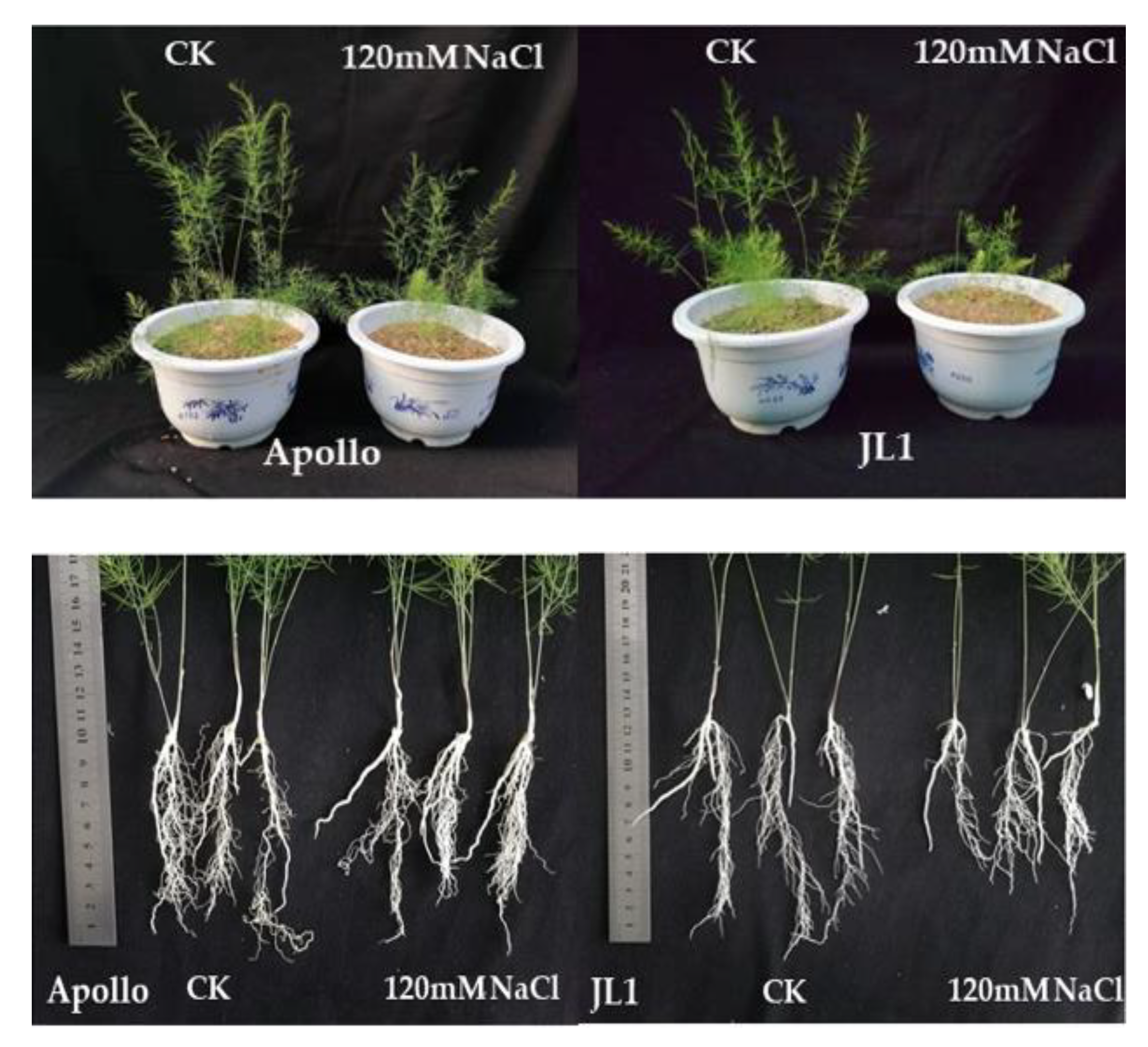
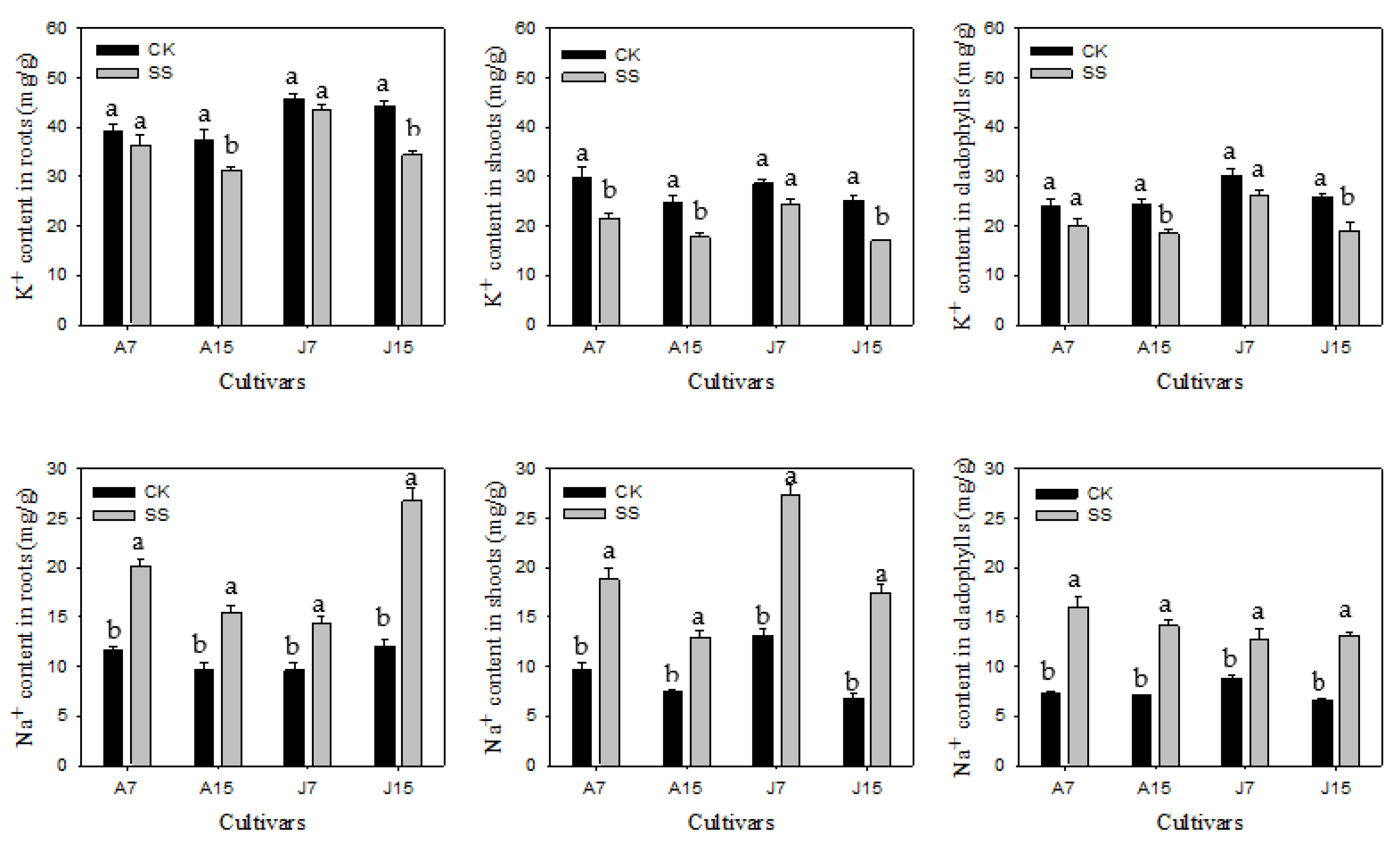
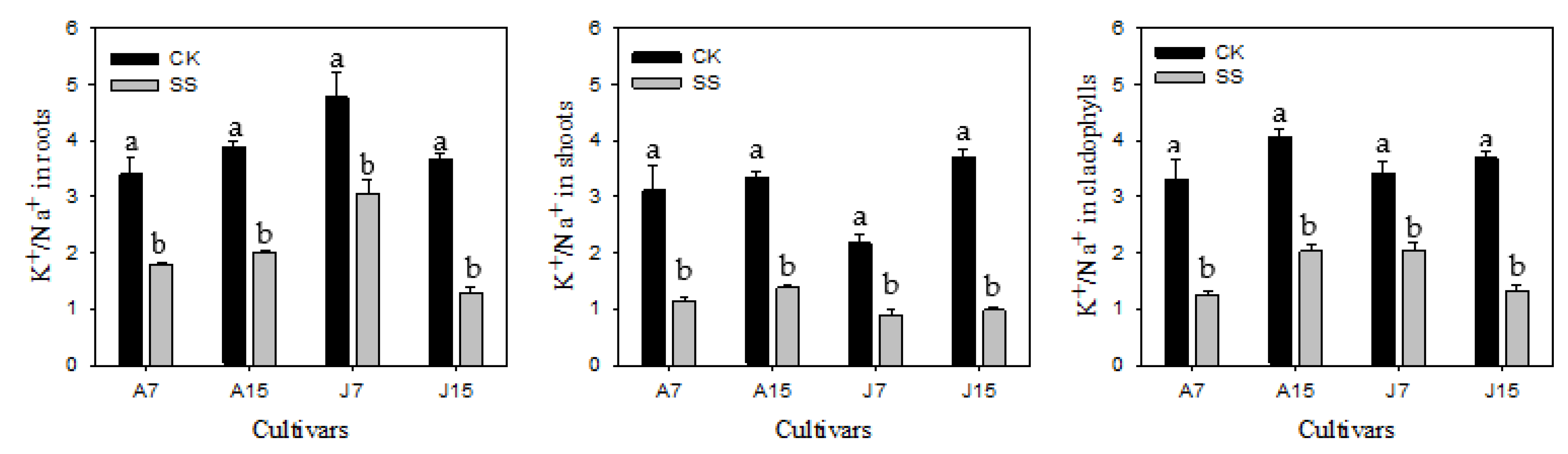
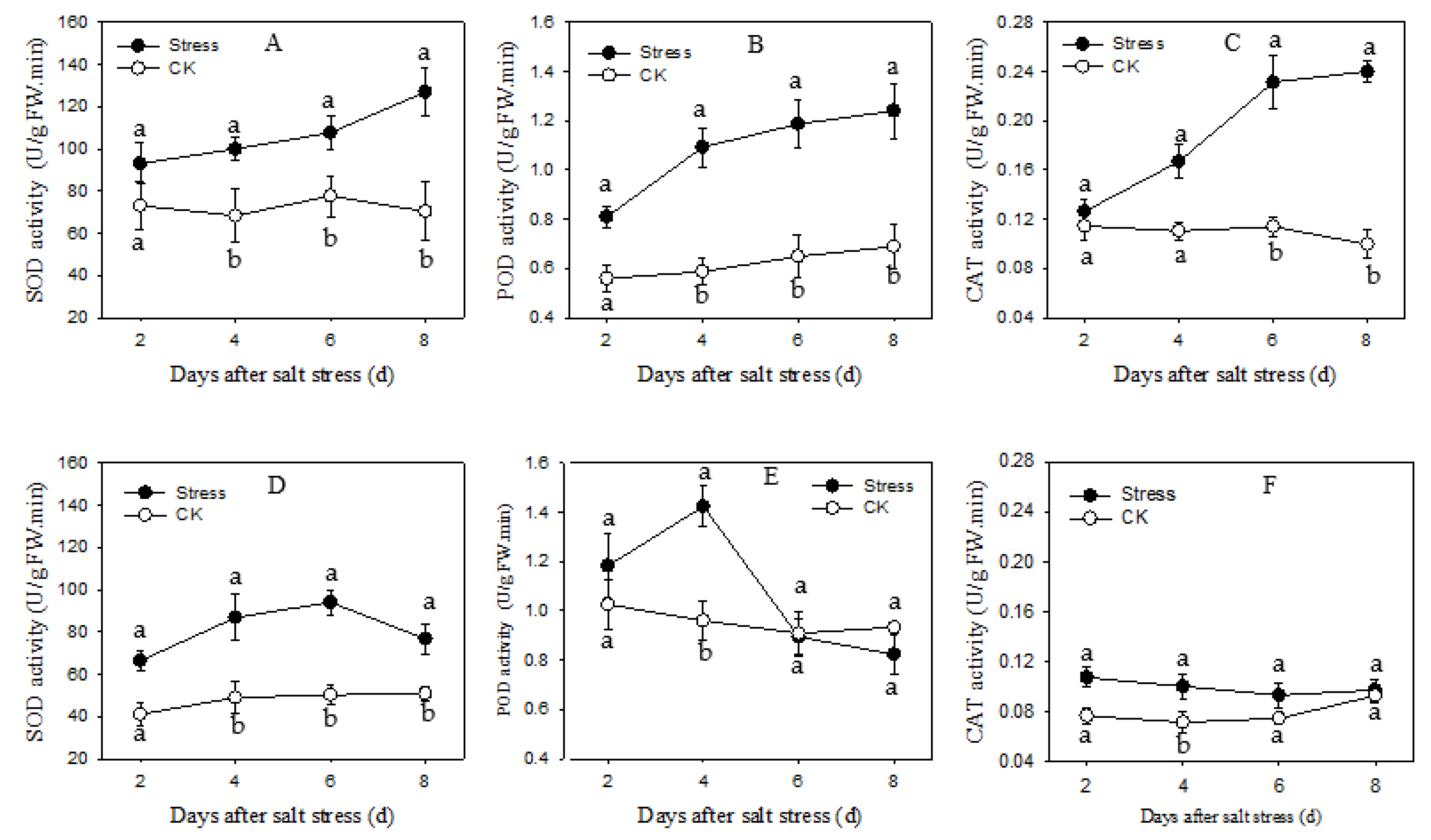
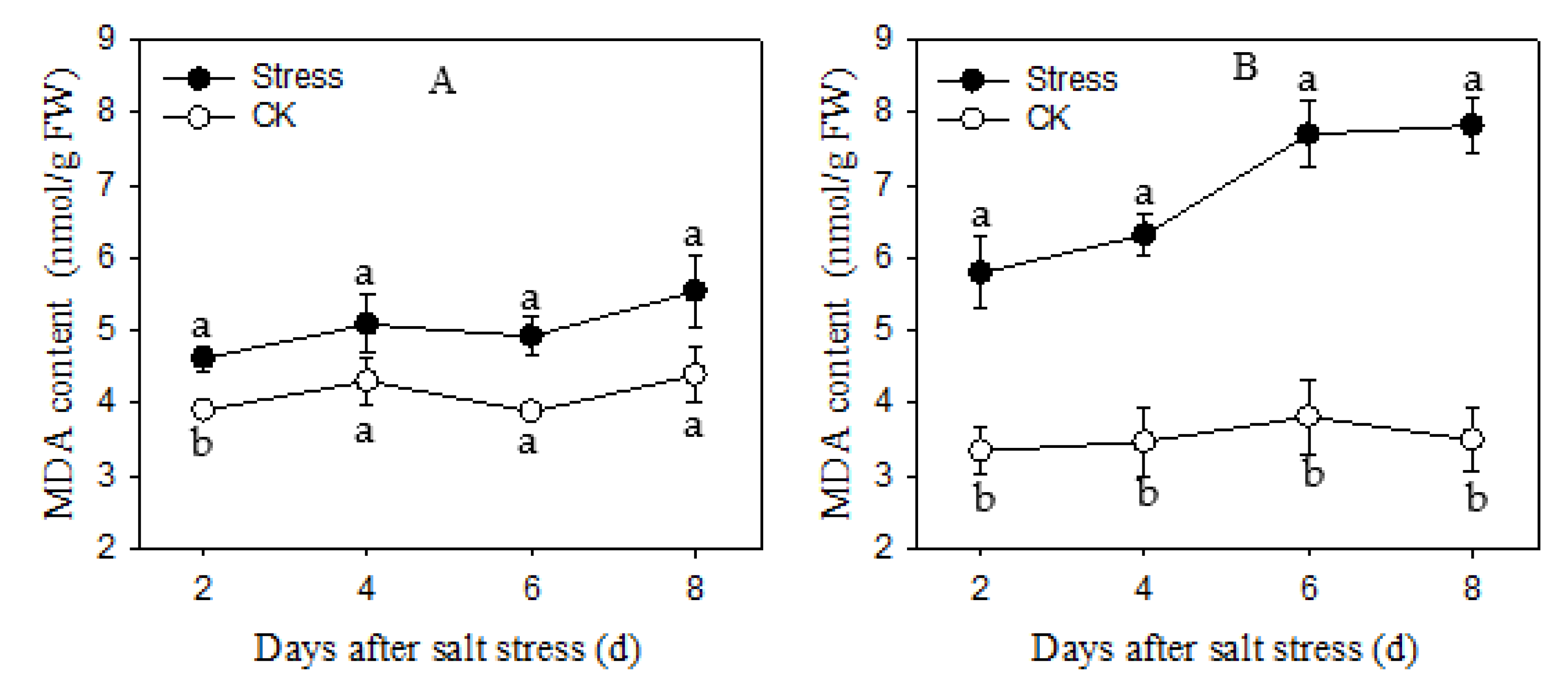
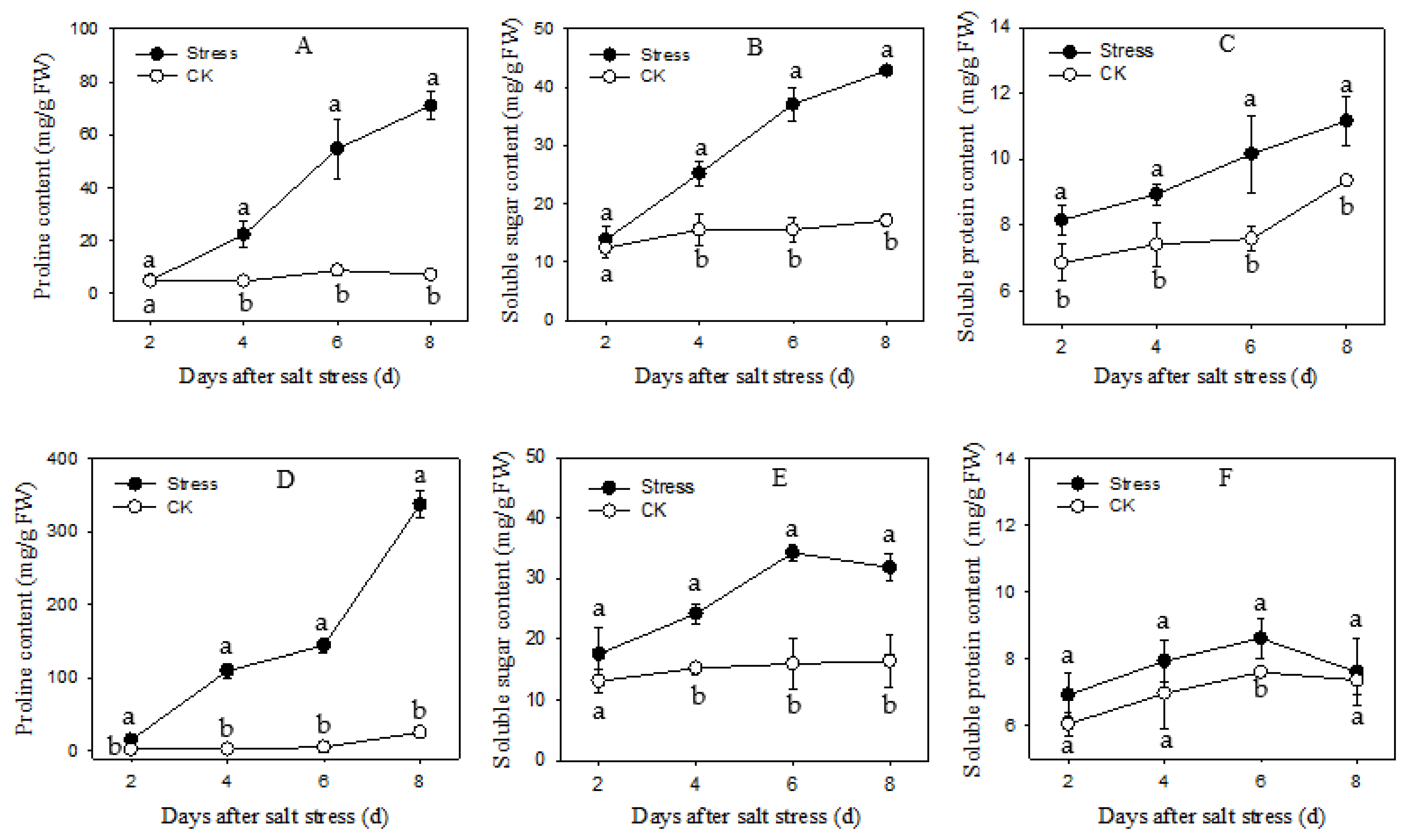
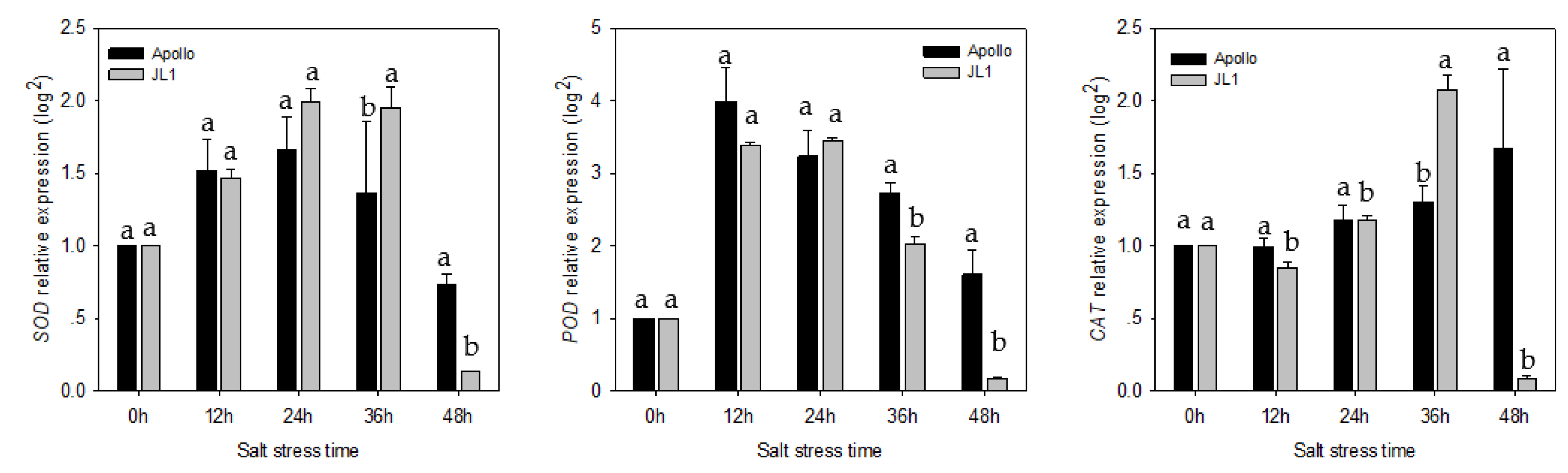
Salt stress could inhibit the growth and development of crops and negatively affect yield and quality. The objective of this study was to investigate the physiological responses of different asparagus cultivars to salt stress. Twenty days old seedlings ofasalt-tolerant Apollo andasalt-sensitive cultivar JL1 were subjected to 0 (CK) and120 mM NaCl stress for 20 d. Their changes in growth, ion contents, antioxidant enzyme activities and gene expression were analyzed. Salt stress significantly inhibited the growth of both cultivars, and JL1 showed a greater decrease than Apollo. The root development of Apollo was promoted by 120 mM NaCl treatment. The Na+ content in roots, stems, and leaves of both cultivars was increased under salt stress, while K+ content and K+/Na+ decreased. The salt-tolerant cultivar Apollo showed less extent of increase in Na+ and decrease in K+ content and kept a relatively high K+/Na+ ratio to compare with JL1. The contents of proline, soluble sugar and protein increased in Apollo, while thesesubstances changed differently in JL1 under salt stress. Activities of superoxide dismutase (SOD), peroxidase (POD), and catalase (CAT) were gradually increased under salt stress in Apollo, while the corresponding enzyme activities in JL1 were decreased at the late stage of salt stress. The expression of SOD, POD, and CAT genes of both cultivars changed in a similar way to the enzyme activities. Malondialdehyde (MDA) content was increased slightly in Apollo, while increased significantly in JL1. At the late stage of salt stress, Apollomaintained a relatively high K+/Na+, osmotic adjustment ability and antioxidant defense capability, and therefore exhibited higher tolerance to salt stress than that of JL1.
Keywords: asparagus; salt stress; growth; ion content; osmolyte; antioxidant enzyme activity asparagus; salt stress; growth; ion content; osmolyte; antioxidant enzyme activity