Article

Genetic Diversity and Structure of Rear Edge Populations of Sorbus aucuparia (Rosaceae) in the Hyrcanian Forest

1
Department of Environmental Science, Faculty of Natural Resources, Tarbiat Modares University (TMU), Mazandaran 14115-111, Iran
2
Department of Forest Science and Engineering, Faculty of Natural Resources, Tarbiat Modares University (TMU), Mazandaran 14115-111, Iran
3
Department of Forestry, Faculty of Natural Resources, Tehran University (TU), Tehran 31587-77871, Iran
4
Department of Biogeography and Systematics, Institute of Dendrology, Polish Academy of Sciences, Parkowa 5, PL-62-035 Kornik, Poland
5
Department of Biology and Botanic Garden, University of Fribourg, Chemin du Musée 10, CH-1700 Fribourg, Switzerland
6
Natural History Museum Fribourg, Chemin du Musée 6, CH-1700 Fribourg, Switzerland
7
Eastern China Conservation Centre for Wild Endangered Plant Resources, Shanghai Chenshan Botanical Garden, 3888 Chenhua Road, Songjiang, Shanghai 201602, China
*
Author to whom correspondence should be addressed.
Plants 2021, 10(7), 1471; https://doi.org/10.3390/plants10071471

Submission received: 27 May 2021 / Revised: 19 June 2021 / Accepted: 23 June 2021 / Published: 19 July 2021
(This article belongs to the Special Issue Genetic Diversity and Conservation of Woody Species)

Abstract

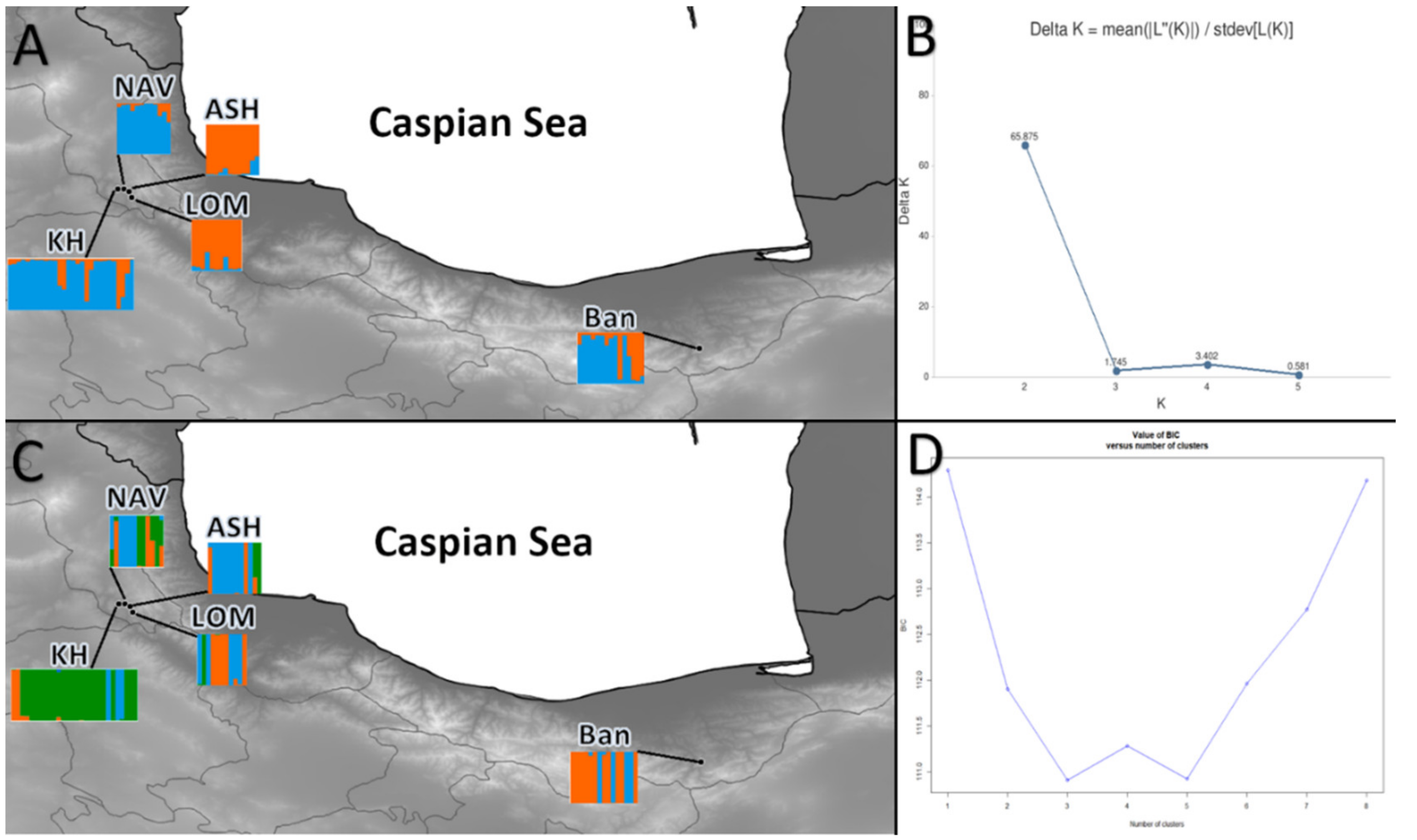
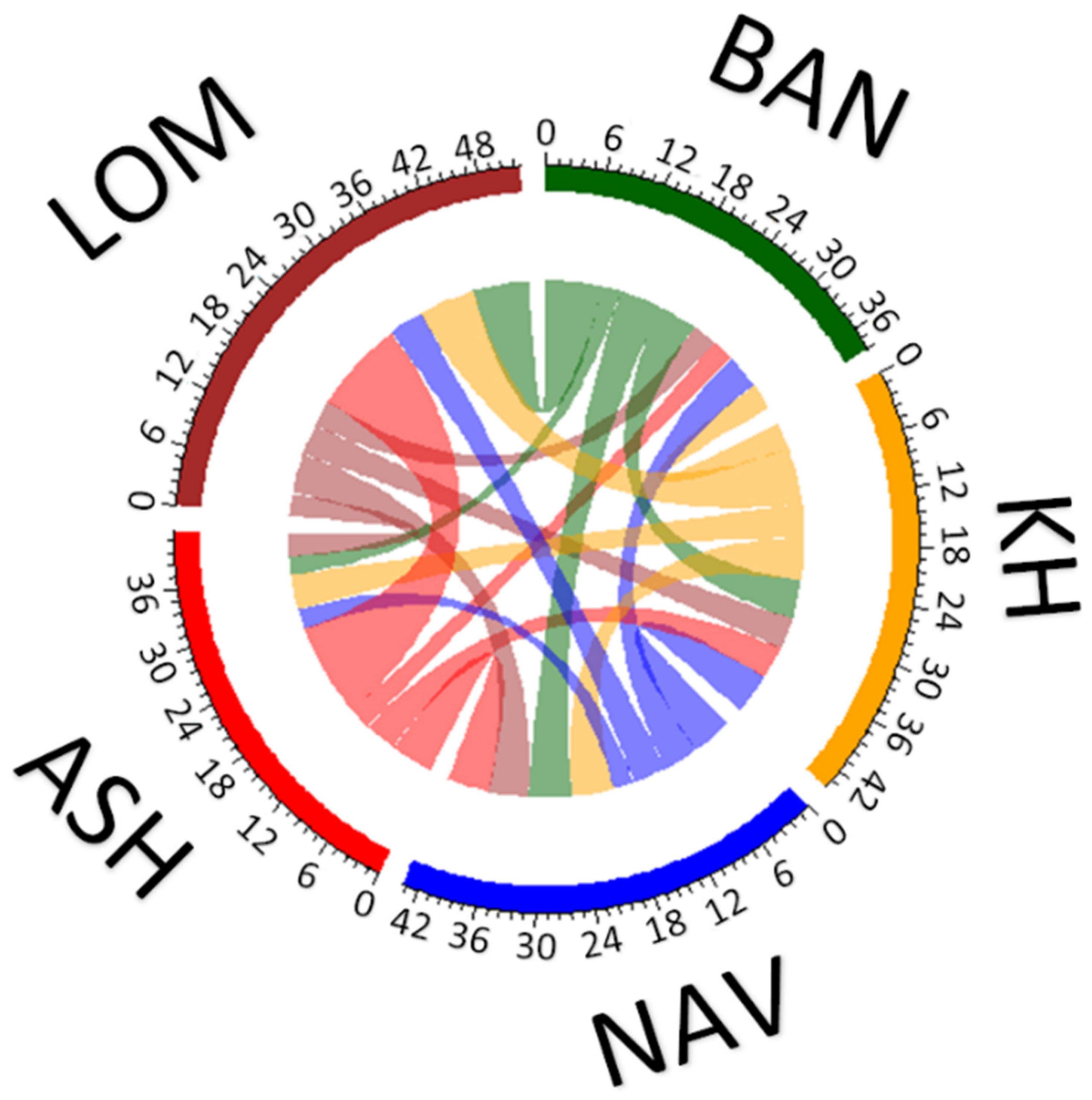
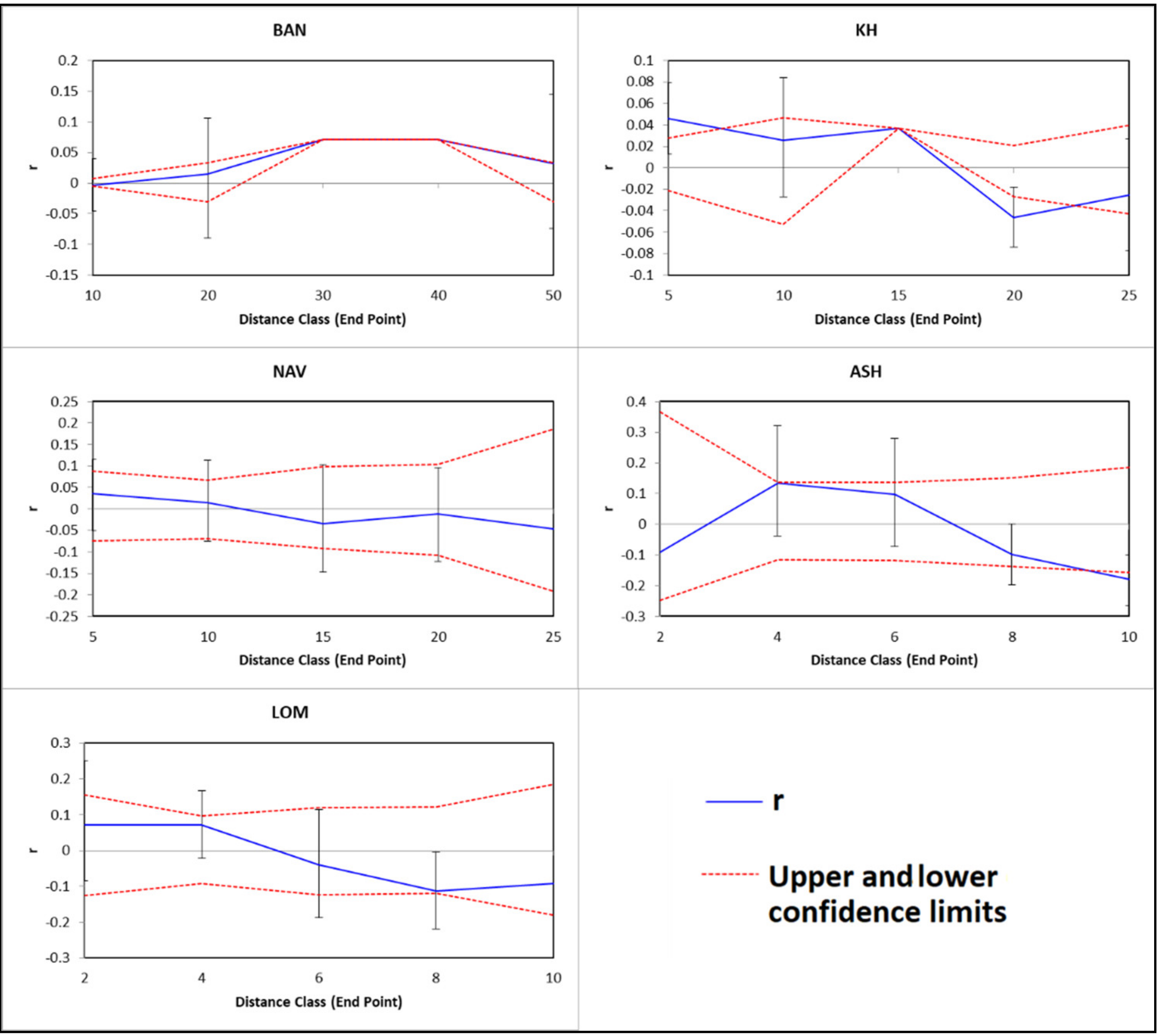
Sorbus aucuparia (Rosaceae) is a small tree species widely distributed in Eurasia. The Hyrcanian forest is the southernmost distribution limit of this species. Severe habitat degradation and inadequate human interventions have endangered the long-term survival of this species in this region, and it is necessary to develop and apply appropriate management methods to prevent the loss of its genetic diversity. In this study, we used 10 SSR markers in order to evaluate the genetic diversity of this taxon. Leaf samples were collected from five known populations of S. aucuparia throughout its distribution area in the Hyrcanian forest. Expected heterozygosity ranged from 0.61 (ASH) to 0.73, and according to the M-ratio, all populations showed a significant reduction in effective population size, indicating a genetic bottleneck. Global FST was not statistically significant and attained the same values with and without excluding null alleles (ENA) correction (FST = 0.12). Bayesian analysis performed with STRUCTURE defined two genetic clusters among the five known populations, while the results of discriminant analysis of principal components (DAPC) identified three distinct groups. The average proportion of migrants was 22. In general, the gene flow was asymmetrical, with the biggest differences between immigration and emigration in Barzekoh and Asbehriseh. The Mantel test showed that there was no significant correlation between genetic distance (FST) and geographic distance in S. aucuparia. The best pathway for theoretical gene flow is located across the coast of the Caspian Sea and significant spatial autocorrelation was observed in only one population. In order to reduce the extinction risk of very small and scattered populations of S. aucuparia in the Hyrcanian forest, it is very important to establish and/or enhance the connectivity through habitat restoration or genetic exchange.
Keywords: conservation genetics; inbreeding depression; range-edge populations; rowan tree; Hyrcanian forest conservation genetics; inbreeding depression; range-edge populations; rowan tree; Hyrcanian forest