Article

Multitemporal Analysis of Deforestation in Response to the Construction of the Tucuruí Dam


by
Andres Velastegui-Montoya
1,*,
Aline de Lima
2 and
Marcos Adami
3
1
Facultad de Ingeniería en Ciencias de la Tierra, Escuela Superior Politécnica del Litoral (ESPOL), Campus Gustavo Galindo, Guayaquil P.O. Box 09-01-5863, Ecuador
2
Geoscience Institute, Federal University of Pará, Belém 66075-110, Brazil
3
Amazon Regional Center, National Institute for Space Research (INPE), Belém 66077-830, Brazil
*
Author to whom correspondence should be addressed.
ISPRS Int. J. Geo-Inf. 2020, 9(10), 583; https://doi.org/10.3390/ijgi9100583
Submission received: 1 September 2020 / Revised: 21 September 2020 / Accepted: 28 September 2020 / Published: 3 October 2020

Abstract

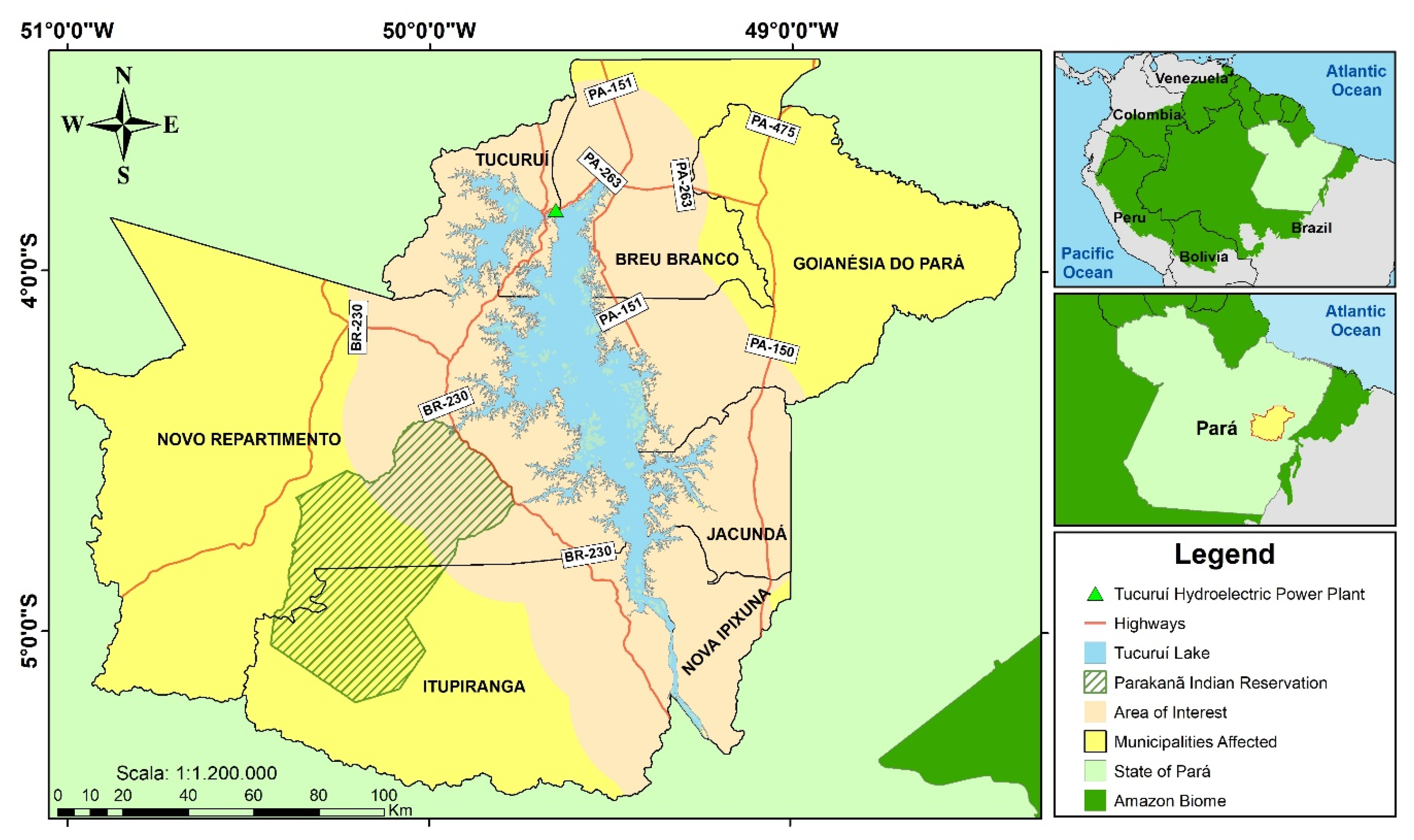
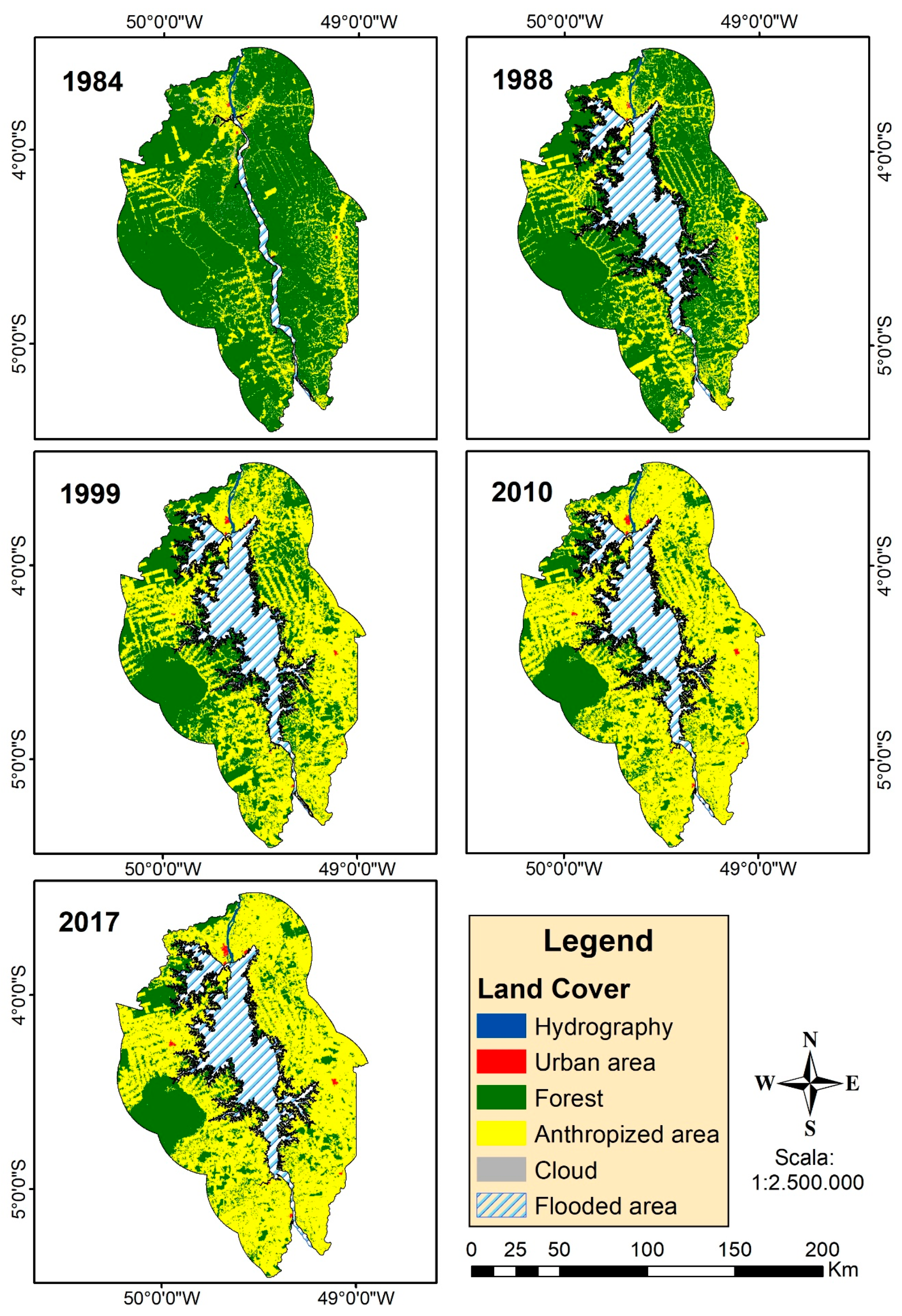
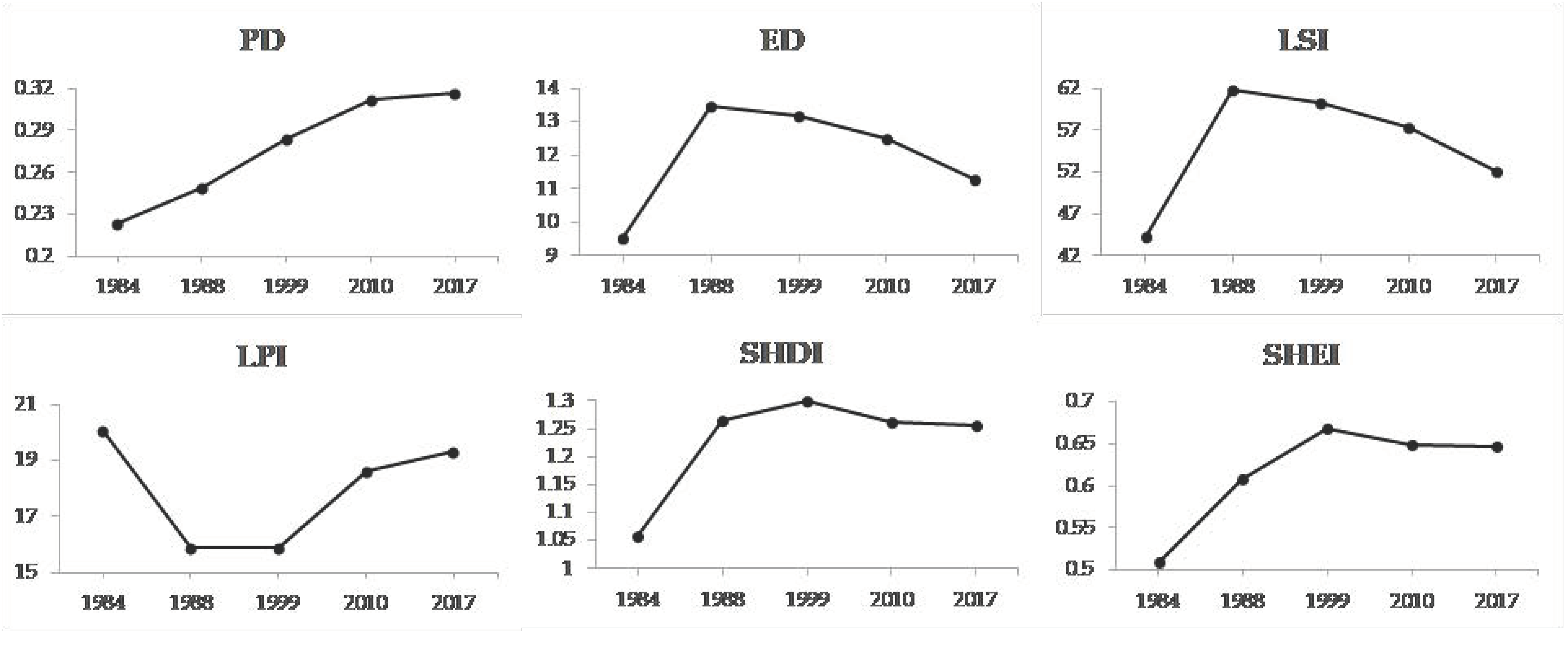
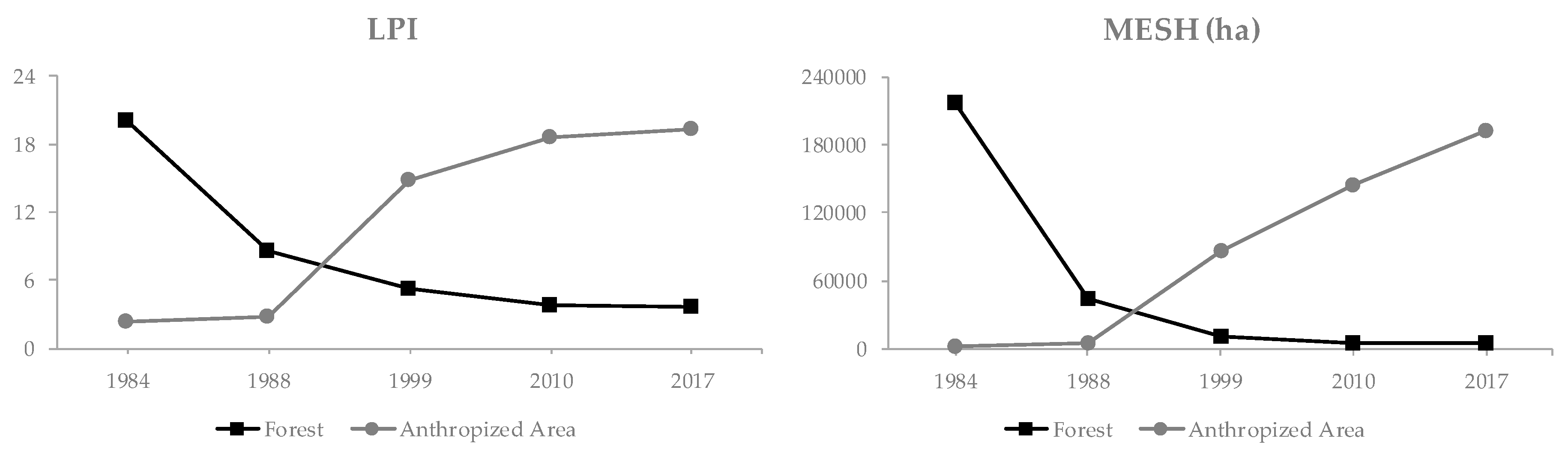
The expansion of hydroelectric dams that is planned, and under construction, in the Amazon basin is a proposal to generate “clean” energy, with the purposes of meeting the regional energy demand, and the insertion of Brazil into the international economic market. However, this type of megaproject can change the dynamics of natural ecosystems. In the present article, the spatiotemporal patterns of deforestation according to distance from the reservoir in the vicinity of the lake of Tucuruí, and within a radius of 30 km from it, are analyzed. A linear spectral mixture model of segmented Landsat-thematic mapper (TM), enhanced thematic mapper plus (ETM+), and operational land imager (OLI) images, and proximity analysis were used for the mapping of the land-cover classes in the vicinity of the artificial lake of Tucuruí. Likewise, landscape metrics were determined with the purpose of quantifying the reduction of primary forest, as a mechanism of loss of ecosystem services in the region. These methods were also used for the evaluation of the influence of the distance from the reservoir on the expansion of anthropogenic activities. This methodology was used for the scenarios of pre-inauguration, completion of phase I, beginning of construction phase II, full completion of the Tucuruí hydroelectric project, and the current scenario of the region. The results showed that the highest deforestation rate occurred in the first period of the analysis, due to the areas submerged by the reservoir and due to the anthropogenic disturbances, such as timber extraction, road construction, and the conversion of forests into large areas of agribusiness.
Keywords: Amazon basin; land-cover; spatiotemporal pattern; landscape metrics; hydroelectric dams Amazon basin; land-cover; spatiotemporal pattern; landscape metrics; hydroelectric dams