Article

A Method of Directional Signs Location Selection and Content Generation in Scenic Areas


1
Key Laboratory of Virtual Geographic Environment (Nanjing Normal University), Ministry of Education, Nanjing 210023, China
2
State Key Laboratory Cultivation Base of Geographical Environment Evolution (Jiangsu Province), Nanjing 210023, China
3
Jiangsu Center for Collaborative Innovation in Geographical Information Resource Development and Application, Nanjing 210023, China
*
Author to whom correspondence should be addressed.
ISPRS Int. J. Geo-Inf. 2020, 9(10), 574; https://doi.org/10.3390/ijgi9100574
Submission received: 13 August 2020 / Revised: 26 September 2020 / Accepted: 28 September 2020 / Published: 30 September 2020

Abstract

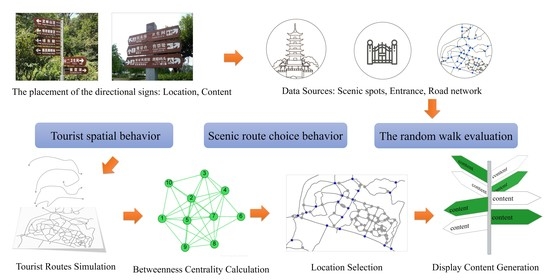
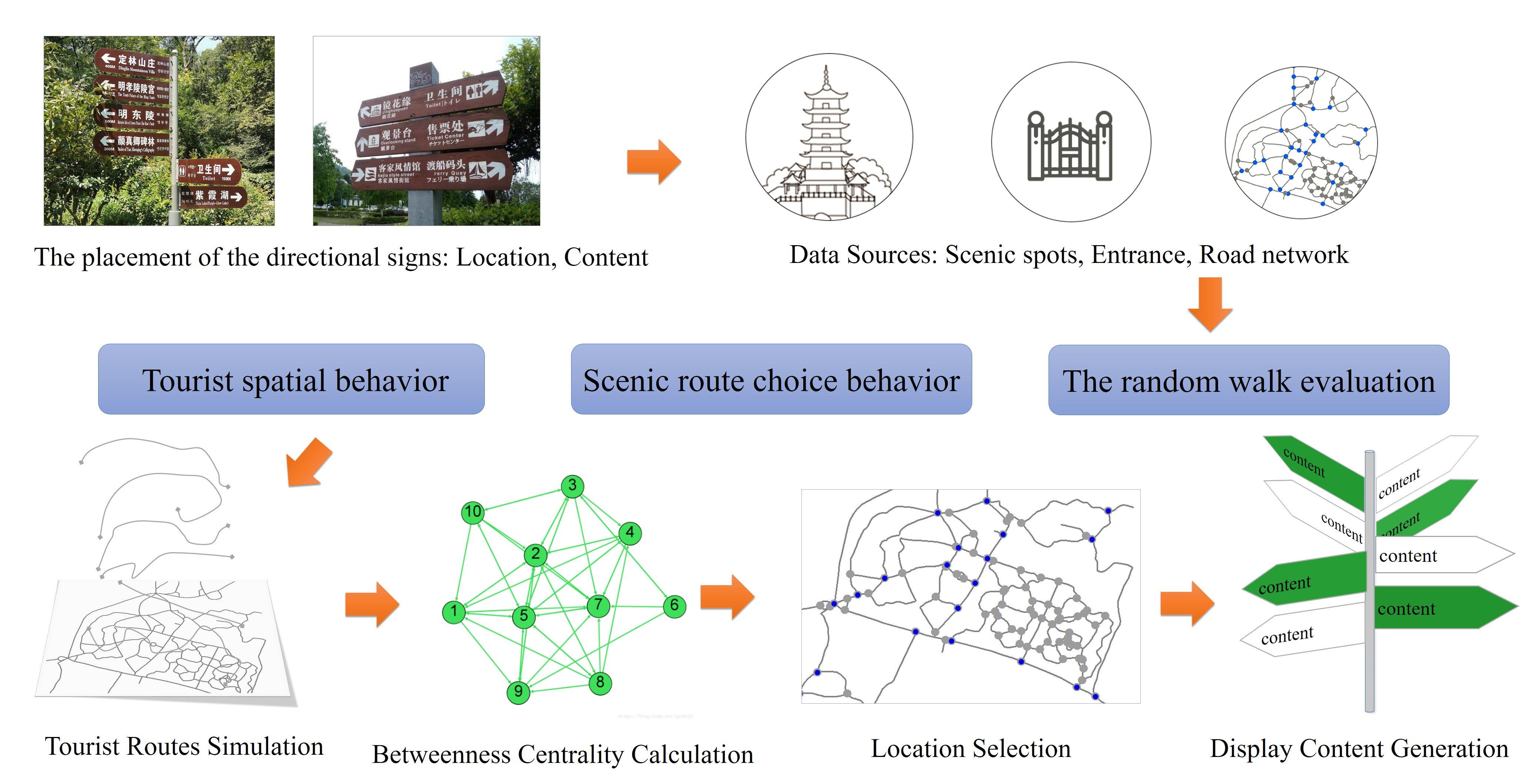
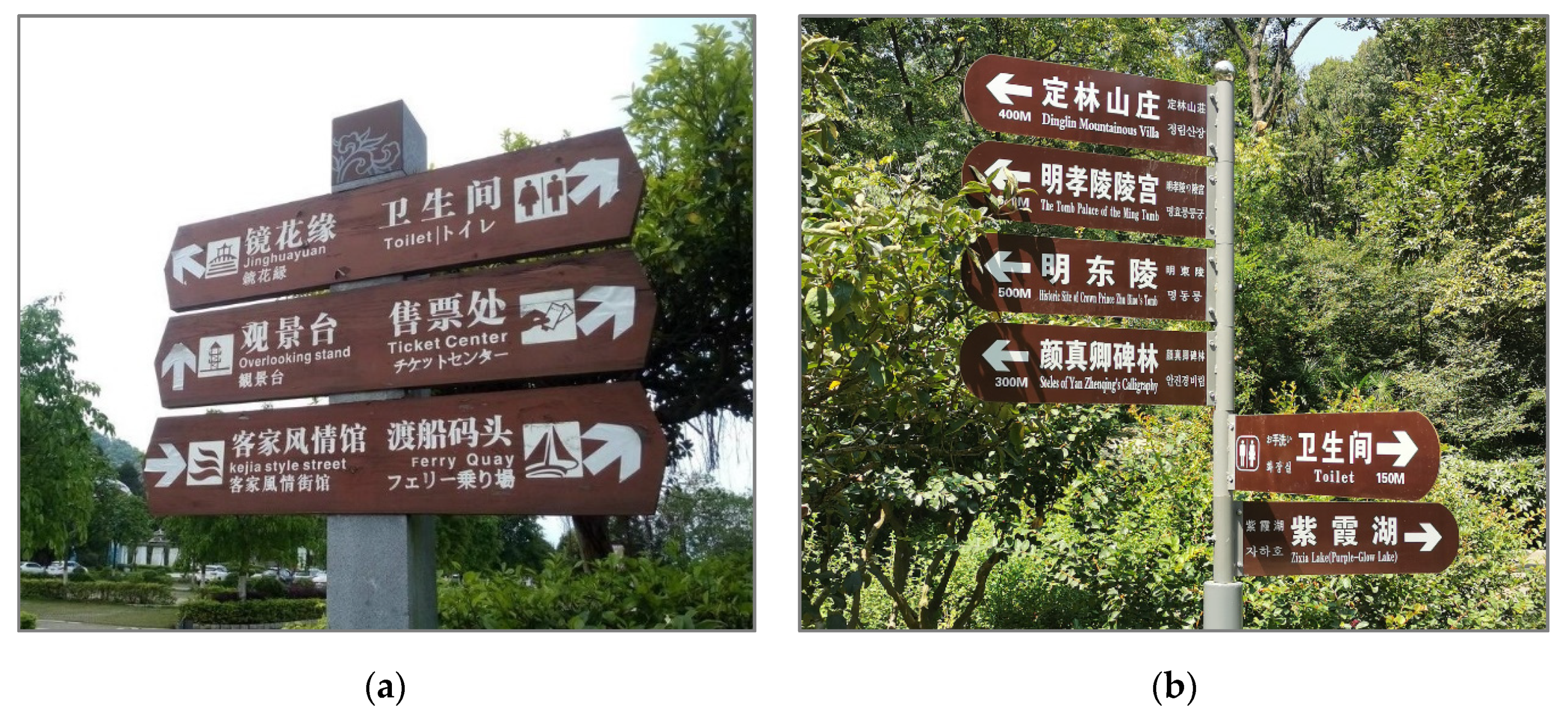
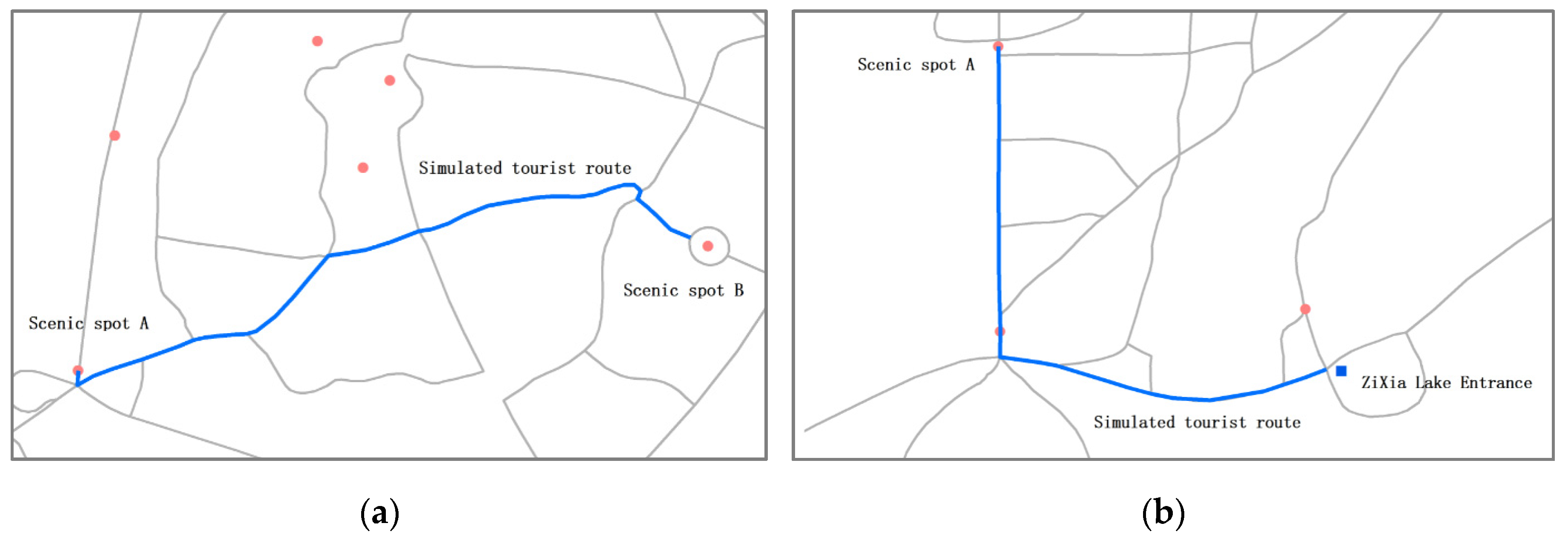
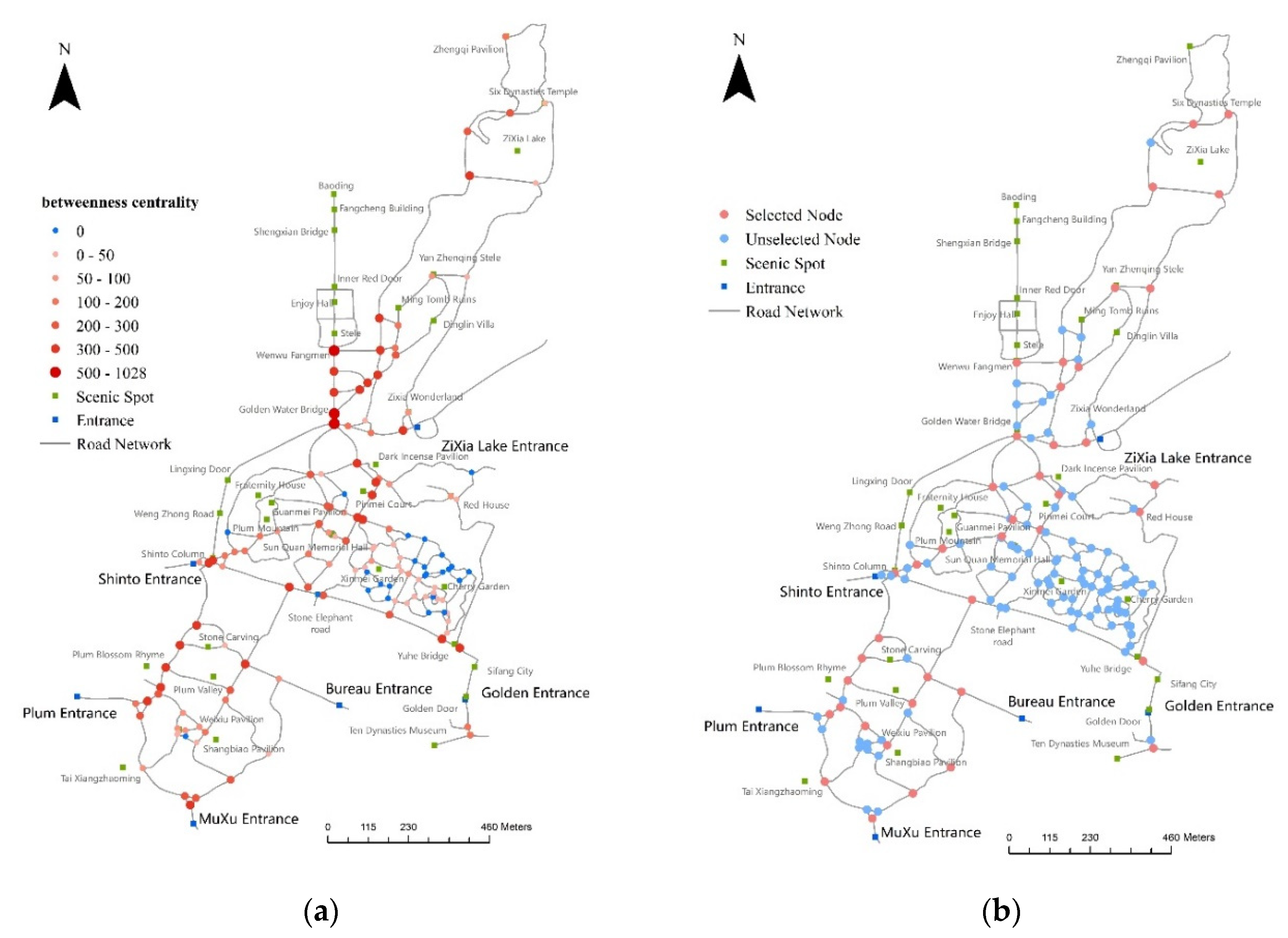
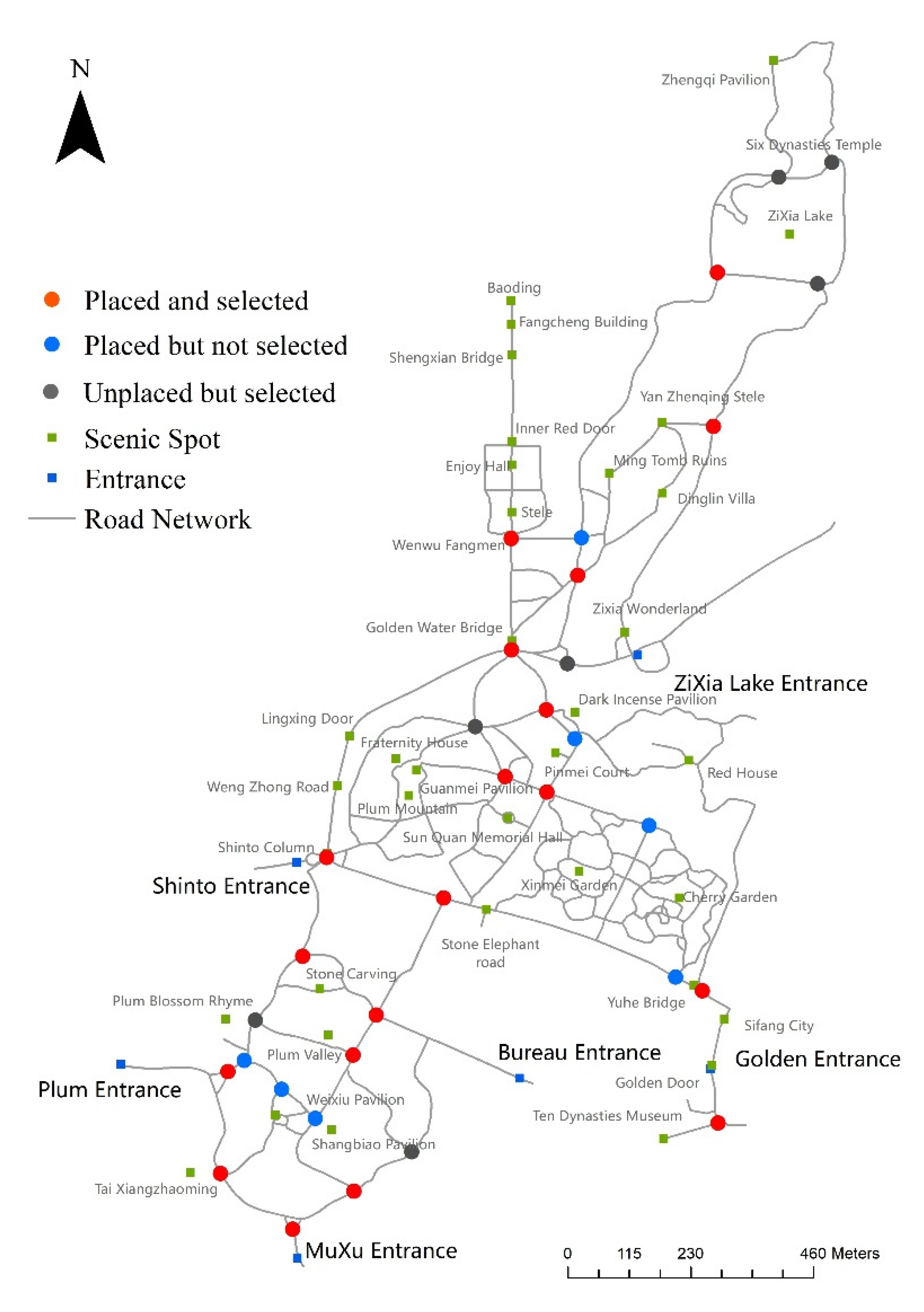
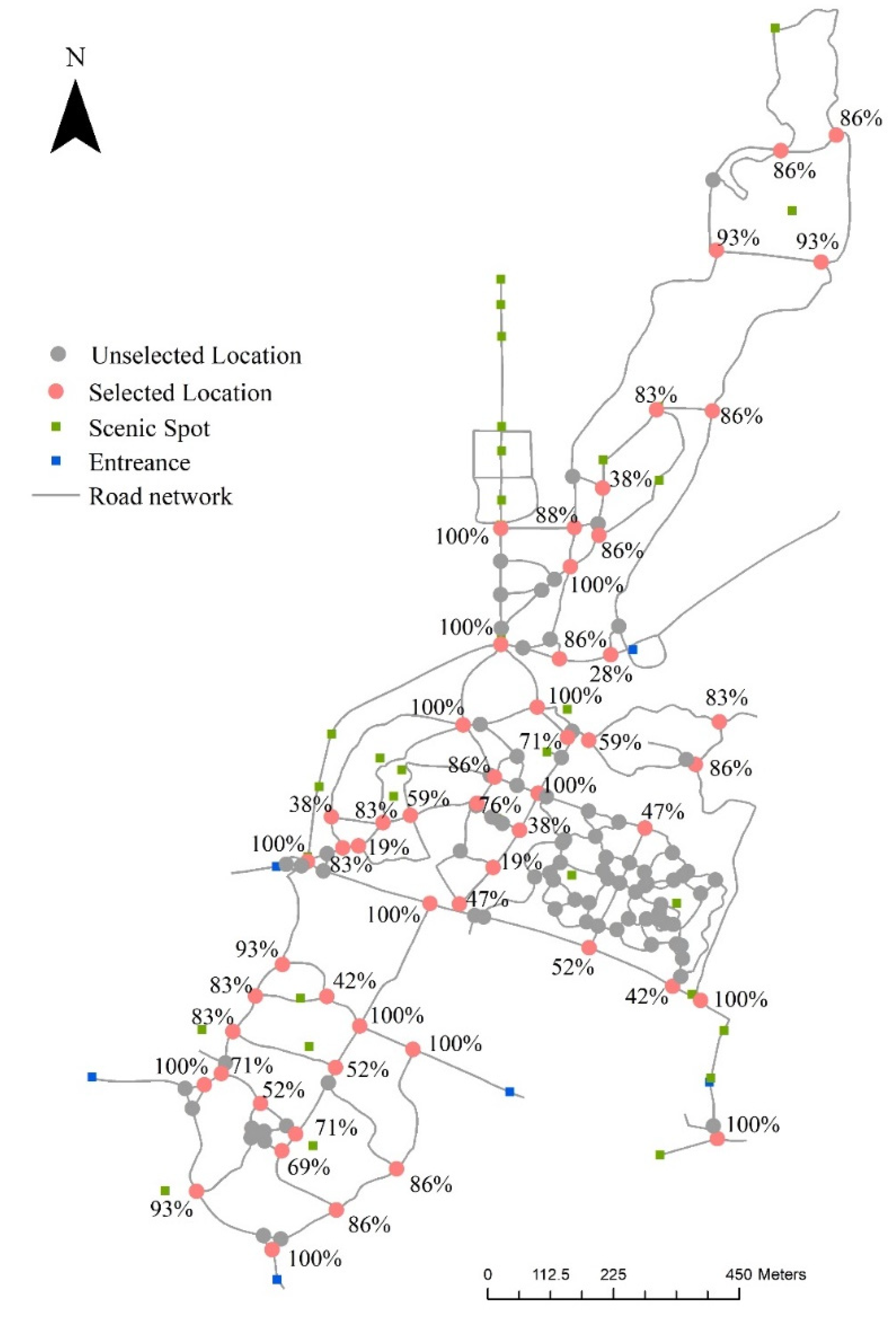
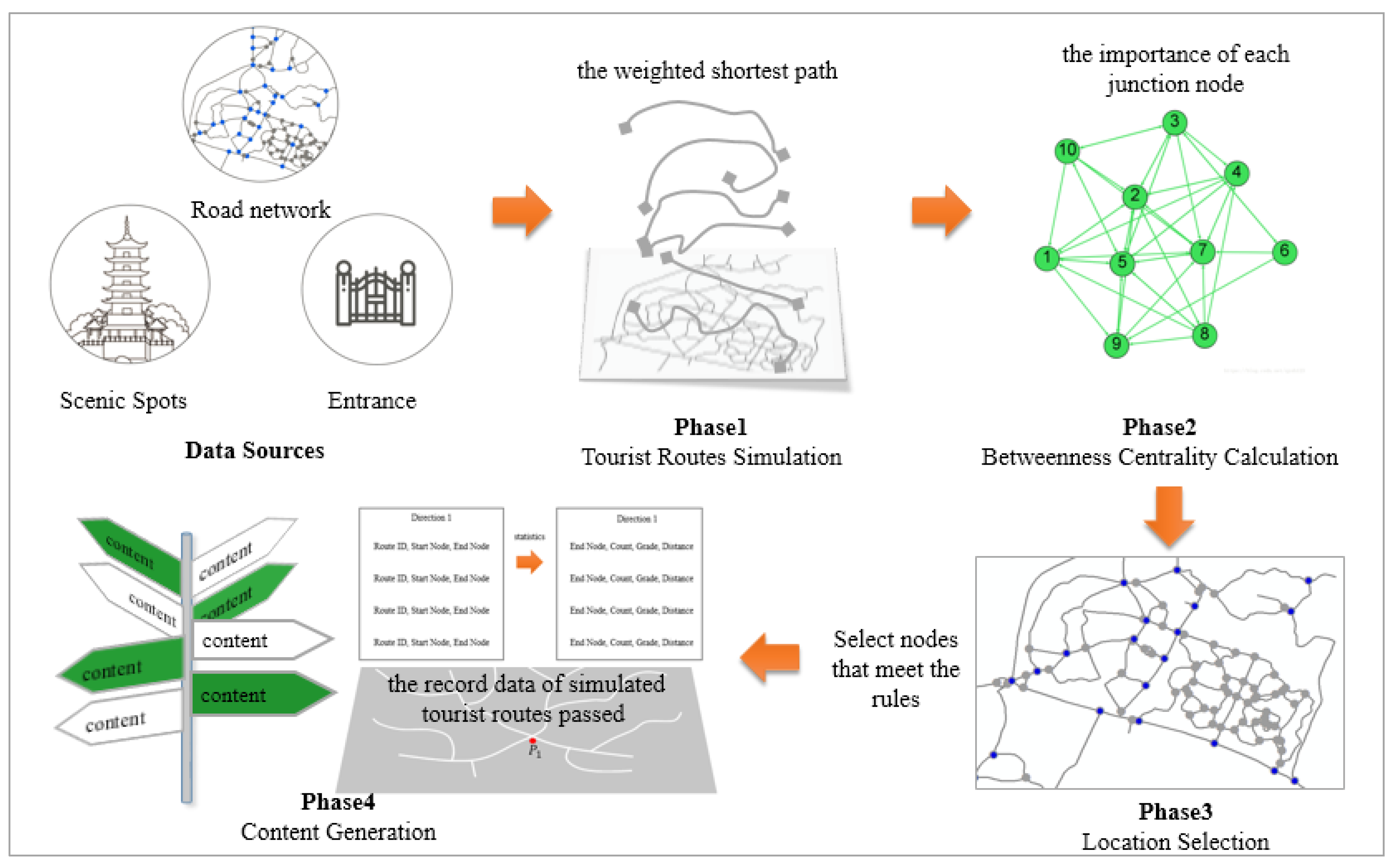
The Tourist Oriented Directional Signs (TODS) system is an essential and important project in constructing and planning scenic areas. At present, the placement of directional signs generally depends on the personal experience of the tour manager to identify important positions and display the name of critical scenic spots on a signboard. Few studies have focused on how to generate the location and display the content of directional signs automatically. This article proposes a method for directional sign location selection and automatic generation of content in a scenic area based on the tourist spatial behavior theory and network analysis algorithm. Junction nodes of the road in a scenic area are used as the candidate locations of the directional signs to be placed. The main steps of the method in this paper include tourist route simulation, betweenness centrality calculation, location selection, and content generation. The Ming Tomb in Nanjing, China, is selected as the experimental area. The evaluation indexes of the traveled distance and the number of errors were adopted. The random walk algorithm is applied to compare the generated scheme with the existing scheme in the experimental scenic area. The generated scheme is also verified through questionnaires and interviews. The results show that the method proposed in this paper can select relevant and appropriate junction nodes where to deploy directional signs and automatically generate displayed content more prominently. The comparison shows that the generated scheme in this method is significantly better than the actual placement scheme. It can optimize the actual placement scheme in the experimental area, and it also can reduce the traveled distance and number of errors.
Keywords: directional signs; location selection; content generation; tourist behavior; TODS directional signs; location selection; content generation; tourist behavior; TODS
Graphical Abstract