
Dynamic Measurement and Equity Analysis of Walking Accessibility in Primary Healthcare Institutions Under Diverse Supply–Demand Scenarios: Evidence from Shenyang

Abstract
1. Introduction
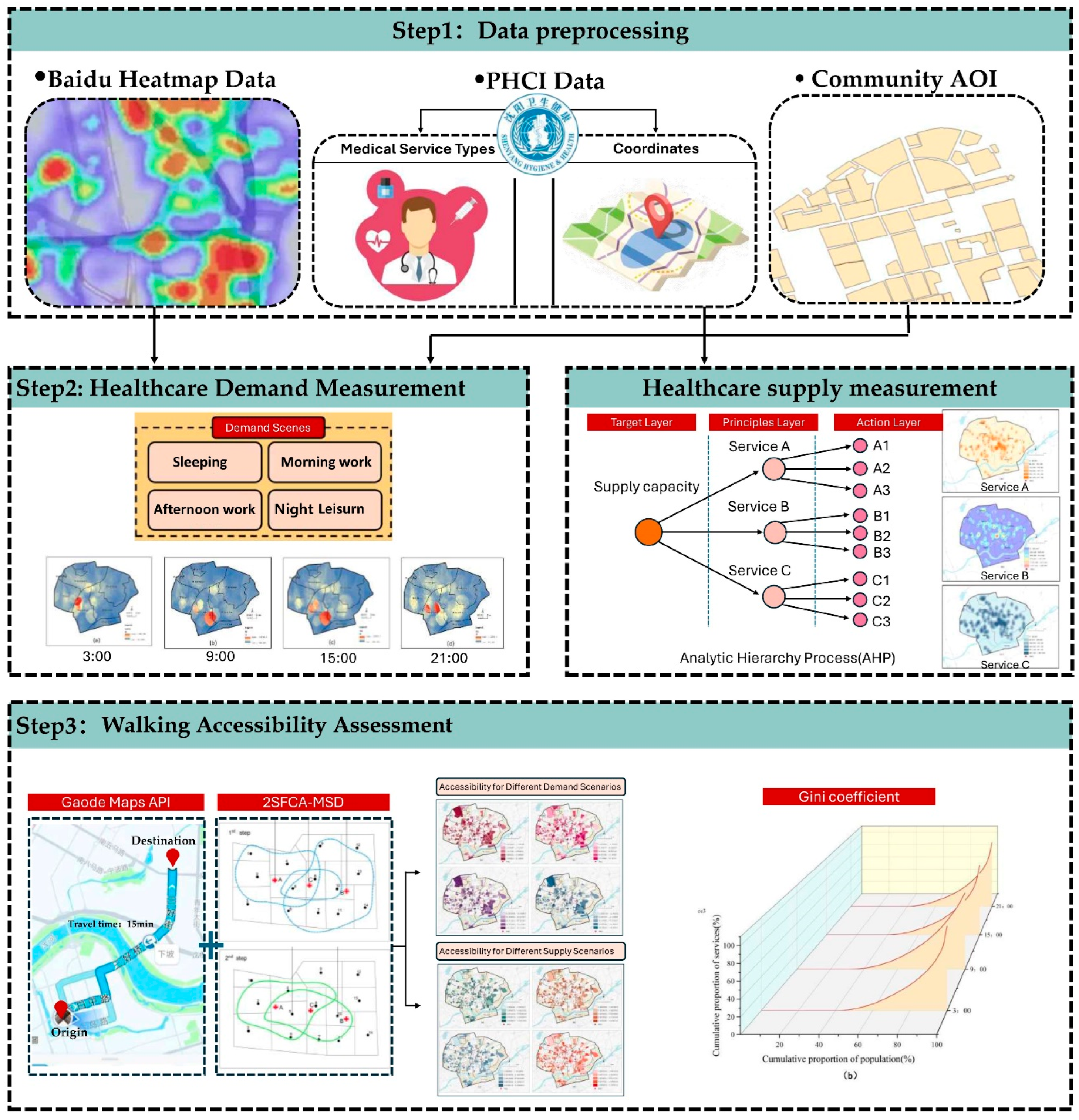
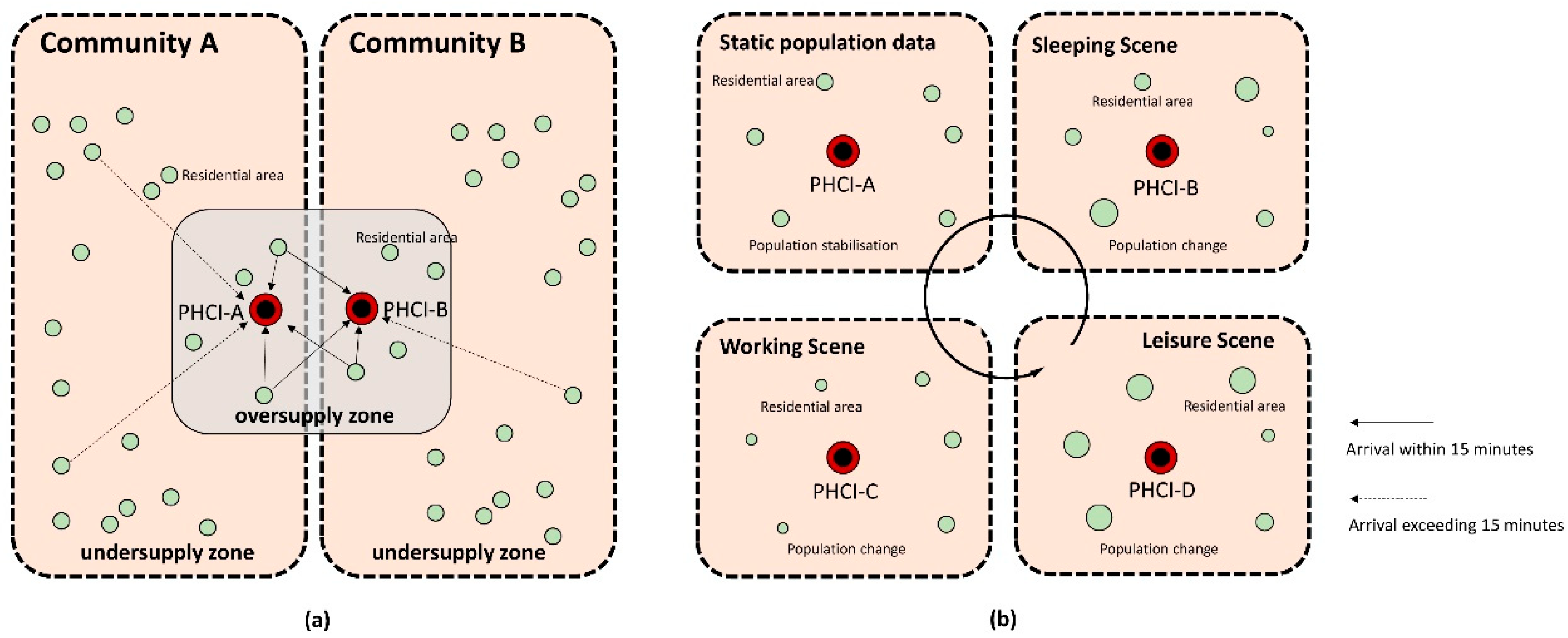
- Deconstruct supply heterogeneity: Differentiate and quantify the supply capacity of various basic medical services within individual PHCIs.
- Simulate demand dynamism: Utilize multi-source spatiotemporal big data to model dynamic population demand across different temporal cross-sections.
- Model fine-grained walking time cost: Calculate realistic walking times that incorporate multiple impedance factors (e.g., intersection delays, pedestrian infrastructure), based on actual navigation time data from the Gaode Map API, rather than relying on idealized network distances.
2. Materials and Methods
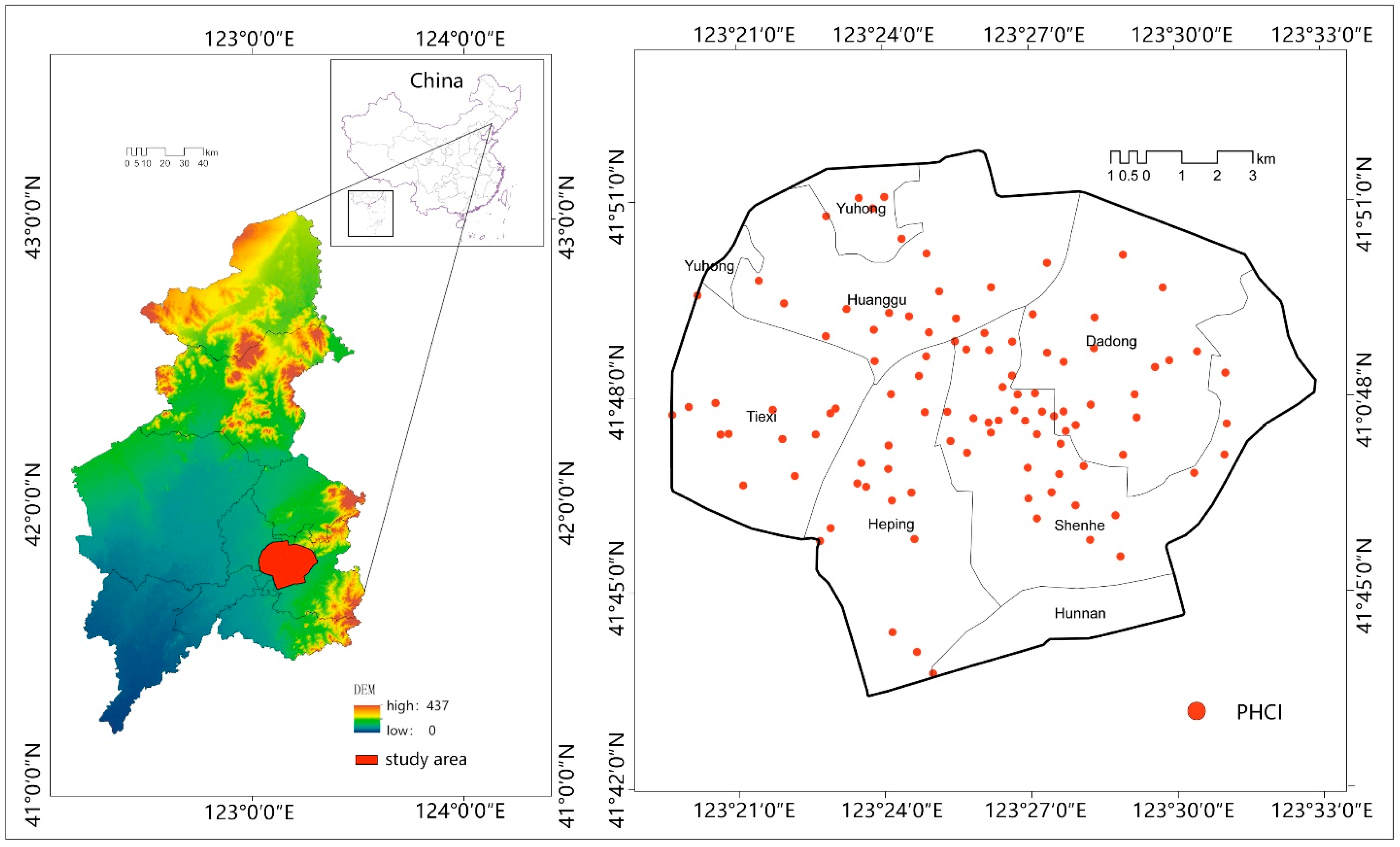
2.1. Research Area Overview
2.2. Data Source and Processing
- Supply-side perspective: Winter represents the annual peak in healthcare demand. In January, temperatures in the study area drop to their lowest annual levels. Extreme cold weather has been shown to significantly increase the incidence of common diseases such as cardiovascular and respiratory conditions by activating the sympathetic nervous system, elevating blood viscosity, and other physiological mechanisms, thereby driving residents’ demand for primary healthcare services to its yearly maximum [27,28,29].
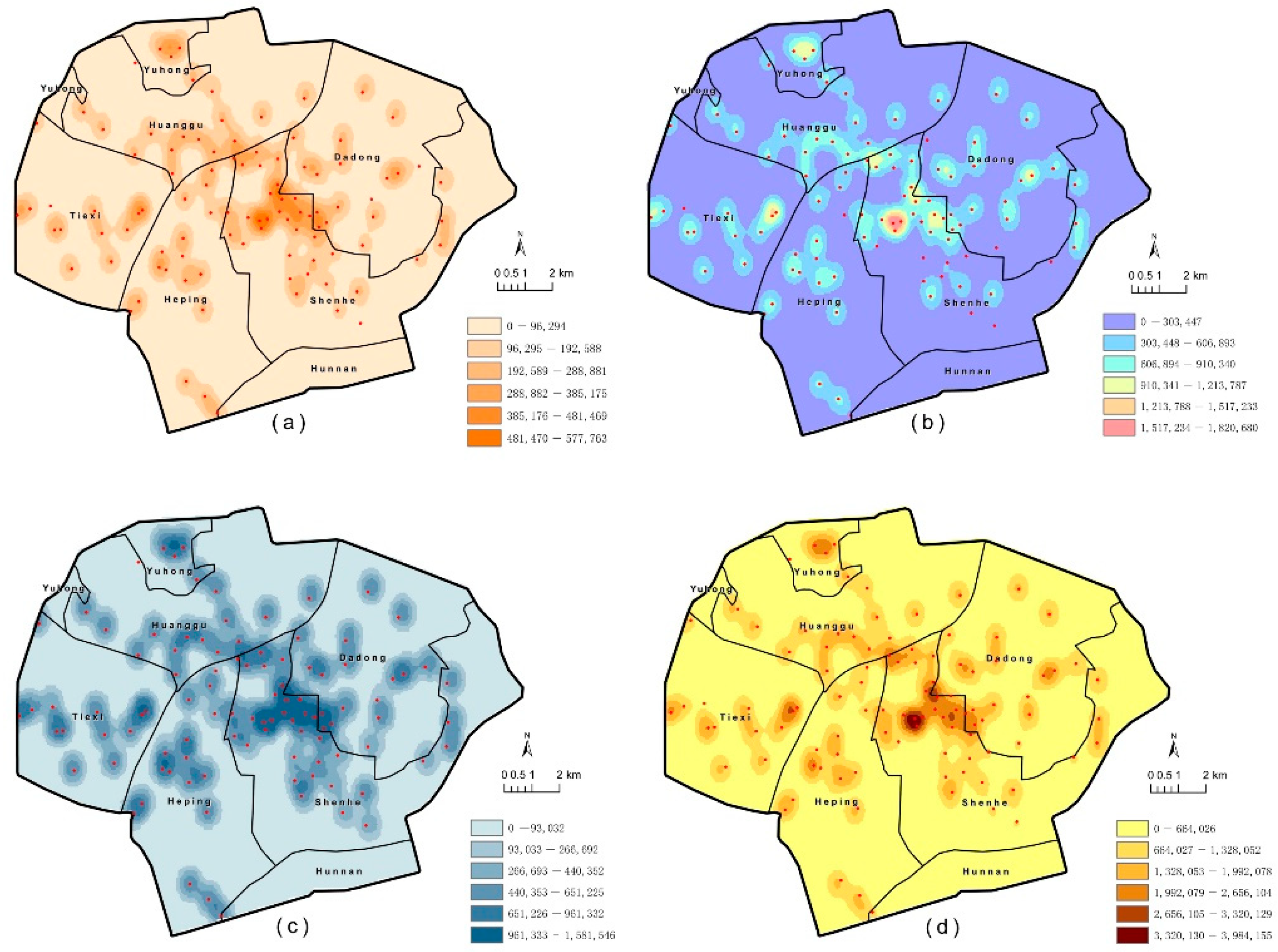
- Demand-side perspective: Winter corresponds to the annual bottleneck in pedestrian accessibility. Weather conditions in January, including snowfall, low temperatures, and road icing, severely reduce the efficiency and safety of the pedestrian network, resulting in the greatest spatial resistance for residents seeking healthcare services on foot. Thus, January represents a “worst-case scenario” characterized by the simultaneous pressure of “peak healthcare demand” and “poorest walking conditions.” By focusing on this temporal cross-section, this study aims to evaluate the spatial equity gaps of PHCI under the highest stress conditions of the year. A custom web crawler was developed in Python 3.8.10 to retrieve population distribution data from the Baidu Maps Open Platform. Data were collected for the study area hourly from 1 to 31 January 2024, resulting in 744 time-interval samples. To represent typical daily rhythms, the average population values at 03:00, 09:00, 15:00, and 21:00 were calculated, corresponding to four lifestyle scenarios: sleeping, morning work, afternoon work, and night leisure. The obtained data were imported into ArcGIS 10.8.2 for georeferencing, projection transformation, clipping, and kernel-density analysis.

| Data | Data Source | Data Address |
|---|---|---|
| Baidu Population Heat Map Data | Baidu Map Open Platform [31] | https://lbsyun.baidu.com/faq/api?title=webapi/ip-api (accessed on 10 April 2024) |
| PHCI coordinates | Shenyang Municipal Health and Wellness Committee Website [32] | https://wjw.sheyang.gov.cn/zwgk/fdzdgknr/jcws/202208/t20220803_3798985.html (accessed on 10 April 2024) |
| Residential AOI data | Gong P et al. [30] | Mapping essential urban land-use categories in China (EULUC-China): Preliminary results for 2018 |
| Walking time cost data | Gaode Map Open Platform [33] | https://lbs.amap.com/api/weserice/guide/api/newroute (accessed on 10 April 2024) |
2.3. Research Methods
2.3.1. Construction of a Medical Service Capacity Evaluation System Based on the Analytic Hierarchy Process (AHP)
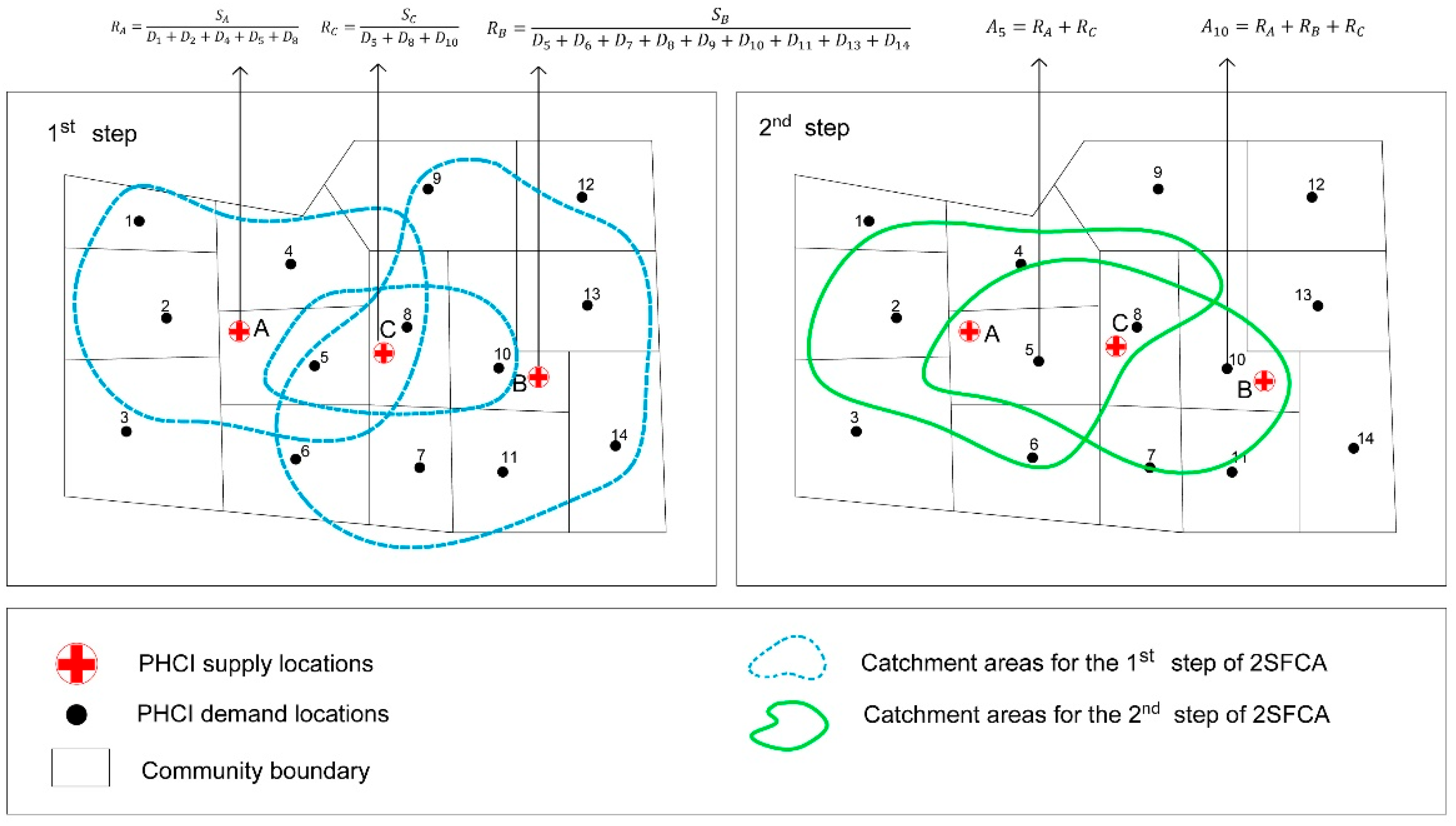
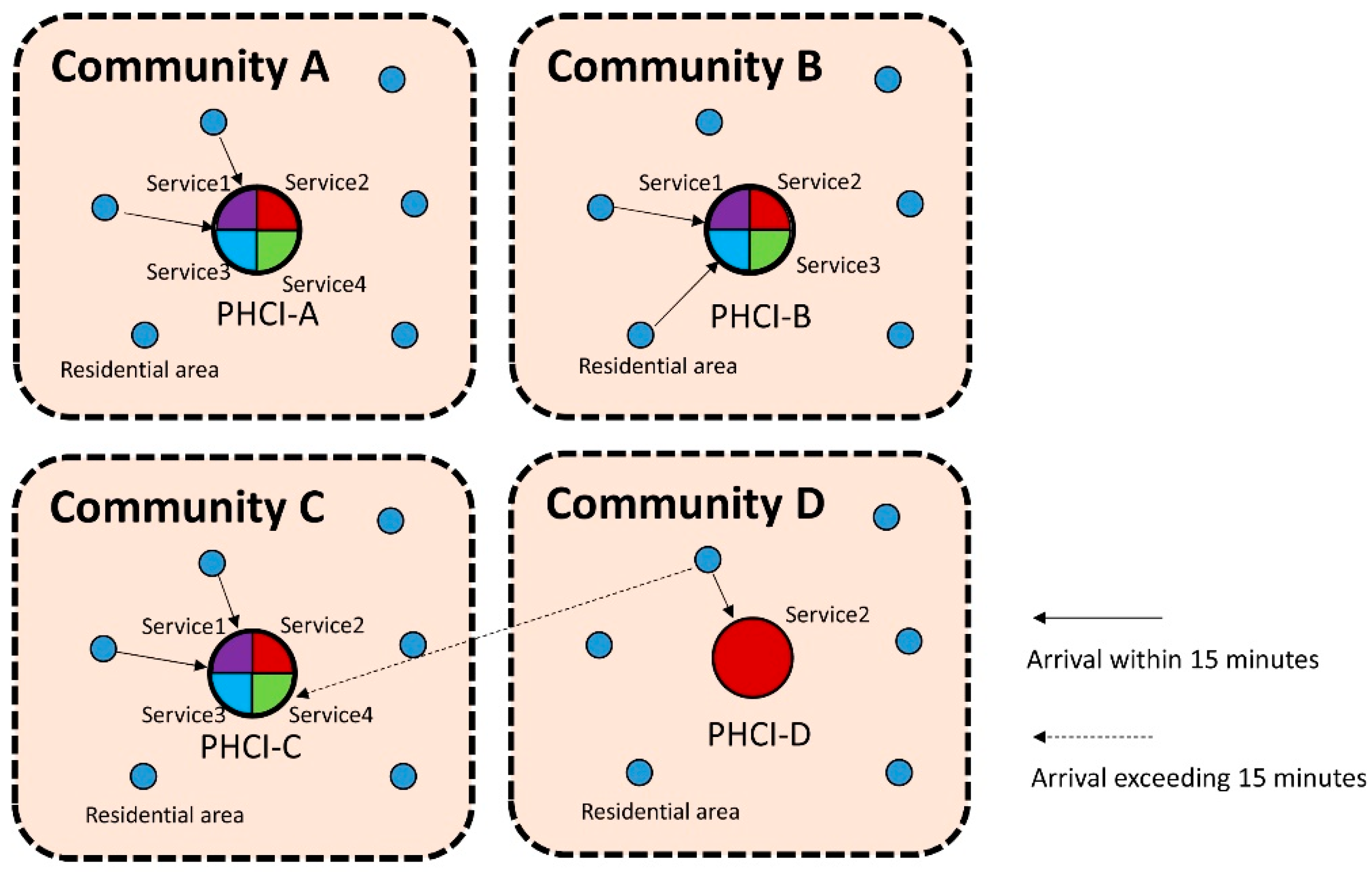
2.3.2. PHCI Walking Accessibility Analysis Based on 2SFCA-MSD
- (1)
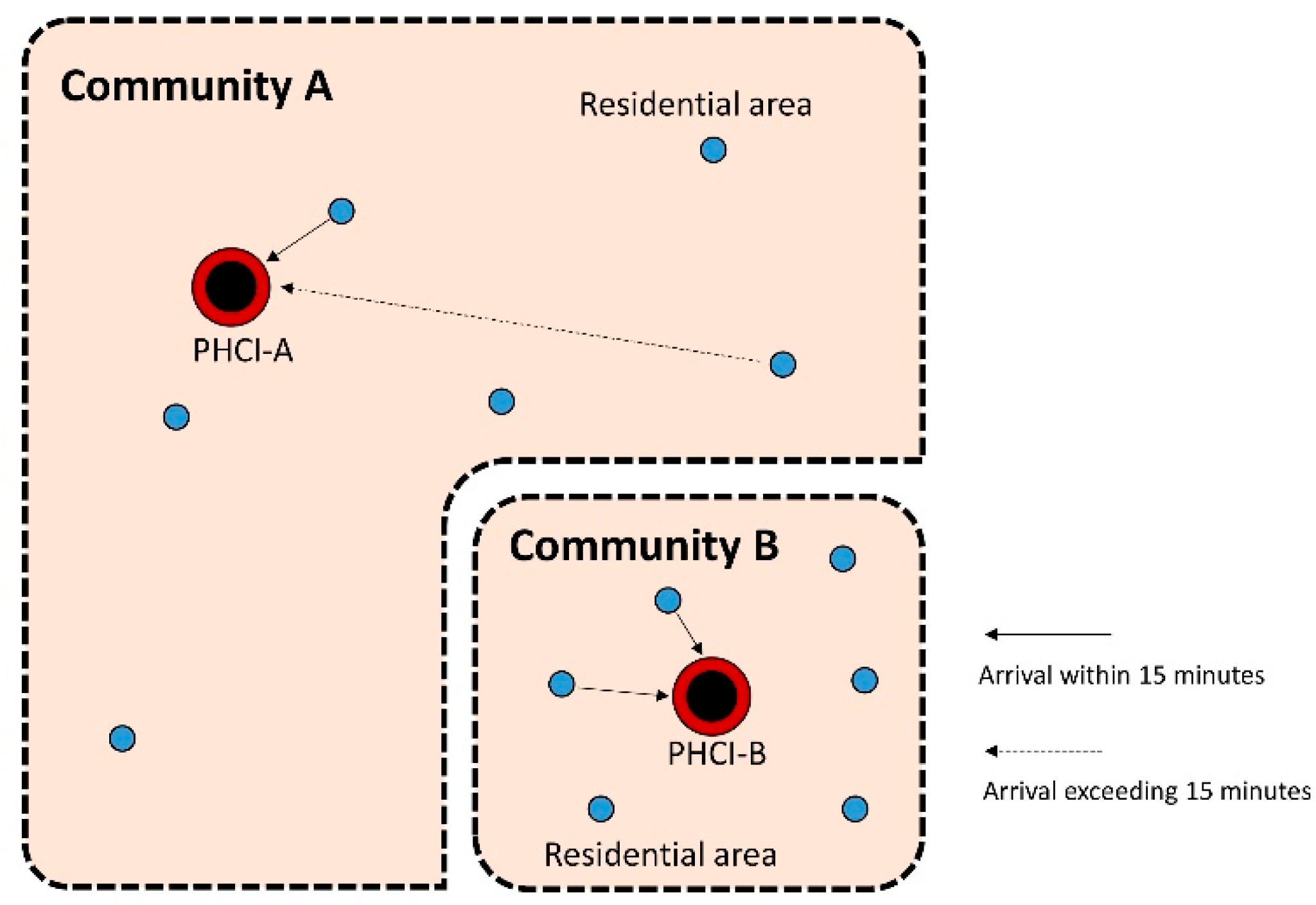
- First, calculate the supply–demand ratio of PHCI: with PHCI j as the center, set the time threshold to 15 min, search for all residential points k within the search radius, and calculate the supply–demand ratio as shown in Equation (1).
- (2)
- The second step is to search for all medical points j within the search radius centered on residential point i, add up all the services Rj provided by all medical points, and obtain the accessibility at residential point i, as shown in Equation (2).
2.3.3. Gini Coefficient and Lorenz Curve
3. Results
3.1. Dynamic Supply and Demand Evaluation of PHCI
3.1.1. Multidimensional Supply Capacity
3.1.2. Dynamic Demand for PHCI
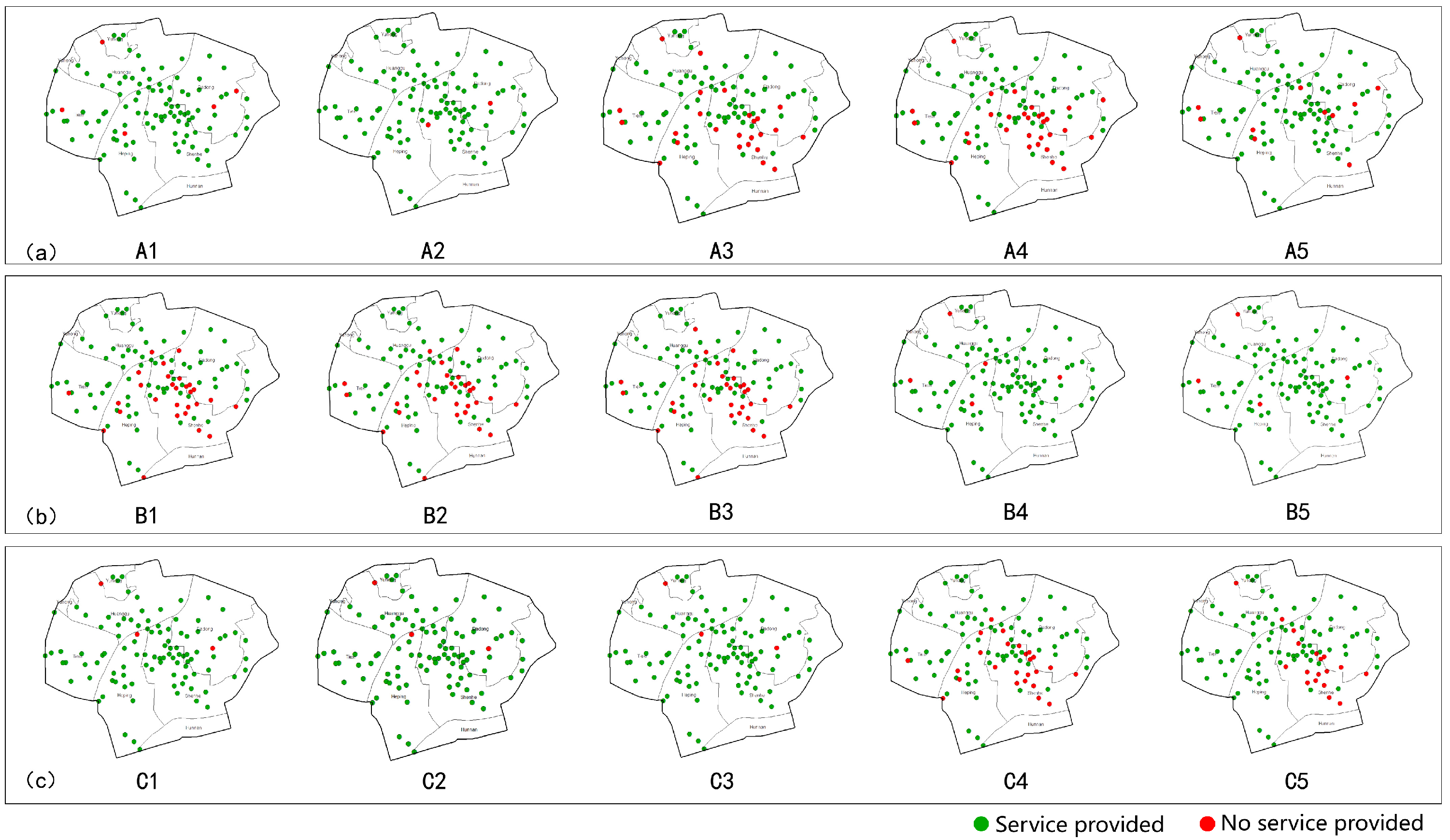
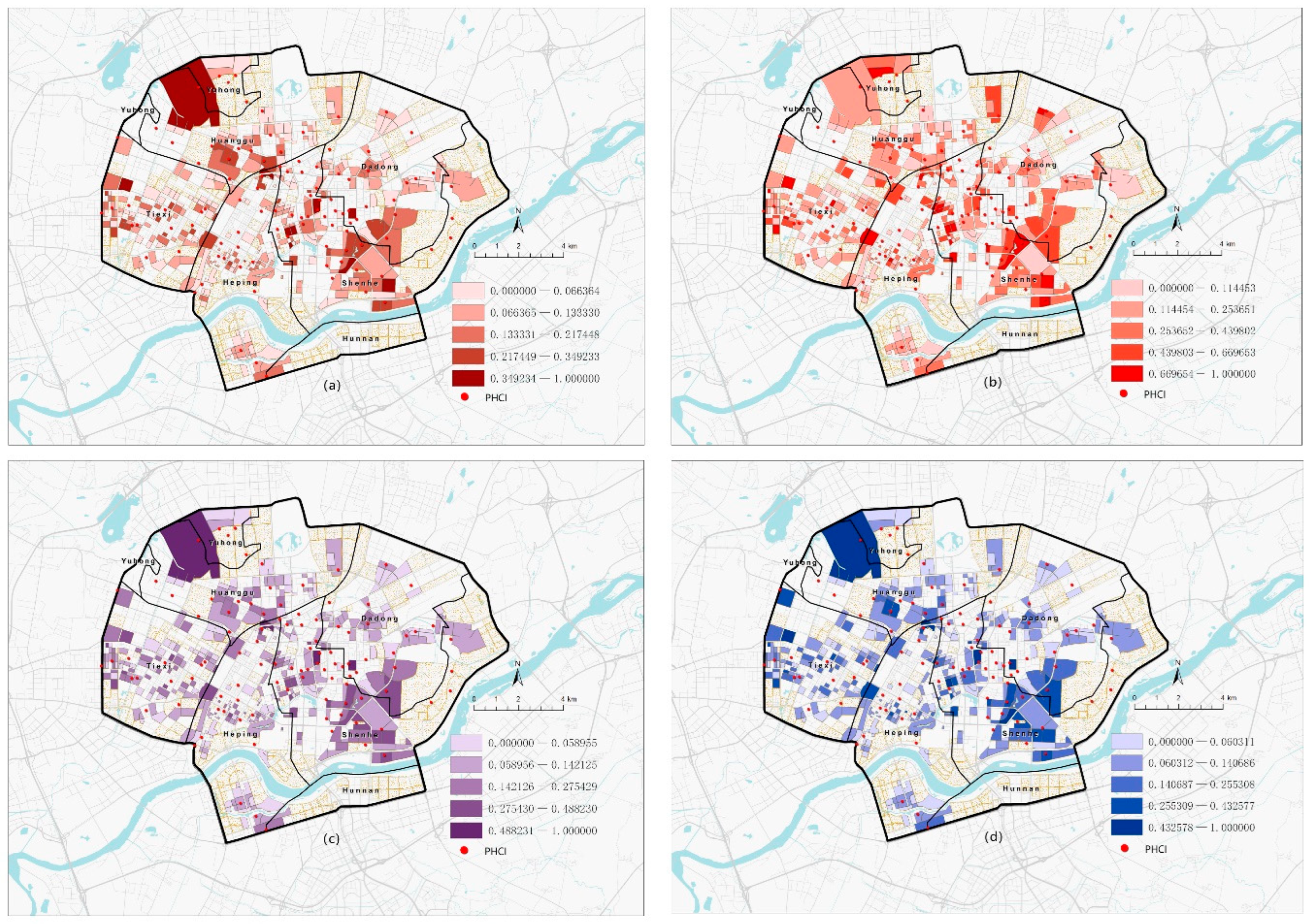
3.2. Walking Accessibility Based on 2SFCA-MSD
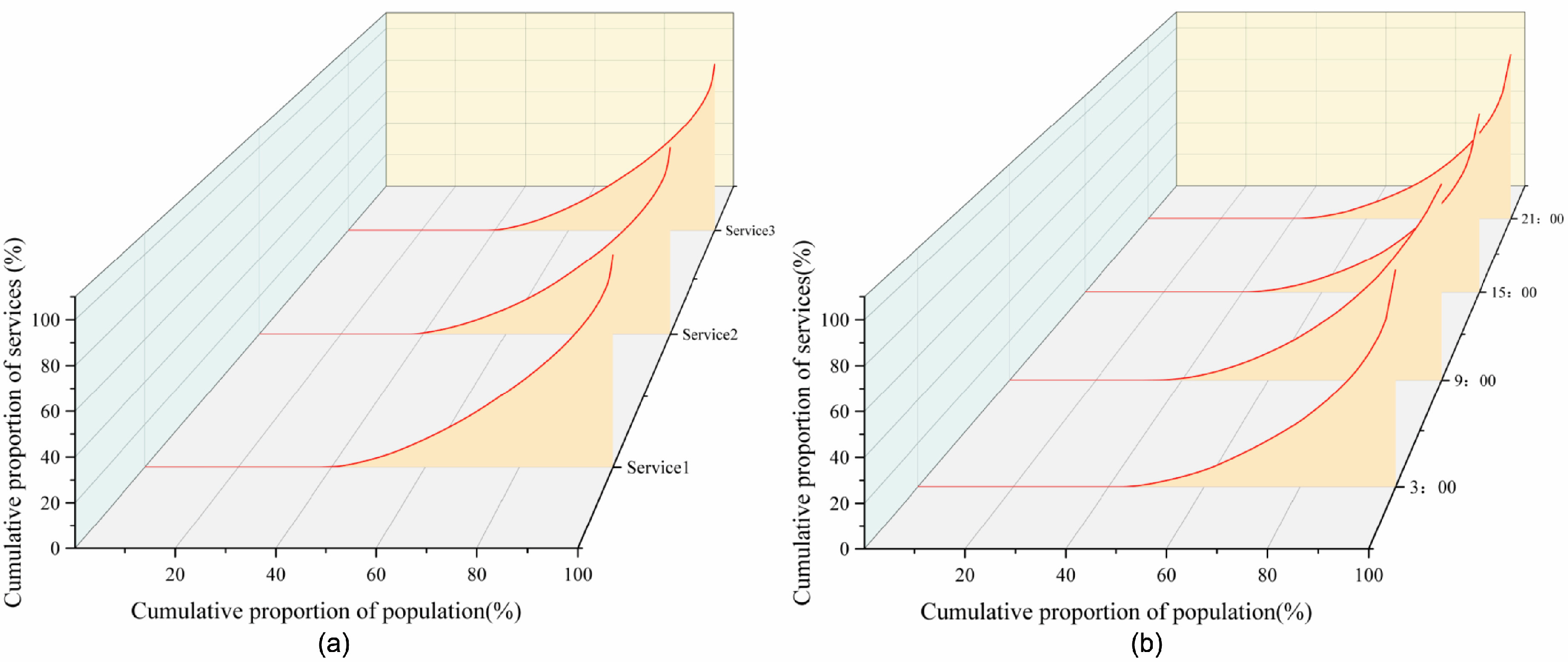
3.3. Evaluation of the Equity of PHCI
4. Discussion
4.1. Shifting from an “Administrative Unit” to a “Population-Spatial Efficacy” Allocation Model
4.2. Promoting Standardization and Complementarity in Service Provision
4.3. Applying Digital Technologies to Respond to Spatiotemporal Demand Fluctuations
5. Conclusions
6. Research Limits and Prospects
Author Contributions
Funding
Data Availability Statement
Conflicts of Interest
Abbreviations
| PHCI | Primary healthcare institution |
| 2SFCA-MSD | A modified two-step floating catchment area model that considers multiple types of supply and demand |
| AHP | The analytic hierarchy process |
References
- Friesen, J.; Georganos, S.; Haas, J. Differences in walking access to healthcare facilities between formal and informal areas in 19 sub-Saharan African cities. Commun. Med. 2025, 5, 41. [Google Scholar] [CrossRef]
- Merlin, L.A.; Jehle, U. Global interest in walking accessibility: A scoping review. Transp. Rev. 2023, 43, 1021–1054. [Google Scholar] [CrossRef]
- World Health Organization. Primary Health Care. Available online: https://www.who.int/health-topics/primary-health-care#tab=tab_2 (accessed on 10 January 2025).
- World Health Organization. Declaration of Alma-Ata. Available online: https://www.who.int/publications/i/item/WHO-EURO-1978-3938-43697-61471 (accessed on 10 January 2025).
- World Health Organization. Declaration on Primary Health Care. Available online: https://www.who.int/teams/primary-health-care/conference/declaration (accessed on 8 January 2026).
- UN General Assembly. High-Level Plenary Meeting on Universal Health Coverage. Available online: https://digitallibrary.un.org/record/3833350?ln=en&v=pdf#record-files-collapse-header (accessed on 8 January 2026).
- Hou, Y.; Li, W.; Li, S.; Chen, L.; An, J.; Lu, S. Enhancing healthcare utilization and reducing preventable hospitalizations: Exploring the healthcare-seeking propensity of patients with non-communicable diseases in Rural China. BMC Public Health 2025, 25, 323. [Google Scholar] [CrossRef] [PubMed]
- Vanden Bossche, D.; Zhao, Q.J.; Ares-Blanco, S.; Peña, M.P.A.; Decat, P.; Kondo, N.; Kroneman, M.; Nishioka, D.; Petrazzuoli, F.; Rortveit, G.; et al. Addressing health inequity during the COVID-19 pandemic through primary health care and public health collaboration: A multiple case study analysis in eight high-income countries. Int. J. Equity Health 2023, 22, 171. [Google Scholar] [CrossRef]
- Yang, J.; Bao, Y.; Zhang, Y.; Li, X.; Ge, Q. Impact of Accessibility on Housing Prices in Dalian City of China Based on a Geographically Weighted Regression Model. Chin. Geogr. Sci. 2018, 3, 505–515. [Google Scholar] [CrossRef]
- Kiani, B.; Mohammadi, A.; Bergquist, R.; Bagheri, N. Different configurations of the two-step floating catchment area method for measuring the spatial accessibility to hospitals for people living with disability: A cross-sectional study. Arch. Public Health 2021, 79, 85. [Google Scholar] [CrossRef] [PubMed]
- Li, S.; Ma, L.; Huang, Q.; Cui, X.; Zhu, Z.; Zong, Y. Accessibility and Optimization of Rural Healthcare Facilities from the Perspective of the Rural Living Circle. Appl. Spat. Anal. 2025, 18, 2. [Google Scholar] [CrossRef]
- Shen, X. Accessibility calculation and equality evaluation of medical facilities for COVID-19 pandemic treatment: A case study of the Wuhan metropolitan development zone. PLoS ONE 2022, 17, e0272458. [Google Scholar] [CrossRef]
- Cheng, M.; Tao, L.; Lian, Y.; Huang, W. Measuring Spatial Accessibility of Urban Medical Facilities: A Case Study in Changning District of Shanghai in China. Int. J. Environ. Res. Public Health 2021, 18, 9598. [Google Scholar] [CrossRef]
- Wang, X.; Yang, H.; Duan, Z.; Pan, J. Spatial accessibility of primary health care in China: A case study in Sichuan Province. Soc. Sci. Med. 2018, 209, 14–24. [Google Scholar] [CrossRef]
- Rong, P.; Zheng, Z.; Kwan, M.-P.; Qin, Y. Evaluation of the spatial equity of medical facilities based on improved potential model and map service API: A case study in Zhengzhou, China. Appl. Geogr. 2020, 119, 102192. [Google Scholar] [CrossRef]
- Soukhov, A.; Tarriño-Ortiz, J.; Soria-Lara, J.A.; Páez, A. Multimodal spatial availability: A singly-constrained measure of accessibility considering multiple modes. PLoS ONE 2024, 19, e0299077. [Google Scholar] [CrossRef]
- Raeesi, A.; Hashtarkhani, S.; Tara, M.; Sargolzaei, N.; Kiani, B. Empowering access: Unveiling an overall composite spatial accessibility index to healthcare services in Southeastern Iran. Int. J. Equity Health 2025, 24, 35. [Google Scholar] [CrossRef]
- Gan, Z.; Liang, T.; Yang, R. Identifying temporal variations in accessibility inequity to healthcare services across different travel strategies. J. Transp. Health 2024, 38, 101838. [Google Scholar] [CrossRef]
- Zeng, Y.; Zuo, J.; Li, C.; Luo, J. Assessing the Spatial Equity of Multi-Type Health Service Facilities: An Improved Method Integrating Scale Accessibility and Type Diversity. Land 2024, 13, 795. [Google Scholar] [CrossRef]
- Sun, M.; Wang, B. The Resilience Evaluation and Optimization of Primary Healthcare Facilities in Harbin’s Main Urban Area based on Network Analysis. Preprints 2025. [Google Scholar] [CrossRef]
- Shenyang Municipal Bureau of Statistics. Economic Performance of the City in 2024. Available online: https://tjj.shenyang.gov.cn/sjfb/sqfx/202501/t20250120_4799371.html (accessed on 8 January 2026).
- Fedeli, S. The Impact of GDP on Health Care Expenditure: The Case of Italy (1982–2009). Soc. Indic. Res. 2015, 122, 347–370. [Google Scholar] [CrossRef][Green Version]
- Shenyang Municipal Bureau of Statistics. 2023 Shenyang Municipal Statistical Bulletin on National Economic and Social Development. Available online: https://tjj.shenyang.gov.cn/sjfb/tjgb/202404/t20240411_4629092.html (accessed on 8 January 2026).
- Shenyang Municipal Government. Solidly Ensure Livelihood Guarantees and Continuously Improve Residents’ Happiness Index. Shenyang Municipal Government Website. Available online: https://www.ln.gov.cn/web/ywdt/qsgd/ass_2_1/2024031314205445490/ (accessed on 8 January 2026).
- Azami-Aghdash, S.; Biparva, M.; Karami, S.; Derakhshani, N.; Rezapour, R. Developing a progress assessment model for age friendly primary health care initiatives. BMC Prim. Care 2025, 26, 42. [Google Scholar] [CrossRef] [PubMed]
- Bao, W.; Gong, A.; Zhang, T.; Zhao, Y.; Li, B.; Chen, S. Mapping Population Distribution with High Spatiotemporal Resolution in Beijing Using Baidu Heat Map Data. Remote Sens. 2023, 15, 458. [Google Scholar] [CrossRef]
- Gasparrini, A.D.; Guo, Y.P.; Hashizume, M.P.; Lavigne, E.P.; Zanobetti, A.P.; Schwartz, J.P.; Tobias, A.P.; Tong, S.P.; Rocklöv, J.P.; Forsberg, B.P.; et al. Mortality risk attributable to high and low ambient temperature: A multicountry observational study. Lancet 2015, 386, 369–375. [Google Scholar] [CrossRef]
- Teluguakula, N.; Chow, V.T.K.; Pandareesh, M.D.; Dasegowda, V.; Kurrapotula, V.; Gopegowda, S.M.; Radic, M. SARS-CoV-2 and Influenza Co-Infection: Fair Competition or Sinister Combination? Viruses 2024, 16, 793. [Google Scholar] [CrossRef]
- Lee, P.; Smith, S.; Linderman, J.; Courville, A.B.; Brychta, R.J.; Dieckmann, W.; Werner, C.D.; Chen, K.Y.; Celi, F.S. Temperature-Acclimated Brown Adipose Tissue Modulates Insulin Sensitivity in Humans. Diabetes 2014, 61, 3686–3698. [Google Scholar] [CrossRef]
- Gong, P.; Chen, B.; Li, X.; Liu, H.; Wang, J.; Bai, Y.; Chen, J.; Chen, X.; Fang, L.; Feng, S.; et al. Mapping essential urban land use categories in China (EULUC-China): Preliminary results for 2018. Sci. Bull. 2020, 65, 182–187. [Google Scholar] [CrossRef]
- Baidu Map. Baidu Population Heat Map Data. Available online: https://lbsyun.baidu.com/faq/api?title=webapi/ip-api (accessed on 8 January 2026).
- Information on Institutions Undertaking Basic Public Health Service Projects in Shenyang City. Available online: https://wjw.sheyang.gov.cn/zwgk/fdzdgknr/jcws/202208/t20220803_3798985.html (accessed on 10 April 2024).
- Gaode Map API. Available online: https://lbs.amap.com/api/weserice/guide/api/newroute (accessed on 8 January 2026).
- Mattiussi, A.; Rosano, M.; Simeoni, P. A decision support system for sustainable energy supply combining multi-objective and multi-attribute analysis: An Australian case study. Decis. Support Syst. 2014, 57, 150–159. [Google Scholar] [CrossRef]
- Ishizaka, A.; Labib, A. Review of the main developments in the analytic hierarchy process. Expert Syst. Appl. 2011, 38, 14336–14345. [Google Scholar] [CrossRef]
- Park, J.; Goldberg, D.W. A Review of Recent Spatial Accessibility Studies That Benefitted from Advanced Geospatial Information: Multimodal Transportation and Spatiotemporal Disaggregation. ISPRS Int. J. Geo-Inf. 2021, 10, 532. [Google Scholar] [CrossRef]
- GB50180-2018; Urban Residential Area Planning and Design Standards. Ministry of Housing and Urban-Rural Development of the People’s Republic of China: Beijing, China, 2018.
- Eker, O.A.; Imam, A. Equity in the distribution of health resources and services in the West Bank, Palestine: A focus on hospitals and primary healthcare centers. Int. J. Equity Health 2025, 24, 106. [Google Scholar] [CrossRef] [PubMed]
- Dai, G.; Li, R.; Ma, S. Research on the equity of health resource allocation in TCM hospitals in China based on the Gini coefficient and agglomeration degree: 2009–2018. Int. J. Equity Health 2022, 21, 145. [Google Scholar] [CrossRef]
- Rastegarimehr, B.; Teymourlouy, A.A.; Gorji, H.A.; Promotion, H. Accreditation of primary health care services: A systematic review. J. Educ. Health Promot. 2025, 14, 15. [Google Scholar] [CrossRef] [PubMed]
- Israeli, R.; Geva, G.A.; Rose, A.J. Evaluating and Comparing the Content Coverage of Quality Measure Sets from Israel, the United States, and the United Kingdom. J. Gen. Intern. Med. 2025, 40, 4000–4005. [Google Scholar] [CrossRef]
- Blanco, A.M.; González, G.P.; Geri, M.; Moreno, M.S. Measuring Access to Health Services: Constructing a Multidimensional Index. Soc. Indic. Res. 2025, 176, 903–929. [Google Scholar] [CrossRef]
- Mao, L. Modeling time-varying spatial accessibility to healthcare: A system dynamic approach. Health Place 2025, 91, 103416. [Google Scholar] [CrossRef] [PubMed]
- Wang, X.; Seyler, B.C.; Chen, T.; Jian, W.; Fu, H.; Di, B.; Yip, W.; Pan, J. Disparity in healthcare seeking behaviors between impoverished and non-impoverished populations with implications for healthcare resource optimization. Humanit. Soc. Sci. Commun. 2024, 10, 1208. [Google Scholar] [CrossRef]
- Wu, J.; Zheng, Y.; Lin, X.; Lin, S.; Huang, H. Tracking Chinese Online Activity and Interest in Osteoporosis Using the Baidu Index. Cureus 2024, 16, e57644. [Google Scholar] [CrossRef] [PubMed]
- Ye, P.; Ye, Z.; Xia, J.; Zhong, L.; Zhang, M.; Lv, L.; Tu, W.; Yue, Y.; Li, Q.J. National-scale 1-km maps of hospital travel time and hospital accessibility in China. Sci. Data 2024, 11, 1130. [Google Scholar] [CrossRef]
- Reiter, D.; Hecht, R.; Jehling, M. Mapping access to medical service provision at micro-scale: Dynamics in supply and demand in Germany. Int. J. Equity Health 2024, 82, 322–337. [Google Scholar] [CrossRef]
- Shan, L.; Gan, Y.; Yan, X.; Wang, S.; Yin, Y.; Wu, X. Uneven primary healthcare supply of rural doctors and medical equipment in remote China: Community impact and the moderating effect of policy intervention. Int. J. Equity Health 2024, 23, 97. [Google Scholar] [CrossRef]
- Liepins, T.; Nixon, G.; Stokes, T. Rural–urban differences in health service utilization in upper-middle and high-income countries: A scoping review. Int. J. Equity Health 2024, 23, 188. [Google Scholar] [CrossRef]
- Wan, J.; Sun, H.; Fan, X.; Phillips, A.; Zhao, Y.; Chen, Y.; Wang, Z.; Xiao, H.; Dong, X.; Zhu, W. Refining the 15-minute community living circle: An innovative evaluation method for medical facility allocation in Chengdu. Land Use Policy 2024, 145, 107286. [Google Scholar] [CrossRef]
- Luo, Y. Empirical Study on the Small—Area Spatiotemporal Evaluation of Healthcare Resource Allocation Efficiency Basedon County—Level Panel Data in Sichuan Province. Chin. Health Serv. Manag. 2025, 3, 292–299. [Google Scholar]
- Li, X.; Yang, Z.; Guo, Y.; Xu, W.; Qian, X. Factoring in temporal variations of public transit-based healthcare accessibility and equity. Int. J. Transp. Sci. Technol. 2024, 1, 20–24. [Google Scholar] [CrossRef]
- Cappanera, P.; Visintin, F.; Vannelli, S. Home-based care and center-based care: From being alternatives to being synergistic. Optimization models to support flexible care delivery. Omega 2025, 131, 103184. [Google Scholar] [CrossRef]
- Enichen, E.J.; Heydari, K.; Li, B.; Kvedar, J.C. Telemedicine expands cardiovascular care in China—Lessons for health equity in the United States. NPJ Digit. Med. 2025, 8, 71. [Google Scholar] [CrossRef] [PubMed]
- Singla, A.; Meenu. Telemedicine: Transforming Healthcare Delivery in a Digital Age. Shodh Sagar J. Med. Res. Adv. 2024, 1, 71–79. [Google Scholar] [CrossRef]
- Shende, V.; Wagh, V. Role of Telemedicine and Telehealth in Public Healthcare Sector: A Narrative Review. Cureus 2024, 16, e69102. [Google Scholar] [CrossRef]






| Target Level | Normative Level | Action Level | ||
|---|---|---|---|---|
| PHCI servicecapacity | (A) Health Services Management | 0.1429 | (A1) Health Archiving | 0.0551 |
| (A2) Health Education | 0.0263 | |||
| (A3) Family Planning | 0.0097 | |||
| (A4) HIV/AIDS Prevention | 0.0269 | |||
| (A5) Health Literacy Promotion | 0.0248 | |||
| (B) Health services for vulnerable populations | 0.4286 | (B1) Vaccinations | 0.1000 | |
| (B2) Children aged 0–6 Health care | 0.1000 | |||
| (B3) Maternal health | 0.0923 | |||
| (B4) Elderly health services | 0.1000 | |||
| (B5) Chinese Medicine Health Services | 0.0362 | |||
| (C) Common Disease Prevention and Control | 0.4286 | (C1) Hypertension prevention and control | 0.1161 | |
| (C2) Type 2 diabetes prevention and treatment | 0.1446 | |||
| (C3) Mental Disease Prevention and Control | 0.0337 | |||
| (C4) Tuberculosis control | 0.0859 | |||
| (C5) Early warning of public health emergencies | 0.0482 | |||
Disclaimer/Publisher’s Note: The statements, opinions and data contained in all publications are solely those of the individual author(s) and contributor(s) and not of MDPI and/or the editor(s). MDPI and/or the editor(s) disclaim responsibility for any injury to people or property resulting from any ideas, methods, instructions or products referred to in the content. |
© 2026 by the authors. Published by MDPI on behalf of the International Society for Photogrammetry and Remote Sensing. Licensee MDPI, Basel, Switzerland. This article is an open access article distributed under the terms and conditions of the Creative Commons Attribution (CC BY) license.
Share and Cite
Li, Y.; Wang, E.; Li, S.; Cui, Q.; Xie, H. Dynamic Measurement and Equity Analysis of Walking Accessibility in Primary Healthcare Institutions Under Diverse Supply–Demand Scenarios: Evidence from Shenyang. ISPRS Int. J. Geo-Inf. 2026, 15, 40. https://doi.org/10.3390/ijgi15010040
Li Y, Wang E, Li S, Cui Q, Xie H. Dynamic Measurement and Equity Analysis of Walking Accessibility in Primary Healthcare Institutions Under Diverse Supply–Demand Scenarios: Evidence from Shenyang. ISPRS International Journal of Geo-Information. 2026; 15(1):40. https://doi.org/10.3390/ijgi15010040
Chicago/Turabian StyleLi, Yang, Enxu Wang, Shasha Li, Qiao Cui, and Hao Xie. 2026. "Dynamic Measurement and Equity Analysis of Walking Accessibility in Primary Healthcare Institutions Under Diverse Supply–Demand Scenarios: Evidence from Shenyang" ISPRS International Journal of Geo-Information 15, no. 1: 40. https://doi.org/10.3390/ijgi15010040
APA StyleLi, Y., Wang, E., Li, S., Cui, Q., & Xie, H. (2026). Dynamic Measurement and Equity Analysis of Walking Accessibility in Primary Healthcare Institutions Under Diverse Supply–Demand Scenarios: Evidence from Shenyang. ISPRS International Journal of Geo-Information, 15(1), 40. https://doi.org/10.3390/ijgi15010040