1. Introduction
As urban carriers of rich cultural legacy, historic and cultural cities have the challenge of preserving traditional elements while simultaneously enhancing the quality of life. In the context of greening construction, this contradiction is especially evident: on the one hand, green space, as a vital component of the urban ecosystem, serves important ecological purposes like producing oxygen and sequestering carbon [
1], purifying air pollutants [
2], reducing noise pollution [
3], and mitigating the urban heat island effect [
4], and its equitable distribution is essential to protecting the ecological well-being of inhabitants [
5]. Traditional large-scale green space construction is severely limited in historical and cultural city districts by building density, spatial layout, and cultural relics protection laws. In these circumstances, the ancient city’s greening initiative should investigate a new development strategy core, namely moving from “add green” to “show green,” by improving the visual appeal of green space to boost the perception of greening.
Relevant studies have progressively changed from the early emphasis on quantitative dimensions of parity [
6] to geographical balance [
7], spatial equity [
8], and finally social justice [
9], as the depth of research on urban green space equality has increased. However, the current theory of spatial fairness lacks a theoretical explanation of the green resource allocation mechanism under the twin constraints of “protection-development” of historical and cultural cities, as it is mostly based on the modern urban planning paradigm [
10]. It is challenging to accurately depict the green landscape that people actually perceive in historic districts, but traditional horizontal projection area measurement indicators, such as the green space ratio and the green coverage ratio based on the top-down perspective [
11], can reflect the macro greening level under the restricted construction conditions. Specifically, the true effects of micro-green spaces (like building gap interventions and historic courtyard greening) and small-scale green spaces (like rooftop gardens, vertical greening, and corner pocket parks) that contribute to the overall green infrastructure are difficult for standard indicators to measure.
The Green View Index (GVI), an assessment metric that is more in line with human visual perception, has arisen in response to this specific discrepancy [
12]. In addition to accurately capturing the visual contribution of micro-scale greening elements like vertical greening and three-dimensional greening from the perspective of pedestrians [
13], the GVI can be used to overcome the evaluation of blind spots of traditional area indicators, increase urban green space through low-invasive methods, and achieve the unity of ecological optimization and historical landscape protection [
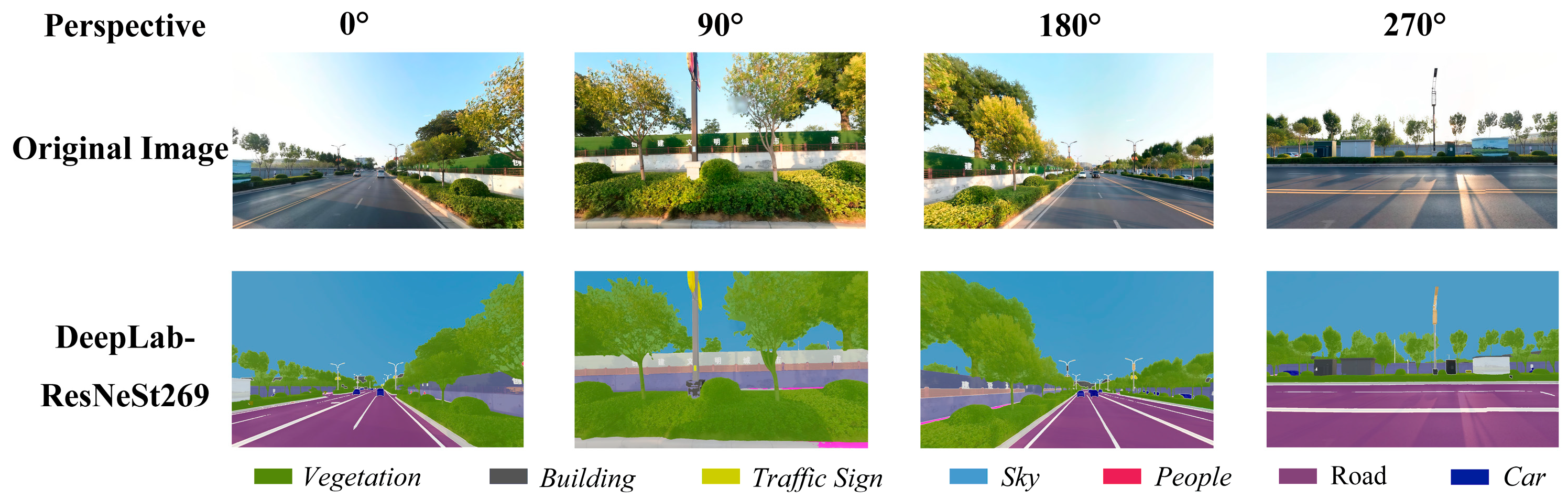
14]. The GVI employs street imagery to directly quantify 3D greening features from a pedestrian’s point of view [
12,
13], while the overhead coverage measurement uses a vertical projection algorithm [
15], which is unable to capture vertical greening elements like green walls and facade vegetation. This is the technical difference between the two. In historic cities, where vertical greening is a significant but invisible green infrastructure, this complementing interaction is especially beneficial. At the same time, the GVI can be used in conjunction with the standard overlooking coverage indicators (such as green space rate and greening coverage) to provide a more comprehensive picture of the urban greening state. These indicators still have macro-level reference values. With the refinement of GVI evaluation criteria, its calculation technology has experienced a development process from manual measurement to automatic extraction. In recent years, researchers have introduced deep learning into the field of GVI calculation, and Seiferling et al. first applied convolutional neural networks to the green identification of street scene images, which significantly improved the classification accuracy [
16]. In order to accomplish precise greening detection at the pixel level, Zhang and Dong also suggested a semantic segmentation technique based on SegNet [
17]. The groundwork for a large-scale, very accurate evaluation of urban greening perceptions is laid by this technological breakthrough. The emergence of the GVI provides a new technical path for the application of spatial justice theory in historical and cultural cities. The traditional spatial justice theory emphasizes the geographic fairness and accessibility fairness of resource distribution [
18], while the environmental justice theory focuses on the equal opportunity for different groups to obtain quality environmental resources [
19]. Area allocation equity serves as the foundation for the traditional assessment of spatial equity [
20]; however, the heritage protection policy in historic and cultural cities limits the development of extensive green space, and the traditional area indicator makes it challenging to capture the true greening perception effect. Consequently, a theoretical foundation for the shift from “allocation equity” to “perceived equity” must be developed. Lefebvre’s “living space” notion [
21] and Harvey’s “urban rights” theory [
22] are the foundations of this change, which highlights the move from resource distribution to the emphasis on assessing the caliber of spatial experience. Drawing from the environmental justice idea [
19], it prioritizes equitable distribution of natural resources and views visual green accessibility as a fundamental environmental right that all inhabitants ought to have. For this transition, the GVI offers crucial technical assistance.
There is a special complexity and urgency to the problem of greening spatial justice in historic and cultural cities. During the process of urban growth, historical and cultural cities often form a spatial structure of new and old urban areas, enabling residents in different locations to access different green resources. Therefore, there is a significant gap in green spaces between old urban areas and modern urban areas. Nevertheless, the present research still has certain shortcomings: (1) There is currently no clear theoretical framework for GVI fairness in historical and cultural cities, particularly with regard to the integration mechanism between GVI theory and spatial justice theory [
18] within the limitations of cultural protection; (2) there is a lack of systematic comparative analysis of greening equity between ancient and new urban areas, which cannot reveal the intrinsic conflict mechanism between historical and cultural protection and greening resource allocation; (3) there is a lack of in-depth fusion analysis of multi-source geographic big data, which is still insufficient in revealing the intrinsic correlation mechanism between urban functional layout and green space allocation in particular. Equity is concerned with the rationality and accessibility of greening resource allocation [
19], and the choice of spatial analysis methods directly affects the accuracy of equity evaluation [
23]. The Fixed Area Tract (FAT) framework is mostly used in traditional research [
24], but the regular grid-based approach is better suited to the design of contemporary cities. There are key distinctions between historical and cultural cities, such as the intricate spatial texture of the former, the narrow streets and lanes of the former, the modern city’s roads, the mixed functional layout, the distribution of protection zones for cultural relics entwined with commercial and residential districts, and the stringent conservation regulations that prevent the extensive development of green space. The FAT approach is challenging to use due to spatial discrepancies. As a result, this study uses a streetscape sampling point-based spatial analysis approach, which is based on a 100 m
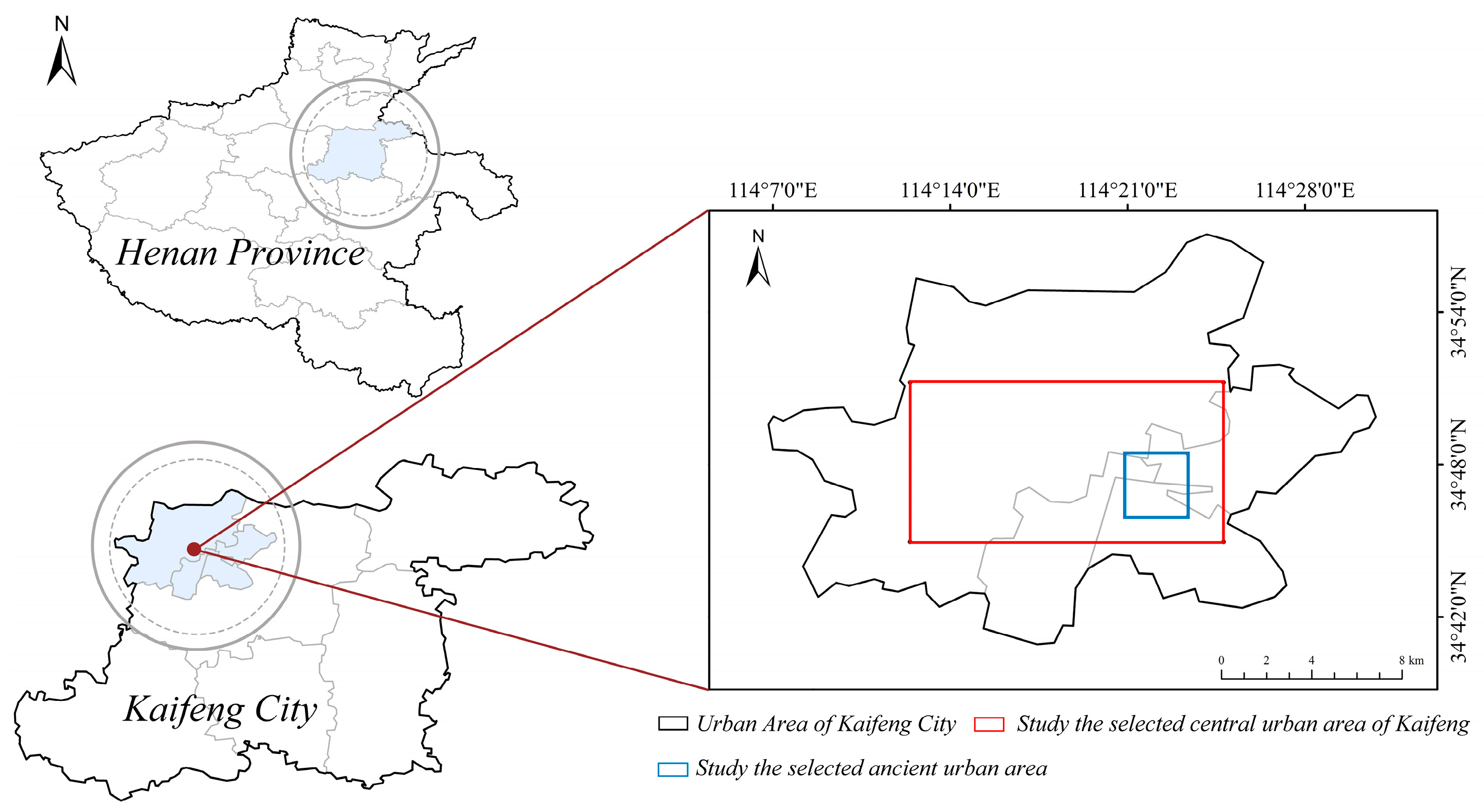
2 analysis unit that can precisely quantify the spatial fairness of greening perceptions from a human-centered perspective and measure the distribution characteristics and visual contributions of small- and medium-scale greening elements in historic districts. In order to improve the precision of the spatial equity assessment, this study uses a diversified sampling technique, with systematic sampling at 250 m intervals in the modern city and intensive sampling at 100 m intervals in the ancient city.
Our research advances the discipline in three ways, according to the analysis above: (1) Building a system for evaluating GVI fairness that can be used in historic and cultural cities. The GVI can supplement the measurement of the visual contribution of small-scale green features in the complicated spatial contexts of historical and cultural cities, while traditional top-down measurement methods are useful for macro greening assessment; (2) the application strategy of the DeepLab-ResNeSt269 model is optimized for the complex spatial environment of the ancient city, the differential sampling method is proposed, and the applicability of the model is verified in the historical and cultural city; (3) the characteristics of the difference in GVI fairness between the ancient city and the new city are systematically compared, and the path of greening optimization under the constraints of cultural protection is explored.
3. Research Methodology
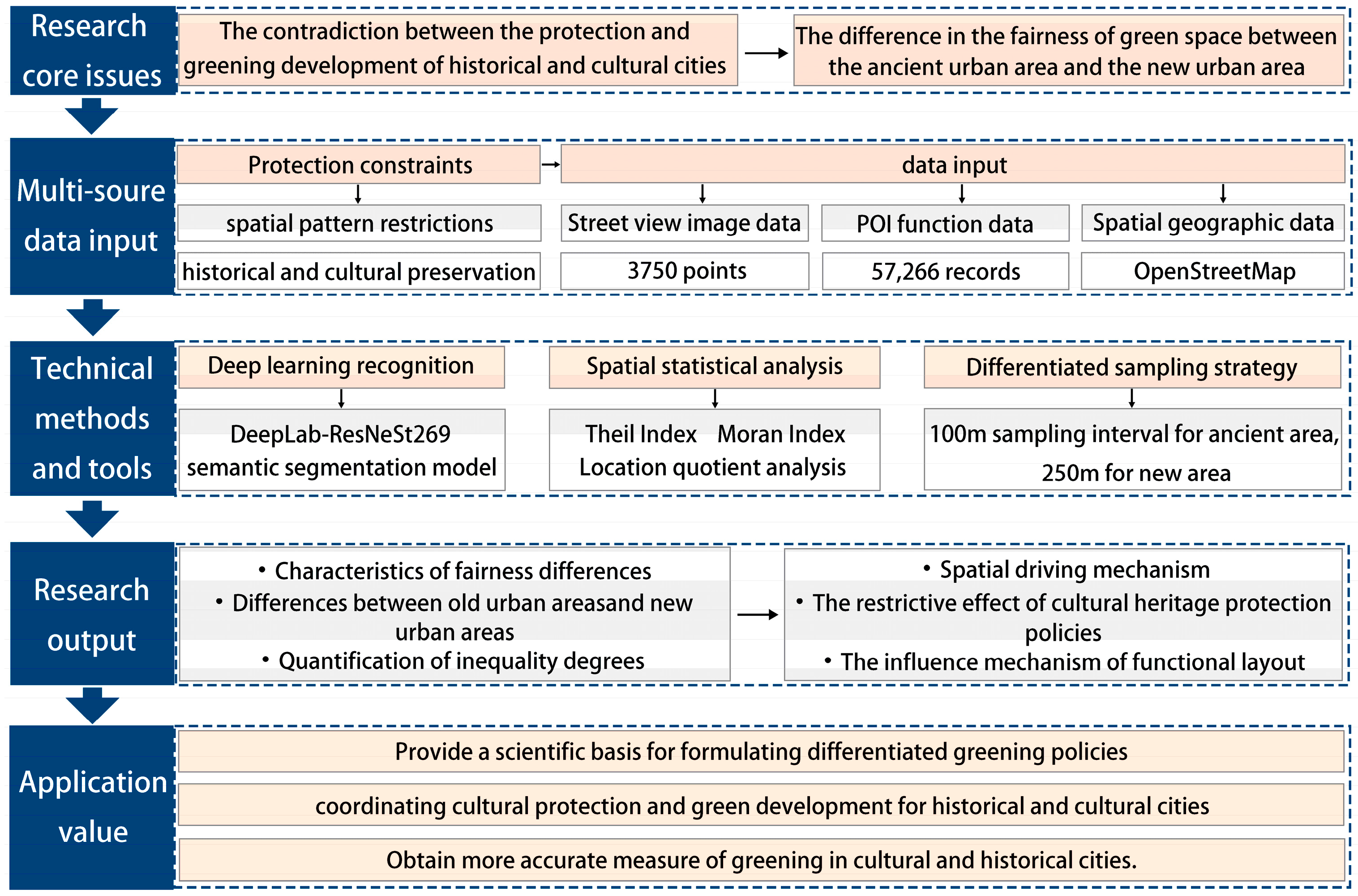
Given the unique conflict between the preservation of historic and cultural cities and the growth of the GVI, this study’s technical approach specifically aimed to do the following: Under the restrictions of cultural preservation, GVI assessment overcomes the limitations of the traditional area indicator and can measure the impact of “apparent greening” rather than “adding greening”; the competitive relationship between green space and functional layout is revealed by POI analysis, which aids in understanding the spatial mechanism of the contradiction. The fairness evaluation system can detect disparities in GVI distribution between new and old urban areas and offers a quantitative foundation for achieving GVI fairness while adhering to protection constraints. In order to make the study’s findings more applicable and realistic, this multi-dimensional and multi-scale analysis framework offers methodical technical assistance for resolving the unique problems of greening development in historic and cultural cities while taking into account conservation constraints like historical and cultural preservation and spatial pattern limitations.
Figure 3 depicts the study’s technical route.
3.1. Methods of Statistical Analysis
The fundamental distribution features of the GVI in Kaifeng City were examined using descriptive statistical analysis. The GVI’s centralized trend, discrete degree, and distribution range are all fully reflected by computing the statistical quantities, including mean, median, standard deviation, maximum, and lowest values. In the meantime, the greening rate is separated into several grade intervals using frequency distribution analysis, and the sample proportion of each grade is tallied to show the GVI distribution pattern.
The degree of the linear relationship between POI density and green visibility was measured using the Pearson correlation test, which was computed as follows:
where
is the sample size,
and
are the corresponding means,
is the POI density, and
is the green visibility. The strength of the linear link between the two variables increases with the correlation coefficient’s absolute value.
By comparing the variations in the GVI distribution across various spatial units and functional areas, classification statistical analysis can identify the characteristics of spatial heterogeneity. Its primary components are the statistical analysis of GVI in regions with various functional kinds of POI data, the comparison of GVI between the old and new cities, and the statistics of the geographical distribution features of various GVI classes.
3.2. Method for Evaluating Fairness
In order to assess the geographical fairness of the greenness rate in Kaifeng City and create a multi-dimensional fairness evaluation system, the study uses a range of spatial statistical techniques, including Theil’s Index [
28], locational entropy [
29], Moran’s Index [
30], etc.
One decomposable spatial imbalance metric that can be used to assess the GVI distribution’s fairness and examine its makeup is the Theil Index. The Theil Index, which is calculated using the following formula, was used in the study to quantitatively evaluate the GVI distribution characteristics in Kaifeng City:
The GVI value of area is represented by , the city’s overall GVI by , the number of sampling points in area is represented by , and the total number of sampling points in the city by .
The two halves of the Theil Index are intraregional inequality and interregional inequality:
There are many ways to express intra-regional disparities:
where
is region
’s Theil Index, and
is the total of region
’s GVI. This decomposition technique can show the multi-scale features of the GVI distribution and detect spatially unbalanced contributions at various sizes.
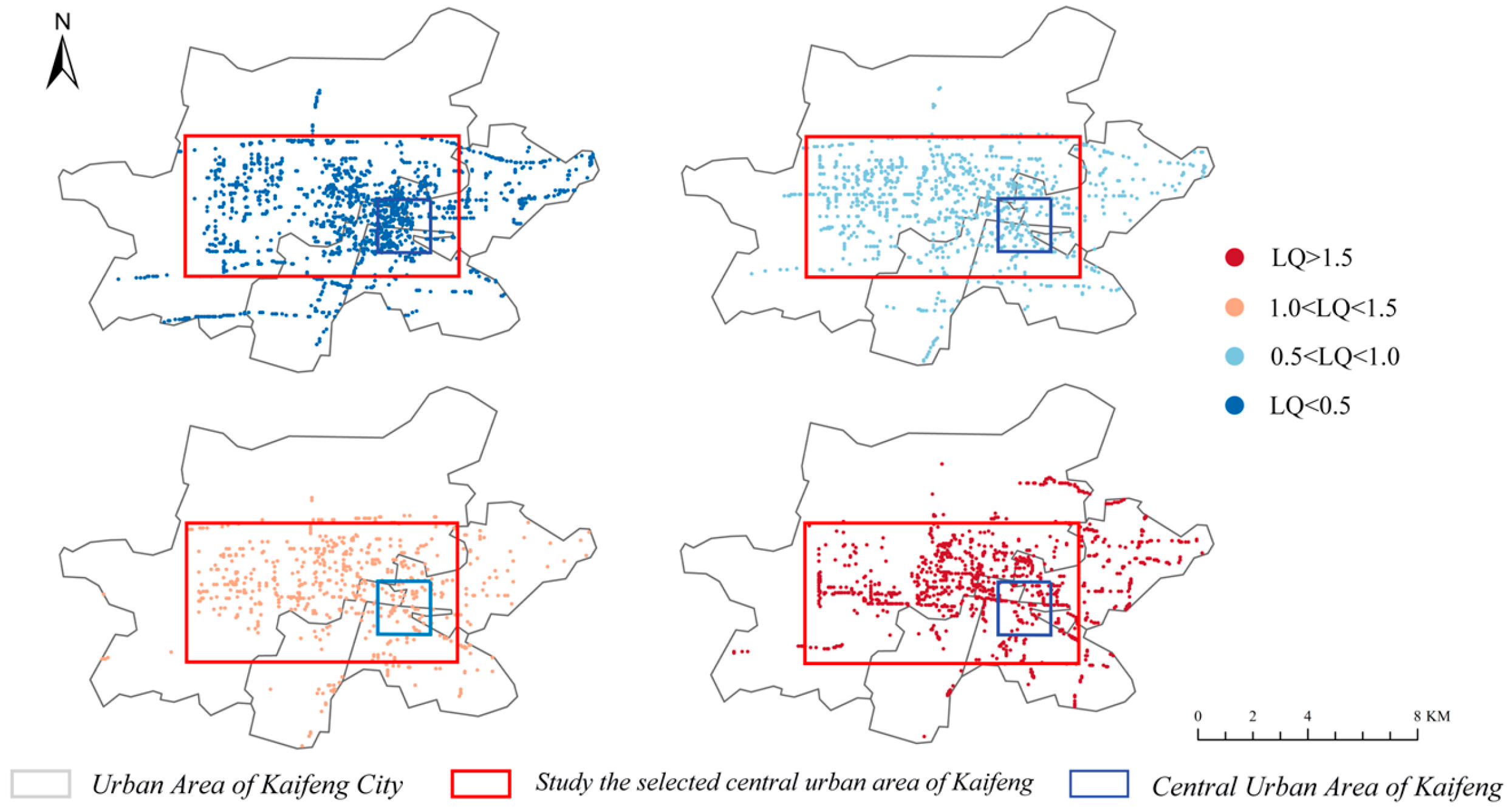
An indicator for assessing the relative concentration of items in an area, location entropy (LQ) can show spatial variations and beneficial distributions of the GVI. In order to examine the spatial distribution features of the GVI and its equity in Kaifeng City, the study used the location entropy method:
The zonal entropy of the GVI for region is represented by . A value of > 1 implies above the citywide average, while a value of < 1 implies below The spatial allocation imbalance of urban greening resources is made evident by the zone entropy analysis, which clearly shows the spatial distribution of the beneficial and disadvantaged zones of the GVI.
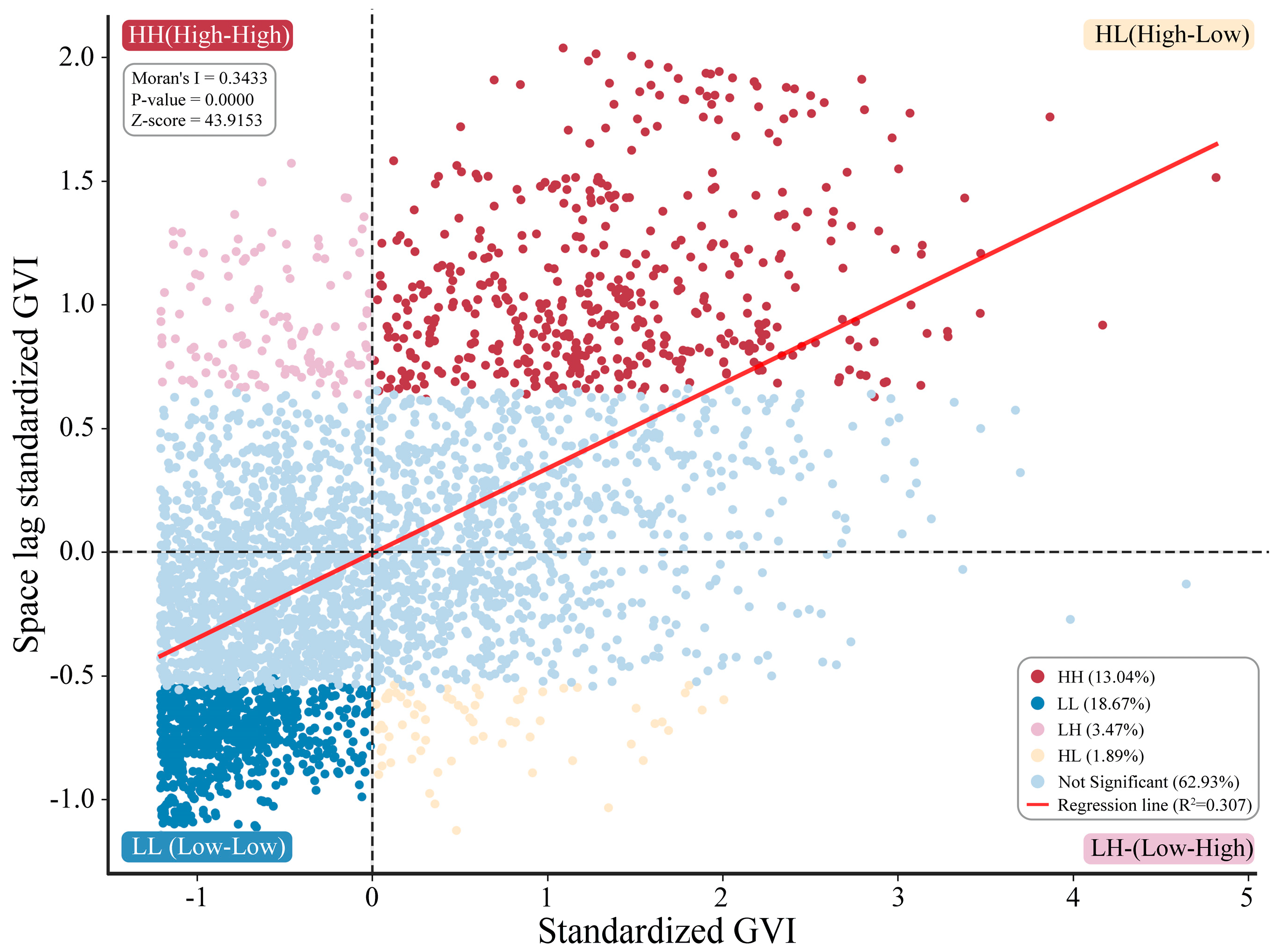
In order to assess the degree of spatial aggregation or dispersion of attribute values in the studied area, Moran’s I is a crucial statistic for analyzing the spatial autocorrelation of regional features. Positive values indicate positive correlation (agglomeration), negative values indicate negative correlation (dispersion), and values near 0 indicate random distribution. The index’s value falls between −1 and 1. In order to examine the spatial autocorrelation features of the GVI and its fairness in Kaifeng City, the study combines the global and local Moran’s Indices. The following formula is used for calculation:
where
is the number of sampling points,
represents elements of the spatial weight matrix indicating the spatial relationship between points
and
,
and
are the GVI values at points
and
, respectively,
is the average GVI value across all sampling points, and
is the sum of all spatial weights. While local Moran’s I can pinpoint high–high clustering locations, low–low clustering areas, and spatial anomalies, the global Moran’s I represents overall spatial correlation and accurately reveals the spatial equitable features of the GVI distribution.
3.3. Development of the GVI Fairness Evaluation System
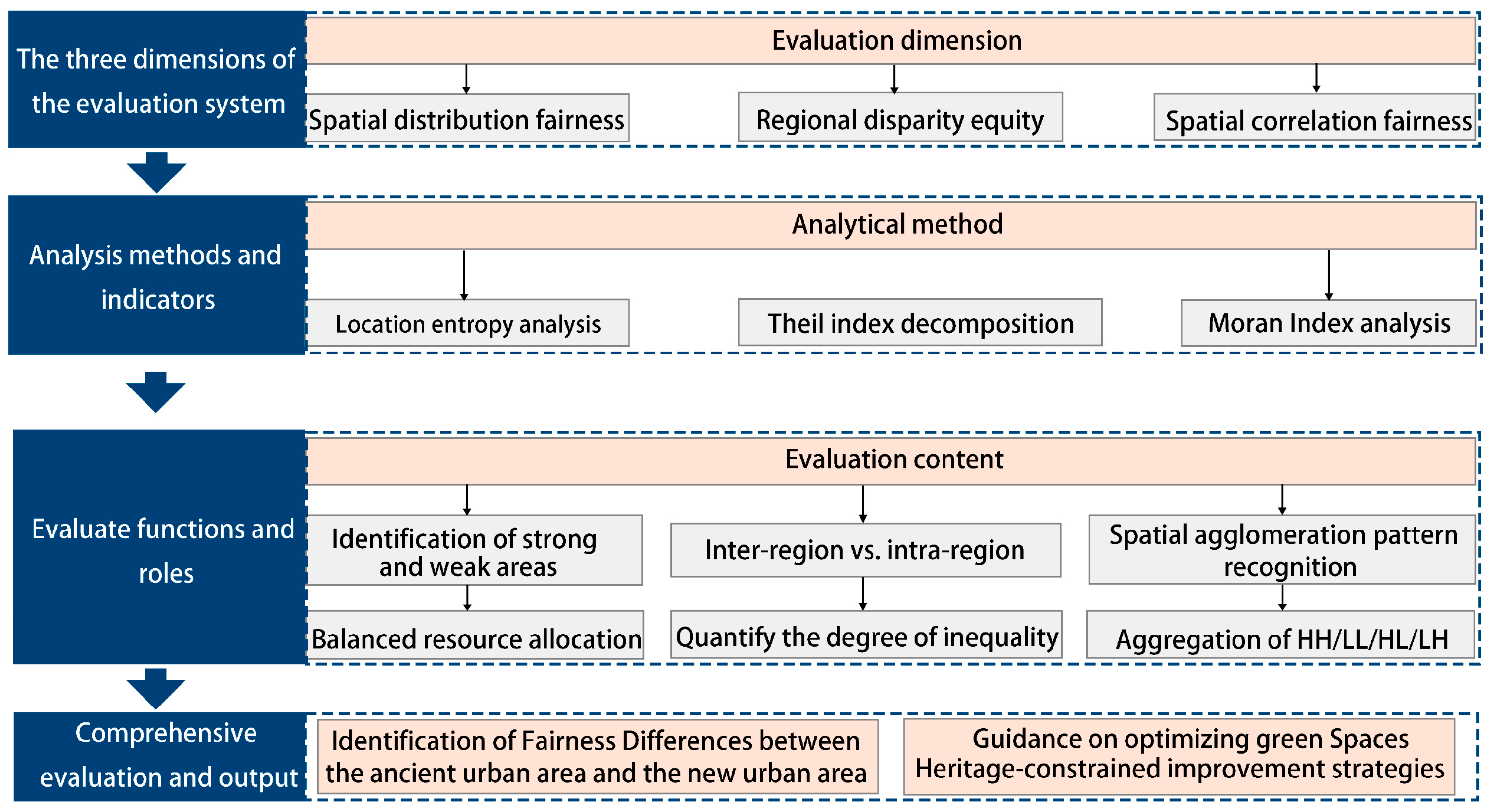
It is challenging to apply the conventional fairness evaluation approach based on green area to the complicated spatial context of ancient cities because of the unique limitations of historical and cultural cities with regard to cultural preservation and greening development. To assess the distribution of perceived fairness of greening from a humanistic standpoint, a multi-dimensional GVI fairness evaluation system was developed in this research.
Figure 4 illustrates the evaluation method.
The locational entropy method is used by the fairness of spatial distribution to assess relative concentration of the GVI in various places. When the location entropy is close to 1, it means that the distribution is relatively balanced; when it is greater than 1, it means that the region’s GVI is higher than the city’s average level; and when it is less than 1, it means that it is lower than the average level. The distribution of greening resources’ favorable and unfavorable areas can be visually identified using this indicator, which also serves as a foundation for measuring the GVI balance.
Equity in Regional Differences measures the extent of GVI inequality within each region as well as between new and old urban regions using the Theil Index’s decomposition method. The Theil Index can be broken down into two parts: intra-regional inequality and inter-regional inequality. It also determines whether macro-urban or micro-street disparities are the primary cause of inequality in the GVI distribution and offers scientific recommendations for the development of focused improvement plans.
Spatial correlation equity analyzes the spatial autocorrelation characteristics of the GVI through Moran’s Index to identify different spatial agglomeration patterns, such as high–high agglomeration and low–low agglomeration. Positive spatial autocorrelation indicates that similar GVI values are spatially clustered and distributed, which may lead to the phenomenon of the “green divide.” Localized spatial autocorrelation analysis can pinpoint the problem areas and provide a targeting basis for spatial management.
5. Discussion
5.1. Characteristics of the Spatial Differentiation of GVI
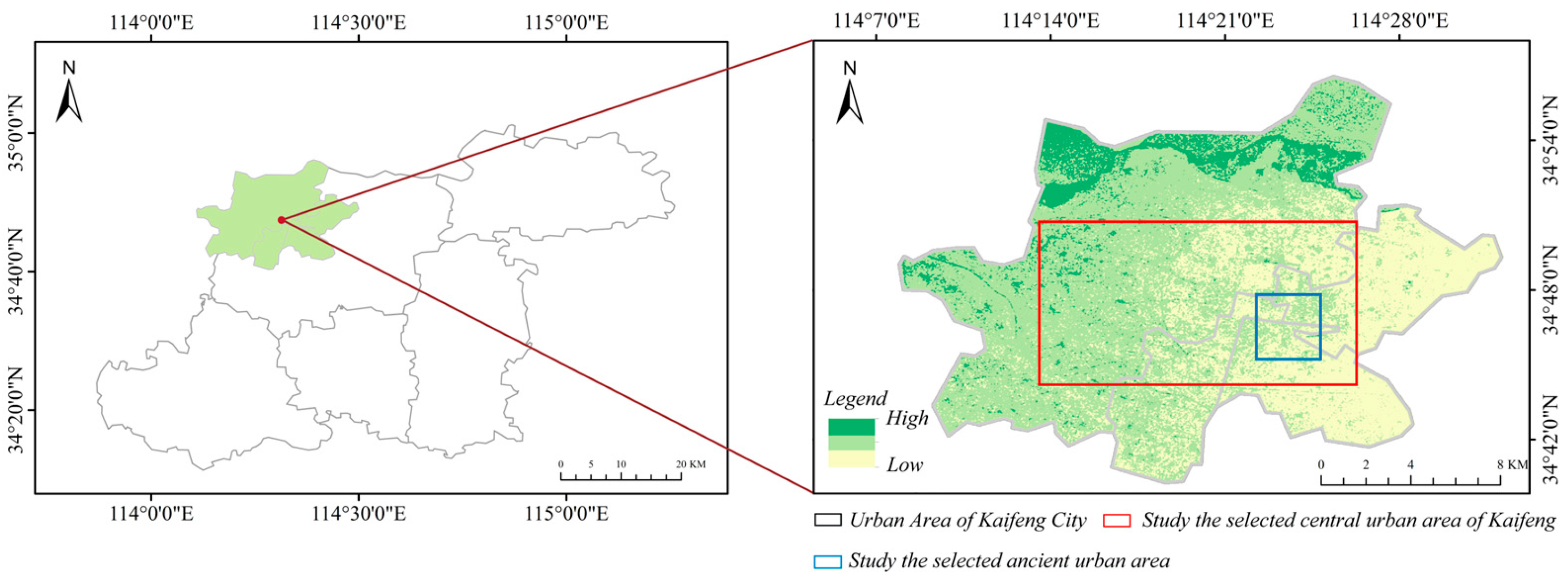
Through multi-dimensional index analysis, this study confirms the research hypothesis: there is, in fact, a significant difference in GVI equity between Kaifeng City’s new and ancient urban areas, and this difference is primarily caused by the combined effects of functional layout patterns, spatial texture characteristics, and cultural protection policies. The results of the study confirmed that the equity of green space in historical and cultural cities was characterized by differential distribution at different spatial scales, and the decomposition of the Theil Index showed that the micro-street scale difference was the main contradiction (99.9969% of the total), while the negative correlation between the POI density and the GVI rate (r = −0.085) revealed the mechanism of the competition between urban function and green space. These results offer a scientific foundation for optimizing the layout of green spaces while adhering to protection restrictions, in addition to confirming the efficacy of the GVI evaluation approach in historic and cultural cities. From the standpoint of spatial analysis, Kaifeng City’s GVI exhibits clear spatial heterogeneity. The traditional two-dimensional green space indicators struggle to adequately capture this micro-spatial differentiation phenomenon, but high-resolution streetscape data combined with spatial statistical methods can more precisely quantify this spatial pattern.
A considerable spatial clustering phenomena (Moran’s Index 0.3824, p < 0.001) resulting in a geographical pattern of low–low agglomeration area (19.55%) and high–high agglomeration area (13.47%) was the manifestation of the GVI imbalance in Kaifeng City. The distinctive pattern of historical and cultural cities in greening spatial organization is reflected in this spatial autocorrelation characteristic. This pattern is closely linked to the city’s development trajectory and historical lineage, which have a higher spatial complexity than that of contemporary planned cities.
The Theil Index study reveals that Kaifeng City’s spatial inequality of GVI is primarily manifested at the micro-street level as opposed to the macro-urban level. This conclusion is noteworthy because it implies that, even within the same functional region, residents’ access to green resources varies significantly. Similar to this, Kabisch et al.’s study on the fair distribution of green space highlighted how micro-scale variations in natural resources have a more direct effect on locals’ day-to-day experiences, which are frequently disregarded by conventional macro-evaluation techniques [
33]. This micro imbalance was further supported by the location entropy analysis and Moran’s Index, which showed that low-value areas of the GVI exhibit significant spatial agglomeration characteristics. The proportion of low-value areas (location entropy < 0.5) was as high as 35.40%, while the proportion of “low–low agglomeration areas” was as high as 19.55%. Similar to how the unequal distribution of blue-green infrastructure results in disparities in the benefits of microclimate regulation, as discovered in the study by Lin [
34], this spatial clustering phenomenon may cause an “ecological services divide” or a notable lack of ecosystem services in some places that affects the spatial balance of ecological functions like climate regulation and air purification in cities.
5.2. Distinctive Features of the New and Old Urban Areas
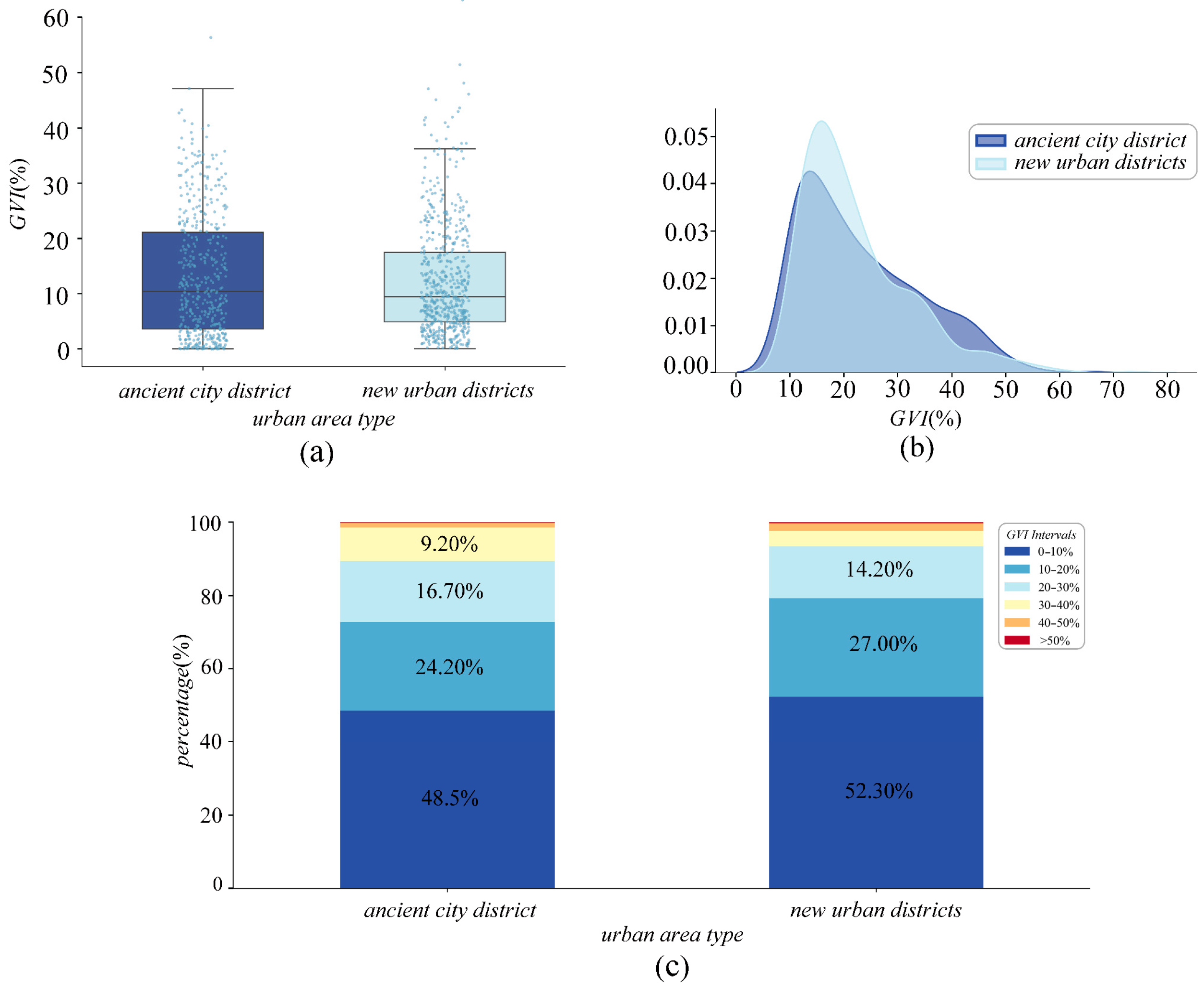
The GVI distribution has been significantly impacted by the historical and cultural city’s distinct spatial texture and growth trajectory. The ancient city’s juxtaposition of widely dispersed low-value parts and isolated high-value sites illustrates the double effects of historical and cultural preservation laws on green space: the ancient city’s core has a generally low GVI due to the preservation of traditional neighborhoods, which limits the development of expansive green spaces. On the other hand, the historical parks that have been preserved create notable high GVI points, like Longting Park, Tieta Park, and the Garden of the Riverside at Qingming, which have grown to be valuable green resources in the ancient city. The new city’s GVI, on the other hand, reflects the fact that modern urban planning places greater emphasis on the organized design of the road greening network by forming a band of high-value regions along the main roads. This variation in the GVI distribution pattern between old and new urban regions is consistent with Lu et al.’s findings in other cities, which show how urban planning ideas have changed over time [
35].
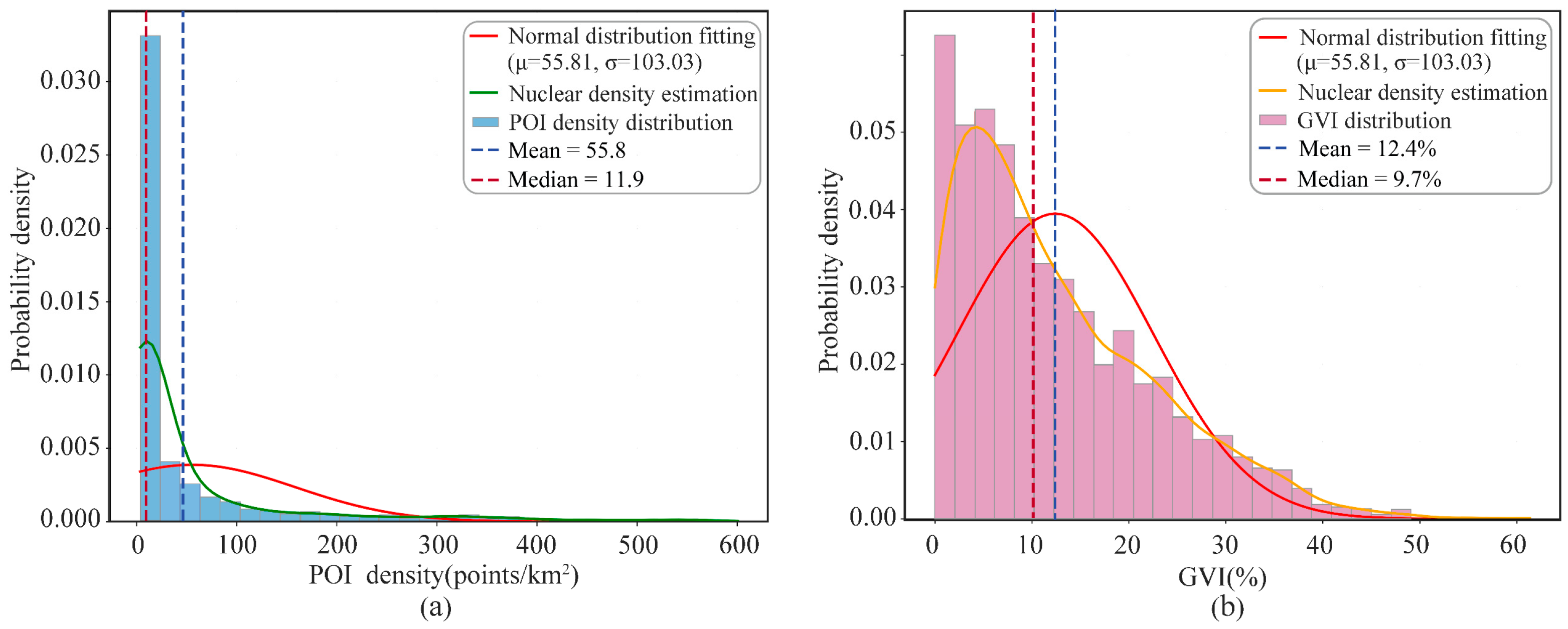
Another significant aspect influencing the GVI distribution is land use and urban function. There is a competitive link between urban functional agglomeration and green space, as evidenced by the established negative correlation between POI density and GVI rate. GVI rates are often low in traditional neighborhoods and high-density commercial areas, which is in line with Gong et al.’s findings in high-density urban environments [
36]. However, Kaifeng’s correlation coefficient (r = −0.085) is comparatively low, and there could be several explanations for this: (1) As a historical and cultural city at the prefecture level, Kaifeng City has a low overall functional density and little direct conflict between urban functions and green space; (2) in the long-term growth process, historic and cultural cities have established a comparatively stable function-greening space configuration pattern, and various functional regions have, to some degree, preserved the fundamental level of greening; (3) the relationship between functional density and greening space is more complicated due to the mixed-function nature of traditional neighborhoods, and it can be challenging for straightforward linear correlation analysis to adequately reflect this complexity. Nonetheless, Kaifeng’s correlation coefficient (r = −0.085) is comparatively low, which could be attributed to both the city’s adaptive coordination of greenery across various functional regions and its status as a prefecture-level city with a generally low functional density. The differentiated relationship between different types of POIs and green visibility further confirms this point. For example, shopping consumption POIs have the strongest negative correlation while transportation facility POIs have a weaker negative correlation, reflecting differences in the capacity of different functional spaces to accommodate greenery.
5.3. Recommendations for Optimizing Green Spaces
As a three-dimensional spatial perception indicator, the GVI has a unique value, according to this study, and its evaluation results differ greatly from those of conventional two-dimensional green space indicators. Even though Kaifeng’s built-up area has high levels of green space (40.74%) and green coverage (41.02%), the streetscape GVI assessment revealed that 66.48% of the area had a GVI rate below 15%. The need for a multifaceted evaluation method in urban green space research is confirmed by this “green space-green vision” distinction, which draws attention to the essential distinction between assessing urban greening from an overhead perspective and from a pedestrian’s perspective.
The “low–low clustering area” ought to be the area with the highest priority for greening interventions, according to the findings of the spatial equity analysis. According to the study, 17.95% of the sample points were in low–low concentration areas, which are primarily found in inner residential areas and urban fringe areas. These areas not only have low GVI levels but also form spatially contiguous areas with insufficient greening, which has a detrimental effect on residents’ green well-being. At the same time, green space investment in low–low agglomeration areas has higher marginal benefits because (1) The proximity effect may cause individual low-value points to respond to a wider range; (2) the clustering effect magnifies the negative effects of inadequate greening. These areas also tend to be inhabited by relatively disadvantaged groups of residents.
The following tactics are suggested for Kaifeng City’s GVI optimization: (1) The main focus should be on improving the greening level of the “low–low clustering areas“ through small-scale greening initiatives such as pocket parks, vertical greening walls, and street micro-greens. These interventions are particularly suitable for low–low areas where limited space restricts large-scale greening, while also effectively improving the GVI. Moreover, such techniques are minimally intrusive to historic districts and can enhance green visibility without compromising cultural heritage. (2) It is recommended that a spatial governance path be adopted that combines balanced regional development with the strengthening of core advantages. Based on the ecological efficacy of high-value agglomerations, a network of ecological corridors should be constructed to promote the organic penetration and synergy of greening resources in the spatial dimension.
More significantly, this study’s examination of Kaifeng City creates a set of GVI evaluation methodological frameworks that may be applied to other historical and cultural cities, in addition to revealing the features of the GVI spatial distribution in this specific city. The study suggests deep learning-driven streetscape GVI evaluation, spatial fairness analysis with multi-indicator fusion, and functional correlation exploration with POI data integration, which can serve as significant methodological references for other well-known historical and cultural cities. Typically, these cities struggle with the conflict between traditional spatial texture and contemporary greening requirements.
5.4. Limitations
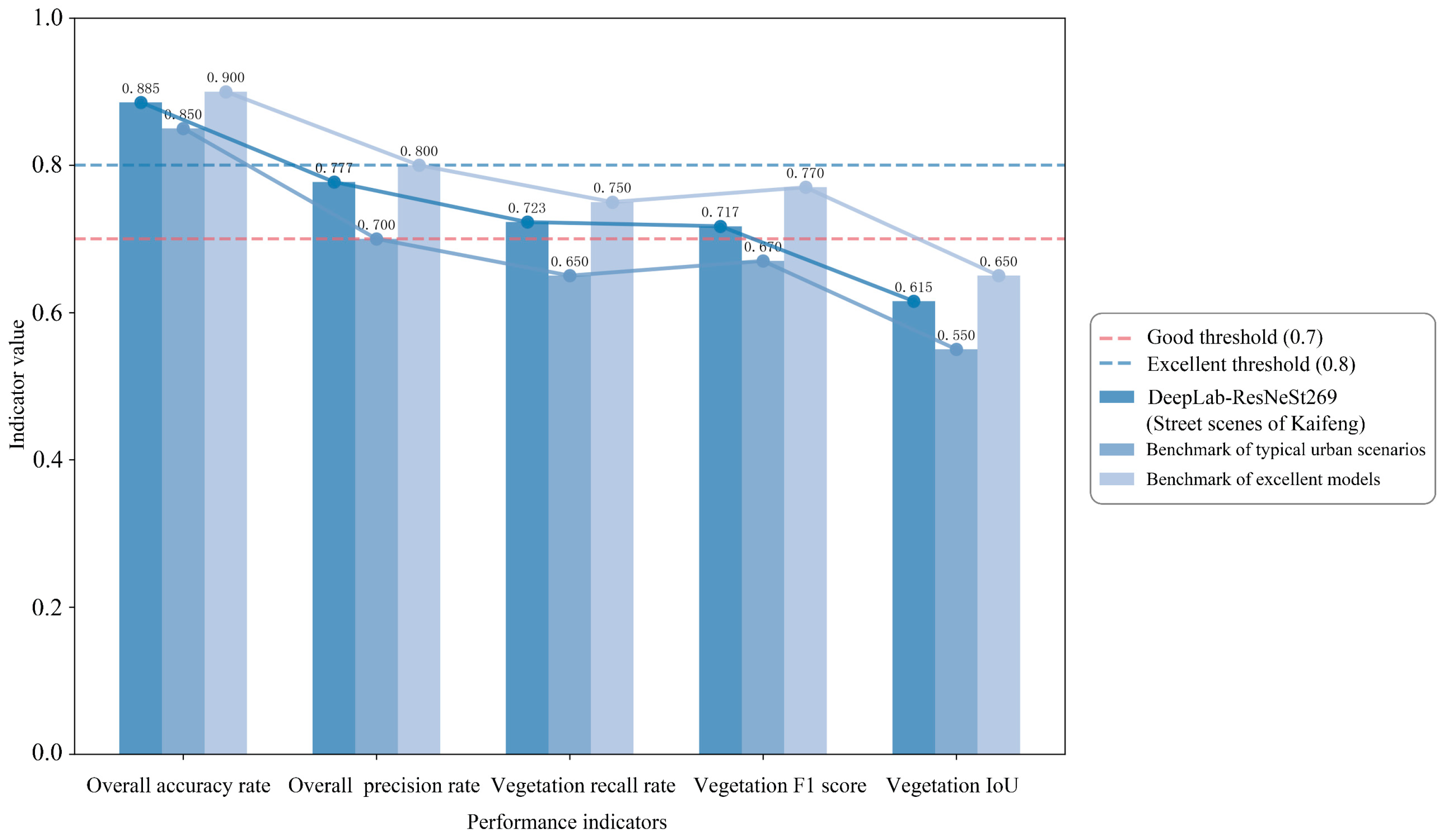
Although the study constructs a multidimensional evaluation system to analyze the spatial fairness of the GVI in Kaifeng City, there are still some limitations, such as the following: (1) The validation results of the DeepLab-ResNeSt269 model show that it has good applicability in Kaifeng City, but there is still room for improvement of the model’s identification accuracy in the complex ancient architectural environments and the areas with sparse vegetation. (2) The comparatively constant distribution of urban functions is reflected in the POI data. Variations in the real demand for green spaces from certain functional sectors (such temporary or seasonal activity locations) may be overlooked by this static approach. (3) Baidu Street View data has a long update cycle, which prevents access to real-time greening conditions, and some data may lag by 1–3 years. (4) The season of photography was not consistently controlled for in this investigation. Seasonal variations in vegetation conditions, such as wintertime decreased visibility of deciduous plants, might have affected the GVI computation. The following elements can be used to further future research: (1) Increase the coverage of validation samples, optimize the model algorithm, and integrate multi-source data, including satellite images and UAV aerial photography, to improve recognition accuracy and compensate for the blind region of street view coverage. (2) Create a system for collecting data over several seasons and conducting comparison analysis to limit the influence of seasonal factors on GVI evaluations. (3) Integrate socioeconomic indicators and real-time updated multi-source data, investigating the deeper mechanisms of equity in the GVI distribution, setting up a long-term monitoring system to examine the patterns of temporal evolution, and carrying out a comparative study across multiple cities.