Article

The Effectiveness of a Robotic Workstation Simulation Implementation in the Automotive Industry Using a Closed-Form Solution of the Absolute Orientation Problem


by
Wojciech Andrzej Szulc
and
Piotr Czop
*
Faculty of Mechanical Engineering and Robotics, Department of Robotics and Mechatronics, AGH University of Science and Technology, 30-059 Cracow, Poland
*
Author to whom correspondence should be addressed.
Robotics 2024, 13(11), 161; https://doi.org/10.3390/robotics13110161

Submission received: 9 September 2024 / Revised: 26 October 2024 / Accepted: 28 October 2024 / Published: 30 October 2024
(This article belongs to the Special Issue Integrating Robotics into High-Accuracy Industrial Operations)

Abstract

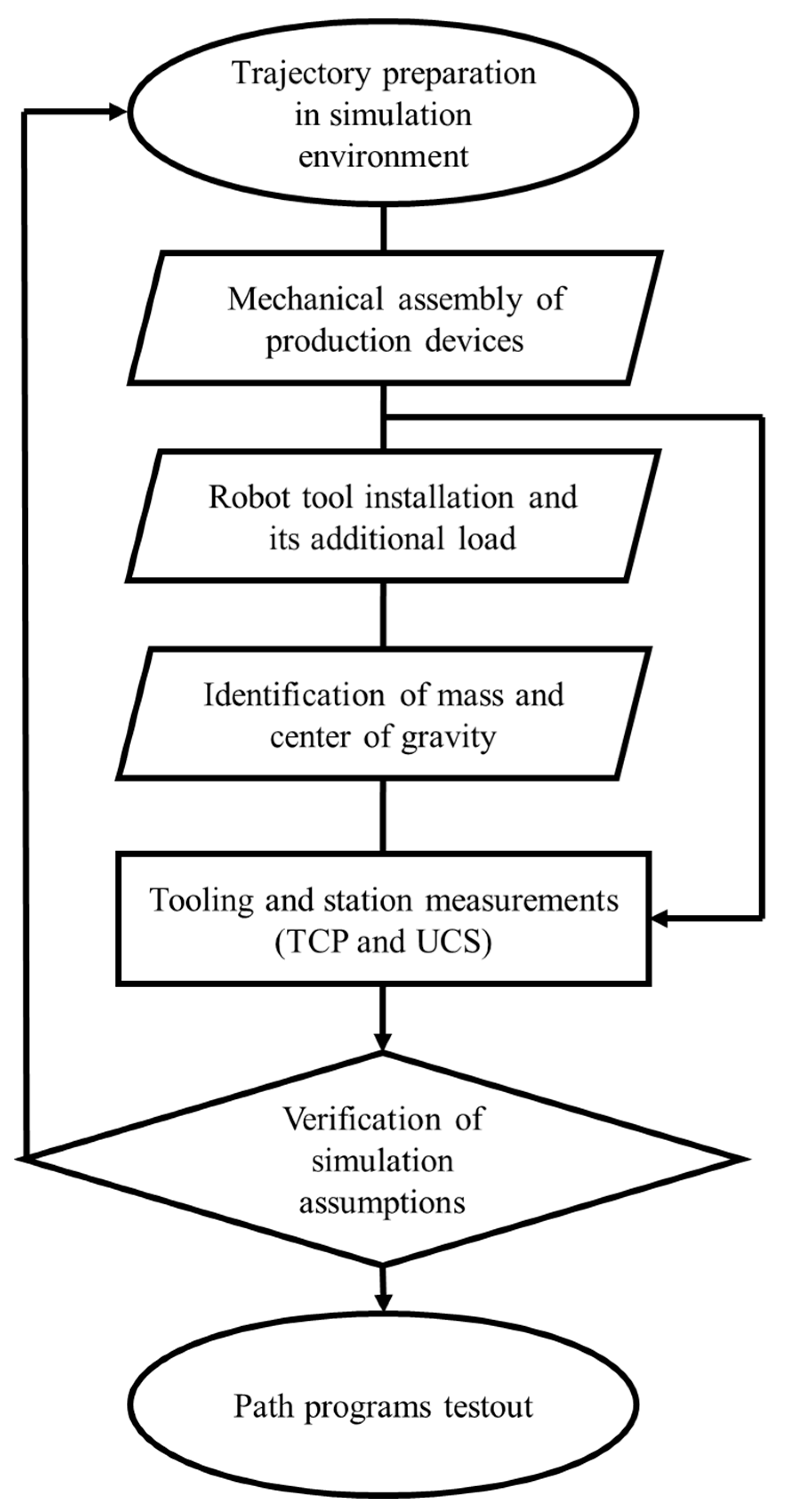
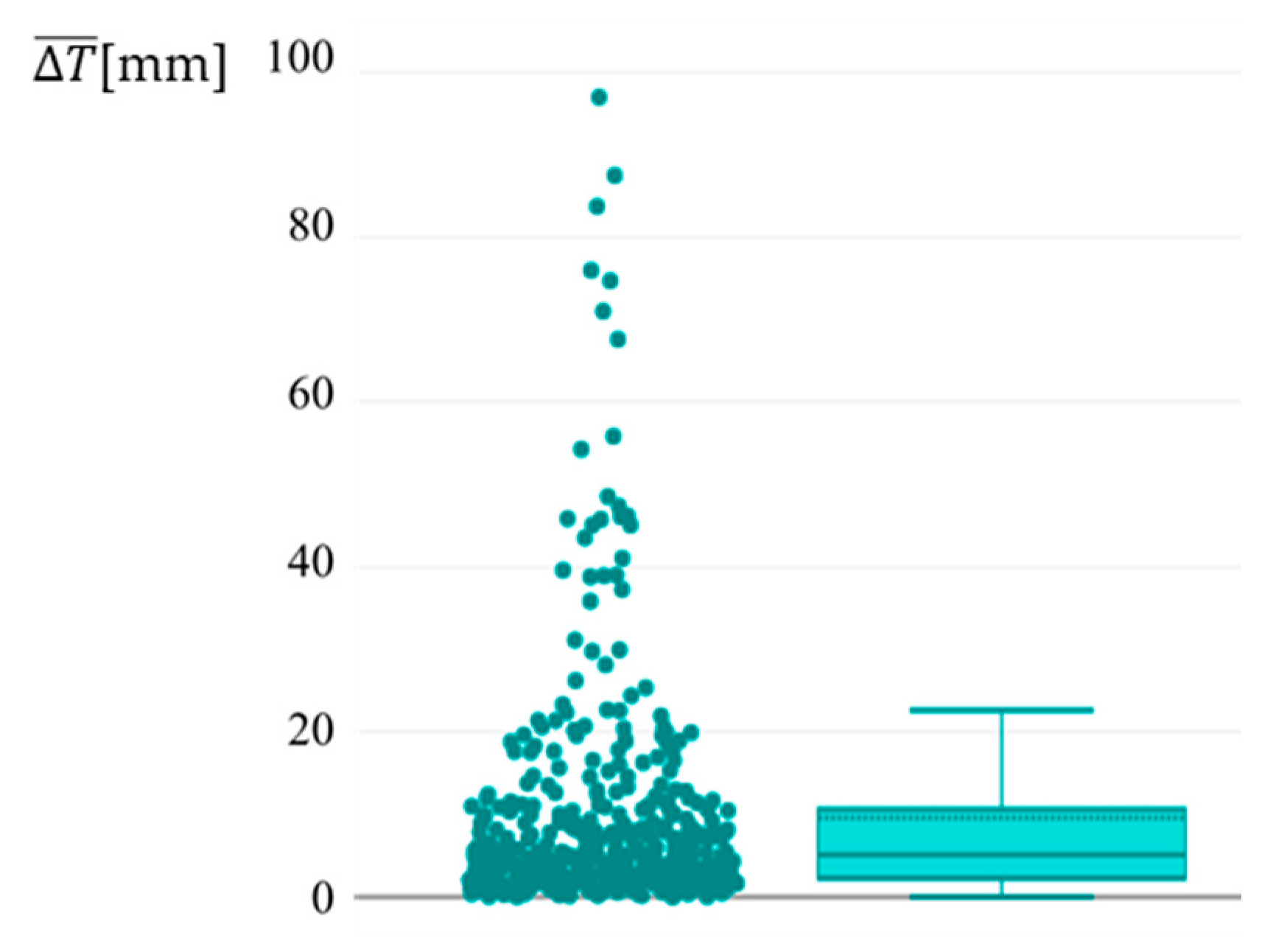
This paper provides an in-depth analysis of a novel methodology to enhance the commissioning processes of robotic production lines in the automotive sector, with a particular emphasis on the implementation of offline programming (OLP) methods. The proposed innovative methodology, verified within the automotive industry, introduces a systematic, iterative process for calibrating and aligning the local user coordinate system (UCS) with high-precision external measurements, ensuring minimal discrepancy between simulated and actual robot paths. A significant contribution of this study is an original adjustment of the numerical algorithm applying a closed-form solution to the absolute orientation problem where unit quaternions are used to establish a UCS and evaluate positioning errors. The experimental validation study draws from 485 measurement datasets gathered across more than 300 robot stations, with each dataset comprising at least six measured point pairs, using readings from both internal robot positioning systems and a Leica AT403 laser tracker, aligned with nominal tooling values. This approach addresses discrepancies between simulated and actual environments, and our findings show an 83.51% success rate for direct implementation of simulated robot path programs. This result underscores the effectiveness of the proposed method and demonstrates the accuracy of the developed numerical algorithm, providing a reliable measure of real OLP implementation effectiveness in the automotive sector. This method further streamlines multi-robot station setup through centralized UCS alignment, significantly reducing commissioning time and enhancing efficiency in both the assembly and commissioning stages of robotized production lines. The proposed methodology facilitates precise alignment in the commissioning stage and highlights the need for synchronized simulation updates, robust offline programming practices, and regular kinematic error verification to further enhance OLP accuracy.
Keywords: base frame calibration; industrial robot; absolute orientation problem; path planning; offline robot programming base frame calibration; industrial robot; absolute orientation problem; path planning; offline robot programming