Transforming Toxicity into Therapy: Exploring Bilirubin’s Benefits and Its Molecular Role in Cardiac Health and Disease




Abstract
1. Introduction
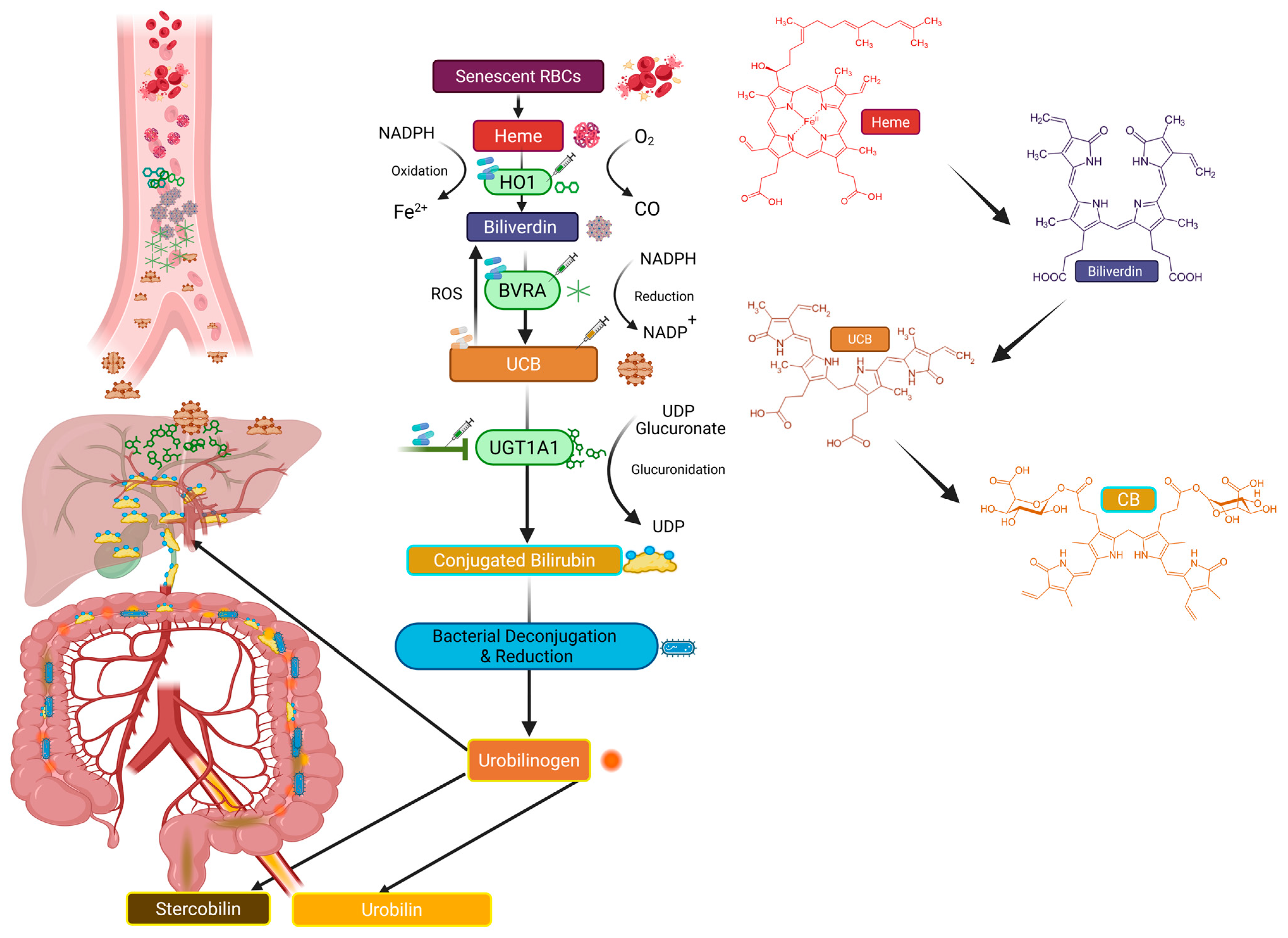
2. Bilirubin Formation and Metabolism
2.1. Bilirubin Pools and Plasma Dynamics
2.2. Genetic Determinants of Elevated Bilirubin: Gilbert Syndrome and Cardiovascular Implications
3. Mechanisms by Which Elevated Bilirubin Levels Could Benefit the Heart
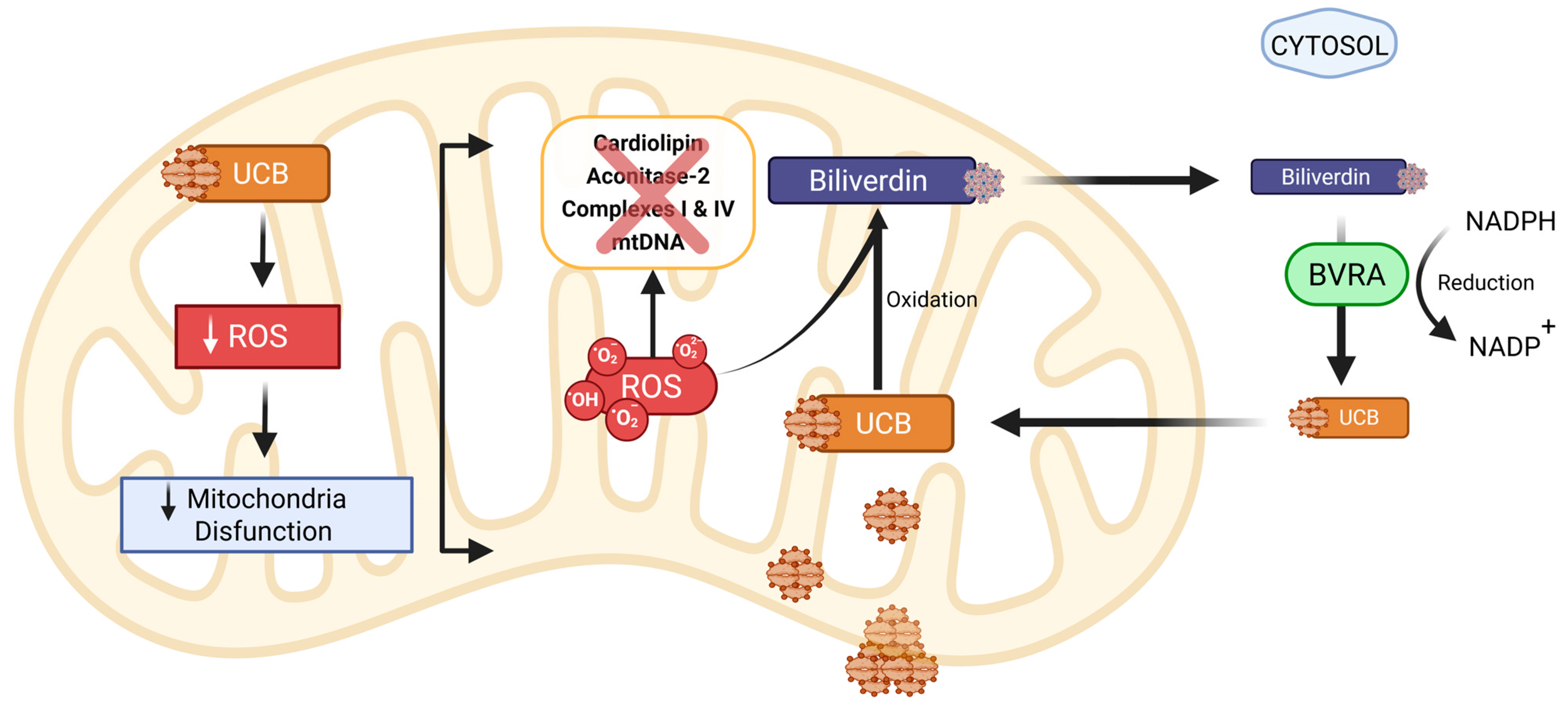
3.1. Antioxidant and Redox Regulation
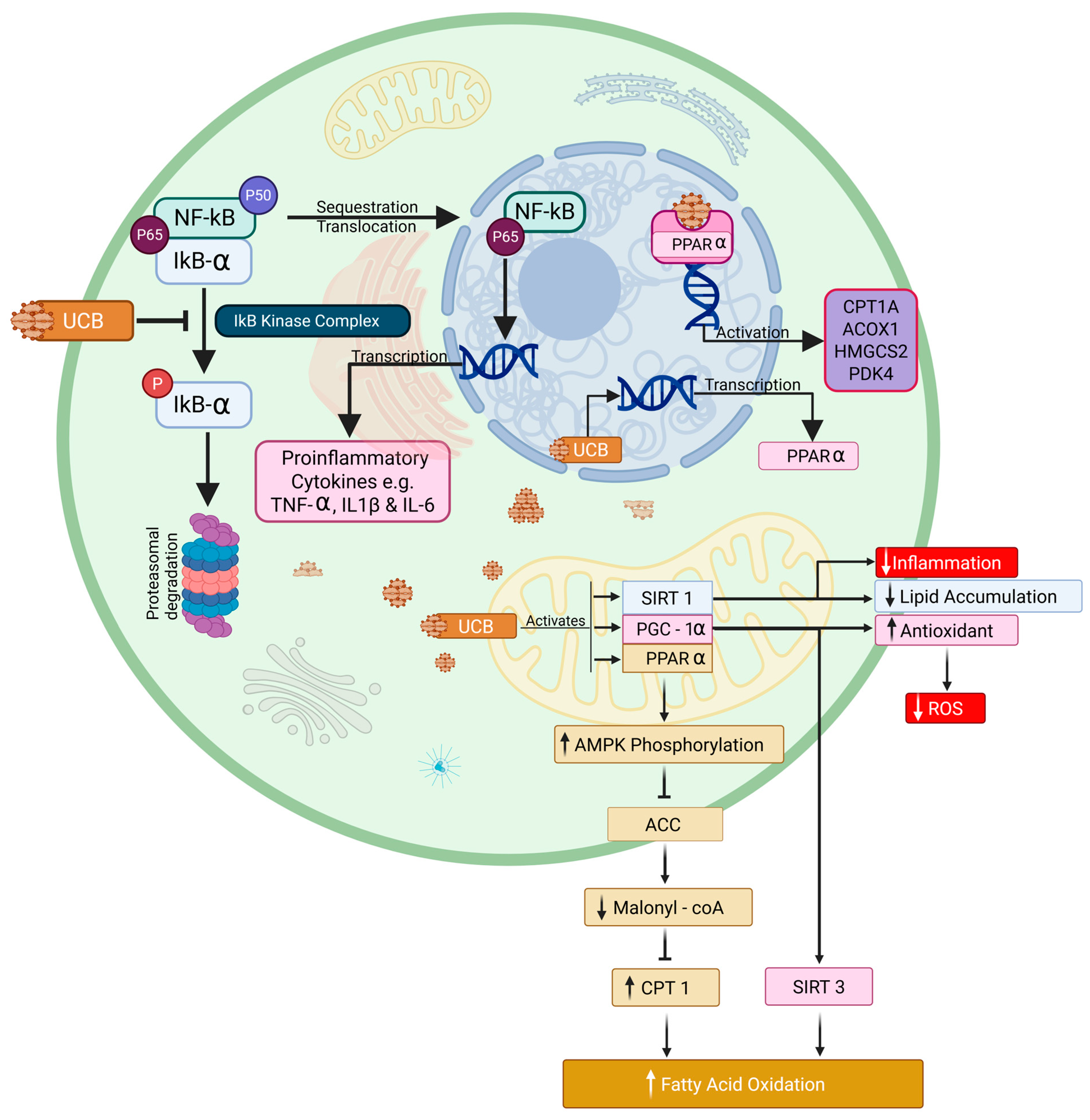
3.2. Metabolic and Mitochondrial Effects
3.3. Anti-Inflammatory Mechanisms
3.4. Endothelial and Vascular Effects
3.5. Anti-Apoptotic and Cytoprotective Pathways
4. Experimental and Preclinical Evidence
4.1. Protection Against Ischemia–Reperfusion (I/R) Injury
4.2. Pressure Overload Hypertrophy
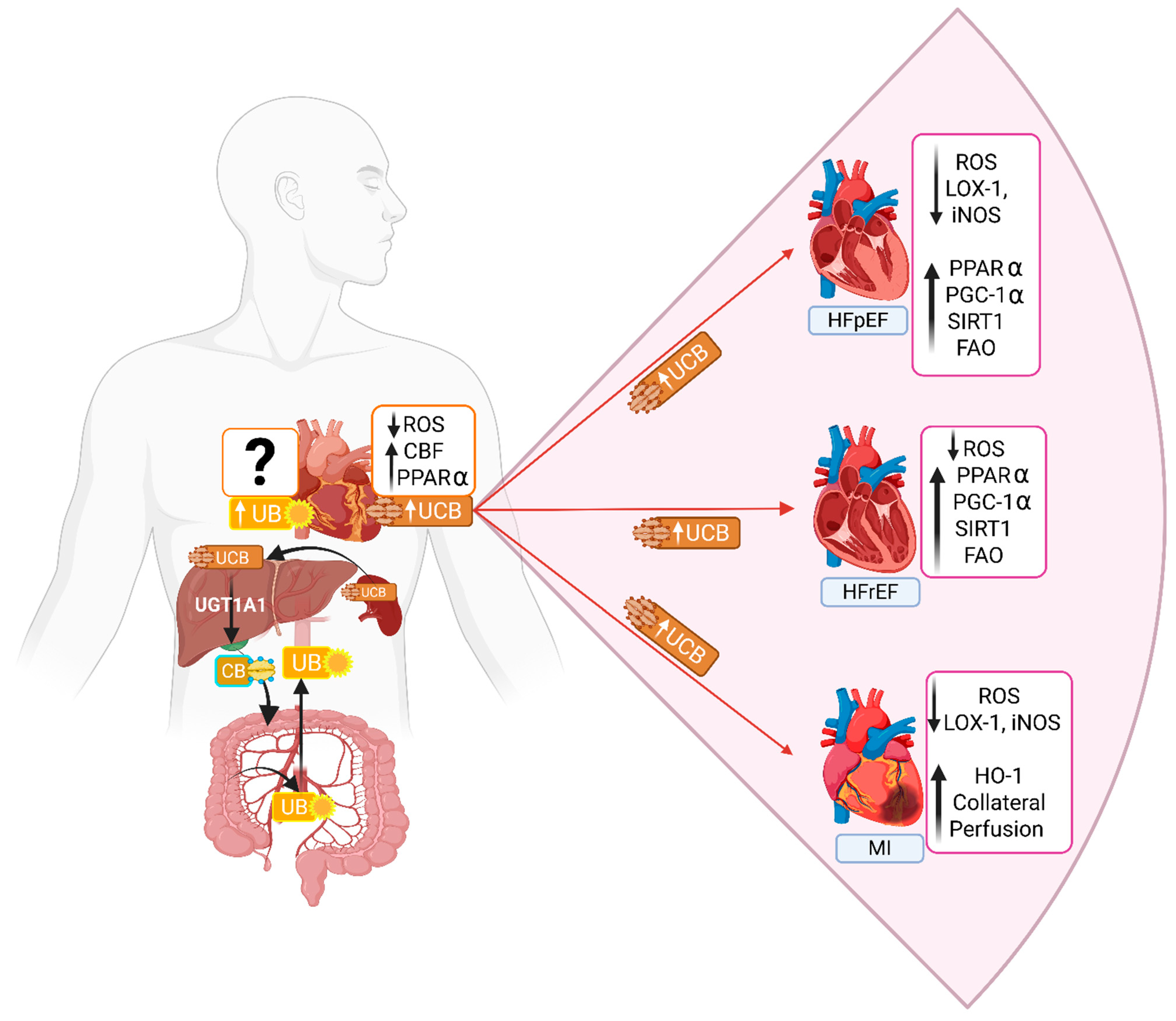
4.3. Heart Failure with Reduced Ejection Fraction (HFrEF) and Heart Failure with Preserved Ejection Fraction (HFpEF)
4.4. Genetic and Pharmacological Models Altering Bilirubin Metabolism
4.5. Urobilin and the Heart
5. Clinical and Translational Evidence
5.1. Epidemiological Associations
5.2. Limitations of Clinical Evidence
6. Therapeutic Potential of Targeting Bilirubin Pathways
6.1. Pharmacological Modulation
6.2. Novel Therapeutic Approaches
7. Limitations in the Potential for Bilirubin-Based Therapies
8. Future Perspectives
9. Conclusions
Author Contributions
Funding
Institutional Review Board Statement
Informed Consent Statement
Data Availability Statement
Acknowledgments
Conflicts of Interest
Abbreviations
| ABCB10 | ATP-binding Cassette Subfamily B Member 10 |
| ABC-C2 | ATP-binding Cassette Subfamily C Member 2 |
| ACOX1 | Acyl-CoA Oxidase 1 |
| Akt | Ak Strain Transforming or Protein Kinase B |
| AMPK | AMP-activated Protein Kinase |
| ANP | Atrial Natriuretic Peptide |
| ApoE−/− | Apolipoprotein E-deficient |
| ATP | Adenosine Triphosphate |
| BACH-1 | BTB and CNC Homology 1 |
| BilR | Bilirubin Reductase |
| BNP | Brain Natriuretic Peptide |
| BRNP | Bilirubin Nanoparticles |
| BVRA | Biliverdin Reductase A |
| CAD | Coronary Artery Disease |
| CB | Conjugated Bilirubin |
| CRISPR | Clustered Regularly Interspaced Short Palindromic Repeats |
| CPT1A | Carnitine Palmitoyltransferase 1A |
| CVD | Cardiovascular Disease |
| DNA | Deoxyribonucleic Acid |
| eNOS | Endothelial Nitric Oxide Synthase |
| ERK1/2 | Extracellular Signal-regulated Kinases 1 and 2 |
| FAO | Fatty Acid Oxidation |
| GS | Gilbert’s Syndrome |
| HF | Heart Failure |
| HFpEF | Heart Failure with Preserved Ejection Fraction |
| HFrEF | Heart Failure with Reduced Ejection Fraction |
| HMGCS2 | 3-Hydroxy-3-Methylglutaryl-CoA Synthase 2 |
| HO-1 | Heme Oxygenase-1 |
| hsCRP | High-sensitivity C-reactive Protein |
| I/R | Ischemia–reperfusion |
| ICAM-1 | Intercellular Adhesion Molecule-1 |
| IL-1β | Interleukin-1β |
| IL-6 | Interleukin-6 |
| iNOS | Inducible Nitric Oxide Synthase |
| LDL | Low-density Lipoprotein |
| LOX-1 | Lectin-like Oxidized Low-density Lipoprotein Receptor-1 |
| LV | Left Ventricle |
| MASLD | Metabolic Dysfunction-associated Steatotic Liver Disease |
| MCP-1 | Monocyte Chemoattractant Protein-1 |
| MI | Myocardial Infarction |
| MOAT | Multispecific Organic Anion Transporter |
| MRP2 | Multidrug Resistance-associated Protein 2 |
| MRP3 | Multidrug Resistance-associated Protein 3 |
| NAD(P)H | Nicotinamide Adenine Dinucleotide Phosphate |
| NF-kB | Nuclear Factor Kappa-light-chain-enhancer of Activated B cells |
| NHANES | National Health and Nutrition Examination Survey |
| NO | Nitric Oxide |
| NOX | Nicotinamide Adenine Dinucleotide Phosphate Oxidase |
| Nrf2 | Nuclear Factor Erythroid 2-related Factor 2 |
| OATP1B1 | Organic Anion-transporting Polypeptide 1B1 |
| OATP1B3 | Organic Anion-transporting Polypeptide 1B3 |
| PDK4 | Pyruvate Dehydrogenase Kinase 4 |
| PGC-1α | Peroxisome Proliferator-activated receptor gamma coactivator 1-alpha |
| PPARα | Peroxisome Proliferator-activated Receptor-α |
| RNAi | Ribonucleic Acid Interference |
| RNS | Reactive Nitrogen Species |
| ROS | Reactive Oxygen Species |
| SGLT2 | Sodium Glucose Cotransporter 2. |
| SIRT1 | Sirtuin 1 |
| SLCO1B1 | Solute Carrier Organic Anion Transporter Family Member 1B1 |
| SLCO1B3 | Solute Carrier Organic Anion Transporter Family Member 1B3 |
| TAC | Transverse Aortic Constriction |
| TNF-α | Tumor Necrosis Factor Alpha |
| UB | Urobilin |
| UCB | Unconjugated Bilirubin |
| UGT1A1 | UDP-glucuronosyltransferase 1A1 |
| VCAM-1 | Vascular Cell Adhesion Molecule-1 |
References
- Martin, S.S.; Aday, A.W.; Allen, N.B.; Almarzooq, Z.I.; Anderson, C.A.M.; Arora, P.; Avery, C.L.; Baker-Smith, C.M.; Bansal, N.; Beaton, A.Z.; et al. 2025 Heart Disease and Stroke Statistics: A Report of US and Global Data from the American Heart Association. Circulation 2025, 151, e41–e660. [Google Scholar] [CrossRef] [Scilit]
- Vetrano, E.; Caturano, A.; Nilo, D.; Di Lorenzo, G.; Tagliaferri, G.; Piacevole, A.; Donnarumma, M.; Iadicicco, I.; Picco, S.; Moretto, S.M.; et al. Cardiovascular Therapeutics at the Crossroads: Pharmacological, Genetic, and Digital Frontiers. Pharmaceuticals 2025, 18, 1703. [Google Scholar] [CrossRef] [Scilit]
- Regan, J.A.; Laitner, M.H.; Dzau, V.J. A Crossroads in Cardiovascular Medicine: Progress and Barriers to Impact. Circulation 2025, 152, 1166–1173. [Google Scholar] [CrossRef] [Scilit]
- Aranda, J.F.; Ramirez, C.M.; Mittelbrunn, M. Inflammageing, a targetable pathway for preventing cardiovascular diseases. Cardiovasc. Res. 2025, 121, 1537–1550. [Google Scholar] [CrossRef] [Scilit]
- Madamanchi, N.R.; Runge, M.S. Redox signaling in cardiovascular health and disease. Free Radic. Biol. Med. 2013, 61, 473–501. [Google Scholar] [CrossRef] [Scilit]
- Riordan, S.M.; Shapiro, S.M. Review of bilirubin neurotoxicity I: Molecular biology and neuropathology of disease. Pediatr. Res. 2020, 87, 327–331. [Google Scholar] [CrossRef] [Scilit]
- Hinds, T.D., Jr.; Stec, D.E. Bilirubin, a Cardiometabolic Signaling Molecule. Hypertension 2018, 72, 788–795. [Google Scholar] [CrossRef] [Scilit]
- Ziberna, L.; Jenko-Praznikar, Z.; Petelin, A. Serum Bilirubin Levels in Overweight and Obese Individuals: The Importance of Anti-Inflammatory and Antioxidant Responses. Antioxidants 2021, 10, 1352. [Google Scholar] [CrossRef] [Scilit]
- Vitek, L.; Hinds, T.D., Jr.; Stec, D.E.; Tiribelli, C. The physiology of bilirubin: Health and disease equilibrium. Trends Mol. Med. 2023, 29, 315–328. [Google Scholar] [CrossRef] [Scilit] [PubMed]
- Creeden, J.F.; Gordon, D.M.; Stec, D.E.; Hinds, T.D., Jr. Bilirubin as a metabolic hormone: The physiological relevance of low levels. Am. J. Physiol. Endocrinol. Metab. 2021, 320, E191–E207. [Google Scholar] [CrossRef] [Scilit] [PubMed]
- Sedlak, T.W.; Snyder, S.H. Bilirubin benefits: Cellular protection by a biliverdin reductase antioxidant cycle. Pediatrics 2004, 113, 1776–1782. [Google Scholar] [CrossRef] [Scilit]
- Vitek, L.; Schwertner, H.A. The heme catabolic pathway and its protective effects on oxidative stress-mediated diseases. Adv. Clin. Chem. 2007, 43, 1–57. [Google Scholar] [CrossRef] [Scilit]
- Chiddarwar, A.S.; D’Silva, S.Z.; Colah, R.B.; Ghosh, K.; Mukherjee, M.B. Genetic Variations in Bilirubin Metabolism Genes and Their Association with Unconjugated Hyperbilirubinemia in Adults. Ann. Hum. Genet. 2017, 81, 11–19. [Google Scholar] [CrossRef] [Scilit]
- Adin, C.A. Bilirubin as a Therapeutic Molecule: Challenges and Opportunities. Antioxidants 2021, 10, 1536. [Google Scholar] [CrossRef] [Scilit]
- Idelman, G.; Smith, D.L.H.; Zucker, S.D. Bilirubin inhibits the up-regulation of inducible nitric oxide synthase by scavenging reactive oxygen species generated by the toll-like receptor 4-dependent activation of NADPH oxidase. Redox Biol. 2015, 5, 398–408. [Google Scholar] [CrossRef] [Scilit]
- Bakrania, B.; Du Toit, E.F.; Ashton, K.J.; Kiessling, C.J.; Wagner, K.H.; Headrick, J.P.; Bulmer, A.C. Hyperbilirubinemia modulates myocardial function, aortic ejection, and ischemic stress resistance in the Gunn rat. Am. J. Physiol. Heart Circ. Physiol. 2014, 307, H1142–H1149. [Google Scholar] [CrossRef] [Scilit] [PubMed]
- Ai, W.; Bae, S.; Ke, Q.; Su, S.; Li, R.; Chen, Y.; Yoo, D.; Lee, E.; Jon, S.; Kang, P.M. Bilirubin Nanoparticles Protect Against Cardiac Ischemia/Reperfusion Injury in Mice. J. Am. Heart Assoc. 2021, 10, e021212. [Google Scholar] [CrossRef] [Scilit] [PubMed]
- Kipp, Z.A.; Pauss, S.N.; Martinez, G.J.; Hinds, T.D., Jr.; Lee, W.H. Bilirubin Hepatic and Intestinal Transport and Catabolism: Physiology, Pathophysiology, and Benefits. Antioxidants 2025, 14, 1326. [Google Scholar] [CrossRef] [Scilit] [PubMed]
- Huang, M.J.; Chen, P.L.; Huang, C.S. Bilirubin metabolism and UDP-glucuronosyltransferase 1A1 variants in Asians: Pathogenic implications and therapeutic response. Kaohsiung J. Med. Sci. 2022, 38, 729–738. [Google Scholar] [CrossRef] [Scilit]
- Hall, B.; Levy, S.; Dufault-Thompson, K.; Arp, G.; Zhong, A.; Ndjite, G.M.; Weiss, A.; Braccia, D.; Jenkins, C.; Grant, M.R.; et al. BilR is a gut microbial enzyme that reduces bilirubin to urobilinogen. Nat. Microbiol. 2024, 9, 173–184. [Google Scholar] [CrossRef] [Scilit]
- Fevery, J. Bilirubin in clinical practice: A review. Liver Int. 2008, 28, 592–605. [Google Scholar] [CrossRef] [Scilit]
- Hamoud, A.R.; Weaver, L.; Stec, D.E.; Hinds, T.D., Jr. Bilirubin in the Liver-Gut Signaling Axis. Trends Endocrinol. Metab. 2018, 29, 140–150. [Google Scholar] [CrossRef] [Scilit]
- Vitek, L.; Kotal, P.; Jirsa, M.; Malina, J.; Cerna, M.; Chmelar, D.; Fevery, J. Intestinal colonization leading to fecal urobilinoid excretion may play a role in the pathogenesis of neonatal jaundice. J. Pediatr. Gastroenterol. Nutr. 2000, 30, 294–298. [Google Scholar]
- Midtvedt, T.; Gustafsson, B.E. Microbial conversion of bilirubin to urobilins in vitro and in vivo. Acta Pathol. Microbiol. Scand. B 1981, 89, 57–60. [Google Scholar] [CrossRef] [Scilit]
- Tiribelli, C.; Ostrow, J.D. Intestinal flora and bilirubin. J. Hepatol. 2005, 42, 170–172. [Google Scholar] [CrossRef] [Scilit] [PubMed]
- Lester, R.; Schmid, R. Intestinal Absorption of Bile Pigments. 3. The Enterohepatic Circulation of Urobilinogen in the Rat. J. Clin. Investig. 1965, 44, 722–730. [Google Scholar] [CrossRef] [Scilit] [PubMed]
- Lee, J.S.; Wang, J.; Martin, M.; Germer, S.; Kenwright, A.; Benayed, R.; Spleiss, O.; Platt, A.; Pilson, R.; Hemmings, A.; et al. Genetic variation in UGT1A1 typical of Gilbert syndrome is associated with unconjugated hyperbilirubinemia in patients receiving tocilizumab. Pharmacogenet. Genom. 2011, 21, 365–374. [Google Scholar] [CrossRef] [Scilit] [PubMed]
- Lin, J.P.; O’Donnell, C.J.; Schwaiger, J.P.; Cupples, L.A.; Lingenhel, A.; Hunt, S.C.; Yang, S.; Kronenberg, F. Association between the UGT1A1*28 allele, bilirubin levels, and coronary heart disease in the Framingham Heart Study. Circulation 2006, 114, 1476–1481. [Google Scholar] [CrossRef] [Scilit]
- Vitek, L. Bilirubin as a predictor of diseases of civilization. Is it time to establish decision limits for serum bilirubin concentrations? Arch. Biochem. Biophys. 2019, 672, 108062. [Google Scholar] [CrossRef] [Scilit]
- Woronyczova, J.; Novakova, M.; Lenicek, M.; Batovsky, M.; Bolek, E.; Cifkova, R.; Vitek, L. Serum Bilirubin Concentrations and the Prevalence of Gilbert Syndrome in Elite Athletes. Sports Med. Open 2022, 8, 84. [Google Scholar] [CrossRef] [Scilit]
- Ramakrishnan, N.; Bittar, K.; Jialal, I. Impaired Bilirubin Conjugation. In StatPearls; StatPearls Publishing: Treasure Island, FL, USA, 2026. [Google Scholar]
- Li, X.L.; Zhao, C.R.; Pan, C.L.; Jiang, G.; Zhang, B. Role of bilirubin in the prognosis of coronary artery disease and its relationship with cardiovascular risk factors: A meta-analysis. BMC Cardiovasc. Disord. 2022, 22, 458. [Google Scholar] [CrossRef] [Scilit]
- Wallner, M.; Marculescu, R.; Doberer, D.; Wolzt, M.; Wagner, O.; Vitek, L.; Bulmer, A.C.; Wagner, K.H. Protection from age-related increase in lipid biomarkers and inflammation contributes to cardiovascular protection in Gilbert’s syndrome. Clin. Sci. 2013, 125, 257–264. [Google Scholar] [CrossRef] [Scilit]
- McArdle, P.F.; Whitcomb, B.W.; Tanner, K.; Mitchell, B.D.; Shuldiner, A.R.; Parsa, A. Association between bilirubin and cardiovascular disease risk factors: Using Mendelian randomization to assess causal inference. BMC Cardiovasc. Disord. 2012, 12, 16. [Google Scholar] [CrossRef] [Scilit]
- Brown, D. Cardioprotection from a Silent Syndrome: Effect of Gilbert’s Syndrome on Cardiovascular Disease in Patients with Familial Hypercholesterolemia. J. Clin. Lipidol. 2023, 17, e29. [Google Scholar] [CrossRef] [Scilit]
- Seyed Khoei, N.; Grindel, A.; Wallner, M.; Molzer, C.; Doberer, D.; Marculescu, R.; Bulmer, A.; Wagner, K.H. Mild hyperbilirubinaemia as an endogenous mitigator of overweight and obesity: Implications for improved metabolic health. Atherosclerosis 2018, 269, 306–311. [Google Scholar] [CrossRef] [Scilit] [PubMed]
- Molzer, C.; Wallner, M.; Kern, C.; Tosevska, A.; Schwarz, U.; Zadnikar, R.; Doberer, D.; Marculescu, R.; Wagner, K.H. Features of an altered AMPK metabolic pathway in Gilbert’s Syndrome, and its role in metabolic health. Sci. Rep. 2016, 6, 30051. [Google Scholar] [CrossRef] [Scilit] [PubMed]
- Hinds, T.D., Jr.; Hosick, P.A.; Chen, S.; Tukey, R.H.; Hankins, M.W.; Nestor-Kalinoski, A.; Stec, D.E. Mice with hyperbilirubinemia due to Gilbert’s syndrome polymorphism are resistant to hepatic steatosis by decreased serine 73 phosphorylation of PPARα. Am. J. Physiol. Endocrinol. Metab. 2017, 312, E244–E252. [Google Scholar] [CrossRef] [Scilit]
- Kipp, Z.A.; Badmus, O.O.; Stec, D.E.; Hall, B.; Hinds, T.D., Jr. Bilirubin bioconversion to urobilin in the gut-liver-kidney axis: A biomarker for insulin resistance in the Cardiovascular-Kidney-Metabolic (CKM) Syndrome. Metabolism 2025, 163, 156081. [Google Scholar] [CrossRef] [Scilit]
- Erlinger, S.; Arias, I.M.; Dhumeaux, D. Inherited disorders of bilirubin transport and conjugation: New insights into molecular mechanisms and consequences. Gastroenterology 2014, 146, 1625–1638. [Google Scholar] [CrossRef] [Scilit]
- Kimura, A.; Kagawa, T.; Takei, H.; Maruo, Y.; Sakugawa, H.; Sasaki, T.; Murai, T.; Naritaka, N.; Takikawa, H.; Nittono, H. Rotor Syndrome: Glucuronidated Bile Acidemia From Defective Reuptake by Hepatocytes. Hepatol. Commun. 2021, 5, 629–633. [Google Scholar] [CrossRef] [Scilit]
- Zhao, C.; Huang, H. Recurrent SLCO1B1 and SLCO1B3 mutations identified in three patients with Rotor syndrome. Front. Med. 2025, 12, 1630360. [Google Scholar] [CrossRef] [Scilit]
- Stocker, R.; Yamamoto, Y.; McDonagh, A.F.; Glazer, A.N.; Ames, B.N. Bilirubin is an antioxidant of possible physiological importance. Science 1987, 235, 1043–1046. [Google Scholar] [CrossRef] [Scilit]
- Jansen, T.; Daiber, A. Direct Antioxidant Properties of Bilirubin and Biliverdin. Is there a Role for Biliverdin Reductase? Front. Pharmacol. 2012, 3, 30. [Google Scholar] [CrossRef] [Scilit]
- Ott, M.; Zhivotovsky, B.; Orrenius, S. Role of cardiolipin in cytochrome c release from mitochondria. Cell Death Differ. 2007, 14, 1243–1247. [Google Scholar] [CrossRef] [Scilit]
- Khodagholi, F.; Shaerzadeh, F.; Montazeri, F. Mitochondrial Aconitase in Neurodegenerative Disorders: Role of a Metabolism- related Molecule in Neurodegeneration. Curr. Drug Targets 2018, 19, 973–985. [Google Scholar] [CrossRef] [Scilit]
- Paradies, G.; Petrosillo, G.; Paradies, V.; Ruggiero, F.M. Oxidative stress, mitochondrial bioenergetics, and cardiolipin in aging. Free Radic. Biol. Med. 2010, 48, 1286–1295. [Google Scholar] [CrossRef] [Scilit] [PubMed]
- Neuzil, J.; Stocker, R. Free and albumin-bound bilirubin are efficient co-antioxidants for α-tocopherol, inhibiting plasma and low density lipoprotein lipid peroxidation. J. Biol. Chem. 1994, 269, 16712–16719. [Google Scholar] [CrossRef] [Scilit] [PubMed]
- Paul, B.D.; Pieper, A.A. Neuroprotective Roles of the Biliverdin Reductase-A/Bilirubin Axis in the Brain. Biomolecules 2024, 14, 155. [Google Scholar] [CrossRef] [Scilit] [PubMed]
- Lanzillotta, C.; Tramutola, A.; Lanzillotta, S.; Greco, V.; Pagnotta, S.; Sanchini, C.; Di Angelantonio, S.; Forte, E.; Rinaldo, S.; Paone, A.; et al. Biliverdin Reductase-A integrates insulin signaling with mitochondrial metabolism through phosphorylation of GSK3beta. Redox Biol. 2024, 73, 103221. [Google Scholar] [CrossRef] [Scilit]
- Kwak, J.Y.; Takeshige, K.; Cheung, B.S.; Minakami, S. Bilirubin inhibits the activation of superoxide-producing NADPH oxidase in a neutrophil cell-free system. Biochim. Biophys. Acta 1991, 1076, 369–373. [Google Scholar] [CrossRef] [Scilit]
- Lanone, S.; Bloc, S.; Foresti, R.; Almolki, A.; Taille, C.; Callebert, J.; Conti, M.; Goven, D.; Aubier, M.; Dureuil, B.; et al. Bilirubin decreases nos2 expression via inhibition of NAD(P)H oxidase: Implications for protection against endotoxic shock in rats. FASEB J. 2005, 19, 1890–1892. [Google Scholar] [CrossRef] [Scilit]
- Fujii, M.; Inoguchi, T.; Sasaki, S.; Maeda, Y.; Zheng, J.; Kobayashi, K.; Takayanagi, R. Bilirubin and biliverdin protect rodents against diabetic nephropathy by downregulating NAD(P)H oxidase. Kidney Int. 2010, 78, 905–919. [Google Scholar] [CrossRef] [Scilit]
- Shum, M.; Shintre, C.A.; Althoff, T.; Gutierrez, V.; Segawa, M.; Saxberg, A.D.; Martinez, M.; Adamson, R.; Young, M.R.; Faust, B.; et al. ABCB10 exports mitochondrial biliverdin, driving metabolic maladaptation in obesity. Sci. Transl. Med. 2021, 13, eabd1869. [Google Scholar] [CrossRef] [Scilit]
- Wu, T.W.; Wu, J.; Li, R.K.; Mickle, D.; Carey, D. Albumin-bound bilirubins protect human ventricular myocytes against oxyradical damage. Biochem. Cell Biol. 1991, 69, 683–688. [Google Scholar] [CrossRef] [Scilit]
- Stec, D.E.; John, K.; Trabbic, C.J.; Luniwal, A.; Hankins, M.W.; Baum, J.; Hinds, T.D., Jr. Bilirubin Binding to PPARα Inhibits Lipid Accumulation. PLoS ONE 2016, 11, e0153427. [Google Scholar] [CrossRef] [Scilit] [PubMed]
- Gordon, D.M.; Blomquist, T.M.; Miruzzi, S.A.; McCullumsmith, R.; Stec, D.E.; Hinds, T.D., Jr. RNA sequencing in human HepG2 hepatocytes reveals PPAR-α mediates transcriptome responsiveness of bilirubin. Physiol. Genom. 2019, 51, 234–240. [Google Scholar] [CrossRef] [Scilit] [PubMed]
- Taghizadeh, M.; Maleki, M.H.; Vakili, O.; Tavakoli, R.; Zarei, P.; Dehghanian, A.; Bordbar, H.; Shafiee, S.M. Bilirubin, a hepatoprotective agent that activates SIRT1, PGC-1α, and PPAR-α, while inhibiting NF-kappaB in rats with metabolic-associated fatty liver disease. Sci. Rep. 2024, 14, 29244. [Google Scholar] [CrossRef] [Scilit] [PubMed]
- Kipp, Z.A.; Martinez, G.J.; Bates, E.A.; Maharramov, A.B.; Flight, R.M.; Moseley, H.N.B.; Morris, A.J.; Stec, D.E.; Hinds, T.D., Jr. Bilirubin Nanoparticle Treatment in Obese Mice Inhibits Hepatic Ceramide Production and Remodels Liver Fat Content. Metabolites 2023, 13, 215. [Google Scholar] [CrossRef] [Scilit]
- Lee, W.H.; Kipp, Z.A.; Bates, E.A.; Pauss, S.N.; Martinez, G.J.; Hinds, T.D., Jr. The physiology of MASLD: Molecular pathways between liver and adipose tissues. Clin. Sci. 2025, 139, 1015–1046. [Google Scholar] [CrossRef] [Scilit]
- Trentzsch, M.; Nyamugenda, E.; Miles, T.K.; Griffin, H.; Russell, S.; Koss, B.; Cooney, K.A.; Phelan, K.D.; Tackett, A.J.; Iyer, S.; et al. Delivery of phosphatidylethanolamine blunts stress in hepatoma cells exposed to elevated palmitate by targeting the endoplasmic reticulum. Cell Death Discov. 2020, 6, 8. [Google Scholar] [CrossRef] [Scilit]
- Linz, W.; Wohlfart, P.; Baader, M.; Breitschopf, K.; Falk, E.; Schafer, H.L.; Gerl, M.; Kramer, W.; Rutten, H. The peroxisome proliferator-activated receptor-α (PPAR-α) agonist, AVE8134, attenuates the progression of heart failure and increases survival in rats. Acta Pharmacol. Sin. 2009, 30, 935–946. [Google Scholar] [CrossRef] [Scilit]
- Kaimoto, S.; Hoshino, A.; Ariyoshi, M.; Okawa, Y.; Tateishi, S.; Ono, K.; Uchihashi, M.; Fukai, K.; Iwai-Kanai, E.; Matoba, S. Activation of PPAR-α in the early stage of heart failure maintained myocardial function and energetics in pressure-overload heart failure. Am. J. Physiol. Heart Circ. Physiol. 2017, 312, H305–H313. [Google Scholar] [CrossRef] [Scilit] [PubMed]
- Santos, M.H.; Higuchi Mde, L.; Tucci, P.J.; Garavelo, S.M.; Reis, M.M.; Antonio, E.L.; Serra, A.J.; Maranhao, R.C. Previous exercise training increases levels of PPAR-α in long-term post-myocardial infarction in rats, which is correlated with better inflammatory response. Clinics 2016, 71, 163–168. [Google Scholar] [CrossRef] [Scilit] [PubMed]
- Summer, G.; Kuhn, A.R.; Munts, C.; Miranda-Silva, D.; Leite-Moreira, A.F.; Lourenco, A.P.; Heymans, S.; Falcao-Pires, I.; van Bilsen, M. A directed network analysis of the cardiome identifies molecular pathways contributing to the development of HFpEF. J. Mol. Cell. Cardiol. 2020, 144, 66–75. [Google Scholar] [CrossRef] [Scilit]
- Xu, H.; Gao, K.; Liu, C.; Li, T.; Ding, Y.; Ma, J. Pathological mechanism of heart failure with preserved ejection fraction in rats based on iTRAQ technology. PeerJ 2023, 11, e15280. [Google Scholar] [CrossRef] [Scilit]
- Badmus, O.O.; Kipp, Z.A.; Bates, E.A.; da Silva, A.A.; Taylor, L.C.; Martinez, G.J.; Lee, W.H.; Creeden, J.F.; Hinds, T.D., Jr.; Stec, D.E. Loss of hepatic PPARα in mice causes hypertension and cardiovascular disease. Am. J. Physiol. Regul. Integr. Comp. Physiol. 2023, 325, R81–R95. [Google Scholar] [CrossRef] [Scilit]
- Mustafa, M.G.; Cowger, M.L.; King, T.E. Effects of bilirubin on mitochondrial reactions. J. Biol. Chem. 1969, 244, 6403–6414. [Google Scholar] [CrossRef] [Scilit]
- Gordon, D.M.; Neifer, K.L.; Hamoud, A.A.; Hawk, C.F.; Nestor-Kalinoski, A.L.; Miruzzi, S.A.; Morran, M.P.; Adeosun, S.O.; Sarver, J.G.; Erhardt, P.W.; et al. Bilirubin remodels murine white adipose tissue by reshaping mitochondrial activity and the coregulator profile of peroxisome proliferator-activated receptor α. J. Biol. Chem. 2020, 295, 9804–9822. [Google Scholar] [CrossRef] [Scilit]
- Scarpulla, R.C. Metabolic control of mitochondrial biogenesis through the PGC-1 family regulatory network. Biochim. Biophys. Acta 2011, 1813, 1269–1278. [Google Scholar] [CrossRef] [Scilit]
- Gordon, D.M.; Adeosun, S.O.; Ngwudike, S.I.; Anderson, C.D.; Hall, J.E.; Hinds, T.D., Jr.; Stec, D.E. CRISPR Cas9-mediated deletion of biliverdin reductase A (BVRA) in mouse liver cells induces oxidative stress and lipid accumulation. Arch. Biochem. Biophys. 2019, 672, 108072. [Google Scholar] [CrossRef] [Scilit] [PubMed]
- Sundararaghavan, V.L.; Binepal, S.; Stec, D.E.; Sindhwani, P.; Hinds, T.D., Jr. Bilirubin, a new therapeutic for kidney transplant? Transpl. Rev. 2018, 32, 234–240. [Google Scholar] [CrossRef] [Scilit] [PubMed]
- Adeosun, S.O.; Moore, K.H.; Lang, D.M.; Nwaneri, A.C.; Hinds, T.D., Jr.; Stec, D.E. A Novel Fluorescence-Based Assay for the Measurement of Biliverdin Reductase Activity. React. Oxyg. Species 2018, 5, 35–45. [Google Scholar] [CrossRef] [Scilit]
- Lee, W.H.; Kipp, Z.A.; Pauss, S.N.; Martinez, G.J.; Bates, E.A.; Badmus, O.O.; Stec, D.E.; Hinds, T.D., Jr. Heme oxygenase, biliverdin reductase, and bilirubin pathways regulate oxidative stress and insulin resistance: A focus on diabetes and therapeutics. Clin. Sci. 2025, 139, 171–198. [Google Scholar] [CrossRef] [Scilit]
- Kumar, A.A.; Kelly, D.P.; Chirinos, J.A. Mitochondrial Dysfunction in Heart Failure with Preserved Ejection Fraction. Circulation 2019, 139, 1435–1450. [Google Scholar] [CrossRef] [Scilit]
- Wen, G.; Yao, L.; Hao, Y.; Wang, J.; Liu, J. Bilirubin ameliorates murine atherosclerosis through inhibiting cholesterol synthesis and reshaping the immune system. J. Transl. Med. 2022, 20, 1. [Google Scholar] [CrossRef] [Scilit]
- Mazzone, G.L.; Rigato, I.; Ostrow, J.D.; Bossi, F.; Bortoluzzi, A.; Sukowati, C.H.; Tedesco, F.; Tiribelli, C. Bilirubin inhibits the TNFα-related induction of three endothelial adhesion molecules. Biochem. Biophys. Res. Commun. 2009, 386, 338–344. [Google Scholar] [CrossRef] [Scilit]
- Vogel, M.E.; Zucker, S.D. Bilirubin acts as an endogenous regulator of inflammation by disrupting adhesion molecule-mediated leukocyte migration. Inflamm. Cell Signal. 2016, 3, e1178. [Google Scholar] [CrossRef] [Scilit]
- Li, Y.; Huang, B.; Ye, T.; Wang, Y.; Xia, D.; Qian, J. Physiological concentrations of bilirubin control inflammatory response by inhibiting NF-kappaB and inflammasome activation. Int. Immunopharmacol. 2020, 84, 106520. [Google Scholar] [CrossRef] [Scilit] [PubMed]
- Maruhashi, T.; Kihara, Y.; Higashi, Y. Bilirubin and Endothelial Function. J. Atheroscler. Thromb. 2019, 26, 688–696. [Google Scholar] [CrossRef] [Scilit] [PubMed]
- Maleki, M.H.; Vakili, O.; Tavakoli, R.; Nadimi, E.; Noori, Z.; Taghizadeh, M.; Dehghanian, A.; Tayebi, L.; Shafiee, S.M. Protective and curative effects of unconjugated bilirubin on gene expression of LOX-1 and iNOS in the heart of rats receiving high-fat diet and low dose streptozotocin: A histomorphometric approach. J. Inflamm. 2024, 21, 26. [Google Scholar] [CrossRef] [Scilit]
- Zhang, Y.; Luan, H.; Song, P. Bilirubin metabolism and its application in disease prevention: Mechanisms and research advances. Inflamm. Res. 2025, 74, 81. [Google Scholar] [CrossRef] [Scilit]
- Khan, N.M.; Poduval, T.B. Immunomodulatory and immunotoxic effects of bilirubin: Molecular mechanisms. J. Leukoc. Biol. 2011, 90, 997–1015. [Google Scholar] [CrossRef] [Scilit]
- Ziberna, L.; Martelanc, M.; Franko, M.; Passamonti, S. Bilirubin is an Endogenous Antioxidant in Human Vascular Endothelial Cells. Sci. Rep. 2016, 6, 29240. [Google Scholar] [CrossRef] [Scilit]
- Hinds, T.D., Jr.; Kipp, Z.A.; Xu, M.; Yiannikouris, F.B.; Morris, A.J.; Stec, D.F.; Wahli, W.; Stec, D.E. Adipose-Specific PPARα Knockout Mice Have Increased Lipogenesis by PASK-SREBP1 Signaling and a Polarity Shift to Inflammatory Macrophages in White Adipose Tissue. Cells 2021, 11, 4. [Google Scholar] [CrossRef] [Scilit]
- Qaisiya, M.; Coda Zabetta, C.D.; Bellarosa, C.; Tiribelli, C. Bilirubin mediated oxidative stress involves antioxidant response activation via Nrf2 pathway. Cell. Signal. 2014, 26, 512–520. [Google Scholar] [CrossRef] [Scilit] [PubMed]
- Song, S.; Wang, S.; Ma, J.; Yao, L.; Xing, H.; Zhang, L.; Liao, L.; Zhu, D. Biliverdin reductase/bilirubin mediates the anti-apoptotic effect of hypoxia in pulmonary arterial smooth muscle cells through ERK1/2 pathway. Exp. Cell Res. 2013, 319, 1973–1987. [Google Scholar] [CrossRef] [Scilit] [PubMed]
- Schiavon, E.; Smalley, J.L.; Newton, S.; Greig, N.H.; Forsythe, I.D. Neuroinflammation and ER-stress are key mechanisms of acute bilirubin toxicity and hearing loss in a mouse model. PLoS ONE 2018, 13, e0201022. [Google Scholar] [CrossRef] [Scilit]
- Dong, H.; Huang, H.; Yun, X.; Kim, D.S.; Yue, Y.; Wu, H.; Sutter, A.; Chavin, K.D.; Otterbein, L.E.; Adams, D.B.; et al. Bilirubin increases insulin sensitivity in leptin-receptor deficient and diet-induced obese mice through suppression of ER stress and chronic inflammation. Endocrinology 2014, 155, 818–828. [Google Scholar] [CrossRef] [Scilit]
- Maleki, M.H.; Nadimi, E.; Vakili, O.; Tavakoli, R.; Taghizadeh, M.; Dehghanian, A.; Bordbar, H.; Shafiee, S.M. Bilirubin improves renal function by reversing the endoplasmic reticulum stress and inflammation in the kidneys of type 2 diabetic rats fed high-fat diet. Chem. Biol. Interact. 2023, 378, 110490. [Google Scholar] [CrossRef] [Scilit]
- Zhao, J.; Ye, H.; Wu, X.; Wang, D.; Ke, Y.; Fang, W. Impact of hyperbilirubinemia on rat cardiomyocyte injury. BMC Cardiovasc. Disord. 2025, 25, 408. [Google Scholar] [CrossRef] [Scilit] [PubMed]
- Kartoun, U.; Fahed, A.C.; Kany, S.; Singh, P.; Khurshid, S.; Patel, A.P.; Batra, P.; Philippakis, A.; Khera, A.V.; Lubitz, S.A.; et al. Exploring the link between Gilbert’s syndrome and atherosclerotic cardiovascular disease: Insights from a subpopulation-based analysis of over one million individuals. Eur. Heart J. Open 2023, 3, oead059. [Google Scholar] [CrossRef] [Scilit] [PubMed]
- Hamilton, F.W.; Abeysekera, K.; Hamilton, W.; Timpson, N.J. Effect of bilirubin and Gilbert syndrome on health: Cohort analysis of observational, genetic, and Mendelian randomisation associations. BMJ Med. 2023, 2, e000467. [Google Scholar] [CrossRef] [Scilit]
- Zuo, L.; Huang, J.; Zhang, H.; Huang, B.; Wu, X.; Chen, L.; Xia, S.; Dong, X.; Hao, G. Dose-Response Association Between Bilirubin and Cardiovascular Disease: A Systematic Review and Meta-analysis. Angiology 2022, 73, 911–919. [Google Scholar] [CrossRef] [Scilit]
- Koria, H.; Mehta, A. Hemin-induced HO-1 protects isolated rat hearts from ischemia-reperfusion injury by activation of pro-survival signalling pathways. Am. J. Transl. Res. 2025, 17, 7626–7639. [Google Scholar] [CrossRef] [Scilit]
- Seki, T.; Naruse, M.; Naruse, K.; Yoshimoto, T.; Tanabe, A.; Seki, M.; Tago, K.; Imaki, T.; Demura, R.; Demura, H. Induction of heme oxygenase produces load-independent cardioprotective effects in hypertensive rats. Life Sci. 1999, 65, 1077–1086. [Google Scholar] [CrossRef] [Scilit] [PubMed]
- Mito, S.; Ozono, R.; Oshima, T.; Yano, Y.; Watari, Y.; Yamamoto, Y.; Brydun, A.; Igarashi, K.; Yoshizumi, M. Myocardial protection against pressure overload in mice lacking Bach1, a transcriptional repressor of heme oxygenase-1. Hypertension 2008, 51, 1570–1577. [Google Scholar] [CrossRef] [Scilit] [PubMed]
- McDonagh, T.A.; Metra, M.; Adamo, M.; Gardner, R.S.; Baumbach, A.; Bohm, M.; Burri, H.; Butler, J.; Celutkiene, J.; Chioncel, O.; et al. 2023 Focused Update of the 2021 ESC Guidelines for the diagnosis and treatment of acute and chronic heart failure: Developed by the task force for the diagnosis and treatment of acute and chronic heart failure of the European Society of Cardiology (ESC) With the special contribution of the Heart Failure Association (HFA) of the ESC. Eur. J. Heart Fail. 2024, 26, 5–17. [Google Scholar] [CrossRef] [Scilit]
- Adamson, C.; Cowan, L.M.; de Boer, R.A.; Diez, M.; Drozdz, J.; Dukat, A.; Inzucchi, S.E.; Kober, L.; Kosiborod, M.N.; Ljungman, C.E.A.; et al. Liver tests and outcomes in heart failure with reduced ejection fraction: Findings from DAPA-HF. Eur. J. Heart Fail. 2022, 24, 1856–1868. [Google Scholar] [CrossRef] [Scilit]
- Frikha, Z.; Ferreira, J.P.; Bozec, E.; McMurray, J.J.V.; Pitt, B.; Dickstein, K.; Rossignol, P.; Zannad, F.; Girerd, N.; High-Risk Myocardial Infarction Database Initiative Investigators. Relation of High Serum Bilirubin to Short-Term Mortality Following a Myocardial Infarction Complicated by Left Ventricular Systolic Dysfunction (from the High-Risk Myocardial Infarction Database Initiative). Am. J. Cardiol. 2018, 121, 1015–1020. [Google Scholar] [CrossRef] [Scilit]
- Zhong, Y.; Li, L. Bilirubin as a predictor of severity and adverse clinical outcomes of acute ischemic stroke: A systematic review and meta-analysis. BMC Neurol. 2025, 25, 159. [Google Scholar] [CrossRef] [Scilit]
- Shen, H.; Zeng, C.; Wu, X.; Liu, S.; Chen, X. Prognostic value of total bilirubin in patients with acute myocardial infarction: A meta-analysis. Medicine 2019, 98, e13920. [Google Scholar] [CrossRef] [Scilit]
- Tang, X.L.; Alloosh, M.; Ou, Q.; Luo, L.; Agrawal, D.K.; Kalra, D.K.; Sturek, M.; Bolli, R. A new model of heart failure with preserved ejection fraction induced by metabolic syndrome in Ossabaw miniature swine. Basic. Res. Cardiol. 2025, 120, 559–578. [Google Scholar] [CrossRef] [Scilit] [PubMed]
- Mohammed, S.F.; Hussain, S.; Mirzoyev, S.A.; Edwards, W.D.; Maleszewski, J.J.; Redfield, M.M. Coronary microvascular rarefaction and myocardial fibrosis in heart failure with preserved ejection fraction. Circulation 2015, 131, 550–559. [Google Scholar] [CrossRef] [Scilit]
- Wang, S.; Chen, Y.; Ma, H.; Wang, Y.; Luo, M.; Xie, X.; Yang, Q.; Lin, K.; Lin, M.; Lin, L.; et al. Direct Bilirubin, but not Indirect Bilirubin, is Associated with Short-term Adverse Events in HFpEF. Curr. Gene Ther. 2024, 24, 321–330. [Google Scholar] [CrossRef] [Scilit]
- Guan, B.; Yang, M.; Shen, X.; Wang, Y.; Liu, Y.; Liu, R.; Li, S.; Cao, J. Genetically determined serum bilirubin level and the risk of heart failure: A mendelian randomization study. Front. Genet. 2023, 14, 1067146. [Google Scholar] [CrossRef] [Scilit]
- Kunutsor, S.K.; Kieneker, L.M.; Burgess, S.; Bakker, S.J.L.; Dullaart, R.P.F. Circulating Total Bilirubin and Future Risk of Hypertension in the General Population: The Prevention of Renal and Vascular End-Stage Disease (PREVEND) Prospective Study and a Mendelian Randomization Approach. J. Am. Heart Assoc. 2017, 6, e006503. [Google Scholar] [CrossRef] [Scilit] [PubMed]
- Williams, K.I.; Suryadevara, P.; Zhan, C.G.; Hinds, T.D., Jr.; Kipp, Z.A. Urobilin Derived from Bilirubin Bioconversion Binds Albumin and May Interfere with Bilirubin Interacting with Albumin: Implications for Disease Pathology. Biomedicines 2025, 13, 302. [Google Scholar] [CrossRef] [Scilit] [PubMed]
- Edelman, M.H.; Halpern, L.; Killian, J.A. UROBILINURIA: Its Prognostic value in Children with heart disease. Am. J. Dis. Child. 1930, 39, 711–728. [Google Scholar] [CrossRef] [Scilit]
- Branwood, A.W. Some observations on liver function in heart failure. Edinb. Med. J. 1950, 57, 129–138. [Google Scholar]
- Jolliffe, N. Liver Function in Congestive Heart Failure. J. Clin. Investig. 1930, 8, 419–433. [Google Scholar] [CrossRef] [Scilit]
- Das, G.; Nussbaum, H.E.; Leff, W.A. Hepatic function in acute myocardial infarction. JAMA 1974, 230, 1558–1560. [Google Scholar] [CrossRef] [Scilit]
- Evans, J.M.; Wood, O.H.; Brew, E.M. Increased urinary urobilinogen following acute myocardial infarction. Circulation 1952, 6, 925–929. [Google Scholar] [CrossRef] [Scilit]
- Rabinowitch, I.M. Relationship between impairment of liver function and premature development of arteriosclerosis in diabetes mellitus. Can. Med. Assoc. J. 1948, 58, 547–556. [Google Scholar]
- Chávez, I.; Sepúlveda, B.; Ortega, A.I. The functional value of the liver in heart disease: An experimental study. J. Am. Med. Assoc. 1943, 121, 1276–1282. [Google Scholar] [CrossRef] [Scilit]
- Smith, E.; Ottosson, F.; Hellstrand, S.; Ericson, U.; Orho-Melander, M.; Fernandez, C.; Melander, O. Ergothioneine is associated with reduced mortality and decreased risk of cardiovascular disease. Heart 2020, 106, 691–697. [Google Scholar] [CrossRef] [Scilit] [PubMed]
- Stenemo, M.; Ganna, A.; Salihovic, S.; Nowak, C.; Sundstrom, J.; Giedraitis, V.; Broeckling, C.D.; Prenni, J.E.; Svensson, P.; Magnusson, P.K.E.; et al. The metabolites urobilin and sphingomyelin (30:1) are associated with incident heart failure in the general population. ESC Heart Fail. 2019, 6, 764–773. [Google Scholar] [CrossRef] [Scilit]
- Herreros-Cabello, A.; Bosch-Nicolau, P.; Perez-Molina, J.A.; Salvador, F.; Monge-Maillo, B.; Rodriguez-Palomares, J.F.; Ribeiro, A.L.P.; Sanchez-Montalva, A.; Sabino, E.C.; Norman, F.F.; et al. Identification of Chagas disease biomarkers using untargeted metabolomics. Sci. Rep. 2024, 14, 18768. [Google Scholar] [CrossRef] [Scilit]
- Sun, L.; Jia, H.; Li, J.; Yu, M.; Yang, Y.; Tian, D.; Zhang, H.; Zou, Z. Cecal Gut Microbiota and Metabolites Might Contribute to the Severity of Acute Myocardial Ischemia by Impacting the Intestinal Permeability, Oxidative Stress, and Energy Metabolism. Front. Microbiol. 2019, 10, 1745. [Google Scholar] [CrossRef] [Scilit] [PubMed]
- Kipp, Z.A.; Xu, M.; Bates, E.A.; Lee, W.H.; Kern, P.A.; Hinds, T.D., Jr. Bilirubin Levels Are Negatively Correlated with Adiposity in Obese Men and Women, and Its Catabolized Product, Urobilin, Is Positively Associated with Insulin Resistance. Antioxidants 2023, 12, 170. [Google Scholar] [CrossRef] [Scilit]
- Baek, S.H.; Kim, M.; Kim, M.; Kang, M.; Yoo, H.J.; Lee, N.H.; Kim, Y.H.; Song, M.; Lee, J.H. Metabolites distinguishing visceral fat obesity and atherogenic traits in individuals with overweight. Obesity 2017, 25, 323–331. [Google Scholar] [CrossRef] [Scilit]
- Ottosson, F.; Smith, E.; Fernandez, C.; Melander, O. Plasma Metabolites Associate with All-Cause Mortality in Individuals with Type 2 Diabetes. Metabolites 2020, 10, 315. [Google Scholar] [CrossRef] [Scilit]
- Li, X.; Wang, R.; Zhou, H.; Li, R.; Chang, H.; Shi, S. Serum-urine metabolic integration via UPLC-QTOF/MS uncovers shared pathway biomarkers for cirrhosis diagnosis. Front. Med. 2026, 12, 1646323. [Google Scholar] [CrossRef] [Scilit]
- Walker, A.; Pfitzner, B.; Neschen, S.; Kahle, M.; Harir, M.; Lucio, M.; Moritz, F.; Tziotis, D.; Witting, M.; Rothballer, M.; et al. Distinct signatures of host-microbial meta-metabolome and gut microbiome in two C57BL/6 strains under high-fat diet. ISME J. 2014, 8, 2380–2396. [Google Scholar] [CrossRef] [Scilit]
- Bates, E.A.; Kipp, Z.A.; Martinez, G.J.; Badmus, O.O.; Soundarapandian, M.M.; Foster, D.; Xu, M.; Creeden, J.F.; Greer, J.R.; Morris, A.J.; et al. Suppressing Hepatic UGT1A1 Increases Plasma Bilirubin, Lowers Plasma Urobilin, Reorganizes Kinase Signaling Pathways and Lipid Species and Improves Fatty Liver Disease. Biomolecules 2023, 13, 252. [Google Scholar] [CrossRef] [Scilit] [PubMed]
- Horsfall, L.J.; Nazareth, I.; Petersen, I. Cardiovascular events as a function of serum bilirubin levels in a large, statin-treated cohort. Circulation 2012, 126, 2556–2564. [Google Scholar] [CrossRef] [Scilit]
- Kunutsor, S.K.; Bakker, S.J.; Gansevoort, R.T.; Chowdhury, R.; Dullaart, R.P. Circulating total bilirubin and risk of incident cardiovascular disease in the general population. Arterioscler. Thromb. Vasc. Biol. 2015, 35, 716–724. [Google Scholar] [CrossRef] [Scilit]
- Wang, H.; Jia, Q.; Shi, J.; Hu, Y. Prognostic value of serum bilirubin in patients with heart failure: A protocol for a systematic review and meta-analysis. Medicine 2021, 100, e26180. [Google Scholar] [CrossRef] [Scilit]
- Song, Y.; Li, W. Relationship between elevated serum direct bilirubin and atrial fibrillation risk among patients with coronary artery disease. Front. Med. 2025, 12, 1405682. [Google Scholar] [CrossRef] [Scilit]
- Vitek, L.; Jirsa, M.; Brodanova, M.; Kalab, M.; Marecek, Z.; Danzig, V.; Novotny, L.; Kotal, P. Gilbert syndrome and ischemic heart disease: A protective effect of elevated bilirubin levels. Atherosclerosis 2002, 160, 449–456. [Google Scholar] [CrossRef] [Scilit] [PubMed]
- De Silva, A.P.; Nuwanshika, N.; Niriella, M.A.; de Silva, H.J. Gilbert’s syndrome: The good, the bad and the ugly. World J. Hepatol. 2025, 17, 98503. [Google Scholar] [CrossRef] [Scilit] [PubMed]
- Zucker, S.D.; Horn, P.S.; Sherman, K.E. Serum bilirubin levels in the U.S. population: Gender effect and inverse correlation with colorectal cancer. Hepatology 2004, 40, 827–835. [Google Scholar] [CrossRef] [Scilit]
- Madhavan, M.; Wattigney, W.A.; Srinivasan, S.R.; Berenson, G.S. Serum bilirubin distribution and its relation to cardiovascular risk in children and young adults. Atherosclerosis 1997, 131, 107–113. [Google Scholar] [CrossRef] [Scilit]
- Carmel, R.; Wong, E.T.; Weiner, J.M.; Johnson, C.S. Racial differences in serum total bilirubin levels in health and in disease (pernicious anemia). JAMA 1985, 253, 3416–3418. [Google Scholar] [CrossRef] [Scilit]
- Hayashi, S.; Takamiya, R.; Yamaguchi, T.; Matsumoto, K.; Tojo, S.J.; Tamatani, T.; Kitajima, M.; Makino, N.; Ishimura, Y.; Suematsu, M. Induction of heme oxygenase-1 suppresses venular leukocyte adhesion elicited by oxidative stress: Role of bilirubin generated by the enzyme. Circ. Res. 1999, 85, 663–671. [Google Scholar] [CrossRef] [Scilit]
- Chiu, H.; Brittingham, J.A.; Laskin, D.L. Differential induction of heme oxygenase-1 in macrophages and hepatocytes during acetaminophen-induced hepatotoxicity in the rat: Effects of hemin and biliverdin. Toxicol. Appl. Pharmacol. 2002, 181, 106–115. [Google Scholar] [CrossRef] [Scilit] [PubMed]
- Kawamura, K.; Ishikawa, K.; Wada, Y.; Kimura, S.; Matsumoto, H.; Kohro, T.; Itabe, H.; Kodama, T.; Maruyama, Y. Bilirubin from heme oxygenase-1 attenuates vascular endothelial activation and dysfunction. Arterioscler. Thromb. Vasc. Biol. 2005, 25, 155–160. [Google Scholar] [CrossRef] [Scilit]
- Martin, P.L.; Ceccatto, P.; Razori, M.V.; Frances, D.E.A.; Arriaga, S.M.M.; Pisani, G.B.; Martinez, A.I.; Sanchez Pozzi, E.J.; Roma, M.G.; Basiglio, C.L. Heme oxygenase-1 induction by hemin prevents oxidative stress-induced acute cholestasis in the rat. Clin. Sci. 2019, 133, 117–134. [Google Scholar] [CrossRef] [Scilit] [PubMed]
- Liu, J.; Wang, L.; Tian, X.Y.; Liu, L.M.; Wong, W.T.; Zhang, Y.; Han, Q.B.; Ho, H.M.; Wang, N.P.; Wong, S.L.; et al. Unconjugated Bilirubin Mediates Heme Oxygenase-1-Induced Vascular Benefits in Diabetic Mice. Diabetes 2015, 64, 1564–1575. [Google Scholar] [CrossRef] [Scilit]
- Chang, J.H.; Plise, E.; Cheong, J.; Ho, Q.; Lin, M. Evaluating the in vitro inhibition of UGT1A1, OATP1B1, OATP1B3, MRP2, and BSEP in predicting drug-induced hyperbilirubinemia. Mol. Pharm. 2013, 10, 3067–3075. [Google Scholar] [CrossRef] [Scilit] [PubMed]
- Kim, M.J.; Lee, Y.; Jon, S.; Lee, D.Y. PEGylated bilirubin nanoparticle as an anti-oxidative and anti-inflammatory demulcent in pancreatic islet xenotransplantation. Biomaterials 2017, 133, 242–252. [Google Scholar] [CrossRef] [Scilit]
- Mancuso, C.; Barone, E. The heme oxygenase/biliverdin reductase pathway in drug research and development. Curr. Drug Metab. 2009, 10, 579–594. [Google Scholar] [CrossRef] [Scilit]
- Guerra Ruiz, A.R.; Crespo, J.; Lopez Martinez, R.M.; Iruzubieta, P.; Casals Mercadal, G.; Lalana Garces, M.; Lavin, B.; Morales Ruiz, M. Measurement and clinical usefulness of bilirubin in liver disease. Adv. Lab. Med. 2021, 2, 352–372. [Google Scholar] [CrossRef] [Scilit] [PubMed]
- Bulmer, A.C.; Verkade, H.J.; Wagner, K.H. Bilirubin and beyond: A review of lipid status in Gilbert’s syndrome and its relevance to cardiovascular disease protection. Prog. Lipid Res. 2013, 52, 193–205. [Google Scholar] [CrossRef] [Scilit] [PubMed]
- Bansal, N.; Kumar, A.; Sharma, P.; Anikhandi, S.; Khare, S.; Arora, A. Precision Medicine in Hepatobiliary Diseases: A Clinical Review. J. Intern. Med. Sci. Art 2024, 5, 21–32. [Google Scholar] [CrossRef] [Scilit]
- Lin, J.P.; Vitek, L.; Schwertner, H.A. Serum bilirubin and genes controlling bilirubin concentrations as biomarkers for cardiovascular disease. Clin. Chem. 2010, 56, 1535–1543. [Google Scholar] [CrossRef] [Scilit]


Disclaimer/Publisher’s Note: The statements, opinions and data contained in all publications are solely those of the individual author(s) and contributor(s) and not of MDPI and/or the editor(s). MDPI and/or the editor(s) disclaim responsibility for any injury to people or property resulting from any ideas, methods, instructions or products referred to in the content. |
© 2026 by the authors. Licensee MDPI, Basel, Switzerland. This article is an open access article distributed under the terms and conditions of the Creative Commons Attribution (CC BY) license.
Share and Cite
Adenawoola, M.I.; Kipp, Z.A.; Hinds, T.D., Jr.; Stec, D.E. Transforming Toxicity into Therapy: Exploring Bilirubin’s Benefits and Its Molecular Role in Cardiac Health and Disease. Biomolecules 2026, 16, 625. https://doi.org/10.3390/biom16050625
Adenawoola MI, Kipp ZA, Hinds TD Jr., Stec DE. Transforming Toxicity into Therapy: Exploring Bilirubin’s Benefits and Its Molecular Role in Cardiac Health and Disease. Biomolecules. 2026; 16(5):625. https://doi.org/10.3390/biom16050625
Chicago/Turabian StyleAdenawoola, Michael I., Zachary A. Kipp, Terry D. Hinds, Jr., and David E. Stec. 2026. "Transforming Toxicity into Therapy: Exploring Bilirubin’s Benefits and Its Molecular Role in Cardiac Health and Disease" Biomolecules 16, no. 5: 625. https://doi.org/10.3390/biom16050625
APA StyleAdenawoola, M. I., Kipp, Z. A., Hinds, T. D., Jr., & Stec, D. E. (2026). Transforming Toxicity into Therapy: Exploring Bilirubin’s Benefits and Its Molecular Role in Cardiac Health and Disease. Biomolecules, 16(5), 625. https://doi.org/10.3390/biom16050625