Modern Polycystic Ovary Syndrome (PCOS) Management: Intelligent Drug Delivery and Metabolic Reprogramming for Ovarian Restoration and Fertility Optimization



Abstract
1. Introduction
2. Methodological Approach
3. Molecular Mechanisms and Clinical Signs of PCOS
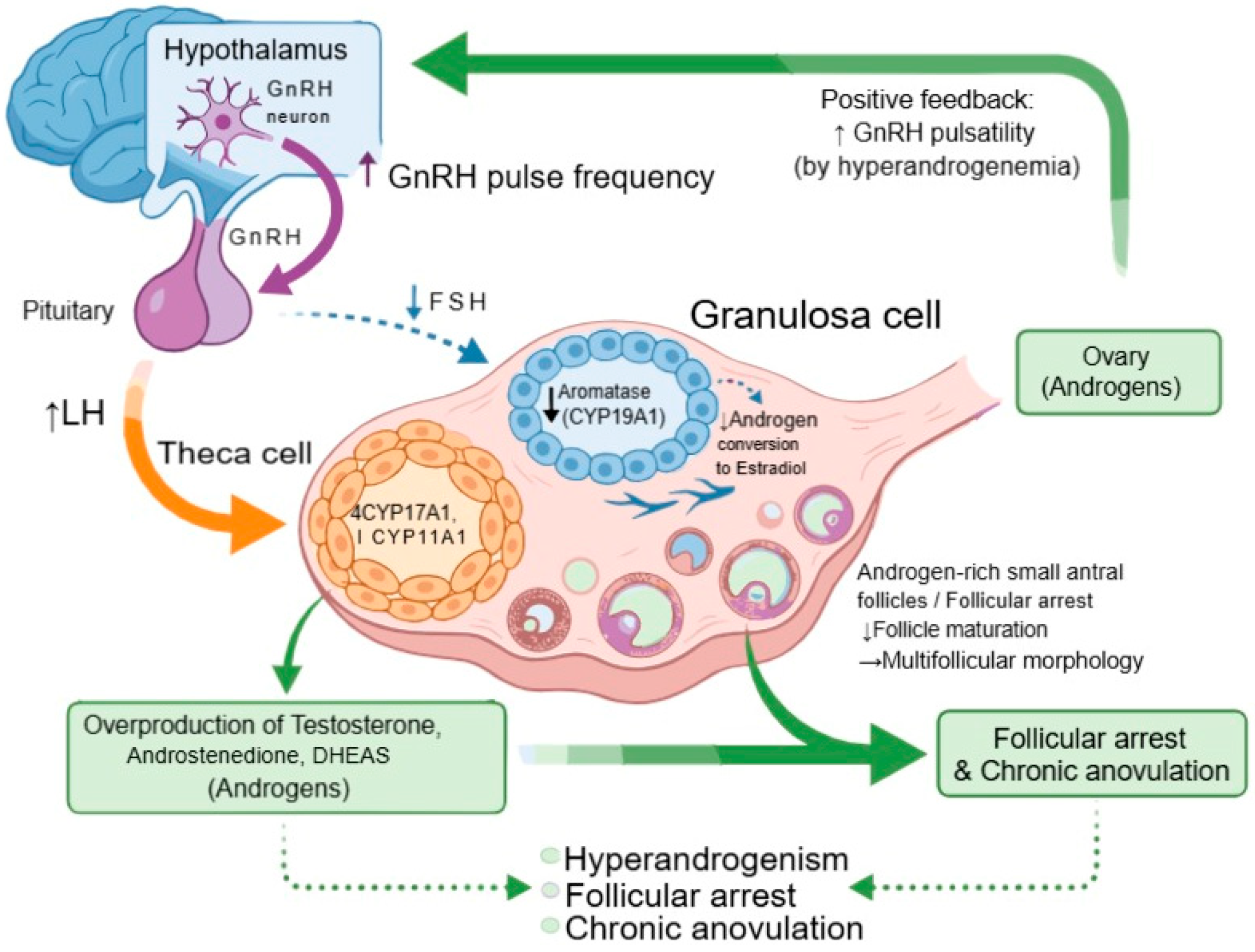
3.1. Endocrine and Hormonal Dysregulation
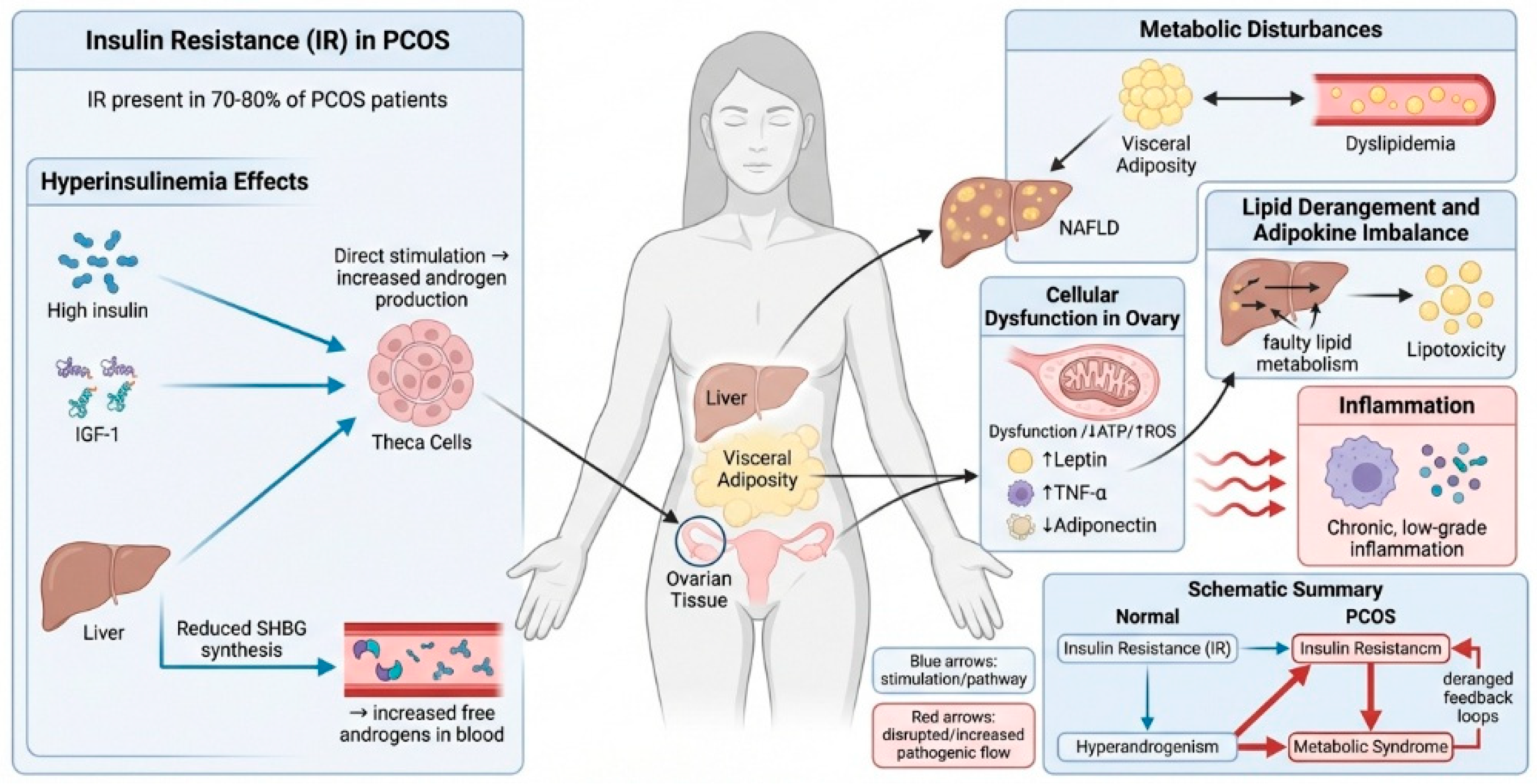
3.2. Insulin Resistance, Metabolic Syndrome, and Hyperandrogenism
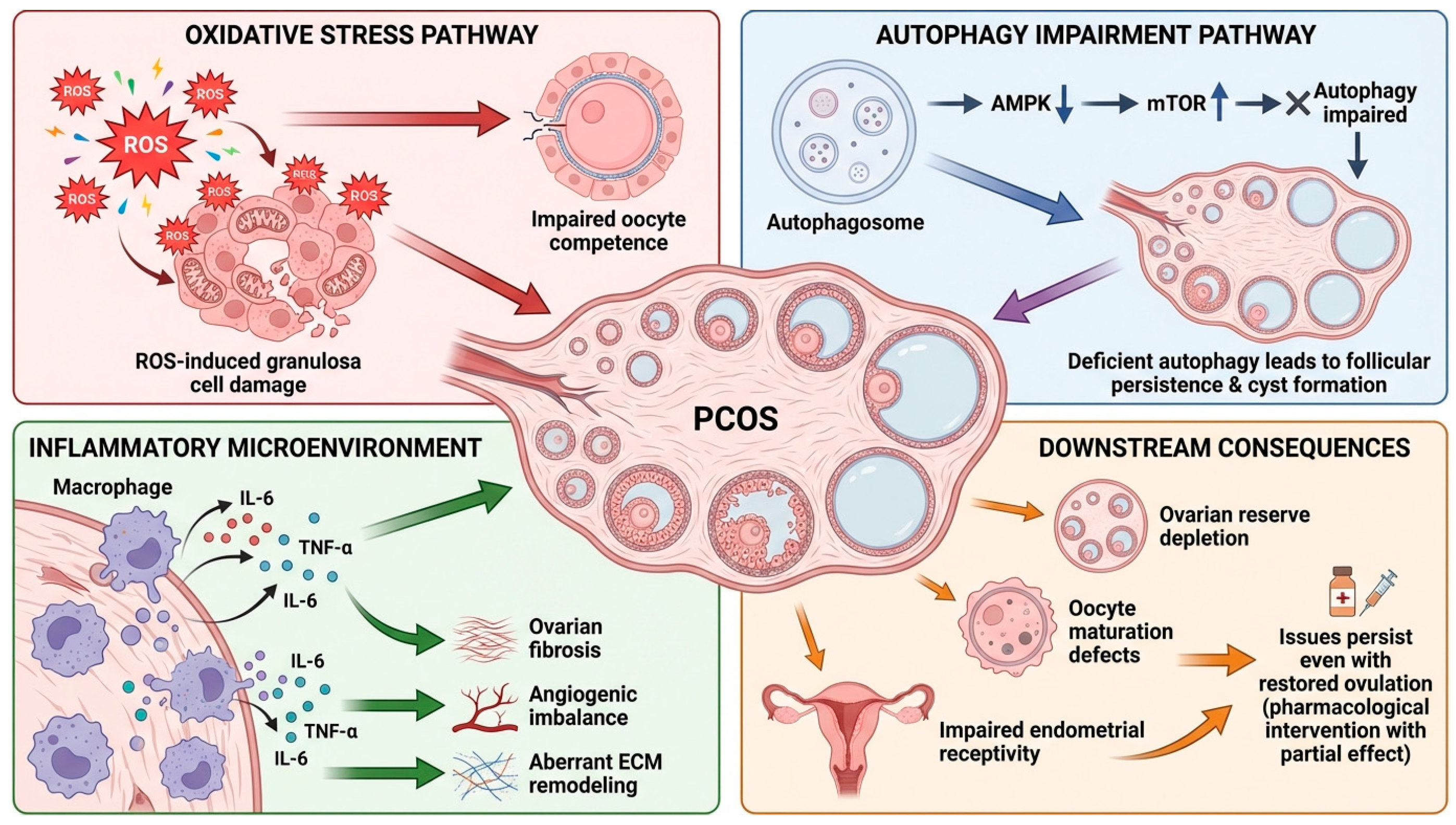
3.3. Ovarian Microenvironment and Autophagy Impairment
3.4. Role of Oxidative Stress in the Pathophysiology of PCOS
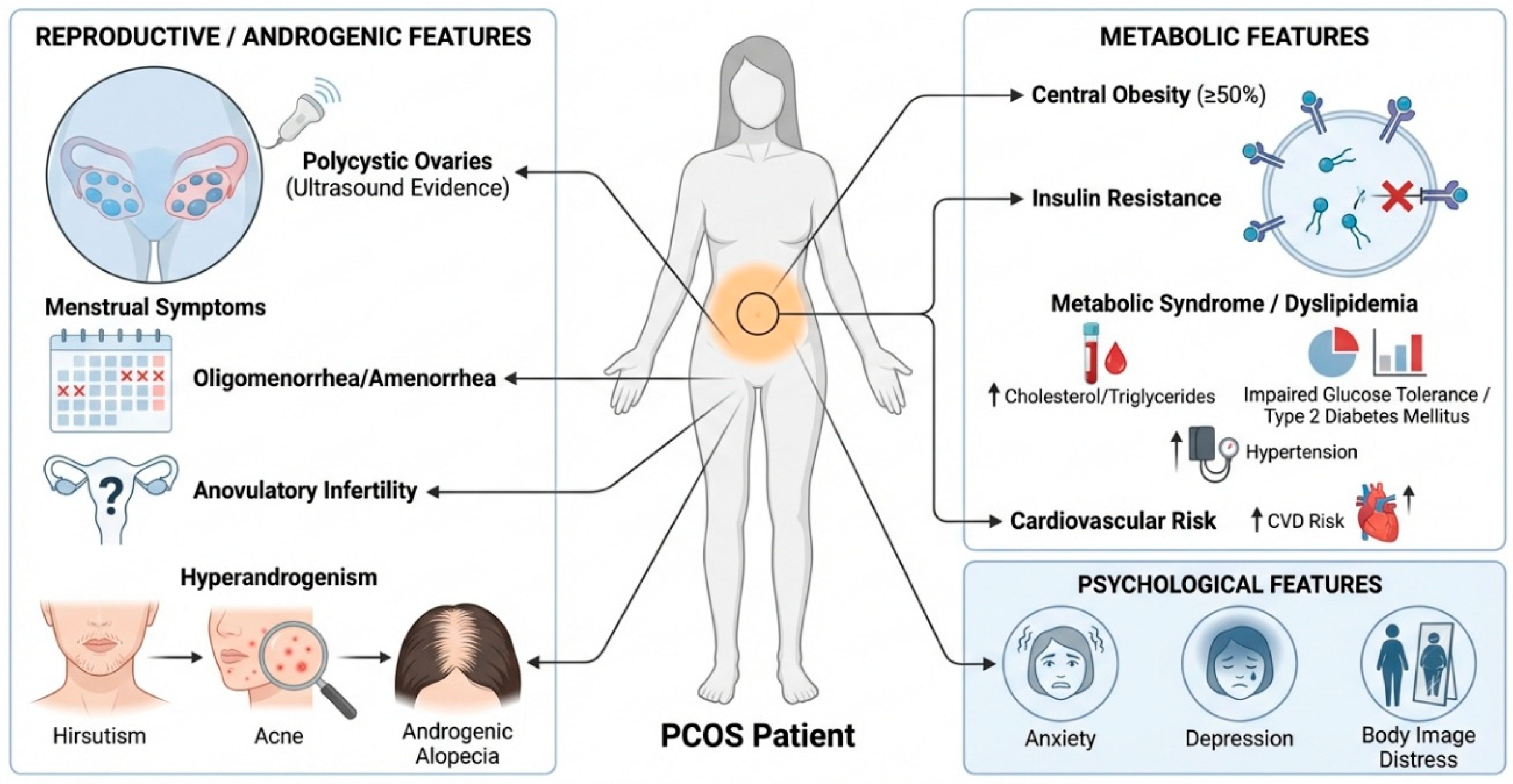
3.5. Clinical and Phenotypic Signs of PCOS
4. Modern Treatment Strategies for Polycystic Ovary Syndrome
4.1. Personalized Lifestyle and Metabolic Optimization
4.2. Pharmacological Management Based on Clinical Goals
4.2.1. Management of Hyperandrogenism and Menstrual Irregularity
4.2.2. Metabolic and Insulin-Targeted Therapy
4.3. Fertility-Focused Modern Treatments in PCOS
4.4. Novel and Next-Generation Approaches
4.4.1. Intelligent Drug Delivery
Intelligent Drug Delivery in PCOS: Current Evidence and Translational Constraints
4.4.2. Targeting Ovarian Microenvironment Dysfunction
4.4.3. Artificial Intelligence-Driven Precision Medicine
Artificial Intelligence in PCOS: Evidence-Based Summary and Clinical Translation
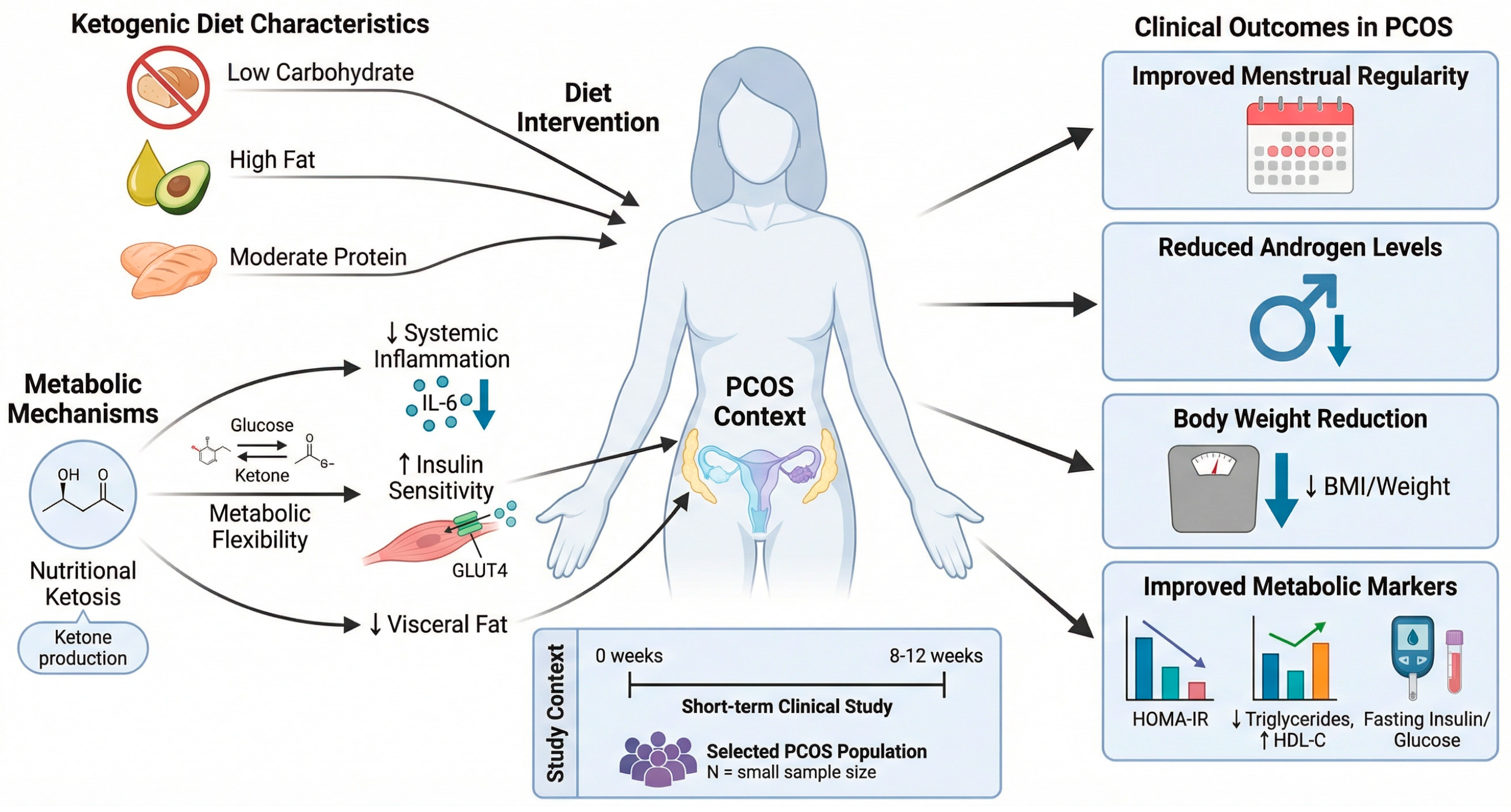
4.5. Dietary Interventions for Metabolic and Endocrine Modulation in PCOS
5. Evidence Grading Framework and Strength of Recommendations
6. Current Limitations and Future Directions to Treat PCOS
7. Translational Pathways and Clinical Implementation Challenges in PCOS
8. Conclusions
Author Contributions
Funding
Institutional Review Board Statement
Informed Consent Statement
Data Availability Statement
Acknowledgments
Conflicts of Interest
References
- Helvaci, N.; Yildiz, B.O. Polycystic ovary syndrome as a metabolic disease. Nat. Rev. Endocrinol. 2025, 21, 230–244. [Google Scholar] [CrossRef] [Scilit]
- Azam, S.S.; Vasudevan, S.; Bukhari, W.S.; Thadhani, J.; Tasneem, H.; Singh, S.; Chijioke, I.; de Freitas, B.M.; Thammitage, M.B.W.; Motwani, J. Reproductive endocrine disorders: A comprehensive guide to the diagnosis and management of infertility, polycystic ovary syndrome, and endometriosis. Cureus 2025, 17, e78222. [Google Scholar] [CrossRef] [Scilit]
- Chen, Q.; Li, X.; Zhou, W.; Xiao, J.; Yang, Y.; Chen, H.; Luo, Q.; Meng, F.; Zhu, B.; Chen, X. Multi-omics analysis reveals synergistic interplay of metabolic dysregulation, oxidative stress, and inflammation in polycystic ovary syndrome. Biomed. Anal. 2025, 2, 51–61. [Google Scholar] [CrossRef] [Scilit]
- Witchel, S.F.; Oberfield, S.E.; Peña, A.S. Polycystic ovary syndrome: Pathophysiology, presentation, and treatment with emphasis on adolescent girls. J. Endocr. Soc. 2019, 3, 1545–1573. [Google Scholar] [CrossRef] [Scilit] [PubMed]
- Ding, H.; Zhang, J.; Zhang, F.; Zhang, S.; Chen, X.; Liang, W.; Xie, Q. Resistance to the insulin and elevated level of androgen: A major cause of polycystic ovary syndrome. Front. Endocrinol. 2021, 12, 741764. [Google Scholar] [CrossRef] [Scilit] [PubMed]
- Dabravolski, S.A.; Nikiforov, N.G.; Eid, A.H.; Nedosugova, L.V.; Starodubova, A.V.; Popkova, T.V.; Bezsonov, E.E.; Orekhov, A.N. Mitochondrial dysfunction and chronic inflammation in polycystic ovary syndrome. Int. J. Mol. Sci. 2021, 22, 3923. [Google Scholar] [CrossRef] [Scilit]
- Palomba, S.; Piltonen, T.T.; Giudice, L.C. Endometrial function in women with polycystic ovary syndrome: A comprehensive review. Hum. Reprod. Update 2021, 27, 584–618. [Google Scholar] [CrossRef] [Scilit]
- Dong, J.; Rees, D.A. Polycystic ovary syndrome: Pathophysiology and therapeutic opportunities. BMJ Med. 2023, 2, e000548. [Google Scholar] [CrossRef] [Scilit]
- Aguilar-Gallardo, C.; Bonora-Centelles, A. Integrating artificial intelligence for academic advanced therapy medicinal products: Challenges and opportunities. Appl. Sci. 2024, 14, 1303. [Google Scholar] [CrossRef] [Scilit]
- Balen, A. The pathophysiology of polycystic ovary syndrome: Trying to understand PCOS and its endocrinology. Best Pract. Res. Clin. Obstet. Gynaecol. 2004, 18, 685–706. [Google Scholar] [CrossRef] [Scilit] [PubMed]
- Barabás, K.; Szabó-Meleg, E.; Ábrahám, I.M. Effect of inflammation on female gonadotropin-releasing hormone (GnRH) neurons: Mechanisms and consequences. Int. J. Mol. Sci. 2020, 21, 529. [Google Scholar] [CrossRef] [Scilit]
- Marques, P.; Lages, A.D.S.; Skorupskaite, K.; Rozario, K.S.; Anderson, R.A.; George, J.T. Physiology of GnRH and gonadotrophin secretion. In Endotext [Internet]; MDText.com, Inc.: South Dartmouth, MA, USA, 2024. [Google Scholar]
- Maheshwari, M.; Arya, S.; Lila, A.R.; Sarathi, V.; Barnabas, R.; Rai, K.; Bhandare, V.V.; Memon, S.S.; Karlekar, M.P.; Patil, V. 17α-Hydroxylase/17, 20-lyase deficiency in 46, XY: Our experience and review of literature. J. Endocr. Soc. 2022, 6, bvac011. [Google Scholar] [CrossRef] [Scilit] [PubMed]
- Shohat-Tal, A.; Sen, A.; Barad, D.H.; Kushnir, V.; Gleicher, N. Genetics of androgen metabolism in women with infertility and hypoandrogenism. Nat. Rev. Endocrinol. 2015, 11, 429–441. [Google Scholar] [CrossRef] [Scilit]
- Houston, E.J.; Templeman, N.M. Reappraising the relationship between hyperinsulinemia and insulin resistance in PCOS. J. Endocrinol. 2025, 265, e240269. [Google Scholar] [CrossRef] [Scilit] [PubMed]
- Wolfe, A.; Divall, S.; Wu, S. The regulation of reproductive neuroendocrine function by insulin and insulin-like growth factor-1 (IGF-1). Front. Neuroendocrinol. 2014, 35, 558–572. [Google Scholar] [CrossRef] [Scilit]
- Qu, X.; Donnelly, R. Sex hormone-binding globulin (SHBG) as an early biomarker and therapeutic target in polycystic ovary syndrome. Int. J. Mol. Sci. 2020, 21, 8191. [Google Scholar] [CrossRef] [Scilit]
- Nagarajan, S.; Cross, E.; Sanna, F.; Hodson, L. Dysregulation of hepatic metabolism with obesity: Factors influencing glucose and lipid metabolism. Proc. Nutr. Soc. 2022, 81, 1–11. [Google Scholar] [CrossRef] [Scilit]
- Hanlon, C.L.; Yuan, L. Nonalcoholic fatty liver disease: The role of visceral adipose tissue. Clin. Liver Dis. 2022, 19, 106–110. [Google Scholar] [CrossRef] [Scilit]
- Yan, H.; Wang, L.; Zhang, G.; Li, N.; Zhao, Y.; Liu, J.; Jiang, M.; Du, X.; Zeng, Q.; Xiong, D.; et al. Oxidative stress and energy metabolism abnormalities in polycystic ovary syndrome: From mechanisms to therapeutic strategies. Reprod. Biol. Endocrinol. 2024, 22, 159. [Google Scholar] [CrossRef] [Scilit]
- Czaja-Stolc, S.; Potrykus, M.; Stankiewicz, M.; Kaska, Ł.; Małgorzewicz, S. Pro-Inflammatory Profile of Adipokines in Obesity Contributes to Pathogenesis, Nutritional Disorders, and Cardiovascular Risk in Chronic Kidney Disease. Nutrients 2022, 14, 1457. [Google Scholar] [CrossRef] [Scilit] [PubMed]
- Kumariya, S.; Ubba, V.; Jha, R.K.; Gayen, J.R. Autophagy in ovary and polycystic ovary syndrome: Role, dispute and future perspective. Autophagy 2021, 17, 2706–2733. [Google Scholar] [CrossRef] [Scilit] [PubMed]
- Zhang, J.; Bao, Y.; Zhou, X.; Zheng, L. Polycystic ovary syndrome and mitochondrial dysfunction. Reprod. Biol. Endocrinol. 2019, 17, 67. [Google Scholar] [CrossRef] [Scilit] [PubMed]
- Feng, S.; Wan, S.; Liu, S.; Wang, W.; Tang, M.; Bai, L.; Zhu, Y. LARS2 Regulates Apoptosis via ROS-Mediated Mitochondrial Dysfunction and Endoplasmic Reticulum Stress in Ovarian Granulosa Cells. Oxid. Med. Cell. Longev. 2022, 2022, 5501346. [Google Scholar] [CrossRef] [Scilit]
- Manful, C.F.; Fordjour, E.; Ikumoinein, E.; Abbey, L.; Thomas, R. Therapeutic strategies targeting oxidative stress and inflammation: A narrative review. BioChem 2025, 5, 35. [Google Scholar] [CrossRef] [Scilit]
- Arab Sadeghabadi, Z.; Abbasalipourkabir, R.; Mohseni, R.; Ziamajidi, N. Investigation of oxidative stress markers and antioxidant enzymes activity in newly diagnosed type 2 diabetes patients and healthy subjects, association with IL-6 level. J. Diabetes Metab. Disord. 2019, 18, 437–443. [Google Scholar] [CrossRef] [Scilit]
- Kobayashi, H.; Shigetomi, H.; Nishio, M.; Umetani, M.; Imanaka, S.; Hashimoto, H. Molecular basis of ovarian aging and reproductive outcomes: Biomarker exploration based on follicular fluid. Biol. Reprod. 2025, ioaf291. [Google Scholar] [CrossRef] [Scilit]
- Albeitawi, S.; Bani-Mousa, S.-U.; Jarrar, B.; Aloqaily, I.; Al-Shlool, N.; Alsheyab, G.; Kassab, A.; Qawasmi, B.; Awaisheh, A. Associations Between Follicular Fluid Biomarkers and IVF/ICSI Outcomes in Normo-Ovulatory Women—A Systematic Review. Biomolecules 2025, 15, 443. [Google Scholar] [CrossRef] [Scilit]
- Marcondes-de-Castro, I.A.; Reis-Barbosa, P.H.; Marinho, T.S.; Aguila, M.B.; Mandarim-de-Lacerda, C.A. AMPK/mTOR pathway significance in healthy liver and non-alcoholic fatty liver disease and its progression. J. Gastroenterol. Hepatol. 2023, 38, 1868–1876. [Google Scholar] [CrossRef] [Scilit]
- Choi, M.S.; Chae, Y.J.; Choi, J.W.; Chang, J.E. Potential Therapeutic Approaches through Modulating the Autophagy Process for Skin Barrier Dysfunction. Int. J. Mol. Sci. 2021, 22, 7869. [Google Scholar] [CrossRef] [Scilit]
- Low, J.J.; Ilancheran, A.; Ng, J.S. Malignant ovarian germ-cell tumours. Best Pract. Res. Clin. Obstet. Gynaecol. 2012, 26, 347–355. [Google Scholar] [CrossRef] [Scilit] [PubMed]
- Savant, S.S.; Sriramkumar, S.; O’Hagan, H.M. The Role of Inflammation and Inflammatory Mediators in the Development, Progression, Metastasis, and Chemoresistance of Epithelial Ovarian Cancer. Cancers 2018, 10, 251. [Google Scholar] [CrossRef] [Scilit] [PubMed]
- Chauvin, S. Role of Granulosa Cell Dysfunction in Women Infertility Associated with Polycystic Ovary Syndrome and Obesity. Biomolecules 2025, 15, 923. [Google Scholar] [CrossRef] [Scilit]
- Song, G.; Liu, N.; He, J.; Tang, S.; Yu, Y.; Song, L. Exploring the role of Myo-inositol in alleviating insulin resistance in polycystic ovary syndrome through the AMPK/GLUT4 pathway. Mol. Biol. Rep. 2025, 52, 454. [Google Scholar] [CrossRef] [Scilit]
- Ouyang, X.; Zhou, Q.; Tang, H.; Li, L. Pathogenesis and treatment of obesity-related polycystic ovary syndrome. J. Ovarian Res. 2025, 18, 258. [Google Scholar] [CrossRef] [Scilit]
- Kamar Bashah, N.A.; Hamid, A.A.; Adam, S.H.; Jaffar, F.H.F.; Abd Rahman, I.Z.; Mokhtar, M.H. Role of AMP-activated protein kinase (AMPK) in female reproduction: A review. Int. J. Mol. Sci. 2025, 26, 6833. [Google Scholar] [CrossRef] [Scilit] [PubMed]
- Rodrigues, A.Q.; Carvalho, G.G.; Piau, T.B.; Veiga, F.H.; Souza, P.E.; Moreira, D.C.; Tierno, N.I.; Macedo, Y.A.; Amaral, M.E.B.; Nakagawa, H.M. Impact of oxidative stress on female reproductive parameters: An analysis of systemic and follicular biomarkers. JBRA Assist. Reprod. 2025, 29, 644. [Google Scholar] [CrossRef] [Scilit]
- Choi, W.; Woo, G.H.; Kwon, T.-H.; Jeon, J.-H. Obesity-driven metabolic disorders: The interplay of inflammation and mitochondrial dysfunction. Int. J. Mol. Sci. 2025, 26, 9715. [Google Scholar] [CrossRef] [Scilit]
- Cozzolino, M.; Velasco, J.A.G.; Seli, E.; Levi-Montalcini, R. The Mitochondrial Dysfunction in the Granulosa Cells of Women with PCOS Is Caused by Alterations in Oxidative Phosphorylation (OXPHOS) and the Unfolded Protein Response, and Leads to Follicular Dysfunction, Particularly in Insulin-Resistant Women. Ph.D. Thesis, Universidad Rey Juan Carlos de Madrid, Madrid, Spain, 2023. [Google Scholar]
- Ju, W.; Yan, B.; Li, D.; Lian, F.; Xiang, S. Mitochondria-driven inflammation: A new frontier in ovarian ageing. J. Transl. Med. 2025, 23, 1005. [Google Scholar] [CrossRef] [Scilit]
- Evans, J.L.; Goldfine, I.D.; Maddux, B.A.; Grodsky, G.M. Are oxidative stress–activated signaling pathways mediators of insulin resistance and β-cell dysfunction? Diabetes 2003, 52, 1–8. [Google Scholar] [CrossRef] [Scilit]
- Ruiz, R.; Maria Perez-Villegas, E.; Manuel Carrión, Á. AMPK function in aging process. Curr. Drug Targets 2016, 17, 932–941. [Google Scholar] [CrossRef] [Scilit] [PubMed]
- Zhao, H.; Zhang, J.; Cheng, X.; Nie, X.; He, B. Insulin resistance in polycystic ovary syndrome across various tissues: An updated review of pathogenesis, evaluation, and treatment. J. Ovarian Res. 2023, 16, 9. [Google Scholar] [CrossRef] [Scilit]
- Guan, C.; Zahid, S.; Minhas, A.S.; Ouyang, P.; Vaught, A.; Baker, V.L.; Michos, E.D. Polycystic ovary syndrome: A “risk-enhancing” factor for cardiovascular disease. Fertil. Steril. 2022, 117, 924–935. [Google Scholar] [CrossRef] [Scilit] [PubMed]
- Mohamed, A.H.; Albasheer, O.; Ghoniem, M.A.; Abdalghani, N.; Ayish, F.; Abdelwahab, S.I.; Abdelmageed, M.M.; Hakami, A.M.S.; Khormi, A.H.; Altraifi, A.A.; et al. Impact of lifestyle interventions on reproductive and psychological outcomes in women with polycystic ovary syndrome: A systematic review. Medicine 2025, 104, e41178. [Google Scholar] [CrossRef] [Scilit]
- Gitsi, E.; Livadas, S.; Argyrakopoulou, G. Nutritional and exercise interventions to improve conception in women suffering from obesity and distinct nosological entities. Front. Endocrinol. 2024, 15, 1426542. [Google Scholar] [CrossRef] [Scilit]
- Scarfò, G.; Daniele, S.; Fusi, J.; Gesi, M.; Martini, C.; Franzoni, F.; Cela, V.; Artini, P.G. Metabolic and Molecular Mechanisms of Diet and Physical Exercise in the Management of Polycystic Ovarian Syndrome. Biomedicines 2022, 10, 1305. [Google Scholar] [CrossRef] [Scilit] [PubMed]
- Ruiz-González, D.; Cavero-Redondo, I.; Hernández-Martínez, A.; Baena-Raya, A.; Martínez-Forte, S.; Altmäe, S.; Fernández-Alonso, A.M.; Soriano-Maldonado, A. Comparative efficacy of exercise, diet and/or pharmacological interventions on BMI, ovulation, and hormonal profile in reproductive-aged women with overweight or obesity: A systematic review and network meta-analysis. Hum. Reprod. Update 2024, 30, 472–487. [Google Scholar] [CrossRef] [Scilit] [PubMed]
- Beroukhim, G.; Esencan, E.; Seifer, D.B. Impact of sleep patterns upon female neuroendocrinology and reproductive outcomes: A comprehensive review. Reprod. Biol. Endocrinol. 2022, 20, 16. [Google Scholar] [CrossRef] [Scilit]
- Shajari, S.; Kuruvinashetti, K.; Komeili, A.; Sundararaj, U. The Emergence of AI-Based Wearable Sensors for Digital Health Technology: A Review. Sensors 2023, 23, 9498. [Google Scholar] [CrossRef] [Scilit]
- Wang, J.; Chen, R.; Long, H.; He, J.; Tang, M.; Su, M.; Deng, R.; Chen, Y.; Ni, R.; Zhao, S. Artificial intelligence in polycystic ovarian syndrome management: Past, present, and future. Radiol. Medica 2025, 130, 1409–1441. [Google Scholar] [CrossRef] [Scilit]
- Secara, I.-A.; Hordiiuk, D. Personalized health monitoring systems: Integrating wearable and AI. J. Intell. Learn. Syst. Appl. 2024, 16, 44–52. [Google Scholar] [CrossRef]
- Scannell, N.; Moran, L.; Mantzioris, E.; Cowan, S.; Villani, A. Efficacy, feasibility and acceptability of a mediterranean diet intervention on hormonal, metabolic and anthropometric measures in overweight and obese women with polycystic ovary syndrome: Study protocol. Metabolites 2022, 12, 311. [Google Scholar] [CrossRef] [Scilit]
- Fitzpatrick, P.J. Improving health literacy using the power of digital communications to achieve better health outcomes for patients and practitioners. Front. Digit. Health 2023, 5, 1264780. [Google Scholar]
- Shafik, W. Human-artificial intelligence collaborations in polycystic ovary syndrome (PCOS) clinical trials and research. In AI-Based Nutritional Intervention in Polycystic Ovary Syndrome (PCOS); Springer: Berlin/Heidelberg, Germany, 2025; pp. 307–330. [Google Scholar]
- Ghaderzadeh, M.; Garavand, A.; Salehnasab, C. Artificial intelligence in polycystic ovary syndrome: A systematic review of diagnostic and predictive applications. BMC Med. Inform. Decis. Mak. 2025, 25, 427. [Google Scholar] [CrossRef] [Scilit]
- Kourtidou, C.; Tziomalos, K. Pharmacological Management of Obesity in Patients with Polycystic Ovary Syndrome. Biomedicines 2023, 11, 496. [Google Scholar] [CrossRef] [Scilit]
- de Melo, A.S.; Dos Reis, R.M.; Ferriani, R.A.; Vieira, C.S. Hormonal contraception in women with polycystic ovary syndrome: Choices, challenges, and noncontraceptive benefits. Open Access J. Contracept. 2017, 8, 13–23. [Google Scholar] [CrossRef] [Scilit]
- Battipaglia, C.; Spelta, E.; Monterrosa-Blanco, A.; Genazzani, A. The hormonal contraceptive choice in women with polycystic ovary syndrome and metabolic syndrome. GREM Gynecol. Reprod. Endocrinol. Metab. 2025, 6, 1–10. [Google Scholar]
- Mills, E.G.; Yang, L.; Nielsen, M.F.; Kassem, M.; Dhillo, W.S.; Comninos, A.N. The relationship between bone and reproductive hormones beyond estrogens and androgens. Endocr. Rev. 2021, 42, 691–719. [Google Scholar]
- Shufelt, C.L.; Manson, J.E. Menopausal hormone therapy and cardiovascular disease: The role of formulation, dose, and route of delivery. J. Clin. Endocrinol. Metab. 2021, 106, 1245–1254. [Google Scholar] [CrossRef] [Scilit] [PubMed]
- Reich, J.; Badrinath Murthy, D.; Coble, C.; Shah, B. Selecting optimal progestational agents either alone or in combination in common pediatric endocrine settings: Challenges of unmet needs. J. Pediatr. Endocrinol. Metab. 2024, 37, 931–938. [Google Scholar] [CrossRef] [Scilit]
- Mathur, R.; Levin, O.; Azziz, R. Use of ethinylestradiol/drospirenone combination in patients with the polycystic ovary syndrome. Ther. Clin. Risk Manag. 2008, 4, 487–492. [Google Scholar] [CrossRef] [Scilit] [PubMed]
- Livingstone, C.; Collison, M. Sex steroids and insulin resistance. Clin. Sci. 2002, 102, 151–166. [Google Scholar] [CrossRef] [Scilit]
- Erenus, M.; Yücelten, D.; Durmuşoğlu, F.; Gürbüz, O. Comparison of finasteride versus spironolactone in the treatment of idiopathic hirsutism. Fertil. Steril. 1997, 68, 1000–1003. [Google Scholar] [CrossRef] [Scilit]
- Teede, H.J.; Tay, C.T.; Laven, J.J.; Dokras, A.; Moran, L.J.; Piltonen, T.T.; Costello, M.F.; Boivin, J.; Redman, L.M.; Boyle, J.A. Recommendations from the 2023 international evidence-based guideline for the assessment and management of polycystic ovary syndrome. Eur. J. Endocrinol. 2023, 189, G43–G64. [Google Scholar] [CrossRef] [Scilit]
- Legro, R.S.; Arslanian, S.A.; Ehrmann, D.A.; Hoeger, K.M.; Murad, M.H.; Pasquali, R.; Welt, C.K. Diagnosis and treatment of polycystic ovary syndrome: An Endocrine Society clinical practice guideline. J. Clin. Endocrinol. Metab. 2013, 98, 4565–4592. [Google Scholar] [CrossRef] [Scilit] [PubMed]
- Martin, K.A.; Anderson, R.R.; Chang, R.J.; Ehrmann, D.A.; Lobo, R.A.; Murad, M.H.; Pugeat, M.M.; Rosenfield, R.L. Evaluation and treatment of hirsutism in premenopausal women: An Endocrine Society clinical practice guideline. J. Clin. Endocrinol. Metab. 2018, 103, 1233–1257. [Google Scholar] [CrossRef] [Scilit]
- Moghetti, P.; Tosi, F.; Tosti, A.; Negri, C.; Misciali, C.; Perrone, F.; Caputo, M.; Muggeo, M.; Castello, R. Comparison of spironolactone, flutamide, and finasteride efficacy in the treatment of hirsutism: A randomized, double blind, placebo-controlled trial. J. Clin. Endocrinol. Metab. 2000, 85, 89–94. [Google Scholar] [CrossRef] [Scilit] [PubMed]
- Al Wattar, B.H.; Fisher, M.; Bevington, L.; Talaulikar, V.; Davies, M.; Conway, G.; Yasmin, E. Clinical practice guidelines on the diagnosis and management of polycystic ovary syndrome: A systematic review and quality assessment study. J. Clin. Endocrinol. Metab. 2021, 106, 2436–2446. [Google Scholar] [CrossRef] [Scilit]
- Nelson, M.; LaRouche, V. Polycystic Ovary Syndrome: Assessment and Management Guidelines. Am. Fam. Physician 2024, 110, 547–548. [Google Scholar] [PubMed]
- Gu, Y.; Zhou, G.; Zhou, F.; Wu, Q.; Ma, C.; Zhang, Y.; Ding, J.; Hua, K. Life Modifications and PCOS: Old Story But New Tales. Front. Endocrinol. 2022, 13, 808898. [Google Scholar] [CrossRef] [Scilit]
- Toosy, S.; Sodi, R.; Pappachan, J.M. Lean polycystic ovary syndrome (PCOS): An evidence-based practical approach. J. Diabetes Metab. Disord. 2018, 17, 277–285. [Google Scholar] [CrossRef] [Scilit]
- Kim, C.H.; Chon, S.J.; Lee, S.H. Effects of lifestyle modification in polycystic ovary syndrome compared to metformin only or metformin addition: A systematic review and meta-analysis. Sci. Rep. 2020, 10, 7802. [Google Scholar] [CrossRef] [Scilit]
- He, L. Metformin and Systemic Metabolism. Trends Pharmacol. Sci. 2020, 41, 868–881. [Google Scholar] [CrossRef] [Scilit]
- Notaro, A.L.G.; Neto, F.T.L. The use of metformin in women with polycystic ovary syndrome: An updated review. J. Assist. Reprod. Genet. 2022, 39, 573–579. [Google Scholar] [CrossRef] [Scilit]
- Laganà, A.S.; Forte, G.; Bizzarri, M.; Kamenov, Z.A.; Bianco, B.; Kaya, C.; Gitas, G.; Alkatout, I.; Terzic, M.; Unfer, V. Inositols in the ovaries: Activities and potential therapeutic applications. Expert Opin. Drug Metab. Toxicol. 2022, 18, 123–133. [Google Scholar] [CrossRef] [Scilit] [PubMed]
- Facchinetti, F.; Unfer, V.; Dewailly, D.; Kamenov, Z.A.; Diamanti-Kandarakis, E.; Laganà, A.S.; Nestler, J.E.; Soulage, C.O. Inositols in Polycystic Ovary Syndrome: An Overview on the Advances. Trends Endocrinol. Metab. 2020, 31, 435–447. [Google Scholar] [CrossRef] [Scilit]
- Merviel, P.; James, P.; Bouée, S.; Le Guillou, M.; Rince, C.; Nachtergaele, C.; Kerlan, V. Impact of myo-inositol treatment in women with polycystic ovary syndrome in assisted reproductive technologies. Reprod. Health 2021, 18, 13. [Google Scholar] [CrossRef] [Scilit] [PubMed]
- Tavares, A.C.M.; Martins, M.Y.M.; de Souza, G.F.; Lima, E.M.; Rocha, C.A.; de Souza, L.C.; Simões, J.M.L.; de Araújo, N.O.; Cavalcante, M.B. Immunological effects of GLP-1 analogs on female reproduction: Therapeutic perspectives for infertility and recurrent pregnancy loss. J. Reprod. Immunol. 2025, 169, 104538. [Google Scholar] [CrossRef] [Scilit] [PubMed]
- Szczesnowicz, A.; Szeliga, A.; Niwczyk, O.; Bala, G.; Meczekalski, B. Do GLP-1 Analogs Have a Place in the Treatment of PCOS? New Insights and Promising Therapies. J. Clin. Med. 2023, 12, 5915. [Google Scholar] [CrossRef] [Scilit]
- Fitz, V.; Graca, S.; Mahalingaiah, S.; Liu, J.; Lai, L.; Butt, A.; Armour, M.; Rao, V.; Naidoo, D.; Maunder, A. Inositol for polycystic ovary syndrome: A systematic review and meta-analysis to inform the 2023 update of the international evidence-based PCOS guidelines. J. Clin. Endocrinol. Metab. 2024, 109, 1630–1655. [Google Scholar] [CrossRef] [Scilit]
- Teede, H.J.; Tay, C.T.; Laven, J.; Dokras, A.; Moran, L.; Piltonen, T.; Costello, M.; Boivin, J.; Redman, L.; Boyle, J. International Evidence-Based Guideline for the Assessment and Management of Polycystic Ovary Syndrome 2023; Monash University: Melbourne, Australia, 2023. [Google Scholar]
- Nylander, M.; Frøssing, S.; Kistorp, C.; Faber, J.; Skouby, S.O. Liraglutide in polycystic ovary syndrome: A randomized trial, investigating effects on thrombogenic potential. Endocr. Connect. 2017, 6, 89–99. [Google Scholar] [CrossRef] [Scilit]
- Elkind-Hirsch, K.E.; Chappell, N.; Shaler, D.; Storment, J.; Bellanger, D. Liraglutide 3 mg on weight, body composition, and hormonal and metabolic parameters in women with obesity and polycystic ovary syndrome: A randomized placebo-controlled-phase 3 study. Fertil. Steril. 2022, 118, 371–381. [Google Scholar] [CrossRef] [Scilit]
- Tanbo, T.; Mellembakken, J.; Bjercke, S.; Ring, E.; Åbyholm, T.; Fedorcsak, P. Ovulation induction in polycystic ovary syndrome. Acta Obs. Gynecol. Scand. 2018, 97, 1162–1167. [Google Scholar] [CrossRef] [Scilit]
- Yang, A.M.; Cui, N.; Sun, Y.F.; Hao, G.M. Letrozole for Female Infertility. Front. Endocrinol. 2021, 12, 676133. [Google Scholar] [CrossRef] [Scilit] [PubMed]
- Practice Committee of the American Society for Reproductive Medicine. Prevention of moderate and severe ovarian hyperstimulation syndrome: A guideline. Fertil. Steril. 2024, 121, 230–245. [Google Scholar] [CrossRef] [Scilit] [PubMed]
- Mina, A.; Younesi, M.; Doohandeh, T.; Darzi, S.; Ardehjani, N.A.; Sheibani, S.; Hosseinirad, H.; Valizadeh, R. Predicting pregnancy outcomes in IVF cycles: A systematic review and diagnostic meta-analysis of artificial intelligence in embryo assessment. Contracept. Reprod. Med. 2025, 10, 59. [Google Scholar] [CrossRef] [Scilit]
- Shi, M.; Li, X.; Xing, L.; Li, Z.; Zhou, S.; Wang, Z.; Zou, X.; She, Y.; Zhao, R.; Qin, D. Polycystic ovary syndrome and the potential for nanomaterial-based drug delivery in therapy of this disease. Pharmaceutics 2024, 16, 1556. [Google Scholar] [CrossRef] [Scilit]
- Goel, N.; Padmavathi, V.; Afzal, M.F.; Kochar, M. Drug Discovery for Cancer and Diabetes; BR Publications: Allahabad, India, 2025. [Google Scholar]
- Lin, Q.; Li, J.; Abudousalamu, Z.; Sun, Y.; Xue, M.; Yao, L.; Chen, M. Advancing Ovarian Cancer Therapeutics: The Role of Targeted Drug Delivery Systems. Int. J. Nanomed. 2024, 19, 9351–9370. [Google Scholar] [CrossRef] [Scilit]
- Rahman, M.A.; Jalouli, M.; Bhajan, S.K.; Al-Zharani, M.; Harrath, A.H. A Comprehensive Review of Nanoparticle-Based Drug Delivery for Modulating PI3K/AKT/mTOR-Mediated Autophagy in Cancer. Int. J. Mol. Sci. 2025, 26, 1868. [Google Scholar] [CrossRef] [Scilit]
- Rahman, M.A.; Jalouli, M.; Bhajan, S.K.; Al-Zharani, M.; Harrath, A.H. The Role of Hypoxia-Inducible Factor-1α (HIF-1α) in the Progression of Ovarian Cancer: Perspectives on Female Infertility. Cells 2025, 14, 437. [Google Scholar] [CrossRef] [Scilit]
- Liu, Y.; Jia, D.; Li, L.; Wang, M. Advances in Nanomedicine and Biomaterials for Endometrial Regeneration: A Comprehensive Review. Int. J. Nanomed. 2024, 19, 8285–8308. [Google Scholar] [CrossRef] [Scilit] [PubMed]
- Hong, M.K.; Han, Y.; Park, H.J.; Shin, M.R.; Roh, S.S.; Kwon, E.Y. The Synergistic Action of Metformin and Glycyrrhiza uralensis Fischer Extract Alleviates Metabolic Disorders in Mice with Diet-Induced Obesity. Int. J. Mol. Sci. 2023, 24, 936. [Google Scholar] [CrossRef] [Scilit]
- Thorat, N.D.; Kumar, N. Nano-Pharmacokinetics and Theranostics: Advancing Cancer Therapy; Academic Press: Cambridge, MA, USA, 2021. [Google Scholar]
- Sun, R.; Chen, Y.; Pei, Y.; Wang, W.; Zhu, Z.; Zheng, Z.; Yang, L.; Sun, L. The drug release of PLGA-based nanoparticles and their application in treatment of gastrointestinal cancers. Heliyon 2024, 10, e38165. [Google Scholar] [CrossRef] [Scilit]
- Zhang, T.; Sheng, Z.; Zhang, J.; Zhang, H.; Zhang, Y.; Du, Y.; Liu, X.; Hu, Z.; Luo, Q.; Xu, G. Targeting granulosa cells with engineered DFO nanoparticles for the treatment of chemotherapy-induced premature ovarian failure. Theranostics 2025, 15, 7820. [Google Scholar] [CrossRef] [Scilit]
- Deng, X.; Zhang, Z.; Ren, T.; Chen, L. Regulation of oxidative stress and inflammation caused by drug accumulation in the TME based on EPR-passive strategy and active targeting. Cancer Nanotechnol. 2025, 16, 40. [Google Scholar] [CrossRef] [Scilit]
- Fair, T.; Lonergan, P. The oocyte: The key player in the success of assisted reproduction technologies. Reprod. Fertil. Dev. 2023, 36, 133–148. [Google Scholar] [CrossRef] [Scilit]
- Raja, M.A.; Maldonado, M.; Chen, J.; Zhong, Y.; Gu, J. Development and evaluation of curcumin encapsulated self-assembled nanoparticles as potential remedial treatment for PCOS in a female rat model. Int. J. Nanomed. 2021, 16, 6231–6247. [Google Scholar] [CrossRef] [Scilit]
- Mihanfar, A.; Nouri, M.; Roshangar, L.; Khadem-Ansari, M.H. Therapeutic potential of quercetin in an animal model of PCOS: Possible involvement of AMPK/SIRT-1 axis. Eur. J. Pharmacol. 2021, 900, 174062. [Google Scholar] [CrossRef] [Scilit] [PubMed]
- Irmak, E.; Sanlier, N.T.; Sanlier, N. Could polyphenols be an effective treatment in the management of polycystic ovary syndrome? Int. J. Vitam. Nutr. Res. 2024, 94, 422–433. [Google Scholar] [CrossRef] [Scilit]
- Mallya, P.; Lewis, S.A. Curcumin and its formulations for the treatment of polycystic ovary syndrome: Current insights and future prospects. J. Ovarian Res. 2025, 18, 78. [Google Scholar] [CrossRef] [Scilit] [PubMed]
- Khamar, T.; Jahani, N.; Jafari-Nozad, A.M.; Farkhondeh, T.; Samarghandian, S. Beneficial effects of curcumin in polycystic ovary syndrome: A review of recent literature and underlying mechanisms. Curr. Med. Chem. 2025, 32, 7297–7313. [Google Scholar] [CrossRef] [Scilit] [PubMed]
- Zengin, M.N.; Şahin, Y.; Çiftçi, O. Alternative Pharmacological Approach to Male Infertility: Anti-Aromatase Compounds: A Systematic Review. J. Reconstr. Urol. 2023, 13, 28–37. [Google Scholar] [CrossRef] [Scilit]
- Mesgin, R.M.; Nejati, V.; Talatapeh, S.P.; Imani, Z.; Rezaie, J. Nanoparticles for Polycystic Ovary Syndrome (PCOS) Therapy: Exosomes and Synthetic Nanoparticles, Challenges and Opportunities. Cell Biochem. Funct. 2025, 43, e70114. [Google Scholar] [CrossRef] [Scilit]
- Fan, W.; Yuan, Z.; Li, M.; Zhang, Y.; Nan, F. Decreased oocyte quality in patients with endometriosis is closely related to abnormal granulosa cells. Front. Endocrinol. 2023, 14, 1226687. [Google Scholar] [CrossRef] [Scilit]
- Benvenga, S.; Feldt-Rasmussen, U.; Bonofiglio, D.; Asamoah, E. Nutraceutical Supplements in the Thyroid Setting: Health Benefits beyond Basic Nutrition. Nutrients 2019, 11, 2214. [Google Scholar] [CrossRef] [Scilit] [PubMed]
- Yaba, A.; Demir, N. The mechanism of mTOR (mammalian target of rapamycin) in a mouse model of polycystic ovary syndrome (PCOS). J. Ovarian Res. 2012, 5, 38. [Google Scholar] [CrossRef] [Scilit] [PubMed]
- Harrath, A.H.; Rahman, M.A.; Bhajan, S.K.; Bishwas, A.K.; Rahman, M.D.H.; Alwasel, S.; Jalouli, M.; Kang, S.; Park, M.N.; Kim, B. Autophagy and Female Fertility: Mechanisms, Clinical Implications, and Emerging Therapies. Cells 2024, 13, 1354. [Google Scholar] [CrossRef] [Scilit]
- Rabbani, N.; Kim, G.Y.E.; Suarez, C.J.; Chen, J.H. Applications of machine learning in routine laboratory medicine: Current state and future directions. Clin. Biochem. 2022, 103, 1–7. [Google Scholar] [CrossRef] [Scilit]
- Elmannai, H.; El-Rashidy, N.; Mashal, I.; Alohali, M.A.; Farag, S.; El-Sappagh, S.; Saleh, H. Polycystic ovary syndrome detection machine learning model based on optimized feature selection and explainable artificial intelligence. Diagnostics 2023, 13, 1506. [Google Scholar] [CrossRef] [Scilit] [PubMed]
- Zhao, B.; Wen, L.; Huang, Y.; Fu, Y.; Zhou, S.; Liu, J.; Liu, M.; Li, Y. A deep learning-based automatic recognition model for polycystic ovary ultrasound images. Balk. Med. J. 2025, 42, 419. [Google Scholar] [CrossRef] [Scilit]
- Singh, S. Algorithmic Detection of Hormonal Patterns in Women’s Health using Artificial Intelligence. IRE J. 2025, 8, 1058–1080. [Google Scholar]
- Bucci, I.; Giuliani, C.; Di Dalmazi, G.; Formoso, G.; Napolitano, G. Thyroid Autoimmunity in Female Infertility and Assisted Reproductive Technology Outcome. Front. Endocrinol. 2022, 13, 768363. [Google Scholar] [CrossRef] [Scilit]
- Kukreti, S.; Lu, M.T.; Yeh, C.Y.; Ko, N.Y. Physiological Sensors Equipped in Wearable Devices for Management of Long COVID Persisting Symptoms: Scoping Review. J. Med. Internet Res. 2025, 27, e69506. [Google Scholar] [CrossRef] [Scilit]
- Samathoti, P.; Kumarachari, R.K.; Bukke, S.P.N.; Rajasekhar, E.S.K.; Jaiswal, A.A.; Eftekhari, Z. The role of nanomedicine and artificial intelligence in cancer health care: Individual applications and emerging integrations-a narrative review. Discov. Oncol. 2025, 16, 697. [Google Scholar] [CrossRef] [Scilit] [PubMed]
- Lin, A.; Ding, Y.; Li, Z.; Jiang, A.; Liu, Z.; Wong, H.Z.; Cheng, Q.; Zhang, J.; Luo, P. Glucagon-like peptide 1 receptor agonists and cancer risk: Advancing precision medicine through mechanistic understanding and clinical evidence. Biomark. Res. 2025, 13, 50. [Google Scholar] [CrossRef] [Scilit]
- Govindharajan, G.; Subramanian, S.; Doraipandian, M.; Rajendran, S. Innovative AI-driven models for predicting polycystic ovarian syndrome: An extensive review of machine learning and deep learning frameworks. Arch. Comput. Methods Eng. 2025, 33, 2115–2140. [Google Scholar] [CrossRef] [Scilit]
- Ali, A.; Rehman, M.U.; Ahmad, S.B.; Arafah, A. Biological Insights of Multi-Omics Technologies in Human Diseases; Elsevier: Amsterdam, The Netherlands, 2024. [Google Scholar]
- Madrigal-Cerezo, R.; Domínguez-Sanz, N.; Martín-Rodríguez, A. Wearable Biosensing and Machine Learning for Data-Driven Training and Coaching Support. Biosensors 2026, 16, 97. [Google Scholar] [CrossRef] [Scilit]
- Peerbasha, S.; Iqbal, Y.M.; Surputheen, M.M.; Raja, A.S. Diabetes prediction using decision tree, random forest, support vector machine, k-nearest neighbors, logistic regression classifiers. J. Adv. Appl. Sci. Res. 2023, 5, 42–54. [Google Scholar] [CrossRef] [Scilit]
- Zad, Z.; Jiang, V.S.; Wolf, A.T.; Wang, T.; Cheng, J.J.; Paschalidis, I.C.; Mahalingaiah, S. Predicting polycystic ovary syndrome with machine learning algorithms from electronic health records. Front. Endocrinol. 2024, 15, 1298628. [Google Scholar] [CrossRef] [Scilit] [PubMed]
- Neri, J.C. Diagnosis of Polycystic Ovarian Syndrome and Long-Term Risk of Metabolic Syndrome Using an Electronic Health Record Dataset; Boston University: Boston, MA, USA, 2021. [Google Scholar]
- Marini, C. A Deep Learning Approach for Segmentation of Ovarian Adnexal Masses. Master’s Thesis, Politecnico di Torino, Turin, Italy, 2022. [Google Scholar]
- Luong, T.-M.-T.; Le, N.Q.K. Artificial intelligence in time-lapse system: Advances, applications, and future perspectives in reproductive medicine. J. Assist. Reprod. Genet. 2024, 41, 239–252. [Google Scholar] [CrossRef] [Scilit]
- Kiconco, S.; Mousa, A.; Azziz, R.; Enticott, J.; Suturina, L.V.; Zhao, X.; Gambineri, A.; Tehrani, F.R.; Yildiz, B.O.; Kim, J.-J. PCOS phenotype in unselected populations study (P-PUP): Protocol for a systematic review and defining PCOS diagnostic features with pooled individual participant data. Diagnostics 2021, 11, 1953. [Google Scholar] [CrossRef] [Scilit] [PubMed]
- Bhat, S.A. Detection of Polycystic Ovary Syndrome Using Machine Learning Algorithms; National College of Ireland: Dublin, Ireland, 2021. [Google Scholar]
- Verma, P.; Agarwal, R.; Sharma, L.K.; Sindwani, N. Data-driven biomarker discovery and risk profiling for polycystic ovary syndrome in Indian women using ensemble learning. Reprod Fertil Dev. 2025, 37, RD25081. [Google Scholar] [CrossRef] [Scilit]
- Sundari, M.S.; Sailaja, N.V.; Swapna, D.; Vikkurty, S.; Jadala, V.C.; Durga, K.; Thottempudi, P. Transfer learning-enhanced CNN model for integrative ultrasound and biomarker-based diagnosis of polycystic ovarian disease. Sci. Rep. 2025, 15, 34519. [Google Scholar] [CrossRef] [Scilit] [PubMed]
- Luo, C.; Su, Y.-F.; Ren, Y.-Y.; Zhang, Q.; Li, R.; Zhang, Q.; Li, C.; Hao, Y.-H.; Zhang, A.-Q.; Zhang, H. Prediction of the fertile window and menstruation with a wearable device via machine-learning algorithms. Reprod. Biomed. Online 2025, 51, 104795. [Google Scholar] [CrossRef] [Scilit]
- Boucret, L.; Chabrun, F.; Boguenet, M.; Reynier, P.; Bouet, P.-E.; May-Panloup, P. Deep-learning model for embryo selection using time-lapse imaging of matched high-quality embryos. Sci. Rep. 2025, 15, 28068. [Google Scholar] [CrossRef] [Scilit]
- Fu, J.; Zhang, Y.; Cai, X.; Huang, Y. Predicting metformin efficacy in improving insulin sensitivity among women with polycystic ovary syndrome and insulin resistance: A machine learning study. Endocr. Pract. 2024, 30, 1023–1030. [Google Scholar] [CrossRef] [Scilit]
- Shahid, R.; Mahnoor; Awan, K.A.; Iqbal, M.J.; Munir, H.; Saeed, I. Diet and lifestyle modifications for effective management of polycystic ovarian syndrome (PCOS). J. Food Biochem. 2022, 46, e14117. [Google Scholar] [CrossRef] [Scilit]
- Zeisel, S.H. Precision (personalized) nutrition: Understanding metabolic heterogeneity. Annu. Rev. Food Sci. Technol. 2020, 11, 71–92. [Google Scholar] [CrossRef] [Scilit]
- Mirabelli, M.; Chiefari, E.; Arcidiacono, B.; Corigliano, D.M.; Brunetti, F.S.; Maggisano, V.; Russo, D.; Foti, D.P.; Brunetti, A. Mediterranean diet nutrients to turn the tide against insulin resistance and related diseases. Nutrients 2020, 12, 1066. [Google Scholar] [CrossRef] [Scilit]
- Fife, B. Ketone Therapy: The Ketogenic Cleanse and Anti-Aging Diet; Piccadilly Books, Ltd.: Colorado Springs, CO, USA, 2017. [Google Scholar]
- Li, M.; Zhang, L.; Li, X.; Zhao, Y. Impact of short-term ketogenic diet on sex hormones and glucose-lipid metabolism in overweight or obese patients with polycystic ovary syndrome. J. Obstet. Gynaecol. Res. 2025, 51, e16178. [Google Scholar] [CrossRef] [Scilit]
- Tosatti, J.A.; Magalhães, F.M.; Gomes, K.B. Effects of the very low-carbohydrate ketogenic diet in women with Polycystic Ovary Syndrome: A systematic review with meta-analysis of clinical trials. Br. J. Nutr. 2026, 135, 178–193. [Google Scholar] [CrossRef] [Scilit] [PubMed]
- Wojtuś, M.; Tomaszuk, S.; Wąsik, K. Ketogenic diet for ovarian disorders-promising nutritional approach in polycystic ovarian syndrome and ovarian cancer. J. Educ. Health Sport 2024, 65, 49846. [Google Scholar] [CrossRef] [Scilit]
- Zheng, S.; Zhang, Y.; Long, T.; Lu, J.; Liu, X.; Yan, J.; Chen, L.; Gong, Y.; Wang, F. Short term monotherapy with exenatide is superior to metformin in weight loss, improving insulin resistance and inflammation in Chinese overweight/obese PCOS women. Obes. Med. 2017, 7, 15–20. [Google Scholar] [CrossRef] [Scilit]
- Uhlig, K.; MacLeod, A.; Craig, J.; Lau, J.; Levey, A.; Levin, A.; Moist, L.; Steinberg, E.; Walker, R.; Wanner, C. Grading evidence and recommendations for clinical practice guidelines in nephrology. A position statement from Kidney Disease: Improving Global Outcomes (KDIGO). Kidney Int. 2006, 70, 2058–2065. [Google Scholar] [CrossRef] [Scilit]
- Waśniowska, M.; Wiernek, M.; Węgrzyn, J. Letrozole-Assisted Ovulation Induction Combined with Lifestyle Modification in Women with PCOS: A Review. J. Educ. Health Sport 2026, 87, 67448. [Google Scholar] [CrossRef] [Scilit]
- Pérez-Martínez, P.; Mikhailidis, D.P.; Athyros, V.G.; Bullo, M.; Couture, P.; Covas, M.I.; De Koning, L.; Delgado-Lista, J.; Diaz-Lopez, A.; Drevon, C.A. Lifestyle recommendations for the prevention and management of metabolic syndrome: An international panel recommendation. Nutr. Rev. 2017, 75, 307–326. [Google Scholar] [CrossRef] [Scilit] [PubMed]
- Patikorn, C.; Saidoung, P.; Pham, T.; Phisalprapa, P.; Lee, Y.Y.; Varady, K.A.; Veettil, S.K.; Chaiyakunapruk, N. Effects of ketogenic diet on health outcomes: An umbrella review of meta-analyses of randomized clinical trials. BMC Med. 2023, 21, 196. [Google Scholar] [CrossRef] [Scilit]
- Arora, R.; Baldi, A. Revolutionizing neurological disorder treatment: Integrating innovations in pharmaceutical interventions and advanced therapeutic technologies. Curr. Pharm. Des. 2024, 30, 1459–1471. [Google Scholar] [CrossRef] [Scilit]
- Saadati, S.; Mason, T.; Godini, R.; Vanky, E.; Teede, H.; Mousa, A. Metformin use in women with polycystic ovary syndrome (PCOS): Opportunities, benefits, and clinical challenges. Diabetes Obes. Metab. 2025, 27, 31–47. [Google Scholar] [CrossRef] [Scilit]
- Liang, X.; Zhang, S.; Li, D.; Liang, H.; Yao, Y.; Xia, X.; Yu, H.; Jiang, M.; Yang, Y.; Gao, M.; et al. The cutting-edge progress of novel biomedicines in ovulatory dysfunction therapy. Acta Pharm. Sin. B 2025, 15, 5145–5166. [Google Scholar] [CrossRef] [Scilit]
- de Roode, K.E.; Rossin, R.; Robillard, M.S. Toward realization of bioorthogonal chemistry in the clinic. In Bioorthogonal Reactions: Advances and Applications in Chemical Biology and Biomedicine; Springer: Berlin/Heidelberg, Germany, 2026; pp. 325–352. [Google Scholar]
- Chejor, P.; Dorji, T.; Dema, N.; Stafford, A. Good manufacturing practice in low-and middle-income countries: Challenges and solutions for compliance. Public Health Chall. 2024, 3, e158. [Google Scholar] [CrossRef] [Scilit] [PubMed]
- Silcox, C.; Dentzer, S.; Bates, D.W. AI-enabled clinical decision support software: A “trust and value checklist” for clinicians. NEJM Catal. Innov. Care Deliv. 2020, 1, 6. [Google Scholar] [CrossRef] [Scilit]
- Liu, X.; Wang, G. Research Advances in the Endometriotic Microenvironment: Synergistic Immune–Inflammatory–Angiogenic Interactions and their Therapeutic Translation. Reprod. Sci. 2025, 33, 1–11. [Google Scholar] [CrossRef] [Scilit] [PubMed]




| Pharmacologic Agents | Molecular Mechanism | Main Clinical Action in PCOS | Expected Effects | Precautions | Ref. |
|---|---|---|---|---|---|
| Combined oral contraceptive pills (COCPs) | Suppress GnRH–LH/FSH signaling, ↓ LH-driven theca androgen output; ↑ hepatic SHBG → ↓ free testosterone | First-line for irregular cycles and hyperandrogenism | Enhanced cycle regularity, reduced acne and hirsutism over months, and endometrial protection | Choose based on cardiometabolic and thrombotic risk; no ideal formulation. | [66] |
| Cyclic progestin (e.g., medroxyprogesterone, micronized progesterone) | Secretory transformation and withdrawal bleeding result from progestin exposure. | Endometrial protection when COCPs are not used | Protects against unopposed estrogen; may ease bleeding. | Not hirsutism-specific; used when estrogen is contraindicated. | [67] |
| Spironolactone | Androgen receptor antagonism lowers hair follicle and sebaceous gland androgen. | Add-on for hirsutism/acne after COCPs | Lower Ferriman-Gallwey score, improved acne | Need dependable contraception; monitor potassium in some cases. | [68,69] |
| Finasteride | Inhibits 5α-reductase → ↓ dihydrotestosterone (DHT) | Alternative add-on for hirsutism | Lower hirsutism and hair growth measurements | Teratogenic risk to the male fetus; contraception required | [69] |
| Topical eflornithine (face) | Inhibits ornithine decarboxylase in hair follicle → slows hair growth | Adjunct for facial hirsutism | Better cosmetic control, slower facial hair development | Combines best with hair removal and/or systemic therapy. | [70] |
| Metformin (when metabolic risk is present) | Improves insulin signaling; ↓ hepatic gluconeogenesis; indirect androgen lowering via ↓ insulin and ↑ SHBG | Not primary for hirsutism, used for metabolic indications | Glycemic measurements may improve cycles in some | Best for obese/metabolic risk people; not anti-androgen. | [66,71] |
| Pharmacological Agents | Molecular Mechanism | Therapeutic Action in PCOS | Typical Clinical Effects | Evidence Level in PCOS | Ref |
|---|---|---|---|---|---|
| Metformin (biguanide) | Increases AMPK signaling, decreases hepatic gluconeogenesis, increases peripheral insulin sensitivity, lowers circulating insulin, indirectly reduces theca androgen synthesis, and may boost SHBG | First-line insulin-sensitizer for metabolic indications, adjuvant for cycle irregularity when COCPs are ineffective, and an adjunct for infertility in certain patients | Reduces metabolic risk, improves insulin resistance, fasting glucose, menstrual cyclicity, and ovulation. | Strong guideline-supported metabolic therapy | [67] |
| Myo-inositol (MI) | Insulin second messenger precursor promotes insulin receptor signaling, ovarian function, and oocyte metabolic competence. | Supporting insulin resistance, ovulation, and fertility | Some trials show improved insulin sensitivity, cycle regularity, and ovulation, and good tolerability. | Mixed evidence, commonly used guidelines acknowledge variable certainty based on outcomes. | [82,83] |
| D-chiro-inositol (DCI) | Glycogen production and metabolic pathways supported by an insulin signaling mediator may minimize hyperinsulinemia-driven androgen excess. | Metabolic support, sometimes combined with MI | May enhance insulin resistance and androgen markers in some cohorts, dose and phenotype dependent. | Mixed evidence, dose, and MI:DCI ratio affect outcomes. | [82] |
| MI + DCI combination (physiologic ratio approaches) | Supporting dual insulin signaling, MI promotes ovarian function and oocyte quality, DCI metabolic signaling, and possible synergy when balanced. | Insulin resistance, ovulatory support, and fertility supplements | Some trials showed improvements in endocrine markers and insulin resistance; variability among studies. | Mixed to moderate evidence; study design affects conclusions. | [82] |
| GLP-1 receptor agonists (e.g., liraglutide, semaglutide class) | GLP-1R activation reduces hunger, energy intake, glycemic management, weight loss, visceral adiposity, insulin sensitivity, and may indirectly lower androgens. | Treatment of obesity-related PCOS and metabolic syndrome frequently involves lifestyle changes and metformin | In obesity-associated PCOS, weight loss, insulin resistance, and cardiometabolic indicators may enhance androgenicity and menstrual regularity. | Growing usage of obesity-associated PCOS necessitates pregnancy planning measures. | [84,85] |
| Approach | Molecular or Physiologic Mechanism | Clinical Action in PCOS Infertility | Key Outcomes or Advantages | Main Risks or Limits | Ref |
|---|---|---|---|---|---|
| Letrozole (first-line ovulation induction) | Aromatase inhibition → ↓ estrogen feedback → ↑ FSH drive and follicular recruitment | Induces ovulation in anovulatory PCOS | Recommended first-line, enhances ovulation and fertility in eligible people | Needs monitoring and timing, not suitable if other infertility factors prevail | [66] |
| Gonadotropins (individualized low-dose protocols) | Exogenous FSH stimulation of folliculogenesis | After oral induction fails, stimulation controls for timed intercourse or IUI. | Properly dosed ovulation and pregnancy induction | High OHSS and multiple gestation risk without monitoring | [88] |
| ART with mild stimulation, OHSS prevention strategies | Protocol-controlled ovarian stimulation to limit overreaction | PCOS IVF with safer stimulation, generally antagonist-based | Maintains reproductive potential and reduces OHSS risk | Cost, invasiveness, and still need close monitoring | [88] |
| AI-supported IVF, ovulation prediction, and embryo selection | Machine and deep learning on clinical data and time-lapse imaging | Helps dosage, embryo ranking, pregnancy prediction | Results prediction and selection consistency may increase | Evidence quality varies; external evaluation and integration are difficult | [89] |
| Study Objective | Dataset/Sample Size | Input Features | AI Model | Key Findings (Performance) | Validation Status | Ref. |
|---|---|---|---|---|---|---|
| PCOS diagnosis prediction | Public dataset (UCI), n ≈ 541 | Hormonal (LH, FSH), BMI, insulin, menstrual history | SVM, Random Forest | Accuracy ~90–94%, AUC > 0.88 | Internal validation | [130] |
| Classification of PCOS vs. non-PCOS | Clinical dataset, n ≈ 500 | Metabolic + hormonal parameters | Random Forest, KNN | Accuracy ~92%, improved feature selection performance | Internal validation | [130] |
| PCOS prediction using ensemble learning | Public + clinical dataset, n ≈ 500 | Clinical + biochemical | Ensemble ML models | AUC up to 0.95, high sensitivity | Internal validation | [131] |
| Ultrasound-based PCOS detection | Ultrasound images, n ≈ 200–300 | Ovarian imaging features | CNN (Deep Learning) | Improved follicle detection, reduced observer bias | Internal validation | [132] |
| Ovulation prediction | Clinical longitudinal dataset, n ≈ 200 | Hormonal + cycle data | Machine learning model | AUC ~0.85 for ovulation prediction | Internal validation | [133] |
| Embryo selection in ART | IVF dataset, n > 1000 embryos | Time-lapse embryo imaging | Deep learning (CNN) | AUC 0.80–0.93 for implantation prediction | External validation (limited) | [134] |
| Metabolic risk prediction in PCOS | Clinical cohort, n ≈ 300 | Insulin, glucose, lipid profile | Logistic regression, ML models | Improved prediction of insulin resistance | Internal validation | [135] |
| PCOS classification and feature ranking | Public dataset, n ≈ 541 | Clinical + hormonal | Gradient boosting, RF | Accuracy ~93%, robust feature importance | Internal validation | [114] |
| Therapeutic Category | Intervention | Mechanism of Action | Clinical Application | Evidence Level | Key Supporting Evidence |
|---|---|---|---|---|---|
| Lifestyle Intervention | Diet (Low-GI, Mediterranean) | Improves insulin sensitivity, reduces inflammation | First-line management across all PCOS phenotypes | Grade A | International guidelines, meta-analyses |
| Exercise (aerobic + resistance) | Enhances glucose uptake, reduces visceral fat | Metabolic and reproductive improvement | Grade A | RCTs, systematic reviews | |
| Pharmacological Therapy | Letrozole | Aromatase inhibition, ↑ FSH | First-line ovulation induction | Grade A | Clinical guidelines, RCTs |
| Combined Oral Contraceptives (COCs) | Suppress LH, ↑ SHBG | Cycle regulation, ↓ hyperandrogenism | Grade A | Clinical guidelines | |
| Metformin | Activates AMPK, ↓ hepatic glucose output | Insulin resistance, metabolic management | Grade B | RCTs, cohort studies | |
| Inositols (MI/DCI) | Insulin signaling modulation | Ovulatory support, metabolic balance | Grade B–C | Mixed RCT evidence | |
| GLP-1 receptor agonists | Weight reduction, ↑ insulin sensitivity | Obesity-associated PCOS | Grade B | Emerging clinical trials | |
| Fertility Treatments | Gonadotropins | Direct ovarian stimulation | Second-line ovulation induction | Grade A–B | Clinical trials |
| ART (IVF with mild stimulation) | Controlled follicular recruitment | Infertility management | Grade A | Established clinical practice | |
| Dietary Strategies | Ketogenic diet | ↓ insulin, ↑ fat metabolism | Metabolic improvement in select PCOS | Grade C | Small clinical trials |
| Microenvironment Targeting | Antioxidants (CoQ10, NAC, resveratrol) | ↓ ROS, improves mitochondrial function | Adjunct therapy | Grade C | Small trials, mechanistic studies |
| AMPK-mTOR modulators | Restores autophagy | Experimental ovarian restoration | Grade D | Preclinical evidence | |
| Nanomedicine | Nanoparticle drug delivery | Targeted delivery, controlled release | Experimental therapy | Grade D | Preclinical models |
| Artificial Intelligence | Diagnostic ML models | Pattern recognition (hormonal, metabolic) | PCOS classification | Grade C–D | Retrospective studies |
| AI in IVF/ovulation prediction | Predictive modeling | Fertility optimization | Grade C–D | Limited validation studies |
Disclaimer/Publisher’s Note: The statements, opinions and data contained in all publications are solely those of the individual author(s) and contributor(s) and not of MDPI and/or the editor(s). MDPI and/or the editor(s) disclaim responsibility for any injury to people or property resulting from any ideas, methods, instructions or products referred to in the content. |
© 2026 by the authors. Licensee MDPI, Basel, Switzerland. This article is an open access article distributed under the terms and conditions of the Creative Commons Attribution (CC BY) license.
Share and Cite
Harrath, A.H.; Jalouli, M.; Al-Zharani, M.; Rahman, M.A. Modern Polycystic Ovary Syndrome (PCOS) Management: Intelligent Drug Delivery and Metabolic Reprogramming for Ovarian Restoration and Fertility Optimization. Biomolecules 2026, 16, 626. https://doi.org/10.3390/biom16050626
Harrath AH, Jalouli M, Al-Zharani M, Rahman MA. Modern Polycystic Ovary Syndrome (PCOS) Management: Intelligent Drug Delivery and Metabolic Reprogramming for Ovarian Restoration and Fertility Optimization. Biomolecules. 2026; 16(5):626. https://doi.org/10.3390/biom16050626
Chicago/Turabian StyleHarrath, Abdel Halim, Maroua Jalouli, Mohammed Al-Zharani, and Md Ataur Rahman. 2026. "Modern Polycystic Ovary Syndrome (PCOS) Management: Intelligent Drug Delivery and Metabolic Reprogramming for Ovarian Restoration and Fertility Optimization" Biomolecules 16, no. 5: 626. https://doi.org/10.3390/biom16050626
APA StyleHarrath, A. H., Jalouli, M., Al-Zharani, M., & Rahman, M. A. (2026). Modern Polycystic Ovary Syndrome (PCOS) Management: Intelligent Drug Delivery and Metabolic Reprogramming for Ovarian Restoration and Fertility Optimization. Biomolecules, 16(5), 626. https://doi.org/10.3390/biom16050626