1. Introduction
Aging has a profound impact on individuals, societies, and economies worldwide. As the proportion of older adults grows rapidly, so does the economic burden that comes with inevitable age-related diseases. The need for interventions designed to delay the onset of these age-related diseases has never been greater.
C. elegans has long been used as a model for aging research [
1,
2,
3,
4]. They have a relatively short lifespan of two to three weeks, making them ideal for studying the many factors that influence aging. Additionally, among the over 18,000
C. elegans protein sequences, at least 83% have human homologs [
5]. This makes
C. elegans a fast and efficient model organism to study aging and age-related diseases.
Macroautophagy, henceforth referred to as autophagy, is a cellular process that, in part, can act to break down damaged, dysfunctional, or otherwise unwanted components. Autophagy is crucial for maintaining proteostasis and is a necessary system for cellular survival under stressful conditions. Autophagic efficiency declines during aging, leading to the buildup of damaged proteins and organelles, as well as other nonviable cellular debris.
The amino acid response (AAR) pathway is a highly conserved mechanism that ultimately leads to the increased translation of Gcn4 (in yeast), ATF-4 (in worms), and ATF4 (in mammals). We have previously shown that activation of this pathway through the chemical inhibition of tRNA synthetases (tRS) can extend lifespan in both worms and yeast [
6]. tRNA synthetases play a critical role in attaching amino acids to their corresponding tRNA, a process necessary for translation. When tRS enzymes are inhibited, uncharged tRNA accumulates. This response is sensed by the uncharged tRNA sensor, general control non-depressible kinase 2 (Gcn2 in yeast, GCN-2 in worms, and GCN2 in mammals).
The accumulation of uncharged tRNA prompts GCN2 to phosphorylate eukaryotic initiation factor 2 (eIF2) [
7], which inhibits translation re-initiation until an eIF2 phosphatase restores eIF2’s function [
8]. This delay in re-initiation leads to a global reduction in protein synthesis. Still, it paradoxically enhances the translation of certain genes, including the transcription factor ATF4 [
9] (or its orthologs like Gcn4 and ATF-4), which regulates hundreds of target genes. ATF4 and its orthologs are controlled at the translational level by upstream open reading frames [
10], a mode of regulation that is evolutionarily conserved. This suggests that ATF4 and its counterparts function as a conserved stress response system for translational disruption. However, the full downstream effects of tRS inhibition on this system remain largely undefined. Previous research in our lab has demonstrated that tRS inhibitors activate the AAR and extend lifespan in worms [
6] and yeast, a process that is entirely dependent on Gcn4/ATF-4. This finding suggests a strong link between this conserved transcription factor and the aging process.
3. Results
3.1. Novel tRNA Synthetase Inhibitors Extend Lifespan in C. elegans in an Atf-4-Dependent Manner
Previous studies from our group have demonstrated that treatment with tRNA synthetase inhibitors can extend lifespan in
C. elegans and
S. cerevisiae [
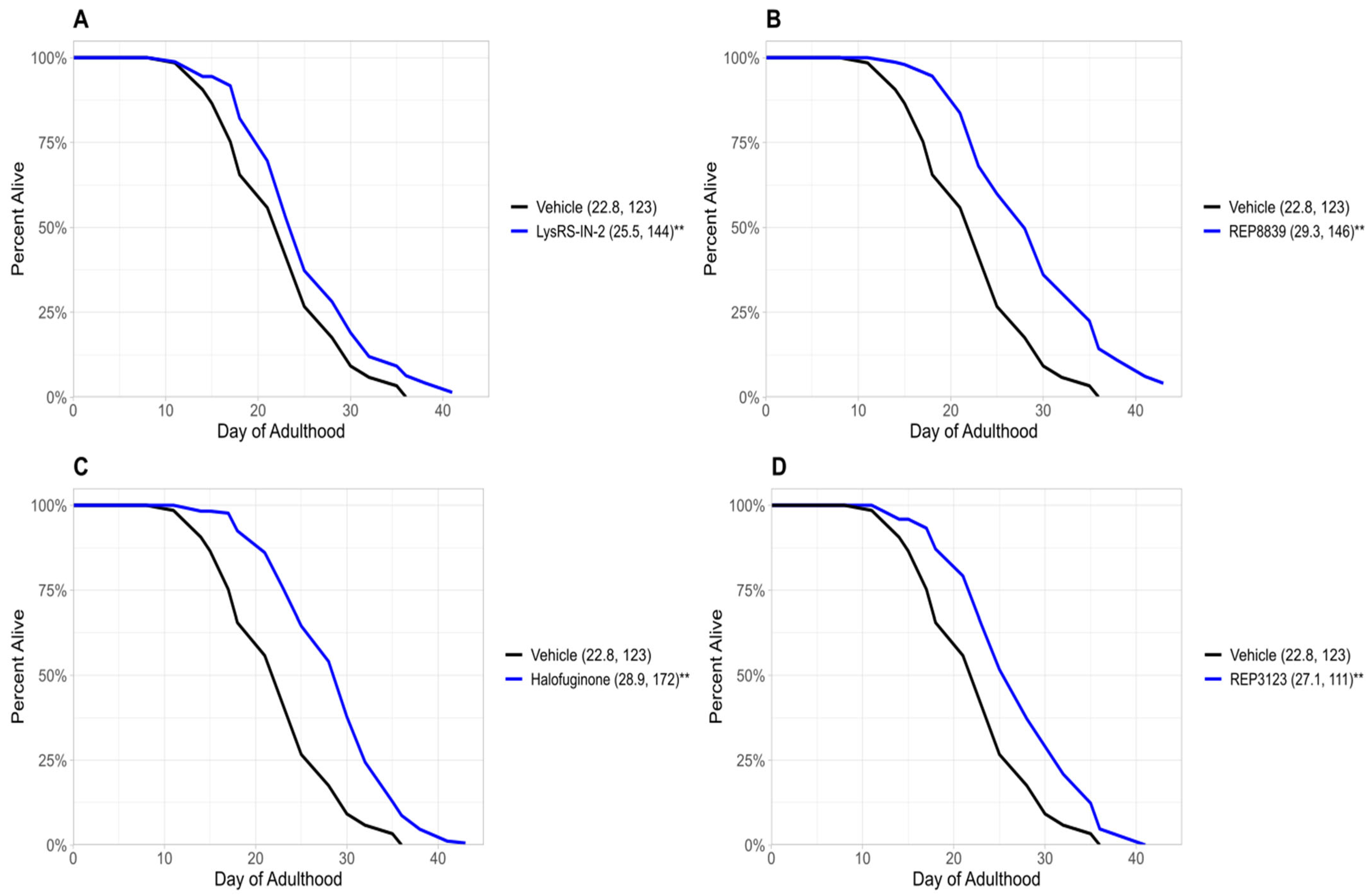
6]. In the present study, we identify four novel tRNA synthetase inhibitors that also extend lifespan in wild-type
C. elegans (
Figure 1). These novel lifespan-extending inhibitors include two methionyl tRNA synthetase inhibitors, REP8839 (
Figure 1B) and REP3123 (
Figure 1D), as well as the lysyl tRNA synthetase inhibitor LysRS-In-2 (
Figure 1A) and the prolyl tRNA synthetase inhibitor halofuginone (
Figure 1C). Given that we have previously shown that these compounds greatly upregulate ATF4 translation in mammalian cells [
16] and that previously identified tRNA synthetase inhibitors depend on
atf-4 for lifespan extension in
C. elegans [
6], we next used an
atf-4(ok576) deletion strain to ask whether the observed lifespan extensions depend on
atf-4. To assess this, we treated
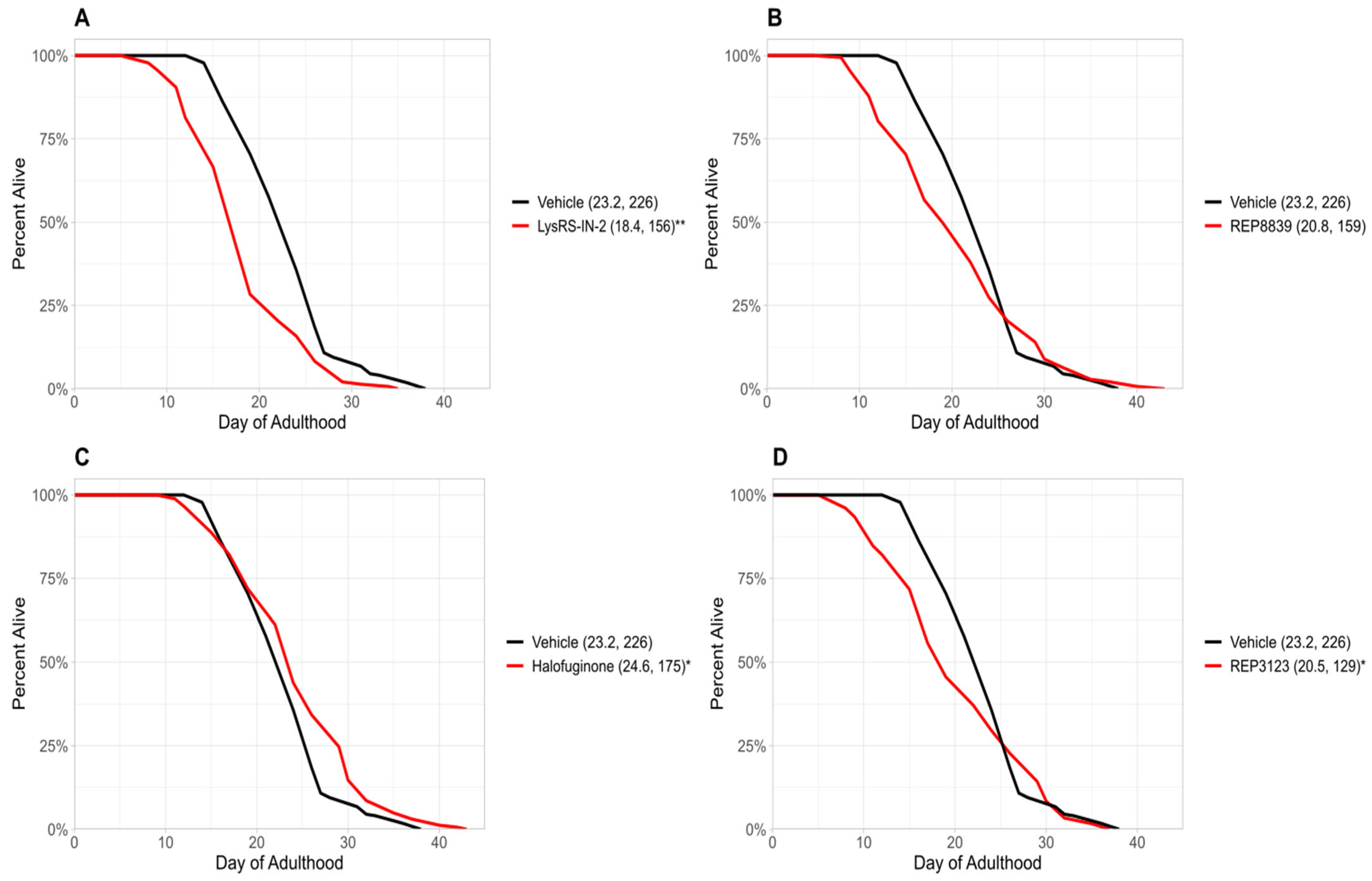
atf-4(ok576) C. elegans with the same tRNA synthetase inhibitors and found no significant increase in lifespan (
Figure 2). Under our assay conditions,
atf-4(ok576) exhibited a baseline lifespan comparable to the wild type, as indicated by the vehicle control curves (e.g., N2 mean ≈ 23.2 days vs.
atf-4 mean ≈ 22.8 days). This supports that loss of
atf-4 does not inherently reduce viability under baseline conditions. The results of
Figure 2 indicate that the lifespan extension induced by these tRNA synthetase inhibitions is
atf-4-dependent. For each of these tRNA synthetase inhibitors, the lifespan extension in wild-type animals was dose-dependent, and the largest effect size is shown in
Figure 1. The doses used for each compound correspond to the lowest concentrations that consistently extended lifespan without visible toxicity, as determined by pilot dose-range assays.
These findings extend our prior work by broadening the claim that the entire class of drugs, tRNA synthetase inhibitors, elicits a pro-longevity effect. Notably, although the four compounds target distinct aminoacyl-tRNA synthetases, they all converge on a common downstream genetic requirement for atf-4, highlighting a conserved transcription factor as a key mediator of lifespan extension. This finding is promising for the possibility of the use of these drugs in higher organisms with the goal of promoting longevity in humans.
Together, these data identify a new set of candidate small molecules that extend lifespan in an atf-4-dependent manner and provide further mechanistic support for tRNA synthetase inhibition as a viable, safe, and evolutionarily conserved longevity intervention.
3.2. tRNA Synthetase Inhibitors Extend Healthspan, Specifically Thrashing Activity, in C. elegans at the Same Doses That Extend Lifespan
Having shown that these four novel compounds can extend lifespan in
C. elegans, we next asked whether they could also influence healthspan. For comparison, we included two previously characterized tRNA synthetase inhibitors—borrelidin and mupirocin—that we have previously shown to extend lifespan in
C. elegans and yeast [
6]. These compounds had not yet been tested for effects on healthspan or autophagy and thus served both as positive controls for lifespan extension and as comparators to evaluate whether previously known tRNA synthetase inhibitors similarly enhance functional and cellular maintenance phenotypes. Healthspan refers to the healthy, active period of life, underscoring a growing interest in interventions that do not solely delay mortality without delaying morbidity but that increase the healthy, productive period of life as well [
17,
18,
19]. One way that healthspan can be measured in
C. elegans is by quantifying thrashing rates. When placed into liquid, these animals thrash back and forth at a steady rate, and this rate decreases consistently with age in wild-type animals [
20]. To evaluate whether tRNA synthetase inhibition improves healthspan, we used a thrashing assay to measure the frequency of body bends that
C. elegans voluntarily makes when suspended in liquid.
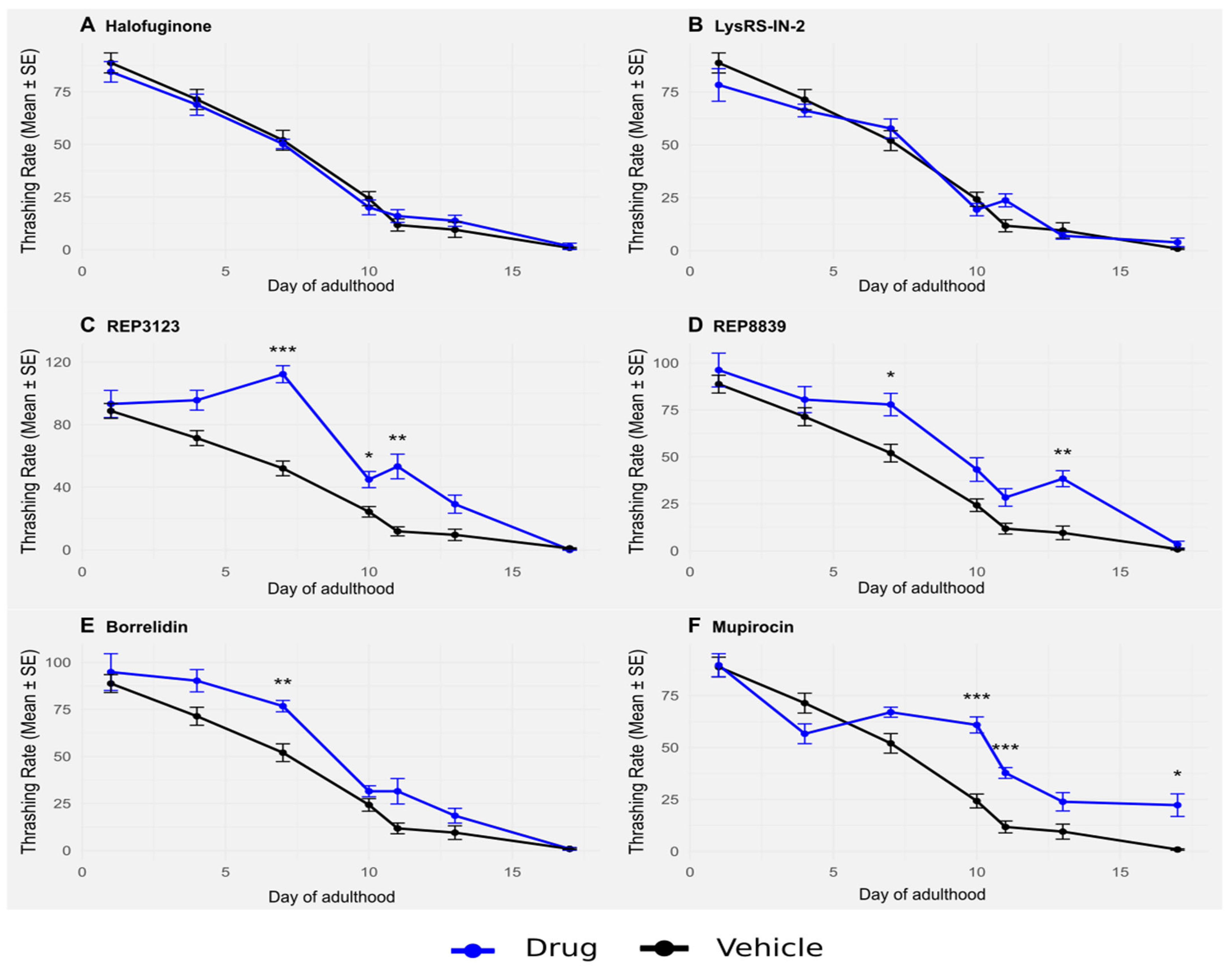
Wild-type
C. elegans were treated with tRNA synthetase inhibitors at the same concentrations used to extend lifespan (
Figure 1), and their thrashing rate was assessed throughout adulthood. Treatment with some of these compounds significantly enhanced thrashing, particularly later in life (
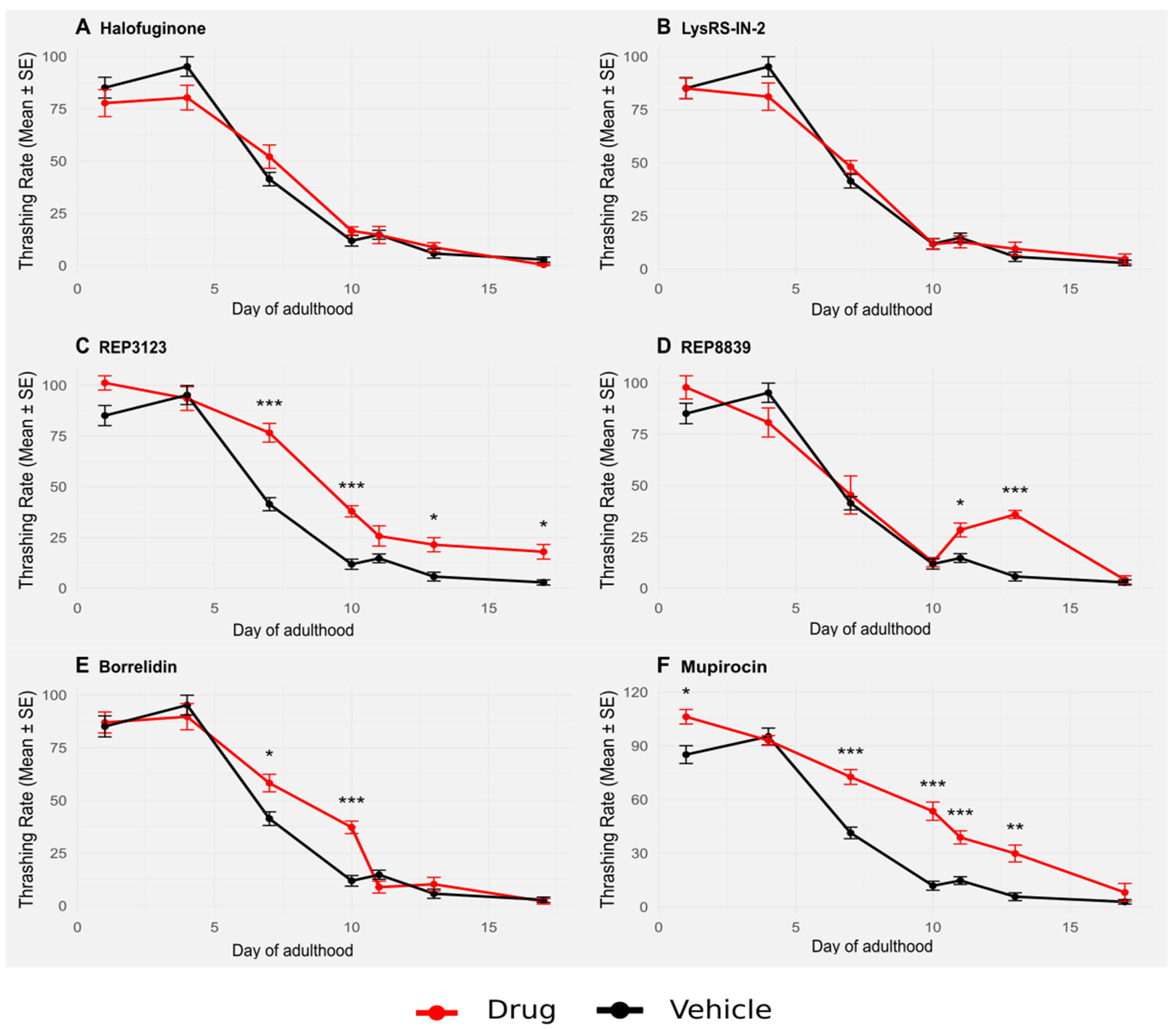
Figure 3). Similar to lifespan extension, this improvement in healthspan was partially dependent on
atf-4 (
Figure 4). In particular, animals treated with the compounds maintained higher thrashing rates at day 7 and beyond, a stage when untreated control animals typically show marked declines in movement and responsiveness. This preservation of neuromuscular function suggests that the benefits of tRNA synthetase inhibition are not limited to longevity alone but are accompanied by an overall delay in functional decline.
Importantly, these effects were consistent across multiple different tRNA synthetase inhibitors, indicating that healthspan extension may be a generalizable consequence of tRNA synthetase inhibition rather than an off-target effect of any individual compound. Moreover, the observation that atf-4(ok576) mutants showed less improved thrashing behavior in response to treatment reinforces the notion that this transcription factor plays a central role, although it is not solely responsible, in the protective response elicited by these compounds. Together, these results provide strong evidence that tRNA synthetase inhibitors not only extend lifespan but also maintain functional capacity during aging, an important goal of lifespan-extending therapies.
3.3. tRNA Synthetase Inhibitors Upregulate Autophagy at the Same Doses That Extend Lifespan
The effect of tRNA synthetases on lifespan that we have observed is dependent on
atf-4 (
Figure 2). ATF-4 is itself a transcription factor that is translationally upregulated during the accumulation of uncharged tRNA [
8,
10,
21]. Previous work has shown that upregulation of autophagy has been linked to increased lifespan [
22], and we have previously shown that tRNA synthetase inhibitor treatment causes ATF-4-dependent changes in transcripts relating to autophagy in both mouse embryonic fibroblasts [
16] and
S. cerevisiae [
23]. We have also shown that these tRNA synthetase inhibitors cause partially ATF-4-dependent increases in autophagic activity in mouse cells in vitro [
16]. As a result, we wanted to ask whether autophagy was changed in
C. elegans by lifespan-extending doses of tRNA synthetase inhibitors.
To further investigate this, we examined autophagy in
C. elegans using a dual-color fluorescent reporter strain, MAH215, which expresses tandem-tagged GFP and mCherry fused to LGG-1, the
C. elegans homolog of human LC3 [
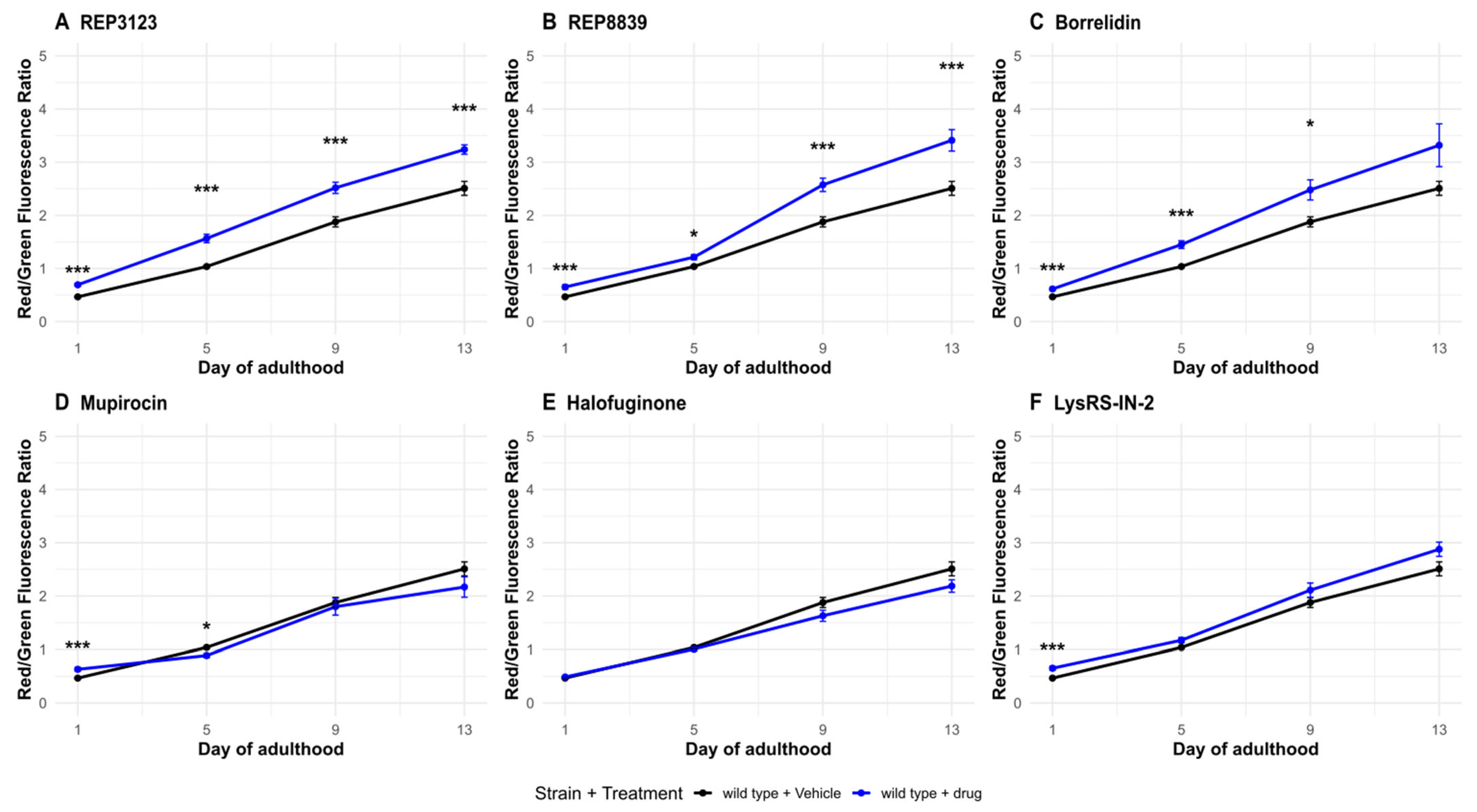
24]. We found that treatment with tRNA synthetase inhibitors leads to a substantial increase in autophagic activity in
C. elegans at the same concentrations that extend lifespan (
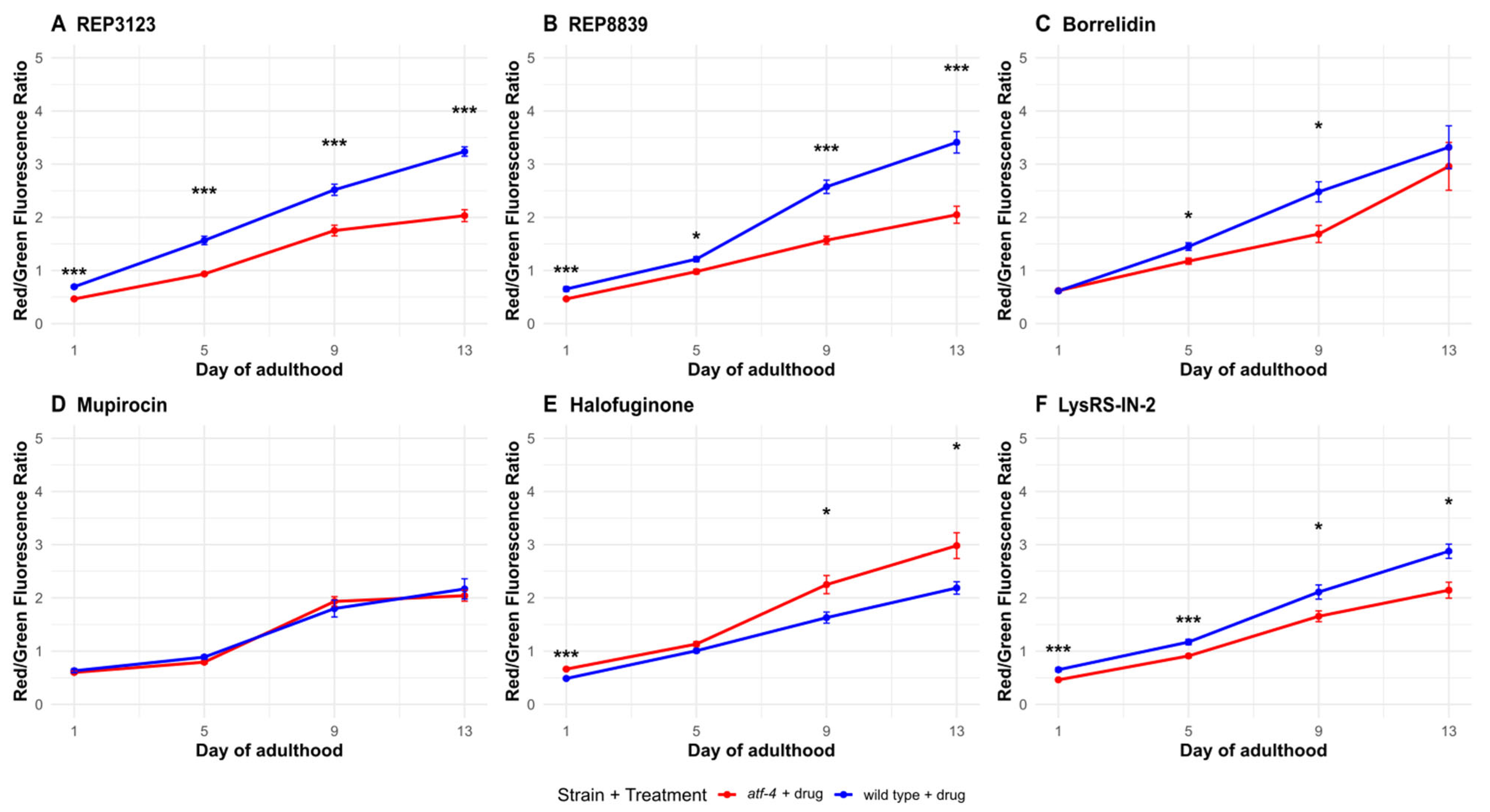
Figure 5). This increase in autophagy was dependent in part on the presence of
atf-4 (
Figure 6), suggesting a potential link between ATF-4 upregulation, autophagy, and lifespan extension.
Consistent with these findings, quantitative analysis of tagged LGG-1 puncta revealed a marked elevation in autophagolysosome formation in tRNA synthetase inhibitor-treated animals, particularly during mid-to-late adulthood when autophagic flux typically declines. The use of the dual GFP::mCherry tag allowed us to distinguish between autophagosomes and autolysosomes, and our data indicate enhanced autophagic flux rather than simple accumulation of autophagic intermediates. Importantly, for some of these compounds, no increase in autophagic activity was observed in atf-4(ok576) mutants treated with the same doses, supporting a model in which ATF-4 acts upstream of autophagy induction under these conditions. Notably, not all tRNA synthetase inhibitors produced a significant increase in autophagic flux. This variability likely reflects compound-specific mechanisms, as each inhibitor targets a distinct aminoacyl-tRNA synthetase with unique cellular roles and stress response profiles. Such differences in target enzyme abundance, localization, or affinity could lead to varying levels of uncharged tRNA accumulation and downstream activation of the ATF-4 pathway. These findings suggest that the induction of autophagy by tRNA synthetase inhibitors is not universal but instead depends on the degree and nature of translational stress imposed by each compound.
Taken together, these results suggest that autophagy acts as one of several effector pathways downstream of ATF-4 in response to tRNA synthetase inhibition. However, not all compounds required ATF-4 for their beneficial effects, indicating that additional or parallel signaling pathways likely contribute to the observed improvements in lifespan and motility. The induction of autophagy likely contributes to improved proteostasis and cellular maintenance during aging, thereby promoting both the increased lifespan and healthspan seen following treatments with these same concentrations of tRS inhibitors. Thus, tRNA synthetase inhibitors appear to elicit a conserved, adaptive response involving ATF-4 and autophagy that supports healthy aging.
4. Discussion
Our findings identify four novel tRNA synthetase inhibitors that can robustly extend lifespan in
C. elegans. These inhibitors target different tRNA synthetases, consistent with our model in which the accumulation of many distinct uncharged tRNAs should lead to translational upregulation of ATF-4 and increased transcription of its targets. Combined with our work showing similar effects of these compounds on ATF4 in mammalian cells [
16], and the work of others showing upregulation of ATF4 in long-lived mice [
25,
26], these results support the idea that tRNA synthetase inhibition may engage conserved stress response pathways relevant to aging. Notably, several of these compounds also improved healthspan in
C. elegans, as assessed by age-dependent declines in thrashing behavior at the same doses that extended lifespan, raising the possibility that tRNA synthetase inhibition could delay functional decline during aging.
Two of the compounds identified in this study—REP3123 and REP8839—target methionyl tRNA synthetase, while LysRS-In-2 and halofuginone inhibit lysyl and prolyl-tRNA synthetases, respectively. All four significantly increase lifespan in wild-type
C. elegans (
Figure 1). This effect was completely abolished in
atf-4(ok576) mutants (
Figure 2), confirming that ATF-4 activation is necessary for the observed longevity benefits for the tested compounds. These data support a possible model in which tRNA synthetase inhibition engages an adaptive transcription factor response, ultimately leading to increased organism survival [
8,
21].
Halofuginone increased lifespan in the wild type, yet showed no wild-type autophagic flux increase and, in fact, showed a relative flux elevation in
atf-4(ok576) animals at several timepoints. Given halofuginone’s known tolerability limits and reported off-target effects [
27,
28], it is possible that this compound may trigger compensatory, ATF-4-independent stress responses at the tested maximally lifespan-extending dose.
Interestingly, some tRNA synthetase inhibitors appeared to reduce lifespan in atf-4(ok576) mutants, possibly suggesting increased sensitivity to translational stress in atf-4(ok576). Loss of atf-4 compromises the ability to upregulate stress-responsive and proteostasis-related genes, which may render animals less tolerant to inhibitors that partially suppress protein synthesis. Because the concentrations used were optimized for maximal lifespan extension in the wild type, these same doses may approach the toxicity threshold in the potentially more sensitive atf-4 background. Thus, the apparent toxicity in atf-4 mutants could reflect a combination of dose-dependent effects and reduced stress resilience rather than a fundamentally distinct mechanism of action.
The degree of atf-4 dependence varied across the inhibitors tested in our autophagy and thrashing data. This variability could arise from several factors. Although all compounds ultimately limit aminoacyl-tRNA synthetase activity, they act on distinct enzymes that may differ in expression level, substrate specificity, or cellular localization. As a result, each inhibitor could produce a unique pattern of uncharged tRNA accumulation and thus distinct activation kinetics of the AAR pathway. Additionally, some inhibitors—such as halofuginone, which is near its tolerability limit—may engage other stress response pathways, including the unfolded protein response or oxidative stress signaling, and do so in an atf-4-independent manner. Differences in compound stability, uptake, or metabolism may also contribute to apparent differences in atf-4 dependence. Together, these factors could explain the varying atf-4 interactions with healthspan and autophagy phenotypes observed across this drug panel.
Although our results demonstrate that loss of atf-4 suppresses lifespan and partially suppresses autophagy responses to tRNA synthetase inhibition, we did not directly measure ATF-4 activation in this study. Future work employing ATF-4 reporter strains or transcriptional analysis of known ATF-4 target genes will be essential to confirm pathway activation and to define the broader transcriptional program engaged by these compounds.
Previous work in MEFs showed that tRNA synthetase inhibition leads to increased ATF4 and also to ATF4-dependent increased autophagy [
16]. Here, using the autophagy reporter strain MAH215, we demonstrate that autophagy is markedly increased in
C. elegans following treatment with lifespan-extending doses of some of the same tRNA synthetase inhibitors (
Figure 5). Importantly, this autophagic response is in some cases partially ATF-4-dependent (
Figure 6), suggesting a possible mechanistic link between ATF-4 activation, autophagy, and longevity. These findings provide in vivo support for a model in which ATF-4-driven enhancement of autophagy could be an effector of the longevity response to translational stress.
That said, the observation that only a subset of compounds robustly increased autophagic flux indicates that this pathway is not uniformly activated by all tRNA synthetase inhibitors at the lifespan-extending doses tested here. The extent of autophagy induction may depend on differences in enzyme target class, compound potency, or the specific stress response pathways engaged. Some inhibitors may primarily activate alternative adaptive mechanisms, such as unfolded protein or oxidative stress responses, rather than canonical ATF-4-driven autophagy.
While our data indicate that tRNA synthetase inhibitors enhance autophagic flux and that this response is partially
atf-4-dependent, we cannot conclude any cause–effect relationship between increased autophagic flux and increased lifespan in these contexts based on these data alone. Directly testing this hypothesis by blocking autophagy is challenging in part because autophagy-deficient mutants, such as
bec-1,
atg-7, or
lgg-1, exhibit shortened lifespans, developmental arrest, and compromised health even under control conditions [
22,
29], although chemical inhibitors such as bafilomycin could be utilized in future studies. Nevertheless, the parallel increases in autophagic flux and lifespan, and the loss of flux induction in the
atf-4(ok576) background, are consistent with the possibility that autophagy might contribute functionally to the adaptive response elicited by tRNA synthetase inhibition.
Beyond lifespan, we also assessed healthspan through age-related declines in motility using the thrashing assay. Treatment with some tRNA synthetase inhibitors resulted in a sustained increase in thrashing behavior throughout aging, suggesting improved overall vitality in later life (
Figure 3). Strikingly, as with lifespan and autophagy, these improvements seemed to be partially dependent on the presence of
atf-4 (
Figure 4) in some of the drug treatments, further reinforcing its role as a central mediator of both longevity and functional health [
30]. It should be noted that our healthspan analysis was based solely on thrashing behavior, which primarily reflects neuromuscular function. While this is a commonly used metric in
C. elegans aging studies, other measures of healthspan, such as reproductive capacity, pharyngeal pumping, or stress resistance, may not always correlate directly with motility. Future work employing multiple independent healthspan metrics will be important to determine the extent to which the benefits of tRNA synthetase inhibition extend across physiological systems.
One limitation of this study is that thrashing and autophagic flux measurements were obtained from single synchronized cohorts per experiment, with multiple individual animals assessed within each strain × condition × day, rather than from independent biological replicates performed across separate experimental days. As a result, these datasets capture within-cohort variability but do not fully account for between-cohort variation. Replication across independent synchronized populations will be important in future work to confirm the robustness and generalizability of these healthspan and autophagy phenotypes.
Together, these results establish a clear and compelling link between tRNA synthetase inhibition, ATF-4 activation, and healthy aging. By extending these findings across multiple inhibitors and phenotypic readouts, we propose that tRNA synthetase inhibition acts as a broadly effective strategy to trigger conserved stress response pathways that enhance longevity and quality of life. Future work will be needed to explore the translational relevance of these findings in mammalian systems.
In particular, identifying specific ATF-4 target genes required for the observed longevity benefits may provide insights into the mechanisms by which this transcription factor influences aging. Additionally, the conservation of these effects across species raises the possibility of developing targeted therapeutics that mimic the effects of tRNA synthetase inhibition. Small molecules that selectively modulate the ATF-4 pathway or its downstream effectors could therefore represent a novel class of interventions aimed at promoting healthy aging. Finally, longitudinal studies in mammalian models will be crucial to determine whether similar improvements in healthspan and lifespan can be achieved in complex organisms and to evaluate the safety and efficacy of long-term modulation of this pathway.




 ,
,