
Type II Cells in the Human Carotid Body Display P2X7 Receptor and Pannexin-1 Immunoreactivity

 , , , ,
  , , and
Abstract
1. Introduction
2. Materials and Methods
2.1. Human Tissue Samples
2.2. Fluorescence and Double Immunofluorescence
2.3. Quantitative Analysis
3. Results
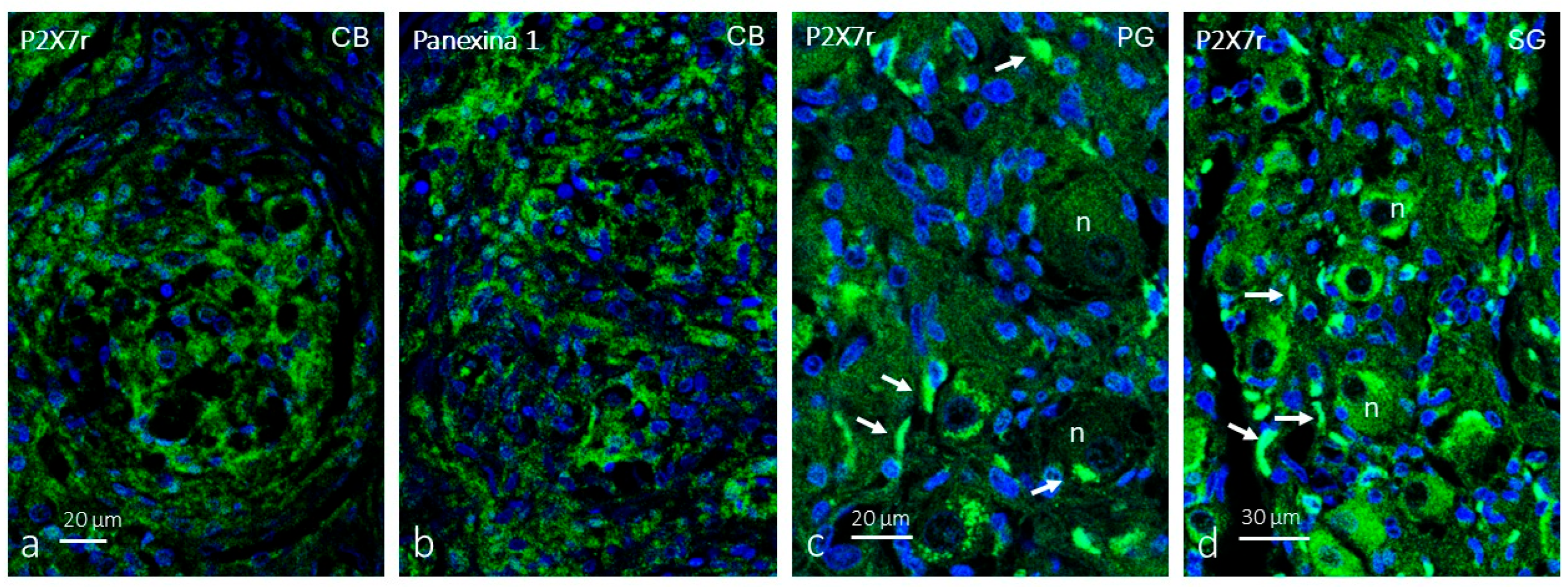
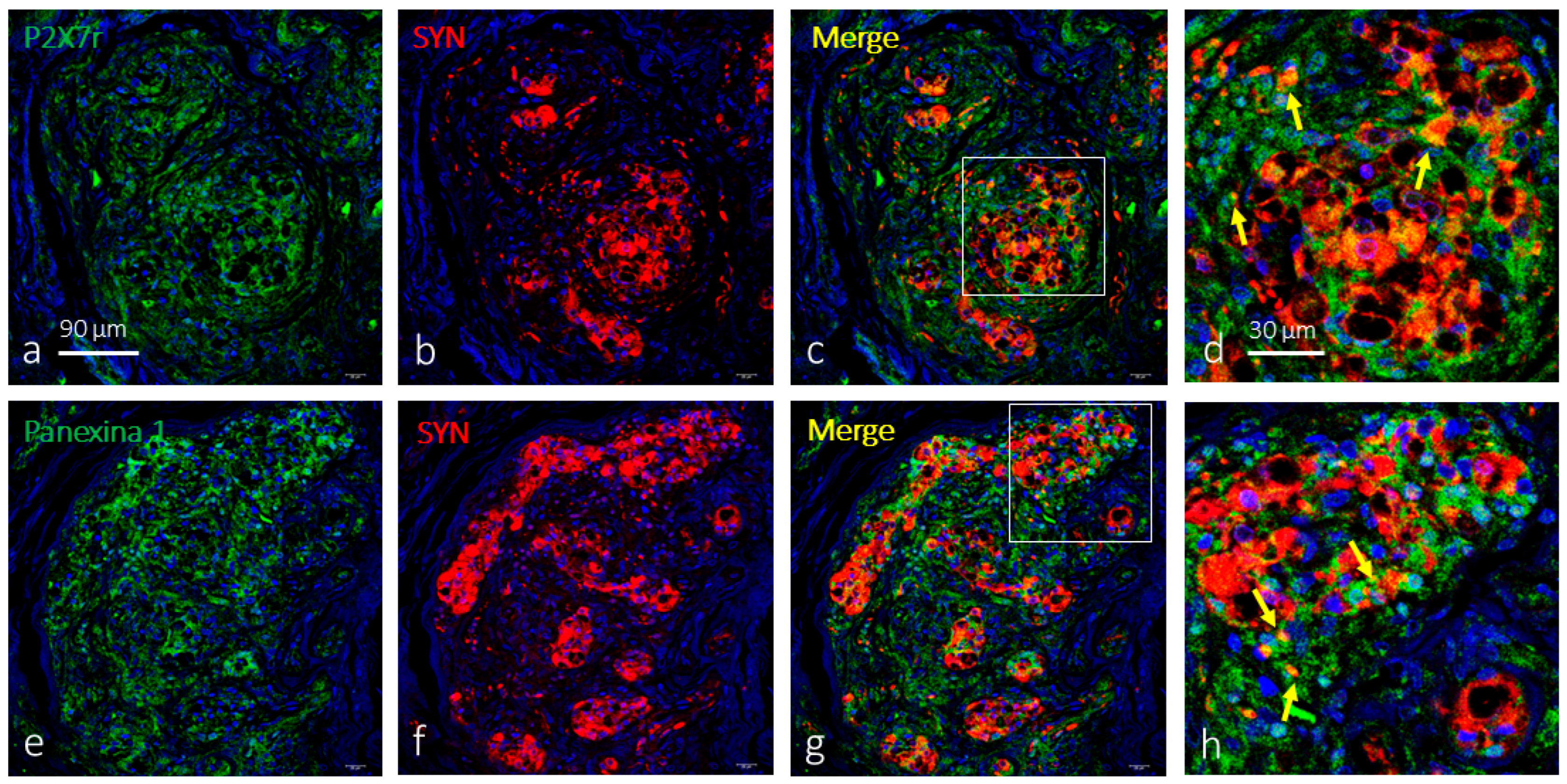
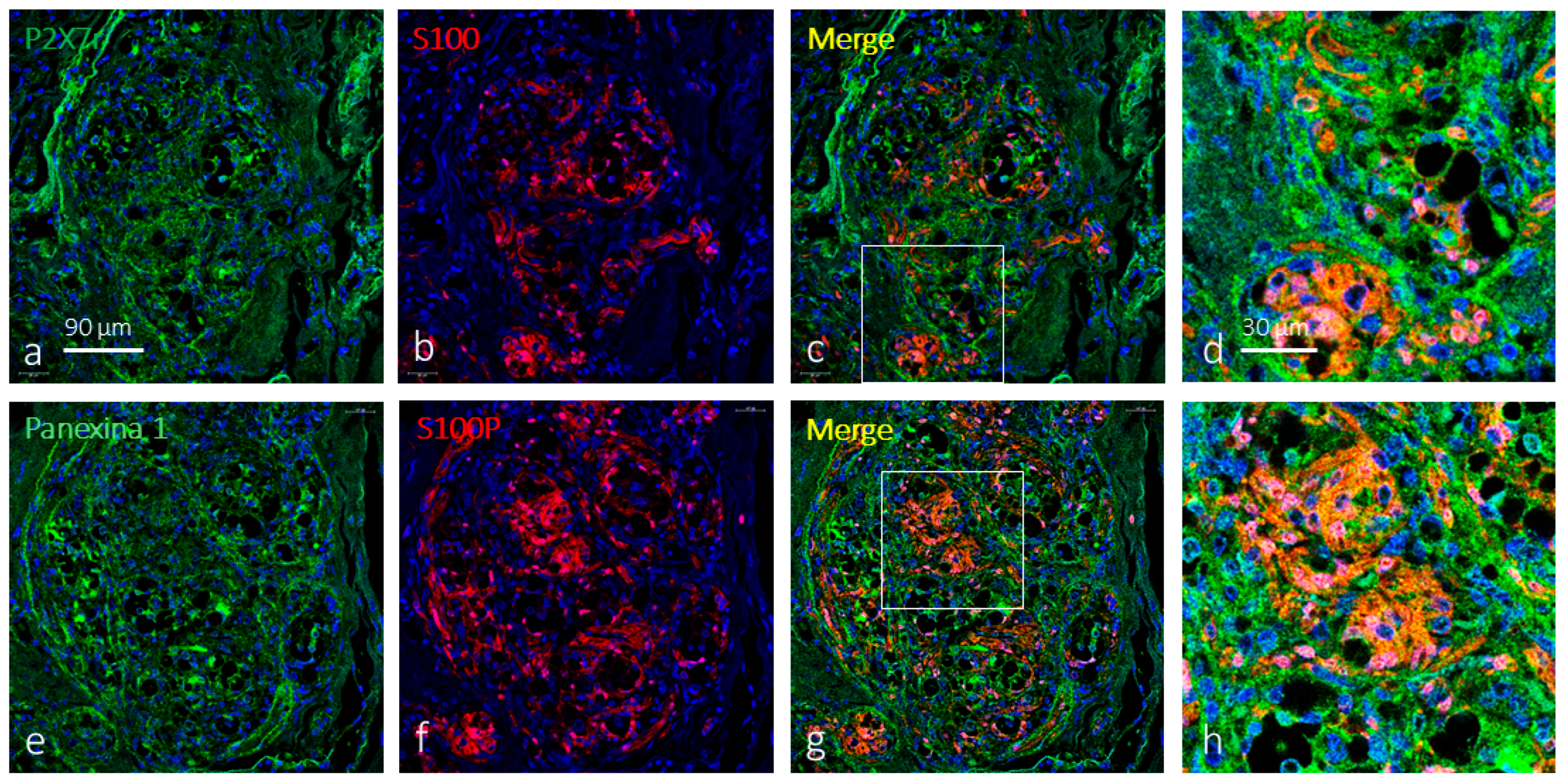
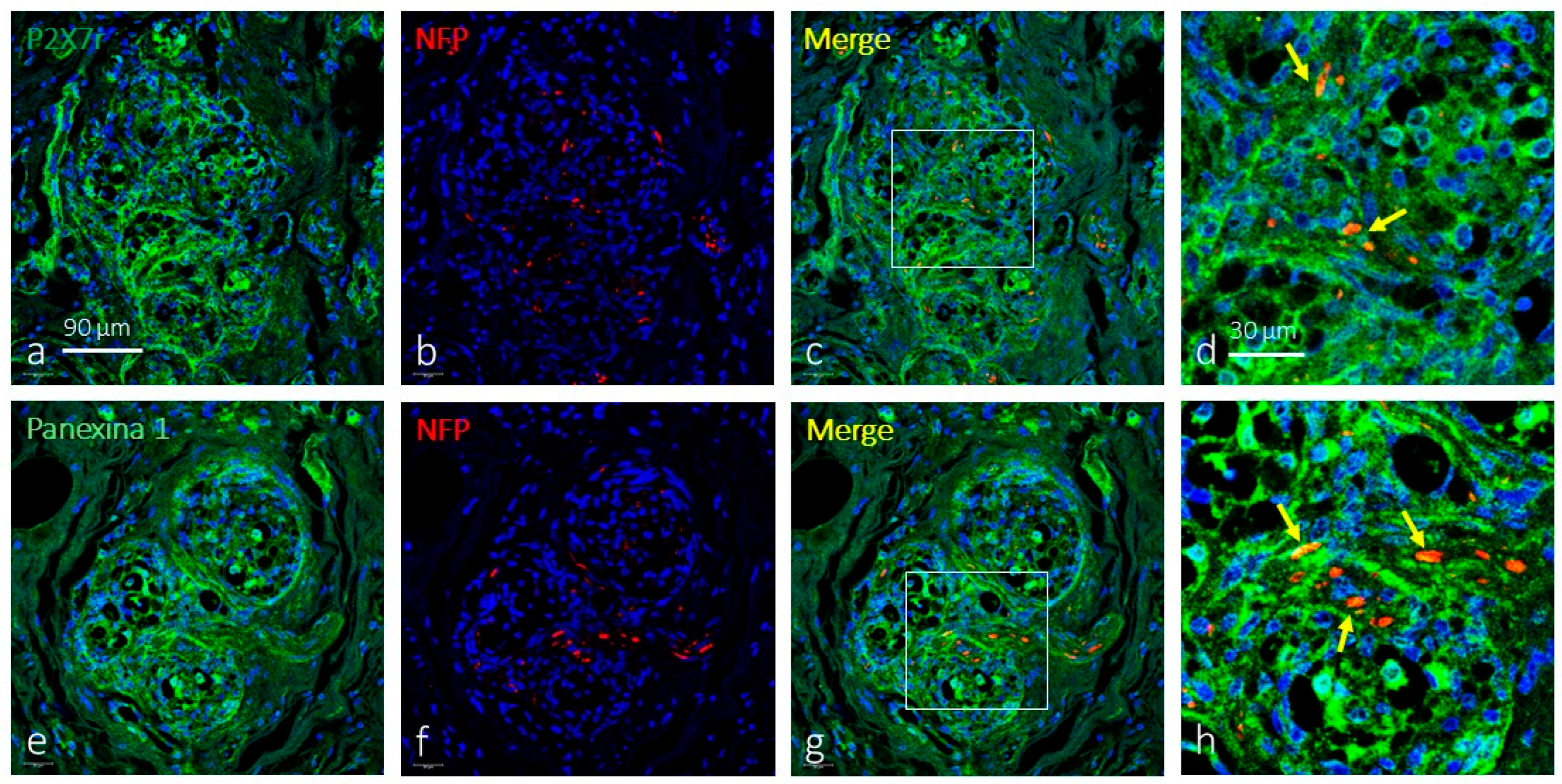
3.1. Immunolocalization of P2X7r and Pannexin 1 in the Human Carotid Body
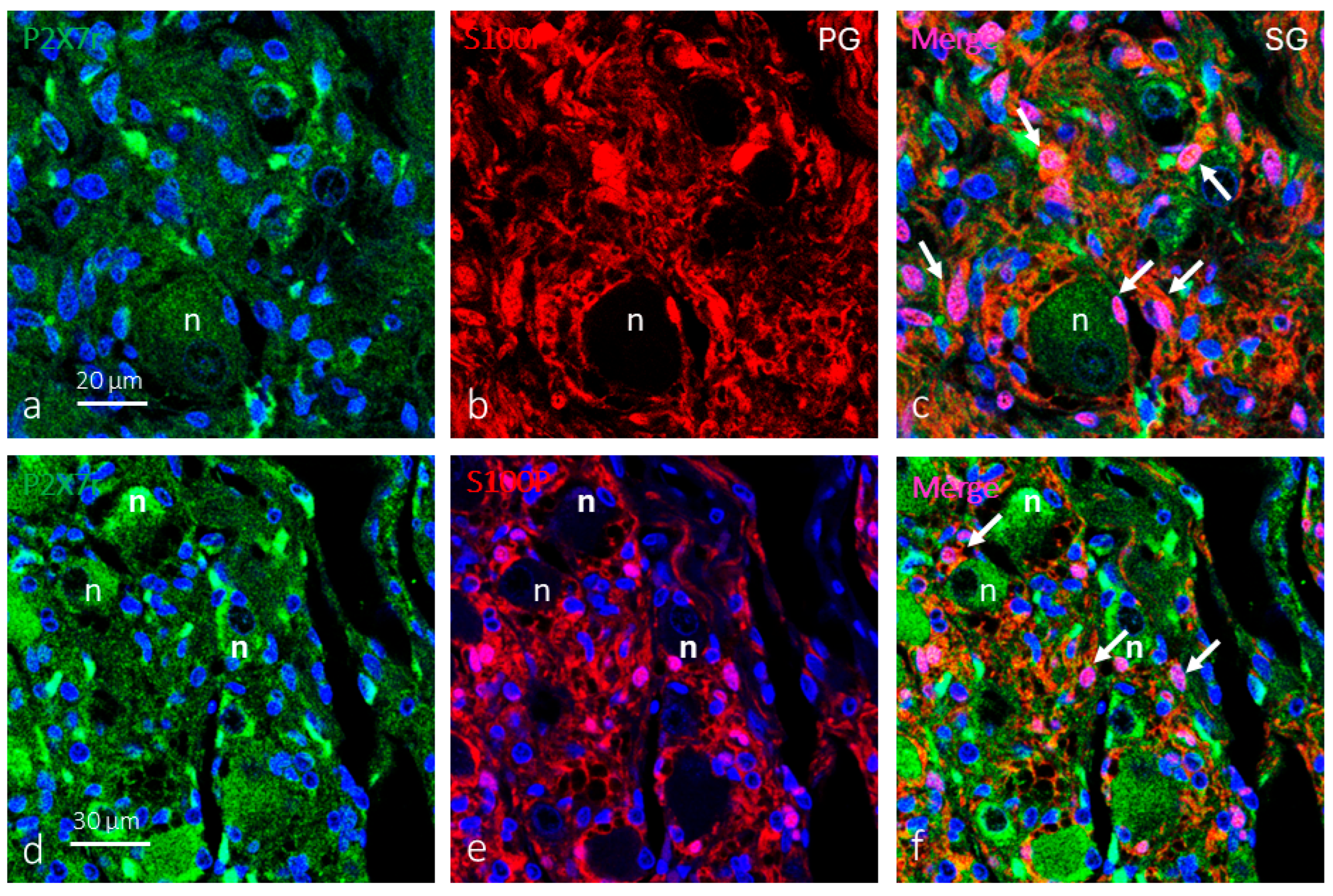
3.2. Immunolocalization of P2X7r and Pannexi-1 in Petrosal and Cervical Sympathetic Ganglia
4. Discussion
5. Conclusions
Supplementary Materials
Author Contributions
Funding
Institutional Review Board Statement
Informed Consent Statement
Data Availability Statement
Acknowledgments
Conflicts of Interest
References
- Kumar, P.; Prabhakar, N.R. Peripheral chemoreceptors: Function and plasticity of the carotid body. Compr. Physiol. 2012, 2, 141–219. [Google Scholar] [CrossRef]
- Iturriaga, R.; Alcayaga, J.; Chapleau, M.W.; Somers, V.K. Carotid body chemoreceptors: Physiology, pathology, and implications for health and disease. Physiol. Rev. 2021, 101, 1177–1235. [Google Scholar] [CrossRef] [PubMed]
- Gonzalez, C.; Almaraz, L.; Obeso, A.; Rigual, R. Carotid body chemoreceptors: From natural stimuli to sensory discharges. Physiol. Rev. 1994, 74, 829–898. [Google Scholar] [CrossRef] [PubMed]
- McDonald, D.M.; Mitchell, R.A. The innervation of glomus cells, ganglion cells and blood vessels in the rat carotid body: A quantitative ultrastructural analysis. J. Neurocytol. 1975, 4, 177–230. [Google Scholar] [CrossRef]
- Schulz, S.-A.; Wöhler, A.; Beutner, D.; Angelov, D.N. Microsurgical anatomy of the human carotid body (glomus caroticum): Features of its detailed topography, syntopy and morphology. Ann. Anat. 2016, 204, 106–113. [Google Scholar] [CrossRef] [PubMed]
- McDonald, D.M. Peripheral chemoreceptors: Structure–function relationships of the carotid body. In Regulation of Breathing (Lung Biology in Health and Disease); Hornbein, T.F., Ed.; Marcel Dekker: New York, NY, USA, 1981; Volume 17, pp. 105–320. [Google Scholar]
- Kondo, H. Are there gap junctions between chief (glomus, type I) cells in the carotid body chemoreceptor? A review. Microsc. Res. Tech. 2002, 59, 227–233. [Google Scholar] [CrossRef]
- Eyzaguirre, C. Electrical synapses in the carotid body nerve complex. Respir. Physiol. Neurobiol. 2007, 157, 116–122. [Google Scholar] [CrossRef]
- Argent, L.P.; Bose, A.; Paton, J.F.R. Intracarotid body intercellular communication. J. R. Soc. N. Z. 2022, 53, 332–361. [Google Scholar] [CrossRef]
- Nurse, C.A. Synaptic and paracrine mechanisms at carotid body arterial chemoreceptors. J. Physiol. 2014, 592, 3419–3426. [Google Scholar] [CrossRef]
- Nurse, C.A.; Piskuric, N.A. Signal processing at mammalian carotid body chemoreceptors. Semin. Cell Dev. Biol. 2013, 24, 22–30. [Google Scholar] [CrossRef]
- Iturriaga, R.; Alcayaga, J. Neurotransmission in the carotid body: Transmitters and modulators between glomus cells and petrosal ganglion nerve terminals. Brain Res. Rev. 2004, 47, 46–53. [Google Scholar] [CrossRef] [PubMed]
- Nurse, C.A. Neurotransmission and neuromodulation in the chemosensory carotid body. Auton. Neurosci. 2005, 120, 1–9. [Google Scholar] [CrossRef]
- Nurse, C.A. Neurotransmitter and neuromodulatory mechanisms at peripheral arterial chemoreceptors. Exp. Physiol. 2010, 95, 657–667. [Google Scholar] [CrossRef] [PubMed]
- Piskuric, N.A.; Nurse, C.A. Expanding role of ATP as a versatile messenger at carotid and aortic body chemoreceptors. J. Physiol. 2013, 591, 415–422. [Google Scholar] [CrossRef]
- Xu, J.; Xu, F.; Tse, F.W.; Tse, A. ATP inhibits the hypoxia response in type I cells of rat carotid bodies. J. Neurochem. 2005, 92, 1419–1430. [Google Scholar] [CrossRef]
- Carroll, J.L.; Boyle, K.M.; Wasicko, M.J.; Sterni, L.M. Dopamine D2 receptor modulation of carotid body type I cell intracellular calcium in developing rats. Am. J. Physiol. Lung Cell. Mol. Physiol. 2005, 288, L910–L916. [Google Scholar] [CrossRef]
- Zhang, M.; Zhong, H.; Vollmer, C.; Nurse, C.A. Corelease of ATP and ACh mediates hypoxic signalling at rat carotid body chemoreceptors. J. Physiol. 2000, 525, 143–158. [Google Scholar] [CrossRef]
- Pijacka, W.; Moraes, D.J.; Ratcliffe, L.E.; Nightingale, A.K.; Hart, E.C.; da Silva, M.P.; Machado, B.H.; McBryde, F.D.; Abdala, A.P.; Ford, A.P.; et al. Purinergic receptors in the carotid body as a new drug target for controlling hypertension. Nat. Med. 2016, 22, 1151–1159. [Google Scholar] [CrossRef]
- Yokoyama, T.; Saino, T.; Nakamuta, N.; Kusakabe, T.; Yamamoto, Y. Three-dimensional architectures of P2X2/P2X3-immunoreactive afferent nerve terminals in the rat carotid body as revealed by confocal laser scanning microscopy. Histochem. Cell Biol. 2016, 146, 479–488. [Google Scholar] [CrossRef] [PubMed]
- Buttigieg, J.; Nurse, C.A. Detection of hypoxiaevoked ATP release from chemoreceptor cells of the rat carotid body. Biochem. Biophys. Res. Commun. 2004, 322, 82–87. [Google Scholar] [CrossRef]
- Chen, C.C.; Akopian, A.N.; Sivilotti, L.; Colquhoun, D.; Burnstock, G.; Wood, J.N. A P2X purinoceptor expressed by a subset of sensory neurons. Nature 1995, 377, 428–431. [Google Scholar] [CrossRef] [PubMed]
- Prasad, M.; Fearon, I.M.; Zhang, M.; Laing, M.; Vollmer, C.; Nurse, C.A. Expression of P2X2 and P2X3 receptor subunits in rat carotid body afferent neurons: Role in chemosensory signalling. J. Physiol. 2001, 537, 667–677. [Google Scholar] [CrossRef]
- Lowe, M.; Park, S.J.; Nurse, C.A.; Campanucci, V.A. Purinergic stimulation of carotid body efferent glossopharyngeal neurons increases intracellular Ca2+ and nitric oxide production. Exp. Physiol. 2013, 98, 1199–1212. [Google Scholar] [CrossRef] [PubMed]
- Xu, J.; Tse, F.W.; Tse, A. ATP triggers intracellular Ca2+ release in type II cells of the rat carotid body. J. Physiol. 2003, 549, 739–747. [Google Scholar] [CrossRef]
- Tse, A.; Yan, L.; Lee, A.K.; Tse, F.W. Autocrine and paracrine actions of ATP in rat carotid body. Can. J. Physiol. Pharmacol. 2012, 90, 705–711. [Google Scholar] [CrossRef]
- Piskuric, N.A.; Nurse, C.A. Effects of chemostimuli on [Ca2+]i responses of rat aortic body type I cells and endogenous local neurons: Comparison with carotid body cells. J. Physiol. 2012, 590, 2121–2135. [Google Scholar] [CrossRef]
- Zhang, M.; Piskuric, N.A.; Vollmer, C.; Nurse, C.A. P2Y2 receptor activation opens pannexin1 channels in rat carotid body type II cells: Potential role in amplifying the neurotransmitter ATP. J. Physiol. 2012, 590, 4335–4350. [Google Scholar] [CrossRef]
- Murali, S.; Zhang, M.; Nurse, C.A. Evidence that 5HT stimulates intracellular Ca2+ signalling and activates pannexin1 currents in type II cells of the rat carotid body. J. Physiol. 2017, 595, 4261–4277. [Google Scholar] [CrossRef]
- Taruno, A. ATP release channels. Int. J. Mol. Sci. 2018, 19, 808. [Google Scholar] [CrossRef]
- Nurse, C.A.; Leonard, E.M.; Salman, S. Role of gliallike type II cells as paracrine modulators of carotid body chemoreception. Physiol. Genomics 2018, 50, 255–262. [Google Scholar] [CrossRef] [PubMed]
- Murali, S.; Nurse, C.A. Purinergic signalling mediates bidirectional crosstalk between chemoreceptor type I and gliallike type II cells of the rat carotid body. J. Physiol. 2016, 594, 391–406. [Google Scholar] [CrossRef]
- Leonard, E.M.; Nurse, C.A. The Carotid Body “Tripartite Synapse”: Role of gliotransmission. Adv. Exp. Med. Biol. 2023, 1427, 185–194. [Google Scholar] [CrossRef]
- Campanucci, V.A.; Zhang, M.; Vollmer, C.; Nurse, C.A. Expression of multiple P2X receptors by glossopharyngeal neurons projecting to rat carotid body O2-chemoreceptors: Role in nitric oxide-mediated efferent inhibition. J. Neurosci. 2006, 26, 9482–9493. [Google Scholar] [CrossRef]
- Serrano, A.; Mo, G.; Grant, R.; Pare, M.; O’Donnell, D.; Yu, X.H.; Tomaszewski, M.J.; Perkins, M.N.; Seguela, P.; Cao, C.Q. Differential expression and pharmacology of native P2X receptors in rat and primate sensory neurons. J. Neurosci. 2012, 32, 11890–11896. [Google Scholar] [CrossRef]
- Chen, Y.; Zhang, X.; Wang, C.; Li, G.; Gu, Y.; Huang, L.Y. Activation of P2X7 receptors in glial satellite cells reduces pain through downregulation of P2X3 receptors in nociceptive neurons. Proc. Natl. Acad. Sci. USA 2008, 105, 16773–16778. [Google Scholar] [CrossRef]
- Chen, Z.; Huang, Q.; Song, X.; Ford, N.C.; Zhang, C.; Xu, Q.; Lay, M.; He, S.Q.; Dong, X.; Hanani, M.; et al. Purinergic signaling between neurons and satellite glial cells of mouse dorsal root ganglia modulates neuronal excitability in vivo. Pain 2022, 163, 1636–1647. [Google Scholar] [CrossRef] [PubMed]
- Dahl, G. The Pannexin1 membrane channel: Distinct conformations and functions. FEBS Lett. 2018, 592, 3201–3209. [Google Scholar] [CrossRef] [PubMed]
- Di Virgilio, F. Liaisons dangereuses: P2X(7) and the inflammasome. Trends Pharmacol. Sci. 2007, 28, 465–472. [Google Scholar] [CrossRef] [PubMed]
- Crocetti, L.; Guerrini, G.; Giovannoni, M.P.; Melani, F.; Lamanna, S.; Di Cesare Mannelli, L.; Lucarini, E.; Ghelardini, C.; Wang, J.; Dahl, G. New Panx1 blockers: Synthesis, biological evaluation and molecular dynamic studies. Int. J. Mol. Sci. 2022, 23, 4827. [Google Scholar] [CrossRef]
- Kameda, Y. Immunoelectron microscopic localization of vimentin in sustentacular cells of the carotid body and the adrenal medulla of guinea pigs. J. Histochem. Cytochem. 1996, 44, 1439–1449. [Google Scholar] [CrossRef]
- IzalAzcárate, A.; Belzunegui, S.; San Sebastián, W.; GarridoGil, P.; VázquezClaverie, M.; López, B.; Marcilla, I.; Luquin, M.A. Immunohistochemical characterization of the rat carotid body. Respir. Physiol. Neurobiol. 2008, 161, 95–99. [Google Scholar] [CrossRef] [PubMed]
- MartínezBarbero, G.; GarcíaMesa, Y.; Cobo, R.; Cuendias, P.; MartínBiedma, B.; GarcíaSuárez, O.; Feito, J.; Cobo, T.; Vega, J.A. Acidsensing ion channels’ immunoreactivity in nerve profiles and glomus cells of the human carotid body. Int. J. Mol. Sci. 2023, 24, 17161. [Google Scholar] [CrossRef]
- Zapata, P. Is ATP a suitable co-transmitter in carotid body arterial chemoreceptors? Respir. Physiol. Neurobiol. 2007, 157, 106–115. [Google Scholar] [CrossRef]
- Burnstock, G.; Knight, G.E. Cellular distribution and functions of P2 receptor subtypes in different systems. Int. Rev. Cytol. 2004, 240, 31–304. [Google Scholar] [CrossRef]
- Ortega-Sáenz, P.; López-Barneo, J. Physiology of the carotid body: From molecules to disease. Annu. Rev. Physiol. 2020, 82, 127–149. [Google Scholar] [CrossRef]
- Leonard, E.M.; Salman, S.; Nurse, C.A. Sensory processing and integration at the carotid body tripartite synapse: Neurotransmitter functions and effects of chronic hypoxia. Front. Physiol. 2018, 9, 225. [Google Scholar] [CrossRef] [PubMed]
- Pegoraro, A.; Grignolo, M.; Ruo, L.; Ricci, L.; Adinolfi, E. P2X7 variants in pathophysiology. Int. J. Mol. Sci. 2024, 25, 6673. [Google Scholar] [CrossRef]
- Li, G.H.; Lee, E.M.; Blair, D.; Holding, C.; Poronnik, P.; Cook, D.I.; Barden, J.A.; Bennett, M.R. The distribution of P2X receptor clusters on individual neurons in sympathetic ganglia and their redistribution on agonist activation. J. Biol. Chem. 2000, 275, 29107–29112. [Google Scholar] [CrossRef]
- Tu, G.; Zou, L.; Liu, S.; Wu, B.; Lv, Q.; Wang, S.; Xue, Y.; Zhang, C.; Yi, Z.; Zhang, X.; et al. Long noncoding NONRATT021972 siRNA normalized abnormal sympathetic activity mediated by the upregulation of P2X7 receptor in superior cervical ganglia after myocardial ischemia. Purinergic Signal. 2016, 12, 521–535. [Google Scholar] [CrossRef]
- Penuela, S.; Gehi, R.; Laird, D.W. The biochemistry and function of pannexin channels. Biochim. Biophys. Acta BBA–Biomembr. 2013, 1828, 15–22. [Google Scholar] [CrossRef] [PubMed]
- Spray, D.C.; Hanani, M. Gap junctions, pannexins and pain. Neurosci. Lett. 2019, 695, 46–52. [Google Scholar] [CrossRef] [PubMed]
- Bao, L.; Locovei, S.; Dahl, G. Pannexin membrane channels are mechanosensitive conduits for ATP. FEBS Lett. 2004, 572, 65–68. [Google Scholar] [CrossRef] [PubMed]
- Alba, E.; García-Mesa, Y.; Cobo, R.; Cuendias, P.; Martín-Cruces, J.; Suazo, I.; Martínez-Barbero, G.; Vega, J.A.; García-Suárez, O.; Cobo, T. Immunohistochemical detection of PIEZO ion channels in the human carotid sinus and carotid body. Biomolecules 2025, 15, 386. [Google Scholar] [CrossRef] [PubMed]



| Antigen | Origin | Dilution | Supplier |
|---|---|---|---|
| P2X7R | Rabbit | 1:400 | Alomone Labs 1 |
| Pannexin 1 | Rabbit | 1:100 | Alomone Labs 1 |
| NFP (clone 2F11) | Mouse | 1:200 | Roche 2 |
| Synaptophysin (clone 27G12) | Mouse | Prediluted | Leica Biosystems 3 |
| S100P | Mouse | 1:500 | Dako 4 |
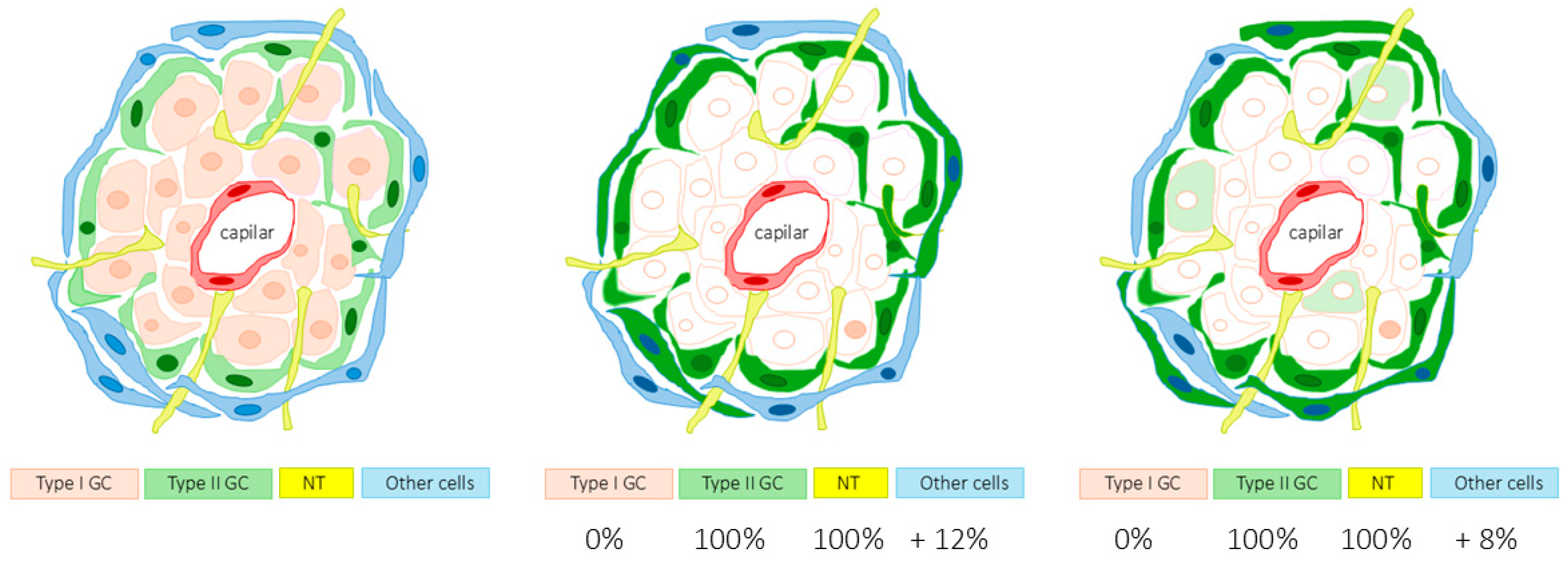
| P2X7r | Total: 48.6 ± 1.3% (100%) |
| Type I glomus cells: 0.0–0.3% | |
| Type II glomus cells: 100% | |
| Nerve fibre terminals: 2.2 ± 0.3%: 100% | |
| Other cells: 12% | |
| Pannexin 1 | Total: 58.1 ± 5.7% (100%) |
| Type I glomus cells: 0.0–0.1% | |
| Type II glomus cells: 100% | |
| Nerve fibre terminals: 3.0 ± 0.7%: 100% | |
| Other cells: 8% |
Disclaimer/Publisher’s Note: The statements, opinions and data contained in all publications are solely those of the individual author(s) and contributor(s) and not of MDPI and/or the editor(s). MDPI and/or the editor(s) disclaim responsibility for any injury to people or property resulting from any ideas, methods, instructions or products referred to in the content. |
© 2025 by the authors. Licensee MDPI, Basel, Switzerland. This article is an open access article distributed under the terms and conditions of the Creative Commons Attribution (CC BY) license (https://creativecommons.org/licenses/by/4.0/).
Share and Cite
Anache, M.; Méndez, R.; García-Suárez, O.; Cuendias, P.; Martínez-Barbero, G.; Alba, E.; Cobo, T.; Suazo, I.; Vega, J.A.; Martín-Cruces, J.; et al. Type II Cells in the Human Carotid Body Display P2X7 Receptor and Pannexin-1 Immunoreactivity. Biomolecules 2025, 15, 1523. https://doi.org/10.3390/biom15111523
Anache M, Méndez R, García-Suárez O, Cuendias P, Martínez-Barbero G, Alba E, Cobo T, Suazo I, Vega JA, Martín-Cruces J, et al. Type II Cells in the Human Carotid Body Display P2X7 Receptor and Pannexin-1 Immunoreactivity. Biomolecules. 2025; 15(11):1523. https://doi.org/10.3390/biom15111523
Chicago/Turabian StyleAnache, Marcos, Ramón Méndez, Olivia García-Suárez, Patricia Cuendias, Graciela Martínez-Barbero, Elda Alba, Teresa Cobo, Iván Suazo, José A. Vega, José Martín-Cruces, and et al. 2025. "Type II Cells in the Human Carotid Body Display P2X7 Receptor and Pannexin-1 Immunoreactivity" Biomolecules 15, no. 11: 1523. https://doi.org/10.3390/biom15111523
APA StyleAnache, M., Méndez, R., García-Suárez, O., Cuendias, P., Martínez-Barbero, G., Alba, E., Cobo, T., Suazo, I., Vega, J. A., Martín-Cruces, J., & García-Mesa, Y. (2025). Type II Cells in the Human Carotid Body Display P2X7 Receptor and Pannexin-1 Immunoreactivity. Biomolecules, 15(11), 1523. https://doi.org/10.3390/biom15111523