Review

IL-38: A New Player in Inflammatory Autoimmune Disorders

1
State Key Laboratory of Ophthalmology, Zhongshan Ophthalmic Center, Sun Yat-sen University, Guangzhou, Guangdong 510000, China
2
Department of Internal Medicine, Ohio State University College of Medicine, Columbus, OH 43210, USA
*
Authors to whom correspondence should be addressed.
These authors contributed equally to this article.
Biomolecules 2019, 9(8), 345; https://doi.org/10.3390/biom9080345
Submission received: 9 July 2019 / Revised: 26 July 2019 / Accepted: 27 July 2019 / Published: 5 August 2019

Abstract

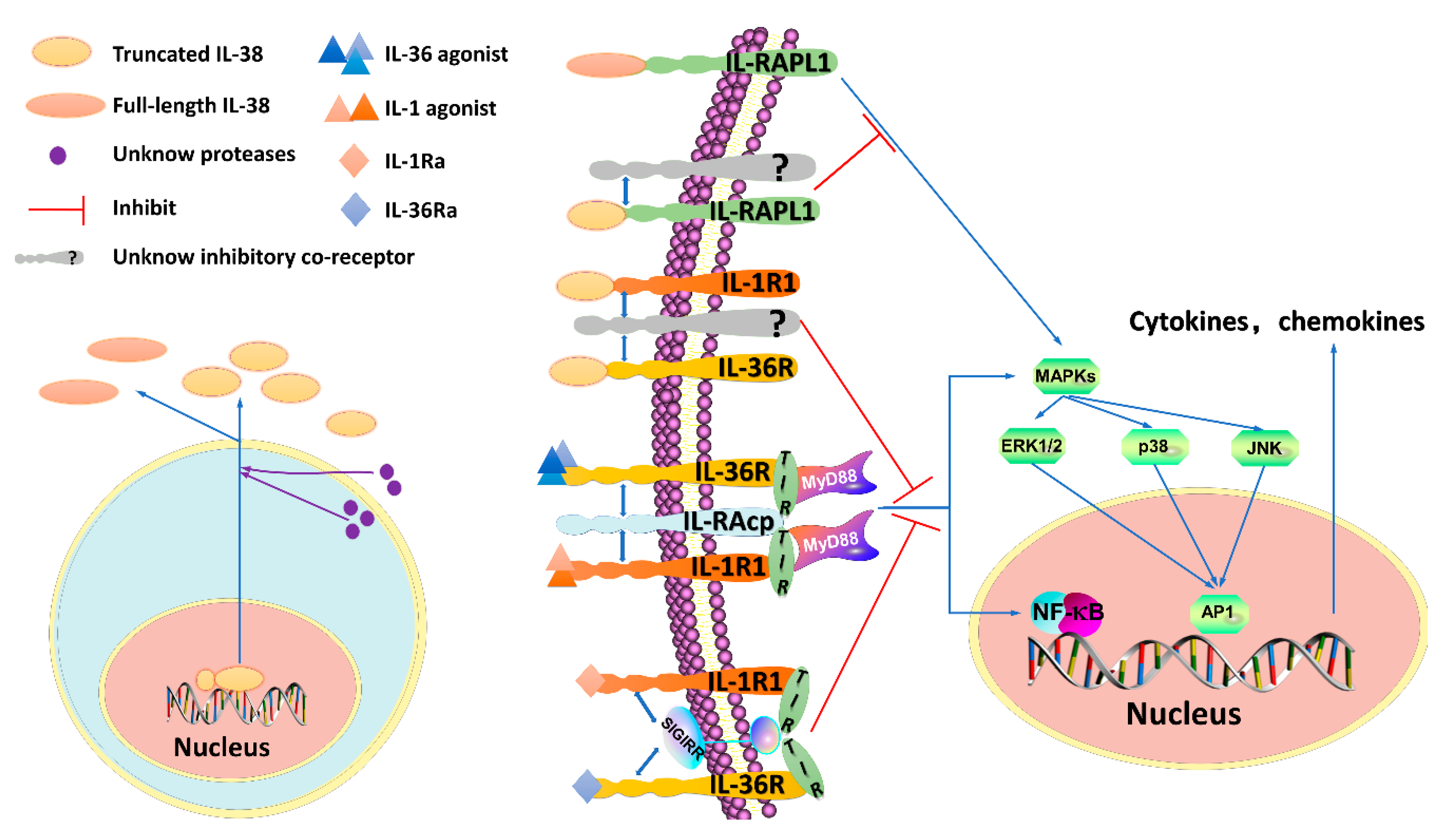
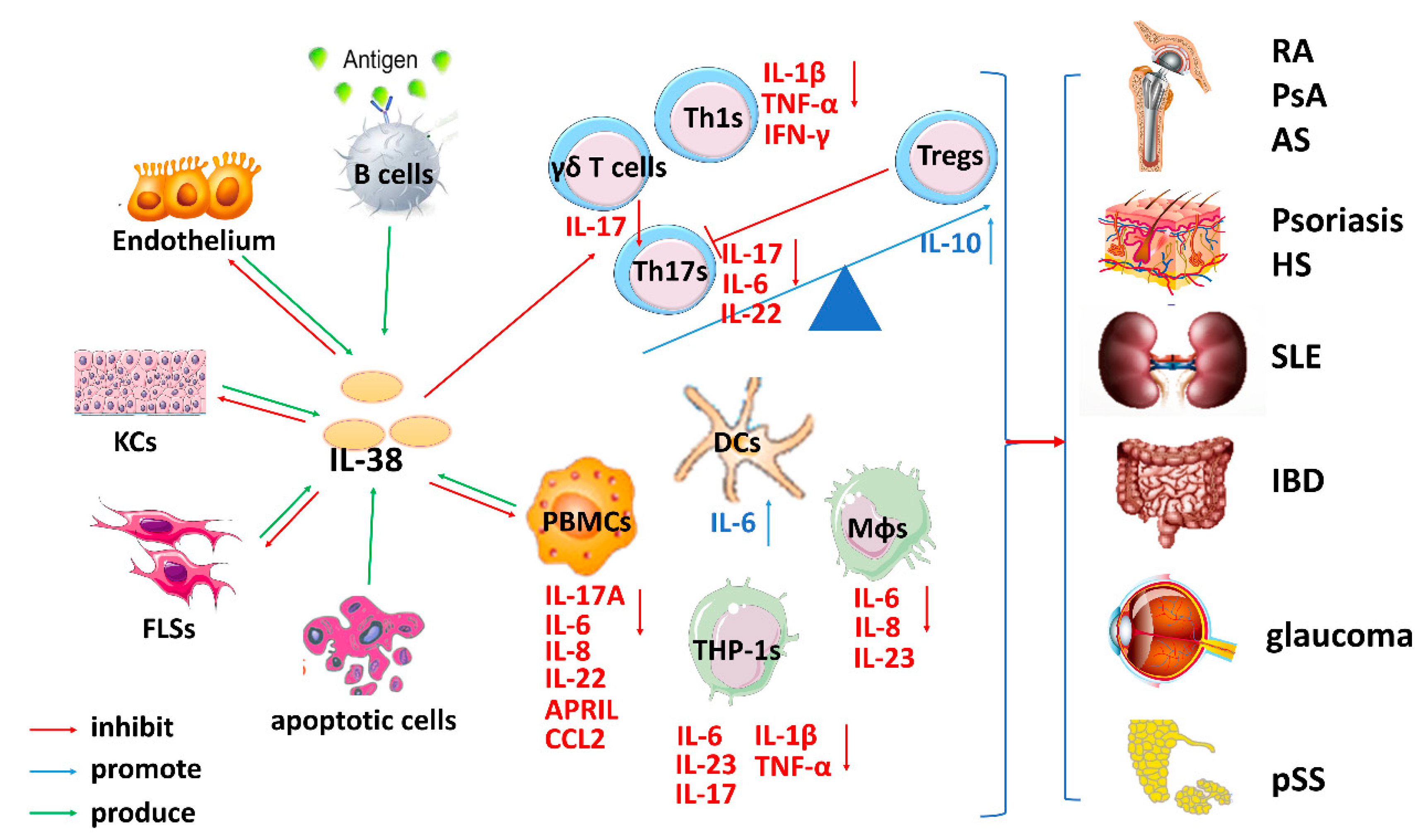
Interleukin (IL)-38, a newly discovered IL-1 family cytokine, is expressed in several tissues and secreted by various cells. IL-38 has recently been reported to exert an anti-inflammatory function by binding to several receptors, including interleukin-36 receptor (IL-36R), interleukin-1 receptor accessory protein-like 1 (IL-1RAPL1), and interleukin-1 receptor 1 (IL-1R1) to block binding with other pro-inflammatory cytokines and inhibit subsequent signaling pathways; thereby regulating the differentiation and function of T cells, peripheral blood mononuclear cells, macrophages, and dendritic cells. Inflammatory autoimmune diseases, which are common immune-mediated inflammatory syndromes, are characterized by an imbalance between T helper cells (Ths), especially Th1s and Th17s, and regulatory T cells (Tregs). Recent findings have shown that abnormal expression of IL-38 in inflammatory autoimmune diseases, such as rheumatoid arthritis, psoriatic arthritis, systemic lupus erythematosus, primary Sjogren’s syndrome, psoriasis, inflammatory bowel disease, hidradenitis suppurativa, ankylosing spondylitis, and glaucoma, involves Th1s, Th17s, and Tregs. In this review, the expression, regulation, and biological function of IL-38 are discussed, as are the roles of IL-38 in various inflammatory autoimmune disorders. Current data support that the IL-38/IL-36R and/or IL-38/IL-1RAPL1 axis primarily play an anti-inflammatory role in the development and resolution of inflammatory autoimmune diseases and indicate a possible therapeutic benefit of IL-38 in these diseases.
Keywords: interleukin-38; inflammatory autoimmune disease; interleukin-36 receptor; Th17; Treg interleukin-38; inflammatory autoimmune disease; interleukin-36 receptor; Th17; Treg