Article

Caffeic Acid Esters Are Effective Bactericidal Compounds Against Paenibacillus larvae by Altering Intracellular Oxidant and Antioxidant Levels


1
Department of Biochemistry and Chemistry, Fort Lewis College, 1000 Rim Dr., Durango, CO 81301, USA
2
Department of Biology, Fort Lewis College, 1000 Rim Dr., Durango, CO 81301, USA
*
Author to whom correspondence should be addressed.
Biomolecules 2019, 9(8), 312; https://doi.org/10.3390/biom9080312
Submission received: 3 June 2019 / Revised: 24 July 2019 / Accepted: 25 July 2019 / Published: 27 July 2019
(This article belongs to the Section Natural and Bio-derived Molecules)

Abstract

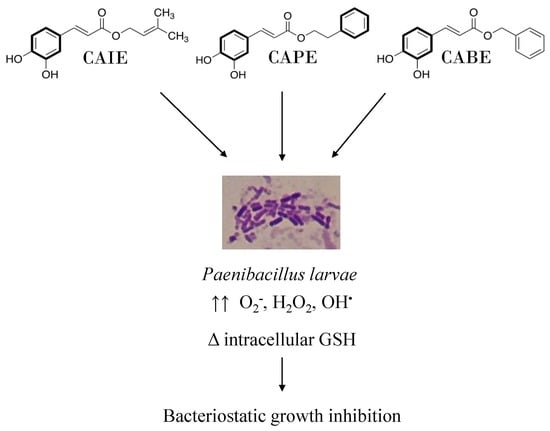
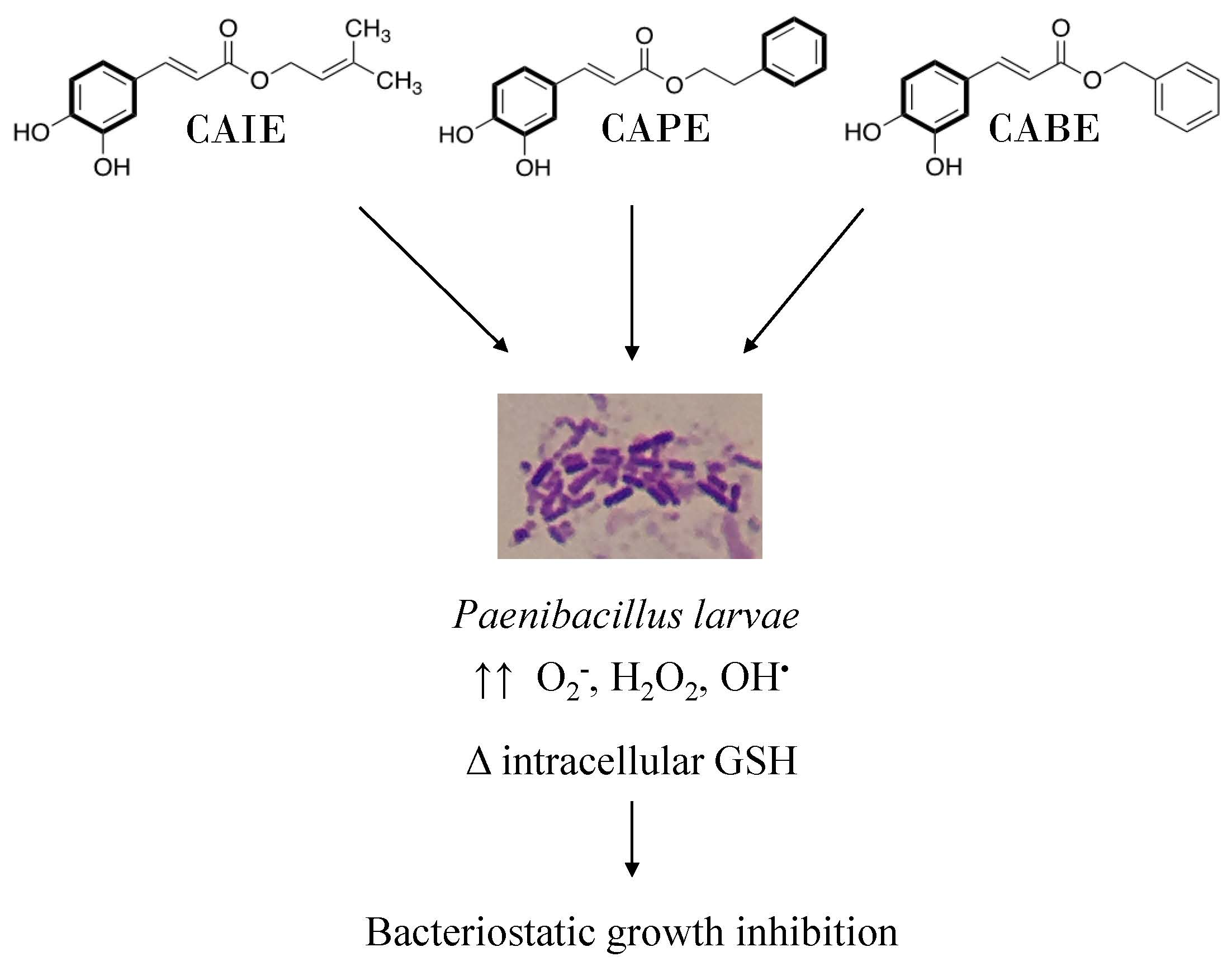
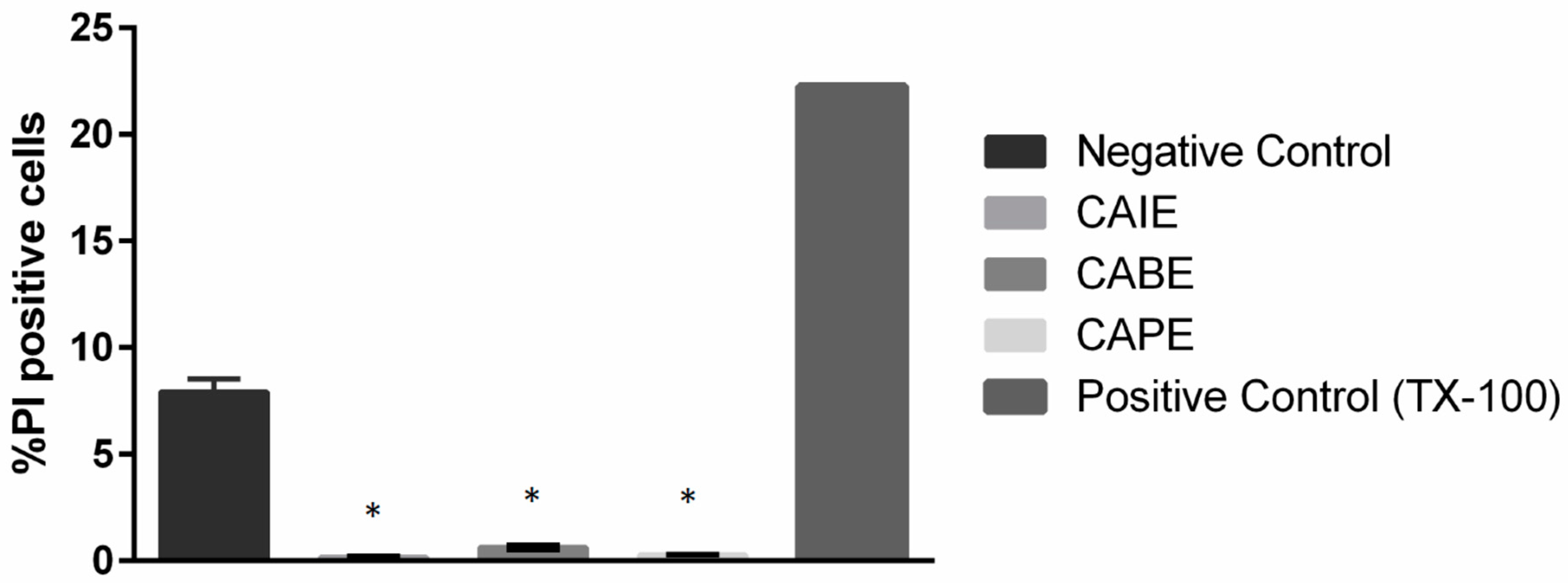
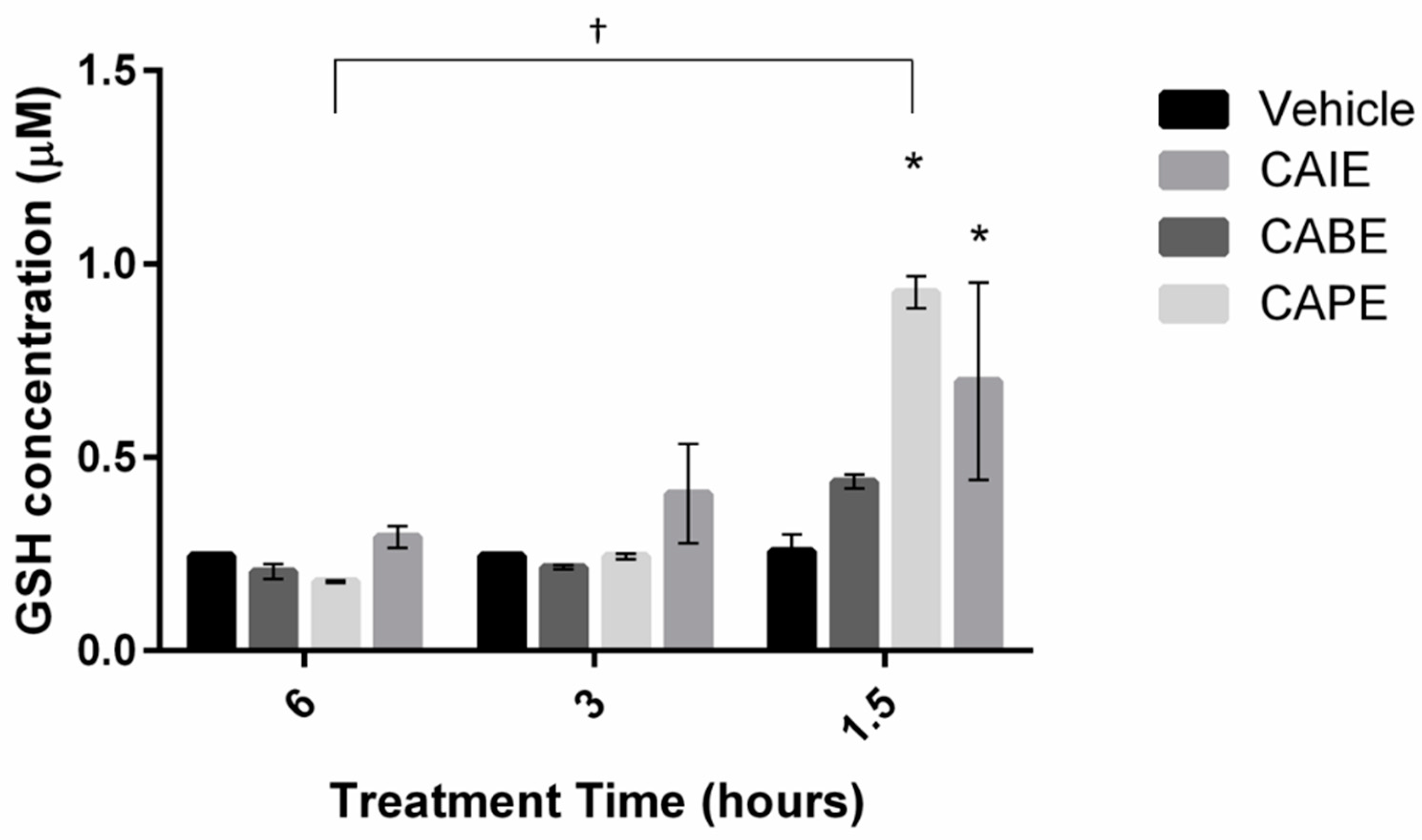
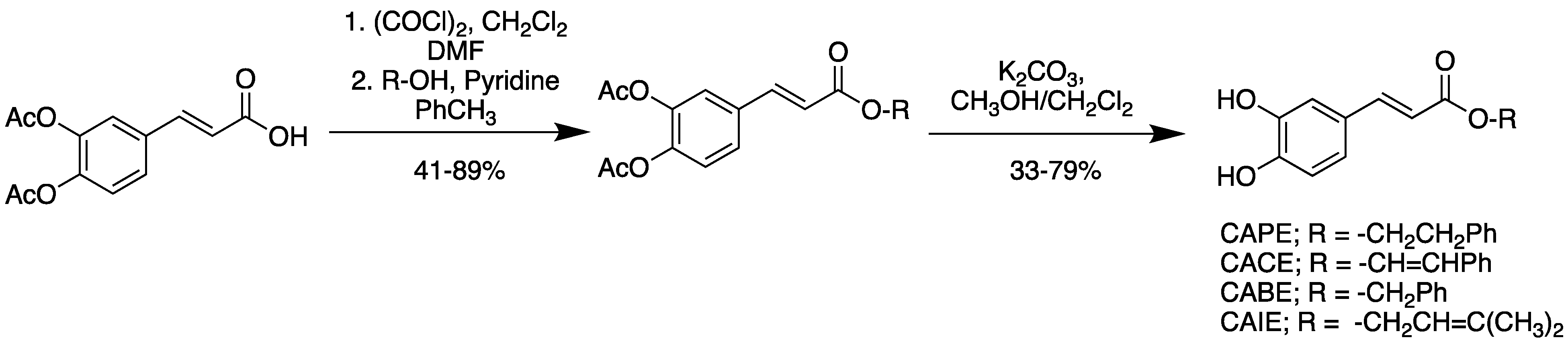
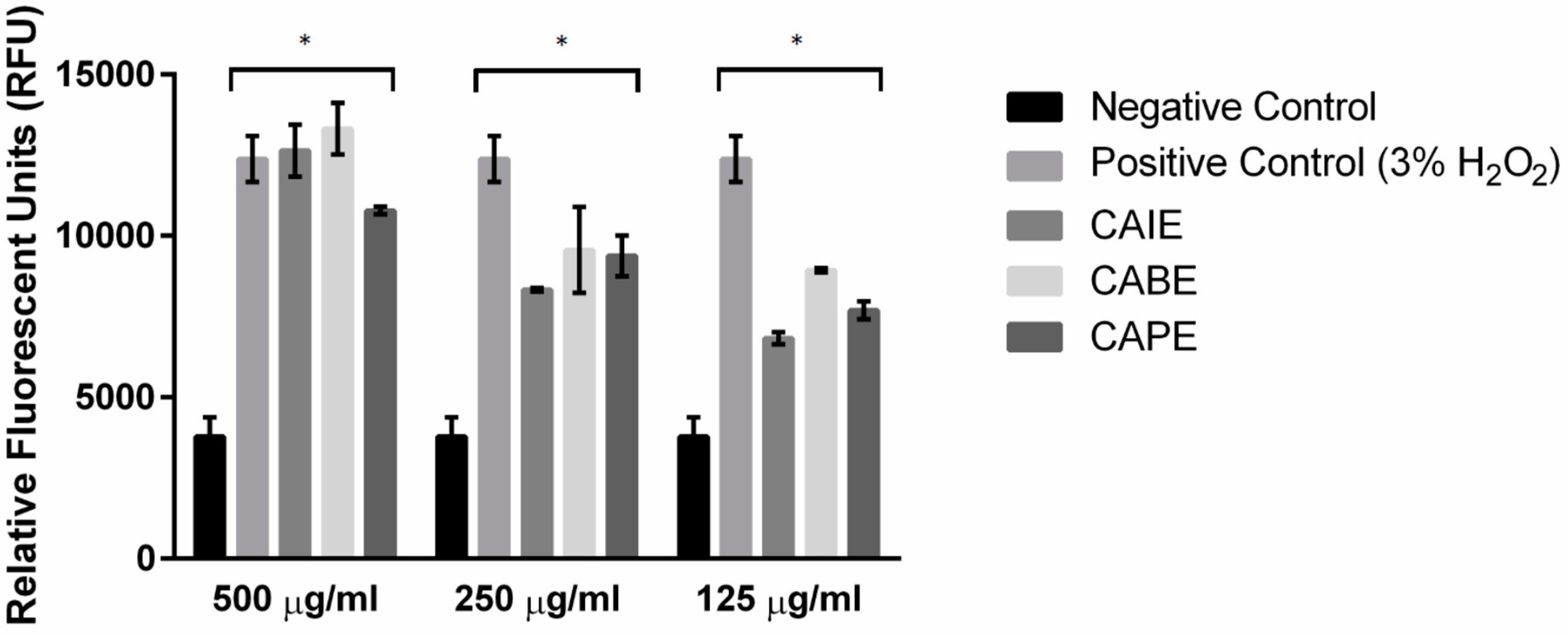
American Foulbrood (AFB) is a deadly bacterial disease affecting pupal and larval honey bees. AFB is caused by the endospore-forming bacterium Paenibacillus larvae (PL). Propolis, which contains a variety of organic compounds, is a product of bee foraging and is a resinous substance derived from botanical substances found primarily in trees. Several compounds from the class of caffeic acid esters, which are commonly found in propolis, have been shown to have antibacterial activity against PL. In this study, six different caffeic acid esters were synthesized, purified, spectroscopically analyzed, and tested for their activity against PL to determine the minimum inhibitory concentrations (MICs) and minimum bactericidal concentrations (MBCs). Caffeic acid isopropenyl ester (CAIE), caffeic acid benzyl ester (CABE), and caffeic acid phenethyl ester (CAPE) were the most effective in inhibiting PL growth and killing PL cell with MICs and MBCs of 125 µg/mL when used individually, and a MIC and MBC of 31.25 µg/mL for each compound alone when CAIE, CABE, and CAPE are used in combination against PL. These compounds inhibited bacterial growth through a bactericidal effect, which revealed cell killing but no lysis of PL cells after 18 h. Incubation with CAIE, CABE, and CAPE at their MICs significantly increased reactive oxygen species levels and significantly changed glutathione levels within PL cells. Caffeic acid esters are potent bactericidal compounds against PL and eliminate bacterial growth through an oxidative stress mechanism.
Keywords: Apis millifera; Paenibacillus larvae; propolis; caffeic acid esters; minimum inhibitory concentration (MIC) Apis millifera; Paenibacillus larvae; propolis; caffeic acid esters; minimum inhibitory concentration (MIC)
Graphical Abstract