Gut Microbiota Modulation as a Therapeutic Strategy for Insomnia: A Systematic Review of Nutritional and Botanical Interventions


Abstract
1. Introduction
2. Methodology
2.1. Protocol and Registration
2.2. Search Strategy and Data Sources
2.3. Eligibility Criteria
2.4. Analytical Framework and Risk of Bias
2.5. Evidence Level Assignment
3. Results
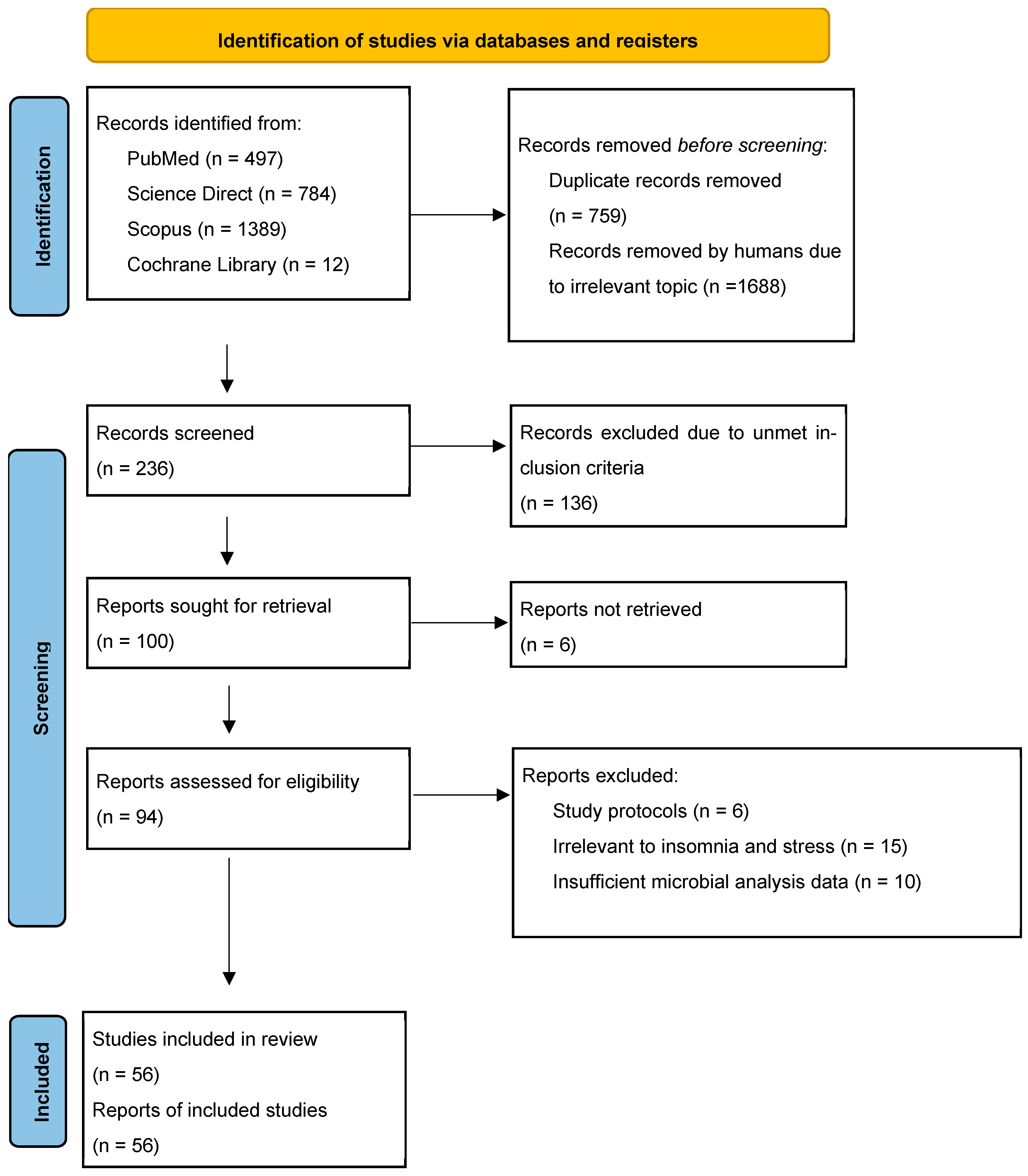
3.1. Study Selection and Characteristics
3.2. Stratified Analysis of Probiotic Interventions (Human RCTs)
3.3. Impact of Dosage, Duration, and Population Heterogeneity
3.4. Effects of Prebiotic, Botanical, and Dietary Interventions (Human)
3.5. Preclinical Findings (Animal Models)
3.6. Biological Mechanisms (Preclinical vs. Clinical)
3.7. Risk of Bias Assessment
3.8. The Role of Orexin in Sleep Regulation and Gut Microbiota Interactions
4. Discussion
4.1. Heterogeneity in Evidence
4.2. Consideration of Subgroup Meta-Analysis
4.3. Importance of Standardization
4.4. Chronic Gut-Mediated Inflammatory Conditions
4.5. Synthesis of Evidence and Strain Specificity
4.6. Ecological Predictors vs. Interventional Outcomes
4.7. Mechanistic Pathways: Distinguishing Animal Causal Models from Human Correlations
4.8. The Role of Stress, Prebiotics, Botanicals, and Holistic Diets
4.9. Methodological Quality and Risk of Bias
4.10. Limitations and Future Directions
Supplementary Materials
Author Contributions
Funding
Institutional Review Board Statement
Informed Consent Statement
Data Availability Statement
Acknowledgments
Conflicts of Interest
Abbreviations
| ACTH | Adrenocorticotropic Hormone |
| AGP | Alpha-1 Acid Glycoprotein |
| AIS | Athens Insomnia Scale |
| aOR | Adjusted Odds Ratio |
| BDNF | Brain-Derived Neurotrophic Factor |
| BDI II | Beck Depression Inventory-second edition |
| CFS | Chadler Fatigue Scale |
| CSHQ | Children’s Sleep Habits Questionnaire |
| CRH | Corticotropin-releasing hormone |
| CBT | Core Body Temperature |
| CFU | Colony-Forming Unit |
| CSQBD | Traditional Chinese Medicine Decoction |
| CRP | C-Reactive Protein |
| DASS | Depression Anxiety Stress Scale |
| DP | Diet Pattern |
| DP-I | Diet Pattern I (high loading of bean products, coarse grain, nuts, fruits, mushrooms, and potatoes) |
| DP-II | Diet Pattern II (Dark &light vegetables, red meat, poultry, rice, and liver) |
| DP-III | Diet Pattern III (Congee, dessert, eggs, and stuffing food) |
| DP-IV | Diet Pattern IV (Fried food, julep, and processed meat product) |
| DI-GM | Dietary Index for Gut Microbiota |
| EMG | Electromyography |
| EEG | Electroencephalography |
| ESS | Epworth Sleepiness Scale |
| EPM | Elevated Plus Maze |
| ELISA | Enzyme Link Immune Assay |
| FOSQ | Functional Outcome of Sleep Questionnaire |
| FCT-C | Functional Assessment of Cancer |
| FST | Forced Swim Test |
| GCMS | Gas Chromatography Mass Spectrometry |
| GSRS | Gastrointestinal Symptoms Rating Scale |
| GABA | Gamma-Aminobutyric Acid |
| GMBs | Gut–Brain Modules |
| Glu | Glutamate |
| HAM-D | Hamilton Depression Rating Scale |
| EQ-5D-3L | Health-Related Quality Of Life EuroQol-5 Dimension-5 Level |
| HPLC | High Performance Liquid Chromatography |
| HADS | Hospital Anxiety and Depression Scale |
| 5-HT | 5-Hydroxytryptamine |
| 5-HTP | 5-Hydroxytryptophan |
| 5-HIAA | 5-Hydroxyindoleacetic Acid |
| HPA | Hypothalamic–Pituitary–Adrenal (Axis) |
| IPAQ | International Physical Activity Questionnaire |
| ISI | Insomnia Severity Index |
| IL-6 | Interleukin-6 |
| IGSQ | Infant Gastrointestinal Symptom Questionnaire |
| IL-1β | Interleukin I-beta |
| IFN-α | Interferon-gamma |
| JPAC-QOL | Japanese Version of the Patient Assessment of Constipation Quality of Life |
| LCMS | Liquid Chromatography/Mass Spectrometry |
| LPS | Lipopolysaccharide Binding Protein |
| LA | Locomotory Activity |
| FMI | Multi-Dimensional Fatigue Inventory |
| MNQI | Methyl-Donor Nutritional Quality Index |
| MSQ-BR | Mini Sleep Questionnaire |
| MWM | Morris–Water Maze |
| MDA | Malondialdehyde |
| MGBA | Microbiota–Gut–Brain Axis |
| N3 | Stage 3 Non-Rapid Eye Movement Sleep (Slow-wave sleep) |
| NREM | Non-Rapid Eyes Movement Sleep |
| NORT | New Object Recognition Test |
| OFT | Open Field Test |
| OSQ | Oviedo Sleep Questionnaire |
| OSA-MA | Ogri–Shirakawa–Azumi Sleep Inventory MA version |
| OLT | Object Location Memory Test |
| PSQI | Pittsburgh Sleep Quality Index |
| POMS2 | Profile of Mood State Second |
| PCPA | p-Chlorophenylalanine |
| Per1/Per2 | Period Circadian Protein 1/Period Circadian Protein 2 |
| PRISMA | Preferred Reporting Items for Systematic Reviews and Meta-Analyses |
| PSG | Polysomnography |
| PSS | Perceived Stress Scale |
| REM | Rapid Eyes Movement Sleep |
| RCT | Randomized Controlled Trial |
| RoB 2.0 | Cochrane Risk of Bias Tool (Version 2) |
| rRNA | Ribosomal Ribonucleic Acid |
| RT-qPCR | Reverse Transcription Quantitative Polymerase Chain Reaction |
| SDS | Self-Rating Depression Scale |
| SAS | Self-Rating Anxiety Scale |
| STAI | State Trait Anxiety Inventory |
| SRBSQ | Sleep Related Safety Behavior Questionnaire |
| SSR | Sleep Self Report |
| SM | Sympathetic–Adreno–Medullary Axis |
| SAM | S-adenosylmethionine |
| SCFA | Short Chain Fatty Acid |
| SS | Symptoms Severity Scale |
| SPT | Sucrose Preference Test |
| SCFA | Short-Chain Fatty Acid |
| STYHCD | Traditional Chinese Medicine Decoction |
| SYRCLE | Systematic Review Centre for Laboratory Animal Experimentation (Risk of Bias tool) |
| TCM | Traditional Chinese Medicine |
| TST | Tail Suspension Test |
| T-SOD | Total Superoxide Dismutase |
| TNF-α | Tumor Necrosis Factor-alpha |
| TSS | Tiredness Symptoms Scale |
| TM | T-maze |
| VAS | Visual Analog Scale |
| VAMS | Visual Analog Mood Scales |
| WASO | Wake After Sleep Onset |
| WPI | Widespread Pain Index |
| YM | Y-maze |
References
- Benedict, C.; Kern, W.; Born, J. Gut microbiota and sleep: A review. Front. Microbiol. 2016, 7, 1946. [Google Scholar] [CrossRef] [PubMed]
- Cryan, J.F.; Dinan, T.G. Mind-altering microorganisms: The impact of the gut microbiota on brain and behavior. Nat. Rev. Neurosci. 2012, 13, 701–712. [Google Scholar] [CrossRef] [PubMed]
- Kendall, T.A.; Rojas, A.M.; Hinds, A. Short-chain fatty acids and the gut-brain axis: A review of the literature. Nutrients 2020, 12, 1791. [Google Scholar] [CrossRef] [PubMed]
- Kessler, R.C.; Berglund, P.; Demler, O.; Jin, R.; Merikangas, K.R.; Walters, E.E. The effects of chronic insomnia on the risk of depression. Arch. Gen. Psychiatry 2010, 67, 71–78. [Google Scholar] [CrossRef] [PubMed]
- Dalile, B.; Van Oudenhove, L.; Vervliet, B.; Verbeke, K. The role of short-chain fatty acids in microbiota–gut–brain communication. Nat. Rev. Gastroenterol. Hepatol. 2019, 16, 461–478. [Google Scholar] [CrossRef] [PubMed]
- Mayer, E.A.; Knight, R.; Mazmanina, S.K. Gut/brain axis and the microbiome: A new frontier in the study of gut diseases. Nat. Rev. Gastroenterol. Hepatol. 2015, 12, 205–217. [Google Scholar] [CrossRef] [PubMed]
- Morrison, D.J.; Preston, T. Formation of short chain fatty acids by the gut microbiota and their health effects. Curr. Nutr. Rep. 2016, 5, 58–67. [Google Scholar] [CrossRef]
- Khan, M.A.; Tofighi, S. Orexin and Its Role in Sleep and Wakefulness: A Review. J. Sleep Res. 2022, 31, e13550. [Google Scholar] [CrossRef] [PubMed]
- Riemann, D.; Nissen, C.; Perlis, M.L. The neurobiology, diagnosis, and treatment of chronic insomnia. Lancet Psychiatry 2017, 4, 486–500. [Google Scholar] [CrossRef]
- Lin, Z.; Jiang, T.; Chen, M.; Ji, X.; Wang, Y. Gut microbiota and sleep: Interaction mechanisms and therapeutic prospects. Open Life Sci. 2024, 19, 20220910. [Google Scholar] [CrossRef] [PubMed]
- Sudo, N.; Chida, Y.; Aiba, Y.; Sonoda, J.; Oyama, N.; Kubo, C. Postnatal microbial colonization programs the hypothalamic-pituitary-adrenal system for stress regulation. J. Physiol. 2004, 558, 263–275. [Google Scholar] [CrossRef] [PubMed]
- Chen, S.; Li, H.; Ning, M.; Yu, B.Y.M.; Wu, S.; Cheng, W.Y.; Li, Y.; Yeung, W.F. The association between gut microbiota and insomnia: A systematic review and meta-analysis. Sleep Med. Rev. 2026, 86, 102236. [Google Scholar] [CrossRef] [PubMed]
- Robinson, L.A.; Lennon, S.; Pegel, A.R.; Strickland, K.P.; Feeley, C.A.; Watts, S.O.; J. Van Der Pol, W.; Roberts, M.D.; Greene, M.W.; Fruge, A.D. A randomized controlled crossover lifestyle intervention to improve metabolic and mental health in female healthcare night-shift workers. Nutrients 2025, 17, 3342. [Google Scholar] [CrossRef] [PubMed]
- Page, M.J.; McKenzie, J.E.; Bossuyt, P.M.; Boutron, I.; Hoffmann, T.C.; Mulrow, C.D.; Shamseer, L.; Tetzlaff, J.M.; Akl, E.A.; Brennan, S.E.; et al. The PRISMA 2020 statement: An updated guideline for reporting systematic reviews. Syst. Rev. 2021, 10, 89. [Google Scholar] [CrossRef] [PubMed]
- Tian, P.; Lan, Y.; Jin, Z.; Hang, F.; Mao, X.; Jin, X.; Wang, G.; Chen, W. Regulation of sleep and circadian rhythms by S-adenosylmethionine-producing probiotics. Engineering 2026, 57, 250–261. [Google Scholar] [CrossRef]
- Wang, J.; Liu, Y.; Zhu, C.; Wang, Z.; Wang, S.; Fang, S.; Xu, F. Gut microbiota and immune regulation by Lactobacillus delbrueckii subsp. bulgaricus LB42: From preclinical safety assessment to clinical evidence. Food Chem. Toxicol. 2026, 207, 115851. [Google Scholar] [CrossRef] [PubMed]
- Li, J.; Zhao, J.; Ze, X.; Li, L.; Li, Y.; Zhou, Z.; Wu, S.; Jia, W.; Liu, M.; Li, Y.; et al. Lacticaseibacillus paracasei 207-27 alters the microbiota-gut-brain axis to improve wearable device-measured sleep duration in healthy adults: A randomized, double-blind, placebo-controlled trial. Food Funct. 2024, 15, 10732–10745. [Google Scholar] [CrossRef] [PubMed]
- Tanihiro, R.; Yuki, M.; Sasai, M.; Haseda, A.; Kagami-Katsuyama, H.; Hirota, T.; Honma, N.; Nishihira, J. Effects of Prebiotic Yeast Mannan on Gut Health and Sleep Quality in Healthy Adults: A Randomized, Double-Blind, Placebo-Controlled Study. Nutrients 2024, 16, 141. [Google Scholar] [CrossRef] [PubMed]
- Bowers, S.J.; Summa, K.C.; Thompson, R.S.; Gonzalez, A.; Vargas, F.; Olker, C.; Jiang, P.; Lowry, C.A.; Dorrestein, P.C.; Knight, R.; et al. A prebiotic diet alters the fecal microbiome and improves sleep in response to sleep disruption in rats. Front. Neurosci. 2022, 16, 889211. [Google Scholar] [CrossRef] [PubMed]
- Lau, R.I.; Su, Q.; Ching, J.Y.L.; Lui, R.N.; Chan, T.T.; Wong, M.T.L.; Lau, L.H.S.; Wing, Y.K.; Chan, R.N.Y.; Kwok, H.Y.H.; et al. Fecal microbiota transplantation for sleep disturbance in post-acute COVID-19 syndrome. Clin. Gastroenterol. Hepatol. 2024, 22, 2487–2496 e2486. [Google Scholar] [CrossRef] [PubMed]
- Guan, Y.; Zhu, R.; Zhao, W.; Wang, L.; You, L.; Zeng, Z.; Jiang, Q.; Zhu, Z.; Gou, J.; Zhang, Q.; et al. Effects of Lacticaseibacillus paracasei K56 on perceived stress among pregraduate students: A double-blind, randomized, placebo-controlled trial. Front. Nutr. 2025, 12, 1544713. [Google Scholar] [CrossRef] [PubMed]
- Valle, M.; Vieira, I.A.; Fino, L.C.; Gallina, D.A.; Esteves, A.M.; da Cunha, D.T.; Cabral, L.; Benatti, F.B.; Marostica Junior, M.R.; Batista, A.G.; et al. Immune status, well-being and gut microbiota in military supplemented with synbiotic ice cream and submitted to field training: A randomised clinical trial. Br. J. Nutr. 2021, 126, 1794–1808. [Google Scholar] [CrossRef] [PubMed]
- Meng, Y.; Ma, W.; Li, X.; Zhang, N. A Novel Dietary Index for Gut Microbiota (DI-GM) is Associated with Inflammation, Mental Health, and Tumor Biomarkers in Adults: A Cross-Sectional Study. Food Sci. Nutr. 2025, 13, e70951. [Google Scholar] [CrossRef] [PubMed]
- Zeng, H.; Xu, J.; Zheng, L.; Zhan, Z.; Fang, Z.; Li, Y.; Zhao, C.; Xiao, R.; Zheng, Z.; Li, Y. Traditional Chinese herbal formulas modulate gut microbiome and improve insomnia in patients with distinct syndrome types: Insights from an interventional clinical study. Front. Cell. Infect. Microbiol. 2024, 14, 1395267. [Google Scholar] [CrossRef] [PubMed]
- Chelliah, R.; Park, S.J.; Oh, S.; Lee, E.; Daliri, E.B.-M.; Elahi, F.; Park, C.R.; Sultan, G.; Madar, I.H.; Oh, D.H. Unveiling the potentials of bioactive oligosaccharide1-kestose (GF2) from Musa paradisiaca Linn peel with an anxiolytic effect based on gut microbiota modulation in stressed mice model. Food Biosci. 2022, 49, 101881. [Google Scholar] [CrossRef]
- Thompson, R.S.; Gaffney, M.; Hopkins, S.; Kelley, T.; Gonzalez, A.; Bowers, S.J.; Vitaterna, M.H.; Turek, F.W.; Foxx, C.L.; Lowry, C.A.; et al. Ruminiclostridium 5, Parabacteroides distasonis, and bile acid profile are modulated by prebiotic diet and associate with facilitated sleep/clock realignment after chronic disruption of rhythms. Brain Behav. Immun. 2021, 97, 150–166. [Google Scholar] [CrossRef] [PubMed]
- Arce-Lopez, B.; Bazan, G.X.; Molina, S.; Crespo, M.C.; Garcia-Beccaria, M.; Cruz-Gil, S.; Fernandez-Diaz, C.M.; Ramirez de Molina, A.; Ramos-Ruiz, R.; Espinosa-Salinas, M.I. Effect of fiber-modified kombucha tea on gut microbiota in healthy population: A randomized controlled trial (RCT). Curr. Res. Food Sci. 2025, 11, 101130. [Google Scholar] [CrossRef] [PubMed]
- Sasaki, H.; Masutomi, H.; Yamauchi, Y.; Ishihara, K.; Fukuda, S. Effectiveness of personalized granola tailored to the gut microbiota for improving gut environment and mood states. Front. Microbiol. 2025, 16, 1607918. [Google Scholar] [CrossRef] [PubMed]
- Fang, H.; Wang, Y.H.; Yang, L.; Che, Y.H.; Liu, F.L.; Liu, H. Revealing the mechanism of suanzaoren tang against insomnia via integrated metabolomics and gut microbiota analysis. J. Pharm. Biomed. Anal. 2026, 269, 117231. [Google Scholar] [CrossRef] [PubMed]
- Jia, F.; Zheng, H.; Xu, Y.; Jiang, J.; Wu, Y.; Liu, J.; He, K.; Yang, Y. Material basis and sleep-improving mechanisms of Lily-Ziziphi Spinosae Semen decoction: Systematic evidence from LC-MS, network pharmacology and animal experiments. Food Sci. Hum. Wellness 2025, 14, 9250493. [Google Scholar] [CrossRef]
- Wang, L.; Qi, X.; Wang, S.; Tian, C.; Zou, T.; Liu, Z.; Chen, Q.; Chen, Y.; Zhao, Y.; Li, S.; et al. Banxia-Yiyiren alleviates insomnia and anxiety by regulating the gut microbiota and metabolites of PCPA-induced insomnia model rats. Front. Microbiol. 2024, 15, 1405566. [Google Scholar] [PubMed]
- Li, X.; Zhang, Y.; Zhang, Q.; Cao, A.; Feng, J. Eucalyptus essential oil exerted a sedative-hypnotic effect by influencing brain neurotransmitters and gut microbes via the gut microbiota-brain axis. Front. Pharmacol. 2024, 15, 1464654. [Google Scholar] [CrossRef] [PubMed]
- Huang, S.; Wu, K.; Guo, Y.; Mu, H.; Sheng, J.; Tian, Y.; Liu, J.; Zhao, C. Integrated Approach Reveals Fermented Moringa oleifera Leaves Extracts’ Impact on Mouse Sleep. Foods 2025, 14, 2952. [Google Scholar] [CrossRef] [PubMed]
- Li, W.; Wang, Z.; Cao, J.; Dong, Y.; Chen, Y. Melatonin improves the homeostasis of mice gut microbiota rhythm caused by sleep restriction. Microbes Infect. 2023, 25, 105121. [Google Scholar] [CrossRef] [PubMed]
- Kortman, G.A.M.; Hester, E.R.; Schaafsma, A.; Mulder, J.; Mallee, L.; Nauta, A. Gut microbiome composition and functionality impact the responsiveness to a dairy-based product containing galacto-oligosaccharides for improving sleep quality in adults. Benef. Microbes 2024, 15, 373–385. [Google Scholar] [CrossRef] [PubMed]
- Makela, S.M.; Griffin, S.M.; Reimari, J.; Evans, K.C.; Hibberd, A.A.; Yeung, N.; Ibarra, A.; Junnila, J.; Turunen, J.; Beboso, R.; et al. Efficacy and safety of Lacticaseibacillus paracasei Lpc-37(R) in students facing examination stress: A randomized, triple-blind, placebo-controlled clinical trial (the ChillEx study). Brain Behav. Immun. Health 2023, 32, 100673. [Google Scholar] [CrossRef] [PubMed]
- Mysonhimer, A.R.; Cannavale, C.N.; Bailey, M.A.; Khan, N.A.; Holscher, H.D. Prebiotic consumption alters microbiota but not biological markers of stress and inflammation or mental health symptoms in healthy adults: A randomized, controlled, crossover trial. J. Nutr. 2023, 153, 1283–1296. [Google Scholar] [CrossRef] [PubMed]
- Santamarina, A.B.; Filho, V.N.; de Freitas, J.A.; Franco, L.A.M.; Martins, R.C.; Fonseca, J.V.; Orellana Turri, J.A.; Hufnagel, M.T.; Demarque, D.P.; da Silva, B.; et al. Nutraceutical blends promote weight loss, inflammation reduction, and better sleep: The role of Faecalibacterium prausnitzii in overweight adults-a double-blind trial. Mol. Nutr. Food Res. 2025, 69, e202400806. [Google Scholar] [CrossRef] [PubMed]
- Colombo, J.; Carlson, S.E.; Algarin, C.; Reyes, S.; Chichlowski, M.; Harris, C.L.; Wampler, J.L.; Peirano, P.; Berseth, C.L. Developmental effects on sleep-wake patterns in infants receiving a cow’s milk-based infant formula with an added prebiotic blend: A Randomized Controlled Trial. Pediatr. Res. 2021, 89, 1222–1231. [Google Scholar] [CrossRef] [PubMed]
- Lozar Krivec, J.; Bratina, P.; Valcl, A.; Lozar Manfreda, K.; Petrovcic, A.; Benedik, E.; Obermajer, T.; Bogovic Matijasic, B.; Setina, U.; Rupnik, M.; et al. Effects of Limosilactobacillus reuteri DSM 17938 in neonates exposed to antibiotics: A randomised controlled trial. Benef. Microbes 2024, 16, 157–169. [Google Scholar] [CrossRef] [PubMed]
- Lawrence, K.; Myrissa, K.; Toribio-Mateas, M.; Minini, L.; Gregory, A.M. Trialling a microbiome-targeted dietary intervention in children with ADHD-the rationale and a non-randomised feasibility study. Pilot Feasibility Stud. 2022, 8, 108. [Google Scholar] [CrossRef] [PubMed]
- Meng, Y.; Tian, J.; Xiu Li, X.; Xu, Z. Associations of MIND and DI-GM dietary scores with depression, anxiety, and gut microbiota in patients with colon cancer: A cross-sectional study. Front. Nutr. 2025, 12, 1655051. [Google Scholar] [CrossRef] [PubMed]
- Baldi, S.; Pagliai, G.; Dinu, M.; Di Gloria, L.; Nannini, G.; Curini, L.; Pallecchi, M.; Russo, E.; Niccolai, E.; Danza, G.; et al. Effect of ancient Khorasan wheat on gut microbiota, inflammation, and short-chain fatty acid production in patients with fibromyalgia. World J. Gastroenterol. 2022, 28, 1965–1980. [Google Scholar] [CrossRef] [PubMed]
- Inoue, R.; Suzuki, K.; Takaoka, M.; Narumi, M.; Naito, Y. Effects of dietary fiber supplementation on gut microbiota and bowel function in healthy adults: A randomized controlled trial. Microorganisms 2025, 13, 2068. [Google Scholar] [CrossRef] [PubMed]
- Butler, M.I.; Bastiaanssen, T.F.S.; Long-Smith, C.; Berding, K.; Morkl, S.; Cusack, A.M.; Strain, C.; Busca, K.; Porteous-Allen, P.; Claesson, M.J.; et al. Recipe for a healthy gut: Intake of unpasteurised milk is associated with increased Lactobacillus abundance in the human gut microbiome. Nutrients 2020, 12, 1468. [Google Scholar] [CrossRef] [PubMed]
- Chen, Q.; Fan, R.; Song, L.; Wang, S.; You, M.; Cai, M.; Wu, Y.; Li, Y.; Xu, M. Association of methyl donor nutrients dietary intake and sleep disorders in the elderly revealed by the intestinal microbiome. Food Funct. 2024, 15, 6335–6346. [Google Scholar] [CrossRef] [PubMed]
- Jiang, X.; Wang, X.; Zhang, M.; Yu, L.; He, J.; Wu, S.; Yan, J.; Zheng, Y.; Zhou, Y.; Chen, Y. Associations between specific dietary patterns, gut microbiome composition, and incident subthreshold depression in Chinese young adults. J. Adv. Res. 2024, 65, 183–195. [Google Scholar] [CrossRef] [PubMed]
- Lane, M.M.; McGuinness, A.J.; Mohebbi, M.; Lotfaliany, M.; Loughman, A.; O’Hely, M.; O’Neil, A.; Batti, J.; Kotowicz, M.; Berk, M.; et al. Food- vs. supplement-based very-low-energy diets and gut microbiome composition in women with high body mass index: A randomized controlled trial. Cell Rep. Med. 2025, 6, 102417. [Google Scholar] [CrossRef] [PubMed]
- Tao, Y.; Wu, M.; Su, B.; Lin, H.; Li, Q.; He, Y.; Zhong, T.; Xiao, Y.; Yu, X. Host-gut microbiota interactions: Exploring the potential role of vitamin B1 and B2 in the microbiota-gut-brain axis and anxiety, stress, and sleep quality. Nutrients 2025, 17, 1894. [Google Scholar] [CrossRef] [PubMed]
- Gillies, N.A.; Wilson, B.C.; Miller, J.R.; Roy, N.C.; Scholey, A.; Braakhuis, A.J. Effects of a flavonoid-rich blackcurrant beverage on markers of the gut-brain axis in healthy females: Secondary findings from a 4-week randomized crossover control trial. Curr. Dev. Nutr. 2024, 8, 102158. [Google Scholar] [CrossRef] [PubMed]
- Crichton, M.; Marshall, S.; Marx, W.; Isenring, E.; Vazquez-Campos, X.; Dawson, S.L.; Lohning, A. Effect of ginger root powder on gastrointestinal bacteria composition, gastrointestinal symptoms, mental health, fatigue, and quality of life: A double-blind placebo-controlled trial. J. Nutr. 2023, 153, 3193–3206. [Google Scholar] [CrossRef] [PubMed]
- Kobayashi, A.; Nagashima, K.; Hu, A.; Harada, Y.; Kobayashi, H. Effectiveness and safety of kamikihito, a traditional Japanese medicine, in managing anxiety among female patients with intractable chronic constipation. Complement. Ther. Clin. Pract. 2022, 46, 101526. [Google Scholar] [CrossRef] [PubMed]
- Thompson, R.S.; Roller, R.; Mika, A.; Greenwood, B.N.; Knight, R.; Chichlowski, M.; Berg, B.M.; Fleshner, M. Dietary prebiotics and bioactive milk fractions improve NREM sleep, enhance REM sleep rebound and attenuate the stress-induced decrease in diurnal temperature and gut microbial alpha diversity. Front. Behav. Neurosci. 2016, 10, 240. [Google Scholar] [CrossRef] [PubMed]
- Thompson, R.S.; Vargas, F.; Dorrestein, P.C.; Chichlowski, M.; Berg, B.M.; Fleshner, M. Dietary prebiotics alter novel microbial dependent fecal metabolites that improve sleep. Sci. Rep. 2020, 10, 3848. [Google Scholar] [CrossRef] [PubMed]
- Li, T.; Zeng, G.; Zhu, L.; Wu, Y.; Zhang, Q.; Fu, F.; Su, D.; Li, G.; Li, Q.; Shan, Y. Citrus aurantium L. extract alleviate depression by inhibiting gut microbiota-mediated inflammation in mice. Food Sci. Hum. Wellness 2024, 13, 3403–3414. [Google Scholar] [CrossRef]
- Yao, C.; Wang, Z.; Jiang, H.; Yan, R.; Huang, Q.; Wang, Y.; Xie, H.; Zou, Y.; Yu, Y.; Lv, L. Ganoderma lucidum promotes sleep through a gut microbiota-dependent and serotonin-involved pathway in mice. Sci. Rep. 2021, 11, 13660. [Google Scholar] [CrossRef] [PubMed]
- Xia, S.; Maitiniyazi, G.; Liu, Y.; Chen, Y.; Guo, M.; He, J.; Tao, W.; Li, Z. Whey protein isolate attenuates depression-like behavior developed in a mouse model of breast tumor. Food Res. Int. 2023, 169, 112849. [Google Scholar] [CrossRef] [PubMed]
- Fan, X.; Zhou, H.; Shen, Q.; Quan, W.; Shi, Z.; Wu, Z.; Chen, B.; Pan, D.; Luo, J. Gamma-aminobutyric acid-enriched yogurt alleviates anxiety and memory decline in mice with circadian rhythm disorders via the gut-brain axis. Food Biosci. 2025, 63, 105676. [Google Scholar] [CrossRef]
- Zhang, L.; Zhang, S.; Jiang, M.; Ni, X.; Du, M.; Jiang, H.; Bi, M.; Wang, Y.; Liu, C.; Liu, S. Limosilactobacillus reuteri alleviates anxiety-like behavior and intestinal symptoms in two stressed mouse models. Nutrients 2024, 16, 3209. [Google Scholar] [CrossRef] [PubMed]
- Li, P.; Yang, L.; Shao, X.; Zou, Z.; Shi, H.; Sun, Y.; Wu, X.; Li, Z.; Li, Y.; Li, Z. Lactobacillales derived from traditional Xizang dairy products improve insomnia and restore neurotransmitter-metabolic profiles via gut microbiota in PCPA-induced mice. Microbiol. Res. 2025, 300, 128276. [Google Scholar] [CrossRef] [PubMed]
- Cheng, J.; Wu, Q.; Sun, R.; Li, W.; Wang, Z.; Zhou, M.; Yang, T.; Wang, J.; Lyu, Y.; Yue, C. Protective effects of a probiotic-fermented germinated grain complex on neurotransmitters and sleep quality in sleep-deprived mice. Front. Microbiol. 2024, 15, 1438928. [Google Scholar] [CrossRef] [PubMed]
- Mogavero, M.P.; Silvani, A.; Lanza, G.; DelRosso, L.M.; Ferini-Strambi, L.; Ferri, R. Targeting Orexin Receptors for the Treatment of Insomnia: From Physiological Mechanisms to Current Clinical Evidence and Recommendations. Nat. Sci. Sleep 2023, 15, 17–38. [Google Scholar] [CrossRef] [PubMed]


| Methodologies | Clinical (Human) Studies | In Vivo (Animal) Studies |
|---|---|---|
| Primary parameters | Symptom management, clinical efficacy, subjective sleep quality | Biological plausibility, neurochemical mechanisms, objective verification |
| Sleep data | Subjective questionnaires (PSQI, ISI), Actigraphy, EEG/Polysomnography (e.g., N3 latency) | Objective sleep architecture (EEG), NREM/REM rebound, delta power |
| Microbiome | Fecal 16S rRNA, Specific commensal enrichment, Dietary Indices (DI-GM) | Fecal microbiome alteration, Integrated metabolomics |
| Biochemistry and Mechanisms | Serum/Saliva cortisol, ACTH, CRH, anti-inflammatory cytokines, Fecal/Serum SCFAs (butyrate, propionate), secondary bile acids | Brain tissue neurotransmitters (GABA/Glutamate ratios, 5-HT), clock genes (Per1, Per2 via RT-qPCR), secondary bile acids |
| Study Models and Controls | Placebo-matched, baseline stress stratification (high-stress vs. healthy populations) | PCPA-induced insomnia, acute sleep disruption, social-defeat stress, vehicle-control |
| Parameter | Systematic Finding | Key References |
|---|---|---|
| Primary sleep outcomes | Subjective improvements (PSQI, ISI scores); objective EEG improvements (shortened N3 latency, total sleep time); preclinical NREM/REM rebound and enhanced delta power. | [15,16,17,18,19,20] |
| Secondary outcomes | Attenuation of the HPA axis (lowered morning cortisol, ACTH, and CRH); reduction in depression, anxiety, and systemic/anti-inflammatory cytokines. | [17,21,22,23,24,25] |
| Microbial shifts and Indices | Efficacy gated by baseline Faecalibacterium prausnitzii; enrichment of B. breve, Lactobacillus spp. (CCFM1320, CP2305), and Bacteroides coprophilus; validated by high DI-GM scores. | [15,17,23,24,26,27,28], Table S1 |
| Validated mechanisms | Restoration of brain GABA/glutamate ratios and 5-HT; Downregulation of clock genes (Per1, Per2); increased SCFAs (butyrate, propionate) and secondary bile acids. | [26,29,30,31,32,33,34] |
| Optimal dosage and duration | >8 weeks was required for significant changes in objective sleep parameters; dosage thresholds of 108 to 1011 CFU/day; higher efficacy in high-stress populations. | [15,17,21,22,35] |
| Intervention | Study Design | Evidence Level | Criteria for Classification | Comments on Conflicting Findings |
|---|---|---|---|---|
| Probiotics | RCTs | High | Strong evidence from multiple RCTs showing consistent improvement in sleep quality [15,17,21,36]. | Conflicting results noted; analyzed differences in strains and dosages. |
| Prebiotics | RCTs | Moderate-High | Some RCTs show positive effects, but variability in outcomes across studies [18,25,35,40,51,52,54]. | Variability attributed to differences in population characteristics and intervention duration. |
| Dietary Indices | Observational | Moderate | Correlational evidence from observational studies; supportive but not causal [23,42,47]. | Conflicting findings exist; discussed potential confounding factors such as lifestyle and dietary habits. |
| Botanicals | RCTs & Observational | Moderate | Mixed evidence from both RCTs and observational studies; some positive effects noted | Conflicts resolved by emphasizing the need for further RCTs to confirm results. |
| Gut Microbiota Modulation | Animal Studies | High | Strong mechanistic evidence from animal studies; direct links to neurotransmitter activity | While evidence is robust in animals, caution is advised when extrapolating to humans. |
| Tool/Method | Reliability Score | Rationale |
|---|---|---|
| EEG/Polysomnography (PSG) | Very High | The objective “Gold Standard.” Provides real-time data on sleep architecture (N3 latency, NREM/REM rebound) and depth (Delta power). Highlighted as a necessary standard for future human trials to overcome subjective bias. |
| RT-qPCR and Brain Tissue Analysis (Animal) | Very High | Directly quantifies neuroactive compounds (GABA, 5-HT, Glutamate ratios) and core clock gene expression (Per1, Per2) to establish precise biological plausibility currently unobtainable in humans. |
| Subjective Questionnaires (PSQI & ISI) | Moderate | Widely used for assessing symptom management and clinical efficacy in humans, but constrained by a high susceptibility to recall and placebo biases. |
| 16S rRNA Sequencing | Moderate | Standardized for taxonomic identification of specific commensals, but constrained by species/strain resolution limits. The review explicitly notes that future research must shift to functional metagenomics to capture actual metabolic activity. |
| Actigraphy (Humans) | Moderate | Provides non-invasive tracking of sleep–wake parameters (e.g., total sleep time), but less precise than PSG/EEG. Interventions sometimes fail to show objective changes on actigraphy despite subjective improvements. |
| Serum and Salivary HPA Biomarkers | High (Protocol Dependent) | Reliable indicators of HPA axis attenuation (cortisol, ACTH, CRH) and baseline stress stratification, provided morning sampling protocols are strictly controlled to account for circadian variability. |
| Functional Neuroimaging and Mendelian Randomization | Future Gold Standard | Identified in the review as the necessary next-generation methodologies required to definitively validate causal determinants between gut interventions and central nervous system activity. |
| Human Studies | |||||
|---|---|---|---|---|---|
| Intervention Type | Specific Strain/Compound | Study Subject | Duration | Key Outcome | Ref. |
| Probiotic | Lacticaseibacillus paracasei CP2305 | Athletes | 12 weeks | Reduced anxiety and fatigue; increased Faecalibacterium | (Table S1) |
| Probiotic | Bifidobacteriusm breve 207-1 (High dose) | Healthy | 4 weeks | Improved PSQI score; increased brain GABA | (Table S1) |
| Probiotic | Lactobacillus helveticus CCFM1320 | Insomnia | 4 weeks | Improved PSQI; increased serum SAMe | [15] |
| Probiotic | Lacticaseibacillus paracasei K56 | Students | 4 weeks | Reduced Insomnia Severity Index (ISI) and stress | [21] |
| Synbiotic | Probiotic + Prebiotic Ice Cream | Military | 15 days | Improved PSQI; reduced tenseness under extreme stress | [22] |
| Prebiotic | Fiber-enriched Kombucha | Healthy | 4 weeks | Increased Bifidobacterium; reduced total cholesterol | [27] |
| Dietary Index: | DI-GM | Healthy | Cross sectional | Reduced depression/anxiety symptoms; improved sleep and reduced inflammation | [23] |
| Prebiotic | Yeast Mannan | Healthy | RCT | Lengthened total time in bed; shortened N3 sleep latency | [18] |
| Botanical (TCM): | CSQBD and STYHCD | Insomnia | RCT | Improved ISI/PSQI; enriched Bacteroides coprophilus | [24] |
| Animal Studies | |||||
| Intervention Type | Specific Strain/Compound | Animals | Duration | Key Outcome | Ref |
| Probiotic | Lactobacillus reuteri WLR01 | Mice (sleep deprived) | 2 weeks | Reduced anxiety; restored cognitive function | [59] |
| Prebiotic | GOS/PDX | Rats (stress/CDR) | Early life/Chronic | Faster CBT realignment; REM rebound | [26,53] |
| Natural product | High-GABA fermented milk | Mice | Single/short term | Reduced sleep latency; increased sleep duration | (Table S2) |
| Natural product | Moringa oleifera (fermented) | Mice | 1 week | Increased Brain GABA; improved Glutamate/GABA ratio | [33] |
| Natural product | BSSC (Crude Extract) | Mice (sleep deprived) | 2 weeks | Downregulated Per1/Per2; reduced eosinophils | (Table S2) |
| Prebiotic | Prebiotic Diet | Rats (Sleep deprived) | Short term | Altered fecal microbiome; improved sleep recovery/REM rebound | [19] |
| Botanical (TCM): | Suanzaoren tang/Banxia-Yiyiren | Mice/Rats (PCPA-induced) | Short term | Alleviated insomnia/anxiety; restored neurotransmitters via gut metabolites | [29,31] |
| Natural Product | Fermented germinated grain/Xizang dairy Lactobacillales | Mice | Short term | Restored neurotransmitter profiles; improved sleep quality | [60,61] |
Disclaimer/Publisher’s Note: The statements, opinions and data contained in all publications are solely those of the individual author(s) and contributor(s) and not of MDPI and/or the editor(s). MDPI and/or the editor(s) disclaim responsibility for any injury to people or property resulting from any ideas, methods, instructions or products referred to in the content. |
© 2026 by the authors. Licensee MDPI, Basel, Switzerland. This article is an open access article distributed under the terms and conditions of the Creative Commons Attribution (CC BY) license.
Share and Cite
Vicharnnikornkij, N.; Chaijaroenkul, W.; Bangchang, K.N. Gut Microbiota Modulation as a Therapeutic Strategy for Insomnia: A Systematic Review of Nutritional and Botanical Interventions. Biomolecules 2026, 16, 933. https://doi.org/10.3390/biom16070933
Vicharnnikornkij N, Chaijaroenkul W, Bangchang KN. Gut Microbiota Modulation as a Therapeutic Strategy for Insomnia: A Systematic Review of Nutritional and Botanical Interventions. Biomolecules. 2026; 16(7):933. https://doi.org/10.3390/biom16070933
Chicago/Turabian StyleVicharnnikornkij, Narada, Wanna Chaijaroenkul, and Kesara Na Bangchang. 2026. "Gut Microbiota Modulation as a Therapeutic Strategy for Insomnia: A Systematic Review of Nutritional and Botanical Interventions" Biomolecules 16, no. 7: 933. https://doi.org/10.3390/biom16070933
APA StyleVicharnnikornkij, N., Chaijaroenkul, W., & Bangchang, K. N. (2026). Gut Microbiota Modulation as a Therapeutic Strategy for Insomnia: A Systematic Review of Nutritional and Botanical Interventions. Biomolecules, 16(7), 933. https://doi.org/10.3390/biom16070933