CD36 as a Context-Dependent Regulator of Metabolic Switching in Acute and Chronic Hypoxia

 ,
,  ,
, 
Abstract
1. Introduction
2. CD36 Biology: Ligands, Signaling Partners, and Trafficking
2.1. Ligands and Functional Diversity
2.2. Signaling Partners and Downstream Pathways
2.3. Regulation and Modulation of CD36
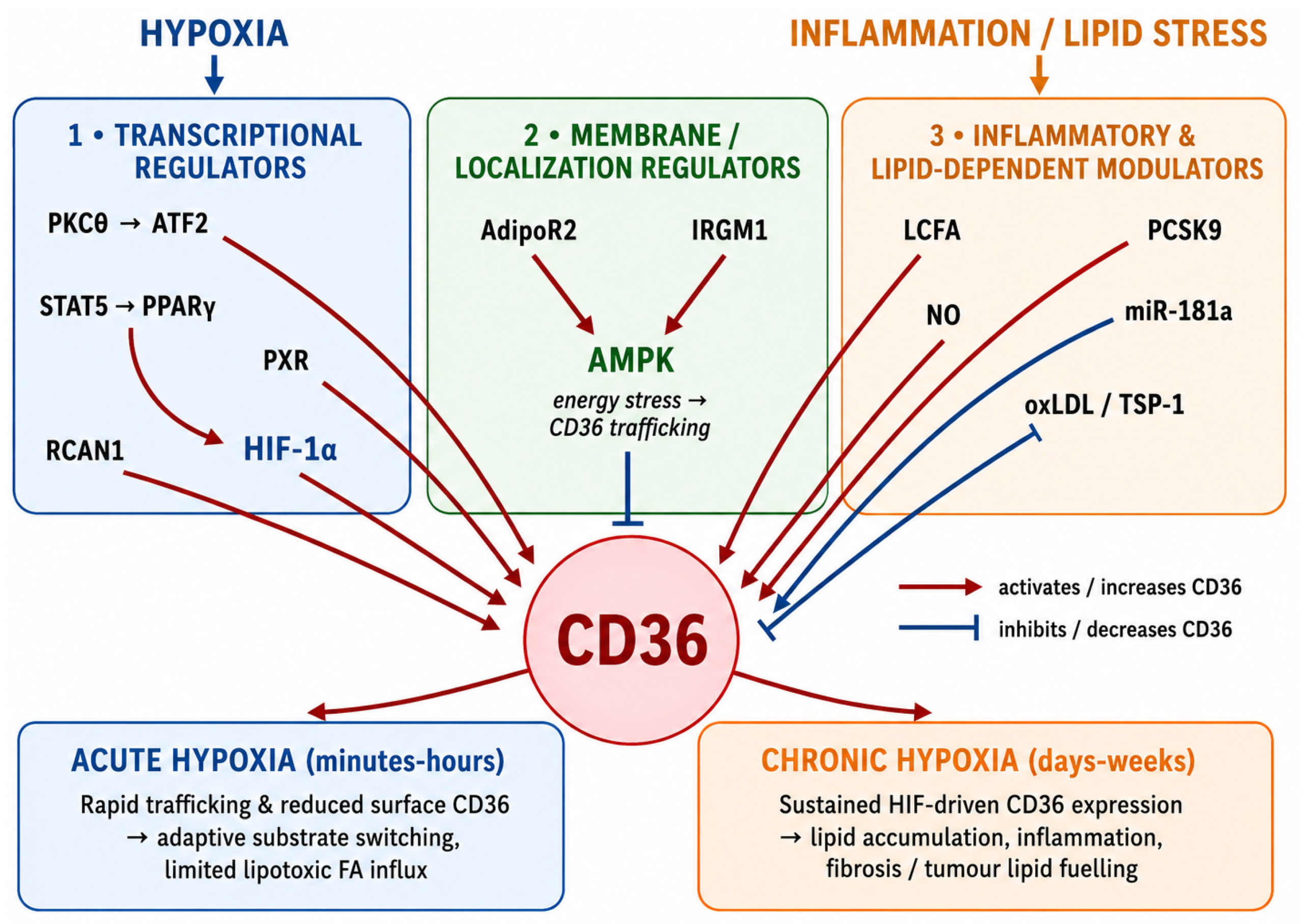
2.3.1. Transcriptional Regulators
2.3.2. Membrane/Localization Regulators
2.3.3. Inflammatory and Lipid-Dependent Modulators
2.4. Pharmacological Modulation of CD36
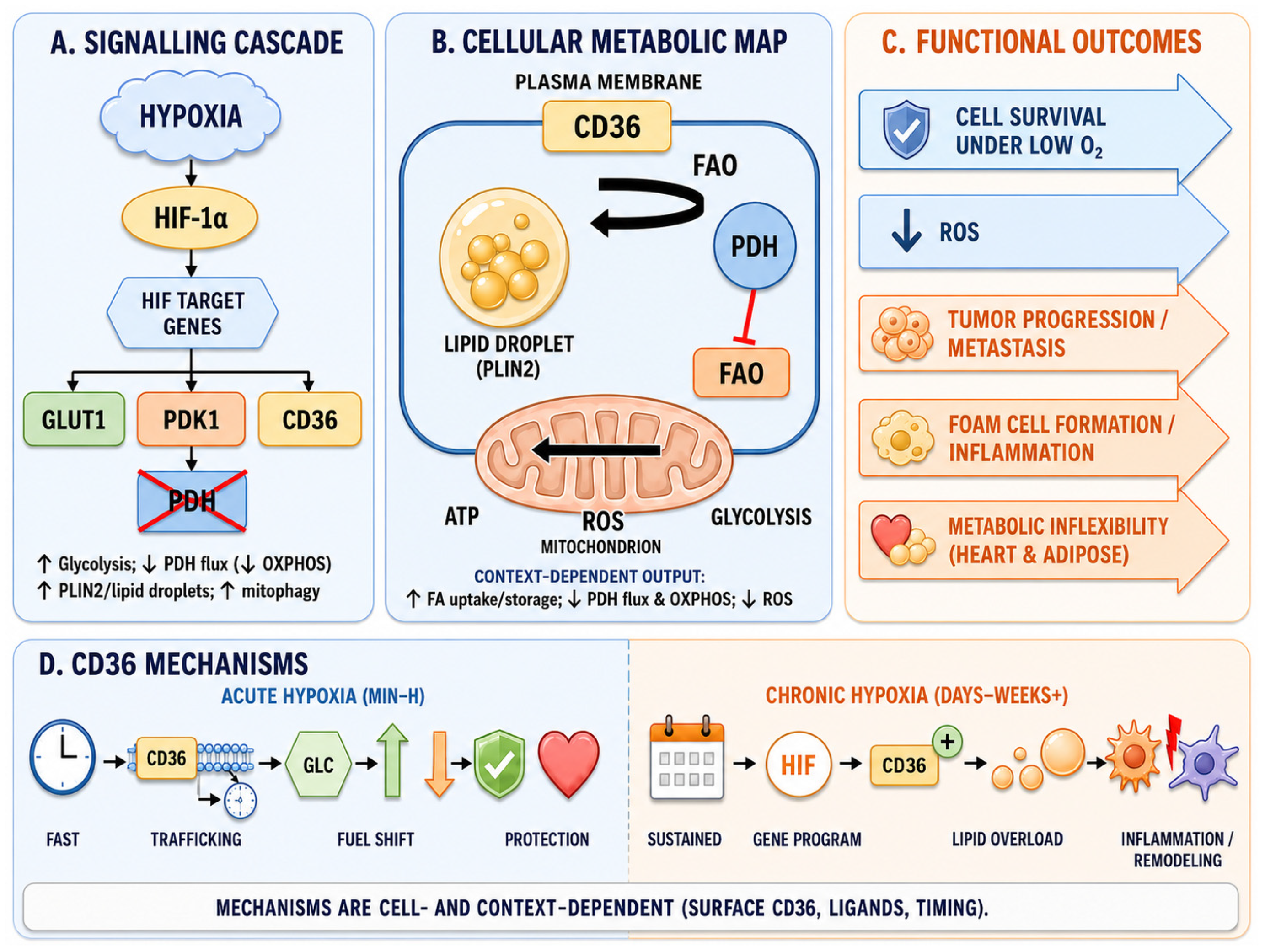
3. Mechanisms Linking Hypoxia to CD36
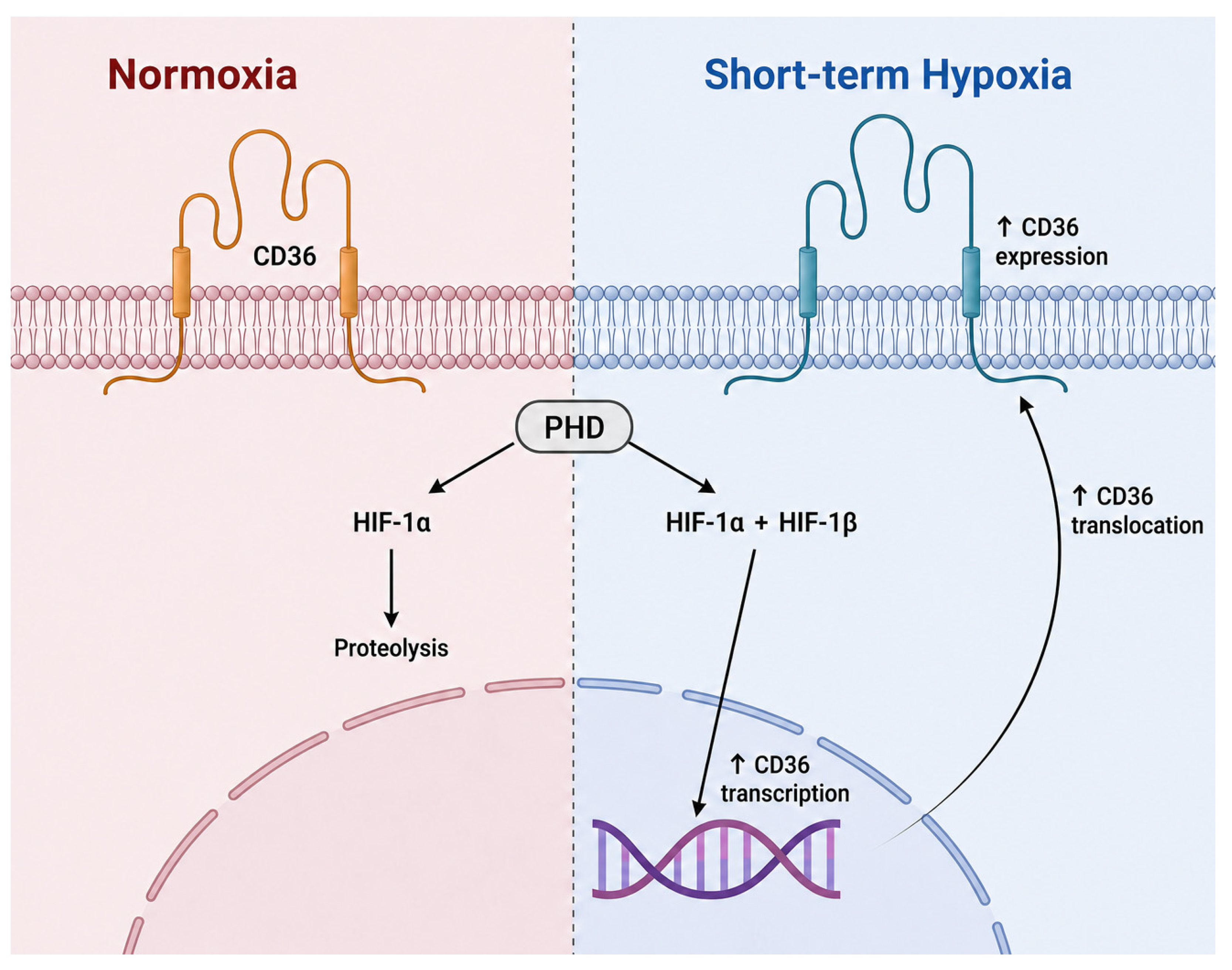
3.1. HIF-Dependent Transcription
3.2. AMPK and Energy Stress
3.3. Trafficking and Membrane Localization
3.4. Posttranslational Modifications (PTMs) and the Ligand Environment
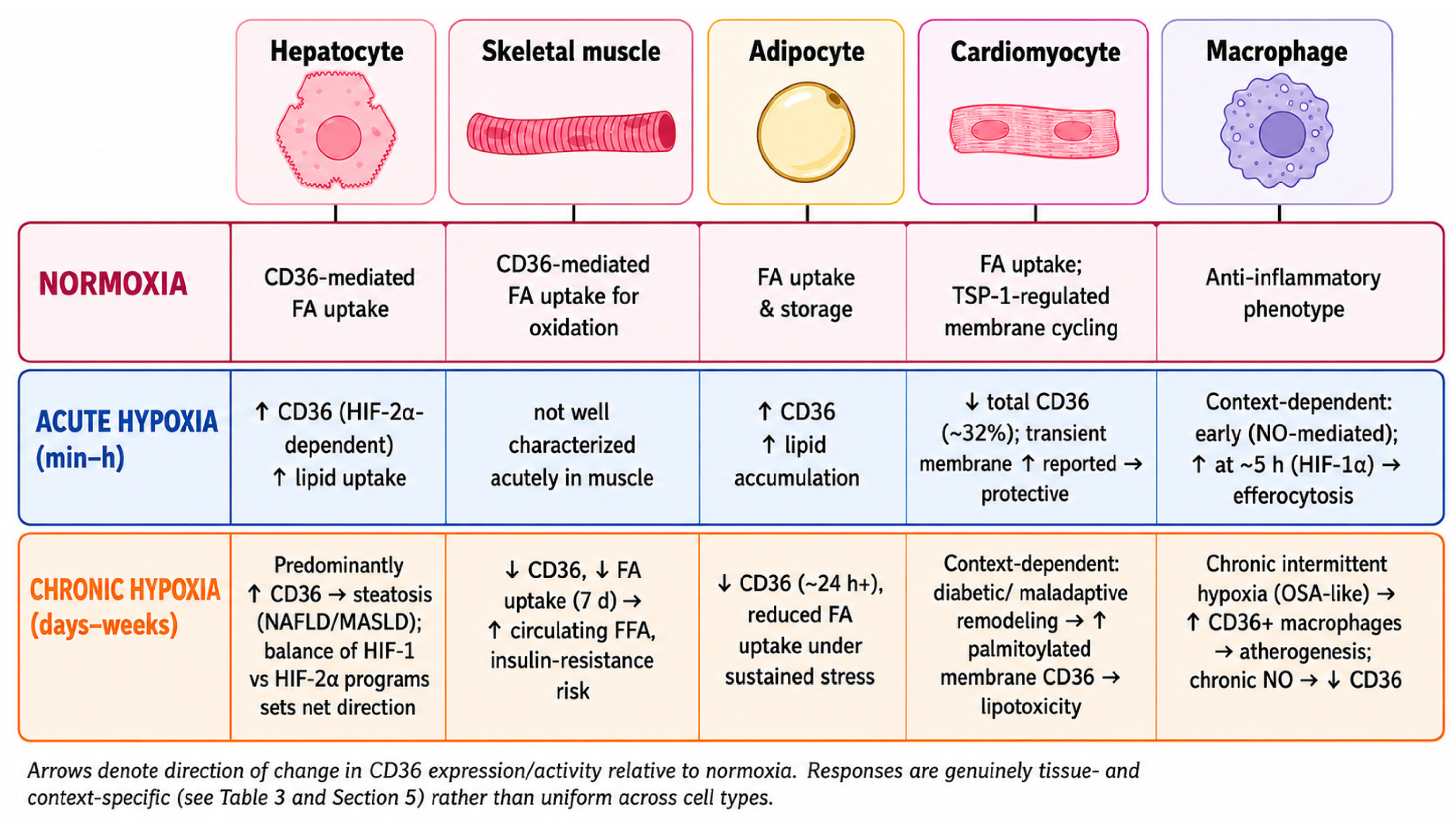
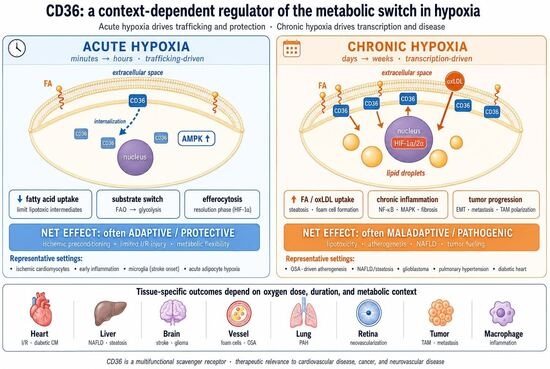
4. CD36 in Acute vs. Chronic Hypoxia
5. Tissue-Specific Implications
5.1. Cardiovascular Disease
5.2. Skeletal Muscle
5.3. Liver Disease
5.4. Tumorigenesis
5.5. Brain Hypoxia
5.5.1. Acute Hypoxia
5.5.2. Chronic Hypoxia
5.6. Retinal Hypoxia
5.7. Macrophages and Inflammation
6. Therapeutic Implications and Future Perspectives
7. Limitations of the Current Literature
8. Conclusions
Author Contributions
Funding
Institutional Review Board Statement
Informed Consent Statement
Data Availability Statement
Acknowledgments
Conflicts of Interest
Abbreviations
| Aβ | amyloid beta |
| ACADM | acyl-CoA dehydrogenase, medium chain |
| AdipoR2 | adiponectin receptor 2 |
| AMPK | AMP-activated protein kinase |
| APP/PS1 | amyloid precursor protein/presenilin 1 |
| ATF2 | activating transcription factor 2 |
| ATP | adenosine triphosphate |
| CAFs | cancer-associated fibroblasts |
| CECs | circulating endothelial cells |
| CD36 | cluster of differentiation 36 |
| CPT1 | carnitine palmitoyltransferase 1 |
| DAG | diacylglycerol |
| EMT | epithelial–mesenchymal transition |
| ER | estrogen receptor |
| FA | fatty acid |
| FAO | fatty acid oxidation |
| FAT | fatty acid translocase |
| FFA | free fatty acid |
| GLU | glucose |
| GLUT1 | glucose transporter 1 |
| GLUT4 | glucose transporter 4 |
| GP IV | glycoprotein IV |
| HCC | hepatocellular carcinoma |
| HIF | hypoxia-inducible factor |
| HIF-1α | hypoxia-inducible factor 1 alpha |
| HIF-2α | hypoxia-inducible factor 2 alpha |
| iNOS | inducible nitric oxide synthase |
| IRGM1 | immunity-related GTPase family M member 1 |
| I/R | ischemia–reperfusion |
| KO | knockout |
| LCFA | long-chain fatty acid |
| LCFAs | long-chain fatty acids |
| LOX-1 | lectin-like oxidized low-density lipoprotein receptor 1 |
| MAPK | mitogen-activated protein kinase |
| MCAO | middle cerebral artery occlusion |
| miR-181a | microRNA-181a |
| NAFLD | nonalcoholic fatty liver disease |
| Nrf2 | nuclear factor erythroid 2-related factor 2 |
| NO | nitric oxide |
| O2 | oxygen |
| OSA | obstructive sleep apnea |
| oxLDL | oxidized low-density lipoprotein |
| PAH | pulmonary arterial hypertension |
| PDH | pyruvate dehydrogenase |
| PDK1 | pyruvate dehydrogenase kinase 1 |
| PGC1-α | peroxisome proliferator-activated receptor gamma coactivator 1 alpha |
| PHD | prolyl hydroxylase domain |
| PKCθ | protein kinase C theta |
| PLIN2 | perilipin 2 |
| PPAR-α | peroxisome proliferator-activated receptor alpha |
| PPAR-γ | peroxisome proliferator-activated receptor gamma |
| PTM | posttranslational modification |
| PTMs | posttranslational modifications |
| PXR | pregnane X receptor |
| RCAN1 | regulator of calcineurin 1 |
| ROS | reactive oxygen species |
| SIRT3 | sirtuin 3 |
| SLC27A4 | solute carrier family 27 member 4 |
| Src | Src family kinase |
| SR-B2 | scavenger receptor B2 |
| STAT5 | signal transducer and activator of transcription 5 |
| TAMs | tumor-associated macrophages |
| TME | tumor microenvironment |
| Treg/Tregs | regulatory T cell(s) |
| TSP | thrombospondin |
| TSP-1 | thrombospondin-1 |
| TSP-2 | thrombospondin-2 |
| VEGF | vascular endothelial growth factor |
| VEGFR2 | vascular endothelial growth factor receptor 2 |
| VLDLR | very low-density lipoprotein receptor |
| VM | vascular mimicry |
References
- Niculite, C.-M.; Enciu, A.-M.; Hinescu, M.E. CD36: Focus on Epigenetic and Post-Transcriptional Regulation. Front. Genet. 2019, 10, 680. [Google Scholar] [CrossRef] [Scilit] [PubMed]
- Tan, C.M.J.; Lewandowski, A.J.; Williamson, W.; Huckstep, O.J.; Yu, G.Z.; Fischer, R.; Simon, J.N.; Alsharqi, M.; Mohamed, A.; Leeson, P. Proteomic signature of dysfunctional circulating endothelial colony-forming cells of young adults. J. Am. Heart Assoc. 2021, 10, e021119. [Google Scholar] [CrossRef] [Scilit] [PubMed]
- Frank, A.C.; Ebersberger, S.; Fink, A.F.; Lampe, S.; Weigert, A.; Schmid, T.; Ebersberger, I.; Syed, S.N.; Brüne, B. Apoptotic tumor cell-derived microRNA-375 uses CD36 to alter the tumor-associated macrophage phenotype. Nat. Commun. 2019, 10, 1135. [Google Scholar] [CrossRef] [Scilit] [PubMed]
- Yu, M.; Du, H.; Wang, B.; Chen, J.; Lu, F.; Peng, S.; Sun, Y.; Liu, N.; Sun, X.; Shiyun, D.; et al. Exogenous H(2)S Induces Hrd1 S-sulfhydration and Prevents CD36 Translocation via VAMP3 Ubiquitylation in Diabetic Hearts. Aging Dis. 2020, 11, 286–300. [Google Scholar] [CrossRef] [Scilit] [PubMed]
- Hou, Y.; Wu, M.; Wei, J.; Ren, Y.; Du, C.; Wu, H.; Li, Y.; Shi, Y. CD36 is involved in high glucose-induced epithelial to mesenchymal transition in renal tubular epithelial cells. Biochem. Biophys. Res. Commun. 2015, 468, 281–286. [Google Scholar] [CrossRef] [Scilit] [PubMed]
- Couturier, J.; Nuotio-Antar, A.M.; Agarwal, N.; Wilkerson, G.K.; Saha, P.; Kulkarni, V.; Lakhashe, S.K.; Esquivel, J.; Nehete, P.N.; Ruprecht, R.M. Lymphocytes upregulate CD36 in adipose tissue and liver. Adipocyte 2019, 8, 154–163. [Google Scholar] [CrossRef] [Scilit] [PubMed]
- Yang, M.; Kholmukhamedov, A.; Schulte, M.L.; Cooley, B.C.; Scoggins, N.O.; Wood, J.P.; Cameron, S.J.; Morrell, C.N.; Jobe, S.M.; Silverstein, R.L. Platelet CD36 signaling through ERK5 promotes caspase-dependent procoagulant activity and fibrin deposition in vivo. Blood Adv. 2018, 2, 2848. [Google Scholar] [CrossRef] [Scilit] [PubMed]
- Shu, H.; Peng, Y.; Hang, W.; Nie, J.; Zhou, N.; Wang, D.W. The role of CD36 in cardiovascular disease. Cardiovasc. Res. 2022, 118, 115–129. [Google Scholar] [CrossRef] [Scilit] [PubMed]
- Son, N.H.; Basu, D.; Samovski, D.; Pietka, T.A.; Peche, V.S.; Willecke, F.; Fang, X.; Yu, S.Q.; Scerbo, D.; Chang, H.R. Endothelial cell CD36 optimizes tissue fatty acid uptake. J. Clin. Investig. 2018, 128, 4329–4342. [Google Scholar] [CrossRef] [Scilit] [PubMed]
- Burchardt, P.; Farinacci, M.; Mayer, M.; Luecke, K.; Krahn, T.; Manczak, J.; Slomczynski, M.; Hiczkiewicz, J.; Rzezniczak, J. Characteristics of circulating endothelial cells obtained from non-st-segment elevation myocardial infarction patients with additional diastolic dysfunction of left ventricle observed in echocardiography. Cardiol. J. 2020, 27, 295–302. [Google Scholar] [CrossRef] [Scilit] [PubMed]
- Ladanyi, A.; Mukherjee, A.; Kenny, H.A.; Johnson, A.; Mitra, A.K.; Sundaresan, S.; Nieman, K.M.; Pascual, G.; Benitah, S.A.; Montag, A. Adipocyte-induced CD36 expression drives ovarian cancer progression and metastasis. Oncogene 2018, 37, 2285. [Google Scholar] [CrossRef] [Scilit] [PubMed]
- Barbu, E.; Popescu, M.R.; Popescu, A.C.; Balanescu, S.M. Inflammation as A Precursor of Atherothrombosis, Diabetes and Early Vascular Aging. Int. J. Mol. Sci. 2022, 23, 963. [Google Scholar] [CrossRef] [Scilit] [PubMed]
- Glatz, J.F.C.; Luiken, J.J.F.P.; Bonen, A. Membrane Fatty Acid Transporters as Regulators of Lipid Metabolism: Implications for Metabolic Disease. Physiol. Rev. 2010, 90, 367–417. [Google Scholar] [CrossRef] [Scilit] [PubMed]
- Silverstein, R.L.; Febbraio, M. CD36, a Scavenger Receptor Involved in Immunity, Metabolism, Angiogenesis, and Behavior. Sci. Signal. 2009, 2, re3. [Google Scholar] [CrossRef] [Scilit] [PubMed]
- Chu, L.-Y.; Ramakrishnan, D.P.; Silverstein, R.L. Thrombospondin-1 modulates VEGF signaling via CD36 by recruiting SHP-1 to VEGFR2 complex in microvascular endothelial cells. Blood 2013, 122, 1822–1832. [Google Scholar] [CrossRef] [Scilit] [PubMed]
- Kumar, A.; Gupta, P.; Rana, M.; Chandra, T.; Dikshit, M.; Barthwal, M.K. Role of Pyruvate Kinase M2 in Oxidized LDL-Induced Macrophage Foam Cell Formation and Inflammation. J. Lipid Res. 2020, 61, 351–364. [Google Scholar] [CrossRef] [Scilit] [PubMed]
- Greenberg, M.E.; Sun, M.; Zhang, R.; Febbraio, M.; Silverstein, R.; Hazen, S.L. Oxidized phosphatidylserine–CD36 interactions play an essential role in macrophage-dependent phagocytosis of apoptotic cells. J. Exp. Med. 2006, 203, 2613–2625. [Google Scholar] [CrossRef] [Scilit] [PubMed]
- Goto, K.; Iso, T.; Hanaoka, H.; Yamaguchi, A.; Suga, T.; Hattori, A.; Irie, Y.; Shinagawa, Y.; Matsui, H.; Syamsunarno, M. Peroxisome proliferator-activated receptor-γ in capillary endothelia promotes fatty acid uptake by heart during long-term fasting. J. Am. Heart Assoc. 2013, 2, e004861. [Google Scholar] [CrossRef] [Scilit]
- Tian, K.; Xu, Y.; Sahebkar, A.; Xu, S. CD36 in Atherosclerosis: Pathophysiological Mechanisms and Therapeutic Implications. Curr. Atheroscler. Rep. 2020, 22, 59. [Google Scholar] [CrossRef] [Scilit] [PubMed]
- Ulug, E.; Nergiz-Unal, R. Dietary fatty acids and CD36-mediated cholesterol homeostasis: Potential mechanisms. Nutr. Res. Rev. 2021, 34, 64–77. [Google Scholar] [PubMed]
- Díez, I.; Calatayud, S.; Hernández, C.; Quintana, E.; O’Connor, J.; Esplugues, J.; Barrachina, M.D. Nitric oxide, derived from inducible nitric oxide synthase, decreases hypoxia inducible factor-1α in macrophages during aspirin-induced mesenteric inflammation. Br. J. Pharmacol. 2010, 159, 1636–1645. [Google Scholar] [CrossRef] [Scilit] [PubMed]
- Cammisotto, V.; Pastori, D.; Nocella, C.; Bartimoccia, S.; Castellani, V.; Marchese, C.; Scavalli, A.S.; Ettorre, E.; Viceconte, N.; Violi, F. PCSK9 Regulates Nox2-Mediated Platelet Activation via CD36 Receptor in Patients with Atrial Fibrillation. Antioxidants 2020, 9, 296. [Google Scholar] [CrossRef] [Scilit] [PubMed]
- Barale, C.; Bonomo, K.; Frascaroli, C.; Morotti, A.; Guerrasio, A.; Cavalot, F.; Russo, I. Platelet Function and Activation Markers in Primary Hypercholesterolemia Treated with Anti-PCSK9 Monoclonal Antibody: A 12-Month Follow-Up. Nutr. Metab. Cardiovasc. Dis. 2020, 30, 282–291. [Google Scholar] [CrossRef] [Scilit] [PubMed]
- Ortiz-Masià, D.; Díez, I.; Calatayud, S.; Hernández, C.; Cosín-Roger, J.; Hinojosa, J.; Esplugues, J.V.; Barrachina, M.D. Induction of CD36 and Thrombospondin-1 in Macrophages by Hypoxia-Inducible Factor 1 and Its Relevance in the Inflammatory Process. PLoS ONE 2012, 7, e48535. [Google Scholar] [CrossRef] [Scilit] [PubMed]
- Yano, M.; Matsumura, T.; Senokuchi, T.; Ishii, N.; Murata, Y.; Taketa, K.; Motoshima, H.; Taguchi, T.; Sonoda, K.; Kukidome, D.; et al. Statins activate peroxisome proliferator-activated receptor γ through extracellular signal-regulated kinase 1/2 and p38 mitogen-activated protein kinase-dependent cyclooxygenase-2 expression in macrophages. Circ. Res. 2007, 100, 1442–1451. [Google Scholar] [CrossRef] [Scilit] [PubMed]
- Lara-Guzmán, O.J.; Tabares-Guevara, J.H.; Leon-Varela, Y.M.; Álvarez, R.M.; Roldan, M.; Sierra, J.A.; Londoño-Londoño, J.A.; Ramirez-Pineda, J.R. Proatherogenic macrophage activities are targeted by the flavonoid quercetin. J. Pharmacol. Exp. Ther. 2012, 343, 296–306. [Google Scholar] [CrossRef] [Scilit] [PubMed]
- Semenza, G.L. Signal transduction to hypoxia-inducible factor 1. Biochem. Pharmacol. 2002, 64, 993–998. [Google Scholar] [CrossRef] [Scilit] [PubMed]
- Rey, E.; Meléndez-Rodríguez, F.; Marañón, P.; Gil-Valle, M.; Carrasco, A.G.; Torres-Capelli, M.; Chávez, S.; del Pozo-Maroto, E.; Rodríguez de Cía, J.; Aragonés, J.; et al. Hypoxia-inducible factor 2α drives hepatosteatosis through the fatty acid translocase CD36. Liver Int. 2020, 40, 2553–2567. [Google Scholar] [CrossRef] [Scilit] [PubMed]
- Wenger, R.H. Cellular adaptation to hypoxia: O2-sensing protein hydroxylases, hypoxia-inducible transcription factors, and O2-regulated gene expression. FASEB J. 2002, 16, 1151–1162. [Google Scholar] [CrossRef] [Scilit] [PubMed]
- Arai, T.; Tanaka, M.; Goda, N. HIF-1-dependent lipin1 induction prevents excessive lipid accumulation in choline-deficient diet-induced fatty liver. Sci. Rep. 2018, 8, 14230. [Google Scholar] [CrossRef] [Scilit] [PubMed]
- Laderoute, K.R.; Amin, K.; Calaoagan, J.M.; Knapp, M.; Le, T.; Orduna, J.; Foretz, M.; Viollet, B. 5′-AMP-activated protein kinase (AMPK) is induced by low-oxygen and glucose deprivation conditions found in solid-tumor microenvironments. Mol. Cell. Biol. 2006, 26, 5336–5347. [Google Scholar] [CrossRef] [Scilit] [PubMed]
- Kim, J.W.; Tchernyshyov, I.; Semenza, G.L.; Dang, C.V. HIF-1-mediated expression of pyruvate dehydrogenase kinase: A metabolic switch required for cellular adaptation to hypoxia. Cell Metab. 2006, 3, 177–185. [Google Scholar] [CrossRef] [Scilit] [PubMed]
- Papandreou, I.; Cairns, R.A.; Fontana, L.; Lim, A.L.; Denko, N.C. HIF-1 mediates adaptation to hypoxia by actively downregulating mitochondrial oxygen consumption. Cell Metab. 2006, 3, 187–197. [Google Scholar] [CrossRef] [Scilit] [PubMed]
- Glatz, J.F.C.; Heather, L.C.; Luiken, J. CD36 as a gatekeeper of myocardial lipid metabolism and therapeutic target for metabolic disease. Physiol. Rev. 2024, 104, 727–764. [Google Scholar] [CrossRef] [Scilit] [PubMed]
- Glatz, J.F.C.; Luiken, J.J.F.P. Dynamic role of the transmembrane glycoprotein CD36 (SR-B2) in cellular fatty acid uptake and utilization. J. Lipid Res. 2018, 59, 1084–1093. [Google Scholar] [CrossRef] [Scilit] [PubMed]
- Chabowski, A.; Górski, J.; Calles-Escandon, J.; Tandon, N.N.; Bonen, A. Hypoxia-induced fatty acid transporter translocation increases fatty acid transport and contributes to lipid accumulation in the heart. FEBS Lett. 2006, 580, 3617–3623. [Google Scholar] [CrossRef] [Scilit] [PubMed]
- Dorion, M.-F.; Mulumba, M.; Kasai, S.; Itoh, K.; Lubell, W.D.; Ong, H. The CD36 Ligand-Promoted Autophagy Protects Retinal Pigment Epithelial Cells from Oxidative Stress. Oxidative Med. Cell. Longev. 2021, 2021, 6691402. [Google Scholar] [CrossRef] [Scilit] [PubMed]
- Su, Z.; Liu, Y.; Zhang, H. Adaptive Cardiac Metabolism Under Chronic Hypoxia: Mechanism and Clinical Implications. Front. Cell Dev. Biol. 2021, 9, 625524. [Google Scholar] [CrossRef] [Scilit] [PubMed]
- Chen, Y.P.; Hsu, H.H.; Baskaran, R.; Wen, S.Y.; Shen, C.Y.; Day, C.H.; Ho, T.J.; Vijaya Padma, V.; Kuo, W.W.; Huang, C.Y. Short-Term Hypoxia Reverses Ox-LDL-Induced CD36 and GLUT4 Switching Metabolic Pathways in H9c2 Cardiomyoblast Cells. J. Cell Biochem. 2017, 118, 3785–3795. [Google Scholar] [CrossRef] [Scilit] [PubMed]
- Chen, Y.P.; Kuo, W.W.; Baskaran, R.; Day, C.H.; Chen, R.J.; Wen, S.Y.; Ho, T.J.; Padma, V.V.; Kuo, C.H.; Huang, C.Y. Acute hypoxic preconditioning prevents palmitic acid-induced cardiomyocyte apoptosis by switching metabolic GLUT4-glucose pathway back to CD36-fatty acid dependent. J. Cell Biochem. 2018, 119, 3363–3372. [Google Scholar] [CrossRef] [Scilit] [PubMed]
- Cortese, R.; Gileles-Hillel, A.; Khalyfa, A.; Almendros, I.; Akbarpour, M.; Khalyfa, A.A.; Qiao, Z.; Garcia, T.; Andrade, J.; Gozal, D. Aorta macrophage inflammatory and epigenetic changes in a murine model of obstructive sleep apnea: Potential role of CD36. Sci. Rep. 2017, 7, 43648. [Google Scholar] [CrossRef] [Scilit] [PubMed]
- Diaz-Garcia, E.; Sanz-Rubio, D.; Garcia-Tovar, S.; Alfaro, E.; Cubero, P.; Gil, A.V.; Marin, J.M.; Cubillos-Zapata, C.; Garcia-Rio, F. Inflammasome activation mediated by oxidized low-density lipoprotein in patients with sleep apnea and early subclinical atherosclerosis. Eur. Respir. J. 2023, 61, 2201401. [Google Scholar] [CrossRef] [Scilit] [PubMed]
- Chen, C.Y.; Qin, S.R.; Song, X.H.; Wen, J.; Huang, W.; Sheng, Z.; Li, X.G.; Cao, Y. PI3K p85α/HIF-1α Accelerates the Development of Pulmonary Arterial Hypertension by Regulating Fatty Acid Uptake and Mitophagy. Mol. Med. 2024, 30, 208. [Google Scholar] [CrossRef] [Scilit] [PubMed]
- Yin, J.; Gao, Z.; He, Q.; Zhou, D.; Guo, Z.; Ye, J. Role of hypoxia in obesity-induced disorders of glucose and lipid metabolism in adipose tissue. Am. J. Physiol.-Endocrinol. Metab. 2009, 296, E333–E342. [Google Scholar] [CrossRef] [Scilit] [PubMed]
- Tanase, C.; Enciu, A.M.; Codrici, E.; Popescu, I.D.; Dudau, M.; Dobri, A.M.; Pop, S.; Mihai, S.; Gheorghișan-Gălățeanu, A.A.; Hinescu, M.E. Fatty Acids, CD36, Thrombospondin-1, and CD47 in Glioblastoma: Together and/or Separately? Int. J. Mol. Sci. 2022, 23, 604. [Google Scholar] [CrossRef] [Scilit] [PubMed]
- Miska, J.; Lee-Chang, C.; Rashidi, A.; Ahmed, A.U.; Chandel, N.S.; Lesniak, M.S. HIF-1α Is a Metabolic Switch between Glycolytic-Driven Migration and Oxidative Phosphorylation-Driven Immunosuppression of Tregs in Glioblastoma. Cell Rep. 2019, 27, 226–237.e224. [Google Scholar] [CrossRef] [Scilit] [PubMed]
- Min, Y.; Yan, L.; Wang, Q.; Wang, F.; Hua, H.; Yuan, Y.; Jin, H.; Zhang, M.; Zhao, Y.; Yang, J.; et al. Distinct Residential and Infiltrated Macrophage Populations and Their Phagocytic Function in Mild and Severe Neonatal Hypoxic-Ischemic Brain Damage. Front. Cell. Neurosci. 2020, 14, 244. [Google Scholar] [CrossRef] [Scilit] [PubMed]
- Kitakaze, T.; Sugihira, T.; Kameyama, H.; Maruchi, A.; Kobayashi, Y.; Harada, N.; Yamaji, R. Carotenoid Transporter CD36 Expression Depends on Hypoxia-Inducible Factor-1α in Mouse Soleus Muscles. J. Clin. Biochem. Nutr. 2022, 71, 112–121. [Google Scholar] [CrossRef] [Scilit] [PubMed]
- Ding, M.; Zhang, Y.; Xu, X.; Zhu, Y.; He, H.; Jiang, T.; Huang, Y.; Yu, W.; Ou, H. Acid sphingomyelinase recruits palmitoylated CD36 to membrane rafts and enhances lipid uptake. J. Biol. Chem. 2025, 301, 110213. [Google Scholar] [CrossRef] [Scilit] [PubMed]
- Love-Gregory, L.; Sherva, R.; Sun, L.; Wasson, J.; Schappe, T.; Doria, A.; Rao, D.C.; Hunt, S.C.; Klein, S.; Neuman, R.J.; et al. Variants in the CD36 gene associate with the metabolic syndrome and high-density lipoprotein cholesterol. Hum. Mol. Genet. 2008, 17, 1695–1704. [Google Scholar] [CrossRef] [Scilit] [PubMed]
- Zhao, K.; Yan, L.; Sun, X.; Hu, X. O-GlcNAc Transferase-Mediated O-GlcNAcylation of CD36 against Myocardial Ischemia–Reperfusion Injury. Tissue Cell 2025, 95, 102878. [Google Scholar] [CrossRef] [Scilit] [PubMed]
- Heather, L.C.; Pates, K.M.; Atherton, H.J.; Cole, M.A.; Ball, D.R.; Evans, R.D.; Glatz, J.F.; Luiken, J.J.; Griffin, J.L.; Clarke, K. Differential Translocation of the Fatty Acid Transporter, FAT/CD36, and the Glucose Transporter, GLUT4, Coordinates Changes in Cardiac Substrate Metabolism During Ischemia and Reperfusion. Circ. Heart Fail. 2013, 6, 1058–1066. [Google Scholar] [CrossRef] [Scilit] [PubMed]
- Barroso, E.; Rodriguez-Rodriguez, R.; Zarei, M.; Pizarro-Degado, J.; Planavila, A.; Palomer, X.; Villarroya, F.; Vazquez-Carrera, M. SIRT3 deficiency exacerbates fatty liver by attenuating the HIF1alpha-LIPIN 1 pathway and increasing CD36 through Nrf2. Cell Commun. Signal. 2020, 18, 147. [Google Scholar] [CrossRef] [Scilit] [PubMed]
- Koh, M.Y.; Powis, G. Passing the baton: The HIF switch. Trends Biochem. Sci. 2012, 37, 364–372. [Google Scholar] [CrossRef] [Scilit] [PubMed]
- Aoki, T.; Kinoshita, J.; Munesue, S.; Hamabe-Horiike, T.; Yamaguchi, T.; Nakamura, Y.; Okamoto, K.; Moriyama, H.; Nakamura, K.; Harada, S.; et al. Hypoxia-Induced CD36 Expression in Gastric Cancer Cells Promotes Peritoneal Metastasis via Fatty Acid Uptake. Ann. Surg. Oncol. 2023, 30, 3125–3136. [Google Scholar] [CrossRef] [Scilit] [PubMed]
- Woo, M.S.; Yang, J.; Beltran, C.; Cho, S. Cell Surface CD36 Protein in Monocyte/Macrophage Contributes to Phagocytosis During the Resolution Phase of Ischemic Stroke in Mice. J. Biol. Chem. 2016, 291, 23654–23661. [Google Scholar] [CrossRef] [Scilit] [PubMed]
- Kim, E.H.; Tolhurst, A.T.; Szeto, H.H.; Cho, S.H. Targeting CD36-mediated inflammation reduces acute brain injury in transient, but not permanent, ischemic stroke. CNS Neurosci. Ther. 2015, 21, 385–391. [Google Scholar] [PubMed]
- Liao, X.; Yan, S.; Li, J.; Jiang, C.; Huang, S.; Liu, S.; Zou, X.; Zhang, G.; Zou, J.; Liu, Q. CD36 and Its Role in Regulating the Tumor Microenvironment. Curr. Oncol. 2022, 29, 8133–8145. [Google Scholar] [CrossRef] [Scilit] [PubMed]
- Mansor, L.S.; Sousa Fialho, M.D.L.; Yea, G.; Coumans, W.A.; West, J.A.; Kerr, M.; Carr, C.A.; Luiken, J.; Glatz, J.F.C.; Evans, R.D.; et al. Inhibition of sarcolemmal FAT/CD36 by sulfo-N-succinimidyl oleate rapidly corrects metabolism and restores function in the diabetic heart following hypoxia/reoxygenation. Cardiovasc. Res. 2017, 113, 737–748. [Google Scholar] [CrossRef] [Scilit] [PubMed]
- Dodd, M.S.; Da Luz, M.; Fialho, S.; Montes Aparicio, C.N.; Kerr, M.; Timm, K.N.; Griffin, J.L.; Luiken, J.; Glatz, J.F.C.; Tyler, D.J. Fatty Acids Prevent Hypoxia-Inducible Factor-1α Signaling Through Decreased Succinate in Diabetes. JACC Basic Transl. Sci. 2018, 3, 485–498. [Google Scholar] [CrossRef] [Scilit] [PubMed]
- Zhang, Q.; Li, J.; Liu, X.; Chen, X.; Zhu, L.; Zhang, Z.; Hu, Y.; Zhao, T.; Lou, H.; Xu, H.; et al. Inhibiting CD36 palmitoylation improves cardiac function postinfarction by regulating lipid metabolic homeostasis and autophagy. Nat. Commun. 2025, 16, 6602. [Google Scholar] [CrossRef] [Scilit] [PubMed]
- Zhao, L.; Varghese, Z.; Moorhead, J.F.; Chen, Y.; Ruan, X.Z. CD36 and lipid metabolism in the evolution of atherosclerosis. Br. Med. Bull. 2018, 126, 101–112. [Google Scholar] [CrossRef] [Scilit] [PubMed]
- Choromanska, B.; Mysliwiec, P.; Choromanska, K.; Dadan, J.; Chabowski, A. The role of CD36 receptor in the pathogenesis of atherosclerosis. Adv. Clin. Exp. Med. 2017, 26, 717–722. [Google Scholar] [CrossRef] [Scilit] [PubMed]
- Zheng, A.; Cao, L.; Qin, S.; Chen, Y.; Li, Y.; Zhang, D. Exenatide Regulates Substrate Preferences Through the p38γ MAPK Pathway After Ischemia/Reperfusion Injury in a Rat Heart. Heart Lung Circ. 2017, 26, 404–412. [Google Scholar] [CrossRef] [Scilit] [PubMed]
- Niwa, K. Metabolic Syndrome in Adult Congenital Heart Disease. Korean Circ. J. 2019, 49, 691–708. [Google Scholar] [CrossRef] [Scilit] [PubMed]
- Nedvedova, I.; Kolar, D.; Neckar, J.; Kalous, M.; Pravenec, M.; Silhavil, J.; Korenkova, V.; Kolar, F.; Zurmanova, J.M. Cardioprotective Regimen of Adaptation to Chronic Hypoxia Diversely Alters Myocardial Gene Expression in SHR and SHR-mtBN Conplastic Rat Strains. Front. Endocrinol. 2019, 9, 809. [Google Scholar] [CrossRef] [Scilit] [PubMed]
- Liu, Y.; Sun, L.; Zheng, L.; Su, M.; Liu, H.; Wei, Y.; Li, D.; Wang, Y.; Dai, C.; Gong, Y. Spexin protects cardiomyocytes from hypoxia-induced metabolic and mitochondrial dysfunction. Naunyn Schmiedebergs Arch. Pharmacol. 2020, 393, 25–33. [Google Scholar] [PubMed]
- Musutova, M.; Elkalaf, M.; Klubickova, N.; Koc, M.; Povysil, S.; Rambousek, J.; Volckaert, B.; Duska, F.; Trinh, M.D.; Kalous, M. The effect of hypoxia and metformin on fatty acid uptake, storage, and oxidation in L6 differentiated myotubes. Front. Endocrinol. 2018, 9, 616. [Google Scholar] [CrossRef] [Scilit]
- Gao, F.; Feng, X.; Yao, Q.; Ji, W.; Zhang, X.; Pan, Q.; Zhu, B.; Yu, J.; Cao, H.; Zhang, X. A Somatic Mutation in HIF-2α Affects Glucose and Lipid Metabolism via CD36 and Ceramide. FASEB J. 2026, 40, e71394. [Google Scholar] [CrossRef] [Scilit] [PubMed]
- Qu, J.; Li, D.; Jin, J.; Sun, N.; Wu, J.; Yang, C.; Wu, L.; Zhuang, S.; Wu, H.; Chen, R.; et al. Hypoxia-Inducible Factor 2α Attenuates Renal Ischemia–Reperfusion Injury by Suppressing CD36-Mediated Lipid Accumulation in Dendritic Cells in a Mouse Model. J. Am. Soc. Nephrol. 2023, 34, 73–87. [Google Scholar] [CrossRef] [Scilit] [PubMed]
- Zhang, Q.; Li, F.; Ge, Q.; Wang, Y.; Shen, Z.; Guo, Y.; Wang, J.; Zhangdi, H.; Lu, J.; Gao, J.; et al. YBX1/CD36 positive feedback loop-mediated lipid accumulation drives metabolic dysfunction-associated steatotic liver disease. Int. J. Biol. Sci. 2025, 21, 2118–2134. [Google Scholar] [CrossRef] [Scilit] [PubMed]
- Khandekar, M.J.; Cohen, P.; Spiegelman, B.M. Molecular mechanisms of cancer development in obesity. Nat. Rev. Cancer 2011, 11, 886–895. [Google Scholar] [CrossRef] [Scilit] [PubMed]
- Wang, J.; Li, Y. CD36 tango in cancer: Signaling pathways and functions. Theranostics 2019, 9, 4893–4908. [Google Scholar] [CrossRef] [Scilit] [PubMed]
- Kwon, D.; Park, H.W.; Choi, J. CD36 Regulates Metabolic Reprogramming and Early Cluster Formation of Suspension Cancer Cells During Metastatic Progression. Biochim. Biophys. Acta Mol. Basis Dis. 2026, 1872, 168271. [Google Scholar] [CrossRef] [Scilit] [PubMed]
- Salmaninejad, A.; Valilou, S.F.; Soltani, A.; Ahmadi, S.; Abarghan, Y.J.; Rosengren, R.J.; Sahebkar, A. Tumor-associated macrophages: Role in cancer development and therapeutic implications. Cell. Oncol. 2019, 42, 591. [Google Scholar] [CrossRef] [Scilit] [PubMed]
- Lawler, P.R.; Lawler, J. Molecular Basis for the Regulation of Angiogenesis by Thrombospondin-1 and -2. Cold Spring Harb. Perspect. Med. 2012, 2, a006627. [Google Scholar] [CrossRef] [Scilit] [PubMed]
- Martini, C.; DeNichilo, M.; King, D.P.; Cockshell, M.P.; Ebert, B.; Dale, B.; Ebert, L.M.; Woods, A.; Bonder, C.S.; Martini, C.; et al. CD36 promotes vasculogenic mimicry in melanoma by mediating adhesion to the extracellular matrix. BMC Cancer 2021, 21, 765. [Google Scholar] [CrossRef] [Scilit] [PubMed]
- Ruan, C.; Meng, Y.; Song, H. CD36: An emerging therapeutic target for cancer and its molecular mechanisms. J. Cancer Res. Clin. Oncol. 2022, 148, 1551–1558. [Google Scholar] [CrossRef] [Scilit] [PubMed]
- Lambrescu, I.M.; Gaina, G.F.; Ceafalan, L.C.; Hinescu, M.E. Inside anticancer therapy resistance and metastasis. Focus on CD36. J. Cancer 2024, 15, 1675. [Google Scholar] [CrossRef] [Scilit] [PubMed]
- Liang, Y.; Han, H.; Liu, L.; Duan, Y.; Yang, X.; Ma, C.; Zhu, Y.; Han, J.; Li, X.; Chen, Y. CD36 plays a critical role in proliferation, migration and tamoxifen-inhibited growth of ER-positive breast cancer cells. Oncogenesis 2018, 7, 98. [Google Scholar] [CrossRef] [Scilit] [PubMed]
- Yoshida, T.; Yokobori, T.; Saito, H.; Kuriyama, K.; Kumakura, Y.; Honjo, H.; Hara, K.; Sakai, M.; Miyazaki, T.; Obinata, H. CD36 Expression Is Associated with Cancer Aggressiveness and Energy Source in Esophageal Squamous Cell Carcinoma. Ann. Surg. Oncol. 2021, 28, 1217–1227. [Google Scholar] [PubMed]
- Tzeng, S.F.; Yu, Y.R.; Park, J.; von Renesse, J.; Hsiao, H.W.; Hsu, C.H.; Garnica, J.; Chen, J.; Chiu, L.T.; Santol, J.; et al. PLT012, a Humanized CD36-Blocking Antibody, Is Effective for Unleashing Antitumor Immunity Against Liver Cancer and Liver Metastasis. Cancer Discov. 2025, 15, 1676–1696. [Google Scholar] [CrossRef] [Scilit] [PubMed]
- Ioghen, O.; Chițoiu, L.; Gherghiceanu, M.; Ceafalan, L.C.; Hinescu, M.E. CD36—A novel molecular target in the neurovascular unit. Eur. J. Neurosci. 2021, 53, 2500–2510. [Google Scholar] [CrossRef] [Scilit] [PubMed]
- Bok, S.; Kim, Y.E.; Woo, Y.; Kim, S.; Kang, S.J.; Lee, Y.; Park, S.K.; Weissman, I.L.; Ahn, G.O. Hypoxia-inducible factor-1a regulates microglial functions affecting neuronal survival in the acute phase of ischemic stroke in mice. Oncotarget 2017, 8, 111508–111521. [Google Scholar] [CrossRef] [Scilit] [PubMed]
- Wang, C.J.; Tang, Y.J.; Ma, H.Q.; Wei, S.S.; Hu, X.H.; Zhao, L.M.; Wang, G.Y. Identification of Hypoxia-Related Subtypes, Establishment of Prognostic Models, and Characteristics of Tumor Microenvironment Infiltration in Colon Cancer. Front. Genet. 2022, 13, 919389. [Google Scholar] [CrossRef] [Scilit] [PubMed]
- Wang, C.Y.; Wang, Z.Y.; Xie, J.W.; Cai, J.H.; Wang, T.; Xu, Y.; Wang, X.; An, L. CD36 upregulation mediated by intranasal lv-nrf2 treatment mitigates hypoxia-induced progression of Alzheimer’s-like pathogenesis. Antioxidants 2014, 21, 2208–2230. [Google Scholar] [CrossRef] [Scilit]
- Yang, R.; Liu, Q.; Zhang, M.; Yang, R.; Liu, Q.; Zhang, M. The Past and Present Lives of the Intraocular Transmembrane Protein CD36. Cells 2023, 12, 171. [Google Scholar] [CrossRef] [Scilit] [PubMed]
- Mwaikambo, B.R.; Sennlaub, F.; Ong, H.; Chemtob, S.; Hardy, P. Activation of CD36 Inhibits and Induces Regression of Inflammatory Corneal Neovascularization. Investig. Ophthalmol. Vis. Sci. 2006, 47, 4356–4364. [Google Scholar] [CrossRef] [Scilit] [PubMed]
- Ryeom, S.W.; Sparrow, J.R.; Silverstein, R.L. CD36 participates in the phagocytosis of rod outer segments by retinal pigment epithelium. J. Cell Sci. 1996, 109, 387–395. [Google Scholar] [CrossRef] [Scilit] [PubMed]
- Xu, Z.; Kuhlmann-Hogan, A.; Xu, S.; Tseng, H.; Chen, D.; Tan, S.; Sun, M.; Tripple, V.; Bosenberg, M.; Miller-Jensen, K.; et al. Scavenger Receptor CD36 in Tumor-Associated Macrophages Promotes Cancer Progression by Dampening Type-I IFN Signaling. Cancer Res. 2025, 85, 462–476. [Google Scholar] [CrossRef] [Scilit] [PubMed]
- Feng, W.W.; Zuppe, H.T.; Kurokawa, M. The Role of CD36 in Cancer Progression and Its Value as a Therapeutic Target. Cells 2023, 12, 1605. [Google Scholar] [CrossRef] [Scilit] [PubMed]
- Méndez-Barbero, N.; Esteban, V.; Villahoz, S.; Escolano, A.; Urso, K.; Alfranca, A.; Rodríguez, C.; Sánchez, S.A.; Osawa, T.; Andrés, V.; et al. A major role for RCAN1 in atherosclerosis progression. EMBO Mol. Med. 2013, 5, 1901–1917. [Google Scholar] [CrossRef] [Scilit] [PubMed]



| CD36 Ligand | Effect |
|---|---|
| Long-chain free fatty acids | Tends to drive uptake/storage/signaling (can be adaptive or lipotoxic) [13]. |
| oxLDL/oxidized phospholipids | tends to connect hypoxia/inflammation to foam cell-like lipid loading and inflammatory signaling (but may be downregulated in some hypoxic plaque settings where LOX-1 dominates) [16] |
| Thrombospondin-1 | Tends to drive anti-angiogenic signaling and endothelial apoptosis [15] |
| Pharmacological Modifiers | Target Effect | Main Effect |
|---|---|---|
| Drugs | ||
| Statins | Suppress CD36 expression | Via PPARγ-dependent pathways in macrophages and vascular smooth muscle cells [19,25] |
| Nifedipine | Reduces CD36 expression | Reduces lipid uptake in macrophages [19] |
| Ezetimibe: | Decreases CD36 expression | Decreases foam cell formation [19] |
| Tamoxifen | Inhibits CD36 expression | Inhibits ox-LDL accumulation in macrophages [19] |
| Bioactive Compounds | ||
| Andrographolide | Promotes CD36 degradation | Reduces foam cell formation [19] |
| Pomegranate Peel Polyphenols | Suppress CD36 expression | Reduce lipid uptake [19] |
| Spiromastixones | Decrease CD36 expression | Promote cholesterol efflux [19] |
| Puerarin | Reduces CD36 expression | Foam cell formation [19] |
| Tanshinone IIA | Targets platelet CD36 | Reduces platelet activation [19] |
| Orientin | Inhibits ox-LDL-induced CD36 expression | Reduces inflammatory responses [19] |
| Quercetin | Reduces CD36 expression | Reduces foam cell formation [19,26] |
| Curcumin | Modulates CD36 expression | Modulates fatty acid metabolism [19] |
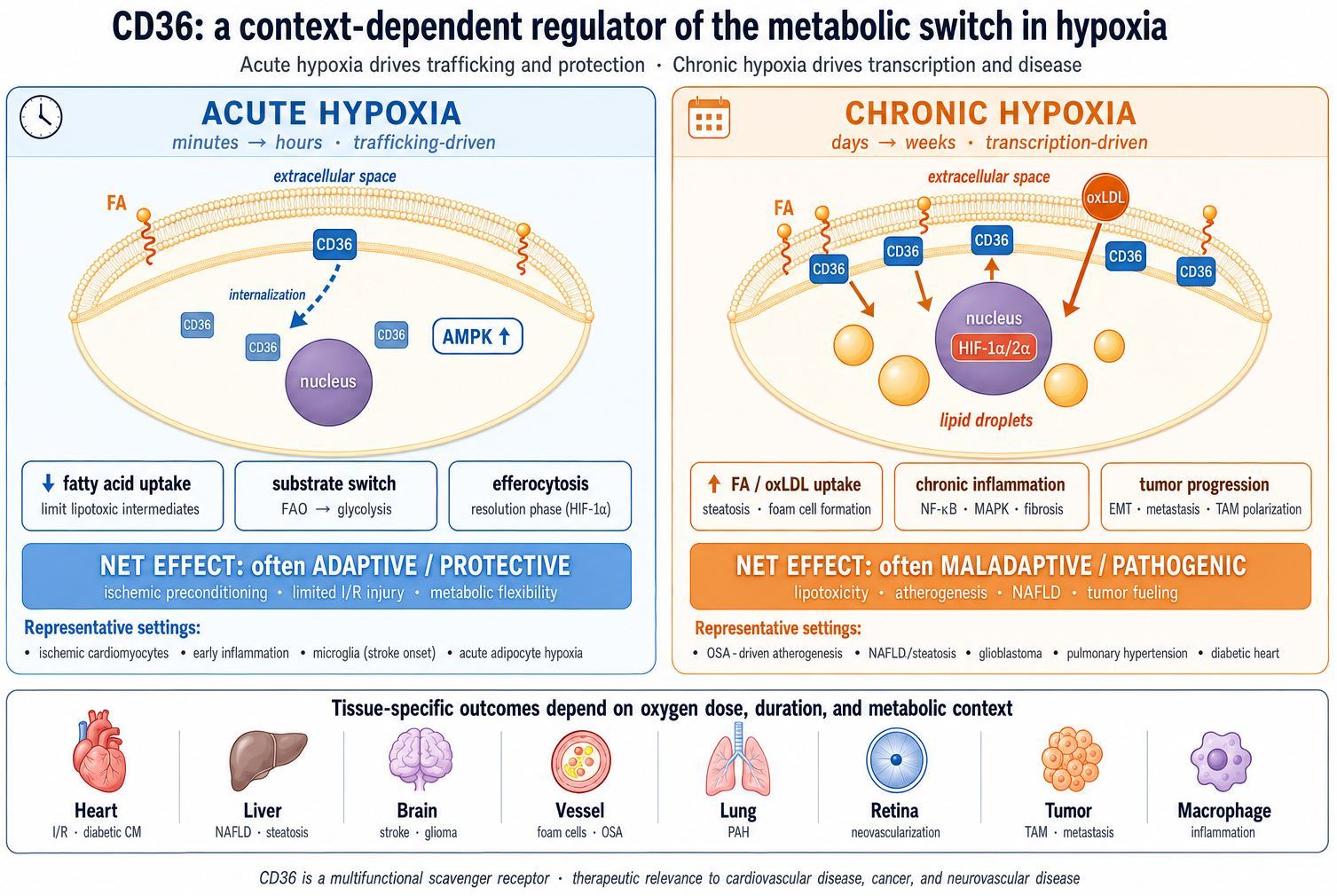
| Tissue/Key Cell Type(s) | Effect of Chronic/Long-Term Exposure to Hypoxia (Days → Weeks) | Effect of Acute/Short-Term Exposure to Hypoxia (Minutes → Hours) |
|---|---|---|
| Myocardium (cardiomyocytes) | Downregulation of CD36—long-term energy depletion in chronic ischemia [38]. | Typically, downregulation of CD36 (~32%) limits fatty acid uptake and protects against ischemia/reperfusion injury [8]. However, in some acute hypoxia or preconditioning models, CD36 upregulation and metabolic switching toward fatty acid utilization have been reported, depending on context (e.g., oxLDL exposure) [39,40] |
| Vascular wall (aortic macrophages) | Increased accumulation of CD36+ macrophages in the aorta during chronic intermittent ischemia (obstructive sleep apnea) promoting atherogenesis [41]. | Increased oxLDL uptake and early subclinical atherosclerosis associated with obstructive sleep apnea [42]. |
| Pulmonary vascular wall (lung tunica media cells) | Upregulation of CD36 in pulmonary vascular smooth muscle cells under chronic hypoxia [43]. | — |
| Adipose tissue (adipocytes) | Decreased CD36 expression after ~24 h hypoxia, suggesting reduced fatty acid uptake under sustained stress [44]. | Upregulation of CD36 expression and enhanced lipid accumulation during early hypoxic exposure [28]. |
| Macrophages | CD36 is also downregulated by nitric oxide in inflammatory hypoxic environments, while iNOS inhibition may increase CD36 expression [21]. Decreased CD36 expression after 24 h hypoxia, independent of HIF-1α [16]. | In early inflammation, CD36 is often downregulated [21]. During the resolution phase (~5 h hypoxia), HIF-1α upregulates CD36 and promotes phagocytosis of apoptotic cells [24]. |
| Liver (hepatocytes) | In chronic hypoxia and NAFLD models, HIF-1-dependent pathways may reduce CD36 expression and limit lipid accumulation [30]. | Upregulation of CD36 expression and enhanced lipid accumulation during early hypoxia [28]. |
| Brain (glioblastoma cells; microglia) | CD36 upregulation in glioblastoma and other chronically hypoxic tumor environments [45,46]. | Upregulation in microglia following ischemia–reperfusion injury [47]. |
| Retinal cells | Upregulation of CD36, modulated by HIF-1α, in 24 h hypoxic medium [48]. | — |
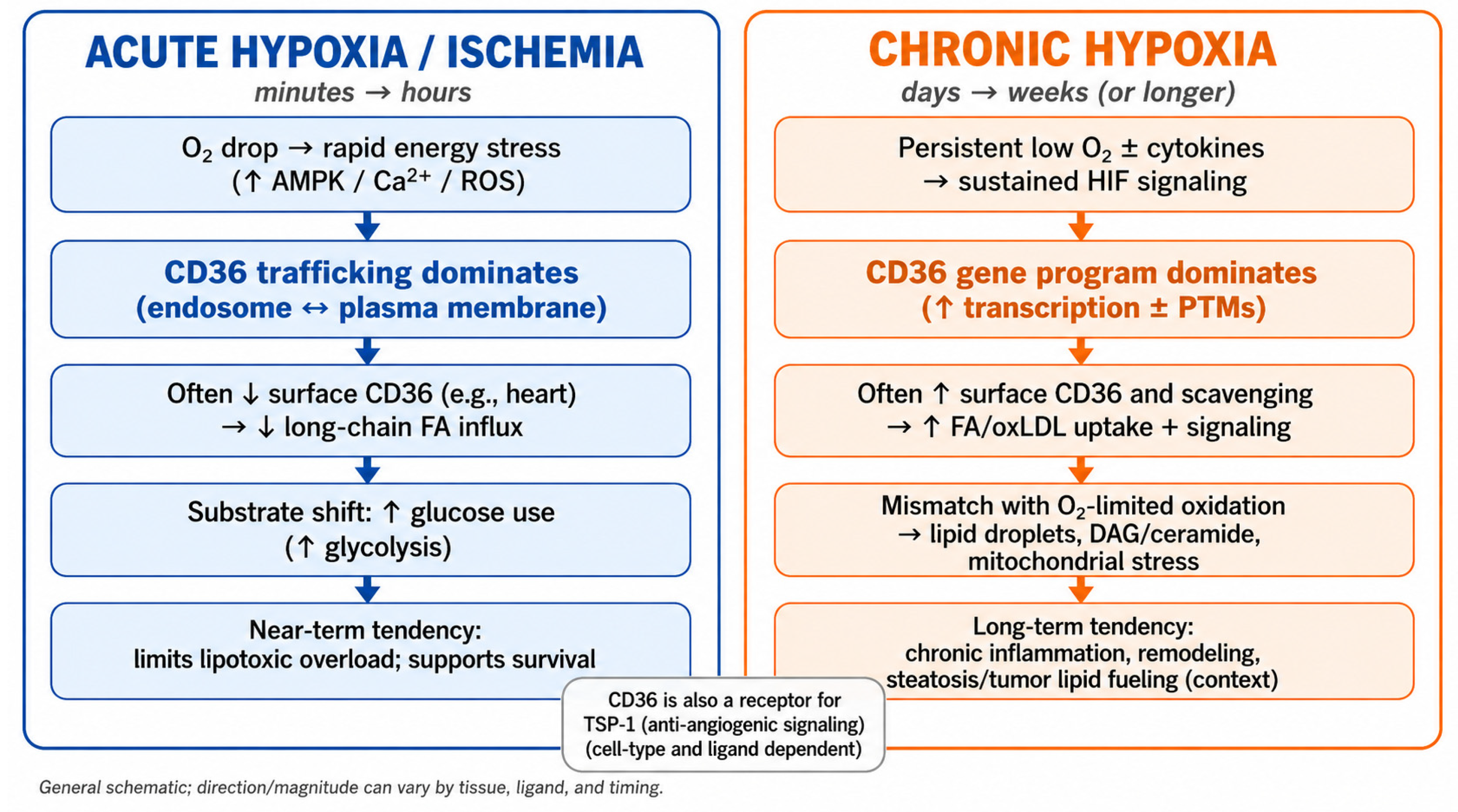
| Feature | Effect of Chronic/Long-Term Exposure to Hypoxia | Effect of Acute/Short-Term Exposure to Hypoxia |
|---|---|---|
| Time scale | Sustained low O2 exposure with persistent activation of transcriptional programs (e.g., HIF-driven responses) [27,31]. | Rapid-onset energy stress with immediate signaling responses (e.g., AMPK activation, ROS changes) [31,52]. |
| Dominant control of CD36 impact | Programmatic regulation: transcriptional control (HIF-dependent and independent), posttranslational modifications (e.g., palmitoylation), and sustained membrane localization [34,50]. | Rapid regulation: trafficking and recycling between intracellular compartments and the plasma membrane, with limited early transcriptional contribution [34,36]. |
| CD36 localization & lipid influx | Often increased or sustained CD36 surface localization, promoting long-chain fatty acid and/or oxLDL uptake (strongly context- and tissue-dependent) [16,28,55]. | Frequently transient reduction in surface CD36 (e.g., in ischemic cardiomyocytes), limiting fatty acid uptake; however, some models show increased CD36 translocation depending on metabolic context [39,52]. |
| Metabolic consequence | Potential mismatch between continued lipid influx and reduced oxidative capacity → lipid droplet accumulation, DAG/ceramide production, mitochondrial stress, and lipotoxicity [34,53]. | Shift toward glycolysis with reduced reliance on fatty acid oxidation; limiting fatty acid influx may decrease formation of toxic lipid intermediates during acute stress [39,40]. |
| Inflammation/repair functions | Sustained CD36–ligand signaling may promote chronic inflammation, foam cell formation, fibrosis, and tissue remodeling; receptor dominance may shift (e.g., toward LOX-1 in atherosclerosis) [19,24]. | Context-dependent: CD36 may be downregulated during early inflammation but upregulated during resolution to enhance efferocytosis (e.g., CD36–TSP-1 axis) [56,57]. |
| Typical net tendency | Increased risk of lipotoxicity, chronic inflammation, and progressive tissue dysfunction, depending on disease context (e.g., NAFLD, atherosclerosis, tumors) [28,38,58]. | Often adaptive in the short term, aligning substrate use with reduced oxygen availability; outcomes depend on tissue type and reperfusion dynamics [39,59]. |
Disclaimer/Publisher’s Note: The statements, opinions and data contained in all publications are solely those of the individual author(s) and contributor(s) and not of MDPI and/or the editor(s). MDPI and/or the editor(s) disclaim responsibility for any injury to people or property resulting from any ideas, methods, instructions or products referred to in the content. |
© 2026 by the authors. Licensee MDPI, Basel, Switzerland. This article is an open access article distributed under the terms and conditions of the Creative Commons Attribution (CC BY) license.
Share and Cite
Popescu, M.R.; Panaitescu, A.M.; Ceafalan, L.C.; Hinescu, M.E. CD36 as a Context-Dependent Regulator of Metabolic Switching in Acute and Chronic Hypoxia. Biomolecules 2026, 16, 1018. https://doi.org/10.3390/biom16071018
Popescu MR, Panaitescu AM, Ceafalan LC, Hinescu ME. CD36 as a Context-Dependent Regulator of Metabolic Switching in Acute and Chronic Hypoxia. Biomolecules. 2026; 16(7):1018. https://doi.org/10.3390/biom16071018
Chicago/Turabian StylePopescu, Mihaela R., Anca M. Panaitescu, Laura Cristina Ceafalan, and Mihail Eugen Hinescu. 2026. "CD36 as a Context-Dependent Regulator of Metabolic Switching in Acute and Chronic Hypoxia" Biomolecules 16, no. 7: 1018. https://doi.org/10.3390/biom16071018
APA StylePopescu, M. R., Panaitescu, A. M., Ceafalan, L. C., & Hinescu, M. E. (2026). CD36 as a Context-Dependent Regulator of Metabolic Switching in Acute and Chronic Hypoxia. Biomolecules, 16(7), 1018. https://doi.org/10.3390/biom16071018