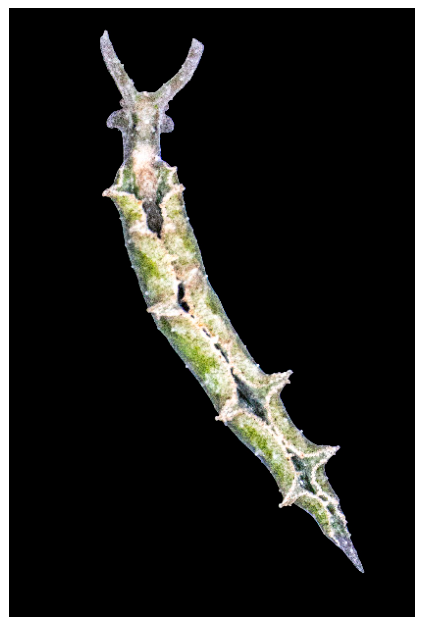
Bacterial Community Composition and Functional Potential of the Kleptoplastic Sea Slug Elysia papillosa

Abstract
1. Introduction
2. Methods
2.1. Sample Collection and Preservation
2.2. DNA Extraction and Shotgun Sequencing
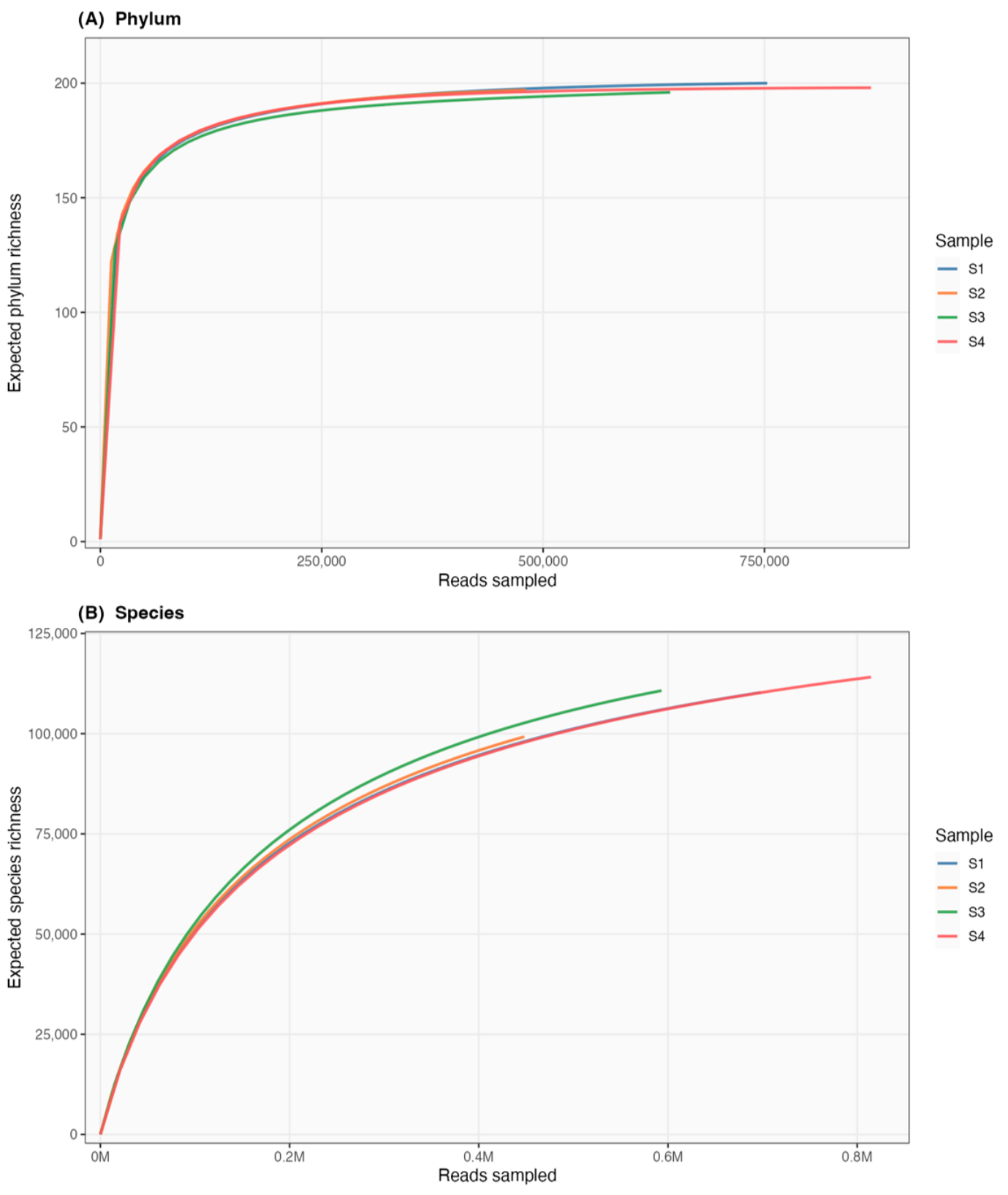
2.3. Quality Control, Host Filtering, Taxonomic Classification, Functional Annotation, and Diversity Analysis
3. Results
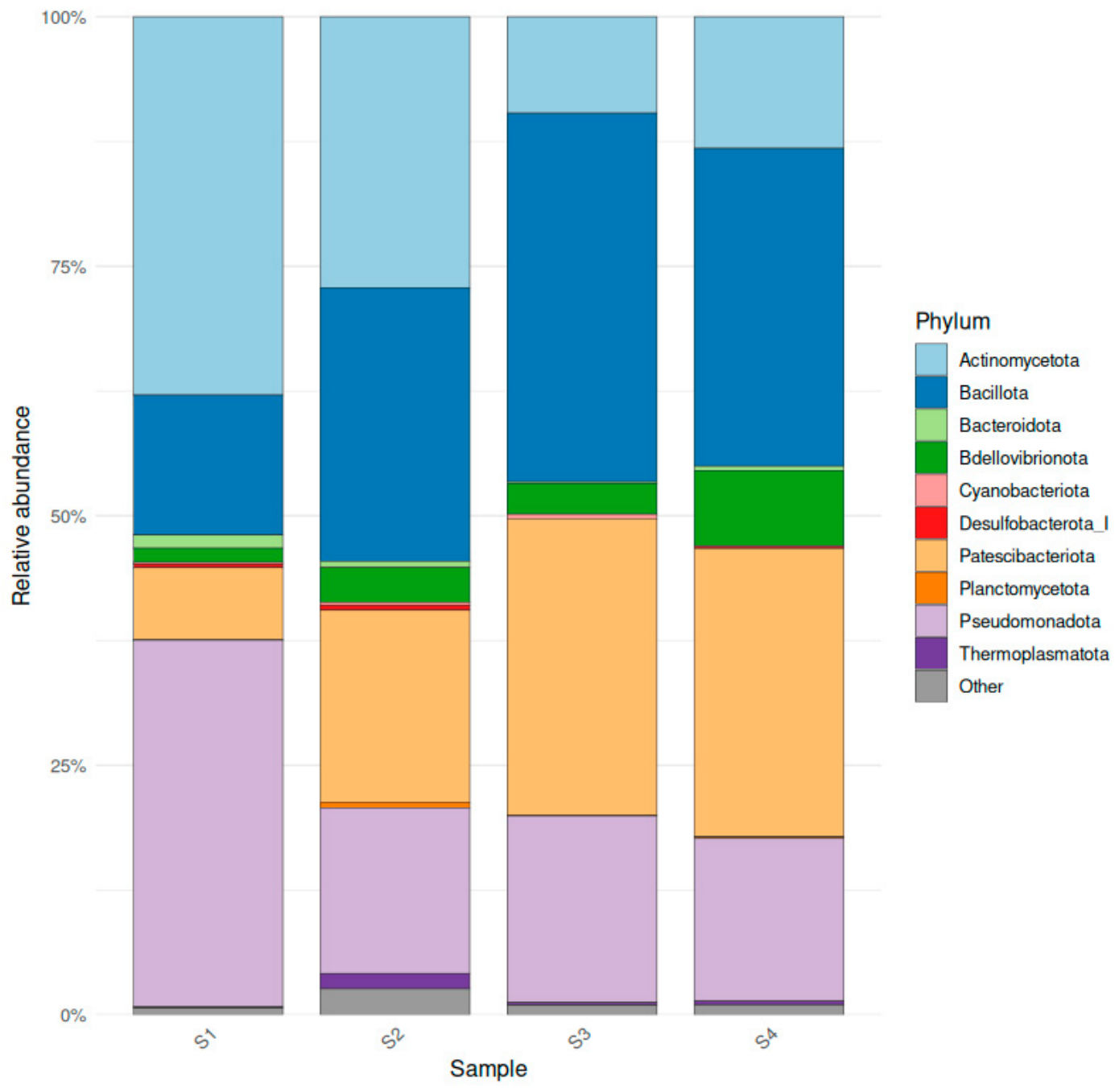
3.1. Phylum Relative Abundance
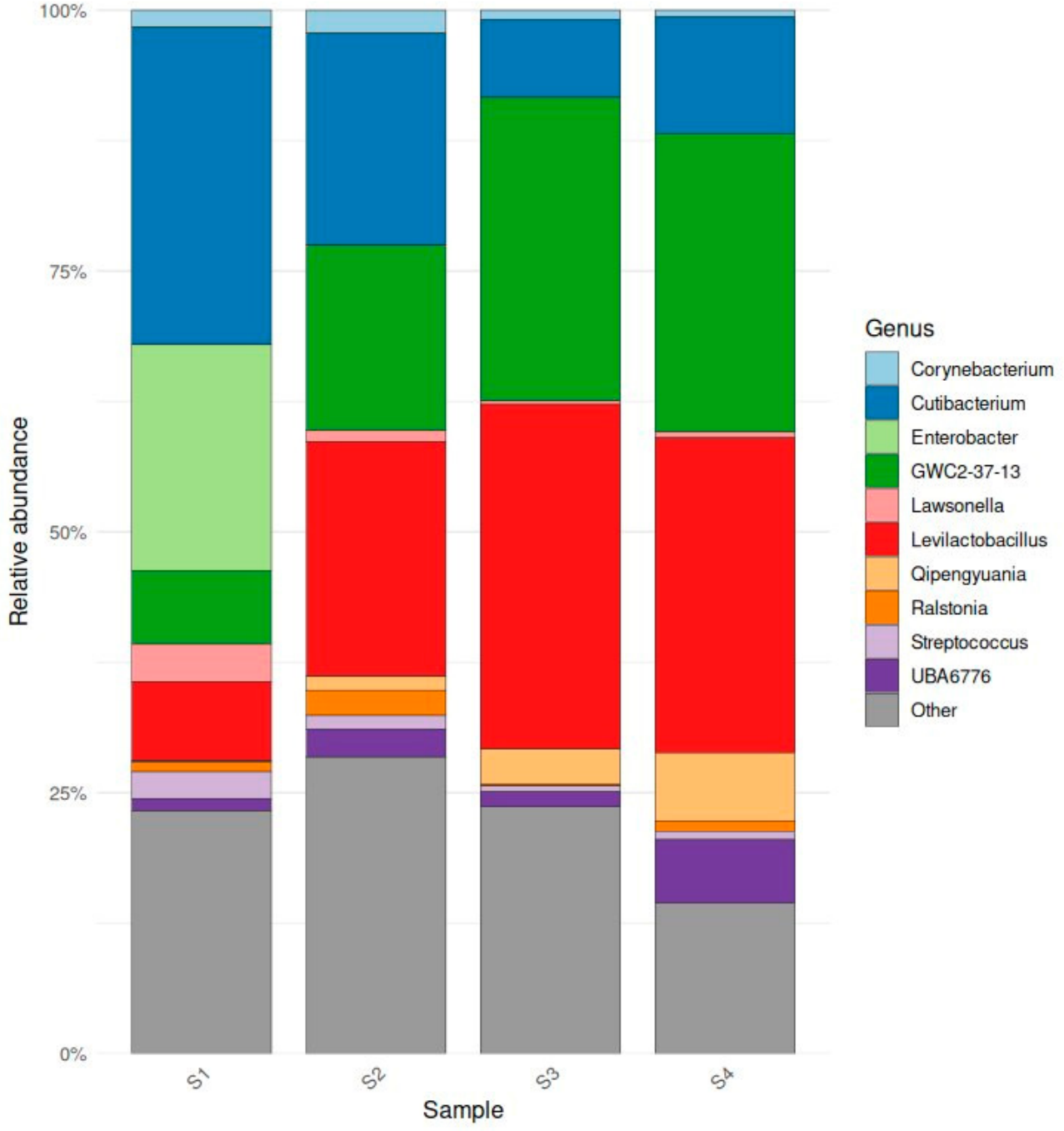
3.2. Genus Relative Abundance
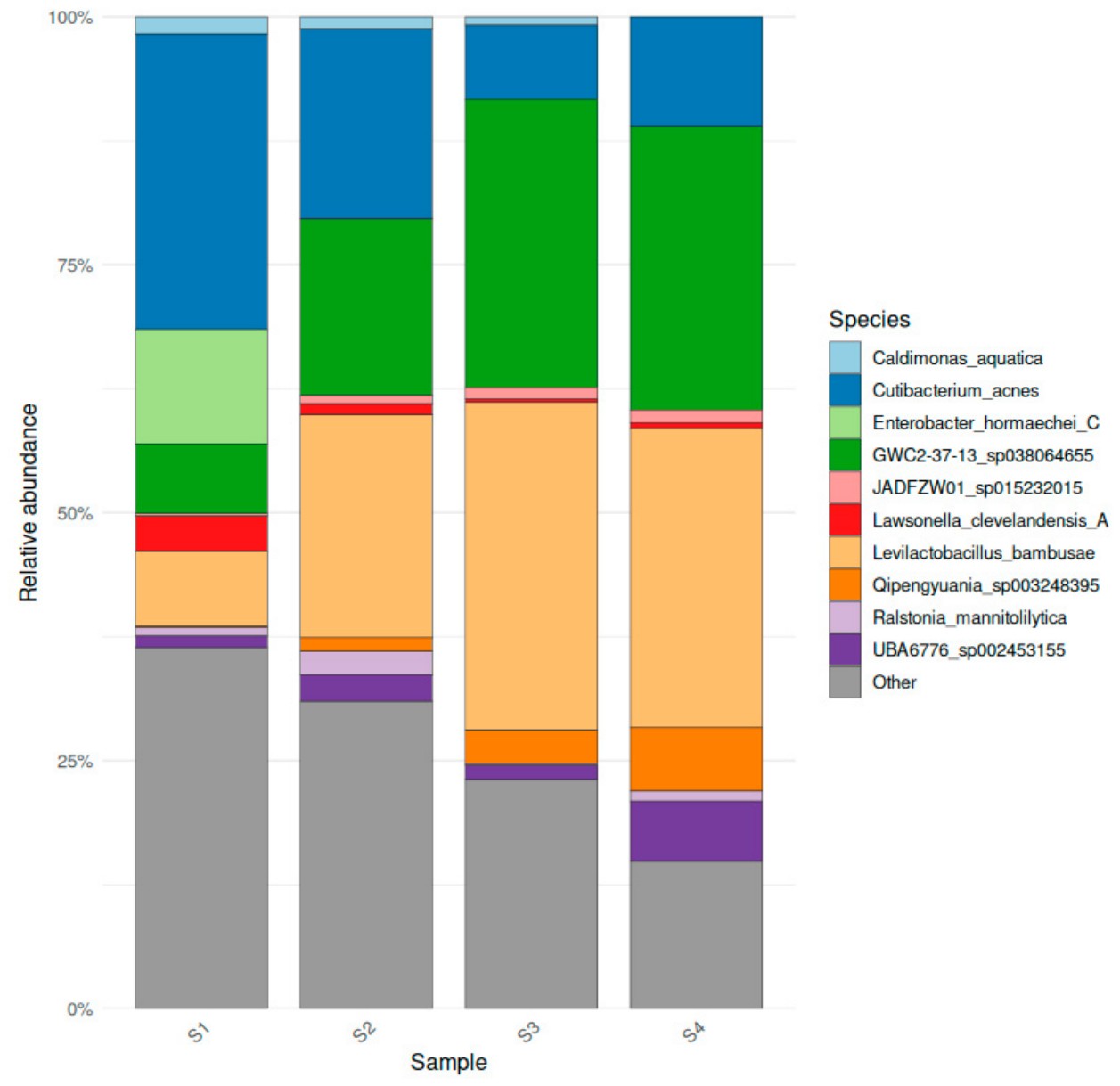
3.3. Species Relative Abundance
3.4. Core Microbiome
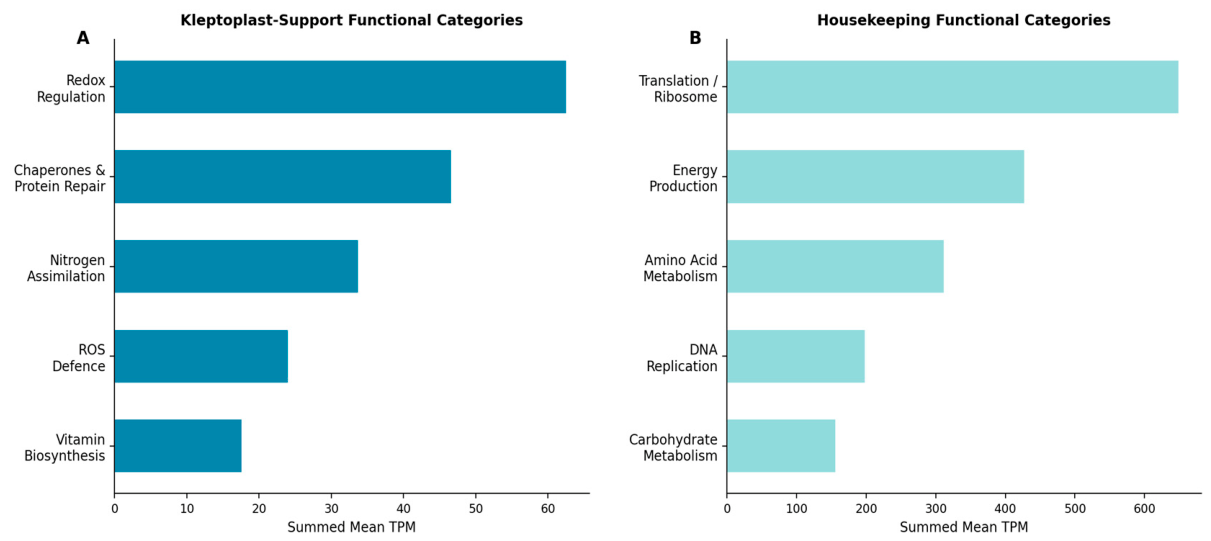
3.5. Functional Gene Groups Present
4. Discussion
4.1. Abundance of Bacterial Phyla and Associated Species
4.2. Potential Functional Benefits of Genes Present
4.3. Future Directions
5. Conclusions
Supplementary Materials
Author Contributions
Funding
Institutional Review Board Statement
Informed Consent Statement
Data Availability Statement
Acknowledgments
Conflicts of Interest
References
- Wägele, H.; Klussman-Kolb, A. Opisthobranchia (Mollusca, Gastropoda)—More than just slimy slugs. Shell reduction and its implications on defense and foraging. Front. Zool. 2005, 2, 3. [Google Scholar] [CrossRef] [PubMed]
- Trowbridge, C.D. Defensive responses and palatability of specialist herbivores: Predation on NE Pacific ascoglossan gastropods. Mar. Ecol. Prog. Ser. 1994, 105, 61–70. [Google Scholar] [CrossRef]
- Marín, A.; Ros, J. Chemical defenses in Sacoglossan Opisthobranchs: Taxonomic trends and evolutive implications. Sci. Mar. 2004, 68, 227–241. [Google Scholar] [CrossRef]
- Krug, P.J.; Wong, N.L.W.S.; Medina, M.R.; Gosliner, T.M.; Valdés, Á.A. Cryptic speciation yields remarkable mimics: A new genus of sea slugs that masquerade as toxic algae (Caulerpa spp.). Zool. Scr. 2018, 47, 699–713. [Google Scholar] [CrossRef]
- Gutierrez-Andrade, D.; Middlebrooks, M.L. Ceratal autotomy as a defensive mechanism of the sacoglossan sea slug Placida kingstoni against a generalist crustacean predator. J. Molluscan Stud. 2023, 89, eyad013. [Google Scholar] [CrossRef]
- Pierce, S.K.; Curtis, N.E. Cell biology of the chloroplast symbiosis in sacoglossan sea slugs. Int. Rev. Cell Mol. Biol. 2012, 293, 123–148. [Google Scholar] [CrossRef] [PubMed]
- Pierce, S.K.; Curtis, N.E.; Middlebrooks, M.L. Sacoglossan sea slugs make routine use of photosynthesis by a variety of species-specific adaptations. Invertebr. Biol. 2015, 134, 103–115. [Google Scholar] [CrossRef]
- Cruz, S.; Cartaxana, P. Kleptoplasty: Getting away from stolen chloroplasts. PLoS Biol. 2022, 20, e3001857. [Google Scholar] [CrossRef] [PubMed]
- Avila, C.; Angulo-Preckler, C. Bioactive compounds from marine heterobranchs. Mar. Drugs 2020, 18, 657. [Google Scholar] [CrossRef] [PubMed]
- Cimino, G.; Ghiselin, M.T. Chemical defense and evolution in the Sacoglossa (Mollusca: Gastropoda: Opisthobranchia). Chemoecology 1998, 8, 51–60. [Google Scholar] [CrossRef]
- Maeda, T.; Hirose, E.; Chikaraishi, Y.; Kawato, M.; Takishita, K.; Yoshida, T.; Verbruggen, H.; Tanaka, J.; Shimamura, S.; Takaki, Y.; et al. Algivore or Phototroph? Plakobranchus ocellatus (Gastropoda) continuously acquires kleptoplasts nutrition from multiple algal species in nature. PLoS ONE 2012, 7, e42024. [Google Scholar] [CrossRef] [PubMed]
- Curtis, N.E.; Middlebrooks, M.L.; Schwartz, J.A.; Pierce, S.K. Kleptoplastic sacoglossan species have very different capacities for plastid maintenance despite utilizing the same algal donors. Symbiosis 2015, 65, 23–31. [Google Scholar] [CrossRef]
- Baumgartner, F.A.; Pavia, H.; Toth, G.B. Acquired phototrophy through retention of functional chloroplasts increases growth efficiency of the sea slug Elysia viridis. PLoS ONE 2015, 10, e0120874. [Google Scholar] [CrossRef] [PubMed]
- Gowacki, W.A.; Bell, S.S.; Pierce, S.K. Correcting taxonomic confusion for the kleptoplastic sea slug Elysia papillosa Verill (1901). Am. Malacol. Bull. 2016, 34, 85–91. [Google Scholar] [CrossRef]
- Krug, P.J.; Vendetti, J.E.; Valdés, Á. Molecular and morphological systematics of Elysia Risso, 1818 (Heterobranchia: Sacoglossa) from the Caribbean region. Zootaxa 2016, 4148, 001–137. [Google Scholar] [CrossRef] [PubMed]
- Middlebrooks, M.L.; Gowacki, W.A.; Bell, S.S.; Pierce, S.K. Annual occurrence and algal preferences of the kleptoplastic sea slug, Elysia papillosa. Symbiosis 2019, 77, 217–224. [Google Scholar] [CrossRef]
- Barber, K.; Middlebrooks, M.; Bell, S.; Pierce, S. The specialist marine herbivore Elysia papillosa grows faster on a less utilized algal diet. Biol. Bull. 2021, 241, 158–167. [Google Scholar] [CrossRef] [PubMed]
- Vortsepneva, E.; Mikhlina, A.; Kantor, Y. Main patterns of radula formation and ontogeny in Gastropoda. J. Morphol. 2022, 284, e21538. [Google Scholar] [CrossRef] [PubMed]
- Jensen, K.R. Evolution of the Sacoglossa (Mollusca, Opisthobranchia) and the ecological associations with their food plants. Evol. Ecol. 1997, 11, 301–335. [Google Scholar] [CrossRef]
- Curtis, N.E.; Schwartz, J.A.; Pierce, S.K. Ultrastructure of sequestered chloroplasts in sacoglossan gastropods with differing abilities for plastid uptake and maintenance. Invertebr. Biol. 2010, 129, 297–308. [Google Scholar] [CrossRef]
- Mahadevan, P.; Middlebrooks, M.L. Bacterial diversity in the clarki ecotype of the photosynthetic sacoglossan, Elysia crispata. MicrobiologyOpen 2020, 9, e1098. [Google Scholar] [CrossRef] [PubMed]
- Devine, S.P.; Pelletreau, K.N.; Rumpho, M.E. 16S rDNA-based metagenomic analysis of bacterial diversity associated with two populations of the kleptoplastic sea slug Elysia chlorotica and its algal prey Vaucheria litorea. Biol. Bull. 2012, 223, 138–154. [Google Scholar] [CrossRef] [PubMed]
- Davis, J.; Fricke, F.; Hamann, M.T.; Esquenazi, E.; Dorrestein, P.C.; Hill, R.T. Characterization of the bacterial community of the chemically defended Hawaiian sacoglossan Elysia rufescens. Appl. Environ. Microbiol. 2013, 79, 7073–7081. [Google Scholar] [CrossRef] [PubMed]
- Martins, P.; Cartaxana, P.; Cruz, S. Microbiome characterization of the sea slugs Elysia viridis and Placida dendritica: Insights into potential roles in kleptoplasty. BMC Microbiol. 2026, 26, 19. [Google Scholar] [CrossRef] [PubMed]
- West, H.H.; Harrigan, J.F.; Pierce, S.K. Hybridization of two populations of a marine opisthobranch with different developmental patterns. Veliger 1984, 26, 199–206. [Google Scholar]
- Hamann, M.T.; Scheuer, P.J. Kahalalide F: A bioactive depsipeptide from the sacoglossan mollusk Elysia rufescens and the green alga Bryopsis sp. J. Am. Chem. Soc. 1993, 115, 5825–5826. [Google Scholar] [CrossRef]
- Becerro, M.A.; Goetz, G.; Paul, V.J.; Scheuer, P.J. Chemical defenses of the sacoglossan mollusk Elysia rufescens and its host alga Bryopsis sp. J. Chem. Ecol. 2001, 27, 2287–2299. [Google Scholar] [CrossRef] [PubMed]
- Middlebrooks, M.L.; Bell, S.S.; Curtis, N.E.; Pierce, S.K. Atypical plant-herbivore association of algal food and a kleptoplastic sea slug (Elysia clarki) revealed by DNA barcoding and field surveys. Mar. Biol. 2014, 161, 1429–1440. [Google Scholar] [CrossRef]
- Curtis, N.E.; Middlebrooks, M.L.; Mahadevan, P.; Pierce, S.K. A methodological note on using next generation sequencing technology to identify the algal sources of stolen chloroplasts in a single sea slug specimen (Elysia crispata). Symbiosis 2023, 89, 251–258. [Google Scholar] [CrossRef]
- Rinke, C.; Schwientek, P.; Sczyrba, A.; Ivanova, N.N.; Anderson, I.J.; Cheng, J.F.; Darling, A.; Malfatti, S.; Swan, B.K.; Gies, E.A.; et al. Insights into the phylogeny and coding potential of microbial dark matter. Nature 2013, 499, 431–437. [Google Scholar] [CrossRef] [PubMed]
- Hale, V.L.; Tan, C.L.; Knight, R.; Amato, K.R. Effect of preservation method on spider monkey (Ateles geoffroyi) fecal microbiota over 8 weeks. J. Microbiol. Methods 2015, 113, 16–26. [Google Scholar] [CrossRef] [PubMed]
- Hildonen, M.; Kodama, M.; Puetz, L.C.; Gilbert, M.T.P.; Limborg, M.T. A comparison of storage methods for gut microbiome studies in teleosts. J. Microbiol. Methods 2019, 160, 42–48. [Google Scholar] [CrossRef] [PubMed]
- Constantinides, B.; Lees, J.; Crook, D.W. Deacon: Fast sequence filtering and contaminant depletion. bioRxiv 2025. [Google Scholar] [CrossRef]
- Song, L.; Langmead, B. Centrifuger: Lossless compression of microbial genomes for efficient and accurate metagenomic sequence classification. Genome Biol. 2024, 25, 106. [Google Scholar] [CrossRef] [PubMed]
- Parks, D.H.; Chuvochina, M.; Rinke, C.; Mussig, A.J.; Chaumeil, P.; Hugenholtz, P. GTDB: An ongoing census of bacterial and archaeal diversity through a phylogenetically consistent, rank normalized and complete genome-based taxonomy. Nucleic Acids Res. 2022, 50, D785–D794. [Google Scholar] [PubMed]
- Oksanen, J.; Simpson, G.; Blanchet, F.; Kindt, R.; Legendre, P.; Minchin, P.; O’Hara, R.; Solymos, P.; Stevens, M.; Szoecs, E.; et al. vegan: Community Ecology Package. 2026. Available online: https://vegandevs.github.io/vegan/authors.html (accessed on 19 April 2026).
- Virtanen, P.; Gommers, R.; Oliphant, T.E.; Haberland, M.; Reddy, T.; Cournapeau, D.; Burovski, E.; Peterson, P.; Weckesser, W.; Bright, J.; et al. SciPy 1.0: Fundamental algorithms for scientific computing in Python. Nat. Methods 2020, 17, 261–272. [Google Scholar] [CrossRef] [PubMed]
- Tamames, J.; Puente-Sánchez, F. SqueezeMeta, A Highly Portable, Fully Automatic Metagenomic Analysis Pipeline. Front. Microbiol. 2019, 9, 3349. [Google Scholar] [CrossRef] [PubMed]
- Hyatt, D.; Chen, G.L.; Locascio, P.F.; Land, M.L.; Larimer, F.W.; Hauser, L.J. Prodigal: Prokaryotic gene recognition and translation initiation site identification. BMC Bioinform. 2010, 11, 119. [Google Scholar] [CrossRef] [PubMed]
- Kanehisa, M.; Goto, S. KEGG: Kyoto encyclopedia of genes and genomes. Nucleic Acids Res. 2000, 28, 27–30. [Google Scholar] [CrossRef] [PubMed]
- Tatusov, R.L.; Koonin, E.V.; Lipman, D.J. A genomic perspective on protein families. Science 1997, 278, 631–637. [Google Scholar] [CrossRef] [PubMed]
- Mistry, J.; Chuguransky, S.; Williams, L.; Qureshi, M.; Salazar, G.A.; Sonnhammer, E.L.L.; Tosatto, S.C.E.; Paladin, L.; Raj, S.; Richardson, L.J.; et al. Pfam: The protein families database in 2021. Nucleic Acids Res. 2021, 49, D412–D419. [Google Scholar] [PubMed]
- Marotz, C.; Cavagnero, K.J.; Song, S.J.; McDonald, D.; Wandro, S.; Humphrey, G.; Bryant, M.; Ackermann, G.; Diaz, E.; Knight, R. Evaluation of the Effect of Storage Methods on Fecal, Saliva, and Skin Microbiome Composition. mSystems 2021, 6, e01329-20. [Google Scholar] [CrossRef] [PubMed]
- Oosting, T.; Hilario, E.; Wellenreuther, M.; Ritchie, P.A. DNA degradation in fish: Practical solutions and guidelines to improve DNA preservation for genomic research. Ecol. Evol. 2020, 10, 8643–8651. [Google Scholar] [CrossRef] [PubMed]
- Dawson, M.N.; Raskoff, K.A.; Jacobs, D.K. Field preservation of marine invertebrate tissue for DNA analyses. Mol. Mar. Biol. Biotechnol. 1998, 7, 145–152. [Google Scholar] [CrossRef] [PubMed]
- Chakdar, H.; Kumar, M.; Pandiyan, K.; Singh, A.; Nanjappan, K.; Kashyap, P.L.; Srivastava, A.K. Bacterial xylanases: Biology to biotechnology. 3 Biotech 2016, 6, 150. [Google Scholar] [CrossRef] [PubMed]
- Knipe, H.; Temperton, B.; Lange, A.; Bass, D.; Tyler, C.R. Probiotics and competitive exclusion of pathogens in shrimp aquaculture. Rev. Aquac. 2021, 13, 324–352. [Google Scholar]
- Jang, J.; Forbes, V.E.; Sadowsky, M.J. Probable role of Cutibacterium acnes in the gut of the polychaete Capitella teleta. Sci. Total Environ. 2022, 809, 151127. [Google Scholar] [CrossRef] [PubMed]
- Nour, S.I.; Khodadadi, R.B.; Schuetz, A.N.; Patel, R.; Abu Saleh, O.M. Lawsonella clevelandensis, a case series of vascular graft infections caused by a rare pathogen. IDCases 2023, 31, e01735. [Google Scholar] [CrossRef] [PubMed]
- Mahala, S.K.; Chandel, R.S.; Walia, A.; Sagar, S.; Karthik, R. Molecular characterization of Ralstonia mannitolilytica isolated from the gut of Brahmina coriacea grubs. Plant Cell Biotechnol. Mol. Biol. 2024, 25, 35–39. [Google Scholar] [CrossRef]
- Liu, Y.; Pei, T.; Du, J.; Yao, Q.; Deng, M.-R.; Zhu, H. Comparative genomics reveals genetic diversity and metabolic potentials of the genus Qipengyuania and suggests fifteen novel species. Microbiol. Spectr. 2022, 10, e0126421. [Google Scholar] [CrossRef] [PubMed]
- Musilova, J.; Kourilova, X.; Hermankova, K.; Bezdicek, M.; Ieremenko, A.; Dvorak, P.; Obruca, S.; Sedlar, K. Genomic and phenotypic comparison of polyhydroxyalkanoates producing strains of genus Caldimonas/Schlegelella. Comput. Struct. Biotechnol. J. 2023, 21, 5372–5381. [Google Scholar] [CrossRef] [PubMed]
- Chen, W.M.; Chang, J.S.; Chiu, C.H.; Chang, S.C.; Chen, W.C.; Jiang, C.M. Caldimonas taiwanensis sp. nov., an amylase-producing bacterium isolated from a hot spring. Syst. Appl. Microbiol. 2005, 28, 415–420. [Google Scholar] [CrossRef] [PubMed]
- Ghosh, S.; Ringoe, E.; Alexander, D.; Rahima, M.; Abdulla, M.H. Enterobacter hormaechei BAC 1010 from the gut of flathead grey mullet as probable aquaculture probiont. J. Nat. Sci. Sustain. Technol. 2011, 5, 189. [Google Scholar]
- Kirchman, D.L.; Dittel, A.I.; Malmstrom, R.R.; Cottrell, M.T. Biogeography of major bacterial groups in the Delaware estuary. Limnol. Oceanogr. 2005, 50, 1697–1706. [Google Scholar] [CrossRef]
- Greenwood, M.F.D.; Peebles, E.B.; MacDonald, T.C.; Burghart, S.E.; Matheson, R.E.; McMichael, R.H. Freshwater Inflow Effects on Fishes and Invertebrates in the Anclote River Estuary; Florida Fish and Wildlife Conservation Commission: St. Petersburg, FL, USA, 2006. [Google Scholar]
- Hudson, J.; Egan, S. Opportunistic diseases in marine eukaryotes: Could Bacteroidota be the next threat to ocean life? Environ. Microbiol. 2022, 24, 4505–4518. [Google Scholar] [CrossRef] [PubMed]
- Thomas, F.; Hehemann, J.H.; Rebuffet, E.; Czjzek, M.; Michel, G. Environmental and gut bacteroidetes: The food connection. Front. Microbiol. 2011, 2, 93. [Google Scholar] [CrossRef] [PubMed]
- Methou, P.; Hikosaka, M.; Chen, C.; Watanabe, H.K.; Miyamoto, N.; Makita, H.; Takahashi, Y.; Jenkins, R.G. Symbiont community composition in Rimicaris kairei shrimps from Indian Ocean vents. Appl. Environ. Microbiol. 2022, 88, e00185-22. [Google Scholar] [CrossRef] [PubMed]
- Dubilier, N.; Bergin, C.; Lott, C. Symbiotic diversity in marine animals: The art of harnessing chemosynthesis. Nat. Rev. Microbiol. 2008, 6, 725–740. [Google Scholar] [CrossRef] [PubMed]
- Murphy, C.L.; Biggerstaff, J.; Eichhorn, A.; Ewing, E.; Shahan, R.; Soriano, D.; Stewart, S.; VanMol, K.; Walker, R.; Walters, P.; et al. Genomic characterization of three novel Desulfobacterota classes expand the metabolic and phylogenetic diversity of the phylum. Environ. Microbiol. 2021, 23, 4326–4343. [Google Scholar] [CrossRef] [PubMed]
- Mutalipassi, M.; Riccio, G.; Mazzella, V.; Galasso, C.; Somma, E.; Chiarore, A.; de Pascale, D.; Zupo, V. Symbioses of cyanobacteria in marine environments: Ecological insights and biotechnological perspectives. Mar. Drugs 2021, 19, 227. [Google Scholar] [CrossRef] [PubMed]
- Kündgen, M.; Jogler, C.; Kallscheuer, N. Substrate utilization and secondary metabolite biosynthesis in the phylum Planctomycetota. Appl. Microbiol. Biotechnol. 2025, 109, 123. [Google Scholar] [CrossRef] [PubMed]
- von Hoyningen-Huene, A.J.E.; Bang, C.; Rausch, P.; Rühlemann, M.; Fokt, H.; He, J.; Jensen, N.; Knop, M.; Petersen, C.; Schmittmann, L.; et al. The archaeome in metaorganism research, with a focus on marine models and their bacteria-archaea interactions. Front. Microbiol. 2024, 15, 1347422. [Google Scholar] [CrossRef] [PubMed]
- Li, Q.M.; Zhou, Y.L.; Wei, Z.F.; Wang, Y. Phylogenomic insights into distribution and adaptation of Bdellovibrionota in marine waters. Microorganisms 2021, 9, 757. [Google Scholar] [CrossRef] [PubMed]
- Khan, S.T.; Nakagawa, Y.; Harayama, S. Fulvibacter tottoriensis gen. nov., sp. nov., a member of the family Flavobacteriaceae isolated from marine sediment. Int. J. Syst. Evol. Microbiol. 2008, 58, 1670–1674. [Google Scholar] [CrossRef] [PubMed]
- Motone, K.; Takagi, T.; Aburaya, S.; Miura, N.; Aoki, W.; Ueda, M. A zeaxanthin-producing bacterium isolated from the algal phycosphere protects coral endosymbionts from environmental stress. mBio 2020, 11, e01019-19. [Google Scholar] [CrossRef] [PubMed]
- Schürmann, P.; Buchanan, B.B. The ferredoxin/thioredoxin system of oxygenic photosynthesis. Antioxid. Redox Signal. 2008, 10, 1235–1274. [Google Scholar] [CrossRef] [PubMed]
- Mittler, R. Oxidative stress, antioxidants and stress tolerance. Trends Plant Sci. 2002, 7, 405–410. [Google Scholar] [CrossRef] [PubMed]
- Asada, K. Production and scavenging of reactive oxygen species in chloroplasts and their functions. Plant Physiol. 2006, 141, 391–396. [Google Scholar] [CrossRef] [PubMed]
- Schroda, M.; Hemme, D.; Mühlhaus, T. The Chlamydomonas heat stress response. Plant J. 2015, 82, 466–480. [Google Scholar] [CrossRef] [PubMed]
- Fitzpatrick, T.B.; Chapman, L.M. The importance of thiamine (vitamin B1) in plant health: From crop yield to biofortification. J. Biol. Chem. 2020, 295, 12002–12013. [Google Scholar] [CrossRef] [PubMed]
- Miflin, B.J.; Lea, P.J. The pathway of nitrogen assimilation in plants. Phytochemistry 1976, 15, 873–885. [Google Scholar] [CrossRef]
- Croft, M.; Lawrence, A.; Raux-Deery, E.; Warren, M.J.; Smith, A.G. Algae acquire vitamin B12 through a symbiotic relationship with bacteria. Nature 2005, 438, 90–93. [Google Scholar] [CrossRef] [PubMed]
- Fiore, C.L.; Jarett, J.K.; Olson, N.D.; Lesser, M.P. Nitrogen fixation and nitrogen transformations in marine symbioses. Trends Microbiol. 2010, 18, 455–463. [Google Scholar] [CrossRef] [PubMed]
- Moran, N.A.; McCutcheon, J.P.; Nakabachi, A. Genomics and evolution of heritable bacterial symbionts. Annu. Rev. Genet. 2008, 42, 165–190. [Google Scholar] [CrossRef] [PubMed]
- Douglas, A.E. Nutritional interactions in insect-microbial symbioses: Aphids and their symbiotic bacteria Buchnera. Annu. Rev. Entomol. 1998, 43, 17–37. [Google Scholar] [CrossRef] [PubMed]
- McCutcheon, J.P.; Moran, N.A. Extreme genome reduction in symbiotic bacteria. Nat. Rev. Microbiol. 2011, 10, 13–26. [Google Scholar] [CrossRef] [PubMed]
- Hopkinson, B.M.; Barbeau, K.A. Iron transporters in marine prokaryotic genomes and metagenomes. Environ. Microbiol. 2012, 14, 114–128. [Google Scholar] [PubMed]
- Douglas, A.E. The B vitamin nutrition of insects: The contributions of diet, microbiome and horizontally acquired genes. Curr. Opin. Insect Sci. 2017, 23, 65–69. [Google Scholar] [CrossRef] [PubMed]
- Mobley, H.L.; Hausinger, R.P. Microbial ureases: Significance, regulation, and molecular characterization. Microbiol. Rev. 1989, 53, 85–108. [Google Scholar] [CrossRef]
- Burg, M.B.; Ferraris, J.D. Intracellular organic osmolytes: Function and regulation. J. Biol. Chem. 2008, 283, 7309–7313. [Google Scholar] [CrossRef] [PubMed]
- Zan, J.; Li, Z.; Tianero, M.D.; Davis, J.; Hill, R.T.; Donia, M.S. A microbial factory for defensive kahalalides in a tripartite marine symbiosis. Science 2019, 364, eaaw6732. [Google Scholar] [CrossRef] [PubMed]
- Horgen, F.D.; delos Santos, D.B.; Goetz, G.; Sakamoto, B.; Kan, Y.; Nagai, H.; Scheuer, P.J. A new depsipeptide from the sacoglossan mollusk Elysia ornata and the green alga Bryopsis species. J. Nat. Prod. 2000, 63, 152–154. [Google Scholar] [CrossRef] [PubMed]
- Ashour, M.; Edrada, R.; Ebel, R.; Wray, V.; Wäjen, W.; Padmakumar, K.; Müller, W.E.G.; Lin, W.H.; Proksch, P. Kahalalide derivatives from the Indian sacoglossan mollusk Elysia grandifolia. J. Nat. Prod. 2006, 69, 1547–1553. [Google Scholar] [CrossRef] [PubMed]
- Zheng, L.; Lin, X.; Wu, N.; Liu, M.; Zheng, Y.; Sheng, J.; Ji, X.; Sun, M. Targeting cellular apoptotic pathway with peptides from marine organisms. Biochim. Biophys. Acta Rev. Cancer 2013, 1836, 42–48. [Google Scholar] [CrossRef] [PubMed]
- Wyer, S.; Townsend, D.M.; Ye, Z.; Kourtidis, A.; Choo, Y.; de Barros, A.L.B.; Donia, M.S.; Hamann, M.T. Recent advances and limitations in the application of kahalalides for the control of cancer. Biomed. Pharmacother. 2022, 148, 112676. [Google Scholar] [CrossRef] [PubMed]



| Sample ID | DNA Concentration (ng/µL) | Final Library DNA Concentration (ng/µL) | Average Library Size (bp) |
|---|---|---|---|
| S1 | 1.49 | 27.60 | 731 |
| S2 | 2.14 | 26.80 | 903 |
| S3 | 9.04 | 29.20 | 748 |
| S4 | 3.78 | 27.40 | 662 |
| Sample ID | Total Number of Reads | Number of Reads After Host Filtering | Number of Classified Reads | Percentage of Classified Reads |
|---|---|---|---|---|
| S1 | 17,255,060 | 15,163,120 | 1,675,334 | 11.05% |
| S2 | 11,336,748 | 10,016,608 | 1,062,946 | 10.61% |
| S3 | 14,470,346 | 12,629,384 | 1,438,062 | 11.39% |
| S4 | 21,984,086 | 19,057,154 | 1,934,254 | 10.15% |
| Sample Identification | |||||
|---|---|---|---|---|---|
| Phylum | S1 | S2 | S3 | S4 | Average |
| Bacillota | 14.02% | 27.43% | 36.93% | 31.84% | 27.55% |
| Pseudomonadota | 36.74% | 16.59% | 18.67% | 16.30% | 22.07% |
| Actinomycetota | 37.90% | 27.16% | 9.66% | 13.19% | 21.98% |
| Patescibacteriota | 7.23% | 19.24% | 29.69% | 28.85% | 21.25% |
| Bdellovibrionota | 1.43% | 3.52% | 3.07% | 7.52% | 3.89% |
| Bacteroidota | 1.32% | 0.59% | 0.18% | 0.46% | 0.64% |
| Cyanobacteria | 0.18% | 0.27% | 0.45% | 0.11% | 0.25% |
| Sample Identification | |||||
|---|---|---|---|---|---|
| Species | S1 | S2 | S3 | S4 | Average |
| Levilactobacillus bambusae | 7.57% | 22.50% | 33.03% | 30.20% | 23.32% |
| GWC2-37-13 sp038064655 | 7.04% | 17.78% | 29.09% | 28.61% | 20.63% |
| Cutibacterium acnes | 29.81% | 19.17% | 7.45% | 11.04% | 16.87% |
| UBA6776 sp002453155 | 1.15% | 2.65% | 1.44% | 6.06% | 2.83% |
| Qipengyuania sp003248395 | 0.13% | 1.35% | 3.38% | 6.39% | 2.81% |
| Lawsonella clevelandensis A | 3.53% | 1.06% | 0.33% | 0.56% | 1.37% |
| Ralstonia mannitolilytica | 0.86% | 2.39% | 0.18% | 1.03% | 1.12% |
| JADFZW01 sp015232015 | 0.26% | 0.86% | 1.17% | 1.27% | 0.89% |
Disclaimer/Publisher’s Note: The statements, opinions and data contained in all publications are solely those of the individual author(s) and contributor(s) and not of MDPI and/or the editor(s). MDPI and/or the editor(s) disclaim responsibility for any injury to people or property resulting from any ideas, methods, instructions or products referred to in the content. |
© 2026 by the authors. Licensee MDPI, Basel, Switzerland. This article is an open access article distributed under the terms and conditions of the Creative Commons Attribution (CC BY) license.
Share and Cite
Brown, J.L.; Mahadevan, P.; Middlebrooks, M. Bacterial Community Composition and Functional Potential of the Kleptoplastic Sea Slug Elysia papillosa. Biomolecules 2026, 16, 918. https://doi.org/10.3390/biom16060918
Brown JL, Mahadevan P, Middlebrooks M. Bacterial Community Composition and Functional Potential of the Kleptoplastic Sea Slug Elysia papillosa. Biomolecules. 2026; 16(6):918. https://doi.org/10.3390/biom16060918
Chicago/Turabian StyleBrown, Jada L., Padmanabhan Mahadevan, and Michael Middlebrooks. 2026. "Bacterial Community Composition and Functional Potential of the Kleptoplastic Sea Slug Elysia papillosa" Biomolecules 16, no. 6: 918. https://doi.org/10.3390/biom16060918
APA StyleBrown, J. L., Mahadevan, P., & Middlebrooks, M. (2026). Bacterial Community Composition and Functional Potential of the Kleptoplastic Sea Slug Elysia papillosa. Biomolecules, 16(6), 918. https://doi.org/10.3390/biom16060918