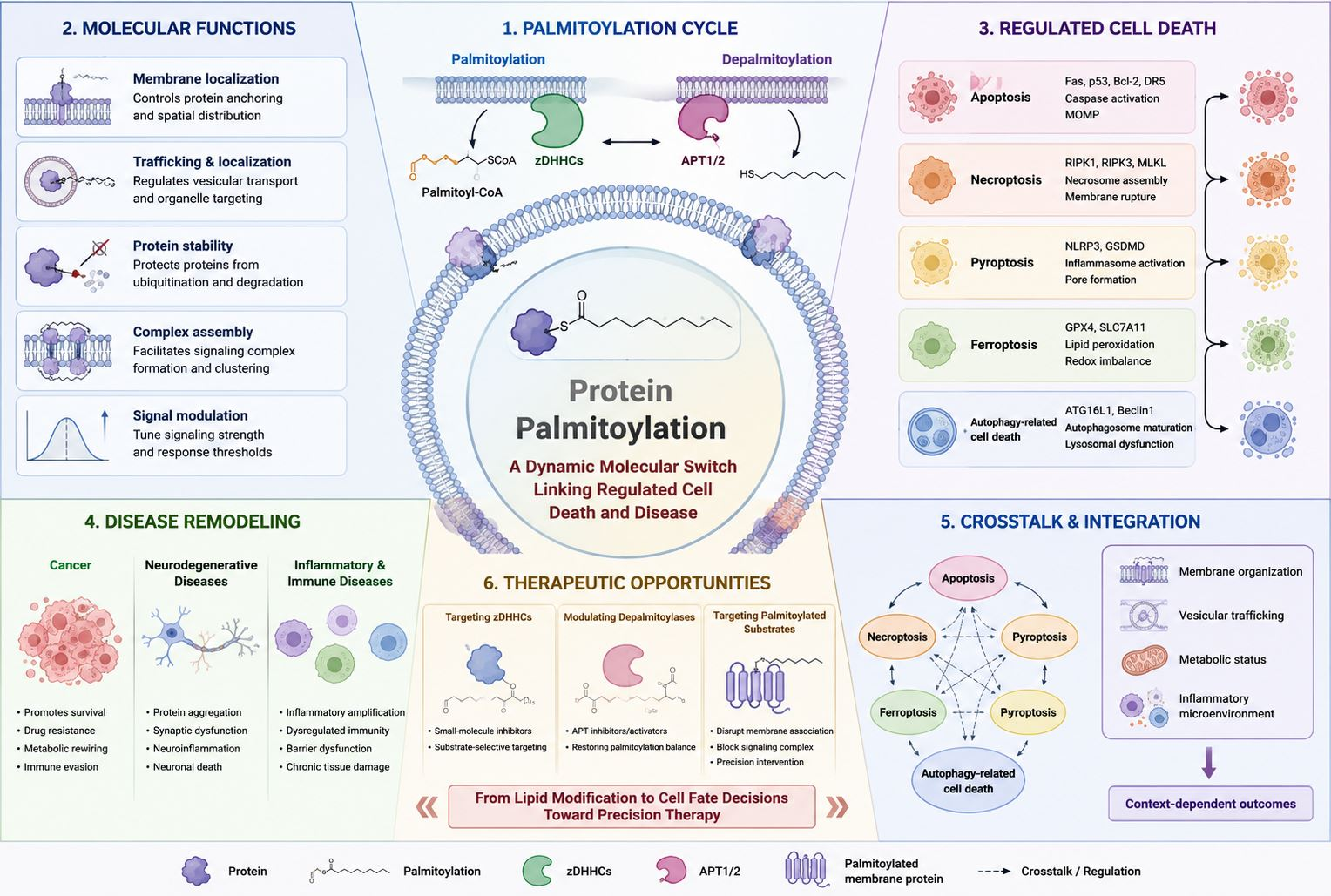
Protein Palmitoylation as a Molecular Switch Linking Regulated Cell Death and Disease

Abstract
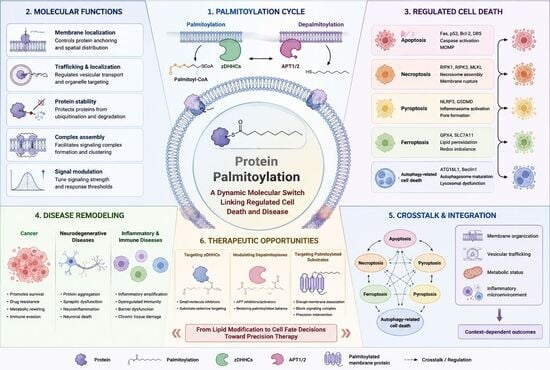
1. Introduction
2. Literature Search Strategy
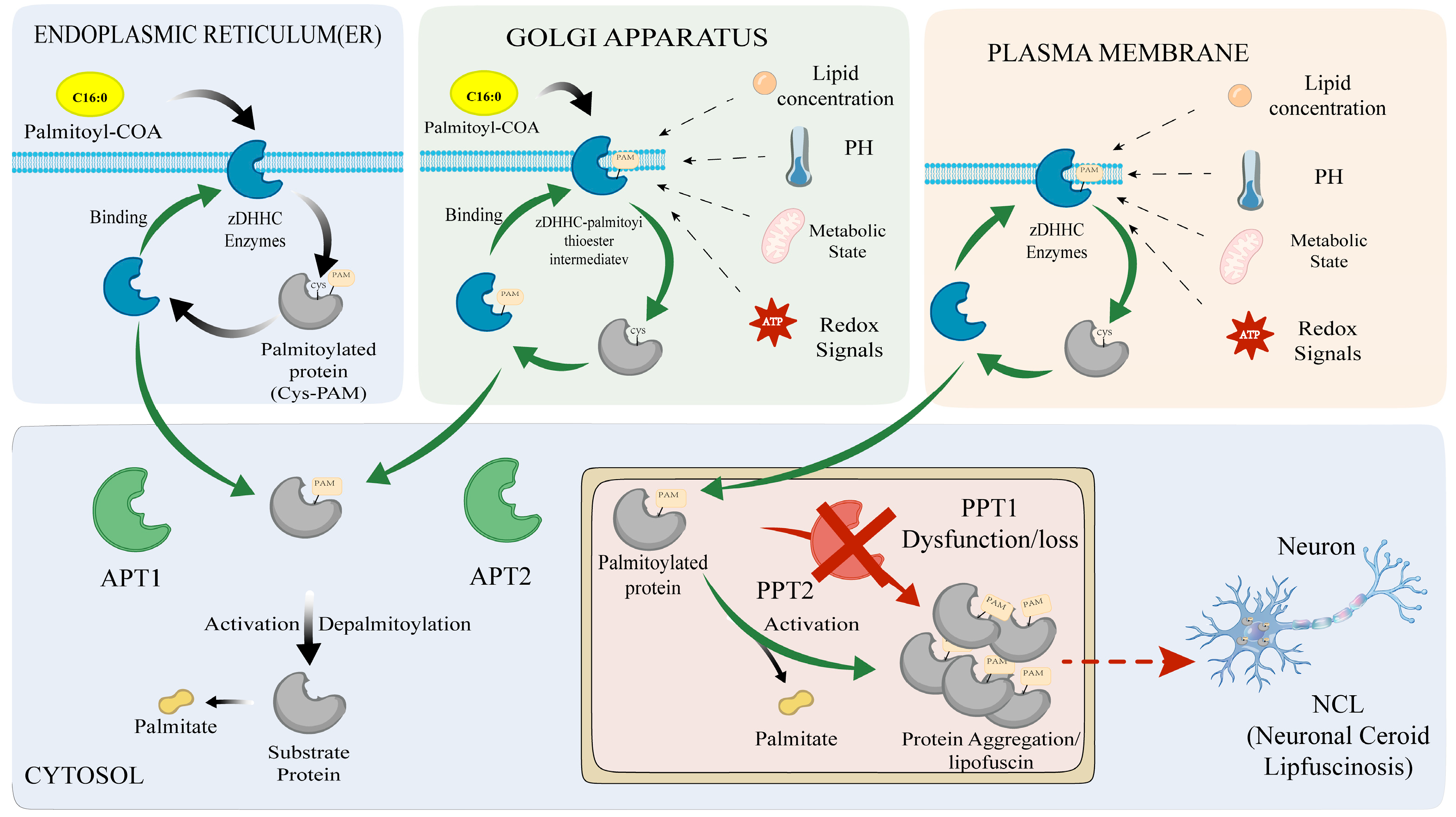
3. Molecular Basis and Dynamic Regulation of Protein Palmitoylation
3.1. Chemical Basis and Dynamic Features of Palmitoylation
3.2. The Depalmitoylation System and Its Regulatory Roles
3.3. Biological Effects of Palmitoylation on Protein Function
4. Palmitoylation in Regulated Cell Death Pathways
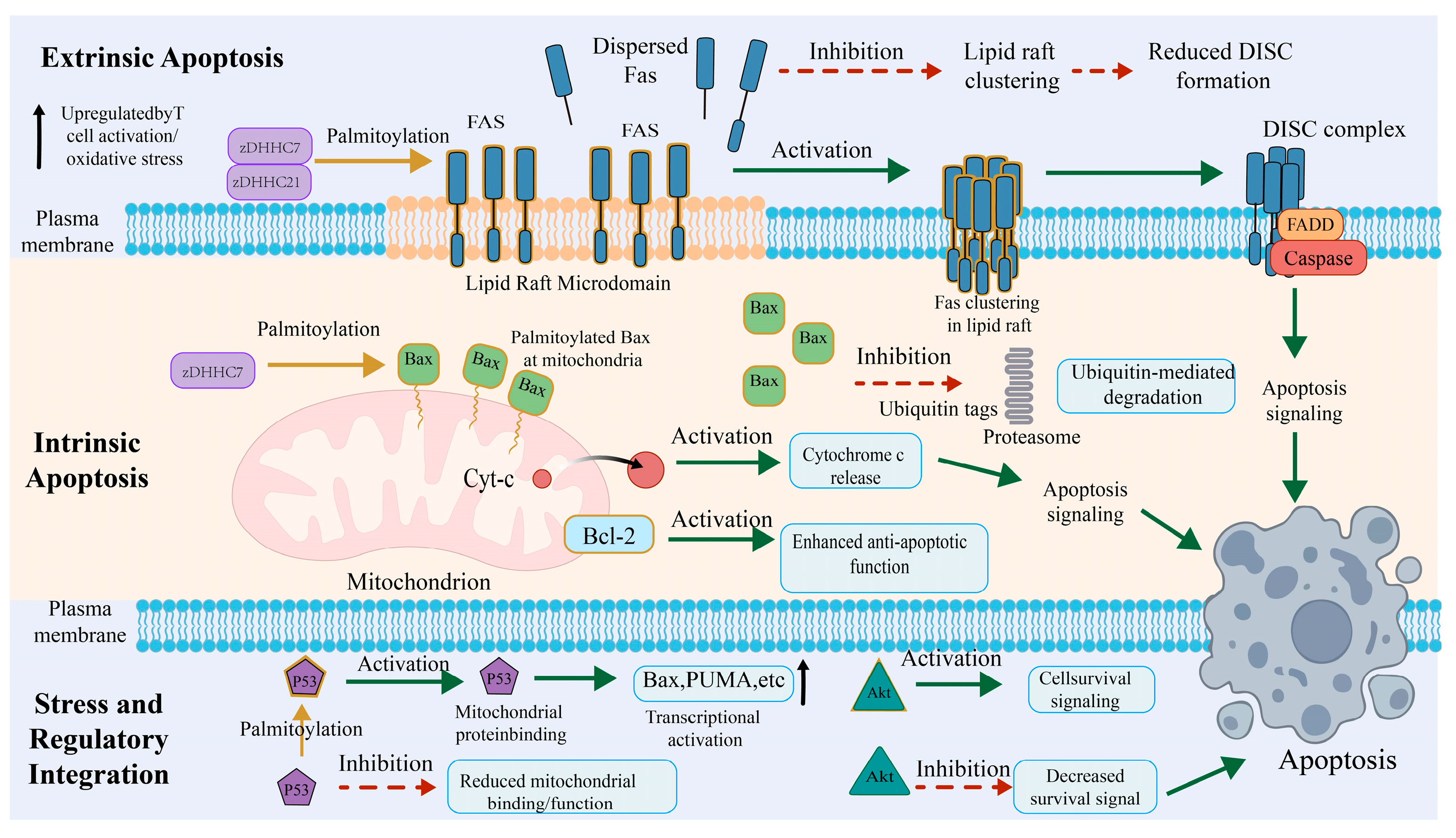
4.1. Palmitoylation and Apoptosis
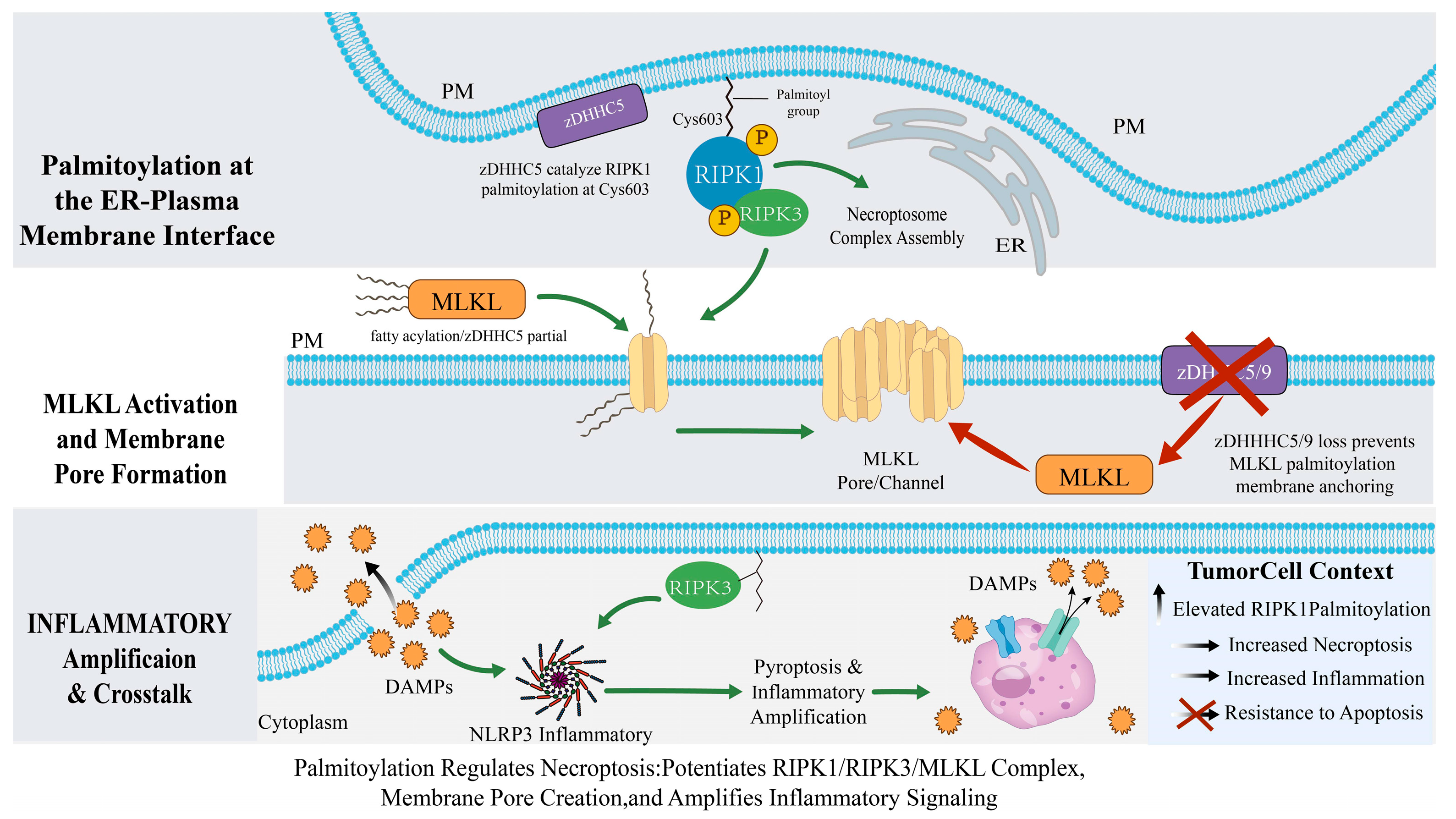
4.2. Palmitoylation and Necroptosis
4.3. Palmitoylation and Pyroptosis
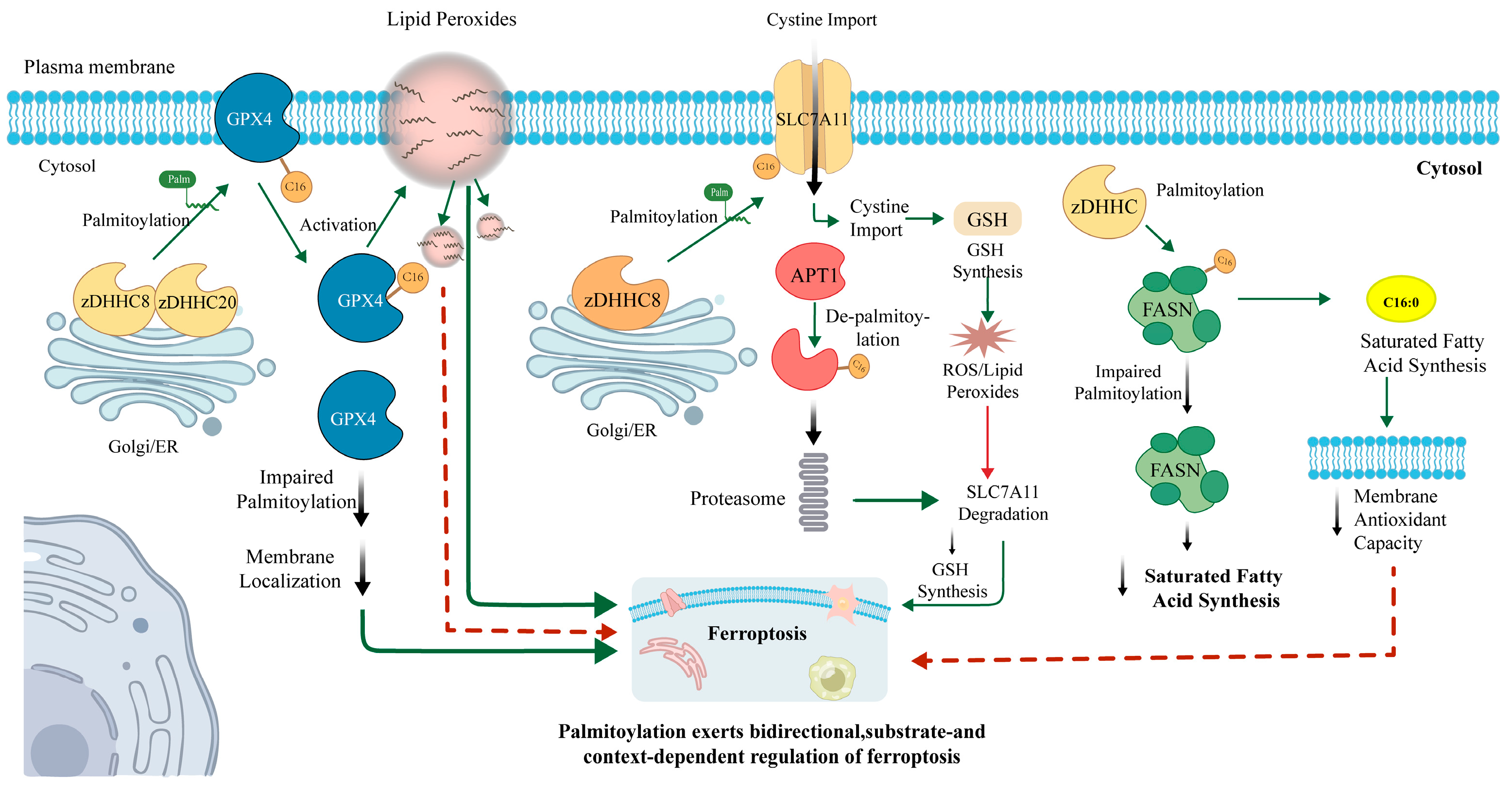
4.4. Palmitoylation and Ferroptosis
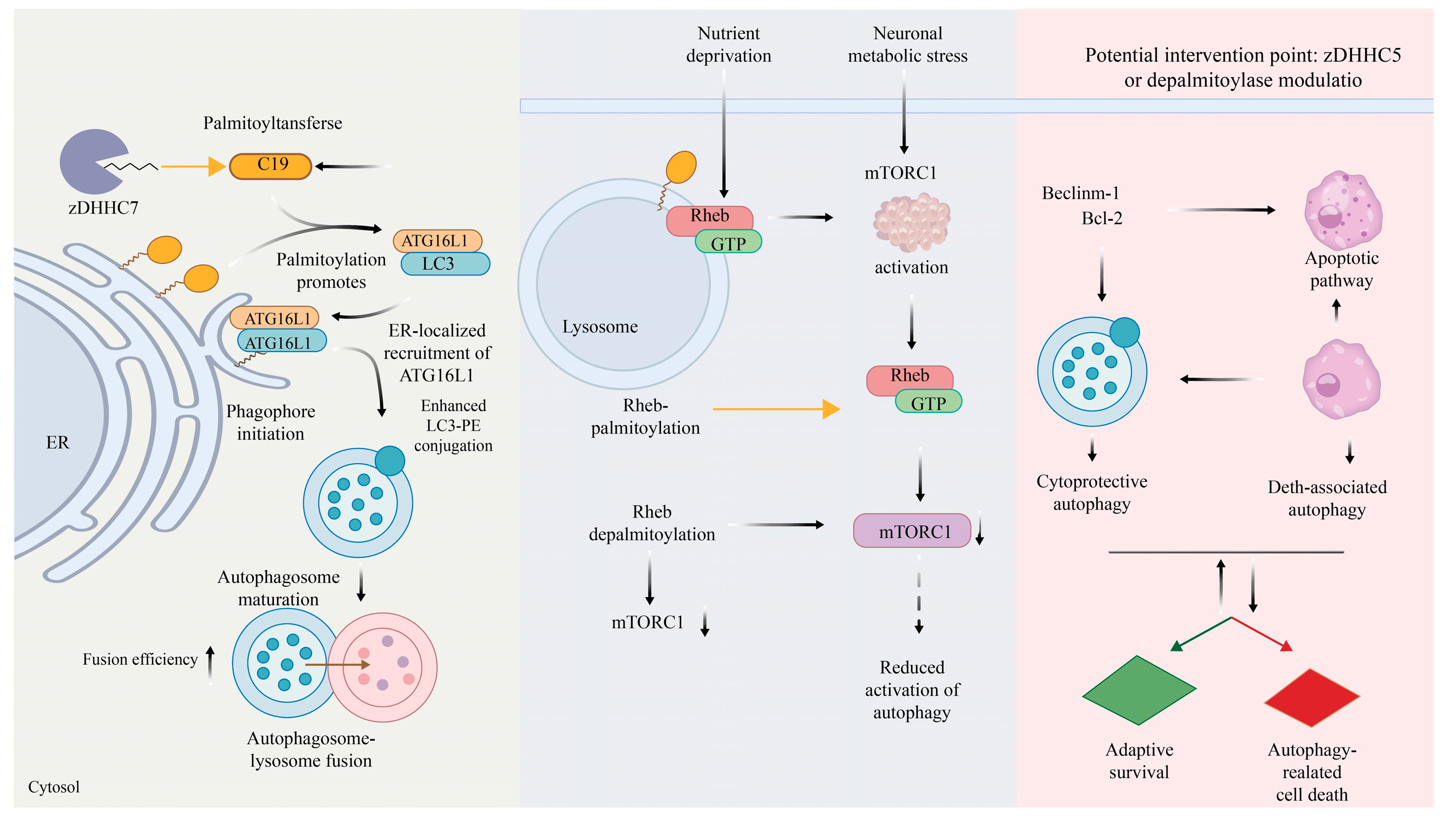
4.5. Palmitoylation- and Autophagy-Related Cell Death
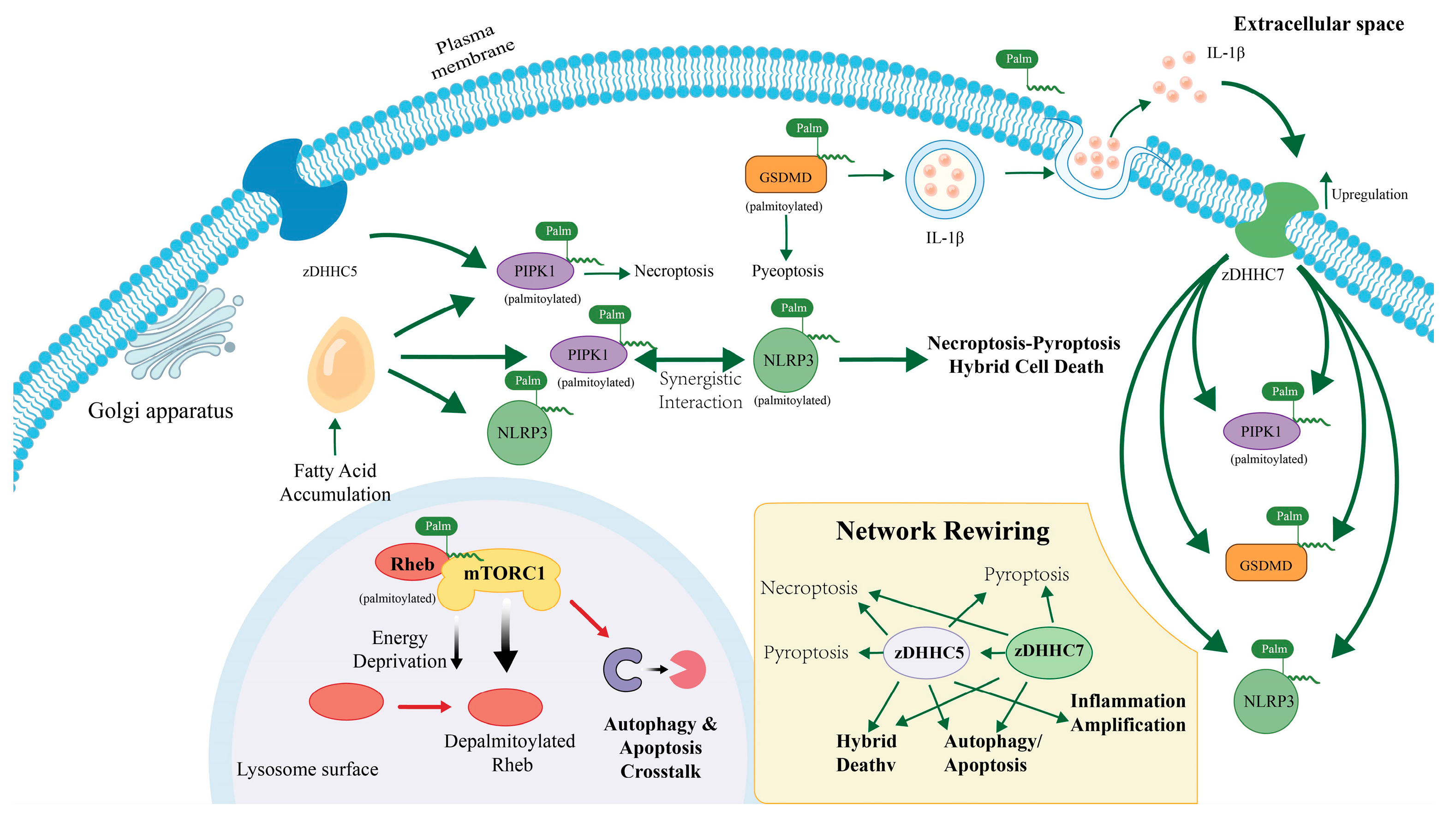
4.6. Palmitoylation-Mediated Crosstalk Among Cell Death Pathways

| Cell Death Pathway | Palmitoylated Protein/Substrate | zDHHC Enzyme or Depalmitoylating Regulator | Palmitoylation Site | Functional Consequence | Experimental Model/Species | Evidence Level | Disease Relevance | Reference |
|---|---|---|---|---|---|---|---|---|
| Apoptosis | Fas/CD95 | zDHHC7 | Cys199 | Promotes Fas stability, lipid raft localization, and Fas-mediated apoptotic signaling | Human colorectal cancer cells | Direct evidence | Immune regulation; cancer apoptosis resistance | [29] |
| Apoptosis | Bax | zDHHC3/zDHHC7/zDHHC11/zDHHC12/zDHHC21 | Cys126 | Promotes mitochondrial targeting, oligomerization, caspase activation, and intrinsic apoptosis | HEK293 cells, Cos7 cells, mouse tissues, Hodgkin B-cell lines | Direct evidence | Stress-induced apoptosis; cancer cell apoptosis resistance | [38] |
| Necroptosis | RIPK1 | zDHHC5 | Not fully defined | Licenses RIPK1 kinase activity and promotes downstream inflammatory cell death signaling | TNF-stimulated mammalian cell models; mouse inflammatory disease model | Direct evidence | Inflammatory diseases; tissue injury | [44] |
| Necroptosis | MLKL | Not fully defined | Not fully defined | Acylation/palmitoylation is associated with MLKL function during necroptotic execution | Mammalian cell models | Partial evidence | Inflammatory cell death | [14] |
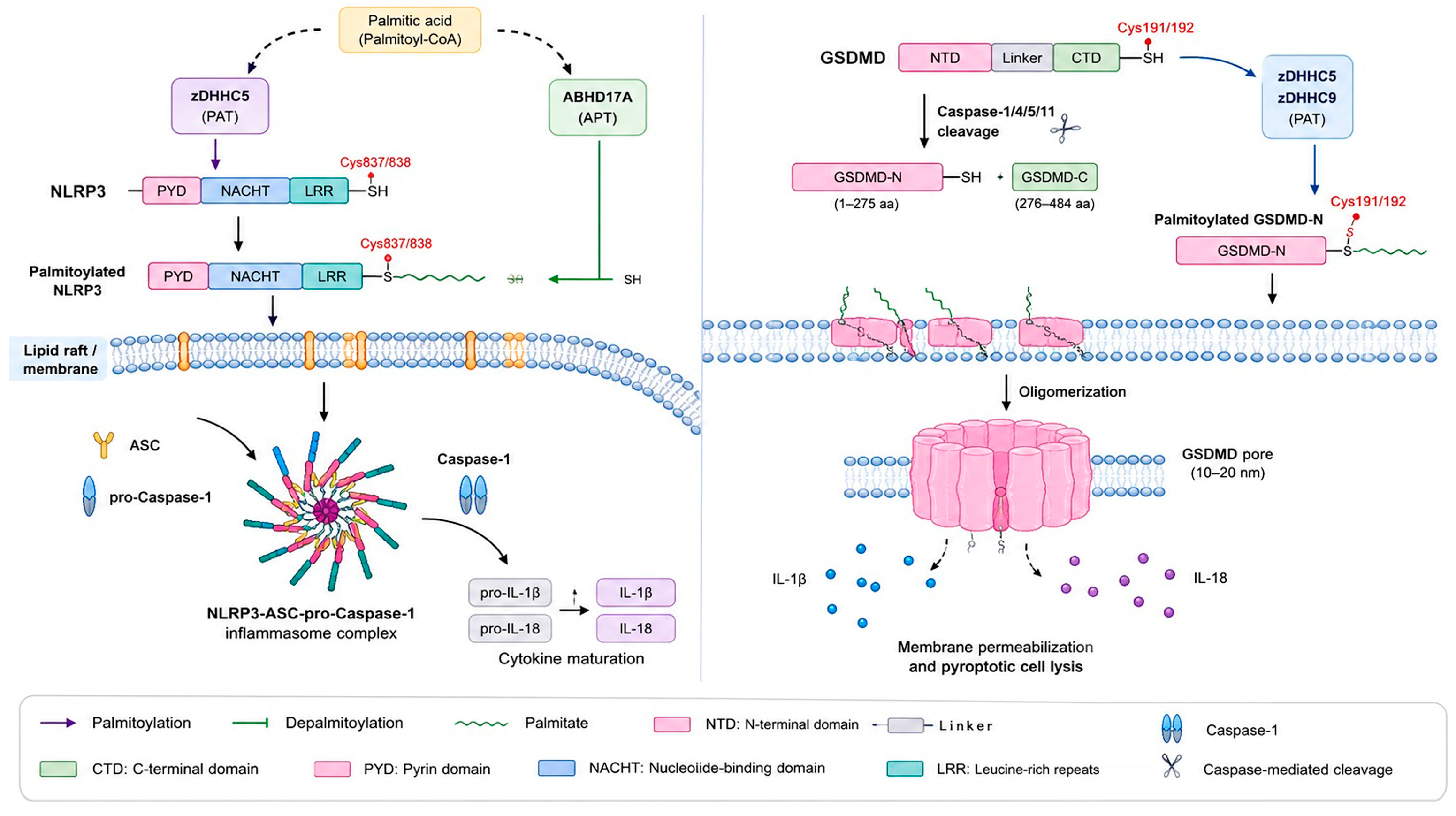
| Pyroptosis | NLRP3 | zDHHC5/ABHD17A | Cys837/Cys838 | Promotes NLRP3–NEK7 interaction, inflammasome assembly, and activation | Macrophages and mouse inflammatory models | Direct evidence | NLRP3-driven inflammation; metabolic and chronic inflammatory diseases | [16] |
| Pyroptosis | GSDMD | zDHHC5/zDHHC9 | Cys191 (human)/Cys192 (mouse) | Promotes GSDMD palmitoylation, oligomerization, membrane pore formation, and pyroptotic execution | THP-1 macrophages, iBMDMs, primary macrophages, and mouse inflammatory models | Direct evidence | Inflammasome activation and inflammatory diseases | [51] |
| Ferroptosis | GPX4 | zDHHC8; zDHHC20; APT2 | Cys66 reported | Stabilizes GPX4 and suppresses lipid peroxidation, thereby promoting ferroptosis resistance | Cancer cell models; tumor-bearing mouse models | Direct evidence | Cancer ferroptosis resistance; antitumor immunity | [17] |
| Ferroptosis | SLC7A11 | zDHHC8 | Not fully defined | Promotes SLC7A11 palmitoylation and supports cystine uptake, glutathione synthesis, and ferroptosis resistance | Glioblastoma cell and tumor models | Direct evidence | Glioblastoma; ferroptosis resistance | [27] |
| Autophagy-related cell death | ATG16L1 | zDHHC7 | Cys153 | Promotes ATG16L1–WIPI2B/RAB33B complex formation, LC3 lipidation, and autophagosome formation | ATG16L1-KO HeLa cells; mammalian autophagy models | Direct evidence | Autophagy dysfunction | [28] |
| Autophagy-related cell death | Beclin1 | zDHHC5 | Cys137 | Promotes ATG14L-containing PI3KC3-C1 formation, lipid kinase activity, and autophagic flux | Mammalian cell stress models | Direct evidence | Aging, stress responses | [56] |
5. Palmitoylation and Disease Mechanisms: From Cell Death Dysregulation to Pathological Remodeling
5.1. Palmitoylation and Tumorigenesis and Progression
5.2. Palmitoylation and Neurodegenerative Diseases
5.3. Palmitoylation and Inflammatory and Immune-Related Diseases
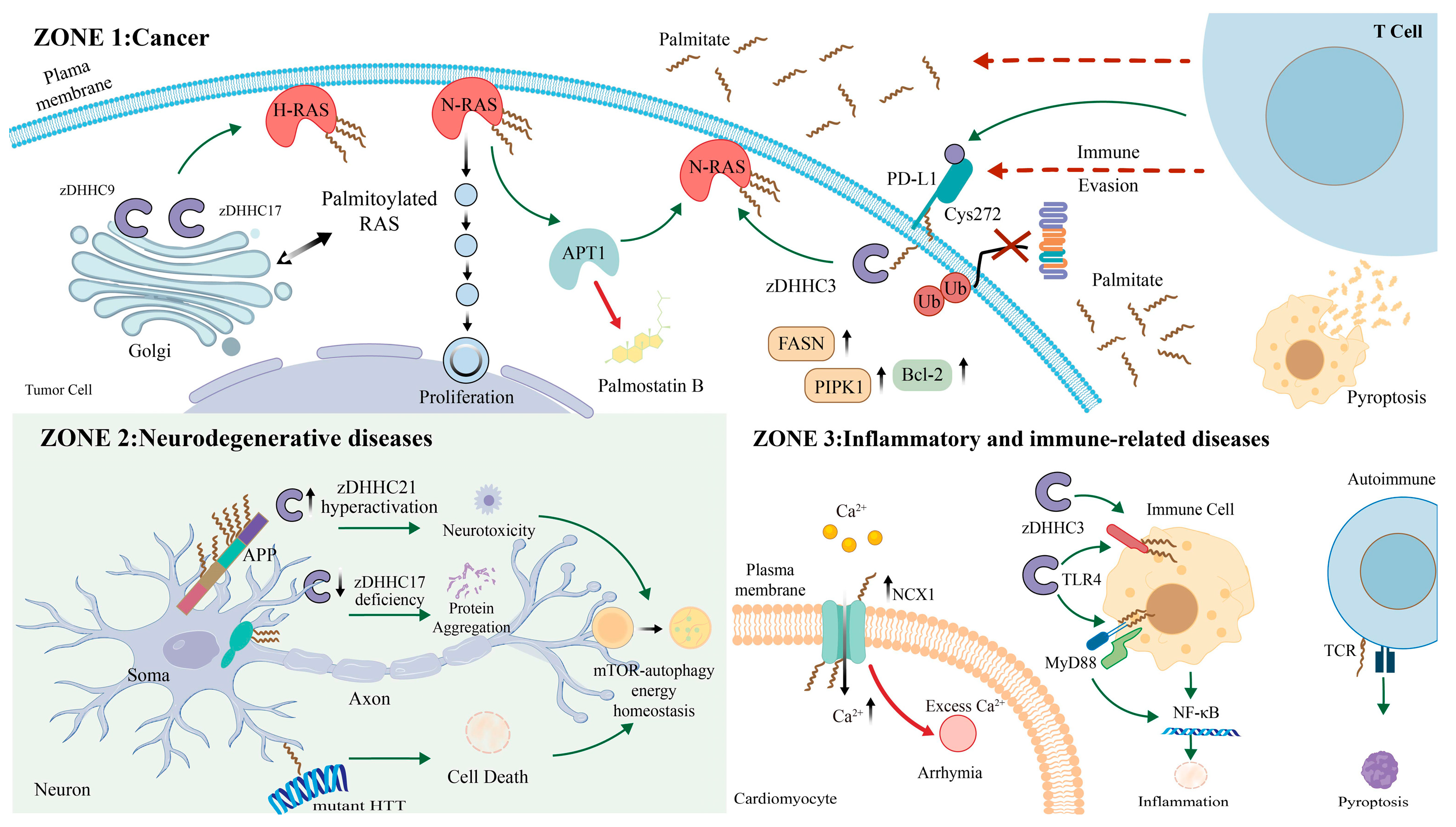
5.4. Context-Dependent Remodeling of Disease Signaling Networks
| Disease Category | Disease/Type | Key Regulator or Substrate | Dominant RCD Phenotype | Mechanistic Role | Pathological Consequence | Potential Pathological Role | Reference |
|---|---|---|---|---|---|---|---|
| Cancer | RAS-driven cancers (pancreatic cancer, colorectal cancer, melanoma and others) | zDHHC9; zDHHC17; RAS | Apoptosis resistance/pro-survival signaling | Palmitoylation promotes RAS cycling between the Golgi apparatus and plasma membrane, sustaining MAPK/ERK signaling and oncogenic activity. | Enhanced tumor cell proliferation, survival, and metabolic adaptation. | Likely driver | [39] |
| Cancer | Breast cancer/endocrine-resistant breast cancer | zDHHC22, mTOR | Apoptosis resistance/pro-survival signaling | zDHHC22-mediated mTOR palmitoylation modulates AKT signaling and endocrine therapy response. | Endocrine therapy resistance and tumor progression. | Context-dependent | [66] |
| Cancer | Melanoma, lung cancer and other tumors | zDHHC3, PD-L1 | Immune evasion; resistance to immune-mediated killing | PD-L1 Cys272 palmitoylation prevents ubiquitination-dependent degradation. | Prolonged PD-L1 membrane retention suppresses T-cell-mediated tumor killing. | Likely driver | [30] |
| Cancer | Glioblastoma and therapy-resistant tumors | zDHHC8; zDHHC20; SLC7A11; GPX4 | Ferroptosis resistance | Palmitoylation stabilizes ferroptosis-suppressive proteins and supports cystine uptake or antioxidant defense. | Tumor cells acquire resistance to lipid peroxidation and ferroptotic death. | Likely driver/context-dependent | [17,24,27] |
| Neurodegenerative diseases | Alzheimer’s disease | zDHHC21; Fyn-related regulators; BACE1 | Neuronal injury; autophagy-related dysfunction | Palmitoylation promotes lipid raft enrichment of BACE1 and may enhance Fyn-related signaling associated with Tau pathology. | Increased Aβ production, Tau phosphorylation, synaptic dysfunction and cognitive decline. | Context-dependent/secondary amplifier | [70,71] |
| Neurodegenerative diseases | Huntington’s disease | zDHHC17/HIP14; huntingtin | Neuronal dysfunction; apoptosis susceptibility | Impaired palmitoylation of synaptic proteins and huntingtin-associated substrates disrupts neuronal signaling and trafficking. | Synaptic instability, impaired axonal transport and reduced neuronal survival. | Likely contributor | [72,73] |
| Inflammatory and immune-related diseases | NLRP3-driven inflammatory diseases; metabolic inflammation | NLRP3; zDHHC5; ABHD17A | Pyroptosis amplification | zDHHC5-mediated NLRP3 palmitoylation promotes NLRP3–NEK7 interaction and inflammasome activation, whereas ABHD17A reverses this modification. | Enhanced IL-1β/IL-18 release, inflammatory cell death and tissue injury. | Likely driver/amplifier | [16] |
| Inflammatory and immune-related diseases | Inflammasome-associated inflammatory diseases | GSDMD; zDHHC5; zDHHC9 | Pyroptosis execution | ROS-dependent GSDMD palmitoylation promotes oligomerization, membrane pore formation and pyroptotic execution. | Cell lysis, cytokine release and inflammatory amplification. | Likely driver/amplifier | [51] |
6. Conclusions and Future Directions
Supplementary Materials
Author Contributions
Funding
Institutional Review Board Statement
Informed Consent Statement
Data Availability Statement
Conflicts of Interest
Abbreviations
| RIPK1 | receptor-interacting protein kinase 1 |
| GSDMD | gasdermin D |
| GPX4 | glutathione peroxidase 4 |
| zDHHC | zinc finger Asp-His-His-Cys |
| PATs | palmitoyl acyltransferases |
| PPT1 | palmitoyl protein thioesterase 1 |
| NCL | neuronal ceroid lipofuscinosis |
| LAT | linker for activation of T cells |
| PCD | programmed cell death |
| FADD | fas-associated death domain protein |
| DISC | death-inducing signaling complex |
| TNFR | tumor necrosis factor receptor |
| TRAIL-R | TNF-related apoptosis-inducing ligand receptor |
| MLKL | mixed lineage kinase domain-like |
| DAMPs | damage-associated molecular patterns |
| NLRP3 | NLR family pyrin domain-containing 3 |
| MAP1LC3 | microtubule-associated protein 1 light chain 3 |
References
- Chen, S.; Yang, W.; Chen, M.; Liu, S.; Shao, Z.; Xiao, G. Regulated cell death in musculoskeletal development, homeostasis, and diseases. Fundam. Res. 2026, 6, 465–476. [Google Scholar] [CrossRef]
- Xia, X.; Ren, P.; Bai, Y.; Li, J.; Zhang, H.; Wang, L.; Hu, J.; Li, X.; Ding, K. Modulatory effects of regulated cell death: An innovative preventive approach for the control of mastitis. Cells 2024, 13, 1699. [Google Scholar] [CrossRef]
- Wlodarczyk, J.; Bhattacharyya, R.; Dore, K.; Ramzan, F.; Abrar, F.; Mishra, G.G.; Mill, P.; Deu, E.; Martin, D.D.O. Altered protein palmitoylation as disease mechanism in neurodegenerative disorders. J. Neurosci. 2024, 44, e1225242024. [Google Scholar] [CrossRef] [PubMed]
- Mesquita, F.S.; Abrami, L.; Linder, M.E.; Bamji, S.X.; Dickinson, B.C.; van der Goot, F.G. Mechanisms and functions of protein S-acylation. Nat. Rev. Mol. Cell Biol. 2024, 25, 488–509. [Google Scholar] [CrossRef]
- Rocks, O.; Gerauer, M.; Vartak, N.; Koch, S.; Huang, Z.P.; Pechlivanis, M.; Kuhlmann, J.; Brunsveld, L.; Chandra, A.; Ellinger, B.; et al. The palmitoylation machinery is a spatially organizing system for peripheral membrane proteins. Cell 2010, 141, 458–471. [Google Scholar] [CrossRef]
- Sang, J.W.; Won, J. Temporal profiling establishes a dynamic S-palmitoylation cycle. ACS Chem. Biol. 2018, 13, 1560–1568. [Google Scholar] [CrossRef] [PubMed]
- Mitchell, D.A.; Vasudevan, A.; Linder, M.E.; Deschenes, R.J. Protein palmitoylation by a family of DHHC protein S-acyltransferases. J. Lipid Res. 2006, 47, 1118–1127. [Google Scholar] [CrossRef]
- Stix, R.; Lee, C.J.; Faraldo-Gómez, J.D.; Banerjee, A. Structure and mechanism of DHHC protein acyltransferases. J. Mol. Biol. 2020, 432, 4983–4998. [Google Scholar] [CrossRef] [PubMed]
- Malgapo, M.I.P.; Linder, M.E. Substrate recruitment by zDHHC protein acyltransferases. Open Biol. 2021, 11, 210026. [Google Scholar] [CrossRef]
- Lin, D.T.S.; Conibear, E. ABHD17 proteins are novel protein depalmitoylases that regulate N-Ras palmitate turnover and subcellular localization. eLife 2015, 4, e11306. [Google Scholar] [CrossRef]
- Koster, K.P.; Yoshii, A. Depalmitoylation by palmitoyl-protein thioesterase 1 in neuronal health and degeneration. Front. Synaptic Neurosci. 2019, 11, 25. [Google Scholar] [CrossRef] [PubMed]
- Xiao, H.X.; Li, Z.Z.; Li, X.H.; Wang, X.X.; Zhang, Y.Y.; Liu, J.J.; Chen, K.K.; Zhao, M.M.; Sun, L.L.; Zhou, R.R.; et al. The palmitoylation code in cell death signaling: From molecular mechanisms to therapeutic opportunities. Front. Cell Dev. Biol. 2026, 14, 1740922. [Google Scholar] [CrossRef]
- Zhu, Y.; Ma, C.; Zhong, L.; Wang, T.; Liu, W.; Wang, Z. From lipid modification to cell death: The diverse roles of S-palmitoylation in cell fate decisions. Cell Commun. Signal. 2026, 24, 318. [Google Scholar] [CrossRef]
- Pradhan, A.J.; Chitkara, S.; Ramirez, R.X.; Chitkara, S.; Ramirez, R.X.; Monje-Galvan, V.; Sancak, Y.; Atilla-Gokcumen, G.E. Acylation of MLKL impacts its function in necroptosis. ACS Chem. Biol. 2024, 19, 407–418. [Google Scholar] [CrossRef]
- Zhang, N.; Zhang, J.; Yang, Y.; Shan, H.; Hou, S.; Fang, H.; Ma, M.; Chen, Z.; Tan, L.; Xu, D. A palmitoylation–depalmitoylation relay spatiotemporally controls GSDMD activation in pyroptosis. Nat. Cell Biol. 2024, 26, 757–769. [Google Scholar] [CrossRef]
- Zheng, S.; Que, X.; Wang, S.; Huang, J.; Chen, L.; Li, X.; Zhang, Y.; Liu, Y.; Wang, C.; Li, J.; et al. ZDHHC5-mediated NLRP3 palmitoylation promotes NLRP3–NEK7 interaction and inflammasome activation. Mol. Cell 2023, 83, 4570–4585.e7. [Google Scholar] [CrossRef]
- Huang, B.; Wang, H.; Liu, S.; Hao, M.; Luo, D.; Zhou, Y.; Huang, Y.; Nian, Y.; Zhang, L.; Chu, B.; et al. Palmitoylation-dependent regulation of GPX4 suppresses ferroptosis. Nat. Commun. 2025, 16, 867. [Google Scholar] [CrossRef]
- Balasubramanian, A.; Hsu, A.Y.; Ghimire, L.; Tahir, M.; Devant, P.; Fontana, P.; Du, G.; Liu, X.; Fabin, D.; Kambara, H.; et al. The palmitoylation of gasdermin D directs its membrane translocation and pore formation during pyroptosis. Sci. Immunol. 2024, 9, eadn1452. [Google Scholar] [CrossRef]
- Zmuda, F.; Chamberlain, L.H. Regulatory effects of post-translational modifications on zDHHC S-acyltransferases. J. Biol. Chem. 2020, 295, 14640–14652. [Google Scholar] [CrossRef] [PubMed]
- Rana, M.S.; Kumar, P.; Lee, C.J.; Verardi, R.; Rajashankar, K.R.; Banerjee, A. Fatty acyl recognition and transfer by an integral membrane S-acyltransferase. Science 2018, 359, eaao6326. [Google Scholar] [CrossRef] [PubMed]
- Lemonidis, K.; Sanchez-Perez, M.C.; Chamberlain, L.H. Identification of a Novel Sequence Motif Recognized by the Ankyrin Repeat Domain of zDHHC17/13 S-Acyltransferases. J. Biol. Chem. 2015, 290, 21939–21950. [Google Scholar] [CrossRef]
- Lemonidis, K. Substrate selectivity in the zDHHC family of S-acyltransferases. Biochem. Soc. Trans. 2017, 45, 751–758. [Google Scholar] [CrossRef] [PubMed]
- Zhou, F.; Xue, Y.; Yao, X.; Xu, Y. CSS-Palm: Palmitoylation site prediction with a clustering and scoring strategy (CSS). Bioinformatics 2006, 22, 894–896. [Google Scholar] [CrossRef] [PubMed]
- Zhou, L.; Lian, G.; Zhou, T.; Wang, Y.; Liu, X.; Zhang, Z.; Li, H.; Chen, Y.; Xu, J.; Zhao, Q.; et al. Palmitoylation of GPX4 via targetable ZDHHC8 determines ferroptosis sensitivity and antitumor immunity. Nat. Cancer 2025, 6, 768–785. [Google Scholar] [CrossRef] [PubMed]
- Vanhoutte, R.; Verhelst, S.H.L. Combinatorial optimization of activity-based probes for acyl protein thioesterases 1 and 2. ACS Med. Chem. Lett. 2022, 13, 1144–1150. [Google Scholar] [CrossRef]
- Howie, J.; Tulloch, L.B.; Brown, E.; Reilly, L.; Murphy, S.; McClafferty, H.; Tian, L.; Shipston, M.J.; Fuller, W. Glutathione-dependent depalmitoylation of phospholemman by peroxiredoxin 6. Cell Rep. 2024, 43, 113679. [Google Scholar] [CrossRef]
- Wang, Z.; Wang, Y.; Shen, N.; Liu, Y.; Xu, X.; Zhu, R.; Jiang, H.; Wu, X.; Wei, Y.; Tang, J. AMPKα1-mediated ZDHHC8 phosphorylation promotes SLC7A11 palmitoylation and ferroptosis resistance in glioblastoma. Cancer Lett. 2024, 584, 216619. [Google Scholar] [CrossRef]
- Wei, F.; Wang, Y.; Yao, J.; Mei, L.; Huang, X.; Kong, H.; Chen, J.; Chen, X.; Liu, L.; Wang, Z. ZDHHC7-mediated S-palmitoylation of ATG16L1 facilitates LC3 lipidation and autophagosome formation. Autophagy 2024, 20, 2719–2737. [Google Scholar] [CrossRef]
- Rossin, A.; Durivault, J.; Chakhtoura-Feghali, T.; Lounnas, N.; Gagnoux-Palacios, L.; Hueber, A.Q. Fas palmitoylation by the palmitoyl acyltransferase DHHC7 regulates Fas stability. Cell Death Differ. 2015, 22, 643–653. [Google Scholar] [CrossRef]
- Yao, H.; Lan, J.; Li, C.; Shi, H.; Brosseau, J.P.; Wang, H.; Lu, H.; Fang, C.; Zhang, Y.; Liang, L.; et al. Inhibiting PD-L1 palmitoylation enhances T-cell immune responses against tumours. Nat. Biomed. Eng. 2019, 3, 306–317. [Google Scholar] [CrossRef]
- Yang, Y.; Hsu, J.-M.; Sun, L.; Chan, L.-C.; Li, C.-W.; Hsu, J.L.; Wei, Y.; Xia, W.; Hou, J.; Qiu, Y.; et al. Palmitoylation stabilizes PD-L1 to promote breast tumor growth. Cell Res. 2019, 29, 83–86. [Google Scholar] [CrossRef]
- Hamaoui, D.; Subtil, A. ATG16L1 functions in cell homeostasis beyond autophagy. FEBS J. 2022, 289, 1779–1800. [Google Scholar] [CrossRef] [PubMed]
- Bu, L.; Zhang, Z.; Chen, J.; Fan, y.; Guo, J.; Su, Y.; Wang, H.; Zhang, X.; Wu, X.; Jiang, Q.; et al. High-fat diet promotes liver tumorigenesis via palmitoylation and activation of AKT. Gut 2024, 73, 1156–1168. [Google Scholar] [CrossRef]
- Li, P.; Gong, X.; Yuan, L.; Mu, L.; Zheng, Q.; Xiao, H.; Wang, H. Palmitoylation in apoptosis. J. Cell. Physiol. 2023, 238, 1641–1650. [Google Scholar] [CrossRef]
- Han, Y.H.; Wang, Y.; Lee, S.J.; Jin, M.H.; Sun, H.N.; Kwon, T. Regulation of anoikis by extrinsic death receptor pathways. Cell Commun. Signal. 2023, 21, 227. [Google Scholar] [CrossRef] [PubMed]
- Liu, Z.; Xiao, M.; Mo, Y.; Wang, Z.; Liu, J.; Wang, M.; Liu, J.; Li, Z.; Gao, F.; Liu, Y. Emerging roles of protein palmitoylation and its modifying enzymes in cancer cell signal transduction and therapy. Int. J. Biol. Sci. 2022, 18, 3447–3457. [Google Scholar] [CrossRef] [PubMed]
- Resh, M.D. Palmitoylation of proteins in cancer. Biochem. Soc. Trans. 2017, 45, 409–416. [Google Scholar] [CrossRef]
- Zhang, Z.; Ren, C.; Xiao, R.; Ma, S.; Liu, H.; Dou, Y.; Fan, Y.; Wang, S.; Zhan, P.; Gao, C.; et al. Palmitoylation of TIM-3 promotes immune exhaustion and restrains antitumor immunity. Sci. Immunol. 2024, 9, eadp7302. [Google Scholar] [CrossRef]
- Fröhlich, M.; Dejanovic, B.; Kashkar, H.; Schwarz, G.; Nussberger, S. S-palmitoylation represents a novel mechanism regulating the mitochondrial targeting of BAX and initiation of apoptosis. Cell Death Dis. 2014, 5, e1057. [Google Scholar] [CrossRef]
- Xia, Z.; Zhang, X.; Liu, P.; Zhang, R.; Huang, Z.; Li, D.; Xiao, X.; Wu, M.; Ning, N.; Zhang, Q.; et al. GNA13 regulates BCL2 expression and the sensitivity of GCB-DLBCL cells to BCL2 inhibitors in a palmitoylation-dependent manner. Cell Death Dis. 2021, 12, 54. [Google Scholar] [CrossRef]
- Li, W.; Liu, J.; Yu, T.; Lu, F.; Miao, Q.; Meng, X.; Xiao, W.; Yang, H.; Zhang, X. ZDHHC9-mediated Bip/GRP78 S-palmitoylation inhibits unfolded protein response and promotes bladder cancer progression. Cancer Lett. 2024, 598, 217118. [Google Scholar] [CrossRef]
- Tao, L.; Liu, X.; Zhang, C.; Zhang, H.; Zong, Y.; Yang, X. GRK6 palmitoylation increasing its membrane translocation promotes LPS-induced inflammation by PI3K/AKT pathway in Kupffer cells. Int. Immunopharmacol. 2023, 117, 109933. [Google Scholar] [CrossRef]
- Han, M.; Wang, X.; Wang, J.; Lang, D.; Xia, X.; Jia, Y.; Chen, Y. Ameliorative effects of epigallocatechin-3-gallate nanoparticles on 2,4-dinitrochlorobenzene induced atopic dermatitis: A potential mechanism of inflammation-related necroptosis. Front. Nutr. 2022, 9, 953646. [Google Scholar] [CrossRef]
- Zhang, N.; Liu, J.; Guo, R.; Yan, L.; Yang, Y.; Shi, C.; Zhang, M.; Shan, B.; Li, W.; Gu, J.; et al. Palmitoylation licenses RIPK1 kinase activity and cytotoxicity in the TNF pathway. Mol. Cell 2024, 84, 4419–4435.e10. [Google Scholar] [CrossRef]
- Zeng, X.; Chen, Z.; Zhu, Y.; Liu, L.; Zhang, Z.; Xiao, Y.; Wang, Q.; Pang, S.; Zhao, F.; Xu, B.; et al. O-GlcNAcylation regulation of RIPK1-dependent apoptosis dictates sensitivity to sunitinib in renal cell carcinoma. Drug Resist. Updates 2024, 77, 101150. [Google Scholar] [CrossRef] [PubMed]
- Buszka, A.; Pytyś, A.; Colvin, D.; Włodarczyk, J.; Wójtowicz, T. S-palmitoylation of synaptic proteins in neuronal plasticity in normal and pathological brains. Cells 2023, 12, 387. [Google Scholar] [CrossRef] [PubMed]
- Pradhan, A.J.; Lu, D.; Parisi, L.R.; Shen, S.; Berhane, I.A.; Galster, S.L.; Bynum, K.; Monje-Galvan, V.; Gokcumen, O.; Chemler, S.R.; et al. Protein acylation by saturated very long chain fatty acids and endocytosis are involved in necroptosis. Cell Chem. Biol. 2021, 28, 1298–1309.e7. [Google Scholar] [CrossRef] [PubMed]
- Andrew, R.J.; Fernandez, C.G.; Stanley, M.; Jiang, H.; Nguyen, P.; Rice, R.C.; Buggia-Prévot, V.; De Rossi, P.; Vetrivel, K.S.; Lamb, R.; et al. Lack of BACE1 S-palmitoylation reduces amyloid burden and mitigates memory deficits in transgenic mouse models of Alzheimer’s disease. Proc. Natl. Acad. Sci. USA 2017, 114, E9665–E9674. [Google Scholar] [CrossRef]
- Niu, Y.; Wang, L.; Zhang, Y.; Zou, Y.; Zhou, C. Pyroptosis in cardiovascular diseases: Roles, mechanisms, and clinical implications. Front. Cardiovasc. Med. 2025, 12, 1629016. [Google Scholar] [CrossRef]
- Ramzan, F.; Abrar, F.; Mishra, G.G.; Liao, L.M.Q.; Martin, D.D.O. Lost in traffic: Consequences of altered palmitoylation in neurodegeneration. Front. Physiol. 2023, 14, 1166125. [Google Scholar] [CrossRef]
- Du, G.; Healy, L.B.; David, L.; Walker, C.; El-Baba, T.J.; Lutomski, C.A.; Goh, B.; Gu, B.; Pi, X.; Devant, P.; et al. ROS-dependent S-palmitoylation activates cleaved and intact gasdermin D. Nature 2024, 630, 437–446. [Google Scholar] [CrossRef]
- Skotte, N.H.; Sanders, S.S.; Singaraja, R.R.; Ehrnhoefer, D.E.; Vaid, K.; Qiu, X.; Kannan, S.; Verma, C.; Hayden, M.R. Palmitoylation of caspase-6 by HIP14 regulates its activation. Cell Death Differ. 2017, 24, 433–444. [Google Scholar] [CrossRef]
- Karimian, F.; Khademi, M.; Nikkhah Bahrami, A.; Nabigol, M.; Mikanik, F.; Bakhtiyaridovvombaygi, M.; Vazifeh Shiran, N. Iron-dependent cell death: Unlocking ferroptosis as a key to multiple myeloma therapy. Clin. Immunol. 2025, 280, 110570. [Google Scholar] [CrossRef]
- Guo, Z.; Chen, D.; Yao, L.; Sun, Y.; Li, D.; Le, J.; Dian, Y.; Zeng, F.; Chen, X.; Deng, G. The molecular mechanism and therapeutic landscape of copper and cuproptosis in cancer. Signal Transduct. Target. Ther. 2025, 10, 149. [Google Scholar] [CrossRef]
- Xu, W.; Chen, X.; Wang, Y.; Chen, J.C.; Cao, Z.J.; Huang, R.; Chen, C.; Hou, D.R.; Jiang, M.J.; Xu, C. Palmitoylation regulators drive the progression of clear cell renal cell carcinoma through inhibition of cuproptosis. Cancer Cell Int. 2025, 25, 230. [Google Scholar] [CrossRef]
- Qian, Y.R.; Zhao, Y.J.; Zhang, F. Protein palmitoylation: Biological functions, disease, and therapeutic targets. MedComm 2025, 6, e70096. [Google Scholar] [CrossRef]
- Liang, X.; Zhou, L. PURPL directly modulates ULK1 phosphorylation to inhibit autophagic cell death. Autophagy Rep. 2022, 1, 17–20. [Google Scholar] [CrossRef] [PubMed]
- Guo, R.; Liu, J.; Min, X.; Zeng, W.; Shan, B.; Zhang, M.; He, Z.; Zhang, Y.; He, K.; Yuan, J.; et al. Reduction of DHHC5-mediated beclin 1 S-palmitoylation underlies autophagy decline in aging. Nat. Struct. Mol. Biol. 2024, 31, 232–245. [Google Scholar] [CrossRef] [PubMed]
- Huang, X.; Yao, J.; Liu, L.; Chen, J.; Mei, L.; Huangfu, J.; Luo, D.; Wang, X.; Lin, C.; Chen, X.; et al. S-acylation of p62 promotes p62 droplet recruitment into autophagosomes in mammalian autophagy. Mol. Cell 2023, 83, 3485–3501. [Google Scholar] [CrossRef] [PubMed]
- Lotfi, M.S.; Rassouli, F.B. Navigating the complexities of cell death: Insights into accidental and programmed cell death. Tissue Cell 2024, 91, 102586. [Google Scholar] [CrossRef]
- Jiang, L.; Wang, Z.; Xu, T.; Zhang, L. When pyro(ptosis) meets palm(itoylation). Cytokine Growth Factor Rev. 2024, 77, 30–38. [Google Scholar] [CrossRef]
- Gambardella, G.; Staiano, L.; Moretti, M.N.; De Cegli, R.; Fagnocchi, L.; Di Tullio, G.; Polletti, S.; Braccia, C.; Armirotti, A.; Zippo, A.; et al. GADD34 is a modulator of autophagy during starvation. Sci. Adv. 2020, 6, eabb0205. [Google Scholar] [CrossRef]
- Kim, Y.C.; Lee, S.E.; Kim, S.K. Toll-like receptor mediated inflammation requires FASN-dependent MYD88 palmitoylation. Nat. Chem. Biol. 2019, 15, 907–916. [Google Scholar] [CrossRef] [PubMed]
- Sorokin, O.; Hause, F.; Wedler, A.; Alakhras, T.; Bauchspiess, T.; Dietrich, A.; Günther, W.F.; Guha, C.; Obika, K.B.; Kraft, J. Comprehensive analysis of regulated cell death pathways: Intrinsic disorder, protein–protein interactions, and cross-pathway communication. Apoptosis 2025, 30, 2110–2162. [Google Scholar] [CrossRef]
- Lu, Y.; Tang, M.; Zhou, R. NCX1 depalmitoylation alters Ca2+ homeostasis in cardiomyocytes. Circ. Res. 2022, 131, 842–856. [Google Scholar]
- Huang, J.; Li, J.; Tang, J.; Wu, Y.; Yi, Z.; Wang, Y.; Li, Y.; Tan, Y.; Wu, Y.; Ren, G.; et al. ZDHHC22-mediated mTOR palmitoylation restrains breast cancer growth and endocrine therapy resistance. Int. J. Biol. Sci. 2022, 18, 2833–2850. [Google Scholar] [CrossRef] [PubMed]
- Liao, D.; Huang, Y.; Liu, D.; Zhang, h.; Shi, x.; Li, X.; Luo, P. The role of S-palmitoylation in neurological diseases: Implication for zDHHC family. Front. Pharmacol. 2024, 14, 1342830. [Google Scholar] [CrossRef]
- Zhou, B.; Hao, Q.; Liang, Y.; Kong, E. Protein palmitoylation in cancer: Molecular functions and therapeutic potential. Mol. Oncol. 2023, 17, 3–26. [Google Scholar] [CrossRef]
- Elmore, S. Apoptosis: A review of programmed cell death. Toxicol. Pathol. 2007, 35, 495–516. [Google Scholar] [CrossRef]
- Li, W.; Pang, Y.; Wang, Y.; Mei, F.; Guo, M.; Wei, Y.; Li, X.; Qin, W.; Wang, W.; Jia, L.; et al. Aberrant palmitoylation caused by a ZDHHC21 mutation contributes to pathophysiology of Alzheimer’s disease. BMC Med. 2023, 21, 223. [Google Scholar] [CrossRef]
- Vetrivel, K.S.; Meckler, X.; Chen, Y.; Nguyen, P.D.; Seidah, N.G.; Vassar, R.; Wong, P.C.; Fukata, M.; Kounnas, M.Z.; Thinakaran, G. Alzheimer disease Abeta production in the absence of S-palmitoylation-dependent targeting of BACE1 to lipid rafts. J. Biol. Chem. 2009, 284, 3793. [Google Scholar] [CrossRef] [PubMed]
- Yanai, A.; Huang, K.; Kang, R.; Singaraja, R.R.; Arstikaitis, P.; Gan, L.; Orban, P.C.; Mullard, A.; Cowan, C.M.; Raymond, L.A.; et al. Palmitoylation of huntingtin by HIP14 is essential for its trafficking and function. Nat. Neurosci. 2006, 9, 824–831. [Google Scholar] [CrossRef] [PubMed]
- Huang, K.; Sanders, S.S.; Kang, R.; Carroll, J.B.; Sutton, L.; Wan, J.; Singaraja, R.; Young, F.B.; Liu, L.; El-Husseini, A.; et al. Wild-type HTT modulates the enzymatic activity of the neuronal palmitoyl transferase HIP14. Hum. Mol. Genet. 2011, 20, 3356–3365. [Google Scholar] [CrossRef]
- Tsvetkov, P.; Coy, S.; Petrova, B.; Dreishpoon, M.; Verma, A.; Abdusamad, M.; Rossen, J.; Joesch-Cohen, L.; Humeidi, R.; Spangler, R.D.; et al. Copper induces cell death by targeting lipoylated TCA cycle proteins. Science 2022, 375, 1254–1261. [Google Scholar] [CrossRef]
- Feng, Y.; Wu, J.; Tang, H.; Chen, X.; Liu, Y.; Zhang, Y.; Wang, L.; Li, M.; Lei, X. Protein S-palmitoylation as potential therapeutic target for dermatoses. Biomolecules 2025, 16, 53. [Google Scholar] [CrossRef]
- Pei, S.; Piao, H.L. Exploring protein S-palmitoylation: Mechanisms, detection, and strategies for inhibitor discovery. ACS Chem. Biol. 2024, 19, 1868–1882. [Google Scholar] [CrossRef]
- Feng, S.; Zhou, Y.; Guo, L.; Liang, Y.; Zhu, W. Palmitoylation in cardiometabolic diseases: From molecular mechanisms to clinical implications. Pharmacol. Res. 2025, 220, 107921. [Google Scholar] [CrossRef]
- Yao, H.; Li, C.; He, F.; Song, T.; Brosseau, J.P.; Wang, H.; Lu, H.; Fang, C.; Shi, H.; Lan, J.; et al. A peptidic inhibitor for PD-1 palmitoylation targets its expression and functions. RSC Chem. Biol. 2021, 2, 192–205. [Google Scholar] [CrossRef]
- Xiu, C.; Ji, K.; Zhao, G.; Chen, J.; Yang, Y. The emerging role of palmitoyl acyltransferase zDHHC5 in health and disease: A review. Int. J. Biol. Macromol. 2025, 330, 148281. [Google Scholar] [CrossRef] [PubMed]
- Zheng, X.; Wu, X.; Wang, L.; Zhao, C.; Zhang, H.; Liu, Y.; Zhang, J.; Chen, J. S-palmitoylation: An oily modification guarding genome stability. DNA Repair 2025, 153, 103883. [Google Scholar] [CrossRef]
- Kwon, H.; Choi, M.; Ahn, Y.; Jang, D.; Pak, Y. Flotillin-1 palmitoylation turnover by APT-1 and ZDHHC-19 promotes cervical cancer progression by suppressing IGF-1 receptor desensitization and proteostasis. Cancer Gene Ther. 2023, 30, 302–312. [Google Scholar] [CrossRef]
- Chen, R.; Tang, X.; Wang, Y.; Wang, B.; Mao, F. Protein palmitoylation: An emerging regulator of inflammatory signaling and diseases. Front. Immunol. 2025, 16, 1652741. [Google Scholar] [CrossRef]
- Varfolomeev, E.; Mohanan, V.; Vucic, D. S-palmitoylation regulates signaling mediated by NLRP3 and other innate immune receptors. Mol. Cell 2025, 85, 3862–3873. [Google Scholar] [CrossRef]
- Williams, D.M.; Peden, A.A. Greasing the wheels of inflammasome formation: Regulation of NLRP3 function by S-linked fatty acids. Biochem. Soc. Trans. 2025, 53, 13–24. [Google Scholar] [CrossRef]
- Dekker, F.J.; Rocks, O.; Vartak, N.; Menninger, S.; Hedberg, C.; Balamurugan, R.; Wetzel, S.; Renner, S.; Gerauer, M.; Schölermann, B.; et al. Small-molecule inhibition of APT1 affects Ras localization and signaling. Nat. Chem. Biol. 2010, 6, 449–456. [Google Scholar] [CrossRef]
- Davda, D.; El Azzouny, M.A.; Tom, C.T.M.B.; Hernandez, J.L.; Majmudar, J.D.; Kennedy, R.T.; Martin, B.R. Profiling targets of the irreversible palmitoylation inhibitor 2-bromopalmitate. ACS Chem. Biol. 2013, 8, 1912–1917. [Google Scholar] [CrossRef]
- Won, S.J.; Davda, D.; Labby, K.J.; Hwang, S.Y.; Pricer, R.; Majmudar, J.D.; Armacost, K.A.; Rodriguez, L.A.; Rodriguez, C.L.; Chong, F.S.; et al. Molecular mechanism for isoform-selective inhibition of acyl protein thioesterases 1 and 2. ACS Chem. Biol. 2016, 11, 3374–3382. [Google Scholar] [CrossRef]




Disclaimer/Publisher’s Note: The statements, opinions and data contained in all publications are solely those of the individual author(s) and contributor(s) and not of MDPI and/or the editor(s). MDPI and/or the editor(s) disclaim responsibility for any injury to people or property resulting from any ideas, methods, instructions or products referred to in the content. |
© 2026 by the authors. Licensee MDPI, Basel, Switzerland. This article is an open access article distributed under the terms and conditions of the Creative Commons Attribution (CC BY) license.
Share and Cite
Liu, X.; Cheng, L.; Liu, M.; Zhou, M.; Jiao, B.; Liu, X.; Hu, J.; Li, Y.; Xia, X. Protein Palmitoylation as a Molecular Switch Linking Regulated Cell Death and Disease. Biomolecules 2026, 16, 853. https://doi.org/10.3390/biom16060853
Liu X, Cheng L, Liu M, Zhou M, Jiao B, Liu X, Hu J, Li Y, Xia X. Protein Palmitoylation as a Molecular Switch Linking Regulated Cell Death and Disease. Biomolecules. 2026; 16(6):853. https://doi.org/10.3390/biom16060853
Chicago/Turabian StyleLiu, Xiaozhe, Likun Cheng, Mingcheng Liu, Mingzhu Zhou, Bingze Jiao, Xuehan Liu, Jianhe Hu, Yanwei Li, and Xiaojing Xia. 2026. "Protein Palmitoylation as a Molecular Switch Linking Regulated Cell Death and Disease" Biomolecules 16, no. 6: 853. https://doi.org/10.3390/biom16060853
APA StyleLiu, X., Cheng, L., Liu, M., Zhou, M., Jiao, B., Liu, X., Hu, J., Li, Y., & Xia, X. (2026). Protein Palmitoylation as a Molecular Switch Linking Regulated Cell Death and Disease. Biomolecules, 16(6), 853. https://doi.org/10.3390/biom16060853