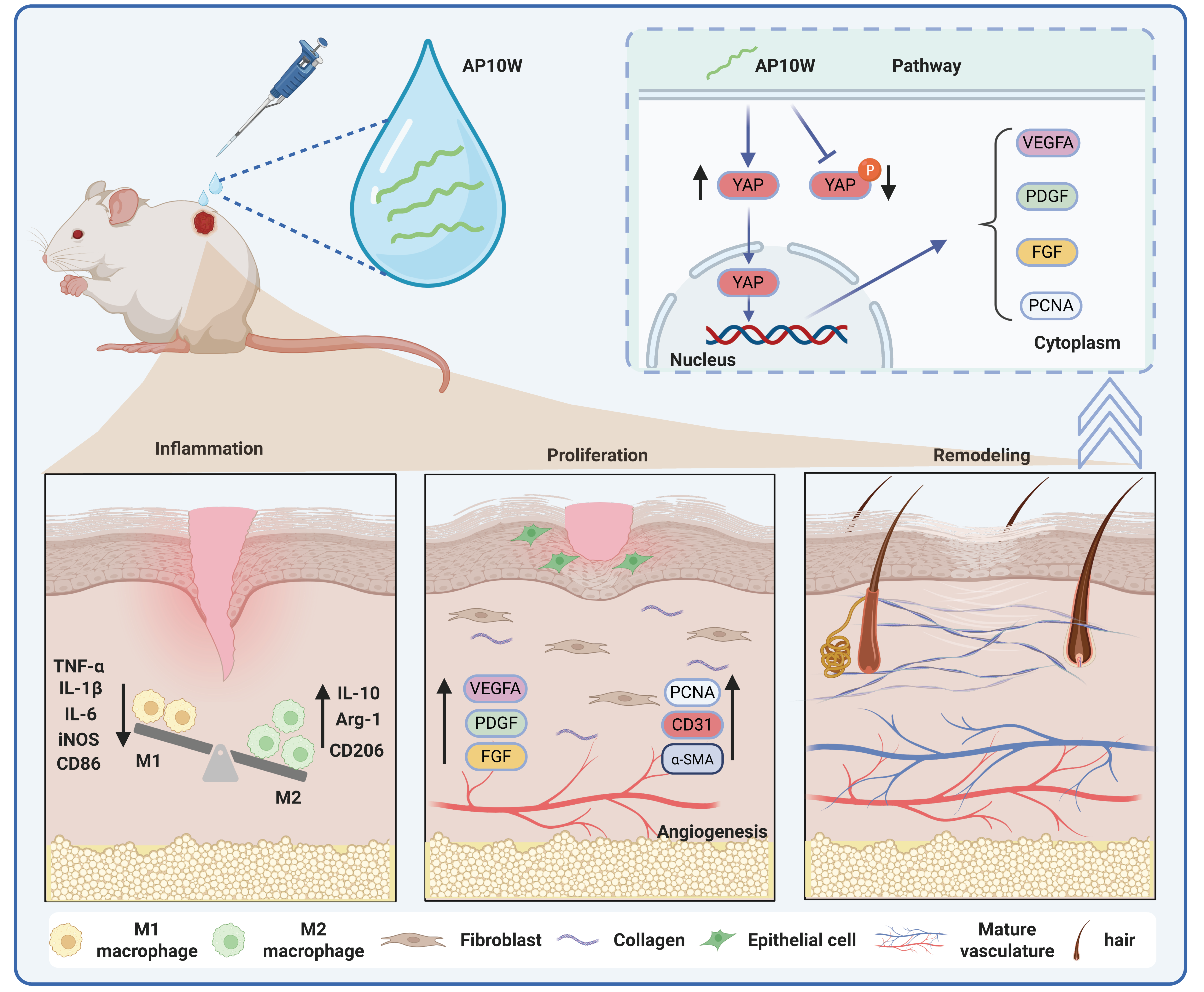
The Multifunctional Peptide AP10W Enhances Skin Wound Healing Through Macrophage Reprogramming and Angiogenesis


Abstract
1. Introduction
2. Materials and Methods
2.1. Antimicrobial Peptide AP10W
2.2. Cell Culture
2.3. Scratch Wound Healing Assay
2.4. Transwell Assay
2.5. Cell Proliferation Assay
2.6. Assay for Tube Formation In Vitro
2.7. In Vitro Inflammation Model
2.8. Immunofluorescence Staining
2.9. In Vivo Dorsal Skin Wound Model Assay
2.10. Assessment of Blood Flow in the Wound Area
2.11. H & E Staining, Masson Staining, Immunohistochemical, and Immunofluorescence Analysis
2.12. Western Blotting Analysis
2.13. RNA Isolation and Quantitative Real-Time Polymerase Chain Reaction (qRT-PCR)
2.14. Statistical Analysis
3. Results
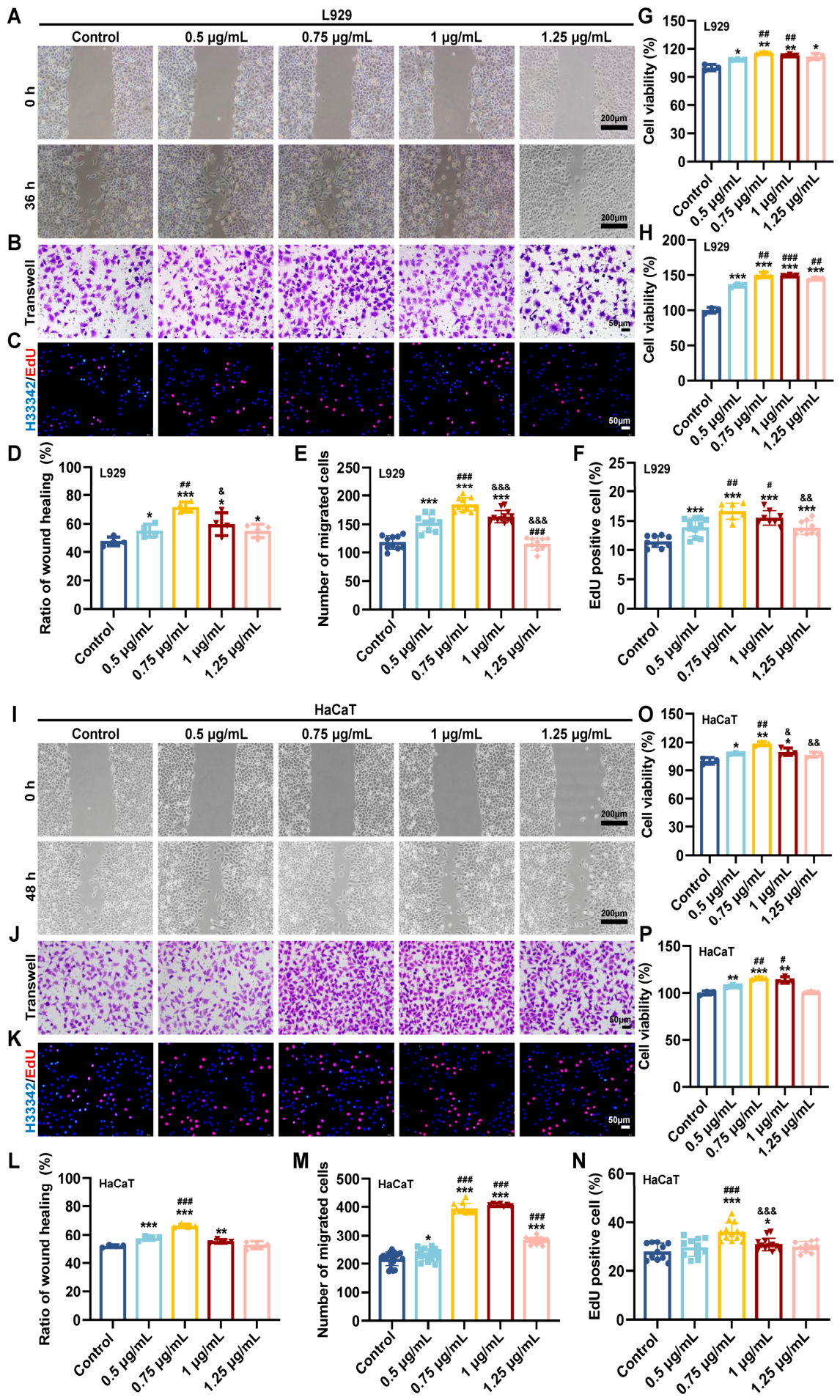
3.1. AP10W Promoted Migration and Proliferation of Fibroblasts and Keratinocytes In Vitro
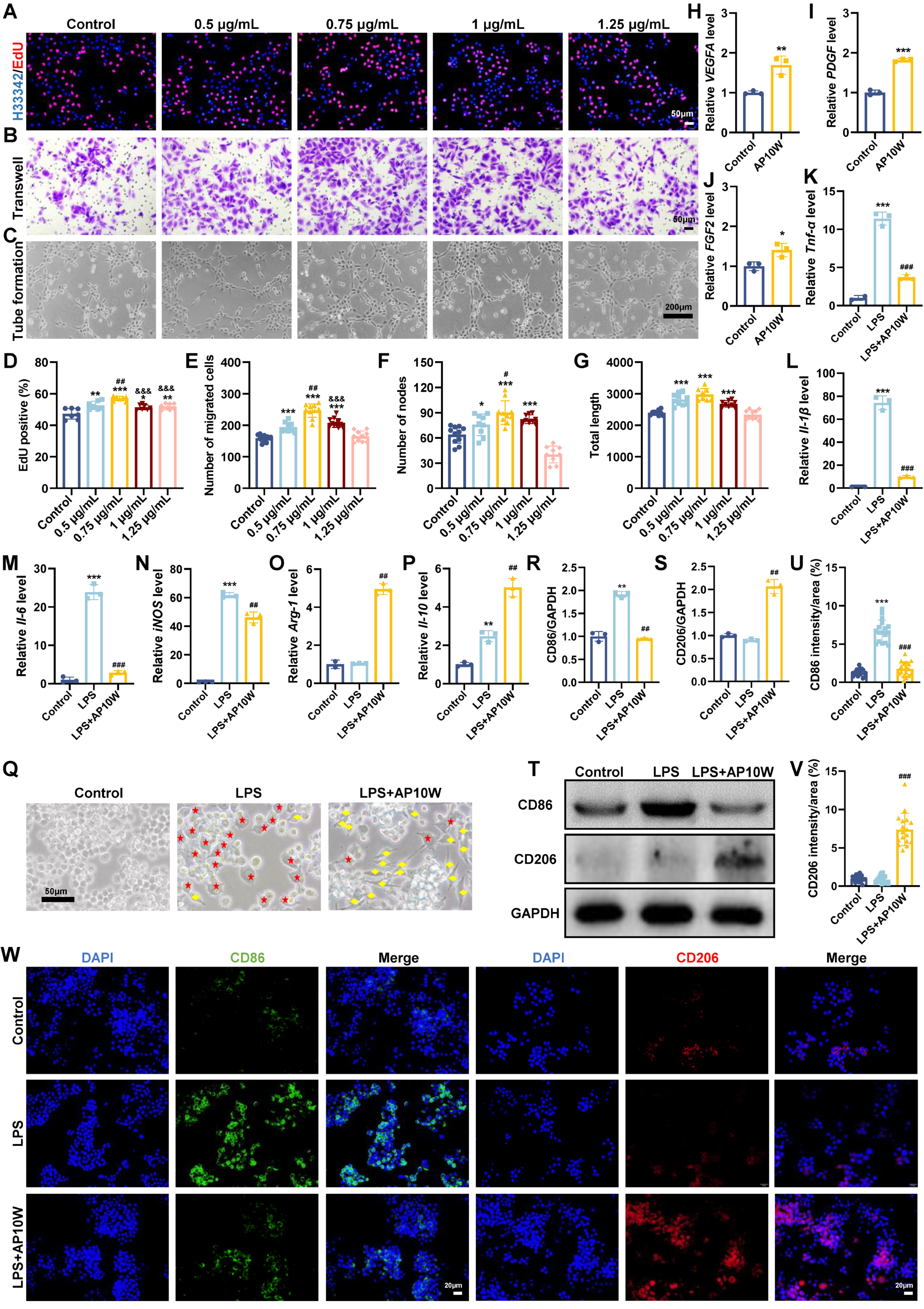
3.2. AP10W Promoted Endothelial Cell Proliferation, Migration, and Angiogenic Activity
3.3. AP10W Promotes Macrophage Polarization from M1 to M2 In Vitro
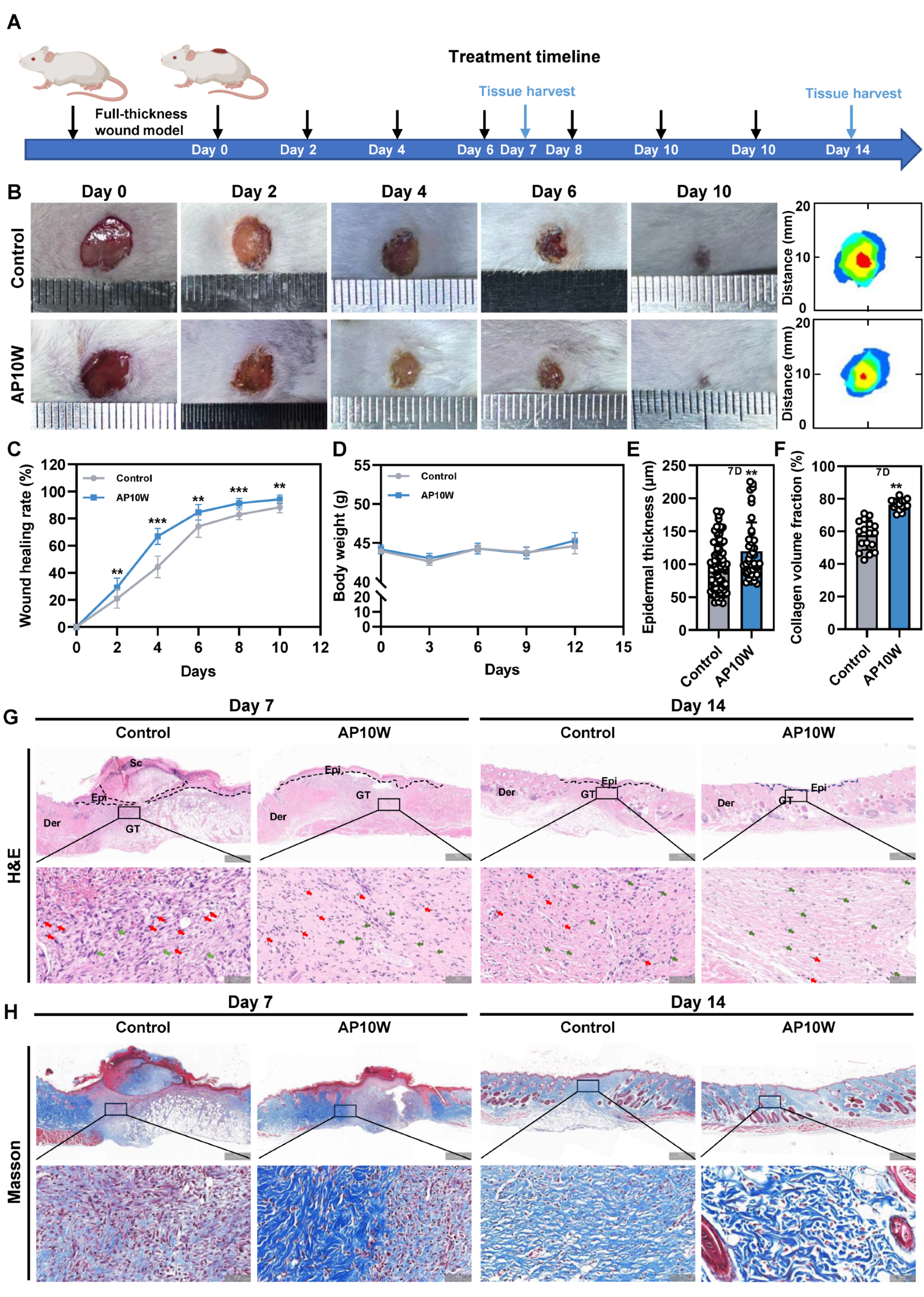
3.4. AP10W Accelerates Wound Healing in Vivo
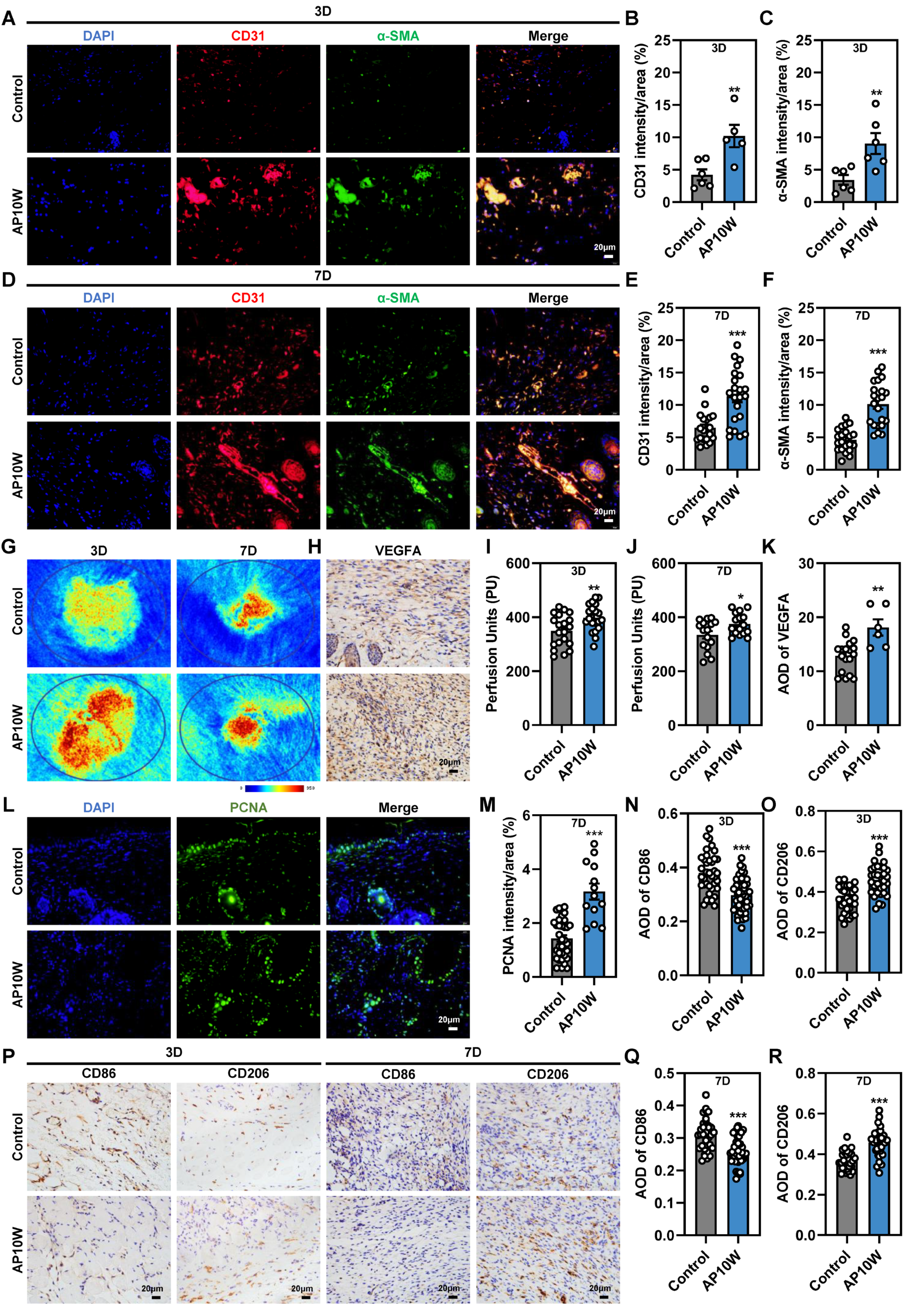
3.5. AP10W Accelerates Wound Healing by Enhancing Angiogenesis and Proliferation, and Re-Programming M1 to M2 In Vivo
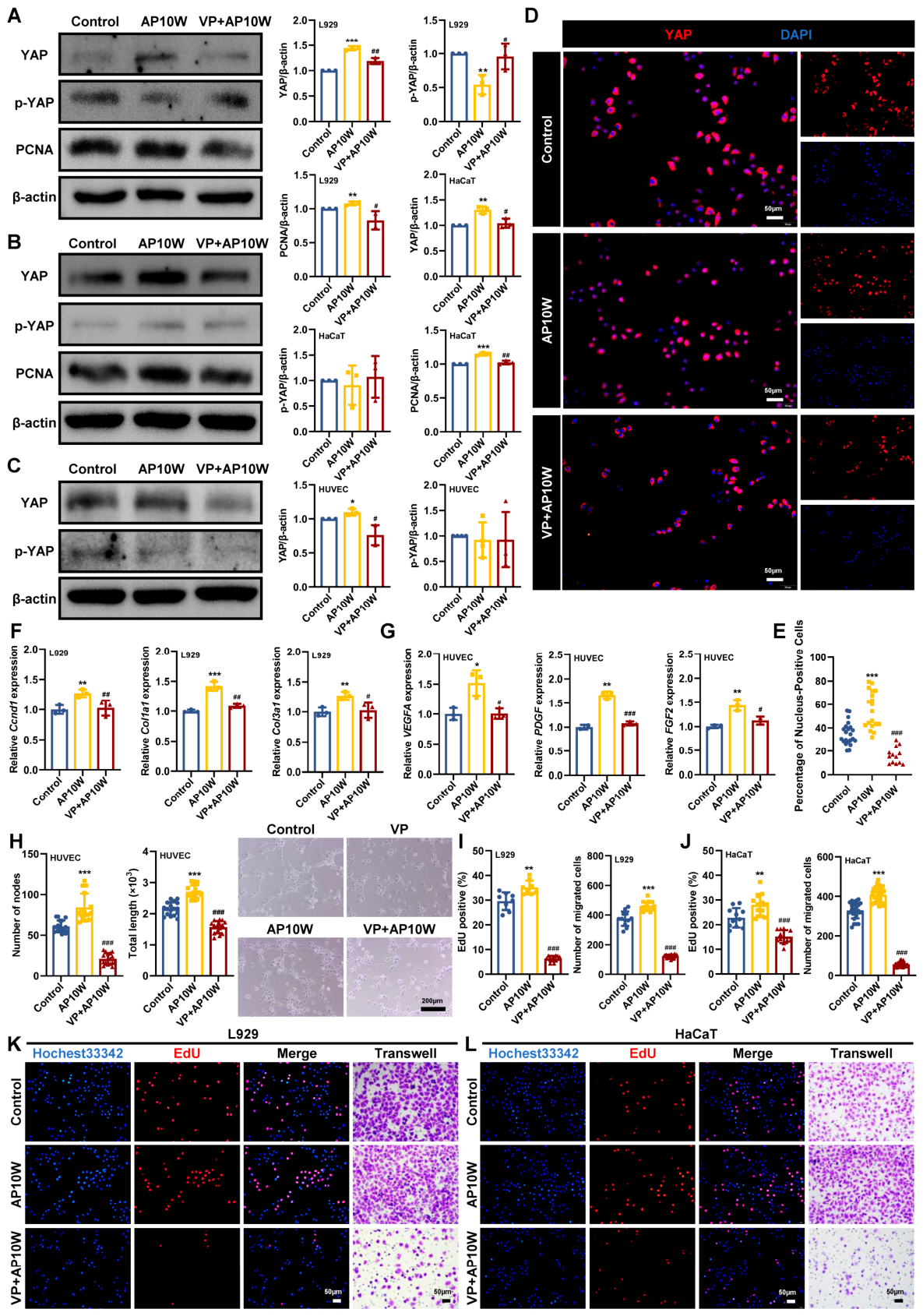
3.6. AP10W Accelerates Wound Healing by Activating YAP Signaling
4. Discussion
5. Conclusions
Supplementary Materials
Author Contributions
Funding
Institutional Review Board Statement
Informed Consent Statement
Data Availability Statement
Conflicts of Interest
References
- Peña, O.A.; Martin, P. Cellular and molecular mechanisms of skin wound healing. Nat. Rev. Mol. Cell Biol. 2024, 25, 599–616. [Google Scholar] [CrossRef]
- Wu, Y.; Liu, T.; Jin, L.; Wang, C.; Zhang, D. Antimicrobial Peptides for Skin Wound Healing. Biomolecules 2025, 15, 1613. [Google Scholar] [CrossRef]
- Tottoli, E.M.; Dorati, R.; Genta, I.; Chiesa, E.; Pisani, S.; Conti, B. Skin Wound Healing Process and New Emerging Technologies for Skin Wound Care and Regeneration. Pharmaceutics 2020, 12, 735. [Google Scholar] [CrossRef] [PubMed]
- Rodrigues, M.; Kosaric, N.; Bonham, C.A.; Gurtner, G.C. Wound Healing: A Cellular Perspective. Physiol. Rev. 2019, 99, 665–706. [Google Scholar] [CrossRef]
- Kuan, C.-H.; Chang, L.; Ho, C.-Y.; Tsai, C.-H.; Liu, Y.-C.; Huang, W.-Y.; Wang, Y.-N.; Wang, W.-H.; Wang, T.-W. Immunomodulatory hydrogel orchestrates pro-regenerative response of macrophages and angiogenesis for chronic wound healing. Biomaterials 2025, 314, 122848. [Google Scholar] [CrossRef] [PubMed]
- Talbott, H.; Mascharak, S.; Griffin, M.; Wan, D.C.; Longaker, M.T. Wound healing, fibroblast heterogeneity, and fibrosis. Cell Stem Cell 2022, 29, 1161–1180. [Google Scholar] [CrossRef]
- Berthiaume Fox, K.A.; Galvin, E.R.; Kness-Knezinskis, E.; Hostler, A.C.; Chen, K.; Gurtner, G.C. Decoding wound healing: Cellular insights and technological advances. NPJ Biomed. Innov. 2026, 3, 1. [Google Scholar] [CrossRef]
- Oliveira Junior, N.G.; Souza, C.M.; Buccini, D.F.; Cardoso, M.H.; Franco, O.L. Antimicrobial peptides: Structure, functions and translational applications. Nat. Rev. Microbiol. 2025, 23, 687–700. [Google Scholar] [CrossRef]
- Mookherjee, N.; Hancock, R.E. Cationic host defence peptides: Innate immune regulatory peptides as a novel approach for treating infections. Cell. Mol. Life Sci. 2007, 64, 922–933. [Google Scholar] [CrossRef] [PubMed]
- Hancock, R.E.; Sahl, H.G. Antimicrobial and host-defense peptides as new anti-infective therapeutic strategies. Nat. Biotechnol. 2006, 24, 1551–1557. [Google Scholar] [CrossRef]
- Yeaman, M.R.; Yount, N.Y. Mechanisms of antimicrobial peptide action and resistance. Pharmacol. Rev. 2003, 55, 27–55. [Google Scholar] [CrossRef]
- Gong, Y.; Li, J.; Zhang, Y.; Zhang, X.; Xie, J. Optimized Zebrafish AP2M1A-Derived Decapeptide AP10RW with Robust Stability Suppresses Multidrug-Resistant Bacteria. Biomolecules 2026, 16, 207. [Google Scholar] [CrossRef]
- Adnan, S.B.; Maarof, M.; Fauzi, M.B.; Md Fadilah, N.I. Antimicrobial Peptides in Wound Healing and Skin Regeneration: Dual Roles in Immunity and Microbial Defense. Int. J. Mol. Sci. 2025, 26, 5920. [Google Scholar] [CrossRef]
- Mookherjee, N.; Anderson, M.A.; Haagsman, H.P.; Davidson, D.J. Antimicrobial host defence peptides: Functions and clinical potential. Nat. Rev. Drug Discov. 2020, 19, 311–332. [Google Scholar] [CrossRef]
- Thapa, R.K.; Diep, D.B.; Tønnesen, H.H. Topical antimicrobial peptide formulations for wound healing: Current developments and future prospects. Acta Biomater. 2020, 103, 52–67. [Google Scholar] [CrossRef]
- Abudouwanli, A.; Peng, G.; Yang, M.; Zhao, W.; Sun, Q.; Wang, S.; Tan, Y.; Ikeda, A.; Ogawa, H.; Okumura, K.; et al. AMP-IBP5: A Multifunctional Antimicrobial Peptide for Advanced Wound Healing and Inflammatory Skin Disorders. J. Funct. Biomater. 2025, 16, 174. [Google Scholar] [CrossRef] [PubMed]
- Wu, F.; Gong, Y.; Song, L.; Li, H.; Zhang, X.; Li, H.; Zhang, S. In vitro and in vivo wound healing-promoting activities of phosvitin-derived peptide Pt5-1c. Eur. J. Pharmacol. 2022, 920, 174833. [Google Scholar] [CrossRef] [PubMed]
- Xuan, C.; Li, M.; Zhang, P.; Wang, Y.; Li, H.; Gao, Z.; Zhang, S.; Wu, F. Phosvitin-Derived Peptide Pt5-1c Is a Pro-Angiogenic Agent Capable of Enhancing Wound Healing. Biomolecules 2025, 16, 65. [Google Scholar] [CrossRef]
- Lee, M.J.; Byun, M.R.; Furutani-Seiki, M.; Hong, J.H.; Jung, H.S. YAP and TAZ regulate skin wound healing. J. Investig. Dermatol. 2014, 134, 518–525. [Google Scholar] [CrossRef] [PubMed]
- Dey, A.; Varelas, X.; Guan, K.L. Targeting the Hippo pathway in cancer, fibrosis, wound healing and regenerative medicine. Nat. Rev. Drug Discov. 2020, 19, 480–494. [Google Scholar] [CrossRef]
- Hou, M.; Li, X.; Chen, F.; Tan, Z.; Han, X.; Liu, J.; Zhou, J.; Shi, Y.; Zhang, J.; Lv, J.; et al. Naringenin alleviates intestinal ischemia/reperfusion injury by inhibiting ferroptosis via targeting YAP/STAT3 signaling axis. Phytomedicine 2024, 135, 156095. [Google Scholar] [CrossRef]
- Grzelak, E.M.; Elshan, N.; Shao, S.; Bulos, M.L.; Joseph, S.B.; Chatterjee, A.K.; Chen, J.J.; Nguyen-Tran, V.; Schultz, P.G.; Bollong, M.J. Pharmacological YAP activation promotes regenerative repair of cutaneous wounds. Proc. Natl. Acad. Sci. USA 2023, 120, e2305085120. [Google Scholar] [CrossRef] [PubMed]
- Shao, Z.; Xu, J.; Wang, X.; Zhou, Y.; Wang, Y.; Li, Y.; Zhao, J.; Li, K. Exosomes derived from adipose tissues accelerate fibroblasts and keratinocytes proliferation and cutaneous wound healing via miR-92a/Hippo-YAP axis. J. Physiol. Biochem. 2024, 80, 189–204. [Google Scholar] [CrossRef]
- Gong, Y.; Li, H.; Wu, F.; Li, Y.; Zhang, S. Fungicidal Activity of AP10W, a Short Peptide Derived from AP-2 Complex Subunit mu-A, In Vitro and In Vivo. Biomolecules 2022, 12, 965. [Google Scholar] [CrossRef]
- Gong, Y.; Li, H.; Wu, F.; Zhang, X.; Zhou, Y.; Zhang, S. A short peptide derived from zebrafish AP-2 complex subunit mu-A AP2M1A354–382 has antimicrobial activity against multi-drug resistant bacteria. Pept. Sci. 2021, 114, e24258. [Google Scholar] [CrossRef]
- Huang, X.; Shi, L.; Lin, Y.; Zhang, C.; Liu, P.; Zhang, R.; Chen, Q.; Ouyang, X.; Gao, Y.; Wang, Y.; et al. Pycnoporus sanguineus Polysaccharides as Reducing Agents: Self-Assembled Composite Nanoparticles for Integrative Diabetic Wound Therapy. Int. J. Nanomed. 2023, 18, 6021–6035. [Google Scholar] [CrossRef]
- Wang, X.; Wang, Y.; Tang, M.; Wang, X.; Xue, W.; Zhang, X.; Wang, Y.; Lee, W.H.; Wang, Y.; Sun, T.Y.; et al. Controlled Cascade-Release and High Selective Sterilization by Core-Shell Nanogels for Microenvironment Regulation of Aerobic Vaginitis. Adv. Healthc. Mater. 2023, 12, e2202432. [Google Scholar] [CrossRef] [PubMed]
- Wu, F.; Song, L.; Gong, Y.; Wang, Y.; Li, H.; Zhang, S. Antimicrobial Peptide Pt5-1c Promotes Keratinocyte Migration and Proliferation via EGFR-mediated Akt/MAPK/STAT3 pathways. ChemistrySelect 2023, 8, e202203707. [Google Scholar] [CrossRef]
- Huang, Q.; Chu, Z.; Wang, Z.; Li, Q.; Meng, S.; Lu, Y.; Ma, K.; Cui, S.; Hu, W.; Zhang, W.; et al. circCDK13-loaded small extracellular vesicles accelerate healing in preclinical diabetic wound models. Nat. Commun. 2023, 15, 3904. [Google Scholar] [CrossRef]
- Song, J.; Zhao, T.; Wang, C.; Sun, X.; Sun, J.; Zhang, Z. Cell migration in diabetic wound healing: Molecular mechanisms and therapeutic strategies (Review). Int. J. Mol. Med. 2025, 56, 126. [Google Scholar] [CrossRef]
- Zhou, C.; Kuang, Y.; Li, Q.; Duan, Y.; Liu, X.; Yue, J.; Chen, X.; Liu, J.; Zhang, Y.; Zhang, L. Endothelial S1pr2 regulates post-ischemic angiogenesis via AKT/eNOS signaling pathway. Theranostics 2022, 12, 5172–5188. [Google Scholar] [CrossRef]
- He, F.; Xu, P.; Zhu, Z.; Zhang, Y.; Cai, C.; Zhang, Y.; Shao, J.; Jin, F.; Li, Q.; You, J.; et al. Inflammation-Responsive Hydrogel Accelerates Diabetic Wound Healing through Immunoregulation and Enhanced Angiogenesis. Adv. Healthc. Mater. 2024, 14, e2400150. [Google Scholar] [CrossRef] [PubMed]
- Meng, H.; Su, J.; Shen, Q.; Hu, W.; Li, P.; Guo, K.; Liu, X.; Ma, K.; Zhong, W.; Chen, S.; et al. A Smart MMP-9-responsive Hydrogel Releasing M2 Macrophage-derived Exosomes for Diabetic Wound Healing. Adv. Healthc. Mater. 2025, 14, e2404966. [Google Scholar] [CrossRef]
- Dai, F.; Zhang, J.; Chen, F.; Chen, X.; Lee, C.J.; Liang, H.; Zhao, L.; Tan, H. A Multi-Responsive Hydrogel Combined with Mild Heat Stimulation Promotes Diabetic Wound Healing by Regulating Inflammatory and Enhancing Angiogenesis. Adv. Sci. 2024, 11, e2408783. [Google Scholar] [CrossRef]
- Feng, R.; Wang, P.; Fan, L.; Lu, H.; Yao, D.; Sun, P.; Liu, Z.; Han, F.; Bai, X.; Yang, X.; et al. Myristoylated Cathelicidin-DM Fused with ANG1-7: A Novel Self-Assembling Antimicrobial Peptide for the Treatment and Mechanism of Diabetic Infected Wounds. J. Diabetes Res. 2025, 2025, 9601959. [Google Scholar] [CrossRef]
- Liu, Z.; Bian, X.; Luo, L.; Bjorklund, A.K.; Li, L.; Zhang, L.; Chen, Y.; Guo, L.; Gao, J.; Cao, C.; et al. Spatiotemporal single-cell roadmap of human skin wound healing. Cell Stem Cell 2025, 32, 479–498. [Google Scholar] [CrossRef] [PubMed]
- Eming, S.A.; Martin, P.; Tomic-Canic, M. Wound repair and regeneration: Mechanisms, signaling, and translation. Sci. Transl. Med. 2014, 6, 265sr266. [Google Scholar] [CrossRef]
- Cao, J.; Su, Z.; Zhang, Y.; Chen, Z.; Li, J.; Cai, Y.; Chang, Y.; Lei, M.; He, Q.; Li, W.; et al. Turning sublimed sulfur and bFGF into a nanocomposite to accelerate wound healing via co-activate FGFR and Hippo signaling pathway. Mater. Today Bio 2024, 26, 101104. [Google Scholar] [CrossRef] [PubMed]
- Yang, P.; Lu, Y.; Gou, W.; Qin, Y.; Zhang, X.; Li, J.; Zhang, Q.; Zhang, X.; He, D.; Wang, Y.; et al. Andrias davidianus Derived Glycosaminoglycans Direct Diabetic Wound Repair by Reprogramming Reparative Macrophage Glucolipid Metabolism. Adv. Mater. 2025, 37, e2417801. [Google Scholar] [CrossRef]
- Wang, J.; Feng, J.; Kang, Y.; Pan, P.; Ge, J.; Wang, Y.; Wang, M.; Wu, Z.; Zhang, X.; Yu, J.; et al. Discovery of antimicrobial peptides with notable antibacterial potency by an LLM-based foundation model. Sci. Adv. 2025, 11, eads8932. [Google Scholar] [CrossRef]
- Xiong, Y.; Mi, B.B.; Lin, Z.; Hu, Y.Q.; Yu, L.; Zha, K.K.; Panayi, A.C.; Yu, T.; Chen, L.; Liu, Z.P.; et al. The role of the immune microenvironment in bone, cartilage, and soft tissue regeneration: From mechanism to therapeutic opportunity. Mil. Med. Res. 2022, 9, 65. [Google Scholar] [CrossRef] [PubMed]
- Cioce, A.; Cavani, A.; Cattani, C.; Scopelliti, F. Role of the Skin Immune System in Wound Healing. Cells 2024, 13, 624. [Google Scholar] [CrossRef] [PubMed]
- Wu, X.; He, W.; Mu, X.; Liu, Y.; Deng, J.; Liu, Y.; Nie, X. Macrophage polarization in diabetic wound healing. Burn. Trauma 2022, 10, tkac051. [Google Scholar] [CrossRef] [PubMed]
- Riaz, M.; Iqbal, M.Z.; Klar, A.S.; Biedermann, T. Immunomodulatory Mechanisms of Chronic Wound Healing: Translational and Clinical Relevance. MedComm 2025, 6, e70378. [Google Scholar] [CrossRef]
- van Harten, R.M.; van Woudenbergh, E.; van Dijk, A.; Haagsman, H.P. Cathelicidins: Immunomodulatory Antimicrobials. Vaccines 2018, 6, 63. [Google Scholar] [CrossRef]
- Pena, O.M.; Afacan, N.; Pistolic, J.; Chen, C.; Madera, L.; Falsafi, R.; Fjell, C.D.; Hancock, R.E. Synthetic cationic peptide IDR-1018 modulates human macrophage differentiation. PLoS ONE 2013, 8, e52449. [Google Scholar] [CrossRef]
- Chen, S.; Lu, Z.; Wang, F.; Wang, Y. Cathelicidin-WA polarizes E. coli K88-induced M1 macrophage to M2-like macrophage in RAW264.7 cells. Int. Immunopharmacol. 2018, 54, 52–59. [Google Scholar] [CrossRef]
- Yadu, N.; Singh, M.; Singh, D.; Keshavkant, S. Mechanistic insights of diabetic wound: Healing process, associated pathways and microRNA-based delivery systems. Int. J. Pharm. 2025, 670, 125117. [Google Scholar] [CrossRef] [PubMed]
- Martin, P.; Pardo-Pastor, C.; Jenkins, R.G.; Rosenblatt, J. Imperfect wound healing sets the stage for chronic diseases. Science 2024, 386, eadp2974. [Google Scholar] [CrossRef]
- Pocaterra, A.; Romani, P.; Dupont, S. YAP/TAZ functions and their regulation at a glance. J. Cell Sci. 2020, 133, jcs230425. [Google Scholar] [CrossRef]
- Zhao, Q.; Hu, Q.X.; Li, J.P.; Su, H.B.; Li, Z.Y.; He, J.; You, Q.; Yang, Y.L.; Zhang, H.T.; Zhao, K.W. Morinda Officinalis-Derived Extracellular Vesicle-like Particles Promote Wound Healing via Angiogenesis. ACS Appl. Mater. Interfaces 2025, 17, 30454–30464. [Google Scholar] [CrossRef]
- Wnorowska, U.; Fiedoruk, K.; Piktel, E.; Prasad, S.V.; Sulik, M.; Janion, M.; Daniluk, T.; Savage, P.B.; Bucki, R. Nanoantibiotics containing membrane-active human cathelicidin LL-37 or synthetic ceragenins attached to the surface of magnetic nanoparticles as novel and innovative therapeutic tools: Current status and potential future applications. J. Nanobiotechnol. 2020, 18, 3. [Google Scholar] [CrossRef]
- Kahlenberg, J.M.; Kaplan, M.J. Little peptide, big effects: The role of LL-37 in inflammation and autoimmune disease. J. Immunol. 2013, 191, 4895–4901. [Google Scholar] [CrossRef]
- Pletzer, D.; Hancock, R.E. Antibiofilm Peptides: Potential as Broad-Spectrum Agents. J. Bacteriol. 2016, 198, 2572–2578. [Google Scholar] [CrossRef] [PubMed]
- Agier, J.; Efenberger, M.; Brzezińska-Błaszczyk, E. Cathelicidin impact on inflammatory cells. Cent. Eur. J. Immunol. 2015, 40, 225–235. [Google Scholar] [CrossRef] [PubMed]
- Heilborn, J.D.; Nilsson, M.F.; Kratz, G.; Weber, G.; Sørensen, O.; Borregaard, N.; Ståhle-Bäckdahl, M. The cathelicidin anti-microbial peptide LL-37 is involved in re-epithelialization of human skin wounds and is lacking in chronic ulcer epithelium. J. Investig. Dermatol. 2003, 120, 379–389. [Google Scholar] [CrossRef]
- Steinstraesser, L.; Kraneburg, U.; Jacobsen, F.; Al-Benna, S. Host defense peptides and their antimicrobial-immunomodulatory duality. Immunobiology 2011, 216, 322–333. [Google Scholar] [CrossRef]
- Koczulla, R.; von Degenfeld, G.; Kupatt, C.; Krötz, F.; Zahler, S.; Gloe, T.; Issbrücker, K.; Unterberger, P.; Zaiou, M.; Lebherz, C.; et al. An angiogenic role for the human peptide antibiotic LL-37/hCAP-18. J. Clin. Investig. 2003, 111, 1665–1672. [Google Scholar] [CrossRef]
- Gao, H.; Tang, F.; Chen, B.; Li, X. LL-37 Attenuates Sepsis-Induced Lung Injury by Alleviating Inflammatory Response and Epithelial Cell Oxidative Injury via ZBP1-Mediated Autophagy. Toxins 2025, 17, 306. [Google Scholar] [CrossRef]
- Oudhoff, M.J.; Bolscher, J.G.; Nazmi, K.; Kalay, H.; van ‘t Hof, W.; Amerongen, A.V.; Veerman, E.C. Histatins are the major wound-closure stimulating factors in human saliva as identified in a cell culture assay. FASEB J. 2008, 22, 3805–3812. [Google Scholar] [CrossRef]
- Oudhoff, M.J.; Kroeze, K.L.; Nazmi, K.; van den Keijbus, P.A.; van ‘t Hof, W.; Fernandez-Borja, M.; Hordijk, P.L.; Gibbs, S.; Bolscher, J.G.; Veerman, E.C. Structure-activity analysis of histatin, a potent wound healing peptide from human saliva: Cyclization of histatin potentiates molar activity 1,000-fold. FASEB J. 2009, 23, 3928–3935. [Google Scholar] [CrossRef]
- Torres, P.; Díaz, J.; Arce, M.; Silva, P.; Mendoza, P.; Lois, P.; Molina-Berríos, A.; Owen, G.I.; Palma, V.; Torres, V.A. The salivary peptide histatin-1 promotes endothelial cell adhesion, migration, and angiogenesis. FASEB J. 2017, 31, 4946–4958. [Google Scholar] [CrossRef] [PubMed]
- Puri, S.; Edgerton, M. How does it kill? understanding the candidacidal mechanism of salivary histatin 5. Eukaryot. Cell 2014, 13, 958–964. [Google Scholar] [CrossRef]
- Goldstein, A.L.; Hannappel, E.; Sosne, G.; Kleinman, H.K. Thymosin β4: A multi-functional regenerative peptide. Basic properties and clinical applications. Expert Opin. Biol. Ther. 2012, 12, 37–51. [Google Scholar] [CrossRef]
- Scott, M.G.; Dullaghan, E.; Mookherjee, N.; Glavas, N.; Waldbrook, M.; Thompson, A.; Wang, A.; Lee, K.; Doria, S.; Hamill, P.; et al. An anti-infective peptide that selectively modulates the innate immune response. Nat. Biotechnol. 2007, 25, 465–472. [Google Scholar] [CrossRef] [PubMed]
- Alencar-Silva, T.; Zonari, A.; Foyt, D.; Gang, M.; Pogue, R.; Saldanha-Araujo, F.; Dias, S.C.; Franco, O.L.; Carvalho, J.L. IDR-1018 induces cell proliferation, migration, and reparative gene expression in 2D culture and 3D human skin equivalents. J. Tissue Eng. Regen. Med. 2019, 13, 2018–2030. [Google Scholar] [CrossRef] [PubMed]
- de la Fuente-Núñez, C.; Reffuveille, F.; Haney, E.F.; Straus, S.K.; Hancock, R.E. Broad-spectrum anti-biofilm peptide that targets a cellular stress response. PLoS Pathog. 2014, 10, e1004152. [Google Scholar] [CrossRef]
- Lipsky, B.A.; Holroyd, K.J.; Zasloff, M. Topical versus systemic antimicrobial therapy for treating mildly infected diabetic foot ulcers: A randomized, controlled, double-blinded, multicenter trial of pexiganan cream. Clin. Infect. Dis. 2008, 47, 1537–1545. [Google Scholar] [CrossRef]
- Ge, Y.; MacDonald, D.L.; Holroyd, K.J.; Thornsberry, C.; Wexler, H.; Zasloff, M. In vitro antibacterial properties of pexiganan, an analog of magainin. Antimicrob. Agents Chemother. 1999, 43, 782–788. [Google Scholar] [CrossRef]
- Semple, F.; Webb, S.; Li, H.N.; Patel, H.B.; Perretti, M.; Jackson, I.J.; Gray, M.; Davidson, D.J.; Dorin, J.R. Human beta-defensin 3 has immunosuppressive activity in vitro and in vivo. Eur. J. Immunol. 2010, 40, 1073–1078. [Google Scholar] [CrossRef] [PubMed]
- Niyonsaba, F.; Ushio, H.; Nakano, N.; Ng, W.; Sayama, K.; Hashimoto, K.; Nagaoka, I.; Okumura, K.; Ogawa, H. Antimicrobial peptides human beta-defensins stimulate epidermal keratinocyte migration, proliferation and production of pro-inflammatory cytokines and chemokines. J. Investig. Dermatol. 2007, 127, 594–604. [Google Scholar] [CrossRef]
- Chung, E.M.C.; Dean, S.N.; Propst, C.N.; Bishop, B.M.; van Hoek, M.L. Komodo dragon-inspired synthetic peptide DRGN-1 promotes wound-healing of a mixed-biofilm infected wound. NPJ Biofilms Microbiomes 2017, 11, 9. [Google Scholar] [CrossRef]
- Di Grazia, A.; Cappiello, F.; Cohen, H.; Casciaro, B.; Luca, V.; Pini, A.; Di, Y.P.; Shai, Y.; Mangoni, M.L. D-Amino acids incorporation in the frog skin-derived peptide esculentin-1a (1-21) NH2 is beneficial for its multiple functions. Amino Acids 2015, 47, 2505–2519. [Google Scholar] [CrossRef]
- Di Grazia, A.; Cappiello, F.; Imanishi, A.; Mastrofrancesco, A.; Picardo, M.; Paus, R.; Mangoni, M.L. The Frog Skin-Derived Antimicrobial Peptide Esculentin-1a (1-21) NH2 Promotes the Migration of Human HaCaT Keratinocytes in an EGF Receptor-Dependent Manner: A Novel Promoter of Human Skin Wound Healing? PLoS ONE 2015, 10, e0128663. [Google Scholar] [CrossRef] [PubMed]
- Tang, J.; Liu, H.; Gao, C.; Mu, L.; Yang, S.; Rong, M.; Zhang, Z.; Liu, J.; Ding, Q.; Lai, R. A small peptide with potential ability to promote wound healing. PLoS ONE 2014, 9, e92082. [Google Scholar] [CrossRef]
- Huang, H.N.; Rajanbabu, V.; Pan, C.Y.; Chan, Y.L.; Wu, C.J.; Chen, J.Y. Use of the antimicrobial peptide Epinecidin-1 to protect against MRSA infection in mice with skin injuries. Biomaterials 2013, 34, 10319–10327. [Google Scholar] [CrossRef] [PubMed]




| Gene | Forward (5′-3′) | Reverse (5′-3′) |
|---|---|---|
| VEGFA | GAGGGCAGAATCATCACGAA | GGTCTCGATTGGATGGCAGTA |
| PDGF | AGCGCCCATTTTTCATTCCCTA | GGTTTTCTCTTTGCAGCGAGGC |
| FGF2 | GCAGGAGAGAGGAAGCCTTG | CGTGAGAGCAGAGCATGTGA |
| GAPDH | GTCTCCTCTGACTTCAACAGCG | ACCACCCTGTTGCTGTAGCCAA |
| Gene | Forward (5′-3′) | Reverse (5′-3′) |
|---|---|---|
| Col1a1 | CGCCATCAAGGTCTACTGC | GAATCCATCGGTCATGCTCT |
| Col3a1 | CCCACAGCCTTCTACACCT | ACCCATTCCTCCCACTCC |
| Ccnd1 | AAAATGCCAGAGGCGGATGA | GAGGGGGTCCTTGTTTAGCC |
| Acta2 | CGGCCAAACCCTGTGAAGGA | GCCCCTGGGGCTCTTGTGGT |
| Il-1β | TTCAGGCAGGCAGTATCACTC | GAAGGTCCACGGGAAAGACAC |
| Il-6 | TAGTCCTTCCTACCCAAATTTCC | TTGGTCCTTAGCCACTCCTTC |
| Tnf-α | ATCCTGTCCAAACTAAGGCTCG | ACCTCTTTAGCATAGTAGTCCGC |
| iNOS | GAGACAGGGAAGTCTGAAGCAC | CCAGCAGTAGTTGCTCCTCTTC |
| Il-10 | GCCCTTTGCTATGGTGTC | TCTCCCTGGTTTCTCTTCC |
| Arg-1 | TGGCTTGCGAGACGTAGAC | GCTCAGGTGAATCGGCCTTT |
| Gapdh | AGGTCGGTGTGAACGGATTT | TGTAGACCATGTAGTTGAGGTCA |
Disclaimer/Publisher’s Note: The statements, opinions and data contained in all publications are solely those of the individual author(s) and contributor(s) and not of MDPI and/or the editor(s). MDPI and/or the editor(s) disclaim responsibility for any injury to people or property resulting from any ideas, methods, instructions or products referred to in the content. |
© 2026 by the authors. Licensee MDPI, Basel, Switzerland. This article is an open access article distributed under the terms and conditions of the Creative Commons Attribution (CC BY) license.
Share and Cite
Xuan, C.; Liu, Z.; Zhang, P.; Liu, B.; Gao, Z.; Wu, F. The Multifunctional Peptide AP10W Enhances Skin Wound Healing Through Macrophage Reprogramming and Angiogenesis. Biomolecules 2026, 16, 720. https://doi.org/10.3390/biom16050720
Xuan C, Liu Z, Zhang P, Liu B, Gao Z, Wu F. The Multifunctional Peptide AP10W Enhances Skin Wound Healing Through Macrophage Reprogramming and Angiogenesis. Biomolecules. 2026; 16(5):720. https://doi.org/10.3390/biom16050720
Chicago/Turabian StyleXuan, Cuiling, Zixuan Liu, Peng Zhang, Bojian Liu, Zhiqin Gao, and Fei Wu. 2026. "The Multifunctional Peptide AP10W Enhances Skin Wound Healing Through Macrophage Reprogramming and Angiogenesis" Biomolecules 16, no. 5: 720. https://doi.org/10.3390/biom16050720
APA StyleXuan, C., Liu, Z., Zhang, P., Liu, B., Gao, Z., & Wu, F. (2026). The Multifunctional Peptide AP10W Enhances Skin Wound Healing Through Macrophage Reprogramming and Angiogenesis. Biomolecules, 16(5), 720. https://doi.org/10.3390/biom16050720