In Silico and In Vitro Evaluation of Bioactive Constituents Isolated from Ziziphus oxyphylla for the Treatment of Diabetes

 , , and
Abstract
1. Introduction
2. Materials and Methods
2.1. Plant Material, Extraction, Fractionation, and Isolation
2.2. In Silico Screening
2.2.1. Protein and Ligand Preparation
2.2.2. Molecular Docking Protocol
2.2.3. Visualization and Interaction Analysis
2.3. In Vitro Enzymatic Assays
2.3.1. α-Amylase Inhibitory Assay
2.3.2. α-Glucosidase Inhibitory Assay
2.3.3. DPP-4 Inhibitory Assay
2.4. Statistical Analysis
3. Results
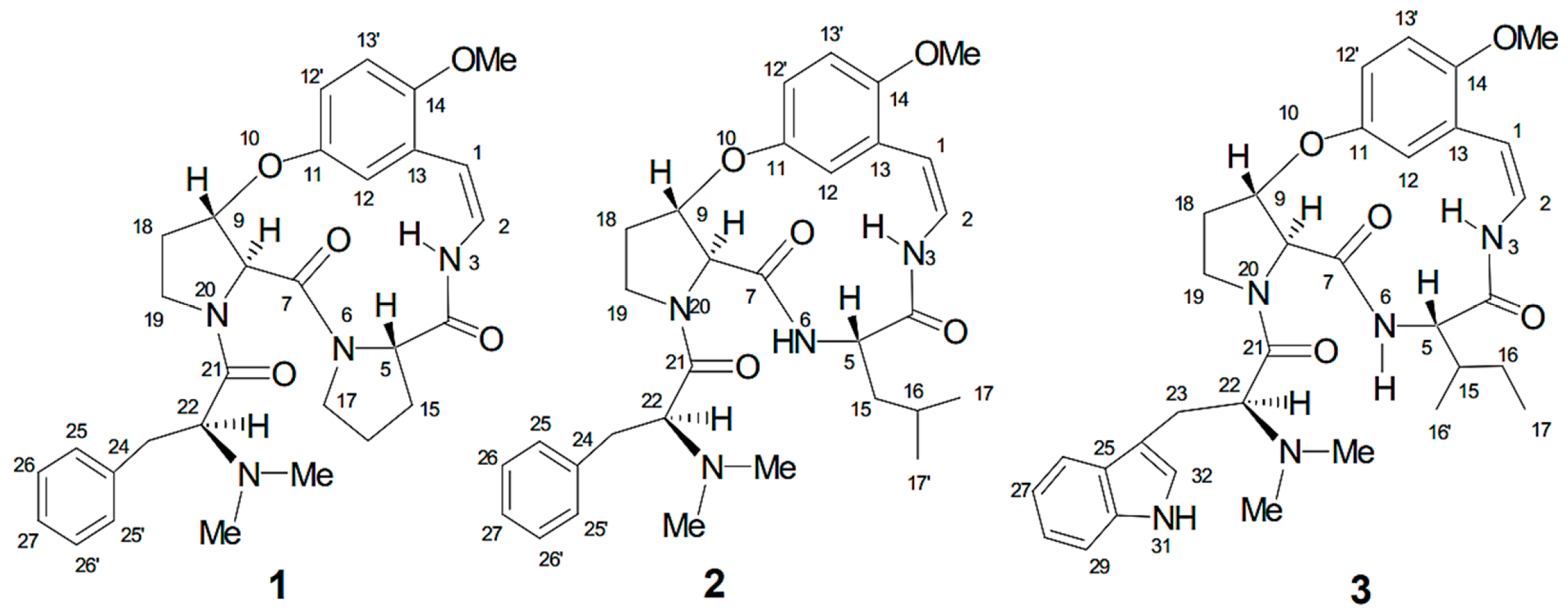
3.1. Structure Elucidation of the Isolated Compounds
3.2. Computational Docking Studies
3.2.1. Validation of Docking Protocol with Control Compounds
- (a)
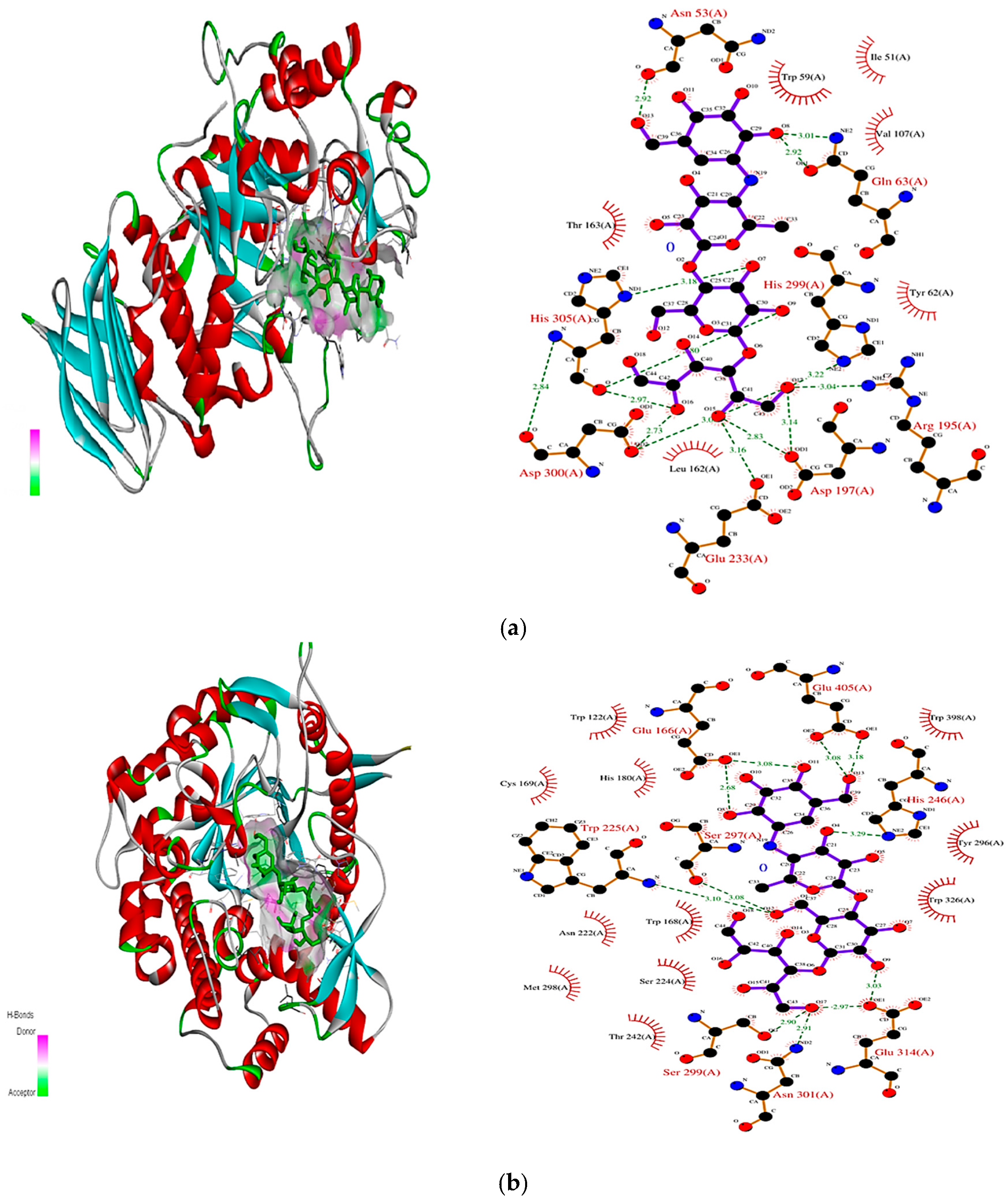
- Acarbose with α-Amylase (PDB ID: 3BAJ): Acarbose exhibited a binding energy of −7.0 kcal/mol and formed 17 hydrogen bonds (H-bonds) within the enzyme’s active site. Key interactions were observed with Thr163, Lys200, Glu233, and His299, supported by van der Waals and hydrophobic interactions involving Trp59 and Tyr62 (Figure 2a).
- (b)
- Acarbose with α-Glucosidase (PDB ID: 1BGA): The binding energy was −8.1 kcal/mol, with seven hydrogen bonds mainly involving Glu166, His121, and Trp406. Stabilizing interactions with Glu352 and Glu405 included van der Waals and aromatic contacts (Figure 2b).
- (c)
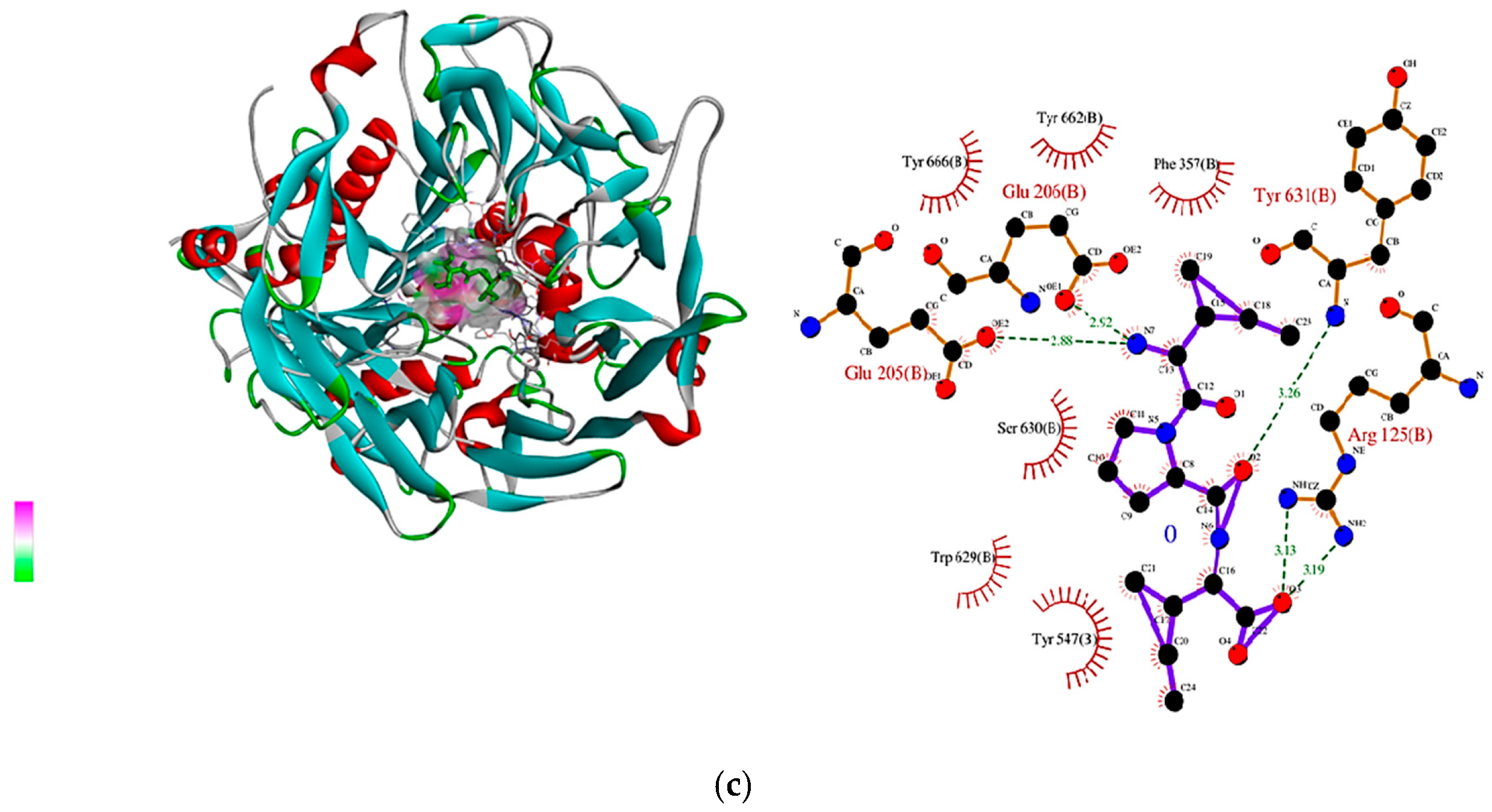
- Diprotin-A with DPP-4 (PDB ID: 4A5S): Diprotin-A showed a binding energy of −7.2 kcal/mol, forming hydrogen bonds with Tyr62, Arg125, Ser630, and Glu205. Hydrophobic and π–alkyl interactions were noted with Phe357, Tyr666, and Trp629, along with one unfavorable donor–donor interaction (Figure 2c).


3.2.2. Docking of Isolated Compounds
- (a)
- Compounds 1–3 with α-Amylase (PDB ID: 3BAJ): Among the three isolated compounds, compound 3 exhibited the lowest (most negative) binding energy of −8.6 kcal/mol, indicating the strongest binding affinity. It was followed by compound 2 (−8.1 kcal/mol) and compound 1 (−7.1 kcal/mol). Compound 3 displayed favorable alignment within the enzyme’s active site, forming a hydrogen bond with Thr163 and hydrophobic interactions involving Ile51, Asn53, Trp59, Tyr62, Gln63, Val107, Ser108, Ser112, and Leu165. The binding affinity of compound 3 was superior to that of the standard acarbose (−7.0 kcal/mol), indicating its potential as an effective α-amylase inhibitor (Table 1).
- (b)
- Compounds 1–3 with α-Glucosidase (PDB ID: 1BGA): In the case of α-glucosidase, compound 2 showed the highest binding affinity (−9.3 kcal/mol), outperforming both compound 3 (−8.1 kcal/mol) and compound 1 (−7.8 kcal/mol), as well as the standard acarbose (−8.1 kcal/mol). Compound 2 formed a key hydrogen bond with His180 and exhibited extensive non-covalent interactions, including π–π and van der Waals interactions with catalytically important residues such as Glu314, Ser297, His246, Trp168, Glu166, Trp406, Trp122, Glu405, Trp326, Ile324, Glu408, Leu173, Val79, Val223, and Ser224, suggesting strong stabilization within the binding pocket (Table 1).
- (c)
- Compounds 1–3 with DPP-4 (PDB ID: 4A5S): For DPP-4 inhibition, compound 2 again demonstrated the most favorable binding energy (−10.1 kcal/mol), followed by compound 1 (−9.8 kcal/mol) and compound 3 (−9.0 kcal/mol). Compound 2 formed two critical hydrogen bonds with Tyr752 and Lys554, along with multiple stabilizing interactions involving residues such as Ala743, Tyr48, Ala564, Asn562, Trp563, Leu561, Trp627, Asp545, Val546, Ser630, Trp629, His748, and Gly741. Importantly, all tested compounds exhibited significantly stronger binding affinities compared with the standard Diprotin A (−7.2 kcal/mol) (Table 1).

| Compound | α-Amylase (3BAJ) | α-Glucosidase (1BGA) | DPP-4 (4A5S) | ||||||
|---|---|---|---|---|---|---|---|---|---|
| ΔG (kcal/mol) | Key H-Bond Residues | Other Residues Bonds | ΔG (kcal/mol) | Key H-Bond Residues | Other Residues Bonds | ΔG (kcal/mol) | Key H-Bond Residues | Other Residues Bonds | |
| 1 | −7.1 | Asn399, Arg10 | Gly9, Val400, Ile396, Pro34, Ala33, Val89, Gln7, Gln8 | −7.8 | Lys342 | Lys236, Ala226, Ile243, Ala240, Tyr339, Gln341, Trp225, Pro228 | −9.8 | Tyr631 | Glu205, Tyr662, Arg125, Ser209, Phe357, Glu206, Arg669, Arg358, Ser630, Trp629, Val546, Lys554, Tyr547 |
| 2 | −8.1 | Ser289 | His331, Glu282, Pro332, Asp290, Arg252, Pro4, Arg10, Thr11, Asp402, Phe335, Trp280, Tyr333 | −9.3 | His180 | Glu314, Ser297, His246, Trp168, Glu166, Trp406, Trp122, Glu405, Trp326, Ile324, Glu408, Leu173, Val79, Val223, Ser224 | −10.1 | Tyr752, Lys554 | Ala743, Tyr48, Ala564, Asn562, Trp563, Leu561, Trp627, Asp545, Val546, Ser630, Trp629, His748, Gly741 |
| 3 | −8.6 | Thr163 | Ile51, Ser112, Ser108, Val107, Trp59, Tyr62, Leu165, Gln63, Asn53 | −8.1 | Arg384 | Phe4, His383, Val380, Gln381, Arg331, Glu335 | −9.0 | Arg125, Ser630, His740, Asp708, Lys554 | Tyr666, Tyr631, Tyr662, Val711, Tyr547, Gly741, Glu206, Glu205 |
| Standard | −7.0 (Acarbose) | Asn53, Thr163, Gln63, His299, His305, Asp300, Asp197, Glu233, Arg195, Leu162 | Trp59, Val107, Ile51, Tyr62, Leu162 | −8.1 (Acarbose) | Ser297, Glu405, Glu166, His246, Glu314, Ser299, Asn301, Ser224 | Trp122, Trp225, Trp168, Trp398, Tyr296, Trp326, Thr242, Met298, Asn222, His180, Cys169 | −7.2 (Diprotin A) | Glu205, Glu206, Arg125, Tyr631 | Trp629, Tyr547, Ser630, Tyr662, Tyr666, Phe357 |
3.3. In Vitro Anti-Diabetic Activity
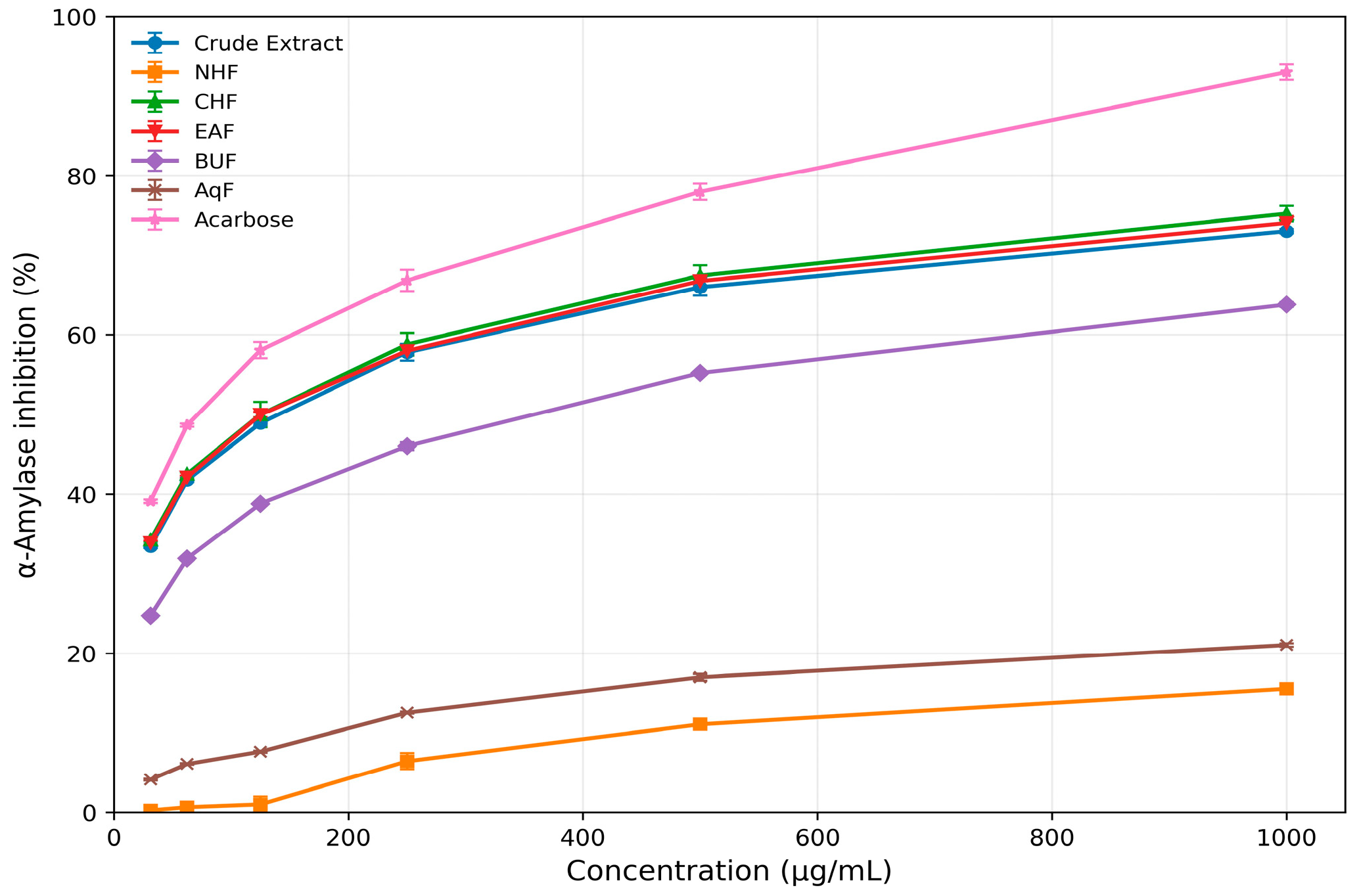
3.3.1. α-Amylase Activity
| S. No. | Conc. (µg/mL) | Crude Extract | NHF * | CHF * | EAF * | BUF * | AqF * | Std (Acarbose) |
|---|---|---|---|---|---|---|---|---|
| 1 | 31.25 | 33.42 ± 0.22 | 0.25 ± 0.15 | 34.25 ± 0.25 | 33.87 ± 0.27 | 24.72 ± 0.22 | 4.12 ± 0.12 | 39.12 ± 0.22 |
| 2 | 62.5 | 41.76 ± 0.26 | 0.65 ± 0.15 | 42.50 ± 0.20 | 42.11 ± 0.21 | 31.90 ± 0.20 | 6.10 ± 0.10 | 48.65 ± 0.20 |
| 3 | 125 | 48.91 ± 0.34 | 1.00 ± 1.00 | 50.00 ± 1.61 | 49.98 ± 0.34 | 38.81 ± 0.10 | 7.66 ± 0.13 | 58.08 ± 1.02 |
| 4 | 250 | 57.81 ± 1.05 | 6.45 ± 1.02 | 58.80 ± 1.42 | 58.00 ± 0.12 | 46.01 ± 0.50 | 12.54 ± 0.14 | 66.85 ± 1.35 |
| 5 | 500 | 66.01 ± 1.06 | 11.09 ± 0.25 | 67.46 ± 1.31 | 66.79 ± 0.56 | 55.21 ± 0.20 | 16.98 ± 0.43 | 77.96 ± 1.01 |
| 6 | 1000 | 73.02 ± 0.27 | 15.53 ± 0.37 | 75.22 ± 0.97 | 74.05 ± 0.89 | 63.79 ± 0.30 | 21.05 ± 0.22 | 92.99 ± 0.97 |
| IC50 (µg/mL) | 128.64 | >1000 | 120.41 | 124.02 | 337.66 | >1000 | 73.68 | |
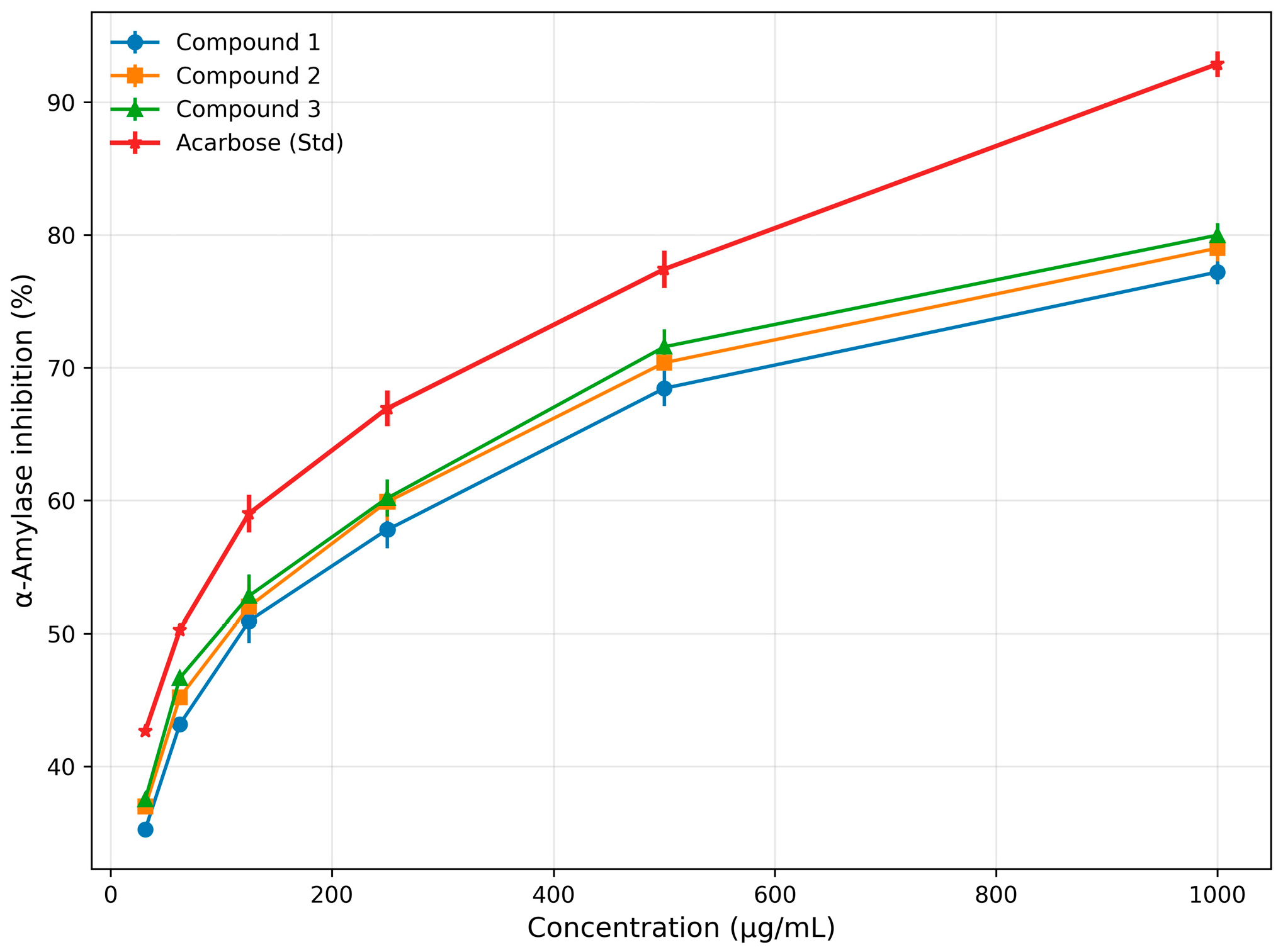
| S. No. | Conc. (µg/mL) | Compound 1 | Compound 2 | Compound 3 | Std (Acarbose) |
|---|---|---|---|---|---|
| 1 | 31.25 | 35.25 ± 0.05 | 36.98 ± 0.20 | 37.51 ± 0.25 | 42.66 ± 0.15 |
| 2 | 62.5 | 43.18 ± 0.12 | 45.22 ± 0.15 | 46.67 ± 0.30 | 50.28 ± 0.20 |
| 3 | 125 | 50.93 ± 1.63 | 52.01 ± 1.63 | 52.81 ± 1.62 | 59.01 ± 1.42 |
| 4 | 250 | 57.81 ± 1.40 | 59.91 ± 1.42 | 60.19 ± 1.40 | 66.95 ± 1.35 |
| 5 | 500 | 68.45 ± 1.32 | 70.38 ± 0.31 | 71.58 ± 1.32 | 77.43 ± 1.41 |
| 6 | 1000 | 77.21 ± 0.91 | 79.01 ± 0.99 | 79.99 ± 0.91 | 92.89 ± 0.97 |
| IC50 (µg/mL) | 119.01 | 102.97 | 95.76 | 63.05 | |
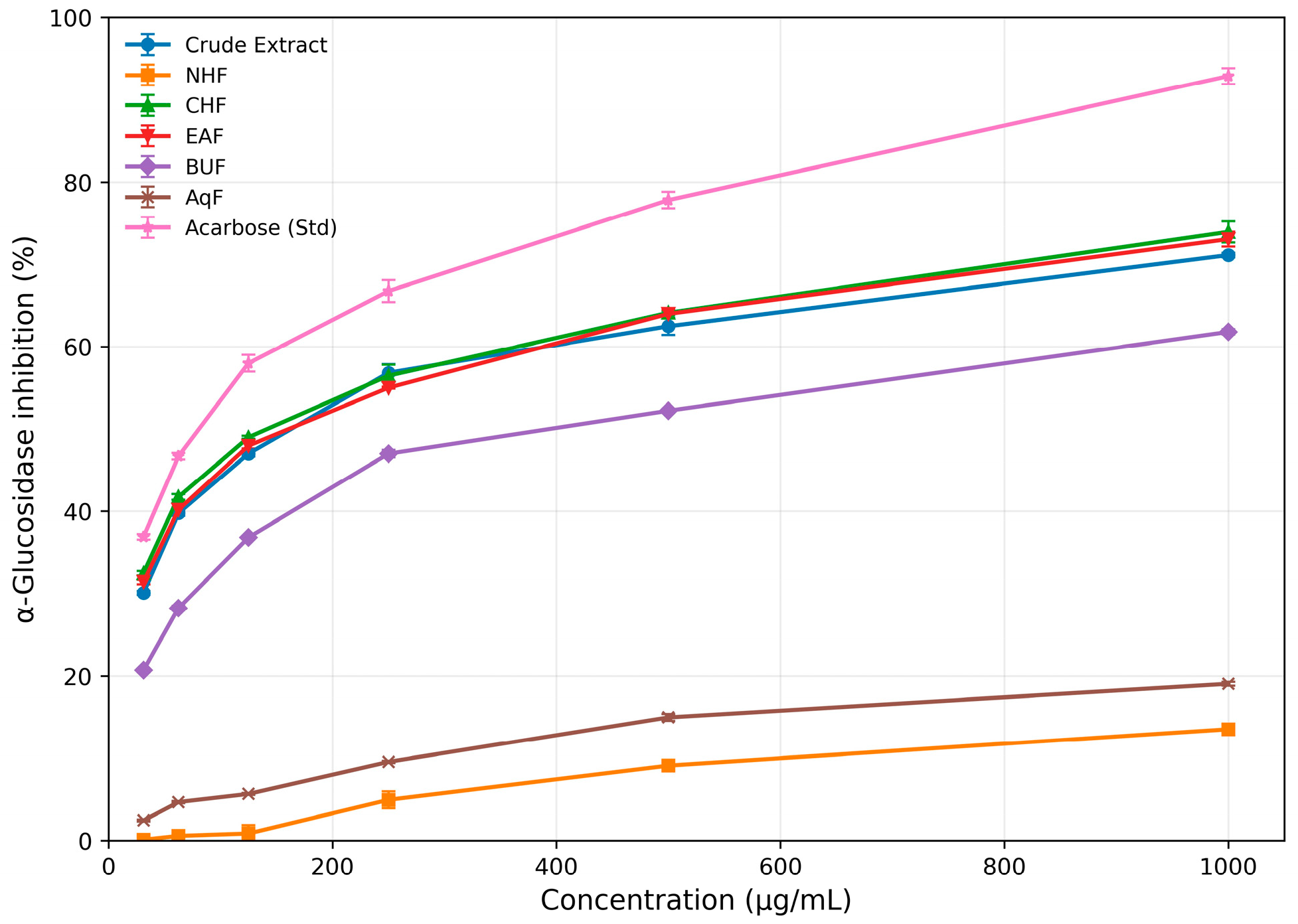
3.3.2. α-Glucosidase Inhibitory Activity
| S. No. | Conc. (µg/mL) | Crude Extract | NHF * | CHF * | EAF * | BUF * | AQF * | Std. (Acarbose) |
|---|---|---|---|---|---|---|---|---|
| 1 | 31.25 | 30.12 ± 0.24 | 0.12 ± 0.06 | 32.50 ± 0.26 | 31.44 ± 0.28 | 20.68 ± 0.21 | 2.45 ± 0.11 | 36.89 ± 0.34 |
| 2 | 62.5 | 39.76 ± 0.32 | 0.58 ± 0.15 | 41.73 ± 0.35 | 40.18 ± 0.29 | 28.25 ± 0.27 | 4.68 ± 0.13 | 46.70 ± 0.40 |
| 3 | 125 | 47.02 ± 0.34 | 0.87 ± 1.01 | 49.00 ± 0.18 | 47.98 ± 0.34 | 36.81 ± 0.12 | 5.66 ± 0.13 | 57.98 ± 1.02 |
| 4 | 250 | 56.81 ± 1.05 | 4.95 ± 1.02 | 56.46 ± 1.34 | 55.00 ± 0.12 | 47.01 ± 0.45 | 9.54 ± 0.14 | 66.75 ± 1.35 |
| 5 | 500 | 62.48 ± 1.06 | 9.09 ± 0.25 | 64.12 ± 0.25 | 63.99 ± 0.56 | 52.21 ± 0.21 | 14.98 ± 0.43 | 77.81 ± 1.01 |
| 6 | 1000 | 71.11 ± 0.27 | 13.53 ± 0.37 | 73.93 ± 1.27 | 73.05 ± 0.89 | 61.79 ± 0.32 | 19.05 ± 0.22 | 92.87 ± 0.97 |
| IC50 (µg/mL) | 155.5 | >1000 | 141.39 | 156.8 | 373.69 | >1000 | 79.72 | |
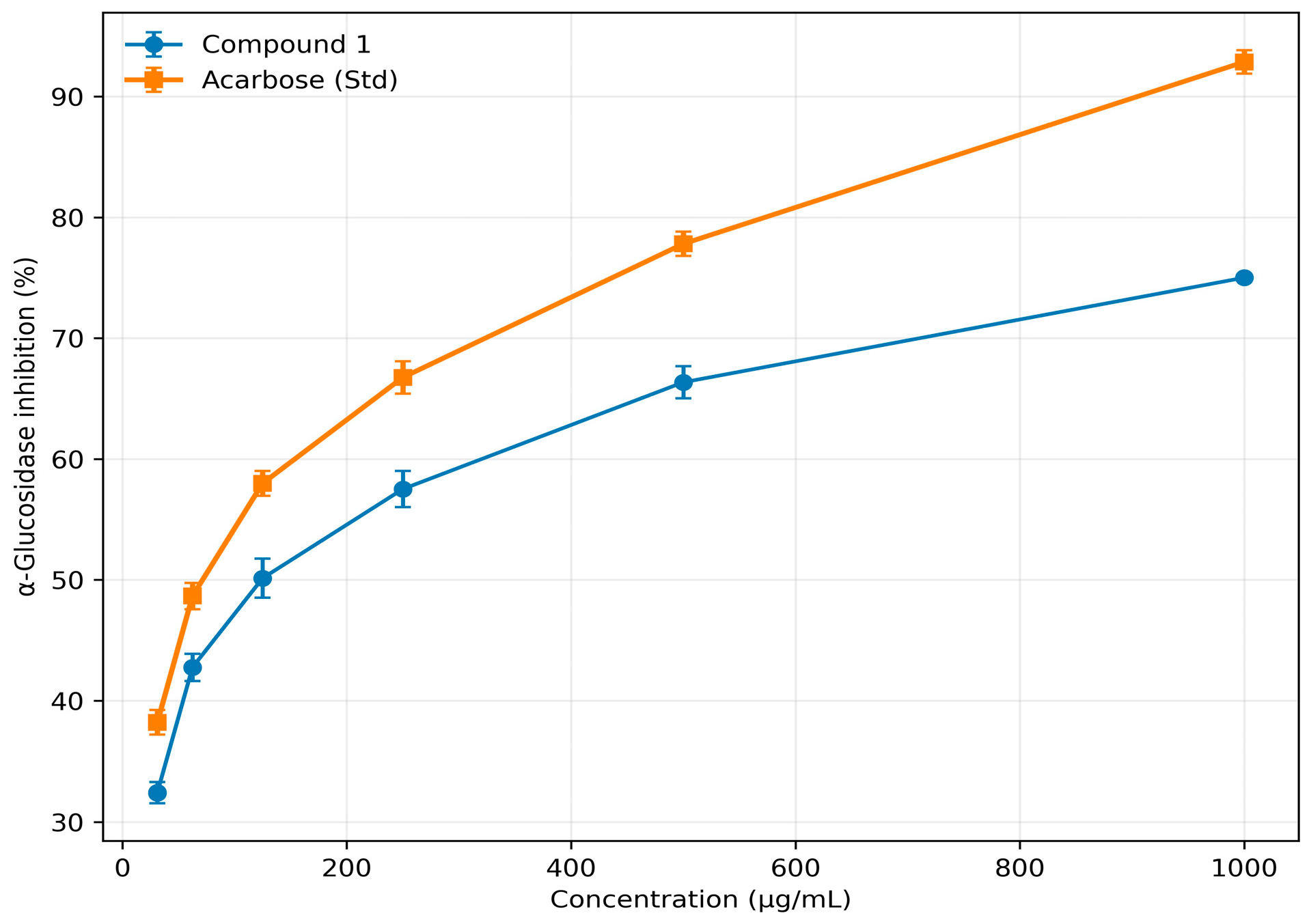
| S. No. | Conc. (µg/mL) | Compound 1 | Std (Acarbose) |
|---|---|---|---|
| 1 | 31.25 | 32.40 ± 0.85 | 38.20 ± 1.02 |
| 2 | 62.5 | 42.75 ± 1.12 | 48.65 ± 1.09 |
| 3 | 125 | 50.13 ± 1.62 | 57.98 ± 1.02 |
| 4 | 250 | 57.51 ± 1.50 | 66.75 ± 1.35 |
| 5 | 500 | 66.35 ± 1.32 | 77.81 ± 1.01 |
| 6 | 1000 | 75.01 ± 0.21 | 92.87 ± 0.97 |
| IC50 value | 124.91 | 75.31 | |
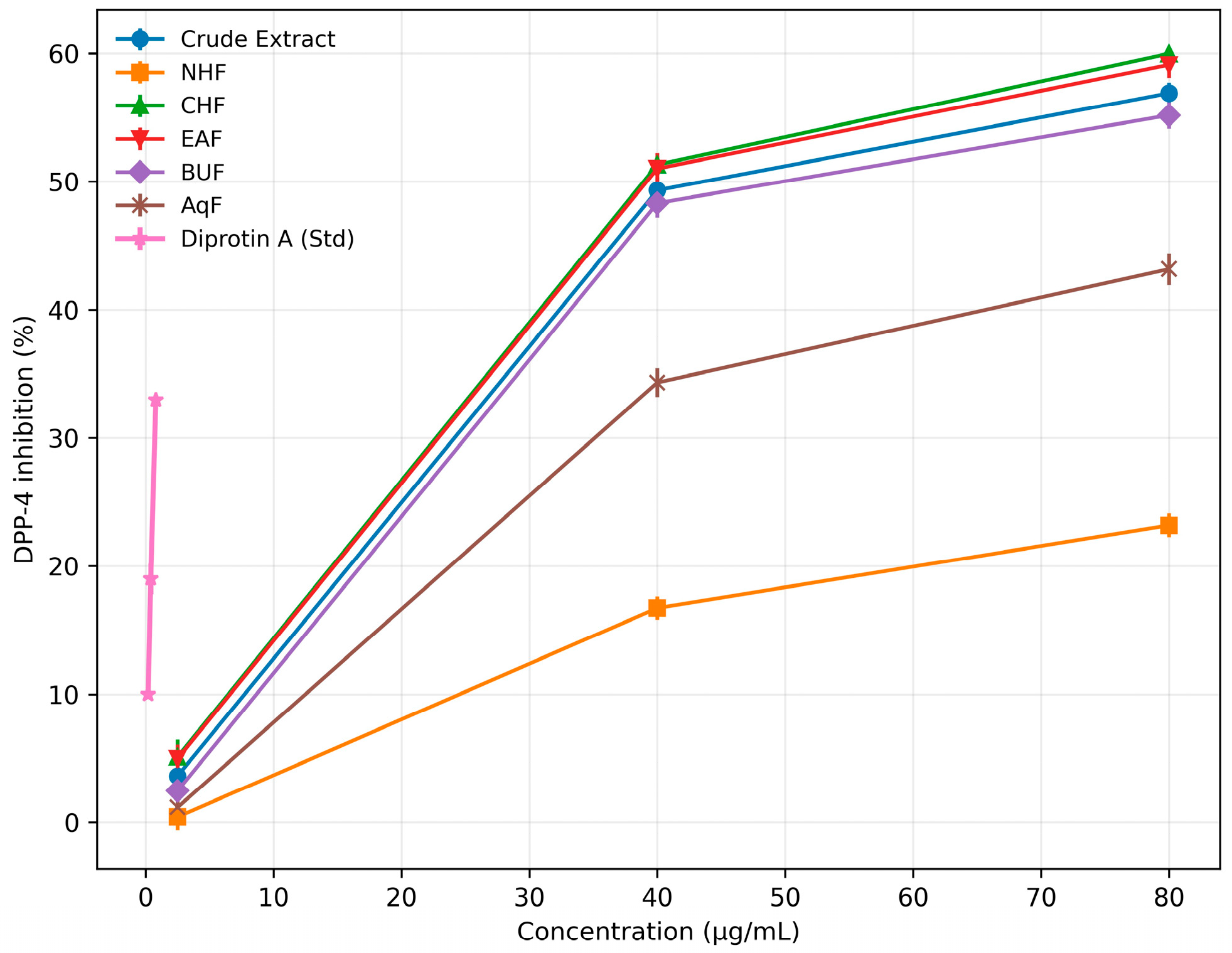
3.3.3. DPP-4 Inhibitory Activity
4. Discussion
5. Conclusions
Author Contributions
Funding
Institutional Review Board Statement
Informed Consent Statement
Data Availability Statement
Acknowledgments
Conflicts of Interest
References
- Hossain, M.J.; Al-Mamun, M.; Islam, M.R. Diabetes mellitus, the fastest growing global public health concern: Early detection should be focused. Health Sci. Rep. 2024, 7, e2004. [Google Scholar] [CrossRef]
- Tourkmani, A.M.; Bin Rsheed, A.M.; AlEissa, M.S.; Alqahtani, S.M.; AlOtaibi, A.F.; Almujil, M.S.; AlKhshan, I.H.; ALNassar, T.N.; ALOtaibi, M.N.; Alrasheedy, A.A. Prevalence of COVID-19 infection among patients with diabetes and their vaccination coverage status in Saudi Arabia: A cross-sectional analysis from a hospital-based diabetes registry. Vaccines 2022, 10, 310. [Google Scholar] [CrossRef]
- International Diabetes Federation. IDF Diabetes Atlas, 11th ed.; International Diabetes Federation: Brussels, Belgium, 2025. [Google Scholar]
- Ramesh, C.; Rani, A.P. In vivo and in vitro antidiabetic potentials of methanol extract of Tephrosia pumila against alloxan-induced diabetes in experimental animals. Int. J. Health Sci. 2019, 13, 10. [Google Scholar]
- Ansari, P.; Akther, S.; Hannan, J.; Seidel, V.; Nujat, N.J.; Abdel-Wahab, Y.H. Pharmacologically active phytomolecules isolated from traditional antidiabetic plants and their therapeutic role for the management of diabetes mellitus. Molecules 2022, 27, 4278. [Google Scholar] [CrossRef]
- Silverii, G.A. Optimizing metformin therapy in practice: Tailoring therapy in specific patient groups to improve tolerability, efficacy and outcomes. Diabetes Obes. Metab. 2024, 26, 42–54. [Google Scholar] [CrossRef] [PubMed]
- Ruiz-Tamayo, I.; Franch-Nadal, J.; Mata-Cases, M.; Mauricio, D.; Cos, X.; Rodriguez-Poncelas, A.; Barrot, J.; Coll-de-Tuero, G.; Mundet-Tudurí, X. Noninsulin antidiabetic drugs for patients with type 2 diabetes mellitus: Are we respecting their contraindications? J. Diabetes Res. 2016, 2016, 7502489. [Google Scholar] [CrossRef] [PubMed]
- Froldi, G. View on metformin: Antidiabetic and pleiotropic effects, pharmacokinetics, side effects, and sex-related differences. Pharmaceuticals 2024, 17, 478. [Google Scholar] [CrossRef]
- Chen, H.-Y.; Zhao, H.; Yang, J.-J.; Zhang, Q.; Yan, M.-M.; Qiu, X.-Y. Reassessment of pioglitazone and bladder cancer based on FAERS database. Expert Opin. Drug Saf. 2025, 24, 1113–1120. [Google Scholar] [CrossRef]
- Tran, N.; Pham, B.; Le, L. Bioactive compounds in anti-diabetic plants: From herbal medicine to modern drug discovery. Biology 2020, 9, 252. [Google Scholar] [CrossRef]
- Khan, M.; Ali, M.; Ali, A.; Mir, S.R. Hypoglycemic and hypolipidemic activities of Arabic and Indian origin Salvadora persica root extract on diabetic rats with histopathology of their pancreas. Int. J. Health Sci. 2014, 8, 45. [Google Scholar] [CrossRef]
- Mostafa, E.M.; Musa, A.; Mohammed, H.A.; Alzarea, A.I.; Abdelgawad, M.A.; Al-Sanea, M.M.; Ismail, A.; Zafar, A.; Elmowafy, M.; Selim, S.; et al. Phenanthroindolizidine alkaloids secondary metabolites diversity in medicinally viable plants of the genus Tylophora. Plants 2023, 12, 1143. [Google Scholar] [CrossRef]
- Alkanad, M.; Hani, U.; V, A.H.; Ghazwani, M.; Haider, N.; Osmani, R.A.M.; D, P.M.; Hamsalakshmi; Bhat, R. Bitter yet beneficial: The dual role of dietary alkaloids in managing diabetes and enhancing cognitive function. BioFactors 2024, 50, 634–673. [Google Scholar] [CrossRef]
- Mousavi, L.; Salleh, R.M.; Murugaiyah, V. Phytochemical and bioactive compounds identification of Ocimum tenuiflorum leaves of methanol extract and its fraction with an anti-diabetic potential. Int. J. Food Prop. 2018, 21, 2390–2399. [Google Scholar] [CrossRef]
- Singh, R.; Arif, T.; Khan, I.; Sharma, P. Phytochemicals in antidiabetic drug discovery. J. Biomed. Ther. Sci. 2014, 1, 1–33. [Google Scholar]
- Chahrour, J.A.; Abdel Baki, Z.; El Badan, D.; Nasser, G.; Maresca, M.; Hijazi, A. Herbal Medicines in the Management of Diabetes Mellitus: Plants, Bioactive Compounds, and Mechanisms of Action. Biomolecules 2025, 15, 1674. [Google Scholar] [CrossRef]
- Kapoor, B.; Bhardwaj, S.; Singh, R.; Sharma, A.; Dolma, Y.; Sharma, A.; Kapoor, D. Multifaceted Role of Plant Polyphenols in Human Health: A Comprehensive Review. Food Sci. Biotechnol. 2025, 35, 1081–1095. [Google Scholar] [CrossRef]
- Ohouko, O.F.H.; Lègba, B.B.; Agbodjento, E.; Akanmu, A.O.; Balogun, S.T.; Mante, P.K.; Klotoé, J.R. Diabetes Mellitus in ECOWAS: An Overview of the Safety and Efficacy of Medicinal Plants Used in Traditional Medicine Practices. Trop. Med. Health 2026, 54, 56. [Google Scholar] [CrossRef] [PubMed]
- Letchuman, S.; Madhuranga, H.; Madhurangi, B.; Premarathna, A.D.; Saravanan, M. Alkaloids unveiled: A comprehensive analysis of novel therapeutic properties, mechanisms, and plant-based innovations. Intell. Pharm. 2024, 3, 268–276. [Google Scholar] [CrossRef]
- Behzadi, M.; Javanmard, A.S.; Khakdan, F.; Mohsenzadeh, S. Effects of urea supplementation and different substrates on the production of indole alkaloid reserpine in Catharanthus roseus plants. Plant Biosyst. 2022, 156, 1011–1018. [Google Scholar] [CrossRef]
- Huang, Y.; Li, G.; Hong, C.; Zheng, X.; Yu, H.; Zhang, Y. Potential of steroidal alkaloids in cancer: Perspective insight into structure–activity relationships. Front. Oncol. 2021, 11, 733369. [Google Scholar] [CrossRef]
- Kaleem, W.A.; Muhammad, N.; Khan, H.; Rauf, A.; Zia-ul-Haq, M.; Qayum, M.; Khan, A.Z.; Nisar, M.; Obaidullah. Antioxidant potential of cyclopeptide alkaloids isolated from Zizyphus oxyphylla. J. Chem. Soc. Pak. 2015, 37, 873–878. [Google Scholar]
- Kaleem, W.A. Molecular Profiling of Bioactive Constituents from Zizyphus oxyphylla Edgew. Ph.D. Thesis, University of Peshawar, Peshawar, Pakistan, 2011. [Google Scholar]
- Maurus, R.; Begum, A.; Williams, L.K.; Fredriksen, J.R.; Zhang, R.; Withers, S.G.; Brayer, G.D. Alternative catalytic anions differentially modulate human alpha-amylase activity and specificity. Biochemistry 2008, 47, 3332–3344. [Google Scholar] [CrossRef]
- Sanz-Aparicio, J.; Hermoso, J.A.; Martínez-Ripoll, M.; Lequerica, J.L.; Polaina, J. Crystal structure of β-glucosidase A from Bacillus polymyxa: Insights into the catalytic activity in family 1 glycosyl hydrolases. J. Mol. Biol. 1998, 275, 491–502. [Google Scholar] [CrossRef] [PubMed]
- Zare, F.; Ataollahi, E.; Mardaneh, P.; Sakhteman, A.; Keshavarz, V.; Solhjoo, A.; Emami, L. A combination of virtual screening, molecular dynamics simulation, MM/PBSA, ADMET, and DFT calculations to identify a potential DPP-4 inhibitor. Sci. Rep. 2024, 14, 7749. [Google Scholar] [CrossRef]
- Morris, G.M.; Huey, R.; Lindstrom, W.; Sanner, M.F.; Belew, R.K.; Goodsell, D.S.; Olson, A.J. AutoDock4 and AutoDockTools4: Automated docking with selective receptor flexibility. J. Comput. Chem. 2009, 30, 2785–2791. [Google Scholar] [CrossRef]
- Ahamad, S.; Hema, K.; Kumar, V.; Gupta, D. The structural, functional, and dynamic effect of Tau tubulin kinase 1 upon a mutation: A neurodegenerative hotspot. J. Cell. Biochem. 2021, 122, 1653–1664. [Google Scholar] [CrossRef] [PubMed]
- Hanwell, M.D.; Curtis, D.E.; Lonie, D.C.; Vandermeersch, T.; Zurek, E.; Hutchison, G.R. Avogadro: An advanced semantic chemical editor, visualization, and analysis platform. J. Cheminform. 2012, 4, 17. [Google Scholar] [CrossRef]
- Yadav, S.; Ahamad, S.; Gupta, D.; Mathur, P. Lead optimization, pharmacophore development and scaffold design of protein kinase CK2 inhibitors as potential COVID-19 therapeutics. J. Biomol. Struct. Dyn. 2023, 41, 1811–1827. [Google Scholar] [CrossRef]
- Kim, S.; Chen, J.; Cheng, T.; Gindulyte, A.; He, J.; He, S.; Li, Q.; Shoemaker, B.A.; Thiessen, P.A.; Yu, B.; et al. PubChem in 2021: New data content and improved web interfaces. Nucleic Acids Res. 2021, 49, D1388–D1395. [Google Scholar] [CrossRef]
- Ahamad, S.; Kanipakam, H.; Kumar, V.; Gupta, D. A molecular journey to check the conformational dynamics of tau tubulin kinase 2 mutations associated with Alzheimer’s disease. RSC Adv. 2021, 11, 1320–1331. [Google Scholar] [CrossRef]
- Alsukaibi, A.K.D.; Alenezi, K.M.; Haque, A.; Ahmad, I.; Saeed, M.; Verma, M.; Ansari, I.A.; Hsieh, M.-F. Chemical, biological and in silico assessment of date (Phoenix dactylifera L.) fruits grown in Ha’il region. Front. Chem. 2023, 11, 1138057. [Google Scholar] [CrossRef] [PubMed]
- Ahamad, S.; Hema, K.; Gupta, D. Identification of novel tau-tubulin kinase 2 inhibitors using computational approaches. ACS Omega 2023, 8, 13026–13037. [Google Scholar] [CrossRef]
- Schrödinger, LLC. The PyMOL Molecular Graphics System, version 2.5; Schrödinger, LLC: New York, NY, USA, 2022. Available online: https://pymol.org (accessed on 6 February 2026).
- Laskowski, R.A.; Swindells, M.B. LigPlot+: Multiple ligand–protein interaction diagrams for drug discovery. J. Chem. Inf. Model. 2011, 51, 2778–2786. [Google Scholar] [CrossRef]
- Ahamad, S.; Junaid, I.T.; Gupta, D. Computational design of novel tau-tubulin kinase 1 inhibitors for neurodegenerative diseases. Pharmaceuticals 2024, 17, 952. [Google Scholar] [CrossRef]
- Sagbo, I.J.; van de Venter, M.; Koekemoer, T.; Bradley, G. In vitro antidiabetic activity and mechanism of action of Brachylaena elliptica (Thunb.) DC. Evid.-Based Complement. Altern. Med. 2018, 2018, 4170372. [Google Scholar] [CrossRef]
- Al-Masri, I.M.; Mohammad, M.K.; Tahaa, M.O. Inhibition of dipeptidyl peptidase IV (DPP-IV) is one of the mechanisms explaining the hypoglycemic effect of berberine. J. Enzym. Inhib. Med. Chem. 2009, 24, 1061–1066. [Google Scholar] [CrossRef]
- Dassault Systèmes. Discovery Studio Visualizer, version 16; Dassault Systèmes: San Diego, CA, USA, 2021. Available online: https://discover.3ds.com (accessed on 5 April 2026).
- Nisar, M.; Kaleem, W.A.; Adhikari, A.; Ali, Z.; Hussain, N.; Khan, I.; Qayum, M.; Choudhary, M.I. Stereochemistry and NMR data assignment of cyclopeptide alkaloids from Zizyphus oxyphylla. Nat. Prod. Commun. 2010, 5, 1247–1252. [Google Scholar] [CrossRef]
- Choudhary, M.I.; Adhikari, A.; Rasheed, S.; Marasini, B.P.; Hussain, N.; Kaleem, W.A. Cyclopeptide alkaloids of Ziziphus oxyphylla as novel inhibitors of α-glucosidase enzyme and protein glycation. Phytochem. Lett. 2011, 4, 404–406. [Google Scholar] [CrossRef]
- Kaleem, W.A.; Muhammad, N.; Qayum, M.; Khan, H.; Khan, A.; Aliberti, L.; De Feo, V. Antinociceptive activity of cyclopeptide alkaloids isolated from Ziziphus oxyphylla Edgew. Fitoterapia 2013, 91, 154–158. [Google Scholar] [CrossRef] [PubMed]
- Zahoor, M.; Khan, I.; Zeb, A.; Sahibzada, M.U.K.; Naz, S.; Bari, W.U.; Kamran, A.W. Pharmacological evaluation and in-silico modeling study of compounds isolated from Ziziphus oxyphylla. Heliyon 2021, 7, e06354. [Google Scholar] [CrossRef] [PubMed]
- Ghannay, S.; Alharabi, L.; Messouadi, S.; Aouadi, K. Synthesis of novel thiosemicarbazones and their molecular docking simulations as inhibitors of α-amylase and α-glycosidase enzymes. J. Qassim Univ. Sci. 2025, 3, 1–10. [Google Scholar]
- Aouadi, K.; Alsowayan, R.; Ghannay, S.; Messouadi, S.; Kadri, A. Design, characterization and molecular docking study of the new isoxazolidine-1,2,3-triazole hybrids. J. Qassim Univ. Sci. 2024, 3, 83–93. [Google Scholar]
- Akinnusi, P.A.; Olubode, S.O.; Alade, A.A.; Ashimi, A.A.; Onawola, O.L.; Agbolade, A.O.; Emeka, A.P.; Shodehinde, S.A.; Adeniran, O.Y. Potential inhibitory biomolecular interactions of natural compounds with different molecular targets of diabetes. Bioinform. Biol. Insights 2023, 17, 11779322231167970. [Google Scholar] [CrossRef]
- Nazir, N.; Zahoor, M.; Nisar, M.; Khan, I.; Karim, N.; Abdel-Halim, H.; Ali, A. Phytochemical analysis and antidiabetic potential of Elaeagnus umbellata in streptozotocin-induced diabetic rats: Pharmacological and computational approach. BMC Complement. Altern. Med. 2018, 18, 332. [Google Scholar] [CrossRef] [PubMed]
- Mishra, V.; Nayak, P.; Sharma, M.; Albutti, A.; Alwashmi, A.S.S.; Aljasir, M.A.; Alsowayeh, N.; Tambuwala, M.M. Emerging treatment strategies for diabetes mellitus and associated complications: An update. Pharmaceutics 2021, 13, 1568. [Google Scholar] [CrossRef]
- Yin, R.; Xu, Y.; Wang, X.; Yang, L.; Zhao, D. Role of dipeptidyl peptidase 4 inhibitors in antidiabetic treatment. Molecules 2022, 27, 3055. [Google Scholar] [CrossRef]



| S. No. | Conc. (µg/mL) | Crude Extract | NHF * | CHF * | EAF * | BUF * | AQF * | Conc. (µg/mL) | Std. (Diprotin A) |
|---|---|---|---|---|---|---|---|---|---|
| 1 | 2.5 | 3.62 ± 1.03 | 0.41 ± 1.03 | 5.11 ± 1.37 | 4.96 ± 1.12 | 2.46 ± 0.93 | 1.16 ± 0.63 | 0.2 | 9.99 ± 0.12 |
| 2 | 40 | 49.32 ± 1.02 | 16.72 ± 0.91 | 51.32 ± 0.67 | 51.02 ± 1.22 | 48.32 ± 1.13 | 34.32 ± 1.13 | 0.4 | 19.00 ± 1.19 |
| 3 | 80 | 56.91 ± 0.83 | 23.18 ± 0.93 | 59.99 ± 0.39 | 59.12 ± 1.01 | 55.18 ± 1.03 | 43.18 ± 1.23 | 0.8 | 32.96 ± 0.23 |
| IC50 (µg/mL) | 41.76 | >1000 | 35.36 | 38.36 | 45.43 | 133.02 | 1.46 | ||
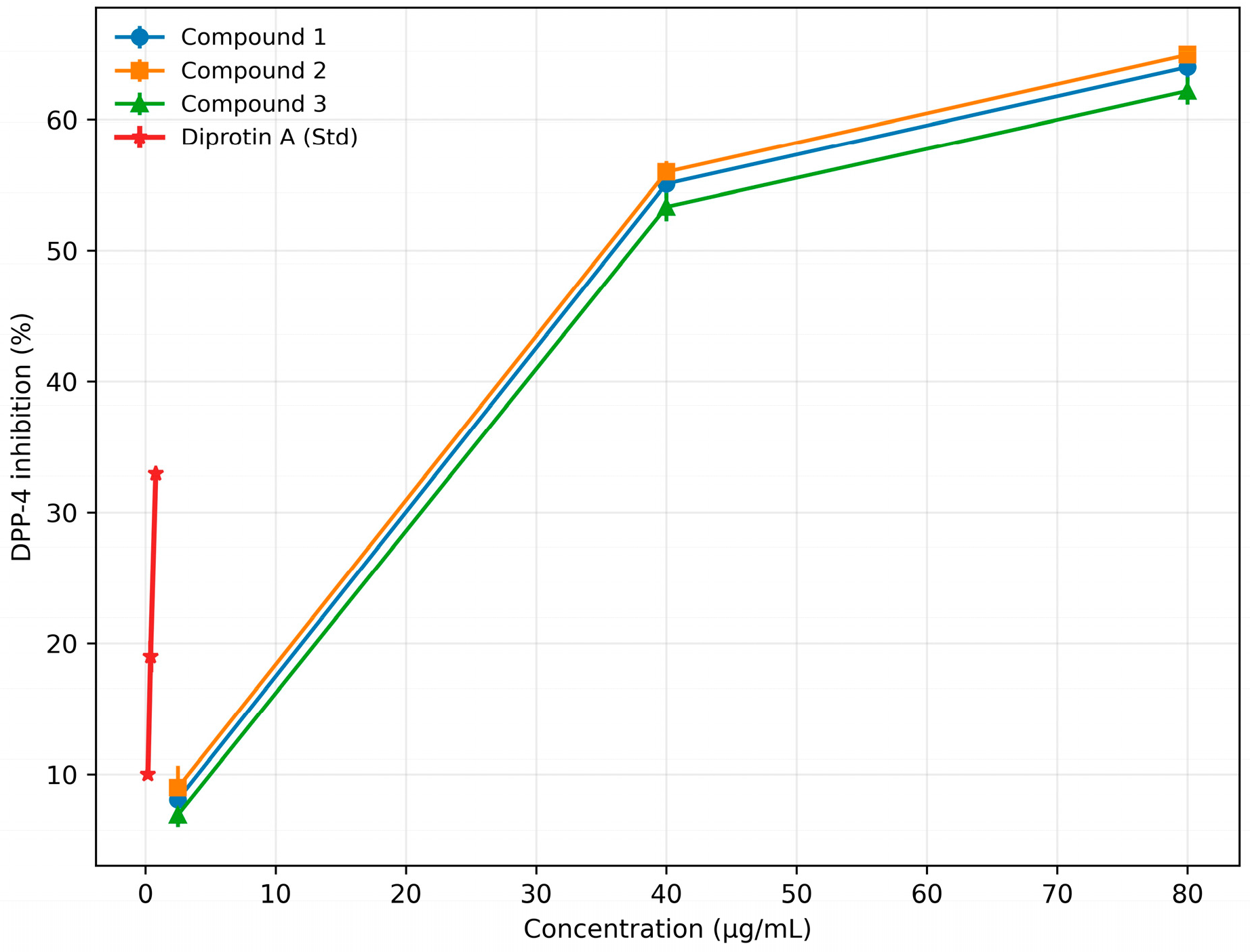
| S. No. | Conc. (µg/mL) | Compound 1 | Compound 2 | Compound 3 | Conc. (µg/mL) | Std (Diprotin A) |
|---|---|---|---|---|---|---|
| 1 | 2.5 | 8.07 ± 1.43 | 8.98 ± 1.67 | 6.91 ± 0.93 | 0.2 | 9.99 ± 0.12 |
| 2 | 40 | 55.09 ± 1.06 | 55.99 ± 0.83 | 53.32 ± 1.08 | 0.4 | 19.00 ± 1.19 |
| 3 | 80 | 64.01 ± 1.08 | 64.95 ± 0.60 | 62.19 ± 1.04 | 0.8 | 32.96 ± 0.23 |
| IC50 (µg/mL) | 30.51 | 28.87 | 33.70 | 1.46 | ||
Disclaimer/Publisher’s Note: The statements, opinions and data contained in all publications are solely those of the individual author(s) and contributor(s) and not of MDPI and/or the editor(s). MDPI and/or the editor(s) disclaim responsibility for any injury to people or property resulting from any ideas, methods, instructions or products referred to in the content. |
© 2026 by the authors. Licensee MDPI, Basel, Switzerland. This article is an open access article distributed under the terms and conditions of the Creative Commons Attribution (CC BY) license.
Share and Cite
Zia-Ul-Haq, M.; Kaleem, W.A.; Farhana, S.A.; Shah, S.U.A.; Rehman, A.; Khan, S.; Naz, I. In Silico and In Vitro Evaluation of Bioactive Constituents Isolated from Ziziphus oxyphylla for the Treatment of Diabetes. Biomolecules 2026, 16, 700. https://doi.org/10.3390/biom16050700
Zia-Ul-Haq M, Kaleem WA, Farhana SA, Shah SUA, Rehman A, Khan S, Naz I. In Silico and In Vitro Evaluation of Bioactive Constituents Isolated from Ziziphus oxyphylla for the Treatment of Diabetes. Biomolecules. 2026; 16(5):700. https://doi.org/10.3390/biom16050700
Chicago/Turabian StyleZia-Ul-Haq, Muhammad, Waqar Ahmad Kaleem, Syeda Ayesha Farhana, Syed Uzair Ali Shah, Abdul Rehman, Saqib Khan, and Iffat Naz. 2026. "In Silico and In Vitro Evaluation of Bioactive Constituents Isolated from Ziziphus oxyphylla for the Treatment of Diabetes" Biomolecules 16, no. 5: 700. https://doi.org/10.3390/biom16050700
APA StyleZia-Ul-Haq, M., Kaleem, W. A., Farhana, S. A., Shah, S. U. A., Rehman, A., Khan, S., & Naz, I. (2026). In Silico and In Vitro Evaluation of Bioactive Constituents Isolated from Ziziphus oxyphylla for the Treatment of Diabetes. Biomolecules, 16(5), 700. https://doi.org/10.3390/biom16050700