Spatiotemporal Control of Intercellular Crosstalk: A New Therapeutic Paradigm for Halting Acute Kidney Injury to Chronic Kidney Disease Transition
Abstract
1. Introduction
2. Acute Phase of AKI: PTECs-Dominated “Crisis Initiation” and Burst of Inflammatory Intercellular Communication
2.1. PTECs: Injury and Signal Release as ‘Crisis Initiators’ in the Acute-Phase
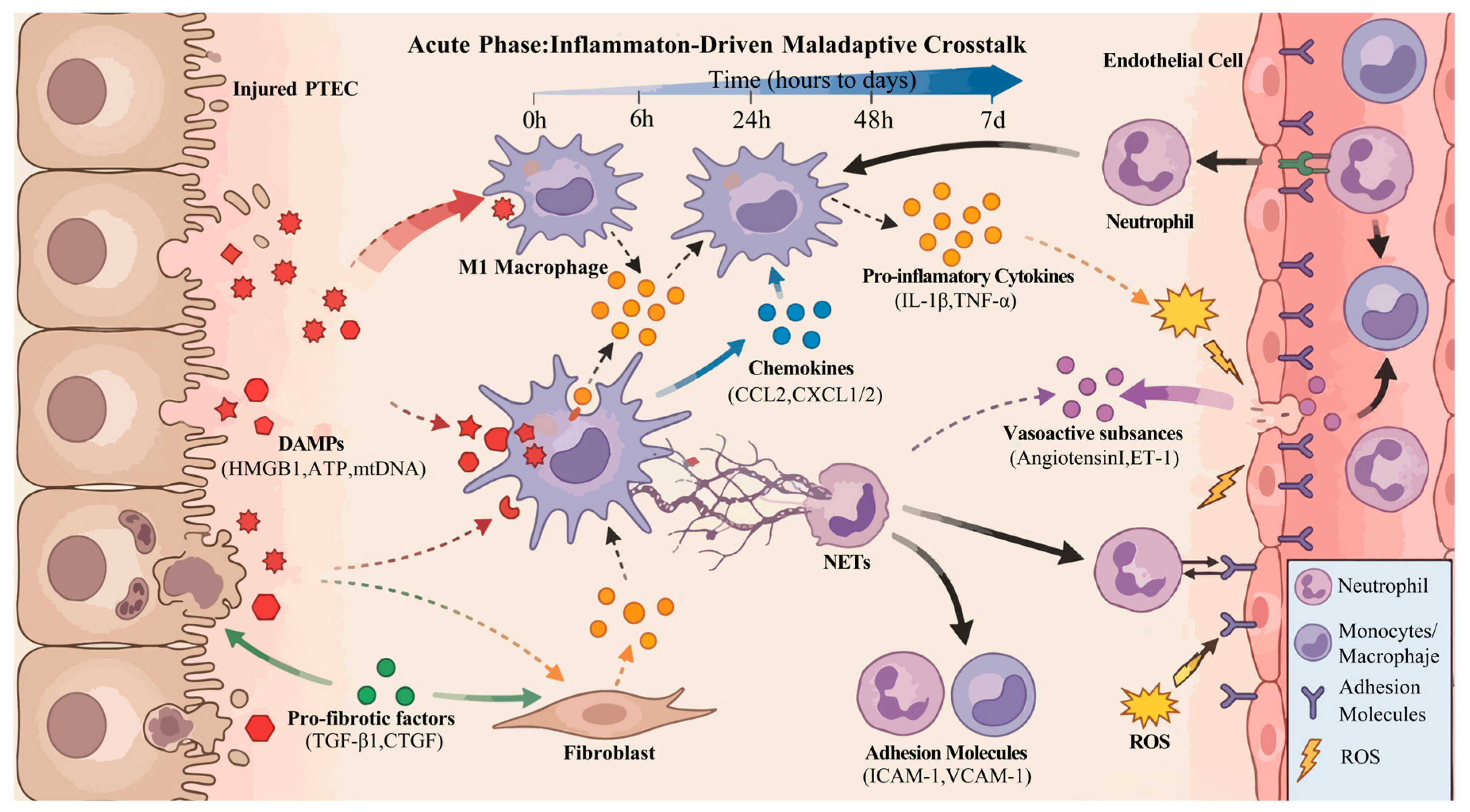
2.2. Core Intercellular Communication Network in the Acute Phase: Inflammation-Driven Maladaptive Crosstalk
2.2.1. PTECs ↔ Immune Cells: Inflammation Initiation and Amplification
2.2.2. Endothelial Cells ↔ Immune Cells: “Vascular Gating” in Inflammatory Infiltration
2.2.3. PTECs ↔ Fibroblasts: The “Early Warning” of Fibrosis
2.2.4. Immune Cell ↔ Immune Cell Crosstalk: Cascade Amplification of Inflammatory Signals
2.2.5. Supplementary Pathway: PTECs ↔ Endothelial Cells
2.3. Pathological Significance and Outcomes of Intercellular Communication in the Acute Phase
3. Subacute/Repair Phase of AKI: Microenvironment Remodeling Driven by Immune Polarization Imbalance and Senescent Cell “Noise”
3.1. Macrophage Polarization Imbalance—A Pathological Shift from Damage Clearance to Repair Arrest
3.1.1. Macrophage Polarization in Normal Repair: Dynamic M1 → M2 Coordination
3.1.2. Two Core Patterns of Polarization Imbalance: M1 Persistence and M2 Functional Deficiency
3.2. TECs Senescence: From Acute Stress Protection to Chronic Stagnation Exacerbating Inflammation and Fibrosis Initiation
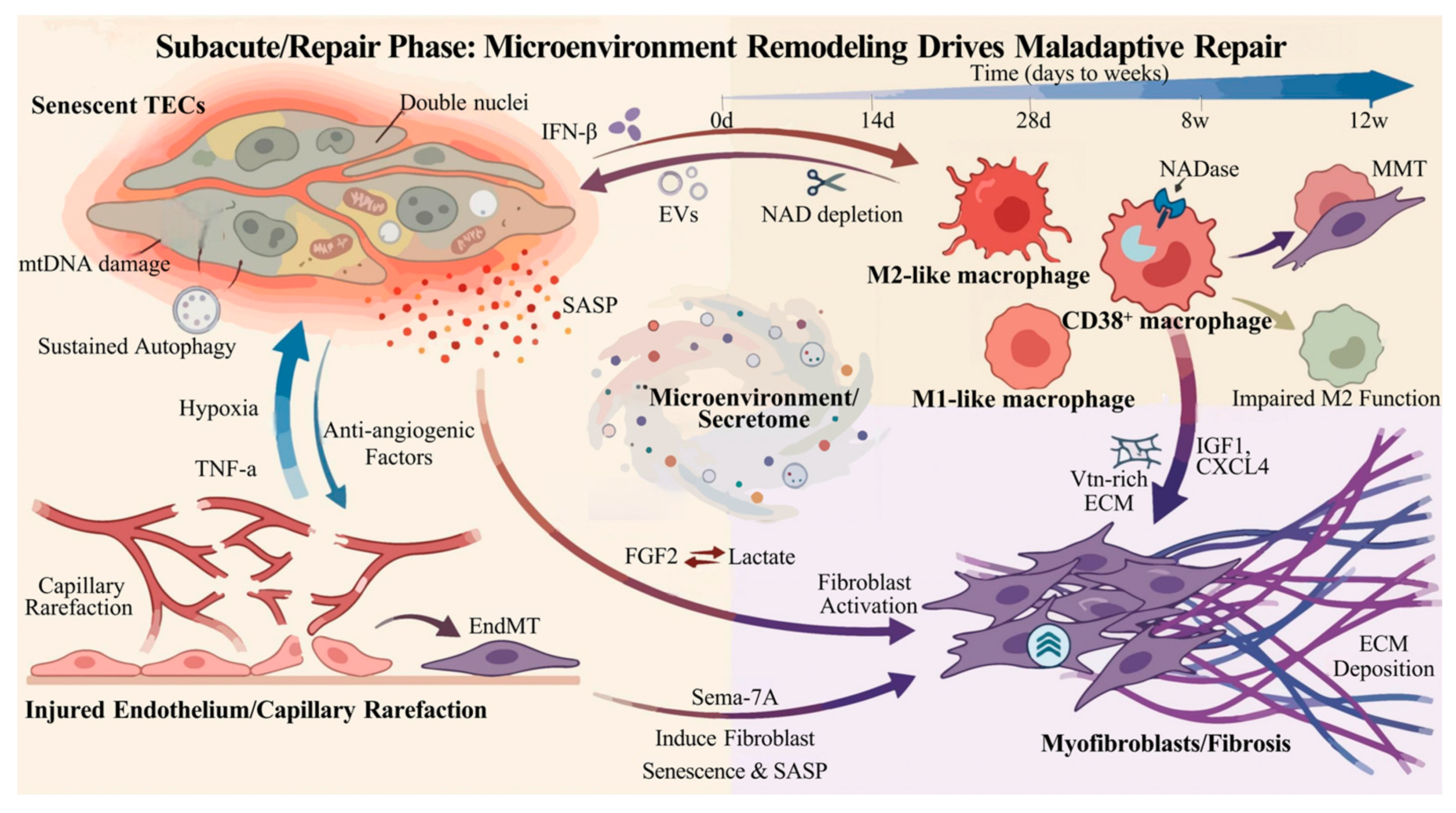
3.3. Core Intercellular Communication Network: Multicellular Interactions Driving Maladaptive Repair
3.3.1. Senescent TECs ↔ Macrophages: Self-Reinforcing Inflammation
3.3.2. Macrophages → Fibroblasts: Initiation Signals for Fibrosis
3.3.3. TECs ↔ Endothelial Cells: Microcirculation Dysfunction and Impaired Repair
3.3.4. TECs/Endothelial Cells ↔ Fibroblasts: The Fibrotic ‘Amplification Circuit’
3.4. Pathological Significance and Outcomes of Intercellular Communication in the Subacute/Repair Phase
4. Chronic/Fibrotic Phase: Myofibroblast-Dominated Pathological Homeostasis and Multicellular Interaction Networks
4.1. Core Driver: Myofibroblasts and Self-Sustaining Fibrotic Feedback Loops
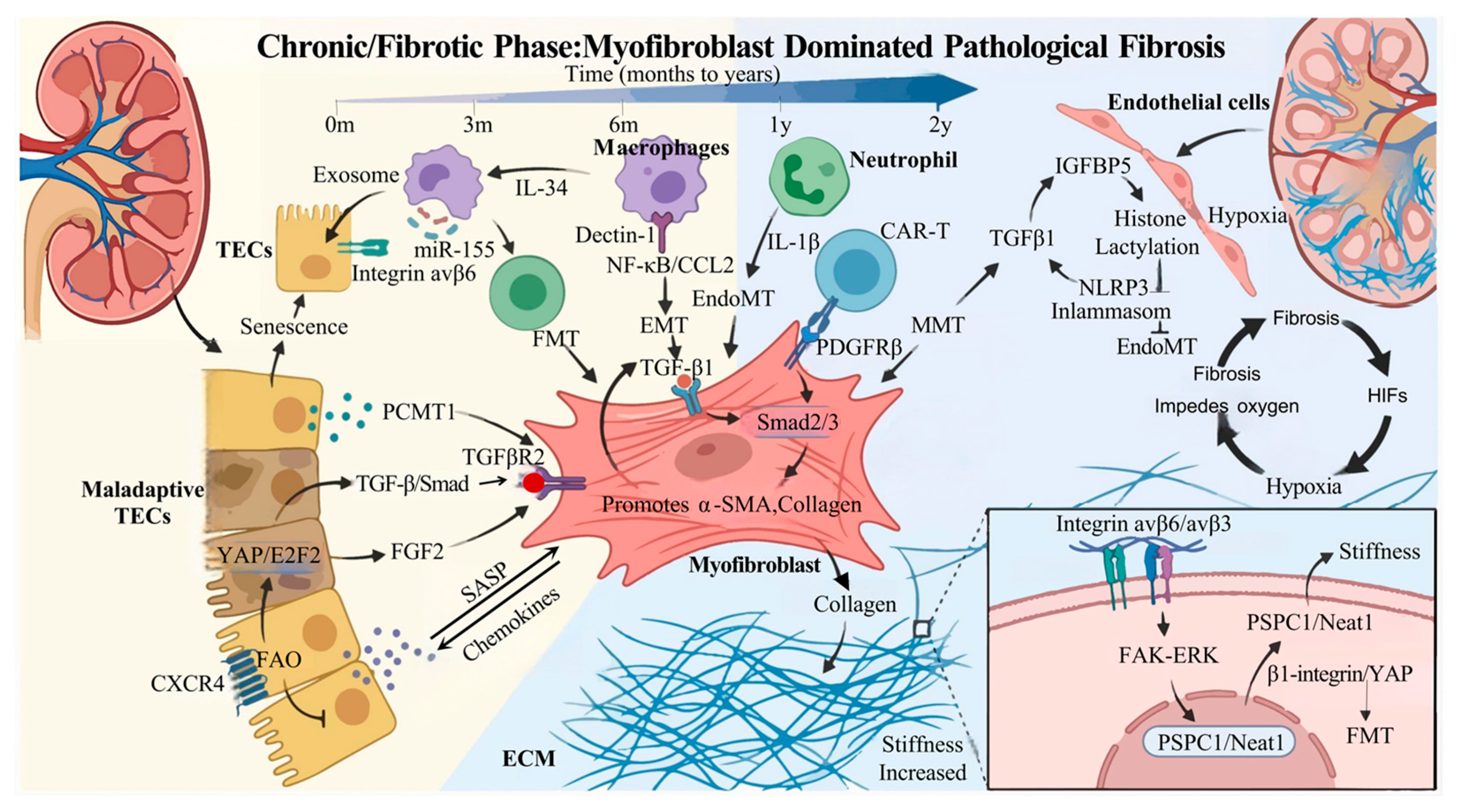
4.2. Intercellular Crosstalk: Multidimensional Regulation of the Fibrotic Network
4.2.1. Fibroblast ↔ Immune Cell: Synergistic Reinforcement of Inflammation and Fibrosis
4.2.2. Fibroblast ↔ TECs: Sustained Driving of Maladaptive Repair
4.2.3. Fibroblast ↔ Endothelial Cell: A Vicious Cycle of Vascular Injury and Fibrosis
4.2.4. TECs ↔ Immune Cells: Perpetuating the Chronic Inflammatory Milieu
4.2.5. ECM Physical Signals: Mechanical Memory Regulation of Fibrosis
4.3. Pathological Significance and Outcomes of Intercellular Communication in the Chronic Phase
5. Clinical Relevance and the Limits of Current Biomarkers
5.1. Urinary and Plasma Protein Biomarkers
5.2. Exosome and miRNA Signatures
5.3. Senescence-Associated Markers
5.4. Endothelial Dysfunction Markers
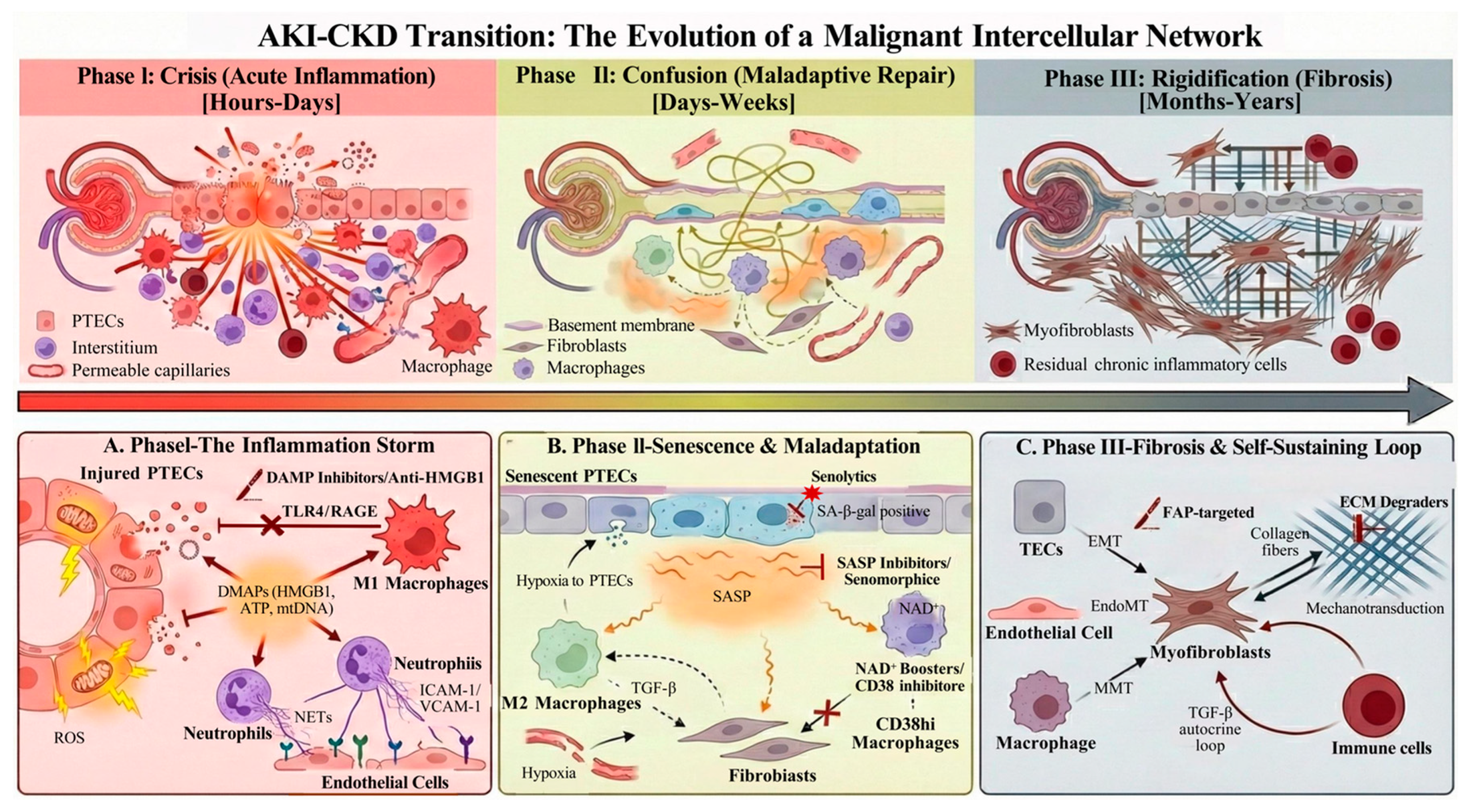
6. Translational Perspectives: A Clinical Framework for Network-Targeted Therapy
6.1. Clinical Translational Pathways for Stage-Specific Intervention Strategies
6.2. Biomarker-Guided Clinical Trial Design
6.2.1. Liquid Biopsy as a Stratification Tool
6.2.2. Dynamic Monitoring as a Therapeutic Efficacy Indicator
6.3. Key Technology Platforms Required for Translation
6.3.1. Liquid Biopsy Technology
6.3.2. Smart Nanocarriers
6.3.3. AI-Driven Multi-Omics Modeling
6.4. Challenges and Future Directions
6.4.1. Specificity Issues
6.4.2. Safety Considerations
6.4.3. Barriers to Clinical Translation
6.4.4. Ethical Considerations and Accessibility
7. Conclusions

| Phase | Cell Type | Core Mediator and Key Signaling | Therapeutic Strategy |
|---|---|---|---|
| Acute Phase (hours–days) | Tubular Cells ↔ Immune Cells | DAMPs (HMGB1, ATP, mtDNA)/DAMP receptors (RAGE, TLR9, P2X7R)/ cytokines (IL-1β, TNF-α, IL-6) and chemokines (CCL2, CXCL1, CXCL2) [8,29]; ANP/CXCL1 and MPO/NETs [34]. | Interventions that inhibit NETs formation [35,42]. Neutralizing the DAMP molecule HMGB1 with specific antibodies or blocking its receptor [17,56,57]. Inhibition of NF-κB (BAY 270 or 6-gingerol) [58,59]. |
| Endothelial Cells ↔ Immune Cells | ROS and TNF-α, IL-1β/ICAM-1, VCAM-1/LFA-1, VLA-4 [37,38,39] or CXCL8, CCL5 or thromboxane A2, angiotensin II [40,41]; NETs [42]. | ||
| Tubular Cells ↔ Fibroblasts | TGF-β1, CTGF [44,45]; PKM2/HGF [47]. | ||
| Immune Cells ↔ Immune Cells | Lactation of HMGB1/mtDNA/NETs [50]; MPO [52]. | ||
| Tubular Cells ↔ Endothelial Cells | DAMPs/ROS or ET-1 [53,55]. | ||
| Subacute/Repair Phase (days–weeks) | Senescent Tubular Cells ↔ Macrophages | non-coding RNAs/TGF-β [91]; NAD [92]; Vav1/Rac2/NF-κB [93]; IFN-β [94]. | MSC-EVs have been shown to promote the polarization of CX3CR1+ macrophages toward an M2 phenotype via the TXNIP- IKKα/NF-κBpathway [110]. HUMSC-EVs with senolytics (dasatinib and quercetin) yields superior renoprotective effects following AKI [111]. Blocking the lactate transporter MCT4, suppresses the activation of pro-inflammatory endothelial cells and thereby inhibits AKI progression [106]. Antagonism of the endothelin A receptor improves both macrovascular and microvascular function [112,113]. |
| Macrophages → Fibroblasts | IGF [69]; Vtn/integrin αvβ5 and Src kinase [95]; CXCL4 [96]; HIF-1α/A2BAR [98]. | ||
| Tubular Cells ↔ Endothelial Cells | VEGF-A [99]; TNF-α [100]. | ||
| Tubular Cells ↔ Fibroblasts | SASP [101]; MAPK/ERK/EGR1/FGF2 [102,103]; lactate/HGF [105]; PHD [106]. | ||
| Endothelial Cells ↔ Fibroblasts | TGF-β [108]; Sema-7A/SASP [109]. | ||
| Chronic/Fibrotic Phase (months–years) | Fibroblasts ↔ Immune Cells | IRF7/CTSS [125]; Dectin-1/Syk/NF-κB/CCL2-CCR2 and TGF-β/Smad [126]; PDGFRβ [127]; IL-1β [128]. | Genetic deletion or pharmacological inhibition of Dectin-1 with laminarin significantly attenuates renal fibrosis [126]. CAR-T cells engineered to specifically recognize platelet-derived growth factor receptor β (PDGFRβ) monoterpene glycoside paeoniflorin has been shown to attenuate fibroblast activation and ECM deposition by blocking the paracrine signaling of endothelial cell-derived TGF-β1 [127]. verteporfin (VP) mitigates renal inflammation and ECM deposition in UUO mice and reduces activation and proliferation of NRK-49F fibroblasts by modulating the phosphorylation of Smad2 and Smad3 [141]. The Smad3 inhibitor SIS3 alleviates fibrosis and inflammation by suppressing the TGF-β/Smad3 pathway and subsequent myofibroblast activation [142]. STAT6 inhibitor AS1517499 protects renal function by inhibiting fibroblast activation, reducing M2 macrophage polarization, and decreasing the production of ECM [143]. melatonin shows potential in enhancing cell-based therapy by improving mitochondrial function via the PrP(C)-PINK1 pathway in CKD-derived MSCs. |
| Fibroblasts ↔ Tubular Cells | PCMT1/TGFBR2/TGF-β1/SMAD [130]; YAP/E2F2/FGF2 [129]; CXCR4/β-catenin/SASP [131]. | ||
| Fibroblasts ↔ Endothelial Cells | IGFBP5/NLRP3 [133]; TGF-β1 [134]. | ||
| Tubular Cells ↔ Immune Cells | Integrin αvβ6/IL-34 [135]; miR-155/SASP [136]. | ||
| ECM Signaling | PSPC1 and Neat1/integrin β1/YAP/TGF-β1 [138]; Yap/Taz/TGF-β1 [139]; αvβ6 and αvβ3/FAK/ERK [140]. |
Author Contributions
Funding
Institutional Review Board Statement
Informed Consent Statement
Data Availability Statement
Conflicts of Interest
Correction Statement
Abbreviations
| AKI | Acute kidney injury |
| CKD | chronic kidney disease |
| SASP | senescence-associated secretory phenotype |
| ECM | extracellular matrix |
| DAMPs | damage-associated molecular patterns |
| ROS | reactive oxygen species |
| PTCs | Proximal tubular epithelial cells |
| HMGB1 | high mobility group box 1 |
| ATP | adenosine triphosphate |
| HSPs | heat shock proteins |
| mtROS | mitochondrial ROS |
| mtDNA | mitochondrial DNA |
| RIPK | receptor-interacting protein kinase |
| MLKL | mixed lineage kinase domain-like protein |
| GSDMD | gasdermin D |
| GSDME | gasdermin E |
| MPO | myeloperoxidase |
| NETs | neutrophil extracellular traps |
| ANP | atrial natriuretic peptide |
| ICAM-1 | intercellular adhesion molecule-1 |
| VCAM-1 | vascular cell adhesion molecule-1 |
| TGF-β1 | transforming growth factor-β1 |
| CTGF | connective tissue growth factor |
| TNF-α | tumor necrosis factor-α |
| IL-1β | interleukin-1β |
| TECs | tubular epithelial cells |
| IGF | insulin-like growth factor |
| snRNA-seq | Single-nucleus RNA sequencing |
| MMT | macrophage-to-myofibroblast transition |
| FGF2 | fibroblast growth factor 2 |
| EndMT | endothelial-to-mesenchymal transition |
| MSC | mesenchymal stem cell |
| FMT | fibroblast-to-myofibroblast transition |
| EMT | epithelial–mesenchymal transition |
| PMT | pericyte-to-myofibroblast transition |
| α-SMA | α-smooth muscle actin |
| HIFs | hypoxia-inducible factors |
| CAR-T | chimeric antigen receptor T |
| PDGFRβ | platelet-derived growth factor receptor β |
| YAP | yes-associated protein |
References
- Veltkamp, D.M.J.; Porras, C.P.; Gant, C.M.; Groenestege, W.M.T.; Kok, M.B.; Verhaar, M.C.; van Solinge, W.W.; Haitjema, S.; Vernooij, R.W.M. Long-term risks of adverse kidney outcomes after acute kidney injury: A systematic review and meta-analysis. Nephrol. Dial. Transplant. 2025, 40, 2143–2158. [Google Scholar] [CrossRef] [PubMed]
- Wang, X.; He, J.; Wang, Y. Long-term outcomes following acute kidney injury in individuals with pre-existing chronic kidney disease: A systematic review and meta-analysis. J. Nephrol. 2025, 38, 2517–2537. [Google Scholar] [CrossRef]
- Lindhardt, R.B.; Rasmussen, S.B.; Riber, L.P.; Lassen, J.F.; Ravn, H.B. The Impact of Acute Kidney Injury on Chronic Kidney Disease After Cardiac Surgery: A Systematic Review and Meta-analysis. J. Cardiothorac. Vasc. Anesth. 2024, 38, 1760–1768. [Google Scholar] [CrossRef]
- Neyra, J.A.; Moe, O.W. Bone Dysregulation in Acute Kidney Injury. Nephron 2023, 147, 747–753. [Google Scholar] [CrossRef]
- Hammouri, D.; Weis, T.; Siskind, L.J. Macrophage Plasticity and Functional Dynamics in Acute Kidney Injury and Its Progression to Chronic Kidney Disease. Semin. Nephrol. 2025, 46, 151672. [Google Scholar] [CrossRef]
- Yoshikawa, T.; Yanagita, M. Single-Cell Analysis Provides New Insights into the Roles of Tertiary Lymphoid Structures and Immune Cell Infiltration in Kidney Injury and Chronic Kidney Disease. Am. J. Pathol. 2025, 195, 40–54. [Google Scholar] [CrossRef] [PubMed]
- Ji, Y.; Zhao, Z.; Yang, Y.; Wang, X.; Qiao, R.; Yu, X.; Gong, X.; Feng, Z.; Hong, Q. Mechanisms Underlying the Impact of Interleukin Family on Acute Kidney Injury: Pathogenesis, Progression, and Therapy. Research 2025, 8, 0738. [Google Scholar] [CrossRef] [PubMed]
- Lin, Y.; Yang, Q.; Zeng, R. Crosstalk between macrophages and adjacent cells in AKI to CKD transition. Ren. Fail. 2025, 47, 2478482. [Google Scholar] [CrossRef]
- Zhu, L.; Sun, K.; Yao, C.; Su, H.; Jin, H. A macrophage-endothelial cell axis in kidney diseases. Int. Urol. Nephrol. 2025, 58, 559–567. [Google Scholar] [CrossRef]
- Xu, D.; Zhang, X.; Pang, J.; Li, Y.; Peng, Z. Mechanisms of Acute Kidney Injury-Chronic Kidney Disease Transition: Unraveling Maladaptive Repair and Therapeutic Opportunities. Biomolecules 2025, 15, 794. [Google Scholar] [CrossRef]
- Dixon, E.E.; Wu, H.; Muto, Y.; Wilson, P.C.; Humphreys, B.D. Spatially Resolved Transcriptomic Analysis of Acute Kidney Injury in a Female Murine Model. J. Am. Soc. Nephrol. 2022, 33, 279–289. [Google Scholar] [CrossRef]
- Yao, P.; Zheng, Y.; Li, C. Precision nanotherapeutics for kidney disease: Targeting inflammation and maladaptive repair. Int. Urol. Nephrol. 2025, 58, 949–965. [Google Scholar] [CrossRef] [PubMed]
- Liu, T.; Li, Q.; Jin, Q.; Yang, L.; Mao, H.; Qu, P.; Guo, J.; Zhang, B.; Ma, F.; Wang, Y.; et al. Targeting HMGB1: A Potential Therapeutic Strategy for Chronic Kidney Disease. Int. J. Biol. Sci. 2023, 19, 5020–5035. [Google Scholar] [CrossRef] [PubMed]
- Li, J.; Hu, Z. Research progress on damage-associated molecular patterns in acute kidney injury. Front. Immunol. 2025, 16, 1590822. [Google Scholar] [CrossRef] [PubMed]
- Tang, S.; Leung, J.C.; Abe, K.; Chan, K.W.; Chan, L.Y.; Chan, T.M.; Lai, K.N. Albumin stimulates interleukin-8 expression in proximal tubular epithelial cells in vitro and in vivo. J. Clin. Investig. 2003, 111, 515–527. [Google Scholar] [CrossRef]
- Téllez Garcia, J.M.; Steenvoorden, T.; Bemelman, F.; Hilhorst, M.; Tammaro, A.; Vogt, L. Purinoreceptor P2X7 in Extracellular ATP-Mediated Inflammation through the Spectrum of Kidney Diseases and Kidney Transplantation. J. Am. Soc. Nephrol. 2025, 36, 1823–1843. [Google Scholar] [CrossRef]
- Lau, A.; Wang, S.; Liu, W.; Haig, A.; Zhang, Z.X.; Jevnikar, A.M. Glycyrrhizic acid ameliorates HMGB1-mediated cell death and inflammation after renal ischemia reperfusion injury. Am. J. Nephrol. 2014, 40, 84–95. [Google Scholar] [CrossRef]
- Cao, M.; Zhao, X.; Xia, F.; Shi, M.; Zhao, D.; Li, L.; Jiang, H. Mitochondrial dysfunction and metabolic reprogramming in acute kidney injury: Mechanisms, therapeutic advances, and clinical challenges. Front. Physiol. 2025, 16, 1623500. [Google Scholar] [CrossRef]
- Pavlović, N.; Križanac, M.; Kumrić, M.; Vukojević, K.; Božić, J. Mitochondrial Dysfunction: The Silent Catalyst of Kidney Disease Progression. Cells 2025, 14, 794. [Google Scholar] [CrossRef]
- Gao, Y.; Zeng, Z.; Li, T.; Xu, S.; Wang, X.; Chen, Z.; Lin, C. Polydatin Inhibits Mitochondrial Dysfunction in the Renal Tubular Epithelial Cells of a Rat Model of Sepsis-Induced Acute Kidney Injury. Anesth. Analg. 2015, 121, 1251–1260. [Google Scholar] [CrossRef] [PubMed]
- Zecchini, V.; Paupe, V.; Herranz-Montoya, I.; Janssen, J.; Wortel, I.M.N.; Morris, J.L.; Ferguson, A.; Chowdury, S.R.; Segarra-Mondejar, M.; Costa, A.S.H.; et al. Fumarate induces vesicular release of mtDNA to drive innate immunity. Nature 2023, 615, 499–506. [Google Scholar] [CrossRef]
- Havasi, A.; Borkan, S.C. Apoptosis and acute kidney injury. Kidney Int. 2011, 80, 29–40. [Google Scholar] [CrossRef]
- Elias, E.E.; Lyons, B.; Muruve, D.A. Gasdermins and pyroptosis in the kidney. Nat. Rev. Nephrol. 2023, 19, 337–350. [Google Scholar] [CrossRef]
- Xu, Y.; Ma, H.; Shao, J.; Wu, J.; Zhou, L.; Zhang, Z.; Wang, Y.; Huang, Z.; Ren, J.; Liu, S.; et al. A Role for Tubular Necroptosis in Cisplatin-Induced AKI. J. Am. Soc. Nephrol. 2015, 26, 2647–2658. [Google Scholar] [CrossRef] [PubMed]
- Xia, W.; Li, Y.; Wu, M.; Jin, Q.; Wang, Q.; Li, S.; Huang, S.; Zhang, A.; Zhang, Y.; Jia, Z.; et al. Gasdermin E deficiency attenuates acute kidney injury by inhibiting pyroptosis and inflammation. Cell Death Dis. 2021, 12, 139. [Google Scholar] [CrossRef] [PubMed]
- Wang, J.N.; Suo, X.G.; Yu, J.T.; Luo, Q.C.; Ji, M.L.; Zhang, M.M.; Zhu, Q.; Cheng, X.R.; Hou, C.; Chen, X.; et al. NAT10 exacerbates acute renal inflammation by enhancing N4-acetylcytidine modification of the CCL2/CXCL1 axis. Proc. Natl. Acad. Sci. USA 2025, 122, e2418409122. [Google Scholar] [CrossRef]
- Gentle, M.E.; Shi, S.; Daehn, I.; Zhang, T.; Qi, H.; Yu, L.; D’Agati, V.D.; Schlondorff, D.O.; Bottinger, E.P. Epithelial cell TGFβ signaling induces acute tubular injury and interstitial inflammation. J. Am. Soc. Nephrol. 2013, 24, 787–799. [Google Scholar] [CrossRef] [PubMed]
- Li, N.; Steiger, S.; Guo, Y.; Li, M.; Wen, Z.; Huang, M.; Xie, C.; Jiang, S.; Zhang, D.; Zhao, Y.; et al. Tubular epithelial cell-derived Flt3L is required for type 1 conventional dendritic cell (cDC1) activation and expansion in promoting the recovery in acute kidney injury. J. Adv. Res. 2025, 78, 435–452. [Google Scholar] [CrossRef]
- Maryam, B.; Smith, M.E.; Miller, S.J.; Natarajan, H.; Zimmerman, K.A. Macrophage Ontogeny, Phenotype, and Function in Ischemia Reperfusion-Induced Injury and Repair. Kidney360 2024, 5, 459–470. [Google Scholar] [CrossRef]
- Cao, C.C.; Ding, X.Q.; Ou, Z.L.; Liu, C.F.; Li, P.; Wang, L.; Zhu, C.F. In vivo transfection of NF-kappaB decoy oligodeoxynucleotides attenuate renal ischemia/reperfusion injury in rats. Kidney Int. 2004, 65, 834–845. [Google Scholar] [CrossRef]
- Hato, T.; Winfree, S.; Kalakeche, R.; Dube, S.; Kumar, R.; Yoshimoto, M.; Plotkin, Z.; Dagher, P.C. The macrophage mediates the renoprotective effects of endotoxin preconditioning. J. Am. Soc. Nephrol. 2015, 26, 1347–1362. [Google Scholar] [CrossRef] [PubMed]
- Zoccali, C.; Lameire, N.; Ronco, C.; Carlson, N.; Faguer, S.; Selby, N.; Ostermann, M.; Mallamaci, F.; Vanholder, R. Acute kidney injury, acute kidney disease and chronic kidney disease: Challenges and research perspectives. Nephrol. Dial. Transplant. 2025, 40, 1650–1658. [Google Scholar] [CrossRef]
- Nakazawa, D.; Kumar, S.V.; Marschner, J.; Desai, J.; Holderied, A.; Rath, L.; Kraft, F.; Lei, Y.; Fukasawa, Y.; Moeckel, G.W.; et al. Histones and Neutrophil Extracellular Traps Enhance Tubular Necrosis and Remote Organ Injury in Ischemic AKI. J. Am. Soc. Nephrol. 2017, 28, 1753–1768. [Google Scholar] [CrossRef]
- Chujo, K.; Ueki, M.; Asaga, T.; Taie, S. Atrial natriuretic peptide attenuates ischemia/reperfusion-induced renal injury by reducing neutrophil activation in rats. Tohoku J. Exp. Med. 2008, 215, 257–266. [Google Scholar] [CrossRef]
- Ni, Y.; Hu, B.C.; Wu, G.H.; Shao, Z.Q.; Zheng, Y.; Zhang, R.; Jin, J.; Hong, J.; Yang, X.H.; Sun, R.H.; et al. Interruption of neutrophil extracellular traps formation dictates host defense and tubular HOXA5 stability to augment efficacy of anti-Fn14 therapy against septic AKI. Theranostics 2021, 11, 9431–9451. [Google Scholar] [CrossRef]
- Jacobs, M.E.; de Vries, D.K.; Engelse, M.A.; Dumas, S.J.; Rabelink, T.J. Endothelial to mesenchymal transition in kidney fibrosis. Nephrol. Dial. Transplant. 2024, 39, 752–760. [Google Scholar] [CrossRef] [PubMed]
- Medrano-Bosch, M.; Simón-Codina, B.; Jiménez, W.; Edelman, E.R.; Melgar-Lesmes, P. Monocyte-endothelial cell interactions in vascular and tissue remodeling. Front. Immunol. 2023, 14, 1196033. [Google Scholar] [CrossRef]
- Maas, S.L.; Soehnlein, O.; Viola, J.R. Organ-Specific Mechanisms of Transendothelial Neutrophil Migration in the Lung, Liver, Kidney, and Aorta. Front. Immunol. 2018, 9, 2739. [Google Scholar] [CrossRef]
- Nakazawa, D.; Marschner, J.A.; Platen, L.; Anders, H.J. Extracellular traps in kidney disease. Kidney Int. 2018, 94, 1087–1098. [Google Scholar] [CrossRef] [PubMed]
- Amersfoort, J.; Eelen, G.; Carmeliet, P. Immunomodulation by endothelial cells—Partnering up with the immune system? Nat. Rev. Immunol. 2022, 22, 576–588. [Google Scholar] [CrossRef]
- Jourde-Chiche, N.; Fakhouri, F.; Dou, L.; Bellien, J.; Burtey, S.; Frimat, M.; Jarrot, P.A.; Kaplanski, G.; Le Quintrec, M.; Pernin, V.; et al. Endothelium structure and function in kidney health and disease. Nat. Rev. Nephrol. 2019, 15, 87–108. [Google Scholar] [CrossRef]
- Wang, H.; Gao, T.; Zhang, R.; Hu, J.; Gao, S.; Wang, Y.; Qi, X.; Zhou, Y.; Zheng, G.; Dong, H. Neutrophil Extracellular Traps Aggravate Contrast-Induced Acute Kidney Injury by Damaging Glomeruli and Peritubular Capillaries. J. Inflamm. Res. 2023, 16, 5629–5646. [Google Scholar] [CrossRef]
- Huang, J.; Cui, S.; Chi, X.; Cong, A.; Yang, X.; Su, H.; Zhou, Z.; Su, C.; Hu, Z.; Huang, Z. Dynamically visualizing profibrotic maladaptive repair after acute kidney injury by fibroblast activation protein imaging. Kidney Int. 2024, 106, 826–839. [Google Scholar] [CrossRef] [PubMed]
- Niculae, A.; Gherghina, M.E.; Peride, I.; Tiglis, M.; Nechita, A.M.; Checherita, I.A. Pathway from Acute Kidney Injury to Chronic Kidney Disease: Molecules Involved in Renal Fibrosis. Int. J. Mol. Sci. 2023, 24, 14019. [Google Scholar] [CrossRef]
- Zou, Y.; Dai, J.; Li, J.; Liu, M.; Li, R.; Li, G.; Lai, J.; Wang, L. Role of the TGF-β/Smad signaling pathway in the transition from acute kidney injury to chronic kidney disease (Review). Int. J. Mol. Med. 2025, 56, 162. [Google Scholar] [CrossRef]
- Zong, C.; Xu, G.L.; Ning, M.; Li, J.Y.; Wang, X.; Guo, H.J.; Zhang, L.H.; Zhou, L.; Xu, C.; Yang, Z.H.; et al. PU.1/Spi1 exacerbates ischemia-reperfusion induced acute kidney injury via upregulating Gata2 and promoting fibroblast activation. Acta Pharmacol. Sin. 2025, 46, 2251–2266. [Google Scholar] [CrossRef]
- Ye, Y.; Xu, L.; Ding, H.; Wang, X.; Luo, J.; Zhang, Y.; Zen, K.; Fang, Y.; Dai, C.; Wang, Y.; et al. Pyruvate kinase M2 mediates fibroblast proliferation to promote tubular epithelial cell survival in acute kidney injury. FASEB J. 2021, 35, e21706. [Google Scholar] [CrossRef]
- Gui, Y.; Lu, Q.; Gu, M.; Wang, M.; Liang, Y.; Zhu, X.; Xue, X.; Sun, X.; He, W.; Yang, J.; et al. Fibroblast mTOR/PPARγ/HGF axis protects against tubular cell death and acute kidney injury. Cell Death Differ. 2019, 26, 2774–2789. [Google Scholar] [CrossRef] [PubMed]
- Yao, W.; Chen, Y.; Li, Z.; Ji, J.; You, A.; Jin, S.; Ma, Y.; Zhao, Y.; Wang, J.; Qu, L.; et al. Single Cell RNA Sequencing Identifies a Unique Inflammatory Macrophage Subset as a Druggable Target for Alleviating Acute Kidney Injury. Adv. Sci. 2022, 9, e2103675. [Google Scholar] [CrossRef] [PubMed]
- Wei, S.; Dai, Z.; Wu, L.; Xiang, Z.; Yang, X.; Jiang, L.; Du, Z. Lactate-induced macrophage HMGB1 lactylation promotes neutrophil extracellular trap formation in sepsis-associated acute kidney injury. Cell Biol. Toxicol. 2025, 41, 78. [Google Scholar] [CrossRef]
- Lill, J.K.; Thiebes, S.; Pohl, J.M.; Bottek, J.; Subramaniam, N.; Christ, R.; Soun, C.; Gueler, F.; Zwanziger, D.; Hoffmann, F.; et al. Tissue-resident macrophages mediate neutrophil recruitment and kidney injury in shiga toxin-induced hemolytic uremic syndrome. Kidney Int. 2021, 100, 349–363. [Google Scholar] [CrossRef]
- Miyairi, S.; Ueda, D.; Yagisawa, T.; Okada, D.; Keslar, K.S.; Tanabe, K.; Dvorina, N.; Valujskikh, A.; Baldwin, W.M.; 3rd Hazen, S.L.; et al. Recipient myeloperoxidase-producing cells regulate antibody-mediated acute versus chronic kidney allograft rejection. JCI Insight 2021, 6, e148747. [Google Scholar] [CrossRef]
- Wang, K.; Xie, S.; Xiao, K.; Yan, P.; He, W.; Xie, L. Biomarkers of Sepsis-Induced Acute Kidney Injury. Biomed. Res. Int. 2018, 2018, 6937947. [Google Scholar] [CrossRef]
- Li, B.; Lin, F.; Xia, Y.; Ye, Z.; Yan, X.; Song, B.; Yuan, T.; Li, L.; Zhou, X.; Yu, W.; et al. The Intersection of Acute Kidney Injury and Non-Coding RNAs: Inflammation. Front. Physiol. 2022, 13, 923239. [Google Scholar] [CrossRef] [PubMed]
- Arfian, N.; Emoto, N.; Vignon-Zellweger, N.; Nakayama, K.; Yagi, K.; Hirata, K. ET-1 deletion from endothelial cells protects the kidney during the extension phase of ischemia/reperfusion injury. Biochem. Biophys. Res. Commun. 2012, 425, 443–449. [Google Scholar] [CrossRef] [PubMed]
- Fu, Y.; Xiang, Y.; Wang, Y.; Liu, Z.; Yang, D.; Zha, J.; Tang, C.; Cai, J.; Chen, G.; Dong, Z. The STAT1/HMGB1/NF-κB pathway in chronic inflammation and kidney injury after cisplatin exposure. Theranostics 2023, 13, 2757–2773. [Google Scholar] [CrossRef] [PubMed]
- Zhao, Z.B.; Marschner, J.A.; Iwakura, T.; Li, C.; Motrapu, M.; Kuang, M.; Popper, B.; Linkermann, A.; Klocke, J.; Enghard, P.; et al. Tubular Epithelial Cell HMGB1 Promotes AKI-CKD Transition by Sensitizing Cycling Tubular Cells to Oxidative Stress: A Rationale for Targeting HMGB1 during AKI Recovery. J. Am. Soc. Nephrol. 2023, 34, 394–411. [Google Scholar] [CrossRef]
- Yu, Y.Y.; Li, X.Q.; Hu, W.P.; Cu, S.C.; Dai, J.J.; Gao, Y.N.; Zhang, Y.T.; Bai, X.Y.; Shi, D.Y. Self-developed NF-κB inhibitor 270 protects against LPS-induced acute kidney injury and lung injury through improving inflammation. Biomed. Pharmacother. 2022, 147, 112615. [Google Scholar] [CrossRef]
- Han, S.J.; Kim, M.; D’Agati, V.D.; Lee, H.T. 6-Shogaol protects against ischemic acute kidney injury by modulating NF-κB and heme oxygenase-1 pathways. Am. J. Physiol. Renal Physiol. 2019, 317, F743–F756. [Google Scholar] [CrossRef]
- Zuk, A.; Bonventre, J.V. Acute Kidney Injury. Annu. Rev. Med. 2016, 67, 293–307. [Google Scholar] [CrossRef]
- Ferenbach, D.A.; Bonventre, J.V. Mechanisms of maladaptive repair after AKI leading to accelerated kidney ageing and CKD. Nat. Rev. Nephrol. 2015, 11, 264–276. [Google Scholar] [CrossRef]
- Liu, B.C.; Tang, T.T.; Lv, L.L.; Lan, H.Y. Renal tubule injury: A driving force toward chronic kidney disease. Kidney Int. 2018, 93, 568–579. [Google Scholar] [CrossRef] [PubMed]
- Zhang, M.Z.; Wang, X.; Wang, Y.; Niu, A.; Wang, S.; Zou, C.; Harris, R.C. IL-4/IL-13-mediated polarization of renal macrophages/dendritic cells to an M2a phenotype is essential for recovery from acute kidney injury. Kidney Int. 2017, 91, 375–386. [Google Scholar] [CrossRef]
- Zhang, M.Z.; Yao, B.; Yang, S.; Jiang, L.; Wang, S.; Fan, X.; Yin, H.; Wong, K.; Miyazawa, T.; Chen, J.; et al. CSF-1 signaling mediates recovery from acute kidney injury. J. Clin. Investig. 2012, 122, 4519–4532. [Google Scholar] [CrossRef]
- Lee, S.; Huen, S.; Nishio, H.; Nishio, S.; Lee, H.K.; Choi, B.S.; Ruhrberg, C.; Cantley, L.G. Distinct macrophage phenotypes contribute to kidney injury and repair. J. Am. Soc. Nephrol. 2011, 22, 317–326. [Google Scholar] [CrossRef]
- Mao, R.; Wang, C.; Zhang, F.; Zhao, M.; Liu, S.; Liao, G.; Li, L.; Chen, Y.; Cheng, J.; Liu, J.; et al. Peritoneal M2 macrophage transplantation as a potential cell therapy for enhancing renal repair in acute kidney injury. J. Cell. Mol. Med. 2020, 24, 3314–3327. [Google Scholar] [CrossRef]
- Fadok, V.A.; Bratton, D.L.; Konowal, A.; Freed, P.W.; Westcott, J.Y.; Henson, P.M. Macrophages that have ingested apoptotic cells in vitro inhibit proinflammatory cytokine production through autocrine/paracrine mechanisms involving TGF-beta, PGE2, and PAF. J. Clin. Investig. 1998, 101, 890–898. [Google Scholar] [CrossRef]
- Xu, M.J.; Feng, D.; Wang, H.; Guan, Y.; Yan, X.; Gao, B. IL-22 ameliorates renal ischemia-reperfusion injury by targeting proximal tubule epithelium. J. Am. Soc. Nephrol. 2014, 25, 967–977. [Google Scholar] [CrossRef] [PubMed]
- Zhang, Y.L.; Tang, T.T.; Wang, B.; Wen, Y.; Feng, Y.; Yin, Q.; Jiang, W.; Zhang, Y.; Li, Z.L.; Wu, M.; et al. Identification of a Novel ECM Remodeling Macrophage Subset in AKI to CKD Transition by Integrative Spatial and Single-Cell Analysis. Adv. Sci. 2024, 11, e2309752. [Google Scholar] [CrossRef] [PubMed]
- Ding, H.; Zhou, Y.; Zhu, R.H.; Yu, S.; Zhang, A.Q.; Liu, H.; Ji, J.L.; Li, Z.L. HIF-1-mediated macrophage metabolic reprogramming promotes AKI to CKD transition. Int. J. Biol. Sci. 2025, 21, 5936–5955. [Google Scholar] [CrossRef]
- Leng, X.; Li, Q.; Chen, W.; Feng, H.; Li, L.; Yu, L.; Huang, P.; Ma, P.; Xie, F. C-176 inhibits macrophage polarization towards M1-subtype and ameliorates LPS induced acute kidney injury. Eur. J. Pharmacol. 2024, 984, 177028. [Google Scholar] [CrossRef]
- Kormann, R.; Kavvadas, P.; Placier, S.; Vandermeersch, S.; Dorison, A.; Dussaule, J.C.; Chadjichristos, C.E.; Prakoura, N.; Chatziantoniou, C. Periostin Promotes Cell Proliferation and Macrophage Polarization to Drive Repair after AKI. J. Am. Soc. Nephrol. 2020, 31, 85–100. [Google Scholar] [CrossRef]
- Liu, C.; Li, B.; Tang, K.; Dong, X.; Xue, L.; Su, G.; Jin, Y. Aquaporin 1 alleviates acute kidney injury via PI3K-mediated macrophage M2 polarization. Inflamm. Res. 2020, 69, 509–521. [Google Scholar] [CrossRef]
- Li, X.; Mu, G.; Song, C.; Zhou, L.; He, L.; Jin, Q.; Lu, Z. Role of M2 Macrophages in Sepsis-Induced Acute Kidney Injury. Shock 2018, 50, 233–239. [Google Scholar] [CrossRef]
- Baker, M.L.; Cantley, L.G. Adding insult to injury: The spectrum of tubulointerstitial responses in acute kidney injury. J. Clin. Investig. 2025, 135, e188358. [Google Scholar] [CrossRef] [PubMed]
- Sturmlechner, I.; Durik, M.; Sieben, C.J.; Baker, D.J.; van Deursen, J.M. Cellular senescence in renal ageing and disease. Nat. Rev. Nephrol. 2017, 13, 77–89. [Google Scholar] [CrossRef]
- Megyesi, J.; Andrade, L.; Vieira, J.M., Jr.; Safirstein, R.L.; Price, P.M. Positive effect of the induction of p21WAF1/CIP1 on the course of ischemic acute renal failure. Kidney Int. 2001, 60, 2164–2172. [Google Scholar] [CrossRef] [PubMed]
- Nishioka, S.; Nakano, D.; Kitada, K.; Sofue, T.; Ohsaki, H.; Moriwaki, K.; Hara, T.; Ohmori, K.; Kohno, M.; Nishiyama, A. The cyclin-dependent kinase inhibitor p21 is essential for the beneficial effects of renal ischemic preconditioning on renal ischemia/reperfusion injury in mice. Kidney Int. 2014, 85, 871–879. [Google Scholar] [CrossRef]
- Chen, J.; Zhang, H.; Yi, X.; Dou, Q.; Yang, X.; He, Y.; Chen, J.; Chen, K. Cellular senescence of renal tubular epithelial cells in acute kidney injury. Cell Death Discov. 2024, 10, 62. [Google Scholar] [CrossRef]
- Canaud, G.; Brooks, C.R.; Kishi, S.; Taguchi, K.; Nishimura, K.; Magassa, S.; Scott, A.; Hsiao, L.L.; Ichimura, T.; Terzi, F.; et al. Cyclin G1 and TASCC regulate kidney epithelial cell G(2)-M arrest and fibrotic maladaptive repair. Sci. Transl. Med. 2019, 11, eaav4754. [Google Scholar] [CrossRef] [PubMed]
- Chen, Y.; Yang, L. Cellular senescence in renal ischemia-reperfusion injury. Chin. Med. J. 2025, 138, 1794–1806. [Google Scholar] [CrossRef] [PubMed]
- Reck, M.; Baird, D.P.; Veizades, S.; Sutherland, C.; Bell, R.M.B.; Hur, H.; Cairns, C.; Janas, P.P.; Campbell, R.; Nam, A.; et al. Multiomic analysis of human kidney disease identifies a tractable inflammatory and pro-fibrotic tubular cell phenotype. Nat. Commun. 2025, 16, 4745. [Google Scholar] [CrossRef] [PubMed]
- Giuliani, K.T.K.; Nag, P.; Adams, B.C.; Wang, X.; Hong, S.; Grivei, A.; Johnston, R.L.; Waddell, N.; Ho, K.K.C.; Tian, Y.; et al. Human proximal tubular epithelial cell interleukin-1 receptor signalling triggers G2/M arrest and cellular senescence during hypoxic kidney injury. Cell Death Dis. 2025, 16, 61. [Google Scholar] [CrossRef]
- Pan, H.; Li, J.; Zhou, Q.; Zhu, F.; He, S. Protective Effects of PGC-1α on the Blood Brain Barrier After Acute Kidney Injury. Neurochem. Res. 2020, 45, 1086–1096. [Google Scholar] [CrossRef]
- Wang, Q.; Han, Y.; Pang, L.; Zhou, Z.; Dai, L. Gut microbiome remodeling in chronic kidney disease: Implications of kidney replacement therapies and therapeutic interventions. Front. Med. 2025, 12, 1620247. [Google Scholar] [CrossRef]
- Huang, L.; Shen, Y.; Pan, X.; Li, J.; Li, C.; Ruan, L.; He, S.; Huang, L.; Liu, K.; Zhao, X.; et al. Noncanonical function of Pannexin1 promotes cellular senescence and renal fibrosis post-acute kidney injury. Nat. Commun. 2025, 16, 7699. [Google Scholar] [CrossRef]
- Venkatachalam, M.A.; Weinberg, J.M.; Kriz, W.; Bidani, A.K. Failed Tubule Recovery, AKI-CKD Transition, and Kidney Disease Progression. J. Am. Soc. Nephrol. 2015, 26, 1765–1776. [Google Scholar] [CrossRef]
- Liu, X.; Miao, J.; Wang, C.; Zhou, S.; Chen, S.; Ren, Q.; Hong, X.; Wang, Y.; Hou, F.F.; Zhou, L.; et al. Tubule-derived exosomes play a central role in fibroblast activation and kidney fibrosis. Kidney Int. 2020, 97, 1181–1195. [Google Scholar] [CrossRef]
- Hou, Y.; Liu, D.; Guo, Z.; Wei, C.; Cao, F.; Xu, Y.; Feng, Q.; Liu, F. Lactate and Lactylation in AKI-to-CKD: Epigenetic Regulation and Therapeutic Opportunities. Cell Prolif. 2025, 58, e70034. [Google Scholar] [CrossRef] [PubMed]
- Yu, Z.; Zhou, Y.; Zhang, Y.; Ning, X.; Li, T.; Wei, L.; Wang, Y.; Bai, X.; Sun, S. Cell Profiling of Acute Kidney Injury to Chronic Kidney Disease Reveals Novel Oxidative Stress Characteristics in the Failed Repair of Proximal Tubule Cells. Int. J. Mol. Sci. 2023, 24, 11617. [Google Scholar] [CrossRef]
- Zhong, Q.; Zeng, J.; Li, Y.; Zhang, H.; Lin, T.; Song, T. Senescent renal tubular cells derived extracellular vesicles transported miR-20a and miR-21 induced macrophage-to-myofibroblast transition in renal fibrosis after ischemia reperfusion injury. Int. J. Biol. Sci. 2025, 21, 940–954. [Google Scholar] [CrossRef]
- Yao, W.; Liu, M.; Li, Z.; Qu, L.; Sui, S.; Xiang, C.; Jiang, L.; Wang, S.; Liu, G.; Chen, Y.; et al. CD38(hi) macrophages promote fibrotic transition following acute kidney injury by modulating NAD(+) metabolism. Mol. Ther. 2025, 33, 3434–3452. [Google Scholar] [CrossRef]
- Su, H.; Liu, Q.; Zhu, L.; Sun, K.; Zhang, Y.; Yao, C.; Jiang, F.; Geng, M.; Paredong, A.; Shou, S.; et al. Azathioprine ameliorates cellular senescence in rhabdomyolysis-induced acute kidney injury by inhibiting the Vav1/Rac2/NF-κB pathway in macrophages. Eur. J. Pharmacol. 2026, 1011, 178441. [Google Scholar] [CrossRef]
- Wang, Y.; Lan, Q.; Li, F.; Xiong, J.; Xie, H.; Gong, S.; Yao, M.; Lv, L.; Qin, S.; Xin, W.; et al. Macrophage-Derived Type 1 IFN, Renal Tubular Epithelial Cell Polyploidization, and AKI-to-CKD Transition. J. Am. Soc. Nephrol. 2025, 36, 766–780. [Google Scholar] [CrossRef]
- Peng, Y.; Li, L.; Shang, J.; Zhu, H.; Liao, J.; Hong, X.; Hou, F.F.; Fu, H.; Liu, Y. Macrophage promotes fibroblast activation and kidney fibrosis by assembling a vitronectin-enriched microenvironment. Theranostics 2023, 13, 3897–3913. [Google Scholar] [CrossRef]
- Hoeft, K.; Schaefer, G.J.L.; Kim, H.; Schumacher, D.; Bleckwehl, T.; Long, Q.; Klinkhammer, B.M.; Peisker, F.; Koch, L.; Nagai, J.; et al. Platelet-instructed SPP1(+) macrophages drive myofibroblast activation in fibrosis in a CXCL4-dependent manner. Cell Rep. 2023, 42, 112131. [Google Scholar] [CrossRef]
- Wei, J.; Xu, Z.; Yan, X. The role of the macrophage-to-myofibroblast transition in renal fibrosis. Front. Immunol. 2022, 13, 934377. [Google Scholar] [CrossRef]
- Yang, Y.; Tao, T.; Huang, J.; Sun, X.; Ai, S.; Luo, P. HIF-1α/A2BAR signalling pathway alleviates kidney fibrosis after ischemia-reperfusion injury by preventing macrophage-to-myofibroblast transition. Biochem. Pharmacol. 2025, 242, 117358. [Google Scholar] [CrossRef] [PubMed]
- Zhong, X.; Tang, T.T.; Shen, A.R.; Cao, J.Y.; Jing, J.; Wang, C.; Zhu, X.X.; Wen, Y.; Li, Z.L.; Wang, B.; et al. Tubular epithelial cells-derived small extracellular vesicle-VEGF-A promotes peritubular capillary repair in ischemic kidney injury. NPJ Regen. Med. 2022, 7, 73. [Google Scholar] [CrossRef] [PubMed]
- Guo, C.; Cui, Y.; Jiao, M.; Yao, J.; Zhao, J.; Tian, Y.; Dong, J.; Liao, L. Crosstalk between proximal tubular epithelial cells and other interstitial cells in tubulointerstitial fibrosis after renal injury. Front. Endocrinol. 2023, 14, 1256375. [Google Scholar] [CrossRef] [PubMed]
- Canaud, G.; Bonventre, J.V. Cell cycle arrest and the evolution of chronic kidney disease from acute kidney injury. Nephrol. Dial. Transplant. 2015, 30, 575–583. [Google Scholar] [CrossRef]
- Livingston, M.J.; Shu, S.; Fan, Y.; Li, Z.; Jiao, Q.; Yin, X.M.; Venkatachalam, M.A.; Dong, Z. Tubular cells produce FGF2 via autophagy after acute kidney injury leading to fibroblast activation and renal fibrosis. Autophagy 2023, 19, 256–277. [Google Scholar] [CrossRef] [PubMed]
- Livingston, M.J.; Zhang, M.; Kwon, S.H.; Chen, J.K.; Li, H.; Manicassamy, S.; Dong, Z. Autophagy activates EGR1 via MAPK/ERK to induce FGF2 in renal tubular cells for fibroblast activation and fibrosis during maladaptive kidney repair. Autophagy 2024, 20, 1032–1053. [Google Scholar] [CrossRef] [PubMed]
- Shen, Y.; Jiang, L.; Wen, P.; Ye, Y.; Zhang, Y.; Ding, H.; Luo, J.; Xu, L.; Zen, K.; Zhou, Y.; et al. Tubule-derived lactate is required for fibroblast activation in acute kidney injury. Am. J. Physiol. Renal Physiol. 2020, 318, F689–F701. [Google Scholar] [CrossRef] [PubMed]
- Wu, Q.; Qiu, X.; Chen, H. Advancements in early biomarkers of acute kidney injury: From traditional indicators to a paradigm shift in lactate metabolism. Ann. Med. 2026, 58, 2612383. [Google Scholar] [CrossRef]
- Tiwari, R.; Sharma, R.; Rajendran, G.; Borkowski, G.S.; An, S.Y.; Schonfeld, M.; O’Sullivan, J.; Schipma, M.J.; Zhou, Y.; Courbon, G.; et al. Postischemic inactivation of HIF prolyl hydroxylases in endothelium promotes maladaptive kidney repair by inducing glycolysis. J. Clin. Investig. 2024, 135, e176207. [Google Scholar] [CrossRef]
- Basile, D.P.; Friedrich, J.L.; Spahic, J.; Knipe, N.; Mang, H.; Leonard, E.C.; Changizi-Ashtiyani, S.; Bacallao, R.L.; Molitoris, B.A.; Sutton, T.A. Impaired endothelial proliferation and mesenchymal transition contribute to vascular rarefaction following acute kidney injury. Am. J. Physiol. Renal Physiol. 2011, 300, F721–F733. [Google Scholar] [CrossRef]
- Basile, D.P. The endothelial cell in ischemic acute kidney injury: Implications for acute and chronic function. Kidney Int. 2007, 72, 151–156. [Google Scholar] [CrossRef]
- Lipphardt, M.; Song, J.W.; Matsumoto, K.; Dadafarin, S.; Dihazi, H.; Müller, G.; Goligorsky, M.S. The third path of tubulointerstitial fibrosis: Aberrant endothelial secretome. Kidney Int. 2017, 92, 558–568. [Google Scholar] [CrossRef]
- Deng, W.J.; Tang, R.; Ma, M.Q.; Zhang, H.; Cao, C.C. AMSC-EVs attenuate acute kidney injury through TXNIP-IKKα/NFκB signaling-mediated renal CX3CR1(+) macrophage polarization. Stem Cell Res. Ther. 2025, 16, 639. [Google Scholar] [CrossRef]
- Battaglia-Vieni, A.; Marchant, V.; Tejedor-Santamaria, L.; García-Caballero, C.; Flores-Salguero, E.; Ruiz-Torres, M.P.; Rayego-Mateos, S.; Sanz, A.B.; Ortiz, A.; Ruiz-Ortega, M. Dasatinib and Quercetin Combination Increased Kidney Damage in Acute Folic Acid-Induced Experimental Nephropathy. Pharmaceuticals 2025, 18, 822. [Google Scholar] [CrossRef] [PubMed]
- Czopek, A.; Moorhouse, R.; Gallacher, P.J.; Pugh, D.; Ivy, J.R.; Farrah, T.E.; Godden, E.; Hunter, R.W.; Webb, D.J.; Tharaux, P.L.; et al. Endothelin blockade prevents the long-term cardiovascular and renal sequelae of acute kidney injury in mice. Sci. Transl. Med. 2022, 14, eabf5074. [Google Scholar] [CrossRef]
- Patschan, D.; Kribben, A.; Müller, G.A. Postischemic microvasculopathy and endothelial progenitor cell-based therapy in ischemic AKI: Update and perspectives. Am. J. Physiol. Renal Physiol. 2016, 311, F382–F394. [Google Scholar] [CrossRef]
- de Zawadzki, A.; Leeming, D.J.; Sanyal, A.J.; Anstee, Q.M.; Schattenberg, J.M.; Friedman, S.L.; Schuppan, D.; Karsdal, M.A. Hot and cold fibrosis: The role of serum biomarkers to assess immune mechanisms and ECM-cell interactions in human fibrosis. J. Hepatol. 2025, 83, 239–257. [Google Scholar] [CrossRef]
- Bomb, R.; Heckle, M.R.; Sun, Y.; Mancarella, S.; Guntaka, R.V.; Gerling, I.C.; Weber, K.T. Myofibroblast secretome and its auto-/paracrine signaling. Expert Rev. Cardiovasc. Ther. 2016, 14, 591–598. [Google Scholar] [CrossRef]
- Wang, M.; Xu, F.; Niu, X.; Zhang, M.; Liu, H.; Hong, T.; Dang, S.; Zhang, W. The secreted protease ADAMTS18 is a novel activator of latent TGF-β to exacerbate renal fibrosis. Commun. Biol. 2025, 8, 892. [Google Scholar] [CrossRef]
- Bao, Q.; Wang, A.; Hong, W.; Wang, Y.; Li, B.; He, L.; Yuan, X.; Ma, G. The c-Abl-RACK1-FAK signaling axis promotes renal fibrosis in mice through regulating fibroblast-myofibroblast transition. Cell Commun. Signal. 2024, 22, 247. [Google Scholar] [CrossRef]
- Chen, L.; Li, X.; Deng, Y.; Chen, J.; Huang, M.; Zhu, F.; Gao, Z.; Wu, L.; Hong, Q.; Feng, Z.; et al. The PI3K-Akt-mTOR pathway mediates renal pericyte-myofibroblast transition by enhancing glycolysis through HKII. J. Transl. Med. 2023, 21, 323. [Google Scholar] [CrossRef] [PubMed]
- Boukhaled, J.H.; Martin, E.M.; Gayrard, N.; Argilés, À.; Karsdal, M.A.; Genovese, F. Scarred by Fibrosis: The Heart-Kidney Disease Connection. Annu. Rev. Physiol. 2025, 88, 183–202. [Google Scholar] [CrossRef] [PubMed]
- Hu, X.; Ma, Z.; Li, S.; Wen, L.; Huo, Y.; Wu, G.; Manicassamy, S.; Dong, Z. Fibroblast Growth Factor 2 Is Produced By Renal Tubular Cells to Act as a Paracrine Factor in Maladaptive Kidney Repair After Cisplatin Nephrotoxicity. Lab. Investig. 2023, 103, 100009. [Google Scholar] [CrossRef]
- Smolgovsky, S.; Theall, B.; Wagner, N.; Alcaide, P. Fibroblasts and immune cells: At the crossroad of organ inflammation and fibrosis. Am. J. Physiol. Heart Circ. Physiol. 2024, 326, H303–H316. [Google Scholar] [CrossRef] [PubMed]
- Lurje, I.; Gaisa, N.T.; Weiskirchen, R.; Tacke, F. Mechanisms of organ fibrosis: Emerging concepts and implications for novel treatment strategies. Mol. Asp. Med. 2023, 92, 101191. [Google Scholar] [CrossRef]
- Zhao, H.; Han, Y.; Jiang, N.; Li, C.; Yang, M.; Xiao, Y.; Wei, L.; Xiong, X.; Yang, J.; Tang, C.; et al. Effects of HIF-1α on renal fibrosis in cisplatin-induced chronic kidney disease. Clin. Sci. 2021, 135, 1273–1288. [Google Scholar] [CrossRef]
- Li, G.; Yang, H.; Zhang, D.; Zhang, Y.; Liu, B.; Wang, Y.; Zhou, H.; Xu, Z.X.; Wang, Y. The role of macrophages in fibrosis of chronic kidney disease. Biomed. Pharmacother. 2024, 177, 117079. [Google Scholar] [CrossRef]
- Ren, C.; Mi, T.; Zhang, Z.; Jin, L.; Wang, Z.; Kong, X.; Luo, J.; Wang, Q.; He, D. Targeting interferon regulatory factor 7 alleviates renal fibrosis by inhibiting macrophage-to-myofibroblast transition. Life Sci. 2025, 376, 123755. [Google Scholar] [CrossRef]
- Shen, L.; Li, J.; Zhang, A.; Yan, S.; Sha, W.; Wang, Y.; Feng, S.; Wang, C.; Chen, Z.; Huang, H.; et al. Dectin-1 is Pathogenic in Chronic Kidney Disease by Promoting Macrophage Infiltration and Transition to Myofibroblast. Int. J. Biol. Sci. 2025, 21, 5287–5304. [Google Scholar] [CrossRef] [PubMed]
- Zhao, S.; Li, R.; Xia, Y.; Wang, X.; Liu, Z.; Chu, Q.; He, J.; Zhang, J.; Guo, Y.; Wang, Y.; et al. Targeting ECM-producing cells with CAR-T therapy alleviates fibrosis in chronic kidney disease. Cell Stem Cell 2025, 32, 1390–1402.e9. [Google Scholar] [CrossRef] [PubMed]
- Ryu, S.; Shin, J.W.; Kwon, S.; Lee, J.; Kim, Y.C.; Bae, Y.S.; Bae, Y.S.; Kim, D.K.; Kim, Y.S.; Yang, S.H.; et al. Siglec-F-expressing neutrophils are essential for creating a profibrotic microenvironment in renal fibrosis. J. Clin. Investig. 2022, 132, e156876. [Google Scholar] [CrossRef]
- Wang, Y.; Wu, Y.; Xiang, L.; Xu, C.; Lau, C.W.; Zhang, C.; Deng, D.; Liu, J.; Xia, Y.; Ma, R.; et al. Inhibition of the YAP-E2F2-FGF2 axis in renal tubular cells ameliorates renal fibrosis in chronic kidney disease. Sci. China Life Sci. 2025, 69, 166–179. [Google Scholar] [CrossRef]
- Xia, J.; Hou, Y.; Wang, J.; Zhang, J.; Wu, J.; Yu, X.; Cai, H.; Yang, W.; Xu, Y.; Mou, S. Repair of Isoaspartyl Residues by PCMT1 and Kidney Fibrosis. J. Am. Soc. Nephrol. 2025, 36, 1278–1294. [Google Scholar] [CrossRef]
- Wu, Q.; Chen, Q.; Xu, D.; Wang, X.; Ye, H.; Li, X.; Xiong, Y.; Li, J.; Zhou, S.; Miao, J. C-X-C chemokine receptor type 4 promotes tubular cell senescence and renal fibrosis through β-catenin-inhibited fatty acid oxidation. J. Cell. Mol. Med. 2024, 28, e18075. [Google Scholar] [CrossRef]
- Mack, M.; Yanagita, M. Origin of myofibroblasts and cellular events triggering fibrosis. Kidney Int. 2015, 87, 297–307. [Google Scholar] [CrossRef]
- Hu, X.; Chen, W.; Yang, M.; Li, M.; Li, X.; Ouyang, S. IGFBP5 promotes EndoMT and renal fibrosis through H3K18 lactylation in diabetic nephropathy. Cell. Mol. Life Sci. 2025, 82, 215. [Google Scholar] [CrossRef] [PubMed]
- Li, R.; Xia, J.; Shi, C.; Zhang, K.; Qu, Y.; He, G.; Fu, Z.; Deng, L.; Liu, R.; Wang, X.; et al. Direct pharmacological targeting of Piezo1 by Paeoniflorin: A novel therapeutic approach for renal fibrosis. J. Adv. Res. 2025, 82, 1133–1148. [Google Scholar] [CrossRef] [PubMed]
- Zhu, C.; Zheng, R.; Han, X.; Tang, Z.; Li, F.; Hu, X.; Lin, R.; Shen, J.; Pei, Q.; Wang, R.; et al. Knockout of integrin αvβ6 protects against renal inflammation in chronic kidney disease by reduction of pro-inflammatory macrophages. Cell Death Dis. 2024, 15, 397. [Google Scholar] [CrossRef]
- Yin, Q.; Tang, T.T.; Lu, X.Y.; Ni, W.J.; Yin, D.; Zhang, Y.L.; Jiang, W.; Zhang, Y.; Li, Z.L.; Wen, Y.; et al. Macrophage-derived exosomes promote telomere fragility and senescence in tubular epithelial cells by delivering miR-155. Cell Commun. Signal. 2024, 22, 357. [Google Scholar] [CrossRef] [PubMed]
- Peng, Q.Y.; An, Y.; Jiang, Z.Z.; Xu, Y. The Role of Immune Cells in DKD: Mechanisms and Targeted Therapies. J. Inflamm. Res. 2024, 17, 2103–2118. [Google Scholar] [CrossRef]
- Huang, H.N.; Lee, L.W.; Kuo, C.H.; Wong, T.Y.; Chiu, W.T.; Tang, M.J. Regulation of the mechanoresponsive Neat1 and PSPC1 by substrate stiffness in TGF-β1-induced renal progenitor cell fate. J. Biomed. Sci. 2025, 32, 99. [Google Scholar] [CrossRef]
- Liang, M.; Yu, M.; Xia, R.; Song, K.; Wang, J.; Luo, J.; Chen, G.; Cheng, J. Yap/Taz Deletion in Gli(+) Cell-Derived Myofibroblasts Attenuates Fibrosis. J. Am. Soc. Nephrol. 2017, 28, 3278–3290. [Google Scholar] [CrossRef]
- Geng, J.; Zheng, K.; Wang, P.; Su, B.; Wei, Q.; Liu, X. Focal Adhesion Regulation as a Strategy against Kidney Fibrosis. ACS Chem. Biol. 2025, 20, 464–478. [Google Scholar] [CrossRef]
- Jin, J.; Wang, T.; Park, W.; Li, W.; Kim, W.; Park, S.K.; Kang, K.P. Inhibition of Yes-Associated Protein by Verteporfin Ameliorates Unilateral Ureteral Obstruction-Induced Renal Tubulointerstitial Inflammation and Fibrosis. Int. J. Mol. Sci. 2020, 21, 8184. [Google Scholar] [CrossRef]
- Ji, X.; Wang, H.; Wu, Z.; Zhong, X.; Zhu, M.; Zhang, Y.; Tan, R.; Liu, Y.; Li, J.; Wang, L. Specific Inhibitor of Smad3 (SIS3) Attenuates Fibrosis, Apoptosis, and Inflammation in Unilateral Ureteral Obstruction Kidneys by Inhibition of Transforming Growth Factor β (TGF-β)/Smad3 Signaling. Med. Sci. Monit. 2018, 24, 1633–1641. [Google Scholar] [CrossRef]
- Jiao, B.; An, C.; Tran, M.; Du, H.; Wang, P.; Zhou, D.; Wang, Y. Pharmacological Inhibition of STAT6 Ameliorates Myeloid Fibroblast Activation and Alternative Macrophage Polarization in Renal Fibrosis. Front. Immunol. 2021, 12, 735014. [Google Scholar] [CrossRef] [PubMed]
- Fischer, M.A.; Howard-Quijano, K.; Zong, N.C.; Youn, J.Y.; Liu, N.M.; Scovotti, J.; Grogan, T.; Mahajan, A.; Cai, H. Perioperative Changes in Plasma Nitrite and IL-6 Levels Predict Postoperative Atrial Fibrillation (POAF) and Acute Kidney Injury (AKI) after Cardiac Surgery. Antioxidants 2024, 13, 971. [Google Scholar] [CrossRef]
- Berezin, A.E.; Berezina, T.A.; Hoppe, U.C.; Lichtenauer, M.; Berezin, A.A. An overview of circulating and urinary biomarkers capable of predicting the transition of acute kidney injury to chronic kidney disease. Expert Rev. Mol. Diagn. 2024, 24, 627–647. [Google Scholar] [CrossRef] [PubMed]
- Lan, Y.F.; Chen, H.H.; Lai, P.F.; Cheng, C.F.; Huang, Y.T.; Lee, Y.C.; Chen, T.W.; Lin, H. MicroRNA-494 reduces ATF3 expression and promotes AKI. J. Am. Soc. Nephrol. 2012, 23, 2012–2023. [Google Scholar] [CrossRef]
- Newbury, L.J.; Simpson, K.; Khalid, U.; John, I.; de Rivera, L.B.; Lu, Y.A.; Lopez-Anton, M.; Watkins, W.J.; Jenkins, R.H.; Fraser, D.J.; et al. miR-141 mediates recovery from acute kidney injury. Sci. Rep. 2021, 11, 16499. [Google Scholar] [CrossRef]
- Phulkerd, T.; Lertussavavivat, T.; Limothai, U.; Peerapornratana, S.; Kulvichit, W.; Lumlertgul, N.; Tungsanga, K.; Eiam-Ong, S.; Avihingsanon, Y.; Srisawat, N. Circulating and urinary microRNAs profile for predicting renal recovery from severe acute kidney injury. J. Intensive Care 2022, 10, 45. [Google Scholar] [CrossRef]
- Saikumar, J.; Hoffmann, D.; Kim, T.M.; Gonzalez, V.R.; Zhang, Q.; Goering, P.L.; Brown, R.P.; Bijol, V.; Park, P.J.; Waikar, S.S.; et al. Expression, circulation, and excretion profile of microRNA-21, -155, and -18a following acute kidney injury. Toxicol. Sci. 2012, 129, 256–267. [Google Scholar] [CrossRef]
- Lange, T.; Artelt, N.; Kindt, F.; Stracke, S.; Rettig, R.; Lendeckel, U.; Chadjichristos, C.E.; Kavvadas, P.; Chatziantoniou, C.; Endlich, K.; et al. MiR-21 is up-regulated in urinary exosomes of chronic kidney disease patients and after glomerular injury. J. Cell. Mol. Med. 2019, 23, 4839–4843. [Google Scholar] [CrossRef] [PubMed]
- Gniewkiewicz, M.S.; Paszkowska, I.; Gozdowska, J.; Czerwinska, K.; Sadowska-Jakubowicz, A.; Deborska-Materkowska, D.; Perkowska-Ptasinska, A.; Kosieradzki, M.; Durlik, M. Urinary MicroRNA-21-5p as Potential Biomarker of Interstitial Fibrosis and Tubular Atrophy (IFTA) in Kidney Transplant Recipients. Diagnostics 2020, 10, 113. [Google Scholar] [CrossRef] [PubMed]
- Baird, D.P.; Reck, M.; Campbell, R.; Docherty, M.H.; Janas, P.P.; Mason, T.; Mortuza, Z.; Vermeren, M.; Nam, A.; Yang, W.; et al. Urinary Clusterin is a Biomarker of Renal Epithelial Senescence and Predicts Human Kidney Disease Progression. Kidney Int. Rep. 2025, 10, 2344–2356. [Google Scholar] [CrossRef]
- de Oliveira Neves, F.M.; Araújo, C.B.; de Freitas, D.F.; Arruda, B.F.T.; de Macêdo Filho, L.J.M.; Salles, V.B.; Meneses, G.C.; Martins, A.M.C.; Libório, A.B. Fibroblast growth factor 23, endothelium biomarkers and acute kidney injury in critically-ill patients. J. Transl. Med. 2019, 17, 121. [Google Scholar] [CrossRef]
- Short, S.A.P.; Wilkinson, K.; Long, D.L.; Crews, D.C.; Gutierrez, O.M.; Irvin, M.R.; Wheeler, M.; Cushman, M.; Cheung, K.L. Endothelial Dysfunction Biomarkers and CKD Incidence in the REGARDS Cohort. Kidney Int. Rep. 2024, 9, 2016–2027. [Google Scholar] [CrossRef]
- Wang, W.J.; Cai, G.Y.; Chen, X.M. Cellular senescence, senescence-associated secretory phenotype, and chronic kidney disease. Oncotarget 2017, 8, 64520–64533. [Google Scholar] [CrossRef]
- Baaten, C.; Vondenhoff, S.; Noels, H. Endothelial Cell Dysfunction and Increased Cardiovascular Risk in Patients With Chronic Kidney Disease. Circ. Res. 2023, 132, 970–992. [Google Scholar] [CrossRef]
- Zhang, H.; Xiang, S.; Dai, Z.; Fan, Y. Asymmetric dimethylarginine level as biomarkers of cardiovascular or all-cause mortality in patients with chronic kidney disease: A meta-analysis. Biomarkers 2021, 26, 579–585. [Google Scholar] [CrossRef] [PubMed]
- Zhou, L.; Tang, S.; Li, F.; Wu, Y.; Li, S.; Cui, L.; Luo, J.; Yang, L.; Ren, Z.; Zhang, J.; et al. Ceria nanoparticles prophylactic used for renal ischemia-reperfusion injury treatment by attenuating oxidative stress and inflammatory response. Biomaterials 2022, 287, 121686. [Google Scholar] [CrossRef]
- Xin, W.; Gong, S.; Chen, Y.; Yao, M.; Qin, S.; Chen, J.; Zhang, A.; Yu, W.; Zhou, S.; Zhang, B.; et al. Self-Assembling P38 Peptide Inhibitor Nanoparticles Ameliorate the Transition from Acute to Chronic Kidney Disease by Suppressing Ferroptosis. Adv. Healthc. Mater. 2024, 13, e2400441. [Google Scholar] [CrossRef]
- Zhang, H.; Zhang, G.; Wang, B.; Xiong, F.; Ji, X.; Wang, C. Integrated multi-omics profiling identifies Cmpk1 as a monocyte-specific therapeutic target for renal ischemia-reperfusion injury. Life Sci. 2025, 380, 123924. [Google Scholar] [CrossRef]
- Yamamoto, S.; Yamamoto, S.; Takahashi, M.; Mii, A.; Okubo, A.; Toriu, N.; Nakagawa, S.; Abe, T.; Fukuma, S.; Imamura, H.; et al. Visualization of intracellular ATP dynamics in different nephron segments under pathophysiological conditions using the kidney slice culture system. Kidney Int. 2024, 106, 470–481. [Google Scholar] [CrossRef] [PubMed]
- Knoppert, S.N.; Keijzer-Veen, M.G.; Valentijn, F.A.; van den Heuvel-Eibrink, M.M.; Lilien, M.R.; van den Berg, G.; Haveman, L.M.; Stokman, M.F.; Janssens, G.O.; van Kempen, S.; et al. Cellular senescence in kidney biopsies is associated with tubular dysfunction and predicts CKD progression in childhood cancer patients with karyomegalic interstitial nephropathy. J. Pathol. 2023, 261, 455–464. [Google Scholar] [CrossRef] [PubMed]
- Ma, L.; Yu, J.; Fu, Y.; He, X.; Ge, S.; Jia, R.; Zhuang, A.; Yang, Z.; Fan, X. The dual role of cellular senescence in human tumor progression and therapy. MedComm (2020) 2024, 5, e695. [Google Scholar] [CrossRef] [PubMed]


Disclaimer/Publisher’s Note: The statements, opinions and data contained in all publications are solely those of the individual author(s) and contributor(s) and not of MDPI and/or the editor(s). MDPI and/or the editor(s) disclaim responsibility for any injury to people or property resulting from any ideas, methods, instructions or products referred to in the content. |
© 2026 by the authors. Licensee MDPI, Basel, Switzerland. This article is an open access article distributed under the terms and conditions of the Creative Commons Attribution (CC BY) license.
Share and Cite
Su, H.; Song, K. Spatiotemporal Control of Intercellular Crosstalk: A New Therapeutic Paradigm for Halting Acute Kidney Injury to Chronic Kidney Disease Transition. Biomolecules 2026, 16, 559. https://doi.org/10.3390/biom16040559
Su H, Song K. Spatiotemporal Control of Intercellular Crosstalk: A New Therapeutic Paradigm for Halting Acute Kidney Injury to Chronic Kidney Disease Transition. Biomolecules. 2026; 16(4):559. https://doi.org/10.3390/biom16040559
Chicago/Turabian StyleSu, Hua, and Kaixin Song. 2026. "Spatiotemporal Control of Intercellular Crosstalk: A New Therapeutic Paradigm for Halting Acute Kidney Injury to Chronic Kidney Disease Transition" Biomolecules 16, no. 4: 559. https://doi.org/10.3390/biom16040559
APA StyleSu, H., & Song, K. (2026). Spatiotemporal Control of Intercellular Crosstalk: A New Therapeutic Paradigm for Halting Acute Kidney Injury to Chronic Kidney Disease Transition. Biomolecules, 16(4), 559. https://doi.org/10.3390/biom16040559