Graphene Oxide–Antisense miR-21 Nanosystem Modulates Gene Expression and Suppresses Tumorigenesis in HepG2-Derived CAM Xenografts
 ,
,  ,
,  and
and 
Abstract
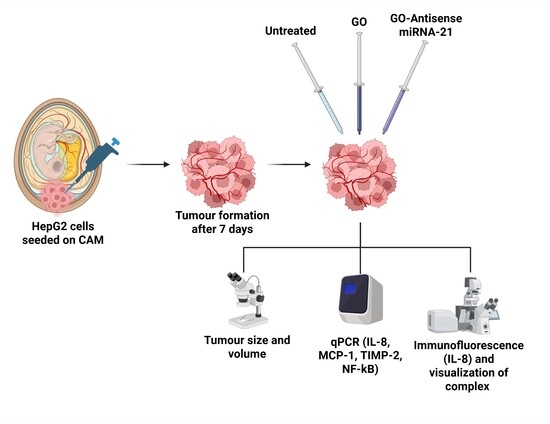
1. Introduction
2. Materials and Methods
2.1. Synthesis, Characterization, and FITC Labeling of the GO–Antisense miR-21 Complex
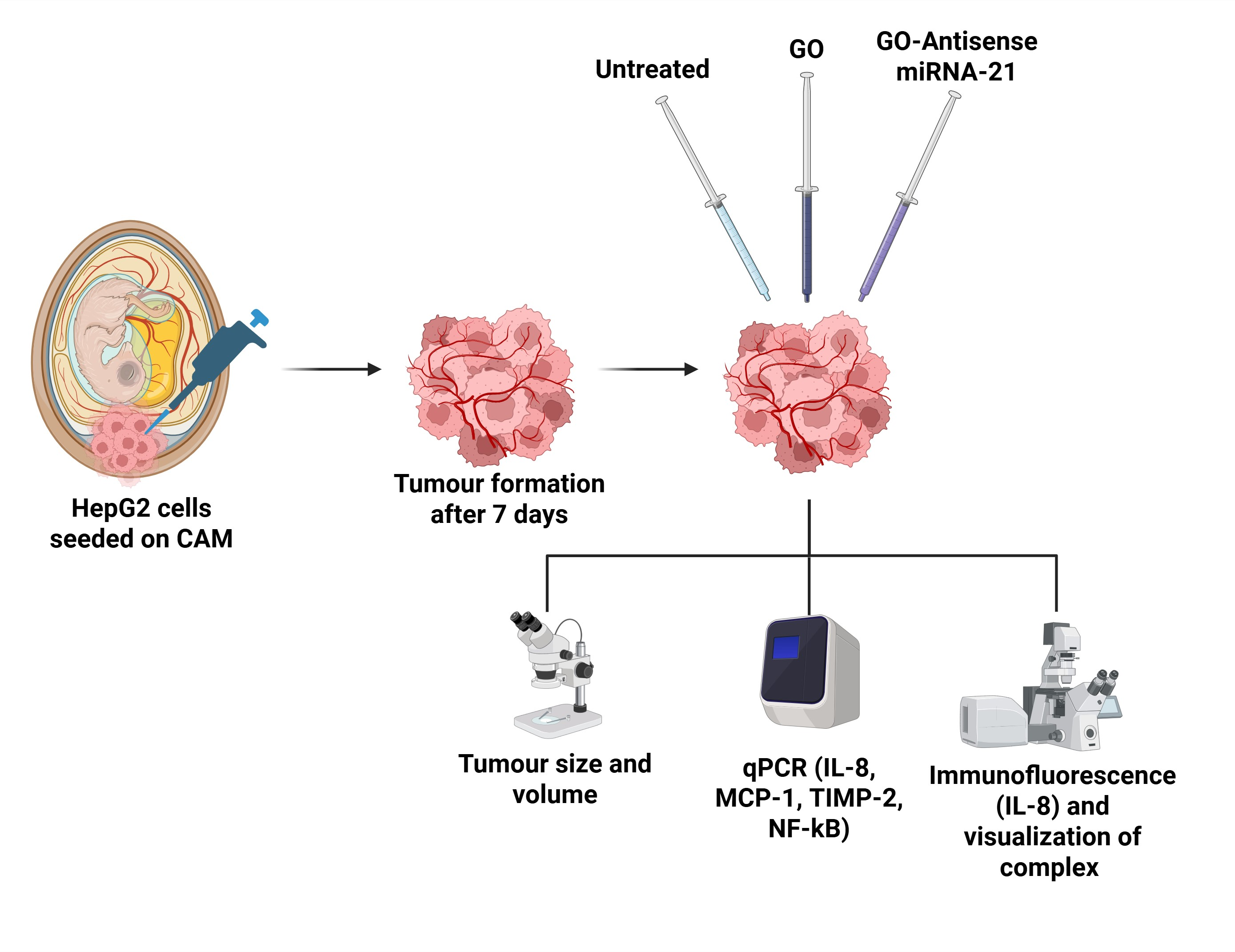
2.2. Culture of HepG2 on Chorioallantoic Membrane
2.3. Tumor Monitoring and Volume Measurement
2.4. Total RNA Extraction and Real-Time PCR
2.5. Confocal Microscopy
2.6. Image Analysis
2.7. Statistical Analysis
2.8. Use of Generative AI Tools
3. Results
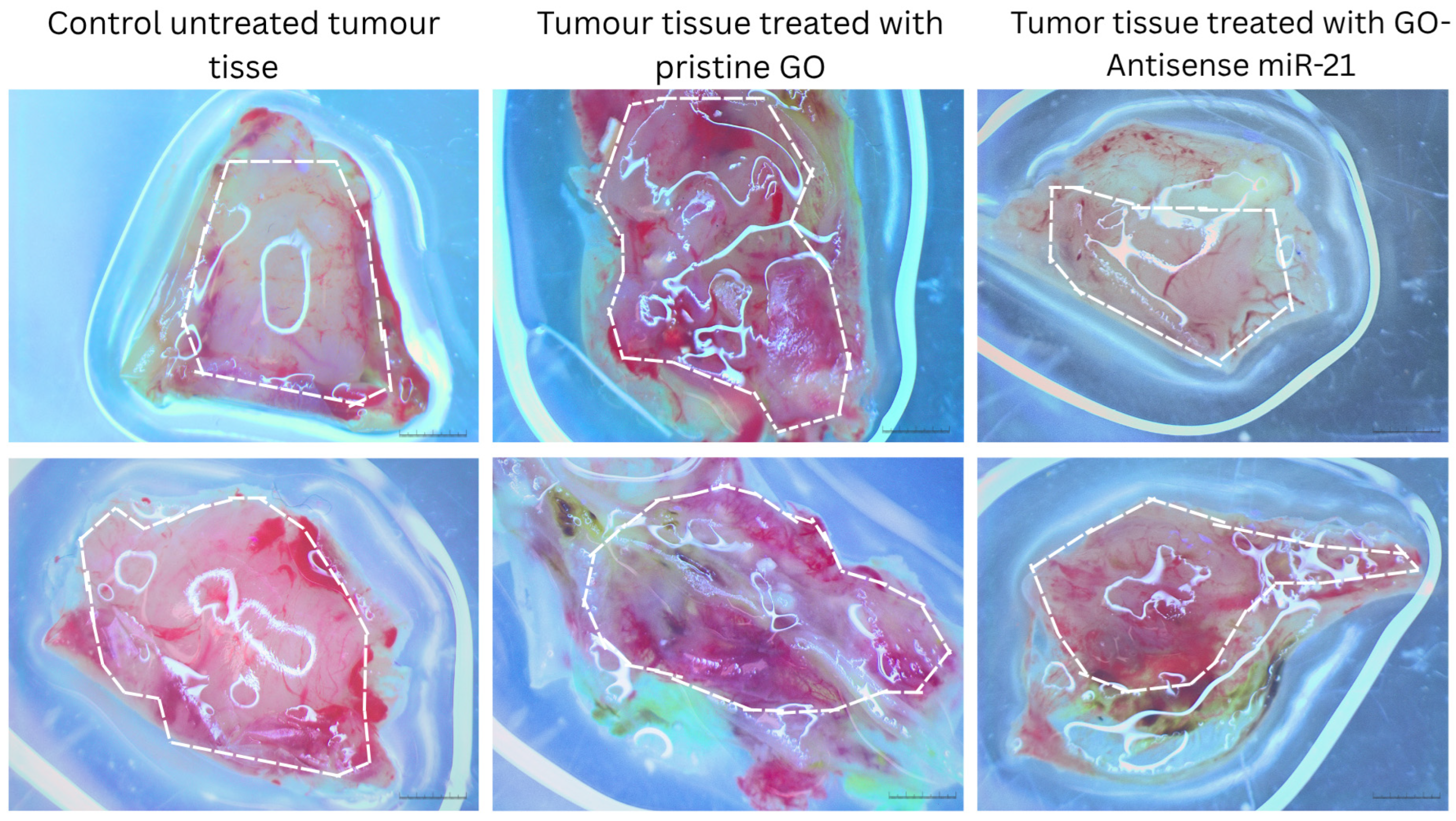
3.1. GO-Mediated Delivery of Antisense miR-21 Suppresses Tumor Growth and Angiogenesis
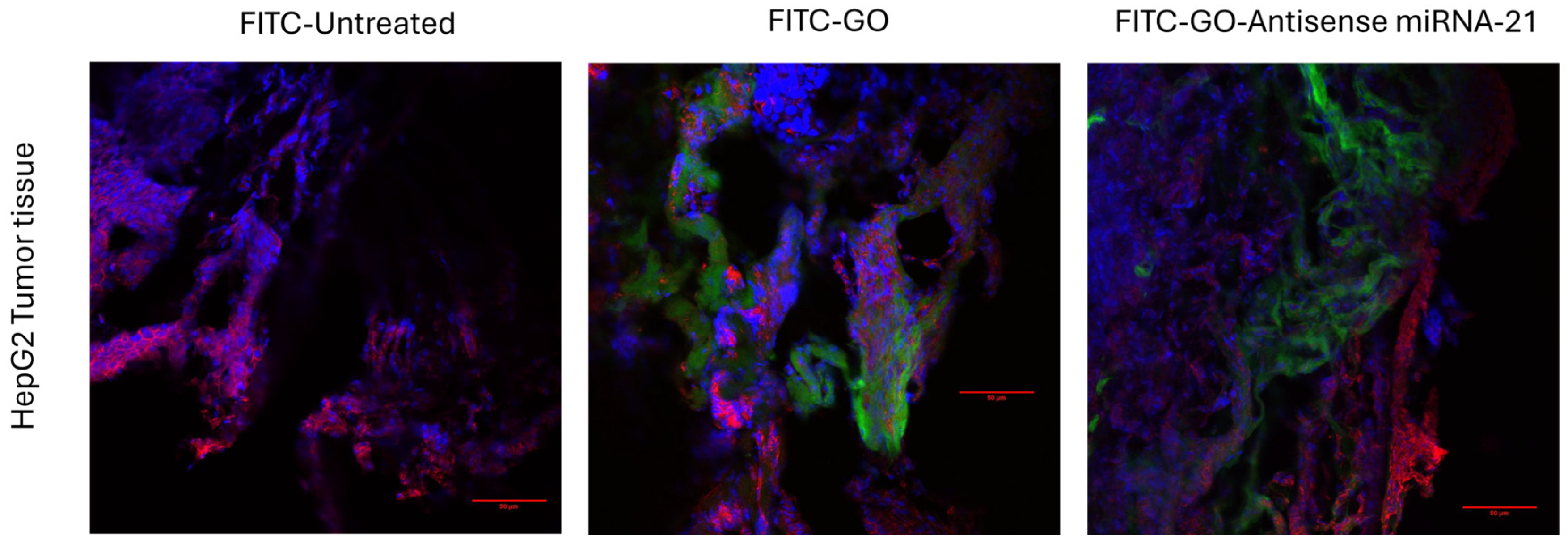
3.2. Visualization of GO and GO–miR-21 Localization in Tumor Tissue
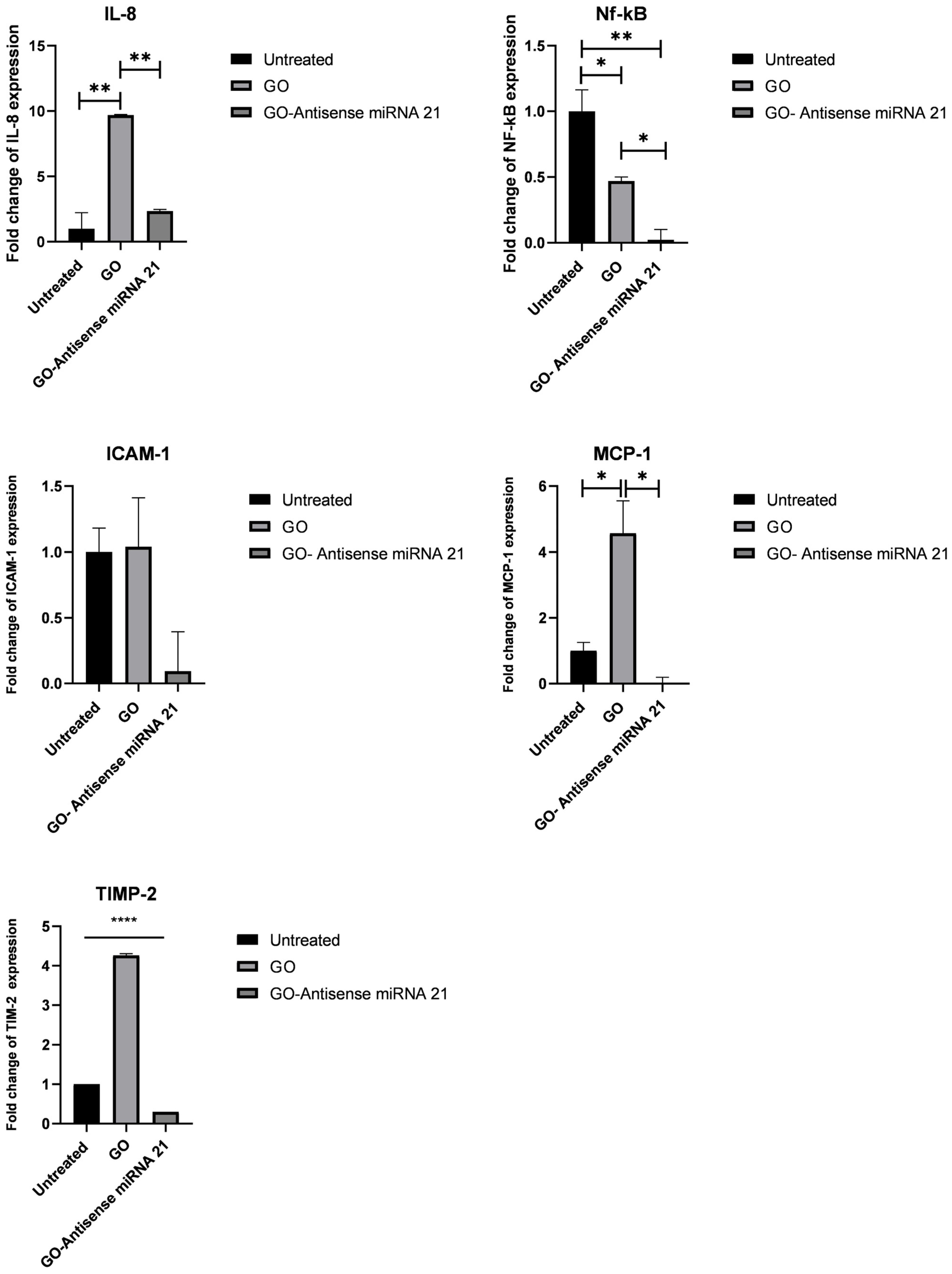
3.3. Gene Expression Modulation by GO and GO–Antisense miR-21 Nanosystem in HepG2 Tumor Tissue
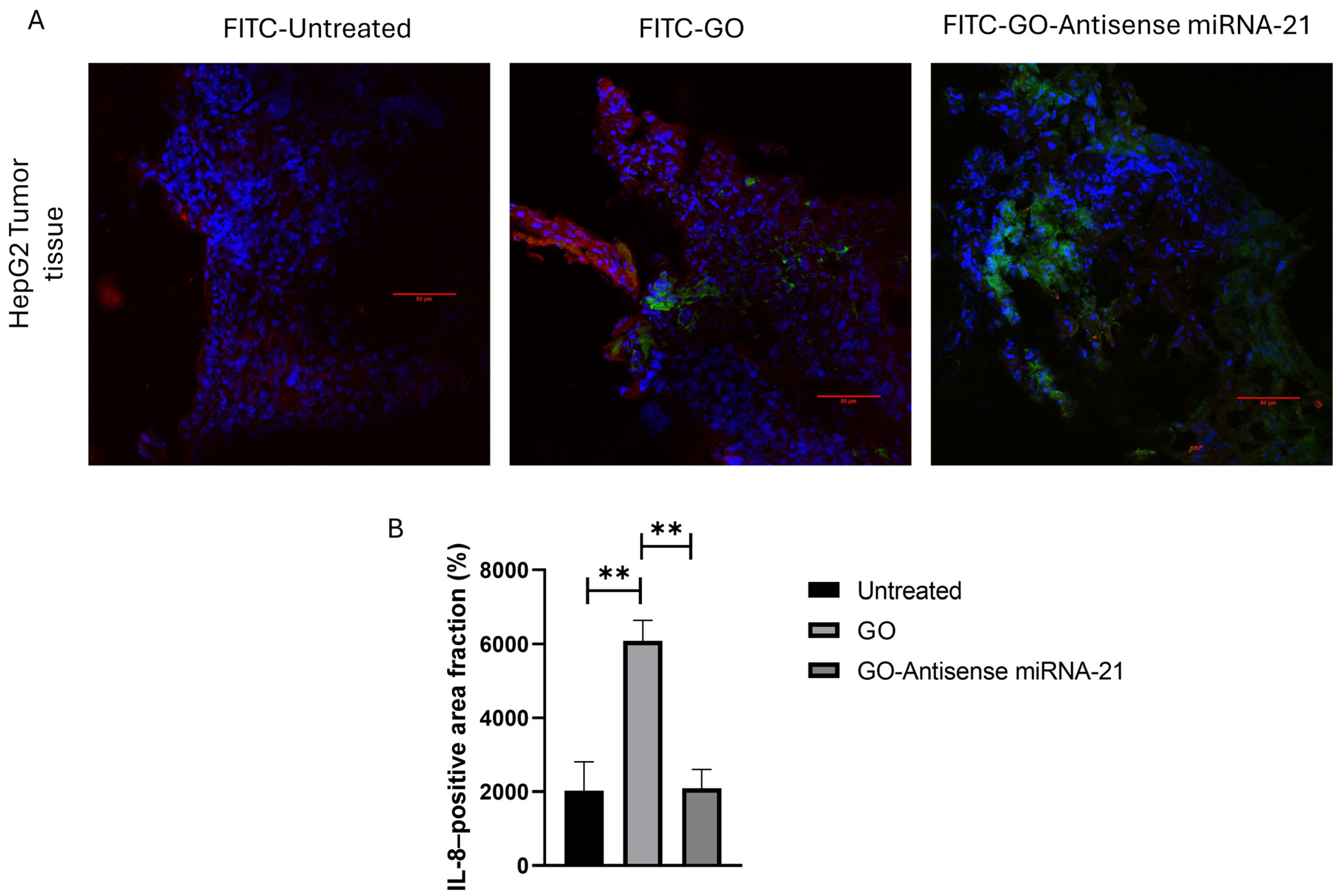
3.4. Immunofluorescence Analysis of IL-8 Expression in HepG2-Derived Tumor Tissues
4. Discussion
5. Conclusions
Supplementary Materials
Author Contributions
Funding
Institutional Review Board Statement
Informed Consent Statement
Data Availability Statement
Acknowledgments
Conflicts of Interest
Abbreviations
| AP-1 | Activator protein-1 |
| CAM | Chick embryo chorioallantoic membrane |
| cDNA | Complementary DNA |
| DAPI | 4′,6-diamidino-2-phenylindole |
| FITC | Fluorescein isothiocyanate |
| GAPDH | Glyceraldehyde 3-phosphate dehydrogenase |
| GO | Graphene oxide |
| HCC | Hepatocellular carcinoma |
| HIF-1 α | Hypoxia-inducible factor-1 alpha |
| ICAM-1 | Intercellular adhesion molecule 1 |
| IL-8 | Interleukin 8 |
| MAPK | Mitogen-activated protein kinase |
| MCP-1 | Monocyte chemoattractant protein-1 |
| miR-21 | MicroRNA-21 |
| NF-kB | Nuclear factor kappa-B |
| PBS | Phosphate-buffered saline |
| PFA | Paraformaldehyde |
| STAT3 | Signal transducer and activator of transcription 3 |
| TIMP-2 | Tissue inhibitor of metalloproteinases 2 |
References
- You, P.; Yang, Y.; Wang, M.; Huang, X.; Huang, X. Graphene Oxide-Based Nanocarriers for Cancer Imaging and Drug Delivery. Curr. Pharm. Des. 2015, 21, 3215–3222. [Google Scholar] [CrossRef]
- Sahu, T.; Ratre, Y.K.; Chauhan, S.; Bhaskar, L.V.K.S.; Nair, M.P.; Verma, H.K. Nanotechnology Based Drug Delivery System: Current Strategies and Emerging Therapeutic Potential for Medical Science. J. Drug Deliv. Sci. Technol. 2021, 63, 102487. [Google Scholar] [CrossRef]
- Mura, S.; Nicolas, J.; Couvreur, P. Stimuli-Responsive Nanocarriers for Drug Delivery. Nat. Mater. 2013, 12, 991–1003. [Google Scholar] [CrossRef] [PubMed]
- Dreyer, D.R.; Park, S.; Bielawski, C.W.; Ruoff, R.S. The Chemistry of Graphene Oxide. Chem. Soc. Rev. 2010, 39, 228–240. [Google Scholar] [CrossRef] [PubMed]
- Xu, Z.; Lei, X.; Tu, Y.; Tan, Z.; Song, B.; Fang, H. Dynamic Cooperation of Hydrogen Binding and π Stacking in SsDNA Adsorption on Graphene Oxide. Chem. A Eur. J. 2017, 23, 13100–13104. [Google Scholar] [CrossRef]
- Orecchioni, M.; Fusco, L.; Mall, R.; Bordoni, V.; Fuoco, C.; Rinchai, D.; Guo, S.; Sainz, R.; Zoccheddu, M.; Gurcan, C.; et al. Graphene Oxide Activates B Cells with Upregulation of Granzyme B Expression: Evidence at the Single-Cell Level for Its Immune-Modulatory Properties and Anticancer Activity. Nanoscale 2022, 14, 333–349. [Google Scholar] [CrossRef] [PubMed]
- Parker, H.; Gravagnuolo, A.M.; Vranic, S.; Crica, L.E.; Newman, L.; Carnell, O.; Bussy, C.; Dookie, R.S.; Prestat, E.; Haigh, S.J.; et al. Graphene Oxide Modulates Dendritic Cell Ability to Promote T Cell Activation and Cytokine Production. Nanoscale 2022, 14, 17297–17314. [Google Scholar] [CrossRef]
- Korejwo, D.; Chortarea, S.; Louka, C.; Buljan, M.; Rothen-Rutishauser, B.; Wick, P.; Buerki-Thurnherr, T. Gene Expression Profiling of Human Macrophages after Graphene Oxide and Graphene Nanoplatelets Treatment Reveals Particle-Specific Regulation of Pathways. NanoImpact 2023, 29, 100452. [Google Scholar] [CrossRef]
- Ogene, L.; Woods, S.; Hetmanski, J.; Lozano, N.; Karakasidi, A.; Caswell, P.T.; Kostarelos, K.; Domingos, M.A.N.; Vranic, S.; Kimber, S.J. Graphene Oxide Activates Canonical TGFβ Signalling in a Human Chondrocyte Cell Line via Increased Plasma Membrane Tension. Nanoscale 2024, 16, 5653–5664. [Google Scholar] [CrossRef]
- Sasidharan, A.; Panchakarla, L.S.; Sadanandan, A.R.; Ashokan, A.; Chandran, P.; Girish, C.M.; Menon, D.; Nair, S.V.; Rao, C.N.R.; Koyakutty, M. Hemocompatibility and Macrophage Response of Pristine and Functionalized Graphene. Small 2012, 8, 1251–1263. [Google Scholar] [CrossRef]
- Li, Y.; Liu, Y.; Fu, Y.; Wei, T.; Le Guyader, L.; Gao, G.; Liu, R.-S.; Chang, Y.-Z.; Chen, C. The Triggering of Apoptosis in Macrophages by Pristine Graphene through the MAPK and TGF-Beta Signaling Pathways. Biomaterials 2012, 33, 402–411. [Google Scholar] [CrossRef]
- Pan, X.; Wang, Z.-X.; Wang, R. MicroRNA-21: A Novel Therapeutic Target in Human Cancer. Cancer Biol. Ther. 2010, 10, 1224–1232. [Google Scholar] [CrossRef] [PubMed]
- Huang, X.; Xiong, Y.; Yang, J.; Yang, G.; Li, J. The Prognostic Significance of MiR-21 Expression among Surgically Resected Hepatocellular Carcinoma Patients: Evidence from a Meta-Analysis and Retrospective Cohort Study. BioMed Res. Int. 2020, 2020, 8848158. [Google Scholar] [CrossRef] [PubMed]
- da Silva Freire, A.K.; Furtado de Mendonça Belmont, T.; Pinto Santiago, E.J.; Cristina Cordeiro Farias, I.; Palmeira do Ó, K.; Soares da Silva, A.; Richardson Silva Vasconcelos, L. Potential Role of Circulating MiR-21 in the Diagnosis of Hepatocellular Carcinoma: A Systematic Review and Meta-Analysis. Expert Rev. Mol. Diagn. 2022, 22, 1037–1052. [Google Scholar] [CrossRef] [PubMed]
- Kumarswamy, R.; Volkmann, I.; Thum, T. Regulation and Function of MiRNA-21 in Health and Disease. RNA Biol. 2011, 8, 706–713. [Google Scholar] [CrossRef]
- Gramantieri, L.; Fornari, F.; Callegari, E.; Sabbioni, S.; Lanza, G.; Croce, C.M.; Bolondi, L.; Negrini, M. MicroRNA Involvement in Hepatocellular Carcinoma. J. Cell. Mol. Med. 2008, 12, 2189–2204. [Google Scholar] [CrossRef]
- Park, J.-K.; Lee, E.J.; Esau, C.; Schmittgen, T.D. Antisense Inhibition of MicroRNA-21 or -221 Arrests Cell Cycle, Induces Apoptosis, and Sensitizes the Effects of Gemcitabine in Pancreatic Adenocarcinoma. Pancreas 2009, 38, e190–e199. [Google Scholar] [CrossRef]
- Ge, J.-H.; Zhu, J.-W.; Fu, H.-Y.; Shi, W.-B.; Zhang, C.-L. An Antisense Oligonucleotide Drug Targeting MiR-21 Induces H1650 Apoptosis and Caspase Activation. Technol. Cancer Res. Treat. 2019, 18, 1533033819892263. [Google Scholar] [CrossRef]
- Hu, H.; Li, Y.; Gu, J.; Zhu, X.; Dong, D.; Yao, J.; Lin, C.; Fei, J. Antisense oligonucleotide against miR-21 inhibits migration and induces apoptosis in leukemic K562 cells. Leuk Lymphoma 2010, 51, 694–701. [Google Scholar] [CrossRef]
- Trischitta, P.; Kucharzewska, P.; Nasiłowska, B.; Skrzeczanowski, W.; Pennisi, R.; Sciortino, M.T.; Kutwin, M. Graphene-Based Nanosystem for Targeted Delivery of Anti-Sense MiRNA-21 on Hepatocellular Carcinoma Cells. Int. J. Mol. Sci. 2026, 27, 975. [Google Scholar] [CrossRef]
- Liu, L.-Z.; Li, C.; Chen, Q.; Jing, Y.; Carpenter, R.; Jiang, Y.; Kung, H.-F.; Lai, L.; Jiang, B.-H. MiR-21 Induced Angiogenesis through AKT and ERK Activation and HIF-1α Expression. PLoS ONE 2011, 6, e19139. [Google Scholar] [CrossRef] [PubMed]
- Javanmardi, S.; Abolmaali, S.S.; Mehrabanpour, M.J.; Aghamaali, M.R.; Tamaddon, A.M. PEGylated Nanohydrogels Delivering Anti-MicroRNA-21 Suppress Ovarian Tumor-Associated Angiogenesis in Matrigel and Chicken Chorioallantoic Membrane Models. BioImpacts 2022, 12, 449–461. [Google Scholar] [CrossRef]
- Ribatti, D. The Chick Embryo Chorioallantoic Membrane (CAM). A Multifaceted Experimental Model. Mech. Dev. 2016, 141, 70–77. [Google Scholar] [CrossRef]
- Wang, Y.; Xue, W.; Pustovalova, M.; Kuzmin, D.V.; Leonov, S. Chick Embryo Chorioallantoic Membrane (CAM) Model for Cancer Studies and Drug Evaluation. Front. Biosci.-Landmark 2025, 30, 37456. [Google Scholar] [CrossRef]
- Chwalibog, A.; Hotowy, A.; Grodzik, M.; Wierzbicki, M.; Mitura, K.; Orlowski, P.; Sawosz, E.; Szmidt, M.; Niemiec, T. Nanoparticles of Carbon Allotropes Inhibit Glioblastoma Multiforme Angiogenesis in Ovo. Int. J. Nanomed. 2011, 6, 3041–3048. [Google Scholar] [CrossRef] [PubMed][Green Version]
- Naldini, L. Gene Therapy Returns to Centre Stage. Nature 2015, 526, 351–360. [Google Scholar] [CrossRef] [PubMed]
- Sontakke, A.D.; Tiwari, S.; Purkait, M.K. A Comprehensive Review on Graphene Oxide-Based Nanocarriers: Synthesis, Functionalization and Biomedical Applications. FlatChem 2023, 38, 100484. [Google Scholar] [CrossRef]
- Xie, J.; Wu, W.; Zheng, L.; Lin, X.; Tai, Y.; Wang, Y.; Wang, L. Roles of MicroRNA-21 in Skin Wound Healing: A Comprehensive Review. Front. Pharmacol. 2022, 13, 828627. [Google Scholar] [CrossRef]
- Javanmard, S.H.; Vaseghi, G.; Ghasemi, A.; Rafiee, L.; Ferns, G.A.; Esfahani, H.N.; Nedaeinia, R. Therapeutic Inhibition of MicroRNA-21 (MiR-21) Using Locked-Nucleic Acid (LNA)-Anti-MiR and Its Effects on the Biological Behaviors of Melanoma Cancer Cells in Preclinical Studies. Cancer Cell Int. 2020, 20, 384. [Google Scholar] [CrossRef]
- Li, Y.; Chen, Y.; Li, J.; Zhang, Z.; Huang, C.; Lian, G.; Yang, K.; Chen, S.; Lin, Y.; Wang, L.; et al. Co-delivery of Micro RNA-21 Antisense Oligonucleotides and Gemcitabine Using Nanomedicine for Pancreatic Cancer Therapy. Cancer Sci. 2017, 108, 1493–1503. [Google Scholar] [CrossRef]
- Kutwin, M.; Sosnowska-Ławnicka, M.; Nasiłowska, B.; Lange, A.; Wierzbicki, M.; Jaworski, S. The Delivery of Mimic MiRNA-7 into Glioblastoma Cells and Tumour Tissue by Graphene Oxide Nanosystems. Nanotechnol. Sci. Appl. 2024, 17, 167–188. [Google Scholar] [CrossRef]
- Kutwin, M.; Sosnowska, M.E.; Strojny-Cieślak, B.; Jaworski, S.; Trzaskowski, M.; Wierzbicki, M.; Chwalibog, A.; Sawosz, E. MicroRNA Delivery by Graphene-Based Complexes into Glioblastoma Cells. Molecules 2021, 26, 5804. [Google Scholar] [CrossRef]
- Yang, D.; Li, S.; Cai, Y.; Jin, J.; Yang, Z. Bifunctional Graphene Oxide Drug Delivery System Based on MiR-21 Response for Tumor Imaging and Therapy. Langmuir 2025, 41, 19400–19408. [Google Scholar] [CrossRef]
- Hwang, D.W.; Kim, H.Y.; Li, F.; Park, J.Y.; Kim, D.; Park, J.H.; Han, H.S.; Byun, J.W.; Lee, Y.-S.; Jeong, J.M.; et al. In Vivo Visualization of Endogenous MiR-21 Using Hyaluronic Acid-Coated Graphene Oxide for Targeted Cancer Therapy. Biomaterials 2017, 121, 144–154. [Google Scholar] [CrossRef]
- Donato, K.Z.; Tan, H.L.; Marangoni, V.S.; Martins, M.V.S.; Ng, P.R.; Costa, M.C.F.; Jain, P.; Lee, S.J.; Koon, G.K.W.; Donato, R.K.; et al. Graphene Oxide Classification and Standardization. Sci. Rep. 2023, 13, 6064. [Google Scholar] [CrossRef] [PubMed]
- Chauhan, K.; Woo, J.; Jung, W.; Kim, D.-E. Poly(Ethylene Glycol)-Engrafted Graphene Oxide for Gene Delivery and Nucleic Acid Amplification. Materials 2023, 16, 7434. [Google Scholar] [CrossRef]
- Mukherjee, S.; Sriram, P.; Barui, A.K.; Nethi, S.K.; Veeriah, V.; Chatterjee, S.; Suresh, K.I.; Patra, C.R. Graphene Oxides Show Angiogenic Properties. Adv. Healthc. Mater. 2015, 4, 1722–1732. [Google Scholar] [CrossRef] [PubMed]
- Liu, W.; Wang, Q.; Luo, H.; Luo, B.; Zhao, F.; Kang, Y.; Zhang, Y.; Shao, L. Nanographene Oxide Promotes Angiogenesis by Regulating Osteoclast Differentiation and Platelet-Derived Growth Factor Secretion. ACS Nano 2024, 18, 22390–22403. [Google Scholar] [CrossRef]
- Zhu, J.; Li, B.; Xu, M.; Liu, R.; Xia, T.; Zhang, Z.; Xu, Y.; Liu, S. Graphene Oxide Promotes Cancer Metastasis through Associating with Plasma Membrane To Promote TGF-β Signaling-Dependent Epithelial–Mesenchymal Transition. ACS Nano 2020, 14, 818–827. [Google Scholar] [CrossRef] [PubMed]
- Ji, Z.; He, L.; Regev, A.; Struhl, K. Inflammatory Regulatory Network Mediated by the Joint Action of NF-KB, STAT3, and AP-1 Factors Is Involved in Many Human Cancers. Proc. Natl. Acad. Sci. USA 2019, 116, 9453–9462. [Google Scholar] [CrossRef]
- Trevino, J.G.; Gray, M.J.; Nawrocki, S.T.; Summy, J.M.; Lesslie, D.P.; Evans, D.B.; Sawyer, T.K.; Shakespeare, W.C.; Watowich, S.S.; Chiao, P.J.; et al. Src Activation of Stat3 Is an Independent Requirement from NF-ΚB Activation for Constitutive IL-8 Expression in Human Pancreatic Adenocarcinoma Cells. Angiogenesis 2006, 9, 101–110. [Google Scholar] [CrossRef]
- Imtiyaz, H.Z.; Simon, M.C. Hypoxia-Inducible Factors as Essential Regulators of Inflammation. In Diverse Effects of Hypoxia on Tumor Progression; Springer: Berlin/Heidelberg, Germany, 2010; pp. 105–120. [Google Scholar]
- Burysek, L.; Syrovets, T.; Simmet, T. The Serine Protease Plasmin Triggers Expression of MCP-1 and CD40 in Human Primary Monocytes via Activation of P38 MAPK and Janus Kinase (JAK)/STAT Signaling Pathways. J. Biol. Chem. 2002, 277, 33509–33517. [Google Scholar] [CrossRef]
- Nowak-Sliwinska, P.; Segura, T.; Iruela-Arispe, M.L. The Chicken Chorioallantoic Membrane Model in Biology, Medicine and Bioengineering. Angiogenesis 2014, 17, 779–804. [Google Scholar] [CrossRef]
- Quail, D.F.; Joyce, J.A. Microenvironmental Regulation of Tumor Progression and Metastasis. Nat. Med. 2013, 19, 1423–1437. [Google Scholar] [CrossRef] [PubMed]
- Ou, L.; Lin, S.; Song, B.; Liu, J.; Lai, R.; Shao, L. The Mechanisms of Graphene-Based Materials-Induced Programmed Cell Death: A Review of Apoptosis, Autophagy, and Programmed Necrosis. Int. J. Nanomed. 2017, 12, 6633–6646. [Google Scholar] [CrossRef] [PubMed]
- Zhao, Y.; Zhi, L.; Wu, Q.; Yu, Y.; Sun, Q.; Wang, D. P38 MAPK-SKN-1/Nrf Signaling Cascade Is Required for Intestinal Barrier against Graphene Oxide Toxicity in Caenorhabditis elegans. Nanotoxicology 2016, 10, 1469–1479. [Google Scholar] [CrossRef]
- Fischer, D.; Fluegen, G.; Garcia, P.; Ghaffari-Tabrizi-Wizsy, N.; Gribaldo, L.; Huang, R.Y.-J.; Rasche, V.; Ribatti, D.; Rousset, X.; Pinto, M.T.; et al. The CAM Model—Q&A with Experts. Cancers 2022, 15, 191. [Google Scholar] [CrossRef]
- Waugh, D.J.J.; Wilson, C. The Interleukin-8 Pathway in Cancer. Clin. Cancer Res. 2008, 14, 6735–6741. [Google Scholar] [CrossRef] [PubMed]
- Fousek, K.; Horn, L.A.; Palena, C. Interleukin-8: A Chemokine at the Intersection of Cancer Plasticity, Angiogenesis, and Immune Suppression. Pharmacol. Ther. 2021, 219, 107692. [Google Scholar] [CrossRef]
- Yuan, A. The Role of Interleukin-8 in Cancer Cells and Microenvironment Interaction. Front. Biosci. 2005, 10, 853–865. [Google Scholar] [CrossRef]




| Target Gene | Forward Primer | Reverse Primer |
|---|---|---|
| ICAM-1 | AGCGGCTGACGTGTGCAGTAAT | TCTGAGACCTCTGGCTTCGTCA |
| MCP-1 | CCACGCAACAAATGAAGTAGCCC | CTGGAATGCTGTTCCCTTCAAG |
| TIMP-2 | ACCCTCTGTGACTTCATCGTGC | GGAGATGTAGCACGGGATCATG |
| IL-8 | GAGAGTGATTGAGAGTGGACCAC | CACAACCCTCTGCACCCAGTTT |
| NF-kB | GGCAGACCAGTGTCATTGAGCA | CAGCAGAAAGCTCACCACACTC |
| GAPDH | TGCACCACCAACTGCTTAGC | GGCATGGACTGTGGTCATGAG |
| Condition | Tumor Weight (mg) | Tumor Volume (cm3) |
|---|---|---|
| Untreated tumor | 97.88 ± 14.9 | 158.16 ± 12.66 |
| Tumor treated with GO | 186.7 ± 16.67 *** | 90.68 ± 24.2 ** |
| Tumor treated with GO-antisense miR-21 | 45.5 ± 13.22 **** | 20.72 ± 12.32 ** |
Disclaimer/Publisher’s Note: The statements, opinions and data contained in all publications are solely those of the individual author(s) and contributor(s) and not of MDPI and/or the editor(s). MDPI and/or the editor(s) disclaim responsibility for any injury to people or property resulting from any ideas, methods, instructions or products referred to in the content. |
© 2026 by the authors. Licensee MDPI, Basel, Switzerland. This article is an open access article distributed under the terms and conditions of the Creative Commons Attribution (CC BY) license.
Share and Cite
Trischitta, P.; Nasiłowska, B.; Pennisi, R.; Costa, M.; Sciortino, M.T.; Kutwin, M. Graphene Oxide–Antisense miR-21 Nanosystem Modulates Gene Expression and Suppresses Tumorigenesis in HepG2-Derived CAM Xenografts. Biomolecules 2026, 16, 523. https://doi.org/10.3390/biom16040523
Trischitta P, Nasiłowska B, Pennisi R, Costa M, Sciortino MT, Kutwin M. Graphene Oxide–Antisense miR-21 Nanosystem Modulates Gene Expression and Suppresses Tumorigenesis in HepG2-Derived CAM Xenografts. Biomolecules. 2026; 16(4):523. https://doi.org/10.3390/biom16040523
Chicago/Turabian StyleTrischitta, Paola, Barbara Nasiłowska, Rosamaria Pennisi, Marianna Costa, Maria Teresa Sciortino, and Marta Kutwin. 2026. "Graphene Oxide–Antisense miR-21 Nanosystem Modulates Gene Expression and Suppresses Tumorigenesis in HepG2-Derived CAM Xenografts" Biomolecules 16, no. 4: 523. https://doi.org/10.3390/biom16040523
APA StyleTrischitta, P., Nasiłowska, B., Pennisi, R., Costa, M., Sciortino, M. T., & Kutwin, M. (2026). Graphene Oxide–Antisense miR-21 Nanosystem Modulates Gene Expression and Suppresses Tumorigenesis in HepG2-Derived CAM Xenografts. Biomolecules, 16(4), 523. https://doi.org/10.3390/biom16040523