MG53, a Regenerative Myokine Linking Skeletal Muscle to Cardiac Repair


Abstract
1. Introduction
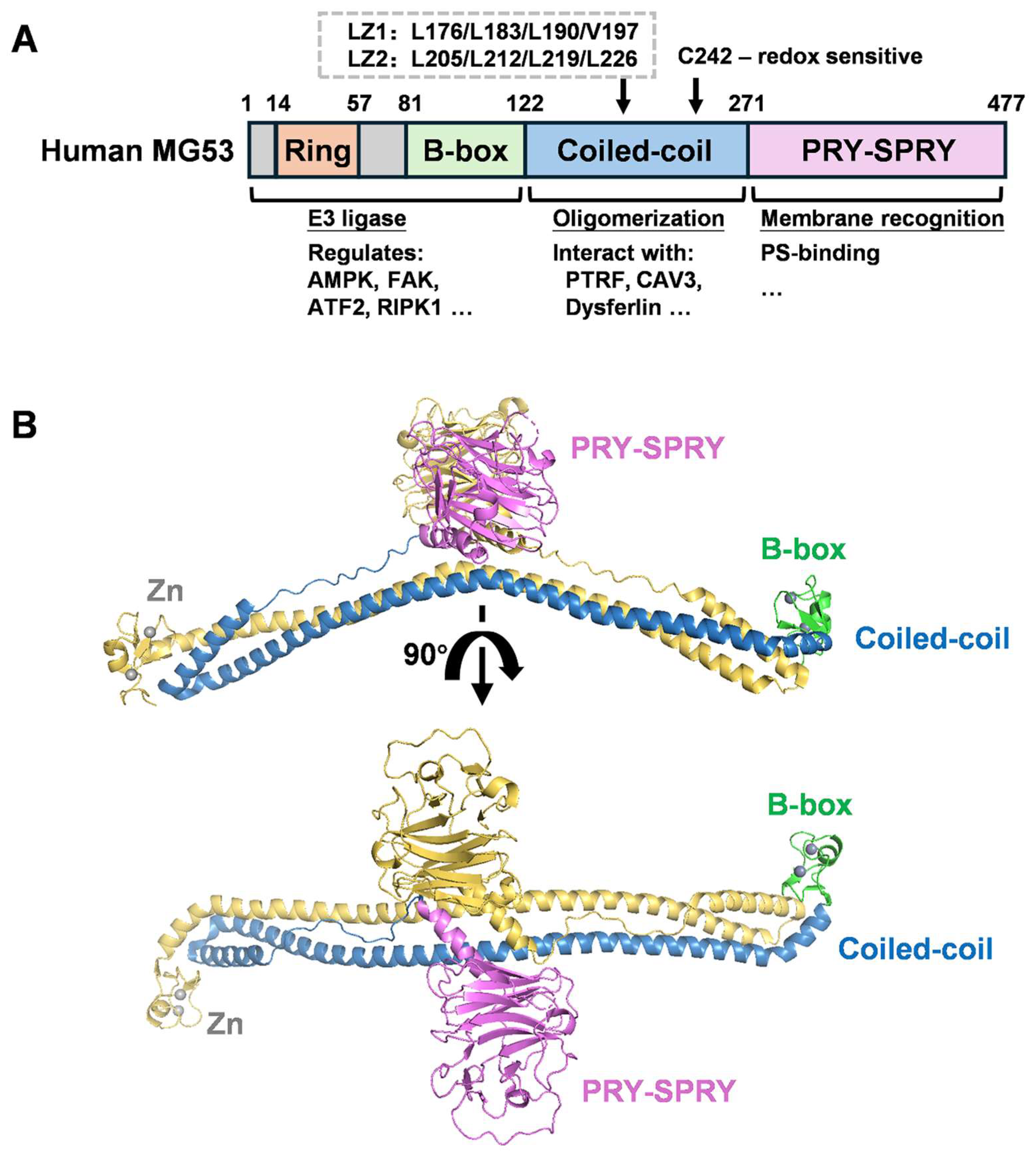
2. Structural and Molecular Biology of MG53
2.1. RING Domain: Ubiquitin E3 Ligase Activity
2.2. Coiled-Coil and B-Box Domains: Oligomerization and Repair Complex Formation
2.3. PRY-SPRY Domain: Target Recognition and Membrane Localization
3. Cryo-EM/ET Insights into MG53 Assembly and Membrane Targeting
4. Regulation of MG53 Expression and Secretion
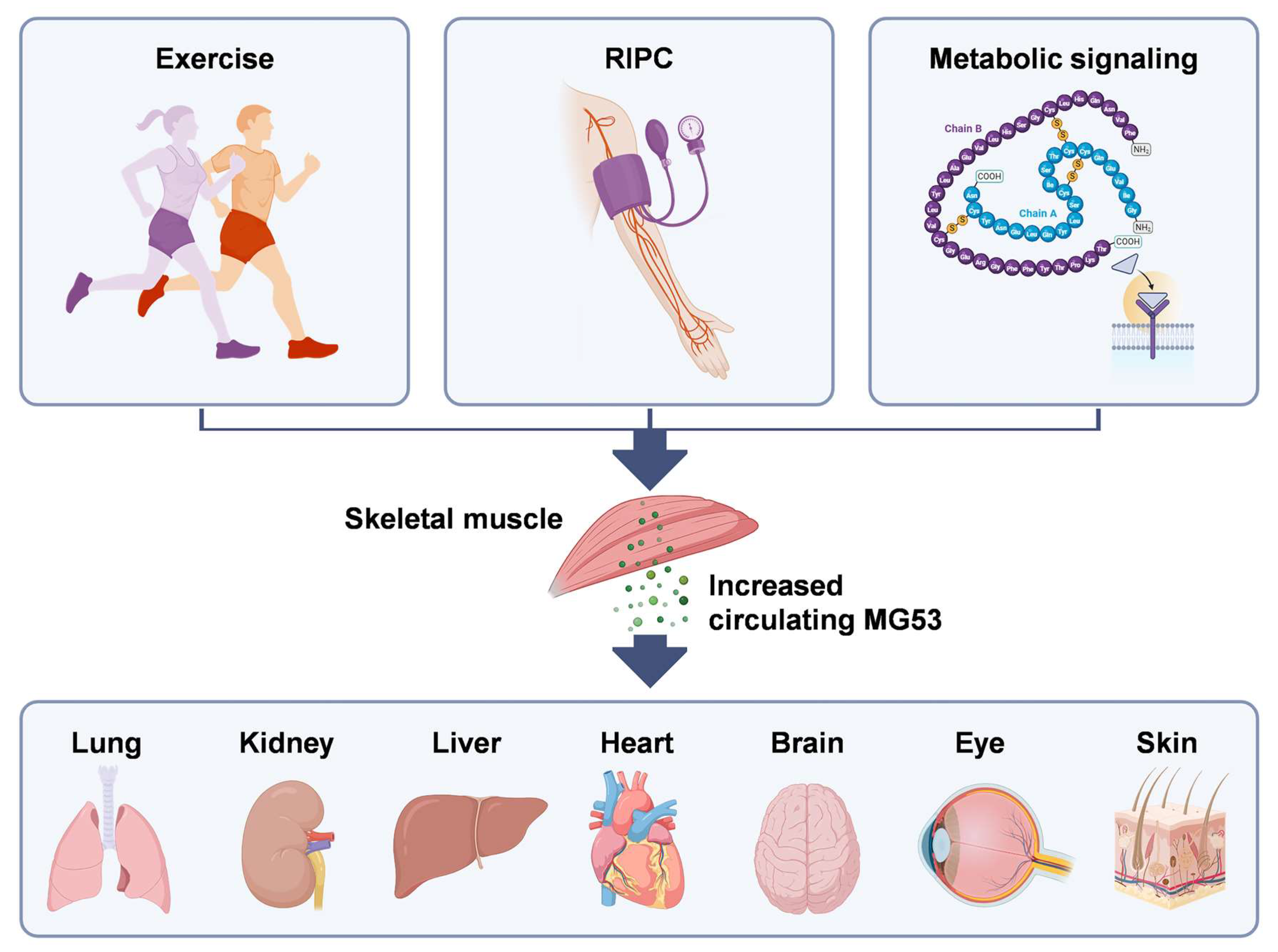
4.1. Regulation by Exercise and Physiologic Activity
4.2. Remote Ischemic Preconditioning (RIPC)
4.3. Influence of Metabolic State and Aging
4.4. Mechanisms of MG53 Secretion
5. The Unique Role of MG53 as a Myokine for Human Cardioprotection
5.1. Human Vulnerability and the Importance of Circulating MG53
5.2. Circulating MG53 as an Endocrine Repair System for the Heart
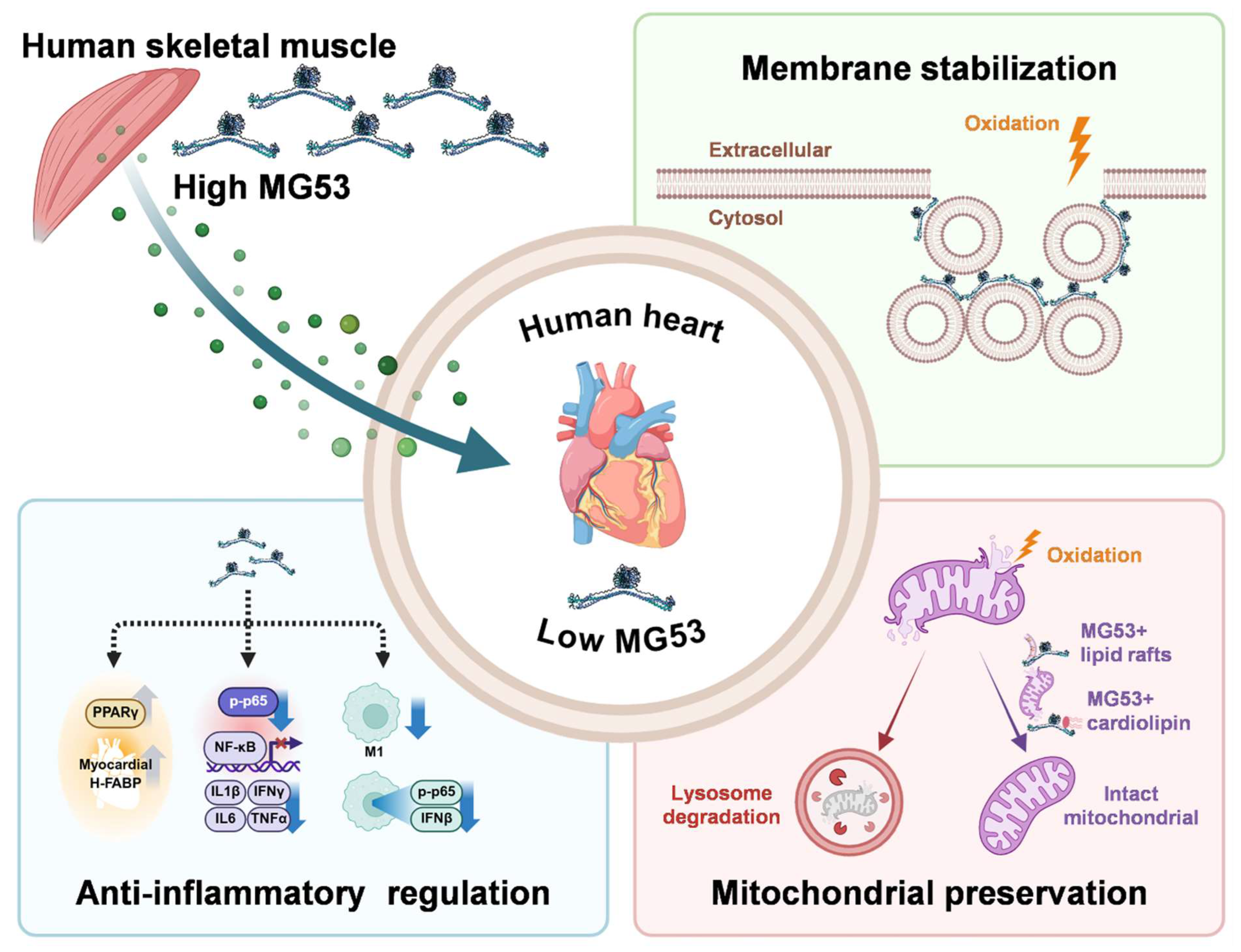
5.3. Mechanisms of MG53-Mediated Cardioprotection
5.3.1. Membrane Repair
5.3.2. Mitochondrial Stabilization
5.3.3. Modulation of Inflammatory and Immune Responses
6. Therapeutic Development and Clinical Translation
6.1. Recombinant Human MG53
6.2. Gene Therapy
6.3. Biomaterial and Hydrogel Delivery Systems
6.4. Safety Considerations and Key Translational Bottlenecks
7. Conclusions and Future Directions
Author Contributions
Funding
Institutional Review Board Statement
Informed Consent Statement
Data Availability Statement
Conflicts of Interest
References
- Pedersen, B.K.; Akerström, T.C.; Nielsen, A.R.; Fischer, C.P. Role of myokines in exercise and metabolism. J. Appl. Physiol. 2007, 103, 1093–1098. [Google Scholar] [CrossRef] [PubMed]
- Iglesias, P. Muscle in Endocrinology: From Skeletal Muscle Hormone Regulation to Myokine Secretion and Its Implications in Endocrine-Metabolic Diseases. J. Clin. Med. 2025, 14, 4490. [Google Scholar] [CrossRef]
- Pedersen, B.K.; Febbraio, M.A. Muscles, exercise and obesity: Skeletal muscle as a secretory organ. Nat. Rev. Endocrinol. 2012, 8, 457–465. [Google Scholar] [CrossRef]
- Hoffmann, C.; Weigert, C. Skeletal Muscle as an Endocrine Organ: The Role of Myokines in Exercise Adaptations. Cold Spring Harb. Perspect. Med. 2017, 7, a029793. [Google Scholar] [CrossRef]
- Saleem, A.; Ghafoor, S. Irisin: A Myokine with Therapeutic and Diagnostic Potential in Clinical Dentistry. JPMA J. Pak. Med. Assoc. 2023, 73, 2214–2218. [Google Scholar] [CrossRef] [PubMed]
- Lan, T.; Yan, X.; Li, J.; Gu, H.; Hou, Q.; He, E.; Yang, Q. Irisin, the Myokine: Guardian and Mediator in Cardiovascular System. Endocrinol. Diabetes Metab. 2025, 8, e70097. [Google Scholar] [CrossRef] [PubMed]
- Guo, M.; Yao, J.; Li, J.; Zhang, J.; Wang, D.; Zuo, H.; Zhang, Y.; Xu, B.; Zhong, Y.; Shen, F.; et al. Irisin ameliorates age-associated sarcopenia and metabolic dysfunction. J. Cachexia Sarcopenia Muscle 2023, 14, 391–405. [Google Scholar] [CrossRef]
- Chen, N.; Li, Q.; Liu, J.; Jia, S. Irisin, an exercise-induced myokine as a metabolic regulator: An updated narrative review. Diabetes/Metab. Res. Rev. 2016, 32, 51–59. [Google Scholar] [CrossRef]
- Ongaro, L.; Zhou, X.; Wang, Y.; Schultz, H.; Zhou, Z.; Buddle, E.R.S.; Brûlé, E.; Lin, Y.F.; Schang, G.; Hagg, A.; et al. Muscle-derived myostatin is a major endocrine driver of follicle-stimulating hormone synthesis. Science 2025, 387, 329–336. [Google Scholar] [CrossRef]
- Li, G.; Zhang, L.; Wang, D.; AIQudsy, L.; Jiang, J.X.; Xu, H.; Shang, P. Muscle-bone crosstalk and potential therapies for sarco-osteoporosis. J. Cell. Biochem. 2019, 120, 14262–14273. [Google Scholar] [CrossRef]
- Steensberg, A.; van Hall, G.; Osada, T.; Sacchetti, M.; Saltin, B.; Klarlund Pedersen, B. Production of interleukin-6 in contracting human skeletal muscles can account for the exercise-induced increase in plasma interleukin-6. J. Physiol. 2000, 529, 237–242. [Google Scholar] [CrossRef] [PubMed]
- Pedersen, B.K.; Steensberg, A.; Schjerling, P. Muscle-derived interleukin-6: Possible biological effects. J. Physiol. 2001, 536, 329–337. [Google Scholar] [CrossRef]
- Pedersen, B.K.; Steensberg, A.; Fischer, C.; Keller, C.; Keller, P.; Plomgaard, P.; Febbraio, M.; Saltin, B. Searching for the exercise factor: Is IL-6 a candidate? J. Muscle Res. Cell Motil. 2003, 24, 113–119. [Google Scholar] [CrossRef] [PubMed]
- Pedersen, B.K.; Febbraio, M.A. Muscle as an endocrine organ: Focus on muscle-derived interleukin-6. Physiol. Rev. 2008, 88, 1379–1406. [Google Scholar] [CrossRef]
- Yuan, S.; Yu, Q.; Luo, M.; Wu, J.; Wang, L. Friend or Foe: The Paradoxical Roles of MG53 in Diabetes. Diabetes 2025, 74, 145–152. [Google Scholar] [CrossRef]
- Whitson, B.A.; Tan, T.; Gong, N.; Zhu, H.; Ma, J. Muscle multiorgan crosstalk with MG53 as a myokine for tissue repair and regeneration. Curr. Opin. Pharmacol. 2021, 59, 26–32. [Google Scholar] [CrossRef]
- Gumpper-Fedus, K.; Park, K.H.; Ma, H.; Zhou, X.; Bian, Z.; Krishnamurthy, K.; Sermersheim, M.; Zhou, J.; Tan, T.; Li, L.; et al. MG53 preserves mitochondrial integrity of cardiomyocytes during ischemia reperfusion-induced oxidative stress. Redox Biol. 2022, 54, 102357. [Google Scholar] [CrossRef] [PubMed]
- Cai, C.; Masumiya, H.; Weisleder, N.; Matsuda, N.; Nishi, M.; Hwang, M.; Ko, J.K.; Lin, P.; Thornton, A.; Zhao, X.; et al. MG53 nucleates assembly of cell membrane repair machinery. Nat. Cell Biol. 2009, 11, 56–64. [Google Scholar] [CrossRef]
- McElhanon, K.E.; Young, N.; Hampton, J.; Paleo, B.J.; Kwiatkowski, T.A.; Beck, E.X.; Capati, A.; Jablonski, K.; Gurney, T.; Perez, M.A.L.; et al. Autoantibodies targeting TRIM72 compromise membrane repair and contribute to inflammatory myopathy. J. Clin. Investig. 2020, 130, 4440–4455. [Google Scholar] [CrossRef]
- Cai, C.; Masumiya, H.; Weisleder, N.; Pan, Z.; Nishi, M.; Komazaki, S.; Takeshima, H.; Ma, J. MG53 regulates membrane budding and exocytosis in muscle cells. J. Biol. Chem. 2009, 284, 3314–3322. [Google Scholar] [CrossRef]
- Weisleder, N.; Takeshima, H.; Ma, J. Mitsugumin 53 (MG53) facilitates vesicle trafficking in striated muscle to contribute to cell membrane repair. Commun. Integr. Biol. 2009, 2, 225–226. [Google Scholar] [CrossRef]
- Bian, Z.; Wang, Q.; Zhou, X.; Tan, T.; Park, K.H.; Kramer, H.F.; McDougal, A.; Laping, N.J.; Kumar, S.; Adesanya, T.M.A.; et al. Sustained elevation of MG53 in the bloodstream increases tissue regenerative capacity without compromising metabolic function. Nat. Commun. 2019, 10, 4659. [Google Scholar] [CrossRef] [PubMed]
- Wang, Q.; Bian, Z.; Jiang, Q.; Wang, X.; Zhou, X.; Park, K.H.; Hsueh, W.; Whitson, B.A.; Haggard, E.; Li, H.; et al. MG53 Does Not Manifest the Development of Diabetes in db/db Mice. Diabetes 2020, 69, 1052–1064. [Google Scholar] [CrossRef] [PubMed]
- Jia, Y.; Chen, K.; Lin, P.; Lieber, G.; Nishi, M.; Yan, R.; Wang, Z.; Yao, Y.; Li, Y.; Whitson, B.A.; et al. Treatment of acute lung injury by targeting MG53-mediated cell membrane repair. Nat. Commun. 2014, 5, 4387. [Google Scholar] [CrossRef]
- Li, H.; Rosas, L.; Li, Z.; Bian, Z.; Li, X.; Choi, K.; Cai, C.; Zhou, X.; Tan, T.; Bergdall, V.; et al. MG53 attenuates nitrogen mustard-induced acute lung injury. J. Cell. Mol. Med. 2022, 26, 1886–1895. [Google Scholar] [CrossRef]
- Duann, P.; Li, H.; Lin, P.; Tan, T.; Wang, Z.; Chen, K.; Zhou, X.; Gumpper, K.; Zhu, H.; Ludwig, T.; et al. MG53-mediated cell membrane repair protects against acute kidney injury. Sci. Transl. Med. 2015, 7, 279ra236. [Google Scholar] [CrossRef]
- Li, H.; Duann, P.; Lin, P.H.; Zhao, L.; Fan, Z.; Tan, T.; Zhou, X.; Sun, M.; Fu, M.; Orange, M.; et al. Modulation of wound healing and scar formation by MG53 protein-mediated cell membrane repair. J. Biol. Chem. 2015, 290, 24592–24603. [Google Scholar] [CrossRef]
- Liu, J.; Zhu, H.; Zheng, Y.; Xu, Z.; Li, L.; Tan, T.; Park, K.H.; Hou, J.; Zhang, C.; Li, D.; et al. Cardioprotection of recombinant human MG53 protein in a porcine model of ischemia and reperfusion injury. J. Mol. Cell. Cardiol. 2015, 80, 10–19. [Google Scholar] [CrossRef] [PubMed]
- Yao, Y.; Zhang, B.; Zhu, H.; Li, H.; Han, Y.; Chen, K.; Wang, Z.; Zeng, J.; Liu, Y.; Wang, X.; et al. MG53 permeates through blood-brain barrier to protect ischemic brain injury. Oncotarget 2016, 7, 22474–22485. [Google Scholar] [CrossRef]
- Chandler, H.L.; Tan, T.; Yang, C.; Gemensky-Metzler, A.J.; Wehrman, R.F.; Jiang, Q.; Peterson, C.M.W.; Geng, B.; Zhou, X.; Wang, Q.; et al. MG53 promotes corneal wound healing and mitigates fibrotic remodeling in rodents. Commun. Biol. 2019, 2, 71. [Google Scholar] [CrossRef]
- Aziz, D.Z.; Binion, C.C.; Wang, X.; Xu, H.; Rodgers, S.C.; Gillis, D.C.; Ledford, B.T.; Siletzky, R.; Zhou, X.; Tsihlis, N.D.; et al. Mitsugumin 53 protects against smoke inhalation lung injury via suppressing the proinflammatory response in a rat model. Free Radic Biol. Med. 2026, 248, 43–51. [Google Scholar] [CrossRef]
- Sermersheim, M.; Kenney, A.D.; Lin, P.H.; McMichael, T.M.; Cai, C.; Gumpper, K.; Adesanya, T.M.A.; Li, H.; Zhou, X.; Park, K.H.; et al. MG53 suppresses interferon-beta and inflammation via regulation of ryanodine receptor-mediated intracellular calcium signaling. Nat. Commun. 2020, 11, 3624. [Google Scholar] [CrossRef] [PubMed]
- Kenney, A.D.; Li, Z.; Bian, Z.; Zhou, X.; Li, H.; Whitson, B.A.; Tan, T.; Cai, C.; Ma, J.; Yount, J.S. Recombinant MG53 Protein Protects Mice from Lethal Influenza Virus Infection. Am. J. Respir. Crit. Care Med. 2021, 203, 254–257. [Google Scholar] [CrossRef] [PubMed]
- Whitson, B.A.; Mulier, K.; Li, H.; Zhou, X.; Cai, C.; Black, S.M.; Tan, T.; Ma, J.; Beilman, G.J. MG53 as a Novel Therapeutic Protein to Treat Acute Lung Injury. Mil. Med. 2021, 186, 339–345. [Google Scholar] [CrossRef]
- Li, Z.; Wang, L.; Yue, H.; Whitson, B.A.; Haggard, E.; Xu, X.; Ma, J. MG53, A Tissue Repair Protein with Broad Applications in Regenerative Medicine. Cells 2021, 10, 122. [Google Scholar] [CrossRef] [PubMed]
- Weisleder, N.; Takizawa, N.; Lin, P.; Wang, X.; Cao, C.; Zhang, Y.; Tan, T.; Ferrante, C.; Zhu, H.; Chen, P.J.; et al. Recombinant MG53 protein modulates therapeutic cell membrane repair in treatment of muscular dystrophy. Sci. Transl. Med. 2012, 4, 139ra185. [Google Scholar] [CrossRef]
- Zhu, H.; Hou, J.; Roe, J.L.; Park, K.H.; Tan, T.; Zheng, Y.; Li, L.; Zhang, C.; Liu, J.; Liu, Z.; et al. Amelioration of ischemia-reperfusion-induced muscle injury by the recombinant human MG53 protein. Muscle Nerve 2015, 52, 852–858. [Google Scholar] [CrossRef]
- Nagre, N.; Cong, X.; Ji, H.L.; Schreiber, J.M.; Fu, H.; Pepper, I.; Warren, S.; Sill, J.M.; Hubmayr, R.D.; Zhao, X. Inhaled TRIM72 Protein Protects Ventilation Injury to the Lung through Injury-guided Cell Repair. Am. J. Respir. Cell Mol. Biol. 2018, 59, 635–647. [Google Scholar] [CrossRef]
- Adesanya, T.M.A.; Russell, M.; Park, K.H.; Zhou, X.; Sermersheim, M.A.; Gumpper, K.; Koenig, S.N.; Tan, T.; Whitson, B.A.; Janssen, P.M.L.; et al. MG53 Protein Protects Aortic Valve Interstitial Cells from Membrane Injury and Fibrocalcific Remodeling. J. Am. Heart Assoc. 2019, 8, e009960. [Google Scholar] [CrossRef]
- Guan, F.; Zhou, X.; Li, P.; Wang, Y.; Liu, M.; Li, F.; Cui, Y.; Huang, T.; Yao, M.; Zhang, Y.; et al. MG53 attenuates lipopolysaccharide-induced neurotoxicity and neuroinflammation via inhibiting TLR4/NF-κB pathway in vitro and in vivo. Prog. Neuro-Psychopharmacol. Biol. Psychiatry 2019, 95, 109684. [Google Scholar] [CrossRef]
- Cong, X.; Nagre, N.; Herrera, J.; Pearson, A.C.; Pepper, I.; Morehouse, R.; Ji, H.L.; Jiang, D.; Hubmayr, R.D.; Zhao, X. TRIM72 promotes alveolar epithelial cell membrane repair and ameliorates lung fibrosis. Respir. Res. 2020, 21, 132. [Google Scholar] [CrossRef]
- Li, X.; Jiang, M.; Tan, T.; Narasimhulu, C.A.; Xiao, Y.; Hao, H.; Cui, Y.; Zhang, J.; Liu, L.; Yang, C.; et al. N-acetylcysteine prevents oxidized low-density lipoprotein-induced reduction of MG53 and enhances MG53 protective effect on bone marrow stem cells. J. Cell. Mol. Med. 2020, 24, 886–898. [Google Scholar] [CrossRef]
- Liu, C.; Hu, Y.H.; Han, Y.; Wang, Y.B.; Zhang, Y.; Zhang, X.Q.; He, D.F.; Ren, H.M.; Liu, Y.K.; Wang, H.Y.; et al. MG53 protects against contrast-induced acute kidney injury by reducing cell membrane damage and apoptosis. Acta Pharmacol. Sin. 2020, 41, 1457–1464. [Google Scholar] [CrossRef]
- He, B.; Tang, R.H.; Weisleder, N.; Xiao, B.; Yuan, Z.; Cai, C.; Zhu, H.; Lin, P.; Qiao, C.; Li, J.; et al. Enhancing muscle membrane repair by gene delivery of MG53 ameliorates muscular dystrophy and heart failure in δ-Sarcoglycan-deficient hamsters. Mol. Ther. J. Am. Soc. Gene Ther. 2012, 20, 727–735. [Google Scholar] [CrossRef]
- Corona, B.T.; Garg, K.; Roe, J.L.; Zhu, H.; Park, K.H.; Ma, J.; Walters, T.J. Effect of recombinant human MG53 protein on tourniquet-induced ischemia-reperfusion injury in rat muscle. Muscle Nerve 2014, 49, 919–921. [Google Scholar] [CrossRef]
- Gushchina, L.V.; Bhattacharya, S.; McElhanon, K.E.; Choi, J.H.; Manring, H.; Beck, E.X.; Alloush, J.; Weisleder, N. Treatment with Recombinant Human MG53 Protein Increases Membrane Integrity in a Mouse Model of Limb Girdle Muscular Dystrophy 2B. Mol. Ther. J. Am. Soc. Gene Ther. 2017, 25, 2360–2371. [Google Scholar] [CrossRef] [PubMed]
- Zhong, W.; Benissan-Messan, D.Z.; Ma, J.; Cai, C.; Lee, P.H.U. Cardiac effects and clinical applications of MG53. Cell Biosci. 2021, 11, 115. [Google Scholar] [CrossRef] [PubMed]
- Wang, Y.F.; An, Z.Y.; Li, J.W.; Dong, Z.K.; Jin, W.L. MG53/TRIM72: Multi-organ repair protein and beyond. Front. Physiol. 2024, 15, 1377025. [Google Scholar] [CrossRef] [PubMed]
- Wang, Q.; Park, K.H.; Geng, B.; Chen, P.; Yang, C.; Jiang, Q.; Yi, F.; Tan, T.; Zhou, X.; Bian, Z.; et al. MG53 Inhibits Necroptosis Through Ubiquitination-Dependent RIPK1 Degradation for Cardiac Protection Following Ischemia/Reperfusion Injury. Front. Cardiovasc. Med. 2022, 9, 868632. [Google Scholar] [CrossRef]
- Tian, M.; Shi, Y.; Gong, X.; Tan, W.; Guo, X.; Chen, Y.; Yang, P.; Ren, H.; Cai, Q.; Ma, J.; et al. MG53 protects against septic cardiac dysfunction by ubiquitinating ATF2. J. Adv. Res. 2025, 79, 263–275. [Google Scholar] [CrossRef]
- Tan, S.; Li, M.; Song, X. MG53 alleviates airway inflammatory responses by regulating nuclear factor-κB pathway in asthmatic mice. Allergol. Immunopathol. 2023, 51, 175–181. [Google Scholar] [CrossRef]
- Pei, Y.; Fang, M.; Wu, H.K.; Cui, Q.; Quan, L.; Li, X.; Zhang, K.; Xie, P.; Jiang, P.; Liu, Y.; et al. Mitsugumin 53 drives stem cell differentiation easing intestinal injury and inflammation. Signal Transduct. Target. Ther. 2025, 10, 183. [Google Scholar] [CrossRef]
- Jiang, W.; Yu, L.; Mu, N.; Zhang, Z.; Ma, H. MG53 inhibits ferroptosis by targeting the p53/SLC7A11/GPX4 pathway to alleviate doxorubicin-induced cardiotoxicity. Free. Radic. Biol. Med. 2024, 223, 224–236. [Google Scholar] [CrossRef]
- Han, Y.; Black, S.; Gong, Z.; Chen, Z.; Ko, J.K.; Zhou, Z.; Xia, T.; Fang, D.; Yang, D.; Gu, D.; et al. Membrane-delimited signaling and cytosolic action of MG53 preserve hepatocyte integrity during drug-induced liver injury. J. Hepatol. 2022, 76, 558–567. [Google Scholar] [CrossRef]
- Gouchoe, D.A.; Yi, T.; Kim, J.L.; Lee, Y.G.; Black, S.M.; Breuer, C.; Ma, J.; Whitson, B.A. MG53 mitigates warm ischemic lung injury in a murine model of transplantation. J. Thorac. Cardiovasc. Surg. 2024, 168, e13–e26. [Google Scholar] [CrossRef]
- Wang, X.; Li, X.; Ong, H.; Tan, T.; Park, K.H.; Bian, Z.; Zou, X.; Haggard, E.; Janssen, P.M.; Merritt, R.E.; et al. MG53 suppresses NF-kappaB activation to mitigate age-related heart failure. JCI Insight 2021, 6, e148375. [Google Scholar] [CrossRef] [PubMed]
- Wang, X.; Xie, W.; Zhang, Y.; Lin, P.; Han, L.; Han, P.; Wang, Y.; Chen, Z.; Ji, G.; Zheng, M.; et al. Cardioprotection of ischemia/reperfusion injury by cholesterol-dependent MG53-mediated membrane repair. Circ. Res. 2010, 107, 76–83. [Google Scholar] [CrossRef] [PubMed]
- Cao, C.M.; Zhang, Y.; Weisleder, N.; Ferrante, C.; Wang, X.; Lv, F.; Zhang, Y.; Song, R.; Hwang, M.; Jin, L.; et al. MG53 constitutes a primary determinant of cardiac ischemic preconditioning. Circulation 2010, 121, 2565–2574. [Google Scholar] [CrossRef] [PubMed]
- Shu, T.; Zeng, X.; Wang, J.; Jiang, H.; Wang, Y.; Zhang, M.; Jiang, L.; He, B.; Yang, L.; Liu, N.; et al. MG53 mediates skeletal muscle-liver cross-talk and enhances alcohol metabolism in alcoholic liver disease. Nat. Commun. 2026, 17, 2722. [Google Scholar] [CrossRef]
- Lemckert, F.A.; Bournazos, A.; Eckert, D.M.; Kenzler, M.; Hawkes, J.M.; Butler, T.L.; Ceely, B.; North, K.N.; Winlaw, D.S.; Egan, J.R.; et al. Lack of MG53 in human heart precludes utility as a biomarker of myocardial injury or endogenous cardioprotective factor. Cardiovasc. Res. 2016, 110, 178–187. [Google Scholar] [CrossRef]
- Niu, Y.; Chen, G.; Lv, F.; Xiao, R.P.; Hu, X.; Chen, L. Cryo-EM structure of human MG53 homodimer. Biochem. J. 2022, 479, 1909–1916. [Google Scholar] [CrossRef] [PubMed]
- Park, S.H.; Han, J.; Jeong, B.C.; Song, J.H.; Jang, S.H.; Jeong, H.; Kim, B.H.; Ko, Y.G.; Park, Z.Y.; Lee, K.E.; et al. Structure and activation of the RING E3 ubiquitin ligase TRIM72 on the membrane. Nat. Struct. Mol. Biol. 2023, 30, 1695–1706. [Google Scholar] [CrossRef]
- Ma, Y.; Ding, L.; Li, Z.; Zhou, C. Structural basis for TRIM72 oligomerization during membrane damage repair. Nat. Commun. 2023, 14, 1555. [Google Scholar] [CrossRef]
- Tan, T.; Ko, Y.G.; Ma, J. Dual function of MG53 in membrane repair and insulin signaling. BMB Rep. 2016, 49, 414–423. [Google Scholar] [CrossRef][Green Version]
- Song, R.; Peng, W.; Zhang, Y.; Lv, F.; Wu, H.K.; Guo, J.; Cao, Y.; Pi, Y.; Zhang, X.; Jin, L.; et al. Central role of E3 ubiquitin ligase MG53 in insulin resistance and metabolic disorders. Nature 2013, 494, 375–379. [Google Scholar] [CrossRef] [PubMed]
- Lee, C.S.; Yi, J.S.; Jung, S.Y.; Kim, B.W.; Lee, N.R.; Choo, H.J.; Jang, S.Y.; Han, J.; Chi, S.G.; Park, M.; et al. TRIM72 negatively regulates myogenesis via targeting insulin receptor substrate-1. Cell Death Differ. 2010, 17, 1254–1265. [Google Scholar] [CrossRef]
- Yi, J.S.; Park, J.S.; Ham, Y.M.; Nguyen, N.; Lee, N.R.; Hong, J.; Kim, B.W.; Lee, H.; Lee, C.S.; Jeong, B.C.; et al. MG53-induced IRS-1 ubiquitination negatively regulates skeletal myogenesis and insulin signalling. Nat. Commun. 2013, 4, 2354. [Google Scholar] [CrossRef]
- Jiang, P.; Ren, L.; Zhi, L.; Yu, Z.; Lv, F.; Xu, F.; Peng, W.; Bai, X.; Cheng, K.; Quan, L.; et al. Negative regulation of AMPK signaling by high glucose via E3 ubiquitin ligase MG53. Mol. Cell 2021, 81, 629–637.e5. [Google Scholar] [CrossRef]
- Nguyen, N.; Yi, J.S.; Park, H.; Lee, J.S.; Ko, Y.G. Mitsugumin 53 (MG53) ligase ubiquitinates focal adhesion kinase during skeletal myogenesis. J. Biol. Chem. 2014, 289, 3209–3216. [Google Scholar] [CrossRef]
- Ma, H.; Liu, J.; Bian, Z.; Cui, Y.; Zhou, X.; Zhou, X.; Zhang, B.; Adesanya, T.M.; Yi, F.; Park, K.H.; et al. Effect of metabolic syndrome on mitsugumin 53 expression and function. PLoS ONE 2015, 10, e0124128. [Google Scholar] [CrossRef]
- Andaç, B.; Özgün, E.; Bülbül, B.Y.; Çolak, S.Y.; Okur, M.; Yekdeş, A.C.; Öcal, E.; Tapan, M.E.; Çelik, M. Association of MG53 with presence of type 2 diabetes mellitus, glycemic control, and diabetic complications. PLoS ONE 2023, 18, e0291333. [Google Scholar] [CrossRef]
- Hwang, M.; Ko, J.K.; Weisleder, N.; Takeshima, H.; Ma, J. Redox-dependent oligomerization through a leucine zipper motif is essential for MG53-mediated cell membrane repair. Am. J. Physiol.-Cell Physiol. 2011, 301, C106–C114. [Google Scholar] [CrossRef]
- Park, S.H.; Kempf, G.; Song, H.K. Insights into the membrane repair mechanism by the coiled-coil-mediated oligomerization of TRIM72. Biochem. Biophys. Rep. 2025, 44, 102308. [Google Scholar] [CrossRef]
- Cai, C.; Lin, P.; Zhu, H.; Ko, J.K.; Hwang, M.; Tan, T.; Pan, Z.; Korichneva, I.; Ma, J. Zinc Binding to MG53 Protein Facilitates Repair of Injury to Cell Membranes. J. Biol. Chem. 2015, 290, 13830–13839. [Google Scholar] [CrossRef]
- Cai, C.; Weisleder, N.; Ko, J.K.; Komazaki, S.; Sunada, Y.; Nishi, M.; Takeshima, H.; Ma, J. Membrane repair defects in muscular dystrophy are linked to altered interaction between MG53, caveolin-3, and dysferlin. J. Biol. Chem. 2009, 284, 15894–15902. [Google Scholar] [CrossRef] [PubMed]
- Zhu, H.; Lin, P.; De, G.; Choi, K.H.; Takeshima, H.; Weisleder, N.; Ma, J. Polymerase transcriptase release factor (PTRF) anchors MG53 protein to cell injury site for initiation of membrane repair. J. Biol. Chem. 2011, 286, 12820–12824. [Google Scholar] [CrossRef]
- Li, A.; Yi, J.; Li, X.; Dong, L.; Ostrow, L.W.; Ma, J.; Zhou, J. Deficient Sarcolemma Repair in ALS: A Novel Mechanism with Therapeutic Potential. Cells 2022, 11, 3263. [Google Scholar] [CrossRef] [PubMed]
- Waddell, L.B.; Lemckert, F.A.; Zheng, X.F.; Tran, J.; Evesson, F.J.; Hawkes, J.M.; Lek, A.; Street, N.E.; Lin, P.; Clarke, N.F.; et al. Dysferlin, annexin A1, and mitsugumin 53 are upregulated in muscular dystrophy and localize to longitudinal tubules of the T-system with stretch. J. Neuropathol. Exp. Neurol. 2011, 70, 302–313. [Google Scholar] [CrossRef] [PubMed]
- Zhang, Y.; Lv, F.; Jin, L.; Peng, W.; Song, R.; Ma, J.; Cao, C.M.; Xiao, R.P. MG53 participates in ischaemic postconditioning through the RISK signalling pathway. Cardiovasc. Res. 2011, 91, 108–115. [Google Scholar] [CrossRef]
- Ahn, M.K.; Lee, K.J.; Cai, C.; Huang, M.; Cho, C.H.; Ma, J.; Lee, E.H. Mitsugumin 53 regulates extracellular Ca2+ entry and intracellular Ca2+ release via Orai1 and RyR1 in skeletal muscle. Sci. Rep. 2016, 6, 36909. [Google Scholar] [CrossRef]
- Lek, A.; Evesson, F.J.; Lemckert, F.A.; Redpath, G.M.; Lueders, A.K.; Turnbull, L.; Whitchurch, C.B.; North, K.N.; Cooper, S.T. Calpains, cleaved mini-dysferlinC72, and L-type channels underpin calcium-dependent muscle membrane repair. J. Neurosci. Off. J. Soc. Neurosci. 2013, 33, 5085–5094. [Google Scholar] [CrossRef]
- Li, H.; Duann, P.; Li, Z.; Zhou, X.; Ma, J.; Rovin, B.H.; Lin, P.H. The cell membrane repair protein MG53 modulates transcription factor NF-κB signaling to control kidney fibrosis. Kidney Int. 2022, 101, 119–130. [Google Scholar] [CrossRef] [PubMed]
- Alloush, J.; Roof, S.R.; Beck, E.X.; Ziolo, M.T.; Weisleder, N. Expression levels of sarcolemmal membrane repair proteins following prolonged exercise training in mice. Indian J. Biochem. Biophys. 2013, 50, 428–435. [Google Scholar]
- Lang, J.A.; Kim, J. Remote ischaemic preconditioning—Translating cardiovascular benefits to humans. J. Physiol. 2022, 600, 3053–3067. [Google Scholar] [CrossRef]
- Lee, K.E.; Kim, J.; Park, K.H.; Ma, J.; Zhu, H. Remote Ischemic Pre-Conditioning (RIPC). Methods Mol. Biol. 2023, 2597, 11–18. [Google Scholar] [CrossRef]
- Shan, D.; Guo, S.; Wu, H.K.; Lv, F.; Jin, L.; Zhang, M.; Xie, P.; Wang, Y.; Song, Y.; Wu, F.; et al. Cardiac Ischemic Preconditioning Promotes MG53 Secretion Through H2O2-Activated Protein Kinase C-δ Signaling. Circulation 2020, 142, 1077–1091. [Google Scholar] [CrossRef]
- Paleo, B.J.; McElhanon, K.E.; Bulgart, H.R.; Banford, K.K.; Beck, E.X.; Sattler, K.M.; Goines, B.N.; Ratcliff, S.L.; Crowe, K.E.; Weisleder, N. Reduced Sarcolemmal Membrane Repair Exacerbates Striated Muscle Pathology in a Mouse Model of Duchenne Muscular Dystrophy. Cells 2022, 11, 1417. [Google Scholar] [CrossRef]
- Swaroop, G. Post-myocardial Infarction Heart Failure: A Review on Management of Drug Therapies. Cureus 2022, 14, e25745. [Google Scholar] [CrossRef] [PubMed]
- Frantz, S.; Hundertmark, M.J.; Schulz-Menger, J.; Bengel, F.M.; Bauersachs, J. Left ventricular remodelling post-myocardial infarction: Pathophysiology, imaging, and novel therapies. Eur. Heart J. 2022, 43, 2549–2561. [Google Scholar] [CrossRef] [PubMed]
- Fonseka, O.; Gare, S.R.; Chen, X.; Zhang, J.; Alatawi, N.H.; Ross, C.; Liu, W. Molecular Mechanisms Underlying Heart Failure and Their Therapeutic Potential. Cells 2025, 14, 324. [Google Scholar] [CrossRef]
- Webster, K.A. Mitochondrial membrane permeabilization and cell death during myocardial infarction: Roles of calcium and reactive oxygen species. Future Cardiol. 2012, 8, 863–884. [Google Scholar] [CrossRef] [PubMed]
- Zhang, C.; Chen, B.; Wang, Y.; Guo, A.; Tang, Y.; Khataei, T.; Shi, Y.; Kutschke, W.J.; Zimmerman, K.; Weiss, R.M.; et al. MG53 is dispensable for T-tubule maturation but critical for maintaining T-tubule integrity following cardiac stress. J. Mol. Cell. Cardiol. 2017, 112, 123–130. [Google Scholar] [CrossRef]
- Chung, Y.W.; Lagranha, C.; Chen, Y.; Sun, J.; Tong, G.; Hockman, S.C.; Ahmad, F.; Esfahani, S.G.; Bae, D.H.; Polidovitch, N.; et al. Targeted disruption of PDE3B, but not PDE3A, protects murine heart from ischemia/reperfusion injury. Proc. Natl. Acad. Sci. USA 2015, 112, E2253–E2262. [Google Scholar] [CrossRef] [PubMed]
- Han, X.; Chen, D.; Liufu, N.; Ji, F.; Zeng, Q.; Yao, W.; Cao, M. MG53 Protects against Sepsis-Induced Myocardial Dysfunction by Upregulating Peroxisome Proliferator-Activated Receptor-α. Oxidative Med. Cell. Longev. 2020, 2020, 7413693. [Google Scholar] [CrossRef]
- Jin, G.; Ho, J.W.; Keeney-Bonthrone, T.P.; Ober, R.A.; Liu, B.; Chtraklin, K.; Wang, X.L.; Zhou, X.; Cai, C.; Li, Y.; et al. Recombinant human MG53 protein attenuates brain lesion size in a large animal model of traumatic brain injury. J. Trauma Acute Care Surg. 2022, 93, 613–619. [Google Scholar] [CrossRef]
- Bulgart, H.R.; Lopez Perez, M.A.; Weisleder, N. Enhancing Membrane Repair Using Recombinant MG53/TRIM72 (rhMG53) Reduces Neurotoxicity in Alzheimer’s Disease Models. Biomolecules 2025, 15, 418. [Google Scholar] [CrossRef] [PubMed]
- Wu, M.; Li, H.; He, J.; Liang, J.; Liu, Y.; Zhang, W. TRIM72 Alleviates Muscle Inflammation in mdx Mice via Promoting Mitophagy-Mediated NLRP3 Inflammasome Inactivation. Oxidative Med. Cell. Longev. 2023, 2023, 8408574. [Google Scholar] [CrossRef]
- Huang, Y.; Huang, Y.; Lv, X.; Yu, Z.; Qin, Y.; Yang, X.; An, S.; Wo, C.; Wang, L. Pulsed radiofrequency alleviates neuropathic pain by upregulating MG53 to inhibit microglial activation. Eur. J. Med. Res. 2024, 29, 578. [Google Scholar] [CrossRef]
- Tabebordbar, M.; Lagerborg, K.A.; Stanton, A.; King, E.M.; Ye, S.; Tellez, L.; Krunnfusz, A.; Tavakoli, S.; Widrick, J.J.; Messemer, K.A.; et al. Directed evolution of a family of AAV capsid variants enabling potent muscle-directed gene delivery across species. Cell 2021, 184, 4919–4938.e22. [Google Scholar] [CrossRef]
- Ishikawa, K.; Weber, T.; Hajjar, R.J. Human Cardiac Gene Therapy. Circ. Res. 2018, 123, 601–613. [Google Scholar] [CrossRef]
- Fenton, O.S.; Olafson, K.N.; Pillai, P.S.; Mitchell, M.J.; Langer, R. Advances in Biomaterials for Drug Delivery. Adv. Mater. 2018, 30, e1705328. [Google Scholar] [CrossRef] [PubMed]
- Trucillo, P. Biomaterials for Drug Delivery and Human Applications. Materials 2024, 17, 456. [Google Scholar] [CrossRef] [PubMed]
- Liang, L.; Zhang, X.; Wang, F.; Wang, F.; Chen, X.; Liao, Q.; Xiong, Y.; Ma, J.; Wang, J.; Zeng, C. MG53 Protein-Mediated biomimetic nanotherapeutics for the treatment of acute myocardial infarction by driving the impaired plasma membrane resealing. Chem. Eng. J. 2024, 500, 157091. [Google Scholar] [CrossRef]
- Niu, H.; Li, H.; Guan, Y.; Zhou, X.; Li, Z.; Zhao, S.L.; Chen, P.; Tan, T.; Zhu, H.; Bergdall, V.; et al. Sustained delivery of rhMG53 promotes diabetic wound healing and hair follicle development. Bioact. Mater. 2022, 18, 104–115. [Google Scholar] [CrossRef]
- Chandler, H.L.; Moradi, S.; Green, S.W.; Chen, P.; Madden, C.; Zhang, L.; Zhang, Z.; Park, K.H.; Ma, J.; Zhu, H.; et al. Development of an Ophthalmic Hydrogel to Deliver MG53 and Promote Corneal Wound Healing. Pharmaceutics 2025, 17, 526. [Google Scholar] [CrossRef]



| Category | Well Supported | Supported but Incomplete * | Open Questions |
|---|---|---|---|
| Circulating MG53 exists and is protective in disease/injury models | √ | ||
| Adult human heart has low intrinsic MG53 | √ | ||
| Human heart dependence on circulating MG53 | √ | ||
| Membrane repair | √ | ||
| Mitochondrial protection | √ | ||
| Anti-inflammatory/immunomodulatory effects | √ | ||
| Extracellular lesion targeting via damage-exposed lipids | √ | ||
| Tissue selectivity mechanisms | √ | ||
| Secretion route, extracellular carrier form, and receptor/accessory proteins | √ | ||
| Readiness for clinical translation | √ |
Disclaimer/Publisher’s Note: The statements, opinions and data contained in all publications are solely those of the individual author(s) and contributor(s) and not of MDPI and/or the editor(s). MDPI and/or the editor(s) disclaim responsibility for any injury to people or property resulting from any ideas, methods, instructions or products referred to in the content. |
© 2026 by the authors. Licensee MDPI, Basel, Switzerland. This article is an open access article distributed under the terms and conditions of the Creative Commons Attribution (CC BY) license.
Share and Cite
Chen, Y.; Lee, K.E.; Kim, J.; Ko, J.-K.; Park, K.H. MG53, a Regenerative Myokine Linking Skeletal Muscle to Cardiac Repair. Biomolecules 2026, 16, 524. https://doi.org/10.3390/biom16040524
Chen Y, Lee KE, Kim J, Ko J-K, Park KH. MG53, a Regenerative Myokine Linking Skeletal Muscle to Cardiac Repair. Biomolecules. 2026; 16(4):524. https://doi.org/10.3390/biom16040524
Chicago/Turabian StyleChen, Yuchen, Kyung Eun Lee, Jongsoo Kim, Jae-Kyun Ko, and Ki Ho Park. 2026. "MG53, a Regenerative Myokine Linking Skeletal Muscle to Cardiac Repair" Biomolecules 16, no. 4: 524. https://doi.org/10.3390/biom16040524
APA StyleChen, Y., Lee, K. E., Kim, J., Ko, J.-K., & Park, K. H. (2026). MG53, a Regenerative Myokine Linking Skeletal Muscle to Cardiac Repair. Biomolecules, 16(4), 524. https://doi.org/10.3390/biom16040524