Mitochondria as a Therapeutic Target for Burn Injury


Abstract
1. Severe Burn and Mitochondria
2. Burn-Induced Mitochondrial Dysfunction in Specific Tissues and Organs
2.1. Skeletal Muscles
2.2. Heart
2.3. Lungs
2.4. Liver
2.5. Intestine and Pancreas
2.6. Adipose
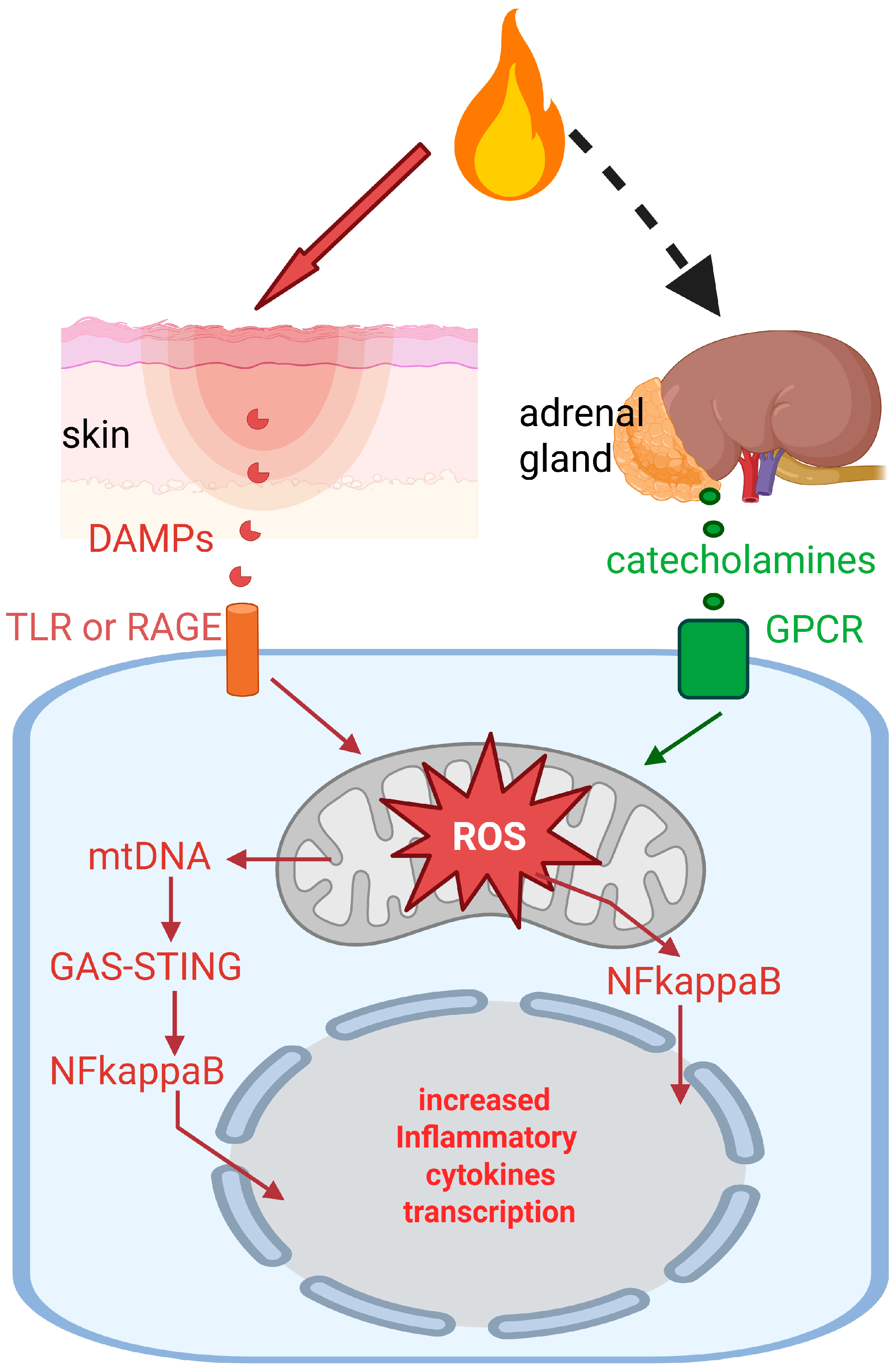
3. Burn-Induced Release of DAMPs Induces Mitochondrial Dysfunction
4. Catecholamines as Inducers of Mitochondria Dysfunction After Burn Injury
5. Proinflammatory Effect of Cytoplasmic mtDNA at Burn
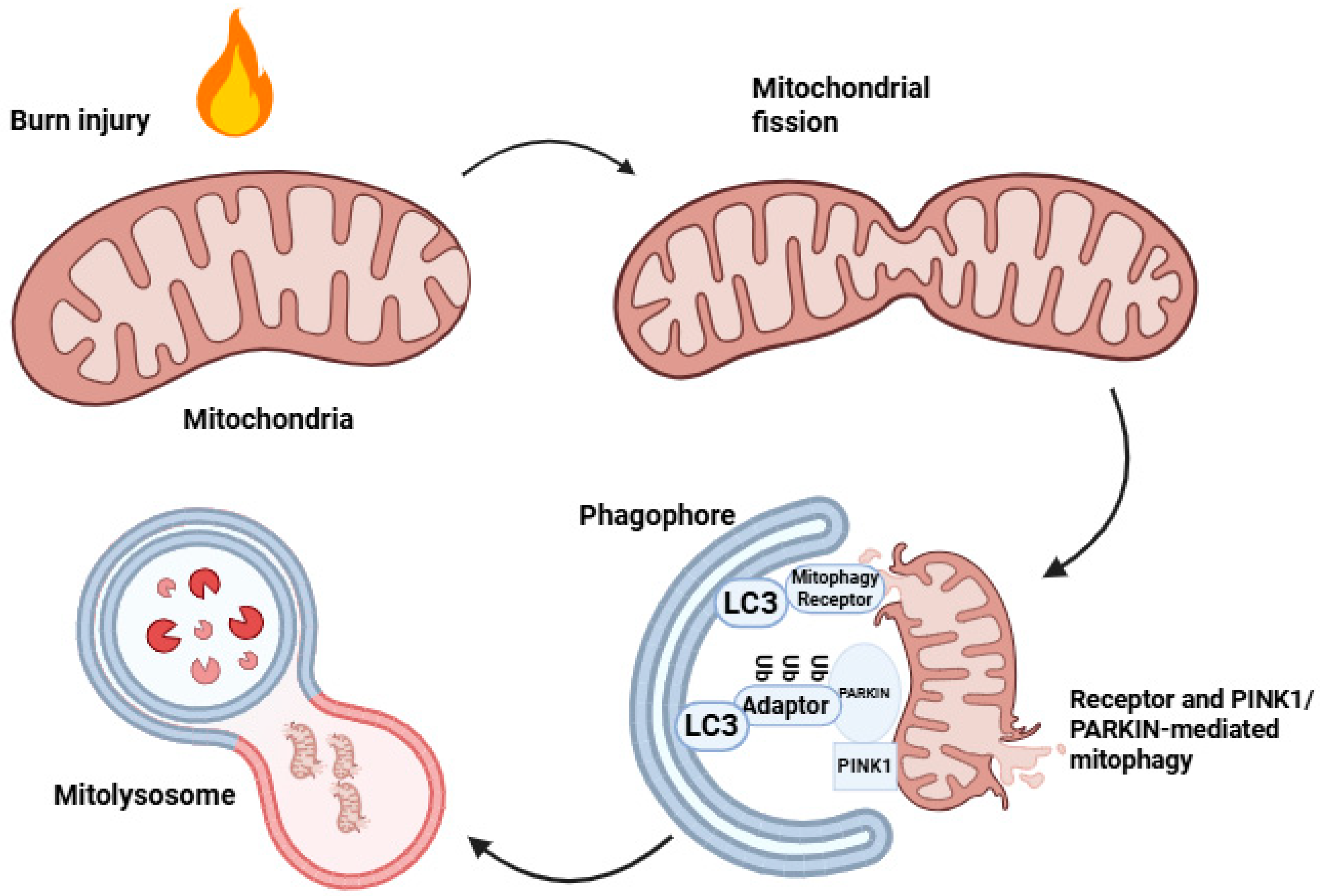
6. Potential Role of Mitophagy in Alleviating Burn Injury
7. Targeting Mitochondria to Ameliorate Burn Outcomes
8. Conclusions
Author Contributions
Funding
Institutional Review Board Statement
Informed Consent Statement
Data Availability Statement
Acknowledgments
Conflicts of Interest
References
- Rahbar, E.; Cardenas, J.C.; Baimukanova, G.; Usadi, B.; Bruhn, R.; Pati, S.; Ostrowski, S.R.; Johansson, P.I.; Holcomb, J.B.; Wade, C.E. Endothelial glycocalyx shedding and vascular permeability in severely injured trauma patients. J. Transl. Med. 2015, 13, 117. [Google Scholar] [CrossRef] [Scilit]
- Burgess, M.; Valdera, F.; Varon, D.; Kankuri, E.; Nuutila, K. The Immune and Regenerative Response to Burn Injury. Cells 2022, 11, 3073. [Google Scholar] [CrossRef] [Scilit] [PubMed]
- Cartotto, R.; Burmeister, D.M.; Kubasiak, J.C. Burn Shock and Resuscitation: Review and State of the Science. J. Burn Care Res. 2022, 43, 567–585. [Google Scholar] [CrossRef] [Scilit] [PubMed]
- Koh, E.Y.; Oyeniyi, B.T.; Fox, E.E.; Scerbo, M.; Tomasek, J.S.; Wade, C.E.; Holcomb, J.B. Trends in potentially preventable trauma deaths between 2005–2006 and 2012–2013. Am. J. Surg. 2019, 218, 501–506. [Google Scholar] [CrossRef] [Scilit]
- Kong, C.; Song, W.; Fu, T. Systemic inflammatory response syndrome is triggered by mitochondrial damage (Review). Mol. Med. Rep. 2022, 25, 147. [Google Scholar] [CrossRef] [Scilit] [PubMed]
- McBride, M.A.; Owen, A.M.; Stothers, C.L.; Hernandez, A.; Luan, L.; Burelbach, K.R.; Patil, T.K.; Bohannon, J.K.; Sherwood, E.R.; Patil, N.K. The Metabolic Basis of Immune Dysfunction Following Sepsis and Trauma. Front. Immunol. 2020, 11, 1043. [Google Scholar] [CrossRef] [Scilit]
- Zhang, Q.; Raoof, M.; Chen, Y.; Sumi, Y.; Sursal, T.; Junger, W.; Brohi, K.; Itagaki, K.; Hauser, C.J. Circulating mitochondrial DAMPs cause inflammatory responses to injury. Nature 2010, 464, 104–107. [Google Scholar] [CrossRef] [Scilit]
- Thiessen, S.E.; Van den Berghe, G.; Vanhorebeek, I. Mitochondrial and endoplasmic reticulum dysfunction and related defense mechanisms in critical illness-induced multiple organ failure. Biochim. Biophys. Acta Mol. Basis Dis. 2017, 1863, 2534–2545. [Google Scholar] [CrossRef] [Scilit]
- Prabhakaran, H.S.; Hu, D.; He, W.; Luo, G.; Liou, Y.C. Mitochondrial dysfunction and mitophagy: Crucial players in burn trauma and wound healing. Burn. Trauma 2023, 11, tkad029. [Google Scholar] [CrossRef] [Scilit]
- Yoo, S.M.; Jung, Y.K. A Molecular Approach to Mitophagy and Mitochondrial Dynamics. Mol. Cells 2018, 41, 18–26. [Google Scholar] [CrossRef] [Scilit]
- Zakharova, V.V.; Pletjushkina, O.Y.; Zinovkin, R.A.; Popova, E.N.; Chernyak, B.V. Mitochondria-Targeted Antioxidants and Uncouplers of Oxidative Phosphorylation in Treatment of the Systemic Inflammatory Response Syndrome (SIRS). J. Cell Physiol. 2017, 232, 904–912. [Google Scholar] [CrossRef] [Scilit]
- Onishi, M.; Yamano, K.; Sato, M.; Matsuda, N.; Okamoto, K. Molecular mechanisms and physiological functions of mitophagy. EMBO J. 2021, 40, e104705. [Google Scholar] [CrossRef] [Scilit]
- Kleele, T.; Rey, T.; Winter, J.; Zaganelli, S.; Mahecic, D.; Perreten Lambert, H.; Ruberto, F.P.; Nemir, M.; Wai, T.; Pedrazzini, T.; et al. Distinct fission signatures predict mitochondrial degradation or biogenesis. Nature 2021, 593, 435–439. [Google Scholar] [CrossRef] [Scilit]
- Sauaia, A.; Moore, F.A.; Moore, E.E. Postinjury Inflammation and Organ Dysfunction. Crit. Care Clin. 2017, 33, 167–191. [Google Scholar] [CrossRef] [Scilit]
- Rai, V.; Mathews, G.; Agrawal, D.K. Translational and Clinical Significance of DAMPs, PAMPs, and PRRs in Trauma-induced Inflammation. Arch. Clin. Biomed. Res. 2022, 6, 673–685. [Google Scholar] [CrossRef] [Scilit] [PubMed]
- Wang, M.; Scott, S.R.; Koniaris, L.G.; Zimmers, T.A. Pathological Responses of Cardiac Mitochondria to Burn Trauma. Int. J. Mol. Sci. 2020, 21, 6655. [Google Scholar] [CrossRef] [Scilit]
- Auger, C.; Samadi, O.; Jeschke, M.G. The biochemical alterations underlying post-burn hypermetabolism. Biochim. Biophys. Acta Mol. Basis Dis. 2017, 1863, 2633–2644. [Google Scholar] [CrossRef] [Scilit] [PubMed]
- Rink, R.D.; Dew, K.D.; Campbell, F.R. Effects of scald injury on hepatic PO2, blood flow, and ultrastructure in the rat. Circ. Shock. 1985, 17, 73–84. [Google Scholar]
- Tang, G.Y. Ultrastructure of myocardium and permeability of cell membrane in early severe burns of mice. Zhonghua Zheng Xing Shao Shang Wai Ke Za Zhi 1989, 5, 51–52. [Google Scholar] [PubMed]
- Lewis, C.G.; Fields, M.; Burns, W.A.; Lure, M.D. Effect of coenzyme Q10 supplementation on cardiac hypertrophy of male rats consuming a high-fructose, low-copper diet. Biol. Trace Elem. Res. 1993, 37, 137–149. [Google Scholar] [CrossRef] [Scilit]
- Zhang, H.Y.; Lu, N.H.; Xie, Y.; Guo, G.H.; Zhan, J.H.; Chen, J. Influence of heat shock preconditioning on structure and function of mitochondria in gastric mucosa of severely burned animals: Experiment with rats. Zhonghua Yi Xue Za Zhi 2008, 88, 564–567. [Google Scholar] [PubMed]
- Lu, X.; Costantini, T.; Lopez, N.E.; Wolf, P.L.; Hageny, A.M.; Putnam, J.; Eliceiri, B.; Coimbra, R. Vagal nerve stimulation protects cardiac injury by attenuating mitochondrial dysfunction in a murine burn injury model. J. Cell Mol. Med. 2013, 17, 664–671. [Google Scholar] [CrossRef] [Scilit]
- Nakazawa, H.; Ikeda, K.; Shinozaki, S.; Kobayashi, M.; Ikegami, Y.; Fu, M.; Nakamura, T.; Yasuhara, S.; Yu, Y.M.; Martyn, J.A.J.; et al. Burn-induced muscle metabolic derangements and mitochondrial dysfunction are associated with activation of HIF-1alpha and mTORC1: Role of protein farnesylation. Sci. Rep. 2017, 7, 6618. [Google Scholar] [CrossRef] [Scilit]
- Wen, J.J.; Mobli, K.; Rontoyanni, V.G.; Cummins, C.B.; Radhakrishnan, G.L.; Murton, A.; Radhakrishnan, R.S. Nuclear Factor Erythroid 2-Related Factor 2 Activation and Burn-Induced Cardiac Dysfunction. J. Am. Coll. Surg. 2022, 234, 660–671. [Google Scholar] [CrossRef] [Scilit]
- Padfield, K.E.; Astrakas, L.G.; Zhang, Q.; Gopalan, S.; Dai, G.; Mindrinos, M.N.; Tompkins, R.G.; Rahme, L.G.; Tzika, A.A. Burn injury causes mitochondrial dysfunction in skeletal muscle. Proc. Natl. Acad. Sci. USA 2005, 102, 5368–5373. [Google Scholar] [CrossRef] [Scilit]
- Cree, M.G.; Fram, R.Y.; Herndon, D.N.; Qian, T.; Angel, C.; Green, J.M.; Mlcak, R.; Aarsland, A.; Wolfe, R.R. Human mitochondrial oxidative capacity is acutely impaired after burn trauma. Am. J. Surg. 2008, 196, 234–239. [Google Scholar] [CrossRef] [Scilit]
- Porter, C.; Herndon, D.N.; Bhattarai, N.; Ogunbileje, J.O.; Szczesny, B.; Szabo, C.; Toliver-Kinsky, T.; Sidossis, L.S. Differential acute and chronic effects of burn trauma on murine skeletal muscle bioenergetics. Burns 2016, 42, 112–122. [Google Scholar] [CrossRef] [Scilit] [PubMed]
- Porter, C.; Herndon, D.N.; Borsheim, E.; Bhattarai, N.; Chao, T.; Reidy, P.T.; Rasmussen, B.B.; Andersen, C.R.; Suman, O.E.; Sidossis, L.S. Long-Term Skeletal Muscle Mitochondrial Dysfunction is Associated with Hypermetabolism in Severely Burned Children. J. Burn Care Res. 2016, 37, 53–63. [Google Scholar] [CrossRef] [Scilit]
- Ogunbileje, J.O.; Porter, C.; Herndon, D.N.; Chao, T.; Abdelrahman, D.R.; Papadimitriou, A.; Chondronikola, M.; Zimmers, T.A.; Reidy, P.T.; Rasmussen, B.B.; et al. Hypermetabolism and hypercatabolism of skeletal muscle accompany mitochondrial stress following severe burn trauma. Am. J. Physiol. Endocrinol. Metab. 2016, 311, E436–E448. [Google Scholar] [CrossRef] [Scilit]
- Knuth, C.M.; Auger, C.; Jeschke, M.G. Burn-induced hypermetabolism and skeletal muscle dysfunction. Am. J. Physiol. Cell Physiol. 2021, 321, C58–C71. [Google Scholar] [CrossRef] [Scilit] [PubMed]
- Zhang, Q.; Cao, H.; Astrakas, L.G.; Mintzopoulos, D.; Mindrinos, M.N.; Schulz, J., 3rd; Tompkins, R.G.; Rahme, L.G.; Tzika, A.A. Uncoupling protein 3 expression and intramyocellular lipid accumulation by NMR following local burn trauma. Int. J. Mol. Med. 2006, 18, 1223–1229. [Google Scholar] [CrossRef] [Scilit]
- Li, F.; Guo, Z.R.; Chai, J.K.; Sheng, Z.Y. Changes in uncoupling protein-2, 3 mRNA expression in the scalded rats after escharectomy at different post scalding stages. Zhonghua Shao Shang Za Zhi 2004, 20, 268–270. [Google Scholar] [PubMed]
- Khan, N.; Mupparaju, S.P.; Mintzopoulos, D.; Kesarwani, M.; Righi, V.; Rahme, L.G.; Swartz, H.M.; Tzika, A.A. Burn trauma in skeletal muscle results in oxidative stress as assessed by in vivo electron paramagnetic resonance. Mol. Med. Rep. 2008, 1, 813–819. [Google Scholar] [CrossRef] [Scilit] [PubMed]
- Wu, S.H.; Lu, I.C.; Tai, M.H.; Chai, C.Y.; Kwan, A.L.; Huang, S.H. Erythropoietin Alleviates Burn-induced Muscle Wasting. Int. J. Med. Sci. 2020, 17, 33–44. [Google Scholar] [CrossRef] [Scilit]
- Wen, J.J.; Cummins, C.B.; Radhakrishnan, R.S. Burn-Induced Cardiac Mitochondrial Dysfunction via Interruption of the PDE5A-cGMP-PKG Pathway. Int. J. Mol. Sci. 2020, 21, 2350. [Google Scholar] [CrossRef] [Scilit]
- Chao, T.; Gomez, B.I.; Heard, T.C.; Smith, B.W.; Dubick, M.A.; Burmeister, D.M. Burn-induced reductions in mitochondrial abundance and efficiency are more pronounced with small volumes of colloids in swine. Am. J. Physiol. Cell Physiol. 2019, 317, C1229–C1238. [Google Scholar] [CrossRef] [Scilit]
- Szczesny, B.; Brunyanszki, A.; Ahmad, A.; Olah, G.; Porter, C.; Toliver-Kinsky, T.; Sidossis, L.; Herndon, D.N.; Szabo, C. Time-Dependent and Organ-Specific Changes in Mitochondrial Function, Mitochondrial DNA Integrity, Oxidative Stress and Mononuclear Cell Infiltration in a Mouse Model of Burn Injury. PLoS ONE 2015, 10, e0143730. [Google Scholar] [CrossRef] [Scilit]
- Auger, C.; Sivayoganathan, T.; Abdullahi, A.; Parousis, A.; Jeschke, M.G. Hepatic mitochondrial bioenergetics in aged C57BL/6 mice exhibit delayed recovery from severe burn injury. Biochim. Biophys. Acta Mol. Basis Dis. 2017, 1863, 2705–2714. [Google Scholar] [CrossRef] [Scilit]
- Wang, X.M.; Chen, K.M.; Wang, Y.; Shi, S.P. Functional changes in rat-liver mitochondria during the early phase of burn injury. Burns 1986, 12, 461–464. [Google Scholar] [CrossRef] [Scilit]
- Wu, Y.; Hao, C.; Liu, X.; Han, G.; Yin, J.; Zou, Z.; Zhou, J.; Xu, C. MitoQ protects against liver injury induced by severe burn plus delayed resuscitation by suppressing the mtDNA-NLRP3 axis. Int. Immunopharmacol. 2020, 80, 106189. [Google Scholar] [CrossRef] [Scilit] [PubMed]
- Diao, L.; Auger, C.; Konoeda, H.; Sadri, A.R.; Amini-Nik, S.; Jeschke, M.G. Hepatic steatosis associated with decreased beta-oxidation and mitochondrial function contributes to cell damage in obese mice after thermal injury. Cell Death Dis. 2018, 9, 530. [Google Scholar] [CrossRef] [Scilit]
- Bohanon, F.J.; Nunez Lopez, O.; Herndon, D.N.; Wang, X.; Bhattarai, N.; Ayadi, A.E.; Prasai, A.; Jay, J.W.; Rojas-Khalil, Y.; Toliver-Kinsky, T.E.; et al. Burn Trauma Acutely Increases the Respiratory Capacity and Function of Liver Mitochondria. Shock 2018, 49, 466–473. [Google Scholar] [CrossRef] [Scilit]
- Peng, X.; Chen, R.C.; Wang, P.; You, Z.Y.; Wang, S.L. Effects of enteral supplementation with glutamine on mitochondria respiratory function of intestinal epithelium in burned rats. Zhongguo Wei Zhong Bing Ji Jiu Yi Xue 2004, 16, 93–96. [Google Scholar]
- Liu, X.; Li, D.; Liu, Z.; Song, Y.; Zhang, B.; Zang, Y.; Zhang, W.; Niu, Y.; Shen, C. Nicotinamide mononucleotide promotes pancreatic islet function through the SIRT1 pathway in mice after severe burns. Burns 2022, 48, 1922–1932. [Google Scholar] [CrossRef] [Scilit]
- Liu, X.; Liu, Z.; Li, D.; Niu, Y.; Zhang, W.; Sun, J.; Zhang, K.; Zhao, H.; Li, Z.; Shen, C. Mitochondria play a key role in oxidative stress-induced pancreatic islet dysfunction after severe burns. J. Trauma Acute Care Surg. 2022, 92, 1012–1019. [Google Scholar] [CrossRef] [Scilit]
- Sidossis, L.S.; Porter, C.; Saraf, M.K.; Borsheim, E.; Radhakrishnan, R.S.; Chao, T.; Ali, A.; Chondronikola, M.; Mlcak, R.; Finnerty, C.C.; et al. Browning of Subcutaneous White Adipose Tissue in Humans after Severe Adrenergic Stress. Cell Metab. 2015, 22, 219–227. [Google Scholar] [CrossRef] [Scilit] [PubMed]
- Bhattarai, N.; Rontoyanni, V.G.; Ross, E.; Ogunbileje, J.O.; Murton, A.J.; Porter, C. Brown adipose tissue recruitment in a rodent model of severe burns. Burns 2020, 46, 1653–1659. [Google Scholar] [CrossRef] [Scilit]
- Porter, C.; Herndon, D.N.; Bhattarai, N.; Ogunbileje, J.O.; Szczesny, B.; Szabo, C.; Toliver-Kinsky, T.; Sidossis, L.S. Severe Burn Injury Induces Thermogenically Functional Mitochondria in Murine White Adipose Tissue. Shock 2015, 44, 258–264. [Google Scholar] [CrossRef] [Scilit]
- Patsouris, D.; Qi, P.; Abdullahi, A.; Stanojcic, M.; Chen, P.; Parousis, A.; Amini-Nik, S.; Jeschke, M.G. Burn Induces Browning of the Subcutaneous White Adipose Tissue in Mice and Humans. Cell Rep. 2015, 13, 1538–1544. [Google Scholar] [CrossRef] [Scilit] [PubMed]
- Zhuang, S.; Chai, J.; Yu, Y.; Yin, H.; Liu, L.; Fan, J.; Wang, Y.; Hou, Y. Experimental study on effect of burn on brown adipose tissue in mice. Zhongguo Xiu Fu Chong Jian Wai Ke Za Zhi 2014, 28, 988–992. [Google Scholar] [PubMed]
- Zhuang, S.; Chai, J.; Liu, L.; Yin, H.; Yu, Y. Effect of celecoxib in treatment of burn-induced hypermetabolism. Biosci. Rep. 2020, 40, BSR20191607. [Google Scholar] [CrossRef] [Scilit]
- Abdullahi, A.; Samadi, O.; Auger, C.; Kanagalingam, T.; Boehning, D.; Bi, S.; Jeschke, M.G. Browning of white adipose tissue after a burn injury promotes hepatic steatosis and dysfunction. Cell Death Dis. 2019, 10, 870. [Google Scholar] [CrossRef] [Scilit]
- Kaur, S.; Auger, C.; Barayan, D.; Shah, P.; Matveev, A.; Knuth, C.M.; Harris, T.E.; Jeschke, M.G. Adipose-specific ATGL ablation reduces burn injury-induced metabolic derangements in mice. Clin. Transl. Med. 2021, 11, e417. [Google Scholar] [CrossRef] [Scilit]
- Chao, T.; Gomez, B.I.; Heard, T.C.; Dubick, M.A.; Burmeister, D.M. Increased oxidative phosphorylation in lymphocytes does not atone for decreased cell numbers after burn injury. Innate Immun. 2020, 26, 403–412. [Google Scholar] [CrossRef] [Scilit]
- Kremer, B.; Frenzel, H.; Schoelmerich, J.; Allgower, M.; Schweitzer, A.; Schoenenberger, G.A. Comparative transmission and scanning electron microscopy studies of liver changes in mice followed sublethal skin burns and intraperitoneal injection of a specific skin burn toxin. Chir. Forum Exp. Klin. Forsch. 1977, 145–150. [Google Scholar]
- Kremer, B.; Allgower, M.; Scheidegger, A.M.; Schmidt, K.H.; Scholmerich, J.; Wust, B.; Schoenenberger, G.A. Toxin-specific ultrastructural alterations of the mouse liver after burn injuries and the possibility of a specific antitoxic therapy. Scand. J. Plast. Reconstr. Surg. 1979, 13, 217–222. [Google Scholar] [CrossRef] [Scilit]
- Aoyama, H.; Suzuki, K.; Izawa, Y.; Kobashashi, M.; Ozawa, T. Mitochondria-toxic activity in burned human skin: Relation to severity of burn and period after burn. Burns 1982, 9, 13–16. [Google Scholar] [CrossRef] [Scilit]
- Pratap, A.; Monge, K.M.; Qualman, A.C.; Kovacs, E.J.; Idrovo, J.P. Burn-induced mitochondrial dysfunction in hepatocytes: The role of methylation-controlled J protein silencing. J. Trauma Acute Care Surg. 2025, 98, 204–211. [Google Scholar] [CrossRef] [Scilit] [PubMed]
- Zang, Q.S.; Maass, D.L.; Wigginton, J.G.; Barber, R.C.; Martinez, B.; Idris, A.H.; Horton, J.W.; Nwariaku, F.E. Burn serum causes a CD14-dependent mitochondrial damage in primary cardiomyocytes. Am. J. Physiol. Heart Circ. Physiol. 2010, 298, H1951–H1958. [Google Scholar] [CrossRef] [Scilit] [PubMed]
- Ma, M.; Jiang, W.; Zhou, R. DAMPs and DAMP-sensing receptors in inflammation and diseases. Immunity 2024, 57, 752–771. [Google Scholar] [CrossRef] [Scilit]
- Zindel, J.; Kubes, P. DAMPs, PAMPs, and LAMPs in Immunity and Sterile Inflammation. Annu. Rev. Pathol. 2020, 15, 493–518. [Google Scholar] [CrossRef] [Scilit] [PubMed]
- Ye, J.; Hu, X.; Wang, Z.; Li, R.; Gan, L.; Zhang, M.; Wang, T. The role of mtDAMPs in the trauma-induced systemic inflammatory response syndrome. Front. Immunol. 2023, 14, 1164187. [Google Scholar] [CrossRef] [Scilit] [PubMed]
- Prudovsky, I.; Tarantini, F.; Landriscina, M.; Neivandt, D.; Soldi, R.; Kirov, A.; Small, D.; Kathir, K.M.; Rajalingam, D.; Kumar, T.K. Secretion without Golgi. J. Cell. Biochem. 2008, 103, 1327–1343. [Google Scholar] [CrossRef] [Scilit]
- Okawara, Y.; Horikoshi, Y.; Matsuda, K.; Kato, Y.; Homma, M.; Nakaso, K.; Ueda, T. Burn Injury-Induced HMGB1 Release Leads to Lung Damage Through Pulmonary Intercellular Barrier Disruption. Yonago Acta Med. 2025, 68, 237–249. [Google Scholar] [CrossRef] [Scilit]
- Yang, Z.; Cancio, T.S.; Willis, R.P.; Young, M.D.; Kneifel, D.M.; Salinas, J.; Meyer, A.D. An early HMGB1 rise 12 hours before creatinine predicts acute kidney injury and multiple organ failure in a smoke inhalation and burn swine model. Front. Immunol. 2024, 15, 1447597. [Google Scholar] [CrossRef] [Scilit] [PubMed]
- Song, J.; Chowdhury, I.H.; Choudhuri, S.; Ayadi, A.E.I.; Rios, L.E.; Wolf, S.E.; Wenke, J.C.; Garg, N.J. Acute muscle mass loss was alleviated with HMGB1 neutralizing antibody treatment in severe burned rats. Sci. Rep. 2023, 13, 10250. [Google Scholar] [CrossRef] [Scilit]
- Willis, M.L.; Mahung, C.; Wallet, S.M.; Barnett, A.; Cairns, B.A.; Coleman, L.G., Jr.; Maile, R. Plasma extracellular vesicles released after severe burn injury modulate macrophage phenotype and function. J. Leukoc. Biol. 2022, 111, 33–49. [Google Scholar] [CrossRef] [Scilit]
- Coleman, L.G., Jr.; Maile, R.; Jones, S.W.; Cairns, B.A.; Crews, F.T. HMGB1/IL-1beta complexes in plasma microvesicles modulate immune responses to burn injury. PLoS ONE 2018, 13, e0195335. [Google Scholar] [CrossRef] [Scilit]
- Wang, A.; Guo, B.; Jia, Q.; Chen, Y.U.; Gao, X.; Xu, S. S100A9-containing serum exosomes of burn injury patients promote permeability of pulmonary microvascular endothelial cells. J. Biosci. 2021, 46, 33. [Google Scholar] [CrossRef] [Scilit]
- Anderson, R.E.; Hansson, L.O.; Nilsson, O.; Dijlai-Merzoug, R.; Settergren, G. High serum S100B levels for trauma patients without head injuries. Neurosurgery 2001, 48, 1255–1258; discussion 1258–1260. [Google Scholar] [CrossRef] [Scilit]
- Xiao, M.J.; Zou, X.F.; Li, B.; Li, B.L.; Wu, S.J.; Zhang, B. Simulated aeromedical evacuation exacerbates burn induced lung injury: Targeting mitochondrial DNA for reversal. Mil. Med. Res. 2021, 8, 30. [Google Scholar] [CrossRef] [Scilit]
- Liu, R.; Xu, F.; Si, S.; Zhao, X.; Bi, S.; Cen, Y. Mitochondrial DNA-Induced Inflammatory Responses and Lung Injury in Thermal Injury Rat Model: Protective Effect of Epigallocatechin Gallate. J. Burn Care Res. 2017, 38, 304–311. [Google Scholar] [CrossRef] [Scilit]
- Gong, T.; Liu, L.; Jiang, W.; Zhou, R. DAMP-sensing receptors in sterile inflammation and inflammatory diseases. Nat. Rev. Immunol. 2020, 20, 95–112. [Google Scholar] [CrossRef] [Scilit] [PubMed]
- Feng, Z.; Wang, J.W.; Wang, Y.; Dong, W.W.; Xu, Z.F. Propofol Protects Lung Endothelial Barrier Function by Suppression of High-Mobility Group Box 1 (HMGB1) Release and Mitochondrial Oxidative Damage Catalyzed by HMGB1. Med. Sci. Monit. 2019, 25, 3199–3211. [Google Scholar] [CrossRef] [Scilit]
- Li, Y.; Chen, B.; Yang, X.; Zhang, C.; Jiao, Y.; Li, P.; Liu, Y.; Li, Z.; Qiao, B.; Bond Lau, W.; et al. S100a8/a9 Signaling Causes Mitochondrial Dysfunction and Cardiomyocyte Death in Response to Ischemic/Reperfusion Injury. Circulation 2019, 140, 751–764. [Google Scholar] [CrossRef] [Scilit]
- Zelentsova, A.S.; Deykin, A.V.; Soldatov, V.O.; Ulezko, A.A.; Borisova, A.Y.; Belyaeva, V.S.; Skorkina, M.Y.; Angelova, P.R. P2X7 Receptor and Purinergic Signaling: Orchestrating Mitochondrial Dysfunction in Neurodegenerative Diseases. eNeuro 2022, 9, ENEURO.0092-22.2022. [Google Scholar] [CrossRef] [Scilit] [PubMed]
- West, A.P.; Brodsky, I.E.; Rahner, C.; Woo, D.K.; Erdjument-Bromage, H.; Tempst, P.; Walsh, M.C.; Choi, Y.; Shadel, G.S.; Ghosh, S. TLR signalling augments macrophage bactericidal activity through mitochondrial ROS. Nature 2011, 472, 476–480. [Google Scholar] [CrossRef] [Scilit]
- Sbai, O.; Djelloul, M.; Auletta, A.; Ieraci, A.; Vascotto, C.; Perrone, L. AGE-TXNIP axis drives inflammation in Alzheimer’s by targeting Abeta to mitochondria in microglia. Cell Death Dis. 2022, 13, 302. [Google Scholar] [CrossRef] [Scilit] [PubMed]
- Amini, M.; Frisch, J.; Jost, P.; Sarakpi, T.; Selejan, S.R.; Becker, E.; Sellier, A.; Engel, J.; Bohm, M.; Hohl, M.; et al. Purinergic receptor P2X7 regulates interleukin-1alpha mediated inflammation in chronic kidney disease in a reactive oxygen species-dependent manner. Kidney Int. 2025, 107, 457–475. [Google Scholar] [CrossRef] [Scilit] [PubMed]
- Guillory, A.N.; Clayton, R.P.; Herndon, D.N.; Finnerty, C.C. Cardiovascular Dysfunction Following Burn Injury: What We Have Learned from Rat and Mouse Models. Int. J. Mol. Sci. 2016, 17, 53. [Google Scholar] [CrossRef] [Scilit]
- Kulp, G.A.; Herndon, D.N.; Lee, J.O.; Suman, O.E.; Jeschke, M.G. Extent and magnitude of catecholamine surge in pediatric burned patients. Shock 2010, 33, 369–374. [Google Scholar] [CrossRef] [Scilit]
- Tapking, C.; Popp, D.; Herndon, D.N.; Branski, L.K.; Hundeshagen, G.; Armenta, A.M.; Busch, M.; Most, P.; Kinsky, M.P. Cardiac Dysfunction in Severely Burned Patients: Current Understanding of Etiology, Pathophysiology, and Treatment. Shock 2020, 53, 669–678. [Google Scholar] [CrossRef] [Scilit]
- Shin, E.; Ko, K.S.; Rhee, B.D.; Han, J.; Kim, N. Different effects of prolonged beta-adrenergic stimulation on heart and cerebral artery. Integr. Med. Res. 2014, 3, 204–210. [Google Scholar] [CrossRef] [Scilit]
- Du, Y.; Demillard, L.J.; Ren, J. Catecholamine-induced cardiotoxicity: A critical element in the pathophysiology of stroke-induced heart injury. Life Sci. 2021, 287, 120106. [Google Scholar] [CrossRef] [Scilit]
- Burke, W.J.; Kristal, B.S.; Yu, B.P.; Li, S.W.; Lin, T.S. Norepinephrine transmitter metabolite generates free radicals and activates mitochondrial permeability transition: A mechanism for DOPEGAL-induced apoptosis. Brain Res. 1998, 787, 328–332. [Google Scholar] [CrossRef] [Scilit] [PubMed]
- Pereira, C.T.; Jeschke, M.G.; Herndon, D.N. Beta-blockade in burns. Novartis Found. Symp. 2007, 280, 238–248; discussion 248–251. [Google Scholar] [CrossRef] [Scilit]
- Kim, J.; Kim, H.S.; Chung, J.H. Molecular mechanisms of mitochondrial DNA release and activation of the cGAS-STING pathway. Exp. Mol. Med. 2023, 55, 510–519. [Google Scholar] [CrossRef] [Scilit]
- Comish, P.B.; Liu, M.M.; Huebinger, R.; Carlson, D.; Kang, R.; Tang, D. The cGAS-STING pathway connects mitochondrial damage to inflammation in burn-induced acute lung injury in rat. Burns 2022, 48, 168–175. [Google Scholar] [CrossRef] [Scilit] [PubMed]
- Xie, F.; You, Z.; Yan, B.; Dai, J.; Yang, J.; Wang, S.; Ogata, H.; Yasuhara, S.; Martyn, J.J. cGAS-STING-NFkappaB PATHWAY PLAYS A ROLE IN BURN INJURY-INDUCED MUSCLE WASTING. Shock 2025, 64, 338–348. [Google Scholar] [CrossRef] [Scilit]
- Bock, F.J.; Tait, S.W.G. Mitochondria as multifaceted regulators of cell death. Nat. Rev. Mol. Cell Biol. 2020, 21, 85–100. [Google Scholar] [CrossRef] [Scilit]
- Fimia, G.M.; Stoykova, A.; Romagnoli, A.; Giunta, L.; Di Bartolomeo, S.; Nardacci, R.; Corazzari, M.; Fuoco, C.; Ucar, A.; Schwartz, P.; et al. Ambra1 regulates autophagy and development of the nervous system. Nature 2007, 447, 1121–1125. [Google Scholar] [CrossRef] [Scilit] [PubMed]
- Zhu, Y.; Massen, S.; Terenzio, M.; Lang, V.; Chen-Lindner, S.; Eils, R.; Novak, I.; Dikic, I.; Hamacher-Brady, A.; Brady, N.R. Modulation of serines 17 and 24 in the LC3-interacting region of Bnip3 determines pro-survival mitophagy versus apoptosis. J. Biol. Chem. 2013, 288, 1099–1113. [Google Scholar] [CrossRef] [Scilit]
- Chen, G.; Cizeau, J.; Vande Velde, C.; Park, J.H.; Bozek, G.; Bolton, J.; Shi, L.; Dubik, D.; Greenberg, A. Nix and Nip3 form a subfamily of pro-apoptotic mitochondrial proteins. J. Biol. Chem. 1999, 274, 7–10. [Google Scholar] [CrossRef] [Scilit]
- Liu, L.; Feng, D.; Chen, G.; Chen, M.; Zheng, Q.; Song, P.; Ma, Q.; Zhu, C.; Wang, R.; Qi, W.; et al. Mitochondrial outer-membrane protein FUNDC1 mediates hypoxia-induced mitophagy in mammalian cells. Nat. Cell Biol. 2012, 14, 177–185. [Google Scholar] [CrossRef] [Scilit]
- Murakawa, T.; Yamaguchi, O.; Hashimoto, A.; Hikoso, S.; Takeda, T.; Oka, T.; Yasui, H.; Ueda, H.; Akazawa, Y.; Nakayama, H.; et al. Bcl-2-like protein 13 is a mammalian Atg32 homologue that mediates mitophagy and mitochondrial fragmentation. Nat. Commun. 2015, 6, 7527. [Google Scholar] [CrossRef] [Scilit]
- Shirane, M.; Nakayama, K.I. Inherent calcineurin inhibitor FKBP38 targets Bcl-2 to mitochondria and inhibits apoptosis. Nat. Cell Biol. 2003, 5, 28–37. [Google Scholar] [CrossRef] [Scilit]
- Nijtmans, L.G.; de Jong, L.; Artal Sanz, M.; Coates, P.J.; Berden, J.A.; Back, J.W.; Muijsers, A.O.; van der Spek, H.; Grivell, L.A. Prohibitins act as a membrane-bound chaperone for the stabilization of mitochondrial proteins. EMBO J. 2000, 19, 2444–2451. [Google Scholar] [CrossRef] [Scilit] [PubMed]
- Konig, T.; Nolte, H.; Aaltonen, M.J.; Tatsuta, T.; Krols, M.; Stroh, T.; Langer, T.; McBride, H.M. MIROs and DRP1 drive mitochondrial-derived vesicle biogenesis and promote quality control. Nat. Cell Biol. 2021, 23, 1271–1286. [Google Scholar] [CrossRef] [Scilit]
- Xiao, B.; Goh, J.Y.; Xiao, L.; Xian, H.; Lim, K.L.; Liou, Y.C. Reactive oxygen species trigger Parkin/PINK1 pathway-dependent mitophagy by inducing mitochondrial recruitment of Parkin. J. Biol. Chem. 2017, 292, 16697–16708. [Google Scholar] [CrossRef] [Scilit]
- Taniuchi, S.; Miyake, M.; Tsugawa, K.; Oyadomari, M.; Oyadomari, S. Integrated stress response of vertebrates is regulated by four eIF2alpha kinases. Sci. Rep. 2016, 6, 32886. [Google Scholar] [CrossRef] [Scilit] [PubMed]
- Hu, G.; Yu, Y.; Tang, Y.J.; Wu, C.; Long, F.; Karner, C.M. The Amino Acid Sensor Eif2ak4/GCN2 Is Required for Proliferation of Osteoblast Progenitors in Mice. J. Bone Min. Res. 2020, 35, 2004–2014. [Google Scholar] [CrossRef] [Scilit]
- Guo, X.; Aviles, G.; Liu, Y.; Tian, R.; Unger, B.A.; Lin, Y.T.; Wiita, A.P.; Xu, K.; Correia, M.A.; Kampmann, M. Mitochondrial stress is relayed to the cytosol by an OMA1-DELE1-HRI pathway. Nature 2020, 579, 427–432. [Google Scholar] [CrossRef] [Scilit] [PubMed]
- Zhang, R.R.; Zhang, J.L.; Li, Q.; Zhang, S.M.; Gu, X.M.; Niu, W.; Zhou, J.J.; Zhou, L.C. Severe Burn-Induced Mitochondrial Recruitment of Calpain Causes Aberrant Mitochondrial Dynamics and Heart Dysfunction. Shock 2023, 60, 255–261. [Google Scholar] [CrossRef] [Scilit] [PubMed]
- Costa, G.M.; Pizzi, C.; Leone, C.; Borghi, A.; Cordioli, E.; Bugiardini, R. Thrombosis of a mitral valve prosthesis resulting from Staphylococcus epidermidis endocarditis. Cardiologia 1999, 44, 675–678. [Google Scholar]
- Li, P.; Xia, Z.; Kong, W.; Wang, Q.; Zhao, Z.; Arnold, A.; Xu, Q.; Xu, J. Exogenous L-carnitine ameliorates burn-induced cellular and mitochondrial injury of hepatocytes by restoring CPT1 activity. Nutr. Metab. 2021, 18, 65. [Google Scholar] [CrossRef] [Scilit] [PubMed]
- Guo, S.; Fang, Q.; Chen, L.; Yu, M.; Chen, Y.; Li, N.; Han, C.; Hu, X. Locally activated mitophagy contributes to a “built-in” protection against early burn-wound progression in rats. Life Sci. 2021, 276, 119095. [Google Scholar] [CrossRef] [Scilit] [PubMed]
- Zhao, W.; Han, J.; Hu, X.; Zhou, Q.; Qi, R.; Sun, W.; Liu, L. PINK1/PRKN-dependent mitophagy in the burn injury model. Burns 2021, 47, 628–633. [Google Scholar] [CrossRef] [Scilit]
- Huang, Y.; Feng, Y.; Wang, Y.; Wang, P.; Wang, F.; Ren, H. Severe Burn-Induced Intestinal Epithelial Barrier Dysfunction Is Associated With Endoplasmic Reticulum Stress and Autophagy in Mice. Front. Physiol. 2018, 9, 441. [Google Scholar] [CrossRef] [Scilit]
- Lee, H.Y.; Kaneki, M.; Andreas, J.; Tompkins, R.G.; Martyn, J.A. Novel mitochondria-targeted antioxidant peptide ameliorates burn-induced apoptosis and endoplasmic reticulum stress in the skeletal muscle of mice. Shock 2011, 36, 580–585. [Google Scholar] [CrossRef] [Scilit]
- Righi, V.; Constantinou, C.; Mintzopoulos, D.; Khan, N.; Mupparaju, S.P.; Rahme, L.G.; Swartz, H.M.; Szeto, H.H.; Tompkins, R.G.; Tzika, A.A. Mitochondria-targeted antioxidant promotes recovery of skeletal muscle mitochondrial function after burn trauma assessed by in vivo 31P nuclear magnetic resonance and electron paramagnetic resonance spectroscopy. FASEB J. 2013, 27, 2521–2530. [Google Scholar] [CrossRef] [Scilit]
- Wu, Y.; Hao, C.; Han, G.; Liu, X.; Xu, C.; Zou, Z.; Zhou, J.; Yin, J. SS-31 ameliorates hepatic injury in rats subjected to severe burns plus delayed resuscitation via inhibiting the mtDNA/STING pathway in Kupffer cells. Biochem. Biophys. Res. Commun. 2021, 546, 138–144. [Google Scholar] [CrossRef] [Scilit]
- Wen, J.J.; Williams, T.P.; Cummins, C.B.; Colvill, K.M.; Radhakrishnan, G.L.; Radhakrishnan, R.S. Effect of Mitochondrial Antioxidant (Mito-TEMPO) on Burn-Induced Cardiac Dysfunction. J. Am. Coll. Surg. 2021, 232, 642–655. [Google Scholar] [CrossRef] [Scilit]
- Zhou, H.; Fang, Q.; Li, N.; Yu, M.; Chen, H.; Guo, S. ASMq protects against early burn wound progression in rats by alleviating oxidative stress and secondary mitochondria-associated apoptosis via the Erk/p90RSK/Bad pathway. Mol. Med. Rep. 2021, 23, 390. [Google Scholar] [CrossRef] [Scilit]
- Jong, C.J.; Sandal, P.; Schaffer, S.W. The Role of Taurine in Mitochondria Health: More Than Just an Antioxidant. Molecules 2021, 26, 4913. [Google Scholar] [CrossRef] [Scilit]
- Wan, F.S.; Li, G.H.; Zhang, J.; Yu, L.H.; Zhao, X.M. Protective effects of taurine on myocardial mitochondria and their enzyme activities in rate with severe burn. Zhonghua Shao Shang Za Zhi 2008, 24, 171–174. [Google Scholar]
- Ocuk, O.; Firat, C.; Yildiz, A.; Vardi, N.; Ulu, A.; Abbas Ali Noma, S.; Parlakpinar, H.; Ozhan, O. Effects of taurine and apocynin on the zone of stasis. Burns 2022, 48, 1850–1862. [Google Scholar] [CrossRef] [Scilit] [PubMed]
- Lak, S.; Ostadrahimi, A.; Nagili, B.; Asghari-Jafarabadi, M.; Beigzali, S.; Salehi, F.; Djafarzadeh, R. Anti-Inflammatory Effect of Taurine in Burned Patients. Adv. Pharm. Bull. 2015, 5, 531–536. [Google Scholar] [CrossRef] [Scilit] [PubMed]
- Nakazawa, H.; Ikeda, K.; Shinozaki, S.; Yasuhara, S.; Yu, Y.M.; Martyn, J.A.J.; Tompkins, R.G.; Yorozu, T.; Inoue, S.; Kaneki, M. Coenzyme Q10 protects against burn-induced mitochondrial dysfunction and impaired insulin signaling in mouse skeletal muscle. FEBS Open Bio 2019, 9, 348–363. [Google Scholar] [CrossRef] [Scilit] [PubMed]
- Das, U.N. Pyruvate is an endogenous anti-inflammatory and anti-oxidant molecule. Med. Sci. Monit. 2006, 12, RA79-84. [Google Scholar]
- Yang, R.; Zhu, S.; Tonnessen, T.I. Ethyl pyruvate is a novel anti-inflammatory agent to treat multiple inflammatory organ injuries. J. Inflamm. 2016, 13, 37. [Google Scholar] [CrossRef] [Scilit]
- Babalhakam, H.K.; Maleki, M.; Noorbakhsh, M.F.; Safari Nikroo, K.; Hayati, F. Ethyl Pyruvate Injection Enhances the Ischaemic Zone Viability in Burn Wounds in Rats. Vet. Med. Sci. 2025, 11, e70345. [Google Scholar] [CrossRef] [Scilit]
- Karabeyoglu, M.; Kocer, B.; Ozel, U.; Atasay, F.O.; Ustun, H.; Dolapci, M.; Karabeyoglu, I.; Cengiz, O. The protective effect of ethyl pyruvate on lung injury after burn in rats. Saudi Med. J. 2007, 28, 1489–1492. [Google Scholar] [PubMed]
- Zang, Q.; Maass, D.L.; White, J.; Horton, J.W. Cardiac mitochondrial damage and loss of ROS defense after burn injury: The beneficial effects of antioxidant therapy. J. Appl. Physiol. 2007, 102, 103–112. [Google Scholar] [CrossRef] [Scilit] [PubMed]
- Sun, X.; Zhang, J.; Li, X.; Li, Y.; Zhao, X.; Sun, X.; Li, Y. Fenofibrate inhibits activation of cGAS-STING pathway by alleviating mitochondrial damage to attenuate inflammatory response in diabetic dry eye. Free Radic. Biol. Med. 2025, 235, 364–378. [Google Scholar] [CrossRef] [Scilit]
- Cree, M.G.; Zwetsloot, J.J.; Herndon, D.N.; Qian, T.; Morio, B.; Fram, R.; Sanford, A.P.; Aarsland, A.; Wolfe, R.R. Insulin sensitivity and mitochondrial function are improved in children with burn injury during a randomized controlled trial of fenofibrate. Ann. Surg. 2007, 245, 214–221. [Google Scholar] [CrossRef] [Scilit]
- Wang, Y.; Li, X.; Zhou, S.; Li, J.; Zhu, Y.; Wang, Q.; Zhao, F. MCU Inhibitor Ruthenium Red Alleviates the Osteoclastogenesis and Ovariectomized Osteoporosis via Suppressing RANKL-Induced ROS Production and NFATc1 Activation through P38 MAPK Signaling Pathway. Oxid. Med. Cell. Longev. 2022, 2022, 7727006. [Google Scholar] [CrossRef] [Scilit]
- Wan-Yi, L.; Hui, T.; Zong-Cheng, Y.; Yue-Sheng, H. Ruthenium red attenuated cardiomyocyte and mitochondrial damage during the early stage after severe burn. Burns 2002, 28, 35–38. [Google Scholar] [CrossRef] [Scilit]
- Yoval-Sanchez, B.; Ansari, F.; Lange, D.; Galkin, A. Effect of metformin on intact mitochondria from liver and brain: Concept revisited. Eur. J. Pharmacol. 2022, 931, 175177. [Google Scholar] [CrossRef] [Scilit]
- Auger, C.; Knuth, C.M.; Abdullahi, A.; Samadi, O.; Parousis, A.; Jeschke, M.G. Metformin prevents the pathological browning of subcutaneous white adipose tissue. Mol. Metab. 2019, 29, 12–23. [Google Scholar] [CrossRef] [Scilit] [PubMed]
- Nakazawa, H.; Yamada, M.; Tanaka, T.; Kramer, J.; Yu, Y.M.; Fischman, A.J.; Martyn, J.A.; Tompkins, R.G.; Kaneki, M. Role of protein farnesylation in burn-induced metabolic derangements and insulin resistance in mouse skeletal muscle. PLoS ONE 2015, 10, e0116633. [Google Scholar] [CrossRef] [Scilit]
- Wen, J.J.; Cummins, C.; Radhakrishnan, R.S. Sildenafil Recovers Burn-Induced Cardiomyopathy. Cells 2020, 9, 1393. [Google Scholar] [CrossRef] [Scilit]
- Cordova, L.Z.; Schrale, R.; Castley, A. Sildenafil Therapy in Patients With Digital Burns and Raynaud’s Syndrome. J. Burn Care Res. 2019, 40, 136–139. [Google Scholar] [CrossRef] [Scilit]
- Abu Dayyih, W.; Abu Rayyan, W.; Al-Matubsi, H.Y. Impact of sildenafil-containing ointment on wound healing in healthy and experimental diabetic rats. Acta Diabetol. 2020, 57, 1351–1358. [Google Scholar] [CrossRef] [Scilit]
- Kulshrestha, S.; Chawla, R.; Singh, S.; Yadav, P.; Sharma, N.; Goel, R.; Ojha, H.; Kumar, V.; Adhikari, J.S. Protection of sildenafil citrate hydrogel against radiation-induced skin wounds. Burns 2020, 46, 1157–1169. [Google Scholar] [CrossRef] [Scilit]
- Hosokawa, S.; Koseki, H.; Nagashima, M.; Maeyama, Y.; Yomogida, K.; Mehr, C.; Rutledge, M.; Greenfeld, H.; Kaneki, M.; Tompkins, R.G.; et al. Title efficacy of phosphodiesterase 5 inhibitor on distant burn-induced muscle autophagy, microcirculation, and survival rate. Am. J. Physiol. Endocrinol. Metab. 2013, 304, E922–E933. [Google Scholar] [CrossRef] [Scilit] [PubMed]
- Gokakin, A.K.; Atabey, M.; Deveci, K.; Sancakdar, E.; Tuzcu, M.; Duger, C.; Topcu, O. The effects of sildenafil in liver and kidney injury in a rat model of severe scald burn: A biochemical and histopathological study. Ulus. Travma Acil Cerrahi Derg. 2014, 20, 319–327. [Google Scholar] [CrossRef] [Scilit] [PubMed]
- Gokakin, A.K.; Deveci, K.; Kurt, A.; Karakus, B.C.; Duger, C.; Tuzcu, M.; Topcu, O. The protective effects of sildenafil in acute lung injury in a rat model of severe scald burn: A biochemical and histopathological study. Burns 2013, 39, 1193–1199. [Google Scholar] [CrossRef] [Scilit] [PubMed]
- Prudovsky, I.; Kacer, D.; Zucco, V.V.; Palmeri, M.; Falank, C.; Kramer, R.; Carter, D.; Rappold, J. Tranexamic acid: Beyond antifibrinolysis. Transfusion 2022, 62, S301–S312. [Google Scholar] [CrossRef] [Scilit] [PubMed]
- Prudovsky, I.; Carter, D.; Kacer, D.; Palmeri, M.; Soul, T.; Kumpel, C.; Pyburn, K.; Barrett, K.; DeMambro, V.; Alexandrov, I.; et al. Tranexamic acid suppresses the release of mitochondrial DNA, protects the endothelial monolayer and enhances oxidative phosphorylation. J. Cell Physiol. 2019, 234, 19121–19129. [Google Scholar] [CrossRef] [Scilit]
- Carter, D.W.; Prudovsky, I.; Kacer, D.; Soul, T.; Kumpel, C.; Pyburn, K.; Palmeri, M.; Kramer, R.; Rappold, J. Tranexamic acid suppresses the release of mitochondrial DAMPs and reduces lung inflammation in a murine burn model. J. Trauma Acute Care Surg. 2019, 86, 617–624. [Google Scholar] [CrossRef] [Scilit]
- Prudovsky, I.; Kacer, D.; Lindner, V.; Rappold, J.; Carter, D.W. Tranexamic acid reduces inflammation, edema and burn wound conversion in a rodent model. Burns 2024, 50, 947–956. [Google Scholar] [CrossRef] [Scilit]
- Kacer, D.; Machnitzky, E.; Fung, A.; Greene, A.; Carter, D.; Rappold, J.; Prudovsky, I. Anti-fibrinolytic agent tranexamic acid suppresses the endotoxin-induced expression of Tnfalpha and Il1alpha genes in a plasmin-independent manner. Transfusion 2023, 63, S168–S176. [Google Scholar] [CrossRef] [Scilit] [PubMed]
- Yamada, Y.; Ito, M.; Arai, M.; Hibino, M.; Tsujioka, T.; Harashima, H. Challenges in Promoting Mitochondrial Transplantation Therapy. Int. J. Mol. Sci. 2020, 21, 6365. [Google Scholar] [CrossRef] [Scilit] [PubMed]
- Li, X.; Guan, Y.; Li, C.; Cheng, H.; Bai, J.; Zhao, J.; Wang, Y.; Peng, J. Recent advances in mitochondrial transplantation to treat disease. Biomater. Transl. 2025, 6, 4–23. [Google Scholar] [CrossRef] [Scilit] [PubMed]



| Organ/Tissue | Species | Dysfunction | References |
|---|---|---|---|
| muscle | human | Reduced oxidation of palmitate and pyruvate | [26] |
| muscle | mouse | Reduced mitochondrial respiration and increased uncoupling of respiration, and ATP production | [28] |
| muscle | human | Enhancement of mt-UPR pathway activity | [29] |
| heart | rat, mouse | Decreased production of ATP in mitochondria | [22,35] |
| heart | rat | Decreased activity of mitochondrial electron transfer complexes | [35] |
| heart | porcine | Decreased activity of mitochondrial electron transfer complexes and increased uncoupling | [36] |
| heart | mouse | Decrease in mtDNA integrity | [37] |
| lung | mouse | Decrease in mtDNA integrity | [37] |
| liver | mouse | Decreased mitochondrial respiration and increased uncoupling | [38] |
| liver | rat | Suppression of cytochrome c and b activities | [39] |
| liver | rat | Increased ROS production in mitochondria | [40] |
| liver | mouse | Decrease in mitochondrial respiration and ATP production | [37] |
| liver | mouse | Decreased fatty acid β-oxidation | [41] |
| intestine | rat | Increased mitochondrial uncoupling | [43] |
| pancreas | mouse | Increased ROS production, suppression of electron transfer complex III activity | [45] |
| adipose | mouse and human | High expression of UCP1, enhancement of uncoupled mitochondrial respiration | [46,47,49] |
| Agent | Characteristic | Effects in Burned Organism | References |
|---|---|---|---|
| SS-31 peptide | Mitochondria-targeted antioxidant | Decreased ER stress Restoration of mitochondrial enzyme expression Restoration of mitochondrial ATP production and coupling Decrease in mtDNA release and suppression of mtDNA-STING signaling Amelioration of hepatic injury | [109,110,111] |
| Mito_TEMPO | Mitochondria-targeted antioxidant | Alleviation of cardiac dysfunction Decrease in cardiac inflammation and fibrogenesis Decrease in ROS in myocardium | [112] |
| ASMq | Natural herb compound | Suppression of burn wound progression Decrease in oxidative stress and mitochondria-related apoptosis | [113] |
| Taurine | Non-essential amino acid | Protection of mitochondrial enzymes activity Promotion of burn wound healing Anti-inflammatory effect | [115,116,117] |
| Q10 coenzyme | Mitochondrial ECT cofactor | Decreased ROS production Normalization of mitochondrial ultrastructure | [118] |
| Pyruvate | Alpha-keto acid | Decreased ROS production Improvement of burn wound ischemic zone Alleviation of lung injury | [45,121,122] |
| Oltipraz | Inducer of Nrf2 expression | Amelioration of cardiac dysfunction | [24] |
| Fenofibrate | Antioxidant | Increase in ATP production and mitochondrial enzyme activity | [125]. |
| Ruthenium red | Inhibitor of mitochondrial calcium uniporter | Improvement of mitochondrial respiration and ATP production | [127] |
| Metformin | Biguanide, anti-hyperglycemic agent | Prevention of burn-induced adipose browning | [129] |
| FTI | Farnesyltransferase inhibitor | Normalization of mitochondrial ultrastructure and mitochondrial respiratory supercomplex assembly | [23] |
| Sildenafil | PDE5 inhibitor | Restoration of mitochondrial biogenesis and function Alleviation of cardiomyopathy Improvement of burn wound healing Decrease in skeletal muscle loss Decrease in kidney, liver and lung injury | [35,132,133,134,135,136,137] |
| Tranexamic acid | Synthetic amino acid, analog of lysine; anti-fibrinolytic agent | Decrease in mtDNA release Decrease in macrophage and neutrophil infiltration in lungs Decrease in vessel leakage in lungs Improvement of burn wound healing | [140,141] |
Disclaimer/Publisher’s Note: The statements, opinions and data contained in all publications are solely those of the individual author(s) and contributor(s) and not of MDPI and/or the editor(s). MDPI and/or the editor(s) disclaim responsibility for any injury to people or property resulting from any ideas, methods, instructions or products referred to in the content. |
© 2026 by the authors. Licensee MDPI, Basel, Switzerland. This article is an open access article distributed under the terms and conditions of the Creative Commons Attribution (CC BY) license.
Share and Cite
Prudovsky, I.; Guntur, A.R.; Rappold, J.; Carter, D. Mitochondria as a Therapeutic Target for Burn Injury. Biomolecules 2026, 16, 520. https://doi.org/10.3390/biom16040520
Prudovsky I, Guntur AR, Rappold J, Carter D. Mitochondria as a Therapeutic Target for Burn Injury. Biomolecules. 2026; 16(4):520. https://doi.org/10.3390/biom16040520
Chicago/Turabian StylePrudovsky, Igor, Anyonya R. Guntur, Joseph Rappold, and Damien Carter. 2026. "Mitochondria as a Therapeutic Target for Burn Injury" Biomolecules 16, no. 4: 520. https://doi.org/10.3390/biom16040520
APA StylePrudovsky, I., Guntur, A. R., Rappold, J., & Carter, D. (2026). Mitochondria as a Therapeutic Target for Burn Injury. Biomolecules, 16(4), 520. https://doi.org/10.3390/biom16040520